Category: Uncategorized Page 4 of 10

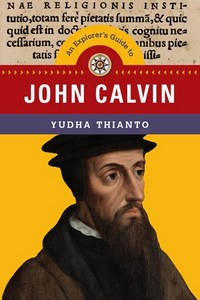
An Explorer’s Guide to John Calvin by Yudha Thianto: Calvin 101

An Explorer's Guide to John CalvinAn Explorer’s Guide to John Calvin

by Yudha Thianto

DETAILS:
Series: Explorer's Guides Series 
Publisher: IVP Academic
Publication Date: July 11, 2022
Format: eARC
Length: 256 pg.
Read Date: June 12-19, 2022
Support Independent Bookstores - Visit IndieBound.org

What’s An Explorer’s Guide to John Calvin About?

IVP Academic’s website describes the Explorer’s Guide Series as:

Anyone who has ventured into new territory knows the importance and benefit of having an experienced guide. Discovering the classics of Christian theology is no different.
The Explorer’s Guide Series acts as a guide for those who are exploring some of the great Christian texts and theologians from the church’s history.
Written by scholars with years of expertise, these volumes will acquaint readers with the sometimes unfamiliar context in which these classic texts were written and help readers navigate the rich yet often complex terrain of Christian theology. New and experienced readers alike will benefit from these volumes as they continue on their journey of faith.

This volume focuses on John Calvin, the Genevan Reformer. Yudha Thianto has been introducing students at Trinity Christian College to Calvin for years. Now he aims to bring an accessible overview of his life and thought through this book.

Part One: Calvin the Man

The first part of this book focuses on the historical context and the person of Calvin. Why do people still read him today? Why is he so important—or at least why is he regarded as such?

After sketching out why Calvin’s worthy of study, Thianto gives a brief (34 page) biography of Calvin. I’ve read a handful of full-length biographies of John Calvin, and I learned a thing or two from this.

Thianto follows this biography with a FAQ about Calvin—addressing several important questions and controversies about him and his teaching. Several parts of that FAQ were impressive, and I appreciated his approach to it (he did duck a couple of typical controversial points that are brought up—but it’s safe to argue that those are for less introductory works). Then he spends a chapter focusing on Calvin as a pastor. It covers some of the material from the biography, but from a different angle—and it covers a lot of additional material, too. Whatever Calvin’s legacy may be, this chapter addresses what was likely the most important part of his life to him.

Part Two: A Guide to The Institutes of the Christian Religion

A little more than half of the book is spent on the book Calvin’s best known for. Thianto spends a chapter talking about the different editions the book went through, where Calvin was in his career when each was written, and discusses some of the major differences between editions.

The final version was the 1559 edition, which is composed of four books/parts. Thianto spends one chapter on each book—describing the flow of thought, some important arguments made, and the major doctrinal teachings.

This is not an easy work to summarize and condense into a little over 100 pages, and I’m sure some will say Thianto glossed over or skipped something important—he undoubtedly did. But he also covered most (if not all) of the essentials). Something like this part of the book would be great to have for someone diving into the book for the first time.

So, what did I think about An Explorer’s Guide to John Calvin?

First, I really like the idea for this series, and hope to get my hands on other volumes. Naturally, I think someone as ill-understood and intimidating as Calvin is a good subject for this kind of book.

I appreciated Thianto’s approach to Calvin, the misunderstandings surrounding him (although he doesn’t cover all of them), and his writings. His experiences in the classroom have given him a solid understanding of those things that need to be covered for someone’s initial/early exposure to the Reformer, and it shows.

As this is supposed to be a guide for those with little-to-no exposure to Calvin, I can’t complain about the lack of depth displayed on some issues—and I really wouldn’t want to, anyway. The only thing that jumped out at me to make me wonder about the book is a point in the conclusion where he suggested that different beliefs about the Trinity are equivalent to differences regarding sacraments or predestination and that Calvin would see them as such. It was a minor point in the conclusion, and I think the overall point was sound—but the Trinity isn’t something Calvin would put on the same level as a debatable point of doctrine.

This is a great resource—a fantastic introduction to Calvin and a handy guide to reading the Institutes for yourself. If you’re curious about Calvin and don’t want to do the heavy lifting required by a full biography and/or reading his Institutes, I’d strongly recommend picking this up and giving it a read (and hanging on to it for future reference).

Disclaimer: I received this eARC from InterVarsity Press via NetGalley in exchange for this post—thanks to both for this.


4 Stars

This post contains an affiliate link. If you purchase from it, I will get a small commission at no additional cost to you. As always, opinions are my own.

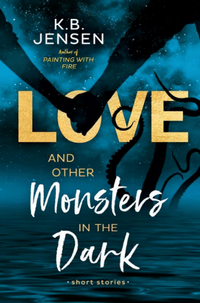
Love and Other Monsters in the Dark by K. B. Jensen: A Truly Impressive Batch of Short Fiction

Love and Other Monsters in the DarkLove and Other Monsters in the Dark

by K.B. Jensen

DETAILS:
Publisher: Crimson Cloud Media LLC.
Publication Date: June 20, 2022
Format: eARC
Length: 186 pg.
Read Date: June 11-20, 2022

What’s Love and Other Monsters in the Dark About?

I have no idea how to answer this question in any but the most annoying way—it’s a collection of forty-two short stories and flash/sudden fiction (however you want to refer to them). Learning that this is only 186 pages long emphasized just how short these stories are.

As far as this collection goes—the stories are about love and monsters, basically. The fact that the title says “Other Monsters” suggests a little about what kind of love stories will be told. Let’s just say that none of these will be fodder for a Hallmark movie.

The genres these stories approach the subjects from are varied—there’s some Science Fiction, some Horror, some Crime, and a little General Fiction—there’s even a Zombie story (a Zombie story I liked—despite my frequent claims that I don’t like the genre).

Self-Depreciation

Jensen does not have a lot of good things to say about writers in these pages, those comments both ring true and are some of the funnier lines in the book. In one story, a character cites a line in an earlier story and casts aspersions on it. It’s a small moment, and if you don’t recognize the call back you will miss absolutely nothing—but if you do catch it, you’ll enjoy it.

(yes, it’s possible that there are other self-referential moments that I missed. Which would only bolster that point about missing the one I caught not making that much of an impact)

There are not many lighter moments in this book—it’s about monsters, after all. So it makes those that Jensen provides all the nicer.

So, what did I think about Love and Other Monsters in the Dark?

It’s even harder to answer this question than the first one…the short version is, that I really liked it and was more than impressed with Jensen’s skill and versatility. I could list names of stories that wowed me, but that wouldn’t be useful to anyone (and my list would be really long—and incomplete). If I told you a little about the stories or why they were so effective, I’d ruin the experience for you. My hands are tied on being too helpful here.

If I did this as a profession, I’d take the time/effort to give you numbers here, but I’m not, so you’ll get impressions. A little more than half of the flash fiction aren’t complete stories—they’re the beginnings of stories, the introductory page or two for a short story, and then they end. Oddly, with one exception, that was enough for me—I was satisfied.

Well, I say I was satisfied, but I’d have loved to turn the page and get the rest of the story. Yet in a way that I cannot really understand (or, evidently, explain), what Jensen gave was enough. And that one exception had nothing to do with the brevity, it was the piece—I don’t think it would’ve resonated with me no matter how much content was provided.

Now, when she told a whole story in either the flash or short fiction? Some of the best short fiction I’ve read in a dog’s age. Sure, there were two or three stories that didn’t work for me, but that’s about my taste, not Jensen’s writing.

There are moments of sweetness (frequently deserving the prefix “bitter”, sure, but the sweetness is what I remember), there’s some heartbreak, too. There are just some horrible people and worse outcomes. I’m not sure there’s a “happily ever after” to be found, but maybe a few “better than it could’ve been” endings. Sure, there are also the horror stories or the SF that tends in a horror direction. Those might have been my favorites.

I’m going to stop flailing around, trying to describe my impressions of this book. In short—this is the kind of short fiction I want to read more of, and the kind I don’t find that often, which is why I read so little of it. Fast, well-written, impactful—these literary snacks will stay with you longer than you’d think they will based on the length.

Disclaimer: I received this eARC from the author and Lori Hettler of The Next Best Book Club in exchange for this post—thanks to both for this.


4 Stars

Blogroll Update

When I started blogging a couple of decades ago–one thing that most blogs had/kept updated was a blogroll. It was a good way to find other blogs/sites that were similar in tone or content to one you already liked/read. It also told you a little bit about the blogger. I don’t think they’re a big thing anymore–I almost never see one. In an effort to stay connected to my roots, I like to maintain one, however.

Well, I like to think I maintain one. I’ve just updated it for the third time since 2015. Which is pretty embarrassing, really.

Anyway, if you’re curious about the blogs, websites, and podcasts that I turn to on a regular basis (several times a week, in many cases), check out my updated Blogroll. Maybe you’ll find something there for you.

Thanks to Bookstooge for the reminder to do this!

Spelling the Month in Books: May

Spelling the Month in Books: May

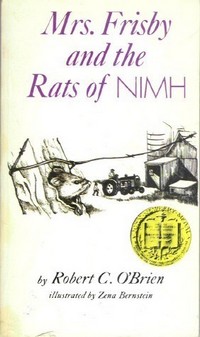
M Mrs. Frisby and the Rats of NIMH

Mrs. Frisby and the Rats of NIMH

Like many people my age, I came to Robert C. O’Brien’s novel through the animated adaptation, The Secret of NIMH. But after seeing the movie a few times, I tracked down the novel for one of my first lessons in “The Book is (almost) Always Better.” There’s just something about the story of this poor mother mouse having to get help from the escaped Lab Rats with their advanced technology and knowledge to help save her family, and the lengths she goes to in order to help those rats herself. It was award-worthy in the 70s and would be today, too.

(I imagine…I mean, it’s been ages since I read it)

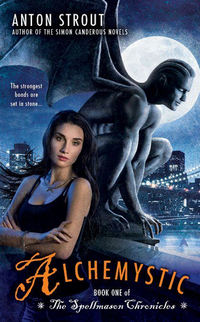
A Alchemystic

Alchemystic

Anton Stout’s The Spellmason Chronicles kicks off with this blast of a novel. A struggling artist discovers she comes from a line of magic-users (she also discovers that magic is a thing) and that she has a gargoyle protector. It’s a great new magic system, I really enjoyed Lexi and her friends (who have great story arcs of their own), the gargoyle, Stanis, is a great creation—really, the whole thing is a fun adventure, and the trilogy that ensues is a favorite around my house.

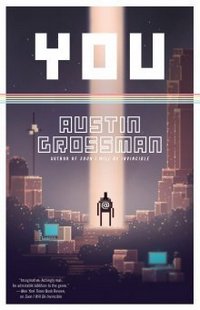
Y You

You

If you take the love of video games and late 20th Century American pop culture from Cline’s Ready Player One; the ability of Michael Chabon in The Amazing Adventures of Kavalier & Clay to tell a compelling story while also giving a history of a creation of a medium; and mix them with Lev Grossman’s The Magicians series’ sense of disillusionment that comes from childhood loves and obsessions meeting with the real world—you might get something like Austin Grossman’s bittersweet story of friendship.

Double Take by Elizabeth Breck: It’s As If This PI Novel Was Customized For Me…

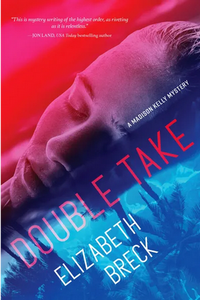
Double TakeDouble Take

by Elizabeth Breck

DETAILS:
Series: Madison Kelly, #2
Publisher: Crooked Lane Books
Publication Date: October 11, 2021
Format: Hardcover
Length: 321 pg.
Read Date: March 21-22, 2022

Support Independent Bookstores - Visit IndieBound.org

Five days was an eternity with a missing person; forty-eight or even seventy-two hours was the cut-off for a good chance of finding the person alive. But five days was still something to work with. Madison could help bring another person safely home. Finding someone who was kidnapped or lost or just needed help to get home was so fulfilling, it was like having a life’s purpose she’d never known she’d been without.

What’s Double Take About?

Madison is approached by Travis, the desperate boyfriend of Barrett Brown, a reporter for an almost impossibly-small newspaper who’s been missing for five days. He’s afraid she’s been abducted, he’s afraid she’s being tortured or worse, and is about to die.

Madison is dealing with some medical issues and just finished a case that took her out of state, but how can she possibly leave this to the police (who don’t seem to believe that Barrett didn’t just ghost Travis)? So she jumps into action—retracing Barrett’s steps, figuring out what story she was working on—assuming that’s the reason she’s missing.

This leads Madison down a twisty path into a criminal conspiracy that she can only see the barest outlines of—and might end up leading her into grave danger.

While she’s searching, Madison has to deal with someone having her followed, the aforementioned medical issues, and a truly inconvenient spark of attraction between her and Travis. Who might not be the great boyfriend he gives the initial impression of being.

My Alma Mater

Chapter One takes place on the campus of the University of Idaho—so you know Breck gets extra points from me for that. Would’ve been an easy 5-Star read if the whole book had taken place there—or at least most of it.

But no, Madison has to go home to San Diego—sure, it’s hard to blame her, San Diego in October has got to be more pleasant—wrecking my hope for a PI novel on campus.

Madison’s Development

After the events of Anonymous, Madison’s picked up some notoriety—she’s become a go-to for missing persons. This is great, she’d been bemoaning how all she’d been doing was insurance work in Anonymous, and it wasn’t that fulfilling—but as we see in the above quotation, she’s finding satisfaction in her work. It’s also nice to see that she’s getting some attention, you frequently get the idea in P.I. fiction that the work is largely unseen.

Another departure from the norm is that Madison’s monetarily successful at the moment—the typical PI is scraping by. Not Madison—at least not now.

The focus on missing persons reminded me of Elvis Cole, just up the coast from Madison—but despite some wealthy clients, you don’t get the idea that he’s as successful. He definitely doesn’t seem to get the notoriety. So, I guess I have to update my one sentence description of Madison from being “Kinsey Millhone for today” to add “with an Elvis Cole twist.”

It’s good that she’s got money coming in, because this self-employed, and likely under-insured woman has medical bills. I wasn’t sure what to think of the discussion of Madison’s past cancer in the first book, but seeing it here, I’m seeing what Beck’s intention is and I like the way it gives the character another dimension and unconsciously (sometimes, anyway) shapes her actions.

Madison and Barrett

One of the ways you can see the appropriateness of the title is that from the first conversation with Travis, Madison starts noting all the coincidental parallels between what’s she’s told about Barrett and what she knows about herself. This can go one of two ways, typically—either this becomes a large hurdle for the protagonist doing their job, or it’s a motivator. This largely serves as a motivation—but it also causes a couple of problems for Madison—at most it’s a distraction occasionally.

It’s arguable that she gets invested pretty quickly because of the parallels, but not by much. Also, Breck finds a way to use this sense of them being so similar in both a positive and negative way for Madison—and then adds a new layer to this later in the book. It didn’t go the way I expected, fully, but I appreciated it.

So, what did I think about Double Take?

I was pretty enthusiastic about Anyonymous, and this cemented my initial impression of Breck and Madison. I was enjoying this the entire time, but toward the end, Beck shifts into high gear and…wow. It’s the kind of ending where you find yourself leaning forward as you read, because somehow that helps you get to what happens next faster; you don’t hear the music/people/animals around you; and your eyes move just too slowly. Okay, maybe I’m exaggerating there, but woe betide anyone who attempted to distract me during the last quarter or so of the book.

This is a fast-paced book. The main action starts Monday evening and ends in the pre-dawn on Friday. In that time, Madison has to find a missing (hopefully still alive woman), figure out why she’s missing/abducted (which leads to a larger criminal act), deal with some personal (some of which should have been dealt with already) and medical issues—and maybe catch a wink or two of sleep. All that in a short amount of time helps explain a couple of the blunders she makes—but those help ground and humanize her, so who cares about them? Especially the way Breck uses those mistakes.

And, hey, she still quotes Nero Wolfe twice. University of Idaho and Wolfe quotations—it’s really like Elizabeth Breck wrote this for me. A delusional thought, I realize, but I like my delusions.

I do wish Breck had made it a little more difficult for the reader to see the things that Madison didn’t/couldn’t put together. I get why she did that, and it was probably the right move, but I still would’ve preferred to work a little harder. That’s the sole issue I have with Double Take, and who knows, any other day, I might have considered that a feature instead of a bug.

Even if you’re not me, if you’re a fan of P.I. novels, I don’t see how this novel/author/character/series doesn’t appeal to you. Madison’s tough, smart, lucky (and knows how important that is), and committed. Brisk and assured writing. A nice bit of sleuthing to find a pretty clever crime (committed by some people who really shouldn’t ever get into criminal activity—and some who seem born to it). My only regret is that I have to wait for the third book in this series to be published before I can dive in.


4 1/2 Stars

This post contains an affiliate link. If you purchase from it, I will get a small commission at no additional cost to you. As always, opinions are my own.


Spelling the Month in Books: March

Spelling the Month in Books: March
I kept the focus this month on books I haven’t read in a decade or more. I sort of stumbled onto that idea mid-way through the January post and at this point I’m glad I did that–it’s fun strolling down Memory Lane with them. More than the previous two months, this month’s list made me want to hit “pause” on everything else I’m doing to re-read these.

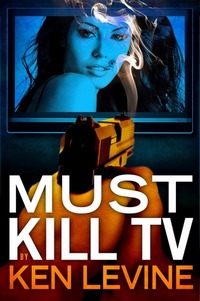
M Must Kill TV

Must Kill TV

Ken Levine’s one of those writers that I enjoyed for years without realizing–you too, probably (check out his imdb pabe)–and his blog is one of the more consistently entertaining. So back in 2013 when his novel came out, I jumped on it. The story of a TV exec doing whatever it takes to keep his network’s biggest star happy (or at least keep him showing up to work) is a fun Hollywood-satire/crime story, and it makes you wish he’d write a few more.

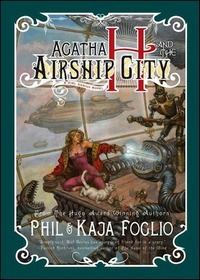
A Agatha H. and the Airship City

Agatha H. and the Airship City

Phil Foglio & Kaja Foglio’s novelization of the first arc of their webcomic is just a blast. I remember some random weekend years ago, when someone tipped me off to the Girl Genius comics and I spent hours pouring through them–and didn’t even come close to catching up. I couldn’t do another dive like that again, and never quite caught up. A couple of months later, this novel came out and it was even better than the comics (although, I’m glad I read them, so I could visualize some of the gizmos). This steampunk/gaslamp/whatever=genre-you-want-to-tag-it-with adventure is just fun. There’s action, romance, comedy, and a whole bunch of strong and smart female characters–and told with a flair that makes it a delight to read.

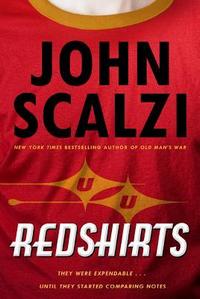
R Redshirts

Redshirts

John Scalzi’s novel starts out as a pretty obvious Star Trek parody, and then shifts into a comic-SF story and the shifts into a nice meta-fiction. I remember being perfectly satisfied with the novel as it was before reading the codas that followed it, I remeber them elevating the book into something even more effective and affecting.

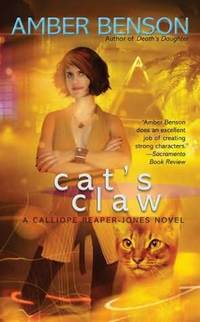
C Catl's Claw

Cat’s Claw

This is the second in Amber Benson’s series about Death’s Daugher, Calliope Reaper-Jones. A perfectly “normal” twenty-something struggling to make her way in the world, who has to take over her father’s job when he goes missing. This book finds her dealing with ancienet Egyptian forces, Purgatory and Vegas. You know, typical Urban Fantasy fare. The book is a nice combination of fantasy action and coming-of-age story, told with a decent dosage of snark.

I was suprised to find that I’d rated this 2 Stars back when I read it–I’ve often suspected that I used to be stingier with my stars than I am now. I rated three of the five books in the series with two stars, the other two got three from me–and I still read all five! There’s no way I do that today. But if i hadn’t looked up what I rated this on Goodreads, I’d have told you 3+ for the whole series.

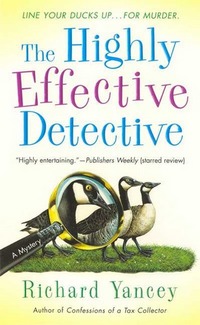
H The Highly Effective Detective

The Highly Effective Detective

I talked about Rick Yancey’s YA series last month, so I pretty much had to talk about this one now. My son and I discovered Yancey at about the same time, and this was my introduction to him. Teddy Ruzak is a night watchman who comes into a little money when his mother dies and puts it all into starting a P.I. business. It’s not necessarily the best move for him, I’m not sure he’s right for it (Teddy might agree, almost everyone else in the book does). There’s a quiet humor to these books, as well as some nice PI action, and a sweetness throughout that the genre doesn’t frequently display.

Spelling the Month in Books: February

Spelling the Month in Books: February
I kept the focus this month on books I haven’t read in a decade or more. Sadly, despite having read most of the books listed here multiple times, my memory about them is pretty rusty. Still, it was fun thinking about them again, and I can fairly confidently recommend them all.

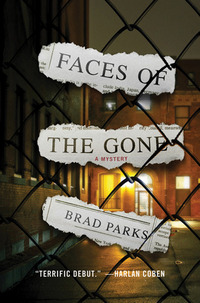
F Faces of the Dead

Faces of the Dead

Brad Parks made his fiction debut with this novel, the first in his series about investigative reporter Carter Ross (a series that has shown up in his stand-alone works, too). I don’t know how long it took me to get into this book/series, but I’d be willing to bet it was less than 50 pages. I just clicked with Ross right away—he had a nice style, and watching one of the last print reporters in fiction do his thing was a blast.

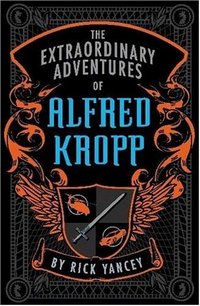
E The Extraordinary Adventures of Alfred Kropp

The Extraordinary Adventures of Alfred Kropp

Rick Yancey was a discovery my eldest and I made about the same time (it’s possible it was the same trip to the Library), I was reading his Highly Effective Detective series, and my son went with this (and I soon followed). This high schooler and his guardian uncle set out to steal Excalibur (yes, that one) and things get stranger from there. Arthurian bad guys, demons, and all sorts of lesser evil types running around. It’s got a more fun, almost Percy Jackson-feel (they were released the same year, so it might have been something in the air) than Yancey’s other YA stuff. I only have very vague memories of the series, but they’re fond memories.

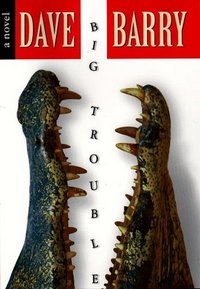
B Big Trouble

Big Trouble

Dave Barry’s first novel is hilarious. He’s grown as a novelist and his more recent work is much better, but this was funny. Which is really all you want in a Dave Barry book—the plot involved an advertising executive, a couple of hitmen, an embezzler, and a couple of high schoolers. Some odd event kicks off a chain reaction bringing all of these together in a comic crime disaster that could only happen in Florida.

Barry Sonnenfeld made a movie adaptation from this starring Time Allen, Rene Russo, Stanley Tucci, among others. It wasn’t Sonnenfeld’s best, but it was okay, as I recall.

R Rizzo's War

Rizzo’s War

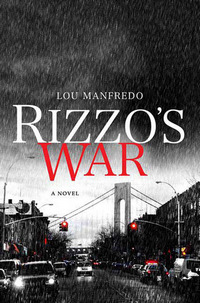
Lou Manfredo’s debut kicks off a gripping trilogy. Rizzo is an NYPD detective headed toward retirement, partnered with a rookie detective to show him the ropes. Unlike most police procedurals, the partners dealt with several cases at once—with (I think) one dominating their attention for most of the book—although it might have traded places with another case for the home stretch. I’m pretty sure I read this in 2009, so my memory is vague. Neither Rizzo nor his partner are super-cops, they’re just guys trying to get the job done in the best way they can and go home at the end of their shift. This one reeked of authenticity.

U Underground

Underground

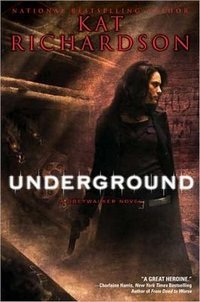
This is the third in Kat Richardson’s Greywalker series (finally, something that isn’t a first on this list!), and it’s a doozy. As I recall, Harper Blaine is basically Kinsey Millhone with ghosts and other supernatural whatnot, a PI who after a near-death experience can see the dead. Something is awakening a Native American monster in Seattle that’s eating people (a whole bunch of homeless people, I think)—and it’s up to Harper to stop it.

I never got around to reading the rest of the series, and I’ve often wondered why. Just thinking about it a little now has made question a few decisions I made.

A The Accidental Sorcerer

The Accidental Sorcerer

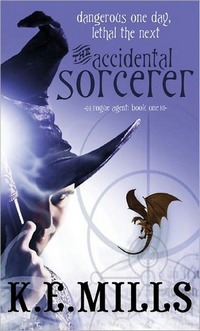
K.E. Mills’s fantasy series about mages, rival nations, and government agents was told with a great combination of mirth and drama. I’ve been sitting here for a while trying to conjure up details about this book, and I really can’t. I had a blast reading this very strange book and the rest of the series, that much I remember.

R The Rabbit Factory

The Rabbit Factory

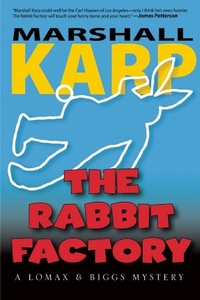
Marshall Karp’s debut novel is another mix of comedy and drama—a pair of LA Homicide detectives investigate a murder at a place that is totally not Disneyland. There’s pressure from the amusement park as well as the police brass for them to find the killer—especially when other bodies are found in/around the park. The detectives have a fantastic rapport and friendship, the extended families (or maybe just one of them has family we spend time with) are a hoot, and the mystery was great. I read this three or four times pre-2010 and loved it every time.


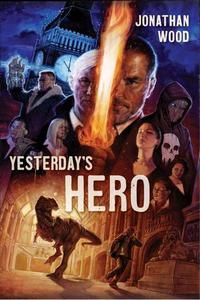
Y Yesterday's Hero

Yesterday’s Hero

This is the second in Jonathan Wood’s series about a British police officer who’s brought into MI37—the service in charge of dealing with supernatural threats to the UK. This is a combo platter of Science Fiction, Urban Fantasy, and Spy novel, told with a sharp sense of humor. Arthur Wallace is the protagonist, and the point of entry character into this strange world—but his team is made up of a fantastic ensemble of characters. This is another series I need to revisit.


Pub Day Repost: The Accomplice by Lisa Lutz: That’s What Friends are For

The AccompliceThe Accomplice

by Lisa Lutz

DETAILS:
Publisher: Ballantine Books
Publication Date: January 24, 2022
Format: eARC
Length: 368
Read Date: January 12-13, 2022
Support Independent Bookstores - Visit IndieBound.org

What’s The Accomplice About?

Luna and Owen meet in a Business Ethics class in college and form an almost immediate bond, becoming the best of friends—you know the kind that 1977’s Harry Burns says is impossible, but that 1987’s Harry finds himself wanting. Without the romance of 1988/89. They’re inseparable, a package deal—not just in college but after that.

Twelve years after their first meeting, Luna finds the murdered body of Owen’s wife while out running. Obviously, the police focus on Owen initially, but Luna knows it wasn’t him (not because of evidence, but because Owen wouldn’t).

Still, it’s hard not to think about a sort-of similar thing that happened back in college. And some of the things from Luna’s past and…well, now things are a real mess. While worrying about Owen, dealing with some personal turmoil that arises at the same time, and answering questions from the police—Luna starts to re-examine that time in college and asks some questions she maybe should’ve asked a decade ago.

As the Publisher puts it:

The Accomplice brilliantly examines the bonds of shared history, what it costs to break them, and what happens when you start wondering how well you know the one person who truly knows you.

The novel is told in alternating timelines, an approach that really works in this case. The primary timeline is 2019 with the murder and its investigation and aftermath. The other starts with Luna and Owen’s first meeting and then progresses through their college years, tracking the course of their friendship—focusing on that “sort-of similar thing.”

Owen and Luna/Luna and Owen

My opinion of the two of them vacillated a lot over the course of the novel—particularly Owen (which had nothing to do with him as a suspect, just him).

But the two of them together? There’s something special about their friendship…I can’t put it into words, but when they’re interacting, it’s just a pleasure to read. The same applies to them when they’re not interacting, but are looking out for each other. These two are great friends—easily forgiving each other, putting up with shortcomings (but being very aware of them), understanding each other better than their spouses, etc.

When either of them are being questioned by the police, for example, they’re much more concerned about explaining the actions and clarifying problems for the other than they are with staying out of trouble with the police themselves. Even if, and this is the part that counts, they aren’t feeling particularly fond of the other at the time.

Actual, living, breathing friendship. It’s a great thing to see, and it’s why I cared at all about this novel—sure, the puzzles were interesting, the dialogue was crisp, and so on. But you get drawn in, and kept in, by their friendship. Would I have read a slice-of-life novel about these two? Yes, and at times the book feels like it. Would I have read about these two taking a joint-family vacation where hilarity ensues instead of this crime? Absolutely. But this is better.

Some mutual friends

There’s another couple that Owen and Luna knew from college (names withheld because they’re not a couple when first mentioned). There is something about them that stood out from the rest of the characters in the book.

He’s just a hoot in college—and she’s the best friend that Luna has other than Owen (arguably better than Owen, but that’s not something Luna would consider).

But their after-college activities are fantastic—it’s not in Lutz’s wheelhouse to do something like this, but man, I’d love a novel about their life. Their dynamic—as well as their business/products—steals every scene they’re in for the 2019 timeline. I want more of them. I know I’m not going to get that, but it’s on my wishlist, just a few notches down from flying cars and a way to make this blog my full-time job.

So, what did I think about The Accomplice?

I keep seeing Lutz’s The Passenger referenced in relation to this book—while that’s not a bad book to compare this to, I think How to Start a Fire fits better in terms of tone and storytelling. If you go into this expecting something like the former, it’s going to take you a minute to re-calibrate expectations.

There are good portions of this book that aren’t all about “what’s X’s secret?”, “who’s the killer?”, “what horrible—or at unscrupulous—activity has Y been up to?”, etc. And those are just fun—it’s light, clever, winning—you want to get to know these people, be their friends—shake your head at their eccentricities. Then every few pages, you get a reminder that–where’s there’s light, there’s likely a shadow, and it might be best not to look into them.

Bouncing back and forth between the two timelines (and, eventually, a third that proves really illuminating toward both character and plot), Lutz reveals more of the characters, peels back the secrets, and advances the plot so easily, so naturally, that it must have been excruciating work. The easier it is on the reader, the harder it likely was on the author—and hopefully, Lutz took a nice break after finishing this. This is the kind of weaving that Lutz excels at—as seen in The Swallows, How to Start a Fire, and (yes) The Passenger—and she’s getting better at it, I tell you, you won’t see any of this coming.

It’s not too surprising to see me recommending a Lutz novel (the surprise would be me not), but there’s something different about this one. Set aside a couple of days and get to know Owen and Luna.


4 Stars

Disclaimer: I received this eARC from Random House Publishing Group – Ballantine via NetGalley in exchange for this post—thanks to both for this.

This post contains an affiliate link. If you purchase from it, I will get a small commission at no additional cost to you. As always, opinions are my own.

The Accomplice by Lisa Lutz: That’s What Friends are For

The AccompliceThe Accomplice

by Lisa Lutz

DETAILS:
Publisher: Ballantine Books
Publication Date: January 24, 2022
Format: eARC
Length: 368
Read Date: January 12-13, 2022
Support Independent Bookstores - Visit IndieBound.org

What’s The Accomplice About?

Luna and Owen meet in a Business Ethics class in college and form an almost immediate bond, becoming the best of friends—you know the kind that 1977’s Harry Burns says is impossible, but that 1987’s Harry finds himself wanting. Without the romance of 1988/89. They’re inseparable, a package deal—not just in college but after that.

Twelve years after their first meeting, Luna finds the murdered body of Owen’s wife while out running. Obviously, the police focus on Owen initially, but Luna knows it wasn’t him (not because of evidence, but because Owen wouldn’t).

Still, it’s hard not to think about a sort-of similar thing that happened back in college. And some of the things from Luna’s past and…well, now things are a real mess. While worrying about Owen, dealing with some personal turmoil that arises at the same time, and answering questions from the police—Luna starts to re-examine that time in college and asks some questions she maybe should’ve asked a decade ago.

As the Publisher puts it:

The Accomplice brilliantly examines the bonds of shared history, what it costs to break them, and what happens when you start wondering how well you know the one person who truly knows you.

The novel is told in alternating timelines, an approach that really works in this case. The primary timeline is 2019 with the murder and its investigation and aftermath. The other starts with Luna and Owen’s first meeting and then progresses through their college years, tracking the course of their friendship—focusing on that “sort-of similar thing.”

Owen and Luna/Luna and Owen

My opinion of the two of them vacillated a lot over the course of the novel—particularly Owen (which had nothing to do with him as a suspect, just him).

But the two of them together? There’s something special about their friendship…I can’t put it into words, but when they’re interacting, it’s just a pleasure to read. The same applies to them when they’re not interacting, but are looking out for each other. These two are great friends—easily forgiving each other, putting up with shortcomings (but being very aware of them), understanding each other better than their spouses, etc.

When either of them are being questioned by the police, for example, they’re much more concerned about explaining the actions and clarifying problems for the other than they are with staying out of trouble with the police themselves. Even if, and this is the part that counts, they aren’t feeling particularly fond of the other at the time.

Actual, living, breathing friendship. It’s a great thing to see, and it’s why I cared at all about this novel—sure, the puzzles were interesting, the dialogue was crisp, and so on. But you get drawn in, and kept in, by their friendship. Would I have read a slice-of-life novel about these two? Yes, and at times the book feels like it. Would I have read about these two taking a joint-family vacation where hilarity ensues instead of this crime? Absolutely. But this is better.

Some mutual friends

There’s another couple that Owen and Luna knew from college (names withheld because they’re not a couple when first mentioned). There is something about them that stood out from the rest of the characters in the book.

He’s just a hoot in college—and she’s the best friend that Luna has other than Owen (arguably better than Owen, but that’s not something Luna would consider).

But their after-college activities are fantastic—it’s not in Lutz’s wheelhouse to do something like this, but man, I’d love a novel about their life. Their dynamic—as well as their business/products—steals every scene they’re in for the 2019 timeline. I want more of them. I know I’m not going to get that, but it’s on my wishlist, just a few notches down from flying cars and a way to make this blog my full-time job.

So, what did I think about The Accomplice?

I keep seeing Lutz’s The Passenger referenced in relation to this book—while that’s not a bad book to compare this to, I think How to Start a Fire fits better in terms of tone and storytelling. If you go into this expecting something like the former, it’s going to take you a minute to re-calibrate expectations.

There are good portions of this book that aren’t all about “what’s X’s secret?”, “who’s the killer?”, “what horrible—or at unscrupulous—activity has Y been up to?”, etc. And those are just fun—it’s light, clever, winning—you want to get to know these people, be their friends—shake your head at their eccentricities. Then every few pages, you get a reminder that–where’s there’s light, there’s likely a shadow, and it might be best not to look into them.

Bouncing back and forth between the two timelines (and, eventually, a third that proves really illuminating toward both character and plot), Lutz reveals more of the characters, peels back the secrets, and advances the plot so easily, so naturally, that it must have been excruciating work. The easier it is on the reader, the harder it likely was on the author—and hopefully, Lutz took a nice break after finishing this. This is the kind of weaving that Lutz excels at—as seen in The Swallows, How to Start a Fire, and (yes) The Passenger—and she’s getting better at it, I tell you, you won’t see any of this coming.

It’s not too surprising to see me recommending a Lutz novel (the surprise would be me not), but there’s something different about this one. Set aside a couple of days and get to know Owen and Luna.


4 Stars

Disclaimer: I received this eARC from Random House Publishing Group – Ballantine via NetGalley in exchange for this post—thanks to both for this.

This post contains an affiliate link. If you purchase from it, I will get a small commission at no additional cost to you. As always, opinions are my own.
Announcement: Stonebridge Mysteries Compilation Paperback!

One more announcement about The Stonebridge Mysteries today from Red Dog Press! The Ides of March are bringing something good this year…

A special, limited edition compilation paperback of Books 1-6 of The Stonebridge Mysteries. This will be a signed and dedicated, numbered edition—1 of 50 available. It will be published on 15th March 2022 and will only be available from Red Dog’s website: https://www.reddogpress.co.uk/product-page/the-stonebridge-mysteries-1-6
Stonebridge Compilation Paperback


My thanks to Red Dog Press for the invitation to participate in this announcement and the materials they provided.

Red Dog Press

Page 4 of 10

Powered by WordPress & Theme by Anders Norén