Category: Uncategorized Page 5 of 10

Pub Day Repost: The Accomplice by Lisa Lutz: That’s What Friends are For

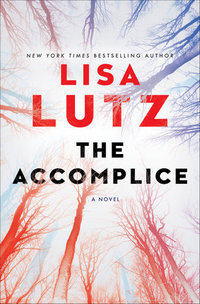
The AccompliceThe Accomplice

by Lisa Lutz

DETAILS:
Publisher: Ballantine Books
Publication Date: January 24, 2022
Format: eARC
Length: 368
Read Date: January 12-13, 2022

Support Independent Bookstores - Visit IndieBound.org

What’s The Accomplice About?

Luna and Owen meet in a Business Ethics class in college and form an almost immediate bond, becoming the best of friends—you know the kind that 1977’s Harry Burns says is impossible, but that 1987’s Harry finds himself wanting. Without the romance of 1988/89. They’re inseparable, a package deal—not just in college but after that.

Twelve years after their first meeting, Luna finds the murdered body of Owen’s wife while out running. Obviously, the police focus on Owen initially, but Luna knows it wasn’t him (not because of evidence, but because Owen wouldn’t).

Still, it’s hard not to think about a sort-of similar thing that happened back in college. And some of the things from Luna’s past and…well, now things are a real mess. While worrying about Owen, dealing with some personal turmoil that arises at the same time, and answering questions from the police—Luna starts to re-examine that time in college and asks some questions she maybe should’ve asked a decade ago.

As the Publisher puts it:

The Accomplice brilliantly examines the bonds of shared history, what it costs to break them, and what happens when you start wondering how well you know the one person who truly knows you.

The novel is told in alternating timelines, an approach that really works in this case. The primary timeline is 2019 with the murder and its investigation and aftermath. The other starts with Luna and Owen’s first meeting and then progresses through their college years, tracking the course of their friendship—focusing on that “sort-of similar thing.”

Owen and Luna/Luna and Owen

My opinion of the two of them vacillated a lot over the course of the novel—particularly Owen (which had nothing to do with him as a suspect, just him).

But the two of them together? There’s something special about their friendship…I can’t put it into words, but when they’re interacting, it’s just a pleasure to read. The same applies to them when they’re not interacting, but are looking out for each other. These two are great friends—easily forgiving each other, putting up with shortcomings (but being very aware of them), understanding each other better than their spouses, etc.

When either of them are being questioned by the police, for example, they’re much more concerned about explaining the actions and clarifying problems for the other than they are with staying out of trouble with the police themselves. Even if, and this is the part that counts, they aren’t feeling particularly fond of the other at the time.

Actual, living, breathing friendship. It’s a great thing to see, and it’s why I cared at all about this novel—sure, the puzzles were interesting, the dialogue was crisp, and so on. But you get drawn in, and kept in, by their friendship. Would I have read a slice-of-life novel about these two? Yes, and at times the book feels like it. Would I have read about these two taking a joint-family vacation where hilarity ensues instead of this crime? Absolutely. But this is better.

Some mutual friends

There’s another couple that Owen and Luna knew from college (names withheld because they’re not a couple when first mentioned). There is something about them that stood out from the rest of the characters in the book.

He’s just a hoot in college—and she’s the best friend that Luna has other than Owen (arguably better than Owen, but that’s not something Luna would consider).

But their after-college activities are fantastic—it’s not in Lutz’s wheelhouse to do something like this, but man, I’d love a novel about their life. Their dynamic—as well as their business/products—steals every scene they’re in for the 2019 timeline. I want more of them. I know I’m not going to get that, but it’s on my wishlist, just a few notches down from flying cars and a way to make this blog my full-time job.

So, what did I think about The Accomplice?

I keep seeing Lutz’s The Passenger referenced in relation to this book—while that’s not a bad book to compare this to, I think How to Start a Fire fits better in terms of tone and storytelling. If you go into this expecting something like the former, it’s going to take you a minute to re-calibrate expectations.

There are good portions of this book that aren’t all about “what’s X’s secret?”, “who’s the killer?”, “what horrible—or at unscrupulous—activity has Y been up to?”, etc. And those are just fun—it’s light, clever, winning—you want to get to know these people, be their friends—shake your head at their eccentricities. Then every few pages, you get a reminder that–where’s there’s light, there’s likely a shadow, and it might be best not to look into them.

Bouncing back and forth between the two timelines (and, eventually, a third that proves really illuminating toward both character and plot), Lutz reveals more of the characters, peels back the secrets, and advances the plot so easily, so naturally, that it must have been excruciating work. The easier it is on the reader, the harder it likely was on the author—and hopefully, Lutz took a nice break after finishing this. This is the kind of weaving that Lutz excels at—as seen in The Swallows, How to Start a Fire, and (yes) The Passenger—and she’s getting better at it, I tell you, you won’t see any of this coming.

It’s not too surprising to see me recommending a Lutz novel (the surprise would be me not), but there’s something different about this one. Set aside a couple of days and get to know Owen and Luna.


4 Stars

Disclaimer: I received this eARC from Random House Publishing Group – Ballantine via NetGalley in exchange for this post—thanks to both for this.

This post contains an affiliate link. If you purchase from it, I will get a small commission at no additional cost to you. As always, opinions are my own.

The Accomplice by Lisa Lutz: That’s What Friends are For

The AccompliceThe Accomplice

by Lisa Lutz

DETAILS:
Publisher: Ballantine Books
Publication Date: January 24, 2022
Format: eARC
Length: 368
Read Date: January 12-13, 2022
Support Independent Bookstores - Visit IndieBound.org

What’s The Accomplice About?

Luna and Owen meet in a Business Ethics class in college and form an almost immediate bond, becoming the best of friends—you know the kind that 1977’s Harry Burns says is impossible, but that 1987’s Harry finds himself wanting. Without the romance of 1988/89. They’re inseparable, a package deal—not just in college but after that.

Twelve years after their first meeting, Luna finds the murdered body of Owen’s wife while out running. Obviously, the police focus on Owen initially, but Luna knows it wasn’t him (not because of evidence, but because Owen wouldn’t).

Still, it’s hard not to think about a sort-of similar thing that happened back in college. And some of the things from Luna’s past and…well, now things are a real mess. While worrying about Owen, dealing with some personal turmoil that arises at the same time, and answering questions from the police—Luna starts to re-examine that time in college and asks some questions she maybe should’ve asked a decade ago.

As the Publisher puts it:

The Accomplice brilliantly examines the bonds of shared history, what it costs to break them, and what happens when you start wondering how well you know the one person who truly knows you.

The novel is told in alternating timelines, an approach that really works in this case. The primary timeline is 2019 with the murder and its investigation and aftermath. The other starts with Luna and Owen’s first meeting and then progresses through their college years, tracking the course of their friendship—focusing on that “sort-of similar thing.”

Owen and Luna/Luna and Owen

My opinion of the two of them vacillated a lot over the course of the novel—particularly Owen (which had nothing to do with him as a suspect, just him).

But the two of them together? There’s something special about their friendship…I can’t put it into words, but when they’re interacting, it’s just a pleasure to read. The same applies to them when they’re not interacting, but are looking out for each other. These two are great friends—easily forgiving each other, putting up with shortcomings (but being very aware of them), understanding each other better than their spouses, etc.

When either of them are being questioned by the police, for example, they’re much more concerned about explaining the actions and clarifying problems for the other than they are with staying out of trouble with the police themselves. Even if, and this is the part that counts, they aren’t feeling particularly fond of the other at the time.

Actual, living, breathing friendship. It’s a great thing to see, and it’s why I cared at all about this novel—sure, the puzzles were interesting, the dialogue was crisp, and so on. But you get drawn in, and kept in, by their friendship. Would I have read a slice-of-life novel about these two? Yes, and at times the book feels like it. Would I have read about these two taking a joint-family vacation where hilarity ensues instead of this crime? Absolutely. But this is better.

Some mutual friends

There’s another couple that Owen and Luna knew from college (names withheld because they’re not a couple when first mentioned). There is something about them that stood out from the rest of the characters in the book.

He’s just a hoot in college—and she’s the best friend that Luna has other than Owen (arguably better than Owen, but that’s not something Luna would consider).

But their after-college activities are fantastic—it’s not in Lutz’s wheelhouse to do something like this, but man, I’d love a novel about their life. Their dynamic—as well as their business/products—steals every scene they’re in for the 2019 timeline. I want more of them. I know I’m not going to get that, but it’s on my wishlist, just a few notches down from flying cars and a way to make this blog my full-time job.

So, what did I think about The Accomplice?

I keep seeing Lutz’s The Passenger referenced in relation to this book—while that’s not a bad book to compare this to, I think How to Start a Fire fits better in terms of tone and storytelling. If you go into this expecting something like the former, it’s going to take you a minute to re-calibrate expectations.

There are good portions of this book that aren’t all about “what’s X’s secret?”, “who’s the killer?”, “what horrible—or at unscrupulous—activity has Y been up to?”, etc. And those are just fun—it’s light, clever, winning—you want to get to know these people, be their friends—shake your head at their eccentricities. Then every few pages, you get a reminder that–where’s there’s light, there’s likely a shadow, and it might be best not to look into them.

Bouncing back and forth between the two timelines (and, eventually, a third that proves really illuminating toward both character and plot), Lutz reveals more of the characters, peels back the secrets, and advances the plot so easily, so naturally, that it must have been excruciating work. The easier it is on the reader, the harder it likely was on the author—and hopefully, Lutz took a nice break after finishing this. This is the kind of weaving that Lutz excels at—as seen in The Swallows, How to Start a Fire, and (yes) The Passenger—and she’s getting better at it, I tell you, you won’t see any of this coming.

It’s not too surprising to see me recommending a Lutz novel (the surprise would be me not), but there’s something different about this one. Set aside a couple of days and get to know Owen and Luna.


4 Stars

Disclaimer: I received this eARC from Random House Publishing Group – Ballantine via NetGalley in exchange for this post—thanks to both for this.

This post contains an affiliate link. If you purchase from it, I will get a small commission at no additional cost to you. As always, opinions are my own.

Announcement: Stonebridge Mysteries Compilation Paperback!

One more announcement about The Stonebridge Mysteries today from Red Dog Press! The Ides of March are bringing something good this year…

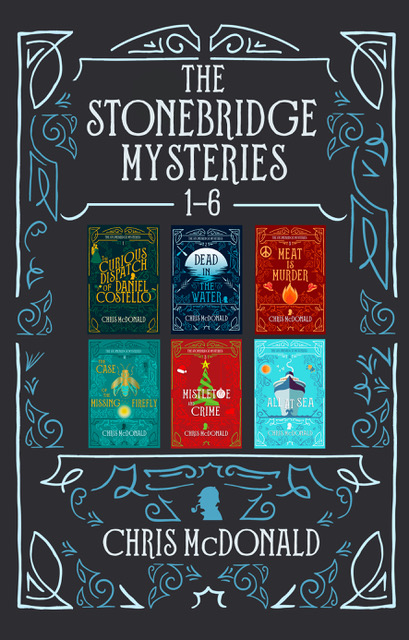
A special, limited edition compilation paperback of Books 1-6 of The Stonebridge Mysteries. This will be a signed and dedicated, numbered edition—1 of 50 available. It will be published on 15th March 2022 and will only be available from Red Dog’s website: https://www.reddogpress.co.uk/product-page/the-stonebridge-mysteries-1-6

Stonebridge Compilation Paperback


My thanks to Red Dog Press for the invitation to participate in this announcement and the materials they provided.

Red Dog Press

PUB DAY REPOST: The Twelve Monotasks by Thatcher Wine: A Guide to Living a More Focused Life

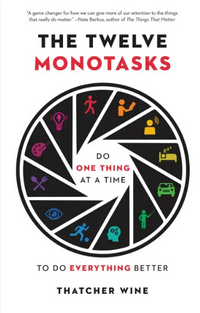
The Twelve Monotasks

The Twelve Monotasks:
Do One Thing at a Time
to Do Everything Better

by Thatcher Wine

eARC, 272 pg.
Little, Brown Spark, 2021

Read: November 22-23, 2021
Grab a copy from your local indie bookstore!

What’s The Twelve Monotasks About?

We live in a society that celebrates the multitaskers, those who seemingly do a half-dozen things at once—while posting about it on Twitter/Instagram/etc. We feel inadequate if we’re not at that level—and if we are, we should be pushing for more. Thatcher Wine wants to call us back—at least some of the time, not necessarily all the time–to a more straightforward, more focused (remember focus?) way of life and work. Arguably, this would be a healthier and less stressed way of life as well.

Using research from Neuroscience, Psychology, and insights from mindfulness practices, Wine outlines Twelve things to focus on—monotasks—Reading, Walking, Listening, Slppeing, Eating, Getting THere, Learning, Teaching, Playing, Seeing, Creating, and Thinking. After making his case of “The Art and Science of Monotasking,” Wine spends one chapter on each monotask, describing and defining it, showing its benefits, and giving some exercises to help the reader start practicing the task. He then gives a couple of wrap-up chapters—encouragements to practice these (and other monotasks) and reminders of the benefits.

A Few Highlights

I really like this idea—I know I need to focus more and this approach seems like a good way to build that ability.

Some of the chapters seemed more attractive to me, as well as easier to fit into at least my life—the Walking, Eating, Seeing, and Playing chapters really stood out. Oh, and, obviously, the Reading chapter—that’s a given, right? It was a great way to start that part of the book. I’m not saying I thought the others were a waste of time or anything, but I read these chapters and immediately identified how I could easily make that part of my life and what the benefits would be. I bet most readers will have a few chapters like that, too—ones that jump out at them as being good fits—their lists will vary from mine, but they’ll have theirs.

The chapters laying out the individual monotasks are arranged the same—by the third you know where you’re going to find what—the explanations, the benefits, the challenges, the practical exercises. It’s a firm outline and easy to use.

Overall, for me, one of the biggest selling points of the book is that it provides a different vocabulary for what’s likely a good idea. I’ve read a few books and taken a few classes on dealing with stress, emotional wellness, etc. lately—one recurring idea was mindfulness, being present, and so on. There was something about the language that bothered me. I liked the concepts, but the pseudo-spirituality/pseudo-psychological terms it was couched it didn’t sit right with me. I always felt like I was being silly in not being comfortable with them, but it was a real stumbling block for me. Now, Wine’s monotasking isn’t the same idea—but they’re compatible, really compatible. But his approach, his terminology comes without the touchy-feely connotation—making it more palatable to many readers (I can’t imagine I’m the only one).

A Few Problems

While there were a few chapters that jumped out at me as being easily useful and adopted, there were a few that didn’t seem that easy to work into my life—and I’m not sure that Wine convinced me would be that helpful for me: Travel, Thinking, and Teaching. It’s possible—maybe even likely—that once I do the exercises, I’ll change my mind.

For some of the monotasks (and those three are good examples, again, your results may vary), I really had to wonder how universally adoptable they’d be. For example—I commute alone, in the dark (one way)—I can’t do a lot of what he suggests in the Travel chapter. Some of the others seem more geared toward people like Wine—the self-employed, business owners, or managerial types—all with a degree of affluence. People who are at the low end of the corporate ladder, don’t have the freedom or ability to do a lot of this. It doesn’t take down the whole system, but it’s a chink in the armor.

On the more nitty-gritty end of things, there’s a lack of variety in personal anecdotes that Wine uses. There are three formative events in his life that he uses as the basis for observation, for personal examples, etc. Were I him, I’d probably base most things I say off of those same events/experiences. It just makes the reading seem repetitive. This isn’t an attack or a problem with the system he’s proposing, it just makes the reading a bit duller.

So, what did I think about The Twelve Monotasks?

As always, I’m trying not to evaluate the arguments or thesis—my goal is to talk about the reading experience. That said, if I was going to evaluate Wine’s arguments and proposed methods—it’d be a pretty positive assessment. This is definitely the kind of book I’m likely to return to, but more on that in a minute.

The problem with evaluating the reading experience is that I didn’t read it the way Wine intended. Once you get to Part II, “The Twelve Monotaks,” the reader is supposed to take them one chapter at a time. Read about the task, take in the guidance and practice it before moving on to the next. I didn’t have that kind of time between the publicist and today (even if I waited until release day, I wouldn’t have). But I can imagine how that would work—and it’d be better than plowing through it as I did.

But even plowing through without the breaks take each in turn with some practice, I got a pretty good idea of how it should work. It seems like a solid approach, one that’s not overwhelming either—rather than trying to work in 12 or so new disciplines into your life, go for one. And then another. It’s the camel nose in the tent approach. I can see that when I return to this in the coming months, slowly bringing in each task to my life is going to work much better than diving in and trying to add all twelve at once.

A lofty goal—helping people learn/relearn/recapture the ability to focus in a world full of distraction—and a common-sense approach to pursue it. It’s the makings of a good read—whether the method is successful or not is probably up to the reader. But Wine gives the tools in an attractive, easy-to-read manner.

Disclaimer: I received this eARC from Little, Brown & Co. via NetGalley in exchange for this post—thanks to both for this.


4 Stars

This post contains an affiliate link. If you purchase from it, I will get a small commission at no additional cost to you. As always, opinions are my own.

The Twelve Monotasks by Thatcher Wine: A Guide to Living a More Focused Life

The Twelve Monotasks

The Twelve Monotasks:
Do One Thing at a Time
to Do Everything Better

by Thatcher Wine

eARC, 272 pg.
Little, Brown Spark, 2021

Read: November 22-23, 2021
Grab a copy from your local indie bookstore!

What’s The Twelve Monotasks About?

We live in a society that celebrates the multitaskers, those who seemingly do a half-dozen things at once—while posting about it on Twitter/Instagram/etc. We feel inadequate if we’re not at that level—and if we are, we should be pushing for more. Thatcher Wine wants to call us back—at least some of the time, not necessarily all the time–to a more straightforward, more focused (remember focus?) way of life and work. Arguably, this would be a healthier and less stressed way of life as well.

Using research from Neuroscience, Psychology, and insights from mindfulness practices, Wine outlines Twelve things to focus on—monotasks—Reading, Walking, Listening, Slppeing, Eating, Getting THere, Learning, Teaching, Playing, Seeing, Creating, and Thinking. After making his case of “The Art and Science of Monotasking,” Wine spends one chapter on each monotask, describing and defining it, showing its benefits, and giving some exercises to help the reader start practicing the task. He then gives a couple of wrap-up chapters—encouragements to practice these (and other monotasks) and reminders of the benefits.

A Few Highlights

I really like this idea—I know I need to focus more and this approach seems like a good way to build that ability.

Some of the chapters seemed more attractive to me, as well as easier to fit into at least my life—the Walking, Eating, Seeing, and Playing chapters really stood out. Oh, and, obviously, the Reading chapter—that’s a given, right? It was a great way to start that part of the book. I’m not saying I thought the others were a waste of time or anything, but I read these chapters and immediately identified how I could easily make that part of my life and what the benefits would be. I bet most readers will have a few chapters like that, too—ones that jump out at them as being good fits—their lists will vary from mine, but they’ll have theirs.

The chapters laying out the individual monotasks are arranged the same—by the third you know where you’re going to find what—the explanations, the benefits, the challenges, the practical exercises. It’s a firm outline and easy to use.

Overall, for me, one of the biggest selling points of the book is that it provides a different vocabulary for what’s likely a good idea. I’ve read a few books and taken a few classes on dealing with stress, emotional wellness, etc. lately—one recurring idea was mindfulness, being present, and so on. There was something about the language that bothered me. I liked the concepts, but the pseudo-spirituality/pseudo-psychological terms it was couched it didn’t sit right with me. I always felt like I was being silly in not being comfortable with them, but it was a real stumbling block for me. Now, Wine’s monotasking isn’t the same idea—but they’re compatible, really compatible. But his approach, his terminology comes without the touchy-feely connotation—making it more palatable to many readers (I can’t imagine I’m the only one).

A Few Problems

While there were a few chapters that jumped out at me as being easily useful and adopted, there were a few that didn’t seem that easy to work into my life—and I’m not sure that Wine convinced me would be that helpful for me: Travel, Thinking, and Teaching. It’s possible—maybe even likely—that once I do the exercises, I’ll change my mind.

For some of the monotasks (and those three are good examples, again, your results may vary), I really had to wonder how universally adoptable they’d be. For example—I commute alone, in the dark (one way)—I can’t do a lot of what he suggests in the Travel chapter. Some of the others seem more geared toward people like Wine—the self-employed, business owners, or managerial types—all with a degree of affluence. People who are at the low end of the corporate ladder, don’t have the freedom or ability to do a lot of this. It doesn’t take down the whole system, but it’s a chink in the armor.

On the more nitty-gritty end of things, there’s a lack of variety in personal anecdotes that Wine uses. There are three formative events in his life that he uses as the basis for observation, for personal examples, etc. Were I him, I’d probably base most things I say off of those same events/experiences. It just makes the reading seem repetitive. This isn’t an attack or a problem with the system he’s proposing, it just makes the reading a bit duller.

So, what did I think about The Twelve Monotasks?

As always, I’m trying not to evaluate the arguments or thesis—my goal is to talk about the reading experience. That said, if I was going to evaluate Wine’s arguments and proposed methods—it’d be a pretty positive assessment. This is definitely the kind of book I’m likely to return to, but more on that in a minute.

The problem with evaluating the reading experience is that I didn’t read it the way Wine intended. Once you get to Part II, “The Twelve Monotaks,” the reader is supposed to take them one chapter at a time. Read about the task, take in the guidance and practice it before moving on to the next. I didn’t have that kind of time between the publicist and today (even if I waited until release day, I wouldn’t have). But I can imagine how that would work—and it’d be better than plowing through it as I did.

But even plowing through without the breaks take each in turn with some practice, I got a pretty good idea of how it should work. It seems like a solid approach, one that’s not overwhelming either—rather than trying to work in 12 or so new disciplines into your life, go for one. And then another. It’s the camel nose in the tent approach. I can see that when I return to this in the coming months, slowly bringing in each task to my life is going to work much better than diving in and trying to add all twelve at once.

A lofty goal—helping people learn/relearn/recapture the ability to focus in a world full of distraction—and a common-sense approach to pursue it. It’s the makings of a good read—whether the method is successful or not is probably up to the reader. But Wine gives the tools in an attractive, easy-to-read manner.

Disclaimer: I received this eARC from Little, Brown & Co. via NetGalley in exchange for this post—thanks to both for this.


4 Stars

This post contains an affiliate link. If you purchase from it, I will get a small commission at no additional cost to you. As always, opinions are my own.
Junkyard Bargain (eBook) by Faith Hunter: Sometimes getting what you want is painful

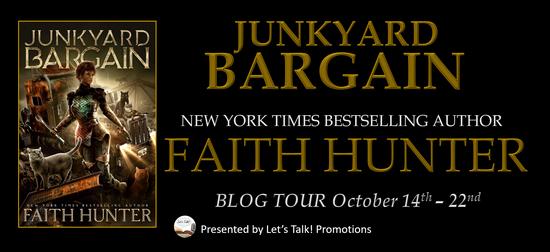
Junkyard Bargain Banner

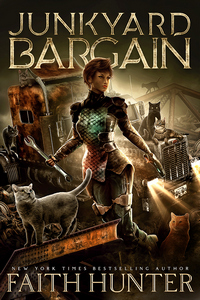
Junkyard Bargain

Junkyard Bargain

by Faith Hunter
Series: Shining Smith, #2

eARC, 166 pages
Lore Seekers Press, 2021

Read: October 16-18, 2021


Back in March, I talked about this as an Audible Original. And I’m going to borrow from that, but the eBook is a different experience, so we’ll talk about that a little bit, too.

The Law was uncertain. Vengeance wasn’t.

What’s Junkyard Bargain About?

Shining Smith needs to gear up and improve her weapons and armor if they’re going to take on the task they have ahead of them. This means traveling to Charleston, and selling some of the junk from her scrapyard, and making the right deals.

Standing in their way are rival bike gangs, corrupt police, sex slavers, and random other criminals. Whatever else happens—Shining isn’t going to allow those slavers to hang on to their captives (and likely won’t let them hang on to their lives, either). She needs to avoid the police, strike careful deals with the gangs, and survive the rest—all the while she’s noticing changes in her cats and expands the control Shining’s won enhancements have on those closest to her.

It’s really hard to explain without pretty much recapping everything in the first book.

Shining’s Thralls and Allies

This time through the book, Cupcake, Jagger, Mateo, and Jolene—Shining’s Thralls—grabbed my attention to various degrees more than they had before. Don’t get me wrong, this is Shining’s story and she’s a character that’s worth dissecting.

But what Hunter has done with these secondary characters is really interesting. Cupcake, for example, changes a lot over the course of these pages—due to what’s required of her as well as what happens to her. There’s a lot to Cupcake that’s been latent, but she’s never had a reason/opportunity to express. Now she’s been given that opportunity…I can’t wait to see what Cupcake gets up to in the next installment.

The rest of the thralls all end up doing things that Shining doesn’t expect (this is hard to get into while staying away from spoilers). The way this works out both in the closing pages of this book and in the next is likely going to make or break this series.

Getting back to Shining—one thing that Hunter’s protagonists tend to share is that they’re coming to greater understandings of their abilities (and developing them) in each book. This applies just as much to her post-apocalyptic SF hero as it does to her Urban Fantasy protagonists. It’s just about her nanobots instead of magic.

A Different Experience

This isn’t evaluative, I just figured it deserved a mention. While I’ve frequently moved from reading a book to re-reading it via audiobook, I’ve never moved from audio to text before, so this was an interesting experience just for that. For one thing, I finally learned how to spell “Berger chip.”

I did think that I related to the text, story, and characters differently when reading as opposed to listening—although part of that is due to the fact that this was my second exposure to Junkyard Bargain. It’s like getting to read the screenplay/script for a movie/play that you’re familiar with. I did find that most of the characters “sounded” a lot like Khristine Hvam as I read the dialogue.

I’m definitely still going to listen to the third Shining Smith book when it’s released on audio, but I’m also going to be making sure I get the ebook later (which I didn’t do for Junkyard Cats…yet).

So, what did I think about Junkyard Bargain?

I absolutely love this world. I don’t think one more novella is going to be enough to satisfy my curiosity. I’m going to need more somehow—it doesn’t necessarily have to be about Shining Smith.

After Junkyard Cats took several unexpected turns in the latter half, I didn’t know what to expect from this beyond more of the same. This novella may have ended up where it seemed to be heading from the beginning, but the route it took bore so little difference to what was expected that it’s hard to recognize that. Hunter is filling this post-apocalyptic world with more dangers and strangeness than we’d been exposed to last time, and you know the next installment will increase the danger.

When talking about the last book, I said that it was too brief and not deep enough. This isn’t the case this time—and not just because it was 40 minutes longer. This time it felt like there was a solid match between depth and time—to the point I wondered how she fit it all in the novella-length book.

There were some great action scenes, some solid surprises, and good character development. And…cats with telepathy. I can’t wait to see what #3 has in store.


3 Stars

Three Bookstores in Three Days

We spent our vacation last week on the Oregon coast and ended up visiting a few towns, and somehow found myself in a bookstore in each place—shocking, I know.

Robert’s Bookshop

The first shop was Lincoln City’s Robert’s Bookshop (although the sticker on the book I bought said “Bob’s”, so maybe they’re not that formal). It’s a small place with a good mix of new and used books. And it is packed. Their website says they have 1.64 miles of bookshelves! And there isn’t a wasted centimeter on them—you want to look behind the front-facing books because they’re just covering up others on the shelf behind them. From the floor (literally) to the top of the shelving units is nothing but books. Narrow aisles ensure that every available space is taken up with a book. The Case of the One-Eyed Witness by Erle Stanley Gardner—I haven’t read a Perry Mason book in…decades?…and I don’t think I’ve ever read this one. It’s a used copy from the 1960s and in fantastic condition. I had to restrain myself—I could’ve walked away with a couple of handfuls of these. If I lived in this general area, this would be my store. The way the shelves are just crammed with books makes it clear that they’re about selling books—everything else is second place.

Nye Beach Book House

On Wednesday, we wandered into Nye Beach Book House in Newport. It is pretty much just that—a block or so away from Nye Beach, and it’s a house. The retail space takes up three or four rooms (probably depending on your definition of “room”), and covers your typical genres. Most of the books were used—in good condition but used. There was a small section of new releases, with a larger percentage of small press (maybe self-pub, too, I didn’t spend too much time investigating). The staff (owner?) was friendly and helpful—and there was a (and quiet) little dog running around, too. I picked up a gently used copy of The Big Over Easy, because I’m determined that I’m going to become a Jasper Fforde fan.

Books ‘n’ Bears

The last stop of my Book Shop Tour was Books ‘n’ Bears in Florence. A wonderful, spacious shop specializing New & Used Books and Stuffed Bears. It’s an interesting combination to be sure, but the stuffed bears did look good on the shelves. I was a little confused by some of the shelving choices—for example, a lot of things that normally would be shelved with Mysteries were in General Fiction, etc. I’m guessing that had more to do with the shelf space available for “genre fiction” more than anything. There was a decent amount of newer releases, but the majority of the stock was used. I had a hard time finding something I was in the mood for—plenty of things to choose from, I should stress—and was set to walk out with just a nice used copy of Burning Bright by Nick Petrie and then just before I walked to the cash register, out of the corner of my eye, I see a hardcover Looking for Rachel Wallace by Robert B. Parker on a shelf that needed a stepstool to reach (I’m not used to stores having shelves that high). Any store that lets me leave with a first edition Parker is a fave.

Three Days, Three very charming bookstores—each with a distinct flavor. Yeah, I said I’d shop at Robert’s primarily if I lived in the area—but honestly, I wouldn’t be a stranger at any of these places.

The Chronicles of Iona: Exile by Paula de Fougerolles: I Think this is the Beginning of a Beautiful Friendship

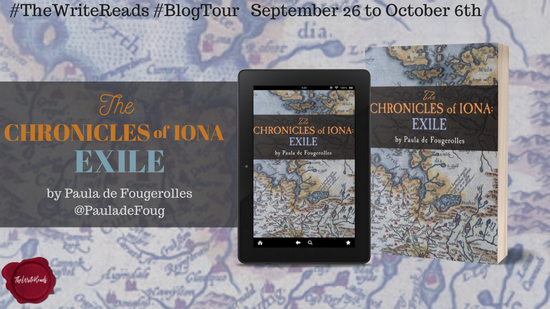
The Chronicles of Iona: Exile Tour Banner

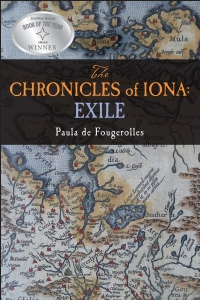
The Chronicles of Iona: Exile

The Chronicles of Iona: Exile

by Paula de Fougerolles
Series: The Chronicles of Iona, #1

Kindle Edition, 394 pg.
Careswell Press, 2012

Read: September 17-21, 2021
Grab a copy from your local indie bookstore!

What’s The Chronicles of Iona: Exile About?

This tale starts in 563 in parts of the world we now call Ireland and Scotland. A monk with royal blood is exiled from Ireland and sent to Scotland. A warrior is tasked by his king to keep the monk and his followers safe and present them to him.

Things start off rocky, but the monk—Columba—settles in for a bit. Then the king hatches a way to use the two of them for his advantage, sending the two off to engage with the Picts and return a hostage.

This partnership is destined to lead to the founding of the Abbey that stood as one of the last strongholds of Western Civilization and learning on Iona.

Columba

Following his exile—and likely the act of violence that precipitated it—Columba lost his faith. Or at least it was damaged greatly.

He still tried to look after his fellow monks that joined him in his exile—he wanted to do right by them—he wanted to do the right thing in general and when he could. He tried to preserve life and peace, to find a way to make a new life for himself and his followers. But he did so without any reassurance or conviction that the God he’d pledged himself to would bless the endeavor.

His struggle with doubt, with fear, and with a loss of faith was (personally) the most interesting storyline in the novel.

Aedan mac Gabran

Aedan has more emotional baggage than your typical warrior character—even one beset by perceived failure and grief. But he’s still the character that you’ve seen before (at least the type), it’s easy for the reader to enjoy Aedan, root for him, and understand what he’s going through.

There’s a prophecy that plagues him, too—family problems, a broken heart, grief, and a prophecy. Aedan doesn’t have a lot going for him other than a near-supernatural ability to fight.

Pair him up with a man of peace and you’ve got yourself plenty of fodder for a plot and conflict.

So, what did I think about The Chronicles of Iona: Exile?

I really wish I knew the history of this time better so I’d know how to evaluate parts of this—I can’t tell if Columba spouts (at best) heterodox sentiments because that’s what de Fougerolles wants to put in his mouth, or if she’s being consistent with him (for example) or some of the cultural mores of various groups in the book. I have an easier time buying the latter than the former. If however, this was just a realistic fantasy, I wouldn’t have cared either way–it’s just the historical aspect of this that gets me curious and reticent to evaluate.

What I do feel comfortable talking about is the writing—I would like to read some straight history from de Fougerolles, something tells me she’d be good at it. I’m not so sure she should write romantic/erotic dialogue (unless she’s reflecting contemporary phrases), however.

The pacing of this book left a little to be desired, de Fougerolles spent so much time setting up the world, introducing the characters, and moving things into place to get to the main action of the novel that it took an act of will to be patient enough to get through it. It was interesting enough to stay with it—but barely.

But when all the dominos were set up and the novel transitioned into telling the story promised in the blurb? It moved quickly, confidently, and engagingly. It felt like I’d put down one book and started reading another—a much more enjoyable one. Think of it as a Tootsie Roll Tootsie Pop that you can’t bite your way into the center of* but you have to lick and lick and lick through the hard candy coating to get to the Tootsie Roll center. But once you get to the center? Chewy sweetness.

* I never said it was a perfect analogy.

If the entire book read like the second half? This would be a rave—instead, it’s a cautious recommendation. It’s a good read, and a rewarding one—you just have to put in the time and effort for it. It’s a great mix of legend, history, and compelling storytelling.

My guess is, by the way, that the pacing issue wouldn’t be a factor if I’d read the entire trilogy in one swoop—assuming it keeps going on the way it was by the end. So, is it a weakness? Sure, but not a fatal one.

Columba and Aedan (and Aedan’s dog) are characters you enjoy spending time with and want to get to know better—there are one or two that show up later in the book that fit that bill, too. Having two more books to explore the characters and their world is just what the doctor ordered. For people interested in Celtic history, an interesting take on early Christianity meeting paganism, or just a good story about people from two different worlds coming together to forge an alliance—The Chronicles of Iona is worth your time.

This post contains an affiliate link. If you purchase from it, I will get a small commission at no additional cost to you. As always, opinions are my own.
My thanks to The Write Reads for the invitation to participate in this tour and the materials they provided.

Bad Turn by Zoë Sharp: Charlie Fox is On Her Own and in Treacherous Waters

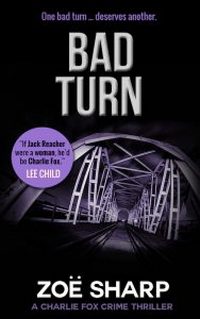
Bad Turn

Bad Turn

by Zoë Sharp
Series: Charlie Fox, #13

Kindle Edition, 340 pg.
ZACE Ltd, 2019

Read: August 22, 2020
Grab a copy from your local indie bookstore!

“OK, let’s talk weapons. You got any preference?”

I shrugged. “I like the SIG P226, if you have one, but as long as it goes bang when I press the trigger, I’m not too fussy.”

What’s Bad Turn About?

Charlie’s left her job—which costs her her home, he guns, and leaves her working security on the sort of drinking establishment that she’d never have walked into. She’s about 6 minutes away from making Jack Reacher look financially stable.

She stumbles into a house-sitting gig out in the country at a really nice place. It’s the answer to a whole lot of problems. Until she’s driving nearby and comes across a gunfight in the middle of a country road. As you do. She intervenes and comes to the aid of the group that’s apparently under attack, and ends up saving the life of a woman and one of her bodyguards.

Overcome with gratitude and impressed with her abilities, the woman’s husband offers her a job. His business has some pretty important things happening and he’s worried for her safety during that. You see, he’s an arms dealer (one who sells to both sides of legality) and there’s reason to believe that his wife is being targeted by a competitor/angry ex-customer.

The whole shootout on a public road would be an indicator that, yeah, she’s in danger.

Charlie signs on for the protection duty and finds herself in the middle of a scheme featuring international gun runners/dealers, organized crime (in multiple countries), and some messy family drama in multiple countries. There are multiple gunfights, a little bit of hand-to-hand combat, a lot of treachery and a little betrayal.

Bad Turn and the Charlie Fox series

This felt like a transition from Charlie’s typical work for Parker’s firm to self-employment. And as such, it feels a little different to me. She’s used to having Parker or his staff ready for logistical, research, or equipment help. Now she’s on her own—and Bad Turn shows how ill=prepared she is to be independent of all of Parker’s resources. Sure, she spent a lot of time without the possibility of checking in with Parker/the company, and it caused problems. But her assumption in the past was that there was a team ready to help. That’s gone now.

Assuming there are more Charlie Fox books coming down the line, I trust that Sharp will get us through these waters and put Charlie back in a situation she can more easily predict, and one not so infested by rats.

So, what did I think about Bad Turn?

I really don’t know. I liked the story, and enjoyed watching Charlie navigate these treacherous waters—but the whole time I felt like something was off. I think it’s just whatever made me start thinking of this as a transition novel, good action, but it just didn’t feel right.

Still, even an “off” Charlie Fox adventure is pretty fun. I’m glad I read this and think that new or established readers will enjoy it, but I’m hoping for something more next time.


3 Stars

20 Books of Summer
This post contains an affiliate link. If you purchase from it, I will get a small commission at no additional cost to you. As always, opinions are my own.
Programming Note: Update on the Host Transfer

A brief note here…I seem to have completed the transfer mostly intact. Most of the comments, followers, and so on survived. The categories took some major damage, and therefore my menus are only partially functional (I don’t know how many people use them). But I’m chipping away at that, and they’ll be good to go soon. New comments are pretty wonky, though. With the help of some users, I’ve worked through some issues–and created more.

If you see something weird or note a problem with the comments, feel free to pop me a note, or tweet at me, and I’ll continue to work on the problems.

I want to thank Micah Burke for doing a lot of (read: most of) the heavy lifting on this when the “easy” process proved not to be at all. If you’re into pretty photographs, neat calendars or the game Terraforming Mars–check out his stuff at his website or his etsy shop and maybe buy something,

Page 5 of 10

Powered by WordPress & Theme by Anders Norén