Category: Uncategorized Page 7 of 10

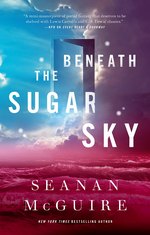
Beneath the Sugar Sky by Seanan McGuire

Beneath the Sugar SkyBeneath the Sugar Sky

by Seanan McGuire
Series: Wayward Children, #3

Hardcover, 174 pg.
Tor Books, 2018

Read: January 11, 2018

Children have always tumbled down rabbit holes, fallen through mirrors, been swept away by unseasonal floods or carried off by tornadoes. Children have always traveled, and because they are young and bright and full of contradictions, they haven’t always restricted their travel to the possible. Adulthood brings limitations like gravity and linear space and the idea that bedtime is a real thing, and not an artificially imposed curfew. Adults can still tumble down rabbit holes and into enchanted wardrobes, but it happens less and less with every year they live. Maybe this is a natural consequence of living in a world where being careful is a necessary survival trait, where logic wears away the potential for something bigger and better than the obvious. Childhood melts, and flights of fancy are replaced by rules. Tornados kill people: they don’t carry them off to magical worlds. Talking foxes are a sign of fever, not guides sent to start some grand adventure.

But children, ah, children. Children follow the foxes, and open the wardrobes, and peek beneath the bridge. Children climb the walls and fall down the wells and run the razor’s edge of possibility until sometimes, just sometimes, the possible surrenders and shows them the way to go home.

So begins Beneath the Sugar Sky, the third installment of McGuire’s Wayward Children series. If you’d asked me why I was excited about this book before reading it, I could’ve given you a list of reasons — but I’d forgotten just how magical the books are. By the time I got to “ah, children” not only did I remember the magic, I was under its spell.

Sometime after the events of Every Heart a Doorway, two residents of Eleanor West’s Home are down at the pond (they returned from water-worlds, and this is the best they can get), when a naked girl lands in the pond (falling from apparently nowhere), demanding to see her mother, or at the very least, someone in charge. It turns out that this girl is Sumi’s daughter — the problem there is that Sumi died during Every Heart, so she didn’t get to mature a bit, go back to her world, defeat the evil Queen, get married and have Rini. Now, the Timeline is catching up to her, and faster than you can say Marty McFly, Rini is starting to disappear, finger by finger, limb by limb. This doesn’t sit well with her, as you can imagine.

I like existing. I’m not ready to unexist just because of stupid causality. I didn’t invite stupid causality to my birthday party, it doesn’t get to give me any presents.

So, four of the residents set off on a quest to bring Sumi back to life. This takes them across the U. S., into one of the worlds of the dead, and all around Sumi/Rini’s nonsense world. There’s heroism, mystery, sacrifice, triumph and cleverness all around, without which none of this would work, but with it all — and a healthy dose of magic — it’s a plan so crazy that it just might work.

I don’t want to talk too much about the characters apart from what I’ve already said (which is essentially nothing). In addition to Rini — we have a nice mix of new to us and returning friends — with one character that’s new to the Home as well as to us. I absolutely enjoyed getting the bonus time with the returning characters, the new (to us) characters were exactly the kind of kids you hope to find in these books. Also, some of the revelations about some secondary characters serve to explain a lot about the way this particular multiverse came to be and it’s pretty cool. So, basically, the character material in this novella is almost perfect.

I wasn’t as taken with Down Among the Sticks and Bones as I was with Every HeartEvery Heart was a wonderful mix of tragedy and violence with a sense of play (especially in the ideas and words) — there was hope throughout the book, even when it was dark for everyone and there was little reason for it. Down Among was about dashed hope and tragedy in a world of tragedy, dashed hopes and violence; yes, there as a little play with the language, and some moments of triumph, but they were all overshadowed. Which was fine, it was the story that needed to be told, and I’m not complaining, but Beneath the Sugar Sky was more of a return to the tone of Every Heart, so I liked it more than Down Among — I think it was a better book, too, but I could be wrong about it. I just know it was easier to like. There’s definitely tragedy, there are hard choices to be made — and I did say something about sacrifice — but there’s a strand of hope throughout that makes it so much easier to carry on.

One thing that has been on display throughout this series is a sense of play, a sense of fair tale worlds and logic reflected in the language McGuire uses — you’ve seen bits of it already above, just one more and I’ll call it good:

There was a door there, tall and imposing, the sort of door that belonged on a cathedral or a palace; the sort of door that said “keep out” far more loudly than it would ever dream of saying “come in.”

You know exactly what that door looks like, and you have a great sense of the environment around it, too. Just from that one sentence. McGuire has a great sense of style on display in the Toby Daye and InCryptid books, which is turned up in the Indexed serials, but is probably best seen in these books — capturing the feel of preternatural worlds has pushed her to unleash all of her pent-up linguistic magic. Even if I disliked the characters and stories she’s telling in this series, I think the language would bring me back.

I’m obviously a pretty big Seanan McGuire fan — just a quick glance at the archives will tell you that. But I’m willing to bet that even if I wasn’t predisposed to like her work, this series would’ve made me one — Beneath the Sugar Sky is a slice of literary perfection and I can’t encourage you enough to try it.

—–

5 Stars

All Hands on Pet! by Susan E. Davis, PT

All Hands on Pet!All Hands on Pet!: Your How-To Guide on Home Physical Therapy Methods for Pets

by Susan E. Davis, PT
Paperback, 216 pg.
Joycare Onsite, LLC, 2017

Read: November 20, 2017


This is not the book you typically see me talk about — and when I was approached to give it a read and review, my initial response was to give it a pass. But we adopted an 11 year-old dog this Spring, and I’ve been thinking a lot about canine health. Which makes me right in the target audience for this book, actually.

I sort of have to assume that the medicine and science behind this book is right and/or responsible. Because really, unless the book called for the use of Windex to treat common maladies or something as useless as “mild doses of physic to work on the bowels,” there’s zero chance I’ll be able to suss out the problem. Instead, I can talk about a couple of things: is it useful? Can it be understood by lay readers?

Yes, to both, thankfully.

Yes, you have to be a dedicated reader — focused and concerned — to get through a little of the language. But what pet owner with an ailing companion isn’t focused and concerned? Yes, there was a lot of what Davis talked about that was Greek to me, but if I had a dog/cat/lizard/whatever that had a problem along the lines she was talking about; or had received [technical term X] as a diagnosis, I’d know right where to go. Part of the problem for me at the moment, is my old girl isn’t a prime candidate for Canine Hip Dysplasia, so it was hard to connect to those pages — it’s not a book to read cover to cover. It’s a resource. But from what I can tell, she gives some pretty decent sounding advice for working with puppies to head off that problem.

Not only some pretty decent sounding advice, there’s some handy photographs with good diagrams added so you know just what to do. There are plenty of nice anecdotes and illustrations from Davis’ casework throughout the book to anchor the instructions. Both of these features cannot be overstressed as valuable.

My favorite part comes from Chapter 8, “Embracing the Warrior Mentality at Home,” discussing the attitude and approach that pet owners should take when helping their ailing/injured pets. I wish this chapter — or at least the initial sections of it — had appeared earlier in the book. I just think it would’ve flowed a little better. But I’m glad it was there.

Was I able to get something to help my girl? Maybe. I definitely know where to look if it comes to it. I can see this as a valuable tool in the toolbox for every pet owner.

Disclaimer: I received a copy of this book in exchange for my honest opinion and this post.

—–

3 Stars

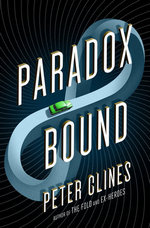
Paradox Bound by Peter Clines

Paradox BoundParadox Bound

by Peter Clines

Hardcover, 369 pg.
Crown, 2017

Read: November 8 – 9, 2017


Sanders is a typical American small-town, so typical, I felt like I grew up there. Thankfully, unlike Sanders, the place I grew up in has moved on, Sanders has not. There’s still a Video Rental Store there, for crying out loud. Those who work with computers, or want to have much of an idea about contemporary pop culture, have to move away — or at least commute.

Eli Teague is just such a person — but before he commutes to his IT job from his apartment above the Video Rental Store, he grows up in a pretty typical way. With one exception: twice while growing up, he encounters a young woman dressed incredibly oddly while working on an old Ford Model A, which seems to be fueled by water. They spend a little time conversing each time — typically leaving Eli more confused than he’d have thought possible — then she drives off and disappears. This instills in him an obsession with historic cars, that spills over into American History in general.

As an adult, he encounters her again and inadvertently puts her in danger. He abandons everything he knows in an effort to save her from this and ends up joining her on a hunt through history. Harry (this mysterious woman) travels through history — she’s not a time traveler, she’ll be quick to point out, she travels in history. She’s not crazy about bringing Eli along with her, but literally has almost no choice in the matter.

Harry . . . she’s a great character, and I would’ve appreciated a lot more focus on her, and getting to see much more of her past. Maybe not getting to actually helps, because it makes the reader more curious about her — but I’d still have rather had a better look at her life before Eli became a regular part of it. She’s tough, loyal, cunning — but no superhero, just a strong person.

Short of spoiling the whole thing, this is one of those I have to be very vague about the details, but then why should you read it? I’ll leave it to you to read the book to get more about the hunt they’re on, but I’ll just say that it’s a great idea, a wonderful concept. The other hunters (and allies) we meet are interesting, but man, I’d love more of all of them — there’s some great historical cameos, too. Naturally, we need an opposing force to make things more tense — and we have one of the creepiest around in these pages. They’re not evil, not corrupt, not anything but driven (and with a skewed way of looking at things).

There’s a nostalgic, hopeful tone throughout — despite the sharp critique of the status quo in America. There’s an evident wit behind the words, too, but this isn’t what you’d call a funny novel. I do think that Clines and I would differ a bit on some of the ways he interprets parts of the national character/psyche, but I can appreciate what he was going for (that’s one of those things that’ll make more sense after you read the book). The characters — whether we like them or not — are very human, very relatable, and pretty sympathetic. Clines has again taken some tropes, concepts, ideas that we’re familiar with — some we know very well, but skewing them just a hair and resulting in something we haven’t seen before.

I expected this to be a pretty good read after The Fold a couple of years ago, but I wasn’t expecting something as fresh feeling as this (but with the skill of someone who’s written a few novels). There’s a dash of civics lessons, some cultural commentary, and a lot of hope — things you don’t always get in light(ish) SF. I “bought into” this book much more quickly than I did The Fold, I’m not sure if that’s because Clines earned my trust in the previous book, or if there’s something more accessible about this one — either way, it’s something for the “Plus” column.

Give this one a whirl — you’ll be glad you did.

2017 Library Love Challenge

—–

4 Stars

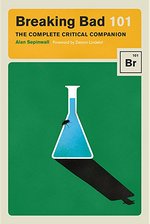
Breaking Bad 101 by Alan Sepinwall

Breaking Bad 101Breaking Bad 101: The Complete Critical Companion

by Alan Sepinwall

Hardcover, 281 pg.
Abrams Press, 2017

Read: November 15, 2017


So, I’m pretty sure I don’t need to explain what Breaking Bad is, do I? One of the greatest TV dramas of all time, Mr. Chips turns into Scarface, et cetera, et cetera. This book is a collection of brief essays about each episode, a critical companion, fan resource, and all around handy book.

Most of these chapters started out as episode recaps on Alan Sepinwall’s blog generally posted a day or two after the original airing — a couple were written just for this book because he didn’t recap each episode in season 1 and a later episode deserved a better recap (for reasons Sepinwall explains) — although the original version is included as well. He does take out some of he speculation and whatnot from the original posts to provide a nice, clean look at each episode. It’s more than just an episode recap, he looks at the arcs, the acting, writing, cinematography; in just a few pages he gets to the heart of the episode and helps you see all things that Gilligan et. al. were doing. The real gems are the footnotes and sidebar pieces that dive in a little further to the nitty-gritty details — why was this decision made, where’d actor X come from, and so on. Seriously, fantastic footnotes.

This is a quick and wonderful read if you do it start to finish — or you can just thumb through, stopping at random points to read up on an episode. The book works both ways. I imagine the best way to read it is with a remote in one hand, a DVD/Blu-Ray disc in your player and the book in the other hand. Watch an episode, read the chapter — skipping around in the episode to re-examine shots/sequences, etc. I haven’t done that, but man, I’m tempted to.

A few other things worthy of note: Damon Lindelof wrote a very amusing foreword; Max Dalton provided 12 black and white illustrations that are just perfect; the dust-jacket design is great; but more than that, the actual cover is even better; and lastly, the whole book is so well-designed and pleasing to the eye, it’s nice just to look at without reading. I don’t mention those kind of things enough, and need to get better about it.

Now, I’ve been a fan of Sepinwall’s recaps/writing since the days he posted about NYPD Blue on Usenet. I also read all these posts from Season 2 on within a few hours of their original posting (I didn’t start watching until after the season 1 finale — so I read all of those in a couple of days, still pretty fresh). So I was pretty predisposed to enjoy this book, but I’m pretty sure I would have anyway.

Sepinwall is a fan of Breaking Bad, most of the stories, most of the performances, etc. But he’s a thoughtful fan, not a mindless one — he is critical of some things, this isn’t just someone being a fanboy. I heartily encourage fans of the show to pick this up — or people who’ve been meaning to watch it, but haven’t (this book would be a much better companion than your friends who will be patronizing about you finally getting around to watching it).

—–

4 Stars

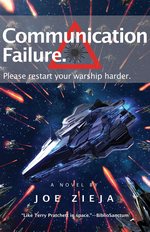
Communication Failure by Joe Zieja

Communication FailureCommunication Failure

by Joe Zieja
Series: Epic Failure, #2

ARC, 325 pg.
Saga Press, 2017

Read: October 31 – November 2, 2017


So, Captain Rogers has escaped with his life after saving the 331st Meridian Fleet from a takeover from almost all the droids on board, now he’s been made acting admiral and is faced with a potentially bigger threat: the Thelicosan fleet — the very fleet that Rogers’ ships are to keep on their side of the border — has informed him that they are about to invade. Given the size of the fleets facing off, this is an invasion that will not go well for the 331st.

So how is this would-be con-man, former engineer, and current CO going to survive this? He hasn’t the foggiest idea.

Clearly, for those who read Mechanical Failure (and those who haven’t have made a mistake that they need to rectify soon), whatever solution he comes up with is going to rely heavily on Deet and the Space Marines (the Viking/Captain Alsinbury and Sergeant Malin in particular) will be heavily involved. Malin has taken it upon herself to help Rogers learn some self-defense (even if that’s primarily various ways to duck), the Viking is questioning every decision her new CO is making, and Deet is continuing his exploration into human behavior/consciousness (he’s exploring philosophy and spirituality at the moment — which is pretty distracting). Basically, if Rogers is looking for a lot of support from them, he’s going to be disappointed.

It turns out that the Thelicosans didn’t intend to send that message at all, what they were supposed to communicate was very different, actually. But before Rogers and his counterpart can find a way to de-escalate the situation, shots are fired, milk is spilled, and events start to spiral out of control. Which isn’t to say that everyone is doomed and that war is inevitable, it’s just going to take some work to keep it from happening. There are forces, groups, entities — whatever you want to call them — hawkish individuals who are working behind the scenes to keep these cultures at odds with each other, hopefully spilling over into something catastrophic. Which is something too many of us are familiar with, I fear — and something that someone with Zieja’s military background is likely more familiar with. The Thelicosans and Meridians discover who these people are — and how they are attempting to manipulate the fleets — and the big question is how successful they’ll be.

We focus on three Thelicosans, but spend almost as much time on their flagship (The Limiter) as we do the Meridian flagship (Flagship). Grand Marshall Alandra Keffoule is the commander of the border fleet — at one time, she was a star in the special forces, and now she’s been assigned to the border fleet as a last chance. She fully intends on taking full advantage of this opportunity to make history and restore herself to her position of prominence in the military. Her deputy, Commodore Zergan, has fought alongside her since the special forces days and is now trying to help her rebuild her reputation. Secretary Vilia Quinn is the liaison between the Thelicosan government and the fleet. Quinn’s development through the book is a lot of fun to watch — and is probably a bigger surprise to her than it is to the reader, which just makes it better. Thelicosan culture is saturated in science and math, and is full of rituals that are incredibly binding and incredibly difficult for outsiders to understand. In many ways, the culture is hard to swallow — how a society develops along those lines seems impossible. But if you just accept that this is the way their society functions, it ends up working and stays consistent (and entertaining).

Lieutenant Lieutenant Nolan “Flash” “Chillster” “Snake” “Blade” Fisk, the best pilot the 331st has is a great addition to the cast — yeah, he’s probably the most cartoonish, least grounded, character in Rogers’ fleet — but man, he’s a lot of fun (and I think it’s pretty clear that Zieja enjoys writing him). think Ace Rimmer (what a guy!), but dumber. Mechanical Failure‘s most cartoonish character, Tunger, is back — the would-be spy/should-be zookeeper finds himself in the thick of things and is well-used (as a character) and is well-suited to his activities. Basically, I put up with him in the last book, and enjoyed him here. I’d like to talk more about Deet and the other characters here — I’ve barely said anything about Rogers (he develops in some ways no one would’ve expected) — but I can’t without ruining anything, so let’s just say that everyone you enjoyed in the previous installment you’ll continue to enjoy for the same reasons.

Mechanical Failure didn’t feature a lot of world-building outside life on the ship. Zieja takes care of that this time — we get a look at the political situation between the various governments, and the history behind the four powers. Which isn’t to say that we’re drowning in details like George R. R. Martin would give us, it’s still breezy and fast-paced. Still, there’s a handle you can grab on to, some context for the kind of madness that Rogers finds himself in the middle of.

One of my personal criteria for judging books that are heavy on the humor in the midst of the SF or mystery or fantasy story is judging what the book would be like without the jokes. The Hitchhiker’s Trilogy, for example, would fall apart in seconds (and few rival me for their devotion to that series). Magic 2.0 would hold up pretty well, on the other hand. The Epic Failure series would be another one that would hold up without the jokes. I’m not saying it’d be a masterpiece of SF, but the story would flow, there’d be enough intrigue and action to keep readers turning pages. However, you leave the humor, the jokes and the general whackiness in the books and they’re elevated to must-reads.

There are too many puns (technically, more than 1 qualifies for that), there’s a series of jokes about the space version of The Art of War that you’d think would get old very quickly, but doesn’t — at all; and Rogers has a couple of bridge officers that make the pilot Flash seem subtle. Somehow, Zieja makes all this excess work — I thought the humor worked wonderfully here, and I think it’ll hold up under repeated readings.

I thoroughly enjoyed this book and can’t wait to see where Zieja takes us next.

Disclaimer: I received this book ARC from the author, and I can’t thank him enough for it, but my opinion is my own and wasn’t really influenced by that act (other than giving me something to have an opinion about).

—–

4 Stars

Looking for YA/NA/other recommendations 

(how’s that for a broad category?)

I’ve been asked for help with compiling a list of books, that I’d describe as falling in the upper edge of YA, or “New Adult,” or something that would work for those readers. They should be less violent than Katniss Everdeen’s Games, with a similar level of romance/sex. Maybe similar to the last couple of Harry Potters.

Any thoughts, my friends? 

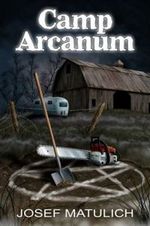
Camp Arcanum by Josef Matulich

Camp ArcanumCamp Arcanum

by Josef Matulich
Series: Arcanum Faire, #1

Kindle Edition, 304 pg.
Post Mortem Press, 2014

Read: August 21 – 23, 2017


So, Marc, Michael and Eleazar come to the small, university town of Arcanum, OH to set up grounds for a new Renaissance Faire on behalf of their employer. They can tell straight-off, that this isn’t your typical university town, but it takes awhile for them to understand why. Pretty much everyone in town practices magick in one form or another — and those who don’t seem pretty aware of it. This awareness seems to end around the city limits, however.

Early on, Brenwyn — the head of the local coven — stops by to ask if they can still use some of the grounds for a ritual. Seeing a way to accommodate the locals and maybe dress up the grounds, they agree. Sparks and pheromones fly between Marc and Brenwyen — Marc’s inherently leery of romantic entanglements, but his resistance starts faltering immediately and I can’t imagine any reader being stunned when he abandons it entirely.

Marc is the super-responsible crew leader, a workaholic with issues. Michael is the artistic one, ready enough to do the brawny work required on the site, but who cares more about the design. Eleazar is their loyal friend and juggler — who spends almost as much time with the prep work as he does ogling and fantasizing about the local co-eds and/or harassing Michael and Marc about their love lives/lack thereof/anything else he can think of. He’s a lot of fun, really. Michael was fine, but I could’ve used some more time with him to really get a handle on his character. Marc is the readers point-of-entry into this world, it’s his eyes that we see the world through.

Brenwyn is sassy, saucy and an outrageous flirt. The members of her coven are loyal, and just about as sassy as their Head. There’s a warlock running around who is some sort of ex- to her, and that’s the nicest thing that could be said about him, so we’ll stop there. The thing is that in this world, magick exists, it’s real, and many people live with knowing that (more without knowing that).

While work progresses on the Faire-grounds, a rivalry of sorts gets underway — with Brenwyn, Marc and the others on one side, and Drenmwyn’s ex- and his acolytes on the other. And it all seems to be focused on Marc, which he can’t seem to figure out. Oh, and there are demons, and other assorted supernatural beings flitting around. Our working men, and the coven leader, have to unite to try to stop the ex- (as well as other nefarious beings in the area).

Early on, I felt like Matulich was trying just a little too hard with the quasi-sibling rivalry between Michael and Eleazar, and even with the flirtation between Marc and — well, everyone. It was like he was insecure about things and was trying to make sure his readers understood things were amusing, rather than trusting his writing. If he’d dialed back about 10-20% early on, it would’ve helped me appreciate things. I either acclimated to his writing style, or he dialed back, I’m not sure which — not sure it matters. It didn’t take too long to settle in to Matulich’s style and start chuckling at his characters and writing.

This was a fun read — off-beat, humorous, with some characters you want to spend time with, with an interesting magic — sorry, magick — system. There’s a sequel to out there, and after reading this, you’ll probably be hoping that there’s more in progress, too. A thoroughly enjoyable, light read, with just a hint of darkness.

—–

3 Stars

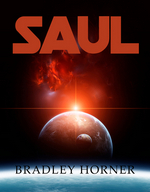
Saul by Bradley Horner

SaulSaul

by Bradley Horner
Series: The Great Curve, #1
Kindle Edition, 182 pg.
2017
Read: July 13 – 14, 2017

It just wasn’t fair. This whole fucking situation was downright ironic. The last eighty years had been a non-stop panic about righting all of their ancestor’s wrongs, a comeback after the nearly complete catastrophic dieback right before the turn of the last century.

Hadn’t they’d re-seeded the plains and the oceans? They had tried to make amends, hadn’t they? And apparently, the Earth was just a tiny bit slow on the uptake if this an attempt to punish them, that no, they weren’t forgiven, and no amount of flowers would ever be accepted. It was like the Earth was out to destroy their gardens just because they’d destroyed hers.

It turns out, no matter what kind of political, economic, scientific, or social utopia you create, the natural world around you isn’t obligated to pay attention or cut you some slack.

Saul describes what Saul Rothe goes through in the 28 minutes where the Earth experiences an earthquake more widespread than anyone’s experienced, resulting in devastation I can’t describe. Saul’s basically wrapping up professorial duties for the day, chatting with his wife while she’s at work, checking on his daughter and preparing to go home when the quake hits. Basically, at this point, the infrastructure that humanity depends on fails, all of it.

Saul does everything he can to get to his daughter and ensure her safety, but just before he can, their apartment building collapses with her in it. Saul, who’s been coming from a tower far above throws himself down, following her, doing what he can to save her. Ignoring the wide-scale destruction and suffering all around him (maybe even adding too it unintentionally). To do so, he has to pull out every technological/future science trick he knows, invent a couple of new ones, violate standards, regulations, etc. By doing all this, he becomes a global celebrity and example to others — leading many to mount their own rescue attempts to save those around them from the calamity.

Clarke’s Third Law states, “Any sufficiently advanced technology is indistinguishable from magic.” We’ve all heard that a million times, and while reading this book, I realized how handy that is for SF writers (I’m sure I’m not the first to realize this). You just imagine a technology impossibly advanced, and you can use it like magic. That’s precisely what Horner does here — and it works out pretty well for him.

Saul does so many things that defy physics (well, as I understand them — apparently, Montgomery Scott was wrong, and you can change the laws of physics), especially time. I had so many notes along the lines of “too much talky-talk, and not enough rescuing here,” only to see that a couple of seconds had passed — part of the tech allows Saul and others to have long conversations about . . . . well, all sorts of things, while he falls, taking no time at all.

The world-building was amazing — it’s very easy to see, from the world he describes, the language he uses (much of which is defined in the very necessary glossary), to the technology, to . . . seriously, everything. There are very few SF novels with as fully-realized worldbuilding as Horner has pulled off here. That said, he could’ve done a better job communicating it all (or even a substantial portion of it all) to his readers. I’m not saying I need pages and pages, or even multiple paragraphs, detailing the history of why object X developed in this way. But a line or two here and there just to fill out our understandings would’ve been nice. Could I follow it enough to stick with the story? Yeah. Could I easily describe it to anyone else? No.

In the end, the SF story just wasn’t my cup of tea — I got it, well most of it, anyway — but I just didn’t like it. The Science was too abstract, too . . . “sufficiently advanced” for me to really enjoy. However, and this is the important part, the story about a father throwing everything he had at saving his daughter — not caring for his health, reputation, safety, future, or society as a whole’s health, future, safety — I absolutely liked. There are going to be scads of people that eat this up — and plenty of people that will muddle through the Science-y bits for the really good characters and story.

Give this a shot folks, it’s worth the effort — and, while I always want to hear what you have to say about a book, I’m extra curious about what others think of this one. Let’s fill up the comment section.

—–

3.5 Stars

I should fire myself…

After low number of posts last week, I went out of my way to make sure I had two posts ready for today. One of which I scheduled for 15 hours later than I meant to (not sure how) — it just went up. And the other post was only saved as a draft.

On the bright side, it’ll be easier to get two posts ready for tomorrow, right!

Guest Blog Posts Needed — can you lend a hand?

Fellow Book Bloggers, Authors, people who have something to say about books but don’t have a place to say it —

I’ve got a family medical thing happening in mid-July that’s going to take me away from the blog for a couple of days. I’d like to have something going up here, however. If you’d like to contribute something, drop me a line!

Page 7 of 10

Powered by WordPress & Theme by Anders Norén