Category: YA/MG/Children’s Books Page 24 of 42

Finally Fall Book Tag


While reading these posts on Bookidote, beforewegoblog, and The Witty & Sarcastic Bookclub, I noticed myself mentally composing this list—so I figure I had to join in the fun. I’d have posted this last week, but my free laborer realized how little he was getting paid and decided to play video games instead of generating my graphic.

Naturally, I only paid half of his fee.

Enough of that, bring on the Autumn! (even if it feels like Winter here in Idaho):

In Fall, the air is crisp and clear. Name a book with a vivid setting.

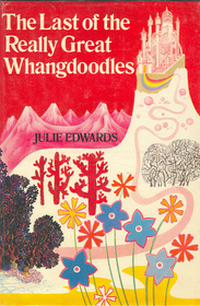
The Last of the Really Great WhangdoodlesThe Last of the Really Great Whangdoodles by Julie Edwards

I had a hard time coming up with something for this one, honestly. But Whangdoodleland was so vivid that I can still picture parts of it, despite having read it only once in the last 30+ years.


Nature is beautiful…but also dying. Name a book that is beautifully written, but also deals with a heavy topic, like loss or grief.

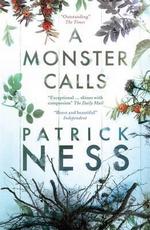
A Monster CallsA Monster Calls by Patrick Ness

When I posted about it, I said, “I’m not convinced that this is really all that well-written, technically speaking. But it packs such an emotional wallop, it grabs you, reaches down your throat and seizes your heart and does whatever it wants to with it—so who cares how technically well it’s written? (and, yeah, I do think the two don’t necessarily go together). A couple of weeks from now, I may not look back on this as fondly—but tonight, in the afterglow? Loved this.” I still look back on it as fondly, for the record.


Fall is Back to School Season. Name a Nonfiction Book that Taught You Something.

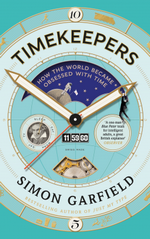
TimekeepersTimekeepers: How the World Became Obsessed With Time by Simon Garfield

If I’m going to read a non-fiction book, it had better teach me something or I’ll end up ranting about it for days/weeks/months! This one popped to mind, though. In my post about the book, I said: “Did I learn something from the book? Much more than I expected to. The chapter on the French experiments alone probably taught me enough to justify the whole book. I didn’t/couldn’t stick with the details of watch-making (I have a hard time visualizing that kind of detail), but even that was fascinating and informative on the surface. Most topics broadened my understanding and taught me something. Also, the sheer amount of trivia that I picked up was great (the amount of time spent recording the first Beatles LP, why pop music tends to be about 3 minutes long, etc., etc.).”


In order to keep warm, it’s good to spend some time with the people we love. Name a fictional family/household/friend-group that you’d love to be a part of.

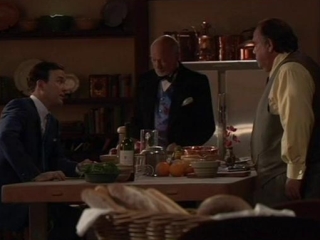
Nero Wolfe trioThe Household of Nero Wolfe from the books by Rex Stout

(yeah, that picture is from the A&E TV show, not exactly the books—but in that image in particular, they look just about perfect)

There were many families/groups/households that I could’ve picked for this, but that Brownstone on West 35th Street is near the Platonic ideal for a place to live—I’d love to spend time with Mr. Wolfe, Archie and Fritz (not to mention Saul, Fred, Orrie, Lily, Lon . . .)


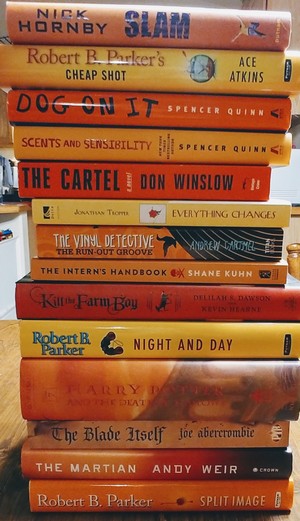
The colorful leaves are piling up on the ground. Show us a pile of Autumn-colored spines.


(I thought this was going to be hard, but in the end, I had to not make the pile bigger!)

Also…wow, clearly, I’m not a photographer. It’s a shame I don’t live closer to my pal, Micah Burke, things around here would look much spiffier.


Fall is the perfect time for some storytelling by the fireside. Share a book wherein somebody is telling a story.

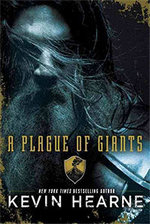
A Plague of GiantsA Plague of Giants by Kevin Hearne

That’s really 90% of the book—a bard telling stories. How he pulls this off, really impressed me.

(Hammered by Kevin Hearne would also qualify, but I liked the storytelling in this one better)


The nights are getting darker. Share a dark, creepy read.

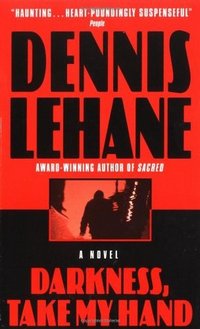
Darkness Take My HandDarkness Take My Hand by Dennis Lehane

This one disturbs me every time I read it (4-6 I think), I still remember having to sleep with the lights on after I stayed up reading it until 2-3 in the morning the first time—I doubt I was a very good employee the next day. (Sacred maybe is creepier, but this is the better book by Lehane)


The days are getting colder. Name a short, heartwarming read that could warm up somebody’s cold and rainy day.

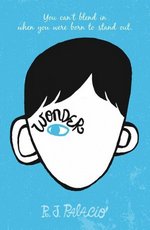
WonderWonder by R. J. Palacio

The “short” in the category is the sticky wicket. But this is a quick read (even if the page number is higher than I’d count as “short.” Formulaic? Yup. Predictable? You betcha. Effective? Abso-smurfly. Textbook example of heartwarming.


Fall returns every year. Name an old favorite that you’d like to return to soon.

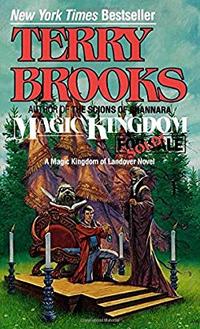
Magic Kingdom for Sale — SOLD!Magic Kingdom for Sale — SOLD! by Terry Brooks

Ive been thinking about this book a lot since Bookstooge’s Quick Fire Fantasy post. Gotta work this into the 2020 reading schedule.

I’m tagging any blogger who reads this. Play along.

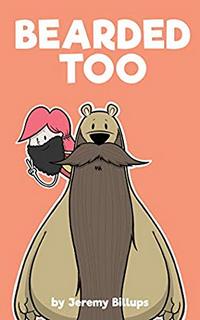
Bearded Too by Jeremy Billups: The Bearded Bear is Back on the Road

Bearded Too

Bearded Too

by Jeremy Billups
Series: Bearded, #2

Kindle Edition, 18 pg.
Billups Creative, LLC, 2019

Read: October 29, 2019


Jeremy Billups has just given us a sequel to 2015’s Bearded—the story of a red-haired girl and her bearded bear traveling and having adventures.

I want to start off talking about the art—I know, I know, I’m usually a word guy—but these are “Picture Books,” right? There’s just something about the way that Billups draws these books that really works for me. Unlike, say, the art in Sea This and Sea That, with all the detailed backgrounds, there’s a lot of whitespace around these drawings, which makes them jump out at you (which is the point of the white space, I know—I’m not good at talking about this stuff). I will admit I’ve flipped through the book a couple of times without glancing at the words (something I assume the target audience will do more often than me).

But that’s not a reflection on the cute rhyming tour of the world seeing bearded animals (a guitar playing orangutan, cab driving markhor, and so on). There’s a dash of education in there, because some of these animals aren’t your typical Picture Book fare, too.

And, hey, a celebration of beards! I’m always down with that.

Not much to say about this, really. It’s a fun follow-up to Bearded that should please the ears and eyes of the picture book readers in your home.


4 Stars

LetsReadIndie Reading Challenge

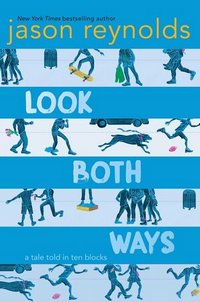
Opening Lines: Look Both Ways

We all know we’re not supposed to judge a book by its cover (yet, publishing companies spend big bucks on cover design/art) (also, this has a great cover). But, the opening sentence(s)/paragraph(s) are fair game. So, when I stumble on a good opening (or remember one and pull it off the shelves), I’ll throw it up here. Dare you not to read the rest of the book.

from Look Both Ways: A Tale Told in Ten Blocks by Jayson Reynolds:

This story was going to begin like all the best stories. With a school bus falling from the sky.

But no one saw it happen. No one heard anything. So instead, this story will begin like all the . . . good ones.

With boogers.

“If you don’t get all them nasty, half-baked goblins out your nose, 1 promise I’m not walking home with you. I’m not playln’.” Jasmine Jordan said this like she said most things—with her whole body. Like the words weren’t just coming out of her mouth but were also rolling down her spine. She said it like she meant it.

The only thing better than that first paragraph is the third. And I can already see Jasmine as clear as day.

Reposting: Bearded by Jeremy Billups: A Charming Picture Book about a Bearded Bear

Local Artist, Picture Book Writer and All-Around Good Guy, Jeremy Billups’ third book is scheduled to release today. It’s called Bearded Too, the sequel to this here book. I’ll post about Too soon, but in the meantime, here’s a look back at Bearded.

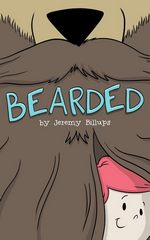
Bearded

by Jeremy Billups
Hardcover, 34 pg.
Billups Creative, LLC, 2015
Read: September 5, 2018
Picture books about bears are everywhere—I have a hard time believing many kids get out of the picture book stage without exposure to at least 4 of them (and that’s before they’re at the Pooh or Paddington stage). But how many of those bears have been bearded?

Enter Jeremy Billups and his little book.

This is the story of a little red-haired girl (no, not that one) traveling the world with her bearded bear, having all sorts of adventures and meeting a bunch of different animals. There really isn’t a lesson, moral or much of a plot—just a bunch of quick looks at the pair. A few quick lines and a picture on each pair of pages.

The art is simple and arresting. They just pop off the page—this is one of those times I wish I had the necessary vocabulary to describe why I like the drawings, but I don’t. I bought a print of what turns out to be page 16 before I even picked up the book to flip through. I’ve bought a handful of prints this year, and it’s my absolute favorite—I like it even more now that I’ve read the book. Also, If you ever see a better picture of someone making buffalo wings, I’ll eat my hat.

Oh, and the endorsements on the back cover are a lot of fun. If that doesn’t convince you to try it out, I can’t imagine what will.

Great art, cute story, fun rhymes—everything you want in a picture book. Even better—animals with beards are the best animals that aren’t dogs. This is a charming little book that’s sure to please.

—–

4 Stars

Pub Day Repost: A Time Traveler’s Theory of Relativity by Nicole Valentine: A Captivating MG Mix of Science and Magic

A Time Traveler's Theory of Relativity

A Time Traveler’s Theory of Relativity

by Nicole Valentine

eARC, 352 pg.
Carolrhoda Books, 2019

Read: August 27, 2019


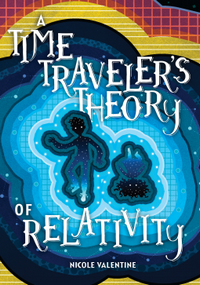
Finn Firth is on the verge of turning 13, and is convinced his father will forget his birthday. Which is troubling to him, but really, it’s the least of his troubles. When they were three, his twin sister drowned (and he’s always felt this absence, and is sure everyone around him does, too). He’s not that close with his father, and his mother left home a few months ago, with no warning and no one has heard from her since. Also, his best (only?) friend, Gabi, has been spending less time with him and more time with new friends—the kind that would bully him. He’s also a huge science nerd, the kind of twelve-year-old who reads (and re-reads) Richard Feynman and Carl Sagan for entertainment. The fact that he’s an outsider, that he’s not like the other kids at school is what drives him (like so many) to science, to something he can make sense of and put himself/his trouble in perspective.

So imagine his surprise when his grandmother informs him that she’s a time traveler, actually, all the women in his family have been and are. It’s not just his family, there are people throughout the world capable of this. Some in his family are more powerful than others, most can only travel to the past—one could only travel to the past but during her lifetime—his grandmother and mother are among the few that can travel forward in time. His mother, he’s told, didn’t leave his father and him. Finn’s dad has been reassuring him that “she just needs some time,” and well, that seems to be the case after all. She’s stuck somewhere, unable to come back—but she’s created a way for Finn to come and get her (despite being a boy).

Time travel is impossible, Finn knows—and even if it weren’t, the kind of travel his grandmother describes sounds more magical than scientific. He tells his grandmother this, in fact. But—I won’t get into how, it should be read in context—he’s given some pretty convincing proof.

Now there are those who don’t think Finn should be doing anything regarding time travel, and that no one should be tracking down his mother. And they’re seemingly willing to take some extreme measures to stop him. He and Gabi set out on an adventure to evade these others and get to his mother’s portal. Finn’s ill-prepared for what lies ahead, but he doesn’t care. Between brains and sheer determination (and largely it’s the latter), he’s going to find his mom.

What he never stops to ask is: what else will he find?

This is a fun little read—Finn and Gabi are well-developed characters, his various family members are interestingly and distinctively drawn, the writing is crisp and brisk—once things get going, they stay going, and it’s easy to get swept up in it The best is the mix of science and . . . however you end up describing the time travel. For a book directed toward the 9-14 set, the science (time travel, chaos theory, multi-world theory, etc.) is presented plainly and without condescension. That last point, in particular, resonated with me.

The heart of this book is found in two concepts—the power of individual choice, and the importance of kindness in spite of everything. Lessons good to be absorbed by the target audience, as well as the rest of us.

I really enjoyed this book and heartily recommend it. One thing, though, kept running through my mind as I read it. As much as I enjoyed A Time Traveler’s Theory of Relativity, when I was 8-13, I would’ve loved it (probably when I was 14 and 15, too—I just wouldn’t admit to liking a book written for younger people at that time). It’s the kind of book that I would’ve been checking out of the library every two or three months. Get this for yourself and enjoy it, get this for your kid for them to obsess over.

Disclaimer: I received this eARC from Carolrhoda Books via NetGalley in exchange for this post—thanks to both for this opportunity.


3.5 Stars

Sea This and Sea That by Jeremy Billups: Plenty of Goodness for the Picture Book Reader to Sea

Sea This and Sea That

Sea This and Sea That

by Jeremy Billups

Hardcover, 44 pg.
2017

Read: September 12, 2019


Off the top of my head, there are essentially three types of Picture Books:

  1. ABCs/123s
  2. Stories told simply (usually with pictures helping the text tell that story)
  3. Odd little collections of interesting/goofy pictures with some text to tie them together.

Myself, I prefer the stories—I’m always on the side of a narrative. But from my observation of my kids, niece, and other children, the third seems to be the most popular. They don’t need a grown-up around to “read” the book on their own, they can just pick it up and flip through the pictures, and the text (usually rhyming) sounds entertaining enough, even if they don’t really get what’s being said. I really know that’s true for my kids, they’d request demand them far more frequently—I can still probably rattle off Boynton’s But Not the Hippopotamus with only a prompt or two, despite not having picked up the book for 12-13 years.

It’s also the kind of book that Billups provides here—it’s set in a “crowded, hectic and gruff” city under the sea, with one quiet spot—The Sea This and Sea That Below the Seashore. Missus Bluffington gives a couple of kids (and the reader) a through her very unusual place, full of all sorts of sea creatures, sea plants, fish, and an octopus that shows up in some unusual places.

The rhyming text is fun, and I can imagine a good parent/adult/caregiver can get a good rhythm going while reading it to entertain their audience, but the star of the show is Billups’ illustrations. They’re just great—there’s plenty of color, while still feeling like you’re looking through blue-green water. The octopus’ tentacle alone is great to keep an eye out for, and I love Missus Bluffington’s glasses. But there’s plenty for a child’s eyes to take in while listening to the text being read to/at them.

I can’t forget to mention that it also includes some great back cover book blurbs that’ll amuse the parent/reader, as well as a couple of visual jokes.

This is a fun little book that’ll appeal to kids who love the look of Finding Nemo/Dory and aren’t quite ready for that other city under the sea, Bikini Bottom. I had fun with it, and I bet adult readers for those kids will, too.


3.5 Stars

A Time Traveler’s Theory of Relativity by Nicole Valentine: A Captivating MG Mix of Science and Magic

A Time Traveler's Theory of RelativityA Time Traveler’s Theory of Relativity

by Nicole Valentine

eARC, 352 pg.
Carolrhoda Books, 2019

Read: August 27, 2019

Finn Firth is on the verge of turning 13, and is convinced his father will forget his birthday. Which is troubling to him, but really, it’s the least of his troubles. When they were three, his twin sister drowned (and he’s always felt this absence, and is sure everyone around him does, too). He’s not that close with his father, and his mother left home a few months ago, with no warning and no one has heard from her since. Also, his best (only?) friend, Gabi, has been spending less time with him and more time with new friends—the kind that would bully him. He’s also a huge science nerd, the kind of twelve-year-old who reads (and re-reads) Richard Feynman and Carl Sagan for entertainment. The fact that he’s an outsider, that he’s not like the other kids at school is what drives him (like so many) to science, to something he can make sense of and put himself/his trouble in perspective.

So imagine his surprise when his grandmother informs him that she’s a time traveler, actually, all the women in his family have been and are. It’s not just his family, there are people throughout the world capable of this. Some in his family are more powerful than others, most can only travel to the past—one could only travel to the past but during her lifetime—his grandmother and mother are among the few that can travel forward in time. His mother, he’s told, didn’t leave his father and him. Finn’s dad has been reassuring him that “she just needs some time,” and well, that seems to be the case after all. She’s stuck somewhere, unable to come back—but she’s created a way for Finn to come and get her (despite being a boy).

Time travel is impossible, Finn knows—and even if it weren’t, the kind of travel his grandmother describes sounds more magical than scientific. He tells his grandmother this, in fact. But—I won’t get into how, it should be read in context—he’s given some pretty convincing proof.

Now there are those who don’t think Finn should be doing anything regarding time travel, and that no one should be tracking down his mother. And they’re seemingly willing to take some extreme measures to stop him. He and Gabi set out on an adventure to evade these others and get to his mother’s portal. Finn’s ill-prepared for what lies ahead, but he doesn’t care. Between brains and sheer determination (and largely it’s the latter), he’s going to find his mom.

What he never stops to ask is: what else will he find?

This is a fun little read—Finn and Gabi are well-developed characters, his various family members are interestingly and distinctively drawn, the writing is crisp and brisk—once things get going, they stay going, and it’s easy to get swept up in it The best is the mix of science and . . . however you end up describing the time travel. For a book directed toward the 9-14 set, the science (time travel, chaos theory, multi-world theory, etc.) is presented plainly and without condescension. That last point, in particular, resonated with me.

The heart of this book is found in two concepts—the power of individual choice, and the importance of kindness in spite of everything. Lessons good to be absorbed by the target audience, as well as the rest of us.

I really enjoyed this book and heartily recommend it. One thing, though, kept running through my mind as I read it. As much as I enjoyed A Time Traveler’s Theory of Relativity, when I was 8-13, I would’ve loved it (probably when I was 14 and 15, too—I just wouldn’t admit to liking a book written for younger people at that time). It’s the kind of book that I would’ve been checking out of the library every two or three months. Get this for yourself and enjoy it, get this for your kid for them to obsess over.

Disclaimer: I received this eARC from Carolrhoda Books via NetGalley in exchange for this post—thanks to both for this opportunity.

—–

3.5 Stars

Teen Titans: Raven by Kami Garcia, Gabriel Picolo (Illustrator): An Updated Look into the Empath’s Past

Teen Titans: RavenTeen Titans: Raven

by Kami Garcia, Gabriel Picolo (Illustrator)
Series: Teen Titans, #1
Paperback, 168 pg.
DC Ink, 2019

Read: August 2, 2019

I’ve talked here before about my love of The New Teen Titans, the 1980-96 series created by Marv Wolfman and George Pérez. They were my real first (and probably deepest) comic love. It informed and shaped my tastes in ways I probably can’t realize and definitely can’t articulate. It’s practically sacrosanct to me. So the idea of DC Comics hiring Kami Garcia (as much as I might like Garcia) to write modern takes on the origins of Raven (and, apparently, others)—whether or not Wolfman signed off on the idea—both repelled and attracted me. At least it had to be better than that Teen Titans Go! monstrosity.

You know what? I liked it.

Here’s the official blurb, in the interest of time (saving my time that is):


When a tragic accident takes the life of 17-year-old Raven Roth’s foster mom–and Raven’s memory–she moves to New Orleans to recover and finish her senior year of high school.
Starting over isn’t easy. Raven remembers everyday stuff like how to solve math equations and make pasta, but she can’t remember her favorite song or who she was before the accident. And when impossible things start happening, Raven begins to think it might even be better not to know who she was before.

But as she grows closer to her new friends, her foster sister, Max, and Tommy Torres, a guy who accepts her for who she is now, Raven has to decide if she’s ready to face what’s buried in the past…and the darkness building inside her.

From #1 New York Times bestselling author Kami Garcia and first-time graphic novel artist Gabriel Picolo comes this riveting tale of finding the strength to face who you are and learning to trust others–and yourself.

This retains enough of Raven’s original origin story (I have no idea what her post-New 52 origin is) to satisfy me, but tailored for a contemporary (and YA) audience. It feels fresh, as if Garcia had created Raven herself. Of course, Daddy (un)Dearest is waiting in the wings for a reunion with his daughter, providing the lingering threat that leads to the assembling of the Titans (or, bringing the Titans Together! as one might say). This is, of course, assuming that Garcia is heading in a Wolfman-esque trajectory, it seems that way.

Slade Wilson’s also around in a vaguely menacing way, but we’re going to have to read further installments in this series to get a strong handle on why. It’s gotta be nefarious, because it’s Wilson.

Picolo’s art is nice and dynamic. It pretty much screams motion and youth. Don’t ask me to elucidate that, when it comes to visuals, all I can do is give vague impressions. But I dug it. Picolo’s not Pérez, but who is? I’m glad he didn’t try.

The fact that I didn’t throw this across the room in disgust says a lot for me, that I enjoyed it and am looking forward to Beast Boy says much more. If you’re a dyed-in-the-wool fan or even just someone who likes non-Avengers/Justice League superheroes, you should give it a shot.

—–

3 Stars

2019 Library Love Challenge

A Few Quick Questions With…Christy J. Breedlove

I talked a little bit ago about, Screamcatcher: Web World and now I have the pleasure of sharing a Q&A I did with the author, Christy J. Breedlove. I liked the book and I like what she had to say here (there seems to be a theme…). I hope you enjoy and I hope this helps convince you to give Breedlove and her work a shot.

Tell us about your road to publication — was your plan/dream always to become a novelist and your education/other jobs were just to get you to this point, or was this a later-in-life desire?
                     My early writing accomplishment were multiple hits within a few years: In my first year of writing back in 1987, I wrote three Sf short stories that were accepted by major slick magazines which qualified me for the Science Fiction Writers of America, and at the same time achieved a Finalist award in the L. Ron Hubbard Writers of the Future Contest. This recognition garnered me a top gun SF agent at the time, Richard Curtis Associates. My first novel went to John Badham (Director) and the Producers, the Cohen Brothers. Only an option, but an extreme honor. The writer who beat me out of contention for a feature movie, was Michael Crichton’s Jurassic Park. My book was called Dinothon.

A year after that I published two best-selling non-fiction books and landed on radio, TV, in every library in the U.S. and in hundreds of newspapers.

I have been trying to catch that lightning in a bottle ever since. My YA dystopian novel, The Girl They Sold to the Moon won the grand prize in a publisher’s YA novel writing contest, went to a small auction and got tagged for a film option. So, I’m getting there, I hope!

I don’t want to ask “where do you get your ideas?” But out of all the ideas floating around in your head, why’d you latch onto this one — what was it about these characters, this idea that drove you to commit months/years to it?
                     I was always under the illusion that everything hasn’t been done. I fool myself into think that because premise is my number one priority. If it isn’t unique, out-of-the-box or distinctive, I won’t attempt it. We have a dream catcher in the living room, and one day I stared at it and remember some of the legend behind it. Then I looked up the lore associated with the dream catcher. That really started a fire within.
What kinds of research went into the construction of this concept and the world? What was the thing you came across in your research that you loved, but just couldn’t figure out how to use? (assuming there was one)
                     It all started with the dream catcher. This iconic item, which is rightfully ingrained in Indian lore, is a dream symbol respected by the culture that created it. It is mystifying, an enigma that that prods the imagination. Legends about the dream catcher are passed down from multiple tribes. There are variations, but the one fact that can be agreed upon is that it is a nightmare entrapment device, designed to sift through evil thoughts and images and only allow pleasant and peaceful dreams to enter into consciousness of the sleeper.

I wondered what would happen to a very ancient dream catcher that was topped off with dreams and nightmares. What if the nightmares became too sick or deathly? What if the web strings could not hold anymore visions? Would the dream catcher melt, burst, vanish, implode? I reasoned that something would have to give if too much evil was allowed to congregate inside of its structure. I found nothing on the Internet that offered a solution to this problem—I might have missed a relevant story, but nothing stood out to me. Stephen King had a story called Dream Catcher, but I found nothing in it that was similar to what I had in mind. So I took it upon myself to answer such a burning question. Like too much death on a battlefield could inundate the immediate location with lost and angry spirits, so could a dream catcher hold no more of its fill of sheer terror without morphing into something else, or opening up a lost and forbidden existence. What would it be like to be caught up in another world inside the webs of a dream catcher, and how would you get out? What would this world look like? How could it be navigated? What was the source of the exit, and what was inside of it that threatened your existence? Screamcatcher: Web World, the first in the series, was my answer. I can only hope that I have done it justice. The readers can be the judge of that.

Who are some of your major influences? (whether or not you think those influences can be seen in your work — you know they’re there)
                     Oh, like what I consider stylists: Poul Anderson, Virgin Planet, Peter Benchley, The Island and Jaws, Joseph Wambaugh, The Onion Field and Black Marble, Michael Crichton, Jurassic Park, Alan Dean Foster, Icerigger trilogy, and some Stephen King. Anne Rice impresses with just about anything she has written. I think it’s the humor and irony that attracts me the most–and it’s all character related As far as Ya material, I was really floored when I studied Jo Rowling’s world building. As far as dangers, toils and snares, I was attracted to the action in The Hunger Games—a real mind changer for me.

What’s the one (or two) book/movie/show in the last 5 years that made you say, “I wish I’d written that.”?
                     Totally off the spec genre, I was captivated by Rocketman, the story of Elton John, and Bohemian Rhapsody, the story of Queen. I’m a sucker for bio-dramas, like Cinderella Man, and such. There is something about the human struggle to fame and fortune that fascinated me. I get emotionally involved in the character/characters. It’s true to life, and I’ve a similar life picture painted with such ups and down.
I see there’s another Screamcatcher volume on the way, are there more to come after that? Or have you latched on to some other idea for what’s next, and can you tell us a little about that?
                     Two more Screamcatcher books are finished and sold to the same publisher. The second in the trilogy is called Screamcatcher: Dream Chasers. The third and final is called Screamcatcher: The Shimmering Eye. By the second book, the kids have formed the Badlands Paranormal Society. The fancy themselves as true paranormal investigators since they escaped alive from the first Web World in book 1. The third books, via the blessings of George Knapp, investigative reporter out of Las Vegas, is my fiction account of what really happened at Skin Walker Ranch, the most haunting tale I’ve ever heard in my life.
Thanks for your time—and thanks for Screamcatcher, I enjoyed it, and hope you have plenty of success with it.
                     I’m honored, H.C. Newton to grace your pages and thank you for your time and consideration of my life and work.

Screamcatcher: Web World by Christy J. Breedlove: Get Caught Up in this YA Fantasy’s Web

Screamcatcher: Web WorldScreamcatcher: Web World

by Christy J. Breedlove
Series: Screamcatcher, #1


Kindle Edition, 218 pg.
Melange Books – Fire and Ice YA, 2019

Read: July 31, 2019

I don’t have a lot to say about this one, my views are pretty straightforward and most of the analysis I’d give would be spoiler-heavy, but I do want to try to say enough to entice someone (preferably a few someones) to read this satisfying YA Fantasy.

I really prefer to come up with my own synopses, but I’ve failed to think of a succinct way to give one for this book (well, I had one that was too succinct and was really unsatisfactory), so I’m just going to appropriate the official blurb:

           When seventeen-year-old Jory Pike cannot shake the hellish nightmares of her parent’s deaths, she turns to an old family heirloom, a dream catcher. Even though she’s half blood Chippewa, Jory thinks old Indian lore is so yesterday, but she’s willing to give it a try. However, the dream catcher has had its fill of nightmares from an ancient and violent past. After a sleepover party, and during one of Jory’s most horrific dream episodes, the dream catcher implodes, sucking Jory and her three friends into its own world of trapped nightmares. They’re in an alternate universe-locked inside of an insane web world. How can they find the center of the web, where all good things are allowed to pass?

I don’t pretend to have an extensive, much less exhaustive, familiarity with uses of Native American symbology, imagery, spirituality, or anything. But I’ve come across my share over the years, and I don’t remember anyone using the dreamcatcher in any significant way before. And I don’t know why — this is an awesome idea.

The first few pages (maybe the first chapter or so) were a little rough, and my expectations lowered a little bit. But once Breedlove had established the world and things started happening, the book became a lot more enjoyable and I got sucked right into it. Breedlove does a great job of balancing the fantastic elements of this dream world (I guess nightmare world would be closer to the truth) and reality to make it easy to understand, but still following a nightmare logic ad full of the stuff that dreams are made of (just without the statuary from Malta).

There was a love story that was established early on, and I really had no interest in it, but it eventually won me over and I started pulling for it. Making it on two fronts that Breedlove got me to invest in both the story and the characters when I wasn’t in any frame of mind to do so. I can’t tell you what ineffable quality there is to her writing that accomplishes that, but call it what you will, I like it when someone can do that.

There was a little suspense concerning the fate of some of Jory’s friends/companions, but by and large, you get the feeling early on just how things will turn out for almost all involved, the pleasure (for the reader, not the characters) is in the journey. There’s some self-discovery and personal growth to go with the monster fighting (fighting and/or avoiding).

It is written for a YA audience and certainly will appeal to that sensibility, but it can easily be entertaining for those of us with gray in our beards or on our heads (assuming there’s anything to gray). I’d like a little more depth to the primary characters, but that wasn’t in the cards, and it’s not like they’re not three-dimensional, I just think those dimensions could be a little deeper.

I did expect a lot more Native American imagery and myth (something akin to Riordan maybe, at least like Craig Johnson). I don’t think what we got was incompatible with it by any means, but it certainly wasn’t steeped in it. I’m not complaining, I don’t think the story needed it, but it might have made things a bit richer.

I don’t see how this leads to a sequel, in fact, I’d have thought it precluded one. But the end of the book tells me it’ll be available this year. Color me curious.

Imaginative and compelling with an unusual focus/motivating hook. For a fast, fun YA fantasy, Screamcatcher: Web World will satisfy.

Disclaimer: I received a copy of this novel from the author in exchange for this post, but I read it because I wanted to and the opinions expressed are my own and not influenced by the receipt of the novel.

—–

3.5 Stars

LetsReadIndie Reading Challenge

Page 24 of 42

Powered by WordPress & Theme by Anders Norén