Category: YA/MG/Children’s Books Page 36 of 42

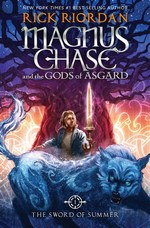
The Sword of Summer by Rick Riordan

The Sword of SummerThe Sword of Summer

by Rick Riordan
Series: Magnus Chase and the Gods of Asgard, #1

Hardcover, 491 pg.
Disney – Hyperion Books, 2015
Read: November 6 – 7, 2015

Maybe you’re thinking, Oh, Magnus, you didn’t really die. Otherwise you couldn’t be narrating this story. You just came close. Then you were miraculously rescued, blah, blah, blah.

Nope. I actually died. One hundred percent: guts impaled, vital organs burned, head smacked into a frozen river from forty feet up, every bone in my body broken, lungs filled with ice water.

The medical term for that is dead.

Gee, Magnus, what did it feel like?

It hurt. A lot. Thanks for asking.

Welcome to Rick Riordan’s latest tale of the offspring of mythological deities and the humans silly enough to fall for them. We’ve done the Greek pantheon, spent some time with the Egyptians, and came back for another round with the Greeks — this time with their Roman counterparts, but now we’re in for something new: Norse mythology. A whole new kettle of fish. This involves a new type of central character, a new kind of setting, new challenges. Which gives us the best thing from Riordan since the Percy Jackson & the Olympians series.

Magnus Chase is a homeless teen, orphaned a couple of years back when his mother was killed. Since then, he’s lived on the streets of Boston, spending his days in museums and libraries, learning as much as he can about whatever, and establishing relationships with generous restaurant employees and fellow homeless people. Two of whom track him down one day to let him know that there are people looking for him. It turns out that this is his sixteenth birthday and life just got a lot more dangerous for him. The people seeking him are family and they’re sure that he’s about to be hunted by beings he doesn’t believe exist.

The quotation above shows how well that being hunted works out for Magnus.

But he goes down fighting — to save himself, bystanders, and a couple of friends. So a Valkyrie (who happens to be Muslim, a combination that fascinates me) takes him to Valhalla — where he makes some more interesting friends, and enjoys a quality of (after-)life that’s far better than the streets. But then, someone casts doubt on the worthiness of his selection, which puts that Valkyrie in hot water.

So now Magnus has to take things into his own hands, prove that he’s worthy, defend the Valkyrie, and prevent Ragnarok from starting — or, if things go wrong, kick it off. It could go either way, really. One of the best pieces of advice he gets — the thing that inspires him is:

The thing about fate, Magnus: even if we can’t change the big picture, our choices can alter the details. That’s how we rebel against destiny, how we make our mark.

Now it’s just a question of what kind of mark he leaves.

Love, love the voice/attitude, I’ve seen some criticisms of it from parents, but I think it’s fun, and it’s just the kind of thing to feed into his audience (both the target and those who’ve grown up reading Riordan and still read him despite no longer being age-appropriate). It’s the clearest, crispest, funniest narrative voice since the Percy books — and might end up surpassing them by the end of this series.

I really don’t know that much about Norse mythology — world tree, Ratatoskr, Asgard, Valhalla, Odin, ravens, Hel, etc. I’ve got, but the details are really fuzzy. Most of what I know about Norse myth comes from Kevin Hearne’s Iron Druid Chronicles and Jacqueline Carey’s Daisy Johanssen/Agent of Hel Urban Fantasy books. So I’m learning a lot — and I assume younger readers will, too. The few pages of supplemental materials in back of the book are such a nice help! I really enjoy Riordan’s take on these mythological figures — both those I know and those I’m new to. I think the Thor you meet in these pages is fantastic. Yeah, Hearne’s Thor is a better character, but Riordan’s Thor induced more chuckles.

There are some great chapter titles here — I tend to ignore them (anything beyond a number is a distraction), which is short-sighted, I realize, but that’s what I do. In this book? It’d be really dumb to skip them. Every now and then I’d stop to go back and read the last few that I’d missed. If they’re not the funniest (and most creative) lines in the book — they’re in the top 2%.

The tie-in to the Percy Jackson books is obvious (and I felt really stupid having to have it spelled out for me in the opening chapters rather than sussing it out much earlier) and unexpected, but I can’t wait to see how that develops. But even more entertaining are the jokes about aspects of the Percy-verse — flat-out funny, and nice bit of fan service, too. Oh, and they won’t make a lick of difference to the Riordan-novice.

I just realized that I haven’t even addressed the titular sword. I don’t know what to say about it without ruining anything, but if I was eleven years old? It’d be my favorite sword ever — better than Excalibur or anything that Tolkien could offer (as someone much older than 11, I don’t think that, but I wouldn’t argue with my younger self).

One other thing — I read a review from one review site that I respect that dampened by enthusiasm for getting this — but I decided that Riordan had earned my trust (and I was curious), so I gave this a shot. That review complained about the sarcasm — I don’t get that, but apparently that’s a thing for some parents. And they complained about the addition of cussing — now maybe I missed it, but outside of the taking the names of Norse gods in vain (and that could be argued), the only cussing I saw was in dialogue tags. As in “…,’ he cussed.” Seriously? If we have to shield our middle graders from the concept of cussing, they’re not going to survive the middle grades. There were a few other complains that were about as baseless as these — I kept waiting to see these problems as I read and missed every single one.

Which isn’t to say this is a perfect book — but man, it’s the best he’s done in quite a while. The problems I have are really not worth getting into, they don’t ruin the experience, and if you’ve read Riordan before, you’ll be expecting them (they’re less problematic in this book than the last 2-3). The Sword of Summer is funny, exciting, with real heart — just the thing for middle grade readers (or those who don’t mind reading below their fighting weight).

—–

4 Stars

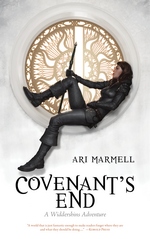
Covenant’s End by Ari Marmell

Covenant's EndCovenant’s End

by Ari Marmell
Series: Widdershins Adventures, #4
Hardcover, 265 pg.

Pyr, 2015

Read: September 10, 2015

So Ari Marmell has decided to bring our time with Widdershins to a close. On the one hand, I understand the choice. On the other hand, I enjoy these too much to let go willingly.

It turns out that the great and nasty demon that she pushed herself and her friends to — and past — the limit to defeat back in False Covenant had friends — or at least family. And thanks to Widdershins old foe Lisette, they are getting closer and closer to setting up camp in Davillon (and probably the whole world, really).

Widdershins has to call on all her allies — old, new, unwanted and not terribly wiling — and friends, play every trick in the book (and invent a few), and be prepared to sacrifice everything just to have a fighting chance here.

Emotionally, spiritually, physically — whatever she’s gone through before is nothing compared to this. While it is very much a team effort, let’s not get confused — her name is in the series title, and she’s the only one on the cover. It’s Widdershins story, and the weight of this falls on her. Yet, she faces the danger with humor, aplomb and panache (and the help the deity living in her head).

For a book as dark, foreboding, bloody and so . . . final; I sure spent a lot of time smiling and chuckling. It’s a quick, exciting read that checks off every tick box you might have for a finale.

—–

4 Stars

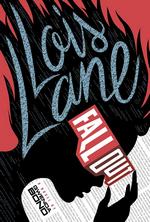
Lois Lane: Fallout by Gwenda Bond

Lois Lane FalloutLois Lane: Fallout

by Gwenda Bond
Series: Lois Lane, #1

Hardcover, 303 pg.

Switch Press, 2015

Read: June 27, 2015I’d love to be able to talk about this book as a YA adventure tale on its own. But I can’t. It’s Lois Lane, fer cryin’ out loud. Lois the intrepid, fiery, determined journalist. Not the ditz, not the comic relief, not the damsel in distress (except for the distress she finds herself in because she plunged into danger, not as a victim). Sure, she’s sixteen and a rookie when it comes to reporting things — but she’s gotta start somewhere.

Not only is this Lois Lane, but it’s teenaged Lois. So you have to think about this in terms of Smallville, well I have to, anyway. Bond’s Lois isn’t Smallville‘s — she’s closer to Chloe Sullivan (just with less tech savvy). Actually, if we’re talking WB shows, Bond’s Lois is Veronica Mars without the cool dad. But she’s not just smart and tenacious. She also gets people — she may have no social skills (or not enough of them), but she can read a person. Early on, Lois sees what’s going on with the other girl in the news staff pining after one of the guys. There were other examples, but putting that one where it was — and the way Lois saw it — makes you believe her “reads” of other people.

After spending her life bouncing around the world, from base to base, and seeing the negative effect it’s having on his daughter. General Lane gets himself a permanent assignment to Metropolis (the exact nature of which isn’t clear — but what teenager cares that much about what their parent does?). Lois is going to put down roots here, too, and not get in trouble at school — a resolution that doesn’t last through first period. But, this draws Perry White’s attention as he visits the school, and he invites her to join a new student news project. From there, Lois and her new colleagues uncover a story that involves a strange mix of cyberbullying, VR gaming, and group psychology.

Sure, the story she uncovers is about outlandish, a little hopefully) hard for us to believe. But, hey, this is a book based on comics. So yeah, outlandish works. It also allows Bond to make some subtle (maybe overly subtle) remarks about group-think, the dangers of our online society, and so on.

The use of Gen. Lane, Lucy, Perry White and the Daily Planet were inventive, but were consistent with the source material. Which was both a relief, and a key for the book working as well as it did.

Her friends aren’t that developed — but there’s enough of them to be more than cardboard cutouts of high school stereotypes. I look forward to learning more about them all — I think Maddie’s the most entertaining and interesting, but I’d gladly see more of the others as well. Which goes for East Metropolis High as a whole, really. I hope in future installments that Lois can find someone other than the school secretary to dupe to accomplish her ends.

She doesn’t do much with him, but I enjoyed Bond’s treatment of Lois’ online friend, SmallvilleGuy. Someone she met online after posting about seeing something inexplicable in the middle of Kansas. Bond doesn’t try to hide from the reader who this guy is, or play games with us — the nickname is a dead giveaway. Still, it would’ve been easy for Bond to pretend for a couple of books that this stranger was someone new to the canon. Instead, she plays it straight — sure, she has some fun because we all know a whole lot more than Lois does about this guy, and what their future will hold. But she doesn’t do it at the expense of either character.

Fallout was engaging, fun, and an inventive contemporary take on a timeless character. Recommended for comic book types who don’t mind a different look at canon and/or people who like CW dramas.

—–

3.5 Stars

I Am Princess X by Cherie Priest (Kali Ciesemier, Illustrator)

I Am Princess X I Am Princess X

by Cherie Priest, Kali Ciesemier, Illustrator

Hardcover, 227 pg.
Arthur A. Levine Books, 2015

Read: June 4, 2015

This book starts off just like the book description tells you — it’s practically an outline of the first 40 pages. Somehow, even if all they were doing was fulfilling the book jacket copy, the opening chapters sucked me in more and more with each detail until the last sentence on page 35. That line was just creepy. At that point, I put my finger in the book to save the page, called to my daughter (who’d showed minor interest on the book) and told her that unless Priest screwed things up, she had to read this (and seriously , what were the odds of Priest doing that?).

Years after the death of her best friend, Libby, May starts to see drawings around town of something the two had created together (and no one else knew about). How is that possible? She does everything she can to find out, but that doesn’t tell her anything other than that there’s a (pretty popular) webcomic out there starring their creation. There’s a self-proclaimed computer guru (Patrick — he prefers Trick, though) living a few floors below her dad that May hires/cons into going the extra technological mile for her. Their investigation doesn’t remain online, and before long the two are running all over Seattle. They dance between employer/employee; condescending college-aged twerp/younger, slightly naive teen; pals throughout in a way that seems organic and real. It’s probably the most realistic thing in the book after the death of Libby. While I’m talking about them — the hijinks the pair get into in the cemetery result in either the funniest or the grossest line of dialog I’ve read this year. Possibly both.

This isn’t the kind of comic/prose hybrid that Jeff Kinney, James Patterson, Stephen Pastis, etc. are doing — Priest uses the comic pages (taken from the fictional webcomic) to further the plot, to help us see what May and Trick are reading/seeing. Rather than trying to describe (and likely not succeeding all that often) a series of panels and the artwork, we just get them. Shorter, sweeter, to the point. A great merger of the two media. Ciesemier’s art is spot-on, I could easily read a webcomic she draws.

This is a YA novel with no love triangle, no romantic love period — that’s practically enough of a sales pitch for me right there. Friendship — that’s the emotional core driving this. The old friendship between Libby and May, that death hasn’t changed too much; the budding friendship between May and Trick, and another one that’s in spoiler territory. Nowhere along the lines is there even a whiff of anything else between these characters. What a breath of fresh air! There’s some actual parenting (not perfect, but humans trying) along the line, too — a couple of pretty good dads — something else I don’t see a lot in YA. So yay there, too.

It’s an implausible story grounded in three real characters (May, Trick and May’s dad) — and a couple of others that could have been as grounded if we’d gotten a few more pages from them. For the story this is trying to tell? That’s just enough to carry it.

We see the villain enough to find him threatening and somewhat believable, learn enough about him to support that, but not enough that we can develop any sympathy for him — he’s mostly shadow, which frequently feels like under-writing or a cheat by the author. But here it felt like a device to underline the threat he poses.

This is pure escapist adventure reading — no muss, no fuss, no frills. The story matches the medium of a webcomic pretty well. Sure, it could’ve been a deeper, more reflective novel — or even a slightly more realistic one. But it doesn’t need to be. Have I rated better written/constructed novels lower than this? Oh yeah. But this novel was exactly everything it promised to be, everything it needed to be. This grabbed me from the start and didn’t let go until it was done.

As an added bonus for people like me, I’m pretty sure there’s a tip o’ the hat to Robert B. Parker in these pages. That just brought a smile to my face.

—–

—–

4 1/2 Stars

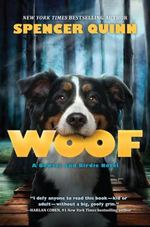
Woof by Spencer Quinn

WoofWoof

by Spencer Quinn
Series:Bowser and Birdie, #1

Hardcover, 293 pg.
Scholastic Press, 2015
Read: May 14 – 15, 2015

One quick sniff and I knew that BLTs were in that basket. BLTs were an odd human invention, sandwiches filled with weird tasteless stuff no one in their right mind would be interested in — except for the bacon. In case you missed that, I’ll mention it again: bacon!

This is just cute. That’s all there is to it. A cute MG novel, featuring a nice little girl with a lot of spunk and her new dog, Bowser. A fun mystery novel with a lot of heart.

Birdie Gaux is an 11-year-old mix of Flavia De Luce, Izzy Spellman, and Inspector Gadget’s niece Penny (from the original cartoon, natch). Fiery, spunky, determined, far too curious and independent, a little too comfortable with shading the truth/outright lying, with a clever dog friend. While her mother works on an offshore oil rig for months at a time, Birdie lives with her grandmother and helps in the family’s struggling bait shop. She doesn’t remember much about her father, a police detective killed in the line of duty when she was very young.

After getting Birdie her late birthday gift, our new friend Bowser, Grammy and Birdie stop at the bait shop to discover they’ve been robbed, while the comic relief employee napped a bit. The only thing taken was Grammy’s stuffed marlin — a family heirloom passed down from her father after his return from World War II. The adults — Grammy, the Sheriff, and the napper are ready to write the marlin off as a lost cause, but Birdie’s not.

Birdie and Bowser are galvanized into action — she’s sure she smells cigar smoke in the shop, and Bowser finds the remains of a cigar nearby for her, convincing Birdie that she’s right. The Sheriff is a nice enough guy, who’s more than willing to listen to Birdie’s thoughts about the case (listen — not really act upon) — but he’s not going to invest too much energy into investigating the theft of a dead fish, no matter the sentimental value. So Birdie, with the help of some friends (including the Sheriff’s son) and a nice — and easily confused — woman from the local retirement home, sets about hunting for the missing marlin (and some secrets that may be hidden within).

There’s a little danger, peril and excitement along the way, but nothing inappropriate for the age group. Bowser gets the worst of it, honestly, while Birdie is mostly safe. There’s some hints of problems looming for Grammy, some dark events in Bowser’s past, and that sort of thing. The sharper young readers will catch that, others won’t — it’ll either add some nuance and flavoring to the experience or it won’t — nothing that will affect the understanding of the story.

Quinn is much beloved around here for his series of novels about Bernie, the P. I., and his partner Chet the Dog — narrated, as this book is, by Chet. For the sake of diversity, I was hoping that Bowser wouldn’t narrate the novel in Chet’s voice. But he does — which is mildly disappointing for me, because I’d rather get the original. But as for attracting new readers — particularly a new demographic? It’s perfect. And while sure, I grumbled occasionally while reading — and here — about Bowser being Chet without the Police Dog Training, it’s still a fun voice. One that you have little trouble imagining would belong to a dog.

Not the most demanding of reads, nor the most complex of mysteries, Woof is a pleasant introduction to a new series that I hope will be around quite awhile, I look forward to getting to know Birdie, her dog, her friends and family a lot better. I imagine that soon enough, I won’t be alone, and that Quinn has found himself a whole new fan-base.

—–

3 Stars

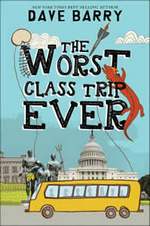
The Worst Class Trip Ever by Dave Barry

The Worst Class Trip Eve

The Worst Class Trip Eve http://www.davebarry.com/book-page.php?isbn13=9781484708491
by Dave Barry

Hardcover, 211 pg.
Disney-Hyperion, 2015

Read: May 19, 2015

There’s not a whole lot to say about this one — this is the story of some of clever (and yet dopey) 8th grade students from Miami on a field trip to Washington, D. C., who fall into a strange predicament involving international intrigue, kidnapping, an attack on the White House/President and very, very petty theft. The only other thing you need to know is that Dave Barry wrote it, so it’s goofy and very funny.

The humor is juvenile — even for Barry. Adults who remember the target audience, and can adjust their standards appropriately, should be able to chuckle at this few times. At the very least, you can appreciate the jokes. It’s perfect for the Middle Grade crowd, probably leaning towards the male perspective (or whatever the demographic is that appreciates flatulence-based humor). This is not to say that all kids won’t enjoy it — it’s just that it’ll score better with kids with a particular sense of humor.

It’s silly, fast-paced, some good action, and some ridiculous characters/plotlines. A lot of fun, definitely what anyone who read Big Trouble should expect from the author writing to MG audience. I’m glad I read it, but I suspect that my 11-year-old will enjoy it more than I did.

—–

3 Stars

Atlanta Burns by Chuck Wendig

I’ve got a bet with myself involving how many words I can get into this thing without mentioning a certain UPN/CW show about a teenage P. I. I don’t have high hopes of winning.

Atlanta BurnsAtlanta Burns

by Chuck Wendig
Series:Atlanta Burns, #1-2


Kindle Edition, 381 pg.
Skyscape , 2015
Read: March 20 – 23, 2015

Morning— well, late morning— well, let’s just call it “noon”— arrives, and Atlanta awakens in a dreary, bleary-eyed sweat. Her spirits lift a little— not a full, bounding leap, but like a balloon whose helium hasn’t gone all the way out— when she realizes that this is the first day of summer vacation.

Sleep is evasive, ducking and feinting, slippery like a pig slathered in its own grease. The day was hot, but somehow the night seems hotter . The air thick and stuffy like she’s a piece of French toast puffing up and sweating on the griddle . Summer’s not even here yet, but the season has sent an early preview.

No matter what you think of Ms. Burns and her (mis?)adventures, getting lines like that is half the fun. This is my second book by Wendig and the one thing I can say for certain is that this man has a way with prose that really, really like.

Thankfully, this time, I like his protagonist and the stories that she’s finding herself in.

Atlanta’s in a new-ish school in a new-ish town, and is hating it. She’s already got herself a (deserved) reputation for reckless violence, which comes in handy when she comes across some bullies attacking a Hispanic kid. She disrupts things for them, earning herself a couple of new enemies and a friend she doesn’t want. Before she knows it, Atlanta’s got a new reputation — as someone who bullies the bullies, who can get your revenge for you.

Atlanta’s a mess — dealing with PTSD (or something akin to it), her relationship with her mother’s in shambles, isn’t good with people — especially those in authority, mixes up non-prescribed pharmecuticals and caffeine in a way that can’t lead to long-term phscial or mental health. Probably not in the short-term, either, come to think of it. She makes mistakes — big ones, potentially lethal ones. She may be a contemporary Sally Kimball — but she’s nowhere near as perfect as Sally (or her partner). It wouldn’t have shocked me if she was killed in all of her nosing around. (it would’ve fit the tone of the book, too).

Some of the characters here are very well drawn, some aren’t. The English teacher who takes an interest in her is like every English teacher you’ve read/seen on TV who takes an interest in a troubled kid. Her nerdy friends, or her drug/gun dealer, on the other hand, are sharply and fully drawn. Ditto for the bullies, criminals and low-lifes she comes into contact with. I’m torn about Atlanta’s mother, I’m not sure what to think of her as a character, really. She’s largely extraneous to the plot, but when she’s around, it counts.

The violence seems real. It’s messy, sloppy, not a series of precision moves/shots/etc. like you’d get from…well, about everyone else. It hurts. It takes people down and takes time to recover. Nowhere near as entertaining (at least not in the same way) as Reacher talking about how much force is required to break bone X, or Vinnie Morris making the impossible shot, or Elvis Cole delivering a precision kick to the face. Instead, what we get is visceral, bloody, and wrong. Sort of what violence is supposed to be.

This is one of those books where you quickly learn to stop thinking, “it’s not going to get worse than this.” It does, and soon. And then it does it again. Which isn’t to say that there aren’t victories — some are minor, some are Pyrrhic, but they’re there. There’s even a little joy. The ending is satisfying, while leaving the door open for more. Atlanta has more in common with Frank Castle than Flavia de Luce, more Lisbeth Salander than Veronica Mars, more Beatrix Kiddo than Kinsey Milhone, but there’s a little of all of them in her. I look forward to more from her.

—–

3.5 Stars

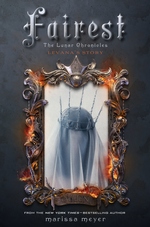
Fairest by Marissa Meyer

How’s this for embarrassing? As I typed this up, I noticed I hadn’t blogged about the previous volume in the series, Cress. Man, I hate that.

—–

FairestFairest

by Marissa Meyer
Series: The Lunar Chronicles,#3.5

Hardcover, 222 pg.
Feiwel & Friends, 2015
Read: April 25, 2015
Most of the time, when I see a .5 in a series, it’s a 30-70 page tale to fill in a narrative gap, or keep the fan base appeased, or something that doesn’t come across as unintentionally offensive. Leave it to Meyer to toss in a 200 page .5 instead.

So ever wonder what turned The Lunar Chronicles Queen into the evilest royal this side of the Brothers Grimm? Yeah, me either. But, Meyer answers the unasked question. From her horrible childhood to her mortifying adolescence to her even worse adulthood (aside from ruling the Moon), this book takes us through the Levana’s development — descent? — while planting all the seeds we need to see how the events of Cinder etc. are set in motion.

At the end of the day, I didn’t need this book. Sure, it humanized Levana a bit, but the Chronicles doesn’t demand that (well, I might be wrong on that front — I might revise this after I read Winter). But, it was a quick read. It was interesting enough to see the wheres, whys, and hows behind the Moon’s approach to Earth. It kept my interest, and more than once, I forgot I was reading a prequel. That’s a plus in my book.

—–

3 Stars

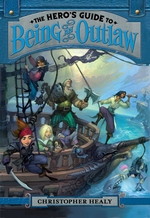
The Hero’s Guide to Being an Outlaw by Christopher Healy

The Hero’s Guide to Being an OutlawThe Hero’s Guide to Being an Outlaw

by Christopher Healy

Hardcover, 516 pg.
Walden Pond Press, 2014
Read: April 2 – 6, 2015
I started talking about the last book in this series by noting that it wasn’t as good as the first. So I should start off here by noting that this is at least as good as the first book.

It’s somewhat criminal that after reading 900 or so pages of this before that I didn’t mention Todd Harris’ art work. The covers are great, but the interior art is what seals the deal. It’s the perfect match for tone and content of writing. Not since Mary GrandPré decorated the Harry Potter books (maybe you’ve heard of them), have I enjoyed illustrations in a book so much. He’s at his best in these pages.

Following the events of Storming the Castle, our friends have scattered, (for the most part) returning home and to their lives as they knew it. They’ve had a rough go of things the last couple of years and have earned a little normalcy.

Until bounty hunters show up hunting them. Which tends to shake things up.

So it seems that that Brair Rose is dead — killed. And who else would anyone suspect but the League of Princes and the Princesses so closely associated with them? So large bounties were put on their heads, and they’ll need all the skills, courage, panache and dumb blind luck they can muster to evade capture and find the people truly responsible.

Meanwhile, the villains that the League, etc. were sure had died at the end of the last book? Yeah, well . . . maybe not. Put the two of these storylines together, add in some pirates, bards and a ghost and you’ve yourself a heckuva read.

Like the best kids’ entertainment, this includes a few reference and jokes fit for adults while sailing right over younger heads (without slipping into innuendo). My favorite example was when the (however temporarily) imprisoned Princesses met the imposing woman Val Jeanval who stole a baguette in order to use it as a weapon.

I started to list off all the goodies this book contains, when I realized my list sounded like someone else’s, so I’ll just borrow Grandpa’s: “Fencing, fighting, torture, revenge, giants, monsters, chases, escapes, true love . . . ” throw in pirates, ghosts, and witches and a lot more royalty than that other book, and you’ve just about described this. It was a fun series, with a fittingly great end. Grab it for your kids, and when they’re not looking (if they won’t share), give it a read yourself.

—–

4 Stars

The Girl Who Circumnavigated Fairyland in a Ship of Her Own Making by Catherynne M. Valente

The Girl Who Circumnavigated Fairyland in a Ship of Her Own Making The Girl Who Circumnavigated Fairyland in a Ship of Her Own Making

by Catherynne M. Valente

Hardcover, 247 pg.
Feiwel & Friends, 2011
Read: February 19 – 20, 2015

But what September chiefly noticed were their hats.
Any child knows what a witch looks like. The warts are important, yes, the hooked nose, the cruel smile. But it’s the hat that cinches it: pointy and black with a wide rim. Plenty of people have warts and hooked noses and cruel smiles but are not witches at all. Hats change everything. September knew this with all her being, deep in the place where she knew her own name . . . For one day, her father had put on a hat with golden things on it and suddenly he hadn’t been her father anymore, he had been a soldier, and he had left. Hats have power. Hats can change you into someone else.

There’s much more to be said about the true nature of seasons, sentient keys, the immorality of novelists, the thoughtfulness of smoking jackets, the desires and drives of shoes….But I’m getting ahead of myself.

So last week, I found myself on the end of a batch of pretty heavy books, and needed something light and breezy — hopefully cheery, too. So I grabbed this off my daughter’s shelf (had been meaning to get around to it since I bought it for her 3 years ago). It didn’t at all fit the bill for what I wanted, but thankfully was an enjoyable read about a girl named September and the improbable trip she takes to (and around) Fairyland.

Those were all big words, to be sure, but as it has been said, September read often, and like it best when words did not pretend to be simple, but put on their full armor and rode out with colors flying

Who couldn’t love a hero like that?

While her father is off fighting in Europe during WWII, and her mother is spending her days with Rosie the Riveter (and doing her best to take care of her daughter, it should be stressed — she hasn’t been abandoned), September is convinced to join someone calling himself The Green Wind to go for a ride on his flying leopard to visit Fairyland.

Once there, she meets all sorts of incredible people, creatures, animals . . . and other things that I can’t really describe. She befriends a Wyvern and sets off on adventures — eventually being drafted by the unpopular, practical and efficient Marquess (who replaced, the wonderful and beloved Queen) into retrieving a magic object for her. This quest sends her (literally) all around Fairyland in an effort to obtain this object and save her friends.

The sensibility here is something like taking The Phantom Tollbooth, The Last of the Really Great Whangdoodles and throwing them into a blender with Neil Gaiman’s children books. Almost. To me, and I get the sense that I’m in a distinct minority here, this comes across more as a technical exercise — “how many strange and quirky things can I work into a narrative?” Despite the setting, target audience and obvious authorial skill it feels joyless, there’s no sense of play. Unlike the other works I’ve compared it to, there’s almost no fun here.

Yes, it’s a children’s book. But it’s not just for kids — in fact, there’s a lot here that very few children will pick up on (I’m willing to bet that I missed a trick or two). Not as amusing as I hoped for/expected, still, a good read for children or adults who aren’t afraid to read a book marketed for children.

—–

3 Stars

Page 36 of 42

Powered by WordPress & Theme by Anders Norén