The Ballad of Bonaduke—Episode 49: Light and Shadow by R. T. Slaywood: Well, that could’ve gone better

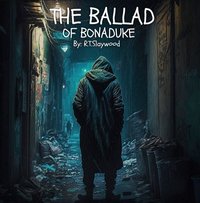
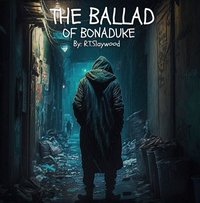
The Ballad of BonadukeThe Ballad of Bonaduke—
Episode 49: Light and Shadow

by R.T. Slaywood

DETAILS:
Series: The Ballad of Bonaduke, #49
Format: Kindle Vella Story
Read Date: March 14, 2024

The Story So Far…

A drunken Michael Bonaduke decides to use a grift (with maybe some sort of magic/magic-like “help”) to win on a scratch-off lottery ticket so he has money to buy more to drink. He pulls off whatever he did, gets his money and some booze and stumbles off into the darkness to drink himself into oblivion so he can start again the next day. He’s hit by dark memories (probably what’s driving him to the drinking) of fire, pleading, and screaming. There’s going to be a price to pay for his grift, and he’s trying to be ready.

He’s abducted by some representatives of a mysterious group who subject him to a test—if he passes, everything will be explained to him (and hopefully the reader, too). He passes—and is brought somewhere for answers, or maybe training, or maybe another test. Time will tell (or things are going to get really annoying). Answers aren’t quick to come—but the mysteries and questions keep piling up.

Things get hairy and Bonaduke leaves and finds himself back in the neighborhood he started from. He takes refuge in a homeless encampment shortly before a police raid. He’s apprehended and finds himself an interrogation room and shortly escapes after using his grift (but with results he didn’t quite intend). He finds himself by a group of squatters who seem to have strapped a woman to a chair for reasons that can’t be good. He attempts to rescue her before he even realizes what he’s doing, and seems to have succeeded—well, the two of them got away from the group anyway—breathing but bruised. They make their way to a fast-food taco joint and Bonaduke really needs to refuel to keep going. He tries, but fails to get food because he keeps passing out. Thankfully, the clerk is the same guy from the liquor store and he both recognizes him and gives him first aid. The woman (Zero) wakes up and shows some abilities of her on as she helps them escape from her captors who’ve tracked her down. One thing leads to another—Zero and Bonaduke’s magics don’t mix well (at least until they understand what each other can do?), and they end up in a video-game race against the squatters in a tricked-out version of Eric (the clerk’s) car. Note, I said video-game race, not a video-game-style race. They’re actually in one. When dumped back into reality, he’s surrounded by bruised and broken bodies (of people and cars). And then he gets into a supernatural fight and survives…just.

Or maybe not. But he gets better. And then his new…friends? Acquaintances? People who keep popping up in his life?…start explaining exactly what’s going on to him while they set up a new HQ and try to teach him about his abilities (and everyone tries to understand them) while they try to fund their further work.

What’s Light and Shadow About?

Whatever plan that Bonaduke’s compatriots might have had fell apart before they really got it started–it’s like Tyson said, “Everybody has a plan until they get punched in the mouth.” But I’m not sure this plan even lasted that long.

Regardless, it falls apart dramatically–since I already mentioned Tyson, think of poor Peter McNeeley’s encounter with the boxer. It makes for some exciting reading.

So, what did I think about Light and Shadow?

The editing on this episode was either poor or non-existent. I’m hoping that Slaywood just skipped the step this time, but it really needed some. I can’t tell you how many things I had to read a few times before I was pretty sure (not necessarily confident) before I understood what he was trying to say. That’s never a good thing, but in the middle of an action scene, taking the time to suss out what the author was trying to say really kills momentum.

Beyond that, I think Slaywood could’ve done a better job describing what was happening–he’s got the pacing of a huge action scene down, but he doesn’t do a great job conveying what’s going on.

There’s plenty of good ideas floating around this episode, but the delivery was wanting. Still curious about how they get out of this mess.


2 1/2 Stars

Teaching Moments by Troy Lambert: A Tale of Horse Thieves and a Serial Killer

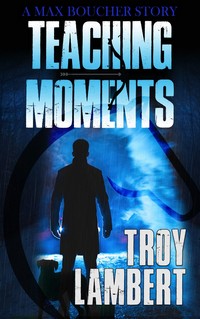
Teaching MomentsTeaching Moments

DETAILS:
Series: Max Boucher Mysteries,  #2
Publisher: Unbound Media
Publication Date: January 18, 2022
Format: Paperback
Length: 368
Read Date: August 24-26, 2023
Buy from Bookshop.org Support Indie Bookstores

What’s Teaching Moments About?

It seems that after the events of Harvested, Max Boucher has developed a specialty when it comes to his PI work—animals. Granted, most of these are pretty small cases without a lot of excitement, but work is work, right? And if he’s getting the bills paid, he can spend more time thinking about the new evidence he found at his old home at the end of Harvested.

But that’s for another time, really. Max has been hired to leave Seattle and come to Cedar Peak—a small town in Idaho*, where someone from out of town sticks out like a sore thumb. He’s been called upon to investigate a missing—presumed stolen—horse, worth a pretty penny.

* I kept changing my mind about what city it’s based on, and decided to stop trying because it really doesn’t matter.

But before he can even start this investigation, he stumbles across a murder. Now, that’s not why he’s in town, but he sort of befriends the woman dating the dead man (who turns out to be related to the horse’s owner). He’s warned off by the local police, but he ends up looking into the murder, too.

It’s not long at all before Max discovers that almost nothing is what it seems and that he might have bitten off more than he can chew this time.

The Other POV

Interwoven with Max’s story is the first-person account of a young woman becoming a serial killer. On the one hand it’s easy to see why we get this (her weapon of choice is used in the murder)—but it frequently feels like it could be a different book.

Actually, you could excise these chapters (or at least almost all of them) and publish it as a stand-alone novella. You’d probably need a different conclusion to make it satisfactory—but it’d work that w
This isn’t entirely a criticism (although it does feel a little out of place from time to time)—the way this story ends up merging with the rest of the novel really works and adds to the overall impact of the novel.

The only real complaint I have about it is that all these chapters are in italics, and it just bugs me to read that much italicized material, there’s gotta be a better way to set that kind of thing off from the rest of the text.

The Series Arc

After the way that Harvested ended (and well, the way that most of that book went), I assumed we’d get a lot more time and space devoted to the murder of Max’s daughter and the disappearance of his wife in this book. I didn’t expect that he’d solve everything so soon, but still.

And while Max (and/or Lambert) didn’t blow off the topic, the novel didn’t focus on it as much as I’d assumed. I think it’s good for the long-term health of the series, as long as Lambert doesn’t drag things out in this regard. The closing pages of this novel bring in a new twist to the series that can help out with the overall arc(s), too.

So, what did I think about Teaching Moments?

It feels pretty uncharacteristic of me not to mention Max’s dog so far. Russ is one of those rescued at the end of Harvested and he’s become an important part of Max’s life. He’s a very good boy, and a canine I’m pleased to make the acquaintance of.

I don’t think I was as surprised at a lot of the serial killer story as the novel wanted me to be. That may be because I read too many things in this genre. It was well-executed and I don’t have any noteworthy negative things to say about it beyond I thought it wasn’t that unexpected. I don’t need to be shocked, I just want a good story, and that’s what Lambert delivered.

A solid PI novel is one of my favorite things in the world. Lambert’s Max Boucher novels are good examples of the genre. Yes, the setting and the central crime might not be common for the genre, but they work well in Lambert’s hands. I’m definitely looking forward to more of these, and recommend them to you. Even if you’re not looking for a series, Teaching Moments could work as a standalone. Either way, you should give this a shot.


3.5 Stars

This post contains an affiliate link. If you purchase from it, I will get a small commission at no additional cost to you. As always, the opinions expressed are my own.
Literary Locals logo

REPOSTING JUST CUZ: Harvested by Troy Lambert: A Man Bites Dog P.I. Novel

I flipped a coin late last night and it came up “stop writing and get some sleep.” It was frustrating that I got to that point, it’s even more so that I had to walk away from a post that was coming along pretty nicely. Hopefully I can finish it tonight, so you can read it tomorrow. In the meantime, here’s a look back at the first Max Boucher book in lieu of something about the second.


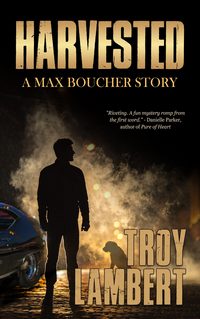
HarvestedHarvested

by Troy Lambert

DETAILS:
Series: Max Boucher Mysteries, #1
Publisher: Unbound Media
Publication Date: March 15, 2019
Format: Paperback
Length: 247 pg.
Read Date: January 2-3, 2023
Support Independent Bookstores - Visit IndieBound.org

What’s Harvested About?

Max Boucher is a P.I. in Seattle. Like a good (fictional) P.I., he spends a lot of time drinking. He spends most of the rest of his time working just to make ends meet. He really wants to devote his time to looking for whoever murdered his daughter, killed his dog, and either kidnapped or murdered his wife. He—and his former colleagues in the Seattle PD—have followed every lead they have, but he’d spend all of his life going back over the evidence time and time again if he could.

Now, he’s taken on a case—he takes on every case that comes his way—that takes him back to his old neighborhood. The dog park that he and his family used to go to, in fact. There’s a rash of dognappings in the area, and owners have come together to hire him to find their canine friends. The police can/will only do so much, but Max can devote more time to it.

It doesn’t take long for things to get hairy—there’s a connection to a Korean mob boss. Some of the dogs start reappearing—with strange injuries. And it turns out that this has been happening all over Seattle for some time. Max isn’t sure what he’s gotten himself into, but it’s about a lot more than missing poodles.

Supporting Characters

Obviously, you’ve got to have a compelling P.I. in a book like this—and a good hook for the story. That’s what the reader comes for, and the writer had better deliver. A plausible villain, is important, too—but the others can overcome an iffy one. But what will really make a P.I. novel work is the supporting characters—the cop buddies/frenemies/rival (depending on the series), the client, the witnesses, and so on.

Lambert nails this throughout the book. I like Boucher and want to see more of him, but I enjoyed some of the side characters more than him. There’s a friendly and helpful veterinarian who could probably carry a cozy mystery series on her own—and I would buy six of those tomorrow if they existed.

There’s a guy who details Max’s car (he’s got an older car that’s his pride and joy)—which is something definitely called upon when your case involves carrying injured dogs (and injured detectives) around. If Eddie shows up for a scene or two in every book in the series, you can color me pleased. I’m not even sure why—I also don’t care much, I just liked him.

I’m not going to say I enjoyed the Korean mob boss* in the same way I did those two. But the scenes with him are some of the most intense in the novel.

* Ahem. Suspected boss, of a mob that may not even exist.

I could go on for a few more—I don’t remember exactly my point when I started this section, other than to rave about Dr. Gamble and Eddie. But I guess that I just want to stress that Lambert gives us more than a solid P.I. He knows how to give the reader characters to invest in and care about—even if only for a page or two.

Beware of (Hurt) Dogs

* (yeah, that’s a lame section title—but it’s better than “It’s a Dog Eat Dog Book” with the implied cannibalism)

I know I have readers who will be antsy about this book—we’re talking about kidnapped and injured dogs here (there’s a reason I have a recurring post about books about dogs who live). And for those who cannot take violence toward animals, this is a book to avoid.

I will say, however, almost all of the violence happens “off-screen”—you see very little of it on the page. And what you see on the page isn’t that bad (up until the climactic bit at the end, but the violence there is spread amongst characters with two and four legs (and the two-legged ones get the worst of it).

The point of this book is Boucher investigating the kidnappings, stopping them by getting to the bottom of things and rescuing as many dogs as he can. So if you’re on the fence, you can hold on to that.

So, what did I think about Harvested?

This was a good read. Lambert delivered in every way I wanted a book like this to—solid plot, unique case, great character work, and a pace that keeps you turning the pages long past the time you should put the book down for sleep or chores. I’d recommend this just for the (relative) novelty of a Seattle P.I.—mid-sized US cities need to be the setting of more P.I. novels. The book delivers on everything it promises and gives you an open (and welcome) invitation to come back for another. I know I’m accepting that invitation.

Oh—minor spoiler—by the end, one of the kidnapped dogs can’t be matched with an owner and ends up staying with Max. So you know I have to come back, just for more of him.

I’d have come back anyway—I want to see how Max moves on from this point in general. I’m quite curious about the clues he discovered regarding his wife’s case, too. I’m assuming (and really don’t want to know the truth until I’m into the next book) that book 2 will advance the investigation into his wife’s kidnapping while Max and his new partner dive into another stand-alone case—and we’ll continue that way for a while. That sounds like a great time to me. Grab this one—the second book is out now, you might as well grab it, too. You’ll have fun.


3.5 Stars

This post contains an affiliate link. If you purchase from it, I will get a small commission at no additional cost to you. As always, the opinions expressed are my own.
Literary Locals logo

WWW Wednesday, March 12, 2024

Well, today got away from me. Let me get this up and I’ll try again tomorrow.

This meme was formerly hosted by MizB at A Daily Rhythm and revived on Taking on a World of Words—and shown to me by Aurore-Anne-Chehoke at Diary-of-a-black-city-girl.

The Three Ws are:
What are you currently reading?
What did you recently finish reading?
What do you think you’ll read next?

Seems easy enough, right? Let’s take a peek at this week’s answers:

What are you currently reading?

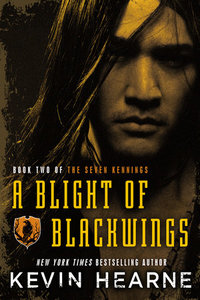
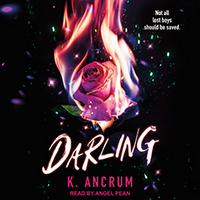
I’m reading still A Blight of Blackwings by Kevin Hearne, as with the first in the trilogy, as much as I’m enjoying the book, I need to take a break from it every now and then. but hopefully I finish it before next week’s post. I’m also listening to a very odd take on Peter Pan, Darling by K. Ancrum, read by Angel Pean, on audiobook.

A Blight of BlackwingsBlank SpaceDarling

What did you recently finish reading?

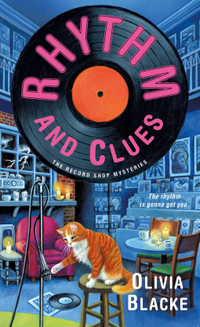
I just finished a couple of very entertaining books: Olivia Blacke’s Rhythm and Clues and Dead Ground by M.W. Craven, read by John Banks on audio.

Rhythm and CluesBlank SpaceDead Ground

What do you think you’ll read next?

My next book should be the ARC of The Tenacious Tale of Tanna the Tendersword by Dewey Conway & Bill Adams (soooo many ARCs lately, how am I ever going to make TBR progress?) and my next audiobook should be a quick trip to Painter’s Mill, Ohio (the most crime-ridden Amish community in the States) in A Hidden Secret by Linda Castillo, read by Kathleen McInerney .

The Tenacious Tale of Tanna the TenderswordBlank SpaceA Hidden Secret

Whatcha readin’?

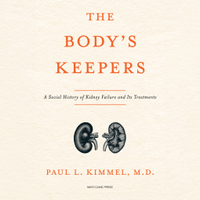
PUB DAY REPOST: The Body’s Keepers (Audiobook) by Paul L. Kimmel, M.D., Lane Hakel (Narrator): The Social History I Didn’t Realize I Needed

The Body's KeepersThe Body’s Keepers:
A Social History of Kidney
Failure and Its Treatments

by Paul L. Kimmel, M.D., Lane Hakel (Narrator)

DETAILS:
Publisher: Dreamscape Media
Publication Date: March 12, 2024
Format: Unabridged Audiobook
Length: 17 hrs., 59 min. 
Read Date: Fevruary 27-March 5, 2024
Buy from Bookshop.org Support Indie Bookstores

What’s The Body’s Keepers About?

I feel underqualified to try to describe this book, and you’ll see why here in a sentence or two. So, I’m just going to paste what the Publisher’s Site says: (yes, I typically would cite the audiobook publisher here, but the print edition’s publisher gives more details)

A remarkable account of the kidney and the scientific, medical, and health evolution tied to our understanding of it.

The kidney is an extraordinary organ – in many ways the regulator, the metronome, the keeper of the human body’s delicate equilibrium. On a given day, minute by minute, it purifies the body of toxins it encounters from diet, climate, activity, and injury. It allows us to be and to move in the world. And yet most of us know so very little about these extraordinary vessels nestled in our bodies – and indeed millions of us only really learn about them when they stop working. Nearly a million Americans every year have end stage kidney disease, about 37 million have some form of chronic kidney disease. And it is an incredibly common universe of challenge and ailment that, until relatively recently, would simply kill those afflicted with it.

Renowned nephrologist Dr. Paul Kimmel takes us on an eye-opening journey through the history of kidney disease, dialysis, and transplantation. Drawing on both his extensive research and decades of experience in the field, he explains the development of treatments, technologies, and medical practices that have advanced the care of patients with kidney disease. Kimmel illuminates the impact of medical advances on the lives of those suffering from this debilitating disease and offers a clear understanding of the challenges that remain.

The Body’s Keepers also reveals the inequities and injustices at the heart of America’s healthcare system. Filled with case studies, personal histories, and first-hand accounts, the book reveals the shocking truth about the exploitation of vulnerable populations in the pursuit of profit. Kimmel examines how disparities in access to care have led to life-threatening consequences for many Americans. He also looks at the ways in which the medical industry has profited from the suffering of others, and how the path to health equity is still far from being realized. With unflinching honesty and a passionate commitment to social justice, his book is an essential read for anyone looking to understand the complexities of modern healthcare.

What Did I Think About the Narration?

With all due respect to Dr. Kimmel, this could very easily have been a dry-as-dust book. Yes, there’s occasionally some wit and some passion in the text–Kimmel’s personality does come through. Lane Hakel makes sure that shines through. He maintains the appropriate tone and seriousness to the subject, but with simple and subtle changes in inflection and so on to help maintain the listener’s engagement.

If nothing else, Hakel helped me pronounce a few terms and medication names that I’ve always stumbled on (or heard multiple ways).

I’m not saying that Hakel made this a joy to listen to, or that it was entertaining in the same way that, say, Luke Daniels makes a book–nor should it have been. But he keeps the listening experience accessible and interesting–even when the text seems just to be a list of names and acronyms. (which doesn’t happen often, but, occasionally it seems like it).

My Interest in the Book

So, I saw this on Netgalley the day after my son’s first dialysis treatment. And I clicked the request button as quickly as I could. I’ve talked in this space a little about his kidney transplant a few years ago. But what I know about kidney disease and the treatment of it doesn’t amount to much–and it’s very focused. So the opportunity to learn more–particularly in a history, was more than appealing.

Sure, I was discouraged a bit right off when one of the first things that Kimmel says is that he won’t be discussing the kidney disease my son had. But, he spent a lot of time talking about End Stage Renal Disease and transplants. So that more than made up for the skipped subject. And even the topics that didn’t directly have anything to do with my son were interesting to listen to. Because really, at the end of the day, the more medicine learns about various treatments for one area of kidney disease/treatment, the better off all patients are.

So, what did I think about The Body’s Keepers?

Can a non-medical professional read/listen to this and profit from this book? Absolutely. Are we the target audience? I don’t think so–well, those interested in the overlap of politics/economics/prejudices and medical treatments are definitely part of the target audience. So it’s not just the kind of book for M.D. after their name. But it’s not written for the person browsing a bookstore/library shelf for their weekend read, either.

This is an 18-hour listen, and it’s not the easiest listen, either–both because of the subject matter and the thoroughness with which Kimmel discusses things. Folks who are just idly curious are probably not going to make it through this book. But those who have a connection to the topic–because of their profession or professional interests, because (like me) they are or know someone going through these things, or because they’re invested in the social aspects and things like equitable access to care, or some other connection–will make it through this book and be glad for it.

For those who are interested in this subject, this is a fascinating book and a good audiobook experience. I do think I may end up getting the print edition just to make looking up a point or two easier. But for non-reference use? The audiobook is a good way to go.

I learned a lot, I have to say. The historical development of nephrology is fascinating. For such a young science the advances made are truly astounding (for example, when you hear how they made the first “artificial kidney”–the precursor to a dialysis machine, your mind will be boggled). The origins of the treatment of kidney diseases and injuries really start because of the World Wars and now kidney transplants happen all the time (not often enough for those on a transplant list for years), dialysis is routine, and the medical research is very promising to improve and innovate both.

Yes, the impacts of race, sex, income, and so on when it comes to access to and varieties of treatment are dismaying and befuddling (and on those providing the treatment). But the book suggests there’s every reason to be hopeful for the future, and that progress has been made. Easy for this white guy to say, but that was my takeaway from Kimmel. And, as in this post, I’m talking about this as a listening experience rather than commenting on the society that is depicted–the shortcomings of the system (especially in the U.S.) contrasted to the successes make for a more engaging narrative.

I should add that in the early chapters while doctors and researchers were still figuring out how to treat various kidney ailments, the symptoms and treatments (and failure rates), were strong reminders of how correct I was in choosing academic and career paths that took me far away from medicine. Some of that was rough for me (and no, I will not watch any documentary Dr. Kimmel decides to make in the future). People of stronger constitutions will not be bothered.

I’m really glad I listened to this, and encourage those interested to give it a try. It’s not a book for everyone, but for the right people will appreciate this.

Disclaimer: I received a copy of this book from North Star Editions via NetGalley–thanks to both for this.


4 Stars

This post contains an affiliate link. If you purchase from it, I will get a small commission at no additional cost to you. As always, the opinions expressed are my own.
Irresponsible Reader Pilcrow Icon

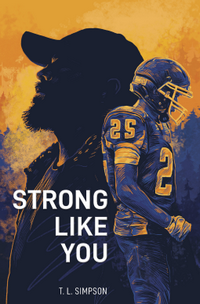
PUB DAY REPOST: Strong Like You by T. L. Simpson: Love And Hate On The Edge Of A Knife

Strong Like YouStrong Like You

by T. L. Simpson

DETAILS:
Publisher: Flux
Publication Date: March 12, 2024
Format: eARC
Length: 224
Read Date: March 1, 2024

Buy from Bookshop.org Support Indie Bookstores

What’s Strong Like You About?

Walker Lauderdale is a high school sophomore and a starter for his small Arkansas high school’s football team. He and his cousin/best friend/might as well be brother Sawyer are fierce players for the defense (and we see that almost instantly). This should be the best time in his young life—but there’s something wrong.

His dad has been missing for a month. He’s not there to watch his first game. He’s not there to burst with pride, to offer advice, or to cheer from the stands. He’s just…gone. Walker’s dad and Sawyer’s dad (also best friends and teammates on the same high school team before marrying sisters) took off one night and haven’t returned. The two boys are certain they’ll be back any time—they’re frequently checking the bleachers to see their fathers up there.

The book is an extended monologue—or a series of them. Technically, an apostrophe, but let’s stick with monologue. Walker is addressing his father—catching him up on the turmoil and victories he’s missing, the hurt Walker feels because of his absence, and how he’s trying to make things work until his dad comes back. The grief, loss, and anger jump off the page.

Walker’s dad isn’t a great one, either, it should be stressed. Rarely employed, his income is largely illegal and irregular. Both missing fathers are abusive to their wives and sons. But in the way that we all can recognize, the boys are just that much more devoted to them because of it—making their dads proud is a chief aim of theirs.

Walker becomes determined to go look for his dad—which involves starting with the man his dad and uncle were last seen with—a truly frightening and violent man. Sawyer tries to dissuade him, but that just makes Walker even more certain that he needs to act.

But does he truly want to find the answers he’s seeking?

Learning About Guns

Walker—like so many people in the U.S.—appreciates guns. He’s quick to grab a pellet gun to (try to) chase away his uncle. But his cousin Sawyer? Sawyer is a nut for guns, he has magazines about them all over his room. At some point, Sawyer comes across a pistol (and somehow gets money for many bullets for it—or at least acquires them). There’s a big difference between a pellet gun and a Colt 1911, and it doesn’t take long for Walker to start learning about them.

Not what you learn in video games/TV, not what Sawyer’s survival mags teach, or anything like that. But about the reality of them—how they can invite violence, how holding one affects you, what destruction they can bring even without trying. There’s no pro-/anti- gun message at work here. No lessons or sermons were delivered. But the reality of what a gun can do to a person, a situation, or an attitude is presented in stark reality. I’d say it’s easily one of the best things about this book, but if I started listing the best things about this book, we’d be here for a long time.

Anger

Walker and Sawyer are angry young men—it’s simmering right below the surface, and comes out at inopportune times. Although, it does sometimes come out when it should*—and we see an example of that in the opening minutes of their first game of the year.

* Arguably, anyway. Their coach and teammates would say it’s appropriate.

There are plenty of reasons for them to be so angry—even before their fathers abandoned them. The more time you spend with them—Walker in particular—you see just how many reasons he has. It’s part of what his parents have passed down to him, part of the example they’ve set and the environment he’s been raised in.

The guy his father and uncle runs with, Lukas Fisher, has another kind of anger inside him—and he doesn’t hesitate to express it—where Walker’s parents shape him by their anger, Lukas “trains” his pit bull with his.* While we can see a little constructive use of anger, we can see some people who are angry due to circumstance and situations—but Lukas? He seems to revel in it, maybe even feeds on anger.

* This is off-point, but Simpson’s description of the dog’s barking was both wonderfully accurate and a bit of a tension breaker.

But back to Walker, it’s his anger that lands him in weekly sessions with the school counselor before the book begins. This counselor is one of the few who seem to look beyond Walker’s attitude, his anger, his disinterest in education, and his abilities on the football field. It’s unclear how Walker will respond to him—or even if he can respond to this man appropriately. But it’s a rare example of how his anger just might put him in the right place.

The Meaning of Manhood/Strength

Walker’s primary concern at the beginning of the book is to be strong—strong, as the title says, like his dad. For him, strength equals control. Control over your life, your circumstances, your choices—it’s also tied into how to fix things. How to make things better.

Yes, it absolutely is about physical strength first and foremost, but it’s about more than that, too. For a character presented as not that intelligent (Walker would say worse than that about himself), he’s really perceptive. He’s spent more time than many—probably even he—realizes thinking about the nature of strength.

Ultimately, this is what being a man is for Walker (and Sawyer, too)—maybe even Hank and Rufus, too. Walker sees Hank as strong—physically, emotionally, and mentally. This is what he aspires to—for himself, for his mother, and possibly even for Hank. If Walker gets to be strong enough—on and off the football field—he can make Hank and his mom proud. He can make their lives better, fixing those things that need fixing (that his father never gets around to fixing, despite Walker’s deep-seated conviction that he could and will).

Over the course of this book, this understanding of what manhood means and what strength means are seen in light of that anger mentioned above. One of the bigger questions of the novel surrounds Walker and Sawyer—as they navigate toward adulthood/maturity, what will win out? Strength or anger? What kind of men will they be?

The Love Story

Okay…after a few attempts, I realize that I cannot say anything about this without a spoiler. All I will say is that it’s perfectly conceived, perfectly executed, and just what this book needed it to be.

So, what did I think about Strong Like You?

I have several more things I wanted to talk about—but this is too long, and almost two days behind schedule (it’s at least 6 hours after I normally post something). What’s worse, every time I start writing “just one more thing,” I think of two more. So I’m bringing this in for a landing, and I may bounce around a little bit here.

I do not even like football—why do I keep reading books featuring it? Okay, I live in the USA and it’s pretty hard to escape, that’s a large part of it, but still… There’s a large part of me that doesn’t care as long as it’s a book like this one. And sure, he’s talking about a different game entirely, but Walker would agree with Dani Rojas—”Football is life!” He thinks in football terms and metaphors, he can’t explain to someone why he loves football—he can’t even understand why that person doesn’t like football, it’s like telling him that they don’t like to breathe. Most of the time, Simpson doesn’t have Walker or Sawyer tell us this, they just live this. The way he does this alone tells me that Simpson is someone to watch (or, I suppose, he thinks the same way as Walker does and it’s coming out organically—but I don’t think so)

I really should spend a lot of time talking about Walker’s guidance counselor and the arc of their relationship, there’s so much about Simpson’s work here that should be commended. There’s also this strange little tangent featuring a recent graduate of Walker’s high school and his little sisters that tells us more about Walker than anything except his attitude toward football—who he really is, not who he thinks he needs to be.

You don’t have to read very far before you know a couple of things—1. despite his conviction—or at least the conviction he voices—things are not going to go the way he anticipates, and that rough times are ahead for Walker; and 2. you are not going to want to put this book down until you reach the last page. I glanced at the first couple of pages to make sure it downloaded correctly and had to walk away from my Kindle, because I had multiple other deadlines and I knew if I didn’t do that, I’d finish the book before I did anything else. I can’t describe it, but there’s something about Walker’s voice, the way he’s talking to that father that isn’t there that just grabs you.

I’m not entirely satisfied with the way the novel ended. I liked the resolution to the various stories, let me be clear. But I feel like I could see Simpson’s not-so-Invisible Hand working to get some of the resolutions to work out the way they did. I like the way the storylines ended up, so I’m not going to complain too much. And since it was only in the closing pages that I thought about maybe criticizing something in the book, Simpson earned a little authorial heavy-handedness.

This is a real winner—Strong Like You shares so much DNA with Eli Cranor’s Don’t Know Tough (but is not a copy in any way) and even hearkens back to Early Autumn by Robert B. Parker. And anytime a book can make me compare it favorably with those two knockouts, I’m going to put it down as pure joy.

If you’re someone who gets hung up on the YA tag, push “Pause” on that for 224 pages. This is a book that deserves a fair shake and many, many readers—Simpson’s debut is as strong as Walker hopes to be.

Disclaimer: I received a copy of this book from North Star Editions via NetGalley—thanks to both for this.


4 1/2 Stars

This post contains an affiliate link. If you purchase from it, I will get a small commission at no additional cost to you. As always, the opinions expressed are my own.

Irresponsible Reader Pilcrow Icon

PUB DAY SPOTLIGHT: Women Who Murder by Mitzi Szereto

I’m very pleased today to Spotlight Mitzi Szereto’s new release, Women Who Murder: An International Collection of Deadly True Crime Tales. This looks like one to keep you up all night! Sorry for any sleep this causes you to lose.

Book Details:

Title: Women Who Murder: An International Collection of Deadly True Crime Tales
Editor: Mitzi Szereto
Genre: True Crime
Publisher: Mango Publishing Group
Release date: March 12, 2024
Format: Paperback/Ebook
Length: 224 pages
Women Who Murder: An International Collection of Deadly True Crime Tales Cover

About the Book:

Deadly Dames and Murderous Damsels

Explore the fascinating psychology behind these killer women, unraveling their motives and unveiling the infinite complexities of human behavior in Women Who Murder: An International Collection of Deadly True Crime Tales.

From chilling stories of black widow murderers to spine-tingling narratives of women who shocked the world with their sinister deeds, this anthology spans eras and continents, offering an electrifying and thought-provoking exploration of the darkest corners of human nature and the female psyche. Like Mitzi Szereto’s popular The Best New True Crime Stories series, Women Who Murder includes all-new and original nonfiction accounts from an international cast of writers, all of whom prove that women can be just as deadly as men—if not more so!

Book Trailer:

Purchase Links:

Amazon US ~ Barnes & Noble ~ Books-A-Million ~ Bookshop.org ~ Amazon UK ~ Blackwell’s ~ Waterstones ~ Amazon CA ~ Indigo ~ Angus & Robertson ~ Fishpond

About the Editor:

Mitzi Szereto Mitzi Szereto (mitziszereto.com) is an American-British author, anthology editor, and short story writer whose work spans multiple genres. Her widely acclaimed true crime series The Best New True Crime Stories features the volumes Crimes of Famous & Infamous Criminals; Unsolved Crimes & Mysteries; Partners in Crime; Crimes of Passion, Obsession & Revenge; Well-Mannered Crooks, Rogues & Criminals; Small Towns; and Serial Killers. Aside from her many popular books, she has the added distinction of being the editor of the first anthology of erotic fiction to include a Fellow of the Royal Society of Literature. A contribution from her crime fiction anthology Getting Even: Revenge Stories also received the Crime Writers’ Association Short Story Dagger “Highly Commended.” Mitzi has appeared internationally on radio and television and at literature festivals, and taught creative writing around the world. She produced and presented the London-based web TV channel Mitzi TV and portrays herself in the pseudo-documentary British film, Lint: The Movie. Follow her @mitziszereto on Twitter, Instagram, TikTok, Facebook, Bluesky, Threads, Mastodon, and Spoutible.

Author Links:

Website ~ Twitter ~ Facebook ~ Instagram ~ TikTok
~ YouTube ~ Bluesky ~ Threads ~ Mastodon ~ Spoutible ~ Goodreads


One more time, Women Who Murder is out now—get it today!

MUSIC MONDAY: Milhouse by Maisie Peters

Music Monday

Music Monday's originated at The Tattooed Book Geek's fantastic blog and has shown up hither, thither, and yon since then.

I’ve had this stuck in my head for a few weeks now, might as well pass it along:

Irresponsible Reader Pilcrow Icon

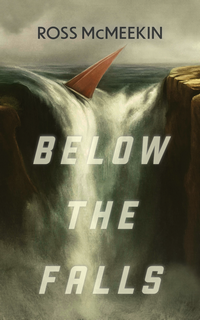
Below the Falls by Ross McMeekin: A Mixed-Bag Worth the Effort

Below the FallsBelow the Falls

by Ross McMeekin

DETAILS: 
Publisher: Thirty West Publishing House
Publication Date: March 22, 2024
Format: eARC
Length: 190 pg.
Read Date: March 1-9, 2024
Buy from Bookshop.org Support Indie Bookstores

What’s Below the Falls About?

This is a diverse collection of 25 short stories (some very short, some not). I’m struggling to say more than that about it.

The title comes from the first story, but it applies pretty well to the collection as a whole. Some more directly than others. Each story does deal with the effects of a fall–metaphorically, naturally (with an exception or two). Sometimes the protagonist is the one who fell (or is falling), sometimes they’re next to or observing the fall, maybe dealing the the consequences of it.*

* I fought hard against the impulse to say “dealing with the fallout” there.

The Publisher’s description puts it this way:

Two climbers in the North Cascades risk their friendship and lives ascending a frozen waterfall. The girlfriend of a famous comedian in Greenwich Village must decide whether she wants to raise a child in the spotlight of fame. A mysterious Bird of Paradise makes daily overtures to an elderly widow in the frigid Midwest. A Texas fracking mogul struggles to find the love his money prevents. The deeply rendered American landscapes of these stories emerge as a vital background for characters faced with conflicts that cannot be easily resolved, illuminating interior worlds filled with contradiction.

I might have picked other stories for the blurb, but then again, those are probably some of the easiest to summarize in a sentence.

So, what did I think about Below the Falls?

Like most short story collections, this is a mixed bag. And your results are going to vary (perhaps wildly) from mine. Which sounds like I’m trying to weasel out of giving a firm opinion, but it isn’t.

There’s a meme that I see everywhere (except for now when I’m looking for it) that says something about running across a sentence that makes you close your book for a while to sit and think about it. Nearly every story in this collection has one or two of those sentences, or at least sentences that I had to read a couple of times just to appreciate them.

Too often, those sentences were all I had to commend a particular story, however. My notes are filled with comments like, “why?”, “a plot would’ve been helpful here”*, or “what was the point?”

* Yes, yes, yes–they’re not always needed for compelling reading. But they are sometimes.

However…the other stories more than made up for that. For example, an early story was described aboVe as “A mysterious Bird of Paradise makes daily overtures to an elderly widow in the frigid Midwest” story (“Small Firey Bloom”). It was haunting, beautiful, and is probably what kept me going after a rough start.

I’m not going to list the others that were as good–without getting into too much detail, it’d be hard to describe my reactions in a meaningful way. But more importantly, anyone who reads this collection is going to end up disagreeing with me about which ones I was knocked out by and which ones I found skippable or pointless.

So, I’ll just leave it with this–there’s a lot of dross in this collection. But there’s also some of the shiniest gold you’re going to find, too. You’ll have to do some sifting, some panning, and maybe even some chiseling to get it–but you’ll be so glad you did.

Disclaimer: I received this eARC from the author and Lori Hettler of The Next Best Book Club in exchange for this post and my honest take—thanks to both for this.


3.5 Stars

This post contains an affiliate link. If you purchase from it, I will get a small commission at no additional cost to you. As always, the opinions expressed are my own.


REPOSTING JUST CUZ: The Man Christ Jesus: Theological Reflections on the Humanity of Christ by Bruce A. Ware

Well, this is what I get for having the hubris to say that things were getting back to normal yesterday 🙂 Thanks to Daylight Saving kicking in this morning, I didn’t have enough time last night to finish a post. So, let’s jump back 10 years ago to see what I was talking about…

The Man Christ Jesus: Theological Reflections on the Humanity of ChristThe Man Christ Jesus: Theological Reflections on the Humanity of Christ

by Bruce A. Ware
Kindle Edition, 160 pg.
Crossway, 2012
Read: March 9, 2014

One of Ware’s presuppositions — repeated throughout this book — is that evangelical Christians today have a good understanding of and embrace the doctrine of the Divinity of Christ, but their understanding of his humanity is wanting — enter this book. Without dipping a toe into Nestorianism, Ware wants his readers to understand the humanity of Jesus. He explains this so with a constant eye to His divinity — and how that divinity is expressed in the life of the God-man.

One of his main interests is for his readers to understand the dependency of Jesus on the Spirit — His indwelling, guidance and empowering. Without that indwelling, it would be impossible for Jesus to carry out His father’s will. If we grasp that, we see the limitations of the divine nature of Christ to his earthly work, which may seem paradoxical, but isn’t as Ware will explain.

The application portions to every chapter keep this book from being merely theoretical (however great that theory is) to helping readers put shoe leather to this teaching — as every teaching ought. It’s just easier when the author goes out of his way to help us start that on our own.

I really appreciated the chapter “Resisting Temptation,” Ware’s reflections on Hebrews 4:15 and the idea of Jesus being tempted to sin in general. He surveys some of the leading theories before suggesting his own idea how the idea of the impeccable theanthropos being tempted without sinning. He put into words an idea or two that had been floating around in my own head for a few years, and

I was surprised that Ware had to devote an entire chapter defending the masculinity of the God-man, although I shouldn’t have been. Sadly, this was a pretty boring chapter. Ware really beat this horse far beyond the point of its flatline. Sadly, he probably needed to be as through given today’s thinking.

Deep enough to discourage a casual read, but friendly enough that this should be able to be read by thoughtful laity.

—–

4 Stars

Page 108 of 603

Powered by WordPress & Theme by Anders Norén