PUB DAY REPOST: Not Awkward by Matthew Hanover: Moving On by Looking Back

I’m very excited to bring this back to the attention of my readers today. Mark me down as a big Matthew Hanover fan, and this book will show you why. I wrote this about the draft that I read as a beta reader, so the one that’s on sale today is surely a little different. I’m looking forward to seeing what the final product is like—I know it’ll be a good one. Be sure to come back a little later, I’ve got a Q&A with Hanover coming up.
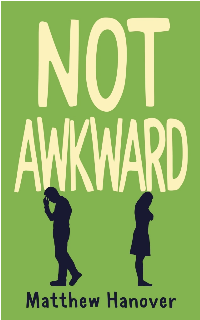

Not Awkward

Not Awkward

by Matthew Hanover
Series: Wallflowers, #3

Beta Version
2021

Read: May 9-18, 2021

What’s Not Awkward About?

I’m assuming I’m not the only one who finds themselves in a situation like this—I halfway expected to find a Jeff Murdock monologue about this, but alas… You go to an event of some kind because of family obligation, an acquaintance, your Significant Other’s employer—not because you really want to, but you feel you should. Once there, you stay an adequate amount of time and try to make your excuses and leave. But the host or someone talks you into staying for a little longer, and a little longer after that. While you may not be actively hating the experience, you’re certainly not enjoying yourself much and are looking for an opportunity to make a tactful exit.

This is pretty much the situation that Scott finds himself in. But rather than a birthday party for your second cousin you haven’t seen in a decade, Scott finds himself as a guest at his ex-girlfriend’s house while they sit shiva for her father. Recently fired and about to get married, Scott felt like he should go to the funeral for the man who always treated him so well. One thing led to another and Leila’s mother compelled him to stay for a night, which turns into another, and another…

Scott’s fiance, Charlotte, is off for a bachelorette’s week with his sister and Charlotte’s closest friend, Quinn. So there’s nothing for him to go home to, and he can search for jobs from Leila’s as well as anywhere. So he sticks around as emotional support (and/or emotional punching bag, depending on Leila’s understandably shifting moods require), and finds himself with an opportunity to get the closure he didn’t realize he needed and maybe even an explanation for why she dumped him out of the blue six years ago. Or maybe, something else will end up happening between the two.

Speedcubing

A few months ago, one of the local newscasts had a feature about an area resident who used to take part in Rubik’s Cube competitions on a pretty high level, it looked back on his competitions and “does he still have it?” No, he doesn’t. But he’s still faster than at least 96% of anyone who’s ever solved one.

So when we learn that Charlotte is a speedcuber, going to competitions, posting videos to social media, my mind immediately went back to that and I was in. Most readers aren’t going to have that particular background, but Charlotte’s hobby (for lack of a better word, but it’s not quite right) is going to make her stand out in readers’ minds—how often have you come across a character who does that? What I appreciated most about the Rubik’s cube thing is that was it starts out as a character quirk, but by the end, Hanover finds some thoughtful things to do with it—revealing something about the character (and a little more).

The Sister Factor

A mistake that readers like me can make is to think they’ve figured out all a writer’s moves, I really thought I had a handle on the role of “protagonist’s sister” in Hanover’s books. So when Quinn shows up pretty early, I sat up and paid attention to her. Which is when I noticed that Quinn is going to serve another role in this novel. She’s not an antagonist, but she’s certainly an obstacle for both Charlotte and Scott to overcome.

She’s been best friends with Charlotte since childhood—and try as she might, she’s still having trouble shifting from being Charlotte’s best friend to her best friend and brother’s significant other/future sister-in-law. I wasn’t entirely sold on this particular arc, but it helped us get a different look at Scott and his love life, and in the final third or so of the novel, it really paid off.

Along the same lines, Hanover hasn’t given us a protagonist’s brother before. I really didn’t care for this one—but I wasn’t supposed to*, he was written in such a way that it’d be hard to like him at all. But Scott and Quinn having an older brother is a new dynamic for Hanover and it works pretty well.

* And I won’t even get started about his wife.

The Interconnectedness of It All

In Not Dressed, Hanover alludes to a couple of characters and events from Not Famous, but here in Not Awkward he goes a lot further—the characters and events actually show up in the text. Sure, it’s done in such a way that people who haven’t read the other books won’t be short-changed when it comes to understanding this novel. But if you have read them, you’ll appreciate the way that Hanover has woven them into these pages.

It’s a great way to make a reader smile when they recognize something. But better, it’s a fantastic way to touch base with characters from one of those books. “Oh, look X got engaged.” Or “hey, Y and Z will be working together.” We also get to see characters like that in a different setting and from a different perspective. Rather than having to go through the bother with writing a whole new novel about one of Not Dressed‘s characters, with a few scenes in this (that move the plot along and help us understand Scott better), we see that character in a whole new light and it may change what you think of some parts of that other book.

Again, I stress—if you haven’t read his other novels, or if you don’t remember the details, it won’t matter at all.

Eep! A Conservative!

There is a character in this book who is a political conservative who works in politics (in more of the pre-2015 mold, I should stress), but this is a non-political book. The fact that they are conservative is mentioned a few times, and two (I think—no more than three) positions are mentioned. There are no debates, explanations, or arguments for the positions.

I mention this only because in our current climate, a lot of readers (from all over the political spectrum) run for the hills when politics come up. There is no need for that here—it’s brought up occasionally, but not in any kind of detail. No political position is ever endorsed or supported, or discussed in any kind of depth.

So, what did I think about Not Awkward?

While this is a lighter read, as is the norm for a “lad lit” novel—it’s not as funny as Hanover’s earlier works. That said, there are a couple of moments that are comedic gold. Slap-stick humor is difficult to pull off in print, but Hanover makes it look fairly effortless.

At at least three points in this novel, I assumed I knew how the rest would play out, “Oh, it’s going to be ____ kind of a story.” And I was wrong each time—thankfully. Instead, Hanover has given us a different kind of story than he has in the past, a subtler one, a more mature one.* One still infused with his trademark warmth, heart, and appeal. But there’s more going on, there’s a little ambiguity about some things. Experience is making a better author out of Hanover.

* Although I would have been satisfactorily charmed and entertained by the kind of story he’s given us before.

There were aspects of the story or characters that I wasn’t crazy about—but I’m not going to get into that at this point, because I don’t know what will happen to those things between the beta stage and the final version (although I was told about some directions he was going and that made me feel better). Maybe I’ll update this when the final version is out—maybe I won’t, we’ll see how much I care once it hits. But whatever quibbles I might have had, that’s all they were, quibbles. And they paled in comparison to the novel as a whole.

Because I wanted to think carefully about this novel, I wouldn’t let myself read more than 10-15 percent of it a night. That was hard. I wanted to read the whole thing in one sitting—and easily could have. I literally had to force myself to stop reading each time I picked it up so I could send my feedback and do other things. But I wanted to keep going, I had such a great time with these characters, this story, and Hanover’s writing.

Somewhere in there is Hanover’s secret—no matter what dumb, reckless, obnoxious, or (have to say it) awkward thing his characters do, you like them. You can’t help but do so. Scott said a couple of things in the first chapter that really made me wonder if I wanted to go through an entire book with him. By the third, I was pulling for the guy. This goes for Leila, too—not only did she break Scott’s heart six years ago, but she didn’t even tell him why. But in no time flat, you’re hoping she’s doing okay after her father’s death and you feel bad for the situation she finds herself in. If it’s bad enough that she talks Scott into sticking around…

And I’ve gone on far too long here. I need to wrap things up.

Not Awkward is a warm and heart-filled story about revisiting the past, finding healing (whether or not you thought you needed it), and embracing a future that doesn’t look like you expected it would (and is probably better). It’s the kind of book that’ll make you feel a little better about life for a while—and who doesn’t want to read something like that?


4 1/2 Stars

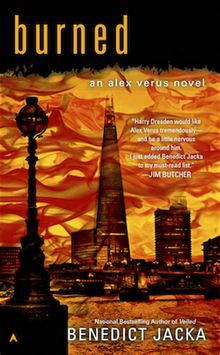
Quote of the Moment: from Burned by Benedict Jacka

I’m not sure why, but since I listened to these paragraphs last week, I’ve come back to them a few times. Sure, Gildart Jackson’s narration was part of it, but I just really liked this. We tend to focus on plot, magic systems, characters, and whatnot–but it’s the little moments like this that really make a book stand out. They don’t advance the plot, they don’t really reveal a lot about the narrator, but they shed a little light–adding flavor to someone we know.

from:

Burned
Burned

by Benedict Jacka
Most people in the world don’t travel much. In a lot of cases, it’s because they just don’t want to. Either they don’t have any real interest in seeing other places, or they’re too occupied with the life they’re living already. But for a lot of people, it’s not a case of not wanting to, it’s that they can’t—either they don’t have the time or the money, or there’s something actively preventing them from leaving. When you’re in that second group, you usually have fantasies about getting to travel and see the world, visiting different cultures and having new experiences. There are people who spend their whole lives dreaming about journeys overseas.

So it’s really kind of sad that once you finally do get to spend a lot of time travelling, you tend not to appreciate it very much. Take me, for instance. I’ve visited more countries of the world than I can easily remember. I’ve even visited places not in this world, from bubble realms to shadow realms to the dreamscapes of Elsewhere. I’ve stood upon the tops of towers and looked out over castles the size of cities, walked through ancient forests where the trees have passed hundreds of years without hearing a human footstep, seen impossible alien landscapes that could never exist on Earth. Unfortunately, in pretty much every one of those cases, I’ve generally had more pressing concerns to worry about either there are people trying to kill me, or people who might want to kill me, or things that aren’t people that might want to kill me, or people or things that don’t necessarily want to kill me but nevertheless are important enough that it’s highly advisable for me to pay attention to them instead of spending my time sightseeing. Usually the place I’m visiting becomes a blur, a few brief images standing out in my memory while I spend my time dealing with various threats and problems. And by the time they’re all sorted out, it’s time to move on.

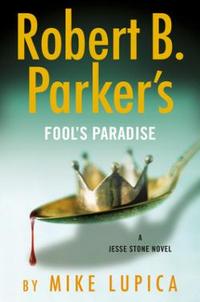
Reposting Just Cuz: Robert B. Parker’s Fool’s Paradise by Mike Lupica: Jesse Stone takes a Murder Case Personally

Fool's Paradise

Robert B. Parker’s Fool’s Paradise

by Mike Lupica
Series: Jesse Stone, #19

eARC, 352 pg.
G.P. Putnam’s Sons, 2020

Read: September 2-3, 2020
Grab a copy from your local indie bookstore!

What’s Fool’s Paradise About?

Suitcase Simpson calls Jesse to the scene of a murder, an unidentified man has been found shot at the lakeshore. Jesse recognizes the man—they’d been at the same AA meeting the previous night. It’s not Jesse’s regular meeting, and he didn’t think this man was a regular, either. But at least they had a first name to go off of.

Suit is able to find out at least a little about what the man did after the meeting. He’d taken a taxi from the neighboring town into Paradise. He even had an address—the mansion of a rich and influential family who’d been in Paradise for ages. They’re quick to claim they didn’t know the man, or that he’d been at the house in the hours before he was shot. No member of PPD believes this, but there’s little they can do until they learn a bit more about the victim.

Jesse admits this isn’t entirely rational—but doesn’t back off from it—the fact that he and the victim came to the same meeting, both needing the help that can be found there, created a link for between the two of them. Jesse felt like he owed this man justice more than he would another victim (not that Jesse’s ever been known to not try to find justice for anyone, it’s just personal this time). I loved this little touch—it felt very true to the character and his circumstances, but something that a lot of authors wouldn’t do.

Not long after this, someone takes a shot at Jesse while he’s in his home. Soon, other members of the PPD are attacked off-duty. As always, Jesse, Molly, and Suit acknowledge that coincidences exist, but they have a hard time believing in them. So while they try to identify the murder victim and figure out what he’s going in Paradise (and that part of Paradise in particular), they also need to figure out why someone would be attacking the PPD. And are the two cases related?

A Nice Little Bonus

There’s a lot of Molly in this book. She gets whole chapters without Jesse in them, and a lot of space on her own in chapters with him. We get a little bit of an off-the-job look at Molly, as well as seeing her work part of the investigation. Yes, Jesse’s the central character and should be the focus—but any time that Lupica (or whoever) can flesh out Molly, Suitcase, or any of the others is time well spent (I like the new deputy, too—he was a nice touch). But Molly’s been a favorite since Night Passage introduced this world, and she’s rarely been used as well as the character should’ve been. It’s so nice to see that.

Lupica’s Take on Jesse Stone

I was worried about Lupica being given the reins of this series. I was such a fan of what Colman had done, saving the series from the Michael Brandman debacle—and even from some of the uneven quality that Parker had given toward the end.

But Lupica did exactly what he needed to do—and exactly what I’d hoped (and didn’t expect). He embraced the developments that Coleman introduced and built on them. He could’ve ignored them, or written around them, but he kept Jesse going to AA, he worked on the new relationship with Cole, and Paradise and the Paradise Police Department the same way Coleman had, treating that bit of the series with as much respect and influence as the first nine novels.

Stylistically, Lupica’s closer to Parker than Coleman—which makes sense, it’s the more natural way for him to write (and will likely win back some of Coleman’s detractors). It works for the series, it works for the author—all in all, it’s a good move.

I freely admit that I was skeptical and pessimistic about anyone but Coleman at the post-Parker helm of Jesse Stone and am glad to be proven wrong.

Something I was Pleasantly Surprised By

While I have thought in the past that the best use of Sunny Randall was when Parker used her in the Jesse Stone novels, I wasn’t thrilled to see her in these pages—I thought that Stone, at least, had grown past this relationship. It’s not what it was back in the 3-4 books that Parker wrote with them as a couple, but reflects where they both are now.

I’ve got to say, I liked her here. I liked her in Paradise more than I liked her in the two books that Lupica has written about Sunny. If he keeps this up, I won’t complain.

Lupica’s War on my Sanity

Sure, that’s hyperbolic. But it felt like he was doing this to just bug me.

The mansion that the taxi pulled up to that fateful night is owned by the Cain family, Whit and Lilly Cain. Whit suffered a stroke a few months back, so his wife, Lilly, is who Jesse primarily interacts with. She’s brash, confident, loud, and flirtatious.

Now, I’ve watched the Veronica Mars series more times than I should have. Season One more than the rest. Every time I read “Lilly Cain,” I couldn’t think about anything other than “Lily Kane,” Veronica’s brash, confident, loud, and flirtatious friend.

I know it’s a coincidence, that neither name is all that rare. But it didn’t feel that way.

So, what did I think about Fool’s Paradise?

I liked this so much more than I expected to. I went into this hoping I wouldn’t hate it, and it didn’t take long at all for me to realize I was enjoying it. The prose crackled and moved quickly. There was enough of Jesse’s quiet humor to keep me grinning. The relationships and banter between the characters was spot on. The cases were compelling, interestingly framed, and well-executed. Lupica tied his novel into the overall history of the series well (referencing over half of the books, I think) and established that he’s the right man for the job. I strongly recommend this—either for new readers or established fans. Robert B. Parker’s Fool’s Paradise is a satisfying read that’ll get you eager to see what comes next.

Disclaimer: I received this eARC from PENGUIN GROUP Putnam via NetGalley in exchange for this post—thanks to both for this.


4 Stars

This post contains an affiliate link. If you purchase from it, I will get a small commission at no additional cost to you. As always, opinions are my own.

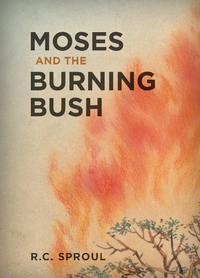
Moses and the Burning Bush by R. C. Sproul: A Brief Examination at What God Shows Moses About Himself

Moses and the Burning Bush

Moses and the Burning Bush

by R. C. Sproul

Kindle Edition, 103 pg.
Reformation Trust Publishing, 2018

Read: August 15, 2021
Grab a copy from your local indie bookstore!

What’s Moses and the Burning Bush About?

One of the church’s biggest problems is that we don’t understand who God is. But in that one revelation—the theophany in which God appeared to Moses—the transcendent majesty of God was partially unveiled. What had been invisible became visible through the theophany.

Sproul examines—briefly—just what God says about himself when he revealed himself to Moses. He shows His holiness, His glory, His Aesity, and more—here is even, as Sproul puts it, “A Shadow of Christ.”

In ten short chapters, Sproul opens up the account of Moses’s encounter with the Lord in the bush that was on fire, but was not consumed.* He doesn’t just camp out in Exodus 3, but spends time in Isaiah, Genesis, and other places, although he brings it all back to this point.

* I’ve learned to appreciate Scott Oliphant’s point that calling it a “burning bush” misses the point, it’s only supernatural to call it an “unburning bush.”

So, what did I think about Moses and the Burning Bush?

… in the burning bush we see the revelation of the person of God, of the power of God, and of the eternality of God. We see the revelation of the compassion of God, the redemption of God, and now, finally, the truth of God.

It has been ages—or at least it feels like it has been—since I’ve read an R. C. Sproul book (at least for the first time). There’s a clarity to the prose that’s almost untouchable by anyone else. He can express deep thoughts in a way that anyone can understand—not that there were a lot of tricky concepts this time out, but that voice is still there. And I’m going to miss it.

This is a nice book, as a sketch of these ideas. I think Sproul was capable of more, he could’ve got into all of these areas with more detail, could have fleshed out the concepts more—and given the reader something to chew on. I’m sure he had his reasons for not, I just wish he’d done more.

Still, if all you’ve thought of is the event itself—not what it meant beyond God calling Moses, it’s probably a good way to introduce yourself to it, but beyond that, there’s probably limited value.


3 Stars

This post contains an affiliate link. If you purchase from it, I will get a small commission at no additional cost to you. As always, opinions are my own.

Saturday Miscellany—8/21/21

Odds n ends about books and reading that caught my eye this week. You’ve probably seen some/most/all of them, but just in case:

bullet Putting down my phone and picking up a book has saved my sleep
bullet How to Remember What You Read
bullet What Do Fiction Writers Owe Their IRL Inspiration?
bullet Red Herrings in Contemporary Crime Literature: Celebrating the 21st century masters of misdirection.—I love a good red herring (especially when they frustrate me and make me feel dumb). How about you?
bullet Interview with Author Kevin Hearne—Beth Tabler had a great Q&A with Hearne
bullet Percy Jackson’s Most Iconic Moments—Percy’s birthday was this week, this is a fun way to commemorate it (I didn’t do the math on how hold it would make him, I’m sure I’d be depressed)
bullet Between A Clock And A Hard Place: How To Prioritize Reading—This Dad Reads has some good tips
bullet 6 SFF Reads under 200 pages—If you’re pinched for time, this list from Spells & Spaceships might come in handy
bullet Escapist Fantasy: 5 Series To Turn Off Your Brain and Have Some Fun—is another handy list
bullet How Book Synopses Set Reader Expectations and Why That Matters
bullet A Little List of Songs Book Lovers May Appreciate!

A Book-ish Related Podcast Episode (or two) you might want to give a listen to:

bullet No Stupid Questions Episode 64—the second question this week was dealing with “should you feel guilty if you don’t read books?” the discussion of which should interest readers of this post (nothing against the first question, it’s just not that germane).

This Week's New Releases That I’m Excited About and/or You’ll Probably See Here Soon:
bullet In Ten Years by Ian Shane—a When Harry Met Sally-esque take on two friends who make pact to marry at 40 if they’re both single. In case you missed the four posts here about it recently—here’s my take.
bullet How to Be Fearless: In 7 Simple Steps by Jessica Hagy—I’ve been reading Hagy’s daily webcomic of Venn diagrams for years, here she combines them with encouragement to “shake off worry and get to work.”

Lastly I’d like to say hi and extend a warm welcome to Marilynn Champion who followed the blog recently.
The Friday 56 for 8/20/21: In Ten Years by Ian Shane

The Friday 56This is a weekly bloghop hosted by Freda’s Voice.

RULES:
The Friday 56 Grab a book, any book.
The Friday 56 Turn to Page 56 or 56% on your ereader. If you have to improvise, that is okay.
The Friday 56 Find a snippet, short and sweet.
The Friday 56 Post it

from Page 56/ of:
In Ten Years

In Ten Years by Ian Shane

“You turn thirty-nine today.”

“Yeah, I know. It says so on the cake.”

“You turn forty next year.”

“I can also do first-grade math, Max. Is there a point anywhere in our future?”

“Don’t you think it’s time to find a nice girl?”

“I already have one mother, Max. I have no need for a second.”

“Sarah wants a girl to talk to when we get together.”

“I’ve brought girls.”

“None of them stick around long enough for Sarah to get attached to. Besides, you haven’t even had one of those disposable dates in a while.”

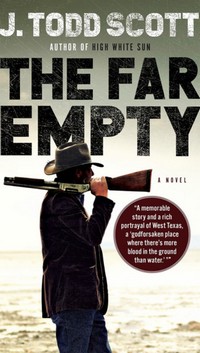
The Far Empty by J. Todd Scott: Imagine if Don Winslow Tried to Write a Craig Johnson Novel…

The Far Empty

The Far Empty

by J. Todd Scott
Series: Chris Cherry, #1

Paperback, 446 pg.
G. P. Putnam’s Sons, 2019

Read: August 16-17, 2021
Grab a copy from your local indie bookstore!

At dawn, when the sun’s up ove rthe mountains and it hits the far edges of twon at the right angle, the pink caliche on the bluffs burns crimson and everyting runs red. Murfee alwasy wakes up bloody. The dead are her secrets…The missing are her ghosts.

I know who Deputy Cherry found out at Indian Bluffs, and so does my father.

My mother…his missing wife.

What’s The Far Empty About?

This is so hard to sum up in a few paragraphs. Murfee is a small town in Texas near the southern border—the area around Murfee is even less populated. There are farms, ranches, and a lot of uninhabited land—very close to the border—a great place for smugglers (of people and substances) to ply their trade.

We open on one of the ranches that’s used as a crossing point. The owner has discovered a body on the land and newish Deputy Chris Cherry goes to look at the scene. Any other deputy would do what the rancher wants and write this off as another dead Mexican*—but Chris wants to do it right. And as he’s careful about his business, he notices something that compels him to dig in and really investigate the circumstances around the death—and the identity of the victim.

* Actually, it’d be a slur, but let’s keep this civil. I’m not sure I read many terms for minorities in this book that weren’t racist slurs. Thankfully, the characters that are on the admirable side of things (not necessarily “good guys”) don’t use that kind of language.

Actually, that’s incorrect—we start with the Sheriff’s seventeen-year-old son, Caleb, talking about the men that his father has killed (that Sheriff Ross—aka “Judge”—is willing to talk about in public, anyway), the women he married and the reasons they’re no longer around. Up to a year ago when Caleb’s mother left town—or so the official story is—Caleb says he knows his father killed her.

“The Judge” is the most powerful man in this part of Texas—he doesn’t enforce the law, he is the law, in just about every sense of the word. He’s what Walt Longmire and Quinn Colson could be with a lot more ambition—and an utter lack of morality. He sleeps with who he wants to, takes what he wants to—and, presumably, kills who he wants to. And the people who keep electing him love him, he’s their hero. He’s really one of the more despicable characters I’ve read this year.

So we have Caleb trying to find out what happened to his mom, Chris trying to figure out how this corpse ended up buried on the ranch, Sherrif Ross up to all sorts of things—and a few other residents of Murfee up to things full of secrets and lies. Too many threads are interwoven to do a decent job of talking about them here—but it’s safe to say that because of what Caleb and Chris are up to, there’s a chance that this intricate web could start to fall apart.

A chance.

The Exception

We learn so much about every major character—their backstory, the secret lives they live, the lies they tell the world (and, in some cases, themselves)…with one exception—Melissa, Deputy Cherry’s girlfriend.

We get a hint about her past—just the barest of hints—and we know a lot about her life with Chris—before and after Murfee. But that’s all. Just a hint? It drives me crazy that I could write a page or more on the backstory of every other major character, and I can’t about her. She’s largely a mystery.

And the part that isn’t being driven crazy about that loves it. She’s shrouded in shadows, and someone in this town needs to stay that way.

Series Premiere vs. Stand-Alone

I knew this was the first novel in a series, but it never felt like it. I kept thinking that this was a stand-alone. It was only in the last twenty pages that I could see how it could continue.

I have to wonder—did Scott’s publisher say, “We like this and would like to buy it from you—but we’re going to need this to be a series, add something to the end, okay?” Because those twenty pages don’t need to be there—I’m glad they were, it was easier to move past the darkness that characterized the 426 pages before because of those last twenty.

But I’m not sure it’s a better novel because of them.

So, what did I think about The Far Empty?

This book deserves kudos for the atmospheric writing—you feel the emptiness of the geography. It also draws on the legends (and history) about Texas Lawmen and Criminals—placing these events squarely in that vein. It’s hard to walk away from this book thinking that any part of Texas could possibly be different from Murfee.

I spent a lot of the novel thinking “This is almost too noir, I need someone I can believe in, someone who seems to care about the law, morality, simple decency.” I knew from the first chapter on that it was brilliantly written—Scott’s voice, style, and ability shone throughout the novel.

But, man…it was so bleak.

Caleb and Chris, sure, did care about justice, what’s right, and so on—but their efforts seemed so Quixotic that it was almost painful to watch these two and their futile quests.

I don’t know if the novel eased up on that eventually, if Scott’s writing won me over, or if I eventually grew numb to it all. But at some point, I bought into it—I needed to know what was happening and started to care about many of these characters.

When I get to the sequels, I might change my opinion of the book as a whole—but on the whole, it didn’t work for me as much as I wanted it to. It wouldn’t surprise me if by the end of book two, I’m a rabid fan of this series, but for the time being I’m unable to think of it as more than “pretty good.”

I do recommend The Far Empty, Scott’s a guy to keep your eye on. Just don’t go into this thinking it’s a fun adventure.


3.5 Stars

20 Books of Summer '21

This post contains an affiliate link. If you purchase from it, I will get a small commission at no additional cost to you. As always, opinions are my own.

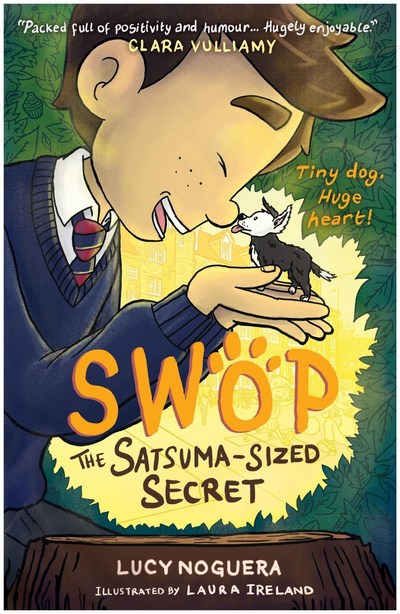
BOOK BLITZ: Swop The Satsuma-Sized Secret by Lucy Noguera

This morning I’m pleased to host a Book Blitz Lucy Noguera’s Swop The Satsuma-Sized Secret, a charming-looking book that you’re going to want to look into..

Book Details:

Book Title: Swop The Satsuma-Sized Secret by Lucy Noguera
Publisher: Brilliant Monsters Books
Release date: July 16, 2021
Format: Ebook
Length: 133 pages

Swop The Satsuma-Sized Secret

Book Blurb:

What would you do if you found the world’s smallest dog?

When Ernie and his family leave the countryside to move to the city. Ernie feels like he’ll never settle into their new home.

Yet on his very first night, a surprising new friend introduces himself – Swop is a very tiny dog. A dog that just happens to be the size of a satsuma.

Ernie vows to keep Swop a secret, but Swop has other ideas and he’s determined to make Ernie’s first day at his new school a memorable one!

Purchase Links:

Amazon UK ~ Amazon US

About Lucy Noguera

An ex-primary school teacher and Teacher of the Deaf. I now run a small educational company, specialising in arranging book projects and theatre events for schools and families. I live with my husband, our three children and our three dogs in Ealing, London. Yet the one in charge is our little ex-street dog, even though he has no eyes and three legs. He also happens to be called Swop!


My thanks to Love Books Group for the invitation to participate in this blitzl and the materials they provided.

Love Books Group

WWW Wednesday, August 18, 2021

Don’t have the time/energy for much today, but I think I can fit in WWW Wednesday…

This meme was formerly hosted by MizB at A Daily Rhythm and revived on Taking on a World of Words—and shown to me by Aurore-Anne-Chehoke at Diary-of-a-black-city-girl.

The Three Ws are:

What are you currently reading?
What did you recently finish reading?
What do you think you’ll read next?

Easy enough, right?

What are you currently reading?

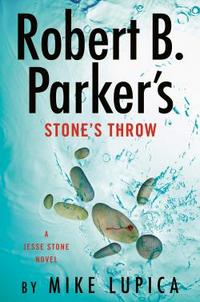
I’m reading an ARC of the twentieth Jesse Stone novel, Robert B. Parker’s Stone’s Throw by Mike Lupica and am listening to Burned by Benedict Jacka, Gildart Jackson (Narrator) on audiobook.

Stone's ThrowBlank SpaceBurned

What did you recently finish reading?

I just finished one of the noirest noirs I can remember, J. Todd Scott’s The Far Empty and Pray for Silence by Linda Castillo, Kathleen McInerney (Narrator) on audio—which is pretty disturbing, too.

The Far EmptyBlank SpacePray for Silence

What do you think you’ll read next?

My next book should be Love by Roddy Doyle—outside of periodic re-reads, I haven’t read Doyle this century. It’s about time I fix that. My next audiobook should be Kill All the Lawyers by Paul Levine, William Dufris (Narrator).

LoveBlank SpaceKill All the Lawyers

Are you reading anything good?

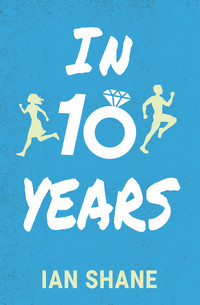
PUB DAY REPOST: In Ten Years by Ian Shane: They’re Perfect For Each Other…But Can They Make It Work? Do They Even Want to Try?

In Ten Years

In Ten Years

by Ian Shane

eARC, 261 pg.
2021

Read: July 23-26, 2021

What’s In Ten Years About?

In 2000, two Denver University students meet in such a way that practically guarantees Jack will have one of dullest (and probably worse than just dull) twenty-first birthdays. Liz unintentionally contributed to that but also did everything she could to make up for that. After this, she decides that the two of them are going to be great friends.

After spending a couple of chapters in 2000, we see them again in 2009—and it turns out that Liz’s plan to be great friends worked. They’ve become incredibly close, the Two Musketeers. They’re so close that everyone (including every romantic interest they ever have) assumes they have/are/want to be involved. The idea never really lodges with either of them—and they don’t understand why no one believes them.

We catch up to them in 2018. At some point, they’ve made that pact that you’ve seen in countless sitcoms and movies, if they’re not married by _____ time, they’ll marry each other.* In this case, it’s when Jack turns 40 (he’s a little younger than her, so at that point, they’ll both be 40), and in 2018 that’s a year away.

* The scene where the pact is made is just about perfect, I should add.

Both of them try to treat the pact as a joke—while hoping the other forgot about it. But neither did and despite the preposterous notion—they both kind of take it seriously. They can’t imagine not growing old together, why not?

And then one of them starts to realize that their interest in the pact isn’t because of a drunken promise, pragmatism, or the lack of a better option—but there just might be something right about the whole idea, a reality that’s been before them all along.

Supporting Characters

I’d intended on spending a few paragraphs talking about both Jack and Liz, and after a couple of failed attempts, I realized I couldn’t do either justice without just recapping the whole novel. So, instead, let’s talk about the other characters.

I wasn’t that far into the 2018 part when I made a note about, “Of course they end up together, everyone else they know is horrible.” Which was a little harsh, but essentially true—that’s up to and including their closest friends. Thankfully, that didn’t stay that way—sure, their friends didn’t make a great first impression, but as I got to spend some more time with them, I ended up liking them. They also proved to be good friends to Jack and Liz.

But when it comes to other romantic interests or dalliances? The reader can understand the appeal of (most) of the people they’re interested in—at least initially. But you don’t spend time thinking, “yeah, Person X would really be a good long-term partner for them.” I might have appreciated it more had I actually considered anyone to be a rival for Liz or Jack. But maybe after a few chapters, I’d already ruled out anyone who wasn’t Jack or Liz for the other.

I’m not sure it matters, ultimately. But what Shane did give each character plenty of frogs of various sides and coloring to kiss so that they’d inevitably discover their Prince/Princess.

The supporting characters, from college roommates to overbearing and overly-inquisitive mothers, to Russian hockey players to waitresses in a bar or inappropriate former students are well-written, they all stand out as pretty well-rounded (at least as much as someone who’s only around for a few paragraphs can be).

The Dialogue

I talked about this a little in the Q&A with Shane, and you should read what he said about writing it. My favorite part of this novel was the dialogue. Jack has some great lines when he’s upset or angry with someone, for example.

But what really won me over was the interaction with Jack and Liz—either when they’re being silly about something or when they’re talking about something serious. This is fitting for a contemporary When Harry Met Sally-esque story, Harry and Sally talking to each other is what made viewers fall for the pair, and Shane hits some Ephron-level interchanges with Jack and Liz.

So, what did I think about In Ten Years?

There are a few other highlights that I really don’t have the time or space to get into, I’d recommend checking out the aforementioned Q&A with Shane that I posted yesterday to catch a few other selling points for this book.

The novel is just funny—humor that arises from the situations and the characters’ inherent and reflexive wit and charm. It’s in the way they react to situations, and not because silly and madcap things happen around or to them (well, sure, there’s a little bit of that). Shane’s voice is part of it, too—but mostly it’s because these are smart, funny people who express that.

I can’t get into it without ruining anything, but there’s a chapter in the 2009 portion of the book that is my favorite chapter of 2021—it was so painful, and yet so funny. Shane was careful not to go too far in either direction, which would’ve blunted the impact. Instead, he’s able to portray the emotionally damaging circumstance and let the character’s wit and the ridiculousness of the situation keep it from being maudlin. The rest of the book is just as good, and just as balanced.

In Ten Years ticked just about every box that I can think of as a reader. I both couldn’t wait to find out what happened and didn’t want to get to the end because I was having such a blast. There’s a fresh-feeling take on a tried-and-true story (two, I’d argue), characters I genuinely liked, dialogue that I’d frequently reread a time or to before moving on, and a great mix of emotion and laughs. I wasn’t even 20% through the book when I noticed I was highlighting and making notes too often—had I stopped there, I had more things than I could squeeze into a post. I can only imagine how massive my notes collection would’ve been had I not made a conscious effort to stop. There was just so much that I wanted to remember about this book.

I know that I’m going to be talking about this book in January when I look back on the best of 2021, and I probably won’t be alone.


5 Stars

Page 294 of 630

Powered by WordPress & Theme by Anders Norén