Twice Cursed by J. C. Jackson: It’s Time to Bring Werewolves into this World

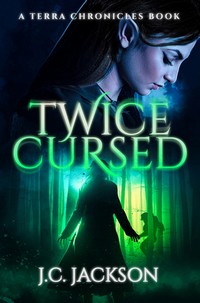
Twice Cursed

Twice Cursed

by J. C. Jackson
Series: Terra Chronicles, #3

Paperback, 241pg.
Shadow Phoenix Publishing, 2018

Read: August 5, 2021
Grab a copy from your local indie bookstore!


Since it’s been awhile (too long) since I posted about this series, I thought it’d be a good idea to copy a bit of the introduction to this series I posted back in 2018 (slightly edited):

I had a brief conversation a couple of weeks ago with J.C. Jackson and she described the book as “Science Fantasy” and told us a little about the series. Something about fantasy characters but with modern technology, but phrased better. Not really getting what she said, I asked why not just call it Urban Fantasy, and she gave a decent answer—basically that she didn’t have enough vampires or werewolves in the books so readers told her she couldn’t. I was a chapter or two into the book when I figured out what she was saying.

In your mainstream Urban Fantasy, you have fantasy creatures—wizards, druids, werewolves, fae—popping up in our world. On the other end of the spectrum (or an other end, anyway) you have things like the Eddie LaCrosse novels or the Dragon Precinct books that have modern ideas (police squads, private investigators) used in a fantasy series. Jackson takes a different tack—it’s a typical fantasy novel in that there’s a lot of magic, elves, halflings, Dark Elves, etc. living next to humans—very standard kind of thing, but their technology matches ours (actually, it’s slightly more advanced). I loved this approach and there’s a good chance that I’d have had nice things to say about the book just because of this idea.

What’s Twice Cursed About?

Ketayl and her Paladin partner, Silver, are sent off to do fieldwork, bringing along another lab tech to look into a rash of werewolf deaths in the territory of the Alpha Prime’s pack (he’s sort of like the Marrock of this world). The local Terran Intelligence Organization office is primarily full of recent graduates from the Academy, most still learning the ropes—they’re not up for dealing with both the investigation and dealing with the Alpha. So, instead, they throw Ketayl into leading her first team because of her investigative abilities and to get her to grow into leadership.

She interacts better with the pack than anyone (except maybe her boss) expected—certainly better than she assumed. She and Silver quickly decide that this is another example of the rise in Necromancy that they’ve been chasing.

Through a combination of good procedure and being in the right place at the precisely right time (or wrong place/wrong time, depending on their perspective), they make great strides in the investigation—even if it essentially puts multiple lives on the line. Through it Ketayl gets a crash course in juggling personalities, abilities and unprepared-for team members.

A Gripe Resolved

Something that bugged me through a lot of the first book, and that really got on my nerves in the second book was (to cite that post) that most characters treat Ketayl “with the kind of care usually reserved for glass on the verge of shattering, they only tell her as much of the truth as they want—all the while, wanting the benefit of her intelligence, abilities, and magic. It feels condescending and manipulative. And for that to be the way those closest to her to treat her? I can’t stomach it.” There were characters throughout that didn’t treat her that way, but they were the distinct minority.

None of them were around this time—only those who saw her strength, who believed in her when she didn’t really believe in herself (which is still going on ), and those who didn’t have preconceived notions about her. Despite herself, she responded to that kind of confidence well and is able to rise to the occasion.

I do wonder what it’ll be like when they spend more time around some of those other characters—will they see the growth in her?

A Quibble Exasperated

I do have another quibble with the series—Jackson has two story arcs that she appears to be taking a “slow burn” approach to. I’m all for that, but while she’s letting the development of those arcs build deliberately—she’s telegraphed where they’re both going in a way that takes away the deliberate, careful way she’s going about it.

It’s hard to talk about that without getting into plot specifics, but hopefully, that paragraph makes sense.

Now, that’s a quibble—not a full-on gripe or criticism. It’s a thought I have every so often while reading (and when writing about it), but I shrug it off and move on with a fun read.

So, what did I think about Twice Cursed?

I really dug it. The Alpha and his crew were a lot of fun (I hope we get to see them in a book or two). Ketayl’s growth was great—both in leadership and social interaction, but she has a few places where she’s able to flex the magic muscle that she’s long kept under wraps, and…yeah—I really loved those scenes.

I’ve been kicking myself for getting behind on this series—I had this and the next book on my shelf for years untouched—and I’m so glad I got back into this world and with these characters. The mix of tech and Fantasy, and characters you can’t help but want to befriend makes for a fun time. I’ll be back for more soon.

(Over the weekend, I bought the next two books, so even after reading this, I’m more behind).


3.5 Stars

20 Books of Summer '21

This post contains an affiliate link. If you purchase from it, I will get a small commission at no additional cost to you. As always, opinions are my own.

Reposting Just ‘Cuz: Classically Cool—Let’s Talk Classics!

One day, I’ll update this, if for no other reason than I’ve actually finished The History of Tom Jones, a Foundling. But today is not that day. Still, I liked this post and could use a break from composing something new.


Last week, Witty and Sarcastic Bookclub posted Classically Cool- Let’s Talk Classics!, and it got me a-thinkin’, what Classics would I mention as faves?

Dickens doesn’t do anything for me, ditto for the overwhelming amount of Shakespeare I’ve read, Hawthorne makes me angry, I don’t get Melville’s appeal (but I also kind of do…I just don’t want to put in the effort)…but by and large “The Classics” (aka the Canon) are Classics for a reason (not because some nameless, faceless group of (now-)Dead, White Males exercised hegemonic powers to impose their tastes, either).

Still, there are some favorites:

Starting with The Oresteia (for chronology’s sake), this is the only existing example we have of a Greek dramatic trilogy. This series showing the fall-out of the Trojan War for Agamemnon and his family/kingdom and is pretty impressive.

Call me silly, but Beowulf has always really worked for me. I don’t know how to rank the various translations, I’ve read a handful and don’t think I ever knew a single translator’s name. I’ve meant to try the Haney translation since it came out, but haven’t gotten to it yet—the same goes for Tolkein’s. From about the same time (a little later, I believe, but I’m not going to check because if I start researching this post, it’ll never get finished) is The Dream of the Rood, a handly evangelistic tool (one of the better-written ones) in Old English.

Moving ahead a couple of centuries (I’ll pick up the pace, don’t worry, the post won’t be that long) and we get Gawain and the Green Knight, which is fun, exciting and teaches a great lesson. Similarly, we have that poet’s Pearl, Patience, and Purity. I don’t remember much about the latter two, beyond that I liked them, but the Pearl—a tale of a father mourning a dead child and being comforted/challenged in a dream to devotion—is one of the more moving works I can remember ever reading.

I want to throw in Tom Jones (technically, The History of Tom Jones, a Foundling) by Henry Fielding here, but I’ve never actually completed it. Which says more about my patience and how distracted I can get than the book—which is an impressive work. I’ve gotta get around to actually finishing it at some point.

I can’t remember the titles for most of the Robert Burns poems I’ve read—”A Red, Red Rose” and “To a Mouse, on Turning Her Up in Her Nest With the Plough, November, 1785” (one of the best titles in history) are the exceptions—but most of them were pretty good. And I’m not a poetry guy.

Skipping a few centuries and we get to Alexandre Dumas’ The Three Musketeers. If all you know is the story from movies, you’re in for a treat when you actually read this thing. I’ve read it a few times, and each time, I’m caught off-guard at how fast-moving it really is, how entertaining and exciting it can be. It’s not a classic by any stretch of the imagination, but I feel compelled at this point to mention that the book about Dumas’ father, The Black Count: Glory, Revolution, Betrayal, and the Real Count of Monte Cristo by Tom Reiss is a must-read for any fan of Dumas.

I don’t remember how Ivanhoe by Sir Walter Scott ended up on my bookshelf (I think whatever relative took me to the bookstore said I could get something silly and trashy (in their view) if I got a Classic, too). But a few years later, I finally got around to reading it at about the same time that another kid in my class (we were High School sophomores) was reading it—both of us talked about how it was pretty good, but too much work. Until we got to a point somewhere in the middle (he got there a day before I did, I think) and something clicked—maybe we’d read enough of it that we could really get what was going on, maybe Scott got into a different gear, I’m not sure—and it became just about the most satisfying thing I’d read up to that point in my life.

Jane Eyre by Charlotte Brontë is one of my favorite books, probably belonging in the Top 3. Go ahead and roll your eyes at the idea of me saying that about a romance novel, that just means you’ve misread the book. This tale about integrity, about staying true to what one holds dear, what one believes, and to what is right despite everything and everyone around you is exciting, inspiring, fantastically written, and so-memorable. And, yeah, there’s a nice love story to go along with that 🙂

Speaking of love stories, we now get to my favorite, Edmond Rostand’s Cyrano de Bergerac. I steadfastly refuse to learn anything about the actual figure, because I don’t want anything to ruin this for me. When I first read the play in junior high, I considered the best parts the lead-up to the duel in Act I, and Christian’s trying to pick a fight with Cyrano the next day. Now I know the best parts are Christian’s realization in Act IV and Cyrano’s reaction to it and then, of course, Cyrano’s death (I’m fighting the impulse to go read that now instead of finishing this post). And don’t get me started about how this play’s balcony scene leaves any other romantic balcony scene in the dust.

I can’t pass up an opportunity to praise, The Adventures of Huckleberry Finn, Mark Twain’s tour de force. Satire, social commentary, general goofiness, and some real heart. This book has it all.

I’m not sure that Ambrose Bierce’s The Devil’s Dictdionary is technically a “Classic.” But I’m counting it as one. It’s hilarious, it’s incisive, it’s a great time for those who like to subtly (and not-so-subtly) play with words. Yeah, it’s cynical—but it’s idealistic, too (as the best cynics are). If you haven’t sampled it yet, what’s wrong with you?

I feel strange dubbing anything from the Twentieth Century as a Classic, so I won’t talk much about The Old Man and the Sea, The Great Gatsby, Winesburg, Ohio or Our Town (the best way short of having a dog die to make me cry is get me to read/watch Act III). But I do feel safe mentioning To Kill a Mockingbird by Harper Lee, the ground-breaking, thought-shaping, moving, inspiring, and (frequently) just plain fun look at a childhood in the south.

When I started this, I figured I’d get 4-5 paragraphs out of the idea. I guess I overshot a little. Anyway, that’s what came to mind when I read W&S’ post—maybe other works would come to mind if I did this another time, but for now, those are my favorite Classics. What about you?

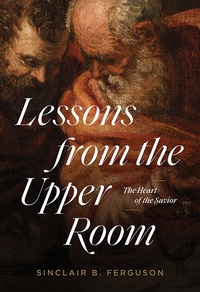
Lessons from the Upper Room: The Heart of the Savior by Sinclair B. Ferguson: A Guided Tour through The Savior’s Night before His Death

Lessons from the Upper Room

Lessons from the
Upper Room: The Heart
of the Savior

by Sinclair B. Ferguson

Kindle Edition, 241 pg.
Ligonier Ministries, 2021

Read: July 25, 2021
Grab a copy from your local indie bookstore!

What’s Lessons from the Upper Room About?

In his Gospel, John spends 4 chapters (13-17)* on the night before Jesus was betrayed. The last night He spent teaching, serving, praying with (and for), and being with the Twelve (then Eleven). In this book, Ferguson walks through those chapters, well…let him describe it in his own words:

Lessons from the Upper Room is by no means a complete exposition of John 13– 17. If that were attempted—to adapt some words of John himself—an entire bookcase could not contain the books that would be written!

Nor are these pages a commentary in any technical sense. They are, perhaps, more like the “audio description” function on my “smart” TV set. This facility provides a running commentary on the action taking place on the screen to help those who can follow the dialogue but are too visually handicapped to see it.

* Yes, I know John didn’t think of it in terms of chapters, shush, you know what I mean.

That’s basically what this is, a guided tour through these beloved passages from a trusted guide—pointing out interesting features, maybe helping the reader to think of them in a way they didn’t think of before. Maybe picking up a detail they never notice (or had forgotten they had).

Occasionally, there’s a pointed observation, a reminder that we should do more than read these words, a call to action. Nothing burdensome (see Matt. 11:30), but nevertheless, Jesus’ followers are to serve others as he did himself before supper.

So, what did I think about Lessons from the Upper Room?

I don’t have much to say about this book—that simple description is really all you need to know. Especially if you’re familiar with Ferguson, you know that what you’re getting is helpful.

Speaking of being familiar with Ferguson, I really want to get my hands on the talks that this book started out as. They have to be great—as much as I like Ferguson’s writing, his teaching and preaching are so much better.

I’m not sure I learned a whole lot from this read—a did pick up a thing or two. But this refresher on these passages is a great way to look at again at them. It’s warm, it’s reassuring, it’s stimulating. I can see this as the kind of thing I can read every couple of years as a little boost.

I commend this to you and your attention—it’ll reward your time.


3.5 Stars

Saturday Miscellany—8/14/21

This is a book-blogger-heavy collection this week—which I love doing (hey, this is the end of Book Blogger Appreciation Week—a nice coincidence). Hope you find something you enjoy!

Odds n ends about books and reading that caught my eye this week. You’ve probably seen some/most/all of them, but just in case:
bullet How Extortion Scams and Review Bombing Trolls Turned Goodreads Into Many Authors’ Worst Nightmare—I know there are many other problems with Goodreads, but to get Time to cover the site? This has got to be really damaging.
bullet A Dorothy Parker Quip for Every Occasion—I’m pretty sure I’ve linked to this a time or two before, but the Pocket app suggested this to me again this week, and who am I to argue with algorithm? Always a good time for some Parker lines.
bullet While on LitHub, I also saw: 10 Literary Classics We (Not So) Secretly Hate—I’m sure many of you can relate to at least one of these
bullet 12 Favorite Books: Happy #NationalBookLoversDay—I’ve never done a National Book Lover’s Day post—which is weird, it seems natural around here (or, really, anywhere). My wife literally buys me a gift for it (this year a nice little “It’s Not Hoarding if It’s Books” print and a Book necktie). I’m glad to see at least someone else notes the day.
bullet Let’s Talk About Audiobooks
bullet I Know Science Fiction and Fantasy Can be Daunting—Bath Tabler, not at all surprisingly, knocked it out of the park with this post.
bullet If she inspired you to stick a toe in the Fantasy water, why not grab something off one of these handy lists? Here There Be Dragons Part One—12 Books starring a beloved fantasy favorite that comes in all shapes and sizes: Dragons and Dragon Shifters and Here There Be Dragons Part Two—Round Two: Here are 12 TBR books featuring dragons that I can’t wait get my hands on!
bullet Reviewing the Practice of Reviewing Books
bullet Why You Should Re-Read An Old Favourite Book
bullet How I Rate & Review DNFs
bullet Disappointing Read & Replacement Recommendations—I like this idea: I don’t want to recommend X, but maybe this would scratch the same itch, and do it better?

This Week's New Releases That I’m Excited About and/or You’ll Probably See Here Soon:
bullet Paper & Blood by Kevin Hearne—the second adventure of Al MacBharrais features a great postscript to the Iron Druid Chronicles–and is a pretty bonkers book, too. I talked about it a little recently.
bullet Meadowlark: A Coming-of-Age Crime Story by Ethan Hawke, Greg Ruth—why, what do you know, I found a graphic novel I’m interested in without needing Lashaan to recommend it first! A father-son crime novel traces the course of one dramatic day. What little I’ve seen of the art looks great (up to the “casting” of Hawke as the father)

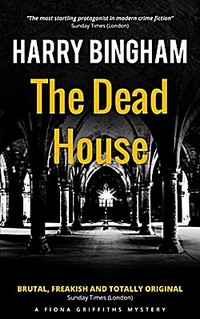
The Friday 56 for 8/13/21: The Dead House by Harry Bingham

The Friday 56This is a weekly bloghop hosted by Freda’s Voice.

RULES:
The Friday 56 Grab a book, any book.
The Friday 56 Turn to Page 56 or 56% on your ereader. If you have to improvise, that is okay.
The Friday 56 Find a snippet, short and sweet.
The Friday 56 Post it

from 56% of:
The Dead House

The Dead House by Harry Bingham

The chamber we’re in isn’t vast by the standards of vast. It’s perhaps twice the length, height and width of that common room at Penwyllt, but it feels cathedral-like to me. Lofty and aerial.

I sit on a hunk of rock and wait for Lloyd (grinning) and Burnett (muttering) to appear. We congratulate each other. Learn to keep our torch beams angled slightly away from each other’s eyes, so we can see each other without dazzling ourselves.

Water pools in places on the floor, but is nowhere more than a few inches deep. Somewhere there’s a drip of water against rock. A faint draught.

Burnett sits next to me, mixing blasphemy and old-fashioned cursing in a way that is both dully conventional but also pleasingly heartfelt and direct.

Lloyd bounces round like a puppy. Splashes to the end of the chamber. Points out that the passage continues on from there. Pokes around a rubble of loose rock along the chamber’s right hand edge, muttering to himself.

When he’s done, he trots back.

‘OK? OK? You both all right? You’ve done well. That was a good crawl. Not as good as Ogof Daren Cilau, but still a good ’un. A really good ’un. Now, OK, take a break. Have a rest. I’ll get the sacks and we’ll set up base camp.’

REPOSTING JUST CUZ: The Ninja Daughter by Tori Eldridge: The Norwegian-Chinese Ninja Hero You Never Realized You Needed in Your Life

I’m stumbling over myself trying to write my post about the sequel, The Ninja’s Blade–seriously, I’ve tossed out the first paragraph 5 times so far. So, as has been my habit of late, I’m reposting what I said about the previous book in its stead. If you haven’t looked into this yet, maybe this’ll prompt you to do that (while I hope it prompts me to finish the post on the sequel)


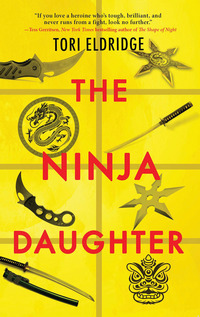
The Ninja Daughter

The Ninja Daughter

by Tori Eldridge
Series: Lily Wong, #1

Paperback, 300 pg.
Agora Books, 2019

Read: August 21-22, 2020
Grab a copy from your local indie bookstore!

What’s The Ninja Daughter About?

Lily Wong’s nickname is Dumpling, and like that food, there’s a lot hidden underneath the surface.

For starters, there’s the fact that she trained extensively in martial arts—more than her parents realized—growing up. Then there’s the fact that she (in her mind, at least) let her sister down the night that her sister was sexually assaulted and murdered. Which fuels the last hidden part of her life—she uses her guilt and need for vengeance to fuel her utilization of those martial arts skills to be a kunoichi—a female ninja—to help women and children who are the victims of abuse while she hunts for her sister’s killer. Her parents only know she does IT work from home.

When the book opens she’s trying to help a Ukrainian immigrant woman and her son get away from her abusive husband (who brags about his criminal connections), but that’s not going too well. To distract her self from the lack of success there, she takes up the cause of a waitress who’d been attacked in her home by a customer. The judge tossed the case based on insufficient evidence following weeks of the waitress being victim shamed through the media (traditional and social).

Lily decides that this waitress needs a big sister to look out for her and appoints herself to fill that role. She does this by doing what she can to keep Mia safe and then to investigate the guy she pressed charges against. This leads her into a murky world of government contracts, real estate, organized crime, and murder.

You Know Who Lily Reminds Me Of?

Part of it’s the city of L.A., part of it’s the female action-hero vibe, the one woman against the world kind of thing. Part of it is ineffable. But I couldn’t help but think of Cas Russell (of Zero Sum Game and Null Set) and Teagan Frost (of The Girl Who Could Move Sh*t with Her Mind) as I read this book.

Sure, Lily’s more grounded than either of them, she has no real powers other than those that are the result of years of training and practice. Theoretically, everything that Lily does in this book Tori Eldridge is (or at least was at one point) capable of doing herself—and a lot of what Cas and Teagan do are purely the stuff of fiction. Still, I’m probably going to lump the three of them together in my mind for some time to come.

The biggest difference between them is that Lily knows just who she is and where she comes from—her family is strong, affectionate (in their way), and supportive. She may have friends to augment that core support, but they’re not everything she has. This makes her a bit more stable and capable of dealing with challenges that come than the others.

(and, yeah, I thought of Lydia Chin and her mother every time Lily and her Ma interacted, but that’s a whole other can of worms).

The Food

There’s food all over this book. Lily’s father owns and runs a Chinese restaurant in Chinatown. The woman that runs the shelter she works with cooks amazing sounding soul food. The meals she eats with her family and on her own sound amazing. Spenser and Elvis Cole may know their way around a kitchen, but Lily Wong knows her way around some fantastic restaurants in L.A. She’s so far ahead of the game than Kinsey Milhone’s lousy sandwiches and Hungarian food that it’s hard to believe they’re in the same genre.

Do not read this book if you’re peckish. Keep yourself fed well, or you’re going to be snacking far too much.

Lily’s Heritage

It’s that family makes Lily who she is. In these three hundred pages, we hear more about Lily’s grandparents and parents than I’m used to hearing about a protagonist’s family over several books. Particularly when we’re talking about an action hero.

Eldridge has given Lily the same heritage that she has—a Norwegian father from North Dakota and a Chinese mother. So Eldridge knows the special kind of alchemy that the mixture of the two cultures produces.

The Important Word in the Title

Obviously, it’s Ninja that draws your attention and is the memorable takeaway, but as you can tell, it’s Daughter that colors the whole book. It’s Lily’s interactions with her parents, her application of the way they raised her and still care for her, the way she draws on what they teach and tell her that defines her and proves to be the key to figuring out what’s going on in the book.

So, what did I think about The Ninja Daughter?

If you want to ignore the deeper stuff and enjoy a book about a determined young woman out for vengeance (presumptive and by proxy, as it often is) on the streets of Los Angeles, this book will do the trick.

If you want a rounded, complex, female character trying to figure out how to deal with personal guilt, and trauma while helping out women and children by any means necessary, this book will do the trick, too. The idea that she may be starting to figure out a way past the guilt and move into healing and happiness* makes that all the better.

* Sure, I realize that within the first fifty pages of the sequel, all that can go away. The important thing is that it was there

You could make the case that Philip Marlowe was Chandler’s attempt at telling the story of a knight errant in early-twentieth-century L.A. Lily’s in the same vein—just a little more modern (and, ironically enough, using an older kind of warrior). Eldridge’s L.A. has slightly nicer mean streets, but they’re just as deadly and are in just as much need for a hero. I hope we get to see her at work for quite some time.


4 Stars

20 Books of Summer

This post contains an affiliate link. If you purchase from it, I will get a small commission at no additional cost to you. As always, opinions are my own.

Catch-Up Quick Takes: The Data Detective; All Creatures Great and Small; The Miracle Pill

The point of these quick takes posts is to catch up on my “To Write About” stack—emphasizing pithiness, not thoroughness. This time we’re looking at some recent Non-Fiction Audiobooks.


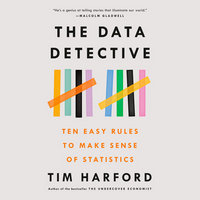
The Data Detective: Ten Easy Rules to Make Sense of Statistics

The Data Detective: Ten Easy Rules to Make Sense of Statistics

by Tim Harford
Unabridged Audiobook, 10 hrs., 24 min.
Penguin Audio, 2021
Read: May 19-21, 2021
Grab a copy from your local indie bookstore!

(the official blurb)
On the one hand, Hartford’s aim is to dispel the myth that “to really lie, you use statistics.” But part of what he ends up saying is that they are pretty handy tools for (at least) misleading people. So I’m not sure the book’s as successful as it could’ve been.

But what Hartford really does is show how to interpret statistics, to look behind the headlines and look at what the studies (or whatever) were looking into, what were they asking? And then to take the results reported in the news (or wherever) to use them to better understand things.

It’s basically a guide to teach yourself critical thinking skills—something we could all use more of. I really enjoyed it, and probably need to read/listen to it a few more times to really internalize it.
3 Stars

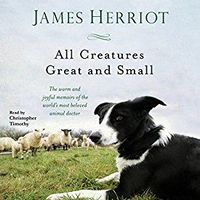
All Creatures Great and Small

All Creatures Great and Small

by James Herriot, Christopher Timothy (Narrator)
Series: All Creatures Great and Small, #1
Unabridged Audiobook, 15 hrs., 41 min.
Macmillan Audio, 1999
Read: May 17-19, 2021
Grab a copy from your local indie bookstore!

(the official blurb)
I read this series back in junior high—I remember liking them, I remember eventually getting to the point that I wondered if mother cows/sheep/horses always had problems delivering, and…well, that’s about it really.

I didn’t remember how much drinking there was, or the interpersonal stuff between Herriot and the vet he worked for, or the silliness of some of the other interactions he had with people. Which is a shame—because that was just so much fun.

There were some really moving parts, too—I probably skimmed over them in my youth, but I enjoyed dwelling on them now.

This was a sweet book, and it’s easy to see why people have been reading this series for years—and will probably continue to do so. I’m coming back for more as soon as I can.
3 Stars

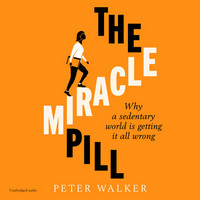
The Miracle Pill

The Miracle Pill

by Peter Walker
Unabridged Audiobook, 7 hrs., 58 min.
Simon & Schuster Audio UK, 2021
Read: May 3-4, 2021
Grab a copy from your local indie bookstore!

(the official blurb)
So, basically, here’s the thing the book is pushing: moving more improves our health. Little things like walking and riding bikes—and sitting less—will do wonders to help our health in ways we can’t imagine. Essentially, he argues that if we could take an expensive pill that would have the same impact, we all would. So why not do the free, natural thing?

Walker addresses several different ways that sedentary life can have an adverse impact on health and the ways that movement (walking, cycling, etc.) can reverse that. He talks about the small changes (that hopefully lead to larger changes) that can make dramatic improvements. Walker experiments on himself to illustrate some points, which is always fun.

It gets a little old and repetitive from time to time. But it’s good to review this stuff and a quick and entertaining listen. Give it a shot.
3 Stars

2021 Library Love Challenge 2021 Audiobook Challenge

This post contains an affiliate link. If you purchase from it, I will get a small commission at no additional cost to you. As always, opinions are my own.

Firefly: The Magnificent Nine by James Lovegrove: The Hero of Canton Lives!

I could go on for a long time about all sorts of details about this book while still avoiding spoilers, but I’m going to force myself to be brief. However long this ends up being, just know, it’s probably about 1/4-1/3 the length I wanted it to go.


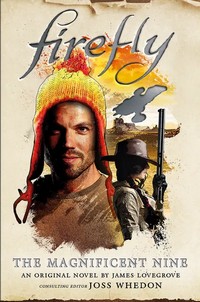
Firefly: The Magnificent Nine

Firefly: The Magnificent Nine

by James Lovegrove
Series: Firefly, #2

Hardcover, 384 pg.
Titan Books, 2019

Read: July 27-28, 2021
Grab a copy from your local indie bookstore!

“If” he said, and he repeated the word for emphasis, “if I go along with this entirely hare-brained idea, which’ll most likely end up gettin’ us all killed, Jayne’ll be in my debt.”

“That he surely will.”

“And I’ll have this to rub his nose in for months to come.”

“Again, yes.”

Mal crooked one corner of his mouth. “Then what the heck? I’m in. Just tell me this: when did a shipload of criminals, desperadoes, and fugitives become such a bunch of do-gooders?”

Inara had the answer. “When their captain showed them how.”

What’s The Magnificent Nine About?

Fourteen years ago, Temperance Jones walked out of Jayne Cobb’s life without warning. They’d been partners in crime for some time—and in a few other ways, too. Now, while Serenity and her crew are between jobs, Temperance (now using McCloud as a last name) sends Jayne a message—her town’s water supply is being held hostage by a local gang called the Scourers. If they aren’t stopped, her small town, like many others on the planet already—will fall to this group and what little water they have will come at too steep a price.

Mal’s not interested in helping, but the rest of the crew remembers how not long ago, they did something similar for Inara’s friend Nandi—and that went okay, right? (well, eventually). So they convince the Captain that this is the right thing to do.

It was probably when Wash almost didn’t out-maneuver a heat-seeking missile—which still resulted in Serenity being disabled for days—that everyone realized that this was going to be harder than defending Nandi’s ranch. But now, they had to find some way to stop the Scourers to save Temperance’s town and their own lives.

Oh, and somewhere along the way, someone needs to do some thinking about why the not-quite-fourteen-year-old daughter of Temperance is named Jane.

Random Observations

I’m not going to let myself fully geek out about this book, but some of the highlights and/or things I’d like to spend a lot of time discussing include:
bullet River got to talk to more cows!
bullet Shepherd Book’s Christianity was a little more pronounced than I’m used to (and they actually explicitly called it “Christianity”–it was always clear that’s what it was, but no one ever used the C-word in the show/movie)
bullet While trying to fly the ship away from the missile, Wash remembered the words of “his Zen Buddhist flight instructor”: You are a leaf on the wind. I almost threw the book away at that point, why do that to me?
bullet River defended Serenity using blades and guns—and was (again) the hero of the moment.
bullet Wash and Zoë have some great moments together. Zoë has some pretty good moments that have nothing to do with Wash, too.
bullet The Chapter titles (one of those things I never pay enough attention to) are even pretty fun: “The Inevitable Bar Brawl” and “Landmines of an Improvised and Somewhat Homespun Nature,” for example.
bullet Jayne described talking to River as “a radio and the signal keeps hopping, changing channels at random.” Hard to beat that.

So, what did I think about The Magnificent Nine?

This is just so much fun. Lovegrove captures the feel of the show and the voices of the characters so, so, so well that it’s impossible not to enjoy the book if you liked Firefly.

Is there anything else to say, really? This was a satisfying, entertaining, and nostalgic ride with Serenity, with the bonus of getting some good focus on Jayne Cobb—and maybe seeing him in a better light than you’d be tempted to otherwise.


3.5 Stars

20 Books of Summer '21

This post contains an affiliate link. If you purchase from it, I will get a small commission at no additional cost to you. As always, opinions are my own.

WWW Wednesday, August 11, 2021

So, it’s a little too early to really know how things are going to change with the new job as far as time for books and audiobooks—but I can tell you how it’s going this week. I’ve found about the same time to read—it’s shifted and in different sized chunks. So that’s a relief. But audiobook-time has taken a dive, maybe this week I’ll be able to finish the not-very-long book that I started Friday. In the midst of all the personal upheaval, one thing has remained constant—it’s time for WWW Wednesday!

This meme was formerly hosted by MizB at A Daily Rhythm and revived on Taking on a World of Words—and shown to me by Aurore-Anne-Chehoke at Diary-of-a-black-city-girl.

The Three Ws are:

What are you currently reading?
What did you recently finish reading?
What do you think you’ll read next?

Easy enough, right?

What are you currently reading?

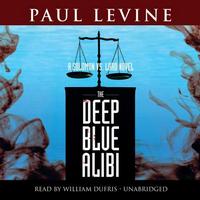
I’m reading The Dead House by Harry Bingham, the next novel in one of those series that I keep getting distracted from, and I’m listening to The Deep Blue Alibi by Paul Levine, William Dufris (Narrator) on audiobook—switching narrators from the first book threw me a little, but am enjoying it (when I can listen).

The Dead HouseBlank SpaceThe Deep Blue Alibi

What did you recently finish reading?

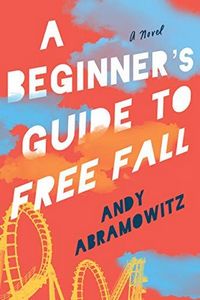
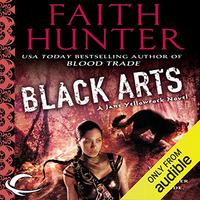
I just finished Andy Abramowitz’s A Beginner’s Guide to Free Fall and Black Arts by Faith Hunter, Khristine Hvam (Narrator) on audio.

A Beginner’s Guide to Free FallBlank SpaceBlack Arts

What do you think you’ll read next?

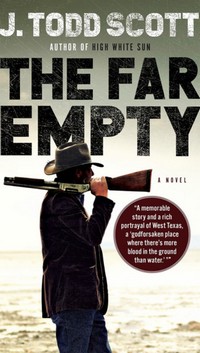
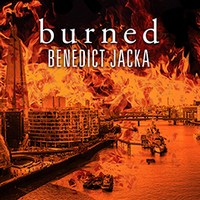
My next book should be The Far Empty by J. Todd Scott and my next audiobook (assuming I ever finish The Deep Blue Alibi) should be Burned by Benedict Jacka, Gildart Jackson (Narrator).

The Far EmptyBlank SpaceBurned

Hit me with your Three W’s in the comments! (no, really, do it!)

Book Snob Book Tag

Book Snob Book Tag
I was tagged by Esther at Cozy with Books to tackle this Book Tag, which was awfully nice of her because this was a lot of fun to do. As far as I can tell, this tag originated over on the Booktube channel Tia and All the Books a few years ago.

Adaptation Snob: Do you always read the book before watching the film/TV show?

Almost always. Sometimes I watch a thing and then discover it’s an adaptation, which leads me to the source material—like Vagrant Queen or Justified. If there’s something I’m interested in, I’ll try to read the source material first, but I can’t always do that—I was able to with Stumptown and Dash & Lily’s Book of Dares. That’s actually what originally lead me to The Dresden Files, now that I think about it.

Occasionally, I’ll be interested in an upcoming adaptation and hold off on the source material, though. I knew Game of Thrones would have to tweak the source material—there’s just no way that it couldn’t. So I waited until after Season One to read any of it. I wanted the show to be able to exist in my mind aside from the book. I purposely didn’t want to be saying, “oh, that was different in the book” every few minutes. Then I was able to be able to put the books in a different mental category as I dove in. Basically, “Baelor” (Season 1, Episode 9) floored me.

That doesn’t happen often, though. Generally, I’m “book first” and maybe the other stuff later.

Format Snob: You can only choose 1 format in which to read books for the rest of your life. Which one do you choose: physical books, eBooks, or audiobooks?

The answer I want to give: Physical Books. There’s the history, the tradition, the paper, the smells, the weight of a book in your hands—the example of Samuel T. Cogley that got implanted in my brain at an early age…

Actual answer: If we’re talking the rest of my life, I’ve gotta go with eBooks. I only have so much space to store them (and I get hives thinking about downsizing what’s already there, as much as I should do that). But most importantly, my eyesight is getting worse and worse, and there’s only so much that medical science/my wallet can do for that. Eventually, reading a physical book is going to be more trouble than it’s worth. Resizing font size (and font) as needed is the best way to deal with that.

Ship Snob: Would you date or marry a non-reader?

I’d better not date a non-reader, my wife would not approve.

I guess the answer to this would depend on what you define as a reader. By the standards of book bloggers, I did not marry a reader (although she’s had a couple of atypical years where she did). By the standards of almost everyone else she and I know, I did.

The better question to ask is: would I marry someone who doesn’t support and indulge my reading/book hoarding and isn’t willing to put up with me talking about books and what I’m currently reading. And that would be a hard no. Thankfully, the love of my life isn’t that kind of person—in fact, she encourages and enables my addiction. It probably keeps me out of her hair.

Genre Snob: You have to ditch one genre – never to be read again for the rest of your life. Which one do you ditch?

That’s a no-brainer. Over the course of my life, I’ve only dabbled in Horror. I’ve appreciated most of those, but even the best of those haven’t made me say, “You know what? I need to read things like that.” Given a lot of what I read, that might seem odd to some people (and occasionally does to me, too), I can only shrug.

Uber Genre Snob: You can only choose to read from one genre for the rest of your life. Which genre do you choose?

I’m sure any reader of this blog for more than 2 weeks can sing along with this answer: Mystery/Detective/Crime Fiction. Every month and/or year, when I look at my stats, this genre accounts for at least a third of what I read. And that’s only because I ignore a lot of titles/authors*.

* I ignore a lot of titles/authors in other genres, too, due to time constraints.

I have to admit, it’s kind of a cheat to say that, though. A half-way decent (never mind really good) Crime Fiction Novelist can use any genre to produce their work—I’ve read Humorous Crime (Dave Barry’s stuff, or Ken Levine, or Duncan McMaster); Ghosts in Crime (Jo Perry’s Charlie and Rose books); Zombies in Crime (The King of Crows); Westerns (William DeAndra’s Lobo Blacke/Quinn Booker mysteries, Hockensmith’s Holmes on the Range books); SF Crime (The Stainless Steel Rat, The Caves of Steel); Crime in Fantasy Worlds (Dragon Precinct, Eddie LaCrosse books); YA Crime (Robert B. Parker wrote a couple; the Digby & Zoey books); the romance between Spenser and Susan, Kenzie and Gennarro, Elvis Cole and Lucy Chenier, and even the “when will they just admit what we’ve known since halfway through The Cuckoo’s Calling” of Cormoran and Robin beats just about every Romance novel I’ve ever read (Digby & Zoey, too, now that I’m thinking about it).

Community Snob: Which genre do you think receives the most snobbery from the bookish community?

There’s part of me that wants to say anything that diverges from a progressive social worldview, no matter the motivation behind it. Buuuuut that’s a little too serious for this kind of thing.

I guess the snobbery would be directed to Romance (I might have unintentionally brushed against it above). At least in the circles that I find myself in. There’s talk about/appreciation for SF, Fantasy, Crime, Urban Fantasy—and YA versions of all of those. People will nod to classics and talk about some commercial literary fiction, and so on. Steampunk, Westerns, Non-Fiction of all sorts, too, make the occasional rounds. But almost nothing about Romance.

But I’m willing to bet that in Romance-heavy bookish communities, there’s a snobbery about other genres—and I’m betting the numbers in those Romance-leaning communities are pretty significant, so their snobbery is nothing to shrug off.

I took a writing class a few years ago from one of the more commercially/critically successful local authors, who all but said that SF/Fantasy/Crime Fiction were wastes of time and not worthy of his attention. He said this after I’d submitted one assignment that was SF (but before he read my piece). He gave begrudging compliments about it and even managed to give a suggestion or two that helped it.

Basically, if you look for snobbery somewhere you’re likely to find it. People are garbage.

Snobbery Recipient: Have you ever been snubbed for something that you have been reading or for reading in general?

(Curiously, most of the blog versions I’ve seen of this Tag don’t have this prompt, but it was part of the original, and I thought it’d be fun to think about)

First, this question reminded me of a bit from the late Bill Hicks. You’ve got to watch the first two minutes of this:

If you’re not in the mood to take 2 minutes of your time to watch that, here’s a version of it that I lifted from JR’S Free Thought Pages. But you should watch the original instead of reading—it’s far superior. His timing and his expressions are chef’s kiss worthy).

I was in Fyffe, Alabama last year. After the show, I went to a Waffle House. I’m not proud of it, I was hungry. And I’m eating, I’m alone and I’m reading a book, right? Waiter walks over to me:

“Hey, what you readin’ for?”

Is that like the weirdest $#!% question you’ve ever heard? Not what am I reading, but what am I reading … for.

“Well, $#!% damn it, you stumped me. Why do I read? Hmm … I guess I read for a lot of reasons, and the main one is … so I don’t end up being a $#!% waffle waiter.”

But then, this trucker in the next booth gets up, stands over me and goes:

“Well, looks like we got ourselves a reader.”

What the $#!% going on here? It’s not like I walked into a Klan rally in a Boy George outfit, $#!% damn it. It’s a book!

I remember in Middle School/High School, getting a little flack for non-required reading (especially when I was supposed to be doing homework)—but generally, that quickly switched to a compliment from whoever gave the flack. But in college and after? Yeah, either from reading “popular fiction” (okay, I remember one would-be intellectual in high school who did that), fiction in general, religious books, and so on. But generally, I tune that out and turn the page (literally). But occasionally, it still gets under my skin.

I remember Felicia Day saying somewhere that’s the best thing about an e-Reader, no one knows what you’re really reading—and if you’re reading trash, you can just fib and say you’re chewing through Proust or whatever. Maybe that counts as another vote for the eBook question earlier.

Conversely, reading something specifically or in general is a great way to invite the right kind of people to talk to you. As that meme says, it’s like having a book recommend people to you.

wow…I got carried away there, didn’t I?


As usual, I’m not tagging anyone in this—but I’d like to see what you all have to come up with. Although I will tag Esther to add that last prompt, “Snobbery Recipient,” to her post, I’m curious how she’d respond.

Page 295 of 630

Powered by WordPress & Theme by Anders Norén