BOOK SPOTLIGHT: Weatherman by Price Doom

I just don’t have time to read every book that comes my way, but I’d like to do my part to expose them to as many eyeballs as I can. So, from time to time, I’ll post a Spotlight to lend a hand. If this looks like it’s up your alley, you should jump on it.


Book Details:

Book Title: Can You See My Scars by Samuel Moore-Sobel
Release date: September 1, 2020
Format: Mobi/ePub
Length: 84 pages

Book Blurb:

Heart and her father are on the run from God. At least, that’s what her father, Sonny, tells her. Young Heart believes Sonny’s stories of dying suns and scientists with tranquilizer guns, parachuting out of planes in pursuit of them. Sonny believes only the elements in his body can save the sun, and Heart grows up in fear of the boogeymen from Sonny’s stories—and Sonny himself. After years without proof and questions about Sonny’s mental stability, Heart makes her escape.

About the Author:

Special Education Teacher by day, writer by night, full time dad every night and day.

Social Media

Twitter ~ Facebook

Purchase Links

Amazon ~ Goodreads

What Happens When We Worship by Jonathan Landry Cruse: An Introduction To or Gentle Reminder of The Supernatural Event of Worship

What Happens When We Worship

What Happens When We Worship

by Jonathan Landry Cruse

Paperback, 186 pg.
Reformation Heritage Books, 2020

Read: February 28, 2021
Grab a copy from your local indie bookstore!

What’s What Happens When We Worship About?

…ultimately I want to recover worship from the doldrums. Let me rephrase that: I want to recover the perception of worship as being the doldrums. Worship is never dull, but we are sometimes. Churchgoing is monotonous and mundane only because our eyes are blinded to the supernatural wonder that is taking place all around us. The reality is that worship is an exhilarating experience. So we don’t need smoke machines, more lights, dramatic presentations, louder music, mystical theology, or entertaining speakers to make worship exciting. We simply need to understand what’s going on in the first place.

This is not a manual for the “how-to” aspects of worship, nor does it wade into the “style” debates and conflicts, he doesn’t look into the “why” we do certain things in worship (although he brushes against the idea). This is about the supernatural aspect to the ordinary, weekly event. This is something too few people think about when it comes to worship—we’re pretty focused on what we do for those few hours, but Cruse’s thesis is that this approach is backward.

Central Thesis

This book is written from a simple but important premise: something is happening when we worship. Something happens to us, Something happens between us and the people we worship with, and, most importantly, something happens between us and God.

Humans are not the primary actors in worship—we are primarily acted upon. We’re involved, we’re active, but only in the secondary sense. Something happens. Something happens at every stage, in every act or element of the service. This book sets out to survey this.

He does this by sketching out “A Brief Theology of Worship.” Focusing on what worship is, that the worshipper is being shaped by the event, meets with God as He renews His Covenant, the worshipper submits to God’s acts and call in this time and we do so while communing with the saints. This is about one-third of the book and it informs the rest.

The heart of the book focuses on “The Parts of the Service,” looking at what God does, what happens in each part. This has a distinctly Reformed flavoring and will include things not in typical Evangelical Protestant services, so some of these ideas may not be what the reader is used to.

The concluding chapters focus on the ordinariness of the extraordinary service (the extraordinariness of the ordinary service is probably how I should’ve put that)—how what we think of as usual, normal. ordinary is so much more and we ought to understand this. And part of that ordinary work ought to be preparing for the service, and he gives direction for that to end the book.

Highlights

I thought this was just an outstanding book, and could easily write a few paragraphs about why each chapter was so valuable and helpful. But I’m going to limit myself to a brief paragraph about two chapters that really stood out to me (on future readings, I fully expect other chapters to stand out in the same way)

In Chapter 12, “We Get a New Name,” Cruse spends a chapter on the Benediction. I’ve read and own at least a dozen books on Worship and I don’t think I’ve ever read more than a couple of paragraphs about the Benediction—much less a whole chapter. This was gold. I’d grasped and been taught about its importance before, but this kind of focus was new to me. He begins by describing it as:

God blesses His people by confirming that His name is on them for good in Christ, and thereby strengthens them to serve Him in the week ahead.

He expands that, reminding readers what having God’s name on them, ties it into Baptism and develops the idea into God sending His people into the world.

The chapter on singing was another stand-out, saying that it’s a gift of God as

a fitting way to praise Him for His work, pray to Him with our deepest needs, and proclaim to one another the sanctifigyin truths of the gospel.

It’s a measured, careful, and encouraging look at this often contentious topic. His approach ignores the controversy, focusing on weightier matters. Like so many things in the book, I found it refreshing.

Wait, Did I Miss Something?

I was thinking about this book a few days after finishing and stopped dead in my tracks when I had this thought. I don’t think that Cruse mentions the Regulative Principle of Worship by name. I could be wrong here, but if he does, he doesn’t make a big deal of it.

Typically, Confessional Presbyterians/Reformed Christian books on the subject are full of references to the RPW, many such books are defenses of, studies on, of that principle. For an entire book to be written for our camp without that is stunning.

Don’t get me wrong—this is a book about Regulated Worship. The RPW is reflected in the pages, but I don’t think it shows up by name. I find that refreshing.

So, what did I think about What Happens When We Worship?

Admittedly, we are just going to be scratching the surface here. There could easily be ten more chapters in this book, and each chapter could easily be ten times longer. But I’m not seeking to present a fully exhaustive treatment on the subject of worship. Rather, this is meant to be an important introduction to, or perhaps a gentle reminder of, the topic. My aim is to whet your appetite when it comes to worship. For indeed it is in corporate worship that we are able to “taste and see that the LORD is good” (Ps. 34:8).

Cruse writes crisply and clearly with an approachable and engaging style—there’s nothing daunting about the writing, some of the ideas might take a little work to understand if you are reading this as an introduction—but it won’t be because of the writing.

Cruse wrote my conclusion for me in his first chapter—that’s what the book sets out to be, and he accomplished that. Edifying, educational, orthodox, and even devotional—this book will introduce you to the vital topic or will gently remind you of the things you’ve been taken for granted. Either way, it’s something you should read.


5 Stars

This post contains an affiliate link. If you purchase from it, I will get a small commission at no additional cost to you. As always, opinions are my own.


Saturday Miscellany—6/19/21

Some of these miscellanies lately have felt extra miscellany, but maybe that’s just me. Hope you all are finding something worth your time here, I enjoyed all of these.

Also, in the States this weekend we observe Father’s Day, “the most sacred of the b******t Hallmark holidays” (as a href=”https://kenlevine.blogspot.com/2015/06/happy-fathers-day.html” target=”_blank” rel=”noopener”>the great Ken Levine has dubbed it). If you are blessed enough to be a father, I hope you have a good day.

Odds n ends about books and reading that caught my eye this week. You’ve probably seen some/most/all of them, but just in case:
bullet Legible Launches Browser-Based Reading and Publishing Platform—I like this idea. Won’t be jumping on right away due to time/money constraints, but hope they’re around long enough for me to give this a shot.
bullet On My Most Embarrassing Literary Encounters (So Far): Matthew Norman Doesn’t Always Play It Cool With Famous Authors
bullet 20+ Best Audiobooks for Family Road Trips—This is a really good list.
bullet What is a Cozy Mystery?—a handy infographic
bullet Book Covers Are in A Rut—yup. Which makes the good ones all the better.
bullet Dos and Don’ts for Reading Outside—For those in less oppressively hot areas.
bullet Music and Song in Books!—from Before We Go Blog, a nice look at some of the better uses of Music/Song in Fantasy.
bullet Comfort Reads!—a comfy little post from Lizby’s Nerdy World
bullet I came across a reference to when I shared this link a few years ago, and thought it deserved a repeat for the title alone: C.S. Lewis’s Greatest Fiction Was Convincing American Kids That They Would Like Turkish Delight—nice Lewis-esque title to accompany this great piece. Some great lines in this: “It was like looking into Harry Potter’s Mirror of Erised, but for desserts: When you think of a treat worth betraying your family for, what do you see? Turkish Delight is our collective candy id.”

A Book-ish Related Podcast Episode (or two) you might want to give a listen to:
bullet Blood Brothers Episode 60 with TJ Newman—Newman’s book is going to be one of the biggest of 2021, and this was a fun discussion. Worth listening to if only to hear this American trying to describe the wonder of S’Mores.

This Week's New Releases That I’m Excited About and/or You’ll Probably See Here Soon:
bullet Shots Fired by Ian Robinson—DI Nash and DC Moretti return for their third book, this one focusing on the hunt for a weapon tied to killings in Scotland and Northern Ireland in addition to London.
bullet All Together Now by Matthew Norman—”A dying man brings his oldest friends together for one last beach blowout.”
bullet A Good Kill by John McMahon—A School Shooting leads a Georgia detective to investigating a local conspiracy. I really dug this one.
bullet Million Dollar Demon by Kim Harrison—Harrison’s revived Rachel Morgan/Hollows series is as strong as the series ever was. I had a bit more to say about it recently.
bullet title by soandso—Nunc hoc in marmore non est incisum

Lastly I’d like to say hi and extend a warm welcome to Bethany Waller, who followed the blog this week, hope your fledgling blog does well!

I Have Mostly Good Things to Say about The Mostly Invisible Boy by A.J. Vanderhorst

For the first part of this Tour Stop, we looked at the novel, The Mostly Invisible Boy from a distance, now it’s time to dive in.
The Mostly Invisible Boy Tour Banner

The Mostly Invisible Boy

The Mostly Invisible Boy

by A.J. Vanderhorst
Series: Casey Grimes, #1

Kindle Edition, 298 pg.
Lion & Co, 2021

Read: June 14-16, 2021
Grab a copy from your local indie bookstore!


This is one of those posts, I’m afraid, that I end up sounding less positive about than I am. So let me start off with this: I liked The Mostly Invisible Boy, I think your average Middle Grade Fantasy reader will, too. Sure, I have some issues with it, but that just means its in the same company as works by Brandon Mull, Christopher Healy, and Rick Riordan.

What’s The Mostly Invisible Boy About?

What if you find yourself in a magic kingdom only to find out that no one there believes in magic? That’s just what happens to Casey Grimes.

But I’m getting ahead of myself. Casey Grimes is an eleven-year-old who transferred into a new Middle School at the beginning of the year. As far as Casey can tell, no one at the school is aware that he exists—no one seems to see him for more than a few seconds at a time, and even people he’s spent a lot of time with don’t remember him for longer than a few seconds. To say this is getting to him would be an understatement.

When he gets home from the last day of school he learns that his parents are leaving for a surprise vacation, leaving Casey and his sister, Gloria, with a babysitter for a week. This is just not what he needs after the worst last day of school he can imagine, so he heads out to the woods behind his house to blow off some steam by climbing trees. He comes across an impossibly large oak tree he’d never noticed before.

Driven by its uniqueness, novelty, and a desire for something that he probably can’t name, Casey climbs the tree and makes several discoveries that change his life. Casey and Gloria will be brought into a new, heightened reality, a world of magic, monsters, honor, adventure, and danger. A world where he is seen, he is noticed—and he finds purpose.

Now, he just has to make sure the two of them survive it.

The Worldbuilding

The Sylvan Woods is a world hidden from regular mortals (they’re dubbed “Civilians”—not as fun to say as “Muggles,” but it gets the message across a bit more clearly). The residents of the Sylvan Woods serve as a defense against the creatures who would destroy humanity, they hold back that which overrun the world.

There’s a history of conflict, of triumphs, victories, of developing prejudices—and a loss of the sense of wonder and magic behind the duties. Many Sylvans resent Civilians, looking upon them with disdain. They’re soft and useless, taking the sacrifices of the Sylvans for granted (never realizing or even considering the possibility that we just don’t know they exist).

Worse, many of these Sylvans don’t believe in magic. Thinking it’s all stuff of fiction, legend—Dark Age belief. This is very understandable, but when the greatest defenses of the Sylvan are magical…well, that doesn’t bode well for their efforts, does it?

Some dynamite worldbuilding and it should be a great world to explore in the volumes to come.

Ms. Jones

The Grimes parents leave the children in the care of “an extremely well-qualified traveling babysitter” (her words), who are part of the vacation package the parents receive. She is the character I think we really needed more of to strengthen the book (although, more of every adult would’ve been helpful). She’s some sort of strange hybrid of the P. L. Travers version of Mary Poppins, Mrs. Piggle-Wiggle, and Professor Savant. She blithely accepts whatever weirdness that Casey and Gloria talk about, talks about even stranger things than them, has some agenda that has nothing to do with babysitting, and seems to know more about what’s going on with the Grimes family than any of the Grimes do.

And every time she’s mentioned or is in a scene, whatever she is doing, saying, or not doing or saying is more interesting than anything that Casey or Gloria is up to. Not because they’re uninteresting, it’s just she’s that interesting. A little more of her would’ve helped—too much more and she’d have overshadowed the whole thing (which wouldn’t necessarily be bad, it’d just be a different kind of book).

My Issues

My problems with the book boil down to this—too often it feels undercooked. All the flavor is there, all the ingredients are present—it just was taken out of the oven too soon.

It’s clear that Vanderhorst has a well-thought-out plan, he knows what the world is about, he has a story he’s wanting to tell—and that he thinks he told. He hits all the plot points, shows us the various monsters and geographic elements, but doesn’t give the reader everything we need to understand the importance of them.

It’s hard to explain without giving you a couple of pages and going through them line by line. But, to use an example most people reading this should get—it’s as if we see Harry and Hagrid on Diagon Alley, going into Ollivanders, Flourish and Blotts, and the Gringotts and maybe see what they get, without knowing where Diagon Alley is, how you get to it, who shops there and why. The essentials are there—we see the coins, the books, and the wand—we may even see some of the odd characters around there. But without all the context, details, and flavors that The Sorcerer’s/Philosopher’s Stone gives us, it’s not as cool (for lack of a better word to sum up the experience).

This happens several times throughout the book—including the last chapter. That felt incredibly rushed—like it was the highlight reel of a major sporting event, which might be okay for a casual viewer, but not for a fan who wants to understand what happened during the game/match.

None of this ever ruins the novel, it’s still enjoyable, you always know what happens. But…it certainly dampens my enthusiasm.

So, what did I think about The Mostly Invisible Boy?

It was…pretty okay. I liked the book and had plenty of fun watching Casey and Gloria learn about the Sylvan Woods and get into (and out of) scrapes. I thought many of the other children they encountered were interesting and can see how the relationships will develop over the coming books into the kind of thing that makes addicts of Middle Grade Fantasy readers. I also appreciated all the adult characters—not something that can be said for almost every MG Fantasy I can think of.

My issues keep me from being effusive with praise and restrain my enthusiasm about this book—but I do think it’s something you should pick up for your favorite member of the target audience. Particularly, I think, if they’re fans of Mull’s Fablehaven/Dragonwatch series.

This post contains an affiliate link. If you purchase from it, I will get a small commission at no additional cost to you. As always, opinions are my own.

My thanks to The Write Reads for the invitation to participate in this tour and the materials (including the novel) they provided.

BOOK SPOTLIGHT: The Mostly Invisible Boy by A.J. Vanderhorst

I’m very pleased and excited today to welcome The Write Reads Blog Tour for the first in a a MG Fantasy Series The Mostly Invisible Boy by A.J. Vanderhorst . This Tour Stop consists in this little spotlight post and then my take on the novel coming along a little later today. Let’s start by learning a little about this novel, okay?
The Mostly Invisible Boy Tour Banner

Book Details:

Book Title: The Mostly Invisible Boy by A.J. Vanderhorst
Publisher: ‎ Lion & Co
Release date: May 6, 2021
Format: Ebook/Paperback
Length: 298 pages

Book Blurb:

Eleven-year-old Casey is stubbornly friendly, but he’s eternally the new kid at Vintage Woods Middle School. Students look right through him—and they’re not faking. Casey doesn’t know why he’s mostly-invisible, but when he scales a colossal oak, he discovers a fortress in its branches. The forgotten sentry tree marks the border between his safe, suburban life and a fierce frontier.

Casey and his little sister Gloria infiltrate Sylvan Woods, a secret forest society devoted to ancient, wild things. Sky-high footpaths. Survival sewing. Monster control. Shockingly, people here actually see Casey—but being seen isn’t enough. He wants to belong.

Keeping his identity hidden–while struggling to prove he fits–is hard enough, but Butcher Beasts have returned to Sylvan Woods after a hundred years. Trickery is under siege. As the monsters close in, and the fearsome Sylvan Watch hunts Casey down, he and his newfound friends must unearth abandoned magic, buried at the forest’s roots…or be devoured along with everyone else, Sylvans and civilians alike.

A fast-paced middle-grade fantasy/adventure book with all the monsters kids could ever hope for.

About the Author:

AJ VanderhorstAJ Vanderhorst has had many jobs, including journalist, paramedic, escape artist, and baby whisperer. One time in fifth grade, he built a traffic-stopping fort in a huge oak tree, using only branches and imagination, and slept there for a week.

Now he and his wife live in a woodsy house with their proteges and a ridiculous number of pets, including a turtle with a taste for human toes. This makes AJ an expert on wild, dangerous things—invisibility spells, butcher beasts, hungry kids, you get the idea.

He is the only author in the world who enjoys pickup basketball and enormous bonfires, preferably not at the same time. He and his family have drawn up several blueprints for their future tree castle. Visit AJ online at ajvanderhorst.com.

My thanks to The Write Reads for the invitation to participate in this tour and the materials they provided.

A Good Kill by John McMahon: Crimes New and Old Rock a Small City

A Good Kill

A Good Kill

by John McMahon
Series: Detective P.T. Marsh, #3

eARC, 384 pg.
G.P. Putnam’s Sons, 2021

Read: June 11-14, 2021
Grab a copy from your local indie bookstore!

What’s A Good Kill About?

We open P.T. Marsh and his partner, Remy, on the grounds of a high school where an active shooter has taken some hostages. The two of them are able to bring things to a swift resolution, gaining them praise as heroes. The question stops being “who could do this” and changes into a “why did someone do this.”

Due to the staff size for this small city and that there are other crimes that need investigating, P.T. and Remy have to look into a double homicide while the other partners continue to follow up on the shooter. It’s this crime that provides most of what P.T. and Renee to go down a rabbit hole of corruption—one that might tie into the killing of his wife and son a few years back. Even if it doesn’t—it certainly ties into several deaths, drug use/sales, and other crimes.

A Word About the School Shooting

As we talked about in the Q&A yesterday, mass shootings in general—but specifically school shootings—are about as controversial as anything in American culture today. As they should be, I think I can say without getting into it. And some readers might be put off of the book because of that, this would be a mistake. First, because as McMahon said, “the subject is not entered into divisively or politically.”

Secondly, while the book starts with the school shooting—it’s not what the book is about. It’s the instigating event. It casts a shadow over everything that happens in the days following it for P.T. and the rest of Mason Falls. You can’t get away from it for long (but there are a few pages every now and then that might draw your attention away from it).

It reminded me of the Ian Rankin novel A Question of Blood, where Rebus is called to come help a friend look into a school shooting, and it turns out to be about a lot more than that. The two books approach the subject differently and go in different directions with it. But that doesn’t stop the reader from thinking about them at the same time.

Wait—You Can Do This In a Procedural?

P.T. and his partner Remy get along—they spend time with each other outside of work. Yes, they disagree on some things, but there’s a mutual affection and respect. In fact, that carries through the department—detectives and uniformed officers, every detective, even the Chief and everyone else—they look out for each other, support and help each other.* There’s no petty jealousies coloring things, no rivalry, no behind-the-scenes machinations. I cannot think of another police procedural like that, what a refreshing change.

* Okay, the Force Investigation Unit detective has something against P.T.

Now, there are politicians at various levels and federal agents from a couple of agencies—so I’m not suggesting it’s all rainbows and unicorns. In fact, things get pretty nasty on these other points. So it’s not like P.T. has nothing to worry about or put up with.

Jumping On At This Point

This is a tricky one to jump into the series with—McMahon says that he treated the three books as a series, and so jumping on with the third book brings some challenges. And no matter how well he blends in the details about what happened in the first two books, readers like me are going to miss something. But McMahon does a great job in giving you enough information from the first two books that you can jump in and get almost all the weight of the first two books on P.T. and the rest. I knew I missed out on some of the nuances, but I had no problem following things or caring about the way he wraps up this trilogy within a series.

I’m not convinced I could go back and read the first two at this point, I should add. But you never know…

Purvis!

Purvis is an eight-year-old bulldog, who had been P.T.’s son’s pet but is now P.T.’s. Not only is he good for comic relief. P.T. bounces a lot of ideas off of Purvis, who is just the listener P.T. needs. It was a really good depiction of a man and his pet, and you all know I’m a sucker for that kind of thing, and Purvis is off to a commanding lead in my “Favorite Pets of 2021” race.

There’s another dog, who seems like an adorable handful, in this book, and in P.T.’s life now. He seems like he could be a fun cast member—but the star of the K-9 action is Purvis. Still, I hope I get to see both of them again soon.

So, what did I think about A Good Kill?

There’s very little about this book that didn’t work for me—great characters; solid, twisty story; some strong action scenes; and believable criminals around at every stage. There’s more than your daily minimum requirement of fictional emotions—P.T. and Remy are put through the wringer, and you feel it at every step of the way. Which just makes the ending of the book so much more meaningful, even to people who hadn’t read the two previous books. You name it, McMahon provides it in one way or another.

All of this just makes this Crime Fiction reader all sorts of happy.

Grab this one, or the first in the trilogy, The Good Detective. You won’t regret it.

Disclaimer: I received this eARC from PENGUIN GROUP Putnam via NetGalley in exchange for this post—thanks to both for this, and to Wiley Saichek and Saichek Publicity for bringing it to my attention.


4 Stars

This post contains an affiliate link. If you purchase from it, I will get a small commission at no additional cost to you. As always, opinions are my own.
WWW Wednesday, June 16, 2021

As surely as that guy in your office is quoting the Geico Camel Commerical today, it’s time for the weekly check in that we call WWW Wednesday…

This meme was formerly hosted by MizB at A Daily Rhythm and revived on Taking on a World of Words—and shown to me by Aurore-Anne-Chehoke at Diary-of-a-black-city-girl.

The Three Ws are:

What are you currently reading?
What did you recently finish reading?
What do you think you’ll read next?

Easy enough, right?

What are you currently reading?

I’m reading the MG Fantasy The Mostly Invisible Boy by A. J. Vanderhorst and am listening to Scarface and the Untouchable: Al Capone, Eliot Ness, and the Battle for Chicago by Max Allan Collins and A. Brad Schwartz, Stefan Rudnicki (Narrator) on audiobook.

The Mostly Invisible BoyBlank SpaceScarface and the Untouchable

What did you recently finish reading?

I just finished John McMahon’s A Good Kill and Ink & Sigil by Kevin Heane, Luke Daniels (Narrator) on audio (Daniels has to be up for an award for maintaining that accent for so long, right?).

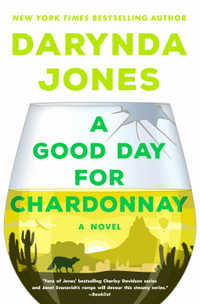
A Good KillBlank SpaceInk & Sigil

What do you think you’ll read next?

My next book should be The Keepers by Jeffrey B. Burton (one of most anticipated reads of 2021) and my next audiobook should be the fifth Alex Verus, Hidden by Benedict Jacka, Gildard Jackson (Narrator).

The KeepersBlank SpaceHidden

You all reading anything good?

A Few Quick Questions…with John McMahon

I wasn’t able to finish my post about John McMahon’s A Good Kill in time for this morning, but I wanted to get something up about the book today. Thankfully, McMahon had taken part in the Q&A with me over the weekend. I really enjoyed his answers to this, and hope you do, too. Even more, I hope this Q&A makes you curious about the book, which is absolutely worth your time. Before we get to the his As and my Qs, here’s a little about the book:

A Good KillIn the years since the unsolved deaths of his wife and son, Detective P.T. Marsh of Mason Falls, Georgia, has faced demons professional and personal. But when he is called to the scene of an unfolding crime and secures a clean look at an active shooter, the professional and personal become intertwined…and the consequences are shattering.

As Marsh and his partner Remy investigate the shooting, they confront confounding questions—and their search for answers leads them to a conspiracy at the highest levels of local government. The stakes in the case become increasingly high, culminating in a showdown that has Marsh questioning everything he knows…and wondering if some secrets are better left undiscovered.


At some point in time you decide that the instigating event for this book is going to be a school shooting—easily one of the most divisive things in the country. What led you to that pick? How do you go about researching that to make it authentic? How often did you regret that choice?
You’re 100% right to say that it’s a touchy subject, and for good reason. There’s been so many devastating active shooter events, at schools and other locations in the last two decades. But I think as you read the book, you see that the subject is not entered into divisively or politically.

In terms of the research, there was a playbook for how police handled this situation for years. Now that’s changed multiple times, most notably after Columbine. So unfortunately we’re living in an age where police manuals are available, as well as a lot of minute-by-minute reporting on the subject. Both those helped with authenticity.

There are elements of this novel that have their roots in (I assume, as this is my first encounter with your work) in the first novel. Had you been planning to keep this story going this long initially? How do you juggle the need to plant seeds to develop this slowly while keeping the readers of Books 1 and 2 engaged and keeping newcomers from feeling lost?
The three books are definitely a trilogy in my head, and certain storylines are one and two books long—while others last three books. But you’re right—it’s a juggling act.

I think it’s incumbent on the author to re-introduce key elements and characters in each book, so someone can join the hunt wherever they find a book. But you don’t want to bog it down for existing readers. Also, as you said, I’m planting seeds and laying long leads for future stories, past this book. I think part of the key is to leave some details unknown even to the author. Trust the subconscious.

I think of the three novels—#1 and #3 are the easiest to pick up and simply read as a stand-alone. So the optimal read starts with THE GOOD DETECTIVE—goes to THE EVIL MEN DO – and continues now with A GOOD KILL. That said, I’ve realized that readers will find book #2 first, then read #1. In my acknowledgments, I’ve invited readers to reach out, and a lot have emailed me they had no issues reading backwards, from two to one.

I loved Purvis—both in choosing to give Marsh a dog, and the choice of/characterization of this particular dog. Is there a real-life model for him? What are the downsides of having a character like him?
When I was writing book one, THE GOOD DETECTIVE… at some point, Purvis was in the back of P.T. Marsh’s F-150. I was writing the first 50 pages and Purvis just suddenly blurted out something. Like aloud.

I think in the first draft the bulldog said “So this is how we’re dealing with this shit, huh? For real?” As a writer I thought—am I crazy? Does P.T. have a talking dog? This is moody stuff I’m writing. Not a Disney movie. But surprisingly it worked. Purvis is sort of P.T.’s conscience in a lot of ways. Plus, he was technically not originally P.T.’s dog. He belonged to Jonas, P.T.’s son (who passed before the time of the first book). So Purvis is also a window into that old life and time period.

But in Book #3, A GOOD KILL, another dog is introduced, called Beau. This one has a real-life model: my own five-year-old Huskie retriever mix, Tessie. You might say they’re identical.

It’s Release Week for A Good Kill. How nervous are you? How’s it compare to the previous novels?
Where I get nervous is—will people discover the book? I had about 10 test readers on this one, through the final edits and into the final manuscript. Many were writers. Some were big time authors I’ve met in the last two years. And everyone was loving the book. But… that doesn’t mean readers will find it.

Book #2 came out last March, and there were a lot more pressing things going on in the world in March 2020. I was literally on tour on a Tuesday with fans in Houston, and the following day the world shut down. That was hard and hurt discovery of the book. So about three times as many people read #1 than #2. It’s understandable given the pandemic, but book discovery is a challenge for new authors. Avid readers are following 6 or 7 series, and they’re not physically browsing stores like they used to. So getting your work out there is a challenge. I’ve been featured in The NY Times “Top 10 Crime Novels of the Year” the last two years, and that’s helped tremendously.

For this book, I’m really excited to have people read it. The story in A GOOD KILL poured out of me faster than anything I’d written. Also, because of the pandemic, I had extra time to do a full re-write. I think it’s my strongest book, so I am excited to hear what readers think.

There’s a game we play around here, called “Online Bookstore Algorithm”. What are 3-5 books whose readers may like A Good Kill?
That’s a fun game. I think people who like these books would love A GOOD KILL:

  • Michael Connelly, THE DROP.
  • James Lee Burke, HEAVEN’S PRISONERS.
  • Brian Panowich, BULL MOUNTAIN.

I think the Panowich book would hit the algorithm for characters, the Connelly book for plot and police procedural, and James Lee Burke, for setting, although my settings/descriptions are not as thick as Burke’s. I should add that the above 3 are some of my favorite writers, so this could be a dream algorithm too.

What’s next for John McMahon, author?
I’ve been working for ten months on a new stand-alone. It’s not set in Mason Falls, Georgia, and P.T. Marsh is not in the story. It’s a high-concept FBI ensemble book, and I cannot wait for people to read it. Because it’s a new world and I want to get it right, I’ve decided to add 6-8 months to my writing timetable. My agent has read a partial, thinks the book feels big and reads like a T.V. show. So fingers crossed.

(Post note: The main character’s nickname in the stand-alone is “H.C.” Can’t say more than that now  but funny coincidence)

Clearly, this main character is a person of wisdom and taste—can’t wait to meet them.

Thanks for your time—and thanks for A Good Kill. I’m really enjoying it, and hope you have plenty of success with it.


I also want to thank Wiley Saichek and Saichek Publicity for arranging this Q&A and bringing the novel to my attention.

Meat is Murder by Chris McDonald: Adam and Colin Look into an Activist’s Death

Meat is Murder Tour Banner

Meat is Murder

Meat is Murder

by Chris McDonald
Series: The Stonebridge Mysteries, #3

eBook, 142 pg.
Red Dog Press, 2021

Read: June 10, 2021
Grab a copy from your local indie bookstore!

What’s Meat is Murder About?

Really, as with most of the investigation, he didn’t know what he was doing here. He was hoping that something would appear at his feet, or become luminous like in a video game, but he knew that wasn’t going to happen, so he got busy.

The amateurest of amateur detectives are back for another investigation. This time, it appears that a man died in setting fire to an abattoir in an act of protest. Hours earlier, he’d been part of a group that had chained itself to the front gates, interfering with a tour that a prospective buyer had intended to make. After that had been broken up by the police, the story goes, Tyler Love had come back to make a bigger and hotter statement and things had gotten away from him.

The police are done with the matter and have moved on. Tyler’s mom, on the other hand, wants some reassurance. So she convinces Adam to look into his death for her.

Speaking Ill…

‘Like I say, I don’t want to speak ill of the dead. All I’ll say is that he wasn’t well liked.’

‘By who?’

‘By most of the group…’

Tyler was not a good guy. In fact, outside of his mother, it’s difficult to find anyone who has a good thing to say about him. I’m enjoying the way that McDonald finds victims that the reader can have almost no sympathy for. None of these are hardened criminals, they aren’t the dregs of society, but they’re just…jerks. People that no reader is going to want to spend time with, generally fresh off of doing something no reader wants to associate themselves with.

So why do we care who killed them? Why do we care why they died? Because of these two yutzes who until recently were only good for playing FIFA and binging Netflix. They’re who make this series work, who make these stories interesting—the stories are good enough, but it’s McDonald’s work with these characters that brings readers back.

Incremental Growth

The feeling of pride he’d had at solving those cases had spurred him on to do something with his life. That something had turned out to be a garden maintenance business. It had started small; just him, his car, a lawnmower and a rickety trailer he’d managed to salvage from the dump.

Now, here he was, unloading tools from a van with his name and company logo on the side.

That point about “until recently” is the key—yeah, they still binge Sherlock, etc. They probably spend too much time playing FIFA even in this novella. But they’re stumbling into maturity.

Adam’s business is growing, and his relationship with his mother is much better than it was in the first novella. Colin’s still doing well at his job—and is even able to use his position to their advantage in this investigation—he’s again the one putting his health and well-being on the line while Adam’s off trying to learn something through questioning.

So, what did I think about Meat is Murder?

‘I don’t think I could handle any more excitement,’ Adam said.

‘I don’t think Stonebridge has any more to throw at us.’

‘You say that, but…

I continue to really enjoy this series—it’s a highlight of 2021 for me. And Meat is Murder is a great example of it.

Despite what Colin predicts—Stonebridge has more to throw at them. This is the most dangerous case these two have yet taken on, but that doesn’t stop it from being a little silly, a little fun, and very enjoyable.

It’s a quick, clever, and fun read that’ll keep you turning pages and make you regret that it’s over quite so soon. You should grab this one—and the other two if you haven’t yet—and join me in eagerly awaiting the next.


4 Stars

This post contains an affiliate link. If you purchase from it, I will get a small commission at no additional cost to you. As always, opinions are my own.

Red Dog Press
My thanks to Red Dog Press for the invitation to participate in this tour and the materials (including a copy of the novella) provided.

BOOK SPOTLIGHT: Meat is Murder (Stonebridge #3) by Chris McDonald

I’m excited to welcome the Book Tour for the third installment in The Stonebridge Mysteries, Meat is Murder by Chris McDonald this morning. Check back next hour for my take on the novella, but for now, let’s start by learning a little about this book, okay?

Meat is Murder Tour Banner

Book Details:

Book Title: Meat is Murder by Chris McDonald
Series: The Stonebridge Mysteries
Publisher: Red Dog Press
Release date: June 8, 2021
Format: Hardcover/Paperback/Ebook
Length: 142 pages
Meat is Murder

Book Blurb:

McNulty’s Meats, one of Stonebridge’s oldest businesses, is about to be taken over in a lucrative deal that would make brothers Ron and Kevin very rich men indeed. Unfortunately for them, local activist Tyler Love has other ideas. Convinced that the deal would be bad for the town, he burns the place to the ground and inadvertently kills himself in the process.

At least, that’s what the police think.

Tyler’s mum disagrees and pleads with amateur sleuths Adam and Colin to investigate. Although, going up against the psychopathic McNulty brothers, a rival businessman, a group of hippies, and a girlfriend with secrets of her own might not be such a good idea… Someone has something to hide, and will go to great lengths to keep that secret buried.

Meat is Murder is the third book in The Stonebridge Mysteries series of Cosy Crime novellas.

About the Series:

Stonebridge is a small town on the north coast of Northern Ireland. Most of its inhabitants are friendly, happy people. Most of them… Because bad things happen even in the happiest of places. It’s a good thing, then, that Adam Whyte and Colin McLaughlin call Stonebridge home.

Armed with an encyclopedic knowledge of detective shows, a misplaced sense of confidence, and a keen desire to see justice done, these two are the closest thing the town has to saviors. Which isn’t that reassuring…

About Chris McDonald:

Chris McDonaldOriginally hailing from the north coast of Northern Ireland and now residing in South Manchester, Chris McDonald has always been a reader. At primary school, The Hardy Boys inspired his love of adventure before his reading world was opened up by Chuck Palahniuk and the gritty world of crime. A Wash of Black is his first attempt at writing a book. He came up with the initial idea whilst feeding his baby in the middle of the night, which may not be the best thing to admit, considering the content. He is a fan of 5-a-side football, heavy metal and dogs. Whispers in the Dark is the second installment in the DI Erika Piper series, and Chris is currently working on his latest series, The Stonebridge Mysteries, published by Red Dog Press in 2021.

Purchase Links:

Amazon ~ Kobo ~ Google ~ Red Dog Press

Red Dog Press
My thanks to Red Dog Press for the invitation to participate in this tour and the materials they provided.

Page 298 of 625

Powered by WordPress & Theme by Anders Norén