The Friday 56 for 7/16/21: August Snow by Stephen Mack Jones

The Friday 56This is a weekly bloghop hosted by Freda’s Voice.

RULES:
The Friday 56 Grab a book, any book.
The Friday 56 Turn to Page 56 or 56% on your ereader. If you have to improvise, that is okay.
The Friday 56 Find a snippet, short and sweet.
The Friday 56 Post it

from Page 56 of:
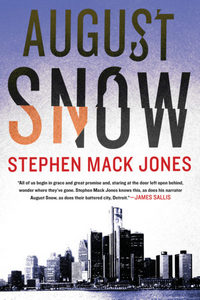
August Snow

August Snow by Stephen Mack Jones

(for context, I think it helps if you know that the first speaker is the Chief Medical Examiner)

“So what brings you and Tubby McGlutton’—-he nodded to Danbury-—“to my Little Den of Decomp?”

“Eleanor Paget’s body,” Danbury said. “And don’t be calli’ me no ‘Tubby McGlutton,’ nay-gro.”

“Oh, please, Ray,” Bobby scolded. “You’re twenty pounds overweight. You smoke two cigars a day. And I’m sure, like every other over-forty black man who just has to show how successful he is in Detroit, you probably have three Courvoisier and Cokes three times a week at the Pontch. Oh yeah, son, I got a cold storage drawer with your name on it.” After eviscerating Danbury and taking a breath, Bobby said “Paget’s pretty straight-up stuff: GSW to the right temple.”

Know Your Rites by Andy Redsmith: Murder, magic and now rap music. Oh joy.

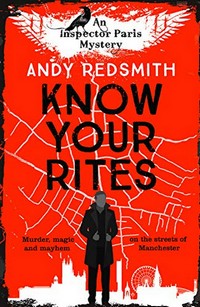
Know Your Rites

Know Your Rites

by Andy Redsmith
Series: Inspector Paris Mystery, #2

Kindle Edition, 313 pg.
Canelo, 2019

Read: July 7-9, 2021

With his “street” clothes and silly trimmed beard, Dirk remained the most bizarre magical dwarf the inspector had ever seen. Although he was acutely aware of how stupid that sounded.

What’s Know Your Rites About?

It’s been a couple of weeks since DI Nick Paris led the efforts to stop the demon invasion from the magical world—something celebrated on both sides of the portal, with parties, accolades from officials, TV interviews, etc. Now he just wants to get back home to Manchester and investigate some crimes involving humans–no elves, dwarves, talking animals, just people. It won’t be easy, but he really wants to put the whole magical world in his rearview mirror.

He’s called to the scene of a murder—a music producer has been killed in his home, and there’s a suspect in custody. There’s a catch—the suspect is a dwarf who’s in the non-magical world so he can pursue his dream of being a major rap star.

Dirk’s a pretty ridiculous character, but it’s hard not to root for him. You have a hard time believing he committed the crime and how do you not root for a guy who had to leave his own world to follow his passion? (the fact that he doesn’t appear to have a lot of talent, makes him more tragic).

There’s a lot of pressure on Paris to wrap this up quickly—the non-magical authorities are not wanting to publicize the fact that a human was killed by someone from the other side. Those on the magical side are wanting to negotiate trade pacts with the humans, and don’t want anything derailing that. Still, there’s something wrong with the case against Dirk, and Paris learns it quickly. But it’s clear that a “magical being” was the culprit. So the team from last time gets back together and crosses over to find their murderer.

We spend the bulk of this novel on the other side of the portal, getting a better understanding of the world and how it operates—including how the police department, postal service, and tourist travel work. We also get to meet several other magical creatures, and Redsmith’s take on them continues to be a winner.

For example…

Paris and the rest need to cover a lot of ground quickly, so Tergil hires some Lamassu to handle the transportation. What’s a lamassu? I’m glad you asked:

They were flying cows. Or, more precisely, flying bulls. Each had a bull’s body, with lion’s legs, huge wings attached to their shoulders, and a human head. A man’s head with striking noble features, a long yet neatly cut beard, and wearing a silver helmet. A silver jockey’s helmet.

And, for reasons that make a certain kind of sense, they have Australian accents.

I’m telling you, reading the passages about them justifies the purchase price. The rest of the book is icing on the bull-shaped cake.

The Humor: The Crux of the Matter

Paris frowned at her. ‘What?’ he said. ‘How did somebody called Ug Og end up with the middle name Serendipity?’

‘I don’t know,’ said the ogress. ‘It just sort of happened.’

She turned towards the inspector, baring her misshapen teeth in an attempt at a grin.

In Breaking the Lore Redsmith really swung for the fences to establish the series, but it felt like he dialed things back a touch. Which is not to say it’s bad, it’s just not as funny. I think the puns have really dropped off. I also think that Redsmith tries to squeeze more out of the “dwarf who can’t rap with ambitions to be the next Eminem” than is there. But it’s a ludicrous notion, so it’s hard to blame him for going back to it as much as possible.

In the first book, he established a strange, fantastic and ridiculous world (two of them, technically). Now he gets to play in it—he doesn’t have to try as hard, he can just play it straight and let the settings and characters bring the funny to the story just by being the way they are. I’m actually glad that he toned it down a bit. (just a bit—it was frequently chuckle-inducing, I’m not saying the humor is gone)

So, what did I think about Know Your Rites?

I was a little worried about returning to this so long after I read the first book in the series, and I shouldn’t have been, it took no time at all to remember the characters and situation. It’s just as enjoyable this time as it was last time.

There’s a straightforward crime story at the core of this, wrapped in Fantasy garb, enclosed in comedy. I like these characters, I want to spend more time with them, and I hope that there are more books to come. In the meantime, take some time to dive into this series.


3.5 Stars

20 Books of Summer '21

WWW Wednesday, July 14, 2021

After 15 months of telecommuting, I’m back to just commuting–this is wrecking my sleep and reading–and therefore blogging–habits. I’m still managing to do some of all three, but I’m having to make plenty of adjustments. Which is why things are a little light here this week. Still, I have been able to scrape together enough for this WWW Wednesday.

This meme was formerly hosted by MizB at A Daily Rhythm and revived on Taking on a World of Words—and shown to me by Aurore-Anne-Chehoke at Diary-of-a-black-city-girl.

The Three Ws are:

What are you currently reading?
What did you recently finish reading?
What do you think you’ll read next?

Easy enough, right?

What are you currently reading?

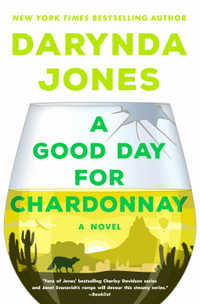
I’m reading the very fun ARC for A Good Day for Chardonnay by Darynda Jones and am listening to Veiled by Benedict Jacka, Gildart Jackson (Narrator) on audiobook.

A Good Day for ChardonnayBlank SpaceVeiled

What did you recently finish reading?

I just finished Andy Redsmith’s Know Your Rites and the audiobook of Tales from the Folly by Ben Aaronovitch read by Aaronovitch and: Penelope Rawlins, Kobna Holdbrook-Smith, Alex Kingston, Ben Elliot, Shvorne Marks, Sam Peter Jackson, and Felix Grainger.

Know Your RitesBlank SpaceTITLE

What do you think you’ll read next?

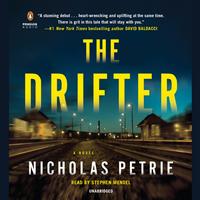
My next book should be August Snow by Stephen Mack Jones, I’m looking forward to seeing what waits for me there. My next audiobook should be The Drifter by Nick Petrie, Stephen Mendel (Narrator) (largely because my library just added it to their Overdrive collection)..

August SnowBlank SpaceThe Drifter

What about you? Reading anything good?

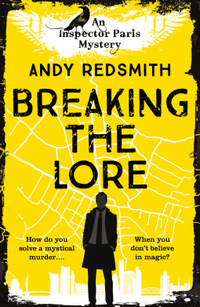
Reposting Just ‘Cuz: Breaking the Lore by Andy Redsmith: A Funny, Fresh Take on a Police-filled Portal Fantasy

I’d planned on reposting this today to go along with my post about the sequel, Know Your Rites—it’s been so long since I posted this, I wanted to put it back out there. But now, I’m going to just repost this today and try to find the energy to follow up tomorrow. These are good books, you should check them out.


Breaking the LoreBreaking the Lore

by Andy Redsmith
Series: Inspector Paris Mystery, #1

eARC, 321 pg.
Canelo, 2019

Read: April 3 – 5, 2019

Inspector Nick Paris is your all too typical cynical, bitter, hard-drinking, chain-smoking police detective, and his world is being rocked. The latest corpse he’s been brought out to see and investigate the circumstances around the death is that of a fairy. The tiny, impossibly good looking, humanoid with wings kind of fairy. While still trying to wrap his mind around how that was possible, a crow (named Malbus) flies into his house demanding, demanding a smoke and talking to him about the murdered fairy. Not long after this, he’s visited by an elf and a rock troll (Tergil and Rocky).

And that’s just Day One of his new reality.

Essentially, there’s a connection between our world and the world of all these magical beings—a portal of sorts that those who desire to can travel between the two (or people and animals can stumble through unintentionally). For all sorts of great reasons, the magical creatures/folk kept their existence from humanity—and let what humans know fade into myth and legend. But something’s happened in their world, and those who are over here have to come seeking help (in terms of political asylum) and possibly even letting humanity in on what’s going on around them.

This is a little beyond Paris’ typical caseload, but he and his Superintendent, a no-nonsense woman named Thorpe, respond very well to these new challenges—dragging other officers and even the army along with them. They are obviously relying on the advice and guidance of the magical creatures—Tergil in particular (although Malbus makes sure his input is heard, too). They also recruit a local supernatural expert—Cassandra, a self-styled witch that no one in the police would’ve given any credence to if not for this new reality.

As fun as Paris, Tergil and Malbus are, Cassandra is a delight. She’s wise, insightful, and has a fantastic sense of humor—she might be harder for Paris to cope with than fairies, dwarves, and trolls. I shouldn’t forget Paris’ Sergeant Bonetti—he’s loyal, strong, brave, and probably not as mentally quick as he should be. He’s also the target of near-constant mockery from his superior. I’m not sure why he puts up with the abuse, but I found myself laughing at it. When the fate of multiple worlds is on the line, it’s these few who will stand strong in Manchester, England to keep everyone safe.

I can think of as many reasons that this is a lousy comparison to make as I can to make it—but throughout Breaking the Lore I kept thinking about Chrys Cymri’s Penny White books. There’ll be a big overlap in the Venn diagram of Fans of Penny White and Fans of Inspector Paris. I’m sure there are other comparisons that are as apt, or more so—but this is the one that I kept coming back to for some reason.

I had so much fun reading this book, Redsmith has a way with words that makes me think it really doesn’t matter what story he decided to tell—I’d want to read it. He was able to express the seriousness of the situation, while never stopping (either narratively or through the characters) the quips, jokes, and sense of fun. There’s an infectious charm to the prose and characters that easily overcomes whatever drawbacks the novel has. I’m not saying this is a novel filled with problems, it’s just that I wouldn’t care about most of them thanks to the voice.

Now, Redsmith’s wit does have an Achilles’ heel—puns. Redsmith is an inveterate punster, and will hit you with them when you least expect it. Now me? I love a good pun—and I hate them at the same time. Maybe you know what I mean. I cackled at pretty much all of them (frequently audibly), but I hated both myself and Redsmith for it. You know those Pearls Before Swine strips where Rat beats up Stephan Pastis because of the very carefully constructed pun? Yeah, this book is a series of those moments (but he rarely gives the setup Pastis does, usually it’s a quick sucker punch).

There are many other points I’d intended to make, but I think I’ve gone on long enough. This novel is silly, goofy, intelligent, charming—with a fresh take on a great idea. You’ll find yourself enjoying Paris, Cassandra, Malbus, Tergil, and the rest. I can see a few different ways that Redsmith takes Book Two, and I’m looking forward to seeing which one he picks (probably none of my ideas). But before that happens, I’m just going to relish the fun that Breaking the Lore was and encourage you all to go buy and read it for yourself.

Disclaimer: I received this eARC from Canelo via NetGalley in exchange for this post — thanks to both for this.

—–

4 Stars

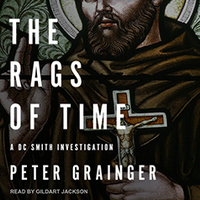
The Rags of Time (Audiobook) by Peter Grainger, Gildart Jackson (Narrator): DC Smith is a Fly in a Colleague’s Ointment

The Rags of Time

The Rags of Time

by Peter Grainger, Gildart Jackson (Narrator)
Series: A DC Smith Investigation, #6

Unabridged Audiobook, 9 hr., 29 min.
Tantor Media, 2017

Read: March 9-11, 2021
Grab a copy from your local indie bookstore!

What’s Rags of Time About?

While DC was recuperating from knee surgery and dealing with his past in Northern Ireland—basically, while In This Bright Future was going on—DC’s rival, DS Wilson led both teams in a murder investigation. By the time DC returned, it was almost completed, he was assigned to do some clean-up on the details. Take care of a couple of witness statements, address some of the paperwork, and whatnot—busy work, really, so he stays out of Wilson’s way and keeps occupied.

But as one expects when DC gets involved, things don’t go that easily. In the first book, for example, he is supposed to sign off on an accidental death investigation and within days there’s an arrest, evidence of war crimes, and Secret Services personnel in Kings Lake.

This time? DC asks a few questions, gets curious, asks some more, and then turns up some evidence that really doesn’t fit the narrative being constructed. Before you know it, there are some big problems with Wilson’s case, and the DS isn’t taking it too well.

So, what did I think about Rags of Time?

I enjoy anytime I get to spend with DC, Chris Waters, DC Murray, and the rest. I love hearing DC’s little jokes (mostly for his own amusement) and his musings about life and the rest. Every one of these books is comfort food for me. Gildart Jackson’s narration just makes them more enjoyable, and this one was no exception.

But…I don’t know, there was something missing with this one. Something felt flat. Maybe it seemed like DC went around in circles for a little too long before stumbling on to the fact that I’d guessed at long before (although, I have the advantage of knowing it’s a novel and I can go for who’d make the most dramatic impact rather than finding evidence).

I liked it, I’m glad I listened to it, and was eager to move on to the next one—so eager that I broke my own rule and listened to it before I had a chance to write about this one. But…it’s the weakest of the series thus far. It’s good, just not as good as the rest. DC will be back up to snuff soon.


3 Stars

2021 Audiobook Challenge

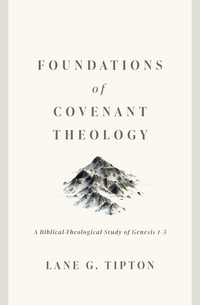
Foundations of Covenant Theology by Lane G. Tipton: A Fascinating Approach to Genesis 1-3

Foundations of Covenant Theology

Foundations of Covenant Theology:
A Biblical-Theological Study
of Genesis 1–3

by Lane G. Tipton

Paperback, 131 pg.
Reformed Forum, 2021

Read: July 4, 2021

What’s Foundations of Covenant Theology About?

In 2019, Lane Tipton gave a series of lectures for a Reformed Forum seminar on covenant theology. Tipton’s now turned these lectures into “a brief and non-technical” book, suitable for private use or as a supplement to a Sunday School class, building on the work of Geerhardus Vos and Meredith G. Kline.

I really don’t like it when I don’t provide my own summary/synopsis, but after a few attempts, I’m bailing. Primarily because my attempts ended up 2-3 times long as what’s on the back of the book/Reformed Forum’s website. So…why bother reinventing the wheel, if I’m just going to make it bloated and cumbersome?

Drawing from Genesis 1:1 and subsequent biblical revelation, Lane Tipton argues that before creating the visible world, the immutable triune God created a heavenly temple dwelling, filled that heavenly dwelling with the unchanging glory of his Spirit, and sanctified that heavenly dwelling as the realm of everlasting Sabbath rest.
Adam, as the created image of God and federal head of his posterity, could have advanced through perfect covenantal obedience beyond probation on the mountain of God in earthly Eden into the heavenly dwelling of God in Sabbath rest. This God-centered and heaven-focused theological backdrop enriches our understanding of the person and work of Jesus Christ, as the second and last Adam in the covenant of grace, who in his humiliation and exaltation has opened the gates of heavenly paradise for his church.

Vocabulary and a Glossary

This is a non-technical book as Tipton says in the preface. But at a glance, you’d be tempted to think otherwise. Tipton has a very precise and erudite vocabulary, and it’s in full view here. Where some writers will (unintentionally) obfuscate with their language, Tipton’s doesn’t do that at all. I find his style and word choice to helpful—once you get used to it (and it doesn’t take long), you don’t even notice that it’s not your run-of-the-mill non-technical language.

There are concepts and phrases he uses throughout that he wants to highlight, and they’re included in a Glossary at the end of the book. There were a few he used in the text that I’d have liked a bit more detail on, but it’s clear that he uses the Glossary to focus on the vital concepts to his argument. I wish more people would do things like that.

So, what did I think about Foundations of Covenant Theology?

I’ve lost track of the books/chapters I’ve read that serve as an introduction to Covenant Theology in the last couple of decades. Yet I keep reading them (and, largely, enjoy and profit from them). This is a different way of covering these concepts and it’s a very effective one.

It’s also a different way of looking at Genesis 1-3. Almost every time I’ve seen these chapters explained and exegeted, it had to do with the doctrine of Creation, the Fall and the Promise of the Seed in Genesis 3, and so on. But Tipton’s approach—while addressing all that—focuses on the Big Picture, looking at the purposes behind Creation, the protoevangelium, the Covenants of Work and Grace, and how those are worked out in history (particularly in the last two chapters about Christ as the Promised Seed and the Second Adam).

Would I have liked this book to be longer and these brief chapters to be expanded—making this still non-technical, just not brief. If this had taken me a few hours to read rather than just an afternoon, I’d have been happier. But…this was a fascinating book, a helpful read, and I know I’ll profit from meditating on and returning to these concepts. You really should try this one yourself, you’ll be rewarded for it.


4 Stars

Saturday Miscellany—7/10/21

I’ve been out of town for most of the week and had limited internet time–so I didn’t have much of an opportunity for surfing. I was able to find a few things for this week’s post, but it’s a little small.

Odds n ends about books and reading that caught my eye this week. You’ve probably seen some/most/all of them, but just in case:
bullet Andy Serkis to Narrate All 3 The Lord of the Rings Audiobooks—I’ve had The Hobbit narrated by Serkis in my libro.fm shopping cart for months, but couldn’t bring myself to pull the trigger on it. But if he’s doing these, too? Think it’s time.
bullet The Making of ‘Soul Taken’ A Mercy Thompson cover—this is fascinating (even if you have no interest in Mercy Thompson)
bullet 13 books perfectly summed up with one-liners from Gilmore Girls.
bullet 10 Reasons Why I Love Reading—Reading Ladies Book Club had a good entry for this week’s Top Ten Tuesday prompt.
bullet How Book Lovers Spend Their Time . . . And . . . We Don’t Have a Problem!

This Week's New Releases That I’m Excited About and/or You’ll Probably See Here Soon:
bullet Tender is the Bite by Spencer Quinn—Chet and Bernie hunt for a client who didn’t get around to hiring them I tried to convey my enthusiasm a few days ago.
bullet Dog Eat Dog by David Rosenfelt—Andy Carpenter heads to Maine to defend his latest client I opined about it recently

The Friday 56 for 7/9/21: In Plain Sight by Dan Willis

The Friday 56This is a weekly bloghop hosted by Freda’s Voice.

RULES:
The Friday 56 Grab a book, any book.

The Friday 56 Turn to Page 56 or 56% on your ereader. If you have to improvise, that is okay.
The Friday 56 Find a snippet, short and sweet.
The Friday 56 Post it

from Page 56 of:
In Plain Sight

In Plain Sight by Dan Willis

“My point is that we don’t know what we’re dealing with, and until we do, I suggest we limit possible exposure.”

“My boys have been in here for almost an hour,” Callahan said.

“And they’re probably fine, but let’s move everyone out of this room until I can run some tests.”

“All right,” Callahan agreed, then he shouted for everyone to stop what they were doing and go. “Don’t be too long, Doc,” he said once his men were gone. “I’m sure the Chief has heard about this by now and he’s going to want a report…soon.”

“We’ll be as fast as we can,” Iggy said and Callahan withdrew.

“You said you didn’t think it’s contagious,” Alex said once Callahan was out of earshot.

“I just wanted him and his men away from this room,” Iggy said. “It’s going to be hard enough to figure out what happened here without the police stomping all over everything.”

In Plain Sight by Dan Willis: A P.I. with a Magical Edge Races the Clock in this UF Series Start

In Plain Sight

In Plain Sight

by Dan Willis
Series: Arcane Casebook, #1

Kindle Edition, 311 pg.
2018

Read: July 1-5, 2021

What’s In Plain Sight About?

Alex Lockerby is a P.I. in the late 1930’s New York. He occasionally consults with the police, but most of them don’t respect him. Generally, he’s taking small-time jobs (lost pets, etc.) to make ends meet—and it’s largely because his gorgeous secretary finds those jobs for him.

Oh, Alex is a Runewright—by drawing elaborate designs in a (generally) special ink and then setting the drawing on fire he activates various things—finding charms, disguises, a way to look at the past of a room/item, healing, etc.

His ability doesn’t necessarily mean riches aplenty or fame—it means that he has an edge in certain circumstances, but that’s it.

In this novel, Alex is dealing with three cases—a distraught young woman hires him to look for a missing brother. A case he consulted on for the police didn’t go the way he said it would, and he has only three days to fix the problem or he’ll be charged with something and his friend on the force will be unemployed. And, a local church’s soup kitchen—volunteers, priests, nuns, and those being fed–are killed by an impossibly fast-moving disease, and Alex (with the guidance of his medical doctor mentor) needs to track down the source of the disease.

The clock is ticking to deal with all three of these—also in the mix are the NYPD, the FBI, a powerful sorcerer, and an ages-old secret that threatens to destabilize the magic world.

Magic System

There are, we’re told, three types of magic users in this world: Alchemists, Sorcerers, and Runewrights. We don’t get to see a lot of Alchemy (but we hear a little about it). We see enough of Sorcery to get a pretty good idea what it’s like. But the star of the show is the use of and making of Runes.

Willis’s version of Runes are similar to Hearne’s Sigils, but it’s only similar (various wizards, witches, and other magic users from various UF series are more similar than these, though).

I liked the way that all three versions of magic are used, and interweave with each other. Also, while various magic users aren’t necessarily esteemed (Alex is dismissively called “scribbler”, for example), they’re all out in the open, selling their services, both on small scales and large scales.

We need more UF where the magic is out in the open—all the various series with a dozen different ways that the magic (and so on) is hidden from the general populace is getting tired. Magic being an everyday thing, something commercial…I like seeing that.

1930’s P.I.

We’re supposed to get a hard-boiled P.I.-feel from Alex here. Philip Marlowe with magic, kind of a thing. It’s close, but it feels sanitized. Safe. Really, Alex Lockerby is more Dixon Hill than Marlowe or Sam Spade.

I’m not saying I didn’t like the idea or the execution—I enjoyed it. It just felt tame.

So, what did I think about In Plain Sight?

This was fun—inventive, cleverly told, and a premise/magic system that is a breath of fresh air.

I appreciated Willis’ voice and style—I do wish he’d made things a bit more nuanced, a bit harder to figure out (although there is a reveal late in the book that took me by surprise), but it’s the first book—a setup for the series as a whole, and that’s not easy to do.

There’s a lot of charm to the writing and the characters, I can easily see this series becoming a favorite, until then, this was a fun way to spend a couple of hours, and the rest of the series looks to be the same. I’m looking forward to diving into the rest, and suspect you would be as entertained as I was.


3 Stars

20 Books of Summer '21

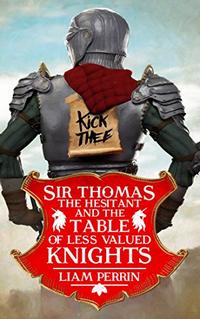
Sir Thomas the Hesitant and the Table of Less Valued Knights by Liam Perrin: Heroism Comes from the Unlikeliest Places

Sir Thomas the Hesitant and the Table of Less Valued Knights

Sir Thomas the Hesitant
and the Table of
Less Valued Knights

by Liam Perrin
Series: Less Valued Knights, #1

Kindle Edition, 272 pg.
2018

Read: July 6, 2021

…there were other tables, some almost as lofty, some not so much. Among those in the not-so-lofty category, the Table of Less Valued Knights was far and away the unloftiest. The Knights of Less Valued Table were the workhorses of the court, performing the inglorious duties that are nevertheless essential to a realm’s operation and taking care of any requests that the other orders found… uninteresting.

What’s Sir Thomas the Hesitant and the Table of Less Valued Knights About?

Thomas is the second son of a soldier turned farmer, his older brother—the favored and talented son—has recently been imprisoned for daring to ask the local Baron for aid for the struggling local populace, suffering under famine.

Thomas goes to Camelot to become a Knight—with the goal of using this position to help the people of his valley and hopefully get enough glory to impress his parents.

He is made a knight (to his surprise) and is assigned to the Table of the Less Valued Knights—those knights who keep the nation running by performing the needed, but unglamorous tasks, freeing up others to tackle the bigger, flashier tasks. It’s a noble calling, a better life than Thomas had before—now the question is, can he still use this role to help his family and their neighbors?

It’s the Characters and Relationships

The story is simple and straightforward, and charming enough. But what elevates this novel are the characters around Thomas and his relationships with them.

He meets and befriends an evil wizard who is working to put that life behind and simply be a healer. There’s a giantess with esteem issues, which lead to her changing size. Thomas’s little sister will steal your heart. And when it comes to best friends/sidekick characters, you won’t find many as fun as his fellow Less Valued Knight, Philip the Exceptionally Unlucky.

There’s a cute romance between Sir Thomas and one of Guinivere’s Ladies-in-Waiting, Marie. Marie’s an intelligent woman who’s constantly prodding Thomas to understand what’s going on around him and how he ought to respond. It’s not that Thomas isn’t that intelligent, he’s just naive and needs someone with a bit more experience to point things out and remind Thomas what he cares about.

And Thomas’ magic sword? You have to see it in action to believe it.

As far as the standard Camelot characters go, this Arthur is heroic and wise (an increasingly uncommon take on the King), Gawain might not be as heroic as you’d want, but he’s a lot of fun. Kay and Bedivere make up for Gawain on the heroism front.

So, what did I think about Sir Thomas the Hesitant and the Table of Less Valued Knights?

You want a hard slog like that to end with the bad guy losing. Through some last minute opportunity, or some deep fault of the villain, or even just sheer stubborn grit on the part of the hero, you want the good guy to stand alone in the end, battered but victorious.

[This fight] didn’t end like that.

It’s not every day I get to use words like “wholesome” around here, but it fits. Why does that strike me as a bad thing? It shouldn’t be, it just conjures up images of someone trying to be squeaky-clean enough for 1980’s Saturday Morning TV, and while this book would be, it doesn’t feel like Perrin forced anything into that mold. It just is that way. Nor does it feel like he’s constrained by this kind of writing, it just feels appropriate to the type of story he told.

The subtitle to Perrin’s website is “Agreeable Stories for Kind-Hearted People Who Take an Interest in Words.” This is a pretty good description of the book. Agreeable—full of kind-hearted people (and some who aren’t so kind-hearted, but they get theirs).

This isn’t written for an MG crowd, but it’s an increasingly rare “adult” novel that I wouldn’t blink at letting a middle-grader read. It’s the anti-grimdark.

What this is is a lighthearted, optimistic tale told with a wink and a smile. There’s peril, there’s bravery of the uncommon and very real sort, there’s hope, there’s struggle, and there are clear lines between good and evil. It’s also pretty entertaining, too. Perrin has a crisp and appealing style that ensures the reading experience will be pleasant.

I liked this, I wish I could read more things like this (aside from the sequel, which I’ll be getting soon). It’s a thoroughly pleasant way to spend a few hours. You should give it a chance.


3 Stars

20 Books of Summer '21

Page 300 of 630

Powered by WordPress & Theme by Anders Norén