The History of Tom Jones, a Foundling by Henry Fielding: BOOK XVIII., iv. – vii.

Fridays with the Foundling
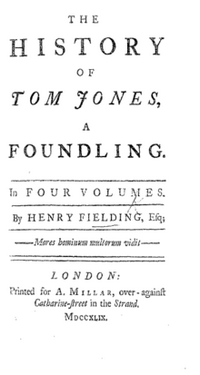
Tom Jones Original CoverWe’re in the last book, nearing the end of the novel and therefore ehhhhhh-verything is going to be revealed. And things at Mrs. Miller’s are busy for Squire Allworthy this day.

Square, who the reader may remember as the less-religious tutor for Tom and Blifil is dying, and has got real religion. Now has been driven to confess to everyone he can think of to clear his conscience and hopefully make things right.

As part of this effort, he sends a letter to Allworthy, in part, he states:

Believe me, my friend, this young man hath the noblest generosity of heart, the most perfect capacity for friendship, the highest integrity, and indeed every virtue which can ennoble a man. He hath some faults, but among them is not to be numbered the least want of duty or gratitude towards you. On the contrary, I am satisfied, when you dismissed him from your house, his heart bled for you more than for himself.

Allworthy also gets a letter from Thwackum, having heard of the murder accusation, who goes on and on about Tom’s villainy—and tries to get Allworthy’s support for a job. Allworthy’s a little shaken by this, but not that much.

But wait, there’s more.

We then discover that Allworthy’s lawyer, Dowling, was one of the men Nightingale talked to at the alehouse when he got the truth from Fellamar’s goons about the attempt to press him into the Navy via this trumped-up charge. Nightingale assumed Dowling was there, like he was, to gather information to help Tom. Allworthy is stunned by this news. Blifil explains it away—over the outspoken skepticism of Mrs. Miller.

Patridge stops by right then to update Mrs. Miller, but Allworthy corners him and

asked him many questions concerning Jones, as to his health, and other matters; to all which Partridge answered, without having the least regard to what was, but considered only what he would have things appear; for a strict adherence to truth was not among the articles of this honest fellow’s morality or his religion.

Allworthy then gets everyone to leave and speaks frankly with Partridge, accusing him of being Tom’s father. Partridge denies it, ” he was no more the father of Jones than of the Pope of Rome”. It’s at this point that Mrs. Waters shows up, and things get really interesting.

Also, it should be noted that by now, that anything that Mr. Square has said has quite been forgotten.

Partridge calls on Mrs. Waters to be a witness—if anyone can state definitively that he’s not the father, it has to be the mother, right? But, no. She flat out states that’s not the case (which will greatly relieve Tom, I’m sure)

I’m not really going to try to summarize what says:

“I am not his mother; nor would I now think myself so for the world….So far what I confest,” said she, “was true, that these hands conveyed the infant to your bed; conveyed it thither at the command of its mother; at her commands I afterwards owned it, and thought myself, by her generosity, nobly rewarded, both for my secrecy and my shame.” “Who could this woman be?” said Allworthy. “Indeed, I tremble to name her,” answered Mrs Waters. “By all this preparation I am to guess that she was a relation of mine,” cried he. “Indeed she was a near one.” At which words Allworthy started, and she continued—“You had a sister, sir.” “A sister!” repeated he, looking aghast.—“As there is truth in heaven,” cries she, “your sister was the mother of that child you found between your sheets.” “Can it be possible?” cries he, “Good heavens!” “Have patience, sir,” said Mrs Waters…all suspicions were afterwards laid asleep by the artful conduct of your sister, in pretending ill-will to the boy, and that any regard she shewed him was out of meer complacence to you.”

The hits keep coming. The reason she showed up wasn’t to drop that bomb on everyone, but this—she’s been approached by someone thinking she was Mrs. Fitzgerald. As such, she might be interested in someone coming along to give financial aid for the prosecution of Tom. Who was this less-than-scrupulous man?

Mr. Dowling, of course. Things are not looking good for him.

This section really goes with Fielding’s promise to not give us a whole lot of fancy writing or anything with flair anymore—just the events. That’s all we got. Nothing clever, just a lot of exposition. And a lot of things to chew on. I really miss the flavor of the previous 17 books, but if he’d kept that up, Fielding would’ve taken at least 7 or 8 chapters to give us as much exposition as he did in these four.


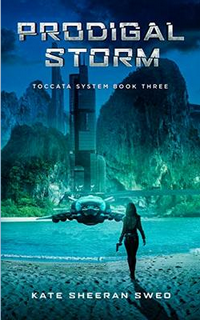
The Friday 56 for 4/2/21: Prodigal Storm by Kate Sheeran Swed

The Friday 56This is a weekly bloghop hosted by Freda’s Voice

RULES:
The Friday 56 Grab a book, any book.
The Friday 56 Turn to Page 56 or 56% on your ereader. If you have to improvise, that is okay.
The Friday 56 Find a snippet, short and sweet.
The Friday 56 Post it

from page 56 of:
Progigal Storm

Prodigal Storm by Kate Sheeran Swed

(yup–I’m finally finishing the trilogy!)

…the full blast of the mocking tone still hit him in the chest. As if he’d been the one to hurt her.

“I could kill you right now with my bare hands,” she continued. “Or a kitchen knife, or the Edinburgh I’ve got strapped to my hip. You’re already trusting me.”

An old quote about protestations and truthfulness floated into his mind, a passage his Laura would have appreciated.

A Few Quick Questions with…Robert Germaux

Before I get to the questions, I have to say that I’m surprised that we haven’t done one of these before–I did post a Q&As with Germaux as part of tours for Hard Court and One by One, but those questions came from the tours. I’m glad I finally got the chance to ask these few questions.


We’re talking about Small Talk and the Daniel Hayes series today, but I’d be remiss if I didn’t plug the Jeremy Barnes books, too. Where did Jeremy come from, and what would readers want to know about him before they dive in?
Jeremy is my alter ego. As I often tell people, other than the fact that he’s younger, smarter, taller, stronger and has way more hair, you can hardly tell us apart. As for what readers should know before they dive into a Jeremy Barnes mystery, well, JB (a high school English teacher in a previous life) can quote Shakespeare as quickly and easily as he can land a mean left jab, has an irreverent sense of humor and a definite soft spot in his heart for life’s underdogs.

But before you gave us Jeremy, you published Small Talk and introduced us to Daniel Hayes and his team. What was the inspiration for that series and Hays in particular?
Actually, I wrote three books about Jeremy Barnes before I wrote Small Talk. I held off putting those three books on Amazon because my agent at the time had hopes of finding a traditional publisher for them. While he was doing his best in that ultimately unsuccessful endeavor, I came up with the idea of a serial killer novel. Since I couldn’t see a private detective hunting a serial killer as effectively as a police detective who had all the tools of a large urban police department at his disposal, I created my Daniel Hayes character.

Daniel’s not a lone-wolf detective like Bosch or Rebus, he comes with (and works within) a team. While being more realistic isn’t the typical choice for Detective Fiction—why did you make that choice? Talk about the team a bit.
I wanted Daniel to work with a small group of people with diverse backgrounds and talents, a team that could bounce ideas off each other as they searched for the killer. Writing their interactions allowed me to show my readers how the investigation progressed from one level to the next as they closed in on that killer. Each member of the team brings something different to the table. Ted has a long history in local law enforcement, Samantha’s a respected city cop with an FBI contact who helps them in their hunt for the killer, and Henry’s a young suburban cop with great instincts. Together, Daniel (a former pitcher for the Pittsburgh Pirates) and his team are a classic example of the whole being greater than the sum of its parts.

Take a moment and compare the two series—what are the limitations and advantages to writing a lone PI and a Police Detective?
Interesting question, H.C. I’ve never really thought about these two series that way. I guess the advantage to writing my Jeremy Barnes books is that I’m able to focus solely on JB’s determination to solve the case, by whatever means necessary, whereas Daniel has to be aware of the legal constraints imposed upon him by the system within which he works. Both he and JB will ultimately get the job done. It’s just that they sometimes take different paths to get there. Again, great question.

Both of your series are based in Pittsburgh, a city that I honestly don’t think I’ve read novels set in before. Is that one of your reasons behind choosing it? What is it about the series that draws you—and why do you think it’s ignored in favor of LA, New York, Boston, Chicago, etc.?
The easiest answer to this question is that old adage: Write what you know. While I’ve been fortunate enough to visit many far-flung locales, from Tahiti to Paris to Rome, I’m a yinzer at heart, born and raised in Pittsburgh. I find the city’s wealth of diverse neighborhoods, from the Oakland area (home to both Carnegie Mellon and the University of Pittsburgh) to the Hill District (site of many of August Wilson’s Pittsburgh Cycle of award-winning plays) to be a treasure trove of fascinating people and places for my novels. The other cities you mentioned do, indeed, get more attention in terms of settings for books, probably because they all have that big city “panache,” but I think we’re seeing more and more books and, especially, movies being set in and around Pittsburgh.

In addition to your mysteries, you’ve put out some humor collections, and two “General Fiction” (for lack of a better term) novels. Are there genres you wouldn’t want to try? What is it about Mystery novels that brings you back to them?
I wouldn’t try to write anything in the horror or supernatural genres. Although I know they’re enormously popular, and I definitely acknowledge and applaud the writers who are successful in those literary categories, I’ve just never been bitten by that particular bug. As for my love of mysteries, it probably goes back to my childhood, when I couldn’t get enough of The Hardy Boys and Nancy Drew. I devoured those books.
Let’s play “Online Bookstore Algorithm” (a game I’ve recently invented). What are 3-5 books whose readers may like Small Talk?
Any of the Spenser novels written by Robert B. Parker, along with Robert Crais’ Elvis Cole books and Harlen Coben’s Myron Bolitar mysteries.

What’s next for Robert Germaux, more Jeremy Barnes, Daniel Hayes, or do you have something else up your sleeve?
I just finished Grammar Sex 3, my third book of humorous essays (I like to call them my Grammar Sex Trilogy), so that will be out soon, along with Leaving the LAW and Speak Softly, two of the early Jeremy Barnes novels. And just recently, I finally figured out the plot for a sixth JB book, so I’ll be getting to work on that.

Thanks for your time and these answers, and I hope both the Jeremy Barns and Daniel Hays books have enough success that you can keep going with them!
Hey, H.C., this has been fun. Thanks!


GUEST POST: Why Do We Write? by Robert Germaux

Why Do We Write?

In 1855, the difficulty of writing was described by some long-forgotten wit who said that words came from an author “drop by drop.” Jump ahead to 1949, when Pulitzer Prize winning sportswriter Red Smith, when asked if writing a daily column was hard, replied, “Why, no. You simply sit down at the typewriter, open your veins, and bleed.”

There are numerous other versions of the “open your veins and bleed” school of writing that have been ascribed to many people, including Ernest Hemingway. Unfortunately, there is no real evidence that Hemingway ever actually said anything along those lines, so I guess I’m not going to be able to sneak a good Papa reference into this essay. Another time, perhaps.

Getting back to the topic du jour, why do so many writers describe their craft in such disparaging terms? Apparently, a lot of us love the finished product but maybe not so much the process of getting there. Dorothy Parker, a founding member of the famed Algonquin Round Table, evidently was speaking for a good many writers when she said, “I hate writing. I love having written.”

While researching this piece, I had no trouble finding quotes about writers who claim to hate writing, but the reverse was definitely more difficult. Certainly, you can find people who say they enjoy writing, but they appear to be a distinct minority. For every author who said he or she loved writing, I found at least five or six who fell into the “tortured writer” category, which I have to admit came as a surprise. I mean, I don’t know about you, but if I was voluntarily engaging in an activity that I believed could in any way be compared to torture, I’d put an end to my participation in that activity right quick.

So, again, why do we write? Personally, I didn’t begin writing until I’d retired after three decades of teaching high school English, and it wasn’t until a good many years (and a bunch of books) later that I felt comfortable telling people I was a writer, as opposed to a retired teacher. Why do I write? Well, I can assure you it’s not for the money. At this moment, I have nine books on Amazon: five mysteries, two love stories and two collections of humorous essays. My books sell for $2.99, which means that after Amazon dips its beak, my cut is a hefty $2.05 for every sale. So that 50th wedding anniversary cruise of the Mediterranean my wife and I were lucky enough to take just before the pandemic hit was courtesy of our teacher pensions and social security, not the man of the house’s book royalties.

I don’t hate writing. I wouldn’t keep doing it if I did (see previous reference: torture). Is writing hard for me sometimes? Of course, just as I’m sure it is for you. If I’m smack in the middle of one of my detective novels, do I enjoy waking up at 2:00 am and furiously scribbling down notes about scenes or dialogues I just found racing through my mind? Not really, but when I put those notes together the next day in another chapter of my book, it makes losing a bit of sleep the night before not so bad. If you’ve had similar experiences, you know what I mean. We just have to get those thoughts down. We just have to write.

To some degree, I think most writers are perfectionists, which explains Oscar Wilde’s quote about spending “all morning putting in a comma . . . and all afternoon taking it out.” Okay, that’s a little extreme, but you get the idea. My point here is that, as perfectionists, we like to be able to make sure that things work out the way we want them to, and creating our own little worlds is a great way to do just that.

One more note, this one maybe not so obvious. In fact, there’s a bit of irony involved. Writing is among the most solitary of professions, yet its end result is to link us to others (many others, we hope). That simple act of sitting down in front of your computer or laptop (or, in my case, at my kitchen table with a yellow legal pad and my Pilot Precise V5 extra fine point pen) allows us to make a connection with the rest of the world. And I think in the end, for me at least, that connection is both reason and reward for why I write.

I hope you’re in that minority of writers who not only have to write, but also actually like what you do. My experience has been that, unfortunately, most people don’t really enjoy their work. If you’re a writer, you’re already in a select group of people with skills that appear to be rapidly diminishing in our society. So take advantage of your talent. Have fun with it. Use it to form those connections with others. It may be frustrating at times (especially in the middle of the night when you turn on the light and awaken your ever-understanding and supportive spouse because you just figured out whodunit), but trust me, you’ll feel much better the next day, when you write that final chapter in your latest masterpiece.


About the Author

Robert Germaux is currently hard at work at that kitchen table, putting the finishing touches on Grammar Sex 3, his third book of humorous essays. At least, he hopes they’re humorous. You can find more information about Bob and his books at his Amazon Author Page.

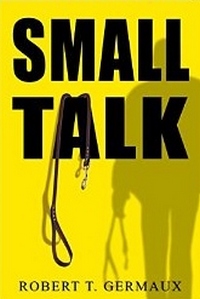
Small Talk by Robert Germaux: A Fledgling Task Force on the Hunt for a Serial Killer on the Streets of Pittsburgh

So this is going to be Robert Germaux day here, apparently. I’ve got this post about Small Talk and Germaux was kind enough to give me a Guest Post and to do a Q&A with me, all of which is coming along shortly. Hope you enjoy this as much as I did.


Small Talk

Small Talk

by Robert Germaux
Series: A Daniel Hays Mystery, Book 1

Kindle Edition, 266 pg.
2015

Read: March 24-25, 2021

What’s Small Talk About?

The area around Pittsburgh, we’re told early in this book, is made up of a vast number of local jurisdictions that are fiercely independent and don’t necessarily cooperate too well with each other—even when it comes to crimes being committed in various jurisdictions. After one recent crime spree took too much of a toll and had too little cooperation between various law enforcement agencies, a Special Assignment Squad answering directly to the Chief of Police is formed to deal with crimes of that type.

This team’s first real trial comes some weeks after its formation when a series of young women are being strangled. There’s no sexual assault, no robbery, simply a strangulation. There’s no connection—appearance, socio-economic status, profession, location—between the victims. If there’s anything not random about the selection of the victims, no one can see it.

Daniel Hays, the head of the SAS, is the lead investigator on the first murder before it’s officially a SAS matter. But it doesn’t take him long to assume that there will be another —probably many—after looking at the evidence, scene, and victim. Sadly, he’s proven correct fairly shortly. As more and more victims are found, it’s clear that the killer is getting more brazen, and the pressure—from within and from outside the SAS—increases.

The Killer’s Perspective

97 times out of one hundred, I’d rather not get the killer’s perspective (either told in first or third person) as well as the detective’s. I’m clearly in the minority, however, even judging solely on how frequently we’re given this setup.

Germaux handles this device as well as anyone could want. It does add a little to the novel and helps us understand the killer better than we would if we only had Daniel’s perspective. It also helped me to really dislike the character—you know, in case randomly killing women wasn’t enough. The guy is too impressed with himself, he’s a showoff and a blowhard with a penchant for monologuing (to himself or others). Some of that goes with the territory, obviously, but there’s something about him I liked even less than your typical budding serial killer.

For example, unless something is wrong with you, you’re charmed by Lecter in Silence of the Lambs—yes, he’s a deranged killer that needs to be kept away from people, but you can’t help but like the guy. Robert B. Parker gives us the killer’s POV in Crimson Joy, and all I wanted was for him to be stopped—I don’t know if I ever cared about him one way or the other. But this guy? I actively disliked him, in addition to wanting Hays and the team to get him off the streets.

Advantages/Disadvantages of Reading this Now

I almost never read books out of order anymore—I used to do it all the time, but now my default mode is: Start at Book 1 and move forward. But because it was for a book tour, I read the second Daniel Hays novel first. It was nice to see that gripes and questions I had while reflecting on One by One had been anticipated and dealt with in these pages.

The downside is that there are some things that didn’t hold as much suspense for me because I knew the status of various characters in the sequel. There was one scene that held absolutely no suspense for me, and I regretted that lack as I read it. Thankfully, Germaux still handled that scene in a way I didn’t expect him to, so while it came with the resolution I expected, the journey to it was a nice surprise.

So, what did I think about Small Talk?

Before I wrote this post, I read what I said about the sequel just to compare the two. Plot-specifics aside, I could have just re-used that post here.

Small Talk has an interesting and solid approach to the Serial Killer, some nice twists, and a good group of core characters.

Professionals who treat each other as professionals, with respect and camaraderie. It could be made slightly more interesting or challenging if there were a bit more friction in the team or spillover from Daniel’s personal life (for example). But that’s only marginally more interesting.

I do wish there was a greater sense of urgency to this. The SAS is driven to find the killer, but they’re not obsessive about it. They clock out at the end of the day, go home and bake, or go on a date, or something else. And as nice as those side stories were, and as realistic as it might be, it’s somewhat dissatisfying when it comes to drama.

Like with all of Germaux’s writing, there’s a pleasantness to reading this. No matter how dire things may be, the book is just a pleasant experience. It’s a fast, gratifying read with some fun moments and justice prevailing. It’s hard to go wrong with that.

I recommend this—like all of Germaux’s Crime Fiction—especially if you’re not in the mood for gritty depictions of police detectives going about their work. In my earlier post, I compared them to “blue sky” dramas like NCIS, Burn Notice, or White Collar, and the same is true here. And sometimes that’s just what the doctor ordered.


3.5 Stars

March 2021 in Retrospect: What I Read/Listened to/Wrote About

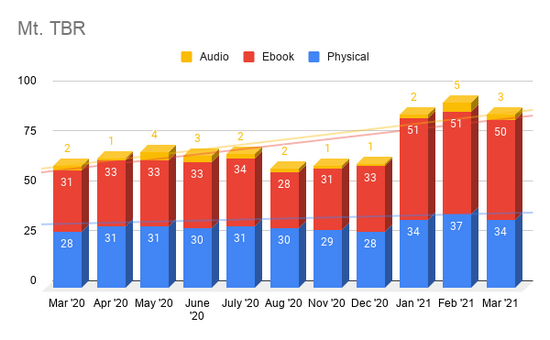
March is the best month of the year as far as books finished—28 titles, 6959+ pages (one was an Audible Original and I have no idea what the page count will be) for a 3.83 Star Average—including four 5-Star books. I’m clearly getting soft (and, yeah, they were some great books too). My writing—review-ish posts and otherwise—isn’t what I want it to be, but hope springs eternal. I really need to catch up. I have a couple of door-stopper novels on my shelf, I should probably break out one or two of them in April as a way of catching up on posts (if I only finish 12 books, I’ll have plenty of time to write them up), right?

In one of those little things that no one but me cares about: I’ve got too many things unfinished at the moment. I’ve got 4 “project” books (things I plan on spending months on), and then 3 others. I’d expected to finish two of those on 3/31, but, y’know, Life happened. Since I’ve started doing these month-end reports, I’ve never had this many in progress.

Anyway, here’s what happened here in March.
Books Read

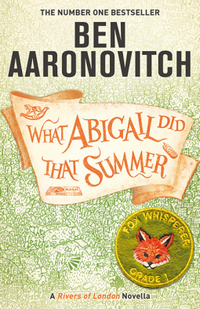
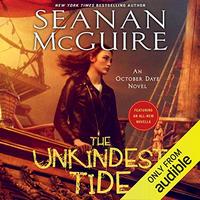
What Abigail Did That Summer The Unkindest Tide Calculated Risks
3.5 Stars 4 Stars 3.5 Stars
Junkyard Bargain What the World Needs Now - Bees! The Vigilante Game
3 Stars 3 Stars 4 Stars
Paging Through History The Treadstone Resurrection The Rags of Time
2 1/2 Stars 3 Stars 4 Stars
Burying The Newspaper Man You'll Never Believe What Happened to Lacey Volume One: Family Matters
4 Stars 4 Stars 5 Stars
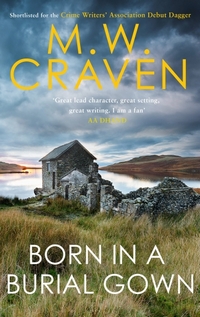
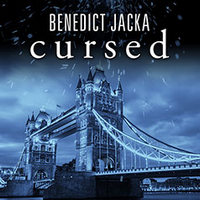
Rejoice and Tremble Born in a Burial Gown Cursed
3 Stars 5 Stars 4 Stars
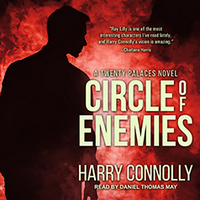
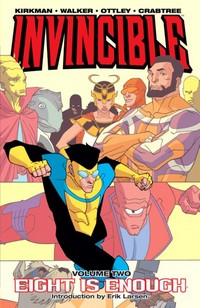
Circle of Enemies Volume Two:Eight is Enough The Christian’s True Identity
4 Stars 4 1/2 Stars 3.5 Stars
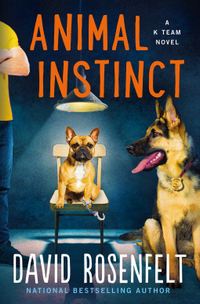
Wild Sign Bluebird, Bluebird Animal Instinct
4 Stars 5 Stars 3.5 Stars
Volume Three: Perfect Strangers Below Zero Small Talk
5 Stars 4 Stars Still Deciding
Dead in the Water The Wasteland War The Lightning Thief
4 Stars 3.5 Stars 3.5 Stars
Drop the Mikes
4 Stars

Still Reading

Tom Jones Original Cover The Wonderful Works of God Things Unseen
Grace and Glory (BoT Edition) The Great Sex Rescue The Particulars of Peter
No Country for Old Gnomes

Ratings

5 Stars 4 2 1/2 Stars 1
4 1/2 Stars 1 2 Stars 0
4 Stars 11 1 1/2 Stars 0
3.5 Stars 7 1 Star 0
3 Stars 4
Average = 3.83

TBR Pile
Mt TBR March 21

Breakdowns
“Traditionally” Published: 18
Self-/Independent Published: 9

Genre This Month Year to Date
Children’s 0 (0%) 1 (2%)
Fantasy 1 (4%) 8 (12%)
General Fiction/ Literature 0 (0%) 1 (2%)
Horror 0 (0%) 0 (0%)
Humor 1 (4%) 1 (2%)
Mystery/ Suspense/ Thriller 11 (39%) 25 (38%)
Non-Fiction 2 (7%) 3 (5%)
Science Fiction 5 (18%) 10 (15%)
Steampunk 0 (0%) 0 (0%)
Theology/ Christian Living 2 (7%) 6 (9%)
Urban Fantasy 6 (21%) 11 (17%)
Western 0 (0%) 0 (0%)

Review-ish Things Posted

Other Things I Wroteotherwriting
Other than the Saturday Miscellanies (6th, 13th, 20th, and 27th), I also wrote:


That’s that for me, how was your month?

WWW Wednesday, March 31, 2021

Here we are at the end of the month—and before I start seeing what I accomplished around here, let’s check in with a WWW Wednesday, all right?

This meme was formerly hosted by MizB at A Daily Rhythm and revived on Taking on a World of Words—and shown to me by Aurore-Anne-Chehoke at Diary-of-a-black-city-girl.

The Three Ws are:

What are you currently reading?
What did you recently finish reading?
What do you think you’ll read next?

Easy enough, right?

What are you currently reading?

I’m reading The Particulars of Peter: Dance Lessons, DNA Tests, and Other Excuses to Hang Out with My Perfect Dog by Kelly Conaboy—a book only marginally longer than its title—and am listening to No Country for Old Gnomes by Delilah S. Dawson & Kevin Hearne, Luke Daniels (Narrator) on audiobook.

The Particulars of PeterBlank SpaceNo Country for Old Gnomes

What did you recently finish reading?

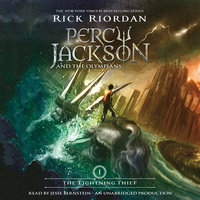
I just finished (and thoroughly enjoyed) Duncan MacMaster’s Drop the Mikes and the blast from the past, The Lightning Thief by Rick Riordan, Jesse Bernstein (Narrator) on audio.

Drop the MikesBlank SpaceThe Lightning Thief

What do you think you’ll read next?

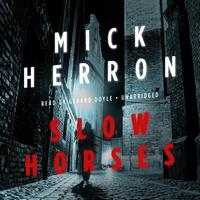
My next book should be the last of the Toccata System trilogy, Progigal Storm by Kate Sheeran Swed, and Slow Horses by Mick Herron, Gerard Doyle (Narrator) on audiobook. I need to refresh myself on this book so I can get serious about the series before a friend locks me into a small room for a week with no internet and only a stack of these books.

Progigal StormBlank SpaceSlow Horses

What about you—how’re you closing out this month? What does April have in store for you?

The Wasteland War by Michael R. Underwood: The Genrenauts are (FINALLY) Back—Are They Up for the New Challenges?

The Wasteland War

The Wasteland War

by Michael R. Underwood
Series: Genrenauts, Episode 7

E-Book, 53 pg.
2021

Read: March 26, 2021

The first thing Leah noticed was the dust. It whirled and whorled and danced everywhere. Orange and brown and soot-gray, this place had it all. She pulled the scarf up to cover her nose, holding it in place with her goggles.

She’d felt like a steampunk raver when she’d first put the outfit on, but now it totally made sense, both aesthetically and practically. It was hard to keep your eyes open when they were constantly filled with dust.

What are The Genrenauts?

Many of my readers weren’t reading this blog back in 2015-2016 where it likely seemed I talked about the Genrenauts every couple of weeks (14 posts from November 2015-December 2016, and one the following June), so let me give you a quick idea about the series, taken from the author’s site:

In Genrenauts, our Earth is just one of many in a multiverse. Each other Earth is the home to a familiar narrative genre: Westerns, Fantasy, Romance, Crime, etc. Each world is constantly playing out stories from its genre – archetypes and tale types smashing up against one another making tragedies and happily ever afters. But like any system, sometimes entropy takes hold, and a story breaks down. When that happens, the Genrenauts step in to fix the story.

Because if they don’t, the dissonance from the broken story ripples over and changes Earth on a fundamental level. (Science Fiction world goes off-track and scientific innovation stagnates, exploration halts; Fantasy world goes off-track and xenophobia rises, cultural rifts widen).

Our series starts when Leah Tang, a struggling stand-up comic, is recruited to join the Genrenauts and discovers that her seemingly useless genre savvy is suddenly an essential skill for survival in the story worlds. She arrives just in time, as story breaches have been ramping up – coming faster and causing more ripples.

Sounds great, doesn’t it?

What’s The Wasteland War About?

There are two things going on in this brief novella—first, Angstrom King, the AWOL Team Leader, stumbles upon a story breach while he was trying to resupply his stores. He believes that this breach will help him get evidence to support his theory so that he can eventually convince the High Council that he’s right about the rogue Genrenauts—or just that he’ll be able to find a way to stop the rogues himself.

While he’s trying to understand the nature of the breach and find this evidence, his old team arrives—adding a layer of difficulty and danger to everything he’s doing.

That breach is the second storyline—two communities in this wasteland—one a safe haven for those who need one, and a battleship with resources the other needs—had recently formed an alliance sealed by a marriage. And now, a few months later each side is convinced the other is betraying that alliance and are starting to retaliate against the other.

Hey, Where’s Leah?

Leah’s the point-of-entry character for the reader, we came into this world with her and she’s the one we understand things through. She’s largely sidelined during this mission, which makes it a little harder for me to connect with it. We’ve had extended periods where we focus on others in the team before, but Leah still carried the narrative weight of the novel/novella. This novella focuses so much on King and Shirin that there’s not that much time for Leah.

It was absolutely the right way to tell this story, King and Shireen ought to have been the focus of this novella, but I don’t want that to be the case for too long.

There’s another team member who’s even more absent from this mission—but it makes sense story-wise (as fun as it would’ve been to have them around).

The New Guy

Shirin and King exchanged messages…Shirin keeping King updated on the team and how Mendoza was leading—like a man that only has a hammer and therefore sees nothing but nails.

I know we’re not supposed to like the Team Leader brought in to replace Angstrom King, but it’s like Underwood went out of his way to ensure we wouldn’t. He’s proof that King had a very special thing going on, and that the Genrenauts as an organization might not be as great as Leah and the readers might have thought. King assembled a team with a variety of skills, interests, and abilities—and a team that relies on and trusts each other to function. Mendoza doesn’t value that variety and doesn’t care how it functions best, he’s only concerned with how he wants it to function.

I hope Underwood shows us enough about Mendoza so that we can appreciate him, and maybe even see that he’s trying to do the right thing, even if it’s not the way the King would’ve done it.

On the other hand, I don’t mind not liking the guy at all, so if he doesn’t do that, I won’t complain too loudly.

So, what did I think about The Wasteland War?

Entropy had its teeth in every world. But here, they were serrated.

First, it was so, so, so good to be back in this series. The last episode of Season One came out in the Fall of 2016, and I’ve been missing this series since. I’m glad Underwood has been able to pick this up again.

Outside of the short story, There Will Always Be a Max, this is the shortest Genrenauts episode, and while that’s frustrating because of my greed, it’s a great length for this particular story (but I hope it’s not the beginning of a trend). It’s also a great way to get back into this world—we get just enough to remember who the players are, remember the ongoing arc, and are treated to another adventure in the Wasteland.

Post-apocalyptic wastelands in the Mad Max mold are probably never going to be my thing, but that doesn’t mean I can’t enjoy something like this. I actually would’ve liked a little bit more of the Wasteland War story to balance out the larger arc. It felt like it was given short shrift—not quite as much as the Western World story was in The Shootout Solution, but it was close—although that had to establish the series, introduce the characters, and teach us the concept of a Genrenaut.

My gripes aside, this was a good story with plenty of action and a great atmosphere, and it sets up the rest of Season Two. I’m eager to see where things go from here.


3.5 Stars

Animal Instinct by David Rosenfelt: The K Team Gets the Chance to Right an Old Wrong

Animal Instinct

Animal Instinct

by David Rosenfelt
Series: The K Team, #2

eARC, 304 pg.
Minotaur Books, 2021

Read: March 22-23, 2021
Grab a copy from your local indie bookstore!

What’s Animal Instinct About?

Every retired police officer or PI in fiction (maybe in real life, too, I don’t know), has at least one case, one incident, one moment that haunts them. If only they’d done X, if only they’d been able to solve Y, or stop Z from happening. Corey Douglas has one of those—a few years ago, he responded to a call about domestic violence. He was unable to make any arrests that night, or anything else–he was convinced that the woman had been abused, but she denied it.

Years later, this woman is murdered and Corey’s out to do the one thing he couldn’t do before—get justice for her. He keeps telling himself that he wants the killer arrested, but really, he wants to finally arrest the boyfriend for the murder. Laurie and Marcus, his partners in the private investigator business—as well as his dog, Simon Garfunkel, a retired K-9 officer, join him in this investigation that turns out to be far more than anyone expected. The team needs Laurie’s smarts and ability with people, Marcus’s mysterious abilities (and brute force), Simon Garfunkel’s teeth, and Corey’s determination—and more than a little luck—to get to the bottom of this.

Especially when more murders are committed.

Simon Garfunkel

The collective name for this group of investigators is The K Team, because of their K-9 member, right? So why doesn’t he get more to do? I realize he’s a dog. I’m not suggesting he join Sam in the hacking, or sit on stakeouts with Marcus (although I admit, I would pay good money for 10 pages or so of that). But Corey leaves him home a lot—yes, he retrieves him as quickly as possible and does what he can to spend time with him. But, I think he could do more.

When Simon Garfunkel is given a chance to do something—he’s great. And even when he’s just there for atmosphere, or as a conversational/narrative prop for Corey—he’s a handy addition. I just think we could get some more of him. Bernie Little brings Chet to many more places that Corey tries. Maybe that’s a function of Corey living in New Jersey and not the Southwest, and I think I could accept that as an explanation.

There’s a scene toward the beginning of the novel where Corey takes Simon to the beach for the first time—and like most dogs, Simon loves the water and the sand. It’s his enjoyment of the setting that gets Corey, who’s apathetic at best toward the beach, to embrace the beach. I couldn’t have enjoyed this scene more unless I was on the beach with them.

Corey’s Other Relationship

Of course, the reason that Corey’s at the beach for Simon to enjoy is his girlfriend, Dani. She’s one of the best things about this book.
We’re told in the last book that Corey’s not really had any serious relationships as an adult, he’s always looking for the reason to end things. He just doesn’t want to end things with Dani. Whether it’s because now that he’s retired, he has time in his life for things other than police work; he’s finally found “The One” (or a right one, depending on how you like to think of that); or he’s finally maturing—or any combination of the three. Corey’s letting himself grow, letting himself want things that he hasn’t before—even at his age.

I love a character like that—I want to read about them, they’re inherently interesting. And Rosenfelt is writing this just right—a little sappy and a little realistic.

It helps that Dani’s a pretty fun character—but we could learn a bit more about her. Still, I like the way Corey seems to be changing because of her influence, I like him more than I did when we first met him in the Andy Carpenter series.

My Concern…

This is about The K Team as a series as much as it is about this book specifically.

There’s just too much Andy Carpenter.

Sure, this is a spin-off from that series, and as Andy’s married to Laurie and they largely work out of the Carpenter house, he’s going to be around. I don’t mind, but he has his own series, and gets two books a year lately. Not only do we need more Simon Garfunkel, but we also need more Laurie and Marcus.

I like Andy Carpenter, I’ve read 22 novels about him (some more than once)—and I’m probably going to read at least two novels in that series this year. I thought Animal Instinct was a good way to use Andy, and I’m absolutely glad that I read this book. I just think for The K Team series to have any long-term success, they need to stand on their own feet more and not be propped up by Andy.
The Unexpected Highlight

I don’t know if you typically read Acknowledgments pages/sections. I tend to glance at them, but like many people, I don’t spend that much time with them. So let me draw your attention to the Acknowledgments for this novel—any David Rosenfelt novel, really. You simply must read them. They are the silliest, goofiest writing Rosenfelt ever does (and in some cases, that’s saying something) and never fail to make me smile.

So, what did I think about Animal Instinct?

So I have some long-term concerns with the series and a couple of things I wasn’t crazy about when it comes to Animal Instinct, but I don’t want those to overshadow the central point I have about this book: it’s good*. I had a lot of fun while reading it, and while I was satisfied with the ending, I wish it didn’t end when it did, because that meant it’d be a few months before I got to spend more time with any of the characters in this book.

* I’ve said it on this site before, I’ll say it again: It takes few words to praise something, it takes several to fully explain a concern, problem, or even mild annoyance. As such, they tend to overshadow the praise. I think that’s what is happening here. I don’t mean it to.

David Rosenfelt is one of the most reliably entertaining novelists in Crime Fiction today. Every time I sit down with one of his books, I know I’m in for a good read. Characters you want to spend time with. Animal Instinct is a solid story with some great twists—and well-executed reveals. Corey’s got a great narrative voice and his sense of humor (which isn’t quite the same as Andy Carpenter’s) permeates the book and livens up the text just enough when things are grimmest.

If you have no idea who Andy Carpenter, Corey Douglas, Simon Garfunkel, or the rest are? Don’t let that stop you from trying this, it absolutely works as a jumping-on point—both to this series and the books it’s spun off from. I’m in this series for the long haul, and I think you’ll want to be, too.

Disclaimer: I received this eARC from St. Martin’s Press via NetGalley in exchange for this post—thanks to both for this opportunity and the fun read.


3.5 Stars


This post contains an affiliate link. If you purchase from it, I will get a small commission at no additional cost to you. As always, opinions are my own.

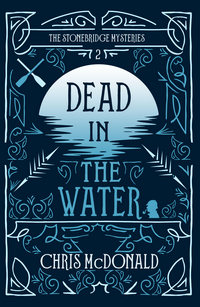
Dead in the Water by Chris McDonald: These Amateur Detectives Start to Look a Little Less Amateur

Dead in the Water

Dead in the Water

by Chris McDonald
Series: The Stonebridge Mysteries, #2

eARC, 105 pg.
Red Dog Press, 2021

Read: March 25, 2021

What’s Dead in the Water About?

Rivalries between small towns are nothing new, and when they can find their focus in a small—and relatively meaningless—athletic competition, they can take on an intensity that belies their significance. Add a cash award on top of a long-standing rivalry? All bets are off. That’s exactly what happened between the neighboring towns of Stonebridge and Meadowfield with the annual Stonebridge Regatta.

Things get a little tenser this particular year when the captain of the Stonebridge team (who was not particularly liked by his team, but he still was one of their own) is found dead in the water. The authorities concluded it was an accidental drowning, but his widow doesn’t accept that conclusion. Matthew Henderson was far too cautious around the water for something like that to happen.

Elena Henderson is an old friend of Adam Whyte’s mother, and like many people in Stonebridge was familiar with his recent success in finding the murderer of his friend. She asks him to look into her husband’s death for her. So Adam recruits his friend Colin to come along for another adventure and the two see if they can find that kind of success again.

Too Much Character Growth?

Part of the charm of The Curious Dispatch of Daniel Costello was how much Adam’s confidence exceeded his (and Colin’s) ability, and yet they somehow blundered onto the solution. They’re clever obviously, but they’re amateurs and they acted that way.

In the ensuing month, their success and fleeting local fame were the push that Adam needed to get off his mother’s couch and get serious about life (for at least a while). Not only that, but when approached by the widow, Adam’s reflexive reaction was to know that he wasn’t qualified. He feels bad for her and wants to help, so he agrees to look into it. While that may really be the right reaction, the realistic reaction, but we don’t turn to this kind of thing for realism, do we? A month of personal growth is enough to banish his overconfidence?

Now, these are things I thought of when sitting down to write this post, and not things that came up when I was reading. In the moment, I was just curious about finding out who killed Henderson and enjoying Adam and Colin. That’s the important part—it worked while reading, and only made me wonder in retrospect. Also, I’m not opposed to these two growing up—I just wonder about the pacing of it.

And also, Adam’s still a clueless and self-focused twerp when it comes to dealing with his mother, so, it’s not like he’s suddenly grown up—and there are plenty of ways his maturity can stumble in future installments if McDonald doesn’t want him to be well-adjusted.

The Sherlock/Watson-ish nature of the relationship that Adam foisted on Colin is pretty much gone—at least in the typical Holmes feel. To stick with those two as exemplars, in this novella, Adam and Colin function largely like Holmes and Watson in the last couple of Elementary seasons. Not quite equals, but close to it—Adam’s still expected to do the big thinking, but the labor and thinking pretty equally divided. It’s easier to see the two being friends this way, rather than Colin being pushed around by Adam like it frequently seemed in the previous adventure.

So, what did I think about Dead in the Water?

Like its predecessor Dead in the Water is a quick and enjoyable read, not quite as comic this time—but there were plenty of grins and chuckles to be found. Colin’s undercover work on the rival town’s rowing team, in particular, comes to mind there, as does a tip of the cap to one of McDonald’s podcast co-hosts (Adam has a comic highlight—with a bonus Narnia quip that I probably laughed out loud at—but I can’t even allude to it without ruining it).

I guessed the killer pretty quickly, but it didn’t affect my enjoyment that much. It was a well-constructed whodunit that provided plenty of opportunities for the reader to pick up on things that Adam missed (and vice versa).

One of the advantages of the novella-length is that McDonald has no opportunity to let “dull parts” step in. Everything that happens propels the story forward or gives us what we need for the characters. Lean prose and not a wasted word keep things moving for the reader and help to keep this as pure fun. I’m absolutely ready to return to Stonebridge to see if these two can find yet another murder in this small town.


4 Stars

Red Dog Press
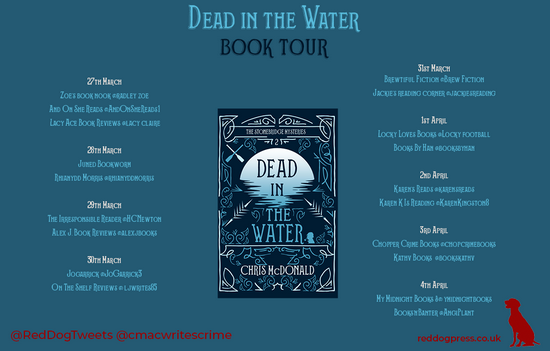
My thanks to Red Dog Press for the invitation to participate in this tour and the materials (including a copy of the novella) provided.

Page 315 of 630

Powered by WordPress & Theme by Anders Norén