Saturday Miscellany—10/31/20

It’s late, I’ve been super busy, but the semi-hiatus is almost over. I think. Some tasty links below.

Odds n ends about books and reading that caught my eye this week. You’ve probably seen some/most/all of them, but just in case:
bullet Reading literary versus popular fiction promotes different socio-cognitive processes, study suggests—Wow there’s a lot of elitism and misguided thinking behind this article.
bullet Lost letters reveal JM Barrie and Robert Louis Stevenson’s mutual affection
bullet Does Book Twitter Actually Reflect the Reading Community?

A Book-ish Related Podcast Episode (or two) you might want to give a listen to:
bullet No Stupid Questions Ep. 24: Why Do We Forget So Much of What We’ve Read?—a great conversation about why we tend to forget a lot of what we read (or do we?) and why doesn’t matter? Stick around for the fact check at the end of the episode that includes a fun thumbnail history of dustjackets. (possibly one of the nerdiest sentences I’ve used on this blog)

This Week's New Releases That I’m Excited About and/or You’ll Probably See Here Soon:
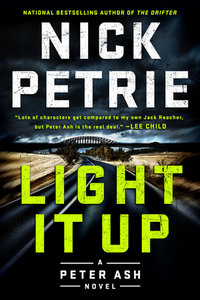
bullet The Sentinel by Lee Child and Andrew Child—A New era for Jack Reacher kicks off with the first novel co-written by Lee Child’s brother.

Lastly I’d like to say hi and extend a warm welcome to Ollie who followed the blog this week. Don’t be a stranger, and use that comment box, would you?

BOOK BLITZ: The Path of Good Response by Steve Frogley

Today I’m pleased to welcome the Book Blitz for the dystopian thriller The Path of Good Response by Steve Frogley.


Book Details:

Book Title: The Path of Good Response by Steve Frogley
Release date: August 27, 2020
Length: 272 pages
Publisher: Vanguard Press
Format: Ebook/Paperback

Book Blurb:

Do you value your mother’s health above peace in the Middle East? How about your career over global warming?

If a company runs the best graduate scheme in the world, then it can afford to be probing with its interview questions.

When Joe Massey is offered a role aboard Schelldhardt’s luxurious headquarters at sea, he discovers that the company mission is beyond anything he had ever imagined.

Strange dreams disturb his sleep, and it soon becomes clear that nothing is quite as it seems.

Is he really the right man for the job? And if not, then why is he there at all?

Purchase Links

Pegasus Publishing ~ Barnes & Noble ~ Waterstones ~ Foyles ~ Book Depository ~ Amazon (UK) ~ Amazon (US)

About the Author:

Steve FrogleySteve is a writer of contemporary fiction, who enjoys reading books of many different genres.

Originally from Southend in Essex, Steve now lives on the South Coast of England with his family, after a few happy years spent in New Zealand. The Path of Good Response is his first novel. He has spent most of his working life in the IT industry, but writing is his real passion.

The workplace has changed a great deal during Steve’s career. He started writing The Path of Good Response back in 2016, and the fictional company in the novel, Schelldhardt, seems less of an exaggeration by the year. It appears that reality is fast catching up with dystopian writing, and in many ways overtaking it.

He hopes that you enjoy reading his book, and welcomes any feedback.

My thanks to Love Books Group for the invitation to participate in this tour and the materials they provided.

Love Books Group

Pub Day Repost: Rattlesnake Rodeo by Nick Kolakowski: Out of the Frying Pan, Into the Fire

Rattlesnake Rodeo

Rattlesnake Rodeo

by Nick Kolakowski
Series: A Boise Longpig Hunting Club Noir, #2

eARC, 162 pg.
Down & Out Books, 2020

Read: September 8, 2020


In 2018, I read my first book by Nick Kolokowski, Boise Longpig Hunting Club, which is pretty much everything you think it is from the title. In the two years and change since then, I’ve read five other books by Kolokowski—well, six now. That alone should be an indication of what I think about his stuff.

What’s Rattlesnake Rodeo About?

This is the sequel to Boise Longpig Hunting Club, taking up minutes after it. Spoilerly talk about BLHC—bounty hunter, Jake; his sister, Frankie (a gun smuggler); and ex-wife/fiancé, Janine (who has nothing to do with criminals); are kidnapped by a group of super-wealthy people, and set loose in an Idaho forest while they’re being hunted. Jake and Frankie are a lot more resourceful than anyone expected—and Janine has depth that no one expected—and they end up killing all the hunters.

We rejoin them in this book headed back to Boise. They have a number of emotions and thoughts running through their minds at this time—as they should—the most prominent of them is: how are we going to get away with this? There’s no way that they didn’t leave all sorts of DNA, fingerprints and other sorts of evidence behind that’ll make forensic techs happy. And there will be scores of techs, investigators, agents and what have you at the crime scene—very rich, very important people died up there and someone is going to have to pay for that. Oh, and Frankie wants fries. You work up an appetite fighting for your life.

Karen

They quickly learn about one person who not only has links to the Longpig Hunters, evidence about Jake and Frankie’s involvement, and a reputation to make people quake in their boots. Like Prince, Madonna, or Hawk (to bring it back to crime fiction), she’s known by one name: Karen.

Quick aside: I wonder if in early drafts, she was called something like Margo or Helen, but given, well, all of 2020, Kolakowski decided to go back and change it. Or did he have enough foresight months ago to go with that?

Back to the book: Karen offers them a deal, they do one incredibly horrible task for her, or she ruins the lives and reputations of Jake, Frankie, and Janine. They have no choice…they have to find an Option C.

Gunfights, treachery, and (obviously) rattlesnakes ensue.

Frankie and Her Troops

In almost every novel I’d normally read, Frankie and her employees would be the targets of the protagonist, not their ally. But I’ve gotta say, for a bunch of gun-running criminals, benefiting from the miseries of others (and being a means to innocents being killed at the hands of their customers), they’re a lot of fun. There’s a fun sense of camaraderie and some good banter among them. They’re a pretty effective squad, too. Kolakowski could write a pretty entertaining series featuring these guys. And not just because they’re led by a man who always wears a rubber gorilla mask.

Which is fitting, considering how cool their boss is. Spenser has Hawk, Kenzie and Gennaro have Bubba, Elvis Cole has Joe Pike, Walt Longmire has Henry Standing Bear, Joe Pickett has Nate Romanowski, Sunny Randall has Spike, and Jake has Frankie. The “not-bound by the same laws and ethics that the series protagonist is” so that the protagonist can keep his/her nose clean and still get the job done. They’ll cut the corners, they’ll take and make the shots that no one else will, they’ll be the ones to use lethal force when their friend just can’t bring themselves to do it—and they won’t feel guilt (at least not enough to interfere with their ability to get things done).

Frankie is, as far as I know, the only female lethal sidekick, in crime fiction. Through grit, determination, skill, and panache—Frankie is what ultimately keeps her brother and sister-in-law breathing. It’s just fun to see a female in this role, particularly one that fits. I could never see Sunny Randall go toe-to-toe with some of the dudes she needs to without Spike (or Jesse, or Richie, or Richie’s family)—but I can see Frankie (like Lori Anderson or Charlie Fox) do it without blinking.

The Setting

I’ve talked a little about this in the other book, but it’s fun for me to see the region I’ve lived my whole life in depicted so well in these pages. I enjoy anyone finding a way to bring a crime novel to life outside of Boston, NYC, New Jersey, Chicago, Miami or LA—Elmore Leonard, Jason Miller, Craig Johnson, C. J. Box, Darynda Jones, and G. M. Ford have/continue to do a good job of that, but there needs to be more*. Kolakowski brings my corner of the world into that fold (Jayne Faith did it in Urban Fantasy, and Wesley Chu set a Tao book near where the climax of this novel took place). It’s nice not having to use my imagination much when picturing a scene, at the same time—if I’d never been anywhere near this place, Kolakowski depicts it well enough that someone from Michigan, Mississippi, or New Mexico would have no problem seeing what he’s going for.

* I don’t pretend that’s an exhaustive list, still feel free to add others I should get to know.

So, what did I think about Rattlesnake Rodeo?

You could feel the dread coming off of Jake and Frankie as they thought about the police and (probably) feds coming for them after surviving the last novel, you could feel their hatred (for Karen) and revulsion for their task for her, and you could sense the chaos, smell the smoke, and taste the air from the big scenes at the end of the novel. There are significant portions of this novel you experience as much as you read. You’ve gotta love that.

There was one death that totally caught me unprepared and left me stunned. The violence felt a little more grounded than the genre demands, but Kolakowski knows when to loosen the reins and let things go a little over the top. Which is just fun.

At the same time, there’s a great sense of enjoyment to this novel—to the characters, what they do, and how they go about it. It’s the kind of action novel that gets your fists pumping as much as anything else.

Just the fact that the novel starts with the trio worried about all the evidence they left behind made this a winner—how many characters in novels worry about that sort of thing? Add in the characters—from the oddity of Monkey Man, to the implausibly competent Frankie, to the quiet strength of Janine, to the terror that is Karen—and the great balance of tones, and you’ll see why Kolakowski is my favorite US indie Crime Novelist.

I strongly recommend Rattlesnake Rodeo, whether or not you read BLHC first, it’s a fun ride.

Disclaimer: I received this eARC from the author in exchange for this post and my honest opinion, I appreciate the opportunity.


4 Stars

Saturday Miscellany—10/24/20

I somehow managed to get three posts up this week—don’t think this means that there’s a return to normal on the horizon, there was another post I wanted to get up this week and now I’m hoping it arrives by Friday. Stress and the time pressure have let off a little, but not that much. I did manage to finish 2 of the 3 books I started at the end of September, though, and may finish the third today. So that’s something…

Thanks for sticking around during my semi-hiatus, see ya soon.

Odds n ends about books and reading that caught my eye this week. You’ve probably seen some/most/all of them, but just in case:
bullet Cheap Writing Surfaces and Medieval Bureaucracy Helped Popularize the Alphabet: Judith Flanders Explains Why the Alphabet Was Used on a Whim—probably stretching things a bit to include this one, but, hey, they’re my rules, I can stretch them for something as interesting as this.
bullet Dungeons & Dragons Publisher Sued by Dragonlance Co-Writers Over Scrapped Book TrilogyDragonlance was a formative influence on me, and the idea of new works in that world interests me. This, on the other hand… (Hat Tip to Witty and Sarcastic Bookclub for this one)
bullet Suspect by Robert Crais named Best Novel of the Decade—couldn’t happen to a nicer book.
bullet A Playlist for ‘Not Famous’—A reader made a playlist for Matthew Hanover’s book about an indie musician and the guy who fell for her. This is just cool. (it’s also a nice way for me to remind you all that this is a book you should read, or at least buy).
bullet The Westing Game may be a murder mystery—but it’s also a ghost story.: On remembrance, inheritance, and legacy in one of the most beloved children’s novels of all time.—I’m not sure I agree with all of this, but I’ll take any excuse to post something about The Westing Game
bullet Graphic artist Art Spiegelman on Maus, politics and ‘drawing badly’—Good piece on Spiegelman…
bullet The 100 Best Fantasy Books of All TimeTime Magazine and a panel of writers who know a thing or five about Fantasy compiled a really good list.
bullet NIGHT OF A THOUSAND AUTHORS Live Event to be Hosted by K.J. Howe and The Real Book Spy’s Ryan Steck—This looks like a great event.
bullet Blogger Statistics: a quick look.—The Tattooed Book Geek shares a few demographic results from Twitter Surveys. As a male in an older segment than he is, I feel even more like an outlier than he does…

This Week's New Releases That I’m Excited About and/or You’ll Probably See Here Soon:
bullet Say Goodbye When I’m Gone by Stephen J. Golds—a noir thriller set in 1960’s Honolulu

Happy Birthday, Archie!

My annual tribute to one of my favorite fictional characters (if not my all-time favorite). I’ve got to do an overhaul to this soon, but it is slightly updated and tweaked from last year.

On Oct. 23* in Chillicothe, Ohio, Archie Goodwin entered this world—no doubt with a smile for the pretty nurses—and American detective literature was never the same. He’s the narrator (and, I’d argue protagonist) of the questionably named Nero Wolfe mysteries. While the eccentric and overweight genius might be what brings people to the series, it’s Archie’s wit, attitude, and snappy narrative voice that brings people’s back.

* About 34 years ago, no matter what year it is that you read this.

Since I was in Middle School, if I was suffering a slump of any kind (reading, emotional, physical), time with Archie Goodwin could get me out of it. There were a few years that when I got sick, I’d grab a Nero Wolfe novel to help me get through it (along with the Vitamin C and Chicken Noodle soup), and you can’t tell me it didn’t work. Noted critic Jacques Barzun says it well:

If he had done nothing more than to create Archie Goodwin, Rex Stout would deserve the gratitude of whatever assessors watch over the prosperity of American literature. For surely Archie is one of the folk heroes in which the modern American temper can see itself transfigured. Archie is the lineal descendant of Huck Finn.

While Archie’s about as far from a teetotaler as you can get, to commemorate his birthday, I’m toasting him in one of the ways I think he’d appreciate most—by raising a glass of milk in his honor.

Who was Archie? Archie summed up his life like this:

Born in Ohio. Public high school, pretty good at geometry and football, graduated with honor but no honors. Went to college two weeks, decided it was childish, came to New York and got a job guarding a pier, shot and killed two men and was fired, was recommended to Nero Wolfe for a chore he wanted done, did it, was offered a full-time job by Mr. Wolfe, took it, still have it.” (Fourth of July Picnic)

Long may he keep it. Just what was he employed by Wolfe to do? In The Black Mountain he answers the statement, “I thought you was a private eye” with:

I don’t like the way you say it, but I am. Also, I am an accountant, an amanuensis, and a cocklebur. Eight to five you never heard the word amanuensis and you never saw a cocklebur.

In The Red Box, he says

I know pretty well what my field is. Aside from my primary function as the thorn in the seat of Wolfe’s chair to keep him from going to sleep and waking up only for meals, I’m chiefly cut out for two things: to jump and grab something before the other guy can get his paws on it, and to collect pieces of the puzzle for Wolfe to work on.

In Too Many Women, he’s a bit more concise and describes himself as the:

heart, liver, lungs and gizzard of the private detective business of Nero Wolfe, Wolfe being merely the brains

In Black Orchids, he reacts to an insult:

…her cheap crack about me being a ten-cent Clark Gable, which was ridiculous. He simpers, to begin with, and to end with no one can say I resemble a movie actor, and if they did it would be more apt to be Gary Cooper than Clark Gable.

Over at The Thrilling Detective, he’s described this way:

If Goodwin hadn’t gone to work for Wolfe, he’d certainly have his own agency by now (and temporarily does, in one novel). Far more of the traditional eye, Goodwin is a tough, handsome guy with a photographic memory, a .32 under his well-tailored suit (and sometimes an extra .38 in his overcoat pocket), and a well-developed appreciation for the ladies. And, in the opinion of more than a few cops, officials and stuffed-shirt executives, a mouth that ought to be nailed shut permanently. (Wolfe isn’t immune either – part of Goodwin’s job, as he sees it, is needling the fat man into taking cases, if only to make sure the bills get covered.) He’s not the deductive genius that Wolfe is, but a smart and tenacious op with a good right hook, and a decent and personable man. Most of all, in his narration of the books, he’s a helluva storyteller; it’s his view of the world, and his interaction with Wolfe, that keeps us coming back for each new mystery.

The Archie Goodwin FAQ is less succicnt but does a good job of laying out the facts.

I’m not the only Archie fan out there:

  • Someone pointed me at this post, The Wit and Wisdom of Archie Goodwin. There’s some really good stuff here that I was tempted to steal, instead, I’ll just point you at it.
  • Robert Crais himself when writing an introduction to a Before Midnight reprint, devoted it to paying tribute to Archie—one of the few pieces of anything written that I can say I agree with jot and tittle.

In case you’re wondering if this post was simply an excuse to go through some collections of Archie Goodwin quotations, you wouldn’t be totally wrong…he’s one of the fictional characters I like spending time with most in this world—he’s the literary equivalent of comfort food. So just a couple more great lines I’ve quoted here before:

I would appreciate it if they would call a halt on all their devoted efforts to find a way to abolish war or eliminate disease or run trains with atoms or extend the span of human life to a couple of centuries, and everybody concentrate for a while on how to wake me up in the morning without my resenting it. It may be that a bevy of beautiful maidens in pure silk yellow very sheer gowns, barefooted, singing “Oh, What a Beautiful Morning” and scattering rose petals over me would do the trick, but I’d have to try it.

I looked at the wall clock. It said two minutes to four. I looked at my wrist watch. It said one minute to four. In spite of the discrepancy, it seemed safe to conclude that it would soon be four o’clock.

Description:I shook my head. “You’re flattering me, Inspector. I don’t arouse passions like that. It’s my intellect women like. I inspire them to read good books, but I doubt if I could inspire even Lizzie Borden to murder.”

She turned back to me, graceful as a big cat, and stood there straight and proud, not quite smiling, her warm dark eyes as curious as if she had never seen a man before. I knew damn well I ought to say something, but what? The only thing to say was ‘Will you marry me?’ but that wouldn’t do because the idea of her washing dishes or darning socks was preposterous.

“Indeed,” I said. That was Nero Wolfe’s word, and I never used it except in moments of stress, and it severely annoyed me when I caught myself using it, because when I look in a mirror I prefer to see me as is, with no skin grafted from anybody else’s hide, even Nero Wolfe’s.

If you like Anglo-Saxon, I belched. If you fancy Latin, I eructed. No matter which, I had known that Wolfe and Inspector Cramer would have to put up with it that evening, because that is always a part of my reaction to sauerkraut. I don’t glory in it or go for a record, but neither do I fight it back. I want to be liked just for myself.

When a hippopotamus is peevish it’s a lot of peeve.

It was nothing new for Wolfe to take steps, either on his own, or with one or more of the operatives we used, without burdening my mind with it. His stated reason was that I worked better if I thought it all depended on me. His actual reason was that he loved to have a curtain go up revealing him balancing a live seal on his nose.

It helps a lot, with two people as much together as he and I were, if they understand each other. He understood that I was too strong-minded to add another word unless he told me to, and I understood that he was too pigheaded to tell me to.

I always belong wherever I am.

Breaking Bread with the Dead by Alan Jacobs: Interacting with the Classics from a Contemporary Perspective in Order to Learn and Critique

Breaking Bread with the Dead

Breaking Bread with the Dead: A Reader’s Guide to a More Tranquil Mind

by Alan Jacobs

Hardcover, 192 pg.
Penguin Press, 2020

Read: September 26-October 15, 2020
Grab a copy from your local indie bookstore!

What’s Breaking Bread with the Dead About?

If I tried to summarize this book (unless I read it 3-4 more times), it would be out-of-control, just me blathering on for 4+ pages. So, let’s have mercy on us all and just appropriate what’s on the publisher’s site:

>From the author of HOW TO THINK and THE PLEASURES OF READING IN AN AGE OF DISTRACTION, a literary guide to engaging with the voices of the past to stay sane in the present

W. H. Auden once wrote that “art is our chief means of breaking bread with the dead.” In his brilliant and compulsively readable new treatise, Breaking Bread with the Dead, Alan Jacobs shows us that engaging with the strange and wonderful writings of the past might help us live less anxiously in the present–and increase what Thomas Pynchon once called our “personal density.”

Today we are battling too much information in a society changing at lightning speed, with algorithms aimed at shaping our every thought–plus a sense that history offers no resources, only impediments to overcome or ignore. The modern solution to our problems is to surround ourselves only with what we know and what brings us instant comfort. Jacobs’s answer is the opposite: to be in conversation with, and challenged by, those from the past who can tell us what we never thought we needed to know.

What can Homer teach us about force? How does Frederick Douglass deal with the massive blind spots of America’s Founding Fathers? And what can we learn from modern authors who engage passionately and profoundly with the past? How can Ursula K. Le Guin show us truths about Virgil’s female characters that Virgil himself could never have seen? In Breaking Bread with the Dead, a gifted scholar draws us into close and sympathetic engagement with texts from across the ages, including the work of Anita Desai, Henrik Ibsen, Jean Rhys, Simone Weil, Edith Wharton, Amitav Ghosh, Claude Lévi-Strauss, Italo Calvino, and many more.

By hearing the voices of the past, we can expand our consciousness, our sympathies, and our wisdom far beyond what our present moment can offer.

So, what did I think about Breaking Bread with the Dead?

Really, what I want to do at this point is to write a series of posts about this book (probably not one per chapter, I could probably combine a couple of chapters together). But really, they’d be the equivalent of those old Chris Farley SNL interviews, “So, you remember X? Yeah…that was cool.”

I’m not saying this book is perfect, but it’s insightful, it’s thought-provoking, and it’s impossible to read without feeling a whole lot more well-read than you are* and (simultaneously) be inspired to read more and more widely. This is essentially true of everything Jacobs writes, I have to admit, so that’s not news. But it’s accurate.

* This is not necessarily true for you, just me.

At the end of the day, you may not agree with every way that Jacobs applies his principles for reading outside your time/culture/perspective, but those principles he enumerates are pretty sound—and at the very least provide a starting point. I think Jacobs is right more than he’s not, and even when I’m not convinced by him, I still find a lot to value.

Get it, chew on it, see if you can apply it yourself.


4 1/2 Stars

2020 Library Love Challenge

This post contains an affiliate link. If you purchase from it, I will get a small commission at no additional cost to you. As always, opinions are my own.
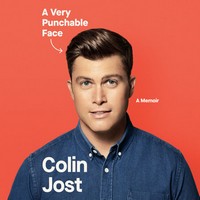
The Nicotine Chronicles edited by Lee Child is a thing I read

The Nicotine Chronicles

The Nicotine Chronicles

edited by Lee Child

Paperback, 271 pg.
Akashic Books, 2020

Read: September 26-October 19, 2020

I’ve tried to stop smoking.

I know it’s important not to smoke. In fact, it’s stupid to smoke. I smoke, but I try not to smoke. Every time I light a cigarette I think, I should not be doing this.

I want a better life. But it’s an uphill battle, it is an uphill battle because I try to do the right thing, but I don’t do the right thing. And…I smoke anyway.

Fuck it, I don’t smoke that much. The chances that something really bad will happen to me as a consequence of my smoking habit are slim. In fact, the chances that something else might happen to me for other reasons are far greater. Something will happen to me, though.

Sooner or later. That’s guaranteed.

What’s The Nicotine Chronicles

This is an anthology of stories centered around nicotine—users, their delivery system of choice, and how it shapes their thinking/lives. (you can read an excerpt from Child’s Introduction here to flesh this out a bit). There’s one or two that discuss cigars, vaping only shows up once, the rest of these focus on cigarettes (oh, I can think of one mention of a pipe, too). If you care about things like that.

Some of these sixteen stories would fit under the “Crime Fiction” umbrella, one is sort of speculative fiction, and the rest would be “General Fiction.” Not all wax rhapsodically about nicotine or tobacco—in fact, it’s usually portrayed as a pretty negative habit/substance—actually, I think it’s a positive thing only once (and not directly). So even non-/anti-smokers can read this without having to put up with a celebration of smoking or anything.

The Names I Knew

On the whole, these authors were new to me, with four exceptions.

So, I knew Eric Bogosian from miscellaneous roles, and I wasn’t surprised to see that he writes a little. His essay/monologue/first-person rant, “Smoking Jesus,” starts with the paragraphs I started this post with. It’s the best thing in this collection. Sadly, it’s only 4 pages of it. That just isn’t right.

I was surprised to see that Michael Imperioli writes, but I’m glad he does. His contribution was one of the better and more imaginative pieces.

Lee Child and Joyce Carol Oates, are names, of course, that I recognized because I’ve walked into a bookstore/library at least once in the last twenty years. Child’s story wasn’t the kind of thing that fans would expect, but was pretty decent. I appreciated what Oates was doing, but it felt a little…obvious? Unnecessary? Clichéd?

The Names that were New to Me

That leaves 12 names I’m pretty sure I’ve never run across before. None of them moved me to seek out other work of theirs, but there were only two that I actively disliked. I’d be open to reading things from all of them were I to stumble across them.

So, what did I think about The Nicotine Chronicles?

I craved a cigarette right then like I was missing not some foreign chemical but a part of my own, soul, and from each cell of my throat and my lungs, I thanked the universe that I had one.

Every story was well-written, well-executed. I’m not going to complain about the technical aspects—top-notch work, really. But the overwhelming majority of these left me cold. And even with the ones I felt most positive about I could only muster mild interest over.

I have no real animus about this, but no real reason to recommend it. It’s just something I read.

2020 Library Love Challenge


2 Stars

Saturday Miscellany—10/17/20

Back for my almost-the-end of the week check-in. Man, I can’t wait until I can spend time on this blog without feeling guilty for not working on the move. There’ve been some very positive things happening on that front this week. It’s still going to be a few weeks before I can get back to normal, but I see light at the end of the tunnel.

Odds n ends about books and reading that caught my eye this week. You’ve probably seen some/most/all of them, but just in case:

bullet How the Debut Authors of 2020 Are Coping
bullet 10 of the best… last lines in fiction—great first lines get all the attention, but last lines stick with you a bit longer. Here are some of the best.
bullet 25 Writers On The Books That Inspired Them To Write
bullet Neil Gaiman: ‘Narnia made me want to write, to do that magic trick’—hard to go wrong with a Gaiman Q&A
bullet Top 10 Apps for Writers and Bloggers
bullet 7 Audiobooks for People Who Struggle with Audiobooks…—some good ideas here.
bullet Why I Rarely DNF Books—#3 & #4 are big ones to me
bullet Do you reread?
bullet Should Novels Carry Trigger Warnings?—Good question, good discussion, too.
bullet I Failed My Blogging Goals—yup.

A Book-ish Related Podcast Episode (or two) you might want to give a listen to:
bullet David Tennant Does A Podcast With…Neil Gaiman

This Week's New Releases That I’m Excited About and/or You’ll Probably See Here Soon:
bullet Fools Gold by Ian Patrick—I am so excited to start this one, Sam Batford #3 brings everyone’s favorite shady Undercover detective infiltrates armed robbers and continues to dodge a superior out to get him.
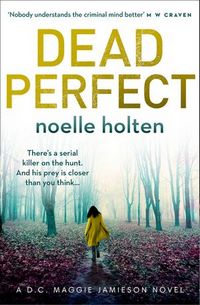
bullet Dead Perfect by Noelle Holton—another book 3 I can’t wait to dive into.
bullet Kitty’s Mix-Tape by Carrie Vaughn—a great collection of short stories in the Kitty Norville-verse. I had a little to say about it back when I did that regularly.

Lastly I’d like to say hi and extend a warm welcome toThe Spellbound Librarian, Mina @Stacked, and ravensprouts who followed the blog this week. Don’t be a stranger, and use that comment box, would you?

Venators: Legends Rise (Audiobook) by Devri Walls, Daniel Thomas May: The Venators Have Their Hands Full in this Packed Adventure

For the last part of my Tour Stop, I’ll be talking about the Audiobook version of Venators: Legends Rise, as I have with the first two books in the series this year as part of The Write Reads Tours for them. And, as before, I largely copied what I said about the paperback-but tweaked things a little bit and added something about the narration (just in case you read the earlier post and think I’m repeating myself, you’re right, I absolutely am.)


Legends Rise

Venators: Legends Rise

by Devri Walls, Daniel Thomas May (Narrator)
Series: Venators, #3

Unabridged Audiobook, 18 hrs. 9 min.
Tantor Audio, 2020

Read: October 6-9, 2020
Grab a copy from your local indie bookstore!

“How long ago were we here?” she asked.

“I don’t know. Two weeks? Three? I’ve lost track of the days.”

She sat with that for a moment, trying to reconcile the timeline. “Why does it seem like forever ago?”

“Because it was.” Grey rested his forearm across the saddle horn, face pensive. “We’ve lived a lifetime since then.”

I’m glad to see that I’m not the only one who couldn’t believe how little time went by in the first two books.

What’s Legends Rise About?

At the end of Promises Forged, Tate is taken by the Fae and is sent back to the Gladiator games that he’d escaped from not that long ago. He’s doing this so he can get his wife and son to safety (and maybe see them for the first time in years, too).

But our heroes, Grey and Rune, need to get him free from thatpreferably without letting the Council know he’s been taken. So while they’ve been assigned to go rein in the remnants of the Werewolf pack they let get away in Magic Unleashed, and maybe bring another pack to order, they’ll use that assignment as cover for their real concern.

A neat trick if they can pull it off.

Along the way they get to train, they get to experience more of their new world and abilities than they’ve been able to thus far in their crash-course introduction to the ways and mores of Eon. The training, obviously, is really important if we’re to continue to believe their success in combat. A couple of lucky breaks like we’ve seen so far is one thing, but at a certain point, we need to see some competence out of them.

Venator Development

This book sees Rune and Grey getting to know each other betterGrey shares a lot with Rune and she responds as she ought. They both settle into roles as partners, their individual personalities helping them support the other in weak spots while working together.

Grey continues to be the character I’m most invested in and most interested in for this serieshis strengthscompassion, empathy, concernare seen even more clearly than before. He’s quite the contrast to the Venators of legend on Eon. Yes, it gets him into trouble. Yes, he has flaws and stumbles into being someone I really don’t like during the final battle of the book. But assuming he can keep himself from that in the future, and stay true to who he is, he’ll be the hero that Eon needs and will keep me reading the series.

Rune on the other hand…I change my mind about her repeatedly in each book. As a character, Walls keeps developing her along the lines we’ve seen so farparticularly in Promises Forged, building on those traits and showing herself, her trainers, Grey, and the Council what she’s capable of. I’m not crazy about some of her choices and actionsbut I think most of them will be good for the series, and one of them will lead to melodrama and problems (and will be a source of delight for most readers).

I’m glad that I’m not all-in with either characterit makes them feel more real, more grounded that I like aspects of them, and am troubled by others. It also points to the tendency Walls showed in Promises Forged for the Venator powers to shape the thinking and attitudes of the individuals and how much these two need to strive against that. Give me a complex protagonist any day.

Some Skin in the Game

Zio makes a move herea lot sooner than I expected her to, too. It’s not a big attack, it’s more of a surgical strike, just to sound out her opponents and test out her pet Venator. If more happens and she gains some big advantages while she’s at it, all the better.

She’s craftier than I gave her credit for and I think that this was a smart move by Wallsboth for the progression of the story and for the development of Zio as a character. It’d be easy to write her off as a Skeletor-type, just a power-hungry magic-user trying to cause chaos and destruction for her own gain. And, yes, I still think she is thatbut I think there’s more to her than that.

A Bonanza of Backstory

Two of the most important figures for our Venators are Beltran and Verida. We know there was some sort of romance in their past, and that it didn’t well at all. We get that filled in a little bit, which is good. But more than that we get looks into their pastswhat brought them to the point they were at when we first encountered them.

We see a lot of what motivates Verida in her desire to train these Venators, to aid the resistance. We get some insight into what drove the wedge between her and her father. We even meet some of her family and can see that she could very easily have been a different kind of person. I walked away from this book liking Verida a lot more than I did before.

We see more of Beltran’s story, too, and come a lot closer to understanding himI think Walls is keeping a surprise or two about him up her sleeve, though. I’d like to think that someone with his centuries of experience would possess a little more maturity, and not be quite so emotionally adolescentbut maybe for his species you don’t hit that for a few more hundred years.

An Almost Entirely Frivolous Sartoirial Question

Does anyone on Eon wear loose clothing? Every time* someone’s pants are described, the words “tight” and “leather” appear. From just about everything I’ve ever read, leather pants are really uncomfortable. Maybe society would be better, people would be more prone to get along if Rune introduced them to denim? Could Grey get people to wear chinos and with the improved blood flow help cooler heads to prevail?

* No, I haven’t done a search on e-copies of this to verify this, there may be exceptions—roll with the hyperbole here.

At the very least, from this point can’t we just take it as read that every time Walls says “pants” that she means “tight” and “leather” and trim 1-2% of her word count?

Is this petty? Sure. But Walls spends enough time talking about clothing that questions arise. If I were so inclined (and someone would have to pay me to be), I think I could do an entire post on the clothing of Eon.

My Big, Not-Frivolous Question

What are people (the Council/Zio/Resistance) fighting for? Control of Eon? Power? Sure, that’s obvious. But Power for the sake of Power is dull and hard to care about as a reader. If you look at Panem, you can get an idea why people are fighting for it (on either side), ditto for The Society in Red Rising, Luna from The Lunar Chronicles—you get the idea.

What are the ideals of this society? What has the Council betrayed? Are they pretending to uphold something from the past that they’ve actually abandoned and that the resistance are trying to restore? (see the Rebel Alliance in Star Wars)—while at the same time, Zio has another idea entirely?

What’s the point of this Resistance movement? What are their goals? When are we going to finally meet them?

Where’s the joy in this world? Where’s The Good (or just good)?

We spend some time in a city and in a village here—they couldn’t be less similar, so we’re getting two separate looks at Eon society. The city puts Mos Eisley to shame, and the poor village is just…well, poor. Even before tragedy hits (thanks to the Venators, in a way) this village, I don’t see that there’s a lot going for it or its citizens.

I guess that I was just struck by the question, “why?” Why are these factions working so hard to gain control of this place? I don’t doubt for a moment that Walls has a handle on this question—she knows it. I just hope she clues her readers in soon.

How was the narration??

Daniel Thomas May really impressed me this time. He balances the action and emotion well, keeping the focus on the characters. Walls gave him a large cast of characters to work with in these pages and he handles it well. I feel like I should have more to say, but I really don’t. He does a good job and kept me entertained.

So, what did I think about Legends Rise?

This was by far the most ambitious of the Venators novels (I know it’s only book 3, but I read two versions of book 1, so I’m counting this as the fourth), and I applaud Walls for taking a big swing here. I wonder if she maybe tried to do too much, though. I’ve tossed this idea around a lot over the last few weeks and I’m undecided. I’m hoping that listening to the audiobook for the upcoming Book Tour will help me decide.

We got some good backstory on pivotal characters, we see a lot more of the world and have a better understanding of parts of it, the Earthlings get a chance to acclimate a bit more to Eon and spend some time with citizens. And, yeah, there are some pretty great action sequences. There’s even some romance for those who want that sort of thing—and I’m certain almost every reader of this series will be very pleased by it (I actually don’t mind a romantic subplot, I just can’t stand this one and think it’s a bad move for everyone involved).

Regardless of what the stars may suggest—I enjoyed this book and recommend it. Furthermore, I like this series, I’m really curious about what’s going to happen next and I think anyone who reads them will, too.


3.5 Stars

My thanks to The Write Reads for the invitation to participate in this tour and the materials they provided.

EXCERPT from Venators: Legends Rise by Devri Walls


For the next part of my stop on The Write Reads Blog Tour for Venators: Legends Rise by Devri Walls, I have this nifty excerpt provided by the author. Enjoy!


from Venators: Legends Rise by Devri Walls (available from Brown Books Publishing Group)

After such a long day and a full meal, Rune and Grey were both yawning. Beltran was feeling the exhaustion himself, but he needed Rune to be at least partially awake for the conversation he had planned for tonight. He got to his feet and brushed off his pants.

     Verida eyed him from across the fire. “Where are you going?”

     “I tried to explain before we left but was rudely interrupted.” He crossed to the packs and started pulling out shimmering pieces of fabric, grinning at Verida’s silent glower. “I have gifts from Arwin.”

     Grey leaned back on the palms of his hands, craning his neck. “What is that?”

     “Your tents.” Beltran strolled behind Grey, separating one from the rest and dropping it in his lap.

     “This is my tent?” The fabric whispered through his hand, sliding away like liquid silk and pooling in his lap. Grey’s face fell. “We’re going to freeze.”

     “On the contrary.” Beltran handed one each to Verida and Rune. “Tonight you will be warm, comfortable, and most importantly, unnoticeable to anything passing through the area.”

     Given his ability to shift, Beltran didn’t actually need a tent—he could sleep just about anywhere in a well insulated form. But he was endlessly fascinated with Arwin’s abilities and wasn’t about to pass up the opportunity to experience the wonder of magic by volunteering to turn himself into a bear.

     Besides, with Rune so nearby, he was particularly attached to this human form, and would rather not be covered in fur in the middle of the night. Although, considering the cold shoulder she’d given him since the incident, an unexpected tent visit from Rune was probably a touch optimistic.

     “How are we supposed to use this?” Grey asked. “Are there stakes or ropes or—”

     “Grey.” Beltran tsked. “We’re dealing with a wizard. Arwin would be offended. Observe.” He flipped the fabric outward, the way Arwin had shown him. It snapped in the air. He gave it a sharp yank, pulled it over his head, and released. The fabric fluttered down around him and caught, puckering as if suspended by something, and then draping to the ground.

     At first Beltran could only see the brightness of the fabric, but then a translucent circle appeared at the center point above his head. The effect grew larger, flowing down like rain water until it appeared that he was surrounded by nothing at all. The only tell-tale sign of the tent’s presence was the occasional shimmer that rippled across the inside.

     Beltran saw everything, but to an outsider, he’d just become invisible.

    Verida looked at the fabric in her hand like it was a viper, and Beltran stifled a laugh. She hated magic. The lack of control, understanding, and predictability ate her alive.

   “Go ahead,” he called. “Try it.”

   Rune’s nose crinkled. “Not very soundproof, is it?”

   “Intentional. I asked Arwin to leave it that way.”

   “Why would you have done that?” Verida took out her nervousness on the first thing she found, gesturing wildly. The delicate fabric clenched in her hand, flipped, and rolled. “What if Grey snores?”

   Grey’s head snapped up, his brow furrowed. “But…I don’t.”

  Well, Verida darling, that way, when you try to kill me in the middle of night, Rune and Grey will hear my screams and come running to my aid.” He poked his head between the flaps and would’ve winked—he wanted to—but the look on Verida’s face said she’d probably remove the offending eyeball.

   “I’ll speak to Arwin about the glaring flaw in his design when we return.”

   “I’ll let him know to expect you.”

  “Hey,” Rune said. “Why didn’t we use something like this instead of nixie bubbles?”

  Verida whirled, shouting, and shaking the tent in the air. “Because I didn’t know Arwin could do this, and we weren’t walking around the council house openly asking for help to disobey the council!”

   “All right, all right,” she held up a hand. “Sorry I asked.”

  Don’t worry Rune, it’s not you,” Beltran said, stepping out from the tent. “Verida hates magic.”

  “Stop. Talking!”

  He shoved his hands in his pockets, and shrugged at Rune as if to say…see?

  “I don’t think I’m understanding,” Grey interjected. “Did you really choose not to soundproof this because you were afraid she’d murder you in your sleep?”

  “Would you blame me?” Beltran mimicked Verida’s earlier flailing and grinned. “But no. Arwin said I could have invisibility or sound protection. I chose what I thought would be the most beneficial.”

   “It would’ve been nice to know you brought tents before I packed the regular ones,” Verida snapped. “We could’ve done without the additional weight.”

   “We’ll need both. Arwin gave me a very long speech loaded with copious amounts of wizardly terms that I wasn’t completely familiar with, but basically meant that fabric doesn’t hold magic as well as earth. He infused a stone—and proceeded to instruct me no less than fourteen times not to lose it—and then connected the rock to the fabric via another spell. It was very convoluted but amounted to the simple fact that the fabric can only hold so many hours of magic before needing to be placed back in the pack with the stone. These should last until morning, but once the tents are depleted, they’ll need to rest for at least a full day before they can be used again.”

   He smiled at Verida, who asked, “then why are we using them tonight?”

    “I thought it best to test out their capabilities.”

“I see.” She pulled in a tight breath through her nose. “And hope we don’t need them tomorrow? Excellent.”

    “A better option than pulling them out when we desperately need them and discovering they don’t work.”

   “Hold up,” Rune interrupted. “Let me get this straight. Our tents have to… charge?”

   Beltran looked at her blankly. “I have no idea what that means.”

   Rune rolled her lips in.

   Grey burst into laughter, holding up the tent like he’d found the prize of an era. “Rune! Look! It’s the new upgraded iTent! The Bluetooth connection is non-existent but it’s new, improved, and doubles as a shelter.”

   “But,” she snickered. “How’s the screen size?”

   The two Venators continued, laughing hysterically, and dropping one joke after the next.

   “I have absolutely no idea what they’re talking about,” he said dryly, glancing to Verida. “And I’m really starting to dislike how often that’s happening.”

   “Agreed.”

   At least they agreed on something.


Read the rest in Venators: Legends Rise by Devri Walls.

Thanks to Devri Walls for this excerpt! Also, thanks to The Write Reads for the invitation to participate in this tour and the materials they provided.

Page 329 of 625

Powered by WordPress & Theme by Anders Norén