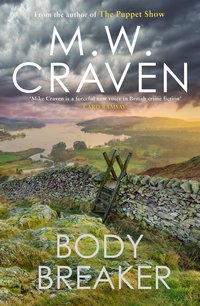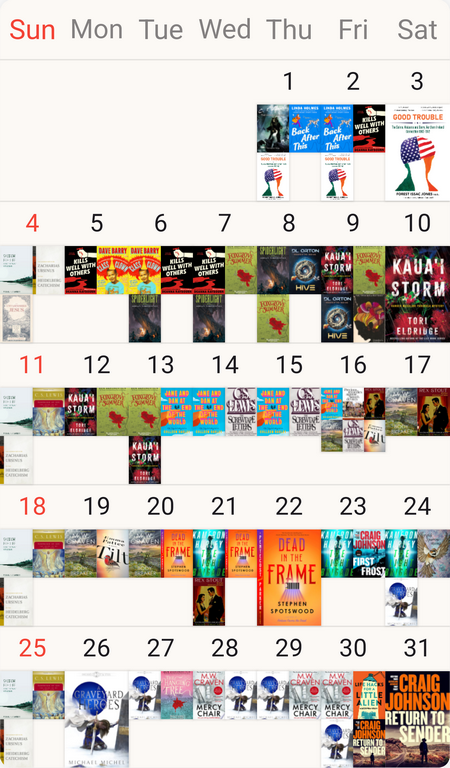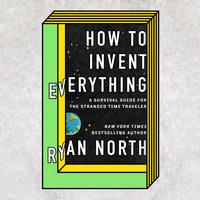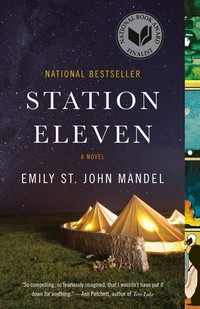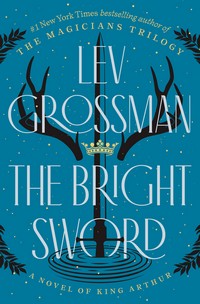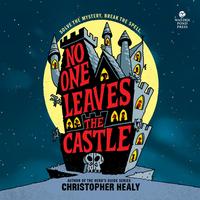
The Best of the Best from 12 Years of The Irresponsible Reader (12 YEARS?!?!?!?!?!?!)

The Best of the Best from 12 Years of The Irresponsible Reader
It was 12 years ago today that I first posted something to The Irresponsible Reader. That’s one of those numbers that both doesn’t large enough, and is entirely too large. I can’t believe that I’ve stuck with it that long (I can’t remember if I said this or not here, but I didn’t tell my wife about it for weeks, until I was sure I was going to stick with it for a while)—even more improbable is that you, reader, are here. Whether you’ve been around for a few weeks or some years—my mind is boggled by it. Thanks for that, truly.

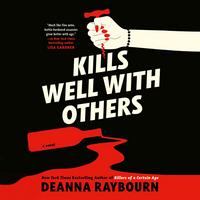
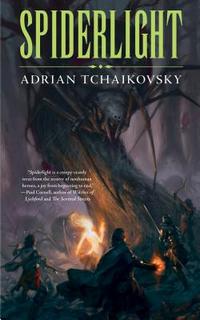
Now, after being shocked at people doing something like “The Best 15 Books I’ve Read in the last 10 years”—how could you possibly choose? It was stuck in the back of my head—and as I was trying to come up something to do for today, that idea resurfaced. But there’s no way I could come up with something that definitive. However, in most Januarys, I posted a list or five of my favorite books of the year (I was surprised to see how many years I didn’t do this). And now, for the first time, I’ve combined them all into one MEGA-LIST

So MEGA that I truly don’t have a count. So MEGA I had to put a “Read More” link in it so it didn’t bog down the main page.  Also so large, that I’m doing annoying things like overusing all caps and the word “mega.”

It is a very strange list—authors that have no business next to each other, strange genre leaps, and a couple of books I’d largely forgotten about. Still, these are books that I’ve shouted about before and that I really want to draw your attention to—go read some of these!

This is definitely a work in progress. I’m going to refine this list a bit in the future (not changing any selections—although I might add some from the year or two I didn’t post a “best of”/”favorite” list), just refining it—making it look better, polish some of the comments, and that kind of thing. My goal is to have this in a format I like by the 15th Anniversary—assuming anyone’s actually still reading me then.

A

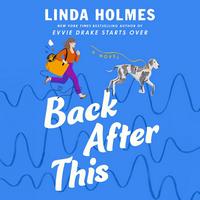
Amongst Our WeaponsAmongst Our Weapons

by Ben Aaronovitch

My original post
Any installment in this series is a strong contender for a favorite of the year even before I open it, and this one is a great example of why. While telling a pretty strong story, Aaronovitch expands this world and the reader’s understanding of it, a whole new magic system, and seemingly introduces the next major story arc for the series. We get to see almost every major (and more than a few minor) characters, too. For a fan, this book was a heckuva treat.


False ValueFalse Value

by Ben Aaronovitch

My original post
After wrapping up the overarching plotline from books 1-7, what do you do for book 8? Something completely different. If you were to draw a Venn diagram with circles for Charles Babbage/Ada Lovelace, Artificial General Intelligence, and Wizardry—the overlap is where you’d False Value. Who wants more? The mix of contemporary cutting-edge technologies and Newtonian magic is just fantastic.

Throw in more Hitchhiker’s Guide to the Galaxy references than is healthy and you’ve got yourself a winner.


Lies SleepingLies Sleeping

by Ben Aaronovitch

My original post
I’ve read all the comics (at least collected in paperback), listened to all the audiobooks, read the books at least once . . . I’m a Rivers of London/Peter Grant fan. Period. Which means two things—1. I’m in the bag already for this series and 2. When I say that this is the best of the bunch, I know what I’m talking about. Aaronovitch writes fantastic Urban Fantasy and this is his best yet. The series has been building to this for a while, and I honestly don’t know what to expect next. Great fight/action scenes, some genuine laughs, some solid emotional moments . . . this has it all. Everything you’ve come to expect and more.


Chain-Gang All-StarsChain-Gang All-Stars

by Nana Kwame Adjei-Brenyah

My original post
If there’s a book I’ve recommended more frequently this year, I can’t think of it. I’ve also bought more copies of it to give away than any other. At the core, this is a satire and critique of the American culture–particularly as it relates to sports, mass entertainment, and (most importantly) the carceral system. Pitting convicted felons against each other in gladiatorial fights-to-death, selling merch featuring them, turning them into Reality TV personalities between bouts…Adjei-Brenyah holds up the worst of the US to look at.

It’s a book about death—violent death at the hands of violent people who only hope to go on so they can kill again—However, in a serious way the book is really about life. It’s a celebration of life, a call to protect it, a call to see it for what it is. It’s a reminder that “where life is precious, life is precious.” It’s impossible to read this without being moved–perhaps to action. But it’s also a visceral and exciting read that can entertain you without forcing you to think deeply about what it wants you to.


Go Back to Where You Came FromGo Back to Where You Came From: And Other Helpful Recommendations on How to Become American

by Wajahat Ali

My original post
I’m just going to remix some of what I said originally, this book was a great mix of memoir, social commentary, and satire—with a little sprinkling of a more general humor thrown in. The way he shifted between the genres was fairly seamless and quite effective—his own story (and that of his parents) were good illustrations of the societal ills he wanted to point to. Ali’s story is the kind that Americans love to tell and hear about success—even if his telling points to many of the flaws in our society. Through grit, determination, perseverance, and endurance, Ali pushes through all sorts of cultural, societal, legal, medical, and circumstantial challenges to arrive where he is. Because he believes in what we can be as a people, based on our (incredibly inconsistently applied and demonstrated) ideals and aspirations. It’s the kind of story we need to see, hear, and read more of.


Amari and the Night BrothersAmari and the Night Brothers

by B. B. Alston

My original post
I’m a tiny bit worried that recency bias got this one on the list. But, I’m not going to lose sleep over it.

This is a delightful story about a young girl from the “wrong” part of Atlanta being recruited by her missing/presumed dead brother into a Hogwarts/MIB mashup, overcoming odds, making friends, saving the day by doing all the sorts of things that young teen protagonists have to do (with a little support from the grown-ups who are supposed to be stopping her), but mostly through grit. The book is written with a sense of joy and hope, while never losing sight of what Amari has to overcome in terms of her own circumstances as well as the specific villainy.

Also, and I can’t stress this enough, there’s a weredragon. What more do you need?


Cover Reveal: Banners of Wrath by Michael Michel

I’m very pleased today to welcome the Cover Reveal for the third entry in Michael Michel’s Dreams of Dust and Steel— series: Banners of Wrath to this patch o’ cyberspace this morning! It’ll be the third book in an expected five-book series and will be on sale in January 2026. Which is too far away for my taste, but it’ll be worth the wait (based on the quality of the first two in the series). Before the main event, let’s learn a little bit about the book and author, shall we? It’ll just take a moment, and then we can all take a peak at the cover.

About the Book

This is where I’d normally give a blurb for the book, and I don’t have one for this. So let’s set the stage with this description of the first book, The Price of Power:

Loss. Redemption. Grief. And the dangers of belief.

Prince Barodane could not hold back the darkness. Not even in himself. He laid an innocent city in its grave and then died a hero.

In his absence, war whispers across the land.

Power-hungry Highborn dispatch spies and assassins to the shadows as they maneuver for the throne, while an even greater threat rises in the South. Monsters and cultists flock to the banners of a mad prophet determined to control reality…and then shatter it.

Destiny stalks three to the brink of oblivion.

A dead prince that isn’t actually dead. Barodane buried his shameful past in a stupor of drugs, drink, and crime, and now, he’d rather watch the world fall apart than wear a crown again.

An orphan with hero’s blood who is forced to make a harrowing choice: betray her country or sacrifice her first love.

And a powerful seer who has no choice at all–her grandson must die.

If any of them fails to pay the price…

The cost will be the world’s complete annihilation.

Let that simmer for 1,000+ pages. While it simmers throw in some intrigue, rebellion, murder, scheming, some tragic deaths, some less-than-tragic deaths, a lot of bravery and acts of courage, and more “What the–?!?” moments than you’d expect. And that’s basically where you’ll be at the beginning of Banners of Wrath.

I have a few choice excerpts to share with you from the book.

“Tyrants oft arrive in velvet slippers, but they always leave in iron-shod boots.”

In the face of death, gratitude filled him. There were worse places to be. Worse people to be with at the end. It wasn’t ideal, but so few things in life were. For as long as he could remember, he’d been trying to force that truth to be different, stepping over a passing moment of joy to hunt the great mythical beast of happiness.

And missing it. Missing it every time.

Regret, he decided, was the greatest curse of man and the cruelest gift of the gods.

and lest you worry that this will be thinking, musing, and political maxims…

Slicing and scraping and the press of bodies. The air so suddenly oppressive with cloying heat and bitter breath. Axes rising scarlet then snapping down. She caught a handle on her weapon—hacked off the fingers holding it. Elbowed another man in the teeth. Split another Scoth’s nose with her hatchet blade, his eyes crossing to center on what killed him as sundered brain juice poured from his nostrils.

Anthera yanked her weapon free as an ax swung down at her—overextended. The handle bashed her collarbone and drove her to her knees. Before he could manage a second blow, the man’s face burst in a shower of crimson.

Grunting exertion and the blur of motion. Death devolving into a carousal. So much movement and color, if it were a painting, she’d think it sublime.
But it wasn’t that. It was a machine of threshing sharp edges, and if she stopped for a second, it would chew her to pieces.

About the Author

Anca AntociMichael MichelMichel lives in Bend, Oregon with the love of his life and their two children. When he isn’t obsessively writing, editing, or doing publishing work, he can be found exercising, coaching leaders in the corporate world, and dancing his butt off at amazing festivals like Burning Man. His favorite shows are Dark, The Wire, Arcane, and Norsemen. He loves nature and deep conversations. Few things bring him more joy than a couple of hours playing table tennis.

Website ~ Twitter ~ Instagram ~ Goodreads

and now…

The Cover

cover for Banners of Wrath by Michael Michel
cover wrap for Banners of Wrath by Michael Michel
Don’t those look great? The Cover Art is by Christopher Cant and the design is by Rachel St. Clair. They did a bang-up job if you ask me. Look at the series thus far:
covers for Dreams of Dust and Steel 1-3 by Michael Michel
I can’t wait to see wait Cant and St. Clair have in store for the next two.
Irresponsible Reader Pilcrow Icon

Killer Conversations with Rex Stout and John McAleer: Ridiculously Fun (and insightful, too, if you’re into that sort of thing)

Cover of Killer Conversations with Rex Stout and John McAleerKiller Conversations

with Rex Stout, John McAleer

DETAILS:
Publisher: Andrew McAleer
Publication Date: March 30, 2025
Format: eBook
Length: 91 pgs.
Read Date: May 21, 2025

How Does the Publisher Describe Killer Conversations?

Rex Stout: Killer Conversations (formerly Royal Decree) is a must read for aficionados of detective fiction. Here Edgar winner John McAleer shares some of his most memorable conversations with Nero Wolfe creator Rex Stout. Featuring an updated Introduction by crime fiction icon William G. Tapply and an Afterword by Grand Master Edward D. Hoch, Killer Conversations is an essential collectors’ volume. These in-person discussions with Stout were compiled to inform and gratify, in Stout’s own words, the millions of Rex Stout fans who would be putting these questions to him as if he were alive answering his mail from Wolfe’s West 35th Street Brownstone. Hailed by CBS as the “American Conan Doyle,” in Killer Conversations Stout discusses, among other things, his writingcraft, the Wolfe mysteries, plotting methods, characterization, the modern detective story, his service aboard President Teddy Roosevelt’s yacht, and offers his appraisal of crime fiction icons such as—Agatha Christie, Georges Simenon, G. K. Chesterton, and more. Killer Conversations will keep mystery fans glued to their chair till midnight chimes the hour. And why not, isn’t that what a Stout mystery does?

(the only problem with this blurb is the bit about midnight chimes the hour…the only way most people would be reading this until midnight is if they started at 11:20p.m.)

Some of My Favorite Responses

This is a great collection of pithy takes on everything outlined above—and Stout was great at them. I have to share some to give you a little taste (and because I just had to share some). I won’t cite all the best ones here—but I’m tempted to.

McAleer: When you were writing for the pulps, between nineteen twelve and nineteen seventeen, did you see yourself as a hack writer or as an aspiring young writer on his way to the top?

Stout: I have never regarded myself as this or that. I have been too busy being myself to bother about regarding myself.

McAleer: I know a writer who, before beginning a book, separates a ream of paper into unequal piles of twenty-three, thirty-seven, forty, twenty-seven, and so forth, because he knows in advance how many pages will go into each chapter. How does that strike you?

Stout: He isn’t a writer, he’s a puzzle fiend. Revolting.

McAleer: You’ve said you’d rather have written Alice in Wonderland than any other book in English written in the last century. Why?

Stout: I could write pages about it and they would have to be well written. While giving glorious entertainment in the form of playful nonsense, it does the best job in the English language of exposing our greatest fallacy, that man is a rational animal. A couple of instances out of many: The Queen’s “Off with their heads” shows that the greatest danger of unlimited power is not that it can act by malice but that it can act on whim. The shifting of places at the Mad Hatter’s tea party shows that if all of the members of a group wish to make a change it is not true that they should change in unison in the same direction. To do this right would take hours.

McAleer: Yet you hold Hammett in high regard?

Stout: Certainly. He was better than Chandler, though to read the critics you wouldn’t think so. In fact, The Glass Key is better than anything Hemingway ever wrote. . .Hemingway never grew out of adolescence. His scope and depth stayed shallow because he had no idea what women are for.

McAleer: Inspector Cramer is called “Fergus” Cramer in Where There’s a Will. Later, in The Silent Speaker, his initials are given as “L. T. C.”. How do you explain this discrepancy?

Stout: No significance. Laziness. I didn’t bother to check whether he already had a first name. Of course all discrepancies in the Nero Wolfe stories are Archie Goodwin’s fault.

So, what did I think about Killer Conversations?

Some of the answers Stout gives are deep. Several are flip. He doesn’t always use more than one word (really, would a little elaboration of killed him?) All are just fun to read.

This is a Lay’s Potato Chip kind of read—I bet you can’t read just on Question and Answer. You have to keep going—you might be able to make yourself stop because of something, but you won’t want to. It’s just too much fun to keep going.

Also? This is clearly going to be re-readable (I almost slipped into a re-read while putting this post together).

Ultimately, the question you want to ask yourself about this book is this: Do I want to learn more about Rex Stout? If the answer is yes, you’re going to have a blast with this. If you don’t—why have you read this far? You might appreciate someone talking about obscure authors and classics of the mystery genre. But you’re probably not going to be that engaged.

Me? I loved it. The two cover life, death, love, reputation, writing, Stout’s characters, his career, a little bit about people in his life, and more. If this book was three times as long—I’d say the same thing.

Irresponsible Reader Pilcrow Icon

WWW Wednesday—May 28, 2025

The end of May looms, and I’m behinder than ever. What a problem–too many good things to read. Here’s what’s going in my eyes and ears this week.

WWW Wednesdays Logo

This meme was formerly hosted by MizB at A Daily Rhythm and revived on Taking on a World of Words—and shown to me by Aurore-Anne-Chehoke at Diary-of-a-black-city-girl.

The Three Ws are:
What are you currently reading?
What did you recently finish reading?
What do you think you’ll read next?

Seems easy enough, right? Let’s take a peek at this week’s answers:

What are you currently reading?

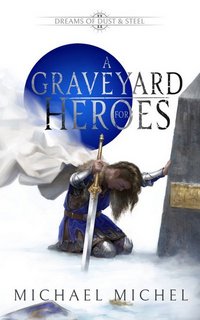
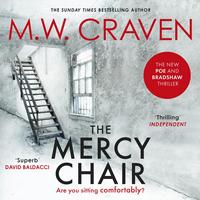
Cover of A Graveyard For Heroes by Michael Michel Cover of The Mercy Chair by M.W. Craven
A Graveyard For Heroes
by Michael Michel
The Mercy Chair
by M.W. Craven, read by John Banks

Michel has my head spinning with this installment–fantasy readers need to get ready for this release next month (volume 1 is available if you haven’t done it yet). With a little less than 300 pages left to go in this, I’m already salivating over book 3’s release in January (the cover reveal for it will be here tomorrow, btw)

I’ve barely scratched the surface of the Poe audiobook, but already I’m hooked–and picking up on things I missed the first time through. As expected, really. I think this is one I’m going to have to read/listen to at least 5 times to get most of Craven’s moves.

What did you recently finish reading?

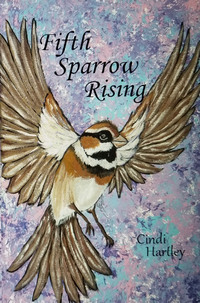
Cover of Fifth Sparrow Rising by Cindi Hartley Cover of The Hanging Tree by Ben Aaronovitch
Fifth Sparrow Rising
by Cindi Hartley
The Hanging Tree
by Ben Aaronovitch, read by Kobna Holdbrook-Smith

Hartley’s book is a sweet dose of encouragement–I’ll try to say more soon.

I had forgotten, somehow, almost all of this Rivers of London book after the first couple of chapters. Shame on me. There’s so much to enjoy.

What do you think you’ll read next?

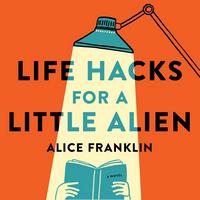
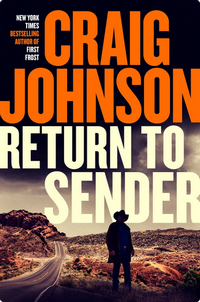
Cover of Return to Sender by Craig Johnson Cover of Life Hacks for a Little Alien by Alice Franklin
Return to Sender
by Craig Johnson
Life Hacks for a Little Alien
by Alice Franklin, read by Sally Phillips

I keep letting new releases sit on my shelf while I’m working on other things this year–I’m putting my foot down now and will read the new Longmire book this week. That’s for many reasons–primarily because there are too many people in Real Life that are going to be annoyed if I can’t talk to them about it soon.

I’ve got nothing to say about Life Hacks… really, was browsing and it looked cute.

How are you closing this month?

Top Ten Tuesday: Top Ten Animal Companions (who are we kidding? Dogs)

Top Ten Tuesday Logo
The topic for this week’s Top Ten Tuesdays is Animal Companions. I’d started a pretty diverse list, including Hedwig the snowy owl and Beast from the Jane Yellowrock books, but then I started to list dogs—and, as frequent readers know, I quickly got carried away and I had to eliminate any non-canine entry. I had to leave too many off as it was, maybe I’ll do a sequel list one day. And who knows? Maybe I can think of 10 non-dogs worth mentioning, too.

But for now…

Top Ten Animal Companions (read: dogs)
In alphabetical order:

1 Chet the Jet
Chet the Jet
from the Chet and Bernie mysteries by Spencer Quinn

Chet is half of the duo that makes up Little Investigations–he’s the brawn, while Bernie Little is the brains. And the driver. And he does anything that requires an opposable thumb or talking. Chet? He’s about the action.

Chet also handles the books’ narration—his loyalty to and love of Bernie shines forth throughout. Slim-Jims, riding shotgun in Bernie’s series of Porsche convertibles, and Charlie (Bernie’s son) are close. His love of taking down perps comes in a third, but boy, does he relish it. You just can’t not grin while reading Chet’s narration.

image taken from the cover of Heart of Barkness and the Tor/Forge blog post Behind the Scenes: The Making of the Heart of Barkness Cover!
2 Dog
Dog
from the Walt Longmire series by Craig Johnson

The rather unimaginatively named Dog is Walt Longmire’s steadfast companion. He’s a mix of several breeds—and possibly a small bear. He’s there when Walt (or someone else) needs him. Dog can intimidate a suspect—or someone antagonistic to Walt—very easily. Even more than the rather intimidating Henry Standing Bear.

Dog’s also good at comforting and giving affection to humans, too. Like all good dogs. While no one on this list is going to pass up any form of treat—Dog’s stomach seems to be made of sterner stuff than most.

image taken from a recent Facebook post by Johnson, the dog is his old dog, Max, the inspiration for Dog. He apparently plays a big role in the new Walt Longmire book that releases today!
3 Edgar
Edgar
from the Washington Poe series by M.W. Craven

Edgar is Washington Poe’s Springer Spaniel, who serves as comic relief and as an alarm system for Poe. He probably wouldn’t be much of a defender, if it came down to it (no offense, buddy), but he’s alert for anyone approaching Poe’s rather remote croft. Not that Poe needs a defender, he just needs the alert to get ready for trouble.

Edgar doesn’t get enough screen time, but he lights up the page when he does.

image taken from The English Springer Spaniel Field Trial Association's website.
4 Maggie
Chet the Jet
from the Scott and Maggie books by Robert Crais

Maggie served three tours in Iraq and Afghanistan before an IED in Afghanistan killed her handler. This left Maggie with severe PTSD and a second chance at work with the LAPD. It didn’t seem to be going too well for her until she was assigned a partner who was also suffering PTSD after the death of his partner. The two understood each other and helped each other start to recover.

Since then, the pair has made a great team for the LAPD—and even helped out Elvis Cole once. Crais has his hands full with Cole and Pike, but I’d jump on a new Scott and Maggie book so fast that it’d make my head spin.

image taken from the website for Project Paws Alive (a group you might considering donating to)
5 Mouse
Mouse
from The Dresden Files by Jim Butcher

Mouse is a good dog. Everybody says so. He’s Harry Dresden’s friend, and he’s the protector of Harry’s daughter, Maggie. He’s a Temple Dog, a Foo dog—who pretty much chose to be with Dresden and trained himself by watching Harry.

He’s without doubt the most powerful dog (physically, mentally, and magically) on this list—he will also melt your heart (all of them will, though). If I were ranking these in order of preference, he’d probably be at the top of the list (by a nose). Since his first appearance in Blood Rites, his presence in the series grows and grows (as does audience appreciation for him)—he’s even handled the narration for a couple of short stories.

image taken from Tyler Walpole's page—a print that will soon be hanging on my wall.
6 Nobby
Nobby
from In the Best Families by Rex Stout

I can’t say much about Nobby. I don’t care that the book was published 75 years ago—I’m not going to spoil anything. I can say that he belonged to Mrs. Barry Rackham, after having been given to her by her cousin, Calvin Leeds, who raises and trains them. I can also say that he’s pivotal to the plot.

image taken from the Doberman Pinscher Club of America's website
7 Oberon
Oberon
from the Iron Druid Chronicles, Ink & Sigil series, and Oberon’s Meaty Mysteries

Oberon is the Irish Wolfhound companion of The Iron Druid (aka Siodhachan O Suileabhain, Atticus O’Sullivan, Connor Molloy). He’s a lover of sausage (and other meat products), a lover of bathtime (especially if it involves stories being told to him), and a fierce fighter. He’s solved some murder mysteries, met gods and goddesses, along with all sorts of supernatural animals. He also knows English—and can communicate telepathically in it to Atticus and anyone else Atticus links him to. With the assistance of Atticus, he’s written “The Book of Five Meats” (a cookbook) and “The Dead Flea Scrolls” (the foundational text of Poochism, a religion for dogs).

Oberon, unlike all of these critters, loves popular culture, movies, and whatnot. He’s funny (even when unintentional) and has a huge heart. There might be times when you’re not so sure how interested you are in his human companions and friends in the books he appears in—but you’ll stick with them for Oberon. I really wish I’d given myself more time to write this post; Oberon deserves a few more paragraphs.

image taken from Kevin Hearne's blog post Oberon's Holiday Special
8 Pearl
Pearl
from the Spenser books by Robert B. Parker (and Ace Atkins and Mike Lupica)

Named and modeled after Parker’s own German Shorthaired Pointer, Pearl came into the series rather late, but quickly became an ever-present fixture (until her death, and replacement with another German Shorthaired Pointer named Pearl, and then another). Spenser and Susan shared custody of the dog.

Pearl has rarely had an impact on the plot of a novel (although she did contribute in Pastime pretty significantly). Largely, she functions as something for Susan and Spenser to talk about rather than their relationship or Spenser’s case—but she still brightens up any scene she’s in.

image taken from the an author photo on the ofifical Robert B. Parker website
9 Rose
Rose
from the Charlie & Rose Investigate series by Jo Perry

Rose is a very different kind of character than the rest of the dogs on this list in several ways—most definitively in that she’s dead. After a hard life of neglect and abuse, Rose has become a ghostly companion to another ghost. Charlie spends his life looking into murders and other crimes associated with people who were important to him while he was living (including his own murder), and Rose silently accompanies him.

At the same time, Rose both communicates in a way that dog owners will appreciate and will take action on her own to push the investigation forward/direct Charlie. It’s hard to explain.

Nevertheless, when I think of notable dog characters, there’s no way that Rose doesn’t leap to mind.

image taken from a cover of Dead is Better
10 Tara
Tara
from the Andy Carpenter series and Lessons from Tara by David Rosenfelt

In real life, Tara was the dog that changed Rosenfelt’s life and inspired him and his wife to begin their shelter for elderly dogs.

In fiction, Tara is Andy Carpenter’s dog and constant companion—the one he turns to for advice and to talk through his cases with. Granted, she doesn’t give him good (or any) feedback, but she can always be trusted to listen to him on their walks. She also inspired Andy to open his dog rescue.

image taken from the cover of Lessons from Tara by David Rosenfelt.

MUSIC MONDAY: “Don’t Panic” by Clerics of Ohm

The Irresponsible Reader's Music Monday logo

Music Monday's originated at The Tattooed Book Geek's fantastic blog and has shown up hither, thither, and yon since then.

Don't Panic

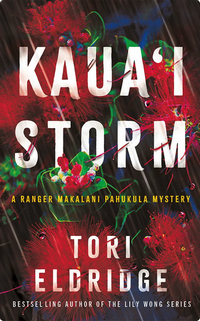
Kaua’i Storm by Tori Eldridge: A Thriller + So Much More

Cover of Kaua'i Storm by Tori EldridgeKaua’i Storm

by Tori Eldridge

DETAILS:
Series: Ranger Makalani Pahukula Mystery, #1
Publisher: Thomas & Mercer
Publication Date: May 20, 2025
Format: eARC
Length: 445 pg.
Read Date: May 9-13, 2025
Buy from Bookshop.org Support Indie Bookstores

What’s Kaua’i Storm About?

Makalani Pahukula, who has been serving Crater Lake in Oregon as a Park Ranger for years, comes home to Kaua‘i for the first time in even longer for the celebration of her grandmother’s eightieth birthday—which is going to be a family reunion/community gathering on a pretty grand scale.

When Makalani touches down, it’s not quite the joyous occasion she’d anticipated. Yes, her parents and grandmother are delighted to see her—as is an old friend (I’m going to forget to mention this later, but we needed more of her). But two of Makalani’s cousins are missing—one is in high school and the other is a former college football star.

Their disappearances are being written off as some foolish lark—although it gets the family squabbling—each set of parents blaming the other and lashing out. Makalani doesn’t think either explanation fits the cousins she remembers (while making allowances for people changing) and she wonders why the police haven’t been involved.* After a dead body is found in the nearby forest, Makalani starts to meddle and takes it upon herself to find her cousins—over the objections of just about everyone.

* And once the police eventually do get involved, you start to understand the families’ decision not to involve them, and they certainly make things worse.

A Question of Genre

First—I’m not sure that’s the best heading for this section, but it’s close enough. Secondly—I really don’t care about this when it comes to what I think about the book, but this kept running through the back of my mind.

This is billed as a mystery, and it kind of is one—I think more of a thriller than a mystery, but we’re getting into the weeds there. And Eldridge has a reputation as a thriller writer (thrillers that I greatly appreciate, I should add).

But her thrillers also involve a good layer of something else—descriptions of a minority culture (in the U.S.), trauma, business/family culture (in other nations), and so on. She pulls that off here, too. In more than one way.

We also get a fair amount of multi-generational family drama, a little social commentary, some local history, and more.

So much so that the thriller/mystery aspect of the book takes a back-seat to everything else for significant lengths of time. It doesn’t hurt the novel as a whole—in fact, it makes it richer. There are family members and friends that I can hand this to that I can’t hand a lot of the mysteries/thrillers that I read (and I wonder if a couple of the thriller-junkies in my life would put up with this).

Culture and Language

Speaking of that kind of thing…

I am as haole as you can get—so much so that I can’t pronounce it correctly or even consistently, despite having heard it in various formats for years. So, a lot of this book took work for me to understand—work I enjoyed and was glad to do, mind you. But there was effort.

Eldridge littered this book with ‘ōlelo Hawai‘i words and phrases and Pidgin English like crazy. All—or close enough to round up—can be understood in context with a little effort. But for those who want to be sure of their understanding, there’s a great glossary in the back—including words and phrases—both Pidgin English and ‘ōlelo Hawai‘i—as well as phrases, geographical references, historical and mythological figures. I didn’t consult it (foolishly?) until I was done—that’s just how I roll. It confirmed a lot for me and fleshed some things out, too. I do recommend consulting it in the moment.

I knew about, and chose to ignore, the Glossary. Until I finished, I didn’t realize Eldridge also gave us a handy dramatis personae, which would’ve been a great aid in keeping track of the relationships between this large cast. Do you need to read/consult it? No. But I certainly wouldn’t discourage it.

But even beyond the supplemental material, this book is about as close as you can get to a documentary on contemporary Kaua‘i as you can get while keeping this a work of fiction. There’s a lot about homesteading—and the ethnic makeups required for it (past and present), those who live off the grid in public lands, and…I’m not going to be able to provide an exhaustive list, so I’m going to just stop.

I’ll summarize by saying that this is a rich and informative look at the non-touristy part of Hawai‘i (or at least one island’s version of it). Added to the tiered cake of characters and missing-person plot, this icing is just great.

So, what did I think about Kaua’i Storm?

This is going up late—I realize that, and apologize to Eldridge and Thomas & Mercer for that—but I had a hard time resisting talking about all that this novel attempts (mostly successfully) to accomplish.

It’s a very crowded book, I have to say, Eldridge puts a lot into these 445 pages. There’s a storyline involving an overly-zealous student of culture that generally felt out of place, and maybe was. It couldn’t be told at another time, as much as I wondered if it could’ve been used in a sequel instead of this book, because it seemed of tertiary importance and interest compared to everything else going on. It was also entertaining and satisfying—so I’m glad she included it.

Still, it reads like a thriller of 250-300 pages, which is a neat trick.

I didn’t enjoy this as much as a Lily Wong book (it shouldn’t feel like one, and doesn’t), and I enjoyed it in different ways than her previous work (as I should’ve). Having established this world and the characters—it’d be very easy for Eldridge to lighten up on the background material in the future, and keep the focus on the plot and characters while exploring the world (and keeping up the commentary)—making it a leaner and more focused thriller/mystery. I hope that’s where Eldridge takes it—but I won’t complain too much if she doesn’t.

How did I make it this far without talking about Makalani? This is her book more than anything. We’ve all read/watched versions of her story—the kid who couldn’t wait to leave home who comes back discovering how much she missed it, how much she’s changed—and how everyone she left behind remembers her. This version of this template is very successful. She reconnects with her past, her heritage, her family—and she sees how who she is today comes from all of that. Plus, she’s a pretty kick-ass ranger. It’s going to be fun to watch her at work. She’s tough, resourceful, and determined—but not in your typical action-hero way, more like the kind of person you could meet in real life. Likely in the line of duty as a ranger. Her connection with the land—in Hawai‘i or Oregon—and sense of duty is going to get a lot of readers to respond positively to her.

This is a solid thriller, but it’s so much more. And it’ll definitely leave you hungry for a sequel. I strongly recommend it.

Disclaimer: I received this eARC from Thomas & Mercer via NetGalley in exchange for this post which contains my honest opinion—thanks to both for this.


4 Stars

This post contains an affiliate link. If you purchase from it, I will get a small commission at no additional cost to you. As always, the opinions expressed are my own.

Irresponsible Reader Pilcrow Icon

Towel Day ’25 (observed): Some of my favorite Adams lines . . .

(updated 5/26/25)

A Blue towel with the words Towel Day on it

There’s a great temptation here for me to go crazy and use so many quotations that I’d get in copyright trouble. I’ll refrain from that and just list some of his best lines . . .*

* The fact that this list keeps expanding from year to year says something about my position on flirting with temptation.

The Hitchhiker's Guide to the Galaxy

The Hitchhiker’s Guide to the Galaxy

Time is an illusion. Lunchtime doubly so.

This must be Thursday. . . I never could get the hang of Thursdays.

“You’d better be prepared for the jump into hyperspace. It’s unpleasantly like being drunk.”

“What’s so unpleasant about being drunk?”

“You ask a glass of water.”

(I’m not sure why, but this has always made me chuckle, if not actually laugh out loud. It’s just never not funny. It’s possibly the line that made me a fan of Adams)

He had found a Nutri-Matic machine which had provided him with a plastic cup filled with a liquid that was almost, but not quite, entirely unlike tea.

“You know,” said Arthur, “it’s at times like this, when I’m trapped in a Vogon airlock with a man from Betelgeuse, and about to die of asphyxiation in deep space that I really wish I’d listened to what my mother told me when I was young.”

“Why, what did she tell you?”
“I don’t know, I didn’t listen.

In those days spirits were brave, the stakes were high, men were real men, women were real women and small furry creatures from Alpha Centauri were real small furry creatures from Alpha Centuari. And all dared to brave unknown terrors, to do mighty deeds, to boldly split infinitives that no man had split before . . .

“Look,” said Arthur, “would it save you a lot of time if I just gave up and went mad now?”

The ships hung in the sky in much the same way that bricks don’t.

For a moment, nothing happened. Then, after a second or so, nothing continued to happen.

<

blockquote>“Space,” [The Guide] says, “is big. Really big. You just won’t believe how vastly, hugely, mindbogglingly big it is. I mean, you may think it’s a long way down the road to the chemist’s, but that’s just peanuts to space, listen…”

He attacked everything in life with a mix of extraordinary genius and naive incompetence, and it was often difficult to tell which was which.

He felt that his whole life was some kind of dream and he sometimes wondered whose it was and whether they were enjoying it.


The Restaurant at the End of the Universe

The Restaurant at the End of the Universe

It is a curious fact, and one to which no one knows quite how much importance to attach, that something like 85 percent of all known worlds in the Galaxy, be they primitive or highly advanced, have invented a drink called jynnan tonnyx, or gee-N-N-T’Nix, or jinond-o-nicks, or any one of a thousand or more variations on the same phonetic theme. The drinks themselves are not the same, and vary between the Sivolvian “chinanto/mnigs” which is ordinary water served at slightly above room temperature, and the Gagrakackan “tzjin-anthony-ks” which kills cows at a hundred paces; and in fact the one common factor between all of them, beyond the fact that the names sound the same, is that they were all invented and named before the worlds concerned made contact with any other worlds.

Reality is frequently inaccurate.

Life is wasted on the living.


Life, The Universe and Everything

Life, the Universe, and Everything

The Hitchhiker’s Guide to the Galaxy has this to say on the subject of flying. There is an art, it says, or rather, a knack to flying. The knack lies in learning how to throw yourself at the ground and miss.

(It goes on for quite a while after this—and I love every bit of it.)

“One of the interesting things about space,” Arthur heard Slartibartfast saying . . . “is how dull it is?”

“Dull?” . . .

“Yes,” said Slartibartfast, “staggeringly dull. Bewilderingly so. You see, there’s so much of it and so little in it.”


So Long, and Thanks For All The Fish

So Long, and Thanks for All the Fish

Of course, one never has the slightest notion what size or shape different species are going to turn out to be, but if you were to take the findings of the latest Mid-Galactic Census report as any kind of accurate guide to statistical averages you would probably guess that the craft would hold about six people, and you would be right. You’d probably guessed that anyway. The Census report, like most such surveys, had cost an awful lot of money and told nobody anything they didn’t already know—except that every single person in the Galaxy had 2.4 legs and owned a hyena. Since this was clearly not true the whole thing eventually had to be scrapped.

Here was something that Ford felt he could speak about with authority. “Life,” he said, “is like a grapefruit.”

“Er, how so?”

“Well, it’s sort of orangy-yellow and dimpled on the outside, wet and squidgy in the middle. It’s got pips inside, too. Oh, and some people have half a one for breakfast.”

“Is there anyone else out there I can talk to?”

Arthur had a swordfish steak and said it made him angry. He grabbed a passing waitress by the arm and berated her. “Why’s this fish so bloody good?” he demanded, angrily.

“Please excuse my friend,” said Fenchurch to the startled waitress. “I think he’s having a nice day at last.”


Mostly Harmless

Mostly Harmless

A common mistake that people make when trying to design something completely foolproof is to underestimate the ingenuity of complete fools.

Fall, though, is the worst. Few things are worse than fall in New York. Some of the things that live in the lower intestines of rats would disagree, but most of the things that live in the lower intestines of rats are highly disagreeable anyways, so their opinion can and should be discounted.


Dirk Gently's Holistic Detective Agency

Dirk Gently’s Holistic Detective Agency

There is no point in using the word ‘impossible’ to describe something that has clearly happened.

If it looks like a duck, and quacks like a duck, we have at least to consider the possibility that we have a small aquatic bird of the family anatidae on our hands.

Let’s think the unthinkable, let’s do the undoable. Let us prepare to grapple with the ineffable itself, and see if we may not eff it after all.

(I’ve often been tempted to get a tattoo of this)


The Long Dark Tea-Time of the Soul

The Long Dark Tea-Time of the Soul

There are some people you like immediately, some whom you think you might learn to like in the fullness of time, and some that you simply want to push away from you with a sharp stick.

It can hardly be a coincidence that no language on earth has ever produced the expression, ‘As pretty as an airport.’

The impossible often has a kind of integrity to it which the merely improbable lacks.

She stared at them with the worried frown of a drunk trying to work out why the door is dancing.

It was his subconscious which told him this—that infuriating part of a person’s brain which never responds to interrogation, merely gives little meaningful nudges and then sits humming quietly to itself, saying nothing.

As she lay beneath a pile of rubble, in pain, darkness, and choking dust, trying to find sensation in her limbs, she was at least relieved to be able to think that she hadn’t merely been imagining that this was a bad day. So thinking, she passed out.


The Last Chance to See

The Last Chance to See

“So what do we do if we get bitten by something deadly?” I asked.

He looked at me as if I were stupid. “You die, of course. That’s what deadly means.”

I’ve never understood all this fuss people make about the dawn. I’ve seen a few and they’re never as good as the photographs, which have the additional advantage of being things you can look at when you’re in the right frame of mind, which is usually around lunchtime.

I have the instinctive reaction of a Western man when confronted with sublimely incomprehensible. I grab my camera and start to photograph it.

Human beings, who are almost unique in having the ability to learn from the experience of others, are also remarkable for their apparent disinclination to do so.

The aye-aye is a nocturnal lemur. It is a very strange-looking creature that seems to have been assembled from bits of other animals. It looks a little like a large cat with a bat’s ears, a beaver’s teeth, a tail like a large ostrich feather, a middle finger like a long dead twig and enormous eyes that seem to peer past you into a totally different world which exists just over your left shoulder.

One of the characteristics that laymen find most odd about zoologists is their insatiable enthusiasm for animal droppings. I can understand, of course, that the droppings yield a great deal of information about the habits and diets of the animals concerned, but nothing quite explains the sheer glee that the actual objects seem to inspire.

I mean, animals may not be intelligent, but they’re not as stupid as a lot of human beings.


The Salmon of Doubt

The Salmon of Doubt: Hitchhiking the Galaxy One Last Time

We are stuck with technology when what we really want is just stuff that works.

I’ve come up with a set of rules that describe our reactions to technologies:
1. Anything that is in the world when you’re born is normal and ordinary and is just a natural part of the way the world works.
2. Anything that’s invented between when you’re fifteen and thirty-five is new and exciting and revolutionary and you can probably get a career in it.
3. Anything invented after you’re thirty-five is against the natural order of things.


And a couple of lines I’ve seen in assorted places, articles, books, and whatnot

I love deadlines. I love the whooshing noise they make as they go by.

A learning experience is one of those things that says, “You know that thing you just did? Don’t do that.”

The fact is, I don’t know where my ideas come from. Nor does any writer. The only real answer is to drink way too much coffee and buy yourself a desk that doesn’t collapse when you beat your head against it.

Solutions nearly always come from the direction you least expect, which means there’s no point trying to look in that direction because it won’t be coming from there.

Don't Panic

Towel Day ’25 (observed): Scattered Thoughts about Reading The Hitchhiker’s Guide to the Galaxy Trilogy

(updated and revised this 5/26/25)

A Blue towel with the words Towel Day on it
I’ve been trying for a few years now to come up with a tribute to Adams. This isn’t quite what I had in mind, but it’s a start. In my mind, this is a work in progress (a multiple-year project), but I’m posting it anyway. Next year’s version will be better—or at least more complete.


Some time in 7th or 8th grade (I believe), I was at a friend’s house and his brother let us try his copy of the text-based Hitchhiker’s Guide game, and we were no good at it at all. Really, it was embarrassing. However, his brother had a copy of the first novel, and we all figured that the novel held the keys we needed for success with the game (alas, it did not help us one whit). My friends all decided that I’d be the one to read the book and come back in a few days as an expert.

I fell in love with the book almost instantly, and I quickly forgot about the game. Adams’ irreverent style rocked my world—could people actually get away with saying some of these things? His skewed take on the world, his style, his humor…and a depressed robot, too! It was truly love at first read. As I recall, I started re-reading it as soon as I finished it—the only time in my life I’ve done that sort of thing.

Also, I finally understood that song, “Marvin, I Love You,” that I kept hearing on Dr. Demento.

It was one of those experiences that, looking back, I can say shaped my reading and thinking for the rest of my life (make of that what you will). Were my life the subject of a Doctor Who or Legends of Tomorrow episode, it’d be one of those immutable fixed points. I got my hands on the next three books as quickly as I could (the idea of a four-volume trilogy was one of the funniest ideas I’d encountered up to that point), and devoured them. I do know that I didn’t understand all of the humor, several of the references shot past me at the speed of light, and I couldn’t appreciate everything that was being satirized. But what I did understand, I thought was brilliant. Not only did I find it funny, the series taught me about comedy—how to construct a joke, how to twist it in ways a reader wouldn’t always expect, and when not to twist but to go for the obviously funny idea. The trilogy also helped me to learn to see the absurdity in life.

Years later, when the final volume (by Adams) was released, I’d already cemented what I thought about the books from these frequent re-reads. I’m not sure that Mostly Harmless changed things much (except for making me think for the first time that maybe I didn’t want him to write more in this series). His non-Hitchhiker’s work illustrated that he was capable of making you see things in a new light–either with a smile or a sense of regret—even when he wasn’t writing the trilogy, even when he was writing non-fiction. It was never the setting or the genre—it was Adams.

But here on Towel Day—as with most of the time I talk about Adams (but I need to change that), it comes down to where I started—the Trilogy. I read the books (particularly the first) so many times that I can quote significant portions of them, and frequently do so without noticing that I’m doing that. I have (at this time) two literary-inspired tattoos, one of which is the planet logo* featured on the original US covers. In essence, I’m saying that Adams and the series that made him famous have had an outsized influence on my life and are probably my biggest enduring fandom. If carrying around a (massively useful) piece of cloth for a day in some small way honors his memory? Sure, I’m in.

So, Happy Towel Day, You Hoopy Froods.

* I didn’t know it at the time, but Adams didn’t like that guy. Whoops.

Don't Panic

Towel Day ’25 (observed): Do You Know Where Your Towel Is?

(updated and revised this 5/26/25)

A Blue towel with the words Towel Day on it

The Hitchhiker’s Guide to the Galaxy has a few things to say on the subject of towels.

A towel, it says, is about the most massively useful thing an interstellar hitchhiker can have. Partly it has great practical value. You can wrap it around you for warmth as you bound across the cold moons of Jaglan Beta; you can lie on it on the brilliant marble-sanded beaches of Santraginus V, inhaling the heady sea vapors; you can sleep under it beneath the stars which shine so redly on the desert world of Kakrafoon; use it to sail a miniraft down the slow heavy River Moth; wet it for use in hand-to-hand-combat; wrap it round your head to ward off noxious fumes or avoid the gaze of the Ravenous Bugblatter Beast of Traal (such a mind-bogglingly stupid animal, it assumes that if you can’t see it, it can’t see you); you can wave your towel in emergencies as a distress signal, and of course dry yourself off with it if it still seems to be clean enough.

More importantly, a towel has immense psychological value. For some reason, if a strag (strag: non-hitch hiker) discovers that a hitch hiker has his towel with him, he will automatically assume that he is also in possession of a toothbrush, face flannel, soap, tin of biscuits, flask, compass, map, ball of string, gnat spray, wet weather gear, space suit etc., etc. Furthermore, the strag will then happily lend the hitch hiker any of these or a dozen other items that the hitch hiker might accidentally have “lost”. What the strag will think is that any man who can hitch the length and breadth of the galaxy, rough it, slum it, struggle against terrible odds, win through, and still knows where his towel is is clearly a man to be reckoned with.

Hence a phrase that has passed into hitchhiking slang, as in “Hey, you sass that hoopy Ford Prefect? There’s a frood who really knows where his towel is.” (Sass: know, be aware of, meet, have sex with; hoopy: really together guy; frood: really amazingly together guy.)

Towel Day was yesterday, May 25, but I’m going to observe it today (in the tradition of all Weekend Holidays in the U.S>0

Towel Day, for the few who don’t know, is the annual celebration of Douglas Adams’ life and work. It was first held two weeks after his death, fans were to carry a towel with them for the day to use as a talking point to encourage those who have never read HHGTTG to do so, or to just converse with someone about Adams. Adams is one of that handful of authors that I can’t imagine I’d be the same without having encountered/read/re-read/re-re-re-re-read, and so I do my best to pay a little tribute to him each year, even if it’s just carrying around a towel.

In commemoration of this date, here’s most of what I’ve written about Adams. I’ve struggled to come up with new material to share for Towel Day over the years, mostly sticking with updating and revising existing posts. And, this year is no exception A few years back, I did a re-read of all of Adams’ (completed) fiction. For reasons beyond my ken (or recollection), I didn’t get around to blogging about the Dirk Gently books, but I did do the Hitchhiker’s Trilogy:
bullet The Hitchhiker’s Guide to the Galaxy
bullet The Restaurant at the End of the Universe
bullet Life, The Universe and Everything
bullet So Long, and Thanks For All The Fish
bullet Mostly Harmless
bullet I had a thing or two to say about the 40th Anniversary of The Hitchhiker’s Guide to the Galaxy
bullet I took a look at the 42nd Anniversary Illustrated Edition of The Hitchhiker’s Guide to the Galaxy

I should also point to a posts I wrote about Douglas Adams’ London by Yvette Keller and 42: The Wildly Improbable Ideas of Douglas Adams edited by Kevin Jon Davies—both are great ways of filling out one’s understanding of Adams and his work. I have to mention the one book that Adams/Hitchhiker’s aficionado needs to read is Don’t Panic by Neil Gaiman, David K. Dickson and MJ Simpson.

If you’re more in the mood for a podcast, I’d suggest The Waterstones Podcast How We Made: The Hitchhiker’s Guide to the Galaxy—I’ve listened to several podcast episodes about this book, and generally roll my eyes at them. But this is just fantastic. Were it available, I’d listen to a Peter Jackson-length version of the episode.

I’ve only been able to get one of my sons into Adams, he’s the taller, thinner one in the picture from a few several years ago.
(although I did get he and his younger siblings to use their towels to make themselves safe from the Ravenous Bugblatter Beast of Traal a few years earlier:)

You really need to check out this comic from Sheldon Comics—part of the Anatomy of Authors series: The Anatomy of Douglas Adams.

Lit in a Nutshell gives this quick explanation of The Hitchiiker’s Guide:

TowelDay.org is the best collection of resources on the day. One of my favorite posts there is this pretty cool video, shot on the ISS by astronaut Samantha Cristoforetti.

Even better—here’s an appearance by Douglas Adams himself from the old Letterman show—I’m so glad someone preserved this:

Love the anecdote (Also, I want this tie.)

Don't Panic

Page 43 of 602

Powered by WordPress & Theme by Anders Norén