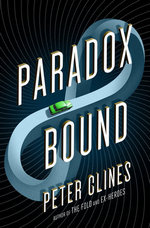
Paradox Bound by Peter Clines

Paradox BoundParadox Bound

by Peter Clines

Hardcover, 369 pg.
Crown, 2017

Read: November 8 – 9, 2017


Sanders is a typical American small-town, so typical, I felt like I grew up there. Thankfully, unlike Sanders, the place I grew up in has moved on, Sanders has not. There’s still a Video Rental Store there, for crying out loud. Those who work with computers, or want to have much of an idea about contemporary pop culture, have to move away — or at least commute.

Eli Teague is just such a person — but before he commutes to his IT job from his apartment above the Video Rental Store, he grows up in a pretty typical way. With one exception: twice while growing up, he encounters a young woman dressed incredibly oddly while working on an old Ford Model A, which seems to be fueled by water. They spend a little time conversing each time — typically leaving Eli more confused than he’d have thought possible — then she drives off and disappears. This instills in him an obsession with historic cars, that spills over into American History in general.

As an adult, he encounters her again and inadvertently puts her in danger. He abandons everything he knows in an effort to save her from this and ends up joining her on a hunt through history. Harry (this mysterious woman) travels through history — she’s not a time traveler, she’ll be quick to point out, she travels in history. She’s not crazy about bringing Eli along with her, but literally has almost no choice in the matter.

Harry . . . she’s a great character, and I would’ve appreciated a lot more focus on her, and getting to see much more of her past. Maybe not getting to actually helps, because it makes the reader more curious about her — but I’d still have rather had a better look at her life before Eli became a regular part of it. She’s tough, loyal, cunning — but no superhero, just a strong person.

Short of spoiling the whole thing, this is one of those I have to be very vague about the details, but then why should you read it? I’ll leave it to you to read the book to get more about the hunt they’re on, but I’ll just say that it’s a great idea, a wonderful concept. The other hunters (and allies) we meet are interesting, but man, I’d love more of all of them — there’s some great historical cameos, too. Naturally, we need an opposing force to make things more tense — and we have one of the creepiest around in these pages. They’re not evil, not corrupt, not anything but driven (and with a skewed way of looking at things).

There’s a nostalgic, hopeful tone throughout — despite the sharp critique of the status quo in America. There’s an evident wit behind the words, too, but this isn’t what you’d call a funny novel. I do think that Clines and I would differ a bit on some of the ways he interprets parts of the national character/psyche, but I can appreciate what he was going for (that’s one of those things that’ll make more sense after you read the book). The characters — whether we like them or not — are very human, very relatable, and pretty sympathetic. Clines has again taken some tropes, concepts, ideas that we’re familiar with — some we know very well, but skewing them just a hair and resulting in something we haven’t seen before.

I expected this to be a pretty good read after The Fold a couple of years ago, but I wasn’t expecting something as fresh feeling as this (but with the skill of someone who’s written a few novels). There’s a dash of civics lessons, some cultural commentary, and a lot of hope — things you don’t always get in light(ish) SF. I “bought into” this book much more quickly than I did The Fold, I’m not sure if that’s because Clines earned my trust in the previous book, or if there’s something more accessible about this one — either way, it’s something for the “Plus” column.

Give this one a whirl — you’ll be glad you did.

2017 Library Love Challenge

—–

4 Stars

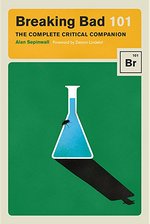
Breaking Bad 101 by Alan Sepinwall

Breaking Bad 101Breaking Bad 101: The Complete Critical Companion

by Alan Sepinwall

Hardcover, 281 pg.
Abrams Press, 2017

Read: November 15, 2017


So, I’m pretty sure I don’t need to explain what Breaking Bad is, do I? One of the greatest TV dramas of all time, Mr. Chips turns into Scarface, et cetera, et cetera. This book is a collection of brief essays about each episode, a critical companion, fan resource, and all around handy book.

Most of these chapters started out as episode recaps on Alan Sepinwall’s blog generally posted a day or two after the original airing — a couple were written just for this book because he didn’t recap each episode in season 1 and a later episode deserved a better recap (for reasons Sepinwall explains) — although the original version is included as well. He does take out some of he speculation and whatnot from the original posts to provide a nice, clean look at each episode. It’s more than just an episode recap, he looks at the arcs, the acting, writing, cinematography; in just a few pages he gets to the heart of the episode and helps you see all things that Gilligan et. al. were doing. The real gems are the footnotes and sidebar pieces that dive in a little further to the nitty-gritty details — why was this decision made, where’d actor X come from, and so on. Seriously, fantastic footnotes.

This is a quick and wonderful read if you do it start to finish — or you can just thumb through, stopping at random points to read up on an episode. The book works both ways. I imagine the best way to read it is with a remote in one hand, a DVD/Blu-Ray disc in your player and the book in the other hand. Watch an episode, read the chapter — skipping around in the episode to re-examine shots/sequences, etc. I haven’t done that, but man, I’m tempted to.

A few other things worthy of note: Damon Lindelof wrote a very amusing foreword; Max Dalton provided 12 black and white illustrations that are just perfect; the dust-jacket design is great; but more than that, the actual cover is even better; and lastly, the whole book is so well-designed and pleasing to the eye, it’s nice just to look at without reading. I don’t mention those kind of things enough, and need to get better about it.

Now, I’ve been a fan of Sepinwall’s recaps/writing since the days he posted about NYPD Blue on Usenet. I also read all these posts from Season 2 on within a few hours of their original posting (I didn’t start watching until after the season 1 finale — so I read all of those in a couple of days, still pretty fresh). So I was pretty predisposed to enjoy this book, but I’m pretty sure I would have anyway.

Sepinwall is a fan of Breaking Bad, most of the stories, most of the performances, etc. But he’s a thoughtful fan, not a mindless one — he is critical of some things, this isn’t just someone being a fanboy. I heartily encourage fans of the show to pick this up — or people who’ve been meaning to watch it, but haven’t (this book would be a much better companion than your friends who will be patronizing about you finally getting around to watching it).

—–

4 Stars

Things aren’t looking good

for my backup location:

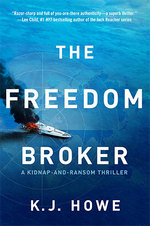
The Freedom Broker by K. J. Howe

The Freedom BrokerThe Freedom Broker

by K. J. Howe
Series: Thea Paris, #1

Hardcover, 361 pg.
Quercus, 2017

Read: November 6 – 7, 2017


Thea Paris is such a cool character — she’s like a combination of Charlie Fox and Vanessa Michael Munroe — but with a very different load of emotional baggage. When she was a child, her brother was sleeping in her room to help her make it through a hard night when he was kidnapped. She’s spent the following decades convinced that the only reason he was kidnapped is that the abductors thought he was Thea. Yes, he eventually made it back safely, but he was (obviously) never the same, and Thea used that to fuel her mission in life. Her father is the tycooniest of American Oil Tycoons, and she could’ve easily rested on his laurels, or followed in the family business.

But no, Thea is in private security, with an emphasis on K&R (Kidnapping and Ransom). She’s the one negotiating with kidnappers/their representatives to get a ransom paid and the victim returned to his home/family/nation/company. When that doesn’t work, Thea will lead the extraction team doing what they can to bring the victim home. She’s one of the best around. She is not perfect, and we see that right off, but she gets the job done well.

Which is good, because on the verge of one of the biggest deals of his life, Thea’s father, Christos, is kidnapped. It’s up to her, some allies and friends to bring him home. There are several candidates for the kidnapper’s identity — there’s the Chinese oil corporations competing with her father, there are representatives of the African nation that kidnapped her brother all those years ago, there’s an arms dealer that has rumors flying, too. In the midst of this hunt, secrets will be revealed (many Thea will regret learning), and virtually everyone in her life will end up divulging something dark and hidden.

One more thing about Thea — she’s diabetic. Which is an interesting character trait — I can’t think of another action hero with something like that: a real physical condition that requires maintenance, but is manageable and will not ordinarily cause anything more than inconvenience. Sure, it does give us what I’m calling Chekhov’s glucose monitor (not a spoiler, that’s what I put in my notes when it was first mentioned).

I liked the other characters, too — but it’s hard to talk about most of them without getting too heavily into the plot. So let’s just say there are a few people I’m really looking forward to seeing again, and a few that I enjoyed enough this time out, but am very glad they’re in no position to show up again. Just about everyone has a believable motivation — no matter what side of the law and/or morality they fall on — which is just great.

Howe’s prose is tight and the pacing is great. There’s a few times that Thea has the same thought over and over — which is probably realistic, but it seems repetitive (and possibly not trusting the reader enough) to read her conclude “X may have done Y” in a chapter, and then “Y may have been done by X” in the next. But it’s nothing to get too worked up over, I didn’t think. Howe does seem to have an “everything including the kitchen sink” approach to story telling — the number of things that go wrong during Thea’s search for her father, and the number of opponents and obstacles in her way is seemingly endless. I love it, every time you think she’s on a roll and things are going to start going her way, a problem that the reader should’ve seen coming (but almost never does) shows up to derail things again. Sure, eventually, that comes to an end — the book doesn’t go on forever — but not until Howe’s good and ready for it to end. She’s probably getting a new kitchen constructed to hurl at Thea in the next book.

There’s a great mix of action and intrigue, putting clues together and smacking heads, emotional growth and uncovering the past. Like it’s protagonist, The Freedom Broker isn’t perfect, but it gets the job done well. Sign me up for the upcoming sequel, too.

—–

3.5 Stars

2017 Library Love Challenge

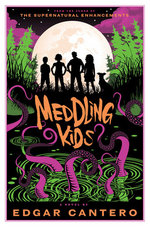
Meddling Kids (Audiobook) by Edgar Cantero, Kyla Garcia

Meddling KidsMeddling Kids

by Edgar Cantero, Kyla Garcia (Narrator)

Unabridged Audiobook, 12 hrs and 53 mins
Random House Audio, 2017

Read: October 27 – November 11. 2017


Going to be brief here, this is one of those books that’s all about the concept, if it’s up your alley, you’ll like the book.

The Blyton Summer Detective Club was a group of kids who met up on school breaks in a small Oregon town from their various homes/schools who solved mysteries Ă  la the Hardy Boys, Three Investigators, Nancy Drew and most importantly, Scooby and the gang. Time after time, they’d uncover the solution to a mystery plaguing the community — usually resulting in finding a man in a rubber suit, explaining everything. Meddling Kids asks the question: what if the solution to the mystery wasn’t (just) a man in a rubber suit? What if the kids stumbled on to something actually mystical, real monsters, etc.?

Following their last case, the gang’s lives went in separate ways — mostly downhill. Incarceration, mental health treatment, academic struggles, addiction, and so on. Finally, more than a decade later, the Detective Club reunites to return to the scene of their last triumph to see just what they missed (or suppressed).

Cantero’s execution of this premise was spot-on, early on he left the satirical component/pop culture commentary behind (pretty much), and just told the story, using that as a foundation. Really not much more to say then that.

Kyla Garcia’s narration was pretty good. A time or two I had a little trouble following it, but I think that’s reflective of the text — which doesn’t seem like the easiest to translate to this medium (not a slight on Cantero or Garcia’s talents there). On the whole, though, she did a fine job bringing this book to life and I’d enjoy hearing another book she narrated.

An entertaining celebration of the genre, a rousing adventure, and a pretty creepy story. Pretty much all you could ask for.

—–

3 Stars

Saturday Miscellany – 11/11/17

Odds ‘n ends over the week about books and reading that caught my eye. You’ve probably seen some/most/all of them, but just in case:

    This Week’s New Releases I’m Excited About and/or You’ll Probably See Here Soon:

  • The Midnight Line by Lee Child — In the wake of Make Me (which still gives me the heebie jeebies), Reacher goes on a hunt to indulge his curiosity (and we all know he’s going to end up doing a lot more)
  • Communication Failure by Joe Zieja — this funny follow-up to last year’s Mechanical Failure will get you laughing at the brink of Interplanetary War. It’s great, as I discussed here.
  • Bonfire by Krysten Ritter — Ritter’s first novel is a suspenseful, solid read. Here’s what I wrote about it last month.
  • The Wrong Stars by Tim Pratt — another comedic space opera this week — sounds like a pretty good trend.
  • A Spoonful of Magic by Irene Radford — it’s a cute premise, and different enough from the typical UF that it looks worth a try.
  • A Burdizzo For A Prince by Mark Rapacz — J. J.’s a hitman on the run from his former colleagues after he dishes out some justice on the boss’ son. Look up the word “Burdizzo” and you’ll get an idea why J. J. probably doesn’t want anyone to catch him.
  • Heather, the Totality by Matthew Weiner — It’s Matthew Weiner, what else needs to be said?


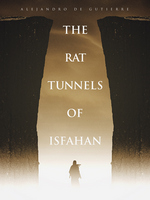
The Rat Tunnels of Isfahan by Alejandro de Gutierre

The Rat Tunnels of IsfahanThe Rat Tunnels of Isfahan

by Alejandro de Gutierre
Series: Scorpions and Silk, #1

Kindle Edition, 75 pg.
De Gutierre, 2017

Read: November 9, 2017

I wasn’t crazy. Not like most of the tortured souls I shared the prison with. Some wandered, muttering and bumping into walls. Some sat unmoving for hours, staring into a darkness even the desert sun couldn’t penetrate, their eyes seeing but not seeing, ears hearing but not listening. And a sad few would break; they would weep, and rock, and cry out. These were the broken: shuffling from place to place, barely eating, barely drinking, numbly watching the flesh drip from their bones, oblivious to the blood slowing in their veins.

We know very little about the central (practically only) character in this novella — he’s a prisoner, somewhere in Persia, sometime long ago. That’s about all that we know — for that matter, that’s about all he knows. His imprisonment has left him so psychologically shattered that he can’t remember anything about himself. He has children somewhere, he thinks.

We see him struggle to survive, struggle to get free, struggle to convince himself that he’s not crazy, and return to/rebuild his life. I don’t know much about him, but I like him, and I want to see the best for him.

I don’t think it’s possible for the word “visceral” to show up more in my notes for a 75-page novella than it did here. You feel this story as much as you read it — the almost-alien creepiness of a scorpion, the isolation, the fear, the rat chewing on a toe — all of it, de Gutierre puts you right in the mind of his amnesiac (his having no name helps there).

Until this story spools out a bit more — maybe volume 2, maybe until the end — I’m not sure what I think of the story, plot or characters. I can tell you that I want to know these characters better, I want to find out what happens to them, but that’s as far as I can say on that front. So, I’m left with de Guiterre’s writing — which is just what this story needs. He knows what he’s doing, and has got me hooked, even if I don’t have a clue about what he’s doing. This atmospheric, visceral read will leave you demanding more, soon.

Disclaimer: I received a copy of this novella from the author in exchange for my honest opinion — and I’m glad he gave it to me, because I wouldn’t have heard of it otherwise.

—–

3 Stars

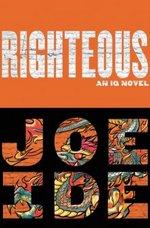
Righteous by Joe Ide

RighteousRighteous

by Joe Ide
Series: IQ, #2

Hardcover, 326 pg.
Mulholland Books, 2017

Read: November 3 – 4, 2017


Isaiah Quintabe is back with a couple of dynamite cases. IQ ended with Isaiah stumbling upon the car that killed his brother. So about half of this book is devoted to Isaiah’s renewed efforts to find the man who killed his brother. He quickly concludes that Marcus was not killed in an accident, as he’d believed and the police had included. Rather, it’s pretty clear to him that Marcus was targeted by the driver. So now, Isaiah starts digging — he finds more suspects than he’d prefer, and he starts to have some questions about Marcus’s lifestyle/livelihood.

That story alternates with an actual paying case — Marcus’ girlfriend (and the object of Isaiah’s teenaged affections) comes calling for Isaiah’s help. Her little sister, a gambling addict, and her equally addicted boyfriend are in trouble — they’ve got a Loan Shark gunning for them, and have resorted to some freakishly stupid lengths to get the money they need to get him off their case. These lengths have made them the target of some of the nastiest, deadliest, coldest criminals you’ve ever read. So, Isaiah and Dodson head to Vegas to help them. Dodson is fairly assertive here, not wanting to be relegated to sidekick and PR status, but to been seen as an equal to Isaiah — more of an Elementary‘s Joan Watson than Doyle’s John, without the student-vibe (or Dr. Eric Foreman to Dr. House . . . ugh, there are just too many versions of Holmes to walk an unbeaten path). Which is not to suggest that Ide’s blossoming partnership here is just a retread or a rehash, Dodson just reminds me of Joan a little. There’s a dynamic between these two that you don’t often see in detective duos, outside of police shows where two are forced to work together — a mix of partnership, antagonism, respect, and rivalry.

So why does Isaiah bring him along? Because he’s growing as a person, realizing that he needs social connections, other people in his life — he has a new dog, but that’s not enough. There’s even a longing for something like Dodson’s new family. His work, his trying to make something out of the wreck his life became after Marcus’ death — that’s not enough (nor is it finished) — he wants people around, and Dodson’s the first step.

There’s a couple of criminals wandering around Vegas making life horrible for several people that I’d love to see again — [spoiler] we won’t, and they got what they deserved — but man, I enjoyed them so much. All the “bad guys” (and, wow, were there a lot of them) were much more than your typical mystery novel baddies (even really well-written ones!). They were fully fleshed-out, individuals, with believable (and contradictory) self-interests and motivations.

As compelling as the baddies are, Isaiah is better. And in this book (like IQ) we see one of the ways that Ide is superior to Arthur Conan Doyle. In A Study in Scarlet, we see Holmes as the successful version of himself — on the verge of being a legend, really. Like Athena fully formed, emerging from Zeus’ skull. But IQ is still learning, still fallible — yes, he’s achieved a large measure of success and notoriety, but he’s still making mistakes. He’s good, but he needs more discipline, more patience, less ego, etc. In Righteous, as in IQ, we get the equivalent of Miller’s Batman: Year One and Barr’s Batman: Year Two. He’ll get to the point where his mistakes are more rare and less obvious, no doubt — but he’s not there yet. Combining this aspect of the character and the nascent social life and you’ve got a lot of fodder for character growth.

I’ve recently started reading (for those who don’t read every post) the John Rebus books, plugging my way through the 30 years of history of the character. I’ve received various encouragements from long-time Rebus readers to stick with it, the best is yet to come (not that I was in any danger of dropping it), and that I was reading something special. I can easily see myself giving similar encouragement to someone just starting these books in a decade or so. Isaiah is one of those characters that I can see myself reading for years to come. Between Isaiah and Dodson as characters, and Ide’s style and skill — this series is one to read.

—–

4 Stars
2017 Library Love Challenge

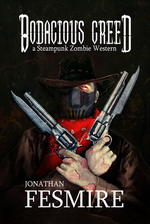
Bodacious Creed by Jonathan Fesmire

Bodacious CreedBodacious Creed: A Steampunk Zombie Western

by Jonathan Fesmire
Series: The Adventures of Bodacious Creed, #1

Kindle Edition, 370 pg.
Bodacious Publishing, 2017

Read: October 16 – 19, 2017


This is a strange, fun genre hodgepodge of a book. When Fesmire approached me about reading this book, I figured it’d be something like Cherie Priest’s Clockwork Century, just set further south. A good mix of steampunk tech and an Old West setting, maybe with a Zombie wandering around as a vague threat, 300 pages later and we’ll be done. Wow. I couldn’t have been more wrong.

U. S. Marshall James “Bodacious” Creed is a one-man crime-fighting machine (figuratively speaking) — he comes to Santa Cruz in search of Corwin Blake, a notorious killer. While searching for Blake he sees plenty of evidence that there’s a greater criminal enterprise running through town, but he only has eyes for Blake. Not long after this, Blake guns Creed down. Creed awakens a couple of weeks later, stronger, unsure of what’s going on, but with the same drive to protect the citizenry of Santa Cruz and to put Blake behind bars or six-feet under. Creed’s appearance has been altered and his appearance alone makes criminals and non-criminals fearful (like the Gotham Knight will in a few decades). He becomes a one-man crackdown on crime.

How did Creed wake up? Well, that would be the purview of Anna Lynn Boyd — owner of a bordello and restaurant. She’s also a scientific genius on par with Tony Stark, her improvements to technology have propelled the California tech industry to unrivaled heights (including robotics of a steampunk sort). She’s been experimenting with some medical technologies and the murder of a hero like Creed provides just the opportunity she needs to test her breakthroughs.

You take that setup, add in a love interest for both of them, some loyal friends (old and new), some less-than loyal friends, a crime syndicate (before crime syndicates were cool), questionably capable law enforcement officials, and a rival scientist — and you’ve got yourself a heckuva read. It’s exciting, fun, pretty well paced with some very clever turns of phrase (the occasional bit of clunkieness and awkward phrases are easily forgivable).

The Steampunk and Western genres blend nicely — as seen in Dawn’s Early Light by Ballantine and Morris, and suggested in a Priest book or two. The time frames for both overlap — it’s just that Westerns are typically dustier than Victorian dramas. I spent a good deal of this novel doubting the “Zombie” tag — sure, you’ve got Creed walking around, but that was more of a Frankenstein’s Monster kind of thing. Although, there was a reference or two to something strange in New Orleans. — but at a certain point, the tag became fitting and appropriate, and despite my aversion to Zombies, I really liked what Fesmire had to say about them. His is an interesting take that should prove more interesting in future installments.

Beyond what I suggested at the beginning, I really didn’t know what to expect from this book — but whatever it was, I was wrong and pleasantly surprised to be so. This is one of those books that will not change or life or the way you look at anything, but you will surely enjoy reading it. Which is exactly what I needed when I read it, I encourage you to do the same.

Disclaimer: I received a copy of this book from the author in exchange for this post and my honest opinion. Honest, not timely, this is 2-3 weeks late — sorry about that, Mr. Fesmire.

—–

3.5 Stars

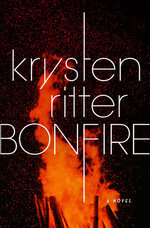
Pub Day Repost: Bonfire by Krysten Ritter

BonfireBonfire

by Krysten Ritter
eARC, 288 pg.
Crown Archetype, 2017
Read: October 6 – 10, 2017

When you grow up in a place called Barrens, you want to get out — especially if it’s an area with limited job options, a struggling agricultural industry, and nothing else to commend it. Although, the name alone would probably justify wanting to get out even if the economy and culture were richer. But as is the case with too many small towns like this, few manage to get out. Abby Williams headed for Chicago two days after she graduated from high school, went to college and law school, becoming an associate at an environmental firm — and only sometime after that did she return.

She returns with her friend (a gay black man, who tends to stick out in the small, rural Illinois town), a first-year associate and a couple of students to investigate some claims about the water in the local reservoir. The town’s only major employer is called Optimal Plastics, which has been dogged by rumors of shoddy environmental practices and health problems for years — including before they came to Illinois — and the team is going to see if they can make these rumors and concerns stick this time.

As they dig into records, tests, regulatory reports and whatnot, Abby notices something. Optimal Plastics is clean. Absolutely clean — on paper, there’s never been a company so clean and responsible. Which just seems impossible, no one is this perfect. Abby smells blood in the water and goes on the attack.

At the same time, in a small town, you can’t help but run into people you don’t want to see again — which is pretty much everyone from High School. The girls who used to torment her, the guy she had a large crush on, the people she wasn’t so sure about. It takes mere moments for her to get embroiled (or re-embroiled) in the same relationships, problems, gossip that she’d escaped from. From “the old crowd” (that was never Abby’s crowd), she gets her insight into Optimal Plastics — all the good they’ve done for the town, the numbers of people they employ, the money they pour into the schools, and so on. So much good that no one wants to take a good look into them, the price is potentially too high.

This reminds her (not that she needed the reminder) of some problems potentially tied to the company back when she was in high school — girls that seemed inexplicably sick. What else could it be from? She’s told time and time again by her friend that what happened over a decade ago doesn’t matter,what matters is what the company is doing now. Abby’s not convinced, and keeps digging at this — even if she agrees with him, the ghosts that haunt her will not allow her to let it go. Abby becomes more and more focused on this aspect of the investigation — flirting with and maybe crossing the lines into obsession.

Oh, and did I mention her father? As you may have picked up from the fact I mentioned earlier that she hadn’t returned to Barrens since high school that she’s not that close to anyone there — including her father. The exploration of and changes to their relationship is one of the more emotionally satisfying storylines in the book.

I’m from a small town, I get the feeling of never actually escaping from it — returning to the same place you left. But I’m willing to bet that even readers from larger towns/cities can relate to this. You can take the girl out of High School, but you can never take High School out of the girl, I guess. Ritter deals with the emotional realities and hazards like a pro — there’s not a beat that seems false or forced. The manner in which Abby makes connections, interweaves her look into what happened years ago with what’s going on right now is great (for the reader). The secrets she uncovers are chilling and unthinkable — yet entirely believable.

Would I have liked to have seen more with her colleagues reacting to Barrens, helping her follow the leads she’s interested in, or just interacting with her at all? Absolutely — but I’m not sure how Ritter could’ve done that without more effort than it’s probably worth. Could she have done more with her Chicago-friend sticking out in Barrens? Yup, but it might have distracted from the overall plot (but if she’s going to remark on it as often as she does, she should do something on it — it comes across as urban snobbery). I think that’s almost something I could say about everything in the book. I don’t know that I needed a lot more of everything, but I think every bit of the story, the characters, the mystery, etc. could use a little bit more development, a little more space. Not much, just a little bit.

I liked Abby almost immediately — from the fairly disturbing Prologue, on through to her struggles in town and questionable choices, you root for her and hope that she finds an element of peace. Her coworkers are great. It’s hard to decide what you think about some of her old high school friends right away, and probably best no to decide too much about anyone in town until The Reveal at the end.

The writing is crisp and compelling — Ritter has some really nice turns of phrase as well. There’s a couple of times that Abby is drunk and/or the influence of alcohol plus other things that were just excellent. Abby’s inability to keep her perceptions in line, to have a coherent recollection about everything she experiences through this time — that’s just excellently executed.

I won’t say that it’s one of the best books I’ve read this year — if there’s a plot point here that you haven’t seen, I’ll be surprised. If there’s a character, character arc, or anything like that you haven’t seen before, I’ll eat my hat. Does it matter? Nope. The way that Ritter tells the story, how she treats the characters and shows them to the reader — how she executes things, that’s the key. It all worked really well, I was thoroughly entertained, even held in suspense. Even if in retrospect I decided that I’d seen it all before, I didn’t see a lot of it coming — or I’d seen story elements X and Y a few dozen times, I hadn’t seen them combined the way Ritter did. This is a solid first novel, and I hope there’s at least a second on the way.

Disclaimer: I received this eARC from Crown Publishing via NetGalley in exchange for this post — thanks to both for this.

—–

3 Stars

Page 471 of 632

Powered by WordPress & Theme by Anders Norén