Towel Day ’24: Scattered Thoughts about Reading The Hitchhiker’s Guide to the Galaxy Trilogy

(updated and revised this 5/25/24)

Towel Day
I’ve been trying for a few years now to come up with a tribute to Adams. This isn’t quite what I had in mind, but it’s a start. In my mind, this is a work in progress, but I’m posting it anyway. Next year’s version will be better—or at least more complete.


Some time in 7th or 8th grade (I believe), I was at a friend’s house and his brother let us try his copy of the text-based Hitchhiker’s Guide game, and we were no good at it at all. Really, it was embarrassing. However, his brother had a copy of the first novel, and we all figured that the novel held the keys we needed for success with the game (alas, it did not help us one whit). My friends all decided that I’d be the one to read the book and come back in a few days as an expert.

I fell in love with the book almost instantly and I quickly forgot about the game. Adams’ irreverent style rocked my world—could people actually get away with saying some of these things? His skewed take on the world, his style, his humor…and a depressed robot, too! It was truly love at first read. As I recall, I started re-reading it as soon as I finished it—the only time in my life I’ve done that sort of thing.

It was one of those experiences that, looking back, I can say shaped my reading and thinking for the rest of my life (make of that what you will). Were my life the subject of a Doctor Who or Legends of Tomorrow episode, it’d be one of those immutable fixed points. I got my hands on the next three books as quickly as I could (the idea of a four-volume trilogy was one of the funniest ideas I’d encountered up to that point), and devoured them. I do know that I didn’t understand all of the humor, several of the references shot past me at the speed of light, and I couldn’t appreciate everything that was being satirized. But what I did understand I thought was brilliant. Not only did I find it funny, the series taught me about comedy—how to construct a joke, how to twist it in ways a reader wouldn’t always expect, and when not to twist but to go for the obviously funny idea. The trilogy also helped me to learn to see the absurdity in life.

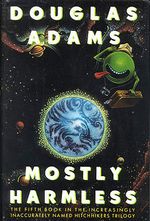
Years later when the final volume (by Adams) was released, I’d already cemented what I thought about the books from these frequent re-reads. I’m not sure that <b>Mostly Harmless</b> changed things much (except for making me think for the first time that maybe I didn’t want him to write more in this series). His non-Hitchhiker’s work illustrated that he was capable of making you see things in a new light–either with a smile or a sense of regret—even when he wasn’t writing the trilogy, even when he was writing non-fiction. It was never the setting or the genre—it was Adams.

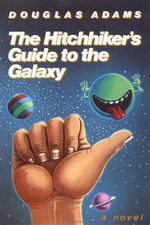
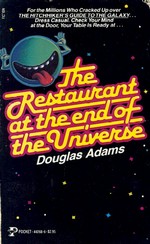
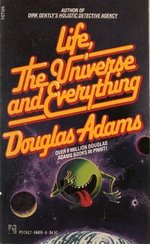
But here on Towel Day—as with most of the time I talk about Adams (but I need to change that), it comes down to where I started—the Trilogy. I read the books (particularly the first) so many times that I can quote significant portions of them, and frequently do so without noticing that I’m doing that. I have (at this time) two literary-inspired tattoos, one of which is the planet logo* featured on the original US covers. In essence, I’m saying that Adams and the series that made him famous have had an outsized influence on my life and are probably my biggest enduring fandom. If carrying around a (massively useful) piece of cloth for a day in some small way honors his memory? Sure, I’m in.

So, Happy Towel Day You Hoopy Froods.

* I didn’t know it at the time, but Adams didn’t like that guy. Whoops.

Towel Day ’24: Some of my favorite Adams lines . . .

(updated 5/25/24)

Towel Day

There’s a great temptation here for me to go crazy and use so many quotations that I’d get in copyright trouble. I’ll refrain from that and just list some of his best lines . . .*

* The fact that this list keeps expanding from year to year says something about my position on flirting with temptation.

The Hitchhiker's Guide to the Galaxy

The Hitchhiker’s Guide to the Galaxy

Time is an illusion. Lunchtime doubly so.

This must be Thursday. . . I never could get the hang of Thursdays.

“You’d better be prepared for the jump into hyperspace. It’s unpleasantly like being drunk.”

“What’s so unpleasant about being drunk?”

“You ask a glass of water.”

(I’m not sure why, but this has always made me chuckle, if not actually laugh out loud. It’s just never not funny. It’s possibly the line that made me a fan of Adams)

He had found a Nutri-Matic machine which had provided him with a plastic cup filled with a liquid that was almost, but not quite, entirely unlike tea.

In those days spirits were brave, the stakes were high, men were real men, women were real women and small furry creatures from Alpha Centauri were real small furry creatures from Alpha Centuari. And all dared to brave unknown terrors, to do mighty deeds, to boldly split infinitives that no man had split before . . .

“Look,” said Arthur, “would it save you a lot of time if I just gave up and went mad now?”

The ships hung in the sky in much the same way that bricks don’t.

For a moment, nothing happened. Then, after a second or so, nothing continued to happen.

<

blockquote>“Space,” [The Guide] says, “is big. Really big. You just won’t believe how vastly, hugely, mindbogglingly big it is. I mean, you may think it’s a long way down the road to the chemist’s, but that’s just peanuts to space, listen…”

He attacked everything in life with a mix of extraordinary genius and naive incompetence, and it was often difficult to tell which was which.

He felt that his whole life was some kind of dream and he sometimes wondered whose it was and whether they were enjoying it.


The Restaurant at the End of the Universe

The Restaurant at the End of the Universe

It is a curious fact, and one to which no one knows quite how much importance to attach, that something like 85 percent of all known worlds in the Galaxy, be they primitive or highly advanced, have invented a drink called jynnan tonnyx, or gee-N-N-T’Nix, or jinond-o-nicks, or any one of a thousand or more variations on the same phonetic theme. The drinks themselves are not the same, and vary between the Sivolvian “chinanto/mnigs” which is ordinary water served at slightly above room temperature, and the Gagrakackan “tzjin-anthony-ks” which kills cows at a hundred paces; and in fact the one common factor between all of them, beyond the fact that the names sound the same, is that they were all invented and named before the worlds concerned made contact with any other worlds.

Reality is frequently inaccurate.

Life is wasted on the living.


Life, The Universe and Everything

Life, the Universe, and Everything

The Hitchhiker’s Guide to the Galaxy has this to say on the subject of flying. There is an art, it says, or rather, a knack to flying. The knack lies in learning how to throw yourself at the ground and miss.

(It goes on for quite a while after this—and I love every bit of it.)

“One of the interesting things about space,” Arthur heard Slartibartfast saying . . . “is how dull it is?”

“Dull?” . . .

“Yes,” said Slartibartfast, “staggeringly dull. Bewilderingly so. You see, there’s so much of it and so little in it.”


So Long, and Thanks For All The Fish

So Long, and Thanks for All the Fish

Of course, one never has the slightest notion what size or shape different species are going to turn out to be, but if you were to take the findings of the latest Mid-Galactic Census report as any kind of accurate guide to statistical averages you would probably guess that the craft would hold about six people, and you would be right. You’d probably guessed that anyway. The Census report, like most such surveys, had cost an awful lot of money and told nobody anything they didn’t already know—except that every single person in the Galaxy had 2.4 legs and owned a hyena. Since this was clearly not true the whole thing eventually had to be scrapped.

Here was something that Ford felt he could speak about with authority. “Life,” he said, “is like a grapefruit.”

“Er, how so?”

“Well, it’s sort of orangy-yellow and dimpled on the outside, wet and squidgy in the middle. It’s got pips inside, too. Oh, and some people have half a one for breakfast.”

“Is there anyone else out there I can talk to?”

Arthur had a swordfish steak and said it made him angry. He grabbed a passing waitress by the arm and berated her. “Why’s this fish so bloody good?” he demanded, angrily.

“Please excuse my friend,” said Fenchurch to the startled waitress. “I think he’s having a nice day at last.”


Mostly Harmless

Mostly Harmless

A common mistake that people make when trying to design something completely foolproof is to underestimate the ingenuity of complete fools.

Fall, though, is the worst. Few things are worse than fall in New York. Some of the things that live in the lower intestines of rats would disagree, but most of the things that live in the lower intestines of rats are highly disagreeable anyways, so their opinion can and should be discounted.


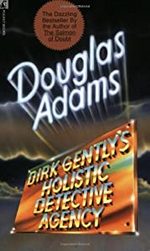
Dirk Gently's Holistic Detective Agency

Dirk Gently’s Holistic Detective Agency

There is no point in using the word ‘impossible’ to describe something that has clearly happened.

If it looks like a duck, and quacks like a duck, we have at least to consider the possibility that we have a small aquatic bird of the family anatidae on our hands.

Let’s think the unthinkable, let’s do the undoable. Let us prepare to grapple with the ineffable itself, and see if we may not eff it after all.

(I’ve often been tempted to get a tattoo of this)


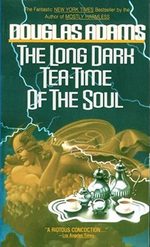
The Long Dark Tea-Time of the Soul

The Long Dark Tea-Time of the Soul

There are some people you like immediately, some whom you think you might learn to like in the fullness of time, and some that you simply want to push away from you with a sharp stick.

It can hardly be a coincidence that no language on earth has ever produced the expression, ‘As pretty as an airport.’

The impossible often has a kind of integrity to it which the merely improbable lacks.

She stared at them with the worried frown of a drunk trying to work out why the door is dancing.

It was his subconscious which told him this—that infuriating part of a person’s brain which never responds to interrogation, merely gives little meaningful nudges and then sits humming quietly to itself, saying nothing.

As she lay beneath a pile of rubble, in pain, darkness, and choking dust, trying to find sensation in her limbs, she was at least relieved to be able to think that she hadn’t merely been imagining that this was a bad day. So thinking, she passed out.


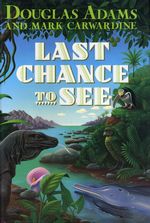
The Last Chance to See

The Last Chance to See

“So what do we do if we get bitten by something deadly?” I asked.

He looked at me as if I were stupid. “You die, of course. That’s what deadly means.”

I’ve never understood all this fuss people make about the dawn. I’ve seen a few and they’re never as good as the photographs, which have the additional advantage of being things you can look at when you’re in the right frame of mind, which is usually around lunchtime.

I have the instinctive reaction of a Western man when confronted with sublimely incomprehensible. I grab my camera and start to photograph it.

Human beings, who are almost unique in having the ability to learn from the experience of others, are also remarkable for their apparent disinclination to do so.

The aye-aye is a nocturnal lemur. It is a very strange-looking creature that seems to have been assembled from bits of other animals. It looks a little like a large cat with a bat’s ears, a beaver’s teeth, a tail like a large ostrich feather, a middle finger like a long dead twig and enormous eyes that seem to peer past you into a totally different world which exists just over your left shoulder.

One of the characteristics that laymen find most odd about zoologists is their insatiable enthusiasm for animal droppings. I can understand, of course, that the droppings yield a great deal of information about the habits and diets of the animals concerned, but nothing quite explains the sheer glee that the actual objects seem to inspire.

I mean, animals may not be intelligent, but they’re not as stupid as a lot of human beings.


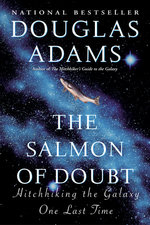
The Salmon of Doubt

The Salmon of Doubt: Hitchhiking the Galaxy One Last Time

We are stuck with technology when what we really want is just stuff that works.

I’ve come up with a set of rules that describe our reactions to technologies:
1. Anything that is in the world when you’re born is normal and ordinary and is just a natural part of the way the world works.
2. Anything that’s invented between when you’re fifteen and thirty-five is new and exciting and revolutionary and you can probably get a career in it.
3. Anything invented after you’re thirty-five is against the natural order of things.


And a couple of lines I’ve seen in assorted places, articles, books, and whatnot

I love deadlines. I love the whooshing noise they make as they go by.

A learning experience is one of those things that says, “You know that thing you just did? Don’t do that.”

The fact is, I don’t know where my ideas come from. Nor does any writer. The only real answer is to drink way too much coffee and buy yourself a desk that doesn’t collapse when you beat your head against it.

Solutions nearly always come from the direction you least expect, which means there’s no point trying to look in that direction because it won’t be coming from there.

Towel Day ’24: Do You Know Where Your Towel Is?

(updated and revised this 5/25/24)

Towel Day

The Hitchhiker’s Guide to the Galaxy has a few things to say on the subject of towels.

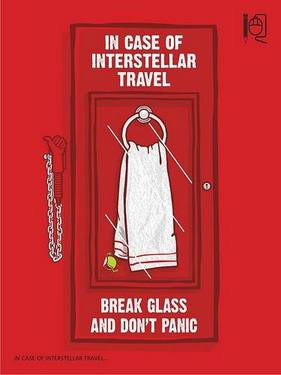
A towel, it says, is about the most massively useful thing an interstellar hitchhiker can have. Partly it has great practical value. You can wrap it around you for warmth as you bound across the cold moons of Jaglan Beta; you can lie on it on the brilliant marble-sanded beaches of Santraginus V, inhaling the heady sea vapors; you can sleep under it beneath the stars which shine so redly on the desert world of Kakrafoon; use it to sail a miniraft down the slow heavy River Moth; wet it for use in hand-to-hand-combat; wrap it round your head to ward off noxious fumes or avoid the gaze of the Ravenous Bugblatter Beast of Traal (such a mind-bogglingly stupid animal, it assumes that if you can’t see it, it can’t see you); you can wave your towel in emergencies as a distress signal, and of course dry yourself off with it if it still seems to be clean enough.

More importantly, a towel has immense psychological value. For some reason, if a strag (strag: non-hitch hiker) discovers that a hitch hiker has his towel with him, he will automatically assume that he is also in possession of a toothbrush, face flannel, soap, tin of biscuits, flask, compass, map, ball of string, gnat spray, wet weather gear, space suit etc., etc. Furthermore, the strag will then happily lend the hitch hiker any of these or a dozen other items that the hitch hiker might accidentally have “lost”. What the strag will think is that any man who can hitch the length and breadth of the galaxy, rough it, slum it, struggle against terrible odds, win through, and still knows where his towel is is clearly a man to be reckoned with.

Hence a phrase that has passed into hitchhiking slang, as in “Hey, you sass that hoopy Ford Prefect? There’s a frood who really knows where his towel is.” (Sass: know, be aware of, meet, have sex with; hoopy: really together guy; frood: really amazingly together guy.)

Towel Day, for the few who don’t know, is the annual celebration of Douglas Adams’ life and work. It was first held two weeks after his death, fans were to carry a towel with them for the day to use as a talking point to encourage those who have never read HHGTTG to do so, or to just converse with someone about Adams. Adams is one of that handful of authors that I can’t imagine I’d be the same without having encountered/read/re-read/re-re-re-re-read, and so I do my best to pay a little tribute to him each year, even if it’s just carrying around a towel.

In commemoration of this date, here’s most of what I’ve written about Adams. I’ve struggled to come up with new material to share for Towel Day over the years, mostly sticking with updating and revising existing posts. But I do have a couple of new things coming today. But let’s start with the old material. A few years back, I did a re-read of all of Adams’ (completed) fiction. For reasons beyond my ken (or recollection), I didn’t get around to blogging about the Dirk Gently books, but I did do the Hitchhiker’s Trilogy:
bullet The Hitchhiker’s Guide to the Galaxy
bullet The Restaurant at the End of the Universe
bullet Life, The Universe and Everything
bullet So Long, and Thanks For All The Fish
bullet Mostly Harmless
bullet I had a thing or two to say about the 40th Anniversary of The Hitchhiker’s Guide to the Galaxy
bullet I took a look at the 42nd Anniversary Illustrated Edition of The Hitchhiker’s Guide to the Galaxy

I should also point to a posts I wrote about Douglas Adams’ London by Yvette Keller and 42: The Wildly Improbable Ideas of Douglas Adams edited by Kevin Jon Davies—both are great ways of illing-out one’s understanding of Adams and his work. I have to mention the one book that Adams/Hitchhiker’s aficionado needs to read is Don’t Panic by Neil Gaiman, David K. Dickson and MJ Simpson. If you’re more in the mood for a podcast, I’d suggest The Waterstones Podcast How We Made: The Hitchhiker’s Guide to the Galaxy—I’ve listened to several podcast episodes about this book, and generally roll my eyes at them. But this is just fantastic. Were it available, I’d listen to a Peter Jackson-length version of the episode.

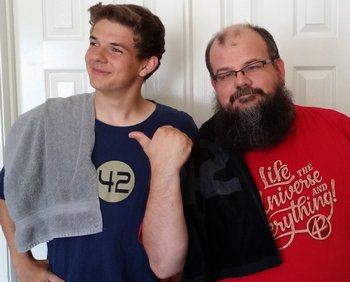
I’ve only been able to get one of my sons into Adams, he’s the taller, thinner one in the picture from a few several years ago.
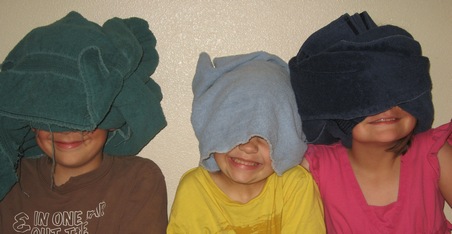
(although I did get he and his younger siblings to use their towels to make themselves safe from the Ravenous Bugblatter Beast of Traal a few years earlier:)

You really need to check out this comic from Sheldon Comics—part of the Anatomy of Authors series: The Anatomy of Douglas Adams.

Lit in a Nutshell gives this quick explanation of The Hitchiiker’s Guide:

TowelDay.org is the best collection of resources on the day. One of my favorite posts there is this pretty cool video, shot on the ISS by astronaut Samantha Cristoforetti.

Even better—here’s an appearance by Douglas Adams himself from the old Letterman show—I’m so glad someone preserved this:

Love the anecdote (Also, I want this tie.)

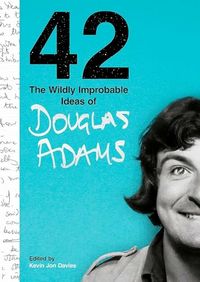
42: The Wildly Improbable Ideas of Douglas Adams edited by Kevin Jon Davies: A Tribute in Miscellany, Ephemeron, Bits and Bobs

42: The Wildly Improbable Ideas of Douglas Adams42: The Wildly Improbable Ideas of Douglas Adams

edited by Kevin Jon Davies

DETAILS:
Publisher: Unbound
Publication Date: September 19, 2023
Format: Hardcover
Length: 299 pg.
Read Date: May 11-23, 2024
Buy from Bookshop.org Support Indie Bookstores

What’s 42: The Wildly Improbable Ideas of Douglas Adams, Anyway?

from The Publisher:

When Douglas Adams died in 2001, he left behind 60 boxes full of notebooks, letters, scripts, jokes, speeches and even poems. In 42, compiled by Douglas’s long-time collaborator Kevin Jon Davies, hundreds of these personal artefacts appear in print for the very first time.

Douglas was as much a thinker as he was a writer, and his artefacts reveal how his deep fascination with technology led to ideas which were far ahead of their time: a convention speech envisioning the modern smartphone, with all the information in the world living at our fingertips; sheets of notes predicting the advent of electronic books; journal entries from his forays into home computing – it is a matter of legend that Douglas bought the very first Mac in the UK; musings on how the internet would disrupt the CD-Rom industry, among others.

42 also features archival material charting Douglas’s school days through Cambridge, Footlights, collaborations with Graham Chapman, and early scribbles from the development of Doctor Who, Hitchhiker’s and Dirk Gently. Alongside details of his most celebrated works are projects that never came to fruition, including the pilot for radio programme They’ll Never Play That on the Radio and a space-inspired theme park ride.

Douglas’s personal papers prove that the greatest ideas come from the fleeting thoughts that collide in our own imagination, and offer a captivating insight into the mind of one of the twentieth century’s greatest thinkers and most enduring storytellers.

A Few Short-Comings (only one of which is of any substance)

Not every piece of handwriting is transcribed—and no, I’m not referring to the more than a dozen examples of his signature (an interesting evolution to be sure). The majority of bits of handwriting are printed under, next-to, or following to make them legible. But not all—and there are a few things that I can’t quite suss out. And if you’d ever seen my handwriting, you’d know that I can figure out what a lot of messy writing says.

The other drawbacks are that the chapters covering Dirk Gently (in the various books) and The Last Chance to See (radio program and book) are too short. I could’ve used twice the material on both of those.

I Didn’t Expect to Get Misty-Eyed

Throughout the book are letters written by people who knew Adams to him, describing their relationship, what he meant to them, and how his death affected them. The first one, by Stephen Fry, is used as the foreword and threw me—I didn’t realize I was going to have an emotional experience while reading the book.

These were wonderful and heartfelt and make the reader feel close to someone they’ve only admired from afar. Sure, it’s a parasocial relationship at best (for almost everyone who reads the book), but especially reading those letters, it feels far less “para.”

An Overly Specific Suggestion

Do not read this book while recovering from abdominal surgery.

It is large (8.5″ X 11.9″ X 1.2″). For a book, it is heavy (roughly 4 pounds). There is no comfortable way to hold this book while reclining if you cannot rest it on your stomach.

That said, the large size, the high-quality paper, and the full-color pages are a wonderful way to present this material, and I wouldn’t have it any other way.

So, what did I think about 42: The Wildly Improbable Ideas of Douglas Adams?

So, really, at this point, should I be allowed to rate books related to Douglas Adams? Probably not. But, this is my blog, so I get to set the rules.

There were some things that I’m not sure why Davies included, a couple of things I didn’t appreciate as much as I should’ve (some older British pop culture references/names that I’m too American to get/recognize). But by and large, I was captivated and entertained. I bet Davies had a blast compiling this and it couldn’t have been easy cutting some material (although I bet there was a bunch that he wondered why anyone hung onto in the first place).

While I (semi-) joked about the Dirk Gently and Last Chance to See chapters being too short, they really were the most interesting to me. I’ve read many, many things about THHGTTG over the years, and have seen a good amount about his career and education before then. but I’ve come across very little about these others—so I learned more, got more insight, and whatnot. I really could’ve read chapters that were three times as long on both counts.

Truth be told, the book could’ve been three times as long and I’d have been happy, too. Sure, you’d need a weightlifting belt to carry it around that way, so maybe it’s best that Davies stopped when he did.

You need to read Adams thoughts on the future of books—specifically ebooks. Other than the amount of money going to authors…he nailed it. You get great insight into how his mind worked by seeing early drafts (and the way he’d write to himself to keep going when it got difficult).

I found this to be mind-bogglingly delightful. Which is pretty much what I expected, true. But there’s expecting to appreciate a book and then getting to experience it and discover that you were right. It’s is kind of a doubling of pleasure.

If you’re a fan of Adams, you’re going to find at least one thing here that will interest you more than you anticipated. If you’re a big fan of Adams, you’re in for a treat. He was the hoopiest of hoopy froods, and this book gives you a glimpse into just how hoopy that is.

Disclaimer: I contributed to the crowd-funding to get this book published (my name’s right there on p. 314), so who knows if that makes me biased. But then again…when am I not?


5 Stars

This post contains an affiliate link. If you purchase from it, I will get a small commission at no additional cost to you. As always, the opinions expressed are my own.
Irresponsible Reader Pilcrow Icon

I Did a Thing: Tough Questions from Witty & Sarcastic Book Club

Witty & Sarcastic Book Club Presents Tough Questions
Over the past couple of months in my Saturday Miscellanies, I’ve linked to the new series of interviews with Book Bloggers over at Witty & Sarcastic Book Club called Tough Questions.

I was forc—er, subjected t—er, graciously invited to participate in this and my responses were posted on Monday. If you’ve ever wondered what my memoir would be called, what I might call this blog if I rebranded, what my favorite is to read (the answer may surprise you), or other things. Or if you just want to read something on a pink background. Give it a look-see!

Caveat lector: This post does contain what might be the most controversial opinion that I’ve ever put on teh IntraWebs.

Also, if you’re not following the blog or following Jodie on various social media platforms, now would be a good time to start.

Irresponsible Reader Pilcrow Icon

Book Blogger Hop: Collector or Hoarder

Book Blogger Hop


This prompt was submitted by Billy @ Coffee Addicted Writer:

Do you consider yourself a book collector or a book hoarder?

To my ear, a collector is someone who gets pristine, early/rare editions, and displays them like a hunter displays taxidermy trophies. Ew, that sounds loaded with negative connotations there–I’m not trying for that, but I’m also too lazy to go back and edit. Collectors are serious about this, put a lot of effort into tracing down certain titles/editions—they’re the kind of people that Oliver Darkshire talks about in his memoir. The financial investment is also greater than I’m interested in.

Hoarders*, like myself, on the other hand, go for quantity. We just want all the books we want to read, those we can’t bear to give away/sell/trade, and others, too. Sure, we might get some rarities, some specialty editions, and whatnot—we might even find the wherewithal to get our hands on some Subterranean Press or The Folio Society special editions and reprints—but mostly it’s about surrounding ourselves with processed dead-tree carcasses filled with writing and characters we love. I’ve got some in nearly every room in my house, and it won’t be long before I’ll legitimately be able to remove the “nearly.” I’ll be content when I have amassed a cache fit for Smaug, and not until then.

* I’ll note that countless memes (the great and binding authority of wit and expression of vox populi to which everyone must bend the knee today)—and the sign my wife bought for my office door—insist that it’s not hoarding if it’s books, soooo ¯_(ツ)_/¯ .

What about you—collector, hoarder? Or do you have a healthy number (read: more than Marie Kondo’s 30, but not enough to nap on?)

WWW Wednesday, May 22, 2024

I’m ba-aa-aa-ck. I think.

This meme was formerly hosted by MizB at A Daily Rhythm and revived on Taking on a World of Words—and shown to me by Aurore-Anne-Chehoke at Diary-of-a-black-city-girl.

The Three Ws are:
What are you currently reading?
What did you recently finish reading?
What do you think you’ll read next?

Seems easy enough, right? Let’s take a peek at this week’s answers:

What are you currently reading?

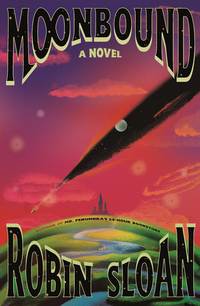
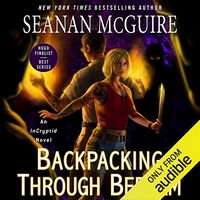
I’m reading the ARC for Moonbound by Robin Sloan (a book I’m terrified that I’m going to have to describe soon), 42: The Wildly Improbable Ideas of Douglas Adams edited by Kevin Jon Davies and am listening to Backpacking Through Bedlam by Seanan McGuire, read by Emily Bauer on audiobook.

MoonboundBlank Space42Blank SpaceBackpacking Through Bedlam

What did you recently finish reading?

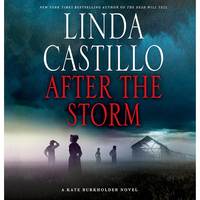
I just finished Shannon Knight’s Grave Cold (yes, I finally did it!) and After the Storm by Linda Castillo, read by Kathleen McInerney on audio.

Grave ColeBlank SpaceAfter the Storm

Oh, also:

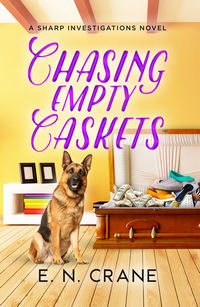
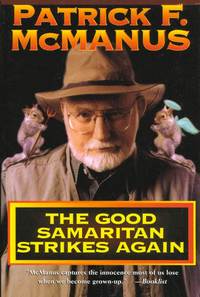
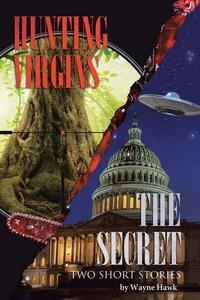
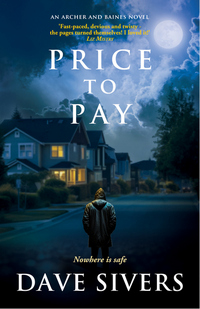
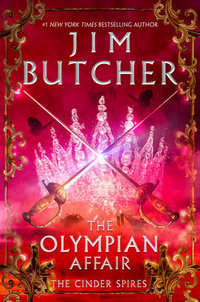
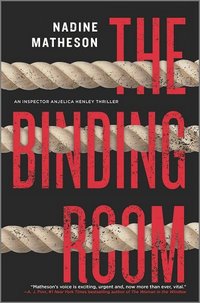
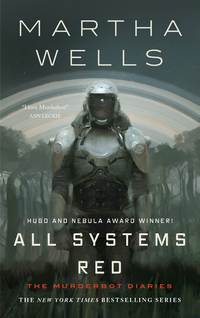
Chasing Empy Caskets by E.N. Crane, The Good Samaritan Strikes Again by Patrick F. McManus, The Secret & Hunting Virgins by Wayne Hawk, Price to Pay by Dave Sivers, The Olympian Affair by Jim Butcher, The Binding Room by Nadine Matheson, and All Systems Red by Martha Wells.

Chasing Empy CasketsBlank SpaceThe Good Samaritan Strikes Again
The Secret & Hunting VirginsBlank SpacePrice to Pay
The Olympian AffairBlank SpaceThe Binding Room
All Systems Red

What do you think you’ll read next?

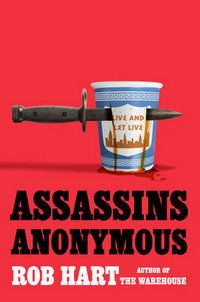
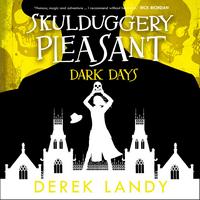
My next book should be the ARC for Assassins Anonymous by Rob Hart and my next audiobook should be Dark Days by Derek Landy, read by Rupert Degas.

Assassins AnonymousBlank SpaceDark Days

WHat’ve you been up to lately?

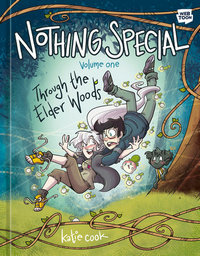
Nothing Special: Through the Elder Woods by Katie Cook: This Graphic Novel Sparked Joy

Through the Elder WoodslThrough the Elder Woods

by Katie Cook

DETAILS:
Series: Nothing Special, Volume One
Publisher: Ten Speed Graphic
Publication Date: March 05, 2024
Format: Hardcover
Length: 416 pg.
Read Date: April 13, 2024
Buy from Bookshop.org Support Indie Bookstores

What’s Through the Elder Woods About?

Callie is sure she’s nothing special—and even more sure that everyone she goes to school with is convinced of that as well. Her dad runs a magical antique shop, but she lives with non-magical humans (and frequently he does, too)—so non-magical they don’t know it exists. But Callie can see ghosts—or spirits.

One day, she accidentally discovers she’s not alone, but a classmate, Declan, can see them, too. Relieved that he’s not just seeing things (Callie’s dad had already convinced her of that), the two become great friends. (you get the impression that Declan has wanted to be at least friends for as long as he’s been aware of her).

When Callie’s dad goes missing in the magical realm on her 17th birthday, the two of them take their first steps in this strange, magic-filled world to try to find him.

Plant-Based Ghosts?

If I had to single out one thing about this book/series that sets it apart from the rest and makes it worth a read regardless of other factors—the ghosts that Callie can see and interact with are the ghosts of plants. Trees, flowers, vegetables, and so on. If there are ghosts of people/elves/animals running around (and I don’t see why there wouldn’t be), we don’t see them in this book. Just plants. In particular, there’s the ghost of a radish (cruelly used as mere a garnish) who serves as a traveling companion/guide for Callie and Declan in the magical realm.

A great idea, executed in the cutest way possible.

My Favorite Kind of Love Triangle

Slightly-spoilery…but only slightly (and frankly, this is a selling point if you ask me…), skip if you want to go into this pristinely.

At some point—another guy* shows up on the scene to pursue Callie romantically. She just shuts him down—she’s not interested, at all. Also, there’s Declan…who she seems to be interested in.

* I had to return the book to the Library before I wrote this and I didn’t write down his name, and a couple of minutes of internet research didn’t get it for me, either.

The other guy tries, but is shut down (and almost seems to be pro forma about his attempts at a certain point) constantly.

So how is this my favorite kind of Triangle? It doesn’t exist. Callie isn’t even tempted by the other guy. Pure bliss for me.

A Word The Art

I just loved it. It’s bright, energetic, lively, and adorable. That last one may sound patronizing, but I can’t come up with a better word for all of the art. It just brought a smile to my face.

The radish ghost (all the ghosts, but let’s focus on it) is one of the cutest things I’ve seen in months. The little accent bits of art throughout the book featuring similar looking ghosts and non-story jokes are just as good.

I don’t know what else to say, but I loved the art.

So, what did I think about Through the Elder Woods?

I don’t have anything deep, meaningful, or particularly insightful to say here—nor do I have a lot to say (believe it or not).

I thought the story was fun. I less-than-threed the characters so much. The art made me smile—as did the book as a whole. The pages just melted away and I read more of it than I intended to (i.e., all of it) in an afternoon. It’s cute, it’s effortlessly charming, it’s sweet, and full of whimsy. ‘Nuff said.

Your results may vary, obviously, but this just made me happy. I’m definitely back for Volume Two later this year.


4 Stars

This post contains an affiliate link. If you purchase from it, I will get a small commission at no additional cost to you. As always, the opinions expressed are my own.
Irresponsible Reader Pilcrow Icon

LITERARY LOCALS: A Few Quick Questions with…Shared Stories

Literary Locals logo
This is overdue (as you can tell from some of the dated references), but sometimes schedules don’t work the way you want (and when you throw in the vicissitudes and orneriness of technology…things take even longer). A few weeks back, a new bookstore opened in Caldwell, ID–filling the lacuna left last year when Rediscovered Books had to close its branch. As you can imagine, I’m very happy to see Shared Stories open up–I actually ended up buying 1+ books there for the first three weeks they were open. Thankfully, life has intervened and I’ve been unable to make it there since. But I’ll be back very soon. I was able to ask Dr. Jocele Skinner, the owner, a few questions about their opening, plans, and so on. I hope this is the first of many times you see me mention them in the years to come.


Shared Stories logo
Let’s start off with a brief description of Shared Stories—how would you describe it (other than Caldwell/Canyon County’s newest bookstore). What makes you distinct? (at least in your mind/vision for the future)
Shared Stories is a new independent bookstore in Caldwell. It is woman-owned by Jocele Skinner, a local family physician. Her husband George Decker manages the day to day operations. We live locally and have been in the community for many years. We hope that what will make Shared Stories successful is that we are wholly committed to Caldwell and the surrounding area. Our goal is to work with local individuals, businesses, and organizations to support and to build our community. We live here. We work here. We spend our own dollars here. We want to share our love of books with Caldwell and see Caldwell and Canyon County grow and thrive even more than it already is!
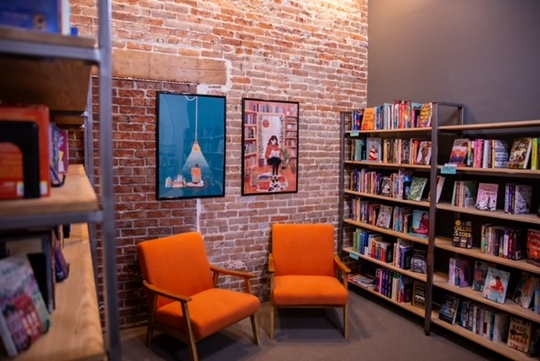
Shared Stories Interior

Photo by Shared Stories


What inspired you to open this store? Has it been a lifelong dream, or just one that’s come around in the last few years? Was there one thing in particular that motivated you to get into action now?
George and I have always been book nerds! Our first date was at a bookstore. I think a lot of readers have a dream of working in or owning a bookstore. For many years, that’s exactly what it was – a dream. Jocele was busy working crazy hours, and George was at home with our kids and farm animals. When Rediscovered Books closed in Caldwell, we were devastated, but after a lot of discussion, we decided maybe it was really time to turn the fantasy into reality, and to hopefully fill what we saw as a huge need in downtown Caldwell.
We were pretty devastated, too–but you actually did something about it. Thank you!

I cannot fathom how much work had to go into getting the store to this stage—you’ve posted some on your Instagram page-—but how long have you actively been pursuing this once you moved from the “one day, I’d like to open…” thought to “let’s actually do this” stage?
It definitely has been a fair amount of work getting things up and going. We made the decision to proceed with opening a store in late June/early July of 2023. It took us about 5 months to find and secure the perfect location. It also took a ridiculous amount of time to come up with a name that we liked. I don’t even know how many options we tried out before Shared Stories stuck! Once we signed the lease in December, then we could really start making plans. We ordered custom shelves in January from a local business in Middleton. We went to Winter Institute (the national conference for the American Bookseller Association) in February, and after that we started working on ordering books, merchandise, etc. We began interviewing for bookseller positions in mid to late February, and I think managed to put together a great team. The books took a couple of weeks longer to get here than we had planned, so that was frustrating and held up our opening for a bit, but I think in the end it was all worked out! One thing that has been amazing is the support and help we have received from bookstores near and far! Bruce and Laura Delaney and their staff [of Rediscovered Books] have been so helpful in teaching us some of the basics, and the book-selling community has been nothing but encouraging and excited for us. I would also be remiss without thanking Ofelia Morales at the Caldwell economic developing office for being so incredible to work with and for helping get us connected with our eventual landlord and downtown businesses.
Shared Stories Nifty Lighting

Photo by Shared Stories


How was the first week? I know when I stopped in on Friday it was busier than I expected/feared. But that’s a limited 30 minutes—you know the big picture.
I think overall the first week went better than we had anticipated. We had our soft opening April 10, and quite a few people came in and made purchases. We appreciate their grace while we all worked to streamline our processes. We had a couple of slower days after the initial burst, but are getting busier each day. We’re hoping as the weather gets nicer and there are more events and people downtown in the plaza, that sales will continue to climb.

You’ve certainly had to learn a lot along the way, and encountered things you probably hadn’t considered. What were some of the biggest surprise challenges. Also, what was surprisingly easiest?
We still have lots to learn. 2 weeks in we’re still trying to figure out the best way to streamline orders and to determine what customers are interested in. We tried to build a pretty broad selection when we created out initial book order, but there’s always books that we didn’t predict would be in high demand. And of course, there’s only so many books we can fit on the shelves. It would have been awesome if we could have ‘nailed it” on day one, but we’re hoping that will come with time. If you are looking for something you don’t see, ask us! We want this to be a place where there’s something for everyone.
Shared Stories Comfy Reading Area

Photo by Shared Stories


Are you working on plans for the future of Shared Stories—or is keeping the lights on your primary focus for now? Do you have any events coming up that you’d like to share?
We’re definitely working on plans and future events going forward. Right now, we’re definitely focused on just continuing to get our feet under us, but we’re looking at starting store-sponsored book clubs in the next month or two, as well as some special events. This weekend is Independent Bookstore Day, so we’ll be having some fun specials and giveaways on Saturday. We’re partnering with Shutter Happy, a local photographer, for a children’s reading program over the summer, where kids can get discounts on books and win a mini-photography session here in the store. We’re also partnering with another downtown business for a Mother’s Day tea and book event. Watch our social media for updates. Children’s activities/storytime is starting soon, and there may be some fun game nights, crafts nights, and more ahead!

What books are you (and/or your staff) enjoying hand-selling the most right now? Feel free to give a quick pitch for a few—I can’t let people get away from here without a few recommendations.
It’s been fun to be able to hand-sell books to customers as they come in! Our staff all have different readings tastes, and so we are learning from each other all the time too! Probably our biggest seller has been The Women by Kristin Hannah. I am also surprised by how many are interested in reading the classics. A couple of other books that have sold well so far are the Wildwood Chronicles by Colin Meloy, the Inspector Gamache series by Louise Penny, and a whole host of romance and fantasy novels, led by Fourth Wing and A Court of Thorns and Roses.

Some bookstores have resident dogs, many more seem to have store cats. But you all have taken a different direction–one that I absolutely love. Tell us about Cedric. Where did the idea come from? Who came up with it? Are people responding as well to it as I am? When can we purchase Cedric merch?
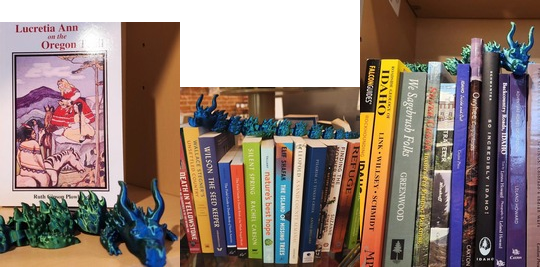
Good question. We had initially planned on having a store cat. But honestly, all our cats at home have bad manners, so they aren’t suited for being in the store. One dog is too big and sheds too much, and our other dog gets a little anxious around new people, so neither one of them would be great store pets, either. As for Cedric, not long after we opened, a young man came in asking if we’d be interested in stocking 3D printed dragons. Sutton lives locally and does a great job printing dragons and fidget spinners. George, always a sucker for cool shiny things, bought one just as a trial, and our amazing and creative staff took the dragon and ran with it!  Before we knew it, the dragon had a name and was showing up on social media. It’s a fun way to feature new books or special displays. The dragons have been super successful, and we’ve had requests for custom colors and have already had to reorder. Kids young and old find them fascinating. And really aren’t most of us book dragons at heart?
Shared Stories' Cedric

A few snips I took of various Social Medial posts to try to give a flavor of how he’s being used. They look much better in the originals.


I know this is a crazy busy time for you all right now, and I cannot thank you enough for taking time to respond to me.
I just want to thank everyone for supporting our store so far. The excitement and support has been so fun to see, and we all enjoy sharing our favorite books with you, as well as finding new books ourselves. I mentioned above we are happy to place special orders, and you can also support us by shopping at our affiliate locations:

For physical books: https://bookshop.org/shop/sharedstories
For audio books: https://libro.fm/sharedstories
Yes–absolutely do that, readers!


Literary Locals logo

Christa Comes Out of Her Shell by Abbi Waxman: Family, (Unwanted) Fame, Love, and Snails

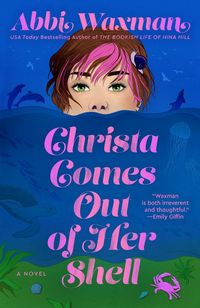
Christa Comes Out of Her ShellChrista Comes Out of Her Shell

by Abbi Waxman

DETAILS:
Publisher: Berkley Books
Publication Date: April 16, 2024
Format: Paperback
Length: 371 pg.
Read Date: May 2-7, 2024

Buy from Bookshop.org Support Indie Bookstores

I glanced up from the phone screen and caught sight of myself in the mirror. With thoughts of my mother in my head, I straightened up and took a look. As always, I was wearing pieces from what she refers to as my “forest floor collection.” It makes my life easier to wear khaki, green, olive or sand, because all of my clothes end up coated with seawater, salt lines and general beach muck. I researched and found the perfect pair of shorts, I researched and found the softest, most durable T-shirt, then bought four sets of both and never wear much else. Honestly, when Einstein did it, he was an eccentric genius; when Steve Jobs did it, he was a genius emulating an eccentric; and when I do it, I’m not making enough of an effort. Patriarchal bullshit; those are quality shorts.

What’s Christa Comes Out of Her Shell About?

Christa Barnet is a biology researcher happily studying a particular kind of snail on a remote island in the Indian Ocean. The island is populated by people who grew up there and a rotation of other researchers taking advantage of the isolation of the flora and fauna from the rest of the world. She has no real close relationships, a nice room in a boarding house, and her snails—life is pretty much what Christa wants.

Until her father comes back from the dead. Well, kind of. It’s not a zombie novel or anything. Her dad was an internationally known TV host of nature programs. Think Steve Irvin without the accent. But when Christa was a small girl, the plane her dad was flying went down in the Alaskan wilderness and no one knew what happened to him. He was eventually declared dead, and the family moved on.

But now, he’s back—so Christa has to leave her snails behind and go back to help her mother and sisters deal with this, to find out what her dad has been doing (and why no one knew he was alive).

To get all reductionistic there are three main plotlines afoot and I want to touch on them briefly—but each of them is about Christa coming out of her shell in their essence.

The Whole Dad Thing / Celebrity Culture

So, yeah…her Dad is back. It’s hard to talk about this as anything but strange. And Christa and her family don’t even bother trying. As they learn more and more about where he’s been, it gets even stranger.

Obviously, all of them have a lot to catch up on, they’ve missed decades of life with him—Christa has only the vaguest memories of him because she was so young when he disappeared. Her sisters have relationships to repair and rebuild (to say nothing of what her mother needs to do)—but Christa essentially needs to start from nothing.

Given his status (which has only grown while he was “dead”), the way that the media is sensationalizing his return, and the way the American public loves a good reboot—the press and opportunities for books, movies, new series, etc., etc., etc. are insane. It’s difficult to try to reestablish/establish any kind of family ties under the microscopes and spotlights that surround the family right now—and that’s assuming the family wants to.

Agents representing entertainment professionals live lives illuminated by reflection. When their clients do well, they do well, and some cycles are virtuous and some are vicious. One fortunate feather in an agency’s cap is a celebrity who DWF—died while famous. All famous people die, but most do not die famous. Most simply die old, like everyone else.

When they do kick off at their peak, their agency inherits an icon. It’s an annuity, kind of, or like money in a mattress. Somebody benefits from the fact that Jimi Hendrix (for example) isn’t a happily retired guitar player growing tomatoes in Seattle, though that would have been a better outcome in every other way.

Throughout all of this, Waxman has her sights set on the entertainment industry (with a special eye on publicists/PR/focus on image over substance), the role of the press in covering that industry, and social media (in general and relating to celebrities). Waxman reminds me so much of Christopher Buckley (oddly, Dave Barry’s fiction comes to mind, too) when this plotline is the focus—she has a similar ability to find the alienness to what “regular people” think, the absurdity of the “logic” employed by the media types, and the ridiculousness of how it all works—and is eaten up by viewers/fans. She excoriates this whole thing—but also shows the appeal.

The Romance Story

He frowned quizzically at me. “You’re very dreamy for a scientist. I think of you guys as practical and all about the facts, ma’am.”

I laughed. “You’re completely wrong. Scientists fall deeply in love with something and spend their lives obsessing over it.” I turned my head to look at him. “Like when you first fall in love with someone, and want nothing more than to be with them all the time, learn everything you can, discover how they feel, what they think . . . that’s science. Isn’t love just an overwhelming desire to solve the mystery of another human being?” I shrugged. “Science is full of mysteries, and people trying to get to the bottom of them.”

Nate has been a constant feature in Christa’s life (and vice versa), he’s older than her—more like her sister’s age. But their families were close while they grew up—so they spent a lot of time in each other’s orbit. He’s now running the business side of her family’s conservation work, and they really haven’t set eyes on each other for over a decade.

When they do meet each other in this novel, the mutual attraction is pretty obvious (especially to everyone who isn’t them). What unfolds from there is one of your standard-issue Rom-Com stories. But Waxman is so good at writing it that it feels pretty fresh, and you can easily find yourself forgetting that you’ve read umpteen times and seen even more stories that follow the same outline. Also, it needs to be remembered why we’ve seen/read this story so many times—it works really well and people enjoy it. People really enjoy it when someone as clever as Waxman is telling it.

The two are sweet and cute together. The story is easily the most engaging part of the book—and it’s nice to have it to fall back on when things get dicey with the above story.

Christa’s Mother and Sisters

“What’s with your hair?” she said, reaching out to tousle it, a move I was able to block.

I shrugged. “I like it like this; it makes it easier for people to find me.” It also goes with the tattoos and piercings to suggest I might be a badass. . . It’s a basic tenet of camouflage: Look like something dangerous (an edgy chick who might mess you up) and no one will get close enough to see the truth (a nervous scientist who would rather be left in peace).

I think readers are supposed to get more invested in the story about Nate—and the story about her Dad is really the bigger story of the novel. But the plotline that did the most for me was about Christa’s family that didn’t go missing—her mother and older sisters.

Like with many such stories, there’s a mix of who these people are as adults and who they were as children/teens (and younger adults, in the case of her mother). Christa, more than the others, still sees the others the way she saw them as a child and during her turbulent teen years. Yes, she understands how they’re not the same people, but her view of them as people and their relationships with her were set in stone then. And for her sisters, they largely see the troubled teen she was.

In the last couple of years, however, Christa’s sisters have started to change—and they all get to see new sides of their mother given the return of her not-that-deceased-first husband. They all see Christa in new ways, too—and we get the idea they actually understand her better than she does herself.

If you’ve read Waxman before, you know how well she depicts relationships between women. If you haven’t—just take my word for it, she depicts them in a way that you could just sit and read dozens and dozens of pages of it, even without much of a plot. When they’re working together on something (even if they don’t all agree on the way to do it), it’s just great. If Waxman just wants to give us a novella about the next Thanksgiving these women enjoy together (or something like that), I’ll be first in line.

I have largely complimentary things to say about the novel as a whole, but this aspect is the one I’ll spend the most time thinking about.

We Could’ve Faded to Black a Little Quicker

Like with the Sunshine Vicram series, at a certain point I couldn’t believe I recommended this book to my mother.* I’m sure she’ll enjoy it, but things get a little more spicy (and detailed) before Waxman fades to back on our couple. And Christa’s first-person narration is fine with talking about things that happen while things were faded to black.

* Note to Self: Finish Books before recommending them to her.

I don’t think we actually achieve the, um, levels of ardor that Sunshine does (not like that’s the most extreme I’ve encountered, I just think I’ve talked more about what the people that make up TV/Movie warnings call “adult situations” with that series than others). But we get close on a couple of occasions.

Is it too “adult” for most actual adults to read? No. Will many of you find it tame? Yes. Did it make me a little uncomfortable? Yes (I keep telling you I’m a prude). Does it really impact what I think of the novel? Nope. But it was noteworthy enough, that I figured I should mention it.

If only I feel better about things when my mother ends up reading the novel.

So, what did I think about Christa Comes Out of Her Shell?

According to my notes, the first 87 pages of this book might have been my favorite 87 pages this year. Maybe it went on longer, but that’s where I was when I wrote that down. Not every page after those were as good, but overall, I had a real blast with this book.

Christa is definitely a Waxman-brand protagonist. But she’s different enough to make it clear that Waxman has range. Christa is more abrasive—she also has more formal education than the others I’ve encountered and shows it (not in a performative or braggadocio way). There’s also a Bernadette Fox-ish vibe to her. The rest of the characters are easily the kind to shop at Nina Hill’s bookstore or hang out at the boardinghouse with Laura Costello and the rest. In other words, they’re complicated, fallible, and fun to spend time with.

Waxman’s voice is one of my favorites—and has been since I first encountered her work. I love her characters, her wit, and the stories she decides to tell. This seemed like a departure for her—not in ways I can articulate, nor in ways I can or want to criticize. It’s just a different feel from her last three novels—and more power to her for making those choices.

I laughed, I was moved, my heart was warmed—all the typical reactions to Abbi Waxman. I loved being in this world, surrounded by Waxman’s words and I cannot wait for the next excuse I have to do it again. I heartily encourage you all to do the same.


4 1/2 Stars

This post contains an affiliate link. If you purchase from it, I will get a small commission at no additional cost to you. As always, the opinions expressed are my own.

Irresponsible Reader Pilcrow Icon

Page 98 of 603

Powered by WordPress & Theme by Anders Norén