Tag: 3 Stars Page 30 of 55

Faith: California Scheming by Jody Houser, Pere Pérez, Marguerite Sauvage, Colleen Doran

Faith: Hollywood & VineFaith: Hollywood & Vine

by Jody Houser, Pere Pérez (Artist), Marguerite Sauvage (Artist), Colleen Doran (Artist)
Series: Faith Vol. 2

Paperback, 112 pg.
Valient Entertainment, 2016

Read: January 20, 2018


This picks up right after the stories in Volume 1 — Zephyr establishes herself more strongly as a presence in LA, her alter ego Summer makes some more friends, and Faith goes out on a date to a comic con.

I’ve already had to return this to the library, so I can’t remember character names — sorry. Faith’s a major fan (has had recurring romantic dreams about) this super-hero/action film star who’s some sort of amalgamation of Chris Evans/Chris Pine/Chris Hemsworth. I don’t know if Faith’s obsession with goes back before the limited series, but it’s well established. Faith does meet him in this collection, and . . . I was disappointed. That story felt too rushed, too hurried — at the same time, I’m not sure what else could’ve been done with it — and the brevity of the interaction between the two served the story. Still, I felt cheated after all the build-up.

That’s actually a recurring theme for me when it comes to this collection — I thought the story telling was a bit more shallow in this collection than the previous, but somehow I enjoyed these stories more. Unlike the limited run, there are a variety of stories being told — some about Faith, some about her super-heroing, some about her social life as Summer — so given the width and breadth of the scope, they couldn’t get down too deep. Still, I want more depth; I want richer, more developed characters — but I want them to be as fun as this collection.

Is that asking too much? Yeah, probably. Still this was fun. It made me like the characters more and want to spend more time with them — which sounds pretty good to me.

I don’t think I have anything to say about the art here that I didn’t already say about the previous collection — there’s some good stuff here.

Fun characters; shallow, but entertaining stories; spiffy and attractive art — this collection has everything you’d want. This is a series to get into.

—–

3 Stars

2018 Library Love Challenge

Silence (Audiobook) by Thomas Perry, Michael Kramer

SilenceSilence

by Thomas Perry, Michael Kramer (Narrator)
Series: Jack Till, #1
Unabridged Audiobook, 13 hrs and 15 mins.
Tantor Audio, 2007

Read: January 12 – 26, 2018


Jack Till is a retired LAPD homicide detective turned P.I. Six years ago, he helped a woman named Wendy Harper vanish from the face of the Earth. She’d been horribly beaten and was afraid that next time she wouldn’t survive, and neither would her loved ones. But now, for reasons unknown, someone has framed her former business partner/fiancé for her murder. It’s clearly a trap set for her, but the only way to prove his innocence is to prove that she’s still alive.

Even though Till knows the tricks he taught her to disappear, he doesn’t know how she applied his lessons or where she might have gone. It takes some ingenuity, tenacity and luck, but he eventually does. It then takes a lot more of the same to get her back to LA to demonstrate that she habeas her own corpus.

Meanwhile, Paul and Sylvie Turner, ballroom dancing aficionados and professional killers, perpetrated the frame and are on Till’s trail as he looks for Wendy (or whatever her name is now). They flirt, bicker and kill their way across California and beyond in their efforts kill Wendy.

The narration jumps between the perspectives of Till, Paul and Sylvie for most of the book — with a little bit of Wendy’s and, eventually, the man who hired the Turners. Perry makes some interesting choices about whose perspective we see some events through, giving us Till when you’d expect a Turner (and vice versa). Not only do we see the current action from their perspectives, we get a pretty detailed backstory for Till, the Turners and their boss — interestingly, almost everything we learn about Wendy, we learn from her disclosures to TIll, so we only see her from his point of view.

I really got into the story, and found the Turners pretty interesting — ditto for Till. The focus was on the Turners enough that if you told me that Perry’d written a sequel about them, I’d believe it (he did write one about Till). I never managed to get as invested in the backstory (or the current-story) about the man who hired the Turners. There’s some good twists, some smart reveals, and just good action moments.

I found the dialogue stiff, awkward and occasionally painful — the interior monologues of the various POV characters could also grate my nerves. I’m honestly not certain if that’s Perry’s issue or Kramer’s. Thankfully, the story was strong enough that I could put up with the problems I had.

Kramer’s got a huge list of credits, and is clearly beloved by many. But man . . . I found him tolerable at best, and frequently annoying. There’s a lot of problems that I had with the book that I’m attributing to his narration — I may be wrong about that, but I think if I’d been reading the book, I’d have overlooked and/or not had many of the problems that I did.

A strong story, with enough tense moments to satisfy any thriller reader, Silence is something to try, but probably only in text-form.

—–

3 Stars

Profane Fire at the Altar of the Lord by Dennis Malley

Revised after being inspired by a comment from Bookstooge to talk about something I really should’ve included initially.

Profane Fire at the Altar of the LordProfane Fire at the Altar of the Lord

by Dennis Maley


Kindle Edition, 314 pg.
Jublio, 2018

Read: January 19 – 23, 2018


Infamous papal indulgence-seller, Tetzel is falling out of favor with the German people — which means economic trouble for him, as well as those he’s paying to assist him. One such person is David, a little person (“dwarf” in sixteenth-century eyes), a con man, juggler, and entertainer. He gets himself in some legal trouble and draws upon his dubious ethnicity and a character he played to some success in the past and convinces the court that he’s a member of one of the Lost Tribe of Israel, living in Arabia, sent to Europe to secure partners in a new Crusade. To stay out of legal trouble, he has to embark on a tour of various cities to try to recruit the help of assorted kings, bankers and Bishops of Rome. Along the way, David finds a kindred spirit in Diogo, a womanizing actor hiding out as a deckhand on a merchant ship. Diogo joins David as an assistant, translator, and more.

The backdrop to these antics is a loose survey of early sixteenth-century history of Europe — the politics, diplomacy, and wars the characterize the relations between France, Spain, England, the Holy Roman Empire, German princes, German peasants, and the Popes. As I said, it’s a loose recounting, told mostly in summary form with a conversational tone.

Watching these two lie, deceive and sneak their way through the hearts and purses of Europe is a good time. I could have used a couple of female characters that were better drawn, but David and Diogo are an amusing pair. At one point, a rift between the two arises and one of them begins to believe their own press (among other things) and their lives get more interesting.

Despite the title, there’s really nothing that is satirical about religion — true believers, anyway. David and Diogo are shown as scoundrels throughout. Tetzel’s appearance is fairly matter-of-fact about what he did, Tyndale and Luther are mentioned frequently, but only for what they actually did (true, colored by popular mis-characterizations of their work, but not done to insult/defame/mock them). The various Popes and Cardinal Wolsey are discussed in terms of their political machinations (mostly having to do with becoming/staying Pope). When it comes to people of actual religious belief (Lutheran, Roman Catholic, Jewish or Kabbalistic), Maley is pretty-hands off, he doesn’t comment at all about the belief — yeah, several people are duped by these scoundrels, but that doesn’t mean that their faith isn’t real.

In the Acknowledgements, the author states that this “book’s purpose is to entertain. The standard of its scholarship is low. I am not a historian.” It’d be nice if that came before the text, so I didn’t spend so much time hemming and hawing about some of the history/depictions of historical characters.

Actually, now that I mention it — this novel would’ve been stronger without all the historical ramblings — yes, they were amusingly told. But it added nothing to the story. Not just because as a reader, you need to take his history with a generous helping of salt; but all the history primarily served to distract the reader and detract from the story of these con men. Yes, some of it — some — was helpful for some context, but the other 97-95% of the historical material could have been excised to help the rest of the novel.

Nevertheless, this was a funny story with some amusing characters. This wasn’t a typical religious-fraud satire, although it easily could’ve been — and that’s to be commended. Like many satires, Maley had some trouble toward the end and the plot threatened to get away from him — but he was able to bring things back into shape by the conclusion, which is a pretty neat trick, too. Flawed, but entertaining, it’s worth a shot.

Disclaimer: I received this book from the author in exchange for my honest opinion in this post. I thank him for the shot.

—–

3 Stars

✔ Read a self published book.

The Unbelievable Story of How I Met Your Mother by Preston Randall

The Unbelievable Story of How I Met Your MotherThe Unbelievable Story of How I Met Your Mother

by Preston Randall
Kindle Edition, 40 pg.
BookRix, 2016

Read: January 20, 2018


Daniel Zurenski is 40 (or so) and lives in the same basement room he’s been in since he moved out of the crib, he has an okay job (not that many coworkers are aware he exists, but the job is okay), and is pretty out-of-shape. He seems to be an all-right guy who maybe has a problem with emotional eating, zero love life, and a less-than-healthy attachment to his mother. He’s on a little bit of a fitness kick at the moment — he ran a 5K with people from his office a few weeks back and now finds himself signed up for the city marathon.

But before he can get there, comedy strikes. Poor Daniel. But ultimately, good for Daniel (see the title, you know it’s going to have a happy ending). But before the good, comes a lot of . . . well, things he can laugh about later — and the reader can laugh at now.

Before we get to that, however, we have to get through some more character introductions, which are really just ways for Randall to set up some dominoes to knock over when the time is right. This is done pretty well, at a certain point, you understand just what he’s setting things up for, and the details approach overkill. But stay with him — they’re really not that bad, and everything he sets up has a purpose. Once he starts knocking over dominoes, it’s all worth it.

The humor is gross, quite simply. And very slap-sticky. But if you can handle the gross, and enjoy the slap-stick, it’s really well done (not the easiest thing in the world to pull off, either). And then after the slap-stick comes the title event, which is nice. I think the epilogue-esque material could lose a couple of paragraphs and be better off for it, but that’s a minor quibble.

It’s short, it’s cute, it’s more narratively satisfying than another recent work with a similar title. Randall’s short story is worth the time, give it a shot.

—–

3 Stars

Didn’t Get Frazzled by David Z. Hirsch, MD

Didn’t Get FrazzledDidn’t Get Frazzled

by David Z. Hirsch, MD

Kindle Edition, 284 pg.
2016

Read: December 26 – 30, 2017


This book follows Seth Levine through his 4 years of medical school: from Gross Anatomy to the verge of residency. Not just about his training, but the toll it takes on his relationship, and the way it impacts the rest of his life (and the lives of his classmates).

Overall, it’s told with a light touch — it’s by no means a laugh out loud, slapstick-y comedy — it’s comedic. There’s some drama, there’s some tragedy, but overall, it’s comedic.

The pacing could’ve been better — the first two years take the first 16% of the book, making them pretty much just an extended prologue to the real action in the Third (56 percent of the book) and Fourth Year. The Third Year needs the bulk of the book given everything that goes on, but it just felt odd. I didn’t need much more, just a little more from those first two years.

The book didn’t seem to know what it thought about Seth — was he an everyman? was he a superstar? a sad-sack? Were we supposed to be rooting for him and his relationship? His medical career? If the book didn’t seem to know what to think of him, how is the reader supposed to have an opinion? Eventually, the book decided (sometime after the 1/3 mark), but far later than I’d like.

Misgivings and criticisms aside, this was an entertaining read — it did everything it needed to: we got the gross med school moments, some medical triumphs, a failure, a couple of brushes with death, a couple of lessons about what a good doctor is, and a few chuckles. If med school/young doctor antics are your thing, or just 20-something bildungsromans, give this one a shot, your time will be well-spent.

Disclaimer: I received this from the author in exchange for this post — thanks to him for this, and I apologize for losing track of the emails regarding it so that I’m 8-9 months late with this.

—–

3 Stars

Turbo Twenty-Three by Janet Evanovich

Turbo Twenty-ThreeTurbo Twenty-Three

by Janet Evanovich
Series: Stephanie Plum, #23

Mass Market Paperback, 319 pg.
Bantam, 2017

Read: December 14 – 15, 2017


While trying to apprehend an habitual hijacker, Lula finds herself behind the wheels of a recently stolen refrigerated truck — which she promptly runs into a Trenton Police Car, much to Stephanie’s chagrin. Both the police and the bounty hunters are surprised to find a corpse in the back of the truck — covered in chocolate and sprinkled with nuts, just like a Bogart bar.

Coincidentally enough, Ranger just got hired to handle security for the Bogart ice cream factory and wants to send Stephanie undercover to help dig up some holes in the security there. She doesn’t find a murderer straight off, but she does find a lot of problems with the security. Joe’s not handling this case for the PD, but he’s still able to provide a little intel when needed.

Speaking of coincidences, Grandma Mazur has a new fella in her life, who happens to tend bar where one of the prime suspects regularly drinks himself into a stupor. Which works out nicely for everyone.

About the only person not coincidentally connected to these crimes is Lula. She spends most of the book working on audition videos to reality shows. She and Randy Briggs make a couple of videos for Naked and Afraid-esque shows. Thankfully, there are no illustrations to this book or I’d have to bleach my eyes.

The comedy is a little dialed back from what it has been recently — which is good. Although it is there — once I saw that Stephanie was put undercover at the plant, I wrote in my notes, “we’d better get a Lucy [Ricardo] moment.” Thankfully, we did, shortly after I’d given up hope and was prepared to devote a paragraph or two to ranting about how Evanovich missed the obvious and nigh-obligatory move. Outside the Lula stuff, I enjoyed the rest of the comedic beats (and, actually, the Lula stuff wasn’t as annoying as it could’ve been).

The mystery itself was pretty easy for the reader to solve, but it’s a pretty clever bit of criminal activity that Stephanie and Ranger eventually uncover — and the way the story unfolds is entertaining enough that you don’t mind seeing the solution more than 100 pages before Stephanie does.

This is a solid entry in this long-running and still (generally) entertaining series. It’d be a decent jumping on point as well as a pleasant reunion with old friends (new readers might find it more entertaining than I did, actually, running jokes being a bit fresher for them). As a story this might actually work a bit better than some of the books do, and it looks like Evanovich has the humor/plot ratio just right, nothing to complain about here.

—–

3 Stars

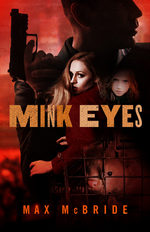
Mink Eyes by Max McBride

Mink EyesMink Eyes

by Max McBride

Paperback, 286 pg.
Arjuna Books, 2017

Read: December 13 – 14, 2017


Peter O’Keefe is a a Vietnam Vet and a P.I., the head of an agency that’s doing pretty well. He’s a divorced father of an adoring daughter (and really doesn’t deserve the adoration). He’s growing dissatisfied with his life, finding solace in a bottle. His frequent partner and friend, Make Harrigan brings him in to do some investigative work to help with a lawsuit being brought by the victims of a Ponzi scheme. This soon turns into much more — there’s a few murders, some scary criminals running around, and every reason to believe that the Ponzi scheme was just the tip of the felonious iceberg. Throw in a woman who might as well be named Ms. Femme Fatale, and O’Keefe finds himself in deep and deadly waters.

Possibly the best thing about this book is that O’Keefe isn’t a solo PI. He’s part of (okay, the head of) an agency — there are other cases being worked by his office, there are other operatives he can use and rely on. Sure, by and large, he acts like the solo PI that we’re used to reading, but he doesn’t have to — and doesn’t all the time. Just that little bit of fresh air makes all the difference.

The book takes place in 1986, which is a blessing and a curse. O’Keefe can’t just whip out a smartphone and learn something, he can be haunted by ‘Nam and still be believable in the action scenes, this particular Ponzi scheme works better in 1986 than it would today (or even the mid-90s). The curse comes in with the text, I felt disconnected, removed, from the action. I don’t feel that way about older Rankin (or whatever) books, or any of the Grafton books set in that time; Kinsey lives in the 80’s, O’Keefe just happens to be there. I think it’s just the way that McBride deals with the setting — I can’t be more specific than that, sorry — and I might be the only one who feels that way.

O’Keefe and Harrigan started their respective careers with a degree of idealism — maybe by the time they started their careers, they didn’t have much of it, but as kids they did. We know this because they tell each other that repeatedly. It’s gone now, and they use mindless sex and alcohol to fill in that lack. Neither of them has a lot of joy in anything they do, or can find any meaning in it — friends, family, work, none of that does the job for them. This also is something they tell us repeatedly. I love reading characters who have that kind of idealism — who can be compared to Arthurian figures — whether they hang on to it or not — but I don’t need them pontificating about it. I need that to be something that they’re tagged with, that someone else describes them using. Otherwise, the character doesn’t come out as noble, but as a stuffed shirt. (See the conversation between Rachel Wallace and Susan Silverman about Spenser in Parker’s Looking for Rachel Wallace.)

This lack of meaning, of ambition, leaves O’Keefe open to this weird obsession when he meets (or first sees) Ms. Fatale, Tag Parker — the wife of the Ponzi schemer. But the all-consuming nature of O’Keefe’s obsession, striking as fast and as thoroughly as it did, was hard for me to buy — especially as it seems to be reciprocated.

I don’t think you need to like every protagonist, but I do think it helps with this kind of book, and Peter O’Keefe is hard to like. He’s a self-pitying drunk, with no real reason to be. He really is a lousy Dad, despite what he might intend. That alone makes him hard to like, add in the way he throws out ethics, common sense and professionalism when it comes to Tag Parker, and things get worse. I spent too much of the book waiting for him to get his head on right and in the game — which didn’t come until it was so late that I’d given up on it (and even then, I’m not sure if I could believe it).

There’s a couple of hit men/mob employees (not sure what to call them) that act in a ways I just couldn’t buy. There’s a little petty bickering between the two that gets out of hand — the kind of thing that can work in an Elmore Leonard book, but in one that’s as straight-forward as this, it just flops. One knows where O’Keefe lives, probably his daughter, too, and spends months doing nothing — only moving to act in a sloppy and hazardous way that almost guarantees failure (unlike walking into O’Keefe’s house when he’s in a drunken stupor and shooting him then). I’m not convinced their boss is written much better, but his behavior didn’t bother me as much.

So here’s the thing — despite what you might think from the above, I liked this book. The writing was occasionally rough; I couldn’t buy the obsession; Tag’s character; or the aspirations (dashed or otherwise) of O’Keefe or his friend; etc. But man . . . when the plot was moving, when the O’Keefe (or others) weren’t taking a beat for reflection, I was into things. The action worked, McBride pulled you in and took you for a ride. Given that the book leaned that direction, it was a fun read — it’s only when it tried to be a little more than a straight-forward thriller that it faltered (not that it didn’t get some of that right — just not everything it tried).

I do think that people will enjoy the read, and can appreciate what McBride is going for, and do recommend it. But go in with your eyes open, it’s McBride’s first novel. Hopefully his second — assuming there is one — will be stronger (whether or not O’Keefe and the rest come back for more).

Disclaimer: I received this book in exchange for my honest opinions as expressed above.

—–

3 Stars

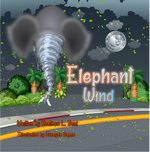
Elephant Wind by Heather L. Beal, Jubayda Sager

Elephant WindElephant Wind

by Heather L. Beal, Jubayda Sager (Illustrator)

Kindle Edition, 28 pg.
Train 4 Safety Press, 2017
Read: December 12, 2017


So the day care is having a field trip to a science fair and the local tornado siren goes off, the teacher rushes the kids to the shelter and then starts answering questions for the frightened kids. She calms them, tells them what’s going on and how they (and their parents) can stay safe in the middle of a tornado. It’s a great way to respond to a time like this and a great way to lure in the readers so they will absorb the same lessons.

Now, I’m not convinced that you’re going to get kids living in an area that has the tornado shelters and sirens, etc. that are that old and not have some clue about what’s going on (sure, maybe a couple of people who’ve just moved into the area, but not that many) — but this book isn’t trying to go for accuracy, it’s trying to teach something. Like, say, about tornado shelters and sirens to kids so they know what they are before being taken to a shelter by their day care teacher. Basically, sure, it’s a plot problem, but this book doesn’t care about things like that.

Storywise, it’s just different enough from Tummy Rumble Quake (well, this was actually published first, I guess, but I read them in this order. Still, technically, Tummy Rumble Quake is just different enough from this), which is a pretty tricky thing to pull off, but will keep some kids from tuning out — it’s not just a case of “here we go again.” The ways to stay safe are clear, and will help minimize the fearfulness of the situation.

Again, on behalf of parents with little musical ability, some tips on how to sing this mnemonic song (a tune suggestion, perhaps), would be very helpful and welcome. The inclusion of the song is a great idea.

Sager’s art did the job — good use of colors and details, without overwhelming the reader and distracting them from the text. The tornado-elephant mashup pictures were an inspired choice — one suggested by the text, no doubt, but the execution was spot-on.

A wonderful idea and I’m pretty sure a great help for those in areas where this is a lesson to be taught. I’d encourage parents and others to grab this one, too.

Disclaimer: I received this book from the author in exchange for this post and my honest opinion.

—–

3 Stars

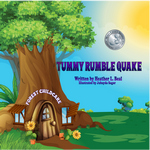
Tummy Rumble Quake by Heather L. Beal, Jubayda Sager

Tummy Rumble QuakeTummy Rumble Quake

by Heather L. Beal, Jubayda Sager (Illustrator)

Kindle Edition, 28 pg.
Train 4 Safety Press, 2017
Read: December 12, 2017


So the class (or whatever you call them) at this day care center is prepping for something called the Great ShakeOut (apparently a real thing — I’m glad to hear that it exists), which is an Earthquake Preparedness activity. As part of that, they learn a bit about what causes earthquakes, what to do during one to say safe, and get some questions answered about the safety of others.

So you get a little bit of a narrative — just enough to give the kids something to hang on to — and you run it through some basic lessons that are given in a way to help the reader (or person being read to) remember and learn from them. I don’t know if seismologists would use the comparison to a rumbling tummy, but how many of them write children’s books? It’s a comparison that’ll stick.

My main — really, only — gripe with this is the song. There’s no way to know how to sing this — I’m sure it’s best set to a familiar tune, but I have no idea what would work. I’d want to sing this to any kids I read this to/with — and I have so little musical ability that there’s no way I could even begin to guess what it should sound like. It’s a great idea, and just the kind of thing that’d help cement the lessons in the mind of the target audience. But without a tune, it’s just a little rhyme that isn’t nearly as effective.

Sager’s art does the job — the colors are great and eye-catching. It’s clearly drawn on a computer, but retains a hand-drawn feel. I can’t say I was dazzled by it, but I can also say that I’ve seen worse. I can’t imagine many children in the target audience wouldn’t find the illustrations suitable and effective (but probably not in those words).

This book is such a great idea — really. I like the concept, I think the execution is good, too. This is the kind of thing that’ll implant itself in little brains and stay there for years. Parents, teachers, librarians, grandparents, and so on would really do well to pick this up and put it in front of young eyes.

Disclaimer: I received this book from the author in exchange for this post and my honest opinion.

—–

3 Stars

Life and Death Behind the Brick and Razor: Code Red Diamond by Isaac Alexis, MD

Life and Death Behind the Brick and Razor: Code Red DiamondLife and Death Behind the Brick and Razor: Code Red Diamond

by Isaac Alexis, MD

Kindle Edition, 100 pg.
2017

Read: December 12, 2017

I wanted to use science to heal people and simultaneously teach them about how their bodies functioned and how to properly take care of their bodies. I also wanted to make a difference in the lives of people who traditionally did not have access to care to begin with. So I chose correctional medicine. It had its challenges but also opportunities to save many lives. In my opinion, it also had areas that seriously needed to be addressed.

Years after this decision, Dr. Alexis has turned to writing, using his experiences and point of view, to discuss some health tips and suggestions to help teens through some hot-button and pressing issues.

After a quick autobiographical chapter, the chapters revolve around the treatment of one particular patient, and then using that patient’s particular diagnosis (or lack thereof) and struggle as a launching point for health tips and/or discussion of some of the struggles that young people (or everyone) go through related to STDs, Drug Abuse, Gang Membership, etc.

There is so much energy, so much care, conviction, expertise behind this book that it’s a shame I can’t heartily endorse it. There’s a lot of heart here, and I admire that. But it’s just not that well written. Maybe it’d be more correct to say that it wasn’t that well-edited and re-written.

First of all, it needs a thorough editorial pass on basic grammar. But it needs some work on structure, too. Within the various chapters, things can seem to be randomly organized with a lack of transitions, or foundation for some of what he’s talking about. That page count of 100 pages should be 150 at a minimum — he really needs to flesh out everything just a bit. He’s got the material, he just needs to work with it a bit more so his readers can better understand both his experiences and perspective. The nature of the facility he works at — and its relation to other prisons and hospitals, is a good example — I think I have a decent idea how all that works out, but it takes using information from all parts of the book to come up with my guess; that shouldn’t be, I should’ve been given a one or two (or more) sentence description of that so I can appreciate his struggles to provide adequate care.

Now, what he doesn’t need to give us more of us medical jargon — often he’ll unleash a couple of paragraphs of almost non-stop medical terminology. This is not a bad thing, but I think he could help the non-informed reader a little bit more than he does with some of those streams of terminology. What I eventually decided is, the book reads like a transcript of someone telling stories about his life to a new friend, people just sitting around a table swapping stories. The hopping around, the unclear writing, and so on come across just the way people talk. If you think of it that way, the book is a lot easier to take.

If you can find some way (my suggestion or something else that works for you) to overlook/make your peace with Alexis’ style, you’ll probably enjoy this book. You can even appreciate the book without that — it’s just harder. Alexis writes from conviction and passion — with a healthy dose of morality. There’s a lot to be gained from this book. I liked Life and Death Behind the Brick and Razor, but it woulnd’t take much to make me like it sooo much more. He has important things to say, I just wish the book did a better job of providing the platform.

Disclaimer: I received this book in exchange for this post and my participation in this tour — I appreciate the opportunity, but my opinion remains my own.

—–

3 Stars

Page 30 of 55

Powered by WordPress & Theme by Anders Norén