Tag: 3 Stars Page 31 of 55

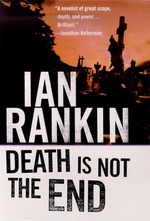
Death is Not the End by Ian Rankin

Death is Not the EndDeath is Not the End

by Ian Rankin
Series: John Rebus, #10.5

Hardcover, 73 pg.
St. Martin’s Minotaur, 1998

Read: December 4, 2017


I used Goodreads’ ordering of the Rebus series to determine when I read this novella — other sites might have led me to read this before Dead Souls, as it was published. I might have gotten more out of this book if I’d read it in that order, but it might have hurt the novel. I’m not sure.

Basically, this is one of the subplots of Dead Souls — Rebus’ looking for the missing son of a people he knew in school — in its original form. It’d be modified, expanded, and given a different ending in the novel. There’s a subplot, mildly related, involving organized crime and gambling — in much the same way that other crimes were associated with the missing person’s case in Dead Souls.

It is interesting to see how Rankin wrote something, and then came back a couple of years later and repurposed it. But that’s about all I have to say for this. It was interesting — but the version in the novel is better. The subplot didn’t do much for me, either. It was okay, but it really didn’t seem necessary.

The completist in me is glad I read it, but I think I’d have been okay with missing it, too.

—–

3 Stars

2017 Library Love Challenge

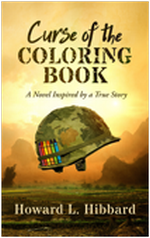
Curse of the Coloring Book by Howard L. Hibbard

Curse of the Coloring BookCurse of the Coloring Book: A Novel Inspired by a True Story

by Howard L. Hibbard

Kindle Edition, 335 pg.
Ghost Dog Enterprises, Inc., 2017

Read: November 21 – 24, 2017


Herald Lloyd is an attorney whose life is falling apart — he’s drinking to excess regularly, his wife/business partner is continually threatening to leave, and he’s committed a pretty obvious bit of malpractice while being uninsured — which will pretty much ruin his practice and family. All of this can be traced back to his drinking, he’s self-medicating to deal with recurring nightmares, flashbacks and stress related to his time serving in Vietnam (all of which are probably exacerbated by the drinking in a wonderful loop). We know that because he tells everyone that he’s dealing with his symptoms just fine on his own in just about every conversation he has. Because what says “dealing with” better than constantly talking about how you’re dealing with it?

The novel focuses on the actions that take place in 1988, where Lloyd deals with crisis around his malpractice and his efforts to dodge the repercussions of it. The characterization of everyone is shallow, the writing is stiff, the dialogue is cringe-worthy, the plot is predictable (yeah, it’s based to some degree on actual events, but the presentation of the plot is predictable).

The book’s saving grace (and, at times, the only thing that kept me reading) were the flashbacks to Lloyd’s time in Vietnam. They (by my entirely unscientific reckoning) make up about sixty percentage of the book They were still too-frequently sloppy and self-indulgent with cringe-worthy dialogue. However, there was a life to them, something you could build a novel on (thankfully, because that’s just what Hibbard was trying to do). Seriously, give me a novel based on this material alone, and my take will be much more encouraging. There’s a great mix of types of material — comic, dark comic, horror, slice of life, friendship, loyalty — just about everything you could ask for when Lloyd thinks about (willingly or not) his friends, subordinates, commanders, antagonists from his years in Asia.

There’s quite a lot of material featuring flashbacks to a week of R&R Lloyd spent with a prostitute. His wife, Thea, didn’t enjoy him reliving that so often — and who can blame her? — and I didn’t either. Calling them “gratuitous” feels like a tautology, honestly. I’m going to stop there because this threatens to take over this post, and no one wants that.

I’m going to give this a 3 Star rating because the Vietnam material was so strong (minus the stuff with the prostitute), the 1988 material on its own wouldn’t even get 2 from me. A good editorial pass or two would’ve helped things tremendously — I appreciate what it seems that Hibbard was going for here, but good intentions don’t make good books. Good writing does, and there just wasn’t much of that here.

Disclaimer: I received a copy of this book in exchange for my honest opinion.

—–

3 Stars

All Hands on Pet! by Susan E. Davis, PT

All Hands on Pet!All Hands on Pet!: Your How-To Guide on Home Physical Therapy Methods for Pets

by Susan E. Davis, PT
Paperback, 216 pg.
Joycare Onsite, LLC, 2017

Read: November 20, 2017


This is not the book you typically see me talk about — and when I was approached to give it a read and review, my initial response was to give it a pass. But we adopted an 11 year-old dog this Spring, and I’ve been thinking a lot about canine health. Which makes me right in the target audience for this book, actually.

I sort of have to assume that the medicine and science behind this book is right and/or responsible. Because really, unless the book called for the use of Windex to treat common maladies or something as useless as “mild doses of physic to work on the bowels,” there’s zero chance I’ll be able to suss out the problem. Instead, I can talk about a couple of things: is it useful? Can it be understood by lay readers?

Yes, to both, thankfully.

Yes, you have to be a dedicated reader — focused and concerned — to get through a little of the language. But what pet owner with an ailing companion isn’t focused and concerned? Yes, there was a lot of what Davis talked about that was Greek to me, but if I had a dog/cat/lizard/whatever that had a problem along the lines she was talking about; or had received [technical term X] as a diagnosis, I’d know right where to go. Part of the problem for me at the moment, is my old girl isn’t a prime candidate for Canine Hip Dysplasia, so it was hard to connect to those pages — it’s not a book to read cover to cover. It’s a resource. But from what I can tell, she gives some pretty decent sounding advice for working with puppies to head off that problem.

Not only some pretty decent sounding advice, there’s some handy photographs with good diagrams added so you know just what to do. There are plenty of nice anecdotes and illustrations from Davis’ casework throughout the book to anchor the instructions. Both of these features cannot be overstressed as valuable.

My favorite part comes from Chapter 8, “Embracing the Warrior Mentality at Home,” discussing the attitude and approach that pet owners should take when helping their ailing/injured pets. I wish this chapter — or at least the initial sections of it — had appeared earlier in the book. I just think it would’ve flowed a little better. But I’m glad it was there.

Was I able to get something to help my girl? Maybe. I definitely know where to look if it comes to it. I can see this as a valuable tool in the toolbox for every pet owner.

Disclaimer: I received a copy of this book in exchange for my honest opinion and this post.

—–

3 Stars

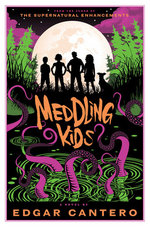
Meddling Kids (Audiobook) by Edgar Cantero, Kyla Garcia

Meddling KidsMeddling Kids

by Edgar Cantero, Kyla Garcia (Narrator)

Unabridged Audiobook, 12 hrs and 53 mins
Random House Audio, 2017

Read: October 27 – November 11. 2017


Going to be brief here, this is one of those books that’s all about the concept, if it’s up your alley, you’ll like the book.

The Blyton Summer Detective Club was a group of kids who met up on school breaks in a small Oregon town from their various homes/schools who solved mysteries à la the Hardy Boys, Three Investigators, Nancy Drew and most importantly, Scooby and the gang. Time after time, they’d uncover the solution to a mystery plaguing the community — usually resulting in finding a man in a rubber suit, explaining everything. Meddling Kids asks the question: what if the solution to the mystery wasn’t (just) a man in a rubber suit? What if the kids stumbled on to something actually mystical, real monsters, etc.?

Following their last case, the gang’s lives went in separate ways — mostly downhill. Incarceration, mental health treatment, academic struggles, addiction, and so on. Finally, more than a decade later, the Detective Club reunites to return to the scene of their last triumph to see just what they missed (or suppressed).

Cantero’s execution of this premise was spot-on, early on he left the satirical component/pop culture commentary behind (pretty much), and just told the story, using that as a foundation. Really not much more to say then that.

Kyla Garcia’s narration was pretty good. A time or two I had a little trouble following it, but I think that’s reflective of the text — which doesn’t seem like the easiest to translate to this medium (not a slight on Cantero or Garcia’s talents there). On the whole, though, she did a fine job bringing this book to life and I’d enjoy hearing another book she narrated.

An entertaining celebration of the genre, a rousing adventure, and a pretty creepy story. Pretty much all you could ask for.

—–

3 Stars

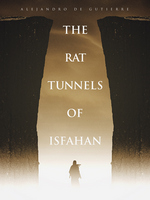
The Rat Tunnels of Isfahan by Alejandro de Gutierre

The Rat Tunnels of IsfahanThe Rat Tunnels of Isfahan

by Alejandro de Gutierre
Series: Scorpions and Silk, #1

Kindle Edition, 75 pg.
De Gutierre, 2017

Read: November 9, 2017

I wasn’t crazy. Not like most of the tortured souls I shared the prison with. Some wandered, muttering and bumping into walls. Some sat unmoving for hours, staring into a darkness even the desert sun couldn’t penetrate, their eyes seeing but not seeing, ears hearing but not listening. And a sad few would break; they would weep, and rock, and cry out. These were the broken: shuffling from place to place, barely eating, barely drinking, numbly watching the flesh drip from their bones, oblivious to the blood slowing in their veins.

We know very little about the central (practically only) character in this novella — he’s a prisoner, somewhere in Persia, sometime long ago. That’s about all that we know — for that matter, that’s about all he knows. His imprisonment has left him so psychologically shattered that he can’t remember anything about himself. He has children somewhere, he thinks.

We see him struggle to survive, struggle to get free, struggle to convince himself that he’s not crazy, and return to/rebuild his life. I don’t know much about him, but I like him, and I want to see the best for him.

I don’t think it’s possible for the word “visceral” to show up more in my notes for a 75-page novella than it did here. You feel this story as much as you read it — the almost-alien creepiness of a scorpion, the isolation, the fear, the rat chewing on a toe — all of it, de Gutierre puts you right in the mind of his amnesiac (his having no name helps there).

Until this story spools out a bit more — maybe volume 2, maybe until the end — I’m not sure what I think of the story, plot or characters. I can tell you that I want to know these characters better, I want to find out what happens to them, but that’s as far as I can say on that front. So, I’m left with de Guiterre’s writing — which is just what this story needs. He knows what he’s doing, and has got me hooked, even if I don’t have a clue about what he’s doing. This atmospheric, visceral read will leave you demanding more, soon.

Disclaimer: I received a copy of this novella from the author in exchange for my honest opinion — and I’m glad he gave it to me, because I wouldn’t have heard of it otherwise.

—–

3 Stars

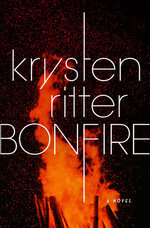
Pub Day Repost: Bonfire by Krysten Ritter

BonfireBonfire

by Krysten Ritter
eARC, 288 pg.
Crown Archetype, 2017
Read: October 6 – 10, 2017

When you grow up in a place called Barrens, you want to get out — especially if it’s an area with limited job options, a struggling agricultural industry, and nothing else to commend it. Although, the name alone would probably justify wanting to get out even if the economy and culture were richer. But as is the case with too many small towns like this, few manage to get out. Abby Williams headed for Chicago two days after she graduated from high school, went to college and law school, becoming an associate at an environmental firm — and only sometime after that did she return.

She returns with her friend (a gay black man, who tends to stick out in the small, rural Illinois town), a first-year associate and a couple of students to investigate some claims about the water in the local reservoir. The town’s only major employer is called Optimal Plastics, which has been dogged by rumors of shoddy environmental practices and health problems for years — including before they came to Illinois — and the team is going to see if they can make these rumors and concerns stick this time.

As they dig into records, tests, regulatory reports and whatnot, Abby notices something. Optimal Plastics is clean. Absolutely clean — on paper, there’s never been a company so clean and responsible. Which just seems impossible, no one is this perfect. Abby smells blood in the water and goes on the attack.

At the same time, in a small town, you can’t help but run into people you don’t want to see again — which is pretty much everyone from High School. The girls who used to torment her, the guy she had a large crush on, the people she wasn’t so sure about. It takes mere moments for her to get embroiled (or re-embroiled) in the same relationships, problems, gossip that she’d escaped from. From “the old crowd” (that was never Abby’s crowd), she gets her insight into Optimal Plastics — all the good they’ve done for the town, the numbers of people they employ, the money they pour into the schools, and so on. So much good that no one wants to take a good look into them, the price is potentially too high.

This reminds her (not that she needed the reminder) of some problems potentially tied to the company back when she was in high school — girls that seemed inexplicably sick. What else could it be from? She’s told time and time again by her friend that what happened over a decade ago doesn’t matter,what matters is what the company is doing now. Abby’s not convinced, and keeps digging at this — even if she agrees with him, the ghosts that haunt her will not allow her to let it go. Abby becomes more and more focused on this aspect of the investigation — flirting with and maybe crossing the lines into obsession.

Oh, and did I mention her father? As you may have picked up from the fact I mentioned earlier that she hadn’t returned to Barrens since high school that she’s not that close to anyone there — including her father. The exploration of and changes to their relationship is one of the more emotionally satisfying storylines in the book.

I’m from a small town, I get the feeling of never actually escaping from it — returning to the same place you left. But I’m willing to bet that even readers from larger towns/cities can relate to this. You can take the girl out of High School, but you can never take High School out of the girl, I guess. Ritter deals with the emotional realities and hazards like a pro — there’s not a beat that seems false or forced. The manner in which Abby makes connections, interweaves her look into what happened years ago with what’s going on right now is great (for the reader). The secrets she uncovers are chilling and unthinkable — yet entirely believable.

Would I have liked to have seen more with her colleagues reacting to Barrens, helping her follow the leads she’s interested in, or just interacting with her at all? Absolutely — but I’m not sure how Ritter could’ve done that without more effort than it’s probably worth. Could she have done more with her Chicago-friend sticking out in Barrens? Yup, but it might have distracted from the overall plot (but if she’s going to remark on it as often as she does, she should do something on it — it comes across as urban snobbery). I think that’s almost something I could say about everything in the book. I don’t know that I needed a lot more of everything, but I think every bit of the story, the characters, the mystery, etc. could use a little bit more development, a little more space. Not much, just a little bit.

I liked Abby almost immediately — from the fairly disturbing Prologue, on through to her struggles in town and questionable choices, you root for her and hope that she finds an element of peace. Her coworkers are great. It’s hard to decide what you think about some of her old high school friends right away, and probably best no to decide too much about anyone in town until The Reveal at the end.

The writing is crisp and compelling — Ritter has some really nice turns of phrase as well. There’s a couple of times that Abby is drunk and/or the influence of alcohol plus other things that were just excellent. Abby’s inability to keep her perceptions in line, to have a coherent recollection about everything she experiences through this time — that’s just excellently executed.

I won’t say that it’s one of the best books I’ve read this year — if there’s a plot point here that you haven’t seen, I’ll be surprised. If there’s a character, character arc, or anything like that you haven’t seen before, I’ll eat my hat. Does it matter? Nope. The way that Ritter tells the story, how she treats the characters and shows them to the reader — how she executes things, that’s the key. It all worked really well, I was thoroughly entertained, even held in suspense. Even if in retrospect I decided that I’d seen it all before, I didn’t see a lot of it coming — or I’d seen story elements X and Y a few dozen times, I hadn’t seen them combined the way Ritter did. This is a solid first novel, and I hope there’s at least a second on the way.

Disclaimer: I received this eARC from Crown Publishing via NetGalley in exchange for this post — thanks to both for this.

—–

3 Stars

Y is for Yesterday by Sue Grafton

Y is for YesterdayY is for Yesterday

by Sue Grafton
Series: Kinsey Millhone, #25

Hardcover, 483 pg.
Marian Wood Books/Putnam, 2017

Read: October 24 – 27, 2017

…all I had to do was return the retainer and that would have been the end of it.

But I was already hooked. The little terrier in my nature was busy chasing after the problem, throwing dirt up behind me as I dug my little hole. There was a rat down there somewhere and I would have it for my very own.

It’s this attitude that won me to Kinsey’s side, and has kept me reading her.

Fritz McCabe has just been released from prison — ten years after being given the maximum sentence for being part of a murder as a high school student. Now his parents are being blackmailed with the threatened release of a videotape (seeming?) to show him (and the others involved in the murder) participating in a sexual assault on a drunk/high younger girls. If this tape leaks, he will be put back in prison, doing adult time. The legal bills will destroy his family, and they know that the blackmailer’s demands will eventually do the same. Kinsey’s hired by the parents to put an end to the blackmail. She is, rightly, horrified by the events on the tape, but wants to help the parents.

While she investigates what happened to the tape for the decade-plus since the murder (and the brief time between the making of the tape and the murder), Kinsey investigates the events surrounding the creation of the tape (how consensual was it?, was it just a joke by all involved?) — and keeps brushing up against the murder. What actually happened? We get flashbacks to the day of the murder (and the lead up to it), so that we see a lot more than Kinsey will get exposed to through memories, dishonest witnesses, and news stories. It’s pretty obvious to the reader what actually happened in 1979, and what’s probably going on in 1989, early on — we don’t get the full picture until Kinsey does, but then it’s just confirmation. The final reveal on this was nevertheless very satisfactory — possibly the best part of the book.

Meanwhile, the serial killer from X is still lurking around, trying to find some of the evidence he left behind — and is harassing Kinsey while at it. This is by far the most interesting of the stories, but it can’t seem to keep Kinsey’s attention the way it should. She even notes that herself — clearly it’s something she doesn’t want to think about, and who can blame her? But how do you not think about it? The ending to this story wasn’t as satisfying to me, but it worked, and wasn’t (exactly) what you’d expect.

The flashbacks didn’t work as well for me as they have in previous novels, I’m not sure that I can put my finger on why, but Grafton didn’t pull it off as well. It could be related to the fact that everyone in this story was thoroughly unpleasant — the only person you could kind of like was the girl you knew was going to die. Actually, I liked her a lot — even though in the opening chapter I knew she was going to be dead for a decade by the time Kinsey gets involved. One other member of the group who served time related to the murder has made the best of his life that he can following his release from prison — he’s really turned his life around, and I could admire him (in 1989).

Once things heat up on the serial killer side of things, I really liked everyone involved — it was a collection of great characters. As I write this, I realize just how much I wish the book focused on this story (I honestly didn’t realize that until now). It is really hard to talk about, however, beyond what I’ve said already, so I’ll just leave it at that.

There’s a few things going on in her personal life — with Henry, her cousin, Jonah, etc. I’m not going to bother with it, typical judgmental, cantankerous Kinsey — and that’s about it. I don’t think I’ve ever got too concerned about historical accuracies in these books before, but there were a couple of things that people said that just didn’t seem like 1989 to me, maybe mid-90s. But it didn’t distract me too much or take me out of the story for too long (which is the make or break thing for me when it comes to this kind of thing).

It wasn’t bad, but it sure wasn’t good — Y is for Yesterday will scratch the itch that long-term Kinsey fans have, but won’t do much for newer readers.

—–

3 Stars

2017 Library Love Challenge

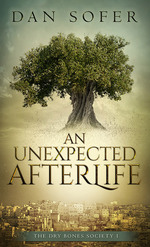
An Unexpected Afterlife by Dan Sofer

An Unexpected AfterlifeAn Unexpected Afterlife

by Dan Sofer
Series: The Dry Bones Society, Book One

Kindle Edition, 285 pg.
2017

Read: October 23, 2017


Moshe Karlin wakes up after his birthday party got out of hand — so out of hand that he doesn’t remember drinking as much as he clearly did, he doesn’t remember what happened to his clothes, or why he’s in the cemetery on the Mount of Olives. He makes it home, crawls into bed and finds another man in his bed with his wife. The man (his best friend and business partner, Avi) and his wife are pretty freaked out — as is Moshe. Moshe because that’s the last thing he expected to find in his bed, and the other two are freaked out because Moshe has been dead for 2 years.

Moshe might be alive again, but his life is gone — his business is a wreck, his daughter doesn’t recognize h im, and his wife won’t talk to him. But his neighbor a rabbi will listen to him, and talks to him about the believes around the Resurrection. They soon discover another person claiming to be resurrected — she has no memory about anything, not her name, cause of death, anything. The two bond quickly and begin working together to provide for their new lives, to understand them, and to try to get Moshe’s family back. Along the way, they bring in more of the Resurrected to help out. It’s not a large, general resurrection at work, or even a stream of them — but it is a decent trickle.

Their rabbi friend tries to get them in front of the religions leaders in the culture, but are rebuffed. Next thing they’re fighting to survive. They have no legal standing, a need for money and shelter, jobs, and some way to make people pay attention to their claims.

There’s a prophet running around, too. An accident put shim in the hospital and takes him off the chessboard for most of the game, but he’s aware of Moshe and his friends as well as knowing what that means for the world. If only the medical establishment would let him get to work. His character is plenty interesting and I found myself grinning at the situations he found himself in.

The writing is crisp, nothing too flashy, but it’s more enough to keep you reading. Sofer imbues his characters with a good deal of humanity, of hope. There’s a splash of humor that helps a lot, too. I’m not sure why Moshe is so taken with his wife, but he is — and you have to admire his dedication to her (and if we had some more time with her, I’d probably agree with him). The reaction he has to his daughter not recognizing him is hard to take. All of the resurrected are having difficulty fitting back in to the world — especially when they try to fit in to their old lives — and that’s a very interesting thing to see play out.

I’m really uncomfortable about the subject matter — it’s one thing for McGuire or Hearne to pillage myths of the Tuatha Dé Danann or Riordan to pillage the Greek/Roman/Egyptian/Norse stories. But it’s something very different for someone to utilize figures and beliefs of a religion like Judaism — especially when it’s not just beliefs, but utilizing actual figures from the religion for your own means seems to cross a line to me (and yes, I’d say the same about Christian fiction, for example). I’m not saying Sofer’s wrong to do this, or that he does so with any measure of discernible disrespect, but I figured I have to throw up a warning.

If you can get past the use of the religious characters/events, I’d expect that you could like this one. I’m not sure I can get behind it, but it’s good, I can tell you that.

Disclaimer: I received this book from the author in exchange for this post and my honest opinion — my thanks to him for this.

—–

3 Stars

The Dark Prophecy by Rick Riordan, Robbie Daymond

The Dark ProphecyThe Dark Prophecy

by Rick Riordan, Robbie Daymond
Series: Trials of Apollo, #2

Undabridged Audiobook, 12 hrs, and 31 min.
Listening Library, 2017

Read: October 5 – 11, 2017


I’m not sure how to give a plot synopsis here — basically, it’s the continuation of the Trials of Apollo. He has another task to accomplish — another of the new emperors to take down before the third one, in the next book. It’s the same ol’ set up that has served Riordan so well — and will continue to do so for years to come.

Basically, Apollo/Lester has to go and find another Oracle. To do so, really, he has to face a lot of people that he’s hurt/disappointed over the millennia. He learns a lot about himself, matures a bit. That part was good — and the whole thing was entertaining. But it felt stale. I liked The Hidden Oracle a lot and was excited to see where this series went. Now, I’m not so sure. I’ll finish the series, but with greatly diminished expectations.

Not that it got into details, but there was a lot more intimated/flat-out said Apollo’s sexual history than I’m comfortable with for a MG book. The previous books in the Percy-verse suggested sexual orientation and activity, there was some romance, but this went much further than any of those. Honestly, it went a step too far. If this wasn’t a part of the Percy-verse, or was clearly marketed toward older readers, it wouldn’t have been that bad and I wouldn’t have said anything about it. But that’s not the case here.

As far as the audiobook goes, it was rough. Robbie Daymond was very aware that he was reading amusing material and he read it like each line was a punchline. It was the vocal equivalent of mugging for the camera, if you will. Now, there were a couple of serious and poignant moments, and Daymond pulled those off well, but otherwise it was tough to listen to.

I didn’t like the narration, and didn’t think the story/writing was as crisp as the first book in the series. But it was still entertaining enough. This isn’t the one to start reading Riordan. But it’ll do for his older readers.

—–

3 Stars

Bonfire by Krysten Ritter

BonfireBonfire

by Krysten Ritter

eARC, 288 pg.
Crown Archetype, 2017

Read: October 6 – 10, 2017


When you grow up in a place called Barrens, you want to get out — especially if it’s an area with limited job options, a struggling agricultural industry, and nothing else to commend it. Although, the name alone would probably justify wanting to get out even if the economy and culture were richer. But as is the case with too many small towns like this, few manage to get out. Abby Williams headed for Chicago two days after she graduated from high school, went to college and law school, becoming an associate at an environmental firm — and only sometime after that did she return.

She returns with her friend (a gay black man, who tends to stick out in the small, rural Illinois town), a first-year associate and a couple of students to investigate some claims about the water in the local reservoir. The town’s only major employer is called Optimal Plastics, which has been dogged by rumors of shoddy environmental practices and health problems for years — including before they came to Illinois — and the team is going to see if they can make these rumors and concerns stick this time.

As they dig into records, tests, regulatory reports and whatnot, Abby notices something. Optimal Plastics is clean. Absolutely clean — on paper, there’s never been a company so clean and responsible. Which just seems impossible, no one is this perfect. Abby smells blood in the water and goes on the attack.

At the same time, in a small town, you can’t help but run into people you don’t want to see again — which is pretty much everyone from High School. The girls who used to torment her, the guy she had a large crush on, the people she wasn’t so sure about. It takes mere moments for her to get embroiled (or re-embroiled) in the same relationships, problems, gossip that she’d escaped from. From “the old crowd” (that was never Abby’s crowd), she gets her insight into Optimal Plastics — all the good they’ve done for the town, the numbers of people they employ, the money they pour into the schools, and so on. So much good that no one wants to take a good look into them, the price is potentially too high.

This reminds her (not that she needed the reminder) of some problems potentially tied to the company back when she was in high school — girls that seemed inexplicably sick. What else could it be from? She’s told time and time again by her friend that what happened over a decade ago doesn’t matter,what matters is what the company is doing now. Abby’s not convinced, and keeps digging at this — even if she agrees with him, the ghosts that haunt her will not allow her to let it go. Abby becomes more and more focused on this aspect of the investigation — flirting with and maybe crossing the lines into obsession.

Oh, and did I mention her father? As you may have picked up from the fact I mentioned earlier that she hadn’t returned to Barrens since high school that she’s not that close to anyone there — including her father. The exploration of and changes to their relationship is one of the more emotionally satisfying storylines in the book.

I’m from a small town, I get the feeling of never actually escaping from it — returning to the same place you left. But I’m willing to bet that even readers from larger towns/cities can relate to this. You can take the girl out of High School, but you can never take High School out of the girl, I guess. Ritter deals with the emotional realities and hazards like a pro — there’s not a beat that seems false or forced. The manner in which Abby makes connections, interweaves her look into what happened years ago with what’s going on right now is great (for the reader). The secrets she uncovers are chilling and unthinkable — yet entirely believable.

Would I have liked to have seen more with her colleagues reacting to Barrens, helping her follow the leads she’s interested in, or just interacting with her at all? Absolutely — but I’m not sure how Ritter could’ve done that without more effort than it’s probably worth. Could she have done more with her Chicago-friend sticking out in Barrens? Yup, but it might have distracted from the overall plot (but if she’s going to remark on it as often as she does, she should do something on it — it comes across as urban snobbery). I think that’s almost something I could say about everything in the book. I don’t know that I needed a lot more of everything, but I think every bit of the story, the characters, the mystery, etc. could use a little bit more development, a little more space. Not much, just a little bit.

I liked Abby almost immediately — from the fairly disturbing Prologue, on through to her struggles in town and questionable choices, you root for her and hope that she finds an element of peace. Her coworkers are great. It’s hard to decide what you think about some of her old high school friends right away, and probably best no to decide too much about anyone in town until The Reveal at the end.

The writing is crisp and compelling — Ritter has some really nice turns of phrase as well. There’s a couple of times that Abby is drunk and/or the influence of alcohol plus other things that were just excellent. Abby’s inability to keep her perceptions in line, to have a coherent recollection about everything she experiences through this time — that’s just excellently executed.

I won’t say that it’s one of the best books I’ve read this year — if there’s a plot point here that you haven’t seen, I’ll be surprised. If there’s a character, character arc, or anything like that you haven’t seen before, I’ll eat my hat. Does it matter? Nope. The way that Ritter tells the story, how she treats the characters and shows them to the reader — how she executes things, that’s the key. It all worked really well, I was thoroughly entertained, even held in suspense. Even if in retrospect I decided that I’d seen it all before, I didn’t see a lot of it coming — or I’d seen story elements X and Y a few dozen times, I hadn’t seen them combined the way Ritter did. This is a solid first novel, and I hope there’s at least a second on the way.

Disclaimer: I received this eARC from Crown Publishing via NetGalley in exchange for this post — thanks to both for this.

—–

3 Stars

Page 31 of 55

Powered by WordPress & Theme by Anders Norén