Tag: 3 Stars Page 32 of 55

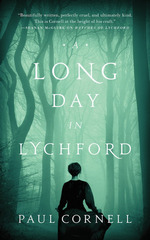
A Long Day in Lychford by Paul Cornell

A Long Day in LychfordA Long Day in Lychford

by Paul Cornell
Series: Witches of Lychford, #3

Kindle Edition, 128 pg.
Tor.com, 2017

Read: October 10, 2017


Lychford’s apprentice witch (not that anyone knows that), and owner of Witches, a magic shop (not that many take it seriously), Autumn has had a bad day. So bad, that a police officer has dropped by the next morning to interrupt an impending hangover with questions about it. She had a fight with her teacher and employee that left both fuming and ready to consider ending the relationships, and then she went to a bar not-really-looking for a fight, but ready for it when it showed up.

But when you’re one of three women responsible for protecting the borders between our world and the rest, and you’re pretty magic-capable, your bad days can have pretty catastrophic consequences. Without getting into the details, she messes up the borders, the protections — the magic that keeps all the things and people and whatevers out of our world that we’re not equipped to deal with (in any sense).

Meanwhile, Judith is dealing with the aftermath of the fight with Autumn in her own way. Which boils down to being crankier than usual, and then dealing with the fallout from Autumn’s error. Judith is primarily concerned with problems that the other two aren’t aware of and have little do to with magic. There were a line or two that I think were supposed to be spooky or creepy in her POV sections that really were just sad (my guess is that Cornell wrote them to work on both levels, but they really only served as the latter for me).

Lizzie got put on the backburner for the most part in this book — not that she’s absent, but she doesn’t have that much to do. Which is fine — she can’t be the center of each entry in this series, but I’d have preferred to have seen a bit more from her. I enjoyed the references to Lizzie’s Fitbit, it was nice to have just the hint of lightness in this otherwise grim story. Actually, the other thing that came close to fun in this book also came from Lizzie’s POV. She’s not the typical source for that, and it’s nice to see that she’s capable of it.

I wish these were longer — I know it’s supposed to be a series of novellas, but this one in particular makes me want for more — more development, more plot, more character interaction. I don’t think I noticed it as much in the previous installments, so maybe it’s something about this one. Still, this is a good story and time spent in Lychford is always rewarding.

In the end, this served primarily to set the stage for Witches of Lychford #4 — and maybe more. Yes, the story was interesting, and it was good to have this look at Autumn, and the whole Brexit tie-in was interesting, but this just didn’t work for me quite the way the others did. I have high hopes for the next, it’s not like I’m done with this or anything, I just wanted more.

—–

3 Stars

All Tucked Inn (Audiobook) by Mindy M. Shelton, Tia Sorenson

All Tucked InnAll Tucked Inn

by Mindy M. Shelton, Tia Sorenson (Narrator)
Series: Elizabeth Burke, #1
Unabridged Audiobook, 5 hrs 46 min.
2016

Read: September 18 – 20, 2017


Lizzie Burke lives with her widowed mother and younger brother in her mother’s B&B, which is near the college she starts when we meet her. She makes a few friends on the first day of classes, and things seem to be going pretty well. Until one of her new friends goes missing — and many (not Lizzie) assume she’s been killed. Especially when another girl goes missing not too long after this. Now, as Lizzie and her friends are Criminal Justice majors, I assumed they’d start investigating things on their own, meddling with the official investigations, and get the killer themselves. But nope. They’re just on the sidelines, worrying about their friend and the others — until things happen, forcing them to action.

Meanwhile, Lizzie deals with several guys expressing various degrees of romantic interest in her. All of whom are creeps of the first order. Seriously, she’s like a magnet for them. Hopefully before the next book in the series, Lizzie takes a long, hard look at herself and comes up with some basic standards — or decides not to date until she gets her Master’s. I wasn’t sure what to think of Lizzie for most of the book really, she was pretty passive as protagonists go. But once she started actively doing things, I liked her a lot.

The tone is light and optimistic — there’s some good relationships established between Lizzie and her family, as well as her new friends. It’s basically a cozy with a few very dark and non-cozy chapters thrown in. I think the serial killer’s POV chapters could be stronger and more nuanced — but man, it’s hard to get that right if you’re not Thomas Harris or Val McDermid. Mostly, it’s a bunch of nice people watching something horrific happen in their midst and trying to keep going, and most of that is something I can really get behind.

But I did have a few problems, and I’m only going to talk about them because I think that the book as a whole demonstrates that Shelton has the good to lose them in future books — and, they all took me out of the moment, ruining whatever illusion she’d built with her storytelling.

The police (and/or FBI) procedural aspects were horrible — FBI doesn’t have detectives, they wouldn’t do a press conference that way, there’s no need to get college kids pouring through public records when there are literally people at police stations and/or FBI offices that have access to the same information (and more) who can get it faster. There’s some other spoiler-y problems, too. On the one hand, the problems don’t destroy the story, but man, they took me out of the moment, out of the story long enough to make me wonder about why the author couldn’t take a moment in revision to fix things like that.

My biggest problem was that I successfully identified the killer when they first showed up — chapters ahead of the first abduction, and I never had any reason to question that identification. Which would be one thing if I thought I was supposed to make that identification, but I don’t think I was. The various herrings weren’t just red, they were crimson, maroon, and fire truck red.

The writing itself was okay — there was one moment that Shelton did a really nice job showing that X was attracted to Y, and then followed it up with telling us X was attracted to Y, absolutely ruining the moment. There were a few more things like that — it’s almost as if Shelton doesn’t trust herself or her readers (or both). Another moment that really stuck out to me was where she described someone’s nickname as “a funny nickname” before describing where it came from — no one gets other kinds of nicknames that aren’t just abbreviations of their names. There aren’t depressing nicknames, memento mori nicknames, etc. Just tell us its a nickname, describe the incident and move on — better yet, say R is called S because . . . and let the reader supply “nickname” and “funny” to it. Most of all, trust your readers — they’re pretty clever.

A few other niggling problems — the chronology at a point or two is hard to follow; Lizzie says a lot with looks, which is fine if that’s how she is, but maybe the sentence structure could change a little when she does it? The other part that was hard for me was trying to figure out when this took place — and yes, it’s possible that the year was given in the opening seconds of the book and I missed it. But almost no one used call phones (and one who did, flipped it closed), students used pencils and paper in class — yet it seemed to be fairly contemporary otherwise. There were enough references to CSI to make it post-2000, but I’m not sure how much so.

Sorenson did an all right job with the narration — although I’m pretty sure she missed a pronoun or two, and at one point she read a word that doesn’t exist — I had to rewind and listen to the sentence 5 times to figure out what she actually said and then translate it into English. Maybe it was a typo in her copy and she just rolled with it, or maybe she just bobbled the word. Either way, that’s just not good.

Yeah, I had a lot of negative(ish) things to say, but I still recommend the book. This book did its job — it entertained me just enough to keep going and it introduced me to some characters I’d like to spend some more time with (and most of them survived), even if I wasn’t crazy about a lot of their choices/actions throughout the book. I am really very curious about what Shelton is going to do with this series, how is she going to put Burke in the middle of another criminal investigation — will she have learned something from this experience that will help her?

Disclaimer: — I received a copy of the audiobook from the author in exchange for my honest opinion. Which may not have gone as well as she hoped. I appreciate the book, and the interaction with her (she’s pretty funny), but the opinions expressed where fully mine.

—–

3 Stars

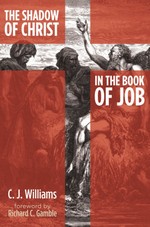
The Shadow of Christ in the Book of Job by C. J. Williams

The Shadow of Christ in the Book of JobThe Shadow of Christ in the Book of Job

by C. J. Williams

Paperback, 96 pg.
Wipf and Stock, 2017

Read: August 27, 2017


Just some quick thoughts on a quick read…

Williams begins this brief book with a chapter on typology, what is it and why should we use it. Essentially, his definition of a type is: a living prophecy concerning God’s promised (centering on Jesus) for the benefit of God’s people throughout the ages. Which is a pretty handy definition, made more so by the rest of his discussion.

That accomplished, Williams applies it to the book of Job, and its central figure. Essentially, he gives a chronological survey over 10 chapters showing the typology involved. I found these chapters refreshing in their perspective, and instructive for how to look at other biblical texts in the same light. The last chapter, “What the Book of Job Means Today,” applies it to the Christian reader, what can his takeaway be from the book as he seeks sanctification, which was pretty helpful.

This is not a commentary on Job (I’d love to read one in this vein, especially by Williams), he’s brief by design. I think he could’ve been slightly less brief without making the book inaccessible or too involved. This brevity frequently frustrating — he’ll give an idea in a sentence, or disagree with a thought in a sentence, that could easily have been a paragraph (the latter was more annoying to me). Just a little more development of some of these ideas would’ve greatly improved the book.

A helpful way of seeing how typology can be faithfully utilized, as well as a reminder of the character of our Lord seen in the lives of His saints. A good use of an hour or two of your time.

—–

3 Stars

#Next Level Manners by Rachel Isgar, Ph.D.

#Next Level Manners#Next Level Manners: Business Etiquette For Millennials

by Rachel Isgar, Ph.D., Sarah Lane (Illustrator)
Kindle Edition, 78 pg.
Please Pass the Manners, 2017

Read: July 22, 2017


This isn’t a traditional etiquette book, its focus is on business manners for Millennials. It’s about equipping the reader so that they have

a solid set of manners at hand will give you a basic strategy for the type of interactions that will raise that bar [on your personal brand]. The right business etiquette will make you stand out in all kind of great ways.

Isgar does this by focusing on a variety of scenarios that people in the workplace (well, some of them, anyway) will encounter, giving tips, suggestions, and guidelines to equip the reader to navigate them in a way that will help them at work and lay a foundation for future progress. The writing is crisp, clear, with suggestions of humor — to keep the reader engaged, not to detract from the message. There’s not much more to say about that — the book has a simple focus and achieves it.

Like most writing on etiquette, a good deal of this seems like little more than common sense that someone jotted down — but, also like most writing on etiquette, when you stop and think about it, someone needs to be dispensing the common sense that doesn’t really seem all that common. For example, I frequently wondered if she was spending too much time talking about phone/tablet/etc. use. Then I spent some time at work, looking around and started to wonder if she talked about that enough.

Lane’s illustrations are a nice touch — they don’t distract from the text while making the book more attractive. Outside of illustrations in a children’s book or instructional manual, that’s all I ask.

Could the book have been longer, could it have included Millennials in a wider-range of jobs? Yes. But even things that aren’t directly applicable to most readers are easily made relevant to them. Is it too dependent on buzz words? Yes. But that doesn’t detract from the value. Do the frequent uses of emojis detract from the text? Yes, I think so. But I’ve never seen anything that wasn’t hurt by an emoji — color me a grumpy old man, if you will, I’m simply saying that you should take that note with whatever amount of salt you deem appropriate.

#Next Level Manners is a quick, frank, attractive read. There’s plenty of handy advice delivered in an easily digestible manner. Give it a shot.

Disclaimer: I received a copy of this book from the author in exchange for this post. I appreciate the opportunity.

—–

3 Stars

Double Lives by Matt Cowper

Double LivesDouble Lives

by Matt Cowper
Series: Johnny Wagner, Godlike PI, #1

Kindle Edition, 380 pg.
2017

Read: August 23 – 26, 2017


Double Lives takes place in a world as overloaded with super-heroes and super-villains as The Tick (comic or cartoon), Powers (comic) or Powerless (TV). But our protagonist isn’t a super-hero, at least not any more. Now, he’s a P. I. — with a twist. A minor deity (whose name I will not try to type), nicknamed Dak has been merged with him and acts as his right arm.

Dak is a god of destruction, and will use power beams, super-strength and the like to achieve this destruction, as often as possible — even when it works against his host, Johnny Wagner, professionally or personally. He will also, at whim, start an argument with Johnny or anyone nearby, threaten them, or just sound off about whatever he wants to — again, even when it works against his host. Dak is really annoying, but will (mostly) grow on you. I did enjoy his origin story, I should add.

Johnny’s a typical down-on-his-luck P.I., there’s really nothing about him early on that will make you think hes anything but a comic book version of Marlowe-clone. Which is fine to start with, and thankfully Cowper doesn’t leave him that way. He is interesting enough to keep the reader engaged and interested.

The hero Captain Neptune has recently been killed by a laughable member of his rogues gallery, Gray Squirrel. The killing was very public, very definite, and very, very filmed. As such, Gray Squirrel is going away for a very long time. Until Neptune’s widow hires Johnny to investigate. She just doesn’t think that Gray Squirrel intended to kill him, and wants Johnny to uncover the truth about what happened.

Sadly, Johnny just doesn’t uncover that, but he unearths many things that people’d prefer were kept under wraps. There’s a decent bit of investigation that goes on, punctuated with some very well-written comic book fight scenes. I was less than impressed with the dialogue, which was frequently problematic, and the romantic storyline. The rest worked, in a heightened-comic book reality way. Which is not a slam, it’s a description — I’m a comic fan, I wish I could read more. I enjoyed the other characters — minor, allies, villains of various degrees of power, heroes (most of whom come across as real jerks), too.

The climactic battles were really well-executed, and even if I hadn’t been won over by the book by this time, I’d probably recommend the books just for them. Thankfully, I can say that there’s a lot more going for Double Lives than those two battles. It’s a lot of fun, and super-hero fans should find plenty to reward their time if they read this.

Disclaimer: I received a copy of this book from the author in exchange for this post. I appreciate the opportunity.

—–

3 Stars

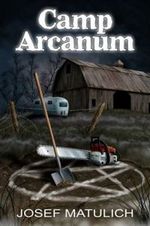
Camp Arcanum by Josef Matulich

Camp ArcanumCamp Arcanum

by Josef Matulich
Series: Arcanum Faire, #1

Kindle Edition, 304 pg.
Post Mortem Press, 2014

Read: August 21 – 23, 2017


So, Marc, Michael and Eleazar come to the small, university town of Arcanum, OH to set up grounds for a new Renaissance Faire on behalf of their employer. They can tell straight-off, that this isn’t your typical university town, but it takes awhile for them to understand why. Pretty much everyone in town practices magick in one form or another — and those who don’t seem pretty aware of it. This awareness seems to end around the city limits, however.

Early on, Brenwyn — the head of the local coven — stops by to ask if they can still use some of the grounds for a ritual. Seeing a way to accommodate the locals and maybe dress up the grounds, they agree. Sparks and pheromones fly between Marc and Brenwyen — Marc’s inherently leery of romantic entanglements, but his resistance starts faltering immediately and I can’t imagine any reader being stunned when he abandons it entirely.

Marc is the super-responsible crew leader, a workaholic with issues. Michael is the artistic one, ready enough to do the brawny work required on the site, but who cares more about the design. Eleazar is their loyal friend and juggler — who spends almost as much time with the prep work as he does ogling and fantasizing about the local co-eds and/or harassing Michael and Marc about their love lives/lack thereof/anything else he can think of. He’s a lot of fun, really. Michael was fine, but I could’ve used some more time with him to really get a handle on his character. Marc is the readers point-of-entry into this world, it’s his eyes that we see the world through.

Brenwyn is sassy, saucy and an outrageous flirt. The members of her coven are loyal, and just about as sassy as their Head. There’s a warlock running around who is some sort of ex- to her, and that’s the nicest thing that could be said about him, so we’ll stop there. The thing is that in this world, magick exists, it’s real, and many people live with knowing that (more without knowing that).

While work progresses on the Faire-grounds, a rivalry of sorts gets underway — with Brenwyn, Marc and the others on one side, and Drenmwyn’s ex- and his acolytes on the other. And it all seems to be focused on Marc, which he can’t seem to figure out. Oh, and there are demons, and other assorted supernatural beings flitting around. Our working men, and the coven leader, have to unite to try to stop the ex- (as well as other nefarious beings in the area).

Early on, I felt like Matulich was trying just a little too hard with the quasi-sibling rivalry between Michael and Eleazar, and even with the flirtation between Marc and — well, everyone. It was like he was insecure about things and was trying to make sure his readers understood things were amusing, rather than trusting his writing. If he’d dialed back about 10-20% early on, it would’ve helped me appreciate things. I either acclimated to his writing style, or he dialed back, I’m not sure which — not sure it matters. It didn’t take too long to settle in to Matulich’s style and start chuckling at his characters and writing.

This was a fun read — off-beat, humorous, with some characters you want to spend time with, with an interesting magic — sorry, magick — system. There’s a sequel to out there, and after reading this, you’ll probably be hoping that there’s more in progress, too. A thoroughly enjoyable, light read, with just a hint of darkness.

—–

3 Stars

The Coven by Chrissy Lessey

The CovenThe Coven

by Chrissy Lessey
Series: The Crystal Cove Series, Book One

Kindle Edition, 340 pg.
Tenacious Books Publishing, 2017

Read: June 27, 2017


This book takes place in a small North Carolina town where descendants of some colonial witches still live and practice their craft. For obvious reasons, they are a secret group, but highly self-regulated. Typically, the abilities travel along family lines and crop up in childhood/adolescence, at which point, the witch/warlock is initiated into the Coven and introduced to their history and practice.

Stevie is a newly-divorced mom of a young Autistic boy, still struggling to adjust to life without her husband and trying to make an emotional connection with her son, who she’s trying everything to help. She’s about to learn about her unique heritage, in a way that no one would want to.

There’s a dark witch who has just returned to town to settle some scores. Her actions will kick off many changes to the coven, as well as the populace of the town. Her return and the advent of Stevie’s ability will prove a pivotal moment in the history of this group.

There’s a rich — and frequently delightful — cast of supporting characters here. Lessey writes them well and with care. I enjoyed them all, frequently grinning at the way a couple of them behave.

I can’t testify to the accuracy of the depiction of autism — but it felt real, it felt like the fruit of good research (or first-hand knowledge), sympathetic without pandering; realistic, yet open to the possibilities of a Fantasy novel. Stevie’s relationship with Charlie, her son, was easily the best part of this book.

The stakes were high, but it there was never a feeling of actual peril, of risk, of there being a chance that things could go really bad. Still, there was plenty of heart and enough likeable characters to keep the reader engaged. A quick read that kept the plot moving at a decent pace. The Coven is the Urban Fantasy equivalent of a cozy — low risk, decent reward. I’m willing to bet Lessey grows and develops as a writer over the trilogy, and is probably worth keeping an eye on.

Disclaimer: I received this book from the author in exchange for honest opinion, which I appreciate.

—–

3 Stars

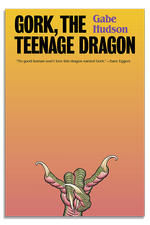
Pub Day Repost: Gork, the Teenage Dragon by Gabe Hudson

Gork, the Teenage DragonGork, the Teenage Dragon

by Gabe Hudson
eARC, 400 pg.
Knopf Publishing Group, 2017
Read: June 30 – July 3, 2017

Note: As I re-read this before it goes up, I thought I should stress something: this is a fun book and I think people will enjoy it. The problem is, it takes more words to describe the stuff I wasn’t crazy about than it does to describe the stuff I liked. I chuckled, I grinned, I was happy for Gork’s successes (happier for his best-friend Fribby’s successes — but they usually coincided) — as rare as they were. Don’t let the length of the “bleh” bits here distract you — Hudson just provoked some thoughts.

There were parts of this that were delightful, parts of it that were problematic, parts that were just okay. There were also too many parts, but we’ll get to that in a bit.

Our protagonist and unlikely hero is Gork — a dragon with pretty strong feelings toward Tolkein and the author of Beowulf for the depiction of dragons — he’s sort of a wimp, his horns aren’t that big (pretty small, really), he’s not that fierce (but he wants to be), and he tends to faint at inopportune times and frequently. Nevertheless, he’s about to finish his last year at the War Academy and head off to terrorize and conquer a planet of his own, all he needs to do is get someone to agree to be his queen and they’ll head off. We meet him on the day he’s supposed to do just that. Now, think back to high school — does this seem like a guy who’s going to be getting a lot of dates? Not really — and when your high school is full of dragons intent on learning how to be the nastiest, fiercest, most terrifying conquerors any planet has ever seen, well — Gork’s odds are even worse.

Naturally, because this is a high school story, our puny geek has set his eyes on the most popular, gorgeous and dangerous girl in school. The question really isn’t “Will Gork and his band of friends be able to convince her to be is queen?” It’s, “Will Gork survive the day?” And oddsmakers around the school, put his chance at that at 1%.

This is clearly from the word “go” a comic novel — we’re supposed to laugh at the madness, mayhem and murdering — and it’s easy to do on the whole. It’s a crazy world Hudson’s created for these dragons to go around in, and most of the characters are amusing. I’m not convinced it works that well as a novel as a whole — as a series of goofy episodes that eventually lead to a big showdown with the nastiest dragon around, it’s all right. (I’m not sure that distinction makes sense to anyone).

I like the idea of spacefaring dragons, dragons that have fully embraced technologies that we can’t think of (or we have thought of, just haven’t done that much with yet) — robotics, nanobots, and more. Although the “mind-swap” device doesn’t really swap minds it . . . well, it’s hard to sum up, but it felt like it belonged more to a Hanna-Barbera show than a SF novel. Basically, this is a Science Fiction wonderland populated with dragons instead of highly developed humans, Grays, Vulcans or Wookies. Still, being that takes away some of the X-factor that makes people fascinated with dragons. Dragons are already pretty cool, you don’t need to give them gizmos and machines that go “ping” — if anything that detracts from them. Still…a dragon in a spaceship is a pretty cool visual.

There’s a moral code that the dragons here live by, or aspire to anyway. It glorifies treachery, destruction, brutality, and so on. Grades of F are to be aspired to, As are to be lamented. That sort of thing — but societies can’t exist like the way Hudson depicts, and honestly, his society doesn’t function the way he says it does (the fact that there are actual friendships depicted, not just uneasy alliances is proof enough against that). You can’t have characters shocked by betrayal in a world where there are classes on betrayal. It’s the moments of loyalty and help that should be shocking, and not trusted by anyone. But no one works that way in this book. This is not a problem unique to Hudson’s work, I’ve run into it before — usually, in works like this, where the twisted ethics are played for laughs and we’re not supposed to be getting as analytical about them as I am. So, ignore everything I just said.

There were just a couple too many zigs and zags to the plot — a few less challenges, a few less pages, and I think this would’ve worked a bit better. I’m not necessarily saying that I can point to something and say, “That right there — yeah, we didn’t need that,” it just dragged a bit here and there. I tend to be more patient than most of the target audience for this book, so I worry about their reaction.

Speaking of target audience — I’m not sure what it is. The humor and emotional depth says MG to me, but the Gork’s fixation on mating and the things that attracts him to potential mates (he’s pretty shallow, I should warn you) are more YA. I’m not sure it matters all that much, it’s just one of those things that ran through the back of my mind during the slow parts.

I got a bit ramble-y there, sorry about that. I clearly am not sure what to make of this book — I enjoyed it, and I bet many will, too. But it has it’s problems — my best advice is, don’t think about it — just enjoy the antics. Gork’s a good guy and is fun to hang out with.

Disclaimer: I received this eARC from Knopf Doubleday Publishing Group via NetGalley in exchange for this post — thanks to both for this.

—–

3 Stars

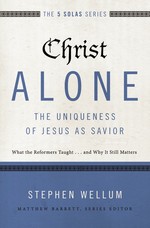
Christ Alone–The Uniqueness of Jesus as Savior by Stephen Wellum

Christ AloneChrist Alone–The Uniqueness of Jesus as Savior: What the Reformers Taught…and Why It Still Matters

by Stephen Wellum
Series: The 5 Solas Series
Paperback, 314 pg.
Zondervan, 2017
Read: June 11 – July 9, 2017

So, Stephen Wellum tackles the solus Christus Sola, the exclusivity and sufficiency of Christ as our Redeemer. It doesn’t get the press that some of the others do, but it’s as essential to the Reformation as the rest.

He begins with survey of the Biblical material surrounding the identity of Jesus Christ — as Messiah and as God the Son Incarnate. This was some solid work — I had a hard time engaging with his writing, I can’t say why, but he just didn’t hook me. It likely had to do with the fact that this book was on the heels of outstanding works on the same idea by Machen and Vos — and a related book by Crowe. Wellum demonstrated a lot of familiarity with contemporary scholarship on the topic — from all parts of the spectrum. Every few pages, I’d come across a paragraph or so that’d be really helpful. But the rest was just something I slogged through.

Part 2 focused on Christ’s Atoning work — the heart of the book, for sure. He spends two chapters defending and articulating the doctrine of the Penal Substitution. There is much to commend here — well, much to endorse, I think it could’ve been stated in a more interesting way. The biggest issue I had with his presentation here is that he reduces everything else recorded in the gospels to an “extended prologue” to the passion narratives. That’s not a characterization on my part — he states that.

The third Part focuses on the use of the doctrine in the Reformation and today, both in reference to Roman Catholicism and the wider contemporary culture. I think there was a lot of promise to this section and I wish is was better developed. As it was, it came across half-baked. Although, at this point, I’d pretty much given up on the book and maybe it was better than I thought.

On the whole, this series has been a disappointment to me — I’m going to finish it (I own one I haven’t read yet, and my series OCD is going to compel me to get the last). This one more than the others. I wouldn’t say don’t read it — there’s some really good bits here and there, and there’s nothing wrong anywhere, in fact, it’s pretty helpful. But, I don’t know, I just can’t tell anyone to go grab it, either.

—–

3 Stars

Gork, the Teenage Dragon by Gabe Hudson

Gork, the Teenage DragonGork, the Teenage Dragon

by Gabe Hudson

eARC, 400 pg.
Knopf Publishing Group, 2017

Read: June 30 – July 3, 2017


Note: As I re-read this before it goes up, I thought I should stress something: this is a fun book and I think people will enjoy it. The problem is, it takes more words to describe the stuff I wasn’t crazy about than it does to describe the stuff I liked. I chuckled, I grinned, I was happy for Gork’s successes (happier for his best-friend Fribby’s successes — but they usually coincided) — as rare as they were. Don’t let the length of the “bleh” bits here distract you — Hudson just provoked some thoughts.

There were parts of this that were delightful, parts of it that were problematic, parts that were just okay. There were also too many parts, but we’ll get to that in a bit.

Our protagonist and unlikely hero is Gork — a dragon with pretty strong feelings toward Tolkein and the author of Beowulf for the depiction of dragons — he’s sort of a wimp, his horns aren’t that big (pretty small, really), he’s not that fierce (but he wants to be), and he tends to faint at inopportune times and frequently. Nevertheless, he’s about to finish his last year at the War Academy and head off to terrorize and conquer a planet of his own, all he needs to do is get someone to agree to be his queen and they’ll head off. We meet him on the day he’s supposed to do just that. Now, think back to high school — does this seem like a guy who’s going to be getting a lot of dates? Not really — and when your high school is full of dragons intent on learning how to be the nastiest, fiercest, most terrifying conquerors any planet has ever seen, well — Gork’s odds are even worse.

Naturally, because this is a high school story, our puny geek has set his eyes on the most popular, gorgeous and dangerous girl in school. The question really isn’t “Will Gork and his band of friends be able to convince her to be is queen?” It’s, “Will Gork survive the day?” And oddsmakers around the school, put his chance at that at 1%.

This is clearly from the word “go” a comic novel — we’re supposed to laugh at the madness, mayhem and murdering — and it’s easy to do on the whole. It’s a crazy world Hudson’s created for these dragons to go around in, and most of the characters are amusing. I’m not convinced it works that well as a novel as a whole — as a series of goofy episodes that eventually lead to a big showdown with the nastiest dragon around, it’s all right. (I’m not sure that distinction makes sense to anyone).

I like the idea of spacefaring dragons, dragons that have fully embraced technologies that we can’t think of (or we have thought of, just haven’t done that much with yet) — robotics, nanobots, and more. Although the “mind-swap” device doesn’t really swap minds it . . . well, it’s hard to sum up, but it felt like it belonged more to a Hanna-Barbera show than a SF novel. Basically, this is a Science Fiction wonderland populated with dragons instead of highly developed humans, Grays, Vulcans or Wookies. Still, being that takes away some of the X-factor that makes people fascinated with dragons. Dragons are already pretty cool, you don’t need to give them gizmos and machines that go “ping” — if anything that detracts from them. Still…a dragon in a spaceship is a pretty cool visual.

There’s a moral code that the dragons here live by, or aspire to anyway. It glorifies treachery, destruction, brutality, and so on. Grades of F are to be aspired to, As are to be lamented. That sort of thing — but societies can’t exist like the way Hudson depicts, and honestly, his society doesn’t function the way he says it does (the fact that there are actual friendships depicted, not just uneasy alliances is proof enough against that). You can’t have characters shocked by betrayal in a world where there are classes on betrayal. It’s the moments of loyalty and help that should be shocking, and not trusted by anyone. But no one works that way in this book. This is not a problem unique to Hudson’s work, I’ve run into it before — usually, in works like this, where the twisted ethics are played for laughs and we’re not supposed to be getting as analytical about them as I am. So, ignore everything I just said.

There were just a couple too many zigs and zags to the plot — a few less challenges, a few less pages, and I think this would’ve worked a bit better. I’m not necessarily saying that I can point to something and say, “That right there — yeah, we didn’t need that,” it just dragged a bit here and there. I tend to be more patient than most of the target audience for this book, so I worry about their reaction.

Speaking of target audience — I’m not sure what it is. The humor and emotional depth says MG to me, but the Gork’s fixation on mating and the things that attracts him to potential mates (he’s pretty shallow, I should warn you) are more YA. I’m not sure it matters all that much, it’s just one of those things that ran through the back of my mind during the slow parts.

I got a bit ramble-y there, sorry about that. I clearly am not sure what to make of this book — I enjoyed it, and I bet many will, too. But it has it’s problems — my best advice is, don’t think about it — just enjoy the antics. Gork’s a good guy and is fun to hang out with.

Disclaimer: I received this eARC from Knopf Doubleday Publishing Group via NetGalley in exchange for this post — thanks to both for this.

—–

3 Stars

Page 32 of 55

Powered by WordPress & Theme by Anders Norén