Tag: 4 1/2 Stars Page 20 of 30

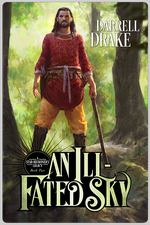
An Ill-Fated Sky by Darrell Drake

This book releases this weekend, go pre-order now (well, not now … wait until you read this).

An Ill-Fated SkyAn Ill-Fated Sky

by Darrell Drake
Series: A Star-Reckoner’s Legacy, #2

eARC, 327 pg.
2018

Read: March 28 – 29. 2018

Honour, at all costs.

So steadfast in its pursuit, Tirdad had never stopped to consider that anything that had to be done at all costs, shouldn’t be done at all. For all his talk of moderation, he had never thought to apply that to honour.

Only now did it dawn on him.

I probably can’t get away with just telling you all to go buy and read this — and the first, too, if you haven’t. So I won’t try. But that’s the takeaway from this.

I’d imagine it’s quite a trick taking a very carefully plotted stand-alone novel and turning it into the first of a trilogy, and I’m often nervous about reading something like that — not so much that I wouldn’t enjoy the new book, but that it’ll take something away from my appreciation for/memory of the stand-alone. Drake has succeeded in making the book feel like something he’d planned all along and a natural outgrowth of the first novel. I can’t bring myself to talk about the events of A Star-Reckoner’s Lot in any more detail than I can the events of this book, which might make some of this awkward, but let’s give it a go…

Tirdad’s cousin has tried to resurrect herself, but the way she died prevented it, instead her memories, her abilities have attached themselves to Tirdad’s sword. He’s now a powerful planet-reckoner (who doesn’t really understand how to use his newfound power). Where some would use this as an opportunity for laughs, Drake keeps things grim and shows what happens when someone wields impossibly great power without the requisite knowledge — disaster ensues. After healing from his wounds, Tirdad sets out to understand just what happened to his cousin, what drove her to the extremes she took. Along the way, he helps and old friend and the King of Kings wage war, has some adventures, kills supernatural creatures that far outclass him, and tries to move on with his life.

A good chunk of this book is just about understanding the last novel — what really happened, what motivated the actions of all the major characters. But it’s not just a rehash, nor a revision of the book. It could probably even be read by someone who hadn’t read A Star-Reckoner’s Lot with little difficulty. But all that is in the midst of the adventuring — and the plot turns and twists enough to keep you guessing as much as Tirdad. This time, the turns weren’t quite as extreme as before, but they were still jarring — and honest, he doesn’t trick you here, everything is justified and supported by what came before.

There’s a sense in which this novel isn’t the fantasy adventure, but a profile of a hero. Or at least a good man. Not just any hero, but a particular one, Tirdad, the ways that his life, his choices, his family and friends shaped him into the person he is and what that looks like action. Particularly when it comes to the way he treats those he loves — and his enemies.

Tirdad, of course, isn’t the only character in the book. The half-div/half-human we met previously as Waray is back, too. When writing about the first book, I’d said: “The banter, the bickering, and friendship between Tirdad and Waray is one of those things that will attract you to this book” — that that’s the core relationship of this novel. What was strong before is now at the forefront — and the reader wins. I loved Waray going into this, and love her all the more now as I’ve got a much better understanding of her past and what makes her tick.

The ending features one of my favorite cliff-hangers in quite a while, to boot.

From start to finish, Drake immerses you in this wonderful world he’s created, with a magic system and mythology so foreign to most of us that it’s great to dive in and experience. The characters are rich and well-drawn, and you feel for them all.

Disclaimer: I received this eARC from the author in exchange for this post — I appreciate him saving me the money, but it didn’t alter what I said about this book.

—–

4 1/2 Stars

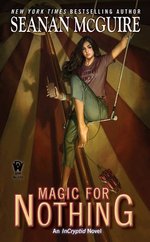
Magic For Nothing by Seanan McGuire

Something — time constraints, distractions, deadlines, big shiny things in the corner — kept me from finishing this post last year. I tried every now and then to finish it, but at a certain point my copious notes weren’t enough. Thankfully, reading the next book in the series helped me remember enough that I thought I could finish this post. It’s not everything I wanted it to be, but short of a re-read, nothing was going make it that.

Magic For NothingMagic For Nothing

by Seanan McGuire
Series: InCryptid, #6


Mass Market Paperback, 358 pg.
Daw Books, 2017
Read: Mach 18 – 21, 2017

And you shouldn’t believe all the press about Ouija boards. They can’t be used in an exorcism. Trivial Pursuit can, but that’s another story.

This has nothing to do with the story, I just really liked that line. It comes from one of the best (probably the best, I don’t keep notes on that) openings to an InCryptid novel that McGuire’s done yet.

So after Verity declared war on the Covenant in the closing pages of Chaos Choreography, the Price family has to follow suit and step things up. Their first step? Having Antimony go undercover with the Covenant as a new recruit. This could be a suicide mission but she knows it’s the best shot to understand what’s going on with the Covenant and their plans for the United States.

You could make the claim that Annie’s infiltration of the Covenant is a little too easy — but why? It’s far more interesting for her to have infiltrated the Covenant and get assigned for a probationary task quickly than it would be for there to be a realistic screening and training process — I’m sure McGuire could have pulled it off, because what can’t she write? But this was better. Very quickly the Covenant comes up with an assignment that’ll test her loyalty and maybe score them some dead American monsters. Part of Annie’s cover is that her circus family was wiped out by a bunch of somethings and she wants revenge, the Covenant has wind of a monster or two at a circus in the midwest killing people in the towns it visits. Her assignment: infiltrate the circus, find the responsible creatures (and any others) and call in her handlers to wipe them all out.

So she’s going undercover as part of her undercover assignment. Thankfully, she’s had multiple aliases since she was a wee girl, so she’ll probably be able to keep her names straight.

Once she gets there, she finds more than one person that the Covenant will want killed just for being — so Annie has to figure out how to keep that from happening and keep her cover intact long enough that she can learn something for her family.

I loved the circus atmosphere, I pretty much always do, come to think of it. As is her norm, McGuire’s cast of characters for the Price adventures, is a whole lot of fun. But I think she stepped her game up with this one — even her Covenant characters have a bit more going for them than her normal baddies. But the key to this novel being so entertaining is Annie. We’ve seen her a little bit here and there throughout the series, but never for very long. She’s just great. Her attitude, gumption, grit and talents make for a fun character. The complicated hero-worship/jealousy thing she has going on regarding Verity (not so much with Alex, but a little bit) is a nice realistic and humanizing touch. I’m not going to blather on about her too much, but of the siblings, I think she’s my favorite.

The big climatic battle and the aftermath from that setting up at least the next novel? Thick, rich icing on an already tasty cake.

Oh, the mice. How did I get this far without mentioning the mice? The Aeslin mice are a great source of laughs as well as heart throughout this series — but man, this time Mindy (Annie’s Aeslin companion) really got me. I was moved. I . . . well, yeah,let’s just leave it there. Mindy’s just great.

If there’s one thing in this world that I know I can rely on, it’s the joyous cheering of the Aeslin mice.

Ditto, Annie, ditto. Joyous cheering of Aeslin mice and Seanan McGuire’s writing — wholly reliable. If you haven’t gotten around to picking up this volume of the InCryptid series yet, you need to. It’d make an okay jumping on point, too — but a lot of the little things won’t mean as much to you as they should. Still, I think it’d convince you to go read the earlier books.

—–

4 1/2 Stars

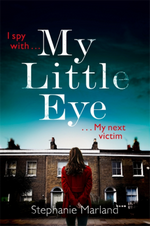
My Little Eye by Stephanie Marland

My Little EyeMy Little Eye

by Stephanie Marland
Series: Starke & Bell, #1

eARC, 351 pg.
Trapeze Books, 2018

Read: March 9 – 12, 2018

They say I was dead for three thousand and six seconds. They say that when I woke I was different, but I don’t know if that’s true. What I do know is that my world became a different place once every one of those precious seconds had expired.

No matter how gripping the prologue might have been, when those’re the first words you get from a character’s POV, you sit up and pay attention.

The Lover is a serial killer just beginning to plague London, and a semi-distracted DI Dominic Bell with his team are making little progress in apprehending him (he’s trying his level best not to be distracted by the press and the brass won’t let him leave his last operation in the dust). Given that the Lover’s technique is improving as the time between kills is decreasing, the pressure is mounting for Bell and the police. One group dissatisfied with their achievements are the members of True Crime London — a group of True Crime aficionados from (duh) London. Some of them have decided to take matters into their own hands so they’ll investigate these crimes themselves — some for the thrill, some to show up the Police, some to draw attention to the fact that the Police are understaffed and underfunded. Clementine has her own reasons — she’s spent some time studying these people as part of her doctoral work in psychology; she hopes to get a better understanding of online communities through this group and she has a theory about “crowd-sourcing justice” she’d like to establish.

We meet both groups (through Dom’s POV and Catherine’s) as they begin to look into the third victim of The Lover. The race is on (even if only one group realizes there’s a race) to find and put a stop to The Lover. I wouldn’t mind more time getting to know the individuals in the respective teams as this goes along — we do get to know some of the people involved in the investigation a bit, but this book focuses on Dom, Clementine and their hunts — everyone else doesn’t matter as much. I could talk a little more about the context for Dom, Clementine and the hunt for the killer — but you don’t want to know more until you get into this book.

The killer? We learn exactly as much as we need to in order that we know that the right guy has been taken care. He is not the most interesting character in the novel — I guess he might be, but Marland didn’t give us enough detail. This is such a great change from serial killer novels that dwell on the obsessions/fetishes/compulsions/methods of the killer, that seem to relish the opportunity to revel in the depravity. Marland shows us enough to be disturbed and utterly sickened by him, to believe that he’s capable of the heinous acts he’s guilty of — and no more. I’m not saying everyone has to write a serial killer this way, but I love that approach.

The protagonists are far more interesting — possibly more damaged even — than the killer. They are wonderfully flawed characters and repeatedly — and I do mean repeatedly — do things that readers will not want them to — because it’s unwise, stupid, dangerous, unethical, immoral, or all of the above. And as much as I was saying “No, no, don’t do that,” I was relishing them do that because it meant great things for the book. At times it’s almost like Marland wants you to not like Dom or Clementine, maybe even actively dislike them. Set that aside, because you will like them, because they are the protagonists hunting for a serial killer; because despite themselves they are likeable characters; and because they’re so well written, with so many layers, and nuances that it’s impossible for Marland to fully explore them and you want to know more. Both are in the middle of professional and personal crises as the book opens — and all of those crises are going to get worse before we leave them (yeah, Dom’s professional life is in worse shape than Clementine’s and Clementine’s been in crisis since just before those 3,006 seconds, so they’re not exactly parallel).

Sometimes the police investigation and the True Crime London’s investigation dig up the same information at about the same time, but on the whole the two follow very different approaches — one more methodical, careful and predictable. The other is haphazard, reckless and (at times) criminal. But both get results, and for the reader, we get a full-orbed view of the investigation which is almost as engrossing as the protagonists carrying it out.

The book is able to say a lot about online communities, True Crime (and some of those who love it as a genre), public acts of grief, criminal investigations and the media — and even a little about memory. All while telling a great story.

While I enjoyed the whole thing, the last quarter of the book was full of surprises that kept me leaning forward in my chair and completely glued to my screen as the plot raced from shock to shock to reveal to [redacted]. There’s a reveal that took me utterly by surprise, but made sense when you stopped and thought about it. There’s another reveal at the end that seemed fitting but wasn’t what you expected — and it followed an event that I never would’ve predicted. Oh, and that last sentence? I can’t tell you how many times I swiped my Kindle screen trying to get what comes next, unwilling to believe that was it.

I was a fan (almost instantaneously) of Marland’s alter ego’s Lori Anderson and that series. My Little Eye has made me a fan of the author — Broadribb, Marland, whatever names she’s publishing under, it’s an instabuy. This book got its hooks into me straightaway and didn’t let go, I resented work and family as they distracted me (however good or pressing the reason) from Clementine and Dom’s quests. I can confidently say that I’ve not read a mystery novel like this one — and that’s not easy this many decades into my love of the genre. I have no idea how Marland’s going to follow this one up — there’s no way that book 2 is a repeat of My Little Eye, but beyond that? No clue what she’ll be able to do. I don’t care — I just want to read it soon.

Disclaimer: I received this eARC from Orion Publishing Group via NetGalley in exchange for this post — thanks to both for this.
N.B.: As this was an ARC, any quotations above may be changed in the published work — I will endeavor to verify them as soon as possible.

—–

4 1/2 Stars

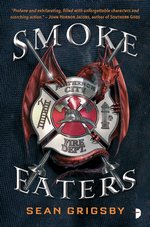
PubDay Repost: Smoke Eaters by Sean Grigsby

yeah, yeah I told you that I’d get this up last week, but writing while hacking isn’t that easy. Yes, I’m a hack writer, but that means something totally different.

Smoke EatersSmoke Eaters

by Sean Grigsby

eARC, 384 pg.
Angry Robot, 2018

Read: February 2 – 3, 2018

Really, the case for you (or anyone) reading this book is simply and convincingly made in 13 words:

Firefighters vs. Dragons in an Urban Fantasy novel set in a futuristic dystopia.

I’ll just wait here while you open another tab to put in your order. There’s really nothing more that I need to say, is there? What if I throw in robot dogs?

Since you’re here anyway, I’ll talk a little more about the book. In the early 22nd century, dragons show up (technically, come back) and everything changes over night — cities burn, non-urban areas burn, geography changes, societies change, political/governmental realities change. And so on. Where there are dragons, there’s fire; and where there’s fire, there are firefighters. A special division of firefighters soon develops — Smoke Eaters — who specialize in dragon fighting, while the rest take care of fires, saving lives and property, etc. You know, the basic everyday hero stuff.

One such hero is Captain Cole Brannigan. After decades of fighting fires, he’s a week away from retirement when disaster strikes and he finds himself without his air supply in a dragon smoke-filled room, which it turns out that he can breathe. Which means he’s one of a select few people naturally immune to the stuff and is basically pressed into service as a Smoke Eater. Instead of commanding a squad and their respect, he’s a trainee — worse, a trainee who used to be a fire fighter. I’m not really sure I get the level of antagonism that exists between the two groups, but it’s pretty intense. No one respects his expertise, his experience, his perspective. He’s tolerated at best — and that’s really only because of the whole smoke immunity thing.

I cannot stress how much I enjoyed this dynamic — stories about someone learning their way through a new reality, or new abilities, etc. are a staple of the genre. But a fully-realized adult, in a long-term, stable marriage (as stable as they can realistically come), successful already and sure of his place in the world being thrown into a new situation like this is unique. Cole spends as much time fighting his instincts about assuming leadership roles (and assuming people will follow) as he does trying to understand his new teammates and duties. Naturally, his perspective and experience will prove important to understanding a new challenge facing the Smoke Eaters.

I’m not going to get into everyone else, because this is Cole’s story, but that doesn’t necessarily mean he’s the most interesting character (he probably is, though, your mileage may vary). The rest of the characters aren’t quite as well drawn — mostly because we see everyone through Cole’s eyes — but most are close enough that you don’t notice.

I should probably mention that when he’s not writing about fire-breathing lizards, Grigsby’s an actual firefighter. So he knows his stuff — when he says fire behaves a certain way, it’s not because he’s read a lot about that or watched Backdraft a few dozen times (well, both of those may be true, but neither is the primary reason he can say that fire behaves a certain way). The authenticity about this kind of thing shines forth and adds a layer of reality to this novel. He knows guys just like Cole — and probably most of the other firefighters and Smoke Eaters — he knows the devastation that fire leaves behind (both to structures and people), and what it takes to keep pressing on in the face of that.

There is a lot more that I want to try and cover, but this is one if those books that if I said everything I wanted to, it’d take a week to write and an hour to read – so let me wrap this up (man, I didn’t even talk about Grigsby’s Canada…the book is worth a look just for that). This is full of action, and some of the ways a gentleman of Cole’s age keeps up with the action are pretty smartly conceived, but there’s some thinking involved, too. Still, you’ll be kept leaning forward in your seat. It’s a good story; with great, developed characters; a wonderful concept; all executed like a seasoned pro was behind it all. There are some little details that will make you chuckle as you read them (the misunderstandings of barely remembered 20th century culture, for example). Smoke Eaters is going to be one of the best UF reads you find this year.

Disclaimer: I received this eARC from the good folks over at Angry Robot via NetGalley in exchange for this post and my honest take on the book — thanks to both for their generosity and this rockin’ read.

—–

4 1/2 Stars

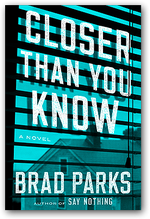
Pub Day Repost: Closer Than You Know by Brad Parks

I’m afraid this comes across as a collection of backhanded compliments — I hope I’m wrong about that. If so, I didn’t mean it.

Closer Than You KnowCloser Than You Know

by Brad Parks
eARC, 416 pg.
Dutton Books, 2017
Read: December 6 – 8, 2017

When you read a book about a dog — from Marley & Me to Where the Red Fern Grows — you’ve got a pretty good idea what’s going to happen near the end. Same goes for a Nora Ephron movie. Or a Horror flick. But you still read or watch them, and you cry, or laugh and “awww”, or jump in your seat when you’re supposed to. Even on repeat reads/viewings. But when done right, those things just work. Similarly, think of a roller coaster — you may stand outside the fence watching the thing go around the track while standing in line (some lines give you plenty of opportunity to study), and armed with that study, as well as the your own eyes, you know that track is going to drop from in front of you in a couple of seconds — or the coaster is about to hit the loop — that doesn’t stop your stomach from lurching when it does.

Why do I bother with that? It’s a thought that kept running through the back of my mind while reading Closer Than You Know. By the time I hit the 10% mark, if you’d made me write down what I expected to happen — the reveals, the twists, the story beats, etc. — I’d have gotten an A. I’m not saying I’m smarter than the average bear or anything, anyone who’s read/watched a handful of thrillers would’ve been able to, too. And it worked. It absolutely worked. How Parks pulls it off, I do not know, but he does. He’s just that good.

And all the stuff that I didn’t guess? Oh, man, it was just so sweet when Parks delivered it, there were a couple of scenes that just left me stunned. And, I should rush to note, the way Parks made a couple of reveals that I’d seen coming from the start were so well done, it was like I hadn’t called the shot.

In his previous stand-alone, Parks said that he wanted to write about the thing that scares him the most — his children being kidnapped. Closer Than You Know taps into a very similar fear — Child Protective Services taking your child from you, leaving you to the mercies of the machine where you’re presumed guilty. This time instead of “the bad guys,” faceless criminals, taking someone’s kids, this time it’s the forces of justice, of law and order, taking the child — they’re celebrated for it, they’re doing it “for the best interests of the child.”

What’s worse is that no one will tell Melanie Barrick why her infant son had been taken from his daycare. Melanie spent most of her childhood in the Foster Child system, and most of that time in the worse situations that system has to offer. This isn’t the stuff of nightmares for Melanie, mostly because I don’t think she has enough imagination for her subconscious to cook this up. And then she’s arrested for possession of cocaine and paraphernalia suggesting distribution — a felony that will guarantee she’s about to lose her little Alex for good.

Melanie is a “good person” — she’s one of the success stories that we don’t see as often as we’d like from the Foster Child system. She worked to put herself through college; has a great, supportive husband; a lousy job (but with benefits) — but one that will help her family get somewhere; and is a devoted, doting, loving mother. The kind of person we all want to think we’re surrounded by, but fear we probably aren’t.

From this point on, it’s a cyclone for despair as every part of her life — her job, her husband, her brother, her friends, her finances, her sense of privacy and security — is affected, is under siege during this ordeal. Can Melanie maintain her hope, maintain her innocence, maintain her conviction that she’ll hold her baby boy again?

In charge of prosecuting “Coke Mom” (the press is always so quick with these nicknames), is Amy Kaye. Amy Kaye could easily be the protagonist in any legal thriller, she’s just the kind of character you want to read in that kind of thing. She’s smart, dedicated and driven — at the moment, she’s primarily concerned with a serial rape investigation that she’s doing pretty much on her own. Amy starts to make progress for the first time in years when she’s put on this prosecution (largely for political reasons) — which she’s more than willing to do, but she hates to take away time and attention from the rape investigation. What really makes this difficult for Kaye is that Melanie is one of the most recent victims in this investigation.

So basically, things are not going well for these two women. There are occasional moments where there is hope, where there is a hint of humor, or life for them and it’s just enough to get you to let your guard down before the gears turn again and life gets bad. Melanie seems to be a living embodiment of Murphy’s Law — things just never go her way in this book. As she notes herself, addicts talk about hitting rock bottom — she isn’t like them, she keeps finding new bottoms. It’s during this part of the book, where the gears keep grinding away, where the Justice System seems most like a machine, and least like a method for determining (not presupposing) guilt, that things will really get to you. That stomach lurching I mentioned earlier? That image came from somewhere. It feels so real, it feels like this is something that actually happened to someone that Parks spent hours interviewing. I don’t know how you read these parts of the book and not get demoralized — but unable to put the book down, because you just have to, have to know what happens next.

As I’ve said before, I’ve been a Brad Parks fan since the first time I read his debut novel — and I miss Carter Ross, the star of his series. The bad thing for me reading Say Nothing and Closer Than You Know is that these are so good, he’s going to spend years doing books like this and I don’t know if he’ll be able to get back to Carter. On the other hand, I can’t complain really if he’s putting out reading that’s this compelling. Yeah, I said the book was largely predictable — and you’ll likely find it the same. But you will be wrong about some things and you won’t know how he’ll show you that you’re right. Think of a NASCAR race — we all know that it’s basically a series of guys going fast and turning left — but it’s how they go fast and turn left that makes all the difference. Parks delivers the goods — the word riveting doesn’t do this book justice. It’s compelling, riveting, gripping, exciting, and will make you rethink so much of what you may believe of the Criminal Justice and Child Protective systems. You will laugh, you will be stunned (in good and bad ways), you will give up hope for this poor mother.

And you will hate when the book ends — as much as you breathe a sigh of relief as you know you have some degree of closure.
Disclaimer: I received this eARC from Dutton Books via NetGalley in exchange for this post — thanks to both for this.

—–

4 1/2 Stars

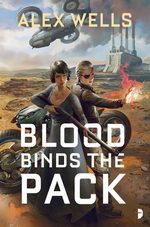
Blood Binds the Pack by Alex Wells

Blood Binds the PackBlood Binds the Pack

by Alex Wells
Series: Hob Ravani, #2

Kindle Edition, 496 pg.
Angry Robot, 2018

Read: February 20 – 23, 2018


How do you follow-up a book like Hunger Makes the Wolf? Which took the elements of a biker-gang, oppressed miners (and other blue-collar types), magic, space travel, and corporate greed to create an action-packed, fun, suspenseful and surprising read. Well, you take that foundation, and build on it to create a book that takes those elements and does a better job with them.

The pressure on TransRift Corporation is mounting (even when they don’t realize it), especially on their operations base on Tanegawa’s World. There’s a growing level of unrest with the miners — which they respond to in a way that hasn’t worked for anyone since the opening of Exodus. There’s the constant need for more resources, if possible, resulting in stronger and more efficient product. The government is sniffing around, wondering about what they’re up to and how they’re treating people. Meanwhile, the loose organization of miners in each city is getting stronger as are the ties between them. All in all — it’s a powder keg ready to blow.

Not having to create a world, Wells is able to spend more time on characters this time (at least that’s my impression — it’s not like I was dissatisfied with the characters in Hunger). We see depths and shadings of character in people I wasn’t sure where capable of depths and shadings — and if we get that from beings like that, imagine what we get from the more fully-formed people.

When writing about the last book, I said that I wanted more with the Ghost Wolves as a whole, to get a better feel for them. I got that this time — but not quite enough. I’m not sure what it would’ve taken, however. They seem more cohesive as a unit — Hob taking to leadership, and the Wolves taking to Hob. It’s a fascinating group — and one I clearly can’t get enough of.

There were plenty of mysteries, questions, enigmas wrapped in each other about the nature of the Weathermen, the Bone Collector, Hob’s abilities (and those of others, too) and what TransRift Corporation has found in the mines left over from Hunger — and Wells doesn’t answer them all. Are some things clarified? Are some things better understood? Yup. Does everything get spelled out for the reader? Nope. I love the fact that there’s a whole lot that we don’t get to wrap our brains around, but that we just have to accept — just like the characters. But it’s done not in a way that you feel unsatisfied with what you’re given.

There’s even a little bit of sweetness to be found in friendship, family, and romance. Not so much that it becomes a “kissing book” or anything, it’s just an added touch.

I find the politics a little hard to swallow and simplistic — but I can’t think of the politics of any SF book/world that don’t strike me this way, honestly. At least not once they get beyond the most vague notions. I’m only mentioning it because it seems that important to the novel. Which is not to say that it detracts from things too much — if I can suspend disbelief enough to buy the capabilities of the Weathermen, or a fire-throwing, one-eyed, space-biker; I can buy whatever the workers on Tanegawa’s World try to replace the corruption they’ve suffered under.

I get the feeling that this is going to be a duology — there might be more stories to tell with the Ravani, or Tanegawa’s World, but they probably won’t be as closely tied to these two. I’m satisfied with a duology — we got a complete story and a very satisfying one. Wells started strong and ended stronger — can’t ask for more than that.

I’m excited to talk about this book and I want to say a whole lot more — and feel like I should. But I’m not sure what else to say without giving anything away. Hunger Makes the Wolf was one of my favorites last year, and this is better. Ultimately, there’s not much more to say than that.

—–

4 1/2 Stars

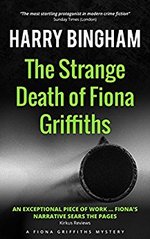
The Strange Death of Fiona Griffiths by Harry Bingham

The Strange Death of Fiona GriffithsThe Strange Death of Fiona Griffiths

by Harry Bingham
Series: Fiona Griffiths, #3

Kindle Edition, 470 pg.
Sheep Street Books, 2015

Read: February 16 – 17, 2018


From the instant that it was mentioned in Love Story, With Murders that Fi Griffiths had signed up for a course in Undercover work, every reader knew that she’d end up doing some deep undercover work soon. Thankfully, Bingham didn’t make us wait too long because here comes both the course and the assignment. But before we get to the assignment, Fi gets this wonderful reality check after her course:

I’m tasked to process paperwork on a couple of cases that are coming to court. Someone assigns me to help on a team that is developing advice on how to avoid thefts from vehicles. The first of our meetings takes an hour and forty minutes and the gist of our advice will be, ‘Lock your car and hide your valuables.’ Or, to simplify further, ‘Don’t be a bloody idiot.’

I suggest that as a slogan and everyone looks at me.

I just loved that. Anyway, this seems like a perfect idea — there’s a real sense in which everyday life is an undercover assignment for Fi, letting her do it as part of her job seems like a no-brainer. Not that her superiors really understand that, but her readers do.

The case started off as a simple payroll fraud investigation — a clever and ambitious fraud, make no mistake, but not the kind of things that excites any police detective (especially one like Fi). But then, she ties one suspicious death into this crime — and then a particularly gruesome murder as well. These discoveries are enough to get The Powers That Be to take this seriously enough to put Fi and another officer undercover as payroll clerks to infiltrate this scheme. Eventually, Fi is recruited by the people they’d hoped recruit her and the game is afoot. Fi does things that will surprise the reader as much as they do to her targets in her efforts to bring some justice to the situation.

At some point, Fi is going over the results of her work thus far with our friend, DCI Jackson, and her handler from Organized Crime

Brattenbury says, ‘Fiona, this is remarkable work. You—’

Jackson interrupts him. ‘Don’t flatter her. She’ll cock everything up. Or start shooting people.’

Which is essentially the outline for every Fiona Griffiths novel, really.

Watching Fi go deeper into her cover and into the fraud activity is gripping — and also very different from the earlier books. Fiona doesn’t get to spend as much time with the dead as she likes, she can’t have their pictures on display without ruining her cover. It doesn’t stop her from doing what she can along those lines, but it gives Strange Death a different feel from its predecessors.

Fi’s investigation of the deaths isn’t the focus of this novel, it’s her undercover work — how she does it, how she embodies her cover, how as her cover she contributes to the community, how she learns things that can help her (both the fictional her and the real). Like too many who go undercover, Fi arguably gets too close to her targets (it’s not much of an argument, really), and lines between the detective and the felonious payroll clerk blurred more than they should’ve. The same kind of focus, the same kind of attachment she makes to the victims in the other books (and cases we don’t have record of) is brought to the people and work she encounters here.

At the same time, Fi’s desire — need — for the emotional, familial and romantic connections she’s made has never been stronger. Those things that she wanted, so she can be more like a citizen of “Planet Normal,” act as an anchor to reality in a way that has to surprise her. Not only that, she forges new relationships as DC Griffiths through these events. Minor spoiler: the Fiona Griffiths that emerges from this assignment is a noticeably different, more well-rounded, and changed in other (less pleasant) ways.

It was good to see DCI Jackson at work again. The other police officers (particularly Brattenbury and his team) were more interesting than we’ve gotten before. The same could and should be said for the other supporting characters we encounter in these pages — criminal and civilian alike. I hope that Bingham is able to find ways to bring many of these characters back in future novels (or he can just give us new characters that are as well constructed, but I like so many of these I’d prefer to see them).

I’m a sucker for undercover cop stories — since the first time I saw Ken Wahl’s Vinnie Terranova (when I was too young to be seeing such things) and what his work did to him. This was no exception — and a strong sample of the type. This story of Fiona Griffiths’ UC work is just as gripping, just as surprising as you could want and a sure sign that this character is more than a one-trick pony (if anyone was still wondering) and that Bingham is a writer to watch.

—–

4 1/2 Stars

Smoke Eaters by Sean Grigsby

yeah, yeah I told you that I’d get this up last week, but writing while hacking isn’t that easy. Yes, I’m a hack writer, but that means something totally different.

Smoke EatersSmoke Eaters

by Sean Grigsby

eARC, 384 pg.
Angry Robot, 2018

Read: February 2 – 3, 2018

Really, the case for you (or anyone) reading this book is simply and convincingly made in 13 words:

Firefighters vs. Dragons in an Urban Fantasy novel set in a futuristic dystopia.

I’ll just wait here while you open another browser tab to put in your order. There’s really nothing more that I need to say, is there? What if I throw in robot dogs?

Since you’re here anyway, I’ll talk a little more about the book. In the early 22nd century, dragons show up (technically, come back) and everything changes over night — cities burn, non-urban areas burn, geography changes, societies change, political/governmental realities change. And so on. Where there are dragons, there’s fire; and where there’s fire, there are firefighters. A special division of firefighters soon develops — Smoke Eaters — who specialize in dragon fighting, while the rest take care of fires, saving lives and property, etc. You know, the basic everyday hero stuff.

One such hero is Captain Cole Brannigan. After decades of fighting fires, he’s a week away from retirement when disaster strikes and he finds himself without his air supply in a dragon smoke-filled room, which it turns out that he can breathe. Which means he’s one of a select few people naturally immune to the stuff and is basically pressed into service as a Smoke Eater. Instead of commanding a squad and their respect, he’s a trainee — worse, a trainee who used to be a fire fighter. I’m not really sure I get the level of antagonism that exists between the two groups, but it’s pretty intense. No one respects his expertise, his experience, his perspective. He’s tolerated at best — and that’s really only because of the whole smoke immunity thing.

I cannot stress how much I enjoyed this dynamic — stories about someone learning their way through a new reality, or new abilities, etc. are a staple of the genre. But a fully-realized adult, in a long-term, stable marriage (as stable as they can realistically come), successful already and sure of his place in the world being thrown into a new situation like this is unique. Cole spends as much time fighting his instincts about assuming leadership roles (and assuming people will follow) as he does trying to understand his new teammates and duties. Naturally, his perspective and experience will prove important to understanding a new challenge facing the Smoke Eaters.

I’m not going to get into everyone else, because this is Cole’s story, but that doesn’t necessarily mean he’s the most interesting character (he probably is, though, your mileage may vary). The rest of the characters aren’t quite as well drawn — mostly because we see everyone through Cole’s eyes — but most are close enough that you don’t notice.

I should probably mention that when he’s not writing about fire-breathing lizards, Grigsby’s an actual firefighter. So he knows his stuff — when he says fire behaves a certain way, it’s not because he’s read a lot about that or watched Backdraft a few dozen times (well, both of those may be true, but neither is the primary reason he can say that fire behaves a certain way). The authenticity about this kind of thing shines forth and adds a layer of reality to this novel. He knows guys just like Cole — and probably most of the other firefighters and Smoke Eaters — he knows the devastation that fire leaves behind (both to structures and people), and what it takes to keep pressing on in the face of that.

There is a lot more that I want to try and cover, but this is one if those books that if I said everything I wanted to, it’d take a week to write and an hour to read – so let me wrap this up (man, I didn’t even talk about Grigsby’s Canada…the book is worth a look just for that). This is full of action, and some of the ways a gentleman of Cole’s age keeps up with the action are pretty smartly conceived, but there’s some thinking involved, too. Still, you’ll be kept leaning forward in your seat. It’s a good story; with great, developed characters; a wonderful concept; all executed like a seasoned pro was behind it all. There are some little details that will make you chuckle as you read them (the misunderstandings of barely remembered 20th century culture, for example). Smoke Eaters is going to be one of the best UF reads you find this year.

Disclaimer: I received this eARC from the good folks over at Angry Robot via NetGalley in exchange for this post and my honest take on the book — thanks to both for their generosity and this rockin’ read.

—–

4 1/2 Stars

My Favorite Fiction of 2017

Is he ever going to stop with these 2017 Wrap Up posts? I know, I know…I’m sick of them. But I’ve already done most of the work on this one, I might as well finish…Also, it was supposed to go up Friday, but formatting problems . . .

Most people do this in mid-December or so, but a few years ago (before this blog), the best novel I read that year was also the last. Ever since then, I just can’t pull the trigger until January 1. Also, none of these are re-reads, I can’t have everyone losing to my re-reading books that I’ve loved for 2 decades.

I truly enjoyed all but a couple of books this year (at least a little bit), but narrowing the list down to those in this post was a little easier than I expected (‘tho there’s a couple of books I do feel bad about ignoring). I stand by my initial ratings, there are some in the 5-Star group that aren’t as good as some of the 4 and 4½-Star books, although for whatever reason, I ranked them higher (entertainment value, sentimental value…liked the ending better…etc.). Anyway, I came up with a list I think I can live with.

(in alphabetical order by author)

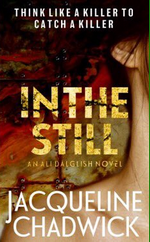
In The StillIn The Still

by Jacqueline Chadwick
My original post

Chadwick’s first novel is probably the most entertaining serial killer novel I’ve ever read. Without sacrificing creepiness, suspense, horror, blood, guts, general nastiness, and so on — she gives us a story with heart, humor and humanity. The second novel, Briefly Maiden is arguably better, but I liked this one a teensy bit more — and I’m genuinely nervous about what’s going to happen in book 3 (not that I won’t read it as soon as I possibly can).

4 1/2 Stars

The Hangman's Sonnet Robert B. Parker’s The Hangman’s Sonnet

My original post

How do you possibly follow-up 2016’s Debt to Pay, especially with that ending, without dramatically altering the Jesse Stone flavor? I’m still not sure how Coleman did it, but he did — Jesse’s dealing with Debt to Pay in a typically self-destructive way, but is keeping his head mostly above water so he can get his job done, mostly by inertia rather than by force of will. Reflexes kick in however, and while haunted, Jesse can carry out his duties in a reasonable fashion until some friends and a case can push him into something more.

Coleman’s balancing of long-term story arcs and character development with the classic Jesse Stone-type story is what makes this novel a winner and puts this one on my list.

4 1/2 Stars

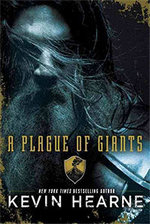
A Plague of GiantsA Plague of Giants

by Kevin Hearne

This sweeping — yet intimately told — epic fantasy about a continent/several civilizations being invaded by a race nobody knew existed is almost impossible to put into a few words. It’s about people stepping up to do more than they thought possible,more than they thought necessary, just so they and those they love can survive. It’s about heroes being heroic, leaders leading, non-heroes being more heroic, leaders conniving and failing, and regular people finding enough reason to keep going. It’s everything you want in an epic fantasy, and a bunch you didn’t realize you wanted, too (but probably should have).

5 Stars

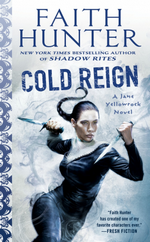
Cold ReignCold Reign

by Faith Hunter

My original post
Hunter continues to raise the stakes (yeah, sorry, couldn’t resist) for Jane and her crew as the European Vamps’ visit/invasion gets closer. Am not sure what’s more intriguing, the evolution in Jane’s powers or the evolution of the character — eh, why bother choosing? Both are great. The growth in the Younger brothers might be more entertaining — I appreciate the way they’ve become nearly as central to the overall story as Jane. I’m not sure this is the book for new readers to the series, but there are plenty before it to hook someone.

5 Stars

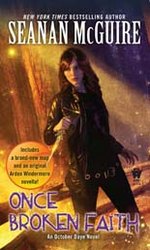
Once Broken FaithOnce Broken Faith

by Seanan McGuire
My original post

Poor planning on my part (in 2016) resulted in me reading two Toby Daye books this year, both just excellent, but this one worked a little bit better for me. Oodles and oodles of Fae royalty and nobility in one spot to decide what they’re going to do with this elf-shot cure leading to a sort-of closed room mystery (it’s just a really big, magical room) with peril on all side for Toby and her found family.

5 Stars

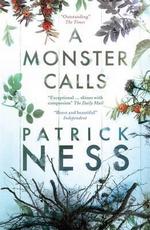
A Monster CallsA Monster Calls

by Patrick Ness
My original post

There were so many ways this could’ve been hacky, overly-sentimentalized, brow-beating, or after-school special-y and Ness avoids them all to deliver a heart-wrenching story about grief, death, love, and the power of stories — at once horrifying, creepy and hopeful.

4 1/2 Stars

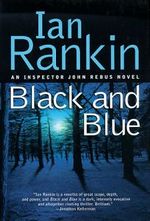
Black and BlueBlack and Blue

by Ian Rankin
My original post

Rankin kicked everything into a higher gear here — there are so many intricately intertwining stories here it’s hard to describe the book in brief. But you have Rebus running from himself into mystery after mystery, drink after drink, career-endangering move after career-endangering move. Unrelenting is the best word I can come up with for this book/character/plot — which makes for a terrific read.

5 Stars

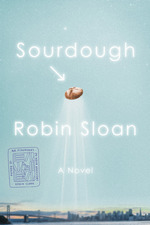
SourdoughSourdough

by Robin Sloan
My original post

This delightful story of a programmer turned baker turned . . . who knows what, in a Bay Area Underground of creative, artisanal types who will reshape the world one day. Or not. It’s magical realism, but more like magical science. However you want to describe it, there’s something about Sloan’s prose that makes you want to live in his books.

Do not read if you’re on a low carb/carb-free diet. Stick with Sloan’s other novel in that case.

4 1/2 Stars

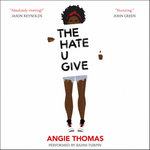
The Hate U Give (Audiobook)The Hate U Give

by Angie Thomas, Bahni Turpin (Narrator)

My original post

This was a great audiobook –and I can’t imagine that the text version was as great, I just didn’t have time for it. It’s the story about the aftermath — socially, personally, locally, nationally — of a police shooting of an unarmed black male as seen through the eyes of a close friend who was inches away from him at the time.

I think I’d have read a book about Starr Carter at any point in her life, honestly, she’s a great character. Her family feels real — it’s not perfect, but it’s not the kind of dysfunctional that we normally see instead of perfect, it’s healthy and loving and as supportive as it can be. The book will make you smile, weep, chuckle and get angry. It’s political, and it’s not. It’s fun and horrifying. It’s . . . just read the thing. Whatever you might think of it based on what you’ve read (including what I’ve posted) isn’t the whole package, just read the thing (or, listen to it, Turpin’s a good narrator).

5 Stars

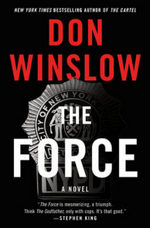
The ForceThe Force

by Don Winslow
My original post

There may be better Crime Fiction writers at the moment than Don Winslow, but that number is small, and I can’t think of anyone in it. In this fantastic book, Winslow tells the story of the last days of a corrupt, but effective (in their own corrupt and horrible way), NYPD Task Force. Denny Malone is a cop’s cop, on The Wire he’s be “real police” — but at some point he started cutting corners, lining his pockets (and justifying it to himself), eventually crossing the line so that he’s more “robber” than “cop.” Mostly. And though you know from page 1 that he’s dirty and going down, you can’t help get wrapped up in his story, hoping he finds redemption, and maybe even gets away with it.

But the book is more than that. In my original post I said: “This book feels like the love child of Tom Wolfe’s The Bonfire of the Vanities and Nicholas Pileggi’s Wiseguy. You really feel like you understand how the city of New York is run — at least parts of it: the police, elements of the criminal world, and parts of the criminal justice system. Not how they’re supposed to run, but the way it really is. [Winslow] achieves this through a series of set pieces and didactic pericopes.”

A police story, a crime thriller, a book about New York — oh, yeah, possibly the best thing I read last year.

5 Stars

There were a few that almost made the list — almost all of them did make the Top 10 for at least a minute, actually. But I stuck with the arbitrary 10 — these were all close, and arguably better than some of those on my list. Anyway, those tied for 11th place are: <

Skyfarer by Joseph Brassey (my original post), Deep Down Dead by Steph Broadribb (my original post), Briefly Maiden by Jacqueline Chadwick (yes, again) (my original post), The Twisted Path by Harry Connolly (my original post), Bound by Benedict Jacka (my original post), The Western Star by Craig Johnson (my original post), The Brightest Fell by Seanan McGuire (see? Another Toby Daye) (my original post), The Blinds by Adam Sternbergh (my original post), Hunger Makes the Wolf by Alex Wells(my original post).


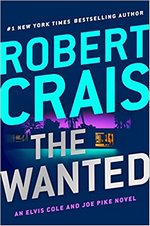
The Wanted by Robert Crais

The WantedThe Wanted

by Robert Crais
Series: Elvis Cole, #15

Hardcover, 322 pg.
G.P. Putnam’s Sons, 2017

Read: December 27 – 28, 2017


A single mom has worries about the way that her teen-aged son is behaving — and when you add in flashy clothes, a Rolex, and more money in his pocket than most book bloggers have in their checking account. So, she hires Elvis to figure out what the bad news is.

It takes The World’s Fastest Detective just a couple of hours to figure out what Tyson has been up to, and it’s not good: Tyson and a couple of friends have been breaking into empty homes and making off with all sorts of high-end merchandise. Think The Bling Ring, but without anything for Emma Watson to do. Multiple security companies, insurance investigators as well as the police have been hunting for them, and Elvis has stumbled onto the trail.

Of all those on the hunt for this crew, one team is closer to finding them than Elvis is — and these two seem to be leaving a lot of bodies in their wake. They’re identified right from the get-go, so I don’t mind talking about them too much. They’ve clearly been partners for a long time — the give and take between the pair is enough to almost make you forget they’re horrible people. At one point, the two get into a discussion about the appropriateness of the word “retard” in conversation, another conversation is about the depiction of women in moves/fiction, and they get into a big argument about annoying ringtones that one of them is using. If they weren’t going around killing people for mysterious, yet clearly nefarious, reasons, I could really like them (or, if Crais was going for a Tarantino/Leonard thing with them).

The pacing on this is relentless — well, it’s obvious to the reader right off that the clock is ticking, but once Elvis catches up to what we know, things are almost non-stop. It’s similar to Taken, but without the jumping around in time, Crais knows how to handle the tension and momentum just right so the suspense is genuine. It also reminded me of The Watchman, in that you have Elvis and Cole trying to protect a self-involved teen (or two) on the run from some very determined killers.

In so many ways this is classic Elvis Cole: Joe Pike doesn’t do much — it’s almost like the early books, he shows up does his Batman kind of thing, and vanishes. It was a nice way to deal with him — we don’t want to get too chummy with Pike, he looses a bit of the mystique that way. When he does act — we get our money’s worth. John Chen is very John Chen-y, which is always fun (as long as we don’t get too much of him). We get some quick visits with some other old friends, too. Elvis cooks like hosts on Food Network aspire to. All the mainstays are there.

Slipping in every now and then between the adrenaline from the chase and the fan service is a solid emotional grounding that was as effective as it was unexpected.

Time with a couple of old favorites, an almost perfectly constructed thriller, and some solid emotional moments — who could ask for more? From the hitting-the-ground-running beginning through to the very touching ending, this is a heckuva read that should please fans new and old.

—–

4 1/2 Stars

Page 20 of 30

Powered by WordPress & Theme by Anders Norén