Tag: 4 Stars Page 1 of 88

REPOSTING: Time-Marked Warlock by Shami Stovall: A Mulligan-Equipped PI

The Book Bloggers’ Novel of the Year Award Time-Marked Warlock Tour Banner

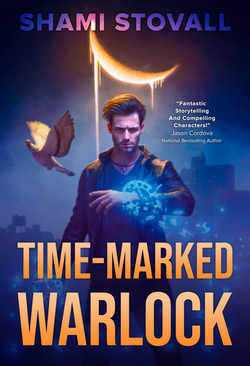
Cover of Time-Marked Warlock by Shami StovallTime-Marked Warlock

by Shami Stovall

DETAILS:
Series: Adair Finch, #1
Publication Date: June 2024 (or August, depending who you ask)
Format: e-ARC
Length: 402 pg.
Read Date: April 15-16, 2024

Buy from Bookshop.org Support Indie Bookstores

What’s Time-Marked Warlock About?

Until a few years ago, the names of warlocks Adair and Carter Finch were famous among the magic community. Private eyes who helped law enforcement as well as private clients dealing with cases large and small—they were pretty close to superheroes. Then they took that one job that put them against an opponent they weren’t ready for, things went wrong, and Carter died.

Adair’s magic couldn’t help. He couldn’t even track down everyone who was responsible, so he couldn’t get revenge. So…he went home and retreated from life. He became an asocial hermit, doing little more than existing.

Then one pre-dawn morning, a twelve-year-old girl pounds on his apartment door. Her mother always told her that if she was in real trouble to track down Adair or Carter Finch. They weren’t close friends by any means, but they did know each other—enough so that her name makes Finch pay attention. Bree’s mother was a witch and her father is a warlock, but not in the same league as Finch. Bree tells Finch that her mother has been murdered and her father kidnapped—and she needs his help to rescue her father and get justice for her mother.

Finch is not inclined to do anything but close the door on her face and get back to not interacting with anyone. But he can’t turn down her appeal—so he agrees to go to the crime scene (if only so he can determine that she misunderstood what she saw, and that her father actually was the murderer).

The scene isn’t what he expected—Bree might have been right. Also, the police detective on the scene knew Finch before he “retired” and neither really appreciated the other. Det. Jenner really rubs Finch the wrong way on the scene.

Between their less-than-pleasant interaction, Bree pulling on his heartstrings just right, and what Finch noticed at the scene of the crime, Finch decides to take the case, wrap it up quickly, and get back to wasting away as soon as he can.

Finch

Let’s get this out of the way real quick: Frequently reminded me of (James J.) Butcher’s Huntsman, Leslie Mayflower (and several other retired/depressed heroes, but Mayflower is most recent in my mind, so he gets name-dropped). Is he the Huntsman? No—he’s far less inclined to leave a trail of bodies in his wake.* for one thing. But he gives a similar vibe.

* We can argue some other time about how inclined Mayflower really is. Roll with it for now.

He’s clearly angry at himself. He’s reticent to put himself out there emotionally (or any other way). He’s not ready to let anyone else down again (assuming he really did). But something about Bree creates a crack in his defensive shell, and it’s great to see purpose emerge from where he’d trapped it down. He’s a different guy by the end of the book (probably like what he was years ago)—he’s not totally where he should be, but he’s on the road to recovery. As the series continues, i look forward to seeing how he grows/recovers.

Bree Blackstone

I don’t know how any UF reader is supposed to read her full name and not think of Harry Dresden. Maybe we’re supposed to—surely we are right?

Anyway…if Bree doesn’t melt your heart right off. If you’re not rooting for her to get the answers she seeks and maybe a touch of the retribution she longs for—and to save her dad…there’s something wrong with you—go listen to some Whos down in Whoville sing some Christmas songs until your heart is the right size.

She is so frightened by everything—there’s a real parallel to Finch there. But she’s determined to get the help she needs to save her dad and get the bad guy who killed her mom. And if Finch is the way to get both of those, she’ll get him to help her.

Naturally, along the way she picks up a pretty hefty case of hero-worship. Finch doesn’t see it for what it is right off—but he eventually does, and knows he’s not worthy. Watching him balance helping her, fending off (or trying to) her fangirling over him, and teaching her what she needs to know to be safe in the magic world is a great balancing act.

Bree is really well-conceived and executed by Stovall, and will become one of your favorite characters of the year.

Kullthantarrick the Sneak

Kull is a trickster spirit that Finch calls up to help with a little something along the way—she’s largely around for comic relief—but she also helps Bree to learn some things about the nature of magic, spirits, and the like that she hasn’t learned from her parents yet. Yes, her role is to help make worldbuilding infodumps entertaining. She’s well-used that way.

Any spirit of mischief—from Mercy Thompson’s Coyote to the Wizard in Rhyme’s Max to Al MacBharrais’s Buck, or…okay, I’m drawing a blank here—can be a lot of fun. You just set them loose to create havoc and sit back and watch. And Kull is great at that.

But that’s not all she is—she wants to be a human, she’s seen and done enough as a spirit, and she wants the human experience now. That adds a little depth to her—there’s also an affection that develops between her and Bree that adds even more shades of depth to what could’ve been a disposable character that ends up being so much more.

Really well done there.

The Magic System(s)

I don’t know how much to say here. This world has a handful of magic systems at play—there’s one for witches—like Bree’s mother and (presumably) her. There’s another one for warlocks—it’s similar and not necessarily mutually exclusive to the witch system. And there are some others, too.

One way that Finch uses his abilities (that other warlocks like Bree’s father can’t) is that he has some ability with time. It’s in the title, I feel I can give a vague description here. He’s constantly noting the time whenever anything happens. If he “marks” the time, within any 24-hour period he can return to the marked time—retaining the memories and knowledge gained, but getting to start over. Bree compares it to a save point in a video game.

This is brilliant—and so good to see in action. There’s part of me that wondered if it’d feel like a cheat—killing tension and so on. Or if it’d just be some Groundhog Day-riff good for comedy and that’s it. If you’ve ever played—or watched someone play—an intense video game with a save point, you know that’s not enough to keep someone from getting stressed out about almost dying/dying within the game. Sure they can take another try (or several), but the tension is still there. It works that way for this book (especially if it looks like Finch might not reset in time). And yes, there’s some weatherman Phil-esque humor, but not as much as other authors might have indulged in.

All in all, Stovall nailed this part of Urban Fantasy.

So, what did I think about Time-Marked Warlock?

Three great characters (not even counting the antagonists), an even better magic system, and a decent plot with a satisfying central villain. I don’t know what else to ask for in a UF novel.

The pacing was on-target—even when revisiting the same day or events over and over, Stovall was able to keep it fresh. She also knew when to say “they did X again” and when to show it. The action scenes worked well. The villain(s) were believable, had compelling motivations, and were enough of a threat to all involved to keep the reader’s interest.

There were supporting characters—including villain(s) that ended up not being as terrible as you might initially think—that were just as fully drawn, and you could generate a little sympathy for some of the people associated with the murder once you realized how they were being used, too.

There’s a good setup for further books in the series, too.

I really can’t think of much that Stovall could’ve done better—this scratched my UF itch, and I bet it’ll do the same for you, too. Keep your eyes peeled for the release and get your hands on this when you can.


4 Stars


My thanks to The Book Bloggers’ Novel of the Year Award for the invitation to participate in this tour and the materials they provided.

The Book Bloggers’ Novel of the Year Award 2025 Finalist badge

REPOSTING JUST CUZ: Like a Champion by Vincent Chu

The post I had pretty much ready for today had to be scrapped, the more I thought about it, the less I agreed with it. And I was just too knackered to finish anything else. So…it’s time for a Summer Re-run.


Cover of Like a Champion by Vincent ChuLike a Champion

by Vincent Chu

eARC, 238 pg.
7.13 Books, 2018

Read: January 31 – February 2, 2018

The man across from Henriette read a book. It was a very big book, a Hunger Games or Game of Thrones kind, with a sword and flame and chess piece on the cover. Dean had never read such a big book. The man was on the very last page and Dean felt guilty suddenly for spying on him during this personal moment, but he did not stop. It was not often, he reasoned, that he would get the opportunity to observe another person at the exact moment they finished a book, a big one at that. But, after the last page, the man, without so much as a satisfied nod or pensive stare, shut the thing and immediately put in his iPhone buds. This disappointed Dean.

That’s just one of any number of paragraphs throughout these stories that don’t advance the plot, reveal or describe much in the way of character — but man, the little bit of flavor they add to the story makes it worth it. And don’t you just want to shake the man who finished the book by the shoulders and ask what is wrong with him? The guy appears for one paragraph, and I have a strong reaction to him. With short stories, you don’t typically get to do that kind of thing the way you can with novels, because every word has to count — and typically, that’s what Vincent Chu does, but every now and then, he stretches a bit. Typically, like the best short fiction writers, Chu gets his bang for his buck when it comes to his words — tight, economical prose that strikes just the right tone each time.

But I’m getting ahead of myself. Like a Champion is a collection of eighteen short stories featuring all sorts of people — underdogs in one sense or another — getting a taste of victory. Some of this victory is very short-lived, some is quite Pyrrhic, but it’s there. The stories are varied in tone, in voice, in setting, in types of character — and that’s such a strength. Some will make you smile, some laugh, some are sad, some are tragic, some are somber, all are incredibly human.

There’s a lot I could talk about — if I could, I’d spend a few hundred words on “Squirrels”, the fourth story in the collection. I don’t know why, but that one sealed me appreciation for this book, and it stands out as a high point for me. There’s just something about it that worked for me, the same kind of thing that lead me to write three papers for three separate courses in college about one Updike short story. There were a couple of other stories that I could point to that were as as outstanding, but I’ll stick with “Squirrels” — a story about one man’s childhood basketball triumph in the midst of defeat — because I enjoyed it more.

With one exception (at least one that I noticed, I might have missed others), these are independent of each other. The two stories that are connected are so different in tone and subject matter that it takes you by surprise when you notice the connection — but it really works (and the connection is of a lesser importance, that not much changes if you don’t make the connection). It was a nice little touch, I would’ve liked a part three, however.

I’m not crazy about Chu’s depiction of older characters. Maybe if I only got one of the stories in this collection featuring an older character — I wouldn’t have commented. Or if I took a few more days to read this than I did, it wouldn’t have stood out to me as much, but when you get the same note or two being played so often with elderly characters it sticks out.

I don’t usually spend much time talking about the publisher of the books I post about, but when it comes to some indie presses, I should. A couple of months ago, I know I posted a link to a profile of 7.13 Books in a Saturday Miscellany, and before that I talked about another short story collection they put out. And come to think of it, I have one more book from them on my schedule in the coming weeks. If Like a Champion is indicative of what they are publishing (and it seems to be), there’s something in the water there, folks, keep an eye out for their books.

Like with every collection — be it full of short stories, essays, poems — there are some in this collection that don’t work for me — two because I didn’t get what he was going for; a couple that I’m pretty sure I got what he was going for, and just didn’t care for it. And I’m very sure that many people will get those I didn’t and will like the ones I didn’t care for — and even dislike the stories that I enjoyed, and maybe even someone’s nuts enough to not care for the ones that filled me with joy. There’s enough variety in these to appeal to all sorts of tastes — and that’s a compliment, Chu’s nothing if not versatile. But on the whole, this is a great collection of short stories, full of compassion, humanity, and talent. You’d do well to grab this one.

Note: I received a copy of this eARC in exchange for my honest opinions as expressed above.

—–

4 Stars

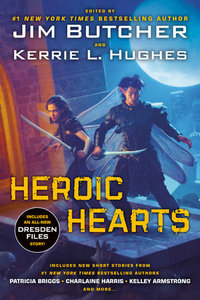
REPOSTING JUST CUZ: Heroic Hearts ed. by Jim Butcher and Kerrie L. Hughes: Street-wise Herculeses to fight the rising odds

Cover of Heroic HeartsHeroic Hearts

edited by Jim Butcher and Kerrie Huges

DETAILS:
Publisher: Ace
Publication Date: May 3, 2022
Format: Paperback
Length: 345 pg.
Read Date: May 18-19, 2022
Support Independent Bookstores - Visit IndieBound.org

Heroes have fascinated humanity since we started telling stories. They became even more fascinating when we started writing the stories down—and achieved the status previously reserved for pantheons of deities when we started putting them on the big screen. Heroes have become big business.

But heroes, real heroes, aren’t titans or icons.

Real heroes are standing behind cash registers, starting cold trucks, getting kids out of bed. They’re the everyday humans who happen to be standing there when something bad happens, and when there is a sudden need for skill, courage, or intelligence. They’re the regular people in irregular circumstances who find themselves considering others first and standing up to do whatever needs to be done.

What’s Heroic Hearts About?

In her Foreword, Kellie Hughes describes this as

a collection of hopeful stories about courage, bravery, codes to live by, and people you can trust.

Who doesn’t love a hero story? Here we have twelve stories from a dozen UF authors all approaching this idea in their own distinctive ways. Some are stand-alones, some are parts of a series.

Authors I’m Not That Familiar With (if at all)

It’s the rare anthology that will be full of only authors you know well—half the point of one of these is to be exposed to someone new so you can decide if you want to read more by them.

Charlaine Harris wrote the only story I didn’t appreciate in this collection, I just couldn’t get into it. That’s likely something to do with my mood/what I ate today/something else. Most days, I simply wouldn’t have cared—I don’t think it’s in me to really like this one.

I thought the rest of the stories were entertaining and well-executed, but a few are going to get me to keep an eye out for authors/series. Chloe Neill’s “Silverspell” tempted me to check out the rest of that series, these are characters and a world I could spend more time with. Jennifer Brozek’s “The Necessity of Pragmatic Magic” was great—ditto for “Grave Gambles” by R.R. Virdi.

“Troll Life” by Hughes was just wonderful. It’s everything you want in a short story—we’re given a well-developed world, a handful of strong and interesting characters, a good plot, and it just made me smile throughout.

Authors I’m Very Familiar With

Kevin Hearne, Patricia Briggs, and Jim Butcher are what brought me to this collection. I’ve read everything I can by them, so that’s not surprising, right?

We meet up with Atticus, Starbuck, and Oberon in Australia, looking into the cause of a massive forest fire, in “Fire Hazard.” It’s told from Oberon’s point of view, which makes it a sure-fire win. I’ll read just about anything in Oberon’s voice—and this story demonstrates why. It’s funny and action-packed. Some of the best lines in the book are in this story, too.

I wasn’t that interested in “Dating Terrors,” by Patricia Briggs based on the idea. “Asil on a blind date” just doesn’t draw me in—sure, I’m curious about Asil’s activities, so I wanted to read it. But the concept didn’t grab me. That lasted only a few pages—now I want to see more about Asil’s date and her friends. Preferably with Asil around, but that’s not necessary. I should’ve known Briggs would hook me by the end, and come into it with better expectations.

This brings us to the story the book opens with (but I saved until the end), Jim Butcher’s “Little Things.” This happens days after Battle Ground, as the city (and its wizard defender) is trying to recover from those events. The “Little Things” this story focused on are Major General Toot-Toot Minimus, his forces, Lacuna, and Mister. When a threat to the castle slips by the guards and other defenses, these heroes have to rise to the challenge. It’s deceptively fun, light, and breezy. But it’s Butcher, you know he won’t let you off that easy. Dresden in the shadow of Battle Ground? The emotional core of this story isn’t small. The story made my day…I’ve got nothing negative to say about it.

So, what did I think about Heroic Hearts?

This is a strong collection of Urban Fantasy stories, with a little something for everyone. Anything I didn’t mention above was fine—they’re all written well, but some characters/stories aren’t for everyone, and that would describe the few I didn’t talk about. Every story was worth the time (except for that thing by Harris, I just didn’t see why that was written—and I wouldn’t be shocked to hear that most readers of the book will think I’m nuts for that).

This probably would’ve gotten a warm 3 Stars from me, if not for the Briggs and Butcher stories. I enjoyed almost all of these stories, and really only disliked one. But wow, those two were just outstanding. Nothing that made me as happy as those two did is going to get less than 4.

Even if you’re new to the genre or are only a fan of one or two of the authors, I expect you’ll find yourself enjoying most, if not all, of the book. Pick it up.


4 Stars

This post contains an affiliate link. If you purchase from it, I will get a small commission at no additional cost to you. As always, opinions expressed are my own.

REPOST (and a note): The Long Way to a Small, Angry Planet by Becky Chambers: A charming, earnest and frequently delightful space opera that pretty much matches the hype.

We talked about this at Book Club last night, so I thought I’d dust this off and run it again. I think I get what I was going for in the 8th/ante-penultimate paragraph back in ’18, but I wouldn’t write it today, or anything like it, really. I’m also pretty sure that I’d rate it higher, if I were still rating things with stars–at the very least, I wouldn’t dither about it like I did. Still, this is close enough to what I’d say now that I don’t feel like redoing it.


The Long Way to a Small, Angry PlanetThe Long Way to a Small, Angry Planet

by Becky Chambers
Series: Wayfarers, #1Paperback, 443 pg.
Harper Voyager, 2018
Read: July 18 – 20, 2018

We are all made from chromosomes and DNA, which themselves are made from a select handful of key elements. We all require a steady intake of water and oxygen to survive (though in varying quantities). We all need food. We all buckle under atmospheres too thick or gravitational fields too strong. We all die in freezing cold or burning heat. We all die, full stop.

Ohhhh boy. One of yesterday’s posts was easy — I state the premise, say the book lived up to the premise, and there ya go. A finished post. Today? I’m not sure I could succinctly lay out the premise in 6 paragraphs, much less say anything else about the book. It’s deep, it’s sprawling, it’s fun and full of heart. What isn’t it? Easy to talk about briefly.

So I’m going to cut some corners, and not give it the depth of discussion that I’d like to.

So you know how The Hitchhiker’s Guide to the Galaxy starts off with the Vogon Constructor Fleet constructing a hyperspace bypass right through our Solar System? Well, if the Vogons were the megacorp doing that, the crew of the Wayfarer is your mom & pop-level company doing the same kind of work. But there are no Vogons, and it’s not a hyperspace bypass they’re constructing, but the metaphor works — the Wayfarer is building/cutting/creating ways for spaceships to make it from point A to point B faster — I’ll leave the detailed explanation to Sissix or Kizzy to explain when you read it (I think it was Kizzy, but I could be wrong — my copy is in another state, so it’s hard for me to check things like that).

The Wayfarer is made up of a mix of species — including human (some of which were raised on a planet, others not), the others? Well, they’d fit right in with the customers in the Mos Eisley Cantina (with names like Sissix or Kizzy) — too difficult to explain, but they’re all radically different from pretty much anything you’ve seen or read before. Chambers’ imagination when it comes to their physiology, culture, mannerisms, beliefs is just astounding. Really it’s fantastic. And the crew is a family — when a new crew member joins, they’re greeted with “welcome home.” And that’s just what they mean.

This new crew member is Rosemary Harper, our entry point into this world, too. She’s never been off-planet before, doesn’t understand the science behind the work they do, really only has textbook knowledge of most of the species they run into. As she learns, so does the reader. Phew. Essentially, the plot is this: the captain of Wayfarer gets a chance to make history and make more money than he’s used to — he jumps at it, but his crew has to take a freakishly long trip to get to the (for lack of a better term) construction site (see the title). This long trip is filled with dangers, encounters with family members no one has seen in ages and old friends. And pirates. Even when they get to the construction site, the challenges are just beginning and everyone on board is going to be put through the wringer just to survive.

In the midst of all this is laughter, love, joy, pain, sorrow, and learning. Rosemary becomes part of the family — by the actions of the crew bringing her in, and through her own reciprocal actions. Now, many parts of this book seem slow — but never laboriously slow — it’s the way that Chambers has to construct it so that we get the emotional bonds between the characters — and between the characters and the reader — firmly established, so that when the trials come, we’re invested. I was surprised how much I cared about the outcomes of certain characters at the end — it’s all because Chambers did just a good job building the relationships, nice and slow. The book frequently feels light — and is called that a lot by readers — but don’t mistake light for breezy.

I want to stress, it’s not laboriously slow, it’s not boring. It’s careful, it’s well-thought out. It’s your favorite chili made in the slow cooker all day, rather than dumping the ingredients in a pot an hour or so before dinner. It occasionally bugged me while reading, but by that time, I was invested and had a certain degree of trust for Chambers — and by the time I got to the end, I understood what she was doing in the slow periods and reverse my opinion of them.

I frequently felt preached at while reading this book. There were agendas all around and these characters did what they could to advance them. Most of the speechifying and preaching worked in the Wayfarer Universe, but not in ours. When I read it, I had no problem with it — but the more I think about it, the less I agree and the more annoyed I get. The opening quotation was one of the themes pushed, another had to do with family and/or brothers — but the best lines about those involve spoilers or need the context to be really effective, so go read them yourselves. I don’t want to get into a debate with the various characters in the book, so I’ll bypass the problems I have with just the note that I have them. But in the moment and in the context of the novel, the writing behind the characters’ points/values, the emotions behind them are moving, compelling and convincing — and that’s what you want, right?

It is super, super-easy to see why this won buckets of awards — and probably deserved most (if not all) of those awards. This is one of the better space operas I’ve read in the last few . . . ever, really. It’s easy to see why it got the hype and acclaim it did, and while I might not be as over-the-moon as many readers are with it, I understand their love. I heartily enjoyed it, and can see myself returning to this universe again soon.

As far as the star rating goes? I’ve vacillated between 3-5 a lot over the last week or so (including while writing this post), usually leaning high — so take this one with a grain of salt, it’s how I feel at the moment. (that’s all it ever is, really, but I’m usually more consistent)

—–

4 Stars

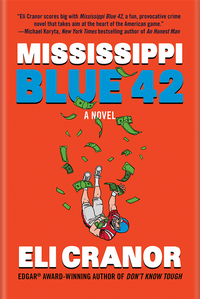
Mississippi Blue 42 by Eli Cranor: There Ain’t Nothing But The Blues In Mississippi

I thought this went up months ago, but I just found it in my drafts folder, with some vague notes in the last section. I’m relatively unable to follow most of them, and wish I could. So, had you seen this in August/September, it would’ve been better. But let’s see what I can do here.


Cover of Mississippi Blue 42 by Eli CranorMississippi Blue 42

by Eli Cranor

DETAILS:
Series: Rae Johnson, #1
Publisher: Soho Crime
Publication Date: August 5, 2025
Format: Hardcover
Length: 370 pg.
Read Date: August 7-11, 2025
Buy from Bookshop.org Support Indie Bookstores

So much depended on a ball stitched together from thirty-two panels of waterproofed leather. The fans came to see what the players did with that ball: the blazing touchdown runs, the high-flying, bone-crunching hits. And the players played for peanuts. That was the only way any enterprise could achieve the sort of profit margins enjoyed by universities with nationally ranked teams. The trick, though, was convincing the rest of the country that college football was not a business, but instead a game, a contest played on the field of higher education, which also served the Chiefs well when it came time to file their taxes.

Because the University of Central Mississippi was an educational organization, it enjoyed a 501(c)(3) status, which meant nearly every dollar the institution made was exempt from federal income tax. It was the same exception granted to churches…

Yes, Mississippi was in the Bible Belt, but the real holy day, the day when every true Southerner bowed at the altar, was game day. And in just a few more hours, the congregation would gather inside their recently renovated, five-hundred-million-dollar cathedral.

What’s Mississippi Blue 42 About?

Rae Johnson is the only daughter of a legendary college football coach and spent most of her life working to be one, too. But at a certain point, she hit the wall of misogyny (with her own father as a spokesman for the wall) and had to find a new career path. Naturally (?), she chose the FBI. We all see the overlap, right?

Anyway, she’s fresh out of the Academy and is assigned to her first case. She’s been sent to help investigate some financial crime surrounding the University of Central Mississippi’s football program. She knows she got the assignment due to her father, which grates her pride. But, she’s not going to back down from the challenge. Her partner in the investigation has been there for months and hasn’t gotten very far, but he’s determined to uncover the problems that he knows are there.

The veteran agent is just getting her acclimated to the investigation when the team’s quarterback

The Fight for the Soul of Moses McCloud

Moses stared at him, still not sure what to make of Cerge’s story, but thinking it felt right somehow, the wildness of his tale in tune with the flashy locker room: the nude white boys, the ping-pong table, the barber chairs. This wasn’t real life. It was all a dream, a four-year fantasy the players paid for with their lives. Even if they did make it to the League, even if they got paid, they still paid for it. And it wasn’t just their knees or shoulders, not even their brains. It went deeper than that. Once their playing days were over, they would be booted out of Eden, resigned to the stands to watch as the next crop of finely tuned athletes took their place. As extravagant as a Saturday spent tailgating in the Glades was, it did not compare to the roar of the crowd. Only gladiators know true glory.

This book, in many ways, seems to be a fight over the soul of the backup quarterback thrust into a leadership position—will he succumb to the culture of bagmen and fame, or will he risk his potential windfall and give Rae the information she needs?

I really like Moses from the beginning—sure, he’s got all the maturity of a college freshman (read: not as smart as he thinks he is, too easily distracted/led along by good-looking women), but there’s something about him you can’t help but like. I really think the battle for his soul angle isn’t that filled with suspense—it’s just the adults around him that fail to understand what he’s saying and what kind of guy he is all along.

But that actually makes the whole thing more entertaining for everyone who isn’t Moses.

What do I think about this as a series debut?

According to the press kit for this book:

Mississippi Blue 42 is the first in what is planned to be an ongoing series starring FBI Agent Rae Johnson as she and a cast of recurring characters explore crime in the world of sports.

Which sounds promising—especially the “world of sports” part. Not because I’m a big sports guy, but I had a hard time imagining Rae looking into some other kinds of crime because Cranor baked the sports-mindset so deeply into her. You put her in an art crime, or a counterfeit money situation? I just don’t see it working as well (but I was ready to try). Rae hunting down a crew of bank robbers would be interesting to see, I just don’t know if she gets into their heads. But even if you move her to professional sports—even something other than football, she’s got the right mindset, the right background to really give a series legs.

Rae reminds me of Ellie Hatcher, Renée Ballard, and Eve Ronin. She’s got ambition, she’s willing to cut corners (maybe too many), she’s determined to make it in a man’s world—and she lets all of that lead her into some blunders as she learns her way. The question is: will she learn from them? The other women did—I trust she will, too. But making those mistakes is fodder for good fiction along the way.

I do wonder what characters from this book will recur. One strong candidate is Rae’s friend who failed a drug test and got booted from the FBI Academy. She had a strong presence early on in the book, but she just vanished later on. Which makes sense for reasons of this book’s plot, but not if you’re establishing a series character. Beyond her, I’m pretty curious.

So, what did I think about Mississippi Blue 42?

This was about the players and the game they’d been forced to play. The contest that took place on the field was nothing compared to the battle that went down in Waffle Houses, seedy motel rooms, used car lots, and a laundry list of other skeevy locales. That’s where boys like Moses McCloud had been fighting for so long nobody even saw them as boys anymore. These were young men whose talents had been exploited to pay their coaches’ multimillion-dollar contracts, secure billion-dollar TV deals, and provide highly visible recruiting for their respective universities. College football wasn’t a game at all; it was a business, a completely self-sufficient economy powered by young, mostly Black athletes.

There are more “bad guys” in this book than in most its size—and I’m really unable to come up with a drop of sympathy or empathy for any of them. I wasn’t prepared for that. I’m used to Cranor helping me see the humanity of his characters. Not that I don’t see humanity here—all I see is the worst of it. Yes, there are some who are less-worse than others, and there are a few that you can easily call The Worst. Right up to the last revelation (which Rae really should’ve seen coming), the worst of America is on display. If you pull up a classic D&D Alignment Chart, you have a couple of Lawful Evil characters, many Neutral Evil characters, and a couple on the extreme end of Chaotic Evil, too. Worse, you have a Lawful Evil who pretends to be Lawful Good—and someone who is convinced he’s Lawful Good, but is really a deluded and easily manipulated True Neutral.

Sorry, that’s not helpful at all, but once I started thinking along those lines, I couldn’t stop. Hopefully, someone out there appreciates it.

The hypocrite bothers me more than they should (because it’s so obvious). The easily manipulated head coach really makes me miss the misguided integrity of the coach from Cranor’s Don’t Know Tough.

And honestly, not much better can be said of most of Rae’s allies through this. But they’re trying. I’m pretty sure they are, anyway. I found them entertaining anyway, and didn’t spend a moment hoping they’d find their comeuppance.

This established a strong world and at least one character that we can follow—I’m very curious to see how this experience shapes Rae’s career (at least the early days of it, obviously) and how she sees herself. But more importantly, this was an entertaining, gripping, roller-coaster of a ride. The series stuff can work itself out—right now, all I want to focus on is Mississippi Blue 42, and it’s a great ride.

You gotta check it out if you’re a Cranor reader (and probably already have). If the Venn Diagram of your interests includes college sports and Crime Fiction, you’ll enjoy this item from the overlap set. Actually, you’ll probably enjoy it if you don’t care about college sports at all, just Crime Fiction. Personally, most of what I know about college sports comes from I Am Charlotte Simmons—and Cranor tells the same story (essentially) about the industry it does, but in a more concise and focused way.

Okay, I’m rambling. Go get this thing, you’ll be glad.


4 Stars

This post contains an affiliate link. If you purchase from it, I will get a small commission at no additional cost to you. As always, the opinions expressed are my own.
20 Books of Summer 2025 logo

Grandpappy’s Corner: Tiny Hands Hymns, Vol. II; Tiny Hands Psalms; and Tiny Hands Apostle’s Creed edited by Hannah Duguid Estes, illustrated by Jessica Hiatt: A Great Set of Starter Devotional Reads

Grandpappy's Corner logo featuring the covers of Tiny Hands Hymns, Vol. II; Tiny Hands Psalms; and Tiny Hands Apostle's Creed

Tiny Hands Hymns, Volume II

Tiny Hands Psalms

and

Tiny Hands Apostle’s Creed

edited by Hannah Duguid Estes, illustrated by Jessica Hiatt

DETAILS:
Publisher: P & R Publishing
Publication Date: October 29, 2025
Format: Board Book
Length: 16 pg. (each)
Read Date: November 29, 2025

What are the Tiny Hands About?

This is going to be remarkably like the post I did about the first 3 Tiny Hands books, because these new three are remarkably like them–consistency is good. These are little board books that serve as beginning devotional materials—training wheels for young worshipers, if you will.

Tiny Hands Hymns, Volume II

These are the first stanzas/verses of some of the best hymns around: “Abide with Me,” “Come, Thou Long-Expected Jesus,” “Fairest Lord Jesus,” “How Firm a Foundation,” “O Worship the King,” “Rock of Ages,” “Take My Life, and Let It Be,” and “When I Survey the Wondrous Cross.”

On the opposite pages are fitting illustrations, with some accent illustrations on the pages with text.

Buy from Bookshop.org Support Indie Bookstores

Tiny Hands Psalmss

These are a selection of psalms—translated by Iain Duguid (Professor of Old Testament at Westminster Theological Seminary)–either the complete psalm or a notable portion.

They include Psalms: 1, 18, 23,334, 51, 100, 121, and 139. The translations are clearly “kidified.” But I think they’re faithful.

Again, opposite each is an appropriate illustration, with some accent illustrations on the pages with text.

Buy from Bookshop.org Support Indie Bookstores

Tiny Hands Apostle’s Creed

This is a fairly standard translation of The Apostle’s Creed, split up segment by segment. Yet again, opposite each is an appropriate illustration, with some accent illustrations on the pages with text.

This is probably my favorite of the new bunch–if only because this’ll be one of the easiest for my grandcritters to put into use.

Buy from Bookshop.org Support Indie Bookstores

Let’s Talk about the Art for a Minute

Outside the previous Tiny Hands books, I’ve apparently appreciated Hiatt’s work as a cover designer on a few books (The Wonderful Works of God by Herman Bavinck, Things Unseen by J. Gresham Machen, and Struck Down but Not Destroyed by Pierce Taylor Hibbs), but illustrating board books calls for a slightly different skill set. Still, the illustrations remind me of those covers.

I think these are great. Bright and cheerful, without being cartoonish or silly (I have nothing against those kinds of illustrations, but they’re not fitting for the subjects).

How are they to Read Aloud?

They’re fine—although I can’t imagine that anyone, even those who can’t carry a tune, not singing the hymns instead of reading them. A lot of adults won’t need to actually read the Creed, we have it memorized (although, it’s good to pay attention so the pictures match up.

The translations (I’d be tempted to call them paraphrases, but the books say translations—and I don’t know enough to contradict that) are foreign-feeling for people who are familiar with/have memorized the relevant portions from the AV, ESV, NASB, etc. Once you get past that feeling, there’s nothing about the text that’s difficult or odd to read—and they seem easy enough for young children to comprehend (to some degree).

What did the Grandcritter think of Them?

I haven’t been able to read them to him–he sees this art/format and he assumes it’s the first volume of Hymns and demands to sing some of them–he won’t even give us a chance to go over the new ones, much less the other books. I’m sure I’ll get him to let us eventually. But for now, I can’t answer this.

So, what did I think about the Tiny Hands books?

I think they’re a great idea—and overall, I am pleased with the execution. I do recommend them without hesitation.

I have some questions about some of the technical bits of translation, verse choices, and whatnot—not so much that I have a problem with the books, I’d just like someone good with the original languages to sit down with me and walk through these.

But for a young child? I think they’re well done and would be great resources for regular use.


4 Stars

This post contains affiliate links. If you purchase from it, I will get a small commission at no additional cost to you. As always, the opinions expressed are my own.
Grandpappy Icon

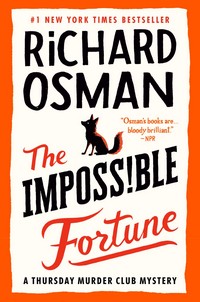
The Impossible Fortune by Richard Osman: Moving On

Cover of The Impossible Fortune by Richard OsmanThe Impossible Fortune

by Richard Osman

DETAILS:
Series: The Thursday Murder Club, #5
Publisher: Pamela Dorman Books
Publication Date: September 30, 2025
Format: Hardcover
Length: 352 pg.
Read Date: November 24-26, 2025
Buy from Bookshop.org Support Indie Bookstores

Elizabeth is being mysterious.

It’s something of a relief, of course, because it has been some while since she’s been mysterious. She tells me we are taking the minibus to Fairhaven tomorrow morning, and it’s also been a while since we’ve done that. What are we to do there? Information has yet to be forthcoming. “A nice stroll along the front” is what Elizabeth said, and if you believe that you’ll believe anything.

What’s The Impossible Fortune About?

Joyce’s daughter, Joanna, is getting married. During the reception, Elizabeth is approached by someone wanting help. He’s heard about Elizabeth from Joanna and would rather go to her for help than anyone else.

Then he goes missing. The Club mobilizes to try to find him—with some help from Joyce’s daughter and new son-in-law, too.

Ron’s a little distracted by some family trouble (trouble he doesn’t realize the depth of, either), but that won’t be enough to derail the Thursday Murder Club, will it?

Elizabeth

“Screenshot the messages,” says Joanna. “We have to find Nick.”

“Screenshotting them,” says Paul. “I’ll send them straight to the police.”

Joanna puts her hand on his.

“Honestly? God bless the police, but it’ll be quicker all round if we just show them to Elizabeth.”

The core of this book is Elizabeth moving on from full-time grieving. She’ll be grieving for the rest of her (hopefully long and sequel-filled) life. But equipped with a puzzle—and potential danger to others—some of her old spark comes back.

Something noted by the rest of the Club—and Donna, too.

This doesn’t mean she’s as sharp as we’re used to—she notes that herself. By the end of the book, that’s done with. Still, even an out-of-practice Elizabeth is better than the police assigned to this case (sadly, not our friends—nor are they likely to be seen again).

We are treated to seeing her alone—or almost alone sometimes—and vulnerable. It’s Elizabeth at her most human, which is wonderful to see (even if we all probably prefer Elizabeth the super-hero).

Joyce and Joanna

The relationship between Joyce and her daughter has been a frequent topic to return to, and change has been slow—if not imperceptible. But we get some strong movement here—and some frustrating delays in it, too (designed to be frustrating, this isn’t Osman flubbing things).

Overall, we see the two of them working together here—on the wedding and on the case. It warms the heart to see. They both make some healthy compromises—and conspire together in way that’ll make you smile.

So, what did I think about The Impossible Fortune?

Danny Lloyd has had guns pointed at him before, but never by a woman. It makes, he notes to himself now, very little difference. The gun is the thing. Well, the bullets inside the gun are the actual thing, arent they?

Keep the bullets inside the gun, that’s the trick.

Frankly, it feels like Osman was a little off his game with this one. And it makes sense—after the big events of The Last Devil to Die, almost everything is going to feel like a letdown. He also needs to re-establish the feel for the books now.

We’ve added a new character or two, made some pretty big changes for some (at least one of which is going to stick with the books for a while). Just the sheer amount of time we spend with Johanna and Ron’s son, Ritchie, makes this feel different. I don’t want to get into the Ron-and-his-family storyline, but man, it’s good.

My biggest concern is Ibrahim’s depiction. He didn’t get that much space—which makes sense; there’s a lot of competition this time. But in most of the space he was given, he seemed…off. He felt sillier and dafter than usual, almost like the novel was gently mocking him. But that eventually went away, and he really came through for the team more than once in pivotal ways. Also—he’s great, as usual, with Ron’s grandson.

All the charm, all the wit, all the heart is there—so whatever I (or you) may think about the quality of the book as a whole, it doesn’t matter that much. Everything that makes a Thursday Murder Club book a Thursday Murder Club book is there. There’s just a little less luster than usual.

Now that Elizabeth has her groove back (mostly), I expect this to be a minor aberration and that we’ll get back to his usual level.

Still, this was about as entertaining as you can want in a mystery—if you haven’t gotten to it yet, fix that.


4 Stars

This post contains an affiliate link. If you purchase from it, I will get a small commission at no additional cost to you. As always, the opinions expressed are my own.
Irresponsible Reader Pilcrow Icon

Second Lies the Son by Matt Phillips: You Are Your Family

Cover of Second Lies the Son by PhillipsSecond Lies the Son

by Matt Phillips

DETAILS:
Publisher: Runamok Books
Publication Date: November 8, 2025
Format: eARC
Length: 196 pg.
Read Date: November 7-8, 2025
Buy from Bookshop.org Support Indie Bookstores

What’s Second Lies the Son About?

I’m not sure how to sum this book up. I really don’t. Honestly, all you need to know about this to decide to pick it up are the two words in yellow at the bottom of the cover: Matt Phillips.

But if you need more, here’s what Runamok provides:

Set in the high deserts of California, Second Lies the Son is a tale of small-town friendship, love, disloyalty, and violence. Sam and Hayes grow up together-brothers in spirit. But their lives take different turns. Sam fumbles his way to family and work. Hayes bloodies his hands in Afghanistan. Returned a reluctant war hero, Hayes is dead set on avenging his conversion into an instrument of war. Sam tries to head off his best friend’s brutal plans, but the haunting sins of his own past come calling. From one of America’s authentic noirists, Second Lies the Son depicts the irredeemable violence of American masculinity and tracks that violence to the darkest depths of cold-blooded murder.

Likeability

Obviously, in noir, the majority (if not all) of the characters are not going to be that likable. Boy howdy, is that true here. Your instinct is to like Sam, if only because he’s our central POV character. At least to feel a degree of sympathy for him. But there’s something about him…

Hayes, on the other hand…life has not been kind to him. And while I feel nothing but sympathy for him, the only reason I care about him is that Sam does.

Outside of Sam’s wife and infant son, those are the most likable characters. There’s a lot of broken humanity on display here—in all of its beauty and depravity.

So, what did I think about Second Lies the Son?

I avoided the second Matt Phillips novel that Fahrenheit put out because I loved Know Me From Smoke so much and I didn’t want anything to taint that experience (by falling short or exceeding it)*. I honestly only read A Good Rush of Blood because I didn’t pay attention to the author name, I just read whatever Runamok book shows up in my mailbox. I don’t remember how far along I was in the process before I realized he was the same writer. I’ve now seen the error of my ways and will just read whatever Matt Phillips book I come across.

There’s just something about his lean prose that grabs me in a way few do. Lean, but that’s not to say plain or worse. Phillips will regularly write one of those sentences/phrases/passages that you have to stop and re-read a few times to fully appreciate.

These characters—except for the infant—are so well-drawn and developed that I’d have no trouble believing Phillips had spent time interviewing them all before committing them to page. Or maybe living with them. I’d believe that, too.

At this point, I’m going to just give up on talking about Phillips’ writing. And move on to the bigger pictures.

It’s hard to really describe what this book is about, the blurb above is fine, but I’m not sure that’s what I’d have chosen (it’s a better sales pitch than my description would be)—and I honestly fumbled when talking to people while reading. Honestly, if you’re talking “plot” or “action”—you’re not going to get it for about 80% of the book, that’s all set-up time. But, of course, that’s not true—you just might have a hard time articulating what the plot is until then.

At the heart, this book is about friendship—what you’ll do because of a deep friendship, what will happen to you because of one, and how it’ll shape (possibly deform) your life. It’s also about the fight for the souls of these two men. Sam is fighting for his soul and the soul of Hayes. Meanwhile, Hayes is fighting for his and Sam’s. While they’re not really working against each other, they’re really working in different directions. They’re both doing it out of love. I think it’s pretty clear that one of them has a healthier end in mind. But it’s a comparative, not an absolute.

Also, the collateral damage from these struggles is pretty devastating. Obviously, I can’t talk about that—but it’s something I keep coming back to chew on. And it should be kept in mind when you try to decide if the fights for souls were worth it.

This is a fast, lean novel that will leave you moved (disturbed might be a better word) and chewing on it for days. Second Lies the Son is a great example of what Crime Fiction can do beyond the expectations of the genre (while remaining in the genre).

* Does this make sense to anyone else? Please say so.

Disclaimer: I was provided a copy of this ARC by the author. But I jumped on the offer.


4 Stars

This post contains an affiliate link. If you purchase from it, I will get a small commission at no additional cost to you. As always, the opinions expressed are my own.
Irresponsible Reader Pilcrow Icon

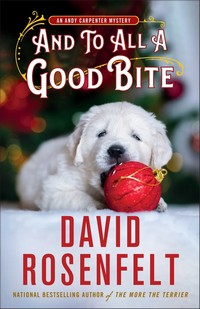
And to All a Good Bite by David Rosenfelt: Andy Carpenter’s Back Out of Retirement Again

Cover of And to All a Good Bite by David RosenfeltAnd to All a Good Bite

by David Rosenfelt

DETAILS:
Series: Andy Carpenter, #31
Publisher: Minotaur Books
Publication Date: October 14, 2025
Format: Hardcover
Length: 293 pg.
Read Date: November 13-14, 2025
Buy from Bookshop.org Support Indie Bookstores

“Will you help me?”

“I believe I will,” I say, proving once again that my mouth has a mouth of its own. It did not consult with my brain before saying it, which is a major breach of the decision-making chain of command.

What’s And to All a Good Bite About?

Two years ago, Jeff Wheeler watched the building his girlfriend was in explode while he engagement ring he got for her was in his pocket. In vain, he ran into the building to try to save her, but the fire was too intense. He was, however, able to save a dog.

He ends up—with Andy Carpenter’s help—adopting the dog, and the two of them are happy. Jeff has come to think that the building’s explosion wasn’t an accident, but was caused by the building’s owner. Jeff starts hounding the man, trying to get him to admit to it and trying to take him to court over it.

When that man is shot, Jeff’s an early suspect. When some evidence is uncovered conveniently close to Jeff’s home, he’s arrested.

Now it’s up to Andy to admit he’s not retired (again) and to do what he can to save Jeff’s life.

The Holiday-ness of it

This is about as far from a Christmas book that Rosenfelt could do—the holiday itself is dealt with in maybe 5 pages, and those are fairly early-on. It really could be a case of “which of these three novels I’m almost done with could I most easily insert the holiday?”

This next sentence is not really a spoiler, but it kind of is, so skip to the next heading if you want. Also, the body count in this book is high for this series (and potentially even higher), and the motive behind it seems to make it even worse. It’s hard to reconcile that with the Season of Cheer. (not that it needs to, I’m just thinking holiday stuff).

So, what did I think about And to All a Good Bite?

So my son eats vegetables….I find it hard to come to terms with that. I’ve been assuming for years that he will outgrow it, but it doesn’t seem like it’s going to happen. But it still pains me when the waiter comes over and Ricky asks how they prepare the brussels sprouts.

We back up a little on Marcus’ intelligibility here—which felt odd, maybe Rosenfelt realized he’d taken too much of the mystery away from him—maybe even the superhumanness of him. Or maybe it’s a case of perception—I thought that Andy was fully capable of understanding Marcus recently because relative to most of the series, he could. But compared to Willie or Corey (check spelling of Simon Garfunkel’s human), Marcus is unintelligible. It could just be some re-calibration in general. Marcus’ super-humanness is seriously reinforced on other fronts this time.

The client’s dog is far more important to the story than usual—something I appreciate, as much as I like a cute dog photo on the cover, or a canine-related pun in the title (which has nothing to do with the plot at all). When the dog actually plays a role in the story, I like it.

Andy seems to make a call on the whole retirement/semi-retirement thing, which is nice. Otherwise, this is your standard Andy Carpenter book—some solid wisecracks, a clever mystery, some nice reveals, some convenient breaks, some courtroom hijinks, Andy’s familiar (yet fresh and entertaining) thoughts on jury selection and jury deliberation. There’s just enough that’s not typical to keep long-time fans engaged. Up to, and including, more Vince-related action than we’ve seen in a bit—up to the part where I could throw in a click-baity “You won’t believe what Vince does” kind of headline. But I won’t stoop to that. Really.

Oh, wait—Ricky is 16 now? I’m sorry, when did his actual aging creep into these books? How is Rosenfelt not keeping him a cute kid/tween for forever, the way that Tara is not a senior dog yet? Has Rosenfelt been giving us higher numbers for a while now and I just haven’t noticed?

Anyway, back to the “standard Andy Carpenter book” remark. That’s really what this is—that’s good news. It’s not a let-down, it’s not a rare stumble for Rosenfelt, it’s not shaking up the entire series with a gritty turn—it’s a reliable author giving his fans just what they want, quality entertainment with old friends. And that’s just the kind of gift an author like Rosenfelt should give his readers for the holidays.*

* That’s one of the cheesiest things I’ve written on this site, but I kind of like it.


4 Stars

This post contains an affiliate link. If you purchase from it, I will get a small commission at no additional cost to you. As always, the opinions expressed are my own.
Irresponsible Reader Pilcrow Icon

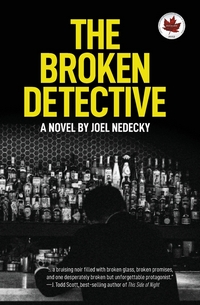
The Broken Detective by Joel Nedecky: The Lost. The Broken. The Missing.

Cover of The Broken Detective by Joel NedeckyThe Broken Detective

by Joel Nedecky

DETAILS:
Publisher: Runamok Books
Publication Date: October 15, 2025
Format: ARC
Length: 262 pg.
Read Date: October 29-30, 2025
Buy from Bookshop.org Support Indie Bookstores

What’s The Broken Detective About?

Our protagonist-narrator is a PI who just lost his license (a felony conviction will do that to a guy) and who is headed to prison in a couple of weeks (a felony conviction will do that to a guy). Jake’s major concern at this moment is his mother—she’s disabled and addicted, and cannot be trusted to pay her bills or feed herself anything but alcohol. Jake’s it—but Jake’s thrown all that away (also, related to his mom, but mostly because of dumb choices).

So Jake needs to make as much money as he possibly can over the next two weeks—he has a figure in mind, one he probably can’t meet. But he has a goal—bank robbery is probably the most likely way to meet it, but there are problems there (aside from the legality)—he’d probably get caught (I should mention that he’s a barely functional addict—which led to the dumb choices above) and then things would be worse for mom.

Thankfully, someone has a case for Jake, and she doesn’t care about the licensing. Her sister has been missing, she can’t go to the cops, but her sister needs to be found before it’s too late for her. This woman wasn’t even referred to Jake because of his skills (which is probably good). She’s sent to see Jake because Jake will go to the wretched hives of scum and villainy that this woman’s sister traveled in, because he belongs there, too. He won’t stick out like a sore thumb, and people will talk to him.

One broken detective looking for a missing and broken woman.

This will lead him into the paths of drug dealers, questionable authorities, a cult (or is it?) that the sisters once belonged to, other questionable associates of both sisters, and possibly a shot at hope for Jake and the missing woman.

The Title

I have several thoughts about the title—first, it’s incredibly fitting. On the other hand…

There’s part of me that wonders who the definite article is referring to—obviously, Jake’s the “The” in view, we know he’s broken from the get-go, and we never get anything but reinforcement of that fact. However, over the course of the novel, we meet more than one detective who fits that description. A Broken Detective or The Broken Detectives would work just as well as a title

But really, that just means the detectives we encounter are just like everyone else in the book. Everyone is broken (yes, like in reality, but it’s a bit easier to see here). From the witnesses, the bystanders, the victims, the complicit, and the guilty—from the first page to the last, this book could—and possibly should—simply be called The Broken. Don’t mistake broken for morally bent (or worse), but life and others have taken these people and have left them as other than they started, other than they could’ve been. Not whole, not intact, but broken.

But it’s not, it’s The Broken Detective, and it’s probably up to the reader to decide if it’s Jake or another candidate.

So, what did I think about The Broken Detective?

I hemmed and hawed about if I should say more about the plot and characters—but after a few tries, I opted not to. Everything I tried to say felt like a spoiler—it’s best if you learn about all involved the same way Jake does (or when he tells you about them, in the case of people he knows already). Because, sure, the book is about Jake looking for this woman. But really, it’s about Jake figuring out who he is, who he wants to be, and if he wants to do the required work to get from here to there. So it’s best for the reader to take the journey with Jake and come in with few preconceived notions.

Or so I think, anyway.

One critique I have is that I’m not sure that bringing in an church/cult from “the real world” as a comparison/parallel to the one in this book was necessary—or that the stone that Jake turned over as a result of his research was necessary. It turned a murky and questionable group (up to some horrible, repugnantly illegal stuff) into a creepy murky and questionable group (up to some horrible, repugnantly illegal stuff). Just a step too far. There was no ambiguity about the church already—I don’t see what he gained by making them worse.

Early on, I noticed something—and then backtracked to check to make sure I was right, and then watched for it going on. Nedecky cares about the last line/paragraph of a chapter. Obviously, he cares about every line and paragraph, but it feels like he puts extra care into those. Not in the way that some do to propel you into the next chapter (not that there’s anything wrong with that), but it’s like he knows that a chapter end is likely to be where someone puts the book down for one reason or another—and Nedecky wants to leave his reader with something to think about. It’ll either be an emotional punch or a line to chew on.

I had things I needed to accomplish the night I started this, so I forced myself to put it down—but this could’ve easily been a one-sitting book. This novel got its hooks in me and didn’t want to let go.

The ending—and the final revelations—will not make anyone happy. Well, it shouldn’t. But it will satisfy and gratify you—because of the storytelling involved, because it’s fitting, because it’s as noir as you can get. You won’t walk away with a smile on your face and a song in your heart, but you’ll walk away with that satisfaction that comes from a near-perfect execution.

I highly recommend this.


4 Stars

This post contains an affiliate link. If you purchase from it, I will get a small commission at no additional cost to you. As always, the opinions expressed are my own.
Irresponsible Reader Pilcrow Icon

Page 1 of 88

Powered by WordPress & Theme by Anders Norén