Tag: 4 Stars Page 36 of 88

Luck and Judgement (Audiobook) by Peter Grainger, Gildart Jackson: Death at Sea, Corruption and Destruction on Land

Luck and Judgement

Luck and Judgement

Peter Grainger, Gildart Jackson (Narrator)
Series: A DC Smith Investigation, #2

Unabridged Audiobook, 11 hrs., 57 min.
Tantor Audio, 2016

Read: June 10-12, 2020
Grab a copy from your local indie bookstore!

…this was, when you thought about it, typical of the places that Smith brought you to, of the situations that you could find yourselves in when working with him…He had these ideas which somehow seemed to be more than hunches and a way of making things happen before you realized it. Half suggestions would have momentum before you could blink.

I’ve said it before, and I’ll keep saying it until it’s no longer true* but there’s a certain magic, an ineffable alchemy about Jackson narrating Grainger’s work. It’s just fantastic, I think I’d have liked these audiobooks with another narrator (or in print), but I don’t think I’d have liked them as much. I’ve enjoyed Jackson’s narration before, but it was (no offense intended) good, not great. But you put the two of them together? It’s fantastic.

* I expect that will be roughly the time that one of them retires.

The downside here is, that I don’t have a lot to say beyond that. And it kind of drives me crazy. I made a couple of notes, but I’ve misplaced them (which is pretty annoying).

What’s Luck and Judgement About?

We start off with Smith and Waters taking a helicopter to an oil rig with some other police to investigate a death/missing person (the helicopter rides inject a much-needed bit of levity to keep the beginning of this novel from being too dark). Smith and Waters are really along for the ride, most of the work will be done by the others, but the victim was in Smith’s jurisdiction—as it the rig. Or close enough, so they have to come along.

The higher-ups and the executives on the rig are willing to write it up as a suicide, but are leaning on an unfortunate accident as the explanation. Smith, shockingly, isn’t convinced. Suicide seems unlikely for several reasons, and one would have to work really hard to get around all the safety measures, guard rails, fences, gates, and whatnot in order to have an unfortunate accident. It makes him no friends, but Smith is convinced (and is more so by the hour) that this is a homicide.

As bad as it is for the victim, their suffering is over—but for their survivors, the crime (if there was one) will affect their lives for years to come. In this case, we’re talking about his wife and a small child. They didn’t have a lot of money coming in before his death, but now, there’s nothing. A small apartment, little financial security, and nothing else. Without becoming maudlin, or focusing on them too much, Grainger does allow us to see how these events will alter their lives and what the future may hold for them. We got a little bit of that in the previous novels, but it plays a larger role this time. It’s a small thing, but one that’s too often over-looked in Crime Fiction.

There’s a new detective on the team, a transfer, and one that Smith has a hard time relating to—he’s trying to be cautious and make sure she’s acclimating. At the same time, he’s worried that he’s not using her, and that the best way to get her acclimated is to throw her in. With the rest of the detectives (including those he doesn’t appreciate), you don’t see him uncertain or reflective. So watching Smith trying to figure out how to manage someone is a new side to him.

That same detective plays a role in an undercover operation that Smith undertakes to follow a lead—it’s possibly the most comedic part of the series to date—while not really being that funny at all. Judge for yourself.

As much as Smith’s hunches, his intuition, might start his team down a road, or help him to see a connection that others miss, once he makes that intuitive leap to start an investigation, procedure takes over. I can’t think of another “police procedural” where the procedure is as effective as it is in these books. Smith and the team (mostly the team) grind and grind and grind, doggedly going through all the steps before them, and it pays off—at least to a degree. I really respect that as a narrative choice—sure, Smith’s (or someone else’s) intuition (experience guided by intelligence, as Nero Wolfe would put it) will sometimes help set the direction, but it’s legwork that gets it done.

What’s Going On Other than the Main Case?

Smith continues to work with the True Crime writer on that previous case of his, and a friendship develops between the two As an ongoing arc, this is a real slow burn, and I’m enjoying it, as much as I don’t understand what Grainger is up to. I’m assuming instead of a B (or C) story, this will eventually become the A story for a novel—maybe the last in the series? But unless this is just going to demonstrate that Smith’s biggest case ever was his biggest failure and he’s going to have to find the real killer now, I’m not sure I see how.*

* Okay, I just came up with a half-baked idea where it would work, but I’ll hold off on that idea until it can get solidified.

Lastly, it’s time for Smith to be recertified as physically fit to carry on his duties. He’s missed two previous opportunities to qualify and he has no choice but to show up for this one. It feels pretty personal, the DCI who’s had it in for him since before the series started seems to be using this to force him out. The reasons he missed the previous two are legitimate reasons, and the DCI just looks petty for forcing his hand like this. But then when doesn’t this guy look petty? In the last book, he tried to get Smith to transfer to another office, and that didn’t work, so this is his new attempt. It’s short-sighted and small-minded to force Smith out, but the dies have been cast. While the new assignment was being dangled in front of Smith, a private-sector job was also offered—the lengths (the questionable, reckless, and likely illegal) that Smith goes go to pass this test demonstrates how un-tempting he actually found the offers last time, no matter what he may have thought. Smith loves this kind of police work and will have to be forced into retirement, kicking and screaming.

So, what did I think about Luck and Judgement?

So much for the three paragraphs that I was hoping to come up with for this post, I guess, eh?

I pretty much gave that away in my first paragraph, didn’t I? There is something about the combination of Grainger’s novels and Jackson’s performance that make these books so satisfying. Are they the best written, most exciting and suspenseful Police Procedurals? No. But they are just about the most satisfying, most immersive, most effective that I can think of—even when the ending isn’t what you’d want. There is a strong sense of humanity in these books, not just in the protagonists, but in the victim, the killer, the witnesses, the people who aren’t the killer but who aren’t up to anything legal/moral/ethical…everyone. There’s no one cartoon-y or over the top (in any direction). You just don’t see enough of that.

I was sucked into the intricacies of this case and thoroughly enjoyed spending time with Smith and the rest of the team—and I can’t wait to return to this world.


4 Stars

This post contains an affiliate link. If you purchase from it, I will get a small commission at no additional cost to you. As always, opinions are my own.

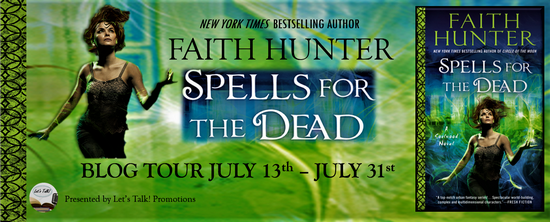
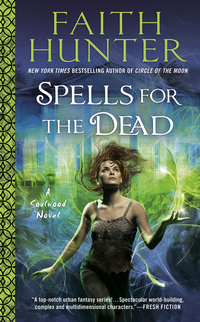
Pub Day Repost: Spells for the Dead by Faith Hunter: Nell and Her Team Face a New Type of Deadly Threat

Spells for the Dead

Spells for the Dead

by Faith Hunter
Series: Soulwood, #5

eARC, 384 pg.
Ace, 2020

Read: July 13, 2020

What’s Spells for the Dead About?

PsyLED is called to the home of a country music superstar to investigate some mysterious deaths—the and her band had recently returned from a pretty successful tour and now many of them are dead and several of those who aren’t are in desperate need of First Responders to act quickly.

Sadly, no First Responder is equipped to cope with whatever happened to them, much less recognize and understand it. That goes for people later to the scene, including PsyLED. However, under the direction of T. Laine, their witch, they’re able to makes some guesses about treatment. Nell, Occam and Lainie focus on documenting everything they can as well as beginning preliminary interviews.

One of the first things they determine is that a witch was not behind this attack. Sadly, they reach this conclusion too late to prevent a local sheriff, with the aid of a less than ethical senior FBI agent, to lock up the band member who is a witch. Their logic is impeccable—paranatural crime, arrest the nearest paranatural. This anti-paranatural tendency shows up frequently among the humans in this book—particularly when it comes to witches. I appreciated the way that Lainie dealt with it (both in her more honest and then in her more politic approaches). Our trio being joined by their upline boss, Ayatas FireWind, helps in this manner somewhat (both because of his rank, and FireWind’s general demeanor).

On a semi-related note, you would think that people who believe/proclaim very loudly that lycans, witches, vampires, and so one are horrible monsters that want to kill all humans would be a little more circumspect when they’re around. Maybe it’s just me, but if I thought someone wanted to rip my limbs off and snack on them, I would go out of my way to not antagonize them.

Anyway, the team’s focus here is a little split—on the one hand, they need to both identify the type of magic behind the attack and continue to find better ways to treat those fighting off the effects; and on the other, figure out who had the motive and/or means to carry it out. Neither goal was really that easy.

So That’s the Main Story, What Else is Going On?

As with all books in this series, as much as this is about the PsyLED team, it’s really about Nell Ingram, her integration into the world outside the cult she left, even as she continues to deal with it and her family. God’s Glory Church really doesn’t factor heavily in this book, but it’s always in the back of her mind, shaping (either directly or in reaction to it) how she reacts to things.

There is a pretty intense moment related to the Church, but it has more to do with Nell’s family, than the Church itself. Nell doesn’t yet have full custody of Mud, but everyone’s pretty much acting as if she does. Mud’s continuing to settle in and push Nell in ways she wasn’t prepared for. Which is just fun. Both Nell and Mud are having to deal with their very pregnant sister, Esther. Esther’s pregnancy is causing her powers (and flowers) to come forward, and unlike her sisters, she’s not that interested in them. It’s a nice contrast—and it provides Mud with some great opportunities for growth.

On the work side, the team’s recent successes—particularly as the only predominately non-human team in PsyLED—are causing the Agency to make some changes to the way the Agency works—and this is going to spill over onto the team. By and large, the changes look positive and will provide good opportunities for the various members of the team. However, Nell doesn’t like change—doubly so when it applies to those things in her life she holds most dear. And since we read all this from her perspective, it’s hard to look objectively at all this.

If we’re looking at the Venn Diagram of Nell’s families (natural and found), the overlap is Occam. I’ve always loved this relationship, and now that they’re openly seeing each other and professing love? Occam’s so good, saying all the right things, doing all the right things, he’s practically a Gary Stu/Marty Stu. That “practically” there is important—Hunter’s written him in such a way over these few books that he comes across as earnest in all this, he’s not perfect, he’s just really close to perfect for Nell. They’re just fun together.

As for Nell herself? She’s continuing to work on herself, her approach to life. She makes some wise decisions and actions with her relationship with FireWind. She makes some great leaps with the relationship (if you can call it that) with the Vampire Tree. And we get some of the most solid information on just what kind of paranatural creature Nell is (watching her stifle her curiosity on this front to focus on the case was a great moment). Basically, Spells for the Dead contains more of that sure and steady, organic character development that’s been the hallmark of this series.

So what did I think about Spells for the Dead?

One of my favorite parts of these books is Nell’s reactions to new-to-her foods. We don’t see her introduced to anything here, but we still get to see her relish a few things she wasn’t exposed to for most of her life—Krispy Kreme donuts and pizza. This is actually kind of a good way to think about most of this book—unlike the previous books (particularly the first two), we’re not seeing Nell experience much that’s new here—mostly she’s living in this new world, rather than figuring things out. Hunter has established her world, has set up the characters, creatures, overarching conflicts, and whatnot. Now she gets to play with that world.

This means (at least for me, and at least for this book), that without the earth-shattering reveals, the Big Moments in Nell’s (or other characters’) life, the book has less of an impact on me. Spells for the Dead is just as good as the rest of the series has been, it just doesn’t hit me the same way. Which leads to a slightly lower rating. Hunter’s plotting, writing, and characters are still top-notch, it just didn’t blow me away. I got to spend some time with some really good friends—and I’m so happy I did—but it was comfortable, not exploratory. I trust that won’t always be the case, and that Hunter will certainly do things in this series that will cause my jaw to drop, but sometimes it’s simply going to be a really good/great novel instead of a fantastic one. Still making it one of the best series I follow.

I really got into this case—it wasn’t as fraught as some of the previous ones were, but it was interesting and unexpected. The side stories did everything they needed to. Spells for the Dead just solidifies the Soulwood books as one of the best UF series going.


4 Stars


My thanks to Let’s Talk! Promotions for the invitation to participate in this tour and the materials (including the book via NetGalley and Berkley Publishing Group) they provided.

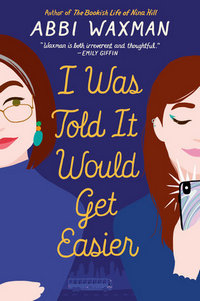
I Was Told It Would Get Easier by Abbi Waxman: The Cat’s in the Cradle and all that…

I Was Told It Would Get Easier

I Was Told It Would Get Easier

by Abbi Waxman

Paperback, 328 pg.
Berkley, 2020

Read: July 14, 2020
Grab a copy from your local indie bookstore!

I sighed. “And I’m leaving day after tomorrow for the college tour.”

She laughed. “There you go, that’ll be a total freaking disaster and therefore for a great distraction from the impending end of your career.”

“Wow, that’s super supportive.”

“I scare because I care.”

“Thanks.”

“In other news this, this morning Sasha told me I make her want jump off a cliff.”

“What prompted that?”

“I said her uniform skirt was too short.”

“And that gave rise to suicidal ideation?”

“Teenagers are all about balance and reason.”

The Mother

The essence of this book is right there—Jessica (a lawyer in a pretty big law firm in L.A.) is taking her daughter, Emily, on a college tour days after leveling an ultimatum at her boss–make some serious changes to the way the firm treats female lawyers, and do it soon, or she walks.* Being jobless might not be the best way to prepare for her daughter’s college years, but you do what you have to. It should be stressed, that there’s no way that Jessica is going to mention this to Emily.

* Jessica’s efforts to change her firm from within, and the two associates she champions, would make a decent novel. I don’t know that it’s a very Waxman-esque novel, but she gives us enough of a flavor of the story that the reader can write that in their mind

The trip isn’t just about colleges—it’s about Jessica and Emily having a chance to reconnect. To bond a little before Emily moves to the next stage of her life. Jessica fears that she wasn’t around enough during Emily’s childhood, and now that she’s on the verge of leaving, the gulf between the two is too large, and she’s regretting many choices she made while Emily was growing up. That’s not precisely true, she’d make just about all of them again, she regrets the unintended consequences of those choices.

The Daughter

Everyone tells you middle school is fun, and then you get there and it sucks. Then high school is going to be fun, but you get there and it both sucks and is really hard. Now, apparently, college is going to be fun, but it really seems like one more hurdle standing between me and actual happiness. Whatever that is.

Emily, on the other hand, is not looking forward to this trip. She’s not sure she wants to go to college (but she knows that’s the expected next step and is planning on taking it), she isn’t looking forward to that much time with her mother—especially in Jessica’s “plan for the future” mode—and there’s something pretty big that happened at school recently. Emily isn’t going to be telling her mother about it, either, but she knows that at any moment, someone from the school will be calling to talk to her mother. What good is planning for college when you’re not even sure you’re going to survive high school? Still, anything’s better than being at school for the next few days, so the trip won’t be a total loss.

The Trip

This is a group tour—put together by some college prep group—ten students and their parents are flying from L.A. to Washington D. C. to begin a whirlwind tour of some of the bigger-named colleges on the East Coast (including one “Ivy”). The kids are all from top-tier private schools, and (most of) the parents have a decent amount of money. Waxman is able to take this situation and make it seem not all that different from a family stuffing themselves into a car to go check out a state college or two. Turns out that caring parents want the best for their kids and want a decent relationship with them, no matter the family’s social stratus. Who knew, right?

In addition to the schools they’re breezing through, there are a few excursions to take in some local culture and even have some free time. Emily’s prompted Jessica to reach out to some of her old college friends while they’re out there, so their free time features such diversions as: an old boyfriend (who is not subtle not even a little bit about wanting to rekindle that old flame—at least temporarily); an old friend who is now a professor of philosophy, and pushes both mother and daughter to look at things in a new light; Jessica’s father who drove her to be the best (read: most successful) she could be, and doesn’t quite get Emily’s way of thinking.

Then there are the people on the tour—the reader doesn’t really get to know all the students/parents, but we focus on a few—there’s the geology/math geek (and his equally geeky mother), the cute and thoughtful boy (and his cute and thoughtful single father), and then there’s Alice and Dani.

I think if either Jessica or Emily had known they were going to be along, they’d have rescheduled the trip. “Alice is [in Emily’s words] the kind of girl we’re all supposed to be, but I don’t want to want to be her, if you get me.” She’s super popular, super ambitious, “she arrived on the first day of ninth grade and assumed control ten days later.” The two were friends for a few weeks before Alice moved into a higher social group. Meanwhile, Jessica describes Alice’s mother, “Daniella—Call me Dani—is not the kind of mother I want to be, but I think she’s the kind of mother I’m supposed to want to be.” The wife of a studio exec, she spends her time mothering and volunteering. The presence of these two they know, but don’t want to; have to be nice to, but don’t want to; gives the pair a common cause (and shows the reader how similar they are, even if neither can see it).

I could probably say a lot about this part of the book, but all I’m going to say about the tour and the tour group is that I could’ve easily enjoyed another week of them hitting various educational institutions and discussing them internally. I enjoyed every second of the tour/tour group we got to see. Naturally, we got a little bit of the College Admissions Scandal of recent history mixed in—and I appreciated the way Waxman worked that in.

The Heart of the Matter

I swear…I’ll be graduating college and Mom will be on a call. I watched her nervously through the window at first, but it was clearly the office; she looked base-level stressed and didn’t throw any accusing glances my way. She’d missed pretty much everything I did in elementary school because of work, and though I totally support her, girl power and all that, it’s irritating. She complains about a work all the time, too, so I can’t help noticing I’m coming second to something she doesn’t even like.

(In her defense, Jessica notes (about having her phone on her and access to her email), “This is the problem with being able to work from anywhere… you end up working from everywhere.”)

The core of the book is the mother-daughter story. Imagine Gilmore Girls, if Lorelai and Rory didn’t know how to talk to each other without it quickly turning into an argument (yes, I know, they had their moments, but there was a friendship under-girding it). Their relationship was so frustrating, just a little bit of openness and/or bravery on the part of either one of them would enable them to talk—it made me sad. At the same time, I thoroughly enjoyed the book—and had a lot of fun with it.

I loved both characters—and was heavily invested in both of their stories and loved their voices. Seeing both events—and their fights—from both perspectives was a great way for Waxman to approach this. On those occasions when the two were on the same page? It was golden. Just a delight to read and spend time with them when they were that way.

So, What Did I Think About I Was Told It Would Get Easier?

Waxman’s writing is smart, funny, and full of heart. Her characters (even the less pleasant ones) leap off the page and you can hear them as clearly as I can hear my pug snoring at my feet. Between this book and The Bookish Life of Nina Hill, I think you can consider me a Waxman fan—and I’ll be getting to her backlist as soon as I can.

The word that comes closest to encapsulating my experience with this book is pleasant. I simply liked everything about reading the novel—it took me out of my circumstances and served as a pleasant oasis for a few hours. Sometimes—frequently—that’s the best gift an author can give, and Waxman delivered as surely as Old Saint Nick ever did.


4 Stars

2020 Library Love Challenge

This post contains an affiliate link. If you purchase; from it, I will get a small commission at no additional cost to you. As always, opinions are my own.

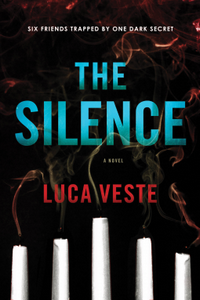
The Silence by Luca Veste: A Chilling Look at Spiraling Consequences of One Fatal Night

The Silence

The Silence

by Luca Veste

eARC, 400 pg.
Sourcebooks Landmark, 2020

Read: July 17-20, 2020
Grab a copy from your local indie bookstore!


This is one of those thrillers where it feels like if you say anything, you’ll ruin something. But, I’ve got to try (if only for the sake of my NetGally Feedback Ratio).

What’s The Silence About?

I’m going to borrow the blurb, because if that says too much, it’s on Sourcebooks, not me.

It was supposed to be our last weekend away as friends, before marriage and respectability beckoned. But what happened that Saturday changed everything.

We killed a stranger and covered it up.

In the middle of the night, someone died.

We didn’t know our victim was a serial killer.

The six of us promised each other we would not tell anyone about the body we buried.

But now the pact has been broken.

We don’t think he was working alone.

And the killing has started again …

The year following the killing of the serial killer was not easy on these six friends, the toll on them all is great. Then when the killing starts again, it’s even worse, the fragile hold that Matt (the narrator) has on his life and mental health is about to shatter. Sone of his friends are doing somewhat better, while others…well, you should read that for yourself.

While we what happens to these six around the one-year anniversary we get some quick glimpses at some of the formative experiences they shared through childhood, adolescence, and university that shaped who they are and how they reacted to the present crisis.

What can I talk about?

That borders on too much about the plot, and I really don’t think I can talk much about the characters for the same reason—almost everything we learn about them is tied to the story.

Let’s focus instead on the feel of the book, the atmosphere. Wow. The opening pages are upbeat, joyful—but you can tell that won’t last for long (and not just because you’ve read the blurb). Then it gets bad, and worse, and worse yet. And you can’t look away—like the proverbial car wreck you see coming. Not only can you not look away, you have to see more, you have to keep turning the pages to see just what kind of damage will be done. How these lives will be further shattered.

It’s horrible. It’s tragic. It’s compelling.

So, what did I think about The Silence?

I don’t know that I can honestly say that I enjoyed this book—I don’t think anyone can. It’s not that kind of book. It’s a serial killer novel like you’ve never read before. If for no other reason than the focus isn’t on the killer or the hunt for the killer. It’s about the victims, prospective victims, and those that are left behind. It’s about seeing the ripple effects of trauma.

It’s a great experience. An intense read. This will be lurking in my subconscious for a while. Veste tapped into something here, and you’ve gotta try it.

Disclaimer: I received this eARC from Sourcebooks Landmark via NetGalley in exchange for this post—thanks to both for this.


4 Stars

This post contains an affiliate link. If you purchase from it, I will get a small commission at no additional cost to you. As always, opinions are my own.

Spells for the Dead by Faith Hunter: Nell and Her Team Face a New Type of Deadly Threat

Spells for the Dead

Spells for the Dead

by Faith Hunter
Series: Soulwood, #5

eARC, 384 pg.
Ace, 2020

Read: July 13, 2020

What’s Spells for the Dead About?

PsyLED is called to the home of a country music superstar to investigate some mysterious deaths—the and her band had recently returned from a pretty successful tour and now many of them are dead and several of those who aren’t are in desperate need of First Responders to act quickly.

Sadly, no First Responder is equipped to cope with whatever happened to them, much less recognize and understand it. That goes for people later to the scene, including PsyLED. However, under the direction of T. Laine, their witch, they’re able to makes some guesses about treatment. Nell, Occam and Lainie focus on documenting everything they can as well as beginning preliminary interviews.

One of the first things they determine is that a witch was not behind this attack. Sadly, they reach this conclusion too late to prevent a local sheriff, with the aid of a less than ethical senior FBI agent, to lock up the band member who is a witch. Their logic is impeccable—paranatural crime, arrest the nearest paranatural. This anti-paranatural tendency shows up frequently among the humans in this book—particularly when it comes to witches. I appreciated the way that Lainie dealt with it (both in her more honest and then in her more politic approaches). Our trio being joined by their upline boss, Ayatas FireWind, helps in this manner somewhat (both because of his rank, and FireWind’s general demeanor).

On a semi-related note, you would think that people who believe/proclaim very loudly that lycans, witches, vampires, and so one are horrible monsters that want to kill all humans would be a little more circumspect when they’re around. Maybe it’s just me, but if I thought someone wanted to rip my limbs off and snack on them, I would go out of my way to not antagonize them.

Anyway, the team’s focus here is a little split—on the one hand, they need to both identify the type of magic behind the attack and continue to find better ways to treat those fighting off the effects; and on the other, figure out who had the motive and/or means to carry it out. Neither goal was really that easy.

So That’s the Main Story, What Else is Going On?

As with all books in this series, as much as this is about the PsyLED team, it’s really about Nell Ingram, her integration into the world outside the cult she left, even as she continues to deal with it and her family. God’s Glory Church really doesn’t factor heavily in this book, but it’s always in the back of her mind, shaping (either directly or in reaction to it) how she reacts to things.

There is a pretty intense moment related to the Church, but it has more to do with Nell’s family, than the Church itself. Nell doesn’t yet have full custody of Mud, but everyone’s pretty much acting as if she does. Mud’s continuing to settle in and push Nell in ways she wasn’t prepared for. Which is just fun. Both Nell and Mud are having to deal with their very pregnant sister, Esther. Esther’s pregnancy is causing her powers (and flowers) to come forward, and unlike her sisters, she’s not that interested in them. It’s a nice contrast—and it provides Mud with some great opportunities for growth.

On the work side, the team’s recent successes—particularly as the only predominately non-human team in PsyLED—are causing the Agency to make some changes to the way the Agency works—and this is going to spill over onto the team. By and large, the changes look positive and will provide good opportunities for the various members of the team. However, Nell doesn’t like change—doubly so when it applies to those things in her life she holds most dear. And since we read all this from her perspective, it’s hard to look objectively at all this.

If we’re looking at the Venn Diagram of Nell’s families (natural and found), the overlap is Occam. I’ve always loved this relationship, and now that they’re openly seeing each other and professing love? Occam’s so good, saying all the right things, doing all the right things, he’s practically a Gary Stu/Marty Stu. That “practically” there is important—Hunter’s written him in such a way over these few books that he comes across as earnest in all this, he’s not perfect, he’s just really close to perfect for Nell. They’re just fun together.

As for Nell herself? She’s continuing to work on herself, her approach to life. She makes some wise decisions and actions with her relationship with FireWind. She makes some great leaps with the relationship (if you can call it that) with the Vampire Tree. And we get some of the most solid information on just what kind of paranatural creature Nell is (watching her stifle her curiosity on this front to focus on the case was a great moment). Basically, Spells for the Dead contains more of that sure and steady, organic character development that’s been the hallmark of this series.

So what did I think about Spells for the Dead?

One of my favorite parts of these books is Nell’s reactions to new-to-her foods. We don’t see her introduced to anything here, but we still get to see her relish a few things she wasn’t exposed to for most of her life—Krispy Kreme donuts and pizza. This is actually kind of a good way to think about most of this book—unlike the previous books (particularly the first two), we’re not seeing Nell experience much that’s new here—mostly she’s living in this new world, rather than figuring things out. Hunter has established her world, has set up the characters, creatures, overarching conflicts, and whatnot. Now she gets to play with that world.

This means (at least for me, and at least for this book), that without the earth-shattering reveals, the Big Moments in Nell’s (or other characters’) life, the book has less of an impact on me. Spells for the Dead is just as good as the rest of the series has been, it just doesn’t hit me the same way. Which leads to a slightly lower rating. Hunter’s plotting, writing, and characters are still top-notch, it just didn’t blow me away. I got to spend some time with some really good friends—and I’m so happy I did—but it was comfortable, not exploratory. I trust that won’t always be the case, and that Hunter will certainly do things in this series that will cause my jaw to drop, but sometimes it’s simply going to be a really good/great novel instead of a fantastic one. Still making it one of the best series I follow.

I really got into this case—it wasn’t as fraught as some of the previous ones were, but it was interesting and unexpected. The side stories did everything they needed to. Spells for the Dead just solidifies the Soulwood books as one of the best UF series going.


4 Stars


My thanks to Let’s Talk! Promotions for the invitation to participate in this tour and the materials (including the book via NetGalley and Berkley Publishing Group) they provided.

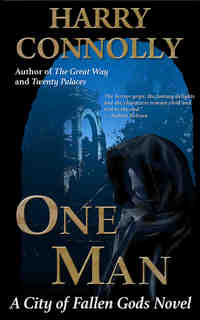
One Man by Harry Connolly: A Broken Man Against the World

One Man

One Man

by Harry Connolly
Series: A City of Fallen Gods Novel

Kindle Edition, 396 pg.
Radar Avenue Press, 2019

Read: July 6-10, 2020
Grab a copy from your local indie bookstore!

The death of a single child is like the end of the world.

I’d preordered this last year and somehow kept not reading it—largely between tours, pub dates, library due dates, and whatnot, it kept being pushed back. I don’t know if anyone ever reads the column to the right, but this has been listed “On Deck” for most of 2020. But finally, finally, I made some room in my schedule, and boy, am I glad I did. Even if that above line tells you just how dark things are going to get.

What’s One Man About??

On the day after the summer solstice in the year 403 of the New Calendar, Kyrionik ward-Safroy defe-Safroy admir-Safroy hold-Safroy attended his own funeral.

Sure, attending your own funeral is something that’s been done by a range of characters from Tom Sawyer to Percy Jackson, but that’s still a gripping opening line. Kyrionik is now calling himself Kyrioc, child of No One. He’s living in obscurity after a calamity struck an expedition he was on years before, leaving him assumed dead. Born to one of the city’s leading families, potentially destined to highest office, he’s now living in an impoverished neighborhood working (and living) in a pawnshop. He’s sort of befriended a little girl, Riliska, who lives in the same building as the pawnshop with her mother. He’s a quiet, obviously injured, loner that no one knows anything about. He’s called The Broken Man by his neighbors—and their assumption is pretty much right about that.

Riliska’s mother, Rulenya, is a mess. She’s bouncing from job to job, and man to man, unable (or unwilling) to keep either because she’s far more interested in feeding her addiction. She’s not that interested in being a mother and shows almost no interest in or affection for her daughter (who adores her mother, of course). Exhibit A is the fact that she calls Riliska (to her face!) The Long Hangover, “a headache she’s had for years.” Riliska’s a pickpocket and shoplifter, who sells what she steals to Kyrioc—who will frequently give her more than it’s worth so she can buy food.

Rulenya steals something from a high-ranking criminal during an exchange. After a day or two of searching, they find her, kidnapping both mother and child. Kyrioc goes off on a search for Riliska—and won’t let anything stand in his way. Criminals. Magical creatures. Gangs. Constables. Bureaucrats. More criminals. What no one realizes about the Broken Man is that he’s a world-class fighter, a one-man army, like John Wick or Jack Reacher with a magical secret. By the time they realize this, it’s too late for anyone.

What Rulenya, Kyrioc, and Riliska don’t realize (although Rulena has a little bit of a clue) is that her robbery is in the middle of a giant web of organized criminal activity, a power struggle amongst the gangs of the city, and a couple of overlapping investigations into that organized crime. The robbery sets off events that bring the city to the brink of a War between the gangs with the constables trying to pick them all off. Throw in the wild card of one nearly unstoppable man on a mission to save a little girl (although no one believes that’s what he’s up to)—and what will happen next is anybody’s guess.

It’s exciting, it’s thrilling, is impossible to predict—it’s very much not the kind of story you’re used to reading in a Fantasy setting. But it works. It works so, so well.

The Strengths of the Novel

The city of Koh-Salash is constructed within the bones of a dead god. Over the centuries, various layers of the city have been built, taking advantage of the bones—and the characteristics of some of them. I love this idea. I’d have loved it more if I hadn’t seen it in Michael R. Underwood’s Shield and Crocus in 2014. I’m also pretty sure that I’ve seen a reference to at least one other fantasy novel using the same kind of city. This is not a rhetorical question: is this a Fantasy trope that I’ve missed? Are there dozens of books out there with this kind of setting and I’ve only run into two (and a possible reference to a third)? Both Underwood and Connolly used the god skeletons differently and creatively (I’d argue Connolly took more advantage of it)—so I’m not complaining in any sense about this. It just struck me as strange that two widely different works had similar settings.*

* Oddly enough, both had a very contemporary-style story set in a Fantasy world.

The city is just part of the fantastic world-building (no pun intended). There’s an epic history of the world, a geopolitical structure, and a rich magic system at work. Connolly keeps most of that to himself, only giving the reader enough to understand what’s going on in this story, with the occasional tease to make you want to know more. Even the little bit of slang that you pick up is pretty creative, I was so glad to see that Connolly had made the effort to do that.

Make no mistake—this is a dark novel. There’s one character who can largely function as comic relief—and a few lighter moments, some hints of hope. But by and large, this is a man on a suicide mission, not sure he’ll accomplish his goal, but who is sure he’ll take a lot of people down with him. Of those he faces, some just know they’ll die because of their lifestyle—that someone will “take the point” to them—some are resigned to a hopeless life, and some who look forward to death because it will release them from the choices they’ve made. All in all, you’re not going to find optimists in Koh-Salash.

This has one of the best and most consistently interesting casts of characters that I’ve read this year—I started to say that I only really got invested in two, maybe three, characters (Kyrioc, Riliska, and maybe Kyrioc’s younger brother). But as I thought about it some more, I realized that wasn’t true—maybe I was more invested in them, but there are several others that I cared about—and there’s a looming threat to the city as a whole that bothered me more than I’d think it would after so brief a time. Connolly’s provided really well-rounded and developed characters—broken, fallible, smart—but not smart enough that they can’t make a mistake—with wildly divergent (and frequently contradictory) interests and desires. In fact, if we get other City of Fallen Gods novels, I have a list of characters I’d like him to focus on.

A Caveat or Two

There were a couple of things I couldn’t quite get excited about. Both of whom are very possibly just me. First of all, are the character names—some are just garden-variety Fantasy names, but others were just obnoxious (the name in the quotation above is a mild example of this). There seemed to be a well-thought-out naming convention based on social class and family—but I just had the hardest time connecting names with characters for the longest time, and spent a lot of time flipping back in the text to decide who the name was associated with. Yes, I eventually became acclimatized, but simpler (and more pronounceable) names would’ve helped.

The second was the pacing—I think this one is very likely all about my energy level as I read this, and is probably actually well-done. So this isn’t a critique, it’s a “know what you’re getting into.” Connolly spends so much time setting up his dominoes that I grew impatient. The story is really so intricate, with so many moving parts, that after a very strong opening, things slow down so he can make sure the reader gets the full lay of the land. It was all really interesting, and well worth the effort, but I felt like I was wading through molasses. That said, once the dominoes started falling? All that went out the window, everything had been so well set up that I had no trouble following it all and remained on the edge of my seat.

So what did I think about One Man?

They were in a little storeroom or front office, with a counter and shelves full of wooden dolls with skull- like faces and outstretched arms, as though the tiny figure of Death was asking for a hug.

In Kyrioc’s experience, when death came, it was often very, very small: A breaking stair, the vapor from a cough, the edge of a knife like the one he was holding. A tiny figure was exactly the right size for Death, as far as he was concerned.

It’s simplistic to say this, but One Man feels like Connolly took the strengths of his Epic Fantasy novels and the strengths of his Urban Fantasy novels and combined them into this novel. That’s more accurate than it should be, and it’s good enough for my purposes here. There’s a rich world, well-conceived and well-realized here. The characters are so strong, so well done. And a story that we’re all familiar enough with but told in a way that’s fresh enough that you can appreciate both the way it’s familiar and surprising. There’s really little to complain about and much to commend about One Man. It’s set up in such a way that Connolly could come back to the city if he wants, or he can leave it as a very satisfying stand-alone. Either way, I strongly recommend this to your attention.

4 Stars

20 Books of Summer

This post contains an affiliate link. If you purchase from it, I will get a small commission at no additional cost to you. As always, opinions are my own.


Pub Day Repost: American Demon by Kim Harrison: Harrison Comes Back to The Hollows Without Missing a Step

I want to start off thanks to Beth Tabler for some research help—she saved me a whole lot of time and effort.

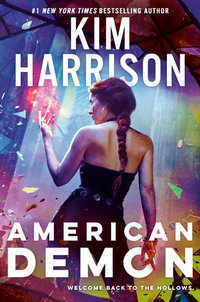
American Demon

American Demon

by Kim Harrison
Series: The Hollows, #14

eARC, 496 pg.
Ace, 2020

Read: June 1-4, 2020
Grab a copy from your local indie bookstore!


First off, I want to talk about two things that Harrison did that really have nothing to do with the plot. First, in the last chap of The Witch with No Name, we’re treated to a glimpse into Rachel’s future, twenty-five years after that novel. At the time, I said we could’ve lived without it, but it was a nice way to say goodbye to the series. Now, it seems all the more ingenious of her to do. Twenty-five years provides several opportunities for Harrison to spin new tales. I don’t know if it was purposeful or not at the time, but it sure worked out well.

I was a little intimidated about coming back to this series after such a long breakHarrison’s novels were typically stuffed (occasionally, overstuffed) with plotmultiple storylines tying the novels together. There was just no way I could remember them allmuch less remember all the various characters. The preface to American Demon consists of a portion of Rachel Morgan’s Inderland Security file, sketching out her escapades as well as her associates. It’s a wonderful refresher course in all things Rachel Morgan and did enough jogging of my memory that I was ready to dive in.

Anyway, what about the novel itself? It’s been a few months since the events of The Witch with No Name and those events have caused ripples throughout society (both the supernatural and mundane) as well as the in the lives of the series’ characters. Trent’s struggling with his bank balance and his relationship to the rest of the elves (although Rachel seems to be having more difficulty with both than Trent is), Rachel and Jenks are struggling to put their church back together, Ivy’s dealing with her new reality (and the city is looking for a new Master vampire), Rachel’s trying (not too successfully) to cope with the changes to her abilities, and…that’s just a taste. As much as things seemed wrapped up, life (even fictional life) isn’t that clean. Unlike my usual M. O., I’m not going to get further into the plotfans don’t need it, and new readers won’t appreciate it without Rachel explaining what it all means.

Harrison manages to bring back every major, and many minor characterseven working in mentions to the major dead characters from the past. It may just be fan-service to let all the cast make an appearance, but it was done so smoothly, so organically, that it really doesn’t matter.

At the same time, Harrison brings in some new faces (and most seem like they’ll around for a while)there’s a new elf, a new vampire, a new demon, and a whole new supernatural species. Each of them moves the series in a new direction and add aspects to the ongoing storylines that are very satisfactory. I can see Harrison adding one of these characters per novelbut all of them at once. She’s more than shaking up the status quo, she’s making a bold move forward for the series.

If I’d fallen into a coma shortly after reading The Witch with No Name and had just woken up in time to read this, I wouldn’t have known that Harrison spent anytime away, much less that she’d start a new series that was entirely distinct from The Hollows. For example, in this age of TV continuationsfans of the originals can easily tell the difference between the series that went off years ago, and the new episodes that aired recently. I assumed the same would be true herenot that the book would be bad or anything, just a little differentand I couldn’t have been more wrong.

By the way, since I expect some will asksure, this is a decent jumping-on point. A lot won’t make sense, but you’ll be entertained enough to shrug that off and keep going both with this book and those that are waiting in the wings. You’ll be given enough reason to go back and read the previous volumes.

From wrapping up a series very nicely with one book to telling a complete story in the next while setting up 4+ (depending on how you count them) multi-book arcs in the next is a pretty nice trick. This could’ve just been a nice little reunion, but Harrison has done more than thatshe’s breathed new life into this series as well providing some solid entertainment. Welcome back to the Hollows, folks.


4 Stars

Disclaimer: I received this eARC from Berkley Publishing Group via NetGalley in exchange for this post — thanks to both for this.

20 Books of Summer

This post contains an affiliate link. If you purchase from it, I will get a small commission at no additional cost to you. As always, opinions are my own.

Crossing in Time (Audiobook) by D. L. Orton. Narrated by Noah Michael Levine, Erin deWard: This Romance/SF is a Wild Ride!


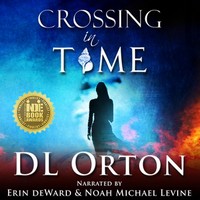
Crossing in Time

Crossing in Time

by D. L. Orton, Noah Michael Levine (Narrator), Erin deWard (Narrator)
Series: Between Two Evils, Book 1

Unabridged Audiobook, 10 hrs., 17 min.
Rocky Mountain Press, 2015

Read: June 4-5, 2020
Grab a copy from your local indie bookstore!

Typically, when I post about an Audiobook, I close with a discussion about the narrator(s). But I’m going to start with it this time because Levine and deWard did such a great job, they’re the highlight of the experience for me.*

* This is not a slight against the novel. They were just that good.

In my experience, when there is a male narrator and a female narrator—the female will read all the narration and dialogue in the female character POV chapters, and the male will read all the narration and dialogue in the male character POV chapters. But here, deWard reads all the female dialogue, no matter the narrator (and vice versa). That’s a nice touch, and once I got used to it, I really appreciated it. Particularly, it helped the conversations between characters feel like conversations—there was a little bit of talking over each other, and so on. And when the two laughed together? That was either fantastic work by the narrators or by the editor (or both).

Levine, particularly when he was narrating the main male protagonist, sounded like a guy recounting a story from his past to a friend—and I could’ve listened to him all day. deWard was almost as good (the main female protagonist character was never as relaxed, so it would be out of character to sound that way—so it may be unfair to compare like that). They both made all the characters come alive (even the few I’d rather hadn’t)—and made the experience richer.

This is a Romance/Science Fiction story. It’s heavy on the romance (too heavy for my taste) and the SF is a wild, multi-dimensional/time travel story with the fate of the human race (throughout the multiverse) hanging in the balance. Orton typically balances the focused story on the central romance and the wider, all-humankind story really well—but she has a tendency to over-focus on the love story. That’s going to delight many readers/listeners, but it was a stumbling block for me. Both are told with heart and humor (not getting in the way of drama), that will suck you in and not let you go.

I don’t really know how to summarize the setup of the book in a paragraph or two—and the Book Blurb gives away a bit too much (but really is an entertaining blurb), so I’m not going to get into it more than I did in that last paragraph. Just trust me on this—if you like the feel of what I’m describing, give this a shot.*

* Or, fine, read the Spotlight where I’ve copied the Blurb.

The characters—from minor to major—are wonderfully drawn and fully-developed. There are a couple of characters that are technically allies to the protagonists (and humanity in general, but function largely as antagonists. And man, I really didn’t like them at all—just as I wasn’t supposed to. But those that you were supposed to like? I just wanted to spend more time with them all—the point-of-view characters in particular.

There are some wonderful dogs throughout the book, and I fully expect that they’ll be pretty important before the trilogy ends. For those of you who prefer felines, there’s one of them, too—and the inclusion of the inferior pet doesn’t hurt things at all.*

* Man, I hope that comes across as tongue-in-cheek.

As I said, this is the beginning of a trilogy and ends in a way that practically demands moving on to the next volume as soon as possible (which is easy as the entire trilogy is published)—while not really a cliff-hanger, it sure works like one.

This was a fun novel—even if it’s not really my cup of tea. I’d probably give it a 3-3 1/2 Stars, a fun read that I’d recommend…but that narration knocks it up to 4 (maybe I should give it a 4 1/2), a strong recommendation from me.

There’s a little too much romance in this Romance/Science Fiction for my taste—but it’s a compelling and entertaining read full of wonderfully drawn characters. I strongly recommend the audiobook, but if that’s not your thing, I expect the print edition will almost be as good.


4 Stars

This post contains an affiliate link. If you purchase from it, I will get a small commission at no additional cost to you. As always, opinions are my own.
My thanks to The Write Reads for the invitation to participate in this tour and the materials they provided.

The Ghosts of Sherwood by Carrie Vaughn: Oo-de-lally, I had fun with this

The Ghosts of Sherwood

The Ghosts of Sherwood

by Carrie Vaughn
Series: The Locksley Chronicles, #1

Kindle Edition, 112 pg.
Tor.com, 2020

Read: June 9, 2020
Grab a copy from your local indie bookstore!

“Can you tell how the mood is from here? How the journey went?”

“I won’t know how it went until I see Father’s face,” she said. “And see if he smiles or frowns?”

“No. And see if his smile is glad or wicked.” Her father would be smiling in any case.

That right there? That’s the line that sold me, I love that take on Robin Hood—between screen and print, all you can find lately is earnest, serious, Robin Hood as populist rebel with almost all the fun sucked out of it. Vaughn’s Locksley contains those elements, sure—but he’s also the outlaw in search of adventure, who enjoyed what he was doing. Always smiling–it’s just a matter of what kind of smile he wore.

We rejoin the Earl after the signing of the Magna Carta (which he was instrumental in getting that rascal King John to sign). He’s had to do the unthinkable—bowing the knee to John after Richard’s death—in order to protect his lands, his friends, and his wife. With Marian’s help to contain his impulses*, he’s become a responsible member of the nobility, doting father, and law abiding citizen.

* To be fair, Marian misses the adventures, too. But she’s not at that stage in her life anymore.

All that other stuff? Well, he’s content to leave that to the bards and storytellers. So much so that his own children aren’t sure how much to believe, “Everything about Father is stories.”

At least, that’s what his eldest daughter, Mary, says. But after she and her siblings are kidnapped, they’ll all get a better idea just what their father is capable of.

That’s all I’m going to say about that. This is very much a “pilot episode” of a novella. We meet the kids—Mary, John, and Eleanor—catch up with a couple of the Merry Men, see where Robin and Marian are in their lives and so on. Vaughn balances that with the kidnapping story.

The kidnapping is a quick and almost-too-neat story solely because of the space she has to tell it. If Vaughn hadn’t had to establish so much in these 112 pages, you get the feeling that the kidnapping wouldn’t have been resolved quite as neatly.

My sole complaint—and it’s a big one—is that this is a novella, and not a collection of novellas/short stories. I just needed more of everything—the kids, Robin, Marian, the other members of Robin’s band. This is a great introduction to this world and these characters, with a little bit of drama. But having been introduced, I want to read the next one. Or, the next five or so.

But no. Tor is making me wait until August for the second one. Which is simply unfair.

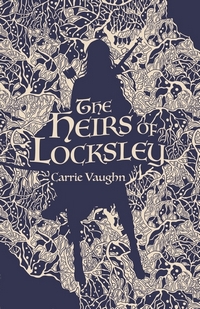
While my tongue is firmly in my cheek above, there is a kernel of truth to my gripe—I’m 97% sure that this thing has legs and that I’m in for several more (even if it’s currently slated to be a duology, but I’m hoping that changes), but I’m going to have to wait to really commit until August when The Heirs of Locksley is scheduled to be released. But in the meantime? This was a quick and fun read, full of promise, and one I heartily recommend.


4 Stars

This post contains an affiliate link. If you purchase from it, I will get a small commission at no additional cost to you. As always, opinions are my own.
American Demon by Kim Harrison: Harrison Comes Back to The Hollows Without Missing a Step

I want to start off thanks to Beth Tabler for some research help—she saved me a whole lot of time and effort.

American Demon

American Demon

by Kim Harrison
Series: The Hollows, #14

eARC, 496 pg.
Ace, 2020

Read: June 1-4, 2020
Grab a copy from your local indie bookstore!


First off, I want to talk about two things that Harrison did that really have nothing to do with the plot. First, in the last chap of The Witch with No Name, we’re treated to a glimpse into Rachel’s future, twenty-five years after that novel. At the time, I said we could’ve lived without it, but it was a nice way to say goodbye to the series. Now, it seems all the more ingenious of her to do. Twenty-five years provides several opportunities for Harrison to spin new tales. I don’t know if it was purposeful or not at the time, but it sure worked out well.

I was a little intimidated about coming back to this series after such a long breakHarrison’s novels were typically stuffed (occasionally, overstuffed) with plotmultiple storylines tying the novels together. There was just no way I could remember them allmuch less remember all the various characters. The preface to American Demon consists of a portion of Rachel Morgan’s Inderland Security file, sketching out her escapades as well as her associates. It’s a wonderful refresher course in all things Rachel Morgan and did enough jogging of my memory that I was ready to dive in.

Anyway, what about the novel itself? It’s been a few months since the events of The Witch with No Name and those events have caused ripples throughout society (both the supernatural and mundane) as well as the in the lives of the series’ characters. Trent’s struggling with his bank balance and his relationship to the rest of the elves (although Rachel seems to be having more difficulty with both than Trent is), Rachel and Jenks are struggling to put their church back together, Ivy’s dealing with her new reality (and the city is looking for a new Master vampire), Rachel’s trying (not too successfully) to cope with the changes to her abilities, and…that’s just a taste. As much as things seemed wrapped up, life (even fictional life) isn’t that clean. Unlike my usual M. O., I’m not going to get further into the plotfans don’t need it, and new readers won’t appreciate it without Rachel explaining what it all means.

Harrison manages to bring back every major, and many minor characterseven working in mentions to the major dead characters from the past. It may just be fan-service to let all the cast make an appearance, but it was done so smoothly, so organically, that it really doesn’t matter.

At the same time, Harrison brings in some new faces (and most seem like they’ll around for a while)there’s a new elf, a new vampire, a new demon, and a whole new supernatural species. Each of them moves the series in a new direction and add aspects to the ongoing storylines that are very satisfactory. I can see Harrison adding one of these characters per novelbut all of them at once. She’s more than shaking up the status quo, she’s making a bold move forward for the series.

If I’d fallen into a coma shortly after reading The Witch with No Name and had just woken up in time to read this, I wouldn’t have known that Harrison spent anytime away, much less that she’d start a new series that was entirely distinct from The Hollows. For example, in this age of TV continuationsfans of the originals can easily tell the difference between the series that went off years ago, and the new episodes that aired recently. I assumed the same would be true herenot that the book would be bad or anything, just a little differentand I couldn’t have been more wrong.

By the way, since I expect some will asksure, this is a decent jumping-on point. A lot won’t make sense, but you’ll be entertained enough to shrug that off and keep going both with this book and those that are waiting in the wings. You’ll be given enough reason to go back and read the previous volumes.

From wrapping up a series very nicely with one book to telling a complete story in the next while setting up 4+ (depending on how you count them) multi-book arcs in the next is a pretty nice trick. This could’ve just been a nice little reunion, but Harrison has done more than thatshe’s breathed new life into this series as well providing some solid entertainment. Welcome back to the Hollows, folks.


4 Stars

Disclaimer: I received this eARC from Berkley Publishing Group via NetGalley in exchange for this post — thanks to both for this.

20 Books of Summer

This post contains an affiliate link. If you purchase from it, I will get a small commission at no additional cost to you. As always, opinions are my own.
Page 36 of 88

Powered by WordPress & Theme by Anders Norén