Tag: 4 Stars Page 37 of 88

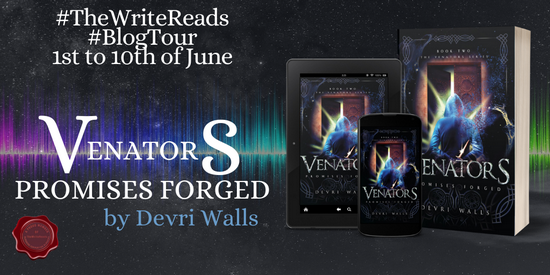
Venators: Promises Forged (Audiobook) by Devri Walls, Daniel Thomas May: Out of the Frying Pan and into the . . . Clutches of a Life Siphoning Fae?

Promises Forged

Venators: Promises Forged

by Devri Walls, Daniel Thomas May (Narrator)
Series: Venators, #2

Unabridged Audiobook, 12 hrs., 14 min.
Tantor Audio, 2020

Read: May 22-27, 2020
Grab a copy from your local indie bookstore!


Like the Ultimate Blog Tour for the first Venators novel, Venators: Magic Unleashed, back in March, I’m going to take what I posted last year when the novel was initially released and then add on some new thoughts, with a focus on the recently published audiobook.

So the ending of the previous book (Venators: Magic Unleashed) focused on a dragon being unleashed by the series’ (apparent) Big Bad, the sorceress Zio. Not surprisingly, the series central characters survived the encounter. This book starts with a quick recap of that survival from the point of view of Zio—which is a great way to get the reader back into the moment and build on their understanding of what happened and Zio.

We quickly return to our Earthlings, Grey and Rune and the aftermath of their unauthorized excursion to rescue humans from a werewolf pack, which culminated in the aforementioned dragon attack. Rune’s proving to be a quick study of Council politics and was able to turn things to their advantage and buy them some leniency from the Council. The ways the two humans respond to and interact with Council members is pretty interesting and I suspect will be one of the more interesting developments from this point forward in the series. I suspect the Venator abilities that make these two the warriors they are in this world are in play with Rune’s politicking—no one mentions mental acuity when talking about Venator abilities, but maybe they should. Watching Rune play the games (both successfully and less-so) that the various Council members throw her way is probably my favorite part of the character.

And she has to do a lot of politicking and game playing here because her co-Venator and friend Grey has found himself in quite the pickle. After their ordeal with the werewolves, the two Earthlings’ need for training was even more apparent. They get just a little of it (a good, promising start) before getting momentarily side-tracked. Before they get a chance to build on that, Grey is lured into the one place the two have been told they absolutely cannot go. Because forbidding people from going somewhere always works out (how many Hogwarts students stayed out of the forest? How long did Belle stay out of the West Wing? Even the Federation had to know that forbidding landing on Talos IV wouldn’t work for long).

Grey has found himself in the clutches of a powerful Fae, Feena. Feena will spend days/weeks/years sucking the life out of her prisoners to feed her own magics. Given that Grey is more powerful than your typical Eonian, you know she’ll drag it out as long as possible. It’s a torturous experience for Grey, but he does what he can to resist and fight back. On the one hand, watching him stupidly and blindly put himself in this situation was maddening. But after that, watching Grey endure what he has to and struggle in response is pretty cool. As much as I appreciate Rune’s playing politics, I enjoy watching Grey in action.

So the book boils down to this—can Rune get permission to run a rescue mission—or at the very least, find a window in which she can pull off another unauthorized mission? Can Grey survive long enough for the cavalry to arrive? Assuming they do, how can Grey be rescued and the Venators get back to their training without causing a diplomatic incident that will shake up everything?

The actions of the Venators’ guides, teachers, allies confuse me. They’ve got these two kids in a world they clearly don’t understand, with abilities they don’t understand and then expect them to react appropriately in new situations. Even worse, all of them are keeping things from Grey and Rune—telling them half-truths, deflecting legitimate questions, and delaying explanations. It’s maddening. It’s bad enough that the Council, who are clearly only using these two for their own ends do that, but the people who supposedly are looking to them to change the world? A little honesty, being a little forthcoming, helping them to avoid the minefields they keep running into rather than saying “oh, you shouldn’t have done that”—it would make it a lot easier for this reader to stomach them.

The Council? I need to see more of them. I have little patience for them as individuals or as an entity at the moment, but as individuals and as an entity there’s great potential for something interesting to happen. Feena’s a good villain—she’s not worth several books, but for one novel? She’s a good opponent. The Fae? It’s simple—any universe, any world, any author—when it comes to Fae politics, Fae dealings with other Fae, Fae dealings with non-Fae? It’s complicated, tricky, and messy. It’s good to know you can count on something.

So much is happening in a very short period of time, it’s hard to know what kind of impact the events are having on anyone—it’s been less than two weeks since these two jumped into this world, leaving St. Louis behind. It’s hard for them—or a reader—to really take it all in. We do know that already both Venators are changing because of their abilities (as well as the experiences in this new world)—both are self-aware enough to see how it’s happening (at least in part) and are both resisting and embracing the changes. Both are, naturally, deluded about how easy it will be to resist this kind of thing—denial’s not just a river on Earth.

I’m enjoying these books—I do hope that under the new publisher, they’re able to come out pretty regularly, it’ll help sustain my interest (and, I’m guessing, the reading public’s). I know that Walls has several more books planned, so it makes it okay that I’m still on the fence about the series as a whole—there’s a lot of potential to the series and these characters and she has time to help them reach their potential. There are aspects of the books (the prospective—and lingering—romantic entanglements, for example) that I’m withholding an opinion on until more happens. And I’m not sure if I should appreciate how little we’re getting with Zio and Rune’s brother, or if it should annoy me. Is Walls building suspense, or is she simply being obfuscatory? I’m hoping that after Book 3, I’ll be more settled with my expectations about these books—I know I’m enjoying them, I’m just not sure if I should wait on them getting better.

May’s narration is as strong as it was last time. He captures the emotion and characters and tone with both skill and art. He’s doing the narration for another series due to be released in a couple of weeks and I’m looking forward to seeing how he handles that.

This time through, two characters really stood out to me: Ryker and Tashara (a succubus who sits on the Council). I’m not sure if Walls is setting Ryker up for a major redemptive arc or if she’s going to cause an irreparable rift between the twins (or both). I guess this ties into what I said above about him and Zio. As far as Tashara, she’s a complex character—May does a great job of depicting that—and I’m intrigued by both her and her relationship to Grey (her incubus counterpart, on the other hand, just annoys me).

One last thing. This is just a personal hangup, I’m sure, but I hate Arwin’s name. Last year, when I got to ask Walls some questions, I talked about how much it reminded me of a certain Lady of Rivendell. This year, when I listened to the books, it kept making me think of Lloyd Alexander’s Arawn Death-Lord. He’s hands-down my favorite Council member (I’m waiting for Walls to pull the rug out from under me and reveal he’s a turncoat or more Machiavellian than the rest), but his name trips me up in print or audio.

Again, I find myself rating this a tad higher in audio than in print. I’m not sure where that comes from, also not sure if it matters. Walls and May are a great combination. An interesting world, great characters (even if they frustrate me), good action—and a fast-moving plot. This YA fantasy is a crowd-pleaser, I’m sure of that—you should join the crowd.


4 Stars

This post contains an affiliate link. If you purchase from it, I will get a small commission at no additional cost to you. As always, opinions are my own.


Bullet Points about Burning Bright by Nick Petrie: There’s No Sophomore Slump in the Second Peter Ash Adventure

Burning Bright

Burning Bright

by Nick Petrie
Series: Peter Ash, #2

Hardcover, 416 pg.
G. P. Putnam’s Sons, 2017

Read: May 11-14, 2020
Grab a copy from your local indie bookstore!

He climbed down to the dry riverbed, hurting all over but more or less functional. His forehead felt warm and wet. He put his hand up, felt the slickness of blood, and wiped it away, reminding himself that head wounds always bleed like crazy.

He knew too much about damage to human bodies.

This post is overdue (as was reading this in the first place), and I can’t seem to find time to do it right. So, I won’t. Here’s a quick and dirty way to get it taken care of. I wish I had it in me to do a better job, but I don’t. Here’s the blurb taken from Petrie’s site:

War veteran Peter Ash sought peace and quiet among the towering redwoods of northern California, but the trip isn’t quite the balm he’d hoped for. The dense forest and close fog cause his claustrophobia to buzz and spark, and then he stumbles upon a grizzly, long thought to have vanished from this part of the country. In a fight of man against bear, Peter doesn’t favor his odds, so he makes a strategic retreat up a nearby sapling.

There, he finds something strange: a climbing rope, affixed to a distant branch above. It leads to another, and another, up through the giant tree canopy, and ending at a hanging platform. On the platform is a woman on the run. From below them come the sounds of men and gunshots.

Just days ago, investigative journalist June Cassidy escaped a kidnapping by the men who are still on her trail. She suspects they’re after something belonging to her mother, a prominent software designer who recently died in an accident. June needs time to figure out what’s going on, and help from someone with Peter’s particular set of skills.

Only one step ahead of their pursuers, Peter and June must race to unravel this peculiar mystery. What they find leads them to an eccentric recluse, a shadowy pseudo-military organization, and an extraordinary tool that may change the modern world forever.

If I had the time to do this properly, here are the things I’d be talking about.

bullet At multiple points both Peter and June note that Peter’s having fun when it’s dangerous, when things are violent, when the bullets are flying. As a reader, this is great—you don’t see Reacher, Charlie Fox, Evan Smoak, etc. enjoying things quite like this. But I’m a little worried about what it says about him as a person.

bullet We get some good backstory on Peter—before he enlisted.

bullet On a related note, Peter has a family! A well-adjusted, not violent, family.

bullet Lewis is back from the first book—he’s essentially Hawk and Pike with flair. His growing family ties are a real strength of character.

bullet June is tough, capable, smart. She’s complex in a way that most characters in this role usually aren’t, and really ought to be.

bullet The villains in this novel are great. Their motives are complex, they don’t approach things the way you think they’re going to (up to the last couple of chapters).

bullet While trying not to give too much away, I appreciate that Ash doesn’t have a scorched-earth approach to his opponents in either book.

bullet Best of all, in the middle of the technothriller stuff, the action hero stuff, and all the rest, there’s a real attempt to portray what a vet with PTSD goes through. How it molds everything he does, but doesn’t define him.

bullet The biggest compliment I can give is this: it kept me awake when I should have been. Since I got my new CPAP last summer, I haven’t been able to read more than 2-5 pages with it on before I’m out like a light. So imagine how shocked I was when I realized that I’d barreled through over 50 pages one night! That’s a feat.

This is a great thrill-ride, I’m not going to wait another year and a half before I get to the next one (it’s sitting on my shelf as we speak). I strongly recommend the Peter Ash books.


4 Stars

2020 Library Love Challenge

This post contains an affiliate link. If you purchase from it, I will get a small commission at no additional cost to you. As always, opinions are my own.

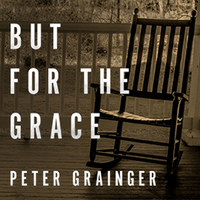
But For The Grace (Audiobook) by Peter Grainger, Gildart Jackson: DC Smith Investigates an(other) Unexpected Killing

But For The Grace

But For The Grace

by Peter Grainger, Gildart Jackson (Narrator)
Series: A DC Smith Investigation, #2

Unabridged Audiobook, 9 hrs., 17 min
Tantor Audio, 2016

Read: April 20-21, 2020
Grab a copy from your local indie bookstore!


When I talked about the first installment in this series last year, I said, “There’s something about this one that got under my skin more than a typical procedural does—it’s maybe DC Smith, it’s maybe Grainger’s style (there’s a lot of subtle humor in a dark text)—it’s a Gestalt thing, I think. I really dug it.” I’m tempted to leave this at that, too. But that’s giving this short shrift.

There are three main stories—the least interesting to me (at present, but it keeps coming up, so I expect that it’ll be of vital importance and interest at some point) is the “big case” that defined Smith’s career. There’s a True Crime writer who wants to revisit the case with DC’s help. There’s a couple of good moments revolving this, but I’m not (yet) seeing the appeal.

The more interesting thread centers on DC Smith’s future. Smith’s old partner, and father of the newly-minted detective Smith’s training, owns a private security firm and wants him to come aboard in a senior position. At the same time, there’s an opportunity that many are urging Smith to take in a regional criminal investigation task force. But Smith’s inclination is to stick with his current duty—but he’s tempted by both over the course of the novel.

But the focus for the book is a death in a retirement home that’s identified as suspicious. Smith and his team start investigating this pretty colorful home. The characters—staff and residents—are well-drawn, colorful and the kind of characters you want to spend time with. The case goes pretty much how you’d expect (motive, culprit, and resolution), but there are a couple of twists that keep the reader/listener on their toes. Watching Smith and his colleagues pursue the killer is the joy in this. The pleasure is in the journey, not just the destination here.

Once again, Jackson weaves a spell with his narration—he sucked me in once again. A perfect combination of narrator and text.

A solid follow-up novel, that also provides plenty of incentive to move on to the rest. This is a series you should jump into—in print or audio.

4 Stars

This post contains an affiliate link. If you purchase from it, I will get a small commission at no additional cost to you. As always, opinions are my own.

The Sword-Edged Blonde (Audiobook) by Alex Bledsoe, Stefan Rudnicki: This Hard-Boiled Fantasy Mixes the Best of Both Genres

The Sword-Edged Blonde

The Sword-Edged Blonde

by Alex Bledsoe, Stefan Rudnicki (Narrator)
Series: Eddie LaCrosse, #1

Unabridged Audiobook, 8 hrs., 28 min.
Blackstone Audio, 2012

Read: April 22-24, 2020
Grab a copy from your local indie bookstore!


I’ve read this novel at least twice (13 and 11 years ago), and apparently have forgotten almost all of it. In fact, what I did remember as the climactic scene must belong to the second novel in the series, Burn Me Deadly. I can do better with the rest of the series (and not just because I actually wrote something about them—but I’m looking forward to taking another look at them in the coming months.

But I’m getting ahead of myself, I should introduce you to Eddie LaCrosse and his world. It’s your basic Fantasy world—swords, rumors of sorcery, small kingdoms, and so on. Eddie’s an ex-soldier, ex-mercenary, now “sword jockey” (basically a private cop). He’s got a little more on his résumé, but you’ll learn more about that as you dive in yourself. He’s been hired by an old friend, the King of a neighboring country to clear his wife of the horrific murder of her son. She doesn’t remember him, but when he meets her, Eddie realizes that he knew the Queen long before the King did.

Eddie’s investigation takes him through multiple kingdoms, into the remains of a cult, and into a criminal network that rivals anything that Varys put together for efficacy or ruthlessness. At the same time he does this, Eddie takes a trip through his personal history, reliving the time he knew the Queen (and events leading up to that). The two storylines are interwoven to help Eddie solve what seems like a perfect crime.

Both in the narration, LaCrosse’s character and the kinds of people we meet along the way, Bledsoe channels Chandler. LaCrosse is casually violent in a way that Marlowe indulged in a bit too often for me, and the (for lack of a better word) grotesque (in physical appearance and morality) criminals Eddie deals with in the latter parts of the book felt particularly Chandler-esque to me.

There’s some things that happen at the end that point to Eddie coming to terms with parts of his past that he’s been unable/unwilling to acknowledge existed. The character won’t change as a result of this (at least not much), but I think it opens the door for some of his rougher edges to be rounded out. How well that actually happens, I’ll have to see (I don’t trust my memory enough right now)—but at the very least, Bledsoe made it possible for the character to grow and evolve here.

Rudnicki’s narration didn’t really work for me initially—there was a quality to his voice that just didn’t click with me. But, I kept going because I liked the novel. Before the halfway mark, however, he’d won me over. I can’t put my finger on it (either good or bad), but he sold the emotional moments, the humor, and Eddie’s general attitude. Which is good enough for me.

It’s hard for me to rate this one on its own terms—I remember liking it. I remember what Bledsoe does with the characters. And those things color my rating, leading me to probably giving this another half-to-whole star more than I would otherwise. But also, for the world. The merging of Fantasy and Hard-boiled genres in a way that’s seamless and well-executed. I recommend this one and will be back for more soon.

Bookstooge posted about this book yesterday. It’s probably worth a read (I’ll read it later today, I didn’t want his voice in my head as I wrote this).


4 Stars

This post contains an affiliate link. If you purchase from it, I will get a small commission at no additional cost to you. As always, opinions are my own.

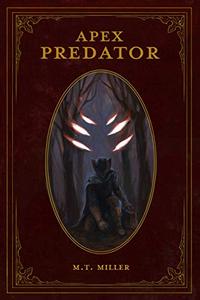
Apex Predator by M.R. Miller: Nothing goes According to These Plans

Apex Predator

Apex Predator

by M. T. Miller
Series: The Culling, Book 2

Kindle Edition, 238 pg.
2020

Read: April 17-20, 2020
Grab a copy from your local indie bookstore!

“Nothing ever goes according to plan,” Shast said. That was why contingencies existed. Layers upon layers of them.

That’s from Chapter 4. By the time the book ends 11 chapters later, Shast is going to a whole new understanding of that.

But I’m getting ahead of myself there’s some sort of monster infestation in a city—forces have been sent to take care of it–two different waves, actually. But they didn’t work. So now, The Culling–the organization that handles these kinds of things, has sent a full Hand to clear it out. A Hand is a team of five hunters, each with a different specialty. With those combined talents, they should be able to handle anything.

Only Shast and the most senior member of the Hand have worked together before, the other three are experienced, but not that much. It’s a diverse group of people who usually work along and there’s a good deal of bickering and being at loggerheads on the way to the city. Once there, once the hunt gets underway, that gets compartmentalized and the Hand gets to work.

For a completely foreign world—that we still don’t really know that much about (but we’re learning)—it’s a testimony to Miller’s story-telling that the reader is able to plug into their activities, get an idea what’s at stake and why they’re doing what they’re doing.

It doesn’t take long for every theory they have to be proven wrong, everything they try to not have any success. And before long, it’s clear that what they’re facing is something most of them had never heard of—or if they had, they thought was a myth. It’s not a myth, and soon the hunters are the hunted.

Interspersed with that story are flashbacks to a hunt from early in Shast’s career, and enduring that was pivotal in his development into the hunter that he is. He gained the perspective, the cold-heartedness that he requires to survive the hunt that’s the focus of this novel. I don’t remember Miller doing anything like this before, he pulls it off pretty well. There are times when you get a story like this that you really wonder what the flashback storyline has to do with anything, but I gave Miller the benefit of the doubt and was rewarded for it.

Last time out, I praised Miller’s design of monsters. This time, I need to do the same. I don’t remember reading monsters like this before—while they were completely original, I had no trouble getting a clear idea how these things looked or acted. They were disturbing, powerful and you have little trouble understanding why the Hand wants to destroy them.

Even better is his character design—each member of the Hand is a fully realized character–and we learn their backstory, culture, specialties, and the rest without ever feeling like we endured an info drop. Through them, we get a better idea how this world works and how the Culling developed. I’m still trying to get a handle on this world, not that it bothers me much, I know what I need to know—but I’m intrigued, I’m curious. I appreciate getting a little more information about this place.

Now in the first book of the series, Shast and his companions face off with a large and unprecedented force of monsters, but it’s something they can get a handle on, something they can understand and adapt to. This time, the Hand is completely blindsided and maybe outclassed. How he moves on from this point to book 3, I have no idea—I assume Miller has a few tricks up his sleeve and I’m looking forward to seeing what they are. In the meantime, I’d encourage you all to go pick this one up.


4 Stars

Note: I received a copy of this book from the author in exchange for this post and my honest opinion. I thank him for that.

This post contains an affiliate link. If you purchase from it, I will get a small commission at no additional cost to you. As always, opinions are my own.

Auxiliary: London 2039 by Jon Richter: A Gripping Hardboiled Cyberpunk Read

Auxiliary: London 2039

Auxiliary: London 2039

by Jon Richter

Kindle Edition, 224 pg.
TCK Publishing, 2020

Read: May 1-4, 2020

Grab a copy from your local indie bookstore!

TIM stood for “The Imagination Machine.”It hadn’t seemed like a game-changer when it had been quietly released by the Imagination Corporation twelve years previous, at least not to Dremmler. It was simply a logical next step, a “one stop shop”that brought together office applications, email, social media, an enhanced personal organiser that was, as the company’s marketing eloquently put it, “like Alexa on steroids.”Video gaming, on-demand television, information searches, holiday bookings, shopping, dating, movies, music: TIM was a single interface for the entire online, AR/VR experience…

TIM had become ubiquitous; the go-to OS for almost everything. It flew the planes. It drove the cars. It answered your queries when you contacted customer services. It controlled the robotic surgeons that performed life-saving operations. It filed your tax returns. It delivered your food. It selected your music. It read your children bedtime stories.

And it ran the AltWorld. Whatever you wanted to see, or be, or do, or feel, or [expletive]. Real life had been made obsolete.

In the obsolete “real life,” Carl Dremmler is one of the remaining detectives in the London Police Force (which doesn’t seem to be much of a presence). His days are largely filled with cookie-cutter investigations verifying that people has wasted away while immersed in Augmented Reality to the point they couldn’t notice their physical health had deteriorated—although he gets to break it up occasionally by something like a civilian attacking a postbot.

What brings Dremmler to our focus is a very different kind of case—maybe an impossible case. A woman has been killed—horrifically, I should add. Her boyfriend, the prime suspect, has been caught (very literally) red-handed, but insists that he tried to stop it from happening, but his cybernetic arm acted independently from him.

The problem with this is that the software that controls the arm is unhackable. There is no way for this to have been anything but the accused. Unless the impossible is a lot more possible.

Dremmler finds himself fighting pressure from above to close this case and his increasing conviction that the boyfriend is innocent. He just can’t explain how. The London of 2039 is a cyberpunk future—but not one so advanced that people living in it can’t remember what life was life before TIM was ubiquitous. Dremmler has a strong preference for, well, now—which makes him the perfect person to want to believe there is a problem in a perfect OS.

I’ve always found that the best cyberpunk, seemingly paradoxically, shared a lot of characteristics with early 20th-century noir. This novel is a shining example of that—it’s actually been a long time since I’ve read a cyberpunk novel that’s embraced the noir-ness as much (or as well) as Auxiliary: London 2039 does. Dremmler is as hard-boiled a character as you could want (haunted by tragedy, alcoholic, driven) and I was reminded of Nathaniel West’s work several times by the secondary characters and mores throughout the book.

At the same time, there’s a Golden Age of Science Fiction feel to a lot of the work—especially as it relates to AIs, the place of technology in culture (and how it interacts with humans), the role of escaping from Standard Reality into Alternate Reality, and so on. As often as I was reminded of West or Chandler, I was reminded of Asimov or Clarke (Richter is more pleasant to read).

I had a blast with this. It’s just the kind of mix of genres that appeals to me and Richter executed it all perfectly. Great, twisty plot; compelling characters; a fantastic setting; and enough implications to ponder to satisfy any reader. I strongly recommend Auxiliary: London 2039 to you.


4 Stars

My thanks to Overview Media for the invitation to participate in this tour and the materials (including a copy of the novel) they provided.

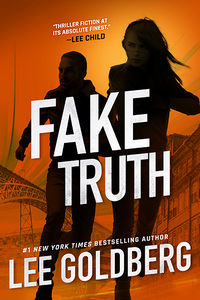
Fake Truth by Lee Goldberg: Ian Ludlow, Fake News, and the Return of the Soviet Union?

Fake Truth

Fake Truth

by Lee Goldberg
Series: Ian Ludlow Thrillers, #3

Kindle Edition, 294 pg.
Thomas & Mercer, 2020

Read: April 15-16, 2020
Grab a copy from your local indie bookstore!

“If any of us get caught or killed,” Ian said, “the secretary will disavow any knowledge of our actions.”

“Who is the secretary?” [CIA Director] Healy asked.

“I don’t know,” Ian said. “It’s what the boss on the recording says to Peter Graves on every episode of Mission: Impossible, right before he wishes him luck and the tape explodes.”

“This isn’t a TV show,” Healy said. “This is reality.”

“You say that like there’s still a difference.”

Too often lately, life has been like one of Ian Ludlow’s novels come to life. Which is a lot of pressure to work under, so much so that he’s in danger of missing a deadline to submit his next book, without even getting it started.

Meanwhile, Wang Mei, the Chinese actress Ludlow recently helped defect, needs a job. And she’s decided that seducing him is the way to achieve that. Ludlow’s got connections, and he happens to be the only American she knows who trusts her. Ludlow is actually pretty easy to seduce, not only does he help her get a job on a TV show, he helps her with some PR to rehabilitate her image (with CIA guidance).

But back to the main story, Margo gets Ludlow brainstorming like he used to—not only to get a novel working, but she’s pretty sure that he’ll end up stumbling over an assignment so she can exercise her new-found skills. The official blurb sums up what they stumble upon in 1/3 of the words I’d take, so let’s use it:

…the connection between a barbaric drug lord in Mexico, a homicidal rapist in California, a rogue citizens army in Texas, a raging TV pundit in New York, and two dead tourists in Portugal…before the President of the United States makes a catastrophic mistake that could resurrect the Soviet Union.

That sounds utterly ludicrous, but as things unfold it seems utterly plausible—and like something only a guy like Ludlow could uncover. And when it comes time for Ludlow and Margo (with help from Wang Mei and Ronnie Mancuso)* to stop this plot—the brakes come off and things get really ridiculous. I had a blast with it.

* I was really glad to see him again, by the way, he’s a fun character

Mark Twain wrote, ” Truth is stranger than fiction, but it is because Fiction is obliged to stick to possibilities; Truth isn’t.” (and others have said similar things, but my rule is quote Twain as often as possible) Fake Truth is another bit of evidence of that. As outlandish as a lot of the plot points and technology in the book seems, Goldberg has talked in interviews about how all of the tech exists, and that he had to keep changing parts of the novel when the parallels between truth and his fiction got a bit too close. This reminds me of the Leverage creators talking about how they had to take real crimes and scale them back to use them in the show because they seemed unbelievable otherwise. Thinking about the events of the book—either mid-read or after—and knowing that there’s a very strong possibility that things like this have and are happening? It’s truly disturbing. It makes you want to jump into novels.

Anyway, back to this novel—Goldberg once again pulls off this great magic trick by taking a ridiculous plot and goofy humor and somehow creating a solid thriller. I’ve seen others try this and it doesn’t work out quite as well. If he can keep this up, I’ll come back as long as he’s able to publish these. Laughs and action, characters you can enjoy (even if you don’t think you’d want to be anywhere near them in real life)—Fake Truth is a great way to spend some time.


4 Stars

This post contains an affiliate link. If you purchase from it, I will get a small commission at no additional cost to you. As always, opinions are my own.

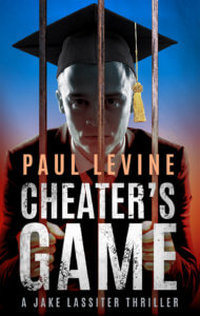
Pub Day Post: Cheater’s Game by Paul Levine: Things Get Personal for this Defense Attorney

I cannot believe I did this—Levine’s publicist agreed to facilitate an interview about this book to post along with this one and I completely forgot about it. I was so focused on getting this post right that I lost track of that. Hopefully, I can still get that going and will end up talking about this book again soon.

Cheater's Game

Cheater’s Game

by Paul Levine
Series: Jake Lassiter, #14

Kindle Edition, 424 pg.
Herald Square Publishing, 2020

Read: April 8-10, 2020
Grab a copy from your local indie bookstore!

When it comes to my conduct in trials, I have only two rules. I won’t lie to the court or let a witness do it. Other than that, batten the hatches, because I sail straight into storms.

Bolden spent a few more minutes talking about the judge’s wise instructions and the jurors’grave responsibilities, then thanked them all and sat down.

I got to my feet, nodded to the judge, buttoned my suit coat, smiled warmly, and said my six favorite words in the English language. “Ladies and gentlemen of the jury . . .”

When it comes to legal thrillers, those six words are pretty much my favorite, too. I want to see the protagonist in the courtroom, plying his or her tradesure, I get that a lot of the action has to take place outside of the courtroom, but it seems even my favorite fictional lawyers are spending fewer pages there all the time. Since Perry Mason (in print or on screen) made me a fan of the genre, everything outside the courthouse just doesn’t interest me as much. The fact that Lassiter utters those words at the 52% mark thrilled me–jury selection started 5% earlier. When the trial portion of a novel beings in the first half, I’m happy as you can hope for.

Which isn’t to say that the material before then wasn’t goodit’s just secondary for me. But we can’t get to the jury if we don’t have a crime, a client, and a lawyer. We should probably start with them.

Our (chief) narrator, protagonist and the lawyer we met in above is Jake Lassiter, a former Miami Dolphin player turned defense attorney. Thanks to the repeated hits to the head he took as a football player, Lassiter suffers from C.T.E.Chronic Traumatic Encephalopathya progressive degenerative disease affecting the brain. In response to this, Lassiter’s recently stopped his defense work and works for the Florida Bar.

So what gets Lassiter back to the defense table? His nephew, Kip. Lassiter basically raised Kip, and is his father in all but name. The relationship isn’t as close as it should be lately, but when Kip needs him, Lassiter’s there for him. Kip is freakishly smart, but some foolish moves in college resulted in him getting the boot. So he’s gone another route and is working as an SAT coach. At a certain point, that coaching turned into taking the tests for his clients (or arranging to be present in-person for a little hands-on coaching). As we’ve all seen recently, the Feds swept in, arresting several people involvedand Kip is put in the position of taking the fall for a lot of the unethical behavior.

It’s clear that he’s guiltyhe admits what he didbut he’s also the only one that anyone’s seriously prosecuting. Lassiter was already going to do everything he could for Kip, but the injustice of his being singled-out for prosecution really provokes his uncle’s ire. The gloves are off when it comes to this defense.

Which is a little trickier than he’s used tothis is in Federal Court, where Lassiter hasn’t tried a case before. The dynamic’s a little different, and the judge is far less open to antics. (doesn’t stop Lassiter, it should be noted). The federal prosecutor is pretty chummy with the judge, but seems to play fair and is a good opponent for Lassiter. She’s a great trial lawyer herself and won’t give him an inchbut will admit when he bests her on a point. I seriously loved the dynamic between the twoit’s not the typical adversarial kind of thingit is adversarial, make no mistake, but there’s a respect and lack of hostility there. A significant portion (as I indicated above) of the novel is about the trial and I loved every second of it.

Not only is Lassiter dealing with the emotional weight of defending his nephew (and what it would mean to lose), but he’s dealing with the cognitive and physical effects of C.T.E.I don’t remember ever reading anything close to this before. I respect Levine for trying it, and even more so for doing it so wellI don’t know enough to say that he depicts this perfectly, but it’s done with sensitivity and care (and, sure, a light touch), making me think it’s pretty accurate.

Our other narrator is Melissa Gold, the specialist who’s been treating Lassiter since his diagnosisshe’s also a leading researcher in the field. She’s also Lassiter’s fiancé, and practically a stepmother to Kip. She’s about as invested in this trial as either of them, but is more focused on Lassiter’s well-being. Her chapters provide an outside look at how Lassiter is dealing with the trial and everything around it. It’s an interesting way to get around some of the limitations of the first-person narration.

This is not maudlin (as easy as it would be), it’s not all somber, sober and serious, either. Lassiter is a jokey kind of guy and that comes through in his narration and his dialogue. This isn’t a comedy by any means, but there’s a lot of wit, and more than a few laughs throughout. That doesn’t take away from any of the tension in the courtroom (or with Lassiter’s condition), but it flavors the book. Think of the Andy Carpenter books without dogs and you’ve got a good idea how this reads.

Fifteen years ago, I became a fan of Levine’s Solomon vs. Lord series after about 20-30 pages and read those all several times. I can’t explain why, but I never tried the Lassiter books (although I meant to)I now know that was a mistake, and one I hope to rectify. This is written in such a way that you don’t need to have read any of the novels ahead of this, but it’d surely add a little depth to some of the serialized aspects of the novel. But I want to stress, it’s completely accessible for anyone who hasn’t encountered Lassiter before.

Good courtroom action, fun characters, and a wonderful voice. Cheater’s Game is a sure-fire crowd-pleaser.


4 Stars

Disclaimer: I received this novel from the Saichek Publicity in exchange for this post and my honest opinion.

This post contains an affiliate link. If you purchase from it, I will get a small commission at no additional cost to you. As always, opinions are my own.
We Begin at the End by Chris Whitaker: Hunting for Hope (and Life?) in a Hopeless Place

Am glad to welcome the Book Tour for We Begin at the End by Chris Whitaker today—it’s one of those books that I don’t feel quite adequate to talk about, but we’ll give it a shot. Be sure to check out some of these other blogs on the graphic below, as well. There’s some great blogs covering this one.

We Begin at the End

We Begin at the End

by Chris Whitaker

eARC, 464 pg.
Zaffre, 2020

Read: April 4-7, 2020
Grab a copy from your local indie bookstore!


Thirty years after (the then minor) Vincent King was imprisoned for killing a girl, he’s released to a world he can only barely recognize. His childhood best friend, now Chief of Police, picks him up from prison to drive him back to the small coastal town they grew up in. Geographic changes, economic changes, societal drift, and other pressures have radically altered this community.

But some things remain—the high school jock who’s athletic future was derailed by an injury still drives the car his father bought while he was in High School, and works to recapture the physical condition he was in then. Chief Walker—Walk—is still hung up on his high school sweetheart (who moved away not long after King was imprisoned). And Star Radley, Vincent’s then-girlfriend, and sister of his victim, still lives in town, still shaped by the events of thirty years prior.

Star has two children—thirteen-year-old Duchess and her little brother, Robin. Duchess does most of the care-taking of Robin, feeding him, getting him ready for school, making sure he’s sleeping. She’s doing everything she can to raise Robin (and protect him from the world), and to keep her mother healthy for Robin’s sake. On the eve of Vincent’s return, Star tries to overdose on pills—and not for the first time.

Walk’s a constant presence in the lives of Star, Duchess, and Robin—but not a necessarily welcome one. Still, he’s the steadiest and most reliable adult in the children’s lives (and in some way, Duchess does depend on him and look up to him).

That’s the status quo that King’s release upsets. What follows is a chain of heartbreak, calamity, tragedy, violence, vengeance, and depravity. There’s a little glimmer of hope, too—but it’s hard to find, and there’s a lot of suffering surrounding it.

Whitaker delivers this in lean prose, without wasting a word. It’s almost as if he took Leonard’s rule to “leave out the parts that people skip,” and dialed it up to 11. The prose matches the emotions, the characters—beauty, ornament, sentiment have no place in their lives, and it’s largely empty from the novel. There’s not a word out of place, each one carefully placed for maximum impact and effectiveness.

Each character has a depth that you don’t always see. Whitaker doesn’t explore the depth too much, doesn’t explain it—but he shows that it’s there. Duchess, in particular, is a character so well drawn that I can practically see her. I won’t forget her anytime soon.

There are some problems, not many, but they’re there. The text in the ARC (and perhaps this will be addressed in the final text) contains a couple of sloppy Britishisms—terms that would be commonplace in the UK, but have no place in a US character’s mind. Particularly if they’re a poorly educated child. Whitaker’s language is so precise, so clear, that having something like that just takes me out of the text—ruining the spell.

Secondly, Whitaker’s sparse style occasionally works against him. Every now and then the prose works against him, making a scene difficult to parse. Just a few more words (judiciously placed, obviously) to flesh things out could help.

I wish I could say that I enjoyed this book—I really do. But I didn’t. I did fall under its spell, the stark, bleak outlook affected me (I wonder how I’d have reacted to a thing or two if Duchess’s and Walk’s plights weren’t in the back of my mind the last couple of days). This is not your typical Crime Novel. It’s not written in the typical fashion, with typical characters and motivations, with typical ends in mind. The terms “moody” and “atmospheric” seem like understatements. It is powerful, skillfully written—and will stay with you for quite a while.

Do yourself a favor, take the plunge.


4 Stars


My thanks to Tracy Fenton and Compulsive Readers for the invitation to participate in this tour and the materials (including a copy of the novel) provided via NetGalley.


This post contains an affiliate link. If you purchase from it, I will get a small commission at no additional cost to you. As always, opinions are my own.

Smoke Bitten by Patricia Briggs: Mercy Deals with Unexpected Threats from Every Direction

Smoke Bitten

Smoke Bitten

by Patricia Briggs
Series: Mercy Thompson, #12

Hardcover, 342 pg.
ACE, 2020

Read: March 24-28, 2020
Grab a copy from your local indie bookstore!


There’s just so much going on in this novel, it’s hard to know where to start—this may be the busiest Mercy Thompson novel yet. Well, okay, we’ll start with the titular bit. Something/Someone has escaped from Underhill. This seems fairly impossible, but I guess even nigh-omnipotent sentient spaces make mistakes every now and then. Doubtlessly the Columbia Basin pack would’ve gotten involved at some point, but since Mercy recognized the threat before the Fae—or anyone else—did, they were on the front line for this. Whoever it bites, it controls. It can shape-shift to look like anyone, too. It’s deadly and doesn’t seem to have much of a plan beyond creating as much chaos and gathering as much power as it can.

While dealing with that, another threat to the pack presents itself. There are some new werewolves in the area, and their goal is simple: become the new pack in town. As Adam’s pack is now independent of The Marrok, these wolves have decided they’re ripe for a takeover. None of these are wolves to be taken lightly—some have recently left a pack run by very dominant Alpha, which took some strength. All of them have strong reputations amongst the wolves (generally positive), although one is known as the wolf who’d do things that Charles Cornick wouldn’t do for his father. These are not going to be easy to face off against.

The thing that’s the most distressing (and given what I’ve just talked about, that’s saying something) for Mercy is that there’s a problem between her and Adam. The roots of the issue go back to before we met Adam, but something happened in Storm Cursed to tip Adam over the brink. The latest meddling by Adam’s ex, Chrissy, made it all boil over and threatened the peace and stability of the pack—as well as their marriage. We see Mercy at her most vulnerable since…well, probably since the attack at the garage (or what The Monster tried to do in Bone Crossed), which stresses for the reader how bad the situation is. The two take some positive steps, but things aren’t resolved wholly here—and I hope Briggs doesn’t patch things up quickly between the two between novels. I think we need to see the pair continuing to work through things.

There’s a few more things going on, too, including some fun with Sherwood (who is quickly becoming a favorite character), some interesting developments with Jesse’s life, and some interesting character development in general with pretty much each of the pack members we usually get time with. Oh, and lest I forget, an old friend comes back.

One final thing to mention: last year, while talking about Storm Cursed, I said:

There’s something that happens in the climactic battle scene that I want to talk about more than I want to talk about anything else in this book—because in the long run it’s going to be bigger and more important than anything else that happens or I’ll eat my hat. It’s so small, so quick that it’d be easy to miss—2 sentences on one page, then twelve pages later 2 more sentences. And Briggs has at least one novel’s worth of plot seeded right there. I love when I see an author do something like that and make it look effortless. And I think I’m underselling it. But I’ll have to leave it there—maybe in book 12 (or 15) when it happens, I’ll remember to say, “Remember that thing I didn’t talk about in Storm Cursed? This is it.”

Well, Briggs gave that seed plenty of water and a little fertilizer in these pages. I still don’t feel comfortable talking about it in detail for reasons I can’t explain. But whoo-boy, I can’t wait to see what Briggs has in mind.

So, yeah, like I said—a lot of balls in the air. Or plates spinning. Pick a metaphor you like best. And I think Briggs did alright by them all—yeah, I’d have liked a bit more time with the new wolves, but we didn’t need it—and I’m not sure we’re done with them (maybe in the next Alpha and Omega book if not in an upcoming Mercy novel?). To deal well with all these elements and keep the novel moving quickly and resolving in a satisfactory manner (with a few more strings than usual left for the next installment) speaks highly of Briggs’ skill. Fans of Mercy Thompson shouldn’t wait to grab this, people who are curious about the series should be able to come on board now, too (although, you really ought to read them all). Briggs is at the top of her game now, and it’s just fun to watch.


4 Stars

This post contains an affiliate link. If you purchase from it, I will get a small commission at no additional cost to you. As always, opinions are my own.

Page 37 of 88

Powered by WordPress & Theme by Anders Norén