Tag: 4 Stars Page 45 of 88

Dead is Beautiful by Jo Perry: Another Winner for this Supernatural Duo

Dead is BeautifulDead is Beautiful

by Jo Perry

Series: Charlie & Rose Investigate, #3

Kindle Edition, 268 pg.
Fahrenheit Press, 2019
Read: February 15 – 18, 2019

I can’t explain how death works––I can’t explain cruelty or love––and I don’t know anything for certain except that I failed at life.

Well, I refuse to fuck up my death any more than I already have––

And whatever it means or requires––I won’t fail Rose.

And failing Rose actually seems to be something that can happen here — we’ve seen Charlie and Rose interact with other ghosts before, but not for long — somehow, this time there’s a ghost that they have prolonged — and repeated — interaction with. This other ghost has threatened Rose — despite seemingly being unable to do anything to her, the intent and tone of voice used, scares Rose. And the one thing that’s definitely changed about Charlie post-death is his commitment to this dog, his ability to care for her.

But before we meet this ghost — and see the gruesome, horrific way they become one — we see another killing. The killing of a protected tree. What’s worse, this tree is home to an Spotted Owl and her owlet. While the tree is being (illegally) removed from a plot of land, the owlet falls out and is injured. It was these events that brought Rose, and therefore Charlie, to this area. Coming to the defense of the tree and the owls is a very naked and tattooed woman. She brings in the authorities, and sets off a chain of events that I won’t try to summarize, because you wouldn’t believe me and Perry does a better job than I would in a sentence or two.

This woman, it turns out is named Eleanor Starfeather (really). She’s a doula (birth and death, which is a thing that I just learned exists) and a house sitter — among other things. The house she’s currently sitting belongs to Charlie’s brother and his wife. Charlie’s brother, we already know, is not anyone you want to know. Greedy, superficial, arrogant, vain and uncaring — and his wife is worse. The bulk of the book’s action revolves around these three as they deal with the fall-out from the removal of this tree, the removal of the owlet and the mother owl’s reaction to both being gone. But it also involved a development company — which is developing the land next to Charlie’s brother and a property where Charlie used to live — not that you can tell that anymore.

Charlie and Rose witness a murder near that second property and are pushed into trying to figure out who was behind that murder. Our ghostly pair are hovering around the areas of overlap between the Venn diagram describing these people, company and properties. And slowly, a full picture emerges allowing them to figure out who was behind the murder. Along the way, we (via Charlie and Rose) get to watch the fall-out — involving city politics, real estate development, lawyers, a vengeance-seeking bird, a séance, a mini-Cooper driving Scotsman, and a natural disaster — oh, yeah, and Charlie’s brother having several of the worst days of his life in a row.

This all primarily takes place, where else could it, in Beverly Hills. A place that Charlie clearly has strong opinions about:

Leave it to the City of Beverly Fucking Hills to have “Beverly Hills” engraved twice on its police badges just to emphasize that their black necktied, highly trained, buff, and attractive Beverly Fucking Hills peace officers protect and serve the plastic surgery-altered, chemically peeled, hairlines suture-tightened, Botox-injected, Viagra-aroused, personally trained, lifestyle-coached, professionally organized, blow-dried, sixteen-thousand-dollar blinged-out handbag cultists and their Orc boyfriends and husbands here in this omphalos of malignant narcissism, this authentic-human-emotion-sucking manicured vortex with its fluffy cashmere clouds scudding across the Tiffany-blue vacancy that hangs above the abomination known the world over as Beverly Fucking Hills.

Which adds a different feel to the book than we’ve had in the series. We’ve bounced around from place to place in this series, but I don’t knows that I’ve had such a strong sense location before (I’m not suggesting the earlier books were missing anything, but this has added something). We do spend some time in Charlie’s old neighborhood, but not that much.

It’s possible that Charlie refers to the city with the two words that most people use, but I think it’s always his special elongated form. Ditto for his older sibling, or as he seemingly always refers to him, “my shit brother.” Maybe one reason that Charlie and Rose are still hanging around is that Charlie still holds such determined thoughts and passionate feelings about things like his brother and this city.

In Dead is Good, we got to witness Charlie realize how much someone meant to him, in ways hadn’t really seen in life. In Dead is Beautiful, we get to witness Charlie smitten with a woman — of course, it’ll be unrequited (and would’ve likely been if he was flesh and blood, too), but he is fixated on Eleanor. It’s a side of him that’s nice to see. It’s also helpful for there to be people he actually likes involved with everything he’s witnessing, so he can be positive about some of what happens. By the end of the novel, Charlie does realize a few things about his brother and the way he thinks about him — I’m not sure there’s growth there, but there’s self-awareness, which is almost as good.

We also get a few more clues about the nature of the afterlife and how things work for the souls of the deceased (man or beast…at least dog), but no real answers. I’m okay with that, I don’t think I want answers, I like not getting this afterlife, as long as Charlie and Rose are figuring out what the living are up to.

Last week, when I reposted what I’d written about the first three books, I felt awkward about my frequent references to “funny.” When I think back on these books, I don’t think about funny — I think about the crimes, the victims, the reflections on society and death that these books focus on. But I felt vindicated reading this, because it’s a very funny book. There’s slapstick all over the place — even when the events depicted aren’t that funny, they’re told in a way that clearly tells the reader to smile and chuckle. Just that description of Beverly Hills above demonstrates the oft-comedic voice.

But it’s not all funny — there’s a reverence toward death, toward life, toward the relationship between people and dogs. The fate and well-being of the tree and owls are treated seriously and with care. The comedy comes in Charlie’s observations of and reactions to the events he witnesses. His first exposure to Alexa, for example, made me laugh out loud.

As Charlie (ever so gradually) evolves (Charlie of the first two books doesn’t treat the other ghost the way this Charlie does), as we spend more time in this world, Perry keeps improving — this is one of those series that improves as it goes on. These unique protagonists get us to look at life and events in a different kind of way, while reading very different kind of mysteries. I hope I get to keep spending time with them for a long time to come — and I strongly encourage you to join in the fun.

—–

4 Stars

Fahrenbruary Repost: Hack by Duncan MacMaster

We’re focusing on Duncan MacMaster for the next few days of Fahrenbruary. Which means that things are going to be a lot of fun.

This feels a bit rushed to me — and more than a little vague. I guess it should, it was a little rushed, I liked this book enough that I pounded it out a couple of hours after finishing it, I didn’t want to sit on it for a while. And if the post is vague, it’s because this is the kind of mystery difficult to talk about without cracking open all the secrets, and because a lot of what I really liked about this is in the little details MacMaster gave. You need to experience it yourself to get what I’m saying.

HackHack

by Duncan MacMaster
Series: Jake Mooney, #1

Uncorrected Proof
Fahrenheit Press, 2017

Read: February 28 – March 1, 2016

Little victories, since they’re all I can hope for, they’re what I live for.

Jake Mooney used to be a pretty good reporter — good reputation, good results — but he got out of that game and got into a more lucrative field, even if it was more distasteful. Events transpired,  and that goes away — I’ll let you read it for yourself, but it involves lawyers and an ex-wife. Nowadays, he gets by being a ghost-writer for established authors who don’t have the time or ability to write their own material. Out of the blue, he gets an offer to help a former TV star, Rick Rendell, write his autobiography. He’ll even get credited for it. Credit — and a nice cash bonus. How can he say no?

Before you can say “Jessica Fletcher,” someone tries to kill Jake and then Rick is shot in front of a handful of witnesses, including Jake. Between his affection for (some of) the people in Rick’s life, worry over his own safety, curiosity, and his own sense of justice, Jake dives in and investigates the murder himself.

Jake finds himself knee-deep in a morass involving unscrupulous agents (I’m not sure there’s another kind in fiction), wives (current and ex-), Hollywood politics, an IRS investigation, a Drug Cartel, former co-stars, hedge fund managers, hit men, and a decades-old mysterious death. And a few more fresh deaths. . The notes he’s already taken for the book gives Jake fodder for his investigation — but the combination of notes and his continuing work provides the killer a constant target (and threat). As long as Jake’s working on the mystery/mysteries — and doing better than the police at uncovering crimes and suspects — the killer can’t just escape, Jake has to be stopped.

The voice was great, the mystery had plenty of twists and turns, Jake’s ineptitude with firearms was a great touch and served to keep him from being a super-hero. I really can’t think of anything that didn’t work. There’s not a character in the book that you don’t enjoy reading about. I had three strong theories about what led to Rick’s death and who was responsible — the one I feared the most wasn’t it (thankfully — it was a little too trite). My favorite theory was ultimately right about the who, but was absolutely wrong about everything else. I take that as a win — I felt good about my guess and better about the very clever plotting and writing that outsmarted me.

That’s more about me than I intended it to be, so let me try this again — MacMaster has set up a great classic mystery — a la Rex Stout or Agatha Christie. A dogged investigator with a personal stake in the case, supporting characters that you can’t help but like (or dislike, as appropriate), a number of suspects with reasons to kill the victim (with a decent amount of overlap between those two groups), and a satisfying conclusion that few readers will see coming. Hack is funny, but not in a overly-comedic way, it’s just because Jake and some of the others he’s with have good senses of humor. I chuckled a few times, grinned a few more.

I bought MacMaster’s previous book, A Mint Condition Corpse, when it came out last year — sadly, it’s languishing in a dark corner of my Kindle with a handful of other books from Fahrenheit Press (I’m a great customer, lousy reader, of that Press).  Hack wasn’t just an entertaining read, it was a great motivator to move his other book higher on my TBR list. Get your hands on this one folks, you’ll have a great time.

Disclaimer: I received a copy of this from the publisher, nevertheless, the opinions expressed are my own.

—–

4 Stars

Pub Day Repost: Immoral Code by Lillian Clark: A Heist Novel where the Heist is maybe the Dullest Part

Immoral CodeImmoral Code

by Lillian Clark

eARC, 272 pg.
Alfred A. Knopf Books for Young Readers, 2019

Read: January 22 – 23, 2019

It’s their senior year, their lives are stretching out before them, this incredibly close group of five friends are preparing for graduation, college, etc. — even (not that they’ll confront this quite yet) living without each other. They all excel in one or two ways — one’s a hacker/activist, one’s an artist, one’s got a real shot at the Olympics — etc. One is a physics genius (or close enough to a genius to count) who was admitted early to MIT. But there’s a catch. She can’t afford it. Her mom works two jobs to help the two of them barely make it and her dad hasn’t been in her life since he was a poor student and impregnated her mom. Since then he’s gone on to become one of the richest of the rich. The kind of rich that people really can’t believe exists. So when MIT looks at her financial aid, they roll their eyes and move on to the next student.

Not content to shake their heads sadly at injustice, her friends come up with a plan to hack into her dad’s company and skim a little bit of money. Not enough that he’d ever notice — just enough to pay tuition for a year. Their hacker friend is good, but not good enough to break in remotely — she has to be physically in touch with the network — for just a few seconds. Like the tagline on the cover says, “Payback is a glitch.” So over Spring Break they take a little road trip — bigger than their families know — to get access to the network. It’s going to take a lot of nerve, some real disregard for the law, and their combined talents to pull this off.

The question they don’t really consider until it’s too late isn’t what will happen if they fail (although, they all could think of that more), it’s what happens if they succeed?

On the whole, I haven’t seen many people classifying this as a Crime Novel, despite the Heist story at the core. It’s definitely not a thriller. Because the Heist story is just an excuse to talk about friendship, figuring your life out, the pressure on teens to know what they want the next few decades to be about (not the same as the previous item on the list), the complicated relationship that exists between parents and their teens on the cusp of adulthood, and the hugeness of the moment where you leave home/family/friends to start the next phase of your life. Oh, also, morality. Somehow Clark does all that while telling a fast-moving, funny, and heart-felt story.

Which is not to say that the Heist story isn’t important, or well executed. And you can read the book just for the Heist. But you’ll miss out on a lot — and you’ll probably wonder why I rated this so highly. As fun as the Heist/prep for the Heist is, the heart of the book is the rest.

Each chapter jumps between first-person narration from each kid, keeping things moving nicely. There’s plenty to like/identify with in each character. You learn a lot about them as individuals, them as friends, and generally them as children (not that much about them as students, oddly). They’re so well-drawn, I’m sure what I respond to in one character or another will not be the same as what another reader responds to. There is one character who serves as the group’s Jiminy Cricket — their vocal and ever-present conscience. Like Jiminy, the character is ignored a lot and fought against. But I appreciated them — the voice of moral reason, the one trying to save the others from themselves, the only one who demonstrated a sense of right and wrong, not just about what feels right.

The writing is breezy, engaging — no matter whose POV you’re reading. Clark did a fantastic job differentiating the characters, giving them all a unique voice so that you don’t even have to pay attention to the indicator at the beginning of the chapter to know whose voice is telling that particular chapter. Now, as each chapter is told from the Point of View of a teenager, and fairly realistically done, that means you have to check your inner grammarian at the door — so much of this book can drive you around the bend if you don’t.

The novel is engaging, it’s beyond that really — it’s infectious.There were several points during reading that I asked myself why I was enjoying it as much as I was. Not that I thought I should dislike it, but I liked it a lot more than I should have. I don’t mind that I did, I’m just not sure I understand why. I’m just going to chalk it up to Lillian Clark being a very good author — someone you should check out, starting with her debut, Immoral Code.

Disclaimer: I received this eARC from Random House Children’s Books via NetGalley in exchange for this post — thanks to both for this.

—–

4 Stars

Fahrenbruary Repost: Know Me from Smoke by Matt Phillips: A heart-wrenching noir love story.

Know Me from SmokeKnow Me from Smoke

by Matt Phillips

Kindle Edition, 193 pg.
Fahrenheit 13, 2018
Read: November 15 – 16, 2018

If you’re looking for an example of noir — in the classic sense — look no farther than Matt Phillips’ Know Me from Smoke. You can tell that’s going to be the case from the opening paragraphs. The first chapter builds on those first three or four paragraphs and sets the atmosphere, the mood, the tone for the rest of the book — and pretty much casts a spell on the reader, too. The second chapter — where we meet our second protagonist firms that up, and from there Phillips builds on this foundation to deliver a book that will stay with you long after you’re done with it.

But let’s step back from that for a minute — we begin by meeting Stella Radney. She’s in her mid-40’s, a lounge singer, and a widow still grieving her murdered husband twenty years after his death. During the robbery that left Virgil dead, Stella was shot as well and the bullet’s still in her hip — a constant reminder that her loss and pain are physical as well as emotional. Both pains seem a bit fresher in the beginning of the book because Stella’s been informed that new DNA technology (unavailable 20 years ago), has led the DA’s office to reopen the case and they hope to have an arrest soon. Stella’s feeling a little raw, hanging on only by more alcohol than is probably good for her and losing her self regularly in the music she performs.

Royal Atkins is a free man, a man with a second chance — a convicted killer released on a technicality and determined to make the best of his second chance. Sadly, a couple of men at his halfway house decide that the best thing for Royal would be to join them and pull a few stickups — and a few other forms of robbery as well. Royal resists — but it’s as clear to him as it is to the reader that this won’t last.

Stella and Royal meet and the chemistry is instantaneous. The chapter where they meet for the first time is possibly the best chapter I’ve read this year — just magic. For obvious reasons, Royal edits the personal history he tells Stella, and his associates from the halfway house use this to blackmail him into going along with them. He’s trying to build a new life, she’s trying to rebuild her life, and neither of them want to be alone in the process.

So we get to watch the growing love story of Stella and Royal, Royal’s history being used against him, the crime spree, and the certainty that this is going to all going to come to a messy end. A little before the halfway point, I put in my notes, “if I stop, some broken people get to live a decent life. If I read another chapter or two, everything will fall apart and lives will be ruined. So tempted to walk away from it.” I really was — I liked these two so much, I wanted to let them have this chance.

But there was no way I was going to stop, Phillips’ prose was too good to abandoned, and I had to see what actually happened to these characters (no matter how inevitable the end seemed). Seriously, I’d have kept reading just so Stella could think about her relationship to music and songs some more — those sections of the book are practically poetry.

There’s conversation between a couple of characters about Pulp Fiction — and Tarantino’s work feels appropriate to this book. But not that movie. Jackie Brown is the movie that this feels like. Maybe the novel, too, but I haven’t read Rum Punch. They’re both from the same species of sweet, second-chance at love story in the middle of a story of crime, criminals and ex-cons.

This is going to go for my entry for “Read a book you chose based on the cover” in the While You Were Reading challenge — it’s not entirely true, but the cover is fantastic and got me to read the blurb a few times, so it’s close enough.

I love that title, too.

There’s just so many things that are right about this book, and so little that’s wrong. This is a winner — it’ll grab you by the heartstrings, will pull you along through the highs and lows of this story, and only let you go some time after you finish (I’m not sure how long that effect will last, but it’s been almost a week and it really hasn’t let go yet).

—–

4 Stars

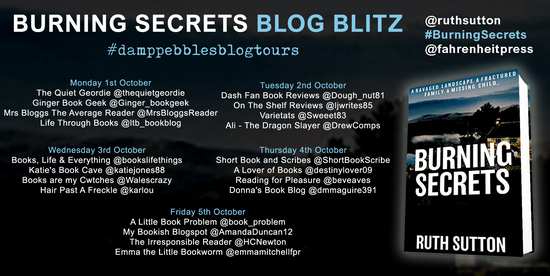
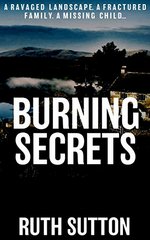
Fahrenbruary Repost: Burning Secrets by Ruth Sutton: A Child Abduction Sets Off a Disturbing Chain of Events

I originally posted about this for a blog tour — one of those that I ended up being very glad I participated in, this atmospheric mystery is one to check out.

Burning SecretsBurning Secrets

by Ruth Sutton

Kindle Edition, 264 pg.
Fahrenheit Press, 2018

Read: October 2 – 3, 2018

For a book that clocks in at 264 pages, Sutton packed in a lot of story. I’m having difficulty deciding what to focus on, I’ve got to say. If only all authors could present a guy with such problems . . .

This book starts off with a child abduction — a child, Helen Helsop, that we get to know a little bit before she’s abducted. Immediately I groaned, because the last thing I wanted to deal with is a book about a little girl getting snatched and then dealing with whatever abuse is looming. Without spoiling much, let me assure you — nothing like that happens. This is not that kind of kidnapped child story. This doesn’t mean that she’s been taken for benign or even beneficial reasons, however.

Helen hasn’t been living at home — she’s been staying with family in town so she can attend school. Because theirs is a farming community — predominately, or at least heavily, a dairy and cattle area, and this is 2001 — the height of the Foot and Mouth crisis. I’ll be honest, as an American in a pre-social media age, I didn’t have a strong grasp on the effect this had on smaller farmers — I just never was exposed to it. I got what it meant on the national/industry front, but didn’t think much more about it. If I had, it would’ve been obvious just how much this would decimate a community, an individual family, and why this was such a horrible crisis. Anyway, back to Helen — she hasn’t had a good time of it in this temporary home and is easily persuaded to leave. It’s hours (of course) before anyone notices that she’s missing, and even then, most of her family doesn’t believe she’s actually missing.

Before that, thankfully, the police are called in — we focus on DC Maureen Pritchard — a well-known fixture in the community (not as well-known as her father, however) and the newly-arrived DS Anna Penrose. There’s a little professional jealousy between the two — Pritchard envies another woman in a position she was denied and Penrose would love the acceptance and respect her fellow officers seem to have for Pritchard. But largely, they can put that aside to focus on Helen. It’s obvious from the start that the foster family and Helen’s actual family are both holding back from the police, but it’s hard to tell if it’s germane to the case, or if it’s just things that no one wants to share with outsiders.

This is all so compellingly told — the layers that Sutton is working on are something to behold. She’s excellent at revealing more and more about Pritchard and Penrose while they’re uncovering more about Helen’s life and whoever took her. You could make the case (I think you’d be wrong, but you can make it) that the mystery in this novel takes a back seat to the drama surrounding the women and their superiors. Initially, probably because we meet her first, I was pulling for Pritchard to solve the case, rescue the girl and save the day to put Penrose in her place. But soon, I just wanted the two of them to knock off the nonsense and just work together — preferably by being open with each other about what’s going on. I won’t say if I was ultimately satisfied in that desire, but I can say that Sutton deals with their relationship in a way that is absolutely believable and realistic — a very satisfactory job.

The greatest impediment to the search for Helen isn’t the fact that the family is hiding something(s), the difficulty in tracking down a person of interest, the cleverness of the kidnapper, finding a particular van in a decent size, getting a straight answer out of scared kids with overbearing/concerned parents interfering (for nefarious reasons or unintentionally), or any of the other absolutely understandable and inevitable roadblocks. Instead, it’s Detective Inspector Stanley Bell — he’s too focused on the budget and on impressing his DCI, not that we can forget his obvious misogyny and blatant racism. It’d have been easy for Sutton to leave him as a buffoon, an obstacle, a foil for Pritchard and Penrose — but she doesn’t, there are times when he seems to be a perfectly capable police officer. But those times are the minority — it is fun to watch his subordinates play him to get their way, Penrose learns from Pritchard’s example quickly on this front.

If I tried to talk about the kidnapper, I’d spoil it — if I tried to talk about Helen’s family, I’d fail. I can’t summarize what Sutton did there (I was reductionistic enough with the police — and I’d still be reductionistic if I’d included everything I wanted to say about them) — I’ve known men like her father and older brother. I could feel their pain, their frustration — with their life in general, even before Helen’s abduction, which just seemed like the next-to-last straw for them. Between Foot and Mouth, general hardships (physical and financial) related to this lifestyle, too much alcohol, and a wife who wants more than all this — it’s just too much for people to take.

The depiction of Helen is really strong, as well — she is a scared twelve year-old doing the best she can in a horrible circumstance. At some point the police don’t understand why she did X in a situation. I wanted to yell at them, “because she’s a scared little kid!” Of course, she’s not going to act like a rational adult. (The other thing I had a hard time buying was that given the emphasis the officers put on local knowledge, was that it was the outsider who understood the importance of getting his cows milked to a dairy farmer)

I’ve gone on too long, and haven’t said nearly enough. So let’s hit the important things as I try to wrap up.As I said at the outset — this is not a typical kidnapping novel. Every assumption you make early on in the book will prove to be mistaken, but it all feels organic, it all seemed natural. This isn’t one of those books where you can see the author moving pieces around to achieve her ends. I have no doubt she did — but I couldn’t see it. There’s some good action, some very clever policework, and a strong psychological-thriller bent to parts of this as well. There’s a strong Perry Mason-esque quality to the strategy the police employed at the end, which I appreciated. Burning Secrets ticks almost every box a mystery-fan will have on their list.

This is a novel about family secrets, family problems — all families, on some level, I’m sure. There are strong threads about options various women take to take care of their families and themselves — what lengths they may go to, what shortcuts they may take, what hard choices they may make — to secure happiness, health, or survival. This is a novel about change — individual and societal — how difficult that is. But none of these themes detract from a heart-stopping and heart-breaking story about a kidnapping and the consequences radiating from it. All in less than 300 pages — not a bad feat.

I have no idea if Sutton intends to write more about these characters (there’s every reason to think she will, given her track record) — but I’d love to spend more time with them. If Penrose and Pritchard can turn their détente into some sort of working understanding, or better, a real partnership, they’d be a fantastic combination (for drama, they’d still be interesting if they don’t form any closer relationship, but it wouldn’t be as fun to read). Sutton does have a pretty hefty backlist, and I should try to dive in — and you should, too. Start with this, though, it’ll whet your appetite for the rest.

—–

4 Stars
My thanks to damppebbles blog tours for the invitation to participate in this tour and the materials they provided.

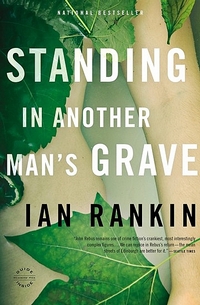
Standing in Another Man’s Grave by Ian Rankin: Back in the saddle again, Out where Cafferty is a friend?

Standing in Another Man's GraveStanding in Another Man’s Grave

by Ian Rankin

Series: John Rebus, #18

Paperback, 432 pg.
Back Bay Books, 2013
Read: February 1 – 4, 2019

           Rebus had lost count of the number of cases he’d worked, cases often as complex as this one, requiring interview after interview, statement after statement. He thought of the material in the boxes, now being pared over by those around him–paperwork generated in order to show effort rather than with any great hope of achieving a result. Yes, he’d been on cases like that, and others where he’d despaired of all the doors knocked on, the blank faces of the questioned. But sometimes a due or a lead emerged, or two people came forward to furnish the same name. Suspects were whittled down. Alibis and stories unraveling after the third or fourth retelling. Pressure was sustained, enough evidence garnered to present to the Procurator Fiscal.

And then there were the lucky breaks–the things that just happened. Nothing to do with dogged perseverance or shrewd deduction: just sheer bloody happenstance. Was the end result any less of a victory? Yes, always. It was possible that there was something he had missed in the files, some connection or thread. Watching the team at work, he couldn’t decide if he would want them to find it or not. It would make him look stupid, lazy, out of touch. On the other hand, they needed a break, even at the expense of his vanity.

The book opens with Rebus at the funeral for another retired cop — it’s a strong reminder that there’s not much else in his future. A few more drinks, another handful of cigarettes, a few more unfinished books and then death. He’s got to find away to keep himself going. Having taken to retirement like a duck to the Sahara, Rebus has found work as a civilian in a cold-case unit. It doesn’t seem to be the most effective or active unit, but it’s something. True to form, he spends a lot of time butting heads with the head of the unit — who is actually a serving detective, unlike the rest of the civilians. There’s a chance when the book opens that Rebus could get re-hired as a detective, and he’s looking for anything to help that. When someone comes to visit the man who started this unit — who is now very retired and unavailable — Rebus sees his chance. He meets with this woman who claims that the recent disappearance of a young woman matches the circumstances of her daughter over a decade ago. Not just her daughter’s disappearance, but some others in the intervening years. If Rebus can demonstrate there’s a tie to these disappearances — and find out what’s happened to them and who’s responsible (preferably while the latest victim is still alive), that would go a long way to ensuring him a way back from retirement.

It doesn’t hurt that before coming to him, this distraught mother spoke to someone about the new missing person — DI Siobhan Clarke. Now, Clarke (and her boss) aren’t instantly convinced that Rebus has anything other than the desperate rantings of this woman, but she’s willing to give him enough rope to get started. Which is all Rebus needs to throw himself into things.

The latest woman to go missing has some tenuous connections to organized crime figures in Edinburgh, which may have made her a target — and also may give Rebus resources to find her that other victims’ families can’t give. He’s not shy about exploiting either option there. He also starts diving into the files and lives of the other missing women. What he finds isn’t encouraging, but it’s enough to keep investigation going. Rebus being Rebus, it’s not long before he starts finding enough strings to pull to get at least a few things unraveling. And once that starts, the rest of the case is vintage Rebus — asking questions, annoying the right (and the wrong) people, and finally putting everything together. The mystery is solved in a satisfactory way, but a lot of things were uncovered along the way that some would’ve preferred not being uncovered, relationships damaged, people hurt and lives changed. Even the positive outcomes were largely muddied, and the grays probably outnumbered the blacks and the whites.

Naturally, there’s a lot going on in this book beside the case(s). In this book, this primarily focused on three people in Rebus’ life (whether he wants them there or not).

One thing that’s new in Rebus’ retirement is that he’s picked up a new drinking buddy. Big Ger Cafferty has decided that he owes his life to Rebus (something that Rebus isn’t incredibly comfortable with). So Cafferty will take Rebus out for drinks on a regular basis. Rebus’ impression of Big Ger hasn’t changed at all, but free drinks are free drinks. so he lets Cafferty buy. The two of them being seen in public regularly together is proof to his detractors that all the rumors were true, however. This isn’t really making his case for him.

Having Rebus around is a challenge for his old friend and former mentee, Siobhan Clarke. She knows that Rebus is capable of pulling more than his fair share of rabbits from hats, and with a case/cases as messy as this, she’ll take his brand of results over nothing. But, he undercuts her leadership, he distracts her people from their tasks, and frankly, makes her look bad in front of her bosses. If she can’t control this civilian interloper, maybe she’s not the leader they thought she was. Maybe it’s just me, but I don’t think Siobhan of Exit Music and before wants to think she’d turn into the kind of DI she has, either. And Rebus makes her take stock of how much she may have “sold out” just by being around. Not that she’s become 100% by the book and in blind lockstep with the chain of command, but she’s a lot closer to it than she had been.

And, of course, we don’t say goodbye to our new friend, Malcolm Fox. We just get to see him in a new light. He’s now cast as an antagonist to Rebus. He’s not a villain, don’t get me wrong — but he’s working against Rebus, and definitely making his life harder. Of course, the way things were headed for much of this book, Siobhan might soon find herself as an antagonist to Rebus, too. It’s difficult seeing Fox in these terms, but thankfully we know we can like and trust him from his own two books, because there’s very little in these pages to commend him. But we know that Fox is a straight-shooter and he’s only got Rebus in his sights because he thinks he deserves it. Well, and maybe he got his nose bent out of shape by the man when he was in CID with him. But primarily it’s Rebus’ lifestyle — the smoking, the drinking, the going off on his own to investigate — Fox sees Rebus as a relic, the old model of detective that the service is trying to get away from. The kind of bad influence that could tank Clarke’s promising career. And then there’s his public drinking with Cafferty (not to mention all the rumors about the two of them). We know Fox is wrong — about the serious stuff anyway. But we also know he’s not totally wrong about Rebus. The only question is, will Rebus be able to win Fox over, or will he be able to work around him?

I like the Fox-Rebus dynamic, in the short-term. But I think it could get really old, really fast.

It looks like the next book will have Rebus back in CID, which is a shame. In a sense. Now, let me explain myself before Paul (and maybe others) fills my inbox/comments with objections. I’m not opposed to Rebus becoming a detective again. But I like Rebus doing cold case work. When he’s worked cold cases before — whether out of curiosity or because they’ve been reopened — he’s done really well, and the resulting books were really good. Fox did pretty good with a cold case, too, let’s not forget. In other words, Ian Rankin can write a very effective novel with his protagonists working cold cases, and I’d like to see Rebus doing nothing else for a while (especially as a civilian). Then again, we got a handful of Bosch novels doing that, why get greedy?

I enjoyed the Fox books, but this felt like coming home. It was only a few lines into the book before I think I “felt” the difference, we were back where we were supposed to be. I’m not sure how accurate that was then, but the book as a whole felt different than the Fox books did. Rankin kept a lot of plates spinning, balls in the air, or whatever cliché you want to use, here — he brought back Rebus, shook up his life a bit more, showed that Clarke was doing fine on her own, brought Fox in, showed what post-Big Ger Edinburgh was like, set up the next stage of Rebus’ career, and managed to tell a heckuva twisty murder/missing persons story. He probably accomplished a few other things, too, but that list is enough. Standing in Another Man’s Grave is just another bit of proof that Rankin is among the genre’s crème de la crème.

—–

4 Stars
2019 Library Love Challenge

Fahrenbruary Repost: Dead is Good by Jo Perry

One more Charlie and Rose book for you this week — and it’s a doozy. I hope you’re enjoying this stroll through these books as much as I am — I’m enjoying them so much, that for the last two days I’ve forgotten to mention something incredibly important — the fourth book in this series, Dead Is Beautiful comes out tomorrow — Fahrenbruary 14th! Go — click and buy. Then come back tomorrow for a special treat.

Dead is GoodDead is Good

by Jo Perry
Series: Charlie & Rose Investigate, #3

Kindle Edition, 282 pg.
Fahrenheit Press, 2017
Read: August 3, 2017

Oh, and after all this time I learned something else about being dead.

Death is failure.

Death is loss.

Everything—who you are, what you know—goes.

Whoever you thought you were, you weren’t and you’re not.

When he was alive, Charlie Stone was married multiple times to pretty horrible women (if we’re to believe him — and we might as well, he seems pretty upfront and honest about this kind of thing), not that he was any catch, either. But he really only loved one person, Grace Morgan. Grace broke things off with Charlie and moved on with her life, but apparently after hearing about his murder, she was moved to change her approach to art — deciding to challenge the audience, forcing them to realize how close to death they are.

Yeah, it sounds pretty silly and pretentious to me, but hey…that’s not the important part of the story. Maybe if we got more examples of her art, I’d care more and maybe even understand. What is important about Grace, for our purposes, is that her life is in danger, it’s because of this danger that Charlie and Rose have been brought from their afterlife-limbo back to Earth.

The book opens with one of the more blatant suicide-by-cop scenes you’ve ever read, which is intended to serve as protection for Grace. It doesn’t work out, or the book would be really short. Powerless to do anything but watch and hope things turn out okay, Charlie and Rose travel around L.A. discovering for themselves what it was that endangered Grace in the first place — which brings them into a world of drugs, sweatshop workers, deceptive piñatas, and smuggled birds.

This is a very tangled story, it takes Charlie quite a while to put the pieces together — Rose has her own priorities in this mess and spends some time away from Charlie, unwilling to turn her focus on his behalf. The way that this criminal enterprise is eventually revealed to work not only seems like something that really exists, but is revealed in a way that is narratively satisfying.

Charlie will tell his readers over and over that there’s no character growth in death — that’s nonsense. Post-mortem Charlie is a much more emotionally mature and self-sacrificing kind of guy than pre-mortem Charlie was. In this book we see him come to — or at least acknowledge — a greater and deeper understanding of what love is, and what he allowed his previous relationship to become. It may not do him any good in the afterlife, but Charlie is better for it, and in someway we can hope that Grace is better off having gone through all this, so that whatever life has in store for her can be tackled face-on.

I love these characters — even while we readers don’t fully understand their circumstances, how they know where to go, what brings them to this world at certain times. Even while they don’t have much better of an idea than we do (at least Charlie doesn’t). I love how while they can’t interact with their environment, the people they see and events they watch unfold, they are driven to find answers, driven to care about what’s happening. There’s something about that compulsion — and success they have in figuring things out — that matters more than when Bosch or Spenser or Chin and Smith put all the pieces together to thwart someone.

This wasn’t as amusing as previous installments, but it was just as satisfying — maybe more so. For a good mystery with oddly compelling characters, once again, look no further than Jo Perry.

The L.A. County Department of Medical Examiner-Coroner has a gift shop?? Why isn’t anyone investigating this? It may be real, it may be popular and legal. But surely that’s a crime against tact, right?

—–

4 Stars

Fahrenbruary Repost: Dead is Best by Jo Perry

I like this post better than I liked my post on the first of the Charlie and Rose books (that we saw yesterday), but I still think I could’ve done better. Nevertheless, I agree with almost everything I said back in 2016 — especially the main point: get this book.

Dead is BestDead is Best

by Jo Perry
Series: Charlie & Rose Investigate, #2

Kindle Edition, 296 pg.
Fahrenheit Press, 2016

Read: May 2, 2016

You’d think that having given up the ghost I’d be beyond the grasp of my ex-stepdaughter, the parasite.

Sure, Charlie’s less-than-charitable assessment, doesn’t make it sound like death has mellowed him at all — or that we really want to spend a novel looking into the trials and tribulations of his ex-stepdaughter, Cali. (a quick aside: I loved Charlie’s rant about the pretentious names given to Cali and her peers, “Truth, Canyon, Druid, Turquoise, Vanilla and Road. Don’t tell me those are names–– they’re brands. “) But last time we learned that 1. Charlie has actually mellowed a bit, we just need more time to see it; 2. He’s generally right about his family; and it won’t take long before the reader will actually care about Cali. As difficult as she’ll make it.

Textbooks will tell you that Cali is a “troubled teen.” Which is a pretty vague, and a likely outdated, term. She’s a drinker, a drug user, defiant daughter (although once you meet her mother and current stepfather, you kind of get that) in trouble with the law. But it doesn’t take long once Charlie and Rose start to follow her for her to end up in more trouble than she — or anyone — deserves.

Once again, there’s very little that Charlie and Rose can do other than watch what’s happening and put two and two together in the almost vain hope that Charlie can do something about it. Rest assured, they do, and it doesn’t involve another near death experience (I was a little afraid they’d just be hanging around Surgical Centers waiting for the next opportunity to talk to another ghost). It’s hard to believe that a mystery series where no one knows that the main characters did anything works. But this does.

What can I say about Rose? She’s at once one of the most realistic dog characters I can remember reading lately (she doesn’t talk, narrate, have a point of view chapter, or communicate telepathically), and yet, as a ghost, is the hardest to believe. She’s such a good influence on Charlie, I’m glad whatever or Whoever brought them together after their deaths.

Charlie said something in the last book about death not being about learning anything or insight or growth, that he stays the same. I don’t believe it, he’s not the same guy. But it’s probably a good sign that he doesn’t realize it.

Something I should’ve mentioned when I talked about the previous novel, these chapter epigraphs are great. They represent a truly impressive collection of quotations about death, some funny, some thoughtful, just about all of them keepers. The book is worth the effort just to read these (but you should really focus on the rest of the book).

Perry’s freakishly short chapters make you think Robert Parker was prone to be long-winded and rambling, but they work. You could probably make the case that they’re a commentary on the transient nature of human life or something (if you wanted to, and I don’t). They keep things moving, really keep anything from dragging, and help you get how Charlie and Rose can jump from place to place with ease.

Funny, poignant, all-around good story-telling. Plus there’s a dog. You really can’t ask for more than that. It’s easy to see why people as diverse as Cat Warren and Eric Idle commend these books. I strongly recommend this one (and the predecessor).

—–

4 Stars

Fahrenbruary Repost: Dead is Better by Jo Perry

We continue our trip down memory lane in Fahrenbruary with the first of Jo Perry’s books about Charlie and Rose. Looking back, I’m not sure I like my take on the book. I don’t dislike it, but I could’ve done better. Still, it’s a good book and these are the thoughts I had about it.

Dead is BetterDead is Better

by Jo Perry
Series: Charlie & Rose Investigate, #1

Kindle, 282 pg.
Fahrenheit Press, 2016
Read: March 12 – 14, 2016

In its young life, Fahrenheit Press has put out some great looking titles, not your typical mystery fare. I’ve only read 2 (bought 1 other), so far — but they’ve shared the off-kilter flavor that the Press’ twitter feed/publicity displays (and descriptions for the other books indicate). I don’t typically talk about publishers when I’m talking about books, but there’s something about Fahrenheit’s project — and the books they put out — that draws your attention. Dead is Better is typical of FP — a mix of darkness and light, unlikely protagonists, unlikely crime-solvers, and atypical crimes (at least as far as crime fiction goes).

Charles Stone is our protagonist, but he’s not really the character that will grab your imagination. That’d be Rose — but we’ll get to her in a moment. Charles is dead — very dead, shot several times. His ghost carries the wounds, as well as the clothing, even the hospital ID bracelet, from the time he died. He can’t remember the shooting however, and can’t think of a reason why he’d be shot. He’s (to his reckoning) no one important, and it doesn’t seem anyone around him even cares enough to kill him/arrange for his killing. After a little bit, he starts to come up with a possible motive or two. But his murder doesn’t seem to be the thing he’s most curious about. What he’d really like to know is, why does he have a constant companion?

Rose is a dog. Well, technically, she was a dog, now she’s the ghost of one. We don’t know why she’s alongside Charles, but she’s been with him the entire time he’s been a ghost. It seems that she had a really unpleasant life; and at last, in Charles, has someone caring for her. Rose is not going to challenge Crais’ Maggie, Quinn’s Chet, or Hearne’s Oberon anytime soon as the greatest dog in fiction — which is not a dig. Rose is great, she’s just not legendary. Rose does have one thing going for her that the other’s don’t — she’s pretty realistic (not that the others don’t have their moments — but even Maggie gets Point-of-View chapters), she can only communicate through suggestion — and even then, the people around her have to guess. Sometimes, they guess wrong.

The two begin investigating Charles’ murder — with the occasional glance at his family and former life. But before long, Charles becomes convinced he’s not around to look into his death, but something else. Rose, somehow, seems to know more about what’s going on than Charles, but he’s the one who needs to do the work. The pair do uncover some answers — and others uncover some others (I’m not convinced that all the answers the readers/Charles are given about anything beyond the main crime are correct, but . . . ).

More importantly, Charles finds a measure of redemption — sure, it might be too late, but nevertheless, there is some. You get the idea that if he maybe had a dog while living, he might’ve turned out to be a better person. Sure, that describes most of humanity to me, so I responded to that, but I think Perry sells it well enough that just about anyone would.

I’ve often thought of trying to do an Urban Fantasy for NaNoWriMo featuring a ghost, but I’ve never figured how to bridge the communication gap between the living and the dead without it feeling like a cheat. I liked Perry’s solution to this (I worry about the sequel repeating it — but that’s not my problem, is it?). I’m not convinced that the police could’ve/would’ve used the information that Charles got to them, but in the moment — you don’t care, you’re just glad that someone did something.

This is a fast and lean read — Perry doesn’t waste a word (actually leaves a couple of them out, but nothing too distracting). You’ll grow to like Charles, you’ll want to adopt Rose, and you’ll want to finds out what happens to them next. Thankfully, their story will continue in Dead is Best.

—–

4 Stars

Baptism: Answers to Common Questions by Guy M. Richard: A Solid and Encouraging Introduction to a Complicated Topic

Baptism: Answers to Common QuestionsBaptism: Answers to Common Questions

by Guy M. Richard


eARC, 129 pg.
Reformation Trust Publishing, 2019
Read: February 3, 2019

It’s been awhile since I’ve read a book on baptism — it’s been awhile since I’ve seen a new one published, too (but maybe I stopped paying attention), so when I saw this on NetGalley, I had to take a chance. I’m very glad I did. Richard discusses in his introduction that questions about this sacrament are some of the most frequently asked to Presbyterian (and, I assume, Reformed) pastors. Sadly, they’re usually asked when pastors can’t give the kind of answers they should — at least based on his experience.

He begins looking at the meaning of Baptism — both the Greek terms translated as “baptism” and the sacrament. He does so very well, covering all the bases. Following that he moves to the method of baptism — how should the water be applied? Once he’s finished with these matters he moves into the more complicated question — who should be baptised? He begins with the “household” baptisms in the New Testament before turning to the objections and arguments of Baptist and baptistic brothers. He not only examines and explains them fairly well, he responds to them in an irenic manner, but not giving an inch to them.

The conclusion, “What Can We Take Away from All This” is just fantastic. Richard’s meditations on how our baptisms should shape our lives and our faith, to build our faith and give us assurance. It’s easily worth half of whatever you pay for the book, and maybe more.

This is probably not a book that will convince any detractors. It may not be enough to convince the earnest seeker. But it will explain the basics for each topic considered. It will demonstrate the systematic and biblical basis for Richard’s positions exists and they aren’t mere tradition. These are outlines to be filled in with further reflection, reading and research by the reader.

Along those lines, each chapter could really use a “For Further Reading” to help the reader get deeper into the topics covered — or one at the end of the book. But I do think as each chapter is so topic-focused, it’d be very helpful. As good as each chapter is, they are just an overview. Not every reader is going to want to go deeper into, say, the mode/method of baptism but they might want to spend more time on the meaning of Baptism, or his response to Baptist interpretations of Jeremiah 31. For example, I think I agree with his differing from Murray on the former — but I’d like to read more about that, if it’s possible.

Richard’s tone throughout is gracious, kind, yet unbending. It’s not easy to putt off in print, especially on a topic like Baptism. There were many times he could’ve gone for the jugular, rhetorically speaking. He never did, trusting that the arguments would carry the day. And, in my not so humble opinion, he’s right to trust that.

Gracious, encouraging, thorough and easy to read — this introduction to “the waters that divide” Christians is just what you want in a book on this topic. But more than those, it’s deeply biblical in nature. Richard’s focus in bringing the light of the canon to this topic, and he succeeds there. I strongly encourage you to read it.

Disclaimer: I received this eARC from Reformation Trust Publishing via NetGalley in exchange for this post — thanks to both for this.

—–

4 Stars

Page 45 of 88

Powered by WordPress & Theme by Anders Norén