Tag: 4 Stars Page 46 of 88

Fahrenbruary Repost: The Song of The Swan by Michael RN Jones: Locke and Doyle’s triumphant return is sure to please

The Song of The SwanThe Song of The Swan

by Michael RN Jones
Series: The Victor Locke Chronicles, #2

Kindle Edition, 306 pg.
Fahrenheit Press, 2017
Read: September 13 – 14, 2017

On ending the sentence, his face dropped. “Oh,” he exhaled, “that’s it. I’ve just had one of those TV detective moments.”

“What d’you mean?”

“You know. When some tiny and unrelated fact, like a car door slamming or an answerphone machine flicking on, makes the whole case drop into place. It happens to Jonathan Creek and Adrian Monk all the time…”

In The Accidental Detective, we met Victor Locke and his court-appointed psychologist, Dr. Jonathan Doyle — a modern-day Holmes and Watson in a collection of stories that were partially a tribute, partially a pastiche, partially an update and entirely entertaining. This second episodic novel/short story collection continues in that vein.

This book opens with Doyle and Locke being arrested for bank robbery, which is not really what I’d expected. It’s, as is the case with many of the stories in this book, a chance for Doyle to stretch his investigatory skills and do a lot of the work. The two are not equal partners in any sense, but it’s nice to see that Doyle is more than just the sidekick (see Archie Goodwin and Joan Watson for other examples of this kind of relationship).

Not only is Doyle on his way to becoming a proper investigator, his write-ups of the cases are gaining him a greater degree of notoriety. I particularly enjoyed watching various characters go out of their way to fawn over him — or try to work their way into his writings.

At the same time, Doyle is wondering how well he actually knows his friend — and frequently discovers the answer is, “not that well.” At the same time, everyone (including Locke himself) regards him as the world’s expert on Victor Locke. Locke is just fun to watch in the varied situations he places himself in. As much as I appreciated Doyle’s larger role in things, I missed Locke when he wasn’t “on screen.” There’s a greater depth to the character than we’ve seen previously (or maybe I just missed it last time — that’s possible)

I’ve talked a lot about the characters and not much about the cases — there are two reasons for this, primarily, you read things like this for the characters. Secondly, Jones can tell you about the cases in a much more interesting way than I can. I’ll just say that they’re clever, enjoyable and Holmesian (in the best sense).

I’ve gotta say, I didn’t like the ending. I thought it was well done, it flowed organically from the events leading up to it, it fit the characters, it was earned — and so on. I just didn’t like it.

I enjoyed The Accidental Detective and if The Song of the Swan had been more of the same, I’d have been satisfied. But, Jones kicked everything up a notch — Locke was stranger, more clever, and funnier; Doyle was a better version of the guy we’d met previously, and the crimes were more interesting. All in all, a fun read, a great way to spend a few hours and one of those sequels that delivers on the promise of the first. Heartily recommended.

—–

4 Stars

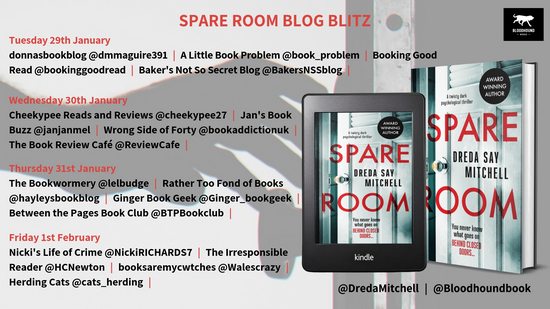
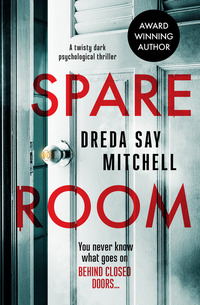
Spare Room by Dreda Say Mitchell: Be It Ever So Creepy, There’s No Place Like Home

Spare RoomSpare Room

by Dreda Say Mitchell
Kindle Edition, 312 pg.
Bloodhound Books, 2019
Read: January 25 – 26, 2019

I’m going to leave the recap to the Spotlight post, and do something I don’t usually do here. I hope it works.

So I spent a lot of this book not wanting to push on — sure, the prologue was compelling and you knew from the start that Lisa is being lied to by her landlords, and given the genre (psychological thriller) and the fact that we’re talking easy-to-spot lies within the first few pages, you just know that the lies are covering up something dastardly. I’m curious about what’s going on — what Jack and/or Martha are up to that’s going go be a threat to Lisa; what happened to Lisa before she rented the room (because it’s clear from early-on that something did), what’s going to happen to her because of/in the room; and if there’s actually anyone healthy, sane or well-adjusted in this London — curious, but not sure I care all that much.

See, there’s a moment early on where things get a bit dark and threatening — and Lisa is very aware how tenuous her situation is, but she gets out of it unscathed. Which is a relief — until shortly afterward, when Lisa is given the opportunity to leave the house for good. No financial hit, no legal ramifications, no harm/no foul, no muss/no fuss — and turns it down with an explanation that seems pretty flimsy.

Lisa had her chance to leave, to get out, to escape unscathed and she is determined to stick around for more? Okay, fine. That sounds like natural selection at work. Let it be.

But I’ve agreed to take part in the book tour, and I am curious about the man in the prologue — also I want to know what happened to Lisa before she met Jack and Martha (after she met Jack and Martha was obviously going to be ugly and maybe tragic, that seemed a fait accompli). So I kept going. And just what is up with Lisa’s parents? They make Robert and Cora Crawley look effusive in affection and touchy-feely with their progeny.

And little by little, I get more curious. And more curious. And started to care a bit, I definitely got invested in the outcome (more invested in the explanation behind everything). When Mitchell (via Lisa) started doling out answers that curiosity increased. And then I did something I haven’t done for months. I go to bed and I’m a little awake still, so I decide to read for a few minutes, which is followed by a few more, and a few more — and then an hour has passed, and my Kindle is telling me I have about 10 minutes left. So I have to keep going at that point. That early-morning reading ended up being about forty-eight percent of the book. I just couldn’t put it down.

I went from wondering what was up with her parents to wondering “just what is wrong with them?” My distrust of homeowners Jack and Martha grew and grew. That applied to just about everyone in the book, actually. I realized at a certain point that I really couldn’t trust Lisa, either — but she eventually got to the point where you could. There’s a slightly off-kilter neighbor-lady who seems honest enough, but she clearly has a chip on her shoulder and doesn’t seem to want to help anyone. Not to mention the [spoiler redacted] who is connected to both Lisa and the neighbor, in a strange coincidence — you’re as skeptical about them as Lisa is, but pretty soon you get to think that [spoiler redacted] just might be the only one Lisa can really count on.

And with each ensuing revelation you have to reevaluate what you think about every character in the novel. And you start to understand that the events that led to the compelling prologue are even more compelling and with the exception of a couple of “It seemed like the best idea at the time” decisions (which, boy howdy, were horrible choices), everything that happened in the years following the prologue suddenly makes more and more sense.

The pacing on this — once things get rolling — is fantastic. The motivations pushing people to moved make sense and seem authentic (no one does anything that seems out of character just to advance the plot), and Mitchell ends up putting the reader just where she wants you. On the whole, the narration, plotting and writing seem effortless (a true sign that the author put a lot of effort into it). The characterizations are rich — some people are just who you think they are, and others are quite the opposite — and you will be surprised at who is authentic.

Mitchell knocked this one out of the park and totally won me over despite a lot of initial reluctance to go along with her. This is really impressive and I can see myself rushing to get whatever she does next. Give this one a try, folks, you’ll be glad you did – if you’re as impatient as I was, hold on, Mitchell will reward you.

My thanks to Bloodhound Books for the invitation to participate in this tour and the materials (including the book) they provided.

—–

4 Stars
LetsReadIndie Reading Challenge

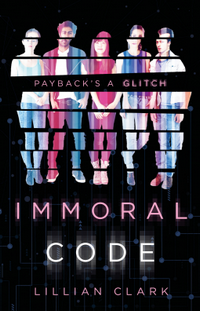
Immoral Code by Lillian Clark: A Heist Novel where the Heist is maybe the Dullest Part

Immoral CodeImmoral Code

by Lillian Clark


eARC, 272 pg.
Alfred A. Knopf Books for Young Readers, 2019

Read: January 22 – 23, 2019


It’s their senior year, their lives are stretching out before them, this incredibly close group of five friends are preparing for graduation, college, etc. — even (not that they’ll confront this quite yet) living without each other. They all excel in one or two ways — one’s a hacker/activist, one’s an artist, one’s got a real shot at the Olympics — etc. One is a physics genius (or close enough to a genius to count) who was admitted early to MIT. But there’s a catch. She can’t afford it. Her mom works two jobs to help the two of them barely make it and her dad hasn’t been in her life since he was a poor student and impregnated her mom. Since then he’s gone on to become one of the richest of the rich. The kind of rich that people really can’t believe exists. So when MIT looks at her financial aid, they roll their eyes and move on to the next student.

Not content to shake their heads sadly at injustice, her friends come up with a plan to hack into her dad’s company and skim a little bit of money. Not enough that he’d ever notice — just enough to pay tuition for a year. Their hacker friend is good, but not good enough to break in remotely — she has to be physically in touch with the network — for just a few seconds. Like the tagline on the cover says, “Payback is a glitch.” So over Spring Break they take a little road trip — bigger than their families know — to get access to the network. It’s going to take a lot of nerve, some real disregard for the law, and their combined talents to pull this off.

The question they don’t really consider until it’s too late isn’t what will happen if they fail (although, they all could think of that more), it’s what happens if they succeed?

On the whole, I haven’t seen many people classifying this as a Crime Novel, despite the Heist story at the core. It’s definitely not a thriller. Because the Heist story is just an excuse to talk about friendship, figuring your life out, the pressure on teens to know what they want the next few decades to be about (not the same as the previous item on the list), the complicated relationship that exists between parents and their teens on the cusp of adulthood, and the hugeness of the moment where you leave home/family/friends to start the next phase of your life. Oh, also, morality. Somehow Clark does all that while telling a fast-moving, funny, and heart-felt story.

Which is not to say that the Heist story isn’t important, or well executed. And you can read the book just for the Heist. But you’ll miss out on a lot — and you’ll probably wonder why I rated this so highly. As fun as the Heist/prep for the Heist is, the heart of the book is the rest.

Each chapter jumps between first-person narration from each kid, keeping things moving nicely. There’s plenty to like/identify with in each character. You learn a lot about them as individuals, them as friends, and generally them as children (not that much about them as students, oddly). They’re so well-drawn, I’m sure what I respond to in one character or another will not be the same as what another reader responds to. There is one character who serves as the group’s Jiminy Cricket — their vocal and ever-present conscience. Like Jiminy, the character is ignored a lot and fought against. But I appreciated them — the voice of moral reason, the one trying to save the others from themselves, the only one who demonstrated a sense of right and wrong, not just about what feels right.

The writing is breezy, engaging — no matter whose POV you’re reading. Clark did a fantastic job differentiating the characters, giving them all a unique voice so that you don’t even have to pay attention to the indicator at the beginning of the chapter to know whose voice is telling that particular chapter. Now, as each chapter is told from the Point of View of a teenager, and fairly realistically done, that means you have to check your inner grammarian at the door — so much of this book can drive you around the bend if you don’t.

The novel is engaging, it’s beyond that really — it’s infectious.There were several points during reading that I asked myself why I was enjoying it as much as I was. Not that I thought I should dislike it, but I liked it a lot more than I should have. I don’t mind that I did, I’m just not sure I understand why. I’m just going to chalk it up to Lillian Clark being a very good author — someone you should check out, starting with her debut, Immoral Code.

Disclaimer: I received this eARC from Random House Children’s Books via NetGalley in exchange for this post — thanks to both for this.

—–

4 Stars

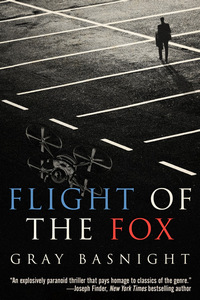
Flight of the Fox by Gray Basnight: An Unlikely Hero. A Credible Threat. A Story You Hope Is Fiction

Flight of the FoxFlight of the Fox

by Gray Basnight
Series: Sam Teagarden, #1

Kindle Edition, 404 pg.
Down & Out Books, 2018
Read: January 10 – 11, 2019

Kill a man’s dog, break a man’s rules.

No, this isn’t a John Wick tribute/knock-off. Not at all. Just another tale about a guy with his priorities right.

A grief-stricken, new widower finally snapped after the death of his dog (no doubt his emotional instability aided by the pain killers he took following the car accident that killed his wife), makes a ranting, angry, delusional phone call to the police, saying something about guns and shooting before killing a neighborhood resident and then running from the police. Authorities consider him potentially armed and dangerous.

Or at least that’s what the authorities want you to think.

In reality, Samuel Teagarden is a math professor who was attacked for reasons that he doesn’t understand by drones at his home. Teagarden makes a panicked call to the police for help but escapes, although his aged dog dies — as does someone from the neighborhood. He has no idea what’s going on (as the book opens), but he knows that someone is trying to kill him. As you can imagine, this is a pretty good motivation to move as quickly as you can — which isn’t easy, because the car accident that took his wife from him left him with two broken knees.

That’s right, he’s 49, he’s a math teacher and he’s running around on two mostly-healed broken knees — you can practically see Tom Cruise or a Hemsworth lining up to get cast as him in the movie, right?

But why would someone want to kill him? Well, back before he got his doctorate, he was an entry-level code analyst for the CIA and he’s dabbled in the field since — and someone had sent him encoded correspondence from the earth twentieth century. Neither Teagarden or the sender realized how sensitive it was and that there were very powerful people in a “three-letter” agency who didn’t want anyone decoding the correspondence, much less knowing it existed.

So, Teagarden has to evade whoever is trying to kill him and the police who think he killed someone — while trying to decrypt this stack of code and figure out who is out for him. He has his wits, a little bit of cash and a little luck on his side, the other side has resources, drones, surveillance equipment, trained assassins and a federal budget backing them.

Sounds like the ingredients of a heckuva thriller right? It is. It’s also one of those that I could utterly ruin for prospective readers by saying just a little more — so I’m going to resist the temptation to give anything but that bird’s eye view.

I can’t tell you how or exactly when the book got its hook set in me – which is a good sign, I prefer not to know how I’m being manipulated. But I can say I was a little skeptical initially, but I remember something forced me to stop reading, and I was annoyed by it, and when I checked, it the progress meter was at 14%. That’s not long at all for me to get as hooked as I was.

Now, all of us have read/watched a thriller where 3 out of the 4 people the protagonist has met in the last month have some necessary knowledge and/or connection that the protagonist needs to survive and/or meet their goal. Flight of the Fox is the same way — Teagarden meets just the right people, catches all the right breaks, and so on — but unlike typical protagonists, he notices this. He doesn’t take it for granted, he sees it happening and it affects him. This is a little touch, but its these little things that shows Basnight’s skill and uniqueness in the field.

Teagarden is a great character — he’s fallible, he’s human, but he’s also creative, smart and resourceful. He has to be to survive this situation. The assassin after him from the beginning is cold, efficient and deadly — you never have any doubt about that. His colleagues and employer are also the kind of people you don’t want to get on the wrong side of. There are a couple of fantastic characters in these pages and the rest are pretty good, too.

The story is the obligatory roller coaster — it’s fun, fast with a lot of twists and turns. You also spend a little time sure that you’re in a free fall only to realize that everything’s been under firm control the entire time. It’s realistic enough to make you a little worried about drones flying overhead and to wonder just how reality-based the correspondence is — but it never sacrifices the sense of a fun (and fictional . . . I hope) story for the reader. I heartily recommend it.

Disclaimer: I received a copy of this novel in exchange for this post and my honest opinion.

—–

4 Stars

LetsReadIndie Reading Challenge 2019 Cloak & Dagger Challenge

✔ A book by an author you’ve never read before

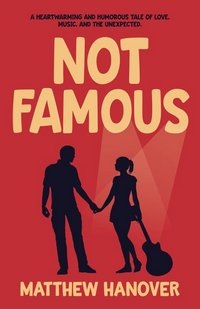
Pub Day Repost: Not Famous by Matthew Hanover: A Sweet bit of Lad Lit that’ll fill your Heart with Song.

This is now available for pre-order at a discounted price! Take advantage of it while you can!

Not FamousNot Famous

by Matthew Hanover
Series: Wallflowers, #1

eARC, 382 pgs.
2019

Read: December 3 – 4, 2018

We meet Nick a couple of months after one of the most embarrassing experiences of his life — a marriage proposal that goes awry. He’s still reeling from that when he meets a very cute, and comparatively young, barista at his favorite Seattle-based Coffee chain shop. Alli’s not just a barista, she’s also a musician — a solo act, just a girl with a guitar — so Nick goes to one of her shows. He falls in love with her music right away, and somehow convinces her to go to dinner with him.

Which is just the beginning of their story. Alli’s a very private person with no romantic past. At all. Which seems hard to believe when you read it here, but when she tells Nick that, you have no problem believing it. Unless she’s singing, she seems nervous, uncertain, and shy. But on stage . . . she’s a different person. And while she seems like a shrinking violet, she has a will of iron when it counts. One of the places it counts surrounds her past — it’s a closed book — and it doesn’t seem likely that she’ll open up until and unless she truly trusts someone. Although she’s put up enough walls to protect herself that it’s going to take quite the guy to get her to let her defenses down.

Now, on the other hand, Nick has some kind of romantic past, but it’s hard to believe it sometimes as he fumbles his way through this relationship. It’s kind of fun to watch him act like he’s an expert on romance, someone guiding Alli through this new territory for her, and then frequently doing and saying the wrong things — almost sabotaging the relationship more times than he’d care to admit. Some of this comes from general ineptitude, some comes from the damage done to him in his last relationship (much of which he doesn’t realize happened).

Now, I don’t want to take any thing away from Nick or Alli — they’re they heart and soul of the novel. But, I want to talk a little bit about Nick’s sister, Lacy. Her father was their mom’s second husband, and about ten years younger. They’re not close, but their mother keeps trying to get Nick to be involved — after his step-father died, Nick’s really the only male influence in her life. Lacy, like their mom, wants them to be close. She sees him as her big brother, even if he only sees her as his much younger step-sister. As the book goes on, Nick’s maturity can be gauged by his relationship to his little sister. Naturally, like just about everything that’s not work in his life, Alli’s influence and action improves things — the friendship between Lacy and Alli forces Nick to play a larger role in his sister’s life. And before long, he doesn’t need Alli’s efforts to want that closeness himself. I thoroughly enjoyed Lacy as a character, and watching how Nick changes in relation to her — she was the added something that made this book more than just a sweet love story. She’s not around much, actually, and there are characters that have a more obvious impact on the plot — but she’s the non-Nick/Alli character that sticks with you.

She’s also the one character whose main role isn’t to serve the Nick/Alli relationship in some way. Now, she does serve that — don’t get me wrong. But that’s not the chief purpose for her. I have nothing against Alli’s Starbucks coworkers, or fellow musicians who only show up to encourage the romance. Or Nick’s roommate, or friend/partner who give him reality checks and the prodding her needs. But they really don’t do much else. But little sister does. If I ever get to interview Hanover, we’re going to spend a lot of time talking about her.

I would have appreciated having a better sense of who Nick is outside the relationship. I do have a sense of him as a single guy, as a friend, as a professional — but I’d have liked a bit more of that. It’s really hard to have much of a read on Alli outside their romance, as it’s all told from Nick’s POV. But you do get hints — I’d have liked a few more. But since this is the story of Nick and Alli, it’s appropriate (and enough) that we get a really strong idea about them as individuals relating to each other and them as a couple, and how that dynamic functions. I’m just a reader who almost always wants a little more than an author gives me.

At the end of the day — and long before that, actually — what you think about this book boils down to one thing: Alli. Do you like her as a character — do you fall under the same spell that Nick does? (or can you see why someone would?) Moreover, her secret — do you care? And is that caring based on this struggling artist trying to make her way in the world, or do you care because you’re curious? Nick, his struggles, his ineptitude, Lacey, etc. — you’re appreciation of the book will be flavored by your appreciation of those, but it’s all about Alli when it comes to the question of, “Do you like this book?” And Nick, at least, would have it no other way.

Not Famous is almost as much a tribute to Nick Hornby as it is a story in the same vein as his work. There are nods to Jonathan Tropper and Matthew Norman, too — probably Mike Gayle as well, but it’s been so long since I’ve read him, it’s hard for me to recognize that. This is not a bad thing — in fact, I quite appreciate it, and enjoyed the process of seeing how Hanover reflects his influences in his writing.

At some point, I can’t tell you where, I stopped thinking about Not Famous as something that I was going to post about, or something I was going to provide feedback on. I just got wrapped up in the story and the fate of these two characters (and his sister, actually). I stopped thinking about how Hanover wrote and was only concerned with what he wrote (not that I didn’t notice the former, I just didn’t care). It’s always a good sign when I disengage the critical part of my brain and simply read.

Not Famous — it’s cute, it’s amusing, it’s charming, it’s sweet. It’s the kind of book that you want to bring home to mother (okay, that line’s borderline cheesy, I know — but my mom would really enjoy this book) — and even bring it home to your daughter. I hope this book is successful enough to warrant future novels from Hanover, because I would love to read more.

Disclaimer: I was given a copy of this ARC by the author in exchange for this post. Which gave me something to opine about, but otherwise didn’t influence my opinion.

—–

4 Stars

Not Famous by Matthew Hanover: A Sweet bit of Lad Lit that’ll fill your Heart with Song.

This is now available for pre-order at a discounted price! Take advantage of it while you can!

Not FamousNot Famous

by Matthew Hanover
Series: Wallflowers, #1

eARC, 382 pgs.
2019

Read: December 3 – 4, 2018

We meet Nick a couple of months after one of the most embarrassing experiences of his life — a marriage proposal that goes awry. He’s still reeling from that when he meets a very cute, and comparatively young, barista at his favorite Seattle-based Coffee chain shop. Alli’s not just a barista, she’s also a musician — a solo act, just a girl with a guitar — so Nick goes to one of her shows. He falls in love with her music right away, and somehow convinces her to go to dinner with him.

Which is just the beginning of their story. Alli’s a very private person with no romantic past. At all. Which seems hard to believe when you read it here, but when she tells Nick that, you have no problem believing it. Unless she’s singing, she seems nervous, uncertain, and shy. But on stage . . . she’s a different person. And while she seems like a shrinking violet, she has a will of iron when it counts. One of the places it counts surrounds her past — it’s a closed book — and it doesn’t seem likely that she’ll open up until and unless she truly trusts someone. Although she’s put up enough walls to protect herself that it’s going to take quite the guy to get her to let her defenses down.

Now, on the other hand, Nick has some kind of romantic past, but it’s hard to believe it sometimes as he fumbles his way through this relationship. It’s kind of fun to watch him act like he’s an expert on romance, someone guiding Alli through this new territory for her, and then frequently doing and saying the wrong things — almost sabotaging the relationship more times than he’d care to admit. Some of this comes from general ineptitude, some comes from the damage done to him in his last relationship (much of which he doesn’t realize happened).

Now, I don’t want to take any thing away from Nick or Alli — they’re they heart and soul of the novel. But, I want to talk a little bit about Nick’s sister, Lacy. Her father was their mom’s second husband, and about ten years younger. They’re not close, but their mother keeps trying to get Nick to be involved — after his step-father died, Nick’s really the only male influence in her life. Lacy, like their mom, wants them to be close. She sees him as her big brother, even if he only sees her as his much younger step-sister. As the book goes on, Nick’s maturity can be gauged by his relationship to his little sister. Naturally, like just about everything that’s not work in his life, Alli’s influence and action improves things — the friendship between Lacy and Alli forces Nick to play a larger role in his sister’s life. And before long, he doesn’t need Alli’s efforts to want that closeness himself. I thoroughly enjoyed Lacy as a character, and watching how Nick changes in relation to her — she was the added something that made this book more than just a sweet love story. She’s not around much, actually, and there are characters that have a more obvious impact on the plot — but she’s the non-Nick/Alli character that sticks with you.

She’s also the one character whose main role isn’t to serve the Nick/Alli relationship in some way. Now, she does serve that — don’t get me wrong. But that’s not the chief purpose for her. I have nothing against Alli’s Starbucks coworkers, or fellow musicians who only show up to encourage the romance. Or Nick’s roommate, or friend/partner who give him reality checks and the prodding her needs. But they really don’t do much else. But little sister does. If I ever get to interview Hanover, we’re going to spend a lot of time talking about her.

I would have appreciated having a better sense of who Nick is outside the relationship. I do have a sense of him as a single guy, as a friend, as a professional — but I’d have liked a bit more of that. It’s really hard to have much of a read on Alli outside their romance, as it’s all told from Nick’s POV. But you do get hints — I’d have liked a few more. But since this is the story of Nick and Alli, it’s appropriate (and enough) that we get a really strong idea about them as individuals relating to each other and them as a couple, and how that dynamic functions. I’m just a reader who almost always wants a little more than an author gives me.

At the end of the day — and long before that, actually — what you think about this book boils down to one thing: Alli. Do you like her as a character — do you fall under the same spell that Nick does? (or can you see why someone would?) Moreover, her secret — do you care? And is that caring based on this struggling artist trying to make her way in the world, or do you care because you’re curious? Nick, his struggles, his ineptitude, Lacey, etc. — you’re appreciation of the book will be flavored by your appreciation of those, but it’s all about Alli when it comes to the question of, “Do you like this book?” And Nick, at least, would have it no other way.

Not Famous is almost as much a tribute to Nick Hornby as it is a story in the same vein as his work. There are nods to Jonathan Tropper and Matthew Norman, too — probably Mike Gayle as well, but it’s been so long since I’ve read him, it’s hard for me to recognize that. This is not a bad thing — in fact, I quite appreciate it, and enjoyed the process of seeing how Hanover reflects his influences in his writing.

At some point, I can’t tell you where, I stopped thinking about Not Famous as something that I was going to post about, or something I was going to provide feedback on. I just got wrapped up in the story and the fate of these two characters (and his sister, actually). I stopped thinking about how Hanover wrote and was only concerned with what he wrote (not that I didn’t notice the former, I just didn’t care). It’s always a good sign when I disengage the critical part of my brain and simply read.

Not Famous — it’s cute, it’s amusing, it’s charming, it’s sweet. It’s the kind of book that you want to bring home to mother (okay, that line’s borderline cheesy, I know — but my mom would really enjoy this book) — and even bring it home to your daughter. I hope this book is successful enough to warrant future novels from Hanover, because I would love to read more.

Disclaimer: I was given a copy of this ARC by the author in exchange for this post. Which gave me something to opine about, but otherwise didn’t influence my opinion.

—–

4 Stars

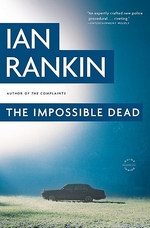
The Impossible Dead by Ian Rankin: Malcolm Fox Uncovers Corruption both Past and Present

The Impossible DeadThe Impossible Dead

by Ian Rankin
Series: Malcolm Fox, #2

Hardcover, 391 pg.
Reagan Arthur Books, 2018
Read: December 24 – 26, 2018

Detective Paul Carter has been found guilty of some pretty clear-cut criminal activity. Fox and his team have been brought into investigate a neighboring force, Carter’s own, to see who might have been involved with him — or at the least covered up for him. They weren’t involved with the original investigation, but that doesn’t keep anyone from hating them as they come in for the follow-up.

Not too surprisingly, they’re getting nowhere fast. So they go fishing — not talking to the detectives they’re looking into, but witnesses and others. One of them ends up dead not long after Fox talks to him. There’s enough hinky in the crime scene, what the witness had told Fox — and the fact the detectives in charge are the same ones that Fox and his team are looking into, that Fox determines he needs to look into things.

There’s a tie between this murder and an old cold case involving a firebrand politician tied to the more militant wing of Scottish Nationalism. Fox is convinced that the two crimes are linked and he sets about proving who killed one man as a way to finding the killer of the other. This two-pronged focus of the book keeps Fox, his partners, and the readers on their toes.

Despite all the differences between the two characters (which will become even more obvious, it seems in the next Rebus book), they ultimately operate best in the same way, as lone wolves. But when Rebus goes off on his own and causes trouble, it’s just par for the course. When Fox does it, it’s out character — he’s a team player (at least he wants to be), so there’s a lot of mechanics involved in getting him off on his own. In The Complaints it took a conspiracy to isolate Fox, here, it takes one detective Fox crossed to take advantage of his tenuous link to a crime.

But on his own, Fox will do more to uncover the facts not just of the murder he’s wanting to investigate, the investigation he’s supposed to be running, and a very cold case. Yes, he does work with his friends who are still on the inside, to confirm or deepen his knowledge (and he does feed information back to them), but he’s very much on his own.

There’s a good amount of family drama again for Fox — grounding Fox and giving a dimension to the character that is good to see (even if it doesn’t always bring out the best in him).

I very much enjoyed watching Fox work — and try to stay near the system, if he can’t stay in it. The solutions to the crimes are well done — by both Fox and Rankin. We even get a little bit of a cameo-like appearance of good ol’ Rebus. Nothing about this really blew me away, but I was gripped throughout, and entertained by the whole thing. Rankin’s good enough that he doesn’t have to dazzle you as a reader to be very aware that you’re in the hands of a master. Fox would be worth following on his own, and I’m glad we got to see him for a couple of books before he comes park of the greater universe surrounding Rebus.

—–

4 Stars
2018 Library Love Challenge

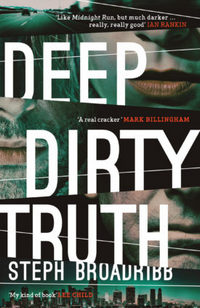
Deep Dirty Truth by Steph Broadribb: Once Again, the Lori’s (almost) in Over her Head

Deep Dirty TruthDeep Dirty Truth

by Steph Broadribb
Series: Lori Anderson, #3

Kindle Edition, 320 pg.
Orenda Books, 2018

Read: December 5, 2018


After all the drama and trauma of her recent past, Lori is taking only easy assignments — her life needs to coast for a bit. Naturally, that’s not going to work too well (why would we read about that? Also, why would Broadribb be nice to her now?) — she’d kidnapped by the Miami Mob and we readers have to be braced for all sorts of nasty things to happen to her. And while it is nasty — no one is prepared for what happens to her.

They want her to do a job for them. If she succeeds, they offer to wipe the slate clean. If she fails (or refuses), she, Dakota and JT are dead. Honestly, there’s a pretty good chance they’ll die no matter what, but there’s a chance with the former. All she has to do is retrieve the “numbers man” for the family, currently under FBI protection before he testifies against the family in a couple of days. It’s pretty cool to see how good Lori does at this until things go horribly, horribly wrong (not much of a spoiler, really — the book isn’t going be too suspenseful if she has an easy time of it).

Meanwhile, JT and Dakota run to safety — which goes only slightly worse than Lori’s assignment. JT isn’t anywhere near as healthy as he should be to handle this kind of thing — but he doesn’t have much of a choice. It’s his little girl, what else can he do? It’s great to see JT in action like this. But at some point, at the rate things are going for her, Dakota’s going to end up catatonic or like the little girl in Logan. My money’s on the latter.

So we’ve got the Mob on one hand, the FBI on the other, and a distinct lack of options for this family — it’s all about survival. The longer you’re alive the more opportunities will present themselves to extricate yourself from this Catch-22. As much as Lori (and JT and Dakota) is tough and resilient, it’s her ability to improvise, to think quickly and to pounce on the chances that life gives her that makes her an action hero to pay attention to.

A female bounty hunter with skills and the kind of grit you want to see in an action hero, Lori is a great character. The physical toll on her in this novel is up there with the psychological toll previous adventures have taken on her — not that she gets out of this one emotionally/mentally unscathed (nor did she get out of the previous adventures without a physical injury or 8). She’s smart, determined and prepared to dish it out as well as take it.

I walked away from book 2, Deep Blue Trouble with a pretty strong idea about what book 3 was going to be about. I was wrong, but I’m pretty confident that I know what book 4 will be about (at least initially). I’m very glad to be wrong, actually — because this was a lot of fun, and sets things up to be a more satisfying version of the story I imagined Broadribb would be telling. I’m eager to find out how wrong I am about book 4 (because I will be).

I’ve spent about a month working on this post in fits and starts, because I’m having a hard time saying something about this book that I didn’t say about the other two. Broadribb started off strong — a veteran from the get-go, and the other two have been of the same quality. Consistency is great when you’re a reader — but it’s hard to write about. So I give up — I’m not going to have anything insightful to say or any dazzling or penetrating analysis to offer. I’ll keep it basic — Deep Dirty Truth is a good, fast-paced, white-knuckle ride written by someone who knows what she’s doing. Go read it.

—–

4 Stars

My Favorite 2018 Non-Fiction Reads

Like every single year, I didn’t read as much Non-Fiction as I meant to — but I did read a decent amount, more than I did in 2016-17 combined (he reports with only a hint of defensiveness). These are the best of the bunch.

(in alphabetical order by author)

Lessons From LucyLessons From Lucy: The Simple Joys of an Old, Happy Dog

by Dave Barry

My original post
So, I figured given the tile and subject that this would be a heavier Dave Barry read, with probably more tears than you anticipate from his books — something along the lines of Marley & Me. I was (thankfully) wrong. It’s sort of self-helpy. It’s a little overly sentimental. I really don’t know if this is Barry’s best — but it’s up there. Lessons From Lucy is, without a doubt, his most mature, thoughtful and touching work (that’s a pretty low bar, I realize — a bar he’s worked hard to keep low, too).

5 Stars

 The War Outside My Window The War Outside My Window: The Civil War Diary of LeRoy Wiley Gresham, 1860-1865

by Janet E. Croon, ed.

My original post
LeRoy Wiley Gresham was 12 when he started keeping a diary. LIttle did he know at that point that he was about to witness the American Civil War (and all the desolation it would bring to Georgia) and that he was dying (he really didn’t figure that out until the very end). Instead you get an almost day-by-day look at his life — what he does, reads, hears about (re: the War) and feels. It’s history in the raw. You have never read anything like this — it will appeal to the armchair historian in you (particularly if you’ve ever dabbled in being a Civil War buff); it’ll appeal to want an idea what everyday life was like 150 years ago; there’s a medical case study, too — this combination of themes is impossible to find anywhere else. This won’t be the easiest read you come across this year (whatever year it is that you come across it), but it’ll be one of the most compelling.

5 Stars

TimekeepersTimekeepers: How the World Became Obsessed With Time

by Simon Garfield

My original post
I, for one, have never thought that much about my relation to time, my relation to clocks/watches, etc. I know they govern our lives, to an extent that’s troublesome. But where did that come from, how did we get hooked on these things, this concept? These are brief studies/historical looks/contemporary observations — and I’m not selling it too well here (trying to keep it brief). It’s entertainingly written, informative, and thought-provoking. Garfield says this about it:

This is a book about our obsession with time and our desire to beat it. . . The book has but two simple intentions: to tell some illuminating stories, and to ask whether we have all gone completely nuts.

He fulfills his intended goals, making this well worth the read.

4 Stars

Everything is NormalEverything is Normal: The Life and Times of a Soviet Kid

by Sergey Grechishkin

My original post
If you grew up in the 80s or earlier, you were fascinated by Soviet Russia. Period. They were our great potential enemy, and we knew almost nothing about them. And even what we did “know” wasn’t based on all that much. Well, Sergey Grechishkin’s book fixes that (and will help you remember just how much you used to be intrigued by “Evil Empire”). He tells how he grew up in Soviet Russia — just a typical kid in a typical family trying to get by. He tells this story with humor — subtle and overt. It’s a deceptively easy and fun read about some really dark circumstances.

4 Stars

Planet FunnyPlanet Funny: How Comedy Took Over Our Culture

by Ken Jennings

My original post
Half of this book is fantastic. The other half is … okay. It’ll make you laugh if nothing else. That might not be a good thing, if you take his point to heart. We’ve gotten to the point now in society that laughter beats honesty, jokes beat insight, and irony is more valued than thoughtful analysis. How did we get here, what does it mean, what do we do about it? The true value of the book may be what it makes you think about after you’re done.

3.5 Stars

The Subtle Art of Not Giving a F*ck (Audiobook)The Subtle Art of Not Giving a F*ck: A Counterintuitive Approach to Living a Good Life

by Mark Manson, Roger Wayne (Narrator)

My original post
This is an enjoyable, amusing, call to re-examine your priorities and goals. It’s not about ceasing to care about everything (not giving a f^ck), but about being careful what you care about (giving the right f*cks). Manson’s more impressed with himself than he should be, but he’s a clear and clever writer displaying a lot of common sense. Get the audiobook (I almost never say that) — the narration is worth a star by itself (maybe more).

4 Stars

Dear Mr Pop StarDear Mr Pop Star

by Derek & Dave Philpott

My original post
If you read only one book off this list, it should probably be the next one. But if you pick this one, you’ll be happier. This is a collection of correspondence to pop musicians/lyricists picking apart the lyrics, quibbling over the concepts, and generally missing the point. Then we get to read the responses from the musician/act — some play with the joke, some beat it. Sometimes the Philpott portion of the exchange is better, frequently they’re the straight man to someone else. Even if you don’t know the song being discussed, there’s enough to enjoy. Probably one of my Top 3 of the year.

5 Stars

ThemThem: Why We Hate Each Other – and How to Hea

by Ben Sasse

My original post
My favorite US Senator tackles the questions of division in our country — and political divisions aren’t the most important, or even the root of the problem. Which is good, because while he might be my favorite, I’m not sure I’d agree with his political solutions. But his examination of the problems we all can see, we all can sense and we all end up exacerbating — and many of his solutions — will ring true. And even when you disagree with him, you’ll appreciate the effort and insight.

5 Stars

Honorable Mention:

Henry: A Polish Swimmer's True Story of Friendship from Auschwitz to AmericaThe Sense of Style: The Thinking Person’s Guide to Writing in the 21st Century

by Steven Pinker

I started this at a bad time, just didn’t have the time to devote to it (and the library had a serious list waiting for it, so I couldn’t renew it. But what little I did read, I thoroughly enjoyed and profited from — am very sure it’d have made this post if I could’ve gotten through it. I need to make a point of returning to it.

P Is for Pterodactyl: The Worst Alphabet Book Ever by Raj Haldar, Chris Carpenter, Maria Beddia: Twisted, Fun and even Educational

P Is for PterodactylP Is for Pterodactyl: The Worst Alphabet Book Ever

by Raj Haldar, Chris Carpenter, Maria Beddia (Illustrator)


Hardcover, 40 pg.
Sourcebooks Jabberwocky, 2018
Read: December 20, 2018

One of the first books printed in the American colonies was The New England Primer, filled with catchy lines like “In Adam’s Fall / We Sinned All.”

Since that time, many alphabet-type books have been published in the same — or similar — vein. One of the latest is P Is for Pterodactyl, which carries the subtitle, The Worst Alphabet Book Ever which doesn’t seem that complimentary, but when it includes lines like:

“J is for Jai Alai.

or

“E is for Ewe.”

or even

“U is not for You.”

and maybe you start to think there’s a little truth in advertising.

It’s actually an amusing book with some examples of the oddities and vagaries of English spelling/pronunciation that will stick with you. I’m not crazy about some of the selections (V’s a good example), but by and large, I really liked each “for” that the authors selected.

The artwork is great — it compliments the text well and will help keep shorter attention spans focused.

For everyone who enjoyed BNL’s “Crazy ABC’s”, this Picture Book entertains as well as educates. I’m not sure how well it’d work for the 7-and-under crowd, but for older elementary kids — and adults who just want a chuckle, this book will be just the ticket. I had a fun time reading it — as did my whole family. Unlike most of the picture books I post about here, you’ll note that this one doesn’t carry any kind of disclaimer — I bought this one after seeing a couple of pieces about it online, and am glad I did. I imagine you will be, too.

—–

4 Stars

Page 46 of 88

Powered by WordPress & Theme by Anders Norén