Tag: 4 Stars Page 54 of 88

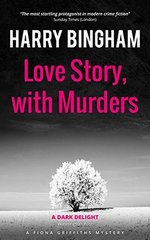
Love Story, With Murders by Harry Bingham

Love Story, With MurdersLove Story, With Murders

by Harry Bingham
Series: Fiona Griffiths, #2

Kindle Edition, 449 pg.
Sheep Street Books, 2016

Read: January 4 – 8, 2018

For me, these things aren’t only about finding the killers, but about giving peace to the dead. It’s not primarily a question of justice. The dead don’t care about that. The murder investigation, arrest and conviction are just part of the funeral rite, the final acts of completion. Gifts I bring the dead in exchange for the peace they bring me.

The peace of the dead, which passeth all understanding.

DC Fiona Griffiths continues her efforts to act normal, maybe even feel normal, getting along with her boyfriend and staying out of trouble with her superiors. Basically, things are going as well as they possibly can following the events of Talking to the Dead. But we know that’s going to come to an end, otherwise, this would be a really dull series. It comes to an end when Fiona and a colleague stop off on their way home to look at a case of illegal rubbish. In this particular case, the rubbish is a body part in a chest freezer. It’s a significant enough body part to make the detectives sure they’re looking for something more serious than illegal rubbish.

Over the next few days, the police are able to find some more of the woman, as well as start to understand how long ago she was killed and dismembered — which leads to an identification. Shortly thereafter, the police find pieces of a fresher corpse in the same area. While most detectives look for connections between the victims and hunt for clues to identify the killer, Fi begins learning more about the victims as individuals (not that she’s alone in this, it’s just she’s alone in her approach), what their lives were like, and what would lead someone to kill them. Fi investigates things in a way no other fictional detective — private or police — does. I’m not sure I can express it clearly, but when you read it, you’ll notice. When she starts to put the pieces together about what was going on the whole time, I was flummoxed — it’s nothing like where I expected things to go.

Aside from that are the relationships with her boyfriend, family and fellow police officers. The romance between Buzz and Fi is very strange, but sweet. She’s dealing with a different superior for these investigations. It’s not just Fi up to the same antics with a different boss — similar antics, yes, but Fi understands herself better now, and is able to do what she does in a way that her superiors are able to accept and use. As for her family? I’m not even going to try to talk about it.

Some people are better as corpses. They’re easier to like.

On the one hand, I really like watching Fi’s subconscious at work, making the connections, deductions, and guesses she needs to be making to solve the crime/find what she’s looking for, while she interprets it as “the dead” talking to her. Well, that’s one way to read it, anyway. It really could be that there’s something on the verge of supernatural going on. I like the hint of ambiguity that Bingham has given this world and Fi’s understanding of what’s going on.

I was, I don’t want to say surprised, but it was something like it by the ending. Maybe I’ve just been reading too many Mysteries lately with pretty ambiguous endings, but this one had a very satisfying ending with most of the loose ends tied up. This doesn’t mean that everything ended happily (for want of a better term), but that Fi’s fully able to satisfy her curiosity and need to know (at least about those things that came up in her professional life — her personal life is only slightly more settled by the book’s end than it was when it started).

A murder mystery — with, yes, a love story — that had some fantastic character moments, a really strong puzzle, all very well told. Fiona Griffiths impresses again. This is the best kind of sequel — the same kind of things that filled the first book in the series, but seen differently by everyone (including the protagonist) and with different results — Fi’s grown a bit (I want to stress “a bit,” she’s still basically the same person, which is good, I don’t want everything to be “normal” for this character), and is building on the events from the previous novel, not just repeating them. I’m truly annoyed with myself for waiting so long to get back to this series, and will not make the same mistake.

—–

4 Stars

Pub Day Repost: The Questionable Behavior of Dahlia Moss by Max Wirestone

Yeah, this is a strange time for me to post, but I felt like Dahlia challenged me to. You’ll get it when you read the book.

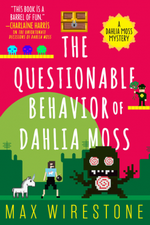
The Questionable Behavior of Dahlia MossThe Questionable Behavior of Dahlia Moss

by Max Wirestone
Series: Dahlia Moss, #3eARC, 352 pg.
Redhook, 2018
Read: December 21 – 22, 2017

I am so glad that this eARC asked me not to quote anything from the book until I could check with the published version because by the time I hit 5%, I’d already come up with a handful of candidates of quotations to start this post with, and I didn’t want to have to choose.

Literally picking up where The Astonishing Mistakes of Dahlia Moss left off — with Emily Swenson asking Dahlia to be an industrial spy. She’s being sent to serve as a Temp in the offices of a game development company — they’re best known for a really simple game, the kind you play in line at the DMV or something, it’s relaxing. Still, it’s a gaming company and a pretty successful one at that — it’s the kind of place Dahlia should work (if she wasn’t becoming a detective). There’s another company about to buy them out, but they need some more information — there are rumors of problems in the office, are they true? Could they look at the existing code for the new version so someone can see why it’s delayed?

Dahlia jumps at the assignment — which is good, because otherwise the novel would be a very short, and pretty dull, story. She shows up for her first day to find, well, chaos? Chaos seems to be an understatement. She starts to acclimate pretty quickly and is behaving more professionally than just about anyone in the office. If Dahilia is the standard of professional behavior, that tells you everything you need to know about the rest. Oh, and then Dahlia finds a dead body. Now in addition to her Industrial Espionage work, there’s maybe a murder for her to look into in her spare time.

The problems she faces staying staying incognito: The detective in charge of investigating the murder/suspicious death knows about her from Shuler. There’s a reporter sniffing around — and scheduled to tour the company — who’s written about her exploits. Her friends can’t stop saying things to her coworkers about her being a detective. And, well, she’s just not that subtle of an investigator — she largely pulls it off, but that’s primarily due to the company being in turmoil and no one having a lot of attention to devote to the question “why is our temp asking all these questions?”

Part of the fun of these books has been watching Dahlia flail around, unsure what to do next. There’s less of that here — she’s learning. I’m not suggesting that she’s transformed herself into Kinsey Millhone or Joan Watson, but there’s something about her that’s less flailing. Maybe because she has some pretty clear objectives this time out. I liked that hint of growing skills. Not bad for someone with a recent concussion.

Now, to the rest of the cast: the people in the office, by and large, feel like characters from other series. Gamers, SF geeks, cosplayers . . . those seem like people Dahlia interacts with. Responsible adults with steady jobs? Nope — which serves the plot. There’s a knitting circle that feels like what Dahlia’s crowd will become in 30 years, and her interacting with them feels a bit more fitting.

The book is just as amusing as its predecessors, I literally laughed out loud a few times — not at big comic moments, but at a line of dialogue or a quip Dahlia makes. The big comic moments worked for me, but not as effectively. As always, half the fun is from the very odd circumstances that Dahlia finds herself, but the other half of the fun is the way Dahlia narrates things, the metaphors, pop culture references, etc. Yeah, I thought the Mad Men references were a little too close to each other — but I appreciated both of them so much, I didn’t care (also, pairing Joan Holloway with Della Street? Perfect). One of the things that the writers behind MST3K always said that when they go for super-specific references that are obscure, they know that not all viewers will get the joke, but those that do will love it. There’s a half-chapter in this book (and a couple of call-backs to it later) that I could swear was written just for me. And, yes, I loved it (I didn’t give the book a bonus 1/2 star because of it, but I thought about it).

There’s some maturing — at least indicators that maturing and responsibility are on the horizon for ol’ Dahlia. It reminded me of Lutz’ The Last Word in that respect, but I had a lot more fun with this The Astonishing Mistakes than I did with Izzy Spellman’s swan song (not that this is necessarily the end of Dahlia’s adventures, though it’s always seemed to be marketed as a trilogy). It’s good to see that trajectory with Dahlia (and, honestly, her roommate).

Other than that, there’s not much to differentiate this from the other two books in the series (as far as the writing goes, not the stories): the writing itself is fun, as is the story, a good mix of serious subject matter and comedic moments (none that detract from the tragedy of murder or anything). There’s some good character moments and a decent mystery, too. If you haven’t read any of Dahlia Moss’ adventures, you should grab one and dive in — this one will work just as well as the first or second. In the end, you’ll want to read all three.

Disclaimer: I received this eARC from Orbit Books via NetGalley in exchange for this post — thanks to both for this.

—–

4 Stars

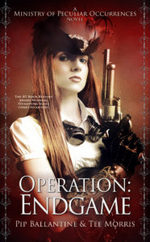
Operation: Endgame by Pip Ballantine and Tee Morris

Operation: EndgameOperation: Endgame

by Pip Ballantine and Tee Morris
Series: Ministry of Peculiar Occurrences, #6

Kindle Edition, 370 pg.
Imagine That! Studios, 2017

Read: January 2 – 3, 2017


Eliza and Wellington continue their pursuit of Jekyll. They start things off with the most exciting opening to one of these novels since we first met the duo in Phoenix Rising. From there, they get in a little official trouble, and get sent packing. They’re brought off of their suspension because Jekyll is leaving a path of corpses throughout Europe to draw them in. Yeah, it’s terrible, but it’s a fun story. While on the hunt, the couple make a new friend who I’d enjoy getting a book/series of her own, frankly — but first she’s a whole lot of fun to read and helps Eliza and Wellington out a bit, too. About halfway through the book (maybe a little longer), this story takes the turn it needs to and fully explores what Jekyll and Father Books were up to. This takes everything up a notch and really helps sell this finale. I can’t go further without ruining the book — but from here out this is the best thing that Ballantine and Morris have done yet.

Meanwhile, we continue the subplot of Agents Bruce Campbell and Brandon Hill chasing the House of Usher around trying to find out more/stop Operation: Ragnorak. Following their exploits in Russia last time, they’re primarily in the US and Italy for this book. They cross paths a few times with the always entertaining (for the reader, not the Ministry’s agents) Sophia del Morte. This was probably my favorite use for these two agents yet (although, I really did like the Russia stuff), and I thoroughly enjoyed everything but the very end of this storyline. I found the conclusion to this particular storyline disappointing — and maybe I’m supposed to, maybe we’re going to see the actual conclusion to it in the spin-off series (or in one that hasn’t started yet). I’m not saying that there wasn’t an ending to this, but it felt off somehow, like there’s more to be said.

This installment probably did a better job of tying the entire series together than the previous books did — not that there were continuity problems (at least not that I noticed), but books 2-5 built on each other and little else. Operation: Endgame helps you see the way that book 1 led to something in 3 and 6, etc. Which is probably easier to do when you know that you’re bringing everything to a close. The other two main stories (particularly the Books and Braun) also had a sense around them that this was it — do or die time, and no, “Oh, rats, they got away! I guess we know what we’re doing in the next novel!” It gave a heightened urgency, a heightened sense of import to everything that happened — or maybe it was the other way around. Or maybe it’s just me, because I knew it was the last book so that. I don’t think so — I think I’m going to credit Ballantine and Morris for writing that way.

A minor gripe: this really could’ve used one more copy-edit pass — there were too many sentences missing a word, and that kind of thing.

Operation: Endgame did everything it needed to do: it told a compelling story and it brought a series to a satisfying end. Not every series finale can do both, so it’s always a relief when one does (especially when it’s a series you really enjoy). I enjoyed the book on its own merits — a fun chase through, well, most of Western Civilization for Books and Braun; some nice stuff for Campbell and Hill — some chuckles, a little romance, a lot of excitement, some goofy Steampunk tech. The kind of thing that these Ministry of Peculiar Occurrences books have been delivering for years. I also enjoyed the book as a finale — the story of these two agents is over, but it’s not done in such a way that there’s nothing more to be done in this world. The door’s open for more adventures for the surviving characters, the Ministry as a whole, etc. but there’s no need for it — which is a nice bonus. I’ve got the first novel in the spin-off series (and hope to get to it soon), so I know we don’t have to say goodbye to everyone, just Eliza and Wellington (which is bad enough). If you haven’t read any of this series, I really do recommend it from start to finish.

—–

4 Stars

The Questionable Behavior of Dahlia Moss by Max Wirestone

Yeah, this is a strange time for me to post, but I felt like Dahlia challenged me to. You’ll get it when you read the book.

The Questionable Behavior of Dahlia MossThe Questionable Behavior of Dahlia Moss

by Max Wirestone
Series: Dahlia Moss, #3

eARC, 352 pg.
Redhook, 2018

Read: December 21 – 22, 2017


I am so glad that this eARC asked me not to quote anything from the book until I could check with the published version because by the time I hit 5%, I’d already come up with a handful of candidates of quotations to start this post with, and I didn’t want to have to choose.

Literally picking up where The Astonishing Mistakes of Dahlia Moss left off — with Emily Swenson asking Dahlia to be an industrial spy. She’s being sent to serve as a Temp in the offices of a game development company — they’re best known for a really simple game, the kind you play in line at the DMV or something, it’s relaxing. Still, it’s a gaming company and a pretty successful one at that — it’s the kind of place Dahlia should work (if she wasn’t becoming a detective). There’s another company about to buy them out, but they need some more information — there are rumors of problems in the office, are they true? Could they look at the existing code for the new version so someone can see why it’s delayed?

Dahlia jumps at the assignment — which is good, because otherwise the novel would be a very short, and pretty dull, story. She shows up for her first day to find, well, chaos? Chaos seems to be an understatement. She starts to acclimate pretty quickly and is behaving more professionally than just about anyone in the office. If Dahilia is the standard of professional behavior, that tells you everything you need to know about the rest. Oh, and then Dahlia finds a dead body. Now in addition to her Industrial Espionage work, there’s maybe a murder for her to look into in her spare time.

The problems she faces staying staying incognito: The detective in charge of investigating the murder/suspicious death knows about her from Shuler. There’s a reporter sniffing around — and scheduled to tour the company — who’s written about her exploits. Her friends can’t stop saying things to her coworkers about her being a detective. And, well, she’s just not that subtle of an investigator — she largely pulls it off, but that’s primarily due to the company being in turmoil and no one having a lot of attention to devote to the question “why is our temp asking all these questions?”

Part of the fun of these books has been watching Dahlia flail around, unsure what to do next. There’s less of that here — she’s learning. I’m not suggesting that she’s transformed herself into Kinsey Millhone or Joan Watson, but there’s something about her that’s less flailing. Maybe because she has some pretty clear objectives this time out. I liked that hint of growing skills. Not bad for someone with a recent concussion.

Now, to the rest of the cast: the people in the office, by and large, feel like characters from other series. Gamers, SF geeks, cosplayers . . . those seem like people Dahlia interacts with. Responsible adults with steady jobs? Nope — which serves the plot. There’s a knitting circle that feels like what Dahlia’s crowd will become in 30 years, and her interacting with them feels a bit more fitting.

The book is just as amusing as its predecessors, I literally laughed out loud a few times — not at big comic moments, but at a line of dialogue or a quip Dahlia makes. The big comic moments worked for me, but not as effectively. As always, half the fun is from the very odd circumstances that Dahlia finds herself, but the other half of the fun is the way Dahlia narrates things, the metaphors, pop culture references, etc. Yeah, I thought the Mad Men references were a little too close to each other — but I appreciated both of them so much, I didn’t care (also, pairing Joan Holloway with Della Street? Perfect). One of the things that the writers behind MST3K always said that when they go for super-specific references that are obscure, they know that not all viewers will get the joke, but those that do will love it. There’s a half-chapter in this book (and a couple of call-backs to it later) that I could swear was written just for me. And, yes, I loved it (I didn’t give the book a bonus 1/2 star because of it, but I thought about it).

There’s some maturing — at least indicators that maturing and responsibility are on the horizon for ol’ Dahlia. It reminded me of Lutz’ The Last Word in that respect, but I had a lot more fun with this The Astonishing Mistakes than I did with Izzy Spellman’s swan song (not that this is necessarily the end of Dahlia’s adventures, though it’s always seemed to be marketed as a trilogy). It’s good to see that trajectory with Dahlia (and, honestly, her roommate).

Other than that, there’s not much to differentiate this from the other two books in the series (as far as the writing goes, not the stories): the writing itself is fun, as is the story, a good mix of serious subject matter and comedic moments (none that detract from the tragedy of murder or anything). There’s some good character moments and a decent mystery, too. If you haven’t read any of Dahlia Moss’ adventures, you should grab one and dive in — this one will work just as well as the first or second. In the end, you’ll want to read all three.

Disclaimer: I received this eARC from Orbit Books via NetGalley in exchange for this post — thanks to both for this.

—–

4 Stars

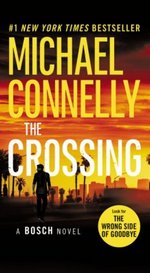
The Crossing by Michael Connelly

The CrossingThe Crossing

by Michael Connelly
Series: Harry Bosch, #18

Mass Market Paperback, 384 pg.
Vision, 2016

Read: December 23 – 25, 2017


Harry Bosch has been forced into retirement, but he hasn’t lost sense of his mission — to find killers and make sure they are brought to justice. But he’s trying to fill his day with rebuilding and restoring an old Harley-Davidson. Which basically means that his half-brother, Mickey Haller, doesn’t have much work to do when he tries to convince Bosch to do some investigative work for his defense of an innocent man.

There is one huge hurdle — Bosch feels it’s a betrayal of everything he spent his career doing. Haller assures him that anything that hurts his case that they find they’ll turn over to the prosecution, which helps. But what really gets Bosch on board is his mission — if Haller is correct and his client is innocent, that means the guilty are going free and that just doesn’t sit well with him. So after meeting with client and reading through the file, Bosch jumps to the other side, something he knows he’ll never be able to live down, and that will burn some bridges with his former colleagues.

Bosch has to learn to work without the badge — how to access people, places and information (and parking!) without the LAPD standing behind him. But the essence is still the same, follow the evidence, make sure there are no loose ends, and adapt quickly — but now there’s less bureaucracy, and less of a need to justify following a hunch.

I loved seeing Bosch fighting his instincts to open up to the police, to want to hand things over to them whenever he can, rather than to keep information for Haller to use at trial. Bosch just can’t think of defending someone, his focus is all offense. I had a little trouble believing how little communication there was between the two during Bosch’s work — and, really, I wanted to see more of Haller — but I think a lot of that had to do with Bosch’s guilt over working for the accused and his different perspective about what to do with his suspicions about someone else.

There’s some great stuff with Maddie — Bosch is trying so hard to be a good father, but just doesn’t understand everything his daughter’s going through on the verge of high school graduation. He knows exactly how to get a witness (however reluctant) or a suspect to talk, he understands just what makes them tick, but his daughter is so frequently a mystery to him. I know some didn’t like Maddie’s addition to the series, but I love the interaction between the two.

At this point, I don’t need to talk about Connelly’s skill — that’s more than evident to anyone who’s read more than 20 pages of one of his 30-ish books. What we have here is the latest way he’s found to keep Bosch fresh, to keep the series from repeating itself. And it works so well — crisp writing, perfectly paced, not a word wasted, and a resolution that’ll satisfy fans of Bosch and Haller. I’ve been kicking myself for not getting to The Crossing when it was first released, and I’m more than happy I’ve found the time to read it — it’s so good to spend time with Bosch again. This will work for readers new or old — as long as they’re looking for a strong detective story.

—–

4 Stars

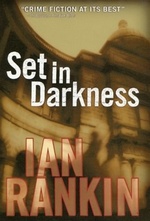
Set in Darkness by Ian Rankin

Set in DarknessSet in Darkness

by Ian Rankin
Series: John Rebus, #11

Hardcover, 414 pg.
Minotaur Books, 2000

Read: December 8 – 12, 2017


This has all the elements of a good Rebus novel — and then some.

We’ve got a murder that took place so long ago that there are almost no living witnesses or suspects, a very contemporary murder, Rebus in political trouble, Rebus being self-destructive, and a couple of cases that have nothing whatsoever to do with the murders — oh, and Big Ger Cafferty shows up to do something horrible (and something helpful).

Farmer John is near retirement and comes up with an assignment to keep Rebus out of his hair — he’s part of a task force overseeing security on the construction for the impending Parliament. This construction uncovers a murder victim and Rebus and the rest of the task force begin investigating. They can barely get started when another corpse shows up. This one is very fresh, and very connected to a prominent family — politically and culturally. I’m not going to get into this much more than that — there’s a lot of good stuff in these cases, most of which we’ve seen variations of before. This doesn’t make it bad, it’s very Rebus-y material, told the way we’ve come to expect.

The part of the book that fascinated me were the crimes that had little to do with the murders. Siobhan Clarke starts off the book doing some work on a sexual assault case that isn’t really hers, and then witnesses a suicide of a homeless man. This homeless man turns out to have plenty of money in the bank and a history that cannot account for that. Clarke threatens at times to take over the book with her investigations. Not just from her investigation, but the way that one uniformed officer describes her as “one of Rebus'” and the introspection, speculation and reaction to that observation causes in Clarke’s life and work. (Incidentally, Clarke taking over the novel would be fine with me)

One of the storylines is perfect — there’s almost no interaction with any police characters, and resolves largely off-screen. Basically the way that most storylines actually resolve in the world. There are payoffs in the novel as a whole, but not in the way you’d expect.

Really well-constructed with almost no dull moments, puzzles that you can’t suss out at first glance, and a whole lot of great characters. There’s not a lot for the courts to deal with at the end of this book, but that doesn’t mean that there’s no justice found for any victims.This isn’t the best Rebus novel I’ve read, but it’s really, really good.

—–

4 Stars

2017 Library Love Challenge

Snobbity Snowman by Maria Bardyukova & Quiet Riley, Jr.

Snobbity SnowmanSnobbity Snowman

by Maria Bardyukova, Quiet Riley, Jr.
Kindle Edition, 34 pg.
2017

Read: December 20, 2017


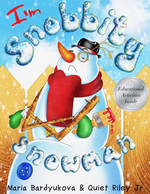
That cover tells you almost everything you need to know. Great cover.

Snobbity is not your typical Snowman — he’s got himself an attitude (although that might be more about what he’s made from, not anything wrong with him) and shortly after we meet him, things get rough for him. But there’s a lesson to be learned and as he does, things pick up for Snobbity. It’s pretty straightforward, with a nice twist toward the end.

One thing that ran through my head while reading this: this book would be so much fun to read to a kid. It starts the way pretty much every snowman story has to (the construction), then the language gets fun, then the story turns to sentimental/the lesson. Up and down and back up again, with a good movement forward. It’s something for for the grown up reader to sink their teeth into and entertain the audience.

The art is dynamic, it moves — right through the story, and helping the reader along — it’s goofy while heartfelt. Almost as much fun as the text. It’s just what the pre-reader/early reader will respond to.

This is a lot of fun with a good amount of hope — highly recommended.

Disclaimer: I received this book in exchange for my honest opinions — I think the authors, this was fun.

—–

4 Stars

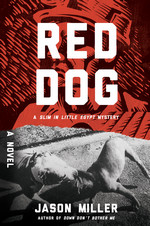
Red Dog by Jason Miller

Red DogRed Dog

by Jason Miller
Series: Slim in Little Egypt, #2

Paperback, 316 pg.
Harper Paperbacks, 2016

Read: November 25 – 27, 2017

“And for sixty-flve dollars, too.”

Anci rolled her eyes. “Oh, I know. Usually, you get kicked in the head for free. Why not try it for money this time? Besides, this is your chance to do a good deed, pile up some karma.”

“You can’t eat karma, darlin’..”

“No, but it can eat you.”

I really can’t decide what part of these books I like best — Slim’s dogged determinism when it comes to finishing what he’s started, Jeep’s almost-superhuman capabilities (he’s Hawk + Joe Pike, with a better romantic life while not as tied to reality), or Anci. Okay, that’s a lie. It’s Anci — she’s smart, she’s insightful, she’s sweet, she’s got an attitude that just won’t quit.

In this book, Anci takes time out from critiquing The Hound of the Baskervilles to convince Slim to take a case for a couple of odd strangers that show up on their doorstep. They want him to find their dog for him. They’re pretty sure where the dog is, but they don’t think they could retrieve her.

Slim takes the case, and within hours he’s cut off part of a man’s body, had several threats made against him, and discovers a dead body. Oh, he finds the dog, too. But that doesn’t matter, because he’s arrested before he can return the dog.

Things go haywire from there — Slim’s still bound and determined to find the dog while he clears his name (or vice versa). The hunt for the dog and the real killer takes him to all sorts of places he probably shouldn’t go — many of which make the coal mining he left behind seem like a safe alternative to his current job. I hate to say this, but it’s in the publisher’s description (and on the cover image), but one of the places that Slim shouldn’t go is to dog fights. His reaction to them is visceral, and you almost feel it as much as he did as you read.

The characterizations are as deep and wonderful as before (including a couple of characters that’d make Flannery O’Connor balk), the evil that Slim confronts is very dark and twisted, and Slim’s voice is deadly serious one minute, and seamlessly laugh-out-loud funny without giving the reader a sense of whiplash. There’s some violence — brutal stuff — yet it’s Slim’s brain that does most of the work. Basically, it’s the whole package.

The Bonus Story About Those Danged Chickens, “Hardboiled Eggs,” was a hoot — not strong enough to work as a part of the novel, but it tied in well (and best read after the book) and was nice example of Anci and Slim working together.

I hope there’s more to come in this series, because I just can’t get enough. Miller’s style is great — the prose is smooth and fluid, so much so that you don’t realize just how dark and twisted the events are until it’s too late because you’re having too much fun reading. Take some time to visit Little Egypt and you’ll see what I mean.

—–

4 Stars
2017 Library Love Challenge

Bedlam by M. T. Miller

BedlamBedlam

by M. T. Miller
Series: The Nameless Chronicle, #4

eARC, 210 pg.
2017

Read: November 27 – 28, 2017


I was excited to open my email and see a new book from M. T. Miller waiting for me — but I’m not ready to say goodbye to this series. I do think this was the right point to wrap things up and exit, I just liked life better when I wondered when there’d be a new book about Nameless.

How to talk about this . . . this is really hard without just spilling the beans about everything.

We met Nameless as he seemingly climbed out of his own grave into a dystopian future of the Western US, not knowing anything about himself (inluding, obviously his name), but with a particular set of skills that enabled him to kill — which also seemed restorative. But he didn’t seem to be a monster. After three books of struggle to survive and find some measure of success, Nameless finally succeeded. He accomplished everything he set out to do, and then found a better way to look at life, an equanimity. Life still had challenges, but he has a new way to deal with them, a new confidence.

Then something appears, ready to take it all away — and how will Nameless react? Very differently than he would’ve before (while consistent with the guy we’ve come to know).

Not only that — but a lot of the mysteries surrounding Nameless are resolved. Questions I stopped hoping/expecting to get answers to were answered as we say goodbye to him and the world that Miller has created for us.

There’s a good degree of character development here for both Nameless and Rush — and a believable lack thereof for many others. Characters you liked in earlier books, you’ll still like. Characters that you were ambiguous toward earlier, you’ll probably still be ambiguous about.

About halfway through the book, Miller changes the rules — he does something gutsy and incredibly hard to discuss without ruining. Just when you get to the point where you pretty much accept what he’s doing, he changes it again. Up to this point, this was my favorite of the books — I really got into things. I liked it less with each new tack. Not that I didn’t appreciate the ambition, or Miller’s skill — it just changed Nameless’ story from Story Type X to Story Type Z. And I’ve never been a fan of Z, I don’t hate Z, but it’s just not my cup of tea. The more I think about it, I can see where this is justified by everything that’s happened throughout the series, and I can even defend it. I just don’t like it.

I guess you can compare it to what happened at the end of Lost or Moore’s Battlestar (both of which I liked, I should mention) or — the writers of those made a choice and executed it. I appreciate Miller’s choice and execution, but it’s just not something that’s every going to appeal to me. Basically this series consists of 1 novella and 3.5 novels that I enjoyed with .5 novels that was well done, but not my taste.

Like I said, I do think that this was the time to leave the series, I think Miller had done everything he could with Nameless, Rush and the rest. I wasn’t crazy about how he landed the plane, but I appreciated it for what it was. I can easily see others thinking I’m wrong about Z, and really digging the parts of the book that leave me cold — so please don’t take anything I said as a discouragement from reading either this book, or the series. I’m really looking forward to whatever he ends up doing next, because I do think I can see Miller’s growth over these 5 novels/novellas. It was a heckuva a ride, and I’m glad I came along for the ride. I heartily recommend it.

Disclaimer: I was provided a copy of this book by the author in exchange for this post and my honest opinion. Thanks, Mr. Miller! This didn’t impact my opinion of the book in any discernible way.

—–

4 Stars

Pub Day Repost: The Squirrel on the Train by Kevin Hearne

The Squirrel on the TrainThe Squirrel on the Train

by Kevin Hearne
Series: Iron Druid Chronicles/Oberon’s Meaty Mysteries, #2eARC, 120 pg.
Subterranean Press, 2017
Read: November 2, 2017

Can the magic of The Purloined Poodle be recaptured? Yes — maybe even topped. For many, that should be all I need to write. If that’s the case, you’re fine — go ahead and close this, no need to finish this.

If you’re still here, I’ll write a little more — While on a trip to Portland to go sight-seeing, er, sight-smelling, Oberon, Orlaith and Starbuck get away from Atticus (er, I mean, Connor Molloy) while chasing after a suspicious-looking squirrel. That’s a tautology, I realize, if you ask the hounds, but this was a really sketchy-looking squirrel. Anyway, this brought the group into the path of Detective Ibarra. She happens to be at the train station investigating the odd murder of a man who looks just like Atticus.

Naturally, that gets him interested and investigating things as best as he can. Thanks in no small part to the noses of the hounds, Atticus and an old friend are able to uncover what’s going on to help Atticus’ new friend make an arrest.

It’s a whole story in Oberon’s voice, I don’t know what else I can say about the writing/voice/feel of the book. That says pretty much everything. From Oberon’s opening comparison of the diabolical natures of Squirrels vs. Clowns to Orlaith’s judgment that “death by physics” “sounds like justice” to the harrowing adventure at the end of the novella, this is a fine adventure for “the Hounds of the Willamette and their pet Druid!”

There’s a nice tie-in to some of the darker developments in the Iron Druid Chronicles — that won’t matter at all if you haven’t read that far, or if you can’t remember the connection. This was a good sequel that called back to the previous book, and told the same kind of story in a similar way — but didn’t just repeat things. Just like a sequel’s supposed to be, for another tautology. I smiled pretty much the whole time I read it (as far as I could tell, it’s not like I filmed myself). I don’t know if we get a third in this series given the end of the IDC next year. If we do, I’ll be happy — if not, this is a great duology.

Disclaimer: I received this eARC from Subterranean Press via NetGalley in exchange for this post — thanks to both for this.

—–

4 Stars

Page 54 of 88

Powered by WordPress & Theme by Anders Norén