Tag: 4 Stars Page 53 of 88

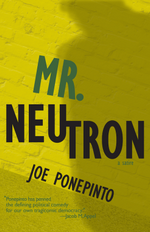
Pub Day Post: Mr. Neutron by Joe Ponepinto

Mr. NeutronMr. Neutron

by Joe Ponepinto

eARC, 300 pg.
7.13 Books, 2018

Read: March 1 – 3, 2018

It couldn’t be real. Just couldn’t. Besides, if someone brought a cadaver to life today, it would be under controlled circumstances—in a lab at some university, with the media and religious protesters in attendance. It would go viral on the web. He would have heard about it.

Still, Gray couldn’t dismiss the possibility. His timid psyche often cleaved to the supernatural, if only to explain the failures in his life. And dead men had been elected before, although they typically stayed in their graves and didn’t campaign.

Before I get into this — yes, this is a political satire. But it’s pretty apolitical. There are almost no political points made, few actual policies advanced or discussed, and certainly no mainstream parties are either pilloried or lauded. The satire is of this strange thing called American politics — the campaigns, the process, the press, the people involved. Conservatives, liberals, statists, libertarians, and everyone in between can read this safely without worrying about getting much tweaked by the book.

In the opening paragraphs we meet Gray (Davenport, we’re later told) and Reason Wilder. Gray is running a mayoral campaign and one of his candidate’s opponents is Reason. Right away, you can tell this book isn’t going for subtlety. We later meet Patsy Flatley (the advisor to Gray’s candidate), The Reverend Inchoate Hand, Breeze Wellington, and Randy (of various last names) — all of these names tell you a good deal about these characters (and I could’ve listed other examples). Ponepinto lays his cards on the table right away when it comes to his characters and the type of people they are.

Reason isn’t the best funded, most articulate, or most polished candidate — but there’s some impossibly strong magnetism about him and his simple promise that “Together we will do great things for this city,” without ever giving a specific idea how they’ll do that, or what a great thing might be. Virtually everyone who encounters Reason falls under his spell but Gray. Not only does Gray maintain some sort of skepticism about Reason, he notices a disturbing odor about him, the way his body doesn’t seem to work together organically, and frankly, doesn’t seem to belong together. It’s almost as if someone stitched him together from spare parts.

Once Gray starts speculating down that path, he becomes convinced that’s the case — and sets out to prove it. Along the way, this effort causes problems in his marriage (well, it brings problems in his marriage to a head); brings some powerful people into his life; and puts him in league with the strangest journalists you’ve probably encountered. This kicks off some overdue self-examination to go along with his hunt for information about Reason.

All the while, the campaign goes on: Gray’s duller than dull candidate tries to build a voter base, the well-funded front-runner has to work to remain relevant, and Reason’s cult grows in a way no one can believe (or deny). We see a debate, a fundraiser or two, press conferences, polls, and money — and the ways all of those can alter a campaign, especially the money.

One difficulty I had while reading this book was remembering it was a satire — Ponepinto’s writing frequently comes across as highly-crafted and nuanced, and then he’ll have someone named Randy do something filled with innuendo or something equally obvious or ridiculous and I’d have to remind myself I was reading a book about a Frankenstein’s Monster-like being running for mayor, and perhaps I shouldn’t take it too seriously. I do think that’s a strength of the book — I’d forget I was reading nonsense about impossible tings because the narration was just so serious. It is a funny book, at times, but not told in a way that underscores it, which somehow works.

I didn’t love the ending, honestly. But I absolutely get why Ponepinto did it — and good satires rarely have satisfactory endings anyway. This was better than a lot of them — for example, I’ve read almost all of Christopher Buckley’s novels and there’s only one of them that had an ending I can tolerate. So, “didn’t love” is pretty good. I thought the last couple of paragraphs were far too preachy, and could’ve been cut without really harming the novel and/or its message.

But before all that, we’ve got a very strange ride. You’re not going to see a lot like this — a little supernatural/monster, some pointed commentary on politics, a dash of romance, a nice friendship, and an odd collection of characters bringing all this to you. You should give it a shot. I have no idea what kind of follow-up Ponepinto might have in store, but I’m very curious.

Disclaimer: I received this eARC in exchange for this post and my honest opinions.

—–

4 Stars

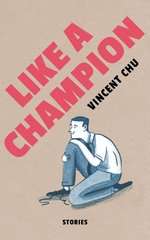
Pub Day Repost: Like a Champion by Vincent Chu

Like a ChampionLike a Champion

by Vincent Chu
eARC, 238 pg.
7.13 Books, 2018
Read: January 31 – February 2, 2018

The man across from Henriette read a book. It was a very big book, a Hunger Games or Game of Thrones kind, with a sword and flame and chess piece on the cover. Dean had never read such a big book. The man was on the very last page and Dean felt guilty suddenly for spying on him during this personal moment, but he did not stop. It was not often, he reasoned, that he would get the opportunity to observe another person at the exact moment they finished a book, a big one at that. But, after the last page, the man, without so much as a satisfied nod or pensive stare, shut the thing and immediately put in his iPhone buds. This disappointed Dean.

That’s just one of any number of paragraphs throughout these stories that don’t advance the plot, reveal or describe much in the way of character — but man, the little bit of flavor they add to the story makes it worth it. And don’t you just want to shake the man who finished the book by the shoulders and ask what is wrong with him? The guy appears for one paragraph, and I have a strong reaction to him. With short stories, you don’t typically get to do that kind of thing the way you can with novels, because every word has to count — and typically, that’s what Vincent Chu does, but every now and then, he stretches a bit. Typically, like the best short fiction writers, Chu gets his bang for his buck when it comes to his words — tight, economical prose that strikes just the right tone each time.

But I’m getting ahead of myself. Like a Champion is a collection of eighteen short stories featuring all sorts of people — underdogs in one sense or another — getting a taste of victory. Some of this victory is very short-lived, some is quite Pyrrhic, but it’s there. The stories are varied in tone, in voice, in setting, in types of character — and that’s such a strength. Some will make you smile, some laugh, some are sad, some are tragic, some are somber, all are incredibly human.

There’s a lot I could talk about — if I could, I’d spend a few hundred words on “Squirrels”, the fourth story in the collection. I don’t know why, but that one sealed me appreciation for this book, and it stands out as a high point for me. There’s just something about it that worked for me, the same kind of thing that lead me to write three papers for three separate courses in college about one Updike short story. There were a couple of other stories that I could point to that were as as outstanding, but I’ll stick with “Squirrels” — a story about one man’s childhood basketball triumph in the midst of defeat — because I enjoyed it more.

With one exception (at least one that I noticed, I might have missed others), these are independent of each other. The two stories that are connected are so different in tone and subject matter that it takes you by surprise when you notice the connection — but it really works (and the connection is of a lesser importance, that not much changes if you don’t make the connection). It was a nice little touch, I would’ve liked a part three, however.

I’m not crazy about Chu’s depiction of older characters. Maybe if I only got one of the stories in this collection featuring an older character — I wouldn’t have commented. Or if I took a few more days to read this than I did, it wouldn’t have stood out to me as much, but when you get the same note or two being played so often with elderly characters it sticks out.

I don’t usually spend much time talking about the publisher of the books I post about, but when it comes to some indie presses, I should. A couple of months ago, I know I posted a link to a profile of 7.13 Books in a Saturday Miscellany, and before that I talked about another short story collection they put out. And come to think of it, I have one more book from them on my schedule in the coming weeks. If Like a Champion is indicative of what they are publishing (and it seems to be), there’s something in the water there, folks, keep an eye out for their books.

Like with every collection — be it full of short stories, essays, poems — there are some in this collection that don’t work for me — two because I didn’t get what he was going for; a couple that I’m pretty sure I got what he was going for, and just didn’t care for it. And I’m very sure that many people will get those I didn’t and will like the ones I didn’t care for — and even dislike the stories that I enjoyed, and maybe even someone’s nuts enough to not care for the ones that filled me with joy. There’s enough variety in these to appeal to all sorts of tastes — and that’s a compliment, Chu’s nothing if not versatile. But on the whole, this is a great collection of short stories, full of compassion, humanity, and talent. You’d do well to grab this one.

Note: I received a copy of this eARC in exchange for my honest opinions as expressed above.

—–

4 Stars

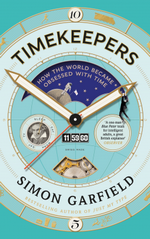
Timekeepers by Simon Garfield

TimekeepersTimekeepers: How the World Became Obsessed With Time

by Simon Garfield

eARC, 368 pg.
Canongate Books, 2018

Read: February 16 – 23, 2018

Time, once passive, is now aggressive. It dominates our lives in ways that the earliest clockmakers would have surely found unbearable. We believe that time is running away from us. Technology is making everything faster, and because we know that things will become faster in the future, it follows that nothing is fast enough now. . . But the strangest thing of all is this: if they were able, the earliest clockmakers would tell us that the pendulum swings at the same rate as it always has, and the calendars have been fixed for hundreds of years. We have brought this cauldron of rush upon ourselves. Time seems faster because we have made it so.

I remember a few books pretty distinctly from my childhood — particularly those I read that were my first forays into “grown up” books — Ian Fleming, Erle Stanley Gardner, Mario Puzo, Richard Hooker, and so on. The first non-fiction book that I remember trying along those lines was Tom Wolfe’s The Right Stuff, which may have ruined me for a lot of the non-fiction that would follow (we can talk about my discernment later). It was funny, it taught me a lot, it made me think of the early US Space Program a little differently than what I’d been taught, and it was told in Tom Wolfe’s voice (which I love to this day). But it cemented the way I look at non-fiction books. Today, when it comes to non-fiction reads, there are a number of ways I tend to judge them (rightly or wrongly) — first (always first): Is it well-written? I’m not saying it has to sound like Wolfe, but does the writer know what he’s doing? Even if I end up learning a lot from a book, if it’s not well-written, I’m not going to like it. Secondly, is it informative? Do I actually learn something, or is it a re-hash of things that any number of books have said (do we really need that many biographies of Abraham Lincoln?)? Thirdly, does it make me think of something in a new way, or challenge my preconceptions (does this examination of Don DeLillo make me re-think White Noise? (I know of no book like this, but would love to read one)). Fourth, this is not essential — but is the book entertaining? It gets bonus points for that.

Simon Garfield’s Timekeepers, clears the bar for every one of these standards. Since he does it more succinctly than I could, I’ll let Garfield sum up the book:

This is a book about our obsession with time and our desire to beat it. . . The book has but two simple intentions: to tell some illuminating stories, and to ask whether we have all gone completely nuts.

He begins with telling the well-known (at least in brush strokes) story about the invention of time zones — but man, did I not understand really how this came about. Then he covers the experiments with the calendar, the clock, etc. tried following the French Revolution (and how some of those experiments live on). We get a couple of chapters on time and the cinema. Music (Beethoven, The Beatles, recording and more), photography, filibustering, the work day, and other sundry topics are covered as well. You can’t forget watch-making, watch-marketing, watch-design, watch-capabilities, watch-symbolism, and a few other watch-related notions that I can’t think of at the moment.

Let’s get to the writing itself. Garfield has a way with words — the number of sentences that I highlighted because of his use of the language is pretty high. If I quoted every one that I wanted to, this post would quickly move into the tl;dr range — and into the copyright infringement range not long after that. It wasn’t just his style, the book simply displays some well-crafted writing. It’s not perfect — but it’s good. I’ll freely admit that not every topic he covered really interested me, but his writing kept me reading — and I was rewarded pretty frequently. Even when my interest waned, his writing would stand out here and there so I could appreciate the how he said it, even if the what didn’t interest me. Rarely, the topics that did grab me would have a paragraph or so that didn’t rise to that level, however. I’m not going to go into specifics on this point, though — I didn’t bother to note those, and I bet that comes down to taste and others won’t think of those passages the same way, and they were brief moments, so they didn’t detract from the whole.

Did I learn something from the book? Much more than I expected to. The chapter on the French experiments alone probably taught me enough to justify the whole book. I didn’t/couldn’t stick with the details of watch-making (I have a hard time visualizing that kind of detail), but even that was fascinating and informative on the surface. Most topics broadened my understanding and taught me something. Also, the sheer amount of trivia that I picked up was great (the amount of time spent recording the first Beatles LP, why pop music tends to be about 3 minutes long, etc., etc.)

But it’s not just about the information gained — it’s what that information means (both in terms of the book’s argument(s), but in how the reader considers that information in the light of what they already know and personal experience. Every time that Garfield moves from the “here’s what happened” or the “here’s how this works” bits to the “because this happened” or “because this works” bits, it was something I don’t know that I’d spent too much time thinking about previously. Sometimes those took the form of quick “huh,” moments — but occasionally he brushed against profundity, which I really appreciated.

And yes, Garfield picked up bonus points for entertainment. After the first paragraph in Chapter 1, my notes read “Between the Introduction and this paragraph, I’ve laughed four times. Am going to dig this book.” Later on, I wrote that I didn’t care about the content, really, I was having too much fun reading it to worry about it being right.

There’s room for improvement, I think. If there’s a design to the organization, I’m not sure I see it. He appears to hopscotch around between his topics. I’m honestly not sure how he could have arranged them to flow from one to another, but I do believe it could’ve been done. I think he could’ve lessened the detail occasionally (and increased it in a spot or two). But generally, this is me being nit-picky for the sake of not being a push over. There’s really almost nothing to complain about.

Garfield scores across the board with this one, however. I do think the survey hops around a bit too much without obvious connections between the ideas so that the cumulative punch is less than it could be. In his concluding thoughts, Garfield raises some issues and asks some pointed questions that could be more forceful, more pointed if the preceding chapters had been more clearly linked. Nevertheless, the points were made and I, like most readers (I suspect), had to give some serious thought about my relationship to time and what I actually value. I’ll have to continue this thinking for a while, actually — the fact that I have to — and want to — is because of this book forcing me to consider things I’ve taken for granted about time and how my life is governed. I suspect I am not alone in this.

Thought-provoking, interesting, educating, well-written and generally entertaining — Timekeepers really covers all the bases and covers them well. You’d do well to check it out.

Disclaimer: I received this eARC from the swell folks at Canongate Books via NetGalley in exchange for this post — thanks to both for this. I’m very sorry this posted after the release date, my notes had that in March.

—–

4 Stars

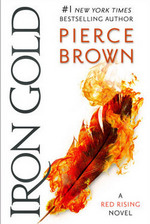
Iron Gold by Pierce Brown

Iron GoldIron Gold

by Pierce Brown
Series: Red Rising, #4

Hardcover, 600 pg.
Del Rey Books, 2018

Read: February 5 – 13, 2018

. . . We didn’t prepare for this.”

“How do you prepare for a kick in the balls?” I say. “You don’t. You suck it up.”

“That supposed to inspire me?. . .

Darrow’s words about the mission he and the Howlers are ill-prepared for also apply to readers of Pierce Brown books. At some point, you have to suck it up and keep moving. I typically considered Brown’s writing to be full of gut-punches, but Darrow’s anatomical metaphor applies, too. Yeah, we love the books, and Brown makes sure the experience is almost as harrowing for the readers as it is for the characters.

After President Snow dies, after Tris finishes with the Factions, after The Matrix reboots, after The Emperor Dies and the teddy bears sing, “Yub nub, eee chop yub nub,” what happens? (well, thanks to J. J. Abrams, we have an idea about that last one) Iron Gold lets us see what happens 10 years after the events of Morning Star.

The Republic is still at war, trying to finish off the remnants of the old order — the Senate isn’t rubber stamping Darrow’s requests and that is proving problematic. The people are tired of the bloodshed and want the focus to move to strengthening the fledgling government. Driving Darrow to a last-ditch and dramatic gesture. The lives of the Reds on Mars is technically better, they’re technically free, but things aren’t much better — in fact, they may be less safe. Criminals on Lune are doing well, but those who served during the War are still trying to deal with the trauma they survived. Meanwhile, on the far end of the solar system, some exiles from Lune are looking to regain some prominence. Brown jumps around from story to story, between various perspectives, surveying the wreckage of the Society and the birth of the Republic.

Each character is as well-drawn, and fully developed, as sympathetic as those who came before in the series — even those who are critical of Darrow/the Republic (if not downright opposed to it). This is a more complicated world than the one we last saw. I’m going to keep things pretty vague and not go further than this, because half of the joy of this book is in the exploration.

Jumping from perspective to perspective, between storylines that have almost nothing to do with each other make for a lesser novel than the previous books in the series. When I was following a character — their story was gripping, I was interested and invested — but the instant the perspective shifted? It was all about the new story/perspective and I pretty much forgot about the previous. Darrow’s story was the exception, but I attribute that to my long-standing connection to Darrow, Sevro and the rest. I loved the conclusion of Darrow’s story — because of what it means for Darrow and the rest, and what it means for the next book in the series (saga?).

I’m glad we got this look at the aftermath of the Rising — if we were going to get anything at all — it seems right for things to be this way. I wasn’t as invested in this novel as I was in the previous ones, but I’m just as invested in this world. I hope the next one will grab me better, but until then I wait on tenterhooks and with hope that Darrow and the rest will deliver the goods. This is not the place to jump on the series — go back toe Red Rising and start from the beginning, it’s worth it. For those who’ve been with man from his harrowing beginning through his even more harrowing and devastating triumphs, this is a must read.

—–

4 Stars

2018 Library Love Challenge

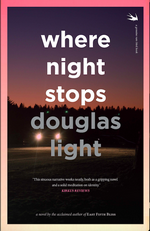
Pub Day Repost: Where Night Stops by Douglas Light

Where Night StopsWhere Night Stops

by Douglas Light
eARC, 252 pg.
Rare Bird/Vireo, 2018
Read: January 12 – 13, 2018

She smells of lemons and warm cinnamon and isn’t very pretty. Sliding onto the barstool next to me, she says, “Can I sit here?”

The bartender, the woman, and me — we’re the only people in the bar. She can sit anywhere. It’s not just a seat she wants.

I study her a moment then catch the bartender’s eye, the order is placed without a word. Whatever the woman wants. Alcohol, like long marriages, has a language of its own, one not composed of speech.

Now, that’s how you start a novel.

So, our narrator is orphaned the night after his high school graduation — however odd it may feel to call someone on the cusp of adulthood an orphan, he is one (and the back of the book says so). Suddenly his college dreams, plans for the future are gone, as is his past (other than memories). He finds his way from Iowa to Seattle and takes up residence in a homeless shelter. The closest thing he has to a friend there sets him up with a way to make some money — more than he’d been able to scrape together from an under-the-table gig at a gas station.

It’s obviously not above-board, but it’s good money. What else is a kid with no ties to society, no dreams, no means and nothing better to do? We bounce back and forth between the opening scene (and what follows) in the bar and his burgeoning criminal career. He bounces all of the globe playing small roles in what are likely significant crimes. The resulting story is a combination of tragedy, comedy of errors and Bildungsroman. All of which leads up to a concluding scene that is at once unexpected and the only appropriate thing that could’ve happened.

As a reader. you’re never impressed with our narrator’s choices. You may understand them, but it’s hard to be behind them. Especially because after a certain point, our young man makes a giant mistake. The reader knows this — and has to hope that whatever he does, he figures out his mistake or gets out of this life soon.

The plot’s decent and will carry you along well enough. But it’s not why you will stick with this book (at least not primarily), it’s Light’s writing. In the middle of all this, there are sentences like, “Walking the empty night street, my kidneys rattled with anxiety.” I’m pretty sure this is biologically nonsensical (I haven’t bothered to check with my son’s nephrologist, but I was tempted to), but that doesn’t stop it from being incredibly effective — you know precisely what Light’s going for there, and in the moment, your kidneys felts a little weird. There’s something to his writing that made me stop every so often to re-read a sentence or paragraph or passage — not because I missed something or didn’t understand what was happening, but because Light captured a moment, an idea, or phrase in such an engaging way that I didn’t want to move on.

I’m not sure if this is a very literary thriller, or a literary novel playing with thriller tropes. Nor am I sure that I care, but this is the kind of book that can appeal to both target audiences. It’s a good example of either genre, and a better example of why the distinctions are specious. There’s an interesting crime story here; a character study; a look at what happens to someone who has no connection to his future, society, or his past — oh, and it’s a good read, too.

Disclaimer: I received this ARC in exchange for my honest opinion about the novel, I appreciate the opportunity, but it didn’t influence the above.

—–

4 Stars

Like a Champion by Vincent Chu

Like a ChampionLike a Champion

by Vincent Chu

eARC, 238 pg.
7.13 Books, 2018

Read: January 31 – February 2, 2018

The man across from Henriette read a book. It was a very big book, a Hunger Games or Game of Thrones kind, with a sword and flame and chess piece on the cover. Dean had never read such a big book. The man was on the very last page and Dean felt guilty suddenly for spying on him during this personal moment, but he did not stop. It was not often, he reasoned, that he would get the opportunity to observe another person at the exact moment they finished a book, a big one at that. But, after the last page, the man, without so much as a satisfied nod or pensive stare, shut the thing and immediately put in his iPhone buds. This disappointed Dean.

That’s just one of any number of paragraphs throughout these stories that don’t advance the plot, reveal or describe much in the way of character — but man, the little bit of flavor they add to the story makes it worth it. And don’t you just want to shake the man who finished the book by the shoulders and ask what is wrong with him? The guy appears for one paragraph, and I have a strong reaction to him. With short stories, you don’t typically get to do that kind of thing the way you can with novels, because every word has to count — and typically, that’s what Vincent Chu does, but every now and then, he stretches a bit. Typically, like the best short fiction writers, Chu gets his bang for his buck when it comes to his words — tight, economical prose that strikes just the right tone each time.

But I’m getting ahead of myself. Like a Champion is a collection of eighteen short stories featuring all sorts of people — underdogs in one sense or another — getting a taste of victory. Some of this victory is very short-lived, some is quite Pyrrhic, but it’s there. The stories are varied in tone, in voice, in setting, in types of character — and that’s such a strength. Some will make you smile, some laugh, some are sad, some are tragic, some are somber, all are incredibly human.

There’s a lot I could talk about — if I could, I’d spend a few hundred words on “Squirrels”, the fourth story in the collection. I don’t know why, but that one sealed me appreciation for this book, and it stands out as a high point for me. There’s just something about it that worked for me, the same kind of thing that lead me to write three papers for three separate courses in college about one Updike short story. There were a couple of other stories that I could point to that were as as outstanding, but I’ll stick with “Squirrels” — a story about one man’s childhood basketball triumph in the midst of defeat — because I enjoyed it more.

With one exception (at least one that I noticed, I might have missed others), these are independent of each other. The two stories that are connected are so different in tone and subject matter that it takes you by surprise when you notice the connection — but it really works (and the connection is of a lesser importance, that not much changes if you don’t make the connection). It was a nice little touch, I would’ve liked a part three, however.

I’m not crazy about Chu’s depiction of older characters. Maybe if I only got one of the stories in this collection featuring an older character — I wouldn’t have commented. Or if I took a few more days to read this than I did, it wouldn’t have stood out to me as much, but when you get the same note or two being played so often with elderly characters it sticks out.

I don’t usually spend much time talking about the publisher of the books I post about, but when it comes to some indie presses, I should. A couple of months ago, I know I posted a link to a profile of 7.13 Books in a Saturday Miscellany, and before that I talked about another short story collection they put out. And come to think of it, I have one more book from them on my schedule in the coming weeks. If Like a Champion is indicative of what they are publishing (and it seems to be), there’s something in the water there, folks, keep an eye out for their books.

Like with every collection — be it full of short stories, essays, poems — there are some in this collection that don’t work for me — two because I didn’t get what he was going for; a couple that I’m pretty sure I got what he was going for, and just didn’t care for it. And I’m very sure that many people will get those I didn’t and will like the ones I didn’t care for — and even dislike the stories that I enjoyed, and maybe even someone’s nuts enough to not care for the ones that filled me with joy. There’s enough variety in these to appeal to all sorts of tastes — and that’s a compliment, Chu’s nothing if not versatile. But on the whole, this is a great collection of short stories, full of compassion, humanity, and talent. You’d do well to grab this one.

Note: I received a copy of this eARC in exchange for my honest opinions as expressed above.

—–

4 Stars

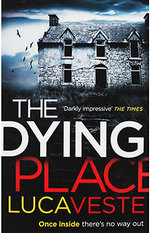
The Dying Place by Luca Veste

Good grief! It’s taken me almost a year to read the second in this series? I’ve got to get this TBR under control.

The Dying PlaceThe Dying Place

by Luca Veste
Series: Murphy and Rossi, #2

Paperback, 383 pg.
Avon, 2014

Read: January 24 – 27, 2018

You can’t choose the last words you ever say to your child — and that’s what they are, no matter what age — as they leave the house. Off to school, off out with friends. Off to work, or on a date. You don’t think of them as last words. Just another part of the ongoing conversation, the never-ending role as a parent.

But at some point, they will be the last words you say to your child, and for too many parents in these pages, those words come a lot sooner than anyone expected or wanted. Which is just part of what makes this novel so effective and devastating.

So often (arguably, too often) in books about mass killers, the killers are depicted as geniuses, psychopaths, sociopaths, or a combination of thereof. The villains of this book (without giving too much away, I think) are regular people — people you pass by every day, see in stores, say hi to walking down the hall at work, or maybe even chat with a bit by the coffee pot. They’re hard-working, responsible adults — vote, pay taxes, help their neighbors, maybe raised a few kids. But life has dealt them one too many band hands and they make some horrible choices in response. And then things spiral out of control.

The victims aren’t the easiest to sympathize with — at least on the surface — they’re young men, technically adults, but kids really. Petty criminals — felons-in-training, on the whole — loiterers, drug users, public drunks, vandals. Not the kind of criminal you stay awake at night worried about, but you certainly don’t want your kids turning out like them or your daughters dating them. On the whole, men who could profit from a good mentor, like the folks in the previous paragraph.

That’s more spoiler-y than I tend to go around here, but that’s just the first 50 pages. One of these ne’er-do-wells shows up dead on the steps of a church, bringing Murphy and Rossi into the story, investigating this murder and eventually understanding that there’s more going on. This particular murder victim has been missing for months, but given his frequent delinquency, no one other than his mother, took his disappearance as anything to be concerned about. The reader, by this time, knows that he’d been kidnapped by our fine, upstanding citizens for the purpose of (re)educating him and redirecting his life — up until it was ended, and he wasn’t the only one being (re)educated in this fashion. The question is, will Murphy and Rossi catch up to the reader’s information in time to stop them before another young man is killed?

Pretty much at this point, the reader can plot the rest of the book and do a pretty good job of it. What the reader won’t be able to do is pace it like Veste does — it seems like he breaks several Basic Thriller 101 rules on that front. More than once I muttered, “What, he’s doing that now? Already?” (and once or twice the opposite — “he finally got around to this?”). He may have broken pacing rules, but he did so in a way that worked. Which is really all that matters, right?

It’s the characterizations that bring this home — Murphy and Rossi dealing with their demons as well as the mystery surrounding the missing and then murdered victim; the kidnapped men/boys; as well as the kidnappers. He doesn’t dive too deeply into the various kidnapper’s frame-of-minds, just enough that we understand what they did and why — and how they reacted to the chain of events they set in motion. We get a little deeper when it comes to the victims — which allows us to empathize with them.

But Veste also makes us looks at what the people around these victims thought of them and their families (mostly their mothers) both before and after these boys became victims. It’s at this point that society at large fails. Veste doesn’t fall into the trap of trying to fix societal ills, but man, he makes you think long and hard about your attitudes about some people. The fact that he does that while telling a chilling crime story is all the better.

There’s more to be said about some of this, it’s a very ambitious work — I have many more notes about things I intended to talk about, but I think I’m going to stop here so the focus stays on the vital stuff. Veste tapped into something powerful here, and that overshadows a lot of the nuances I could talk about (and outweighs the few nits I want to pick). From the wrenching opening pages to the guy-punch of a conclusion, The Dying Place is a gripping police procedural featuring characters you can’t help but like and root for, even while the world around them comes apart at the seams.

—–

4 Stars

The Falls by Ian Rankin

The FallsThe Falls

by Ian Rankin
Series: John Rebus, #12

Hardcover, 395 pg.
Minotaur Books, 2001

Read: January 15 – 16, 2018

If anyone can do it, John, you can. I’ve always had confidence in your sheer pig-headedness and inability to listen to your senior officers.

After the last few novels which were characterized by several interlocking stories, The Falls centers on the disappearance of a young woman — Philippa Balfour. Flip is the daughter of an important banker, a student of sorts, and frequently the girlfriend of one of the least appealing young men you’ve met lately. She never showed up for a night of drinking with friends and her father’s influence got the police involved much more quickly than they would have otherwise. There are few that hold out much hope for a happy resolution to this case, but until a body shows up, that’s how they have to proceed.

Now, just because I said there’s only one case at the core of this book, that doesn’t mean it’s just one story. There’s the typical investigation, undertaken by a large number of detectives and under media scrutiny. Then there’s something that catches Rebus’ eye, which leads him on one path. Siobhan Clarke finds another loose strand to pull at, and uses much of her off-the-clock time following that. The two are aware of what the other is doing, but neither is all that interested in it. Readers, of course, know that one or both of them are going to make more progress than the rest of the Force and can just enjoy watching them.

That’s the strength of this book — Rebus finds some evidence that might tie this crime to others throughout Scotland over the past few decades. He clearly specializes in historical investigations, and it’s clearly a good idea for him to go down that path. Siobhan’s got a more tech-savvy take on it (and she doesn’t have all the skills necessary for that kind of work, but she’s able to stumble along with some help. Watching both of these two mavericks at work was such a blast (Siobhan once again is confronted with her colleagues pointing out her methods and focus approximating Rebus’). The actual solution to the mystery of Flip’s appearance was very satisfying and well-executed.

I spent a good deal of time missing Brian Holmes during the early pages — the DS that Siobhan is partnered up with just stressed how much isn’t Brian. And it goes downhill from there. Brian might not have been my favorite supporting character, but wow — he’s so much better than everyone else Siobhan has worked with (other than DI Rebus, of course). Maybe it helps that he was involved with that librarian, so he wasn’t trying to start something with her (minor spoiler, sorry).

The book starts with Watson’s retirement (not the last we see of him, which is nice), and newly-minted DCS Gill Templar has her work cut out for her. Not only does she need to lead the search for the missing daughter of an important Edinburgh banker, but she has to establish her authority. The way she goes about it rubs some the wrong way, and you have to wonder how long she can maintain things. Siobhan’s take on her new boss shows a good amount of discernment. One thing’s for sure, Rebus is going to miss Farmer Watson (but not his coffee).

Speaking of Gill, Rebus has a new romantic interest in The Falls, Jean Burchill. I liked Jean more than I ever liked Gill, Patience (low bar, there) or any of the others that have graced these pages. Her husband had been an alcoholic (of a different sort than Rebus), and sees Rebus’ vices in a very different light than other have. She doesn’t approve, but she can approach them more realistically than Patience ever did. I fear she won’t be around long, but that’s hopefully just cynicism on my part. (feel free to leave me in the dark on that front down in the comment box, folks).

Not just Farmer’s retirement, but Rebus has to deal with loss and a greater sense of mortality at points here. He and his contemporaries can’t help but sense their own retirement days approaching/looming. Also, Rebus may not add to his enemies list within the Police, but he’s deepened the antagonism a few have toward him. At one point, he goes out of his way to cultivate that — for a good reason, in his mind at least. But I’m not sure if he’s ever come closer to losing his job. Who knows what’d happen to him if that day comes.

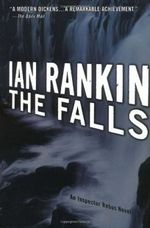
This is one of those covers that makes you wish cover designers had to read the book — an inconsequential point, but when Rebus actually got to the titular location, I had to shake my head. (Other cover images I’ve seen for this aren’t as misleading).

This might not be as powerfully told, or as sweeping as some of the recent books have been. But I’m not sure I’ve enjoyed reading a Rebus novel more than this one — and could’ve easily read it in one sitting. This will be sure to please Rebus fans and could easily make some, too.

—–

4 Stars

2018 Library Love Challenge

Where Night Stops by Douglas Light

Where Night StopsWhere Night Stops

by Douglas Light

eARC, 252 pg.
Rare Bird/Vireo, 2018

Read: January 12 – 13, 2018

She smells of lemons and warm cinnamon and isn’t very pretty. Sliding onto the barstool next to me, she says, “Can I sit here?”

The bartender, the woman, and me — we’re the only people in the bar. She can sit anywhere. It’s not just a seat she wants.

I study her a moment then catch the bartender’s eye, the order is placed without a word. Whatever the woman wants. Alcohol, like long marriages, has a language of its own, one not composed of speech.

Now, that’s how you start a novel.

So, our narrator is orphaned the night after his high school graduation — however odd it may feel to call someone on the cusp of adulthood an orphan, he is one (and the back of the book says so). Suddenly his college dreams, plans for the future are gone, as is his past (other than memories). He finds his way from Iowa to Seattle and takes up residence in a homeless shelter. The closest thing he has to a friend there sets him up with a way to make some money — more than he’d been able to scrape together from an under-the-table gig at a gas station.

It’s obviously not above-board, but it’s good money. What else is a kid with no ties to society, no dreams, no means and nothing better to do? We bounce back and forth between the opening scene (and what follows) in the bar and his burgeoning criminal career. He bounces all of the globe playing small roles in what are likely significant crimes. The resulting story is a combination of tragedy, comedy of errors and Bildungsroman. All of which leads up to a concluding scene that is at once unexpected and the only appropriate thing that could’ve happened.

As a reader. you’re never impressed with our narrator’s choices. You may understand them, but it’s hard to be behind them. Especially because after a certain point, our young man makes a giant mistake. The reader knows this — and has to hope that whatever he does, he figures out his mistake or gets out of this life soon.

The plot’s decent and will carry you along well enough. But it’s not why you will stick with this book (at least not primarily), it’s Light’s writing. In the middle of all this, there are sentences like, “Walking the empty night street, my kidneys rattled with anxiety.” I’m pretty sure this is biologically nonsensical (I haven’t bothered to check with my son’s nephrologist, but I was tempted to), but that doesn’t stop it from being incredibly effective — you know precisely what Light’s going for there, and in the moment, your kidneys felts a little weird. There’s something to his writing that made me stop every so often to re-read a sentence or paragraph or passage — not because I missed something or didn’t understand what was happening, but because Light captured a moment, an idea, or phrase in such an engaging way that I didn’t want to move on.

I’m not sure if this is a very literary thriller, or a literary novel playing with thriller tropes. Nor am I sure that I care, but this is the kind of book that can appeal to both target audiences. It’s a good example of either genre, and a better example of why the distinctions are specious. There’s an interesting crime story here; a character study; a look at what happens to someone who has no connection to his future, society, or his past — oh, and it’s a good read, too.

Disclaimer: I received this ARC in exchange for my honest opinion about the novel, I appreciate the opportunity, but it didn’t influence the above.

—–

4 Stars

All Those Explosions Were Someone Else’s Fault by James Alan Gardner

All Those Explosions Were Someone Else's FaultAll Those Explosions Were Someone Else’s Fault

by James Alan Gardner
Series: The Dark vs. Spark, #1

Paperback, 382 pg.
Tor Books, 2017

Read: January 9 – 10, 2017

…paranoia is our friend. Paranoia is our sunscreen, our condom, our duct tape. Paranoia tells the truth nine times out of ten, and the tenth time is when you weren’t paranoid enough. We will never correctly anticipate what flavor of shit will hit the fan, but we can calculate the trajectory and attempt to avoid the splatter.

Let’s start with the title, shall we? Straight off you know this book is going to be action-oriented, heavy on the explosions and most likely offbeat in style.

This is one of those books that it almost doesn’t matter how good the novel itself is, because the set-up is so good. Thankfully, let me hasten to say, the book lives up to the setup. So here’s the setup: it’s a parallel universe to ours, exactly like it (down to the certainty of the existence of Elton John), but in the 1980s Vampires, Werewolves, etc. admit their existence and sell their services — what services? Being turned, in exchange for exorbitant rates, so that the newly supernatural could enjoy their riches and powers for extended lifespans. Before long, the 1% are essentially all monsters in some way (literally so, not just depicted as monsters in print, on film or in song). The haves are supernatural, the have-nots are human — literally, these groups are two different species.

Yeah, the imagery isn’t subtle. It’s not supposed to be.

A couple of decades later, Sparks show up — Sparks are, for lack of a better term super heroes. They battle the forces of Darkness, so are obviously called Light (both groups have a tendency to be a little on the nose). There’s a pseudo-scientific explanation/excuse fr the way their powers work (contrasted to the magic of the other side). Fast-forward to the present, four college students/housemates are in an almost-deserted engineering lab building on campus when one of the labs blows up. This results in these four being turned into Sparks and they are immediately compelled to defend their city and combat a scheme launched and directed by Darks.

While doing this, they need to come to grips with this new reality for them, their news powers, their new identities, and so on — not to mention coming up with costumes.

This book features THE (triple underscore) best explanation of/justification for simple masks being an adequate disguise and/or the efficacy of removing a pair of eyeglasses to hide a superheroes identity.

The writing is crisp, the characters are fully fleshed out and the kind of people you want to spend more time with. I’m not going to get more into it than that, because you really need to experience the relationships (and many other things) by yourself.

This looked like a fun read, and it is a blast (no pun intended, but fully embraced), but it’s more — there’s heart, humor, some meta-narrative, and strong super-heroic and magical action. I really liked this one — it’s one of the best super-hero novels I’ve read in the last few years and the sequel can’t get here fast enough. Grab a copy today and thank me tomorrow.

—–

4 Stars
2018 Library Love Challenge

Page 53 of 88

Powered by WordPress & Theme by Anders Norén