Tag: 4 Stars Page 55 of 88

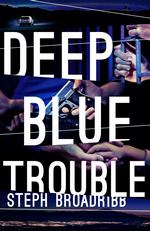
Deep Blue Trouble by Steph Broadribb

Deep Blue TroubleDeep Blue Trouble

by Steph Broadribb
Series: Lori Anderson, #2

Kindle Edition, 320 pg.
Orenda Books, 2017

Read: November 18 – 20, 2017


I really could just say, “You know that book that I (and just about everyone else) was so excited about a few months back? Well, the sequel is out now, and it’s just as good, if not better. Everything I wrote before still applies.” That’d be cheating, and not 100% accurate, but close enough I could do it with a clear conscience.

But let’s see if we can give it a bit more justice…

When we left Lori, she was agreeing to work with an FBI Agent to bring someone in, in exchange for this, he’ll help exonerate JT from the crimes he’s been accused of. Lori has brought this particular escaped con in before — Gibson “The Fish” Fletcher, a thief and convicted murderer — and Agent Monroe assumes that should give her a leg up. This hunt takes her from coast to coast (and coast to coast), and even across the border. I’d like to think that her career before these last two cases was a whole lot more benign, because what she goes through in the couple of weeks recorded in these two novels is probably more than most people go through in their lives.

Lori brings a PI she worked with before to track Fletcher in to help with some background, and Monroe hooks her up with a group of bounty hunters that he has experience with. Lori and her PI get along well, and work together even better. The bounty hunters, on the other hand, just don’t seem to want to work with Lori. The contrast between the people she’s allied with in this hunt is striking and helps the reader get a real grasp of Lori’s character. Every other character in this book deserves some discussion — well, most of them do — but I can’t do that without ruining the book. Let me just say that I’d be glad to see everyone that survives this book intact in the future — and maybe even some of those that don’t.

This case is primarily Lori using her brain (and her PI’s) to get her man — yeah, there’s some fisticuffs, some gunplay — but this is about Lori being smarter than anyone else in the case. Similarly, in Deep Down, Lori takes some real physical punishment, but this time the punishment is more mental and psychological — she doesn’t escape without some serious bruising (at least…), but primarily it’s the emotional stress and punishment she’s given while on the hunt for Fletcher that will take its toll.

In Deep Down the threat to Dakota was obvious and immanent — this time out, it’s more abstract, theoretical. Lori’s used a little money she just made to send her to camp. But if Lori can’t keep JT out of prison (or worse), getting him as a donor to help treat Dakota’s leukaemia is going to be near impossible. This is a nice change — you can’t have Dakota in constant peril, nor can you have Lori constantly distracted by her. Don’t get me wrong, I don’t want her to disappear, or be conveniently occupied all the time, but the reader needs it occasionally.

As for JT? Well, being in prison in a state where one of the major crime lords has a hit out on you isn’t exactly easy. We don’t get the flashbacks to his training Lori as much, but Lori is constantly returning to his lessons for guidance — so his presence is felt throughout the book, even if he’s locked up the whole time. That training is what ultimately helps her — even if she has to ignore a good chunk of it, naturally, watching her decide when to ignore his training is painful, because she picks bad times and ways to do so. Lori is keeping something from JT — which is going to come back to bite her. I get why she’s doing it, and can sympathize — but I know she’s a fictional character and I know what usually happens to fictional characters who do this kind of thing. Am truly hoping that Broadribb is going ti zag here when we all expect her to zig — but even if she zigs, I expect the execution of it to be better than my imagination.

It may seem like a little thing, or at least a strange thing to comment on in a post like this — but I really appreciated the way that Broadribb worked in a recap of Deep Down Dead to the opening pages here. It’s a lost art anymore, and I just wanted to take a second and say way to go.

One minor criticism: it was much easier to tell that this was a book written by a Brit writing an American.

This was a fast thriller, with a story that propels you to keep reading — you’ll read more than you should per sitting, because you just can’t put it down. Broadribb writes like a seasoned pro, with panache and skill. Lori remains one of my favorite new characters for this year, and the rest of the cast of characters are just about as good. I can’t wait to see what Broadribb puts poor Lori, JT and Dakota through next.

—–

4 Stars

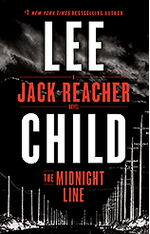
The Midnight Line by Lee Child

The Midnight LineThe Midnight Line

by Lee Child
Series: Jack Reacher, #22

Hardcover, 368 pg.
Delacorte Press, 2017

Read: November 23 – 24, 2017

“But this particular guy won’t talk to me?”

“I would be surprised.

“Does he have no manners?”

“I wouldn’t ask him over to a picnic.”

“What’s his name?”

“Jimmy Rat.”

”For real?”

“That’s what he goes by.”

“Where would I find Mr. Rat?”

“Look for a minimum six Hariey-Davidsons. Jimmy will be in whatever bar they‘re outside of.”

Three days after Make Me, Reacher hits the road — and a few hours into that, he’s already trying to track someone down. That conversation leads to the following:

There was a bar in a standalone wooden building, with a patch of weedy gravel for parking, and on the gravel were 7 Harley-Davidsons, all in a neat line. Possibly not actual Hells Angels as such. Possibly one of the many other parallel denominations. Bikers were as split as Baptists. All the same, but different.

(don’t worry, I’m not going to tell the whole story in this detail, I just really enjoyed the writing here).

Reacher goes into the bar and then has a pleasant chat with a member of the local law enforcement community and a productive chat with Mr. Rat. In between those chats he may have engaged in a physical confrontation with the owners of those motorcycles, I’ll let you guess what happened there. It was fun to read, I assure you. What led to him looking for Jimmy the Rat? Pretty simply, he saw a female West Point class ring in a pawn shop window. That’s not an easy thing to earn/deserve. Reacher figures that there’s got to be an interesting story behind such a ring ending up in a pawn shop — and maybe some fellow alumnus needs a hand, one that he can give. Jimmy the Rat is just the first link in a chain of indeterminate length back to this graduate.

Because he’s not an idiot, Jimmy points Reacher in the right direction: a laundromat in Rapid City. Also, because he’s not an idiot, before Reacher is on his way, Jimmy calls in a warning to that laundromat. Jimmy’s a rat, but he’s a survivor, too. This laundromat is owned by a guy named Scorpio, who is absolutely not Rapid City PD’s favorite small-business owner, if they could, they’d shut him down. This warning phone call, they hope, will be the harbinger of something — his downfall, or something to give them enough ammunition to arrange his arrest and downfall. Either way, the PD is fine.

Reacher has a quick conversation with Scorpio, who also points him in a direction. Reacher interacts a bit with a member of the local PD about him, as well — pointing out something that someone should’ve noticed already. There’s a PI who’s also pretty interested in Scorpio, but Reacher doesn’t get to chat with him, at least not then. When he turns up in Wyoming a few hours behind Reacher, on the other hand . . .

Reacher ends up with one of the stranger ad hoc teams he’s had to track down this woman — and the extra-legal steps he has to take to help her aren’t in his normal wheelhouse. But you go the extra mile for some people, and it’s definitely in-character and understandable for him to do what he does. There’s some interesting introspection early-on that I’m not used to seeing, and hope we get more of.

Here’s a major weakness to me (normally, I’d shrug this off, but Child gets held to a higher standard): too many people don’t know what “Bigfoot” is. If this took place in the UK or France or something, I could buy it. But in South Dakota? Sorry, not buying it.

The Midnight Line features more female characters than your typical Reacher novel — and none of them are damsels in distress. Yeah, most of them need a little help — but so do the males. Reacher’s life is even saved by one of the women. These are all strong, confident and capable women — not that the Reacher novels have ever been lacking in that regard, we just don’t normally get that many of them at once.

I don’t keep a spreadsheet or any kind of detailed notes on these things, but this might be one of the least violent Reacher novels ever. Make no mistake, Reacher has not turned into a pacifist and when he needs to punch, elbow, kick or headbutt (so soon after the concussion tests? tsk.) he does so very effectively, but I just think his count is a bit low this time).

Also, thanks Andy Martin, “Reacher said nothing.” now jumps out at me every time it shows up. How it never jumped out at me before, I’ll never know — but wow.

I really enjoyed this — it didn’t blow me away in the same way that Make Me did, but very little does. It was a lot better than Night School, however. Reacher’s knight-errant act is as satisfying as ever — maybe even moreso in this conclusion that features more details on his acts of compassion than his violence (the last violent act happening “off-screen,” although we get to see the aftermath). It was a fast read, full of action, great scenery and believable bad guys. I can’t think of much else to say — Reacher fans should love this, people new to Reacher should finish this with a desire to plunder the back-list, and everyone will start counting the days to #23.

—–

4 Stars
2017 Library Love Challenge

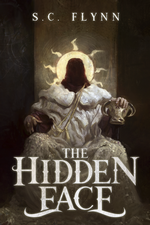
The Hidden Face by S. C. Flynn

The Hidden FaceThe Hidden Face

by S.C. Flynn
Series: Fifth Unmasking, #1

Kindle Edition, 350 pg.
The Hive, 2017

Read: November 14 – 15, 2017


There’s so much of the world-building, the overall mythology and political structure of this book that drives the plot and is given in bits and pieces to the reader, that I’m having a hard time knowing how talk about it without taking away anything from your experience in reading the book.

Essentially, you’ve got Dayraven, returning to the Emperor’s court from being a political hostage for 15 years — he’s pretty smart, a better than average fighter, and the son of a legendarily great warrior. He’s been returned to the court at a pivotal time, and he’s also supposed to be meeting his former teacher for reasons he doesn’t understand, but seem possibly more important.

One of those reasons is to be teamed up with Sunniva, a woman making her way through the world disguised as a man to make it easier for her to move freely as she searches for her missing father. I really liked her — from her memories of a childhood where she’d get bored playing the way the other kids wanted to, so she’d make up her own stories of battle and gallantry, to her dealing with her phobias, to her grit, determination, and compassion. She’s not much clearer on why she’s been teamed up with Dayraven, but jumps in with both feet, certain that it’s the right thing to do.

They have puzzles to solve, clues to piece together — which lead to fights with mercenaries, legendary criminals, a conspiracy or two, and others, while they’re trying to piece together more of the clues which should point the way to the Fifth Unmasking. Don’t worry, you’ll find out what that means as you read the book. On the one hand, none of this story is new to you — you’ve read all these elements before. But the way that Flynn has assembled them, and the way he executes them are pretty novel and are interestingly entertaining.

When we first meet the Emperor, I wasn’t sure how I was supposed to feel about him — whether he was supposed to be funny, if I was supposed to pity him, or something else entirely. If you react similarly, hang in there, and you’ll learn that both reactions are wrong — and you’ll likely end up really liking the Emperor.

There’s a very Sméagol-y character, a few clearly villain-ish characters, and a pretty cool mercenary to round out the cast. All in all, especially by the time we get to the end of the novel and we understand them all pretty clearly, are as strong a collection that you can ask for.

Flynn does do something that it bugs me so much when Fantasy authors do — he uses words/names/ from English/our world to mean something alien in their world. FOr example, the kingdom of Faustia results in the adjective “Faustian.” Which is used a lot, and each time I had to remind myself that he didn’t mean anything like what is usually meant. It’s pretty distracting. Particularly in the opening chapters there’s a sentence or two of dialogue that made me roll my eyes. But it’s not something that detracts too much from the story or, really, makes up that much of the dialogue. My most significant area of criticism is the way that Flynn unspools the mythology for the reader — I think he could have done it a little faster and clearer to get the reader on board with the theology/government of this world. Is it possible that I was being particularly dense this day? Yes. Is it possible that other readers will pick up on things a lot better than I did? Yes. But I don’t think so — I think it was Flynn trying to avoid an info-dump and to dole out the information to the reader at his pace. Which I absolutely endorse, I just think he could have done it a smidge faster.

I’m not sure, but I can’t think of many fantasy novels that I’ve read lately that are as short as The Hidden Face. This isn’t a selling point or a word of warning, I’m just saying this is short, and fast paced. Flynn crams a lot of story into this book and does it well. You don’t feel rushed, or that he’s cutting corners — you don’t get the impression he’s doing anything other than telling his story until you stop and think of everything that happens in 350 pages, a good deal of it is what I expected in book 3. I’m not sure how he pulls that off, honestly.

This is a strong, fast and gripping fantasy novel. I cannot wait for the sequel — it’s pretty clear where it’ll start, but I’m not really sure what to expect the story to do after that, and that really appeals to me. The Hidden Face, isn’t perfect, but it’s good — you should give it a try.

Disclaimer: This book was given to me by the author in exchange for my honest opinion, for which I’m grateful, but not so grateful that it colored my thinking.

—–

4 Stars

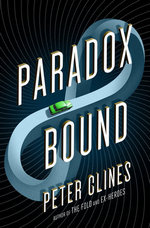
Paradox Bound by Peter Clines

Paradox BoundParadox Bound

by Peter Clines

Hardcover, 369 pg.
Crown, 2017

Read: November 8 – 9, 2017


Sanders is a typical American small-town, so typical, I felt like I grew up there. Thankfully, unlike Sanders, the place I grew up in has moved on, Sanders has not. There’s still a Video Rental Store there, for crying out loud. Those who work with computers, or want to have much of an idea about contemporary pop culture, have to move away — or at least commute.

Eli Teague is just such a person — but before he commutes to his IT job from his apartment above the Video Rental Store, he grows up in a pretty typical way. With one exception: twice while growing up, he encounters a young woman dressed incredibly oddly while working on an old Ford Model A, which seems to be fueled by water. They spend a little time conversing each time — typically leaving Eli more confused than he’d have thought possible — then she drives off and disappears. This instills in him an obsession with historic cars, that spills over into American History in general.

As an adult, he encounters her again and inadvertently puts her in danger. He abandons everything he knows in an effort to save her from this and ends up joining her on a hunt through history. Harry (this mysterious woman) travels through history — she’s not a time traveler, she’ll be quick to point out, she travels in history. She’s not crazy about bringing Eli along with her, but literally has almost no choice in the matter.

Harry . . . she’s a great character, and I would’ve appreciated a lot more focus on her, and getting to see much more of her past. Maybe not getting to actually helps, because it makes the reader more curious about her — but I’d still have rather had a better look at her life before Eli became a regular part of it. She’s tough, loyal, cunning — but no superhero, just a strong person.

Short of spoiling the whole thing, this is one of those I have to be very vague about the details, but then why should you read it? I’ll leave it to you to read the book to get more about the hunt they’re on, but I’ll just say that it’s a great idea, a wonderful concept. The other hunters (and allies) we meet are interesting, but man, I’d love more of all of them — there’s some great historical cameos, too. Naturally, we need an opposing force to make things more tense — and we have one of the creepiest around in these pages. They’re not evil, not corrupt, not anything but driven (and with a skewed way of looking at things).

There’s a nostalgic, hopeful tone throughout — despite the sharp critique of the status quo in America. There’s an evident wit behind the words, too, but this isn’t what you’d call a funny novel. I do think that Clines and I would differ a bit on some of the ways he interprets parts of the national character/psyche, but I can appreciate what he was going for (that’s one of those things that’ll make more sense after you read the book). The characters — whether we like them or not — are very human, very relatable, and pretty sympathetic. Clines has again taken some tropes, concepts, ideas that we’re familiar with — some we know very well, but skewing them just a hair and resulting in something we haven’t seen before.

I expected this to be a pretty good read after The Fold a couple of years ago, but I wasn’t expecting something as fresh feeling as this (but with the skill of someone who’s written a few novels). There’s a dash of civics lessons, some cultural commentary, and a lot of hope — things you don’t always get in light(ish) SF. I “bought into” this book much more quickly than I did The Fold, I’m not sure if that’s because Clines earned my trust in the previous book, or if there’s something more accessible about this one — either way, it’s something for the “Plus” column.

Give this one a whirl — you’ll be glad you did.

2017 Library Love Challenge

—–

4 Stars

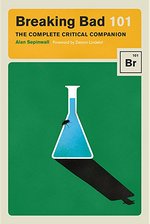
Breaking Bad 101 by Alan Sepinwall

Breaking Bad 101Breaking Bad 101: The Complete Critical Companion

by Alan Sepinwall

Hardcover, 281 pg.
Abrams Press, 2017

Read: November 15, 2017


So, I’m pretty sure I don’t need to explain what Breaking Bad is, do I? One of the greatest TV dramas of all time, Mr. Chips turns into Scarface, et cetera, et cetera. This book is a collection of brief essays about each episode, a critical companion, fan resource, and all around handy book.

Most of these chapters started out as episode recaps on Alan Sepinwall’s blog generally posted a day or two after the original airing — a couple were written just for this book because he didn’t recap each episode in season 1 and a later episode deserved a better recap (for reasons Sepinwall explains) — although the original version is included as well. He does take out some of he speculation and whatnot from the original posts to provide a nice, clean look at each episode. It’s more than just an episode recap, he looks at the arcs, the acting, writing, cinematography; in just a few pages he gets to the heart of the episode and helps you see all things that Gilligan et. al. were doing. The real gems are the footnotes and sidebar pieces that dive in a little further to the nitty-gritty details — why was this decision made, where’d actor X come from, and so on. Seriously, fantastic footnotes.

This is a quick and wonderful read if you do it start to finish — or you can just thumb through, stopping at random points to read up on an episode. The book works both ways. I imagine the best way to read it is with a remote in one hand, a DVD/Blu-Ray disc in your player and the book in the other hand. Watch an episode, read the chapter — skipping around in the episode to re-examine shots/sequences, etc. I haven’t done that, but man, I’m tempted to.

A few other things worthy of note: Damon Lindelof wrote a very amusing foreword; Max Dalton provided 12 black and white illustrations that are just perfect; the dust-jacket design is great; but more than that, the actual cover is even better; and lastly, the whole book is so well-designed and pleasing to the eye, it’s nice just to look at without reading. I don’t mention those kind of things enough, and need to get better about it.

Now, I’ve been a fan of Sepinwall’s recaps/writing since the days he posted about NYPD Blue on Usenet. I also read all these posts from Season 2 on within a few hours of their original posting (I didn’t start watching until after the season 1 finale — so I read all of those in a couple of days, still pretty fresh). So I was pretty predisposed to enjoy this book, but I’m pretty sure I would have anyway.

Sepinwall is a fan of Breaking Bad, most of the stories, most of the performances, etc. But he’s a thoughtful fan, not a mindless one — he is critical of some things, this isn’t just someone being a fanboy. I heartily encourage fans of the show to pick this up — or people who’ve been meaning to watch it, but haven’t (this book would be a much better companion than your friends who will be patronizing about you finally getting around to watching it).

—–

4 Stars

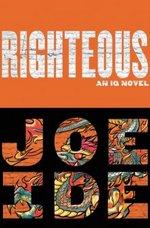
Righteous by Joe Ide

RighteousRighteous

by Joe Ide
Series: IQ, #2

Hardcover, 326 pg.
Mulholland Books, 2017

Read: November 3 – 4, 2017


Isaiah Quintabe is back with a couple of dynamite cases. IQ ended with Isaiah stumbling upon the car that killed his brother. So about half of this book is devoted to Isaiah’s renewed efforts to find the man who killed his brother. He quickly concludes that Marcus was not killed in an accident, as he’d believed and the police had included. Rather, it’s pretty clear to him that Marcus was targeted by the driver. So now, Isaiah starts digging — he finds more suspects than he’d prefer, and he starts to have some questions about Marcus’s lifestyle/livelihood.

That story alternates with an actual paying case — Marcus’ girlfriend (and the object of Isaiah’s teenaged affections) comes calling for Isaiah’s help. Her little sister, a gambling addict, and her equally addicted boyfriend are in trouble — they’ve got a Loan Shark gunning for them, and have resorted to some freakishly stupid lengths to get the money they need to get him off their case. These lengths have made them the target of some of the nastiest, deadliest, coldest criminals you’ve ever read. So, Isaiah and Dodson head to Vegas to help them. Dodson is fairly assertive here, not wanting to be relegated to sidekick and PR status, but to been seen as an equal to Isaiah — more of an Elementary‘s Joan Watson than Doyle’s John, without the student-vibe (or Dr. Eric Foreman to Dr. House . . . ugh, there are just too many versions of Holmes to walk an unbeaten path). Which is not to suggest that Ide’s blossoming partnership here is just a retread or a rehash, Dodson just reminds me of Joan a little. There’s a dynamic between these two that you don’t often see in detective duos, outside of police shows where two are forced to work together — a mix of partnership, antagonism, respect, and rivalry.

So why does Isaiah bring him along? Because he’s growing as a person, realizing that he needs social connections, other people in his life — he has a new dog, but that’s not enough. There’s even a longing for something like Dodson’s new family. His work, his trying to make something out of the wreck his life became after Marcus’ death — that’s not enough (nor is it finished) — he wants people around, and Dodson’s the first step.

There’s a couple of criminals wandering around Vegas making life horrible for several people that I’d love to see again — [spoiler] we won’t, and they got what they deserved — but man, I enjoyed them so much. All the “bad guys” (and, wow, were there a lot of them) were much more than your typical mystery novel baddies (even really well-written ones!). They were fully fleshed-out, individuals, with believable (and contradictory) self-interests and motivations.

As compelling as the baddies are, Isaiah is better. And in this book (like IQ) we see one of the ways that Ide is superior to Arthur Conan Doyle. In A Study in Scarlet, we see Holmes as the successful version of himself — on the verge of being a legend, really. Like Athena fully formed, emerging from Zeus’ skull. But IQ is still learning, still fallible — yes, he’s achieved a large measure of success and notoriety, but he’s still making mistakes. He’s good, but he needs more discipline, more patience, less ego, etc. In Righteous, as in IQ, we get the equivalent of Miller’s Batman: Year One and Barr’s Batman: Year Two. He’ll get to the point where his mistakes are more rare and less obvious, no doubt — but he’s not there yet. Combining this aspect of the character and the nascent social life and you’ve got a lot of fodder for character growth.

I’ve recently started reading (for those who don’t read every post) the John Rebus books, plugging my way through the 30 years of history of the character. I’ve received various encouragements from long-time Rebus readers to stick with it, the best is yet to come (not that I was in any danger of dropping it), and that I was reading something special. I can easily see myself giving similar encouragement to someone just starting these books in a decade or so. Isaiah is one of those characters that I can see myself reading for years to come. Between Isaiah and Dodson as characters, and Ide’s style and skill — this series is one to read.

—–

4 Stars
2017 Library Love Challenge

Communication Failure by Joe Zieja

Communication FailureCommunication Failure

by Joe Zieja
Series: Epic Failure, #2

ARC, 325 pg.
Saga Press, 2017

Read: October 31 – November 2, 2017


So, Captain Rogers has escaped with his life after saving the 331st Meridian Fleet from a takeover from almost all the droids on board, now he’s been made acting admiral and is faced with a potentially bigger threat: the Thelicosan fleet — the very fleet that Rogers’ ships are to keep on their side of the border — has informed him that they are about to invade. Given the size of the fleets facing off, this is an invasion that will not go well for the 331st.

So how is this would-be con-man, former engineer, and current CO going to survive this? He hasn’t the foggiest idea.

Clearly, for those who read Mechanical Failure (and those who haven’t have made a mistake that they need to rectify soon), whatever solution he comes up with is going to rely heavily on Deet and the Space Marines (the Viking/Captain Alsinbury and Sergeant Malin in particular) will be heavily involved. Malin has taken it upon herself to help Rogers learn some self-defense (even if that’s primarily various ways to duck), the Viking is questioning every decision her new CO is making, and Deet is continuing his exploration into human behavior/consciousness (he’s exploring philosophy and spirituality at the moment — which is pretty distracting). Basically, if Rogers is looking for a lot of support from them, he’s going to be disappointed.

It turns out that the Thelicosans didn’t intend to send that message at all, what they were supposed to communicate was very different, actually. But before Rogers and his counterpart can find a way to de-escalate the situation, shots are fired, milk is spilled, and events start to spiral out of control. Which isn’t to say that everyone is doomed and that war is inevitable, it’s just going to take some work to keep it from happening. There are forces, groups, entities — whatever you want to call them — hawkish individuals who are working behind the scenes to keep these cultures at odds with each other, hopefully spilling over into something catastrophic. Which is something too many of us are familiar with, I fear — and something that someone with Zieja’s military background is likely more familiar with. The Thelicosans and Meridians discover who these people are — and how they are attempting to manipulate the fleets — and the big question is how successful they’ll be.

We focus on three Thelicosans, but spend almost as much time on their flagship (The Limiter) as we do the Meridian flagship (Flagship). Grand Marshall Alandra Keffoule is the commander of the border fleet — at one time, she was a star in the special forces, and now she’s been assigned to the border fleet as a last chance. She fully intends on taking full advantage of this opportunity to make history and restore herself to her position of prominence in the military. Her deputy, Commodore Zergan, has fought alongside her since the special forces days and is now trying to help her rebuild her reputation. Secretary Vilia Quinn is the liaison between the Thelicosan government and the fleet. Quinn’s development through the book is a lot of fun to watch — and is probably a bigger surprise to her than it is to the reader, which just makes it better. Thelicosan culture is saturated in science and math, and is full of rituals that are incredibly binding and incredibly difficult for outsiders to understand. In many ways, the culture is hard to swallow — how a society develops along those lines seems impossible. But if you just accept that this is the way their society functions, it ends up working and stays consistent (and entertaining).

Lieutenant Lieutenant Nolan “Flash” “Chillster” “Snake” “Blade” Fisk, the best pilot the 331st has is a great addition to the cast — yeah, he’s probably the most cartoonish, least grounded, character in Rogers’ fleet — but man, he’s a lot of fun (and I think it’s pretty clear that Zieja enjoys writing him). think Ace Rimmer (what a guy!), but dumber. Mechanical Failure‘s most cartoonish character, Tunger, is back — the would-be spy/should-be zookeeper finds himself in the thick of things and is well-used (as a character) and is well-suited to his activities. Basically, I put up with him in the last book, and enjoyed him here. I’d like to talk more about Deet and the other characters here — I’ve barely said anything about Rogers (he develops in some ways no one would’ve expected) — but I can’t without ruining anything, so let’s just say that everyone you enjoyed in the previous installment you’ll continue to enjoy for the same reasons.

Mechanical Failure didn’t feature a lot of world-building outside life on the ship. Zieja takes care of that this time — we get a look at the political situation between the various governments, and the history behind the four powers. Which isn’t to say that we’re drowning in details like George R. R. Martin would give us, it’s still breezy and fast-paced. Still, there’s a handle you can grab on to, some context for the kind of madness that Rogers finds himself in the middle of.

One of my personal criteria for judging books that are heavy on the humor in the midst of the SF or mystery or fantasy story is judging what the book would be like without the jokes. The Hitchhiker’s Trilogy, for example, would fall apart in seconds (and few rival me for their devotion to that series). Magic 2.0 would hold up pretty well, on the other hand. The Epic Failure series would be another one that would hold up without the jokes. I’m not saying it’d be a masterpiece of SF, but the story would flow, there’d be enough intrigue and action to keep readers turning pages. However, you leave the humor, the jokes and the general whackiness in the books and they’re elevated to must-reads.

There are too many puns (technically, more than 1 qualifies for that), there’s a series of jokes about the space version of The Art of War that you’d think would get old very quickly, but doesn’t — at all; and Rogers has a couple of bridge officers that make the pilot Flash seem subtle. Somehow, Zieja makes all this excess work — I thought the humor worked wonderfully here, and I think it’ll hold up under repeated readings.

I thoroughly enjoyed this book and can’t wait to see where Zieja takes us next.

Disclaimer: I received this book ARC from the author, and I can’t thank him enough for it, but my opinion is my own and wasn’t really influenced by that act (other than giving me something to have an opinion about).

—–

4 Stars

Grace Alone–Salvation as a Gift of God by Carl R. Trueman

Grace Alone--Salvation as a Gift of GodGrace Alone–Salvation as a Gift of God: What the Reformers Taught…and Why It Still Matters

by Carl R. Trueman
Series: The 5 Solas Series
Paperback, 243 pg.
Zondervan, 2017
Read: October 8 – 22, 2017


After struggling through three books in this series, I will admit to some trepidation about this one — thankfully, Carl Trueman is an author I have a bit of experience with, so I figured it’d be worth the effort. Thankfully, there wasn’t that much effort, and the book was absolutely worth the time.

Trueman organizes this book differently than the others — in Part 1, he considers Sola Gratia in Scripture and Church History. Trueman surveys the idea of grace alone through both Testaments (it’s easier than some would lead you to think to find it in the Old Testament), looking at individual texts as well as themes throughout the books. I would have liked this to be a bit longer — but I really can’t complain about it. Following that, Trueman focuses on the teachings the Church throughout history about Grace — starting with the early church, focusing on Augustine and his Confessions as emblematic of the first centuries of the church. Then he continues to focus on Augustine, but shifts the focus to the controversies sparked by the Confessions with Pelagius and his followers as the prism through which the (Western) Church discusses and teaches Grace since those days. In the next chapter, Trueman focuses on Medieval theology about grace using Aquinas as the example. Following that we get chapters on Luther and Calvin (and those who’d be allied to Calvin’s branch of the Reformation), shaking off the accumulated tradition and misunderstandings to get back to the core of Scriptural and Augustininan teaching (with help from Aquinas). Would I have appreciated another chapter or two about post-Reformational history? Sure. But they weren’t necessary to fulfill Trueman’s aims, and we get a taste of what they’d offer in Part 2.

Part 2 is title “Sola Gratia in the Church.” Grace is communicated to Christians via The Church, Preaching, Sacraments and Prayer and so Trueman a. defends that idea and then proceeds to discuss how God goes that in chapters devoted to each of those. For those of the Reformed tradition, there is nothing ground-breaking or controversial here, although Protestants from other traditions might find some of the ideas challenging. These are solid chapters of the kind of teaching I expected from this series, and I appreciated them.

In the book’s Conclusion, Trueman attempts to address the questions: “What would a ‘grace alone’ church look like today? What would characterize its life as a church? How might we recognize such a church when we see it?” The answers to these questions are a mix of doctrinal and practical ideas that he lists in ten points showing the interconnections between them. This conclusion (in building on what came before) is worth at least half the price of the book — just fantastic stuff.

I still have one to go in the series, so I may have to modify this, but this one is by far the best of the bunch — accessible, pastoral and thorough without sacrificing depth. Trueman doesn’t seem to get distracted by pet details, nor to just beat the same obvious deceased equines on this topic. If you’re going to read just one of the five, let this be it. Alternatively, if the some of the others have left you wanting, give this one a shot, I think you’ll appreciate it.

—–

4 Stars

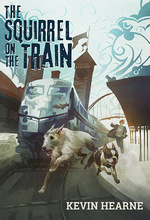
The Squirrel on the Train by Kevin Hearne

The Squirrel on the TrainThe Squirrel on the Train

by Kevin Hearne
Series: Iron Druid Chronicles/Oberon’s Meaty Mysteries, #2

eARC, 120 pg.
Subterranean Press, 2017

Read: November 2, 2017


Can the magic of The Purloined Poodle be recaptured? Yes — maybe even topped. For many, that should be all I need to write. If that’s the case, you’re fine — go ahead and close this, no need to finish this.

If you’re still here, I’ll write a little more — While on a trip to Portland to go sight-seeing, er, sight-smelling, Oberon, Orlaith and Starbuck get away from Atticus (er, I mean, Connor Molloy) while chasing after a suspicious-looking squirrel. That’s a tautology, I realize, if you ask the hounds, but this was a really sketchy-looking squirrel. Anyway, this brought the group into the path of Detective Ibarra. She happens to be at the train station investigating the odd murder of a man who looks just like Atticus.

Naturally, that gets him interested and investigating things as best as he can. Thanks in no small part to the noses of the hounds, Atticus and an old friend are able to uncover what’s going on to help Atticus’ new friend make an arrest.

It’s a whole story in Oberon’s voice, I don’t know what else I can say about the writing/voice/feel of the book. That says pretty much everything. From Oberon’s opening comparison of the diabolical natures of Squirrels vs. Clowns to Orlaith’s judgment that “death by physics” “sounds like justice” to the harrowing adventure at the end of the novella, this is a fine adventure for “the Hounds of the Willamette and their pet Druid!”

There’s a nice tie-in to some of the darker developments in the Iron Druid Chronicles — that won’t matter at all if you haven’t read that far, or if you can’t remember the connection. This was a good sequel that called back to the previous book, and told the same kind of story in a similar way — but didn’t just repeat things. Just like a sequel’s supposed to be, for another tautology. I smiled pretty much the whole time I read it (as far as I could tell, it’s not like I filmed myself). I don’t know if we get a third in this series given the end of the IDC next year. If we do, I’ll be happy — if not, this is a great duology.

Disclaimer: I received this eARC from Subterranean Press via NetGalley in exchange for this post — thanks to both for this.

—–

4 Stars

The Hanging Garden by Ian Rankin

The Hanging GardenThe Hanging Garden

by Ian Rankin
Series: John Rebus, #9

Hardcover, 335 pg.
St. Martin’s Press, 1998

Read: October 4 – 6, 2017

Rebus couldn’t get so excited. The whole enterprise had shown him a simple truth: no vacuum. Where you had society, you had criminals. No belly without an underbelly.

It’s just that kind of chipper optimism that keeps readers coming back to the Rebus books, isn’t it? The events in The Hanging Garden sure aren’t going to change his mind. There are three investigations at the core of this book (although another is referred to repeatedly) — but far more than 3 crimes.

The first is an investigation into an older gentleman who is suspected to be a former Nazi officer who was involved in the slaughter of an entire town in the waning days of WWII. Because of Rebus’ penchant for taking historical deep-dives when most police officers wouldn’t, he’s assigned to investigate this man. There are individuals from various organizations, governmental entities, and the press who are pressuring the accused and Rebus on this front.

The second involves an up and coming gangster — Tommy Telford’s smarter, quicker, and crueler than Rebus and the rest are used to dealing with — he’s also a genuine rival to Big Ger Cafferty (especially since Cafferty’s in prison). There’s a prostitute, a victim of human trafficking, that Rebus focuses on, trying to get her out of Telford’s control while using her to take him down. This becomes laden with some personal baggage (see below) and Rebus takes some risky moves that have some devastating consequences.

Lastly, Rebus’ daughter, Sammy is struck by a car in a hit and run and spends days in a coma. Based on a witness’ statement, Rebus becomes convinced that she was targeted thanks to her involvement with the prostitute and/or being his daughter. Either way, Rebus is out for blood — if only he knew who he was after. He strikes a deal to get criminals looking for the perpetrator while he’s helping/prodding the official police investigation. It really doesn’t matter which side of the law finds the driver, as far as he’s concerned, the end is the only important thing.

I’m not sure we needed the Nazi storyline — which by the way, is based on a real atrocity — but it serves to muddy the waters for Rebus and distract him. So it did play its part, and was good enough that I’m not complaining. Telford is a wonderful (fictional) criminal — I don’t want this guy walking around in my world, but in a novel? Love him. And the Sammy story — obviously, this is the emotional core to the book and is really well done.

When you have that many plates spinning, it’s hard to keep them going — and to do so in a way that balances the story telling to keep the reader engaged and not confused. Throwing in the personal aspects make it all the harder for Rankin — Clarke and Templar are involved with the police actions, and Jack Morton plays a significant role, too (and I finally liked him). Plus you have Sammy (mostly seen in flashbacks), Rhona (her mother) who comes to look after her comatose daughter. Patience Aitken is around as well — what she ever sees in Rebus, I’ll never know, it’s clearly a horrible match.

The way that Rankin has put this one together made it very difficult for me to talk about (I’ve tried to get this post written at least a dozen times). But that doesn’t mean it was hard to read — once I was in 10 pages or so in, there was no stopping. It’s a heckuva read, and I really can’t express more than that.

Rebus — mostly sober throughout, for a change — has some strong moments of self-assessment and self-examination, and is able to see/express things about himself and his approach to his work that many readers probably have intuited but it’s nice to have the man himself realize. Including one insight into himself that enabled me to finally figure out what makes Rebus and Harry Bosch different — something I’ll hopefully return to soon.

I didn’t expect that this would live up to Black and Blue, and it didn’t. But it wasn’t a let-down in any sense — it was a different kind of story, a different kind of crime, and different motivations for John Rebus. Still, the essentials are there: Rebus, his outlook, his tenacity, his humor, and his demons. Crime fiction doesn’t get much better than this.

—–

4 Stars

2017 Library Love Challenge

Page 55 of 88

Powered by WordPress & Theme by Anders Norén