Tag: 4 Stars Page 59 of 88

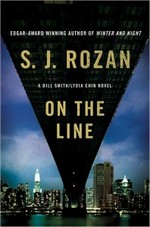
On the Line by SJ Rozan

On the LineOn the Line

by SJ Rozan
Series: Lydia Chin & Bill Smith, #10

Hardcover, 309 pg.
Minotaur Books, 2010

Read: May 25 – 26, 2017


Okay, it’s Bill Smith’s turn as the POV character — and that’s a good thing, because this would be a very short book if it wasn’t. A figure from Bill’s past is back, looking for revenge. The electronically altered voice on the phone belongs to someone that was sent to prison, in part due to Bill’s work, and now he’s out and is ready for Bill to pay what he’s due. He’s demanding that Bill play this game he’s devised in order to keep his hostage alive for the next 12 hours (or so).

The hostage, of course, is Lydia Chin. This is what makes this book different from all the other books where the hero is racing against the clock to play the twisted game of the psychopath in order to save the hostage. The hostage isn’t someone created just to be in peril, this is someone we’ve become attached to over the last 9 books (half the time being in her brain, I should add) — and Bill’s got a lot more history with and affection for her than any of us readers do. Again, this is stuff we know, not something manufactured for the purposes of this plot. So the stakes are higher for Bill than most heroes in this plot, and we believe it, too.

Without Lydia to work with, Bill has to get help from others — there’s just no way that he can do this on his own. Enter Lydia’s friend Mary, the NYPD detective; and her cousin Linus, the hacker/computer guru. Even with these two replacing Lydia, Bill spends a lot of the time seemingly over-matched. Now that I think about it, he’s so distracted by worry that a lot of the thinking is left to others, Bill mostly reacts to things in anger and fear. All believably, I should add.

The kidnapper/tormentor isn’t some psychopathic genius, some criminal mastermind — he’s a smart, committed criminal who has spent a lot of time planning. This means that the reader can see why he’d go off the bend like he does, why Bill can defeat him — and yet spend so many pages clueless. He is clever, I shouldn’t downplay that — the game he’s set up, the clues (and what he does with them) show that this is no slouch that Bill’s up against. Thankfully, neither are Bill’s allies — for 2010, one of the solutions involves a ingenious use of social media (actually, it’d be a pretty sly use in 2017, too).

The conversations between Lydia and Bill are what I’m always saying are the highlight of these books — in this book, their chats are brief proof of life kind of things. This means that every word, every nuance counts — and it’s primarily in what these two don’t have to say to communicate that is the winning element.

I enjoyed this one so much — even if Bill wasn’t as sharp as he should’ve been, even if Lydia is practically a non-factor throughout (but when she gets involved, it counts). Rozan knows these two, their world, so well that this story seems effortless (which it just couldn’t be).

It seems effortless for her, I should say, the reader is left hanging on every development, every twist, every detail, just hoping that Bill can save the day. One of Rozan’s best.

—–

4 Stars
2017 Library Love Challenge

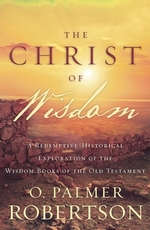
The Christ of Wisdom by O. Palmer Robertson

The Christ of WisdomThe Christ of Wisdom: A Redemptive-Historical Exploration of the Wisdom Books of the Old Testament

by O. Palmer Robertson

eARC, 432 pg.
P&R Publishing, 2017

Read: May 7 – 21, 2017


Robertson’s preface laments the way that the Wisdom Literature of the Old Testament is usually ignored in Redemptive-Historical studies —

…how do you fit these wisdom books into the flow of redemptive history that consummates in the Christ? By letting them be what they are in their own distinctiveness. They are, it should be remembered, canonical, divinely revealed, and authoritative writings that tell the world how and what to think about the deeper mysteries of human life. Rather than submitting to the moldings and bendings of modernity, these books broaden our understanding of the nature of redemptive history. Divine progress in the complete restoration of reality does not merely move in a purely linear fashion like the flight of an arrow moving across time and space without deviation until it reaches its target. This “third dimension” of redemptive history moves in a cyclical pattern. For certain aspects of God’s salvation perform according to a pattern of regulated repetition.

To ignore this dimension of redemptive history is to exclude a major portion of the old covenant canon—and that you do not want to do.

So how do you discuss these books from a RH point of view? This is what Robertson seeks to do in this book — not as a final answer, but as the beginning of a search for wisdom along these paths.

In one sense, Robertson could’ve made this easier to talk about this book — there’s not one central argument developed throughout. There’s a general discussion (brief) of wisdom, wisdom Biblically defined, that is. And then using that discussion, Robertson looks at the Wisdom Literature of the Old Testament (and Lamentations, which is not usually considered Wisdom Literature, but can function as such), summarizing each book, looking at the various forms of wisdom described and passed on through it.

Simply,

Wisdom is the ability to understand the basic principles inherent in God’s created order, and to live by those principles. Wisdom enables a person to summarize these basic principles in a succinct and memorable fashion. Wisdom is living out the whole of life with a constant awareness of accountability before a loving, gracious, and just Creator and Redeemer.

The work he does to get to this summary is well worth the time and effort to work through. Actually, that goes for everything in the book, but I’ll hold off on saying that kind of thing for a few paragraphs.

The chapter on Proverbs is, fittingly, the longest and most developed. He discusses various approaches to the book, to understanding its construction and from there trying to understand it:

A much more accurate view of the theology of Proverbs may be gained from a covenantal perspective. The wise sayings of the book are not presented in a vacuum. They are not purely moralistic aphorisms. Instead, they are steeped in theistic assumptions. These wise observations about how the world works assume that God the Creator is none other than Yahweh, the Lord of the Covenant.

This, right here, would help so much of what I’ve read about Proverbs over the last few decades. To get into everything that Robertson says about the pursuit of Wisdom, passing it on and living by it from this book would make this post unbearably long — but it builds the foundation for everything that comes. Proverbs covers Wisdom as a whole — the rest of the book deals with it in specific areas.

While dealing with the personification of Wisdom in Proverbs 8, Robertson gives an excursus, “Athanasius as the Champion of the opponents of Arianism,” that is just gold. I’d love to see this developed into something longer.

Following Proverbs, he moves on to Job. Job doesn’t give us the answers to the puzzling circumstances of life, but for those who understand the book, they learn how to puzzle through the circumstances, how to think about them — how to ask God about them. Yes, there are answers given in the book — not easy answers, not the answers anyone necessarily wants, but answers — answers tied to the hope of the Resurrection. But wisdom knows to look for those answers in the difficulties of life, with a sure faith that is willing to look at dark circumstances and say, “I don’t know why this is happening, but I trust in Him Who does.”

Ecclesiastes, is, naturally, a tricky chapter — Robertson threw me a curveball when setting aside the usual discussion of authorship of the book to note

But a related question of some significance for understanding the book has been generally neglected. This neglected question is the identity of the “target audience”of Ecclesiastes.

Chewing on this a little helps get through some of the discussion of authorship. There are so many divergent readings of Ecclesiastes that your head can swim just trying to get a sense of them, Robertson is a pretty sure guide through them before landing on his conclusion that Ecclesiastes presents a “realistic picture of life” — one that is a precursor to Paul’s discussion in Romans 8, where creation is subjected to frustration, but that this is being renewed. I do think this chapter could’ve been organized in a more straight-forward way, but I appreciate the way that Robertson makes you work through various considerations and themes before leading to his conclusions — which are all very helpful.

His discussion of Lamentations, summed up in the subtitle “How to Weep,” was one of the best things I’ve read on the book (an admittedly too-short list). You may think that’s a pretty easy thing to learn — but there’s a wise way, a godly way to weep over the tragedies that will come into our lives. The book of Lamentations teaches us that — and, here’s the RH emphasis coming through — there’s a hope tied to the wise weeping. A hope tied to faith in God’s commitment to preserving a repentant people to Himself.

Lastly, we get to the wisdom of “How to Love” (in a marital sense) in the Song of Songs. The way he reads the book is a “Redemptive-Historical” way, in

terms of the redemptive work of God in restoring humanity to the situation prevailing at the time of creation . . . a restoration of the initial blessing of man and woman in their relation to each other, just as when they first stood in each other’s presence “both naked” but feeling “no shame” (Gen. 2:25). This Song rejoices in the fullness of God’s redemption of the marriage relationship.

He concludes this chapter uniquely, with a script for a Dramatic Reading of the Song of Songs — I think there could’ve been a bit more instruction on how to approach such a Reading — and why — than he gave. But I really appreciated that part.

He could’ve used a conclusion to wrap things up — returning to the closing admonition of the opening chapter. But that’s probably just a taste thing on my part.

There’s a focus on the literary/poetic forms in each book tying in the themes and teachings of them to the way the author presents them. This kind of discussion — no matter the type of literature (inspired or not) always stretches me. I imagine I’m not alone in that — in fact, I bet many people will skip those parts. This is to their own detriment. Robertson discusses these matters in a way that takes some effort to understand, but it’s effort that pays off.

This is a truly helpful book — not full-fledged commentaries on any of the books, but helpful summaries pointed towards seeing the wisdom passed down in each book, and tied into the Redemptive work going on in history all around us. I found it interesting that the recent A Biblical-Theological Introduction to the Old Testament doesn’t approach some of these books the same way as Robertson — in some ways flatly contradicting him. I’d hoped for more overlap between the two works approaching this material from the same framework — but none of the contradictions or differences change the overall message of the Biblical material, just shadings. Honestly, in each case, I think Robertson’s readings are easier to square with the texts in consideration (and not just because he has more pages to develop his points, either).

Robertson, as always, delivers the goods with this book. The reader has to think about what he says, has to drag out their Bible and use the two books together, but will ultimately come out the better for it. I found this book to be incredibly helpful, insightful and something that drove me back to the fullness and fulfillment of all the wisdom of God — Jesus the Messiah. Just where Robertson wants his readers to focus.

Disclaimer: I received this eARC from P&R Publishing via NetGalley in exchange for this post — thanks to both for this.
N.B.: As this was an ARC, any quotations above may be changed in the published work — I will endeavor to verify them as soon as possible.

—–

4 Stars

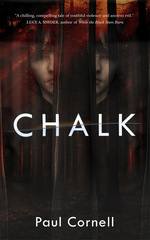
Chalk by Paul Cornell

ChalkChalk

by Paul Cornell

Kindle Edition, 206 pg.
Tor.com, 2017

Read: May 5 – 8, 2017

There are kids who went through school experiences like mine who will never watch football, and there are those who end up playing for Arsenal. Okay, who will end up with season tickets. Stockholm syndrome will only take you so far.

Enough about what I am now. That comes later.

Everyone keeps talking about this as a story about bullying — sure, there’s a little bullying here. But mostly, that’s like saying that Hannibal Lecter enjoys an unconventional diet. What happens to Andrew Waggoner is so far beyond bullying — it’s flat out assault (but with a psychological component that matches bullying). After a Halloween dance, Waggoner is forced into the woods by the school bullies and is assaulted. Somehow, his trauma links him to some long-dormant forces who take the opportunity to reassert themselves. One manifestation of the mystical/magical works with (compels? coerces? convinces?) Waggoner to take his revenge against those who permanently scarred him mentally and physically.

And over the next 12 months, that’s just what happens — Waggoner and/or his mystical companion (it’s never clear exactly how much is done by each) exact their revenge — Waggoner vacillates in his commitment to this project, and comes close to stopping on many occasions. In the midst of this, he becomes a writer and makes a friend based on shared interest, rather than just being social pariahs. In short, he starts growing up.

Meanwhile, the ancient forces tied to Waggoner are in open conflict with the dominant, more modern/contemporary, forces/beliefs. The school — and the students’ lives — become the major battleground for them, the final conflict coming on the anniversary of the attack that changed Waggoner’s life forever.

I kept seeing the school as the school from Sing Street (except, in the West Country, not Dublin — but roughly the same era), which I know is inaccurate, but I couldn’t stop myself. Pop music plays a large role in the story, and as it’s set in the early 80’s I didn’t have to google most of the songs (there were a couple of tunes that didn’t make it to Idaho that long ago) — which was a plus for me, and probably most readers.

You can tell (well, you can guess) that Cornell and Waggoner had similar experiences in their early lives — the language he uses to describe the bullying speaks to that. But more than that, the way he describes how the bullying shaped him, both then and when Waggoner reflects on those events from the vantage point of adulthood, resonated with me, and will with many readers.

The characters — bullies, victims, other children, or adults — were all wonderfully constructed. I’m not sure that I liked any of them (including Waggoner), but I was drawn into this world, and was very invested in what happened to each of them.

This was intense, gripping, strangely something (I want to say beautiful, but that doesn’t seem right) — there’s a je ne sais quoi about Chalk that inspires and repulses at the same time. I know I haven’t done a good job describing this book — I’m trying hard not to ruin anything for future readers. It was one of the more affecting, compelling books I’ve read this year. Cornell does a masterful job of mixing our reality with his fantasy — as he’s shown in the Shadow Police and Lychford books — this time you add in a layer of childhood horror and wonder to that combination.

This is something special, you won’t read much like it.

—–

4 Stars

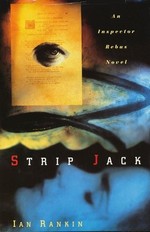
Strip Jack by Ian Rankin

Strip JackStrip Jack

by Ian Rankin
Series: John Rebus, #4

Hardcover, 206 pg.
St. Martin’s Press, 1992

Read: May 3 – 4, 2017


This is the one — the book that finally sold me on the John Rebus series (I say “finally” as if it’s been a years’ long effort, not just book 4). Everything worked for me here.

Rebus is trying to track down a rare book thief, and puts as much effort into that as you’d imagine most fictional detectives putting into it. Thankfully, it doesn’t eat up so much of his time that he can’t accompany others from his station — including Chief Superintendent “Farmer” Watson — on a raid of a brothel in a pretty nice part of town. Most of the men can’t believe they’re doing this raid, Rebus is chief among them. But, an order is an order, so they suit up and go in. While there, Brian Holmes finds a pretty popular MP in a room with one of the “employees.”

This is MP is named Gregor Jack — his background is pretty similar to Rebus’ and the detective has always admired him (at least his public persona), and something just doesn’t feel right about the way things went down with the raid and Jack’s involvement (and exposure), so he starts checking in on Jack at home. There’s something strange going on with Jack’s wife, Elizabeth — she’s not at home, and Jack doesn’t know if she even knows about the headlines about the raid and ensuing controversy. Rebus finds it a bit odd that someone like him would know so little about his wife’s whereabouts, between his curiosity and interest in the MP, he starts poking around a bit — which turns out to be fortuitous later on.

The ensuing mystery is pretty good — especially when it becomes Rebus vs. the higher-ups as they narrow the list of suspects. I liked Rebus’ method this time a little more than the previous books, it’s a bit more methodical (even when he’s mostly going with his gut, there’s still thinking behind it). Could the mystery-solving — and the novel as a whole — be a bit meatier? Yeah, but it’s not to sketchy on details. I just think that the Rebus novels would be better if they were Bosch-length.

In the previous books, I thought there were a couple of passages that were so well written that they lifted the quality of the whole book. I didn’t come across anything in particular like that, not that the writing was bad, but there wasn’t anything that jumped out at me. One very nice touch — not in the language, but in the idea and how it worked — was when Rebus was interviewing one of the Jacks’ old friends in a mental hospital and the friend asks Rebus to touch the ground for him, since that’s something he doesn’t get to do any more. When Rebus does this, and when he tells the friend about it later — just perfect.

I really would’ve liked more time with Gregor Jack and his staff — I liked the interactions between Rebus and each of them, but it’d have been hard to pull off. Most of the rest of the suspect pool weren’t terribly interesting. The friend in the hospital, isn’t really a suspect (for obvious reasons), but he does give some insight into the case — he was a well-written character and I liked the way that Rankin was able to work him into the story in a couple of ways.

Holmes reminds me of Luther‘s DS Justin Ripley (although I imagine Holmes as taller — not sure there’s a reason for that) — I like the fact that he’s sticking around, I expected him to vanish after his first appearance. I don’t know if he and his girlfriend will stick around, but I’m enjoying him as an errand boy/accomplice/hindrance for Rebus. He’s not the only returning face — Gill Templer is a pretty significant factor in the off-the-clock Rebus story, which primarily centers around his growing (yet, I expect, doomed) relationship with a doctor.

Oh, I should mention that Rebus does find the book thief (with book obsessed readers like we have on this blog, you have to assure people that the books are okay), and it (naturally) has plays a role in the novel’s greater story.

This tale of the determined and dogged detective who keeps on trying, even when he has no reason to, really worked for me — clicked every one of my procedural buttons. I hope Rankin delivers more like this book.

—–

4 Stars
2017 Library Love Challenge

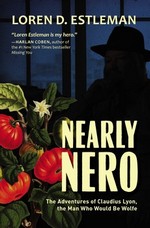
Pub Day Repost: Nearly Nero by Loren D. Estleman

Nearly NeroNearly Nero: The Adventures of Claudius Lyon, the Man Who Would Be Wolfe

by Loren D. Estleman
eARC, 192 pg.
Tyrus Books, 2017
Read: March 24 – 30, 2017

I’ve heard about the stories in this volume for years, but have never tracked one down before — and then a whole collection of them show up on NetGalley! How could I not request it? I’m so glad this book exists so that those of us who don’t get the magazines, etc. that publish short mystery fiction can have them (and even those who do have access to those magazines, etc. can have them in one handy volume).

Anyway, here’s the setup: Claudius Lyon is a huge fan of Nero Wolfe — he reads every one of the reports that Archie Goodwin’s literary agent Rex Stout publishes. He’s such a fan that he wants to be Wolfe (like the guys dressing up in Batsuits in The Dark Knight Rises) — he’s fat, fairly clever, and wealthy enough not to need to work and still indulge himself. He renovates his townhouse to include a greenhouse, an elevator, and a first floor floorplan that pretty much matches Wolfe’s. He hires a private chef — a kosher chef of dubious quality (not that Lyon needs to eat kosher, it’s just what Gus can cook), changes his name to something that approximates his hero’s and hires a “man of action,” Arnie Woodbine. Arnie’s an ex-con, small-time crook who doesn’t mind (too much) putting up with his looney boss for a steady paycheck and meals.

The number of ways that Lyon isn’t Wolfe is pretty large and I won’t spoil your fun in discovering them. Now, Lyon’s unlicensed as a PI, so he can’t take on paying clients — but he occasionally gets people who will take him up on his free services. He’s decent at solving puzzles and low-priority mysteries (not that he doesn’t find his way into something bigger on occasion). Once he gets a client (non-paying, Arnie’d have me stress), he goes through whatever steps he needs to figure it out (including his own version of Wolfe’s lip movement and sending Arnie on fact-finding missions), and goes to some lengths to assemble some sort of audience for his reveal. I can’t help smiling as I think about it, really.

The whole thing is a tongue-in-cheek tribute to the Nero Wolfe/Rex Stout — recognizing the brilliance of the Stout’s work (how can you not?), while poking fun at it. Lyon’s really a goofy character and Woodbine is great at pointing that out — while begrudgingly admitting that he gets things right every now and then. There’s a lot of fun to be had in the story telling — the mysteries aren’t all that much to get excited about, it’s in watching Lyon stumble through his cases that the entertainment is found. Well, that and Woodbine’s commentary.

Not unlike many of the Wolfe stories (particularly the short stories).

I wouldn’t recommend reading more than two of these stories in a sitting, I think they work best as solo shots. It’s a difficult call, because I typically wanted to go on for one more. Also, I’m not sure how enjoyable these’d be for non-Wolfe readers — but then again, I think a lot of the humor would hold up and it might entice a reader to learn more about Lyon’s idol. And anything that gets people to read Rex Stout’s Nero Wolfe novels is a good thing.

But for readers of Stout’s Wolfe novels? This is a must read. He’s not trying and failing to recapture Stout’s magic (see Goldsborough post-The Bloodied Ivy), he’s intentionally missing and yet somehow getting a little of it. I really enjoyed this book and can easily see me re-reading it a handful of times.

Disclaimer: I received this eARC from Adams Media via NetGalley in exchange for this post — thanks to both for this.

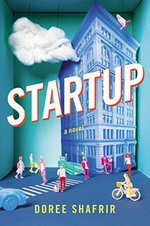
Startup by Doree Shafrir

StartupStartup

by Doree Shafrir

eARC, 304 pg.
Little, Brown and Company, 2017

Read: May 2, 2017


It’s hard to give a thumbnail pitch for this book — my gut wants to compare it to Coupland’s Microserfs, just because I liked that so much. But it’s more like a feminist Po Bronson’s The First $20 Million Is Always the Hardest, I think. It’s been about 20 years since I read that, and my memory is more than fuzzy on the details. It’s about web/app-based companies in New York and the strange (especially to outsiders) culture that surrounds them. You don’t have to know a lot about tech — or venture capitalism — to appreciate this, however. You just have to know about people.

Because at the end of the day, this book isn’t really about startup culture, apps or technology — it’s about people. There are 5 central characters — and a couple that hover around central — to this book, and yes, they’re all involved with startups, but that’s just where they happen to be. You could set this novel in the Wall Street culture of the mid 80’s and not have to change much about it at all, because the relationships, the people are what matter — not the industries/subcultures they’re in.

You’ve got Mack McAllister — the driving force and face of TakeOff — an app promoting mindfulness, happiness and productivity; he seems pretty harmless (initially, anyway), but gets reckless with money and sloppy with interpersonal issues — when that starts to snowball out of control, he then crosses the line into something worse. Isabel is in charge of Engagement and Marketing for TakeOff, she had a little thing with Mack awhile ago, but has started to see someone else recently. Sabrina works for Isabel, is ten years her senior, but has just got back in the workforce after having kids — she’s got some money problems and a husband that seems to be checked out of the relationship and parenting. His name is Dan, and he’s an editor for a Tech News website — he’s pretty oblivious to a lot, really (like his wife’s problems) and the crush he has on one of his reporters (actually, he may be very aware of that, come to think of it). Her name is Katya, the child of Russian immigrants — a hungry reporter, trying to figure out just how to make it in the world where journalism is judged by quantifiable results (views, shares, retweets). Katya needs a break, and stumbles upon a story about Mack — and Isabel — and this could be the thing to solidify her position at the news site.

That’s all you really need to know going in — actually, I knew far less, so that’s more than you need to know. You take those people and their goals, their problems — but ’em in a blender and this book comes out. It’s pretty easy to see how — the part that isn’t obvious is how Shafrir accomplishes this. She does it by: 1. making these all very relatable characters, with strengths and weaknesses; 2. by making even the villains of the piece not that villain-y (I’m not saying, for example, that Mack is a paragon of virtue — he does some horrible things, but he never sets out to be horrible, he just ends up that way); 3. by making the heroes of the piece not all that heroic — just people trying to do (and keep) their jobs, while not screwing up the rest of their life.

I love the fact that Sabrina and Katya are both pretty serious grammar Nazis who find themselves in jobs where they have to do so much that violates grammar — it’s a nice touch, and I enjoyed their reactions to poor grammar. Similarly, Katya’s attitude toward smoking is a lot of fun to read about — but not really something you want to inculcate to kids, or even see in someone in real life.

This is Shafrir’s first novel, but she’s been writing for forever — most notably as an online journalist. She knows the world she’s depicting, she’s lived it and wrote about it — this is just a barely fictionalized version of her reality, so it reeks of authenticity. I have no doubt I could find people very much like her main characters without trying very hard if I put myself in the right cities. She’s not so close to this world that she can’t comment on it, nor is she so close to it that she’s bitter, nasty and cynical about it.

There’s a very slow build to this book — around the 40% mark, I noticed that while I was enjoying the book, appreciating the writing, and so on — I wasn’t really “hooked” by it, I wasn’t invested in any of the characters, which I thought was odd. So, I resolved to make note of when it happened, to see if it was an event, or a development with a character or whatever that prompted it. By the time I hit 80%, the hook was set (it happened well before then, but don’t ask me where), but there wasn’t anything that I could point to that did it. Just slowly but surely, these people and their individual struggles wormed their way into my subconscious. Which is a great way for a book to be — not that I mind those that hook you from the start, or those that a have a big, dramatic moment that grabs you — but those that gradually get you without you noticing.

The ending sneaks up on you — I really didn’t realize the novel ended when it did — I got to the words “Acknowledgements” on the next page before I realized that the book had ended. I really liked the way it ended (once I figured out it happened), even if I found the last sentence annoying. I still do, actually — but I see what she was going for and she achieved it. But I still would’ve liked a few more pages to follow that last sentence.

I can’t help feeling like I should have a lot more to say about this book — but I can’t figure out how to do so without giving everything away. So I’d better leave it by saying that I really liked these people, Shafrir’s writing, and the way she told a story. Startup was honest, heart-felt, compassionate, and real — this debut is as strong as it is winning. I hope to read more from Shafrir in the future.

—–

4 Stars

Disclaimer: I received this eARC from Little, Brown and Company via NetGalley in exchange for this post — thanks to both for this.

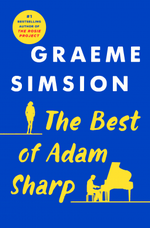
Pub Day Repost: The Best of Adam Sharp by Graeme Simsion

The Best of Adam SharpThe Best of Adam Sharp

by Graeme Simsion
eARC, 352 pg.
St. Martin’s Press, 2017
Read: April 17 – 18, 2017

If my life prior to February 15, 2012, had been a song, it might have been “Hey Jude,” a simple piano tune, taking my sad and sorry adolescence and making it better. In the middle, it would pick up—better and better— for a few moments foreshadowing something extraordinary. And then: just na-na-na-na, over and over, pleasant enough, but mainly because it evoked what had gone before.

That’s the first paragraph, and I’m betting 80% of reviewers will be quoting that — how can you not? You get a sense of Adam, his musical taste, how much music means to him/the way he thinks — and you get the novel’s mood. In the next few pages, you get an idea what Adam’s life is like in February 2012 — his relationship, his relationship with his mother, the nostalgia (and maybe more) he feels towards a country he lived in while he was young and his first great (greatest?) love.

Then we end the introduction with this paragraph that pushes us into the novel:

No matter now. I would soon have more immediate matters to occupy my mind. Later that day, as I continued my engagement with the past, scouring the Internet for music trivia in the hope of a moment of appreciation at the pub quiz, a cosmic DJ—perhaps the ghost of my father—would lift the needle on the na-na-na-nas of “Hey Jude,”say, “Nothing new happening here,”and turn it to the flip side.

“Revolution.”

On the flip side is an email from The One Who Got Away (“got” isn’t necessarily the best term — “slipped away”, “blindly walked away from”, “made the greatest mistake of your life with” — come closer). Angelina was a night-time soap actress that Adam had an affair with while he lived in Australia while working on a contract job in 1989. Over the next couple of chapters Adam reminisces about his time with Angelina — it’s a heckuva love story. It’s an even better doomed-love story since we all know it’s coming to an end, and he’s able to tell it that way.

This email is the first communication she’s attempted since she informed Adam that she was getting married before he had a chance to come back.

We also get a compressed history of Adam and Claire (his might-as-well-be wife), their 15+ year relationship — the ups, downs, and obvious commitment. Even if the romance is largely gone, there’s something strong under-girding their bond. Right? Maybe? Probably? And I do mean compressed — their decade and change is given less space than the few months Angelina and Adam have. We also see what’s going on in the Spring of 2012 with their relationship, and how this new email correspondence fits in with Adam’s life.

Part II of the book is focused on what happens when Adam and Angelina reconnect in person for a few days months later. Which is really all I can say about that. Well, it takes almost the same amount of space as the first part (ecopy, so I can’t do page counts, so these are just estimates) — so it’s obviously a lot more detailed.

I loved Part I — totally. The feel of it, seeing the changes for the better that Adam goes through thanks to the confidence boost that emailing Angelina gives him. Watching his relationship with Claire improve at the same time. All the while enjoying the 1989 story, too, sharing that feeling of nostalgia and more with him. It’s just so well done.

But Part II? I had serious problems with. I cannot detail them without ruining the book for you all. But people just don’t act the way most (if not all) of our primary characters do here. There are just too many psychological, emotional, spiritual and moral problems with what happens, how people react (both in the heat of the moment and in the cool light of day) — people, real people, just can’t do this and survive in any meaningful fashion.

We also do meet Angelina’s husband, Charlie, and I have so many conflicting opinions about him — on the one hand he appears to be good guy, generous, gracious (and other positive adjectives that don’t start with “g”) . . . but he’s dishonest with everyone (possibly including himself), manipulative, cold, calculating . . . I want to state that he’s not physically or mentally abusive, because my description of him almost sounds like it. Things would be less murky if he was.

Angelina is equally troubling — both in how she acts toward Charlie, her children and Adam. I’m not incredibly certain that I’m pleased with the way she treats herself (or if she’s true to her chosen vocation or character). I can understand a lot of how Adam comports himself, but at some point, I needed him to call the whole thing off (anyone else could’ve, but it wasn’t in their character at the moment).

The whole thing at the point became the car wreck you pass by on the Interstate and try to not gawk at.

I can’t find the exact quotation, but Nora Ephron said something about Sleepless in Seattle not being a love story, but a story about movie love (Rosie O’Donnell’s character says something similar in the film). About the only way I can handle huge portions of this book is thinking of it in similar terms — Part II isn’t about actual love, romance/commitment between two human beings — but it’s about love in fiction, romance/commitment between two fictional characters. If I think of Adam and Angelina (and Charlie and Claire) as actual people, I feel a mix of pity and repugnance for all involved (well, no repugnance for one of them, but I’ll leave it at that) — along with a strong desire to get a pastor and/or psychologist to their doorsteps. But if I think of them as fictional characters — which, I guess is what they are, as much as one doesn’t like to admit that — I can feel that revulsion and sympathy and just hope that they’re able to have decent lives.

But the writing? Simsion’s craft here is what kept me going through my distaste — and what’s going to compel me to give it a higher rating than I initially thought I would. Everything I thought/hoped he was capable of after The Rosie Project is on full display here — and, honestly, Adam Sharp is probably a better novel than it’s predecessors. Yes, there are comic moments, but this isn’t as funny as the Rosie books, so don’t look for a similar experience. But the emotional palate is richer, more varied — deeper.

The use of music throughout — as Adam’s refuge and outlet, the way that he bonds with people, and the songs used for various purposes — is just dynamite. Well, almost dynamite — Cher’s “Walking in Memphis” rather than Marc Cohn’s? Really? (both in the playlist and novel) One of the problems with musicians in novels who write their own material (Alex Bledsoe’s Tufa, Andy Abramowitz’s Tremble, Hornby’s Tucker Crowe, etc.) who use other’s songs, is that you have to imagine the music, imagine the skill, imagine the feeling. But with Adam (or Doyle’s The Commitments) you can take a shortcut through that and know exactly what feelings, sounds, rhythms, and so on are to be conjured up (Simsion gives us the exact album version sometimes so we can’t get it wrong). I’m sure there are articles to be written about the music here and how it serves, propels, shapes the plot — but I don’t have that kind of time.

Oh, I can’t forget to mention — the official playlist for this is killer. I wish I’d have had an Internet connection available while I was reading it, I’m sure it’d have been a bonus. It’s definitely helping while I write — but there’s some good stuff there for just good listening.

I was genuinely excited to read this book — while I wasn’t especially taken with The Rosie Effect, I loved The Rosie Project — I’m pretty sure it made my Top 10 that year, and I recommended it to everyone I could think of online and in person. So when a new book by Simsion was announced — and not another Rosie book — I preordered it, and jumped on the opportunity when I saw it on NetGalley. And then that Introduction hooked me hard. Part I was wonderful. But man . . . I just couldn’t handle Part II. Which leaves me in a pickle when it comes to this post, you know?

I admired this book more than I enjoyed it — though I need to stress I really enjoyed parts of it. I’d love to heartily recommend this, I wish I could — but I can only do so with reservations. There’s so much I object to going on in these pages that I can’t, while I can respect Simsion’s work — and I know this book achieved everything he wanted. I’ll give it 4 Stars on merit, not my own enjoyment.

Disclaimer: I received this eARC from St. Martin’s Press via NetGalley in exchange for this post — thanks to both for this.
N.B.: As this was an ARC, any quotations above may be changed in the published work — I will endeavor to verify them as soon as possible.

—–

4 Stars

The Best of Adam Sharp by Graeme Simsion

The Best of Adam SharpThe Best of Adam Sharp

by Graeme Simsion

eARC, 352 pg.
St. Martin’s Press, 2017

Read: April 17 – 18, 2017

If my life prior to February 15, 2012, had been a song, it might have been “Hey Jude,” a simple piano tune, taking my sad and sorry adolescence and making it better. In the middle, it would pick up—better and better— for a few moments foreshadowing something extraordinary. And then: just na-na-na-na, over and over, pleasant enough, but mainly because it evoked what had gone before.

That’s the first paragraph, and I’m betting 80% of reviewers will be quoting that — how can you not? You get a sense of Adam, his musical taste, how much music means to him/the way he thinks — and you get the novel’s mood. In the next few pages, you get an idea what Adam’s life is like in February 2012 — his relationship, his relationship with his mother, the nostalgia (and maybe more) he feels towards a country he lived in while he was young and his first great (greatest?) love.

Then we end the introduction with this paragraph that pushes us into the novel:

No matter now. I would soon have more immediate matters to occupy my mind. Later that day, as I continued my engagement with the past, scouring the Internet for music trivia in the hope of a moment of appreciation at the pub quiz, a cosmic DJ—perhaps the ghost of my father—would lift the needle on the na-na-na-nas of “Hey Jude,”say, “Nothing new happening here,”and turn it to the flip side.

“Revolution.”

On the flip side is an email from The One Who Got Away (“got” isn’t necessarily the best term — “slipped away”, “blindly walked away from”, “made the greatest mistake of your life with” — come closer). Angelina was a night-time soap actress that Adam had an affair with while he lived in Australia while working on a contract job in 1989. Over the next couple of chapters Adam reminisces about his time with Angelina — it’s a heckuva love story. It’s an even better doomed-love story since we all know it’s coming to an end, and he’s able to tell it that way.

This email is the first communication she’s attempted since she informed Adam that she was getting married before he had a chance to come back.

We also get a compressed history of Adam and Claire (his might-as-well-be wife), their 15+ year relationship — the ups, downs, and obvious commitment. Even if the romance is largely gone, there’s something strong under-girding their bond. Right? Maybe? Probably? And I do mean compressed — their decade and change is given less space than the few months Angelina and Adam have. We also see what’s going on in the Spring of 2012 with their relationship, and how this new email correspondence fits in with Adam’s life.

Part II of the book is focused on what happens when Adam and Angelina reconnect in person for a few days months later. Which is really all I can say about that. Well, it takes almost the same amount of space as the first part (ecopy, so I can’t do page counts, so these are just estimates) — so it’s obviously a lot more detailed.

I loved Part I — totally. The feel of it, seeing the changes for the better that Adam goes through thanks to the confidence boost that emailing Angelina gives him. Watching his relationship with Claire improve at the same time. All the while enjoying the 1989 story, too, sharing that feeling of nostalgia and more with him. It’s just so well done.

But Part II? I had serious problems with. I cannot detail them without ruining the book for you all. But people just don’t act the way most (if not all) of our primary characters do here. There are just too many psychological, emotional, spiritual and moral problems with what happens, how people react (both in the heat of the moment and in the cool light of day) — people, real people, just can’t do this and survive in any meaningful fashion.

We also do meet Angelina’s husband, Charlie, and I have so many conflicting opinions about him — on the one hand he appears to be good guy, generous, gracious (and other positive adjectives that don’t start with “g”) . . . but he’s dishonest with everyone (possibly including himself), manipulative, cold, calculating . . . I want to state that he’s not physically or mentally abusive, because my description of him almost sounds like it. Things would be less murky if he was.

Angelina is equally troubling — both in how she acts toward Charlie, her children and Adam. I’m not incredibly certain that I’m pleased with the way she treats herself (or if she’s true to her chosen vocation or character). I can understand a lot of how Adam comports himself, but at some point, I needed him to call the whole thing off (anyone else could’ve, but it wasn’t in their character at the moment).

The whole thing at the point became the car wreck you pass by on the Interstate and try to not gawk at.

I can’t find the exact quotation, but Nora Ephron said something about Sleepless in Seattle not being a love story, but a story about movie love (Rosie O’Donnell’s character says something similar in the film). About the only way I can handle huge portions of this book is thinking of it in similar terms — Part II isn’t about actual love, romance/commitment between two human beings — but it’s about love in fiction, romance/commitment between two fictional characters. If I think of Adam and Angelina (and Charlie and Claire) as actual people, I feel a mix of pity and repugnance for all involved (well, no repugnance for one of them, but I’ll leave it at that) — along with a strong desire to get a pastor and/or psychologist to their doorsteps. But if I think of them as fictional characters — which, I guess is what they are, as much as one doesn’t like to admit that — I can feel that revulsion and sympathy and just hope that they’re able to have decent lives.

But the writing? Simsion’s craft here is what kept me going through my distaste — and what’s going to compel me to give it a higher rating than I initially thought I would. Everything I thought/hoped he was capable of after The Rosie Project is on full display here — and, honestly, Adam Sharp is probably a better novel than it’s predecessors. Yes, there are comic moments, but this isn’t as funny as the Rosie books, so don’t look for a similar experience. But the emotional palate is richer, more varied — deeper.

The use of music throughout — as Adam’s refuge and outlet, the way that he bonds with people, and the songs used for various purposes — is just dynamite. Well, almost dynamite — Cher’s “Walking in Memphis” rather than Marc Cohn’s? Really? (both in the playlist and novel) One of the problems with musicians in novels who write their own material (Alex Bledsoe’s Tufa, Andy Abramowitz’s Tremble, Hornby’s Tucker Crowe, etc.) who use other’s songs, is that you have to imagine the music, imagine the skill, imagine the feeling. But with Adam (or Doyle’s The Commitments) you can take a shortcut through that and know exactly what feelings, sounds, rhythms, and so on are to be conjured up (Simsion gives us the exact album version sometimes so we can’t get it wrong). I’m sure there are articles to be written about the music here and how it serves, propels, shapes the plot — but I don’t have that kind of time.

Oh, I can’t forget to mention — the official playlist for this is killer. I wish I’d have had an Internet connection available while I was reading it, I’m sure it’d have been a bonus. It’s definitely helping while I write — but there’s some good stuff there for just good listening.

I was genuinely excited to read this book — while I wasn’t especially taken with The Rosie Effect, I loved The Rosie Project — I’m pretty sure it made my Top 10 that year, and I recommended it to everyone I could think of online and in person. So when a new book by Simsion was announced — and not another Rosie book — I preordered it, and jumped on the opportunity when I saw it on NetGalley. And then that Introduction hooked me hard. Part I was wonderful. But man . . . I just couldn’t handle Part II. Which leaves me in a pickle when it comes to this post, you know?

I admired this book more than I enjoyed it — though I need to stress I really enjoyed parts of it. I’d love to heartily recommend this, I wish I could — but I can only do so with reservations. There’s so much I object to going on in these pages that I can’t, while I can respect Simsion’s work — and I know this book achieved everything he wanted. I’ll give it 4 Stars on merit, not my own enjoyment.

Disclaimer: I received this eARC from St. Martin’s Press via NetGalley in exchange for this post — thanks to both for this.
N.B.: As this was an ARC, any quotations above may be changed in the published work — I will endeavor to verify them as soon as possible.

—–

4 Stars

The Furthest Station by Ben Aaronovitch

The Furthest StationThe Furthest Station

by Ben Aaronovitch
Series: The Rivers of London, #5.7

eARC, 144 pg.
Subterranean Press, 2017

Read: April 24, 2017

He asked if we were really ghost hunting, and I said we were.

“What, like officially?”

“Officially secret,” I said because discretion is supposed to be, if not our middle name, at least a nickname we occasionally answer to when we remember.

This novella hit the spot — a short, but fully developed, adventure with our friends from the Rivers of London series — full of action, a bit of snark, and seeing Peter in his element (and far out of it, too). Would I have preferred a full novel? Sure — but if I can’t have one, this is more than adequate.

Peter Grant, apprentice wizard and Police Constable, is investigating several reports of a ghost terrorizing people on the Underground during the morning commute. Naturally, even when interviewed immediately following a sighting the witness would only be able to remember details for a few moments before they forgot and/or rationalized them away. Which makes it pretty difficult to ask follow-up questions. As Peter continues to investigate, he ends up finding a very non-supernatural crime that he needs to deal with, even if he goes about it in a pretty supernatural way. While there’s little in this series that I don’t like, but Peter doing regular policework is one of my favorite parts.

Along for the ride (and looking for trouble) is his cousin, Abigail Jumara, acting as a summer intern for the Folly. Honestly, I barely remembered her when she shows up here — but I eventually remembered her, and I was glad to see her back. I’m not necessarily sure that I need to see her all the time, but seeing more of her would definitely be pleasant.

In addition to the subplot about Abigail’s future, there’s a subplot revolving around another personification of a river — not one of Mama Thames’, either. I enjoyed it, and thought it fit in nicely with the rest of the novella, while giving us the requisite dose of a body of water.

There’s not a lot to sink your teeth into here — but the novella length doesn’t leave you wanting more (like a short story would). It’s good to see the Folly involved in smaller cases. Not just the serial killing, major magical threat, etc. kind of thing — but the “smaller” stuff, too.

For any fan of the Folly/Peter Grant/Rivers of London series, this is one to get. It’d even make a pretty good introduction to the series for someone who hasn’t yet discovered this fun UF series.

Disclaimer: I received this eARC from Subterranean Press via NetGalley in exchange for this post — thanks to both, I needed something like this.
N.B.: As this was an ARC, any quotations above may be changed in the published work — I will endeavor to verify them as soon as possible.

—–

4 Stars

The High King (Audiobook) by Lloyd Alexander, James Langton

The High KingThe High King

by Lloyd Alexander, James Langton (Narrator)
Series: Chronicles of Prydain, #5
Unabridged Audiobook, 7 hrs, 24 min.
Listening Library, 2005

Read: March 29 – 30, 2017


Arawn-Death-Lord has managed to get his hands on Dyrnwyn, Gwydion’s sword, which has emboldened him to move his forces to launch an all-out assault on the Kingdom of Prydain. Gwydion and his allies move quickly to assemble the forces necessary to stand against him — basically, it’s an Armageddon-type situation, and all hands are needed.

Taran is sent to the Free Commots, where he spent so much time recently to gather their support — and he does so, almost without trying to, becomes the leader of the assembled forces (such as they are) of the rather libertarian people. Before you know it, Taran’s leading his band into battle at the side of Gwydion and the other warleaders. It’s a stretch to believe, but at this point, you go with it. The forces marshaled against the High King are strong enough to make this an uphill battle, but when treason rears its ugly head and the forces of Prydain are divided against themselves, it really seems that all hope is lost. Eventually, Gwydion and his forces head off on a last-ditch effort to stop the Death Lord, while Taran, his companions, allies, followers and Glew take on a vital, but smaller task that will allow Gwydion’s hail Mary to work.

And frankly, that whole treason storyline bugs me — not just because it’s evil, but because it’s futile, stupid, and pointless. I think this was Alexander’s biggest error in the series. It serves no real purpose but to stack the odds against the armies of Prydain.

Finally, we get final battles — The Death Lord and his forces are defeated (spoiler, children’s fantasy written in the 60’s features good guys winning); the future of Prydain is settled; other Tolkien-esque things take place as is fitting in the conclusion to a fantasy series (actually, Tolkien was probably following the same older rules and tropes as Alexander, but we now associate them with Tolkien, not his predecessors).

Taran finally grows up into what Alexander’s been holdig out for him all along — it takes the whole novel, but it happens. Gwydion is probably the least interesting he’s ever been here, which is a shame. Eilonwy? Oh, Eilonwy — she’s just so perfect (as a character, probably annoying in real life — still, someone you want in your corner). I loved everything about her in this book. I wish Gurgi had a little more to do, and that Glew had far, far less. Fflewddur Fflam remains the unsung hero of this series — the sacrifices he makes, the efforts he makes, his wisdom, etc., are all overshadowed by his comedic use. What he goes through moved me more this time through than any of the deaths. As an aside, the first time I saw a picture of Lloyd Alexander, I shouted — Fflewddur! I don’t know if it was intentional, or if I just had a strange imagination, but he looks exactly like a Fflam.

Oh, and there are many, many deaths — mostly nameless soldiers on both sides, but there are quite a few named people, too. Some get great heroic moments, others are just named in a list of the fallen. I remember the first time I read this book being very upset by just one of them — it was quite possibly the first time in my young life that anyone other than a dog, an ailing elderly person or a villain had died in a book I read. I still get sad when I read that particular one, but it doesn’t get to me as much.

James Langton’s performance here is consistent with what he’s done for the last few books. If you liked him before, you’ll like him now. If not . . .

I remember liking this more than I did, even just a few years ago when I read this with my kids. Still, a great way to wrap up this series — Alexander ties up everything that needs tiring up, he rewards all the surviving characters in a fitting way and sends our heroes off on new adventures. There’s still a bit of fun, a little adventure, and character growth throughout, with all things ending up just where they need to satisfy readers. It’s really easy for adult-me to see where kid-me fell in love with the genre thanks to this series. Still, a fitting conclusion to this series — which I still recommend for young and old (primarily the young).

—–

4 Stars

Page 59 of 88

Powered by WordPress & Theme by Anders Norén