Tag: 4 Stars Page 60 of 88

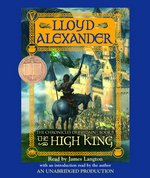
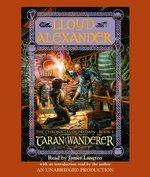
Taran Wanderer (Audiobook) by Lloyd Alexander, James Langton

Taran WandererTaran Wanderer

by Lloyd Alexander, James Langton (Narrator)
Series: Chronicles of Prydain, #4
Unabridged Audiobook, 6 hrs, 22 min.
Listening Library, 2005

Read: March 28, 2017


The one question that’s plagued Taran all his life is just who is he? Who is his family? Is there any chance at all that his family is some sort of nobility? This last question has taken on a new level of importance to him as he has realized that he’s in love with a princess and can’t do anything about it without that nobility.

Dallben can’t answer the question for him — but he allows Taran leave to go try to find the answer himself. I’ve never understood just how Taran can pull this off — there’s practically no birth records in Prydain (I can’t imagine), it’s not like he can get blood tests done — and he doesn’t really interview anyone, just meanders around.

Still, he visits various corners of the kingdom — visiting friends old and new, dipping his toe in all sorts of trades and vocations. He renders aid, and gets aid. Fflewddur Fflam shows up and spends a good portion of the novel traveling with him (Gurgi remains a constant companion). There’s a confrontation with a wizard, a regional armed conflict to try to settle, a mercenary band to deal with — as well as other woes.

He learns a lot, he matures a lot, and maybe even gets a dose of wisdom. It’s not your traditional fantasy novel by any sense, but it’s a good one.

As for the audiobook? Everything I’ve said about the other books in the series — Alexander’s introduction and Langton’s performance — holds true for this one.

The most emotionally rich of the books, the most thoughtful — particularly for those of the target age. Good, good stuff.

—–

4 Stars

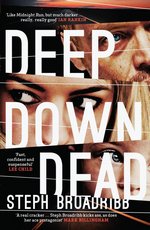
Deep Down Dead by Steph Broadribb

Deep Down DeadDeep Down Dead

by Steph Broadribb
Series: Lori Anderson, #1

eARC, 350 pg.
Orenda Books, 2017

Read: April 4 – 5, 2017


Crime Fiction blogger turned novelist, Steph Broadribb’s debut novel, Deep Down Dead is the story of a bail enforcement agent (bounty hunter) making a pickup that will change her life in a fairly dramatic way. Lori Anderson couldn’t be in worse financial straits — her daughter’s medical bills from Leukemia (currently in remission) treatment are so far past due that future treatment is in jeopardy, and they’re about to get evicted from their home. So when the bondsman she works for offers her the largest amount she’s ever been offered for a job, she has to jump at it.

It’s supposed to be a simple midnight run, go pick up the fugitive from another agent not licensed in Florida (or he’d drop off the fugitive himself) and deliver him to the police herself. Almost immediately, problems start (none that deter Lori from the cash reward waiting) — her sitter has plans, so she has to take her daughter, Dakota, with her. Secondly, the fugitive in question is her former mentor, JT — the one who taught her everything she knows, who’s inexplicably got a criminal record now. Then when she arrives at the pickup, the agent she expects isn’t there — instead three very aggressive ruffians (best word I can think of) are there and decide to rough her up a little.

Things really go downhill from there — before Lori knows it, she’s got bigger problems than getting her money. She has to deal with a criminal enterprise running from one of the state’s largest amusement parks; a mob with a long-standing grudge; corrupt law enforcement officials; and being a suspect in violent crimes. This is intertwined with the story of Lori and JT’s past association, how he saved her life and set her on the path that she’s on now.

By the time I got to a whopping 12% my notes started using the word “brutal.” This was like if Pierce Brown took a crack at writing Stephanie Plum. Most of the time the violence (gun play or hand-to-hand) was brtual, but not overwhelming — just heightened enough to fit a crime novel.

You like Laurie almost instantly, Dakota will charm you and grab your heart, and you’ll even appreciate JT (maybe more . . . ) and his crusade — at the very least, you’ll get the connection between he and Laurie. The villains are evil, no two ways about it — but not in the mustache-twirling way, just in the kind of evil that we like to pretend doesn’t exist in this world.

It’s not just in her characterization, but it’s in her plotting, pacing and interweaving the stories of present and past that Broadribb displays more skill than your typical debut novelist. This lived up to every expectation I had from the interviews, reviews, etc. that I’ve heard and read, which was a relief. I sorta feel like I’ve been giving too many 4 Stars lately, like I’ve been overly generous, so I tried to rate this lower. But I just can’t — this is a 4 Star book, easy — and with a little more experience under her belt, Broadribb (and Anderson) will be knocking out 5 Star reads regularly. I can’t wait to see what’s next.

Disclaimer: I received this eARC from Trafalgar Square Publishing via NetGalley in exchange for this post — thanks to both for this entertaining and almost traumatic experience.

—–

4 Stars

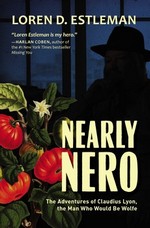
Nearly Nero by Loren D. Estleman

Nearly NeroNearly Nero: The Adventures of Claudius Lyon, the Man Who Would Be Wolfe

by Loren D. Estleman

eARC, 192 pg.
Tyrus Books, 2017

Read: March 24 – 30, 2017


I’ve heard about the stories in this volume for years, but have never tracked one down before — and then a whole collection of them show up on NetGalley! How could I not request it? I’m so glad this book exists so that those of us who don’t get the magazines, etc. that publish short mystery fiction can have them (and even those who do have access to those magazines, etc. can have them in one handy volume).

Anyway, here’s the setup: Claudius Lyon is a huge fan of Nero Wolfe — he reads every one of the reports that Archie Goodwin’s literary agent Rex Stout publishes. He’s such a fan that he wants to be Wolfe (like the guys dressing up in Batsuits in The Dark Knight Rises) — he’s fat, fairly clever, and wealthy enough not to need to work and still indulge himself. He renovates his townhouse to include a greenhouse, an elevator, and a first floor floorplan that pretty much matches Wolfe’s. He hires a private chef — a kosher chef of dubious quality (not that Lyon needs to eat kosher, it’s just what Gus can cook), changes his name to something that approximates his hero’s and hires a “man of action,” Arnie Woodbine. Arnie’s an ex-con, small-time crook who doesn’t mind (too much) putting up with his looney boss for a steady paycheck and meals.

The number of ways that Lyon isn’t Wolfe is pretty large and I won’t spoil your fun in discovering them. Now, Lyon’s unlicensed as a PI, so he can’t take on paying clients — but he occasionally gets people who will take him up on his free services. He’s decent at solving puzzles and low-priority mysteries (not that he doesn’t find his way into something bigger on occasion). Once he gets a client (non-paying, Arnie’d have me stress), he goes through whatever steps he needs to figure it out (including his own version of Wolfe’s lip movement and sending Arnie on fact-finding missions), and goes to some lengths to assemble some sort of audience for his reveal. I can’t help smiling as I think about it, really.

The whole thing is a tongue-in-cheek tribute to the Nero Wolfe/Rex Stout — recognizing the brilliance of the Stout’s work (how can you not?), while poking fun at it. Lyon’s really a goofy character and Woodbine is great at pointing that out — while begrudgingly admitting that he gets things right every now and then. There’s a lot of fun to be had in the story telling — the mysteries aren’t all that much to get excited about, it’s in watching Lyon stumble through his cases that the entertainment is found. Well, that and Woodbine’s commentary.

Not unlike many of the Wolfe stories (particularly the short stories).

I wouldn’t recommend reading more than two of these stories in a sitting, I think they work best as solo shots. It’s a difficult call, because I typically wanted to go on for one more. Also, I’m not sure how enjoyable these’d be for non-Wolfe readers — but then again, I think a lot of the humor would hold up and it might entice a reader to learn more about Lyon’s idol. And anything that gets people to read Rex Stout’s Nero Wolfe novels is a good thing.

But for readers of Stout’s Wolfe novels? This is a must read. He’s not trying and failing to recapture Stout’s magic (see Goldsborough post-The Bloodied Ivy), he’s intentionally missing and yet somehow getting a little of it. I really enjoyed this book and can easily see me re-reading it a handful of times.

Disclaimer: I received this eARC from Adams Media via NetGalley in exchange for this post — thanks to both for this.

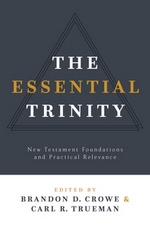
Pub Day Repost: The Essential Trinity by Brandon D. Crowe and Carl R. Trueman, eds.

Slightly different Pub Day Repost than I usually do — I usually post something I read an advanced copy of, but this time it’s being published by a different publisher. Still, content is the same, just a new cover, etc. Hopefully, this helps it find a larger audience.

The Essential Trinity The Essential Trinity: New Testament Foundations and Practical Relevance

by Brandon D. Crowe and Carl R. Trueman, eds.

Paperback, 320 pg.
P&R Publishing, 2017

Read: July 31 – August 14, 2016

As far as consistency of quality amongst edited volumes goes, Crowe and Trueman have assembled one of the stronger line-ups I’ve read in a while — men from a spectrum of persuasions of Evangelical-ish thought have given the Church fourteen articles (approximately 20 pages each) to deepen our thinking about the Trinity. The aim was for a volume that “eschews overly technical discussion and focuses attention on the importance of the doctrine for every Christian.”

In Part 1, the articles look at the “trinitarian contours of every corpus of the New Testament, along with a chapter reflecting on the Old Testament roots of trinitarian doctrine.” If there are weak chapters in the volume, they’re in this part — but they aren’t that weak, either. Crowe’s chapter on Matthew is excellent, but the chapters on the Mark, Luke-Acts and John aren’t far off that Mark. Brian S. Rosner’s chapter on “Paul and the Trinity” is worth the price of the book. The chapters on the rest of the epistles are very helpful (particularity Hebrews). Mark S. Gignilliat’s article, “The Trinity and the Old Testament: real presence or imposition?” is very helpful and insightful — and as an added bonus, it’s the most stylistically entertaining and engaging piece in the book.

Benjamin Gladd’s chapter exploring Daniel’s influence on Revelation’s view of the Trinity is the biggest mental workout you’ll get in the book. I appreciated the material covered and the argument Gladd makes, but I’m going to have to read it a few more times before I think I have a good handle on it.

Part 2 addresses the importance of the Trinity for everyday living — many would say the doctrine is impractical and only belongs in Statements of Faith and academia. The authors here show the fallacy of that. It begins with a brief, but excellent, description of the doctrine by Scott R. Swain. Carl Trueman has the next chapter, “The Trinity and prayer,” which is probably as valuable as Rosner’s — it’s actually about more than prayer, but the material specifically on prayer is great — hugely indebted to John Owen (but not uncritically so). Robert Letham’s chapter on “The Trinity and worship” also draws deeply from Owen; if he doesn’t move you to worship as you understand the work of the Trinity in it, you aren’t paying attention (I probably have more problems with some of what he says than anything else in the book). Michael Reeves, typically, made me chuckle in his chapter on preaching — but he did more than that, too.

Timely, convicting, thoughtful and inspiring, this examination of the Trinity in Scripture and Life should be a great benefit to any believer ho reads it. It may not be the easiest thing read all year (but really, it’s not that difficult), but it’ll be one of the most rewarding.

—–

4 Stars

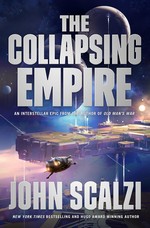
The Collapsing Empire by John Scalzi

The Collapsing EmpireThe Collapsing Empire

by John Scalzi
Series: The Collapsing Empire, #1

Hardcover, 329 pg.
Tor Books, 2017

Read: March 28 – 29, 2017

I can’t think of a SF release more highly anticipated this year than The Collapsing Empire, the first in a new series (there’s a really good chance that I’ll be saying the same thing in 3 months about something else that I’m spacing at the moment). Thankfully, it surpassed my expectations (which were, admittedly, pretty low — this just didn’t sound that interesting) — I can’t speak for the rest of his fanbase who were anticipating it so highly, but I can’t imagine that most weren’t wholly satisfied, and predict he picks up a few fans from this.

The Interdependency is the empire that is made up of the descendants of the people of Earth, it’s been in place for centuries — and, as the title of the book (and series) states, it’s on the verge of collapse. Not from political pressures or outside threats, or anything of that nature. Instead, it’s the Flow. The Flow is the way that humanity travels between the stars — a extra-dimensional field that can be accessed to facilitate travel between planets. And it’s on the verge of changing — not disappearing, just connecting different planets and leaving millions of people without access to the rest of the Empire.

Tricky to explain briefly — but that’s okay, the characters in the book are (with 3 exceptions) learning this about the same time as the reader is and those who explain it do a much better job. Basically, the Empire as they know it is facing the End. There to help the Interdependency through this trying time (not that citizens know about it) is a brand-new, untried Emperox. She and her allies (intentional or otherwise) are going to have to deal with political, business and religious groups to try to help some of humanity survive.

I’ve gotta say that Emperox Grayland II (Cardenia to her friends) is a delightful character — you cannot help but root for her. She’s brave, smart, relatable and an underdog (how someone who rules several planetary systems can be thought of as an underdog is a neat trick). The scientist who travels the length of the Empire to help her understand what’s going on, Marce, is clever, overwhelmed, and the only one who really knows what’s happening (shades of Jor-El?). There’s another character, Lady Kiva, a junior member of a ruling family of one of the largest guilds who is just too much fun — she swears enough to make Marshall Mathers take a step back; has no tact, no diplomacy, and shows no mercy to her enemies (especially if they stand between her and a profit). Really, she’s a horrible person (at least in this book),but a fun, fun character.

These three are our focus, they’re who we cheer for and pin our hopes on. If they can survive the political, scientific, religious, and humanitarian turmoil that’s beginning to bubble — there’s a shot for humanity. Not much of one, honestly, but a shot.

Somehow, Scalzi’s able to take societal collapse and tell it in an entertaining, suspenseful and frequently funny way. He’s able to give a thinly disguised commentary on environmental catastrophe and keep it from getting preachy. Basically, he threads the needle just right to keep people enjoying themselves as they read what would be a heavy, off-putting book in many author’s hands.

Is it perfect? No. Am I crazy about everything he does/tries to do in this book? Nope. But man, such a fun, quick ride that I can’t help but like it and recommend it to everyone I can think of. I was so wrong not to be interested in this book — I’m more than interested in the sequel.

—–

4 Stars

2017 Library Love Challenge

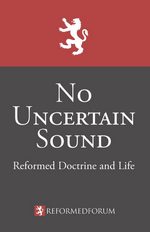
No Uncertain Sound: Reformed Doctrine and Life by Reformed Forum

No Uncertain SoundNo Uncertain Sound: Reformed Doctrine and Life

by Reformed Forum

Kindle Edition, 102 pg.
Reformed Forum, 2017

Read: March 26, 2017


I’ve been listening to podcasts from Reformed Forum for years now — not as long as I should’ve, no doubt, but for quite awhile — and their guests, discussions and related materials have provided a lot of fodder for my reading lists (both accomplished and planned). So I was excited to hear that they were taking their first steps into book production, not just promotion. Their first book, No Uncertain Sound: Reformed Doctrine and Life is a collection of essays attempting to “set forth the salient features of [their] Reformed identity” and “facilitate the spread of” the gospel. It’s definitely a winner regarding the former, and in the right hands, will help the latter.

Following a brief history of the Reformed Forum, there are six essays from regular contributors to the podcasts, conferences and website sponsored by the Forum. Lane G. Tipton writes about the Redemptive-Historical approach to the Scriptures, focusing on Jesus in the Old Testament’s progressive revelation of the Messiah — this essay also provides some critical interaction with Peter Enns as an added bonus. Camden M. Bucey, writes about the need for theology (professional or personal) to be both Biblical (as in Vosian) and Systematic — an approach I applaud and wish I saw more of. Jeffrey C. Waddington addresses the doctrine of has a great essay on union with Christ and the ordo salutis. Glen J. Clary writes about worship and our need to approach it correctly. James J. Cassidy’s ecclesiastical essay is very helpful and probably not what most people expect from the idea of an essay on ecclesiology. Waddington closes the book with an essay on Reformed apologetics — what’s known as Van Tillian presuppositionalism, or Covenant Apologetics.

All the essays are thought-provoking, and will help those new to thinking in these terms as well as those who’ve been down the path a time or two. At the end of each essay is a listing of podcasts/lectures from the Reformed Forum archives so readers can dive deeper into the topics — a great, and very useful tool. For myself, the essays on the Christ in the Old Testament, Union with Christ and Worship were the more profitable in the collection, but I can easily see where other readers will gain more from the others.

The suggested reading list is great — I’m not 100% convinced that I agree with the levels they assigned to some of the works (some are easier than they suggest, others more difficult). But a great list to have on hand without having to go dig around the website to find it.

This is in many ways an advertisement for their podcasts and website — and it’s good at that. But it is more — thankfully. There’s a lot of meat on these bones for people to chew on — whether they’re regular listeners/readers of the Forum’s output or not. Yes, the material basic, but it’s foundational — both for one’s understanding of what Reformed Forum is about, but for establishing an understanding of Confessional Reformed thought in the Twenty-First Century. This is a good first step into the world of books for Reformed Forum, and I look forward to seeing what they do next.

—–

4 Stars

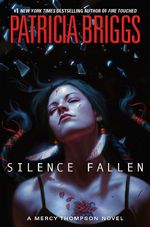
Silence Fallen by Patricia Briggs

Silence FallenSilence Fallen

by Patricia Briggs
Series: Mercy Thompson, #10

Hardcover, 364 pg.
Ace Books, 2017

Read: March 10 – 13, 2017


It was pretty clear from the pages of Fire Touched that Mercy’s little The Doctor to the Sycorax speech was a big deal. But I don’t think any of us really had a clue just how far-reaching the potential ramifications were until it’s spelled out for us by a few different characters here. Well, okay, that’s probably not true — a lot of people who read these books probably thought about it, but I didn’t — and I think that Mercy and her acquaintances do a better job of spelling things out than I could, so I’ll let them. But many in the supernatural communities aren’t happy that she did it and are looking for ways to insulate themselves from it, as well has looking for ways to take advantage of it for their benefit.

One such person is Bonarata — one of the oldest, and most feared vampires in the world — he has ties to the Tri-Cities vampires, as well. He’s the one who’s responsible for Marisila, Stefan and Wulfe leaving Europe and ending up in the Tri-Cities. He’s also a legend in Werewolf circles — many years ago, he killed an Alpha and turned his mate into a blood-slave. After the death of Chastel, Bonarata is the closest thing the non-Fae have to a Super-Villain (pretty sure any of the Grey Lords that wanted to could wipe the floor with him).

So shortly after Fire Touched, Bonarata arranges for Mercy to be kidnapped. Now, while Briggs’ vampires aren’t the political wheels-within-wheels schemers that Faith Hunter’s are, they’re still crafty and wily — so all his reasons for doing so aren’t immediately discernible (and probably not totally discernible by the end of the book — but we get closer).

Mercy is Mercy, however, and it doesn’t take too long before she escapes from Bonarata and finds herself running throughout Europe to escape from his henchmen. She finds herself in Prague (this detail feels like a spoiler, but it’s on the dust jacket, so . . . ) where her best bet for an ally is one of the few Alphas in the wold with a grudge against Bran Cornick. In addition to this she finds herself in the middle of a couple of vampire nests competing for control of Prague, and there’s a whole bunch of ghosts (and other things that go bump in the night) that are taking advantage of the presence of someone who can see them.

Meanwhile, Adam, Marisila, Stefan, Honey and a couple of others are on the way to Bonarata’s home to negotiate for Mercy’s release. Whoops. These chapters are told in Mercy’s voice from Adam’s point-of-view, as if she’s relating what he told her happened, which is a nice touch. It also suggests that she survives this mess — not-at-all-a-spoiler: the first person narrator lives. It’s here that we learn a lot more about Honey, Marisila and Stefan — we also learn about Adam’s Doctor Who fandom. It’s nice seeing things from Adam’s POV for a change.

Mostly the book consists of Adam and Mercy doing all they can to survive long enough to see each other again — which is sweet. We’ve seen them work together plenty of times in this series — we’ve also seen them apart for brief periods — this is the longest (that I can recall) that they’ve been separated, and the furthest apart they’ve been. They’re both independent by nature (however that nature is shaped into something else for the needs of the Pack), so they can adapt to this, but their primary goal is to get back together. Which I’m sure made many, many fans cheer and melt.

Will someone drawn in by the cover art, or wanting to see what the fuss over this Briggs-person enjoy the book? Yeah, I think so — but not as much as the established fan. This book works as well as it does because of the world, not just the story. We’ve been in Mercy’s world for 10 books now — for most of us you can add the short stories and Charles & Anna novels, too. We know it what it means for Honey to make that trip. We know what it means for people to exploit Mercy (or try to) to get to Bran or Adam. We know the pain that the loss of pack-link or mate-bond creates. This would be a lousy book 4, but with the cumulative weight of this series, Silence Fallen us a strong book 10.

It was a fun book — exciting, amusing, and fascinating to see how packs and nests work outside of the US. Most of all it was a good story, taking several competent and powerful characters out of their usual setting and circumstances, and throwing them into a milieu they’re not familiar with to watch them sink or swim. Excellent read for fans of the series — which isn’t a surprise to any, but just something I think I have to say.

Now begins the wait for #11.

—–

4 Stars

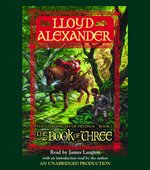
The Book of Three (Audiobook) by Lloyd Alexander, James Langton

The Book of ThreeThe Book of Three

by Lloyd Alexander, James Langton (Narrator)
Series: Chronicles of Prydain, #1
Unabridged Audiobook, 4 hrs, 56 min.
Listening Library, 2004
Read: March 6 – 9, 2017


I’m pretty sure that I’ve mentioned once or twice before here that The Chronicles of Prydain were the books that got me into fantasy. The Chronicles of Narnia made me a fan of Narnia, but really didn’t carry over to anything outside of Narnia (at least until I got older and tried Mere Christianity). But Prydain got me appreciating the tropes, conventions and characters that’d get me into Brooks, Weis & Hickman, Eddings, etc., etc. Listening to the audiobooks seemed like a nice way to revisit the series.

Taran, the Assistant Pig Keeper to Hen Wen (an oracular pig), dreams of glory to be found with a sword on the battlefield. His charge is frightened by something and escapes from her pen — Taran chases after her, leaving the only part of Prydain he’s ever known behind in the process. This hunt for the pig takes him to the far reaches of Prydain, where he encounters the son of the High King, Gwydion; Princess Eilonwy — about his age, and a fantastic foil and friend for Taran; Fflewddurr Fflam, an unofficial bard; Gurgi — some sort of simple-minded Sasquatch-like being; and others. Taran also encounters the forces of evil — the Horned King; Archen the enchantress; and other minions of the Dark Lord Arawn.

The themes of true nobility, heroism and what it means to be a man are prevalent (and Alexander maybe gets a little didactic here) — nothing I object to, just it seems a little thick by contemporary standards. Taran learns (for the first time) that there’s as much honor to be found in doing your everyday work well as there is on the battlefield. It probably feels a little old-fashioned to many, but there’s value here. Taran begins to mature here, but it takes (as I recall) all but the last 30 pages of the fifth book for it all to come together for him.

There’s a little audio recording of Alexander before the book kicks off as an introduction — that was pretty cool. Langton’s narration was okay — the narration was okay, maybe a little slow. His interpretation of Taran and Gwydion didn’t do much for me (and actually made me realize how clunkily Alexander wrote their dialogue), but they slowly grew on me. I really couldn’t find anything to like about Gurgi (one of my favorite characters ever). But I really liked everything else — his Eilonwy and Fflewddurr were perfect and a lot of fun. He deserves kudos for his Hen Wen alone, really.

This isn’t the greatest writing you’ll encounter — for the age group or genre. But it’s effective, there’s so much to appreciate here (and not just for nostalgia’s sake). I remain a big fan of the series, and do appreciate the audiobook.

—–

4 Stars

Hack by Duncan MacMaster

This feels a bit rushed to me — and more than a little vague. I guess it should, it was a little rushed, I liked this book enough that I pounded it out a couple of hours after finishing it, I didn’t want to sit on it for a while. And if the post is vague, it’s because this is the kind of mystery difficult to talk about without cracking open all the secrets, and because a lot of what I really liked about this is in the little details MacMaster gave. You need to experience it yourself to get what I’m saying.

HackHack

by Duncan MacMaster
Series: Jake Mooney, #1

Uncorrected Proof
Fahrenheit Press, 2017

Read: February 28 – March 1, 2016

Little victories, since they’re all I can hope for, they’re what I live for.

Jake Mooney used to be a pretty good reporter — good reputation, good results — but he got out of that game and got into a more lucrative field, even if it was more distasteful. Events transpired,  and that goes away — I’ll let you read it for yourself, but it involves lawyers and an ex-wife. Nowadays, he gets by being a ghost-writer for established authors who don’t have the time or ability to write their own material. Out of the blue, he gets an offer to help a former TV star, Rick Rendell, write his autobiography. He’ll even get credited for it. Credit — and a nice cash bonus. How can he say no?

Before you can say “Jessica Fletcher,” someone tries to kill Jake and then Rick is shot in front of a handful of witnesses, including Jake. Between his affection for (some of) the people in Rick’s life, worry over his own safety, curiosity, and his own sense of justice, Jake dives in and investigates the murder himself.

Jake finds himself knee-deep in a morass involving unscrupulous agents (I’m not sure there’s another kind in fiction), wives (current and ex-), Hollywood politics, an IRS investigation, a Drug Cartel, former co-stars, hedge fund managers, hit men, and a decades-old mysterious death. And a few more fresh deaths. . The notes he’s already taken for the book gives Jake fodder for his investigation — but the combination of notes and his continuing work provides the killer a constant target (and threat). As long as Jake’s working on the mystery/mysteries — and doing better than the police at uncovering crimes and suspects — the killer can’t just escape, Jake has to be stopped.

The voice was great, the mystery had plenty of twists and turns, Jake’s ineptitude with firearms was a great touch and served to keep him from being a super-hero. I really can’t think of anything that didn’t work. There’s not a character in the book that you don’t enjoy reading about. I had three strong theories about what led to Rick’s death and who was responsible — the one I feared the most wasn’t it (thankfully — it was a little too trite). My favorite theory was ultimately right about the who, but was absolutely wrong about everything else. I take that as a win — I felt good about my guess and better about the very clever plotting and writing that outsmarted me.

That’s more about me than I intended it to be, so let me try this again — MacMaster has set up a great classic mystery — a la Rex Stout or Agatha Christie. A dogged investigator with a personal stake in the case, supporting characters that you can’t help but like (or dislike, as appropriate), a number of suspects with reasons to kill the victim (with a decent amount of overlap between those two groups), and a satisfying conclusion that few readers will see coming. Hack is funny, but not in a overly-comedic way, it’s just because Jake and some of the others he’s with have good senses of humor. I chuckled a few times, grinned a few more.

I bought MacMaster’s previous book, A Mint Condition Corpse, when it came out last year — sadly, it’s languishing in a dark corner of my Kindle with a handful of other books from Fahrenheit Press (I’m a great customer, lousy reader, of that Press).  Hack wasn’t just an entertaining read, it was a great motivator to move his other book higher on my TBR list. Get your hands on this one folks, you’ll have a great time.

Disclaimer: I received a copy of this from the publisher, nevertheless, the opinions expressed are my own.

—–

4 Stars

Pub Day Repost: Hunger Makes the Wolf by Alex Wells

Hunger Makes the WolfHunger Makes the Wolf

by Alex Wells
eARC, 326 pg.
Angry Robot, 2017
Read: January 6 – 10, 2016

Let’s just get this out there — this is a very cool novel. If you dig SF that’s not beholden to space ships and lots of future tech — and can even handle a little bit of magic, you’ll want to read this one.

Tanegawa’s World is a little forgotten backwater of a planet — think Tatooine — so forgotten that none of the colonists there really have a clue that there’s an interplanetary government, or what’s going on with any other planet. The company that runs the mines (and by extension, the farming communities that support the mines) runs the whole show. There are organizations of workers in individual towns, and there’s a loose network connecting them, for mutual assistance and support. And then there are the Ghost Wolves — a band of mercenary bikers. They are a law unto themselves, but have strong ties to the miner groups. They may be supported by/sympathized with by most people in the towns, but officially they’re outlaws.

Hob Ravani is the lowest ranked member of the Wolves — she’s made some serious blunders that required her to go through the training/probationary process twice. But she’s a full-fledged member now, and the leader, Nick Ravani (no blood tie, but he gave her his name), seems to trust her, even as he’s still testing her commitment following these blunders. Making a routine run with a couple of other Wolves, Hob finds the body of Nick’s brother lying dead in the sand, shot in the back several times. This discovery — and the ensuing investigation, retaliation, and the side-effects of both — will end up changing Tanegawa’s World and the lives of many of its people in ways that no one can expect.

Which is not to say that this is a big, global story. It’s not. This is about Hob and her immediate circle. They just find themselves (and, eventually, put themselves) in some critical areas — and also don’t realize just what they’re getting themselves into. Mag, the dead man’s daughter, is Hob’s estranged best friend, and will be the favorite character of many readers. There are Geri and Freki — twins who are only slightly senior to Hob when we meet them, they’re not really friends of hers, but they are allies she can count on when she needs to — and on this world, that might be more important. There’s Coyote, who I enjoyed immensely, and a couple of other Wolves that we spend time with, but most aren’t factors in the story. There’s one more person in her circle, the Bone Collector — I’m not even going to try to sum him up in a sentence, but he’s worth getting to know.

On the flip side we have Mr. Green, who is just creepifyin’ (as Mal Reynolds would say), a Weatherman (not like Al Roker) and a couple of cut-throat corporate types who just this side of wearing black hats and twirling their mustaches They are absolutely believable and not cartoon-y, but reek of “bad guy.”

There is something that could be magic going on here — it’s definitely seen as magic by some. It might be radiation-induced mutation. It could be some sort of world-spirit/alien entity doing something to people. It’s tough to say, and it really doesn’t matter — some individuals on Tanegawa’s World possess abilities that others don’t. The ultimate cause of those abilities makes no difference to the story, it’s interesting to speculate about (and to see why various groups adopt their interpretation and how they use it) — but at the end of the day, it just means that there are a few characters walking around with extra abilities which don’t define them, but are definitely helpful.

The plotting is good, the pacing is strong, and there’s a strong voice throughout the work. This is just an impression — I can’t quote anything to verify it (were I a professional, I’d make the effort), but while the voice is consistent and strong throughout, I think Wells is a bit more aggressive about it in the opening chapters. In sort of a “come on strong and get you into the world” then dial back to “now here’s the story.” Or maybe it’s “throw you into the deep end” and then let you swim undisturbed. Or maybe I acclimatized Or maybe I should stop trying to make this point and move on. My overall point on voice — both the narrative voice, and the individual characters — it that it was strong, clear and engaging — the kind that you want to spend 300 pages with. Wells demonstrates the chops to keep and build an audience, if they’ll just give the book a shot.

I’ve seen a lot of comparisons to Dune and this world — I’ve never been able to get through much of the first book, and nor the adaptations — so I can’t comment. There’s a lot of sand, so, I guess maybe. Tanegawa’s World feels like something out of O’Keefe’s Scorched Continent or Firefly — a mining/agricultural society in what might as well be the Old West with (some) better technology than we have. Arguably, this planet is a little less hospitable to humans and The Powers That Be are a shade more corrupt.

I’ve also seen a lot of talk about the biker gang aspect of the book. It didn’t feel as prominent as I’d have liked — it was there, but it didn’t seem that vital to the nature of the mercenary crew the Ravani leads. If I had to compare it to anything, the Ghost Wolves felt more like a UF werewolf pack than anything else. That may say more about what I’ve been reading than anything that Wells wrote, still I got more of a Briggs/Vaughn/etc. vibe to the group than a Kurt Sutter-vibe. Outside of a handful of individual members, I didn’t get a clear feel for the Wolves. It’s understandable, Wells had a lot balls in the air and was doing just a good job juggling them that I didn’t notice. In retrospect, however, I’d have appreciated a little more time with this aspect.

I feel like I’ve gone on too long here, but I haven’t touched all the things I want to say. There’s just so much going on in these few hundred pages! Despite all that, you don’t get bogged down in the worldbuilding, the details, the backstories, or anything — Hunger Makes the Wolf is a fun, fast, gripping read. I trust there’s a sequel on the way. There just has to be. Not that this isn’t a complete story — there’s just a lot of threads that beg to be picked up. Either way, you’ll want to read this one.

Disclaimer: I received this eARC from Angry Robot via NetGalley in exchange for this post — thanks to both for this opportunity.

—–

4 Stars

Page 60 of 88

Powered by WordPress & Theme by Anders Norén