Tag: 4 Stars Page 6 of 88

Reformation Sunday Repost: The Freedom of a Christian by Martin Luther, Translated by Robert Kolb: A Pastoral Gem from the Reformer

This worked last year, might has well give it a whirl this year…It’s Reformation Sunday—a totally made-up holiday (but which one isn’t?) to commemorate the day in 1517 when Martin Luther inadvertently started a revolution/reformation/revival. So, hey, while I continue to fight off this cold, let me repost this about one of my favorite of Luther’s works:

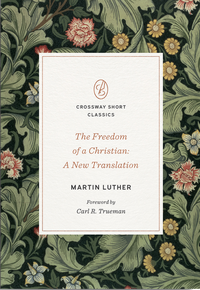
The Freedom of a ChristianThe Freedom of a Christian: A New Translation

by Martin Luther, Translated by Robert Kolb Carl R. Trueman (Foreward)

DETAILS:
Series: Crossway Short Classics Series
Publisher: Crossway
Publication Date: February 21, 2023
Format: Paperback
Length: 86 pg.
Read Date: February 26, 2023
Buy from Bookshop.org Support Indie Bookstores

Some Thoughts on the Series as a Whole

The point of this series is to take classic short works—sermons, tracts, articles—package them attractively, edit a bit (modernize language, eliminate footnotes, tweak grammar, etc.), and make them widely available. Each is given a short introduction to help the reader get the context and a bit of information about the author.

They published seven books in this series last year, and I discussed them here. Two have come out this year (so far), but I’m hoping for more.

What’s The Freedom of a Christian About?

A Christian is a free lord of everything and subject to no one.

A Christian is a willing servant of everything and subject to everyone.

This is Luther (early in the Reformation) laying out his vision for good works for the believer–how they are to be performed, why they are to be performed, and their place in the life of the believer. I’m sure there’s more to say, but that’s basically it.

That quotation gives his two theses–the rest of the book is his working out the thinking behind them. It’s penetrating, it’s convicting, and it’s inspiring to watch him work. Whoops, I seem to have stumbled into the next section.

So, what did I think about The Freedom of a Christian?

From all of this comes the conclusion that a Christian lives not in himself but in Christ and in his neighbor, in Christ through faith, in the neighbor through love. Through faith he rises above himself in God, from God he descends under himself through love, and remains always in God and in divine love. It is as Christ said in John 1[:51]: “You will see heaven standing open and the angels ascending and descending over the Son of Man.” Behold, that is the proper, spiritual Christian freedom, which liberates the heart from all sins, laws, and commands. This freedom exceeds all other freedoms, as high as heaven is over the earth. May God grant us that we truly understand that and retain it.

I wasn’t sure about reading this–it’s one of those works I’ve read so much about. I’ve seen it cited, heard descriptions of it in lectures, and read about it, but I haven’t gotten around to reading it. A lot of the times I read something that I know about like this, it doesn’t work out (I’ve never been able to get past page 40 of Postman’s Amusing Ourselves to Death, for example). But this is exactly what it should’ve been.

Martin Luther being pastoral is just great. Luther coming alongside those believers so often neglected in the Church and saying, here’s what to do–free of burden, free of guilt, free to live and love as they ought, as they’ve been called to.

This little read is a gem. I’m glad I took the chance on it and so glad that Crossway’s series brought it to us.

4 Stars

This post contains an affiliate link. If you purchase from it, I will get a small commission at no additional cost to you. As always, the opinions expressed are my own.

The Debt Collector by Steven Max Russo: She Just Wanted Some Work…

Be sure to come back a in few hours to read a Q&A with the author about this book!


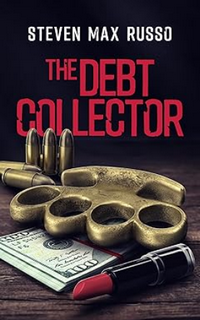
Cover of The Debt Collector by Steven Max RussoThe Debt Collector

by Steven Max Russo

DETAILS:
Publication Date: March 20, 2024
Format: eBook
Length:  268 pg.   
Read Date: September 19-23, 2024

But she was also a little off. You could see it in her eyes. She was crazy. Had an edge to her, hard and sharp. There was an alpha dog, a predator, hiding behind that sweet, pretty smile.

What’s The Debt Collector About?

What do a couple of neighborhood drug dealers, some gang members, a bookie, a finance-bro who refuses to pay said bookie, a slightly bent cop, a low-level mobster, and miscellaneous henchman have in common?

Abigail Barnes. A debt collector who just wants a job.

Now Abby isn’t the kind of debt collector who calls you at inconvenient times of day and harasses you about outstanding medical debt, or whatever. She collects for people who can’t go through services like that. People like the aforementioned bookie. Or other drug dealers. Loan sharks. And other people who could collectively be called “criminals.”

She doesn’t look like your typical tough guy, however. The man who introduces her (in one way or another) to the above, Hector, describes her thusly the first time he sees her (while sober, but that’s another story):

He opened the door and saw a very attractive young blond woman standing there. She was a white girl, with very white skin; piercing, electric blue eyes, and a sort of round face framed by shoulder-length hair that added to her youthful appearance. She was average height for a girl with a well-rounded, curvy body that looked more solid than it did plump. She had on a white blouse that matched her very white teeth and blue jeans with black cowboy boots. She was carrying a six-pack of beer in one hand. In the other was his Maverick 88 pump action shotgun, angled upward and pointed directly at him at just about crotch height.

But as Hector will learn shortly after this—and just about everyone else she comes into contact with does, too—appearances are deceiving when it comes to Abby.

She’s got some training. She’s smart, too—she knows her limitations, and what people expect from someone who looks like her—and she combines those three attributes in ways that pretty much mean that she always comes out on top. At least regularly enough that she can earn money and stay off the radar of the authorities. But sometimes, things do get hot enough that she has to relocate and start over.

This is what she’s trying to do when she encounters Hector for the first time (and he’s nowhere near sober)—in one of those scenes that you can’t help but see play out like a movie as you read. It’s a great opening to the book, and then once Hector starts introducing Abby, we’re off to the races.

I Don’t Think I Want a Steady Diet of This, but…

Near the halfway point, there’s a pretty good fight scene between Abby and some people who have come to collect her—some of the henchmen I mentioned earlier. And, well, it doesn’t go well for them. This is a common theme in this book. And frankly, given the kind of novel this is—it’s not altogether unexpected.

But Russo does something cool here—he rewinds things a bit after the fight, and then we get to see the fight from the other point of view. It still doesn’t go well for the henchmen—but the change of perspective helps you see everything that happened in a fuller way, and better appreciate Abby.

I wrote in my notes, “that’s pretty cool, but I wouldn’t want to see that all the time.” If every time Peter Ash, Charlie Fox, or Ben Koenig got into a fight with someone we saw it from two angles, it’d get tiring (and would slow down their novels). But as a sometimes-treat? I’d love to see this kind of thing more often.

Particularly if the author did it as well as Russo did.

So, what did I think about The Debt Collector?

I had a blast with this novel—it’s one of those that in a world where I didn’t have work the next day, a family that I should pay attention to, or a blog to maintain, I’d have tackled in a single reading. I distinctly remember sitting down to dip my toe in the water one night, and maybe read 10 percent or so of the book. I got to 28% without noticing—and had to force myself to put the book down.

It just moved so smoothly—the first scene gets you hooked, and by the end of the first chapter, you’re invested in Hector and Abby (more the latter than the former, but he has his charm). And it keeps getting better and better from there.

I used the word “smoothly” above—and that’s the only word that comes to mind as I try to describe this experience. It feels effortless the way that the novel keeps you turning page after page after page—a sure sign that it took plenty of effort. There’s a little humor, Abby’s got a fresh-feeling perspective that you want to see more of. And the action? Really, really well delivered by Russo. You may think you have a general idea of how things are going to go early on (and you are likely right), but the way he reveals the plot and takes you through the fight scenes and the movement of the plot will have you not caring about your own theories when you can just keep turning the pages.

I thought the second half of the last chapter, in particular, was a tasty little cherry on top of the sundae. We really didn’t need it—but I tell you, I’m glad we got it. (The Epilogue is another thing we didn’t need—and the novel would’ve been completely fine without it—but it made me smile).

This was just a pleasure—and makes me really hope we don’t have to wait another five years for Russo’s next novel.

Disclaimer: This is where I’m supposed to say that I received an ARC from the author but the above is my own opinion. But I completely forgot for 7 months that he’d given it to me, so I went and bought it to balance the scales a bit—the above is still my honest opinion, and I’d have gladly paid for the book even if I didn’t have a guilty conscience.


4 Stars

Irresponsible Reader Pilcrow Icon

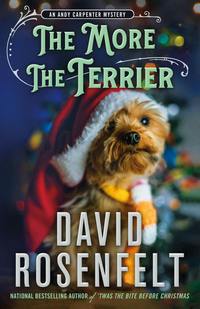
PUB DAY REPOST: The More the Terrier by David Rosenfelt: Andy Carpenter’s 30th Is as Satisfying as the 1st

Cover of The More the Terrier by David RosenfeltThe More the Terrier

by David Rosenfelt

DETAILS:
Series: Andy Carpenter, #29
Publisher: Minotaur Books
Publication Date: October 15, 2024
Format: eARC
Length: 304 pg.
Read Date: October 5-7, 2024
Buy from Bookshop.org Support Indie Bookstores

What’s The More the Terrier About?

The Carpenter family returns from a vacation to find that their house/dog-sitter has brought in a stray from the weather. Before they can take it to their rescue shelter to scan for a chip, his son, Ricky, recognizes the dog—he’s a little terrier that they’d fostered a few years ago, who’d gotten lost and found his way back to a place he knew.

Andy returns the dog, to find out that this was a bit of coincidental timing. The dog was adopted by a mother and son—the son attends a local college, and is in jail awaiting trial for killing a professor. His current lawyer is pressing him hard to take a deal, but BJ is resisting. Andy has a conversation with BJ and takes over the case—there’s something fishy about this lawyer and how he got involved in the case.

As one expects by now, the more that Andy looks at things, the more complex things appear. Soon, Andy and his team are up in their necks with experimental computer software, drug dealers, sexual assault (don’t worry, it’s not anywhere near graphic), and other sorts of criminal activity. This includes one of the biggest challenges (possibly the biggest) Marcus has faced in this series.

Marcus

At one point in this book, Andy and Marcus are having a conversation and in the middle of it, I stopped just to marvel at a totally normal conversation happening between the two without any wisecracks in the narration about finally understanding him or anything.

It was just strange. It’s good, I think I like it this way. But it’s taking some getting used to.

Marcus as a whole is losing some of his mystique, though. He’s becoming more human—which is a good (and a bad thing, I miss the superhero).

The Holiday-ness of It All

Since this is a “Christmas”/”Holiday”-themed release, I like to take a moment to talk about that aspect of the book. There’s barely any. If someone had told me that Rosenfelt had spent a day changing the Summer 2025 book into the Holiday 2024 release, it’d come out like this.

That said–it worked. We don’t need chapters upon chapters every year about Christmas, Laurie’s obsession with Christmas decorations and music, all the stuff about gifts, etc. If you’re a fan who reads every book, the allusion is enough. If you’re new to the series–or just not obsessive–there’s enough Holiday content to add flavor, to set the mood.

This is not a comment about quality or quantity. I’m good with either—it’s just an observation. Also, it’s hard to find something to talk about here at book #30.

Metaverse Overload?

So the Metaverse is a major component in this novel—it’s a place where the victim spends a lot of time, as well as several other characters in the book. There’s a lot of conversation about it, and so on.

Few things speak to the lead time between the submission of a manuscript and its publication as clearly as something like this. I verified my assumptions with the Gen Z and Millennial people in my family, and they all tell me that the Metaverse is just not as big as these characters made it seem (and people thought it would be a few years ago).

Does this hurt anything? Nope. It just made me roll my eyes.

So, what did I think about The More the Terrier?

Few things in my life are as certain as that I will have a good time with an Andy Carpenter book. The More the Terrier is no exception. We get to spend some time with some good friends, maybe make another friend or two (maybe just good acquaintances)—we get to see that Corey’s relationship is growing (we need another Team K-9 book!!).

The mystery is satisfying. The way that Andy and Co. solve it is, too. Andy’s narration is reliably entertaining and chuckle-inducing. The material about the dogs is great (the Sebastian jokes are something I’ve started to really look forward to). Andy’s courtroom antics are restrained here, but the trial is still the best part.

I really don’t know what else to say—this is a fun read. If you’ve never read an Andy Carpenter book, you’ll enjoy it–if you’ve read 1-29 of them, you know this is the case.

Rosenfelt’s books are like potato chips—once you start, you just can’t stop. Go ahead and open this bag.

Disclaimer: I received a copy of this book from St. Martin’s Press—thanks to both for this.


4 Stars

This post contains an affiliate link. If you purchase from it, I will get a small commission at no additional cost to you. As always, the opinions expressed are my own.
Irresponsible Reader Pilcrow Icon

The More the Terrier by David Rosenfelt: Andy Carpenter’s 30th Is as Satisfying as the 1st

Cover of The More the Terrier by David RosenfeltThe More the Terrier

by David Rosenfelt

DETAILS:
Series: Andy Carpenter, #29
Publisher: Minotaur Books
Publication Date: October 15, 2024
Format: eARC
Length: 304 pg.
Read Date: October 5-7, 2024
Buy from Bookshop.org Support Indie Bookstores

What’s The More the Terrier About?

The Carpenter family returns from a vacation to find that their house/dog-sitter has brought in a stray from the weather. Before they can take it to their rescue shelter to scan for a chip, his son, Ricky, recognizes the dog—he’s a little terrier that they’d fostered a few years ago, who’d gotten lost and found his way back to a place he knew.

Andy returns the dog, to find out that this was a bit of coincidental timing. The dog was adopted by a mother and son—the son attends a local college, and is in jail awaiting trial for killing a professor. His current lawyer is pressing him hard to take a deal, but BJ is resisting. Andy has a conversation with BJ and takes over the case—there’s something fishy about this lawyer and how he got involved in the case.

As one expects by now, the more that Andy looks at things, the more complex things appear. Soon, Andy and his team are up in their necks with experimental computer software, drug dealers, sexual assault (don’t worry, it’s not anywhere near graphic), and other sorts of criminal activity. This includes one of the biggest challenges (possibly the biggest) Marcus has faced in this series.

Marcus

At one point in this book, Andy and Marcus are having a conversation and in the middle of it, I stopped just to marvel at a totally normal conversation happening between the two without any wisecracks in the narration about finally understanding him or anything.

It was just strange. It’s good, I think I like it this way. But it’s taking some getting used to.

Marcus as a whole is losing some of his mystique, though. He’s becoming more human—which is a good (and a bad thing, I miss the superhero).

The Holiday-ness of It All

Since this is a “Christmas”/”Holiday”-themed release, I like to take a moment to talk about that aspect of the book. There’s barely any. If someone had told me that Rosenfelt had spent a day changing the Summer 2025 book into the Holiday 2024 release, it’d come out like this.

That said–it worked. We don’t need chapters upon chapters every year about Christmas, Laurie’s obsession with Christmas decorations and music, all the stuff about gifts, etc. If you’re a fan who reads every book, the allusion is enough. If you’re new to the series–or just not obsessive–there’s enough Holiday content to add flavor, to set the mood.

This is not a comment about quality or quantity. I’m good with either—it’s just an observation. Also, it’s hard to find something to talk about here at book #30.

Metaverse Overload?

So the Metaverse is a major component in this novel—it’s a place where the victim spends a lot of time, as well as several other characters in the book. There’s a lot of conversation about it, and so on.

Few things speak to the lead time between the submission of a manuscript and its publication as clearly as something like this. I verified my assumptions with the Gen Z and Millennial people in my family, and they all tell me that the Metaverse is just not as big as these characters made it seem (and people thought it would be a few years ago).

Does this hurt anything? Nope. It just made me roll my eyes.

So, what did I think about The More the Terrier?

Few things in my life are as certain as that I will have a good time with an Andy Carpenter book. The More the Terrier is no exception. We get to spend some time with some good friends, maybe make another friend or two (maybe just good acquaintances)—we get to see that Corey’s relationship is growing (we need another Team K-9 book!!).

The mystery is satisfying. The way that Andy and Co. solve it is, too. Andy’s narration is reliably entertaining and chuckle-inducing. The material about the dogs is great (the Sebastian jokes are something I’ve started to really look forward to). Andy’s courtroom antics are restrained here, but the trial is still the best part.

I really don’t know what else to say—this is a fun read. If you’ve never read an Andy Carpenter book, you’ll enjoy it–if you’ve read 1-29 of them, you know this is the case.

Rosenfelt’s books are like potato chips—once you start, you just can’t stop. Go ahead and open this bag.

Disclaimer: I received a copy of this book from St. Martin’s Press—thanks to both for this.


4 Stars

This post contains an affiliate link. If you purchase from it, I will get a small commission at no additional cost to you. As always, the opinions expressed are my own.
Irresponsible Reader Pilcrow Icon

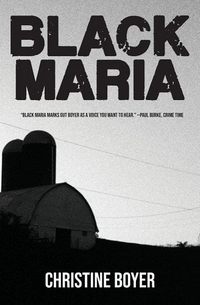
Black Maria by Christine Boyer: A Small Town Has Some Big Secrets Exposed

Cover of Black Maria by Christine BoyerBlack Maria

by Christine Boyer

DETAILS:
Publisher: Run Amok Crime
Publication Date: October 1, 2024
Format: ARC
Length: 243 pg.
Read Date: September 30-October 1, 2024
Buy from Bookshop.org Support Indie Bookstores

What’s Black Maria About?

Detective Felix Kosmatka knows he shouldn’t think of this murder case being a launching pad for his career—his ticket out of the hometown where everyone of a certain age (including the police department’s receptionist) still uses an embarrassing nickname. But thinking about that does help distract him from a sight that threatens to make him lose his lunch.

The grandson of the region’s richest person has been found in his bed with his throat slit. There’s no sign of a break-in, nothing is missing, and everyone is accounted for (except for his father).

The grieving grandfather is prominent enough that a specialist from outside of area is brought into this small Pennsylvania mining town to help Felix. Detective Adam Shaffer wants to find the obvious answer, but Felix isn’t sure that Occam’s razor applies here and is determined to find something deeper.

In this former coal town, there’s plenty of deeper and darker places to go. By the time this investigation ends, everyone in the Department and everyone touched by the case will changed in one way or another.

My Other Post About the Book

Last Tuesday, I posted my thoughts about the book at about 100 pages in. In this post, I made some guesses about where I thought the book was going to go. It took less than 60 pages* for Boyer to prove me wrong. Very wrong about a lot of it—the kind of wrong where it might have felt like she was rubbing my nose in it, if I cared. Which I really didn’t—I was having too much fun reading the thing.

* I could tell you exact pages for both of these points, but I won’t to preserve a little bit of surprise.

Also, the formatting on the post was questionable and says a lot about the rush I was in to get it done on time. It’s actually more embarrassing than how wrong I was about the book (because it’s entirely my fault, and not because of a clever writer).

So…can I explain why I was wrong without giving much away? Not really—but I can say that I made the same mistake that both the detectives (and others) made.

So, what did I think about Black Maria?

There’s a lot that was impressive about this book—there’s a solid twist that derailed me, and some really well executed reveals throughout.

This is a police procedural where the whodunit isn’t that interesting (and is given away really quickly), the howdunit is pretty obvious (although the reasoning behind the how…), it’s all about the why and when. The how/if the killer gets caught comes in as a close second.

Boyer gets the people—the detectives, the killer, the victims, and the relatives of them all (and anyone else I didn’t mention). There are a lot of rich backstories at work here—we don’t get them all, we actually get very few of them. We get flashes of several others, just enough to tempt you, really. It feels like everyone tied to law enforcement (and more than a few others) could be part of a long-running series, and we only get to see them in this one installment. It’s a nice touch.

A lot of this novel wouldn’t work if it wasn’t told in the early 1970s, but I still wonder why that was important to Boyer to do. Did she start with an element of the story and/or a desire to tell something having to do with it, and then had go put the rest of the story there (and which element was that?). Or does she really just like that period of American/Pennsylvanian history? I don’t think it matters, but I’m curious.

I don’t know that except for the thing I alluded to in the previous section that I was ever blown away by the writing or the plot. But at every point, it was clear that Boyer was executing her vision exactly the right way. This is a solid piece of writing from someone I’d gladly pick up another book or three from. I might not be moved to rave about this book, but I will gladly recommend it widely. This is the way to do a historical mystery.

Disclaimer: I was provided a copy of this ARC by the publisher, without any expectation that I would post about it. My choice to do so, and what I chose to say are mine alone.


4 Stars

This post contains an affiliate link. If you purchase from it, I will get a small commission at no additional cost to you. As always, the opinions expressed are my own.
Irresponsible Reader Pilcrow Icon

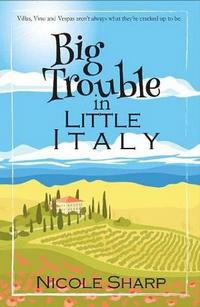
Big Trouble in Little Italy by Nicole Sharp: Filled with Great Food, a Lot of Laughs, and Love

Cover of Big Trouble in Little Italy by Nicole SharpBig Trouble in Little Italy

by Nicole Sharp

DETAILS:
Series: Simply Trouble Series, #1
Publisher: Writing Moose
Publication Date: October 3, 2023
Format: Paperback
Length: 343 pg.
Read Date: August 27-28, 2024
Buy from Bookshop.org Support Indie Bookstores

The Back of the Book

There’s no way I could put all this as concisely as (I’m guessing) Sharp did for the back of the book. Also, I think I’d trip over myself not saying some of this, but I clearly think some things are more spoiler-ish than others do. So I’m just going to steal this:

Life is looking pretty good for thirty-two-year-old Jessica Dodd. She just bought her wedding dress and closed on a house with her trial lawyer fiancé, Thomas. But first, she needs to take care of one tiny issue: her husband – a youthful indiscretion from a drunken weekend in Vegas years ago. She never saw the guy again, so it didn’t really count. Still, she needs to get divorced.

CIA agent Parker Salvatore has thought of his “Vegas wife” over the years, though it was never time to start dating her. However, when he returns from a two-year assignment to find that she is literally in bed with the enemy, he realizes it’s time to make his move. First, he needs to catch the bad guy, then he can woo the girl.

Things begin to unravel when Jessica finds out Thomas has been lying to her. Determined to confront him she follows him to Italy. Fueled by a surplus of caffeine and a colossal lack of sleep her plan becomes a hell of a lot more complicated when she walks straight into the middle of the CIA’s criminal investigation of her fiancé.

Set against the backdrop of the Tuscan countryside, Parker and Jessica find themselves treading the perilous waters of infiltrating a well-known crime family, filing for divorce and attempting to keep their rekindled attraction at bay.

Slightly Ajar Door Romance

I’m not an expert on this kind of thing, but I can read definitions online, so I feel safe saying that this isn’t a closed-door romance. But it’s really not that far off–I’ve read books (Romance and otherwise) that put more on the page. Sharp does fade to black pretty quickly, thankfully*, but she could fade a bit quicker–and take a little more time before fading back into light.

* That’s a reflection of my prudish-inclinations.

I just figure that I should mention it since I’ve talked about things like this in the past–and I know some of my readers care. Basically, I’ve learned from the Sunshine Vicram books–these are not ones I will give my mother. Although I have to say, I kind of think I’d be more comfortable knowing that my mother read this over Sunshine (and much more comfortable with my mother knowing I read these, too). That might be a silly basis for rating, but that’s where I am.

So, what did I think about Big Trouble in Little Italy?

I only took one note while reading this book–after the first chapter, I wrote simply “Zany.” And I really never came up with anything to say beyond that. There is a lot more to the book than that–but that word is pretty much always applicable.

Sharp’s voice is infectious–I thoroughly enjoyed the writing here, more than the rest of it (which is saying something). The characters lept off the page and right into your heart (except for the small handful you just wanted to spit out as quickly as possible, and then spit on). There’s an Italian agent working with Parker who is one of those characters that comes close to stealing the show–I’d love to read more about him. That’s true for most of the more significant supporting characters, too. Yes, the focus of the book is (rightly) on Jessica, Parker, and Thomas–but Sharp has this book bursting with characters you want more of.

This is very much a Romance novel–yes, a Romantic Comedy, yes, a Romantic Comedy with a Thriller flavor. But the key word there is Romance/Romantic. As such, I’m not really the intended audience for this, but after talking with Sharp at an event this Spring, I really wanted to read something she wrote–and thankfully, the Comedy and Thriller parts of the book were strong enough that I could handle the Romance.

I’m not sure what people who read more Romance fiction than I do would think of this. I think die-hard Thriller readers would think it stretches things a bit (but not as much as a couple of Lee Child books have, for just one example). The Comedy never misses, though. Not once.

I can see myself coming back for more in this series, actually. I can also see me dropping it pretty quickly if the laughs die down. I say that without rancor–but because I recognize that I’m just dabbling in this world.

I’d definitely like to hear what people better versed in Romantic fiction have to say about Sharp’s work. But for my money, this is worth your time and money. The plot zips along well, the CIA-Crime story zigs and zags the way it should, and the comedy is pretty consistently goofy and yet heartfelt–actually, all of it is heartfelt. Zany and Heartfelt. A heckuva combination.

Oh, be sure to have your local Italian restaurant’s online delivery menu pulled up, you’re going to want to use it. Or have it, and your payment methods, locked away if you don’t need to treat yourself in that way.


4 Stars

This post contains an affiliate link. If you purchase from it, I will get a small commission at no additional cost to you. As always, the opinions expressed are my own.
20 Books of Summer

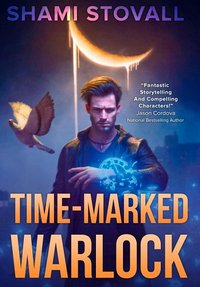
REPOST: Time-Marked Warlock by Shami Stovall: A Mulligan-Equipped PI

I thought I’d been watching for it, but the publication of this book slipped by my notice last week, so I wanted to get this up now. It’s my favorite new-to-me Urban Fantasy of the year, and I’m eager to dip into the second in the series soon.

(and, well, I decided that falling asleep during the first episode of Batman: Caped Crusader was a better idea than actually writing something last night. That’s not a reflection on the quality of the show, just how tired I turned out to be)


Cover of Time-Marked Warlock by Shami StovallTime-Marked Warlock

by Shami Stovall

DETAILS:
Series: Adair Finch, #1
Publication Date: June 2024 (or August, depending who you ask)
Format: e-ARC
Length: 402 pg.
Read Date: April 15-16, 2024
Buy from Bookshop.org Support Indie Bookstores

What’s Time-Marked Warlock About?

Until a few years ago, the names of warlocks Adair and Carter Finch were famous among the magic community. Private eyes who helped law enforcement as well as private clients dealing with cases large and small—they were pretty close to superheroes. Then they took that one job that put them against an opponent they weren’t ready for, things went wrong, and Carter died.

Adair’s magic couldn’t help. He couldn’t even track down everyone who was responsible, so he couldn’t get revenge. So…he went home and retreated from life. He became an asocial hermit, doing little more than existing.

Then one pre-dawn morning, a twelve-year-old girl pounds on his apartment door. Her mother always told her that if she was in real trouble to track down Adair or Carter Finch. They weren’t close friends by any means, but they did know each other—enough so that her name makes Finch pay attention. Bree’s mother was a witch and her father is a warlock, but not in the same league as Finch. Bree tells Finch that her mother has been murdered and her father kidnapped—and she needs his help to rescue her father and get justice for her mother.

Finch is not inclined to do anything but close the door on her face and get back to not interacting with anyone. But he can’t turn down her appeal—so he agrees to go to the crime scene (if only so he can determine that she misunderstood what she saw, and that her father actually was the murderer).

The scene isn’t what he expected—Bree might have been right. Also, the police detective on the scene knew Finch before he “retired” and neither really appreciated the other. Det. Jenner really rubs Finch the wrong way on the scene.

Between their less-than-pleasant interaction, Bree pulling on his heartstrings just right, and what Finch noticed at the scene of the crime, Finch decides to take the case, wrap it up quickly, and get back to wasting away as soon as he can.

Finch

Let’s get this out of the way real quick: Frequently reminded me of (James J.) Butcher’s Huntsman, Leslie Mayflower (and several other retired/depressed heroes, but Mayflower is most recent in my mind, so he gets name-dropped). Is he the Huntsman? No—he’s far less inclined to leave a trail of bodies in his wake.* for one thing. But he gives a similar vibe.

* We can argue some other time about how inclined Mayflower really is. Roll with it for now.

He’s clearly angry at himself. He’s reticent to put himself out there emotionally (or any other way). He’s not ready to let anyone else down again (assuming he really did). But something about Bree creates a crack in his defensive shell, and it’s great to see purpose emerge from where he’d trapped it down. He’s a different guy by the end of the book (probably like what he was years ago)—he’s not totally where he should be, but he’s on the road to recovery. As the series continues, i look forward to seeing how he grows/recovers.

Bree Blackstone

I don’t know how any UF reader is supposed to read her full name and not think of Harry Dresden. Maybe we’re supposed to—surely we are right?

Anyway…if Bree doesn’t melt your heart right off. If you’re not rooting for her to get the answers she seeks and maybe a touch of the retribution she longs for—and to save her dad…there’s something wrong with you—go listen to some Whos down in Whoville sing some Christmas songs until your heart is the right size.

She is so frightened by everything—there’s a real parallel to Finch there. But she’s determined to get the help she needs to save her dad and get the bad guy who killed her mom. And if Finch is the way to get both of those, she’ll get him to help her.

Naturally, along the way she picks up a pretty hefty case of hero-worship. Finch doesn’t see it for what it is right off—but he eventually does, and knows he’s not worthy. Watching him balance helping her, fending off (or trying to) her fangirling over him, and teaching her what she needs to know to be safe in the magic world is a great balancing act.

Bree is really well-conceived and executed by Stovall, and will become one of your favorite characters of the year.

Kullthantarrick the Sneak

Kull is a trickster spirit that Finch calls up to help with a little something along the way—she’s largely around for comic relief—but she also helps Bree to learn some things about the nature of magic, spirits, and the like that she hasn’t learned from her parents yet. Yes, her role is to help make worldbuilding infodumps entertaining. She’s well-used that way.

Any spirit of mischief—from Mercy Thompson’s Coyote to the Wizard in Rhyme’s Max to Al MacBharrais’s Buck, or…okay, I’m drawing a blank here—can be a lot of fun. You just set them loose to create havoc and sit back and watch. And Kull is great at that.

But that’s not all she is—she wants to be a human, she’s seen and done enough as a spirit, and she wants the human experience now. That adds a little depth to her—there’s also an affection that develops between her and Bree that adds even more shades of depth to what could’ve been a disposable character that ends up being so much more.

Really well done there.

The Magic System(s)

I don’t know how much to say here. This world has a handful of magic systems at play—there’s one for witches—like Bree’s mother and (presumably) her. There’s another one for warlocks—it’s similar and not necessarily mutually exclusive to the witch system. And there are some others, too.

One way that Finch uses his abilities (that other warlocks like Bree’s father can’t) is that he has some ability with time. It’s in the title, I feel I can give a vague description here. He’s constantly noting the time whenever anything happens. If he “marks” the time, within any 24-hour period he can return to the marked time—retaining the memories and knowledge gained, but getting to start over. Bree compares it to a save point in a video game.

This is brilliant—and so good to see in action. There’s part of me that wondered if it’d feel like a cheat—killing tension and so on. Or if it’d just be some Groundhog Day-riff good for comedy and that’s it. If you’ve ever played—or watched someone play—an intense video game with a save point, you know that’s not enough to keep someone from getting stressed out about almost dying/dying within the game. Sure they can take another try (or several), but the tension is still there. It works that way for this book (especially if it looks like Finch might not reset in time). And yes, there’s some weatherman Phil-esque humor, but not as much as other authors might have indulged in.

All in all, Stovall nailed this part of Urban Fantasy.

So, what did I think about Time-Marked Warlock?

Three great characters (not even counting the antagonists), an even better magic system, and a decent plot with a satisfying central villain. I don’t know what else to ask for in a UF novel.

The pacing was on-target—even when revisiting the same day or events over and over, Stovall was able to keep it fresh. She also knew when to say “they did X again” and when to show it. The action scenes worked well. The villain(s) were believable, had compelling motivations, and were enough of a threat to all involved to keep the reader’s interest.

There were supporting characters—including villain(s) that ended up not being as terrible as you might initially think—that were just as fully drawn, and you could generate a little sympathy for some of the people associated with the murder once you realized how they were being used, too.

There’s a good setup for further books in the series, too.

I really can’t think of much that Stovall could’ve done better—this scratched my UF itch, and I bet it’ll do the same for you, too. Keep your eyes peeled for the release and get your hands on this when you can.


4 Stars

My thanks to The Write Reads for the invitation to participate in this tour and the materials—including the ARC—they provided.

REPOSTING JUST ‘CUZ: Why Did Jesus Have to Live a Perfect Life? by Brandon D. Crowe: Obedience that Actually Saves

I’m about 3 weeks behind schedule (self-imposed) with Brandon Crowe’s latest. Absolutely worth it, but not really doing wonders for my posting. Anyway, while I’m (hopefully) getting to that book’s ending, let’s take a quick look back at one of his that I actually finished reading.


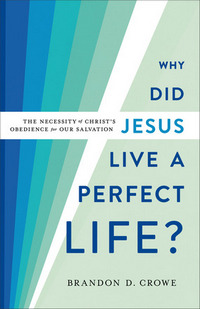
Why Did Jesus Have to Live a Perfect Life?Why Did Jesus Live a Perfect Life?:
The Necessity of Christ’s Obedience for Our Salvation

by Brandon D. Crowe

DETAILS:
Publisher: Baker Academic
Publication Date: October 26, 2021
Format: Paperback
Length: 189 pg.
Read Date: December 19-26, 2021
Support Independent Bookstores - Visit IndieBound.org

What’s Why Did Jesus Have to Live a Perfect Life? About?

Crowe seeks to focus on this question:

Is perfect obediencce necessary for enternal life?

The question could be rephrased a number of ways; Is perfect obedience necessary for justification? Is perfect obedience necessary for salvation? Did Jesus have to be perfectly obedient in order to save us? And if so, why?

Obviously, he says it is necessary—noting that we’ll underplay and miss all of what Christ did on our behalf and that we’d end up putting too much importance on our own works.

After Crowe establishes the question and ensures that the reader understands the definitions he’s using for the key terms, he turns to the Biblical text for some exegetical looks at key texts. This is, as it should be, the bulk of the book. In the third part of the book, he moves on to practical application—given what’s been said about the necessity of Christ’s perfect obedience, what’s the place of/need of the obedience and good works of the believer?

So, what did I think about Why Did Jesus Have to Live a Perfect Life??

I appreciated Crowe’s approach to the topic of Christ’s obedience—and, as usual, found his study of the texts to be helpful and challenging. The place of works in the Christian life too often is pitted against the obedience of Christ, or tied to it in an unbiblical fashion–Crowe’s discussion was more than helpful and I wish I saw more works like it.

A couple of highlights from the book for me were that third part about obedience and the last chapter in the exegetical part. In that chapter, Crowe examines the connection between Jesus’s obedience and the resurrection. That discussion tied in nicely to his 2020 book, The Hope of Israel: The Resurrection of Christ in the Acts of the Apostles (one of those books I still think about).

This is a careful overview of the topic, and will reward a similarly careful read. By design, he doesn’t posit anything revolutionary or new—it’s a restatement and reminder of what Reformation churches have been teaching for centuries. Even so, it’s something we need to be reminded of.


4 Stars

This post contains an affiliate link. If you purchase from it, I will get a small commission at no additional cost to you. As always, opinions are my own.

(belated) PUB DAY REPOST: Some Further Thoughts about The White Door by Pierce Taylor Hibbs

I had a few more things to say about the book after my original post…


Cover for The White Door by Pierce Taylor HibbsThe White Door

by Pierce Taylor Hibbs

DETAILS:
Publisher: Truth Ablaze
Publication Date: August 15, 2024
Format: eARC
Length: 484 pg.
Read Date: July 7-20, 2024
Buy from Bookshop.org Support Indie Bookstores


Obviously, this will make more sense if you’ve read my original post about The White Door. And I should add that these are just thoughts that’ve come to mind as I’ve continued to chew on this book. I’m not making a full argument here, or anything like that. Some ruminations is all. (the conclusion is particularly weak, if you ask me, because I am just ruminating. )

One thing readers really like to do is to try to determine what they can about a novelist’s beliefs, points of view, and whatnot from the way things in their novel(s) are depicted. Frequently, some of the theories are pretty out there—and even those that are closer to reality are limited and have some noteworthy flaws.

That’s not the case with this book—Hibbs has already written a good number of non-fiction books showing his views on a number of ideas and topics. So readers of this novel have a different task before them (if they’re of a mind to wonder about these things)—how are Hibbs’ ideas depicted and brought to “life” in this novel? Are they at all? I haven’t read all of Hibbs’ previous work (yet), but I’ve read a number of his books and thought about them while reading the novel.

An obvious point here is that the protagonist, Seth, has an anxiety disorder, not unlike the one that Hibbs talked about in Struck Down but Not Destroyed: Living Faithfully with Anxiety. But there are plenty of other places you can see Hibbes’ previous writing.

In my original post, I said a couple of things that I want to return to. The first is:

…there are two doors (in places that have no business having doors, see McGuire’s Wayward Children series for examples). A white one and a black one—those who walk through them are changed. What, and how, they see is altered in ways that say a lot more about the doors than anything else.

The second thing is:

First of all, anyone who’s read much of Hibbs is going to recognize his thinking here. Narnia, Seth, and Cleft sound like they’ve studied Hibbs’ work (ignoring the anachronism there)—which is good. If only so you know that you’re supposed to think they’re on the right path. Other characters largely sound ilke they’re on their way to sounding that way, too.

Two of Hibbs’ books that came to mind were Finding God in the Ordinary and In Divine Company: Growing Closer to the God Who Speaks.

The part of In Divine Company* that came to mind in The White Door was:

We live in what I have called a worded world, a world that everywhere reveals something about the God who made it, a world that, in a sense, “speaks” about God.

* He also has a book called The Speaking Trinity and His Worded World that probably does a better job of explaining this point and expanding on it, but I haven’t read that one yet.

In Finding God in the Ordinary, Hibbs quotes John Calvin:

Whichever way we turn our eyes, there is no part of the world, however small, in which at least some spark of God’s glory does not shine. In particular, we cannot gaze upon this beautiful masterpiece of the world, in all its length and breadth, without being completely dazzled, as it were, by an endless flood of light. Accordingly, in Hebrews, the apostle aptly calls the world the mirror of things invisible, because the structure of the world serves as a mirror in which we behold God, who otherwise can not be seen (Heb 11:3).

Calvin influenced Hibbs on this point, and you can see it in the rest of that book. Let me bring up a few other short quotations from the book along those lines:

if we do not search for God in the ordinary, we do not perceive the world as it truly is. God has revealed that his entire creation manifests his character.

The whole earth, every crevice of creation, has been endowed by God himself with a revelatory component. We can choose to ignore this component if we wish, but then we will not be seeing the world as it truly is. We will be seeing a world of our own making.

if we do not search for God in the ordinary, we will miss very precious parts of life.

The tagline on the cover of The White Door is: “To enter is to see.” This is part of what I meant by “What, and how, they see is altered.” Both Roland (Cleft’s steward dog) and Cleft call those who’ve gone through the White Door “gazers”*

* I called them “seekers” in my original post. Oops. Why do I take notes, if I’m not going to look at them while writing?

These people gaze upon the world in a clearer fashion than they have before as if a film had been cleared off what they see. They see things in a new way—able to seek God in the ordinary, perceiving the world as it truly is. Not completely—and not necessarily all in the same way. Yet, their vision is better. They see things that others do not/cannot.

Now, walking through this door is in some way analogous of or is an allegory of regeneration. I have questions about it (as I talked about before), and I’m not sure if that’s because I misunderstood something or if Hibbs was unclear (I fully expect the former, but I think it’s the latter).* Regardless, that’s the case. Given “eyes to see and ears to hear,” these gazers see things that others don’t. In our world, it’s because darkened eyes don’t think of it, and renewed eyes need to be taught it (so we get books like Finding God in the Ordinary and teaching along those lines)—but when we know we can see the world, the skies, and nature in general declaring the glory of God—we, like those gazers, do see things others don’t.

* To paraphrase Mr. Simon, when I get something wrong, I’m the first to admit it, the last one to know-ow-ow-ow.

On the other hand, those who walk through the Black Door also have their sight altered. As you might imagine, it’s not as beneficial—but that’s all I’m going to say about that.

I really appreciate the way that Hibbs put “flesh” on his arguments from other books in this novel—not just for a good way to solidify it in the minds of his non-fiction readers, but to provoke his novel’s readers to consider how that piece of fiction might apply to their lives.

This post contains an affiliate link. If you purchase from it, I will get a small commission at no additional cost to you. As always, the opinions expressed are my own.

Irresponsible Reader Pilcrow Icon

(belated) PUB DAY REPOST: The White Door by Pierce Taylor Hibbs: Good vs. Evil and a Tolkien-Quoting Cat

So, I put 8/16 in my calendar for this publication date, or I’d have had this up yesterday. Still, I wanted to get something up to celebrate the Publication of this book (also, it gives me an excuse to correct some of the mistakes I made in my original post)


Cover for The White Door by Pierce Taylor HibbsThe White Door

by Pierce Taylor Hibbs

DETAILS:
Publisher: Truth Ablaze
Publication Date: August 15, 2024
Format: eARC
Length: 484 pg.
Read Date: July 7-20, 2024
Buy from Bookshop.org Support Indie Bookstores

What’s The White Door About?

A pull-quote on the cover calls this “Pilgrims Progress meets Stranger Things.” I’m not sure that Bunyan belongs in the conversation—maybe Lewis meets Stranger Things? This Present Darkness with better theology is closer yet.

There’s a great ensemble of characters featured in this novel, but let’s focus (as the novel does) on two—the first is Pastor Cleft Warrington. It’s evident soon after we meet him that he’s the kind of pastor you’d want—educated, compassionate, smart, and faithful. But there’s more than that to him—the small town in Pennsylvania that he pastors in has more going on than is visible to the naked eye. There are forces on the move—and he is one of the few aware of it.

The other character we focus on is Seth Logan—he’s a father of a couple of little kids and a writing professor. His wife is a steadying and supportive influence in his life, which he really needs. When we meet him, he’s unaware (like most people in this town) of the unseen workings around him. But all that changes when he comes across a stray cat one day while hiking.

I’m not sure how much else to say, but the cover blurb says little more—there are two doors (in places that have no business having doors, see McGuire’s Wayward Children series for examples). A white one and a black one—those who walk through them are changed. What, and how, they see is altered in ways that say a lot more about the doors than anything else.

The custodian (for lack of a better term) of the black door is named Skotos—he has been popping up in Dingmans Ferry now and then for quite some time. Cleft is trying to monitor his actions as much as he can. Cleft can’t say for certain what Skotos is up to—or what his aims are—but they are not for anyone’s benefit but his.

Those who walk through the white door get nicknamed “gazers,” because of their altered vision. They see things, realities, that others don’t–and cannot. Because of this power, they have a responsibility to their town (if not to more than the town) and its citizens. The gazers have allied with each other for this purpose and when they add members, they take them under their wings and help them understand their abilities and far more.

The Choice of the 80s

This is set in the 1980s, which is an interesting choice. And I’m not sure that it was necessary for the story. Sure, it eliminates the Internet in early or current form, so that’s an advantage—this would’ve been a difficult story to tell if characters could just check certain events online.

While there may be little about the events or the narrative that demands that time period, the smaller town feels more authentic in the 80s, I guess. There are plenty of little details that Hibbs provides to help it feel like that time.

The biggest thing that made me wonder about the choice of chronological setting (probably the only thing) was the way that Seth’s anxiety was depicted (and the way people reacted to him). I haven’t done any research on this—but I’m not sure that too many people in the 80s were talking about people with anxiety disorders or panic attacks quite the way these characters do. Particularly regarding adult men. Maybe I’m wrong, but I’d wager that was a stumble (as an example, see how strange it was in the late 90s for characters like Tony Soprano to deal with those things, and the ways they covered it up).

The Mix of Theology and Fantasy

Mixing Christian thinking, Christian belief, and fiction—particularly Fantasy—is a tricky thing. It can be done, and there is a tradition of it. But I can’t help wondering about the way that Hibbs does it. I enjoyed it thoroughly, but I had some questions and qualms.

The titular white door and the way it changes those who walk through it…both are great, full of symbolism and meaning. I really appreciated the effects produced in those who’ve entered it. But I have so many questions about it, too—why aren’t all the believers in town taken to it? Is it some sort of second blessing?* Why is it available for any random person walking by (although it is out of the way) to just walk through? Along those lines—Skotos’ victims…the way that Seth and his companions figure out what happened to them and the way they appeal to Paul’s writings to get there really misses the apostle’s point and even contradicts it. And that really troubles me.

* I know Hibbs wouldn’t go for that, but it kind of seems like one.

There are some other things depicted—some visions, another reality that’s visited (to put it as vaguely as I can), and things of that nature—that were just great. The pure fantasy stuff—or at least the things that he can talk about in purely fantastic terms—was great.

You take the blending of fantasy and theology out of this—leave us only with Skotos’ “magic” or whatever, the Deeper Magic of the Doors, and whatnot—I wouldn’t have a complaint at all. No church, no sermons, no Bible—just warring Good and Evil? The whole thing works. But Hibbs frequently stumbles when he combines them.

Now let’s set aside the Fantasy for a minute and just focus on the Theology. First of all, anyone who’s read much of Hibbs is going to recognize his thinking here. Narnia, Seth, and Cleft sound like they’ve studied Hibbes’ work (ignoring the anachronism there)—which is good. If only so you know that you’re supposed to think they’re on the right path. Other characters largely sound like they’re on their way to sounding that way, too.

Even the demonic (or at least really evil) character’s theology is rock solid. He rejects it—but he knows it. Watching him explain something, and then reacting to it, was really well done.

I have to add, that some of the gazers get animal companions—stewards—who can talk to the gazers. We see two of them in this book, Seth’s cat, Narnia, and Cleft’s dog, Roland. They are just fantastic. A Tolkein-quoting cat with a penchant for talking theology? That’s a critter I’d put up with my allergies attacking me to spend time with. Every bit with those animals are great. There are some other animals that show up later, too—I really dug them, too. But my spoiler policy prevents me from talking about them.

Some Word Choices

I’m going to throw this out there just to be thorough—and because I know a couple of my readers will think about it—maybe even be turned off by it.

The characters in this novel are not all Christians. And some of them are very recent converts who haven’t quite gotten around to cleaning up their language thoroughly. Hibbs has them use realistic words for people in those situations—a depiction of how the world is, not how he might want it to be.

That said, nothing too terrible is said in the book—nothing you couldn’t get away with in a PG movie (which isn’t the best barometer for some people, but it’s the easiest to convey) or a sitcom from the mid-80s.

Hibbs’ Writing

As a surprise to no one who’s read what I’ve said about Hibbs’ style and way with words before, I loved it. There are some sentences, some passages, and even some phrases that I just adored. If I had a final version and not an ARC, you’d be reading plenty of quotations in this post.

These characters and their emotional lives are richly drawn. The descriptions of little things as well as major events or scenes are the kind of thing that keep people reading regardless of plot and character.

There are two character deaths described that just blew me away. One happens just as the book begins and we see a grieving husband in the minutes after his wife’s death. It’s handled with sensitivity and care—and right from the get-go, you get attached to this character, his reactions feel just right. The other death that we spend an extended time on is handled differently, but perhaps even better. There are other deaths that don’t get this—or similar—kind of treatment. They’re handled the way that most fictional deaths are, and that’s fine. But the two we linger on? Hibbs gets everything right about those and I loved reading them (and will again).

I should add that this book isn’t full of character deaths—but there are some.

I’ve gotten off-topic a bit, but this is just some great writing. There’s a hint of poetry to so much of this energized by an eye for detail. Little things—like the description of Seth’s daughter’s laugh—are just beautiful, and some of the bigger things are done just as well.

So, what did I think about The White Door?

It’s been a long time since I read Christian Fiction regularly—sure, I read a few things by Christians (mostly local authors), but not a lot that calls itself Christian Fiction. In fact, I think this is the fourth book of that type I’ve posted about here. But when I heard that Hibbs was going to be bringing his first novel into the world, you know I had to give it a read. I’ve often said that his books are the best written theological/Christian Living/etc. books that I’ve read (published in the last 50 years, anyway), so of course I want to see what he does with fiction.*

* I should probably try his poetry, too. But it’s poetry, so don’t expect that anytime soon.

I’m so glad I did.

I have mentioned a few quibbles above—the downside of doing that is that it overshadows all the good that can be said. I can’t think of a way to do that without giving too much away. So my own limitation makes the book come across as worse than it should. Note the above paragraph, if nothing else.

It started slow, and I wondered for a while just what the book was going to be about (I didn’t bother reading anything about it before requesting a copy—I just knew it was the first novel for Hibbs, and that was enough)—but it kept me going—and it wasn’t long before I was fully invested (and that kept growing). By the time it was over, I wasn’t quite ready to walk away from these characters and this world.

The conversations that Cleft and Seth have together—or with other characters—about books, The Bible, language, and so on? They’re just great—and I could’ve read many more of them. There’s no justification in terms of character development or plot for us to spend more time with Seth (and Narnia) in Seth’s classes—but Hibbes could’ve given us more of them and I wouldn’t have complained. (I may have noted that he was padding the book with them, but I’d have enjoyed the padding enough to give him a pass)

Similar things could be said for Seth spending time with his family (with or without Narnia)—and so many other aspects of the book.

Every element of this novel works really well when considered on its own. Many of them work in conjunction with the others—it’s when all of them are brought together in these 484 pages that I think Hibbs trips over himself. It’s really a total is less than the sum of its parts kind of thing. But those parts are so worth your time and energy—and I wouldn’t be shocked to learn that I’m alone in some/all of my judgments.

I do encourage you to pick this up. It’s a good read, a refreshing, hopeful read—and I hope it’s the first of several novels from Pierce Taylor Hibbs.

Disclaimer: I received a copy of this eARC from the author, but the opinions expressed are mine and honest. And are what I would’ve said about the copy I bought—I’m just saying them a few weeks earlier.


4 Stars

This post contains an affiliate link. If you purchase from it, I will get a small commission at no additional cost to you. As always, the opinions expressed are my own.
Self-Published Authors Appreciation Week Footer

The 2024 Self-Published Authors Appreciation Week Logo was made by Witty and Sarcastic Book Club

Page 6 of 88

Powered by WordPress & Theme by Anders Norén