Tag: 4 Stars Page 7 of 88

The Legendary Mo Seto by A. Y. Chan: And Though She Be But Little, She Is Fierce

The Legendary Mo Seto Tour Banner

Cover for The Legendary Mo Seto by A. Y. ChanThe Legendary Mo Seto

by A. Y. Chan

DETAILS:
Series: The Legendary Mo Seto, #1
Publisher: Aladdin Paperbacks
Publication Date: June 4, 2024
Format: Hardcover
Length: 309 pg.
Read Date: August 8-10, 2024
Buy from Bookshop.org Support Indie Bookstores

What’s The Legendary Mo Seto About?

This is one of those books that I could easily tell you everything in my enthusiasm, but that’d take away the need for you to read the book—and Chan’s much more entertaining than I could be. So, I’ll try to keep it to the essentials.

Modesty (please call her Mo) Seto is a devoted student of taekwondo and has been competing—and dominating—in competitions for years. But a fellow student recently hit a growth spurt that passed Mo by and he has started to beat her in competitions. This is getting to her, it’s just not fair. After coming in second to him (again), she sees a call for open auditions for people in her age range for a role in an upcoming martial arts movie starring her favorite movie star/martial artist in the world.

Technically, Mo is too short for their requirements—the height issue again, will she ever just grow? She comes up with a cunning plan* to get into the auditions anyway with the help of her best friend and his grandfather posing as her guardian. Why a faux grandfather? There’s no way that her mother would allow her to do anything like this and her father is away on a sudden business trip and isn’t communicating with Mo or her mother the way he usually would.

* Slightly more elaborate than anything Clark Kent has tried, and just as believable. Just roll with it.

We follow Mo through the audition process—which starts to take on unexpected peril as the set becomes plagued by threats and unexpected problems—possibly caused by sabotage. Oh, yeah, and her classmate/rival is also going up for the part.

Can Mo get the part without the truth being discovered? Will Mo be disillusioned by seeing behind the Movie Magic? Will Mo’s dad start responding to her? And what’s up with this old book with a little-known martial arts form Mo just found in her basement? More importantly, can she use any of it to her advantage?

The BTS Stuff

Let’s get this out of the way: This is an MG Novel, not Cinéma vérité. There’s no way that the auditions can work the way portrayed in the novel—especially when it comes to kids. It is impossible that any of Mo’s antics and hijinks to get her into—much less stay in—the auditions would work. If you’re looking for accuracy and an honest look at making martial arts movies with actors under 18, look elsewhere.

That said, there’s enough of a flavor of Hollywood to all of this to work. The attitudes of the casting people—the shallowness of the initial assessments, the stress of the director, the attitude toward the fight choreographer/stunt professionals, and so on—really feel like what you expect. They’re entertaining enough that you really don’t care how realistic things might be, too—feeling about right is good enough.

For my money, the best part of this is watching Cody Kwok in action and how everyone reacts to him. Kwok is a Jackie Chan-esque figure (only younger). He’s known for doing his own stunts—many of which are just incredible—as well as not being tied down to any one genre (but making them all, eventually, about martial arts). Kwok, his entourage, and the film’s executives know what they’re doing when it comes to preserving his image and promoting it, and the auditioning kids (and media) see exactly what they’re supposed to. Chan does an excellent job portraying both that and showing the reader that the Superstar’s image might not really be the truth.

Characters Who Aren’t Mo

There’s a really strong cast of supporting characters who are as engaging as you want, I want to touch on just a few of them because it’d be too easy just to talk about Mo, and that’s not giving Chan’s work the credit it needs.

Mo’s rivals in the auditions are largely bullies when it comes to Mo (and some of the others), but they’re not all that bad. They’re just adolescent twerps who are probably covering up insecurities (well, a couple of them are entitled jerks who are on their way to being 80s movie villains)—the way they treat Mo is bad enough so you don’t make the mistake of liking them, can root for Mo against them, but you’re not going to worry about what they’ll do to her.

On the other hand, you get Mo’s friends who just make you like her more—if someone as cool as Nacho (real name, Ignacio) is her best friend, she must be pretty cool herself. And Nacho is cool—he’s supportive, understanding, artistic, and nerdy in all the ways that Mo isn’t. Mo’s a little too hyper-focused on herself at the moment, but Nacho gets it and is willing to wait for her.

His grandfather is a hoot. Gramps is an honorary grandparent to Mo, as well as Nacho’s actual grandfather. He’s recently widowed and lonely, but he hasn’t let it get him down—at least not in front of the kids. He’s a loving and goofy character who really comes through for Nacho and Mo—he’s the kind of grandfather I’d like to be.

One of the auditioners who befriends Mo is named Sanjay. I hope they find a way to bring him back for the rest of the books in the series. He’s apparently pretty good at karate and is as gregarious as the others are antagonistic. He’s one of those kids who cannot stop talking once he starts and is not self-aware enough to realize he’s doing it or how people react to him. He’d probably be pretty annoying in real life but as a comic relief character? He’s great.

Lastly—Mo’s parents. Parents in MG novels are so tricky to get right (I’ve often thought), and Chan gets it right. Not just the characters, but how they treat Mo—and how Mo sees them and how they treat her. Mo’s dad introduced her to taekwondo and Cody Kwok. He’s her biggest fan and source of encouragement—he also pushes her (generally) in the way she needs to keep going. When he’s not there, the impact on Mo’s confidence and emotions cannot be overstated.

Things are complicated with her mother. Mom comes close to being a stereotype, at least the way the narration describes her. But I’m not sure she is, essentially they don’t get each other—from Mo’s perspective, her Mom doesn’t like who Mo is. She doesn’t want a daughter into taekwondo (especially not to the near-obsessive level Mo is), but would rather she pursued something more acceptable, like dancing and Chinese immersion camp, a dainty academic superstar in the waiting. The reader will see that Mo’s not understanding her mother quite right, but there’s nothing malicious in it. It’s just a tricky mother/daughter dynamic (that appears to be starting to work itself out).

Mo Herself

In case I gave the wrong impression when I talked about Nacho, Mo is a cool person, but since we see the whole book from her point of view, it might seem biased. Mo is a confident, optimistic, go-getter. The fact that she’s probably not going to keep growing past her 4’9″ stature while everyone around her (especially Dax) is still growing, isn’t doing her esteem any favors. Her recent tournament loss is doing a number on her—she’s upset that Dax’s size puts her at a disadvantage and is ready to give up, but she’s also so determined that she just can’t. Chan portraying both competing impulses is a tricky proposition, but she pulls it off.

The chance to work with Kwok is the opportunity of a lifetime for Mo. She’s re-read his autobiography a few times (can quote portions of it), and has watched countless interviews—she knows him as well as anyone who hasn’t met him can (and as well as many people who have met him could). She’s such a superfan that it’s hard not to want to see a few Kwok movies yourself. When she describes one of his films, she always introduces it as “my favorite Cody Kwok movie”—it doesn’t matter which one she’s talking about. It’s a tiny touch, but I loved it. Her enthusiasm is infectious.

Actually, not just her enthusiasm for Kwok—but for everything. Her despondency is a little catching, too, and comes when it should. But her personality can’t stay down for long. She grows a lot over the course of the novel*—as she needs to, it’s the point of adolescence anyway. But she also has plenty of room to grow, and that’s easy to see, too. It’ll be fun watching that over the rest of the series.

* That’s growth in terms of character. Much to her chagrin, she’s as tall at the end of the summer as she was at the beginning.

So, what did I think about The Legendary Mo Seto?

I had about as much fun as is permitted by law while reading this.

Sure, it’s an MG book, so I’m a few decades older than the target audience. I guessed almost all of the big reveals (I think attentive MG readers will get most of them, too), I’m pretty sure I know how the next two books are going to go, and I rolled my eyes at some of the sillier aspects of the book. That’s not a problem with Chan’s writing—I think it means she hit her target. The fact that she was able to write for them while keeping an old guy like me entertained is to be commended.

This is a fast, engaging read that will entice readers from the jump and keep them turning pages (likely with a grin) almost as fast as Mo can dash around. Older readers will want to adopt Mo and Nacho as kid siblings (or false grandparents), and younger readers will want to be like Mo—and hang out with her friends. As good as the story and the writing are (and Chan’s subtle prose is deceptively easy)—readers are going to walk away from this book thinking primarily of this determined and brave girl, who will muster up whatever she has to in order to get a shot at her dreams.

I’m leaving things out that I should be saying, I know I am—but I can’t think of what they are at the moment. So be sure to see what other people on the Tour are saying. So let me just wrap up by saying that for the young or young-at-heart reader, this is a sure-fire win.


4 Stars

This post contains an affiliate link. If you purchase from it, I will get a small commission at no additional cost to you. As always, the opinions expressed are my own.

My thanks to The Write Reads for the invitation to participate in this tour and the materials (including the novel) they provided.

PUB DAY REPOST: Red Dead’s History by Tore C. Olsson: A Historian Looks at the U.S. Shown in the Game

Cover of Red Dead's History by Tore C OlssonRed Dead’s History:
A Video Game, an Obsession, and America’s Violent Past

by Tore C. Olsson

DETAILS:
Publisher: St. Martin's Press
Publication Date: August 06, 2024
Format: e-ARC
Length: 288 pg.
Read Date: July 13-18, 2024
Buy from Bookshop.org Support Indie Bookstores

What’s Red Dead’s History About?

Like so many people around the world, the author got back into video games in 2020 as a way to fill the hours he wasn’t interacting with people in real life. Like so many others, one of the games that captured his attention was Red Dead Redemption II. Unlike so many people Tore C. Olsson is an American History professor, so while he was fun doing whatever it is exactly that you do in the game*, part of his brain was looking at the history and time being depicted in the game. Because if there’s one thing the game is known for, is being the most popular and influential game set in American History since The Oregon Trail from the 80s.

* It should be obvious that I don’t play video games at all, not even the one in question.

Olsson went on to make headlines—and pack lecture halls—by teaching a history course based on the games, and he’s now turned it into a book.

This is not a book about the game (although he talks about it a lot), it is not a point-by-point examination of the historical details (but it comes up a little), it’s primarily using the game, and the things shown/talked about/alluded to in it as a launching pad to discuss themes, movements, and particulars from post-Civil War America.

The focus for the book is Red Dead Redemption II, but Red Dead Redemption comes up from time to time—but not any of the other games in the franchise. Olsson’s discussion follows the geographic order and proportions of the game—starting with adventures in the West, moving to the Deep South (for the majority of the book), and then wrapping things up in Southern Appalachia.

Historical Accuracy of the Game

From the start, Olsson is clear, he’s not going to get into slicing and dicing the historical accuracy of Red Dead Redemption 2, but…he can’t help talking about it every now and then. He has a lot of good things to say about the history of the game (really, he wouldn’t have taught a class or written a book inspired by it without that), but the biggest note seems to be—if the game had been set 20-30 years earlier than it was, it would’ve been better.

There are particular points here and there where he will offer specific critiques and commendations—but that’s essentially the point he keeps coming back to.

Now, I don’t know enough about the storylines of Red Dead Redemption or Red Dead Redemption II to know why the developers insisted that the game takes place when it does—and it certainly seems like they did have an eye for historical detail—they just missed it. It might be a game continuity thing, there might be all sorts of explanations for it. I don’t know.

Now, Olsson isn’t sitting there like Neil de Grasse Tyson tweeting about the scientific inaccuracies in movies, the point of the book isn’t to critique the depictions of the era. But while he’s talking about the various topics, he will mention them briefly. It doesn’t take anything away from the game for him.

The West

The first section focused on is the one that the game is best known for (and, I’ll be honest, the only thing I thought the game had)—a strong take on the West. I’d like to say that I’d read a book about the subject of each chapter were Olsson to expand them, and that’s true in a perfect world, but I’m not sure I really would. But I’d be willing to.

I should note that it’s probably very easy to read several books on the topics of each chapter right now. And you never know, I just might.

This section covers things as nebulous as the concept of “The American West”—and when did it start dying/disappearing (if ever). Controversial topics like The Indian Wars, the amount of violence in the West (and some of the notable persons behind it), how Justice/Laws were enforced, and so on. Olsson also covers things you’d expect (especially if you actually know the game)—the construction of and use of the railways; cowboys; The Pinkertons; Butch Cassidy and The Sundance Kid.

I learned so much about all of these things—and I’m very tempted to go out in search of some of the books footnoted here.

The Deep South

As anyone who teaches American History—particularly in a place like Tennessee—is aware, talking about the Deep South in a post-Civil War era is a daunting task. But as that’s where the bulk of the gameplay takes place, the bulk of the book gets that treatment as well.

As with the rest of the book, Olsson talks about the game’s portrayal of this area and the topics, how media culture(s) depict of this area and the topics, and finally looking at the history of the area itself.

In this Part of the book, Olsson talked about such non-controversial topics as: The Paradox of Race; From Old South to New South; The White-Hooded Menace; The Tragedy of Lynching; In the Fields (largely post-War); Working on the Chain Gang; Mr. Jim Crow; The Lause Cause; New Orleans, 1899; and Votes for Women.

Obviously, there’s far, far too much to say about any of these topics than he has time for in a book of this size and scope—but what’s there is provocative (in a good way), thoughtful, and well-footnoted so curious readers (and there will be many after these chapters) can do some follow-up reading. Yes, that’s a sentence that applies to the book as a whole, but it seems apt to emphasize it here.

Southern Appalachia

This part feels very timely considering how much Appalachia, Appalachia, and portrayals of the area/its residents in the media have been in the last few weeks.

Olsson only gives three chapters to this part of the book (about 11%) as much as he might be kicking himself for that now. Like with Part I: The West, he starts by discussing “The Appalachian Myth.” Just what makes up this part of the country? Why has it captured the imagination the way it has? How much of what we think of when we think “Appalachia” is true now or ever was?

He then looks at the race to claim parts of it after the Civil War and how that shaped the culture and history of it. Then he spends a chapter looking at Blood Fueds—obviously focusing on the Hatfield/McCoy feud, what lies at its root—and the surprising ways it actually broke along family lines.

I was a little too tired while reading this section to get as much out of it as I think I ordinarily would’ve—and really should revisit it once the book is released, I think I missed some good stuff.

So, what did I think about Red Dead’s History?

I had some really good history professors and teachers over the years, so I really don’t want to say that Olsson is the professor I wish I had—but really, I don’t imagine many will read this book and not want to take a class or two from Olsson.

The writing is engaging, witty, and insightful. He has a real knack for making you care about something you really didn’t care about just a few pages earlier—for that matter, you may not have been aware it was a thing you could care about/be interested in just a few pages earlier. I’m not going to suggest you’ll agree with him all of the time, because you won’t. But you’ll almost certainly enjoy his perspective as well as his presentation of the facts.

I’m not really the target audience for this book—I figure that’s game players who want to dive in to get more depth about the context of the game. To learn the stories behind the game’s stories. Or those who now have an interest in American History and don’t know where to go get more information outside a stuffy-looking textbook. Given that, I think it says a lot when I tell you that I had a great time reading this, and am more curious the game than I had been before. Not so curious to actually play it (or buy the game, a console to play it on, etc.)—but enough to talk to my son who has played through it—and has spent a lot of time doing sidequests and whatnot, and maybe even to watch some gameplay videos online. And that’s more than I typically am interested in doing.

This is a great way to approach American History; it’s a good way to approach this type of media (games or otherwise); and it’s just an entertaining read regardless. It moves a little slower than a novel—but not much (for those who are daunted by non-fiction reads). Really, there’s not much to not commend about this book. You really should check it out.

Disclaimer: I received a copy of this book from St. Martin’s Press via NetGalley—thanks to both for this.


4 Stars

This post contains an affiliate link. If you purchase from it, I will get a small commission at no additional cost to you. As always, the opinions expressed are my own.
Irresponsible Reader Pilcrow Icon

Some Further Thoughts about The White Door by Pierce Taylor Hibbs

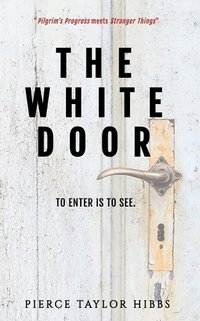
Cover for The White Door by Pierce Taylor HibbsThe White Door

by Pierce Taylor Hibbs

DETAILS:
Publisher: Truth Ablaze
Publication Date: August 15, 2024
Format: eARC
Length: 484 pg.
Read Date: July 7-20, 2024

Buy from Bookshop.org Support Indie Bookstores


Obviously, this will make more sense if you’ve read my original post about The White Door. And I should add that these are just thoughts that’ve come to mind as I’ve continued to chew on this book. I’m not making a full argument here, or anything like that. Some ruminations is all. (the conclusion is particularly weak, if you ask me, because I am just ruminating. )

One thing readers really like to do is to try to determine what they can about a novelist’s beliefs, points of view, and whatnot from the way things in their novel(s) are depicted. Frequently, some of the theories are pretty out there—and even those that are closer to reality are limited and have some noteworthy flaws.

That’s not the case with this book—Hibbs has already written a good number of non-fiction books showing his views on a number of ideas and topics. So readers of this novel have a different task before them (if they’re of a mind to wonder about these things)—how are Hibbs’ ideas depicted and brought to “life” in this novel? Are they at all? I haven’t read all of Hibbs’ previous work (yet), but I’ve read a number of his books and thought about them while reading the novel.

An obvious point here is that the protagonist, Seth, has an anxiety disorder, not unlike the one that Hibbs talked about in Struck Down but Not Destroyed: Living Faithfully with Anxiety. But there are plenty of other places you can see Hibbes’ previous writing.

In my original post, I said a couple of things that I want to return to. The first is:

…there are two doors (in places that have no business having doors, see McGuire’s Wayward Children series for examples). A white one and a black one—those who walk through them are changed. What, and how, they see is altered in ways that say a lot more about the doors than anything else.

The second thing is:

First of all, anyone who’s read much of Hibbs is going to recognize his thinking here. Narnia, Seth, and Cleft sound like they’ve studied Hibbs’ work (ignoring the anachronism there)—which is good. If only so you know that you’re supposed to think they’re on the right path. Other characters largely sound ilke they’re on their way to sounding that way, too.

Two of Hibbs’ books that came to mind were Finding God in the Ordinary and In Divine Company: Growing Closer to the God Who Speaks.

The part of In Divine Company* that came to mind in The White Door was:

We live in what I have called a worded world, a world that everywhere reveals something about the God who made it, a world that, in a sense, “speaks” about God.

* He also has a book called The Speaking Trinity and His Worded World that probably does a better job of explaining this point and expanding on it, but I haven’t read that one yet.

In Finding God in the Ordinary, Hibbs quotes John Calvin:

Whichever way we turn our eyes, there is no part of the world, however small, in which at least some spark of God’s glory does not shine. In particular, we cannot gaze upon this beautiful masterpiece of the world, in all its length and breadth, without being completely dazzled, as it were, by an endless flood of light. Accordingly, in Hebrews, the apostle aptly calls the world the mirror of things invisible, because the structure of the world serves as a mirror in which we behold God, who otherwise can not be seen (Heb 11:3).

Calvin influenced Hibbs on this point, and you can see it in the rest of that book. Let me bring up a few other short quotations from the book along those lines:

if we do not search for God in the ordinary, we do not perceive the world as it truly is. God has revealed that his entire creation manifests his character.

The whole earth, every crevice of creation, has been endowed by God himself with a revelatory component. We can choose to ignore this component if we wish, but then we will not be seeing the world as it truly is. We will be seeing a world of our own making.

if we do not search for God in the ordinary, we will miss very precious parts of life.

The tagline on the cover of The White Door is: “To enter is to see.” This is part of what I meant by “What, and how, they see is altered.” Both Roland (Cleft’s steward dog) and Cleft call those who’ve gone through the White Door “gazers”*

* I called them “seekers” in my original post. Oops. Why do I take notes, if I’m not going to look at them while writing?

These people gaze upon the world in a clearer fashion than they have before as if a film had been cleared off what they see. They see things in a new way—able to seek God in the ordinary, perceiving the world as it truly is. Not completely—and not necessarily all in the same way. Yet, their vision is better. They see things that others do not/cannot.

Now, walking through this door is in some way analogous of or is an allegory of regeneration. I have questions about it (as I talked about before), and I’m not sure if that’s because I misunderstood something or if Hibbs was unclear (I fully expect the former, but I think it’s the latter).* Regardless, that’s the case. Given “eyes to see and ears to hear,” these gazers see things that others don’t. In our world, it’s because darkened eyes don’t think of it, and renewed eyes need to be taught it (so we get books like Finding God in the Ordinary and teaching along those lines)—but when we know we can see the world, the skies, and nature in general declaring the glory of God—we, like those gazers, do see things others don’t.

* To paraphrase Mr. Simon, when I get something wrong, I’m the first to admit it, the last one to know-ow-ow-ow.

On the other hand, those who walk through the Black Door also have their sight altered. As you might imagine, it’s not as beneficial—but that’s all I’m going to say about that.

I really appreciate the way that Hibbs put “flesh” on his arguments from other books in this novel—not just for a good way to solidify it in the minds of his non-fiction readers, but to provoke his novel’s readers to consider how that piece of fiction might apply to their lives.

This post contains an affiliate link. If you purchase from it, I will get a small commission at no additional cost to you. As always, the opinions expressed are my own.
Irresponsible Reader Pilcrow Icon

Red Dead’s History by Tore C. Olsson: A Historian Looks at the U.S. Shown in the Game

Cover of Red Dead's History by Tore C OlssonRed Dead’s History:
A Video Game, an Obsession, and America’s Violent Past

by Tore C. Olsson

DETAILS:
Publisher: St. Martin's Press
Publication Date: August 06, 2024
Format: e-ARC
Length: 288 pg.
Read Date: July 13-18, 2024
Buy from Bookshop.org Support Indie Bookstores

What’s Red Dead’s History About?

Like so many people around the world, the author got back into video games in 2020 as a way to fill the hours he wasn’t interacting with people in real life. Like so many others, one of the games that captured his attention was Red Dead Redemption II. Unlike so many people Tore C. Olsson is an American History professor, so while he was fun doing whatever it is exactly that you do in the game*, part of his brain was looking at the history and time being depicted in the game. Because if there’s one thing the game is known for, is being the most popular and influential game set in American History since The Oregon Trail from the 80s.

* It should be obvious that I don’t play video games at all, not even the one in question.

Olsson went on to make headlines—and pack lecture halls—by teaching a history course based on the games, and he’s now turned it into a book.

This is not a book about the game (although he talks about it a lot), it is not a point-by-point examination of the historical details (but it comes up a little), it’s primarily using the game, and the things shown/talked about/alluded to in it as a launching pad to discuss themes, movements, and particulars from post-Civil War America.

The focus for the book is Red Dead Redemption II, but Red Dead Redemption comes up from time to time—but not any of the other games in the franchise. Olsson’s discussion follows the geographic order and proportions of the game—starting with adventures in the West, moving to the Deep South (for the majority of the book), and then wrapping things up in Southern Appalachia.

Historical Accuracy of the Game

From the start, Olsson is clear, he’s not going to get into slicing and dicing the historical accuracy of Red Dead Redemption 2, but…he can’t help talking about it every now and then. He has a lot of good things to say about the history of the game (really, he wouldn’t have taught a class or written a book inspired by it without that), but the biggest note seems to be—if the game had been set 20-30 years earlier than it was, it would’ve been better.

There are particular points here and there where he will offer specific critiques and commendations—but that’s essentially the point he keeps coming back to.

Now, I don’t know enough about the storylines of Red Dead Redemption or Red Dead Redemption II to know why the developers insisted that the game takes place when it does—and it certainly seems like they did have an eye for historical detail—they just missed it. It might be a game continuity thing, there might be all sorts of explanations for it. I don’t know.

Now, Olsson isn’t sitting there like Neil de Grasse Tyson tweeting about the scientific inaccuracies in movies, the point of the book isn’t to critique the depictions of the era. But while he’s talking about the various topics, he will mention them briefly. It doesn’t take anything away from the game for him.

The West

The first section focused on is the one that the game is best known for (and, I’ll be honest, the only thing I thought the game had)—a strong take on the West. I’d like to say that I’d read a book about the subject of each chapter were Olsson to expand them, and that’s true in a perfect world, but I’m not sure I really would. But I’d be willing to.

I should note that it’s probably very easy to read several books on the topics of each chapter right now. And you never know, I just might.

This section covers things as nebulous as the concept of “The American West”—and when did it start dying/disappearing (if ever). Controversial topics like The Indian Wars, the amount of violence in the West (and some of the notable persons behind it), how Justice/Laws were enforced, and so on. Olsson also covers things you’d expect (especially if you actually know the game)—the construction of and use of the railways; cowboys; The Pinkertons; Butch Cassidy and The Sundance Kid.

I learned so much about all of these things—and I’m very tempted to go out in search of some of the books footnoted here.

The Deep South

As anyone who teaches American History—particularly in a place like Tennessee—is aware, talking about the Deep South in a post-Civil War era is a daunting task. But as that’s where the bulk of the gameplay takes place, the bulk of the book gets that treatment as well.

As with the rest of the book, Olsson talks about the game’s portrayal of this area and the topics, how media culture(s) depict of this area and the topics, and finally looking at the history of the area itself.

In this Part of the book, Olsson talked about such non-controversial topics as: The Paradox of Race; From Old South to New South; The White-Hooded Menace; The Tragedy of Lynching; In the Fields (largely post-War); Working on the Chain Gang; Mr. Jim Crow; The Lause Cause; New Orleans, 1899; and Votes for Women.

Obviously, there’s far, far too much to say about any of these topics than he has time for in a book of this size and scope—but what’s there is provocative (in a good way), thoughtful, and well-footnoted so curious readers (and there will be many after these chapters) can do some follow-up reading. Yes, that’s a sentence that applies to the book as a whole, but it seems apt to emphasize it here.

Southern Appalachia

This part feels very timely considering how much Appalachia, Appalachia, and portrayals of the area/its residents in the media have been in the last few weeks.

Olsson only gives three chapters to this part of the book (about 11%) as much as he might be kicking himself for that now. Like with Part I: The West, he starts by discussing “The Appalachian Myth.” Just what makes up this part of the country? Why has it captured the imagination the way it has? How much of what we think of when we think “Appalachia” is true now or ever was?

He then looks at the race to claim parts of it after the Civil War and how that shaped the culture and history of it. Then he spends a chapter looking at Blood Fueds—obviously focusing on the Hatfield/McCoy feud, what lies at its root—and the surprising ways it actually broke along family lines.

I was a little too tired while reading this section to get as much out of it as I think I ordinarily would’ve—and really should revisit it once the book is released, I think I missed some good stuff.

So, what did I think about Red Dead’s History?

I had some really good history professors and teachers over the years, so I really don’t want to say that Olsson is the professor I wish I had—but really, I don’t imagine many will read this book and not want to take a class or two from Olsson.

The writing is engaging, witty, and insightful. He has a real knack for making you care about something you really didn’t care about just a few pages earlier—for that matter, you may not have been aware it was a thing you could care about/be interested in just a few pages earlier. I’m not going to suggest you’ll agree with him all of the time, because you won’t. But you’ll almost certainly enjoy his perspective as well as his presentation of the facts.

I’m not really the target audience for this book—I figure that’s game players who want to dive in to get more depth about the context of the game. To learn the stories behind the game’s stories. Or those who now have an interest in American History and don’t know where to go get more information outside a stuffy-looking textbook. Given that, I think it says a lot when I tell you that I had a great time reading this, and am more curious the game than I had been before. Not so curious to actually play it (or buy the game, a console to play it on, etc.)—but enough to talk to my son who has played through it—and has spent a lot of time doing sidequests and whatnot, and maybe even to watch some gameplay videos online. And that’s more than I typically am interested in doing.

This is a great way to approach American History; it’s a good way to approach this type of media (games or otherwise); and it’s just an entertaining read regardless. It moves a little slower than a novel—but not much (for those who are daunted by non-fiction reads). Really, there’s not much to not commend about this book. You really should check it out.

Disclaimer: I received a copy of this book from St. Martin’s Press via NetGalley—thanks to both for this.


4 Stars

This post contains an affiliate link. If you purchase from it, I will get a small commission at no additional cost to you. As always, the opinions expressed are my own.
Irresponsible Reader Pilcrow Icon

The White Door by Pierce Taylor Hibbs: Good vs. Evil and a Tolkien-Quoting Cat

A lot of what follows is me thinking my way through things as I wrote. I maybe should’ve spent more time thinking and posted this next week. I may—may—come back to this with a follow-up post after things have settled in my mind a bit.


Cover for The White Door by Pierce Taylor HibbsThe White Door

by Pierce Taylor Hibbs

DETAILS:
Publisher: Truth Ablaze
Publication Date: August 15, 2024
Format: eARC
Length: 484 pg.
Read Date: July 7-20, 2024
Buy from Bookshop.org Support Indie Bookstores

What’s The White Door About?

A pull-quote on the cover calls this “Pilgrims Progress meets Stranger Things.” I’m not sure that Bunyan belongs in the conversation—maybe Lewis meets Stranger Things? This Present Darkness with better theology is closer yet.

There’s a great ensemble of characters featured in this novel, but let’s focus (as the novel does) on two—the first is Pastor Cleft Warrington. It’s evident soon after we meet him that he’s the kind of pastor you’d want—educated, compassionate, smart, and faithful. But there’s more than that to him—the small town in Pennsylvania that he pastors in has more going on than is visible to the naked eye. There are forces on the move—and he is one of the few aware of it.

The other character we focus on is Seth Logan—he’s a father of a couple of little kids and a writing professor. His wife is a steadying and supportive influence in his life, which he really needs. When we meet him, he’s unaware (like most people in this town) of the unseen workings around him. But all that changes when he comes across a stray cat one day while hiking.

I’m not sure how much else to say, but the cover blurb says little more—there are two doors (in places that have no business having doors, see McGuire’s Wayward Children series for examples). A white one and a black one—those who walk through them are changed. What, and how, they see is altered in ways that say a lot more about the doors than anything else.

The custodian (for lack of a better term) is named Skotos—he has been popping up in Dingmans Ferry now and then for quite some time. Cleft is trying to monitor his actions as much as he can. Cleft can’t say for certain what Skotos is up to—or what his aims are—but they are not for anyone’s benefit but his.

The Choice of the 80s

This is set in the 1980s, which is an interesting choice. And I’m not sure that it was necessary for the story. Sure, it eliminates the Internet in early or current form, so that’s an advantage—this would’ve been a difficult story to tell if characters could just check certain events online.

While there may be little about the events or the narrative that demands that time period, the smaller town feels more authentic in the 80s, I guess. There are plenty of little details that Hibbs provides to help it feel like that time.

The biggest thing that made me wonder about the choice of chronological setting (probably the only thing) was the way that Seth’s anxiety was depicted (and the way people reacted to him). I haven’t done any research on this—but I’m not sure that too many people in the 80s were talking about people with anxiety disorders or panic attacks quite the way these characters do. Particularly regarding adult men. Maybe I’m wrong, but I’d wager that was a stumble (as an example, see how strange it was in the late 90s for characters like Tony Soprano to deal with those things, and the ways they covered it up).

The Mix of Theology and Fantasy

Mixing Christian thinking, Christian belief, and fiction—particularly Fantasy—is a tricky thing. It can be done, and there is a tradition of it. But I can’t help wondering about the way that Hibbs does it. I enjoyed it thoroughly, but I had some questions and qualms.

The titular white door and the way it changes those who walk through it…both are great, full of symbolism and meaning. I really appreciated the effects produced in those who’ve entered it. But I have so many questions about it, too—why aren’t all the believers in town taken to it? Is it some sort of second blessing?* Why is it available for any random person walking by (although it is out of the way) to just walk through? Along those lines—Skotos’ victims…the way that Seth and his companions figure out what happened to them and the way they appeal to Paul’s writings to get there really misses the apostle’s point and even contradicts it. And that really troubles me.

* I know Hibbs wouldn’t go for that, but it kind of seems like one.

There are some other things depicted—some visions, another reality that’s visited (to put it as vaguely as I can), and things of that nature—that were just great. The pure fantasy stuff—or at least the things that he can talk about in purely fantastic terms—was great.

You take the blending of fantasy and theology out of this—leave us only with Skotos’ “magic” or whatever, the Deeper Magic of the Doors, and whatnot—I wouldn’t have a complaint at all. No church, no sermons, no Bible—just warring Good and Evil? The whole thing works. But Hibbs frequently stumbles when he combines them.

Now let’s set aside the Fantasy for a minute and just focus on the Theology. First of all, anyone who’s read much of Hibbs is going to recognize his thinking here. Narnia, Seth, and Cleft sound like they’ve studied Hibbes’ work (ignoring the anachronism there)—which is good. If only so you know that you’re supposed to think they’re on the right path. Other characters largely sound like they’re on their way to sounding that way, too.

Even the demonic (or at least really evil) character’s theology is rock solid. He rejects it—but he knows it. Watching him explain something, and then reacting to it, was really well done.

I have to add, that some of the seekers get animal companions—stewards—who can talk to the seekers. We see two of them in this book, Seth’s cat, Narnia, and Cleft’s dog, Roland. They are just fantastic. A Tolkein-quoting cat with a penchant for talking theology? That’s a critter I’d put up with my allergies attacking me to spend time with. Every bit with those animals are great. There are some other animals that show up later, too—I really dug them, too. But my spoiler policy prevents me from talking about them.

Some Word Choices

I’m going to throw this out there just to be thorough—and because I know a couple of my readers will think about it—maybe even be turned off by it.

The characters in this novel are not all Christians. And some of them are very recent converts who haven’t quite gotten around to cleaning up their language thoroughly. Hibbs has them use realistic words for people in those situations—a depiction of how the world is, not how he might want it to be.

That said, nothing too terrible is said in the book—nothing you couldn’t get away with in a PG movie (which isn’t the best barometer for some people, but it’s the easiest to convey) or a sitcom from the mid-80s.

Hibbs’ Writing

As a surprise to no one who’s read what I’ve said about Hibbs’ style and way with words before, I loved it. There are some sentences, some passages, and even some phrases that I just adored. If I had a final version and not an ARC, you’d be reading plenty of quotations in this post.

These characters and their emotional lives are richly drawn. The descriptions of little things as well as major events or scenes are the kind of thing that keep people reading regardless of plot and character.

There are two character deaths described that just blew me away. One happens just as the book begins and we see a grieving husband in the minutes after his wife’s death. It’s handled with sensitivity and care—and right from the get-go, you get attached to this character, his reactions feel just right. The other death that we spend an extended time on is handled differently, but perhaps even better. There are other deaths that don’t get this—or similar—kind of treatment. They’re handled the way that most fictional deaths are, and that’s fine. But the two we linger on? Hibbs gets everything right about those and I loved reading them (and will again).

I should add that this book isn’t full of character deaths—but there are some.

I’ve gotten off-topic a bit, but this is just some great writing. There’s a hint of poetry to so much of this energized by an eye for detail. Little things—like the description of Seth’s daughter’s laugh—are just beautiful, and some of the bigger things are done just as well.

So, what did I think about The White Door?

It’s been a long time since I read Christian Fiction regularly—sure, I read a few things by Christians (mostly local authors), but not a lot that calls itself Christian Fiction. In fact, I think this is the fourth book of that type I’ve posted about here. But when I heard that Hibbs was going to be bringing his first novel into the world, you know I had to give it a read. I’ve often said that his books are the best written theological/Christian Living/etc. books that I’ve read (published in the last 50 years, anyway), so of course I want to see what he does with fiction.*

* I should probably try his poetry, too. But it’s poetry, so don’t expect that anytime soon.

I’m so glad I did.

I have mentioned a few quibbles above—the downside of doing that is that it overshadows all the good that can be said. I can’t think of a way to do that without giving too much away. So my own limitation makes the book come across as worse than it should. Note the above paragraph, if nothing else.

It started slow, and I wondered for a while just what the book was going to be about (I didn’t bother reading anything about it before requesting a copy—I just knew it was the first novel for Hibbs, and that was enough)—but it kept me going—and it wasn’t long before I was fully invested (and that kept growing). By the time it was over, I wasn’t quite ready to walk away from these characters and this world.

The conversations that Cleft and Seth have together—or with other characters—about books, The Bible, language, and so on? They’re just great—and I could’ve read many more of them. There’s no justification in terms of character development or plot for us to spend more time with Seth (and Narnia) in Seth’s classes—but Hibbes could’ve given us more of them and I wouldn’t have complained. (I may have noted that he was padding the book with them, but I’d have enjoyed the padding enough to give him a pass)

Similar things could be said for Seth spending time with his family (with or without Narnia)—and so many other aspects of the book.

Every element of this novel works really well when considered on its own. Many of them work in conjunction with the others—it’s when all of them are brought together in these 484 pages that I think Hibbs trips over himself. It’s really a total is less than the sum of its parts kind of thing. But those parts are so worth your time and energy—and I wouldn’t be shocked to learn that I’m alone in some/all of my judgments.

I do encourage you to pick this up. It’s a good read, a refreshing, hopeful read—and I hope it’s the first of several novels from Pierce Taylor Hibbs.

Disclaimer: I received a copy of this eARC from the author, but the opinions expressed are mine and honest. And are what I would’ve said about the copy I bought—I’m just saying them a few weeks earlier.


4 Stars

This post contains an affiliate link. If you purchase from it, I will get a small commission at no additional cost to you. As always, the opinions expressed are my own.


Self-Published Authors Appreciation Week Footer

The 2024 Self-Published Authors Appreciation Week Logo was made by Witty and Sarcastic Book Club

REPOSTING JUST CUZ: The Body’s Keepers (Audiobook) by Paul L. Kimmel, M.D., Lane Hakel (Narrator): The Social History I Didn’t Realize I Needed

Last night, I ran out of energy without a post completed. 6 years ago today, my son got a kidney transplant, so I’m thinking more than usual about nephrology. So…yeah, let’s re-run this.


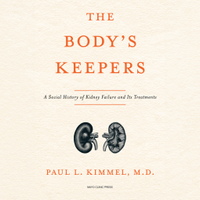
The Body's KeepersThe Body’s Keepers:
A Social History of Kidney
Failure and Its Treatments

by Paul L. Kimmel, M.D., Lane Hakel (Narrator)

DETAILS:
Publisher: Dreamscape Media
Publication Date: March 12, 2024
Format: Unabridged Audiobook
Length: 17 hrs., 59 min. 
Read Date: Fevruary 27-March 5, 2024
Buy from Bookshop.org Support Indie Bookstores

What’s The Body’s Keepers About?

I feel underqualified to try to describe this book, and you’ll see why here in a sentence or two. So, I’m just going to paste what the Publisher’s Site says: (yes, I typically would cite the audiobook publisher here, but the print edition’s publisher gives more details)

A remarkable account of the kidney and the scientific, medical, and health evolution tied to our understanding of it.

The kidney is an extraordinary organ – in many ways the regulator, the metronome, the keeper of the human body’s delicate equilibrium. On a given day, minute by minute, it purifies the body of toxins it encounters from diet, climate, activity, and injury. It allows us to be and to move in the world. And yet most of us know so very little about these extraordinary vessels nestled in our bodies – and indeed millions of us only really learn about them when they stop working. Nearly a million Americans every year have end stage kidney disease, about 37 million have some form of chronic kidney disease. And it is an incredibly common universe of challenge and ailment that, until relatively recently, would simply kill those afflicted with it.

Renowned nephrologist Dr. Paul Kimmel takes us on an eye-opening journey through the history of kidney disease, dialysis, and transplantation. Drawing on both his extensive research and decades of experience in the field, he explains the development of treatments, technologies, and medical practices that have advanced the care of patients with kidney disease. Kimmel illuminates the impact of medical advances on the lives of those suffering from this debilitating disease and offers a clear understanding of the challenges that remain.

The Body’s Keepers also reveals the inequities and injustices at the heart of America’s healthcare system. Filled with case studies, personal histories, and first-hand accounts, the book reveals the shocking truth about the exploitation of vulnerable populations in the pursuit of profit. Kimmel examines how disparities in access to care have led to life-threatening consequences for many Americans. He also looks at the ways in which the medical industry has profited from the suffering of others, and how the path to health equity is still far from being realized. With unflinching honesty and a passionate commitment to social justice, his book is an essential read for anyone looking to understand the complexities of modern healthcare.

What Did I Think About the Narration?

With all due respect to Dr. Kimmel, this could very easily have been a dry-as-dust book. Yes, there’s occasionally some wit and some passion in the text–Kimmel’s personality does come through. Lane Hakel makes sure that shines through. He maintains the appropriate tone and seriousness to the subject, but with simple and subtle changes in inflection and so on to help maintain the listener’s engagement.

If nothing else, Hakel helped me pronounce a few terms and medication names that I’ve always stumbled on (or heard multiple ways).

I’m not saying that Hakel made this a joy to listen to, or that it was entertaining in the same way that, say, Luke Daniels makes a book–nor should it have been. But he keeps the listening experience accessible and interesting–even when the text seems just to be a list of names and acronyms. (which doesn’t happen often, but, occasionally it seems like it).

My Interest in the Book

So, I saw this on Netgalley the day after my son’s first dialysis treatment. And I clicked the request button as quickly as I could. I’ve talked in this space a little about his kidney transplant a few years ago. But what I know about kidney disease and the treatment of it doesn’t amount to much–and it’s very focused. So the opportunity to learn more–particularly in a history, was more than appealing.

Sure, I was discouraged a bit right off when one of the first things that Kimmel says is that he won’t be discussing the kidney disease my son had. But, he spent a lot of time talking about End Stage Renal Disease and transplants. So that more than made up for the skipped subject. And even the topics that didn’t directly have anything to do with my son were interesting to listen to. Because really, at the end of the day, the more medicine learns about various treatments for one area of kidney disease/treatment, the better off all patients are.

So, what did I think about The Body’s Keepers?

Can a non-medical professional read/listen to this and profit from this book? Absolutely. Are we the target audience? I don’t think so–well, those interested in the overlap of politics/economics/prejudices and medical treatments are definitely part of the target audience. So it’s not just the kind of book for M.D. after their name. But it’s not written for the person browsing a bookstore/library shelf for their weekend read, either.

This is an 18-hour listen, and it’s not the easiest listen, either–both because of the subject matter and the thoroughness with which Kimmel discusses things. Folks who are just idly curious are probably not going to make it through this book. But those who have a connection to the topic–because of their profession or professional interests, because (like me) they are or know someone going through these things, or because they’re invested in the social aspects and things like equitable access to care, or some other connection–will make it through this book and be glad for it.

For those who are interested in this subject, this is a fascinating book and a good audiobook experience. I do think I may end up getting the print edition just to make looking up a point or two easier. But for non-reference use? The audiobook is a good way to go.

I learned a lot, I have to say. The historical development of nephrology is fascinating. For such a young science the advances made are truly astounding (for example, when you hear how they made the first “artificial kidney”–the precursor to a dialysis machine, your mind will be boggled). The origins of the treatment of kidney diseases and injuries really start because of the World Wars and now kidney transplants happen all the time (not often enough for those on a transplant list for years), dialysis is routine, and the medical research is very promising to improve and innovate both.

Yes, the impacts of race, sex, income, and so on when it comes to access to and varieties of treatment are dismaying and befuddling (and on those providing the treatment). But the book suggests there’s every reason to be hopeful for the future, and that progress has been made. Easy for this white guy to say, but that was my takeaway from Kimmel. And, as in this post, I’m talking about this as a listening experience rather than commenting on the society that is depicted–the shortcomings of the system (especially in the U.S.) contrasted to the successes make for a more engaging narrative.

I should add that in the early chapters while doctors and researchers were still figuring out how to treat various kidney ailments, the symptoms and treatments (and failure rates), were strong reminders of how correct I was in choosing academic and career paths that took me far away from medicine. Some of that was rough for me (and no, I will not watch any documentary Dr. Kimmel decides to make in the future). People of stronger constitutions will not be bothered.

I’m really glad I listened to this, and encourage those interested to give it a try. It’s not a book for everyone, but for the right people will appreciate this.

Disclaimer: I received a copy of this book from North Star Editions via NetGalley–thanks to both for this.


4 Stars

This post contains an affiliate link. If you purchase from it, I will get a small commission at no additional cost to you. As always, the opinions expressed are my own.

Irresponsible Reader Pilcrow Icon

PUB DAY REPOST: Shades of Mercy by Bruce Borgos: Memory Brushes the Same Years

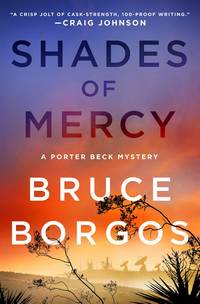
Cover of Shades of Mercy by Bruce BorgosShades of Mercy

by Bruce Borgos

DETAILS:
Series: Porter Beck, #2
Publisher: Minotaur Books
Publication Date: July 16, 2024
Format: e-ARC
Length: 352 pg.
Read Date: June 27-July 1, 2024
Buy from Bookshop.org Support Indie Bookstores

What’s Shades of Mercy About?

Sheriff Porter Beck’s life intersects with a couple of high school buddies for the first time in many years. And both situations should make anyone else from high school leery of running into him.

We open with Beck coming across one of those friends after they’d overdosed. Soon after, a federal investigator recruits Beck to go visit the other one. Jesse Roy has recently moved back to the area, and is renovating his father’s ranch into something that Beck can’t comprehend—it’s just too large, too gaudy, for this area. Cattle ranching is going really well for Jesse (too well?). The night before, something had gone wrong with a test vehicle with the Air Force, and something had fallen on Roy’s prize bull, destroying it. The investigator is here to negotiate a settlement—and it’s not a little one.

But something about the whole deal sets Beck’s B.S.-meter off. He forces the investigator to come clean—someone had hacked an Air Force drone and launched a missile at the cow. It was a targeted hit—but why?

Beck knows if he doesn’t help for the search for this hacker (and they know they’re local, somehow) and get to the root of the problems soon, his county will be overrun by Intelligence officers from all sorts of government agencies.

Oh, and there are wildfires threatening the county on several sides, and a large group assembling to storm Area 51. Just in case it didn’t seem like he had enough going on.

The investigation quickly points at a teenage girl who is serving some time at a teen facility nearby. As hard as it might be to believe. And before he knows it—Beck finds himself dealing with so much more than a hacker.

Comparing Shades of Mercy to The Bitter Past

So, the first book used dual timelines to tell the story—and I was afraid Borgos would try to pull that trick again. I think it could’ve worked, but eventually, his county is going to run out of people who were doing interesting things several decades ago. This time it’s all one timeline (with a little backtracking every now and then, but not much. But we do bounce between a few perspectives, so we still get the advantage of multiple POVs. So he’s able to maintain some of the same feel there.

His deputies are back, but some of them aren’t really seen due to the fires. There’ve been some changes since the last book and it’s good to see that everything isn’t stagnant with this series. We don’t get as much time with them all this time, and that’s a disappointment. Other characters return, too, most of them made me happy and one was a pleasant surprise. I had a more specific sentence there, but decided to remove the names…

The big change is the focus—The Bitter Past is all about the past—what it does in the present, how it can change so much about your life when you learn new things about your own past. Also, the weapons and conflicts of the past.

This one is very present and future-focused. It’s also good to see that Borgos isn’t stuck in one frame of mind.

So, what did I think about Shades of Mercy?

I’m having a hard time talking about this book without saying too much about the content.

In what—I think—was a very nice bit of story-telling is that there were a few things that should make the attentive reader pause and wonder if Borgos is being sloppy. I’m going to try to be vague here, but I’m thinking of some parts of the timelines before the novel started—and some things that happened during the novel that we don’t see first-hand, but see the effects of. I was too invested in the stories to spend time on these myself—I basically shrugged and moved on (not that I noticed everything I should’ve, either). I’m going to give you credit for being perceptive and thoughtful enough to catch these things—then I’m going to reassure you: trust Borgos. Everything gets tied up, everything makes sense, I can’t tell you how often in the last pages I said “Oh, sure—that makes sense,” (I also said “I probably should’ve caught that” about most of those items). It’s really a nice and tidy book.

I’m worried that my last paragraph makes the whole thing seem like a mess. Au contraire. This is a tight thriller—it’s only on a few points that it I was mistaken that he’d left things dangling. The rest of the book is as tightly written as you could hope (which I should’ve realized described the rest, too). There’s a little slowness for a chapter or two, just to bring us back into this world, reintroduce the character, and catch us up on Beck’s life—then we’re off to the races from the moment that Beck is brought to his old friend’s ranch.

The conclusion was just great—exactly what this book (and character) needed.

This book bodes well for the rest of the series that follows—yes, I’d like a “smaller” crime. One that didn’t involve multiple state and federal agencies, for one. Just a matter of Beck and his guys analyzing a crime scene and then figuring out who in their small community could’ve done it. It’d just be more believable than all the federal and military types wanding around all the time. But the way Borgos is dealing with the latter, I’m not sure I care.

There’s enough humor and heart here to take the edge off of things—the tension gets cut, the characters are made more endearing, and the reader can catch their breath before diving into more tension and action.

I wasn’t as wow-ed with this book as I was the first—but I was still impressed, and this book makes me more sure what the following books will be like than I was with The Bitter Past. And it promises to be a very good series. I’m repeating myself, so it’s time to wrap this up. Either with Shades of Mercy or The Bitter Past, you want to get on board this series here at the beginning.

Disclaimer: I received a copy of this book from St. Martin’s Press via NetGalley—thanks to both for this.


4 Stars

This post contains an affiliate link. If you purchase from it, I will get a small commission at no additional cost to you. As always, the opinions expressed are my own.
Irresponsible Reader Pilcrow Icon

Winter Lost by Patricia Briggs: A Coyote and a Werewolf Have to Save a Wedding

One of the worst taglines I’ve come up with lately—which is saying something. But it’ll do.


Cover of Winter Lost by Patricia BriggsWinter Lost

by Patricia Briggs

DETAILS:
Series: Mercy Thompson, #14
Publisher: Ace Books
Publication Date: June 18, 2024
Format: Hardcover
Length: 406 pg.
Read Date: July 2-4, 2024
Buy from Bookshop.org Support Indie Bookstores

What’s Winter Lost About?

Mercy’s brother Gary shows up at their front door late one night in a royal mess—he’s almost unidentifiable. More than that, he’s having a hard time understanding what’s going on around him and is having a worse time communicating it. No one has any idea why he’s there, where he came from, or what happened.

A quick consultation with a couple of Fae sends Adam and Mercy to Montana—the type of magic that zapped Gary is characteristic of a particular Fae. Along the way, an epic winter storm engulfs Western Montana, Idaho, Eastern Washington—and perhaps more.

Adam and Mercy meet the one responsible for Gary’s state—to free him, they have to complete a task (the guy’s not being a jerk by this, it’s literally a condition of the spell). They have just a couple of days to find something, free Gary, save a wedding, and…I kid you not…save the world.

Everything Else

While the main story is plenty to talk about, there are a couple of other things to note. There’s some good development with Mary Jo, Honey is making some interesting choices, Tad and Jesse are up to something fun, Zee and Adam are involved in a project, and plenty of other things are afoot.

We continue the whole jockeying-for-dominance thing under Adam with Warren, Darryl, and Sherwood—but it seems to be going better than it was in the last book—but it feels like there’s some sort of slow-burn story going there and I’m not sure I’m going to enjoy where it ends up.

There’s more action on the building conflict with various witch groups and the conflict with Bonarata. I want to be super-vague about both of these, but want to mention them. They both took very little space in the novel as a whole and part of me wonders if we really needed them now—we could’ve come back to them in book 15 and spent more time on both (while assuming things were ongoing with both). But…I really liked the way that Briggs wrote both of them.

Bonarata is conducting some psychological warfare on Mercy, which seems to be pretty effective. As part of that, he’s hurting other people. The best example the readers get in this book is a certain kind of horrific. I don’t know if Briggs has shown something so depraved since Iron Kissed—but this time the victim is someone we don’t even know the name of. Part of me is really impressed with how Briggs wrote this, most of me wishes she hadn’t.

So, what did I think about Winter Lost?

There are a couple of things to say—first: I had a whole lot of fun with this one. Yeah, the stakes are higher than they sometimes are. But this felt more fun than the last couple of books, things have felt very weighty since Silence Fallen. This was closer to River Marked, it seems.

But more than that, Briggs was trying some new things narratively, both in the order and way she was telling the story—and in the way the cast of characters were spread out in this book. And everything she tried worked really well. At the moment, I can’t think of a way to talk about this with any level of detail and not spoil some big things—so let’s just leave it with Briggs trying some new things for the series and succeeding. I don’t know if she’ll want to try to tell another story like this anytime soon (and I’m not sure she should), but I like to see her experimenting—and hope she continues.

There’s not much more to say—there’s some great action, some solid character moments, a nice bit of new mythology, and Briggs has planted all sorts of seeds for a couple (or more) future installments in the series. This is just what Mercy fans needed, and I hope we get more of it soon.


4 Stars

This post contains an affiliate link. If you purchase from it, I will get a small commission at no additional cost to you. As always, the opinions expressed are my own.
Irresponsible Reader Pilcrow Icon

Shades of Mercy by Bruce Borgos: Memory Brushes the Same Years

Reading back-to-back books featuring a character named Mercy—not to mention writing about one while reading another—is a fun way to trip yourself up. Thankfully the genres are different. But if I start rambling on about the fae or coyotes, you’ll know why. Also, skip to the next sentence or so.


Cover of Shades of Mercy by Bruce BorgosShades of Mercy

by Bruce Borgos

DETAILS:
Series: Porter Beck, #2
Publisher: Minotaur Books
Publication Date: July 16, 2024
Format: e-ARC
Length: 352 pg.
Read Date: June 27-July 1, 2024
Buy from Bookshop.org Support Indie Bookstores

What’s Shades of Mercy About?

Sheriff Porter Beck’s life intersects with a couple of high school buddies for the first time in many years. And both situations should make anyone else from high school leery of running into him.

We open with Beck coming across one of those friends after they’d overdosed. Soon after, a federal investigator recruits Beck to go visit the other one. Jesse Roy has recently moved back to the area, and is renovating his father’s ranch into something that Beck can’t comprehend—it’s just too large, too gaudy, for this area. Cattle ranching is going really well for Jesse (too well?). The night before, something had gone wrong with a test vehicle with the Air Force, and something had fallen on Roy’s prize bull, destroying it. The investigator is here to negotiate a settlement—and it’s not a little one.

But something about the whole deal sets Beck’s B.S.-meter off. He forces the investigator to come clean—someone had hacked an Air Force drone and launched a missile at the cow. It was a targeted hit—but why?

Beck knows if he doesn’t help for the search for this hacker (and they know they’re local, somehow) and get to the root of the problems soon, his county will be overrun by Intelligence officers from all sorts of government agencies.

Oh, and there are wildfires threatening the county on several sides, and a large group assembling to storm Area 51. Just in case it didn’t seem like he had enough going on.

The investigation quickly points at a teenage girl who is serving some time at a teen facility nearby. As hard as it might be to believe. And before he knows it—Beck finds himself dealing with so much more than a hacker.

Comparing Shades of Mercy to The Bitter Past

So, the first book used dual timelines to tell the story—and I was afraid Borgos would try to pull that trick again. I think it could’ve worked, but eventually, his county is going to run out of people who were doing interesting things several decades ago. This time it’s all one timeline (with a little backtracking every now and then, but not much. But we do bounce between a few perspectives, so we still get the advantage of multiple POVs. So he’s able to maintain some of the same feel there.

His deputies are back, but some of them aren’t really seen due to the fires. There’ve been some changes since the last book and it’s good to see that everything isn’t stagnant with this series. We don’t get as much time with them all this time, and that’s a disappointment. Other characters return, too, most of them made me happy and one was a pleasant surprise. I had a more specific sentence there, but decided to remove the names…

The big change is the focus—The Bitter Past is all about the past—what it does in the present, how it can change so much about your life when you learn new things about your own past. Also, the weapons and conflicts of the past.

This one is very present and future-focused. It’s also good to see that Borgos isn’t stuck in one frame of mind.

So, what did I think about Shades of Mercy?

I’m having a hard time talking about this book without saying too much about the content.

In what—I think—was a very nice bit of story-telling is that there were a few things that should make the attentive reader pause and wonder if Borgos is being sloppy. I’m going to try to be vague here, but I’m thinking of some parts of the timelines before the novel started—and some things that happened during the novel that we don’t see first-hand, but see the effects of. I was too invested in the stories to spend time on these myself—I basically shrugged and moved on (not that I noticed everything I should’ve, either). I’m going to give you credit for being perceptive and thoughtful enough to catch these things—then I’m going to reassure you: trust Borgos. Everything gets tied up, everything makes sense, I can’t tell you how often in the last pages I said “Oh, sure—that makes sense,” (I also said “I probably should’ve caught that” about most of those items). It’s really a nice and tidy book.

I’m worried that my last paragraph makes the whole thing seem like a mess. Au contraire. This is a tight thriller—it’s only on a few points that it I was mistaken that he’d left things dangling. The rest of the book is as tightly written as you could hope (which I should’ve realized described the rest, too). There’s a little slowness for a chapter or two, just to bring us back into this world, reintroduce the character, and catch us up on Beck’s life—then we’re off to the races from the moment that Beck is brought to his old friend’s ranch.

The conclusion was just great—exactly what this book (and character) needed.

This book bodes well for the rest of the series that follows—yes, I’d like a “smaller” crime. One that didn’t involve multiple state and federal agencies, for one. Just a matter of Beck and his guys analyzing a crime scene and then figuring out who in their small community could’ve done it. It’d just be more believable than all the federal and military types wanding around all the time. But the way Borgos is dealing with the latter, I’m not sure I care.

There’s enough humor and heart here to take the edge off of things—the tension gets cut, the characters are made more endearing, and the reader can catch their breath before diving into more tension and action.

I wasn’t as wow-ed with this book as I was the first—but I was still impressed, and this book makes me more sure what the following books will be like than I was with The Bitter Past. And it promises to be a very good series. I’m repeating myself, so it’s time to wrap this up. Either with Shades of Mercy or The Bitter Past, you want to get on board this series here at the beginning.

Disclaimer: I received a copy of this book from St. Martin’s Press via NetGalley—thanks to both for this.


4 Stars

This post contains an affiliate link. If you purchase from it, I will get a small commission at no additional cost to you. As always, the opinions expressed are my own.

Irresponsible Reader Pilcrow Icon

PUB DAY REPOST: Dog Day Afternoon by David Rosenfelt: Understanding Marcus

Cover for Dog Day Afternoon by David RosenfeltDog Day Afternoon

by David Rosenfelt

DETAILS:
Series: Andy Carpenter, #29
Publisher: Minotaur Books
Publication Date: July 2, 2024
Format: eARC
Length: 304 pg.
Read Date: June 20-21, 2024
Buy from Bookshop.org Support Indie Bookstores

What’s Dog Day Afternoon About?

Overall, I’m not sure that the body count in this book is that much higher than in other books in this series—but the way it opens is very different. The instigating crime feels like something straight out of a mass-shooter video your HR people make you watch annually (assuming your workplace is similar to mine, I guess)—it’s cold, calculated, with a casual disregard for human life we don’t often see in this series. (Andy says something similar at one or two points).

So you’re left wondering—how does Andy get roped into representing the accused? (although many readers are going to read that scene and pick out the places the defense is going to take advantage of). This is where Marcus comes in.

Andy learned about this earlier, but we readers learn about this now—Marcus mentors young people in his neighborhood who have had a rough time of it and have run afoul of the law in the past. They need some help, some guidance, and some favors—Marcus provides this.

He also helps a couple of those he mentors to adopt a dog from the Tara Foundation. One of these two is accused of the crime—Marcus comes to Andy for help, and he gets it. That Willie also vouches for the accused helps—there’s no chance that Willie agrees to let one of their dogs go to someone capable of this crime.

That’s not evidence he can introduce in court, but it’s compelling for Andy. Now he just needs to find something that will be compelling in court.

Marcus

Marcus can’t become too well-rounded of a character—we need him in the shadows, doing things that defy belief. But we can learn more about him than we have prior to this.

We see that he can have attachments to people other than Laurie (and by extension, Andy). We see just how far he’s willing to go to help someone.

I was interested in this book because I’ve enjoyed almost every one of its predecessors enough that I don’t bother to see what they’re about before I add them to the TBR list. But once I noted that this one featured Marcus like that—my excitement grew. I love watching the character at work, and to see him in a different situation than we’re used to made my day. Also, we got just what the doctor ordered from a Marcus-centric book.

So, what did I think about Dog Day Afternoon?

I cannot believe that I’ve read 29 books in this series (plus a few in a spin-off). Twenty-nine. That’s just insane. Now, am I going to say that they’re all as fresh as they were in 2002 when Open and Shut came out? Of course not. But they have their moments when they feel that way.

* According to my logs, I read it in 2011—I’ve been with these characters for 13 years. Mind-boggling.

So, Rosenfelt has his work cut out for him to do something to keep the audience engaged. Over the last few books, he’s worked on deepening the relationship between Andy and Marcus, which has been nice. This book takes a big step forward in that. I don’t know that we’re going to see much more than this anytime soon—you need to preserve some of Marcus’ mystique to keep him nearly-superhuman in Andy’s (and the reader’s) eyes. Similarly, we readers can know Hawk a little better than when Spenser first ran into him in Promised Land—but not too much.

So, we’d better enjoy what we get here, right?

And naturally, that’s really easy. Other fun bonuses—Andy getting along with the prosecutor. Cory clearly being annoyed with Sam Willis wanting to get in on the action. Even some of the Andy and Tara interactions felt a little different (not unusually so, and not negatively). There was also the attempt of a law firm to hire the most reluctant lawyer in the world—that did bring a smile to my face.

There’s a good mix of the tried and true Andy bits, fun material with our old friends, a clever mystery, a new side of Marcus, and Rosenfelt’s trademark zippy prose. It’s easy to see why this series has gone on as long as it has—and may it continue to do so.

Can you hop on here? Absolutely—and you’ll have the fun bonus of a healthy backlist to work your way through once you get done with this one.

Disclaimer: I received a copy of this book from St. Martin’s Press via NetGalley—thanks to both for this.


4 Stars

This post contains an affiliate link. If you purchase from it, I will get a small commission at no additional cost to you. As always, the opinions expressed are my own.
Irresponsible Reader Pilcrow Icon

Page 7 of 88

Powered by WordPress & Theme by Anders Norén