Tag: 4 Stars Page 68 of 88

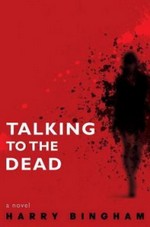
Talking to the Dead by Harry Bingham

Talking to the DeadTalking to the Dead

by Harry Bingham
Series: Fiona Griffiths, #1

Hardcover, 337 pg.
Delacorte Press, 2012

Read: February 16 – 17, 2016

One thing I need to do a better job of is remembering how I found out about a book/series/author that I need to try, this novel is a great example of why. I remember putting it on my TBR, and that there was something about it that made me move it ahead of the others — but I can’t tell you when or why I did so. Sometimes, like with this book, that drives me crazy. I just had to trust that I knew what I was doing when I picked it up. Thankfully, it didn’t take long to convince me that Fi Griffiths had something special going on — mostly it was the voice, the attitude, her humor as seen when she’s going through stacks and stacks of financial documents to make a case air-tight (before the inevitable guilty plea for ripping off a private school):

My desk is covered with paper. I loathe all banks and credit card companies. I hate every digit between 0 and 9. I despise every dopily run Catholic boys’ school in South Wales. If Brian Penry were in front of me now, I would try to force-feed him my calculator, which is as large and chewable as Bakelite phone.

It didn’t take too long before the merits of the case drew me in (not the drudgery of the case above, but the one that drove the novel’s action), and would have even without Fi’s narration. But it was a lock with her as a character. The grim nature of the killings grip the reader, the way they do Griffiths’ colleagues and superiors. What really impressed me was that it is one of the sickest, grossest descriptions of a corpse this side of a Bones episode — and Bingham doesn’t dwell on it — oh, he could’ve, and most authors would have. It’s there stark enough to give the reader the willies, in a just-the-facts-fashion, but Bingham doesn’t exploit the nature of the killing or the state of the body.

To put it charitably, Fi is quirky. To be more accurate, she’s suffering from a serious mental condition — she’s (mostly) got it under control, however. Social skills aren’t really in her wheelhouse — at least not automatically — which presents an additional challenge for her work. Early on, I kept picturing Diane Kruger’s performance from The Bridge, it diminished eventually, but I think Fi will always be Kruger-esque to me. We do eventually get actual information about her condition — which is nice, but we don’t need it to understand her enough to empathize with her. There’s an Author’s Note at the end with more details about the actual condition — don’t read it until the end. Get to know her absent the condition first.

Bingham creates a good bench of supporting characters — a potential boyfriend, a couple of supervisors (who have differing levels of concern for her), a former therapist, an old friend (former trainer/sensei-type), parents, sisters, and a few other detectives. One or more of these can be summoned from the bench with ease in the future, but we don’t get to spend a lot of time with any of them here — just enough to establish them. We spend some good time with her potential boyfriend, old friend/trainer/sensei and dad — I like them all and want to see more of them. But this is really Fi’s book and the narrative weight falls on her troubled, yet capable shoulders.

We hardly get an idea for what kind of men the bad guys are here — it’s just shadowy criminals, up to shadowy criminal things. I like the idea that we only get things through law enforcement eyes, not through the killer’s — that happens far too often for my taste. Like Fi says, I know this way we don’t get the full story, but I prefer not being in the mind of the sickos at work here. We, and the police, get most of the story in the end, and that’s good enough for me.

The book closes with a couple of the most heartfelt, moving scenes that I can think of in Detective Fiction (give me time, and I could probably make a decent list of competitors, still pretty sure this would be near the top — sure, that scene in Gone, Baby, Gone has this beat, but not many others would). I had a hard time believing that it would work as effectively given the fact this is a first novel for the character — but Bingham has laid a lot of ground work to get us ready for these moments, and it paid off well.

Talking to Strangers grabbed me in just the right way. I want to devote the next few days to just reading the rest if this series (I won’t, I know I need to pace myself, but… Oh, I really want to just binge). Fi is an early leader for favorite character of the year (a thing I just decided to do).

—–

4 Stars

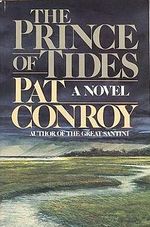
United States of Books – The Prince of Tides by Pat Conroy

The Prince of TidesThe Prince of Tides

by Pat Conroy

Hardcover, 567 pg.
Houghton Mifflin Company, 1986

Read: February 1 – 4, 2016
The story of the Wingos is one of humor, grotesquerie, and tragedy. Tragedy predominates.

So warns Tom Wingo before beginning to relate that story to Dr. Susan Lowenstein. Lowenstein is Tom’s sister’s therapist and needs his help to understand Savannah, who recently tried to kill herself for at least the third time. Savannah’s now institutionalized until she gets back to a place where she can handle her PTSD (my diagnosis, not Lowenstein’s), psychosis, and whatever else they diagnose her with.

As he has done before, Tom has dropped everything and rushed to New York City (from the tiny community of Colleton, South Carolina) to help his sister. The best way to do that, Lowenstein says, is to fill in the large blanks of memory that Savannah demonstrates. Then, she’ll be able to help Savannah remember and move on from whatever trauma has brought her to this stage. Tom agrees — not only has he come to help his sister, he’s also taking a break from home: he’s been unemployed for a year, he just learned his wife is having an affair and might leave him — maybe by helping his sister’s therapist help her, he might get help in the process.

Before he gets the call about his sister and finds out about his wife, Tom’s spending time with his three daughters and jokes with them:

. . .parents were put on earth for the sole purpose of making their children miserable. It’s one of God’s most important laws. Now listen to me. Your job is to make me and Mama believe that you’re doing and thinking everything we want you to. But you’re really not. You’re thinking you own thoughts and going out on secret missions. Because Mama and I are screwing you up. . . I know we’re screwing you up a little bit every day. If we knew how we were doing it, we’d stop. We wouldn’t do it ever again because we adore you. But we’re parents and we can’t help it. It’s our job to screw you up.

That’s not the last time Tom will joke about this, but he’ll spend far more time showing and telling the reader about how parents go about screwing up their kids — he, Savannah and their older brother, Luke, are proof of that (there are four exceptions to this in the novel — but I can’t help but think that with some more investigation, they’d be shown as screwed up, too).

The seeds of this parental function are planted on the night of the twin’s birth, and soon flower while the children are (at least) toddlers — and it doesn’t stop, ever. To detail it would be to give too much away, but Tom, Savannah, and Luke have horrible childhoods and the proof of that is writ large all over their adulthood. Which doesn’t mean that the book is entirely grim — their father has bouts of generosity, of letting his imagination get away from him and getting the family involved in an escapade; they have loving grandparents; they’re successful at school (in differing ways); they adore their mother (rightly or wrongly); they have adventures — they’re actually happy frequently. But then the reality of their poverty, their abusive father, their (I’ll let you fill in the blank if you read it) mother, will revisit them and things will be grim again. Early on, we’re told that something horrible happens to Luke just a couple of years before this most recent suicide attempt, their father is in jail, and that his mother has remarried (to someone Tom hates more than his father). Slowly but inexorably, we march toward those ends. Alternating with the tales of their past, we see Tom in New York, trying to help and understand his sister, as well as the growing friendship between Tom and Lowenstein.

At the end of the day, Lowenstein’s son is the only character that I liked (and maybe Tom’s daughters — but we spend less than ten pages with them, so it’s hard to say). Which doesn’t say a whole lot for the rest of this motley collection of scofflaws, narcissists, manipulators, bullies and gulls. Thankfully, you don’t have to like all the characters to appreciate a well-written, well-structured novel. Which this largely is.

I’m not entirely convinced it’s as good as it thinks it is, however (it, and most readers, it appears). It frequently seems over-written — too much squeezed into a sentence; sentences filled with sesquipedalian words (after paragraphs without any); the humor seems forced sometimes; the dialogue is frequently stilted. The flashback segments appear to be what Tom’s relating to Lowenstein — but I have to wonder if they’re more detailed for the reader than they are for Lowenstein. She complains that Tom’s not forthcoming about the mother (unless maybe his version conflicts with what Savannah has been telling her), because I think I get a pretty clear picture of her from that.

There are some reveals promised early that Conroy doesn’t deliver until towards the end — and he mostly delivers well. However, one of the big reveals (at least Conroy played it as one), was telegraphed so clearly hundreds of pages before I didn’t think it even needed to be mentioned — it could just be assumed. Like he didn’t need to mention that the football coach from South Carolina had an accent. Telegraphing it the way he did made it seem like an authorial or editorial failure. There was one reveal that was promised only a chapter or so before we got it — I’m glad I didn’t have to wait long for it, because of all the things he teased, this was the most vital (and most disturbing) — setting up Savannah’s first suicide attempt and the rest of her life (it seems).

I’m sure I’m in the minority here, but I think the book tries to do too much — especially by the time it gets to the end, where Tom is beginning to tell us the dark thing it’s been hinting at about Luke, the set-up for what happens to Luke was just too much. Conroy covers race, regionalism, psychiatry, feminism, theories of masculinity, how sports can be noble, spousal/parental abuse, marital fidelity, marital love, marital betrayal, sexual assault, school integration post Brown vs. Board of Ed, Vietnam, property rights, the drug war, quixotic faceoffs against the federal government . . . and other things I’m forgetting. It’s just too much — especially to befall one family (even if three generations are in view).

So as part of this United States of Books series, one thing I want to look at is why the book was chosen, what did the novel teach me about the state, why did EW pick it as “the one work of fiction that best defines” South Carolina? It’s definitely not because it paints the residents in the kindest light — the constant contrast between small-town SC versus a fairly idealized New York City (or at least affluent NYC) doesn’t do the state any favors. There’s a sense of a mix of pride and shame about the people, the history, and legacy of the state. The sharp class distinction — not just racial — drove so much of the characters actions and desires that it seems to be part of their DNA (although it can be overcome with the right strategy and dedication). It’s not the best part of the country to live in, the book seems to say, but those who embrace the life, the state, develop a great love that transcends all sorts of regional, intellectual or philosophical chauvinism. Also, I should’ve realized, but didn’t, that there was more to SC coastal industry than tourism, never occurred to me that there might be shrimpers, lobster trappers, etc.

“There’s a difference between life and art, Savannah,” I said as we moved out into the Charleston Harbor.
“You’re wrong,” she said. “You’ve always been wrong about that.”

I knew very little about this book going in. I remembered when I was in college shortly after the movie came out that everyone talked about Conroy as if he were a genius. I knew that the movie (and therefore, probably the book) involved some rough-and-tumble guy and a classy psychologist in therapy (and in bed, based on the movie poster). I’ve seen Conroy interviewed and in documentaries, I knew he considered himself a “Southern Writer” in the tradition of Faulkner, Harper Lee, Flannery O’Connor and James Dickey (his influence is clearly seen). But beyond that, I didn’t know what to expect. I think maybe more than this. I have to give this a mixed review — there’s a lot to admire here, scope, character, the way he told a multi-layered story about very familiar subjects in a way that (mostly) didn’t seem to tired or cliché. But, oh, I spent a lot of time hating this book. There were at least two times, maybe three, that I almost walked away from this — and I probably would have if it wasn’t part of this series. I’m not entirely sure that I’m glad I finished.

I’d love to read what you all have to say about this — fill up this comment section! Convince me that I was wrong about this work of genius (or, that I was right to have misgivings).

—–

Mixed Rating:
Did I like it?

2 Stars
Did I think it was well-done? (lost a 1/2 star in the last 50 pages or so)

3.5 Stars

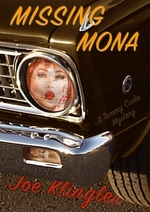
Missing Mona by Joe Klingler

Missing MonaMissing Mona

by Joe Klingler
Series: Tommy Cuda, #1

Kindle Edition, 400 pg.
Cartosi, LLC, 2015

Read: January 30, 2016

I can’t put my finger on precisely why (at the very least, I probably needed to take a few more minutes between books), but the first page or two of this book really turned me off — five or six paragraphs in, and I was already groaning at the length of this book. And then I hit the line:

Where could I find a life as exciting as a detective novel? Or at least a pop song?

Nothing special, but the second question got my attention. Tommy Kelsey might be my kind of guy after all — the reference to The Hitchhiker’s Guide to the Galaxy at the bottom of the page just sealed the deal.

Tommy’s tired of being tethered to his smart phone, he’s not entirely sure he wants to continue with the lady in his life, needs a break from his friends and his job, he — actually, let me let his mother sum it up:

She held my shoulder with her right hand. “You just celebrated your last twenty-something birthday. You see the big three-oh coming at you down the long highway of life, so you want to run away to find something before old age pins you to the mat.” She smiled and let go. “And makes you cry uncle.”

Mom was okay. I didn’t think so back in high school, but she seemed smarter now.

Tommy grabs a few essentials (his guitar, some records, clothing, etc.), throws them in the trunk of his restored Plymouth Barracuda (with a 426 Hemi V8 ) and hits the road to some unknown destination. He’s not on the road before too long before he picks up a hitchhiker — a potentially dangerous move, but he’s clearly in an impulsive mood — and he’s clearly attracted to her. In an attempt to impress Mona Meyers, he says that he’s a Private Investigator named Tommy Cuda (Kelsey didn’t seem like a name worthy of her, and the nearby dashboard provided the inspiration he needed). Mona’s intrigued by that and hires him to find someone for her once they reach Chicago.

She disappears the next day, leaving behind some money and a photograph of herself, with a note on the back:

Find me, Tommy— M.

Finding Mona ends up being pretty easy — the challenge is in figuring out what to do with her once that’s been accomplished. Not only that, but finding her lands Tommy in the middle of a web of crime, one that leads him into investigations that will involve a shooting, grand theft auto, and several other things that I can’t say because they’d be spoilers, and you have to read the book anyway to believe my list — outlandish, strange, and yet totally logical in this world.

As interesting as that all is — and it was quite the knot to untie — what sold this book for me was the characters, starting with the people that Tommy ends up surrounding himself with — there’s the waitress/aspiring criminologist who helps Tommy enough that you could almost say he tags along with her; the librarian/artist/personal stylist who helps him around town; the B&B employee (yeah, typical hard-boiled P.I. stays at a B&B); the coat girl who wants to be a police officer, the eccentric mechanic, a hotel valet/blues musician who can connect you with anything on the street that you need; and of course, Mona. Almost any one of these would be enough of a pal/associate for a P. I., but Klingler gives us all of these in an embarrassment of riches. I would willingly, maybe eagerly, read another 100-200 pages with any of them.

And then there’s Tommy — the poor guy who is clearly in over his head, but knows it and is doing whatever he can to find the girl, earn his money, maybe save the girl — and play a little guitar while enjoying his new friends. Tommy reminded me a lot of Harry Lockhart, from Kiss Kiss Bang Bang, especially when he said things like,

Now I knew why private eyes in novels were always smoking a cigarette: it was nerve-wracking having no idea what was going on.

I enjoyed watching him flounder around, trying to figure out how to do this thing that he’s read about and watched movies about, but is honestly clueless. about. Yet somehow — with a little help from his friends — he gets the job done. Sure, the ladies threw themselves at him in a way that was tough to believe, but that goes with the genre territory.

I will read better books this year, though this was a good one — but I will not read many that will be more fun. Missing Mona was a great ride, and I’m hoping that Tommy Cuda gets behind the wheel of his Barracuda again soon. Klingler has a couple of other books on his résumé that I’ll be getting my hands on pronto, too, just to see if he has the same touch there. Check this one out, folks, you’ll thank me.

Disclaimer: I received a free copy of this book from the author in exchange for a fair review, which was awfully generous of him, and it’s really appreciated.

—–

4 Stars

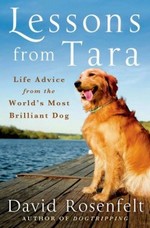
Lessons from Tara by David Rosenfelt

Lessons from TaraLessons from Tara: Life Advice from the World’s Most Brilliant Dog

by David Rosenfelt

Hardcover, 227 pg.
St. Martin’s Press, 2015

Read: January 23 – 25, 2016


One of my resolutions this year was to read more Non-Fiction — I’m going to try for 1 a month, in addition to “whenever I see something that catches my eye.” So, I marched up to the New Release shelf at the Library and started browsing — hope sinking fast, a whole lot of diet, productivity and political books. Ugh. Just not in the mood, then I got to the 600’s and David Rosenfelt’s name jumped out at me. Had to do it, Rosenfelt talking about Tara (the inspiration for Andy Carpenter’s dog) might be cheating a little, but it was good enough.

I was expecting a little Marley & Me-ish type story about the Rosenfelts and Tara. I couldn’t have been more wrong — thankfully (this meant I sniffled far less than I would’ve otherwise). This is a collection of short (no more than 5 pages), mostly humorous, essays about their life and work with Rescue Dogs. Tara is mentioned frequently, as the work they do with Rescue Dogs was inspired by her, but she’s not the focus of this book. It’s their entire menagerie, those they’ve rescued that aren’t part of their pack, the humans they’ve worked with — and even a few they decidedly haven’t — and the lessons Rosenfelt has learned from them.

While every chapter has a joke or two, some are pretty serious — Rosenfelt talks earnestly about the way people treat dogs — particularly older dogs. The focus of The Tara Foundation is on older/senior dogs who aren’t that likely to be adopted from shelters. I know that he’s made me rethink what dogs I look at when we go to adopt next.

Fans of the Andy Carpenter series will be happy to hear that Andy’s voice is Rosenfelt’s — the book at times feels like an Andy Carpenter book without all the muss and fuss of a plot, murder, or trial. I laughed, I chuckled, I learned a thing or two, and I even got misty more than I wanted to. All in all a really strong read. If you’re a dog lover, or just someone who likes to read good things, find some time for this one.

—–

4 Stars

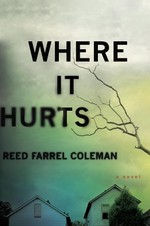
Reposting: Where It Hurts by Reed Farrel Coleman

It’s Publication Day for Where It Hurts, so I thought I’d better throw this up again. Go get your hands on it.

Where it HurtsWhere It Hurts

by Reed Farrel Coleman

Series: Gus Murphy, #1
ePub, 353 pg.
G.P. Putnam’s Sons, 2016

Read: November 26 – 27, 2015

I honestly don’t know where to start with this, once again Reed Farrel Coleman has provided me with a book that I really want to talk about, but I’m not sure how to proceed, beyond saying that this is really good.

Where It Hurts is gritty, bleak, tragic, and tense with a strange sense of hope filtering though the depression, pain and grief. If that miasma makes sense to you, you’ll get the feel for this book. If it doesn’t, you’ll understand why I struggled for almost a month with this.

Gus Murphy is a retired uniformed police officer — retired young, I should add. His life has been shattered by a calamity that struck without warning and without mercy; bringing an end to his career, his marriage, his faith, and his relationship with his daughter. His ex-wife and daughter aren’t faring too well in the aftermath, either — you could make the case that Krissy, his daughter, is worse off than Gus.

Two years after his world came to an end, it’d be nice to say that Gus has started to put his life back together — he hasn’t. He has, however, figured out how to exist, and honestly that’s about it.

It’s into this state of mind, state of being that we first encounter Gus and from there Where It Hurts really gives us two stories. The first is a story about an ex-cop being asked (and agreeing) to look into a months-old homicide on behalf of a father — who has a record long enough that the Suffolk County PD isn’t that interested in helping him or taking any evidence he might have gathered for them. Enter Gus. The other is a story of a grieving father dealing with the aforementioned fallout of the tragedy and — thanks to other story — a renewed interest in life beyond this grief and anger. In the end, both stories end up feeding the other as Gus remembers what living was like, what being a cop was like.

As well-written and plotted as book is — with a well-done mystery, your appreciation for this book will come down to the question of what you think of Gus. If you don’t care about him, aren’t interested in what makes him tick — the rest isn’t going to maintain your interest. If you do care, are curious, are sympathetic, are fill-in-the-blank, there’s no reason you won’t be satisfied with it.

I’ve only read 5 or so of Block’s Matthew Scudder books — and that was a while ago — but Gus reminded me a lot of Scudder. Instead of battling his addiction, he battled his loss (and, yes, I realize both are probably doing the same thing — but Scudder identifies as a drunk, Gus doesn’t). I found it particularly interesting — and on the whole, original — the way that Coleman dealt with and explored Gus’ lack of faith. Because it’s not just your garden variety atheism/agnosticism — Gus is angry about his God not existing anymore (or at least his faith in Him). He talks about it a lot — so much so that you know it’s self-delusion to think of it as a loss of faith, while it’s anger at God for what happened to him. Gus isn’t Job, he has neither the patience or the faith to react like Job — and in his grief, he lashes out at the God who would do this to him/his family. To me, this felt genuine, I think I know this guy (or at least that reaction).

The supporting characters were great — the criminals suspected of the murder, the criminals adjacent to the murder, the police (although one bordered on being a cartoonish lout — but that seemed intentional), the people from Gus’ old life, those from his new. On the one hand, I didn’t think I got a great picture of his ex-wife, but on the other, I don’t think I needed to. A little more time with Krissy, however would’ve been good. Everything else was great, character-wise.

That was actually much easier than I thought it would’ve been. Where It Hurts strikes me as the kind of book that I could go on and on for pages about, but apparently not today. It might have to wait until book two comes out, so I can see where Gus goes from here. Does he remain in essentially the same spot, or does he make big, sustained steps out of mere existence and into a new life? The last few pages suggest that he does, but I know better than to expect that to remain the case. I actually could see me revising everything I said here about this book based on the sequel.

Regardless, a heckuva book — one that could appeal to thoughtful mystery readers, or general fiction readers willing to have a hefty dose of crime in their reads.

—–

4 Stars

—–

Note: I received a digital copy of this book from the nifty people at First to Read, as grateful as I am to them, that didn’t alter my appreciation of the book or what I said about it.

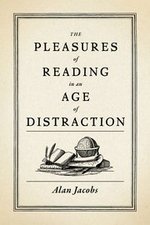
The Pleasures of Reading in an Age of Distraction by Alan Jacobs

The Pleasures of Reading in an Age of DistractionThe Pleasures of Reading in an Age of Distraction

by Alan Jacobs

Hardcover, 150 pg.
Oxford University Press, USA, 2011

Read: December 21 – 25, 2015

A while back my teenage son drifted into the room where I was reading, tilting his head to catch the title of the book in my hands. It was that venerable classic How to Read a Book, by Mortimer Adler and Charles van Doren. “Oh man, he said, “I had to read that in school last year. Maybe I learned something about how to read a book, but after that I never wanted to read a book again.”

Oh, I hear ya, brother! I endured Adler/van Doren for a graduate-level course and thought it was one of the most pointless books I’d ever read. Now, Jacobs finds more profit in the tome than I do, but he’s clearly not a fan.

The book starts with a call to read what you want, reading based on whim, rather than thinking of it as a self-improvement program (which it is, in a way, but it doesn’t have to be followed like one). In fact, Alden, Harold Bloom, etc. turn

reading into the intellectual equivalent of eating organic greens. . . That sort of thing is not reading at all, but what C. S. Lewis once called “social and ethical hygiene.”

Instead, Jacobs calls for people to:

Read what gives you delight–at least most of the time–and so without shame. And even if you are that rare sort of person who is delighted chiefly by what some people call Great Books, don’t make them your steady intellectual diet, any more than you would eat at the most elegant of restaurants every day.

Jacobs is a Professor of the Humanities at Baylor University, and author of many books and articles on books, reading, and authors. He’s one of those guys I’ve seen the name of everywhere, and associated with insight, but if push came to shove, I couldn’t tell you why. But now he’s the professor I wish I had (nothing against most of the early ’90s English department at the University of Idaho, most).

Reading on a whim doesn’t mean you can’t stretch yourself, read above your comfort level, or to better yourself — but you do it because it interests you, because you want to (and when you want to), rather than subjecting yourself to someone’s checklist.

After that, Jacobs moves into trying to understand how reading works, how it captures so many imaginations — and sure, he cites some studies that explain how we take black marks on paper and make them ideas in our head, at some point even the professionals have to stop and say, “it just works.” (but Jacob puts it better).

We also get discussion about the “iron-clad Law of Diminishing Returns” regarding rereading too soon (and yet, why we should reread). An interesting defense of/encouragement of fanfic. I was surprised, quite surprised, at his advocacy for e-Readers — I fully expected him to be solidly Dead Tree Edition Only, whoops — I don’t use my Kindle the way he does, but I can see where it’d work for him (or Nook, either). Why a lot of the doomsayers about the state of reading/publishing are wrong.

But mostly this is advice and guidance for the reader trying to recapture the same joy that he had before (or never had), encouragement for the active reader to keep at it, the person who still can’t get poetry, etc., etc.

I can’t resist another quotation. Towards the end of the book, he talks about the joy of finding a book by Serendipity:

serendipity is the near relation of Whim; each stands against the Plan.

Plan once appealed to me, but I have grown to be a natural worshiper of Serendipity and Whim; I can try to serve other gods, but my heart is never in it. I truly think I would rather read an indifferent book on a lark than a fine one according to schedule and plan.

Charmingly written, full of allusions (that most of us can get even without reading the works), witticisms and research — a book to entertain and edify. This one really speaks to me as a reader — it’s practically a mission statement for this blog. I expect I’ll come back to this one soon (maybe even annually). Still, for this time, I’m rating it 4-Stars, though I expect it’s a 5-Star book. I think it’s because I read it in 2-5 page spurts (one of those weeks, y’know?) after I got to page 70. Which doesn’t do the thing any favors. Towards the end of the book, Jacobs says:

All books want our attention, but not all of them want the same kind of attention.

I didn’t give this the right kind, and I’ll regret that for awhile.

If you like this blog, you’ll dig this book.

—–

Big Thanks to Aman Mittal for pointing me to this book — I haven’t read his take on it in a couple of months, so I don’t know how much we agree, but I know his post made me look for the book.

—–

4 Stars

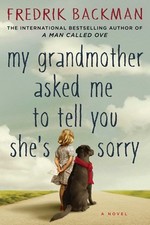
My Grandmother Asked Me to Tell You She’s Sorry by Fredrik Backman

My Grandmother Asked Me to Tell You She's SorryMy Grandmother Asked Me to Tell You She’s Sorry

by Fredrik Backman, translated by Henning Koch
Hardcover, 370 pg.
Atria Books , 2015
Read: November 20 – 24, 2015

If you don’t like people, they can’t hurt you. Almost-8-year-olds who are often described as “different” learn that very quickly.

That lesson was impressed upon Elsa pretty hard, which has left her with a very small group of people that she likes (but, like most 7 year-olds, she really wants to like people) — although in many, there’s only one person in that circle for Elsa — her grandmother. Elsa’s grandmother was her best friend, her superhero, the most devoted adult in her life.

Elsa doesn’t do that well in school — doesn’t get along with teachers or classmates — but thanks to Wikipedia, knows all sorts of things in very random areas. She’s utterly convinced of the importance of the Harry Potter series and other “quality literature,” like Spider-Man comics.

She used to write letters to Santa every Christmas, not just wish lists but whole letters. They weren’t very much about Christmas, mainly about politics. Because Elsa mostly felt that Santa wasn’t involving himself enough in social questions, and believed he needed to be informed about that, in the midst of the floods of greedy letters that she knew he must be receiving from all the other children every year. Someone had to take a bit of responsibility.

Following her Granny’s death, Elsa is given a series of letters to deliver to various people that her Granny has helped in the past, but who’ve had problems with her since. This eventually involves adventures (things both 7 year-olds and adults would consider adventures) and a lot of personal growth. As she delivers them, Elsa learns a lot about who Granny was before Elsa came along, and finds herself in a much larger world than she’d previously been able of living in.

This is just charmingly written, sweetly told, and it’ll draw you in with the language. Backman and Koch show a delight with language and people that will surely win you over. It’ll make you smile, it’ll make you giggle, it’ll make you melt a little — if your grandmother’s alive, you’ll want to give her a call — if not, you’ll miss her more than usual.

—–

4 Stars

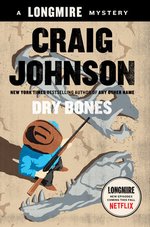
Dry Bones by Craig Johnson

Dry BonesDry Bones

by Craig Johnson
Series: Walt Longmire, #11
Hardcover, 306 pg.
Viking, 2015

Read: December 5, 2015
So, possibly the largest Tyrannosaurus rex skeleton ever discovered is found in Wyoming (which is apparently a pretty good place to find them, who knew?), and there’s a battle brewing over who it (and the very large price tag that’ll surely be attached to it) belongs to. There’s enough drama there, but you don’t pick up a Walt Longmire novel for paleontological wrangling, you need a dead body or two. Thankfully, one shows up not too far away, and Walt’s old friend, Omar finds it.

Johnson’s pretty good at keeping several plates spinning, but this time he seems to have outdone himself — we’ve got a controversy over who gets custody over the T. Rex, with three different parties; a runaway; dealing with FBI and a Deputy U. S. Attorney looking to make a name for himself; Double Tough’s recovery from A Serpent’s Tooth; Vic’s continuing recovery from the same book; a visit from Cady and her daughter; oh, yeah, and the murder. About halfway through I actually stopped and wrote them all down, and asked myself “how’s he pulling this off?” I’m honestly not sure, but he did.

Which does mean he pulled it off flawlessly. It didn’t take too long to figure out where the Deputy Attorney story was going — aside from the running source of comedy. But honestly, I think we needed a couple more scenes to make it worthwhile. We got to see Lolo again — which was nice, but she didn’t get enough to do. Still, just glad to see she’s still in this world. I do think the skeleton controversy vanished a bit (understandably) in the middle, when I think it could’ve kept going.

But overall, this was a fun, quick ride, with Johnson (and Longmire) firing on all cylinders, and I can’t wait for the next one to see how the events of this book impact our friends going forward.

Oh no! I’m all caught up (other than the short story collection) with the Longmire books — whatever shall I do? Actually that’s a really good question, I’m going to miss my monthly visits to Absaroka County.

—–

4 Stars

Indexing: Reflections, Episode Nine: Feline Cobbling by Seanan McGuire

Indexing: ReflectionsIndexing: Reflections, Episode Nine: Feline Cobbling

by Seanan McGuire
Series: Indexing, #2.9

Kindle
47North, 2015
Read: December 2, 2015

Just what I needed after “Holly Tree,” Sloane puts the pieces together, and the bad guys show their hand. But wait, there’s more — a fascinating narrative incursion, and some real tension — both physical danger and a heart and soul in jeopardy.

The incursion was a “Puss in Boots,” which just gets our characters out of the office and into a situation where things can happen. Which isn’t that uncommon this second series, but is frustrating. I’d have loved to see more with this Marquis of Carabas tussling with the Sloane and the team. Still, what McGuire did instead? So much better.

I really can’t say more about this one (like the last couple) without ruining the whole thing, so I’ll just leave it as: exciting, intriguing, and what we learn about what Birdie and Elise makes this series all the more interesting. As for what Sloane learns about herself? Fuhgeddaboudit.

I expect that Episode Ten will be all about Henry and that we’ll have to wait until Eleven to see what happens as the result of this one, and that’s going to drive me crazy. Even if I like Episode Ten a whole lot more than I have the last couple of Henry-centric episodes. And maybe people who aren’t Henry or Sloane will have something to do.

—–

4 Stars

The Shootout Solution by Michael R. Underwood

The Shootout Solution The Shootout Solution

by Michael R. Underwood
Series: Genrenauts, Episode 1

Kindle, 148 pg.

Tor.com, 2015

Read: November 18 – 19, 2016

Because he didn’t have enough series/irons in the fire already, here’s a new series from Michael R. Underwood — the man behind the Ree Reyes/Geekomancy series, Shield and Crocus and The Younger Gods (which may be a series or may be a stand alone). This one is sort of familiar territory, but differs enough that it doesn’t feel tired.

So, Leah is trying to make it as a stand-up comic in Baltimore. I didn’t realize that Baltimore was a good place for this, but sure, why not? So, the stand-up isn’t working for her, her day job is as a receptionist and isn’t the basis for a future. So she can’t help but be interested when some mysterious man who seems to appreciate her act approaches her and says:

I’m Dr. Angstrom King, Department of Comparative Literature. I run a narrative immersion laboratory, and I’m looking for new staff. I think you might be an excellent fit.

The reality behind that gobbledygook is tough to explain in a paragraph, but I’ll try — there are several parallel universes to ours (“Earth Prime”), and each of these correlates to a genre in fiction (not just books), so there’s a Science Fiction World, a Romance World, A Horror World, and so on. Each of these universes impacts ours in the narratives we tell each other. And when something goes wrong the World’s narrative, it spills over in our reality. So there’s a group of people like Quantum Leap or Voyagers! who pop in, fix the problem, and pop out once stability to the narrative returns. The people that are aware of these worlds and that travel between are called Genrenauts — catchy, eh?

So, Leah tries it out, traveling to Western World to clean up a sticky situation. While there, she meets some more of King’s team, helps some people out, and get a real baptism by fire into this strange new world. There’s some fun with tropes, character types, a shootout, bad whiskey — pretty much everything you’d want sans a squinty-Eastwood character.

It’s told with a light touch — the debt to Leverage and The Librarians is obvious (and readily acknowledged), with a good dose of action, a hint of a looming catastrophe/conspiracy. There’s a good deal of literary/narrative theory under-girding this whole project — it’s not as frivolous as it may seem.

There’s so much emphasis on the premise of this series, and with the adventure in Western World, that we didn’t get a good introduction to the characters. In addition to Leah, there was King and 2 teammates, some references to a couple of others, 2 people from the Western world. But Leah’s the only one that I could say has more than 1 dimension to them. I’m confident when I say that’ll be taken care of in short order in the future, though. But for now, the team is full of types, not people.

Leah is further on her way to being a fully developed character, primarily a collection of characteristics and tics at the moment — but close. She’s smart, savvy, quick on her feet, a pop culture junkie. Unlike, Ree, Leah’s a professional smart aleck — or aspires to be one, anyway. Not that anyone needs a justification to be quippy and snarky in the face of danger in SF, but it’s nice that she has one. I enjoyed meeting her, and want to get to know her better while watching these collection of characteristics congeal into a character.

I’m giving this 4 Stars, I think it earns a 3 — it’s so pilot episode-y that it’s hard to tell. I really enjoyed it and I’m in for at least a handful of books, so I’ll give it a one-star bump for the premise. I’m eager, really eager, to get the next one.

—–

4 Stars

Page 68 of 88

Powered by WordPress & Theme by Anders Norén