Tag: 4 Stars Page 69 of 88

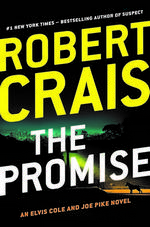
The Promise by Robert Crais

The PromiseThe Promise

by Robert Crais
Series: Elvis Cole, #14 / Joe Pike, #5
Hardcover, 402 pg.

G.P. Putnam’s Sons, 2015

Read: November 10 – 11, 2015


Elvis has been hired to find Amy Breslyn, from her pictures he says, “She looked like a sad version of someone’s marshmallow aunt: a kindly woman, slightly out-of-date, who wore sensible shoes and minded her own business.” But his client paints a picture of a woman who has been making some very unwise life choices lately, and she’s worried. Once Elvis scratches beneath the surface of Amy’s life, her recent lifestyle is far worse than “unwise.” Can the World’s Greatest Detective help her?

You strip away all the bells, whistles, multi-perspectives, co-mingling of series, and whatnot and you’ve got yourself a classic, prototypical Elvis Cole story. There’s a missing person that he’s hired to find, he goes through a bunch of stuff to find that person — ticking off a police department and a criminal enterprise in the process. At some point, he finds the person, but also discovers this person is in a world of hurt from the government/the criminals she’s crossed paths with, which he will try to extricate them from. Excitement, deception and bullets ensue. Pike does his thing. Elvis does his. Happy ending — or as close as you can get in this world we live in.

It’s with the bells and whistles that this one stands apart from your usual Elvis Cole book — which is both a good and a bad thing for the book.

Good, because we got to see so many characters that we enjoy and/or love interacting and teaming up.

But . . .

For the first few chapters it didn’t feel right — as an Elvis Cole book, it worked as a suspense novel — there was just too much bouncing around between the various point-of-view characters. By chapter 6 or 7, things settled down and back to what it should be. Still, The Promise probably stretches the limit of acceptable point-of-view characters: Mr. Rollins (the criminal we meet in the opening pages), Elvis, Joe, Jon Stone, Scott, and even Maggie — we’re an imp, a bastard and a khaleesi short of George R. R. Martin epic.*

It’s in trying to serve all these characters that the novel struggles — for example, I could’ve used more Pike. Sure, he’s effective when he’s around — but he’s barely around. After bringing in Jon Stone, Pike’s more of a backup than anything else — okay, fine, this was Stone’s kind of work. But still, if it’s listed as a Joe Pike novel we should see Joe do some Pike-level stuff. I don’t even think that Elvis said anything about him twitching the corner of his mouth in response to a joke! That might even disqualify it as an Elvis Cole.

Now, the Jon Stone material — especially his POV chapters — was great, and if it hadn’t been at the expense of Pike, I would write a healthy paragraph praising it.

The Maggie and Scott story might have been the most compelling part of the book. Scratch that, for me (at least, your mileage may vary) the Maggie and Scott story was the most compelling part of the book. It was fairly predictable, but executed so well that you just don’t care. This is a problem when they’re not the central figures in the book. I think the novel suffered from Spider-Man 3 Syndrome** — just too many characters running around to do a good job with.

I got enough of the Maggie and Scott material, same for the Jon Stone (except for the bit that you’re designed to want more of). But I needed more Joe being Joe, I wanted more Joe/Elvis interaction, more Elvis/Scott, more Elvis investigating, more — well, more Elvis, I guess is what I’m saying. Every time it seemed that the story was picking up steam and we were on track, we got someone else’s POV and had to start building momentum again.

Don’t get me wrong, I talked so much about the problems I had to fully explain them — I really enjoyed it, I just didn’t love it. After waiting so long, you’d hoped that this would’ve been dazzlingly great, instead The Promise will have to settle for being very enjoyable. Like I said at the outset, it’s a classic Elvis Cole story — and there are few things I’d rather read. I’m looking forward to re-reading this in a year or so, and I may put up a more favorable post when I do.


Okay, now that I’m thinking about it, who wouldn’t love to see Joe Pike smack Joffrey around a little bit?
8
I’d call it Batman Forever or Batman and Robin Syndrome, but those two had much worse problems than a plethora of characters

—–

4 Stars

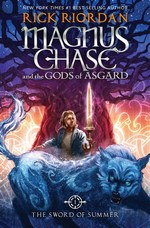
The Sword of Summer by Rick Riordan

The Sword of SummerThe Sword of Summer

by Rick Riordan
Series: Magnus Chase and the Gods of Asgard, #1

Hardcover, 491 pg.
Disney – Hyperion Books, 2015
Read: November 6 – 7, 2015

Maybe you’re thinking, Oh, Magnus, you didn’t really die. Otherwise you couldn’t be narrating this story. You just came close. Then you were miraculously rescued, blah, blah, blah.

Nope. I actually died. One hundred percent: guts impaled, vital organs burned, head smacked into a frozen river from forty feet up, every bone in my body broken, lungs filled with ice water.

The medical term for that is dead.

Gee, Magnus, what did it feel like?

It hurt. A lot. Thanks for asking.

Welcome to Rick Riordan’s latest tale of the offspring of mythological deities and the humans silly enough to fall for them. We’ve done the Greek pantheon, spent some time with the Egyptians, and came back for another round with the Greeks — this time with their Roman counterparts, but now we’re in for something new: Norse mythology. A whole new kettle of fish. This involves a new type of central character, a new kind of setting, new challenges. Which gives us the best thing from Riordan since the Percy Jackson & the Olympians series.

Magnus Chase is a homeless teen, orphaned a couple of years back when his mother was killed. Since then, he’s lived on the streets of Boston, spending his days in museums and libraries, learning as much as he can about whatever, and establishing relationships with generous restaurant employees and fellow homeless people. Two of whom track him down one day to let him know that there are people looking for him. It turns out that this is his sixteenth birthday and life just got a lot more dangerous for him. The people seeking him are family and they’re sure that he’s about to be hunted by beings he doesn’t believe exist.

The quotation above shows how well that being hunted works out for Magnus.

But he goes down fighting — to save himself, bystanders, and a couple of friends. So a Valkyrie (who happens to be Muslim, a combination that fascinates me) takes him to Valhalla — where he makes some more interesting friends, and enjoys a quality of (after-)life that’s far better than the streets. But then, someone casts doubt on the worthiness of his selection, which puts that Valkyrie in hot water.

So now Magnus has to take things into his own hands, prove that he’s worthy, defend the Valkyrie, and prevent Ragnarok from starting — or, if things go wrong, kick it off. It could go either way, really. One of the best pieces of advice he gets — the thing that inspires him is:

The thing about fate, Magnus: even if we can’t change the big picture, our choices can alter the details. That’s how we rebel against destiny, how we make our mark.

Now it’s just a question of what kind of mark he leaves.

Love, love the voice/attitude, I’ve seen some criticisms of it from parents, but I think it’s fun, and it’s just the kind of thing to feed into his audience (both the target and those who’ve grown up reading Riordan and still read him despite no longer being age-appropriate). It’s the clearest, crispest, funniest narrative voice since the Percy books — and might end up surpassing them by the end of this series.

I really don’t know that much about Norse mythology — world tree, Ratatoskr, Asgard, Valhalla, Odin, ravens, Hel, etc. I’ve got, but the details are really fuzzy. Most of what I know about Norse myth comes from Kevin Hearne’s Iron Druid Chronicles and Jacqueline Carey’s Daisy Johanssen/Agent of Hel Urban Fantasy books. So I’m learning a lot — and I assume younger readers will, too. The few pages of supplemental materials in back of the book are such a nice help! I really enjoy Riordan’s take on these mythological figures — both those I know and those I’m new to. I think the Thor you meet in these pages is fantastic. Yeah, Hearne’s Thor is a better character, but Riordan’s Thor induced more chuckles.

There are some great chapter titles here — I tend to ignore them (anything beyond a number is a distraction), which is short-sighted, I realize, but that’s what I do. In this book? It’d be really dumb to skip them. Every now and then I’d stop to go back and read the last few that I’d missed. If they’re not the funniest (and most creative) lines in the book — they’re in the top 2%.

The tie-in to the Percy Jackson books is obvious (and I felt really stupid having to have it spelled out for me in the opening chapters rather than sussing it out much earlier) and unexpected, but I can’t wait to see how that develops. But even more entertaining are the jokes about aspects of the Percy-verse — flat-out funny, and nice bit of fan service, too. Oh, and they won’t make a lick of difference to the Riordan-novice.

I just realized that I haven’t even addressed the titular sword. I don’t know what to say about it without ruining anything, but if I was eleven years old? It’d be my favorite sword ever — better than Excalibur or anything that Tolkien could offer (as someone much older than 11, I don’t think that, but I wouldn’t argue with my younger self).

One other thing — I read a review from one review site that I respect that dampened by enthusiasm for getting this — but I decided that Riordan had earned my trust (and I was curious), so I gave this a shot. That review complained about the sarcasm — I don’t get that, but apparently that’s a thing for some parents. And they complained about the addition of cussing — now maybe I missed it, but outside of the taking the names of Norse gods in vain (and that could be argued), the only cussing I saw was in dialogue tags. As in “…,’ he cussed.” Seriously? If we have to shield our middle graders from the concept of cussing, they’re not going to survive the middle grades. There were a few other complains that were about as baseless as these — I kept waiting to see these problems as I read and missed every single one.

Which isn’t to say this is a perfect book — but man, it’s the best he’s done in quite a while. The problems I have are really not worth getting into, they don’t ruin the experience, and if you’ve read Riordan before, you’ll be expecting them (they’re less problematic in this book than the last 2-3). The Sword of Summer is funny, exciting, with real heart — just the thing for middle grade readers (or those who don’t mind reading below their fighting weight).

—–

4 Stars

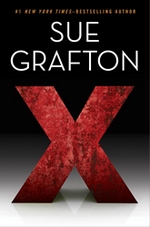
X by Sue Grafton

this is rushed, I’m having Internet shortages this week (long story, don’t ask), so I want to get this posted while I can. I may end up polishing it up within the day, if there are problems/typos/incomplete sentences, etc. — leave a comment

XX

by Sue Grafton
Series: Kinsey Millhone, #24

Hardcover, 403 pg.
Marian Wood Books/Putnam, 2015
Read: October 28 – 30, 2015

I’d forgotten how slow these books start, if I didn’t have confidence in Grafton built over 23 previous novels, I don’t know if I’d have kept going. By page 100, I was curious about both mysteries, engaged enough to keep going – but still no serial killer, no interesting crime — a lot of X’s in character names and whatnot — enough that you know Grafton intended them. The highlight had been meeting Cheney Phillips’ mom, fer crying out loud! You’d think with just three books in the series remaining, Grafton would be pulling out all stops to make this dazzle the readers, but nope. This book is possibly the most subtle, where the actual mystery, the heart of the book is lost in the midst of the mundane — not unlike actual life. Really, most of this book was the Adventures of Kinsey Millhone, Busybody with Too Much Time on Her Hands.

By this point, if we know nothing else, we’ve learned that you do not move into Kinsey and Henry’s neighborhood. If Kinsey decides she doesn’t like you, your life is going to be pried into, turned upside down, and — ultimately — you’ll find yourself living somewhere else. Gladys Kravitz has nothing on Kinsey. Now, whether it’s a gold-digger sniffing around Henry, an insane nurse, or what have you, Kinsey’s gut has been right — but she can’t bat a thousand, can she? Still, Henry gets some new neighbors who get him to run all over town on their behalf while he obsesses with a potential drought and water rationing — and by obsesses, I mean he turns in to Adrian Monk. Kinsey sees them taking advantage of Henry and steps in. I really didn’t like this storyline — Kinsey came off as a shrew (and, yes, I get it — part of this series has always been showing her warts and all — still, I want to expect more from her), no matter how rude and manipulative and possibly worse these new neighbors may be.

There’s another storyline that’s kicked off in the Prologue — I noted after reading it that we wouldn’t return to that for 300 pages or so. I was off by about 100, a mistake I’m willing to make. But it didn’t come back in the way I expected. Kinsey is hired for a job, and after completing it, she’s visited by the police, and she learns that she wasn’t working for who she thought she was — and that’s just the beginning of the problems — so she starts digging into her client, and what that client wanted her to accomplish anyway. This is one of the strangest, and possibly the most pointless, mystery Kinsey’s reported to us. With an oddly sentimental ending.

Pete Wolinsky, investigator of dubious morality from W is for Wasted (and Kinsey’s early days as a P. I.) turns up again. His widow, Ruthie, is facing an IRS audit and asks Kinsey to look through the papers she still has of his laying around for any financial records. Kinsey gets around to it eventually, and in the process finds some well-hidden materials and a coded message. Henry, puzzle-writer extraordinaire, decodes it and comes up with a list of names — some of which have a connection to one of Pete’s cases that Kinsey was aware of, but the rest are a mystery. This starts needling at Kinsey’s curiosity (which is already purring along thanks to the mysterious client above), and she starts going over Pete’s tracks, trying to see what was so important that he would feel compelled to leave notes in a code. Not only does this involve going back over Pete’s case, but decades before — and then back to the present. The rocks she turns over reveal a good deal, and maybe even help Kinsey learn to appreciate Pete in a way she should’ve while he was still with us.

We do check in with Jonah Robb, Robert Dietz, and the aforementioned Cheney Phillips, but nothing happens at all even approaching romance. Which is fine by me, Kinsey on her own is more interesting than Kinsey trying to make things work with a guy. Naturally, we spend a little time at Rosie’s and see William make a bold fashion choice. Yeah, it’s just that exciting a book.

There’s a character early on that the reader (and Kinsey) pegs as the major villain of the piece, but he’s never focused on to the exclusion of all the other moving pieces, so that when things get serious and dangerous, it’s almost as much of a surprise to the reader as it is to Kinsey. I think the way Grafton pulls off handling the storyline, letting the danger get hidden in the shuffle is what made me rank it so high. Actually, as I write this I’m wanting to rank it lower, but I’m going to trust my initial judgment on this (but honestly, I’ve read a couple of 2 star reviews for this that I wholeheartedly agree with). It was nice going back to Santa Teresa to spend time with the old gang, but I’m really hoping Grafton makes these next two a little more worth the effort.

—–

4 Stars

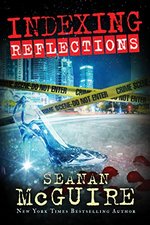
Indexing: Reflections, Episode Seven: False Love’s Kiss by Seanan McGuire

Indexing: ReflectionsIndexing: Reflections, Episode Seven: False Love’s Kiss

by Seanan McGuire
Series: Indexing, #2.7

Kindle
47North, 2015
Read: November 5, 2015

So we were going to do this the hard way. Fine. I’m Sloane Winters: I invented the hard way. “You want to ignore what’s right in front of your faces, that’s okay by me. I’ll just laugh even harder when it turns around and bites you. Assholes.”
“Thanks for the motivational speech, Sloane,” said Andrew, wrinkling his nose. “Any time I start to feel like things are going well, all I have to do is remember your contributions to this team.”

Henry’s a cool character, but man, Sloane is just a fun narrator — assuming that things get back to their heightened “normal,” I’m going miss her.

So there’s a Fairy Tale incursion, a Godfather Death, that I’ve never heard of — but man, it doesn’t sound like fodder for a Disney movie, I’ll tell you that. Opening with this is a great setup for the chapter — there’s drama, a little action, and a few laughs. Have I mentioned I really enjoy reading about Sloane?

Then things take a turn for the dramatic — Henry’s back from her little mission, but . . . something’s not right. Even if it has nothing to do with stopping evil/saving the world, I hope they can take care of whatever’s not right just for Jeffrey’s sake. And then we get a Rapunzel in action — and a not-so-typical Sloane solution.

I’ve enjoyed what we’ve seen from Ciara so far — but her working on the locks, and how she describes it? It’s just gold. Probably the highlight of the episode. I hope, if there’s another sequel, she doesn’t disappear into HR.

I think having this chapter before the last would’ve been more interesting — just to see if we’d have been able to figure why Sloane’s Spidey-Sense was going off, without a very strong possibility having been talked about last chapter. Even if I’m wrong, watching this unfold is going to be very interesting. Possibly more interesting than seeing what happens with Birdie and Elise.

—–

4 Stars

You’re Never Weird on the Internet (Almost) by Felicia Day

You're Never Weird on the Internet (Almost)You’re Never Weird on the Internet (Almost)

by Felicia Day
Hardcover, 258 pg.

Touchstone, 2015

Read: November 2, 2015


There is, a certain degree of difficulty in evaluating a memoir or autobiography, you can’t really critique the plot — “I just didn’t find the protagonist all that believable here,” “sure, things like that just happen…” You’re limited to writing ability/style and what’s contained in the volume (or what’s left out).

So let me start with my minor gripe: I’d have liked a little more information on The Guild — what we got was great, but we barely got any information/impressions on her castmates, the stories, anything beyond the process of getting the first episodes made and then securing the means to make the rest. Even more, I’d have loved more about her work on Buffy, Dr. Horrible, Eureka, and Supernatural which barely got a mention. I get that the book isn’t about that kind of thing — and I can appreciate that. But, I’d have liked to see that kind of thing (and I expect I’m not alone).

So what is the book about? It’s about Felicia Day — how the things in her life made her who she is. So yes, there’s a lot about The Guild, and what the process of making it did to her. Not too much about the other projects, sadly. But while reading it, I didn’t give it much thought beyond muttering to myself, “Oh, come on, we’re just skipping ____?”

Weighed against all the things about this book that really work, that’s really minor (but apparently takes me two paragraphs to explain). If you’re a fan of Felicia Day’s, you know that persona she’s established (I’m not saying it’s not primarily genuine, but she’s careful to keep it consistent). That persona shines forth in every sentence in this book. It’s hard, really hard not to hear Day’s voice in your head as you read this — at a certain point, I stopped trying because why should I? It’s fun hearing things in her voice — most of her readers are reading the book because they enjoy her — that’s why they got the book.

She talks about her mother’s unique approach to homeschooling (“for hippie reasons, not God reasons”), the various and sundry artistic endeavors she tried as a kid/teen — singing, dancing, acting, violin, and more, her college experience, her early acting days, discovering her writing/producing/creative mojo — and most importantly, discovering video games and the Internet.

This, and more, told in her indelible, inimitable, charming style, makes this book a winner — and a real laugh-out-loud read. Also, this book is noteworthy for the most mentions of Ross Perot in any book I’ve read this century. That really has nothing to do with anything, but it’s such strange distinguishing mark, I felt it had to be mentioned.

—–

4 Stars

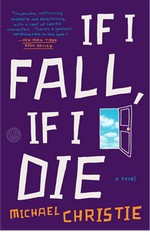
If I Fall, If I Die by Michael Christie

 If I Fall, If I DieIf I Fall, If I Die

by Michael Christie

Paperback, 323 pg.
Hogarth, 2015
Read: October 20 – 23, 2015

When he was a toddler, Will and his mother, Diane, moved into a house in rural Canada (somewhere north of Toronto, I think) and never left. I don’t mean that didn’t move to a different residence, I mean they didn’t leave. Diane was a filmmaker — some sort of arty, documentary/montage-type thing — with some psychological issues that got more and more intense until sometime after Will’s birth. By the time he was 2(ish), these issues had pushed her to the breaking point, and she had to retreat to a home that she’d bought with her brother before his death years previous. Diane has some sort of panic disorder and a pretty strong case of agoraphobia — so strong that Will ends up exhibiting most of the symptoms without, you know, actually being agoraphobic.

About 10 years later, Will hears a strange noise in the front yard, and before he knows what’s happening, he’s outside, investigating. Sorry, that’s Outside. Where danger lurks, bad things happen, and people shouldn’t be. He meets a kid about his own age, is mystified by him and drawn to him — mostly because he seems brave, but also, because he’s someone his own age. Within a few weeks, Will is sneaking outside for short jaunts — walking around the neighborhood, looking for his friend. Soon, he convinces his mother to enroll him in school, where he tunes out the teacher, but makes a couple of friends.

From this point on, the book diverges — on the one hand, we get Will’s continued socialization, growth, and maturation. As well as a better understanding of what happened to his mother.

On the other hand, Will and his school-friend, Jonah find themselves adventuring. Jonah’s a very smart kid, on the verge of falling through the societal tracks (like most of the local Indians) with criminal brothers, and a knack for looking graceful on a skateboard. He teaches Will to skate, and how to be less awkward. The two also enact some real Tom Sawyer/Huck Finn escapades, while hunting for Will’s first Outside-friend — which brings them into contact with all sorts of nefarious individuals.

The latter of these two paths is slightly less interesting, and is executed less convincingly — although it’s clearly the more exciting and eventful. It also seems like that it’s Christie’s focus, it’s the core of the story he seems to want to tell. Sadly, it’s not the one I wanted to read (as much), especially because all of it was pretty predictable. I’m not saying it’s not worth reading, but it just didn’t do as much for me as the other stories. Titus, in particular, the homeless man they befriend (for lack of a better word) is pretty entertaining with his frequent Dogberryisms.

Will gets braver and braver, and a little wiser until he comes to the realization that something bad is always going to happen — to you, to someone you love, to someone you know, to someone you read about in the newspaper — it’s just a question of how you live until then. The question is, armed with this understanding: how will he live? Can he help his mother?

Will, Diane, Jonah — are all richly drawn characters (which isn’t too surprising, given the focus on the first two). Many of the supporting characters are about as well drawn — Will’s first school friend, Angela, was great, but I could’ve used more of her (the story didn’t require more of her, we didn’t need more of her). The villains were a bit sketchy, but there were as fully developed as the needed to be to serve their purpose (see again, Tom Sawyer/Huck Finn comparison).

The writing was insightful, and while I wouldn’t want to hold up Diane as a test case for agoraphobia, I really felt like I understood her. I felt the same about Will — I particularly liked the way that his becoming acclimatized to the Outside wasn’t a straight line, or easy growth — but it came in fits and starts, with many steps backward (some brought on by his own insecurities, some by his mother’s). His perspective (especially early on), vocabulary, worldview, and social awkwardness (the nicest way I can put it) all fit someone who’s been locked away from the world and only interacted with a loving, doting mother; television; and delivery men.

Whatever the flaws, this was a really good book, and one I’m very glad it came across my path. Michael Christie is a name I will keep an eye out for in the future.

Disclaimer: I received this book from the nice folks over at Blogging for Books for this review. Not sure they got their money’s worth, but I hope so.

—–

4 Stars

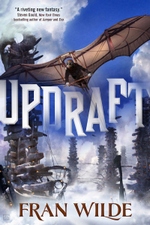
Updraft by Fran Wilde

It’s been awhile since I’ve re-written, honed, revamped, etc. a blogpost so much. I think this is coherent. I should’ve just probably put up the publisher’s description and said “Read it, it’s special.”

UpdraftUpdraft

by Fran Wilde
Hardcover, 362 pg.
Tor, 2015
Read: October 15 – 17, 2015

I don’t normally do this, but let me start with the Publisher’s Description:
In a city of living bone rising high above the clouds, where danger hides in the wind and the ground is lost to legend, a young woman must expose a dangerous secret to save everyone she loves.

Welcome to a world of wind and bone, songs and silence, betrayal and courage.

Kirit Densira cannot wait to pass her wingtest and begin flying as a trader by her mother’s side, being in service to her beloved home tower and exploring the skies beyond. When Kirit inadvertently breaks Tower Law, the city’s secretive governing body, the Singers, demand that she become one of them instead. In an attempt to save her family from greater censure, Kirit must give up her dreams to throw herself into the dangerous training at the Spire, the tallest, most forbidding tower, deep at the heart of the City.

As she grows in knowledge and power, she starts to uncover the depths of Spire secrets. Kirit begins to doubt her world and its unassailable Laws, setting in motion a chain of events that will lead to a haunting choice, and may well change the city forever—if it isn’t destroyed outright.

You know how (if historical fiction I read/watched as a kid taught me anything), fathers used to throw their kids into a creek/river/lake to teach them to swim? That’s pretty much how I felt about Wilde’s treatment of readers: just throw us in, and if we make it out of the first chapter, we’ve learned how to swim. Sometimes that approach works, sometimes it doesn’t — Wilde pulled it off. Like with Uprooted earlier this year, I just want to hang out in this world for a while, it’s so rich. I actually don’t want to live in it (unlike, say, the Tufa’s land), between my acrophobia and aviophobia, I’d be a wreck (at best). But I want to keep reading about this world.

Honestly, this is such a rich world, I’m tempted to talk about it for this entire post — the feel, the history — both myth/legend and what really happened — it’s so rich and real-feeling. We get hints at the economics of the place, the values, history, but just hints. Just enough to make you know that there’s something there. Honestly? I think I prefer not knowing, just being teased when it comes to this world. Can’t forget about the skymouths — these very, very, very strange predators at work here — I don’t know when I’ve last read something so strange. The way that Wilde writes flying is just great, it’s the literary equivalent of the original Christopher Reeve flying scenes. You buy it, you feel it, you want to do it (or you’re filled with paralyzing fear at the idea).

But, obviously, I’m not going to talk about the worldbuilding for the whole post, or I wouldn’t have said that. As great a creation that it is, it’d be nothing without the people and the story. We’ve glanced at the story, so what about the people?

Kirit has ambition, drive — she wants to fly with her mother and trade between with towers, and that’s pretty much it. A nice, happy, well-off life. When that’s thwarted (at least temporarily), she pushes back against the inevitable until she’s convinced that it’s the best option; there’s a little coercion involved, but not entirely. Her best friend, Nat, is similarly driven — but where Kirit is forward focused, all Nat wants are answers about the past. The question for their relationship becomes: can it last when the two have such divergent goals?

In the Spire, there are three main figures that she interacts with, learns from, and is shaped by. There’s Rumul, who’s been calling the shots in the Spire (and therefore the city) for so long that both he and everyone else have a hard time thinking there’s another option. Wik is the Singer who started her trouble, and realized her true potential, and is responsible for her fulfilling that potential. Sellis is her contemporary, who can’t believe that her future is tied to this novitiate doing well.

There’s a couple of younger twins — Moc and Ciel — that are of invaluable help to Kirit as she adjusts to her new reality — every time I read about them I saw WilyKit and WilyKat from the original Thundercats. And honestly I don’t think that’s too far off. There’s Sidra, who might as well be named Nellie Oleson — we don’t spend as much time with her overall as it appears we will at the beginning. I wouldn’t have minded a little more time — but I’m glad we didn’t get too much of her.

Looming over everything are Kirit’s and Nat’s mothers, Ezarit and Elna, and the shadows of their absent fathers. I wish we’d been able to see more of these mothers in action, get to see them being as wonderful as Kirit says they are (assuming she’s right). I understand why we don’t get to see that, why we just have to learn about it, but still, it’d have been nice. And we have to assume that Kirit’s appraisal of them is correct, but that’s probably easy to do.

Each of these characters (and others I don’t want to bog this down further with) are so well drawn, fully fleshed-out, that half of them (if not more) could be edited out and this would still be a compelling read. There are so many overlapping, competing, contradictory, at cross-purposes, motives, plans, hopes that it’s easy to see why any character (particularly young and unknowing) characters would be confused and unsure what to do. Maybe even sure what to do, for a time, and then seeing how they’d been used/mistaken. How often do you get something like that?

This isn’t a YA book, but it’s totally appropriate for that audience, and in many ways it aligns with YA stories/interests — Hunger Games, Divergent, or Red Rising fans will find a lot of the same themes at work. But don’t go into this looking for something like them, you’ll be disappointed. Especially if you’re looking for a love triangle — or any romantic storyline at all.

I saw on Goodreads that Wilde said this was written as a stand-alone, but that there are two sequels coming. This is one of those books that I don’t think needs a sequel, we got a good complete story here — but I’m going to be in line for it. A great piece of worldbuilding, a compelling story and some characters you want to spend time with — Updraft has it all.

—–

4 Stars

Indexing: Reflections, Episode 5: Sleeping Beauty by Seanan McGuire

Indexing: ReflectionsIndexing: Reflections, Episode Five: Sleeping Beauty

by Seanan McGuire
Series: Indexing, #2.5

Kindle
47North, 2015
Read: October 7, 2015

Henrietta Marchen was a perfect exemplar of her kind. Her skin was white as snow, and never tanned or freckled; the best she’d ever been able to accomplish was a violent burn that turned her entire body as red as her lips, which were the color of fresh-drawn blood. Once, in the third grade, she had gotten in a fight with another student who insisted on calling her a clown. She had blackened both his eyes, and he had mashed her red lips back against her white teeth, until real blood appeared to make the contrast in her coloration even more glaring. She had smiled, bloody toothed and feral, until he started crying for his mommy, and he’d never called her clown again, and her classmates had stopped looking her in the eye.

Thanks to the events of the last episode, Henry’s not available to narrate this one. Which is frustrating because we readers want to know what’s going on with her, but is ever so cool and rewarding because we get this episode narrated by Sloane instead.

A first-person narrator change can be annoying, no doubt, but sometimes it’s just the breath of fresh air that a work needs (or can find useful). In this case, we get passages like this:

I lifted the apple, turned it to the side without tooth marks, and took a bite. It was firm and crisp and a little too floral for my taste. I’ve never understood the way Snow Whites yearn for apples, but then, they’ve never understood the way I long to kill them all, so I figure it balances out in the end.

Which absolutely makes this change worth it.

So we’re treated to some more of Sloane’s backstory than we’ve gotten before, we learn a bit more about the AFI’s Deputy Director, we get the return of the HR shrink from Episode 1 (we all knew we weren’t done with Ciara). We also see the team through Sloane’s eyes, as well as her unmediated take on Elise and Birdie.

There was nothing not to like about this Episode, it moved the story along well, was entertaining as all get out and shook up the status quo in a way that served the story and characters rather than being change for change’s shake.

If you’re reading this serially, or will read it when the whole is complete, I can assure you, this is going to be a favorite installment.

—–

4 Stars

Hexomancy by Michael R. Underwood

Hexomancy Hexomancy

by Michael R. Underwood
Series: Ree Reyes, #3

eBook, 258 pg.

Pocket Star, 2015

Read: September 25, 2015


So, here we are with the third Ree Reyes novel, the 4th adventure for her, and the end of her first character arc (although the only way really know this now is that Underwood keeps saying it — I doubt I’d have been confident enough to say that until the beginning of her next novel/novella), and what a ride we’ve been on so far. Geekomancy was just ridiculously fun — the style, the voice, the magic system pushed just about every one of my buttons. In retrospect, it wasn’t a great novel, but it was so fun that all the weaknesses can be easily overlooked. Celebromancy was a better novel — as far as construction, character, etc. goes, but wasn’t nearly as fun and entertaining. Attack the Geek was action-packed, pretty fun, but (as it was designed to be) not much else. Hexomancy combines all the pluses from the first three, and smashes them together into the best novel Underwood’s given us so far.

In retaliation for the defeat of their sister in Attack, and the resulting consequences that begin this novel — three Strega are coming to town to get their vengeance on. Their target is primarily Eastwood, who is mentor, unnecessary father-figure, and foil (depending on the day) to our new UF hero, but since Ree was integral to Lucretia’s defeat, she’s not exactly safe either. They’ll be coming to town at regular intervals, each one more powerful and deadlier than the last. Like bosses at the end of levels on a video game. You can argue that this part is either hokey, or perfectly fitting to this world, but that’s the way it’s set up (the latter is the correct answer).

And, these Strega are no joke — nasty, powerful and brutal. Eastwood, Drake and Ree (and the occasional other ally) are pushed to their limits when they take them on — physical, creative and moral — like their videogame counterparts (as I understand it, mostly from watching my sons).

Between these boss battles, Ree and the rest recover, level up, and whatnot (I can only pay so much attention to what my sons do, can’t keep the metaphor going). Ree spends time with her friends, in the rebuilt Grognard’s, and in a little romance.

Drake is one of those characters that I think deserves his own post, if I could only find the time. Better yet, he deserves his own stories — either prequels off in his own world, or some running concurrently to this series. His humor, his bravery, his nobility, his heart — not to mention his cool steampunk tools and weapons, — basically he’s the whole package. Really, most people would consider building a series around him, not have him as a sidekick. But he works well in the role.

We didn’t get nearly enough of Ree’s dad this time — her chats with him were a highlight of the last two novels (although, to be honest, when she did talk to him I had one of those “Oh, right, she does this” moments).

Ree and her friends have to be about the most healthy and well-adjusted groups of fictional characters I’ve ever encountered — people like this may exist in Real Life, but not in fiction. It’s like they’ve spent years in group therapy before this. Which is not a bad thing — in fact, it’s pretty refreshing. But that doesn’t keep it from being weird when they react in mature, reasonable manners to various and sundry challenges presented in this novel. If I wasn’t afraid it’d make me seem like a cad, I’d say the magic is easier to believe than they are.*

What about Ree herself? She’s grown into her roll protecting her city, scratching by, keeping her sanity intact (mostly). She’s grown plenty over these four adventures and you can see the results everywhere — thankfully, she’s still as full of snark and verve now as she was when we first meet her. Just a bit wiser, packing a few more XP, and more sure of herself. She barely references her writing now, which is a shame — but hey, her plate’s pretty full.

In his Acknowledgments, Underwood states, “If you keep reading them, I’ll keep writing them”. Sounds like a good deal. I’m in. Keep ’em coming, Mike!


* And I’d say that if it was a group of 4 guys, too, for the record.

—–

4 Stars

The Scam by Janet Evanovich and Lee Goldberg

The ScamThe Scam

by Janet Evanovich and Lee Goldberg
Series: Fox and O’Hare, #4
Hardcover, 286 pg.

Bantam, 2015

Read: September 24 – 24, 2015

“You can never have too many weapons,” Jake said.
“Does that mean you brought your rocket launcher?”
“It’s in the trunk of my car in case of a roadside emergency.”
“What kind of roadside emergency would require a rocket launcher?” she asked.
“You don’t want to find out and not have one hand,” Jake said. “It’s also why you should always have a paper clip in your pocket. You can do just about anything with a paper clip.”

I was prepared — even half-way expected — for this to underwhelm me. There wasn’t anything driving me to that expectation, maybe it was just my mood. Thankfully, this surpassed my expectations/fears — not for one second. This was another breezy, fun, adventure for Nick, Kate and the crew.

From page 1, The Scam was firing on all cylinders. The main mission was a lot of fun, with a believable target, just dangerous enough. The side missions were interesting and did a good job pushing the plot forward, not just being B stories.

There was even some tie-ins to previous cases — up to and including a recurring character that’s not part of the team.

Boyd is pretty much the most annoying character in the series, but this time, they struck the right one with him. He was insufferable as always, but he didn’t get on my nerves at all. Which means the book probably deserves a bonus 1/2 star rating just for that. The rest of the team was used only minimally — just little tastes of them all. I don’t think I’d want that all the time, but it worked here. Kate and Nick were…well, Kate and Nick. I think Kate was a bit more honest with herself about her motivations — both professional and personal — than we’re used to seeing her. Maybe the same could be said for Nick, too.

The ending (always the trickiest part of a con story) worked — Kate’s improvised weaponry was just great. Even if we didn’t get to see either the roadside emergency rocket launcher or pocket paper clip (which doesn’t mean it wasn’t a great line), sorry Chekhov.

There were a couple of things in the closing pages that floored me. I didn’t think Evanovich would do either of them, just doesn’t seem her style. I like the fact that she can surprise me (maybe it’s Goldberg’s influence — maybe not, but I like the guy, let’s give him the credit). Anyway, there were things in these pages I never expected that I’d get out of Fox and O’Hare. Bravo.

Book five needs to arrive soon. I realize my saying so isn’t going to make it happen. But just in case I’m wrong about that, I should get it on the record.

—–

4 Stars

Page 69 of 88

Powered by WordPress & Theme by Anders Norén