Tag: 4 Stars Page 8 of 88

This Weekend Sees Re-release of Boise Longpig Hunting Club by Nick Kolokowski: A Gritty, Violent Visit to Idaho

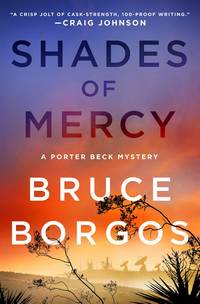
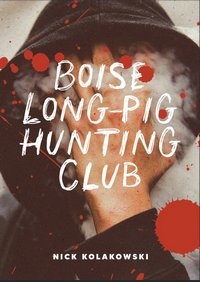
Cover to Boise Longpig Hunting Club by Nick Kolakowski'Boise Longpig Hunting Club

by Nick Kolakowski’

DETAILS:
Series: Jake Halligan, #1
Publisher: Rock & a Hard Place Press
Publication Date: June 30, 2024
Format: eBook
Length: 210 pg.

A Second Edition?

On June 30, Rock & a Hard Place Press will be putting out the second edition of one of those books I haven’t been able to stop thinking of in almost six years. This will be followed by the republication of the sequel, Rattlesnake Rodeo later this year, and the third in the series, Righteous Trash, next year.

I was very excited to read about this—not only is this a heckuva read that I’m hoping finds more readers, I’m eager to read more about Jake and Frankie. Kolakowski has been nothing but generous with his time (and books) since then and it’s great to see good things happening for him.

I’ve read this book twice (and am tempted to do it again this weekend) and it’s just a blast. Also, I have to say that Kolakowski’s fictionalized Boise/Southwestern Idaho/Eastern Oregon is closer to reality than any I’ve come across. And since most of those others are from people who live here, for a New Yorker to get the geography and populace so accurately is really impressive.

For more—check out this interview Rock and a Hard Place conducted with Kolakowski.

What Did I Say About Boise Longpig Hunting Club Back When It Was First Released?

Jake Halligan is a bounty hunter—more in the Lori Anderson/JT mold, than a Stephanie Plum-type—in Boise, Idaho, and the immediate environs. He’s got a kid, an interesting relationship with his daughter’s mother, and a sister that . . . well, you just have to meet her. But think Bubba Rogowski without the size and clinical diagnosis.

Jake’s a Vet, having served in some of the worst conditions Iraq has to offer. He’s smart, he’s careful—he has people he cares about, so he has to be—and he has a conscience. It doesn’t stop him from doing his job, but it can stop him from enjoying it. Early on in the novel, we find Jake after a rough week at work—and a less-than-friendly exchange with the local police—on the whole, his life is looking pretty good, even if Janine (his ex-wife, fiancé, and mother of his child) made him pay a social call on some neighbors. When they get home, Jake finds a dead woman in his gun safe. This plunges Jake into a hunt for a killer—as well as an explanation. He’ll find both—and probably wish he didn’t. It’s a violent, nasty hunt full of crazy characters, drug dealers, Aryan assassins, corrupt police—and people who are even worse than them.

Along for the ride is Janine—I can’t say enough about Janine as a character. From her attitude towards a house without books, to her hidden strength and anxieties—and all points in between. Then there’s Frankie, his sister—she’s cocky, funny, and vicious—she’s the biggest gun dealer in Idaho, not even close to legal, and the law can’t touch her. The law can’t even find her. She’s surrounded by associates/employees who are almost as colorful as she is (some even more so)—and is definitely the person you want at your side (or back) in a firefight.

Which is good—because they’re going to find themselves in a few.

Kolakowski has a great way with his characters—they’re real, they’re human—and they’re larger than life in a way that you’ll absolutely buy, as well as enjoy. When the action starts, it is gripping and exciting—you’ll keep turning pages. When there’s a lull in the action, you can bask in the character moments. I’m not really sure what else can I say beyond that. This is the whole package, you get to spend time with interesting people being interesting, and when they take a break from that, it’s because fists or bullets are flying—or maybe something explodes.

My one gripe—and it’s not much of one before we get back to me saying nice things. The ending is abrupt. I’m not sure if I can think of a well-known book/movie to compare it to. You’re just reading along, hoping that Jake, Frankie, Janine, and the rest survive this mess, and then before you really realize what happened, it’s over. You know who survives—and who doesn’t—and the book ends with very little wrap-up (actually the wrap-up happens before the ending—that remark will make sense when you read it). Kolakowski had a story to tell and he didn’t drag out the ending, much like his protagonist would approach things, I expect. He got the job done and moved on. I would’ve preferred a little more time after the main events are over—there are things I want to know about the immediate aftermath. There aren’t loose ends left untied, I’d just like to see what they look like after they’re taken care of. You can make a strong case that this is the way to end a book—when things are done.

It’s not often that I can evaluate an author’s use of geography—I know that Robert B. Parker and Dennis Lehane have tweaked Boston, I understand that Butcher goofs re: Chicago’s neighborhoods, etc. but I don’t know that reading the books, I learn that later. It’s rare when I’ve been somewhere a book has been set—a little bit with the Mercy Thompson books (but I’m better at noting pronunciation on the audiobooks that no resident would recognize), I noted that Wesley Chu fumbled a smidge Eastern Oregon in the third Tao book, and that Marilynne Robinson’s Housekeeping was creative with the facts, etc. But by and large, this book takes place in the area I’ve lived in most of my life, so I feel that I can actually comment—and Kolakowski nailed it. Not just the details, but he’s got the feel, he’s got the atmosphere, the attitude toward change, and the out-of-state money that’s bringing the change. he’s changed business names and whatnot, but I can still recognize them—I love seeing this kind of detail brought to life. I’m trusting that his depiction of local crime is hyperbolic, however.

I’m a little worried that it’s as accurate as the rest, actually . . . but we’ll move on.

There’s a visceral feel to this novel and these characters—people in places most don’t think about showing skills, interests, and circumstances that you don’t normally associate with that area. Just a guy trying to make a decent life for his family and himself, who finds himself in dangerous situations. I couldn’t help but think of Jason Miller’s Slim in Little Egypt series while reading his. Jake’s far more capable than Slim, and is far less likely to end up on the wrong end of a beating. But there’s a very similar ethos in the books, and fans of one should grab the other right away.

I’m not going to belabor the point anymore, I think it’s clear that I enjoyed the heck out of this—it’s fast, it’s energetic, it’s fun. Go grab a copy of it.

Basically, Get Your Hands On The New Edition


4 Stars

Irresponsible Reader Pilcrow Icon

Dog Day Afternoon by David Rosenfelt: Understanding Marcus

Cover for Dog Day Afternoon by David RosenfeltDog Day Afternoon

by David Rosenfelt

DETAILS:
Series: Andy Carpenter, #29
Publisher: Minotaur Books
Publication Date: July 2, 2024
Format: eARC
Length: 304 pg.
Read Date: June 20-21, 2024
Buy from Bookshop.org Support Indie Bookstores

What’s Dog Day Afternoon About?

Overall, I’m not sure that the body count in this book is that much higher than in other books in this series—but the way it opens is very different. The instigating crime feels like something straight out of a mass-shooter video your HR people make you watch annually (assuming your workplace is similar to mine, I guess)—it’s cold, calculated, with a casual disregard for human life we don’t often see in this series. (Andy says something similar at one or two points).

So you’re left wondering—how does Andy get roped into representing the accused? (although many readers are going to read that scene and pick out the places the defense is going to take advantage of). This is where Marcus comes in.

Andy learned about this earlier, but we readers learn about this now—Marcus mentors young people in his neighborhood who have had a rough time of it and have run afoul of the law in the past. They need some help, some guidance, and some favors—Marcus provides this.

He also helps a couple of those he mentors to adopt a dog from the Tara Foundation. One of these two is accused of the crime—Marcus comes to Andy for help, and he gets it. That Willie also vouches for the accused helps—there’s no chance that Willie agrees to let one of their dogs go to someone capable of this crime.

That’s not evidence he can introduce in court, but it’s compelling for Andy. Now he just needs to find something that will be compelling in court.

Marcus

Marcus can’t become too well-rounded of a character—we need him in the shadows, doing things that defy belief. But we can learn more about him than we have prior to this.

We see that he can have attachments to people other than Laurie (and by extension, Andy). We see just how far he’s willing to go to help someone.

I was interested in this book because I’ve enjoyed almost every one of its predecessors enough that I don’t bother to see what they’re about before I add them to the TBR list. But once I noted that this one featured Marcus like that—my excitement grew. I love watching the character at work, and to see him in a different situation than we’re used to made my day. Also, we got just what the doctor ordered from a Marcus-centric book.

So, what did I think about Dog Day Afternoon?

I cannot believe that I’ve read 29 books in this series (plus a few in a spin-off). Twenty-nine. That’s just insane. Now, am I going to say that they’re all as fresh as they were in 2002 when Open and Shut came out? Of course not. But they have their moments when they feel that way.

* According to my logs, I read it in 2011—I’ve been with these characters for 13 years. Mind-boggling.

So, Rosenfelt has his work cut out for him to do something to keep the audience engaged. Over the last few books, he’s worked on deepening the relationship between Andy and Marcus, which has been nice. This book takes a big step forward in that. I don’t know that we’re going to see much more than this anytime soon—you need to preserve some of Marcus’ mystique to keep him nearly-superhuman in Andy’s (and the reader’s) eyes. Similarly, we readers can know Hawk a little better than when Spenser first ran into him in Promised Land—but not too much.

So, we’d better enjoy what we get here, right?

And naturally, that’s really easy. Other fun bonuses—Andy getting along with the prosecutor. Cory clearly being annoyed with Sam Willis wanting to get in on the action. Even some of the Andy and Tara interactions felt a little different (not unusually so, and not negatively). There was also the attempt of a law firm to hire the most reluctant lawyer in the world—that did bring a smile to my face.

There’s a good mix of the tried and true Andy bits, fun material with our old friends, a clever mystery, a new side of Marcus, and Rosenfelt’s trademark zippy prose. It’s easy to see why this series has gone on as long as it has—and may it continue to do so.

Can you hop on here? Absolutely—and you’ll have the fun bonus of a healthy backlist to work your way through once you get done with this one.

Disclaimer: I received a copy of this book from St. Martin’s Press via NetGalley—thanks to both for this.


4 Stars

This post contains an affiliate link. If you purchase from it, I will get a small commission at no additional cost to you. As always, the opinions expressed are my own.

Irresponsible Reader Pilcrow Icon

REPOSTING JUST ‘CUZ: Theological Retrieval for Evangelicals by Gavin Ortlund: An Accessible Call for 21st Century Christians to Learn from the Past

I ended up having more time in the day to write this post than I normally do, and as a result ended up a bit more rambling and less-focused than intended. Hopefully it’s worth the read, despite my laxness.

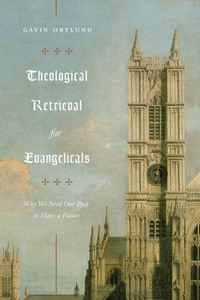
Theological Retrieval for Evangelicals

Theological Retrieval for Evangelicals: Why We Need Our Past to Have a Future

by Gavin Ortlund

eARC, 224 pg.
Crossway, 2019

Read: October 5-12, 2019


This is another one of those theological works that I feel really unqualified to discuss. There’s part of me that thinks I should stop requesting them from NetGalley, or buying them and deciding that I want to post about them, but I probably won’t. So, know that this is from the perspective of an opinionated and semi-(formally)educated reader and occasional armchair theologian. Not the reflections of an ordained minister or professional theologian.

I’m glad Ortlund talks about this right out of the gate—but the case he lays out for Theological Retrieval here, strikes me as very similar to Michael Allen and Scott R. Swain’s Reformed Catholicity: The Promise of Retrieval for Theology and Biblical Interpretation and Kevin J. Vanhoozer’s Biblical Authority after Babel: Retrieving the Solas in the Spirit of Mere Protestant Christianity. Ortlund says they’re aiming for the same target, but those works are more oriented toward the Reformed, where he’s focused on Evangelicalism. I’d say that they’re all wanting the same thing, but his work is more accessible (by design) and less-inclined to advertise his scholarly awareness (particularly with the former).

One problem that you encounter right away is a nebulousness about the term “Evangelical.” If Ortlund defined his usage, I missed it. He seems to use it to apply to Bible-believing Protestants who aren’t Reformed or Lutheran. Which is fair enough, I guess, it’s just not an easily defined term anymore. Frankly, I’m with Carl Trueman and others, and consider the label “evangelicalism” meaningless as it can be applied to “everyone from Joel Osteen to Brian McLaren to John MacArthur.”

Ortlund doesn’t give a strict definition of Theological Retrieval—in fact, he avoids it, preferring to see it as a mindset or attitude toward the pre-Reformation Church and Theology, drawing from its strengths, seeing its weaknesses in our own, and putting the contemporary (and Reformation) Church in context of a developing understanding from the end of Acts to Second Coming. Given that, we should be more aware of, and interact more with, the Patristic and Medieval Church. He uses Turretin, in particular, to great benefit in showing that this was the mindset of the Protestant Reformation, and calls us back to it. Along the way, he uses Warfield (and the rest of Old Princeton) as emblematic of Evangelicalism’s departure from this thinking. I’m not sure that’s the best reading of Warfield, but it’s not worth arguing, because his overall point is so right.

The first Part of the book—roughly 60 pages in three chapters—sets the agenda, it’s “A Manifesto for Theological Retrieval.” He begins by asking if Evangelicals can Retrieve Patristic and Medieval Theology, before moving to asking why they need it, and then sketching out both the benefits and perils of it. All of which is profitable and well-worth reading.

But what makes this book different than so many, is that Ortlund doesn’t focus on the project, the theory behind it, or the method. He gives the rest of the book—120 pages or so—to examples of what he’s calling for people to do. Case-studies in theological retrieval—which is some of the best theological reading I’ve done this year, maybe the last couple of years.

The first is a chapter called “Explorations in a Theological Metaphor: Boethius, Calvin, and Torrance on the Creator/ Creation Distinction.” A nice mouthful, to be sure. To illustrate the Creator/Creature Distinction, he compares Tolkein’s relationship to The Lord of the Rings to God’s relationship to his creation, in terms of Boethius’ understanding, and how Calvin’s view would differ, before wrapping up with Torrance. Now, I have little use for what he tries to do with Tolkein—I think this sort of thing is almost as bad as trying to teach the Trinity by analogy (which always quickly lands the teacher in heresy). I know enough people do this sort of thing in teaching and writing, and I should try to pay more attention, but my eyes just glazed over. Most readers will get more out of this than I did. I did appreciate what he said about Boethius and Torrance in distinction from Calvin and feel like I understand the three a little better (not that I’m all that familiar with Boethius and Torrance), and think I got something from the chapter overall, but I know my own prejudices kept me from a full appreciation.

Things improve with “God Is Not a Thing: Divine Simplicity in Patristic and Medieval Perspective.” Rather than going head-on for contemporary critics of the doctrine, he takes a look at historic formulations (not limited to Aquinas’) of the doctrine and seeing how that should actually deepen Evangelical’s commitment to Simplicity as well as broaden our understanding of it. He interacts a good deal with James Dolezal’s wonderful All That Is in God and God without Parts here and reminds me that I need to re-read the former and read the latter. A better blogger (one also focused on theology, not the book) would camp out here for a few paragraphs, but I won’t. It’s just a great chapter and the kind of thing we need to see more of.

My favorite case study is the third, “Substitution as Both Satisfaction and Recapitulation: Atonement Themes in Convergence in Irenaeus, Anselm, and Athanasius.” I would read a book-length version of this tomorrow. Well, not tomorrow. I would start a book-length version of this tomorrow, and have a lot of fun over the following days. Ortlund shows the overlapping concerns of Irenaeus and Anselm (who are so often pitted against each other), how the Christus Victor and Substitutionary Atonement models are interdependent, not rivals (while not giving an inch to contemporary critics of Substitutionary Atonement, it should be pointed out). From there, he moves onto some of Athanasius’ work on the Incarnation, demonstrating that these works have a good deal to say about the Atonement, as well. If I got nothing else out of this book, I’d consider the time I spent reading it well-spent just for this chapter. I could’ve lived without the use of Aslan and the Stone Table portion of the study, but (contra the Tolkein), it proved to be a useful illustration.

“Cultivating Skill in the “Art of Arts”: Pastoral Balance in Gregory the Great’s The Book of Pastoral Rule” is the last case study. I remember reading healthy portions of this work by Gregory in a Church History class for much the same reason that Ortlund uses it. There’s a lot of wisdom for pastors of every age in this very old work—he also shows how manuals like Baxter’s or Spurgeon’s will say similar things. Timeless truths and advice put in ways that others wouldn’t. I really don’t have much to say about this, but it’s almost as good as the previous two.

This is one of the most-easily outlined books I’ve read this year (possibly the most), that’s a fantastic aid for referring back to it in the future or for going back and taking thorough notes. I’d go crazy if I read too many books like this, I prefer the more organic feeling approach. But when this is done right, it’s a handy bonus. Beyond that, as I said before, it’s very accessible. Sure, there are parts that are demanding, but nothing’s out of reach for the committed and attentive reader—and most of the time you don’t have to be that committed.

Like their counterparts from the previous century, Twenty-First Century Christians don’t know enough historical doctrine, and certainly don’t know how to treat what little they do know. Too often, Protestants will cede everything prior to 1517 to Rome (maybe Rome and the East), focusing only on the last 500 years—if they’ll even pay attention to anything prior to Fanny J. Crosby. Ortlund’s work is a great call for the everyday Christian to familiarize themselves with the past and learn from them as we ought the rest of the Church Militant. I strongly recommend this.

Disclaimer: I received this eARC from Crossway via NetGalley in exchange for this post—thanks to both for this stimulating read.


4 Stars

The Secret Lives of Booksellers and Librarians (Audiobook) by James Patterson and Matt Eversmann: BTS of the Book Connecting Scene

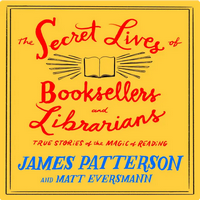
The Secret Lives of Booksellers and LibrariansThe Secret Lives of Booksellers and Librarians:
Their Stories Are Better Than the Bestsellers

by James Patterson and Matt Eversmann; Read by: Tom Force, Nancy Peterson, Jenn Lee, Jennifer Pickens, Amy Jensen, Deanna Anthony, Jane Oppenheimer, Susan Hanfield, Marni Penning, Daniel Henning, Rob Reider

DETAILS:
Publisher: Hachette Audio
Publication Date: April 8, 2024
Format: Unabridged Audiobook
Length: 7 hrs., 55 min. 
Read Date: April 14-16, 2024
Buy from Bookshop.org Support Indie Bookstores

My favorite thing is helping people. Handing someone a book with the power to change their lives is magical because, oftentimes, it does.

What’s The Secret Lives of Booksellers and Librarians About?

Typically, when I just use the Publisher’s Description, it’s because I’ve floundered around and can’t come up with a description that I like or because I just don’t care enough about the book to put the effort into it. this time, however, it’s because I really like the way that this copywriter put it (and maybe I’m a little worried that I’d end up plagarizing it a bit if I tried):

To be a bookseller or librarian…

You have to play detective.

Be a treasure hunter. A matchmaker. An advocate. A visionary.

A person who creates “book joy” by pulling a book from a shelf, handing it to someone and saying, “You’ve got to read this. You’re going to love it.”

Step inside The Secret Lives of Booksellers and Librarians and enter a world where you can feed your curiosities, discover new voices, find whatever you want or require. This place has the magic of rainbows and unicorns, but it’s also a business. The book business.

Meet the smart and talented people who live between the pages—and who can’t wait to help you find your next favorite book.

Overly-Romanticized?

Yes, I think so. Now, were you to ask me if I cared, I’d give you a big fat “no.”

Many librarians—public or school—in the book were involved in the recent efforts to restrict access to certain books. Something that’s important, to be true. And some of them had suffered because of it—but listening to this felt sanitized.

The booksellers, on the other hand, particularly those who owned/worked in independent stores didn’t seem to suffer or have many hardships. I mean, the bookstore in The Bookish Life of Nina Hill had a harder go of it than most of these. I know the point of this book isn’t to be a no-flinching look at the hard times involved in bookselling (you can look at things like Shaun Bythell’s or Oliver Darkshire’s books for the grimmer-side).

This book is designed to be a celebration of those people who’ve devoted their professional lives to connecting people with books—for a variety of reasons. So, sure, it doesn’t tell the whole story, just the good parts. And frankly, that’s entertaining enough—and given a lot of the dark tales that could be told about librarians and booksellers right now, I’m willing to settle for just the good bits while we can.

How Was the Narration?

It was really well done—if you just take a glance at the credits of the narrators, you can understand why. I’m not sure which narrator did which part of the book, nor am I sure how often I heard the same narrator reading different chapters—I honestly couldn’t tell. I call that a win in my book—they convincingly embued each bookseller or librarian with just the right amount of personality that I might as well have been listening to recorded interviews with the individuals behind the stories.

So, what did I think about The Secret Lives of Booksellers and Librarians?

I figured this would be a pleasant book, but I didn’t expect much beyond that. I’m pleased to have been wrong.

This is an inspiring and entertaining look at the people who connect others with the books they want or need—whether they realize they want or need them or not. For a booklover, this is great to hear. They sound like what you want them to sound like.

The big problem with this book is that you’re going to fight the impulse to quit your job and go get your MLS or start working as a clerk in a bookstore as soon as you finish (or by the mid-point). As downsides go, it’s a pretty tame one, but it’s there.

You’ll have a fun time with this, give it a shot.


4 Stars

This post contains an affiliate link. If you purchase from it, I will get a small commission at no additional cost to you. As always, the opinions expressed are my own.
Irresponsible Reader Pilcrow Icon

Strange Religion by Nijay K. Gupta: People Say I’m Strange, Does It Make Me A Stranger…

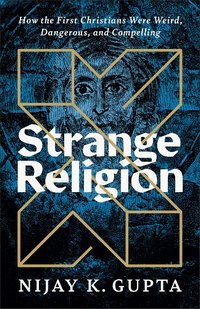
Strange ReligionStrange Religion:
How the First Christians Were Weird, Dangerous, and Compelling

by Nijay K. Gupta

DETAILS:
Publisher: Brazos Press    
Publication Date: February 27, 2024
Format: Paperback
Length: 216 pg.
Read Date: May 12-19, 2024
Buy from Bookshop.org Support Indie Bookstores

I set out to spend a few years studying ancient religions in general and Roman religion in particular, and I came to a clear conclusion: by and large, early Christians were weird and were dangerous to many, and yet clearly some found this religion attractive and compelling.

This book is not a handbook for how to be Christian today or how to create a “weird” church. Largely, I see the work I have done as descriptive—these are the first Christians, warts and all. They were not bucking conventions and pop religion to be special or different. In their best and most genuine moments, they were simply following Jesus, like mice blindly chasing after the pied piper. As they did so, they deviated from the norm of religion, and, whether they were intend. ing to or not, they stood out in society. This deviation from the norm is one way of defining what it means to be “weird. Another way is simply to say that “weird” things belong in another category. l am hoping that an extended investigation of the belies, practices, and ethos of the early Christians will clarify their origins and foundations, and provide insight into authentic Christianity today.

What’s Strange Religion About?

Gupta’s observation/conclusion is that early Christians were strange or weird when compared to others in their culture—thanks to their beliefs, ways of acting, and ways they wouldn’t act (for starters). They didn’t set out to be strange, to rebel against the culture, or anything like that. Actually, their goals involved being good citizens and living quiet lives—but their religious convictions set them outside the norm, and they stayed there for a good long time.

While Gupta doesn’t shy away from the occasional application to the contemporary Western (particularly American) Church, by and large, this is a descriptive book. He just talks about Roman culture in certain areas and then talks about how Christians were oddballs in the midst of all that. As he says above—this isn’t an attempt to make Christianity weird again, or anything like that—just to remind us how out of touch with the culture we were at one point.

Some of the areas he covers are: how the Romans of the first couple of centuries saw Christianity as a superstition; some early Christian beliefs—like believing they were possessed by God’s Spirit, their reckoning of the meaning of Time, and wanting to be associated with a horrible criminal in the first place (only the worst of the worst were crucified, who’d want to be associated with someone like that?); worship practices; family practices; and the way they treated others.

Belief

Romans sometimes argued about the gods—not over personal “beliefs” but over what they thought was true of the gods, But the Christians took their views to a whole other level, “believing” things that seemed absurd, disturbing, and even impossible. This may be one reason that Christians originally referred to themselves as “believers.” Today, we take for granted that religion is all about “faith” and “belief.” We have “faith” statements, “faith” traditions, and “interfaith” dialogue. But in the ancient world, there wasn’t this natural association between religion and faith language.

This is one of the biggest differences—one that shapes a lot of the rest. The book as a whole comes from Gupta’s students asking, why early Christians called themselves “believers,” what did the other followers of other religions call themselves? And well, one of Gupta’s findings was that Christians were more than a little strange by focusing on faith and belief. It was just foreign to the status quo.

The priests of public Roman religion were not chosen for their piety. They were expected to be experts in performing rituals. In fact, they had to be masters of religious arts so as to maintain the pax deorum*. It was a bit like being a professional bomb-disposal expert. It really doesn’t matter what you believe about government, law enforcement, or justice as long as you are good at defusing bombs. French historian and archaeologist Robert Turcan refers to Roman ritual worship as “Taylorism”—a form of scientific management. Frederick Winslow Taylor (1856-1915) developed a theory of management that was meant to produce efficient and effective workflow. Taylor offered a kind of mathematical formula to get the most out of human and industrial resources. Turcan argues that this was the mentality of the Romans—efficient and “successful” ritual performance to keep the gods content and happy. Roman priests and other cultic personnel had to provide meticulous observance of time-honored rituals.

He goes further:

There was a pervasive Roman understanding that persona beliefs, best intentions, and heartfelt emotion did not enhance religion. What mattered was what the gods actually called for—sacrifice and compliance. The early Christians had ther own practices and rituals, of course…But one thing we learn when we read the New Testament is that these Jesus people were absolutely obsessed with belief.

Now, Gupta spends twenty pages making that case, I just gave a brief overview—but even here, you can get an idea of how he goes about talking about each topic addressed.

* “Keeping Peace with the Gods.” Gupta describes the function of the sacrifices and rituals as maintaining this peace. It’s most of the content of the first chapter, and the basis for most of the rest of the book.

Pobody’s Nerfect

The last chapter* is entitled “The Christians Were Not Perfect”—some of this covers similar ideas as Nadya Williams’ book, Cultural Christians in the Early Church, but not all of it.

I really appreciated this chapter for a couple of reasons: 1. It’d be easy to take Gupta’s material and walk away with the idea that the early Christians had it all together (something that Williams and Gupta really wanted to counter), and 2. Gupta hits on some things that a lot of people don’t cover along these lines.

That said, it’s not a perfect chapter—and maybe it’s the most obviously imperfect chapter—I’m not sure I’m willing to buy into all of his examples from the Scriptures showing those imperfections (actually, there are some I’m sure I don’t buy).

But the chapter as a whole is a nice, refreshing reminder about the feet of clay that even the best of us possess.

* There is a conclusion following it, but it’s not long enough (or something) to be considered a chapter—at least not a numbered one. I wanted to stress that because I’ve complained recently about too many books not having a conclusion.

So, what did I think about Strange Religion?

One thing I haven’t talked about yet is that one of the things that Gupta focuses on is that despite—or maybe because of—the strangeness of Christianity to the Romans of the first and second centuries is that it was attractive to them. The “freaks” kept drawing more and more people to them, converting them to the weirdness. Again—not because they were strange, but because following Jesus Christ made them that way.

As a reader, not only did I appreciate the material, but the way that Gupta presented it. He built his arguments carefully and clearly (and one assumes accurately). Throughout all of this Gupta’s sense of humor shines through—keeping the text engaging as it educates. I’m always going to say good things about a book that does that (as long as the humor doesn’t detract from the serious material), and Gupta got this part right.

This is really one of the better books that I’ve read this year. From the thesis to the conclusion, and most points in between, Gupta painted a much-needed picture of early Christianity and Christians and how they related to the culture around them. It’s encouraging to remember that’s the natural state of the Church and one that we shouldn’t find ourselves overly-worried to be in again. I encourage Christians and those curious about our early history to give it a read.

I know that my wife has another book by Gupta on her shelves, I’m probably going to have to borrow it soon.


4 Stars

This post contains an affiliate link. If you purchase from it, I will get a small commission at no additional cost to you. As always, the opinions expressed are my own.
Irresponsible Reader Pilcrow Icon

BLOGIVERSARY REPOST: Blood Trade by Faith Hunter

To commemorate the 11th Blogiversary of The Irresponsible Reader, I’m reposting the first six books I blogged about this week.


Blood Trade
Blood Trade by Faith Hunter
Series: Jane Yellowrock, #6
My rating: 4 of 5 stars

Jane Yellowrock is slowly, but surely, becoming a real favorite of mine. In the beginning, she struck me as a fairly generic vampire hunter, with an obnoxious streak and a complicated ethnic/childhood background that was passed off as interesting. Nothing special, but good enough to keep reading.

But lately, I’ve found myself anticipating the next installment. Blood Trade resolved a few dangling plotlines from previous books, developed a couple more, and set the stage for at least 2-3 more books in the series. And while doing so, provided a story with good action, some nice twists, and some genuine heart.

I really, really liked the new characters introduced here — two former classmates of Jane’s back from her Christian school days and the child of one of those classmates. It was good to see Jane through the eyes of people that didn’t primarily know her as a vampire killer.

Jane’s relationship with Eli and the Kid grew in a positive way, and I really like the shape of their relationships, and hope they continue to develop in this fashion.

One thing I hope Hunter improves on — although I don’t see it happening — is the romance front. I couldn’t care less about Jane’s vacillating between various romantic (using the term as broadly as possible here) interests here. It’s tedious, Jane’s usually shown as little more than base desires, and constantly self-sabotaging. If there was some growth there, some change at least, I might feel differently. But Hunter shows no sign of moving off this point, and I bet I’m one of the few who don’t like it. So I need to continue to deal with it.

BLOGIVERSARY REPOST: The Girl with the Iron Touch by Kady Cross

To commemorate the 11th Blogiversary of The Irresponsible Reader, I’m reposting the first six books I blogged about this week.


The Girl with the Iron Touch (The Steampunk Chronicles, #3)The Girl with the Iron Touch by Kady Cross

My rating: 4 of 5 stars

Another fun installment in Cross’ Steampunk Chronicles. As silly as I feel reading a book with the Harlequin Teen logo on it, I really enjoy this series (‘tho maybe I should switch to the ebook edition to protect my rep). Once again, Cross balances a steampunk-y adventure story with strong emotional plotlines, with some fun banter between her characters, making for an addictive read.

This time out the primary focus is on Emily — the technomancer, and on both her personal and professional crisis. Just as it seems she’s making some progress on getting Sam to say how he feels about her, as well as to accept what she did to save his life, she’s kidnapped by a bunch of automatons so she can perform a brain transplant from a very injured scoundrel into a semi-organic android. No really, that makes sense in context.

Everyone else, in one way or another, is dealing with the fallout from their trip to the U.S. (and from the events in the first book), while also trying to find Emily and bring her home safely. Obviously, it’s worst for Jasper, more withdrawn from both his friends and the events in the book as a whole.

Griffin and Finley are also dealing with their relationship’s progress — with all the complications, ups adn downs that such entails. Griffin started dealing with something relating to his power in the States and it’s having a devastating impact on him back home (and in turn, that’s impacting everyone around him), causing Finlay to fret over him. My biggest beef with this book comes from the Finlay/Griffin interactions, which are far too similar to the Emily/Sam interactions, covering nearly the same grounds with both couples.

There’s a new character introduced that should provide a good deal of fodder for storylines in the future, and I eagerly await more of her. Really can’t say more without entering Spoiler City, so, I’ll just limit myself to saying that Cross’ creativity and inventiveness is on full display with her creation, and she’s already one of my favorites in the series.

One other note, one of the automatons we spend the most time with was described as a spider with a doll’s head. I certainly hope Cross was trying to get her readers to envision that creepy doll from Toy Story — because every one I know whose read this is seeing that.* Griffin and his team find her just as unnerving as Woody and Buzz did (don’t blame them), either.

Things are getting harder, and stakes are getting higher for our intrepid adventurers — whatever’s next will likely push them further yet.

This was a fun, quick read and I’m already impatiently waiting for the next installment.

*That’d be my wife and I.

BLOGIVERSARY REPOST: Gone Tomorrow by Lee Child

To commemorate the 11th Blogiversary of The Irresponsible Reader, I’m reposting the first six books I blogged about this week. This was apparently the first book I discussed here—something I don’t remember looking up until I prepped this.


Gone Tomorrow (Jack Reacher, #13)Gone Tomorrow by Lee ChildSeries: Jack Reacher, #13
My rating: 4 of 5 stars

4.5 out of 5 really. Not sure why I’m holding that .5 out, but let’s say it wasn’t perfect — just so, so close.

On the one hand, this was a typical Jack Reacher novel* — Reacher sees a wrong that needs righting, a question that needs answered, someone who needs a little help, a little vengence that needs meting out, and he takes care of business, period. On the other hand — this was more intense, had more twists and turns, with higher (personal) stakes than your typical Reacher novel.

So, I guess it was a typical Reacher novel — just turned up to 11.

It’s really hard to say much about this Gone Tomorrow without spoiling the whole thing. But I’m going to try a bit: From the outset, it’s hard to tell who Reacher is working for until a little over halfway through the book (I think–didn’t take notes); everyone (everyone) lies to him about all sorts of things — but there’s enough truth mixed into the lies that I didn’t just spoil anything there; the violence (at least on Reacher’s part) is a bit more concentrated than usual, but once it starts…whoa, Nelly.

The biggest difference in this one is the looming specter of various counter-terrorism agencies and entities, functioning in the full protection and powers given by the Patriot Act and so on. Reacher and other characters in this book aren’t reticent to voice their complaints with these powers and the curtailment on citizen rights, honestly, to an extent that surprised me. While Reacher’s not directly in opposition to these agencies (he never would be that), his purposes and theirs do not directly align. Which gives an extra layer of danger for him — if Reacher’s not careful, he can disappear like he’s never existed before.

Basically the only other thing I can say without spoiling the crap out of this is simply: With Gone Tomorrow, Child, once again, shows that he and Reacher are the best around.

——-

* And a typical Jack Reacher novel is a great read, so don’t take this characterization as a complaint.

PUB DAY REPOST: The Djinn’s Apple by Djamila Morani, translated by Sawad Hussain: The Scent of Death

The Djinn’s Apple Tour Banner

The Djinn's AppleThe Djinn’s Apple

by Djamila Morani , Sawad Hussain (Translator)

DETAILS:
Publisher: Neem Tree Press
Publication Date: May 7, 2024
Format: eARC
Length: 160 pg.
Read Date: February 24, 2023
Buy from Bookshop.org Support Indie Bookstores

What’s The Djinn’s Apple About?

Nardeen is a remarkable twelve-year-old. Her father is a physician known for translating medical texts from a variety of languages into Arabic, and Nardeen soaks up his work. She has an astounding memory and ability to understand what she memorizes.

But due to some political intrigue that she doesn’t wholly understand, Nardeen and her family have to flee their home one night. Sadly, she’s the only one who survives.

Nardeen vows revenge on those responsible for her family’s murder—certain that a friend of her father’s is ultimately to blame.

But before then, she finds herself being taken under the wing of a legendary physician and teacher, Muallim Ishaq. He recognizes her gifts and her heritage from her father—he arranges (mostly by the force of his will) to have her learn at The Bimaristan, a hospital of great renown. There, she’s able to hone her skills and knowledge—and sharpen her tools, resolve, and ability to mete out that vengeance.

Father vs. Father

There are a handful of various conflicts in this book (like with any good book), but at the core, this book seems to be a conflict within Nardeen herself. On the one hand, she has her memories of her father and what he taught her—what he showed her by example—about the way to live. She also has to wrestle with what she’s told about her father—by those who profess to have admired him and those who worked against him.

On the other hand, she has her (for all intents and purposes) adoptive father, what he’s trying to teach her—what he shows her by example—about the way to live. She also has to wrestle with what she’s told about him—by those who profess to admire him and those who work against him.

In many ways, these two fathers line up—but in significant ways, they follow and lead her down divergent paths. So much of how the plotlines of this book resolve depends on Nardeen’s acceptance/rejection of what these men stand for.

The Setting

So, this takes place during the “golden age of Baghdad”—Harun al-Rashid’s rule of the Abbasid Caliphate from 786 to 809. Now, everything that I know about this period of time comes from the appendices to this novel “Harun Al-Rashid: The Golden Age of Baghdad” and “The Bimaristan.” As they are appendices, I read them afterward. So I came into this not knowing anything—which is a bit intimidating. And I figure I’m not alone in this (particularly for the intended YA audience, who probably haven’t had much opportunity to study Eigth-Century history).

But honestly? Anyone who reads Fantasy/SFF knows how to approach something like this—sure, this is a representation of actual history, but the same tools and imagination you need to understand Westeros, Panem, or the world of the Shadowhunters equip you to get into this world.

And, like with those worlds, after getting this taste, you’ll likely want to read more about it.

While reading, and since then, I do have to wonder a little bit about how much Morani was stretching things about the opportunities presented to women in this time and place. Not just for Nardeen, either—but all the women she encounters at the Bimaristan (and I’d be saying this if the city was Paris or Rome, not just because it’s Baghdad). But I’m willing to both suspend disbelief for the sake of a good story and to trust that someone who’s as familiar with Arabic literature as Morani is more than my hunches.

So, what did I think about The Djinn’s Apple?

This book hits the ground running—Morani doesn’t give you the opportunity to settle in and get comfortable in this world or anything like that. She thrusts the reader—and poor Nardeen—straight into life-or-death action. Nardeen has a slightly better understanding of what’s going on than the reader does—but not much. This was a great way to start this read—you don’t get the chance to indulge curiosity or get lulled into thinking it’s a different kind of book than it is—you have to rush to catch up and then keep up with Nardeen and only get the luxury of starting to understand the world until she’s (relatively) safe.

There were a couple of times that I wondered about the timelines and how well they worked. I assume I just missed something (and didn’t want to take the time to go back and check). It wasn’t anything that bugged me enough to look into it, but I would’ve appreciated things being a bit clearer.

The characters of Nardeen and Muallim were so well drawn, so vivid, and so compelling that I really wish we had more time with them. Particularly Muallim—this cantankerous genius is the kind of character I really respond to. Now, given the pacing of this book, that’s impossible. And Morani picked the better option for her story. But the eccentric teacher and the stubborn and gifted student is a combination that could’ve made for a lot of fun.

Somehow in the midst of this propulsive pacing, Morani is able to litter the book with some great observations, some drops of wisdom (primarily from the teacher and student), and memorable prose (some of that credit has to be given to Hussain as well).

This is a fast, immersive read that’ll leave you guessing from the beginning right up to the end. You’d be doing yourself a favor if you pick it up.

Disclaimer: I received a copy of this book from Neem Tree Press and The Write Reads via NetGalley.


4 Stars

This post contains an affiliate link. If you purchase from it, I will get a small commission at no additional cost to you. As always, the opinions expressed are my own.


 

My thanks to The Write Reads for the invitation to participate in this tour and the materials they provided.

Grandpappy’s Corner: Tiny Hands Hymns, Tiny Hands Prayers, and Tiny Hands Promises edited by Hannah Duguid Estes, illustrated by Jessica Hiatt: A Great Set of Starter Devotional Reads

Grandpappy's Corner Tiny Hands Books

Tiny Hands Hymns

Tiny Hands Prayers

and

Tiny Hands Promises

edited by Hannah Duguid Estes, illustrated by Jessica Hiatt

DETAILS:
Publisher: P & R Publishing
Publication Date: October 25, 2023
Format: Board Book
Length: 16 pg. (each)
Read Date: April 27, 2024

What are the Tiny Hands About?

These are little board books that serve as beginning devotional materials—training wheels for young worshippers, if you will.

Tiny Hands Hymns

These are the first stanzas/verses of some of the best hymns around (and easiest to learn, too): “Holy, Holy, Holy,” “Be Thou My Vision,” “Amazing Grace,” “This Is My Father’s World,” “Great Is Thy Faithfulness,” “Come, Thou Fount of Every Blessing,” “Crown Him with Many Crowns,” and Thomas Ken’s doxology.

On the opposite pages are fitting illustrations, with some accent illustrations on the pages with text.

Buy from Bookshop.org Support Indie Bookstores

Tiny Hands Prayers

These are a selection of prayers—translated by Iain Duguid (Professor of Old Testament at Westminster Theological Seminary), from various portions of Scripture to serve as models of prayer.

They include: Mary’s prayer from Luke 1, Hannah’s from 1 Samuel 2, a prayer based on Daniel’s Prayer from Daniel 9:4-19, a prayer based on Ephesians 3:14-19, David’s prayer from Psalm 130, The Lord’s Prayer from Matthew 6, and the prayer of the saints from Revelation 19, and the Aaronic benediction from Numbers 6.

Again, opposite each is an appropriate illustration, with some accent illustrations on the pages with text.

Buy from Bookshop.org Support Indie Bookstores

Tiny Hands Promises

This is a collection of covenant promises from the Old and New Testaments to introduce and remind even the littlest members of the covenant of what God has promised them. These, too, are translated by Iain Duguid.

They are Isaiah 43:1-3; John 10:27-28; Matthew 7:7-11; 2 Corinthians 12:9; James 1:5; 1 John 1:9, 7*; Philippians 1:6; and Revelation 21:3-5.

*I’m not sure I get why he ordered them this way.

Yet again, opposite each is an appropriate illustration, with some accent illustrations on the pages with text.
Buy from Bookshop.org Support Indie Bookstores

Let’s Talk about the Art for a Minute

I’ve apparently appreciated Hiatt’s work as a cover designer on a few books (The Wonderful Works of God by Herman Bavinck, Things Unseen by J. Gresham Machen, and Struck Down but Not Destroyed by Pierce Taylor Hibbs), but illustrating board books calls for a slightly different skill set. Still, the illustrations remind me of those covers.

I think these are great. Bright and cheerful, without being cartoonish or silly (I have nothing against those kinds of illustrations, but they’re not fitting for the subjects).

How are they to Read Aloud?

They’re fine—although I can’t imagine that anyone, even those who can’t carry a tune, not singing the hymns instead of reading them.

The translations (I’d be tempted to call them paraphrases, but the books say translations—and I don’t know enough to contradict that) are foreign-feeling for people who are familiar with/have memorized the relevant portions from the AV, ESV, NASB, etc. Once you get past that feeling, there’s nothing about the text that’s difficult or odd to read—and they seem easy enough for young children to comprehend (to some degree).

What did the Little Critter think of Them?

Okay, I haven’t had the chance to read these with him, but his Momma has. She reports that he likes Tiny Hands Hymns, because she sings them, and he really responds well to singing. He doesn’t really seem to care about the others one way or another. That fits his personality—but doesn’t really reflect on the books, if you ask me.

So, what did I think about the Tiny Hands books?

I think they’re a great idea—and overall, I am pleased with the execution. I do recommend them without hesitation.

I have some questions about some of the technical bits of translation, verse choices, and whatnot—not so much that I have a problem with the books, I’d just like someone good with the original languages to sit down with me and walk through these.

But for a young child? I think they’re well done and would be great resources for regular use.


4 Stars

This post contains an affiliate link. If you purchase from it, I will get a small commission at no additional cost to you. As always, the opinions expressed are my own.
Grandpappy Icon

Page 8 of 88

Powered by WordPress & Theme by Anders Norén