Tag: 5 Stars Page 16 of 24

Flashback Friday: The Summer that Melted Everything by Tiffany McDaniel: The Devil Goes Down to Ohio?

Long, tiring, but good week. But there’s just nothing left in the tank for something new, so I’m going to repost about couple of books from the past that I loved. I’m pretty sure that it was McDaniel’s prompting that got me to join NetGalley so (was a few more months before I really started using it).

The Summer that Melted EverythingThe Summer that Melted Everything

by Tiffany McDaniel
eARC, 320 pg.
St. Martin’s Press, 2016
Read: July 18 – 19, 2016

The greatest trick the Devil ever pulled was convincing the world he didn’t exist.

Yeah, Keyser Söze’s paraphrase of C. S. Lewis’ appropriation of Charles Baudelaire isn’t part of this book, but it might just encapsulate it. Maybe.

It’s the summer of 1984 in Breathed, OH, and it’s hot. Really hot — and about to get a lot hotter. 1984 is a big year — HIV is identified as the virus that leads to AIDS, Apple releases the Macintosh, Michael Jackson’s Pepsi commercial shoot, and the following advertisement runs in the local newspaper, The Breathian:

Dear Mr. Devil, Sir Satan, Lord Lucifer, and all other crosses you bear,

I cordially invite you to Breathed, Ohio. Land of hills and hay bales, of sinners and forgivers.

May you come in peace.

With great faith,
Autopsy Bliss

Autopsy Bliss is the local prosecutor, who wants to see for himself what evil looks like. Hence the advertisement.

So who shows up in response? A bruised, short black boy dressed in tattered and torn overalls who simply seems to want some ice cream and to say hi to the man who invited him. Autopsy’s son, Fielding, is the first one in town to meet the boy and takes him home to his father (sadly, no ice cream is available in town — unbelievably — for the remainder of the Summer). The Bliss family ends up taking the lad in, and starts calling him Sal. He and Fielding become fast friends and are almost inseparable for the rest of the summer. One by one, almost everyone in this sleepy community is touched by the appearance of Sal — either first-hand or by proxy — demons (figurative), troubled family and personal histories are exposed, latent corruptions come to light, and accidents strike many. No one in Breathed will be the same after the day Sal first appears to Fielding.

The book is narrated by Fielding about 70 years after that summer looking back on the time, thinking of all the regrets he’s had since then and all the ways his time with Sal has overshadowed the ensuing decades. It honestly reminded me of A Prayer for Owen Meany because of this — little kid who talks oddly, is smarter than any of his (apparent) peers, and divides a community, while leaving an indelible mark on his closest friend (who’s not always a friend).

Almost every name (maybe every name, and I’m not clever enough to get it all) is rich in meaning and symbolism — there’s symbolism all over the place, but McDaniel gets her money’s worth with the names in particular. This book will reward close readings, and probably repeated readings as well.

There are so many depictions and descriptions of child abuse and spousal abuse that it’s almost impossible to believe that there households in that world where someone isn’t getting hit on a pretty regular basis. Thankfully, we’re spared watching characters going through it (the vast majority of the time), but there are many mentions of it.

This is not fun read, really, but I loved the whole experience, it is a rewarding read. McDaniel writes with such richness, such depth, there are phrases throughout this that will knock you out. There’s one sentence that I went back to at least a half-a-dozen times one evening — not because I needed to try to suss it out, but because I just liked it so much. The variety of ways she can describe the horrible and debilitating heat wave that struck that part of Ohio those months is pretty astounding — I’m just glad I had some sort of air conditioning most of the time I spent reading the book. Sal’s descriptions of Hell and his fellow prisoners there are full of haunting images that will stick with me for a while (some good haunting, some less-so). I’m troubled by some of what this book said about God, but since the Devil is the one who told about God, I’m not sure we’re supposed to trust his characterizations. On the other hand, just about everything that the book says about the devil seems to be spot-on.

There are no easy answers to be found here — is Sal the devil? Is someone else in town? Is there a devil at all? Are the naturalistic explanations offered here and there throughout enough? I just don’t think you can think about this book without dealing with the Baudelaire/Lewis/Söze thought.

Can’t help but wonder how things would’ve gone if he’d just gotten a little ice cream.

Disclaimer:I received this eARC via NetGalley at the author’s invitation in return for this post. My thanks to NetGalley, St. Martin’s Press, and Tiffany McDaniel for this.

N.B.: As this was an ARC, any quotations above may be changed in the published work — I will endeavor to verify them as soon as possible.

A Mint-Conditioned Corpse by Duncan MacMaster: I run out of superlatives and can’t stop talking about this Mystery that filled me with joy.

This is one of those times that I liked something so much that I just blathered on for a bit, and I’m not sure how much sense it made. The first and last paragraphs are coherent, I’m not really sure the rest is…

A Mint Condition CorpseA Mint Condition Corpse

by Duncan MacMaster
Series: Kirby Baxter, #1
Kindle Edition, 275 pg.
Fahrenheit Press, 2016
Read: July 27, 2018

Is this the best-writing I’ve encountered in a Detective Novel this year? Nope. Is this the most compelling, the tensest thrill-ride of a Mystery novel this year? Nope. Is this full of the darkest noir, the grittiest realism, the starkest exposure of humanity’s depths? Good gravy, no! This is, however, a joy to read; full of characters you’ll want to spend days with, that you’ll want to have over for Thanksgiving dinner just to lighten things up and distract you from Aunt Martha’s overcooked yams and dry turkey; a completely fun time that’s very likely most I’ve enjoyed a book in 2018. It is escapist. It is silly. It is clever.

Think Monk at it’s best. Psych at its least annoying. Castle at it’s most charming. Moonlighting season 1 — I’m going to stop now.

So Kirby Baxter is a comic book writer/artist who breathed new life into a stagnant character which led to the revitalizing of an entire comic book company (not quite as old as DC, nowhere near as successful as Marvel — and somehow hadn’t been bought out by either). He was unceremoniously fired just before he became incredibly well-off (and investments only improved that). Following his new wealth, a thing or two happened in Europe and he gained some notoriety there helping the police in a few countries. Now, he’s coming back to North America to attend OmniCon — a giant comic con in Toronto — returning to see a mentor rumored to attend and maybe stick his toe back in the industry that he loves.

While there we meet his colorist and friend, Mitch — a diminutive fellow, convinced he’s God’s gift to the ladies (most of whom hope he comes with a gift receipt), and just a riot to read about. Molly, a fan, former coworker and friend of Kirby’s who wears her heart on her sleeve (it’s not her fault if people don’t notice it). That needs to be better. Erica is many a dream-come-true — an impossibly good-looking model and would-be actress who is sincere and sweet. Her assistant Bruce is a pretty good guy, too. Her best friend and former mentor, Andi is almost as too-good-to-be-true, and married to a renowned DJ who is providing some of the entertainment at OmniCon. There’s comic dealers, a film director, a crazy actress, Kirby’s former boss, and so many other colorful characters that my notes include a joke about a cast the size of Game of Thrones.

And then there’s Gustav. Words I don’t know how to describe Gustav. Imagine having Batman as your Jeeves. He’s a valet/driver/bodyguard that Kirby picked up in Europe, combining the cool and lethal factor of Spenser’s Hawk, Plum’s Ranger and Elvis’ Pike (except he makes Pike seem chatty). I’d include Wolfe’s Saul Panzer, but Saul isn’t the lethal type that the rest are — but Gustav has the effortless magic about him that makes Saul a winner. If the rest of the book was “meh” and Gustav was still in it? I’d tell you to read the book.

At some point, a corpse shows up — and like the comic book world’s answer to Jessica Fletcher, Kirby identifies the death as a murder — not the accident it appears to be to many. For various and sundry reasons — starting with him being correct, and continuing on to the incidents in Europe — Kirby is roped into helping the police with the investigation. Also, like Fletcher, he’s uniquely gifted to help the police in these circumstances. He’s smart, he has a eidetic memory, can catch a tell or a microexpression like nobody’s business. You throw him into a consulting role with the police, with his friends along for the ride and I’m telling you, you’ve got the most entertaining mystery novel I’ve read this year.

This book’s look at comic conventions reminded me of A Hundred Thousand Worlds by Bob Proehl. But where this one is played for laughs, Proehl was serious — but both show an appreciation for, an affection for the culture that surrounds the cons and the people involved. After reading this, I was ready to buy tickets for the OmniCon.

It’s a funny, fast, romp — a very contemporary take on a Golden Age-mystery. Lots of twists and turns, more crimes than you think are happening and more villains than you can shake a stick at. I thought (and still do) that Duncan MacMaster’s Hack showed that he was an author to keep an eye on — this is better.

A Mint-Conditioned Corpse hit the sweet spot for me — a convergence of so many of my likes told with just the right tone (another one of my likes), while maintaining a pretty decent whodunit at the core. I probably smiled for the entire time I spent reading it — well, at least the last 90% once I started to get a feel for things — at 8% I made a note about Kirby “I’m really going to like him,” and a few paragraphs later, I wrote “I already really like him” about Mitch. And I was right about Kirby, and kept liking Mitch — the rest of the characters are about as good as them, and the story is as good as the people in it are. Is everyone going to enjoy this one as much as me? Nope. But I can’t imagine someone not having a ball reading this. Probably the 5-Star-est 5-Stars I’ve given this year.

—–

5 Stars

Lessons From Lucy by Dave Barry: America’s Funniest Human Tries to Learn a Few New Tricks from an Old Dog

Lessons From LucyLessons From Lucy: The Simple Joys of an Old, Happy Dog

by Dave Barry

eARC, 208 pg.
Simon & Schuster, 2018
Read: July 19, 2018

Before I say anything else, Barry has set up an Instagram page (well, probably not him, actually — he states in the book he doesn’t understand Instagram) for his dog, Lucy. You should absolutely check it out and then come back to read what I have to say about the book. Dog Pictures > my blog. Pretty near always.

With that out of the way . . . Dave Barry has been a dog person for most of his life, one of the many reasons I like him. I distinctly, and fondly, remember columns and/or references to Earnest and Zippy (the emergency backup dog) years ago. Those two make a brief appearance in this book, but they aren’t the focus. The focus (if you can’t tell from the title) is his dog, Lucy. At the time of writing, Barry and Lucy are the same age — 70 (or 7 times 10 in her case), which means that both of them have many fewer days ahead of them than behind — which sounds awfully morbid for Dave Barry to talk about, but he does so frequently and purposefully.

As they’re at similar stages in life, Barry notices a huge difference between the two — Lucy is far happier and seemingly better adjusted than he is. So he sets out to try to learn a few lessons about life from her, which he passes on to his readers. Things like Pay Attention to the People You Love; Don’t Let Your Happiness Depend on Things; and Don’t Stop Having Fun. None of these, Barry knows, are original or ground-breaking — they’re pretty much common sense. Yet, they’re the kind of common sense things that he (like many/most humans) doesn’t actually do a great job at.

The result is a mixture of a Self-Help book and a Humor book — humor about himself, his life, as well as dogs. Sometimes the swing between the two genres can be jarring, but that’s pretty rare. For the most part, he moves easily between the two, taking the readers along with him on this ride. I can’t tell you how many times I went from grinning, chuckling or laughing out loud to getting misty-eyed within a couple of pages. It seems that Barry has learned a little bit about writing over the decades.

I’ve loved Barry’s humor longer than either of us would probably care to admit. One of his strengths is finding a way to take an old joke, or at least a joke everyone’s made before — like, say, I dunno, dogs sniffing each other’s hind-quarters — and make it feel fresh and new. More importantly, funny. He’s also able to make jumps from premise to punchline that no one expects. There is, for example, a Hugh Hefner joke where one doesn’t even come close to belonging — and it works perfectly. Even knowing that, you won’t see it coming until you’re snickering at it.

As for the heart-felt material? It works pretty well, too. I don’t think anyone will walk away from this book thinking “Wow! That was insightful. I never would have thought of it on my own!” Nor do I think Barry was trying for it. But, readers will appreciate the reminders to live like Lucy (or their own dog), and the way Barry phrases things might add some freshness to the concept. Which is all anyone can really ask.

I really don’t know if this is Barry’s best — but it’s up there. The ratio of Attempted Joke to Funny Joke is pretty high, I’m not sure if I can think of a higher one in his ouvre. Lessons From Lucy is, without a doubt, his most mature, thoughtful and touching work (that’s a pretty low bar, I realize — a bar he’s worked hard to keep low, too). Couple that with me being a sucker for a Dog Book — even if it is a semi-Self Help book — and I can’t help but give it 5 Stars. This is a winner, no matter what.

—–

5 Stars

Disclaimer: I received this eARC from Simon & Schuster via NetGalley in exchange for this post — which is my honest opinion and pleasure to give — thanks to both for this.

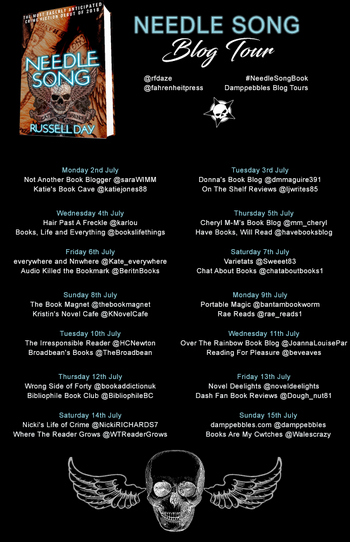
Needle Song by Russell Day: Great characters, strong writing, and a clever solution to the mystery make this one of 2018’s best.


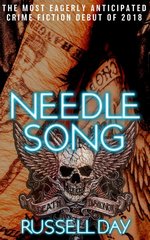
Needle SongNeedle Song

by Russell Day
Series: Doc Slidesmith, #1

Kindle Edition, 380 pg.
Fahrenheit Press, 2018
Read: July 2 – 4, 2018

He’d changed again in some way. Like he had the night in The Jericho putting out The Jive. But this was different again. The Jive was showmanship. The good Doctor Slidesmith in full sail. This was more intense. I’d see him like thus on occasion in the shop, absorbed in the ink and the song of the needle. I wouldn’t say lost in what he was doing. Lost implies lack of control.

For the first time that evening, it struck me he needed an audience, not to watch him but for him to watch. Like a dial on a machine, not part of the process, just a way of monitoring it.

Back when I posted about the short story featuring Doc Slidesmith, Not Talking Italics, I said that if Needle Song was anything like it, “I’m going to have to go down to the superlative store this weekend to stock up before I write anything about it.” I’m fully stocked (now) and ready to go.

I was disappointed — somewhat — and relieved to see that the all-dialogue, no narration, no other description approach of Italics was nowhere to be seen. I could’ve read 380 pages of that (see my love for Roddy Doyle), but I know it’s not that approachable and will turn off some readers.

Now, I don’t know if anyone but Karen E. Olson has envisioned a tattoo shop as a hotbed of crime fighting — or the staff of such to be the source people would turn to for help with legal difficulties. But it works — all because of the owner of the shop, former psychologist, current Voodoo practitioner and Tarot reader, Doc Slidesmith. On the surface, you see a rough-looking — striking, I think, bordering on handsome — but your basic leather-glad biker type, covered in ink — and will underestimate him. Only those who’ve been in conversations with him, those who’ve given him a chance will see the charm, the intelligence, and the indefinable characteristic that makes people come to him for help in times of trouble. In many hands, Doc’s…peculiar resume, shall we say, would end up this cartoonish mish-mash of quirks. But Day is able to make it work — there’s a reason that Doc ended up where he is, we don’t need to know it, but it makes him the man (and armchair detective) that we want to read about.

Andy Miller — known to many as “Yakky” (he’s not a chatty type, his tattoos are all placed so that he can hide them all with this clothing, like a member of the Yakkuza), is the tattoo apprentice to Doc Slidesmith. He lives with his father — a thoroughly unpleasant and manipulative man, that Yakky feels obligated to care for. While clearly appreciative for Doc’s tutelage, and more in awe of his mentor than he’d care to admit, he’s also more than a little skeptical of Doc’s interests, beliefs and practices that aren’t related to his tattooing. He’s our narrator. He’s not your typical narrator — he’s too frequently angry at, dismissive of and unbelieving in the protagonist for that. Which is just one of the breaths of fresh air brought by this book. Yakky is singularly unimpressed by Doc’s playing detective — but in the end, is probably as invested (maybe more) in the outcome.

Jan is brought by Chris Rudjer (a long-time client and friend of Doc’s) for a Tarot reading, which brings her some measure of comfort/reassurance. So that when, months later, her husband kills himself, she comes looking for another reading — which turns into seeking help in general. Not just for her, but for Chris, with whom she’d been carrying on a not-very-secret affair for months. While it seemed obvious that her husband had taken his own life when she found his body, there were some irregularities at the scene. When the police add in the affair Jan was having with someone with a record for violent crime, they get suspicious. Slidesmith does what he can to help Chris prepare for the inevitable police involvement, and enlists Yakky to help, too.

Yakky takes Jan home to stay in his spare room. She can’t stay at home — the memories are too fresh, there are problems with her husband’s family, and (she doesn’t realize it yet) there are people following her and Doc and Yakky are worried. The dynamic between Jan and Yakky, and between Jan and Yakky’s father, end up providing vital clues to her character and psychology. This will end up proving vital to their case.

As Doc and Yakky begin digging around in Jan’s life, it’s immediately obvious that very little is as it seems. Now, if you’re used to reading Crime Fiction featuring serial killers or organized crime, you’ll think a lot of what they uncover is pretty small potatoes. But it actually seems worse — it’s more immediate, more personal — serial killers have their various pathologies, mobster’s are after profits and power — these people are just about hate, cruelty and control. Maybe it’s just me, but it seems worse in comparison.

There’s a depth to all of these characters that I could spend a lot of time thinking/writing/reading about — for example, our narrator, Yakky. I have at least a dozen questions that I feel I need answers to about him. At the same time, I think at least eleven of those answers could ruin the character for me. Ditto for Doc, Gina (another artist in the shop), or Chris. It’s a pretty neat trick — one few authors have been able to pull off, creating a character that you can tell has a compelling backstory, but that you don’t really want to know it (see Parker’s Hawk or Crais’ Pike — or the other mercenary Crais has had to create now that we know too much about Pike). I know who these people are now, and look forward to seeing what happens with them — and that’s good enough. It’s hard to tell, always, just why Doc’s working on this — is it for fun, is it out of a sense of obligation to Chris, does he feel bad for Jan, is it some of all three? Yakky will frequently talk about The Jive — the showmanship that Doc brings to Tarot readings, conversations, and dealing with difficult witnesses — it reminds me frequently of B. A. Baracus’ complaining about Hannibal’s “being on The Jazz.”

The plot is as intricate as you want — there are twists, turns, ups, downs — both with the investigation and in the lives of those touched by it. This doesn’t have the flair of Not Talking Italics, but the voice is as strong, and everything else about the writing is better. It’s a cliché to say that Day paints a picture with his words, so I won’t say that. But he does etch indelible patterns with the tattoo-gun of his words — which isn’t a painless process for all involved, but the end result is worth whatever discomfort endured. Day doesn’t write like a rookie — this could easily be the third or fourth novel of an established author instead of someone’s talented debut.

I’m torn on what I think about the details of the ending, wavering between “good” and “good enough, but could have been better.” It’s not as strong as the 94% (or so) before it, but it’s probably close enough that I shouldn’t be quibbling over details. I’m not talking about the way that Doc elicits the answers he needs to fully explain what happened to Jan’s husband (both for her closure and Chris’ safety), nor the way that everything fits together just perfectly. I just think the execution could be slightly stronger.

Whether you think of this as an amateur sleuth novel, a look into the depravity of the suburbanite, or an elaborate Miss Marple tribute/pastiche, the one thing you have to see is that this is a wonderful novel. I’m underselling it here, I know, this is one of those books that you best understand why everyone is so positive about it by reading it. You’ve got to expose yourself to Doc, Yakky and Day’s prose to really get it. One of the best books I’ve read this year. My only complaint with this book? After reading so much about the “song of the needle,” the shop, the work being done there — I’m feeling the pressure to get another tattoo myself, and soon.

—–

5 Stars

Brief Cases by Jim Butcher: ‘Scuse me while I unleash my inner fanboy

If you’re a Dresden fan still working their way through the series and haven’t gotten to the end of Skin Game yet, DO NOT READ this post. Go catch up first.

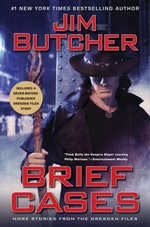
Brief CasesBrief Cases

by Jim Butcher
Series: The Dresden Files, #15.1

Hard Cover, 448 pg.
Ace Books, 2018
Read: June 13 – 16, 2018

Being a wizard is all about being prepared. Well, that and magic, obviously.

Generally, when I start a book, my question is: how much am I going to like this? (Occasionally, the question is: I’m not going to hate this, am I?) But there are a few authors that I ask a different question with: How much am I going to love this book? Jim Butcher is probably at the top of the latter list, and the answers are typically: a lot, a considerable amount, and WOW, SO, SO, SO MUCH. I make no bones about it, I don’t pretend to be anything like objective. I know he’s not everyone’s cup of tea, and I’m not looking to convince anyone to give him another shot (but I’m willing to give it a shot if someone wants me to), but for many, many reasons, I’m an unabashed and unashamed Jim Butcher fan and Brief Cases gives several reasons why I continue to be one.

Incidentally, I started this collection assuming the answer would be “a lot.” It ended up being on the other end of the spectrum of love. I’ll explain that shortly.

This is not a novel (alas!), it’s another collection of short stories and novellas, like Side Jobs. It’s been awhile since I’ve read or thought about that collection much, but I believe that this is a stronger batch on the whole. I’ve only read “Cold Case” from Shadowed Souls before, so this was a lot of new material for me — and I enjoyed it immensely. It was great spending a few days in the pages and world of probably my favorite ongoing series.

Five of the twelve stories here were told from the point of view of a supporting character in the series. Anastasia Luccio told “A Fistful of Warlocks” about a little adventure she had in Dodge City, which opened the collection on a fun note; we got to know “Gentleman” John Marcone a little better than we wanted to in “Even Hand,” (which doesn’t mean I didn’t enjoy the story). Molly got to shine in “Bombshells” and the aforementioned “Cold Case.” And Waldo Butters’ opening lines to “Day One” — the tale of his first adventure as a Knight — will go down as one of my favorite opening lines of 2018. I really got a kick out of all of these — “Bombshells” and “Day One” were probably the most effective for me, but I’m not going to complain about any of the rest. Actually, after reading “Day One,” I figured I got most of my money’s worth just for that one.

Which leaves us with seven others from Harry’s perspective — there are the three Bigfoot stories that were published in various collections and then in Working for Bigfoot. I’ve been kicking myself for a while for being too budget-conscious to get that collection when it came out, yet unable to bring myself to get the e-book. Thankfully, I have them now — and they were great. Not worth the $80 that used copies seem to go for now, but still pretty good. I really liked the characters in these stories and would gladly see them again. “Curses,” was a lot of fun; “AAAA Wizardry,” was a good story that I’m glad I read, but I can’t say it was great; and “Jury Duty” was okay, but had its moments.

Which leaves us with “Zoo Day” — the only original piece in this anthology, a novella about Harry taking Maggie and Mouse to the Zoo. And it was great. Just great. I know I’ve got a healthy dose of recency bias working here, but I think in 5 years if you ask me for my favorite pieces of Butcher writing that it will be in the Top 10 — maybe Top 5. Watching Harry try to figure out how to be a good dad, while watching Maggie try to not drive him away, while Mouse just wants the two of them to understand each other . . . it just melts your heart. Yes, there’s still supernatural and dark things afoot — many of which we’ve never encountered before that could really mess things up for all three of these characters (and the rest of the Dresden Files cast, come to think of it) — and there’s at least one scene that creeped me out in a serious way. But mostly? I just loved the characters interacting with each other. My “Day One” affection and excitement remain intact, but they pale compared to what I thought about this novella. My notes (again, recency bias may play a role here) read, “A little slice of perfection. I didn’t know a 50 page story could make me so misty-eyed and so happy all on its own.” But it did, and I feel the heart-strings being tugged again as I write this.

Simply, this was a joy for me, and I imagine most Dresden Files fans would feel the same way. If you haven’t read Jim Butcher’s books about a Wizard P.I. yet, and have somehow read this far into the blog post, you really, really should. This collection isn’t the place to start — but it’s a great place to hurry up and get to.

Loved it, loved it, loved it.

—–

5 Stars

The War Outside My Window: The Civil War Diary of LeRoy Wiley Gresham, 1860-1865 edited by Janet E. Croon: A sick and dying teen witnesses history

There’s so much more I want to say, but I ran out of time — and went on pretty long already. It’s really bugging me all the things I wanted to talk about, but didn’t. There may be a follow-up. I updated this slightly after posting thanks to a comment from the publisher.

 The War Outside My Window The War Outside My Window: The Civil War Diary of LeRoy Wiley Gresham, 1860-1865

by Janet E. Croon, ed.

Hardcover, 480 pg. (includes an 8-page photo insert)
Savas Beatie, 2018
Read: May 1 – 28, 2018

When he was twelve, LeRoy Wiley Gresham, of Macon, Georgia starts keeping a daily journal (well, as close to it as anyone really ever does). The year is 1860 and he and his father are headed to Philadelphia to consult with leading doctors about LeRoy’s medical condition, which local physicians have been unsuccessful in dealing with — the book contains a medical foreword and afterword that will explain these circumstances better than LeRoy ever does (partially because he doesn’t have the whole story). From Philadelphia they return home and to talk of succession — it’s not long before the Confederacy is born and Fort Sumter is fired upon. This is the setting for these journals — published for the first time this year.

LeRoy was born to be a Southern Gentleman and was raised as such — and between the War, his age and disease, he never really had an opportunity to examine his upbringing. As such, he is incredibly partisan, shows nothing but contempt for the Union, Lincoln, the Union Army, etc. The language and attitudes he uses toward his family’s slaves (and pretty much everyone’s slaves) is par for the course during the Civil War, readers need to remember this going on. He is also a pretty astute observer and realist — when the tide begins to turn for the Confederacy, he’s aware and his upfront about it (there are even traces of “I told you so” to his writing when it comes to certain strategies).

Meanwhile, life continues — people go to school, crops are grown and harvested, babies are born, people die and are married, kids get pets. LeRoy’s family were staunch Presbyterians, his father a leader in the local church — presbytery and synod meetings are also reported on.

For LeRoy, the years after his return from Philadelphia (and those leading up to it, really) are also years of deteriorating health, bouts of pain, and ineffective treatments. Those who put this book together have determined (and it seems only likely) that there are two major health problems going on here — a horrific leg injury sustained when he was 8 and tuberculosis. Neither did him any favors — his life wasn’t going to be easy just with the injury, but TB made it short. Tracing the worsening of each is tragic — and LeRoy dies not long after the end of the War.

All of these topics are detailed and recorded — almost every day — in a few brief sentences. Sometimes it can be jarring the way he’ll go from casualty numbers, to talk about his coughing, to a comment on peach harvests and the book he’s reading in a paragraph a little briefer than some of the longer ones in this post. But that’s just what was on his mind that day. Sometimes there are strange doodles or other things recorded, lists of Bible questions, practice trials of his own developing signature and other things like that (often with photos included).

The War reporting is going to get the bulk of each reader’s attention. Which is completely understandable — and it gets about half of the space of the book, the other topics compete for the other half of the space. His information (as the wonderful footnotes demonstrate) is frequently mistaken — and he knows his, and will often speculate about as he reports what the newspapers say. We’re used to news stories developing over minutes and hours, LeRoy had to be content with learning about something days after the event, and then still learning details weeks later. His frustration about that is seen occasionally — especially as te War grinds on and it’s harder for newspapers to be printed and delivered (paper itself becomes scarce). At one point there’s such an outbreak of smallpox that there’s no one available to bring his family their newspaper, so they have to send someone to retrieve it — LeRoy’s utter disgust at that is both hard to believe and completely human. “Fascinating” doesn’t come close to reading his perceptions and understanding the events that are history to us – talking about famous battles as they’re happening and news is getting out. His account of Sherman’s March is incredible – and adds so much perspective to the contemporary reader’s own understanding.

Normally, this writing would be something I’d pan and complain about. But this was never intended for publication — that’s clear — it’s a young man’s private journal and reads like it. You see a growth in his style, his way of thinking — and reading. But it isn’t an easy read with a strong narrative pulling you along. It’s repetitive, full of details that mean only something to him, stupid humor written for an audience of one (which isn’t to say that I don’t appreciate his wit). Don’t expect to enjoy this read, to find a style that will grab you (or really, any style at all). It’s authentic — and not authentic in a “so well researched and told that it might as well be the real thing” way, but in a this is what this person thought and recorded about others’ thoughts in the 1860s to himself — it’s completely honest (well, there might be some self-deception/self-aggrandizement at work, but not much).

I grew to really like LeRoy — his attitude, his quiet faith, his patience, his stupid jokes, his intelligence. You watch someone’s life day-to-day for a few years and you almost can’t help it. His death — which I knew was coming before I opened the book, and knew was nigh given the date (and lack of pages left in the book) — struck me hard. I couldn’t believe it, really, but I got emotional in the last couple of entries.

His last entries are followed by the text of his obituary from the Macon Telegraph and a letter that his mother sent to her sister which filled in some details about his last days and condition. That letter is a great touch and helps you see that a lot of what you had learned about LeRoy from his writing was also seen by his family — it wasn’t just LeRoy’s self-image. You also see that LeRoy’s critical gaze, which is displayed frequently, was a family trait (but pretty understandable in the context)

The effort putting this book together — transcribing, deciphering, tracing the family members and friends — the medical research to diagnose LeRoy all these years later) — I can’t fathom. Croon deserves so much more reward than she’ll likely ever receive for this. Really, I’m in awe of her work. The Publisher’s Preface, Introduction, and Postscript (and aforementioned Medical Foreword/Afterword) are must-reads and will help the reader appreciate LeRoy’s own writing and Croon’s efforts.

Every so often, reading my email can be surreal — getting a request to read and post about this book was one of those times. The same form has led me to read a book about a P.I. with a talking (and sentient!) arm, a crime solving frog, and a werewolf rock star — and now, this literally unique book?* I’ve rarely felt so inadequate to the task. What do I know from historic diaries? Here’s what I can say — you have never read anything like this — it will appeal to the armchair historian in you (particularly if you’ve ever dabbled in being a Civil War buff); it’ll appeal to want an idea what everyday life was like 150 years ago; there’s a medical case study, too — this combination of themes is impossible to find anywhere else. This won’t be the easiest read you come across this year (whatever year it is that you come across it), but it’ll be one of the most compelling.

It feels stupid putting a star rating on this — but, hey, that’s the convention, so…no doubt about it:

—–

5 Stars

Disclaimer: I received an ARC of this book from the publisher in exchange for this post and my honest opinions.


* Which is not to say that there weren’t merit to these books or that there weren’t others — of comparable quality to this. I could provide lists.

✔ Read a book about a historical event you’re interested in (fiction or non).

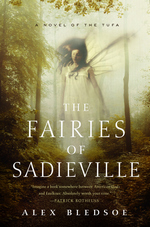
The Fairies of Sadieville by Alex Bledsoe: I hate to say good-bye to the Tufa, but this is the way to do it.

I’ve got to stop doing this. I had most of a post written about this book for yesterday, didn’t like it and trashed the whole thing. This isn’t as analytical as I wanted to be, but it does a better job capturing what I felt about the experience, and I think I happier about that than I’d have been with my planned post.

The Fairies of SadievilleThe Fairies of Sadieville

by Alex Bledsoe
Series: Tufa, #6

Kindle Edition, 368 pg.
Tor Books, 2018

Read: May 9 – 11, 2018

For many years [the Tufa] were on the wrong side of the South’s color line, and suffered for it. Their secretive ways and legendary musical aptitude spawned rumor and legend, which in turn prompted more and more withdrawal.

But now the twenty-first century, with its pervasive interconnectedness, pushed against this isolation. More and more Tufa risked the consequences of leaving and sought their way in the world. They all knew they would someday have to come back, since all Tufa were inextricably tied to Needsville. But they also knew that the seclusion of the past was no longer practical. Like it or not, the world now knocked on their door.

Such a depressing thought, but a pretty good summary of the State of the Tufa.

I still remember some of the reactions I had back in 2011 during my first read of The Hum and the Shiver and met the Tufa. There was something otherworldly, ethereal and haunting — and yet, very human, and even fun. It was, in short, magic. I thought the same when I re-read it before the sequel, and maybe it impressed me more that time. Each book since has felt the same — not all have them as successful as the first, but they’ve all had that same core magic.

When it was announced a couple of months ago that this was going to be the final novel in the series I was struck by two thoughts — the first, and strongest, was lament. The second was, “how?” There’s not an overarching narrative that needs tieing up, a goal to meet or anything. Partway through this book, I started to understand how Bledsoe was wrapping things up and concluding the series — and it felt perfect. I should add at this point that I was wrong about what he was doing, and that the reality was better than my guess.

As it’s the final book, all bets are off — the first novel contained many hints about the nature of the Tufa, but the successive books were less and less subtle in that regard, and ended up telling more than the previous. At this point, there’s no hinting, no suggesting — not only that, Bledsoe answers many questions readers have had since the beginning, and probably a few we should’ve had. And he does so in a way that enriches the series and the Tufa, not just something that reveals. There were so many little tidbits that came out that just made me smile or utter a quiet “Ah ha!”

I actually haven’t talked much about the plot yet — how odd. There are a couple of graduate students from a university in Tennessee — one in psychology (would be parapsychology if she could get away with it) and one in English with a focus in folk music as a way to improve his own music (minor spoiler: I spent a few pages waiting for him to be revealed to be a Tufa — nope, just a kindred spirit). These two have come across an old film — silent film old — shot near Needsville, showing a young woman losing her glamour and flying off on wings. There’s no way that it could be silent film quality FX, it’s a woman with wings. This town it was filmed in, Sadiesville, disappeared shortly afterwards. The two want to find this town and explore what happened to it.

Which brings them into contact with the people of Needsville — and the night winds have instructed them to help these two find what they’re looking for, despite the fact that no one in Needsville has a clue about the town. For readers, the idea that Tufa have forgotten anything that happened in their area is pretty astounding the kind of thing that piques your curiosity.

What happens next is wonderful, and horrible, and beautiful — awful in every sense, archaic and otherwise. I loved it and hated it while admiring how Bledsoe played this out. Structurally, tonally, thematically different from the rest (as each book in this series has been), yet undeniably part of the series. I loved seeing friends who’ve been around since The Hum and the Shiver or those as fresh as Gather Her Round just one last time (not that the new characters are slouches. For example, Veronica, our aspiring parapsychologist, is someone I’d hope to see if there was going to be a book 7).

There are a million little touches here — none of which I can talk about without ruining something, that make this good-bye the best installment of this series since The Hum and the Shiver. This is a must for Tufa fans (not that they need me to say it), and one more chance for me to suggest that people who haven’t started the series yet get on it. I don’t believe in actual magic — but Bledsoe’s series make me want to, especially if it looked like this. I hate to say good-bye to this series, but this is the way to do it.

Bravo.

—–

5 Stars

Not Talking Italics by Russell Day: This Short Story contains enough entertainment value to carry a novel.

Not Talking ItalicsNot Talking Italics

by Russell Day
Series: Doc Slidesmith

Kindle Edition
2018, Fahrenheit Press
Read: May 7, 2018
In a couple of months, I’ll be taking part in a book tour for Russell Day’s debut novel, Needle Song, and I’m really looking forward to that (and am having a hard time not reading it now). But today, we’re going to look at a short story featuring the protagonist of the book, Dr. James Slidesmith. A little something to whet our collective appetities.

I know very little about Slidesmith after reading this short story, and I can’t wait to find out more. Here’s what I do know — 1. He has a PhD in Psychology, and is touchy about those who don’t consider him to be a “real” doctor; 2. He owns and runs a tattoo parlor/shop; 3. he plays poker; 4. He’s very smart; 5. He has the gift of gab.

All five of these are important, but in this short story, that last one is essential. Everything in this is dialogue — no dialogue tags, no narrative, no descriptive passages — just characters talking. Which will involve all that other stuff, but that’s not how the story is told. It takes place in a police interrogation room — you’ve got a Detective Constable, a Detective Sergeant and Dr. Slidesmith talking about an incident at a poker game earlier that night. Things got nasty and two men died, given the small number of people at the game, the Police are looking to quickly identify the killer(s) and wrap this up quickly.

But first they’ve got to get past the silver-tongued Slidesmith. That won’t be easy. He offers a detailed explanation of the night’s events — including doing some educating on Texas Hold-’em, the ins and outs of betting in the game (and how to manipulate betting). There are a couple of characters that we only learn about from questions and answers in the interrogation, and I feel like I ahve a pretty good handle on them, without seeing them speak for themselves. That’s a nice move.

As it’s just dialogue — and well-written dialogue, at that — this is a fast, breezy read (so fast, you might miss a thing or two the first time through). It’s not so much a book that you read, it’s one you hear with your eyes. I’m not certain that makes a lot of sense, but it’s the best way I can put it. These are fast-moving conversations, they have a certain rhythm, a certain feel — and you just want to keep reading more and more of it. This could’ve been twice as long and I don’t think my attention would’ve wavered an iota. Imagine your favorite scene written by Aaron Sorkin, then imagine it changing into an interrogation in a British Police Station — that’s what this story is.

This is good stuff, my friends — better than good. There’s an extent to which the reveal seems “oh, sure, I should’ve seen that coming” — and it wouldn’t surprise me if many readers get there before Day wants you to (I was not one of them) — but it’s so satisfying, so well-executed, I can’t imagine a soul complaining about it. If Needle Song is anything like this, I’m going to have to go down to the superlative store this weekend to stock up before I write anything about it.

Stop whatever you’re doing — including reading this — and click the links at the top of the page to go get this story. You’re welcome.

—–

5 Stars

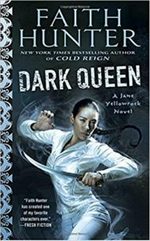
Dark Queen by Faith Hunter: Jane Yellowrock’s latest has everything — including the kitchen sink.

Dark QueenDark Queen

by Faith Hunter
Series: Jane Yellowrock, #12

eARC, 432 pg.
Ace, 2018
Read: April 23 – 28, 2018

I’ve stopped reading the blurbs for the Jane Yellowrock books, so I had no idea what to expect out of this one when I started it. I spent a couple of days planning on how this was a rumination of/celebration of family disguised as an Urban Fantasy novel. Don’t get me wrong, there was plenty of action and plot and all the things we have come to expect from a Jane Yellowrock book. But, yeah, family was the overarching theme. But then . . .

But then, Hunter kicks it into high gear and the long-awaited Sangre Duello starts. Which I didn’t expect — I figured we’d get an entire novel (minus an introductory and follow-up chapter, maybe) dedicated to it. Man, am I glad I was wrong — I’m not sure I could’ve handled more of the tension surrounding it than Hunter gave us. Still, everything I’d planned on saying pretty much went out the window.

I’ve gotten ahead of myself. This series (like any that has gone more than 5 books) needs a “Previously . . .” section. Things have changed so much since Jane rode into New Orleans in Skinwalker that it’s almost impossible to remember everything that’s happened. Hunter does do enough in the text to remind you who is who and what they’ve done in the past, so I’m not saying the book is inaccessible. It’d just be nice to have a reminder just where we are in the story without having to re-read eleven novels (not that I have a problem with that — I’d probably pick up a few more nuances).

The book begins with Leo solidifying his organization. Moving people around, giving promotions, and cleaning house (not as much as he should have, but even someone who’s as politically savvy as Leo isn’t perfect). Part of this is the official recognition and establishment of Clan Yellowrock — which was just so strange. One of the groups that Leo is dealing with is a werewolf pack from the Western part of the US, who are doing some work for him related to the Sangre Duello, who are pretty interesting, and I’d like to see more of them in the future. There’s also a new PsyLED honcho floating around — Rick’s boss and Soul’s underling — and his presence is almost as disruptive to Jane’s world as the European Vampires are.

Then before you know it — there we are, the European Vampires are coming ashore to start the Sangre Duello. Which is basically a series of duels — some to first blood, some to the death (true death, in the case of vampires) — and just about everyone connected to Leo ends up fighting at least once. It is clear from the way this is set up, the way it’s carried out, the way that just about everyone acts during it — that vampires act on a different morality than just about anyone else. Jane has a very hard time with it all, and many readers will, too. That’s good — that means you’re not a monster. I will say that Leo’s psychological games with the EV’s are a lotta fun. If you have much of an emotional attachment to the characters in this series, you will stress out during this part of the book. Not all survive. Not all who do survive do so unscathed. Without saying what happens to him, I didn’t realize how invested I was in Leo Pellissier’s continued existence.

Faith Hunter puts all of her experience, all her skill and talent on display here — and it works. This is really a tour de force for her and it’s just a pleasure to read. On the one hand, I thought the pacing was a bit slow at first and wasn’t sure what she was doing — but at a certain point, I recognized that she knew exactly what she was doing and you needed the slow-burn of a start so that you’d be ready for the almost non-stop action to come. There’s some brave choices she makes here — totally shaking up the series, the status is not quo, as a horrible doctor might say. While that might seem like the kind of thing writers need to do (and it is), it can’t be an easy choice — because no matter what we say, we fans want our comfortable series: where we know that Riker will be Picard’s Number One for far too long, Lisa will be 8, and that one couch at the Central Perk will always be available for Monica’s friends to sit on.

Jane continues to grow and mature, embracing — and even expanding — the emotional ties she has to people in her life, taking on more people to protect and defend. She’s not a loner anymore, and has stopped fighting this reality. It’s great to see. And everything I wanted to say about family is present here, and you’ll know exactly what I was talking about when you read this. And if you’re someone who threatens any of those she’s decided to align herself with? I pity you, because, well, Beast is best hunter, and there’s nothing really that’ll stop Beast/Jane from making you regret that threatening.

If I was a better blogger — or at least one who had better time management, I’d come up with a post just about Eli Younger. I really wish I was that guy — because Eli deserves more attention. As I write this, I remember that Carrie Vaughn gave Cormac a novel to himself (pretty much) — Hunter should consider letting Eli have his own.

This would’ve been a great series finale just as it is. I am so glad that it’s not — Hunter’s got things set up so well for the next couple fo books (at least) that I’m as excited about this series as I’ve ever been. But, Dark Queen could’ve worked as the end. Which is really just to say two things: 1. If you’re looking for a new Urban Fantasy series to start, full of magic, vampires, shape-shifters and more? This series is a great one — but don’t start here, start with Skinwalker. 2. Hunter has tied up a lot of loose ends, a lot of long-going plotlines are resolved (or at least brought to a satisfying resting point), which should satisfy long-term readers. I won’t say that they’ll all be happy about where everything ends up — I’m not — but I will say that it’s nice to have some sense of closure and resolution.

I laughed, I got angry, I cheered, I fretted, I got awfully close to letting water leak out of my eyes — I loved this book from start to finish.

Disclaimer: I received this eARC from Berkley Publishing Group via NetGalley in exchange for this post — thanks to both for this.

—–

5 Stars

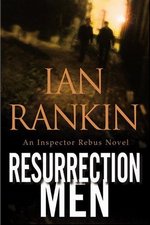
Resurrection Men by Ian Rankin

Resurrection MenResurrection Men

by Ian Rankin
Series: John Rebus, #13

Hardcover, 436 pg.
Little Brown and Company, 2002

Read: Rebruary 26 – 27, 2018

Another ghost in need of justice. Rebus had confessed to her once, after too many late-night drinks in the Oxford Bar, that he saw ghosts. Or didn’t see them so much as sense them. All the cases, the innocent — and not so innocent — victims . . . all those lives turned into CID files . . . They were always more than that to him. He’d seemed to see it as a failing, but Siobhan hadn’t agreed.

We wouldn’t be human if they didn’t get to us, she’d told him. His look had stilled her with its cynicism, as if he were saying that “human” was the one thing they weren’t supposed to be.

Thanks to sickness, a little bit of travel, and general increased busy-ness in my non-blog life, I almost missed my monthly check-in with John Rebus. Thankfully, for my Bookish-OCD, I made it just in time. Even better? This was one of the best in the series.

Rebus’ drinking and displeasure at Gill Templar’s handling of a murder investigation results in him being sent back to school. Literally. There’s a “retraining” course at the Police College for long-serving officers with discipline problems — sort of a last chance before the end of the road. These detectives are pretty similar, they’ve (mostly) been at this for years and aren’t going to change, no matter what happens in the course. Most of them know each other by reputation, Rebus is well-known, apparently — and he knows another classmate by reputation, he’s “the Glasgow Rebus.” After some counseling sessions, and some class lectures, the detectives are given a cold case to work to help learn something about teamwork. A couple of the detectives were associated with the original investigation in Glasgow, and even Rebus brushed up against it in Edinburgh. It’s not so clear how much teamwork is being learned, it’s clear that there are people who know things about the case that aren’t in the files — and they’re not sharing.

There is something about the case that could involve Big Ger, so guess who gets volunteered to talk to him? Rebus is not the only one talking to Cafferty, Siobhan Clarke (now a DS) has a couple of conversations with him. Watching Cafferty try to treat the two of the similarly, with different results, was quite entertaining — Clarke reacts to him differently than Rebus, but she doesn’t take the same angle with him that I think most would. I look forward to seeing the two of them lock horns in the future.

Speaking of Siobhan — never call her Shiv, by the way — once again, she threatened to take over the book for the first half or so. Rebus’ drinking with the other problem police and their cold case just didn’t grab my attention at first. But Siobhan’s dealing with the investigation — without her mentor to bounce ideas off of — and the various and sundry male detectives around her. Some of which work with her just fine, others . . . not so much — at the end of the day, DS Clarke is the one who puts the case together, and in a pretty compelling way. Did I enjoy things a little bit more when Rebus came along to interact with a bit? Yeah, but it wasn’t necessary. I also like the way that Rebus and Templar were the ones (along with Siobhan herself) noticing her doing things like Rebus this time, not just other police. He’s clearly left his stamp on her — for good or ill, the trick is watching her approach things the way he would, but remaining her own person. Which she has so far — and, I bet, will continue to do so.

But this is a Rebus novel, at the end of the day, and he does get the better material — as I mentioned, he interacts with Siobhan some because he and the others come to Edinburgh to follow a pretty shaky lead (mostly, it’s an excuse to get away from the college and drink somewhere else). Around this point, that storyline became more intriguing — and it did end up being the better part of the novel.

No one will ever say that the Rebus novels are a fun romp, but there was something about Rankin’s writing in Resurrection Men that seemed darker than usual — not a darkness because of violence or anything, just in the telling. Everything seemed worse, everything seemed sinister — it’s hard to put my finger on it exactly, but there was something grim going on. Yeah, I laughed a couple of times, smiled more often than that, but overall, the noir in this book was blacker. We see areas of Rebus’ psyche we haven’t seen much of before — ditto for Clarke — we also get some good Rebus/Cafferty backstory.

The structure of this novel is the real star — it was just perfect — we get a couple of mysteries to watch our detectives solve, plus a couple of other things go on. It even seems like Rankin doles out the information in an unusual way, only telling us what we need to know when we need to know it — there are times when we’re more in the dark than Rebus because he’s hiding the information from his fellow Last-Chancers and us (what does that say about Rankin’s readers?), but it works — this isn’t a case of a mystery writer cheating, it’s a deliberate attempt to build suspense. Complex without being complicated, brilliantly plotted but not in a way that feels totally organic. At a certain point, the way that all the storylines end up seem inevitable (even when you’re still not sure who the various killers are going to be), yet you’re surprised when the inevitable happens. But along the way, each step in the stories, each reveal, each development catches you off guard. Just fantastic structure to the book.

I thought it was strange that Rankin started this one off (I’m guessing for the American edition only) with a little description of the Scottish Police’s organization and rankings, which was nice (but most readers can figure it out on their own). Also included was a list of the cast of characters — organized by storyline. That was helpful, too. Unnecessary, but very nice. I’m not sure why these were used, but I’ll take them.

This one checked almost every one of my boxes — at least once, and never didn’t hold my interest. Rankin clearly knows what he’s doing and you should read this one — and the twelve before it.

—–

5 Stars
2018 Library Love Challenge

Page 16 of 24

Powered by WordPress & Theme by Anders Norén