Tag: Fantasy Page 43 of 54

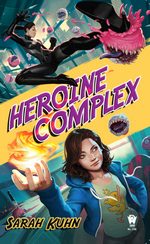
Heroine Complex by Sarah Kuhn

Heroine ComplexHeroine Complex

by Sarah Kuhn
Series: Heroine Complex, #1

Paperback, 375 pg.
DAW, 2016

Read: April 6 – 8, 2017


A few years back, the city of San Francisco was visited by trans-dimensional demons — they were unable to stay long before being driven back, but in their wake certain individuals were left with superpowers. Some powers were impressive, others were . . . well, let’s just say less-so. Most didn’t use their powers much, but some heeded the call of Ben Parker and used their abilities to serve the common good. Chief among them was Aveda Jupiter — who spends her days defending SF from further demon incursions as well as more mundane menaces.

Aveda is helped in her quest for justice (and good PR) by a fighting coach, a scientist studying demons and a PA. Her PA, Evie Tanaka, is her childhood best-friend and the only one who can weather her mood swings, demands for affirmation and schedule with good humor and grace (at least externally).

Events transpire, and Evie has to pose as Aveda at an event — and things go awry in a pretty significant way. Demons attack (while displaying some new characteristics that require a new long-term strategy for battling them) and Evie demonstrates a super-power of her own. In the next few weeks, Evie has to continue the ruse while learning how to use (and hopefully lose) her own power and learning how to adjust to a newfound confidence, level of esteem, a change in her friendship with Aveda, and even a love life — while trying to beat back the invasion force once and for all.

I’ll be honest — the plot was okay, but almost entirely predictable by page 50 or so. But name the super-hero story that’s not, right? Especially origin stories. What matters is how Kuhn told the story — with heart, charm, and wit. So that you aren’t getting to various story beats saying, “Yup, right on time,” (or whatever unintentionally pompous thing you say to yourself when you get to a point in a book like this), rather you’re saying, “Oh, I like how she did that,” or “that’s a great take on X.”

The characters and the relationships between them are the key to this — none of them act their best, none of them are really hero-material, all of them ring true. These could be your friends (not my friends, mind you — there’s not enough book talk, and a whole lot of things that happen outside of a house), or at least the friends of someone you know. If, you know, your friends are known for dressing in leather, beating up inanimate objects inhabited by pan-dimensional beings, and fending off the prying and gossiping eyes of a fashion/lifestyle blogger.

I don’t think I’ve done the best sales job on this, but I’m not sure what else to say. Heroine Complex is light, breezy and fun — a quick and enjoyable read with characters you want to spend time with. A great way to kill a couple of hours — I’m looking forward to Book 2.

—–

3 Stars

2017 Library Love Challenge

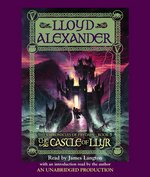
The Castle of Llyr (Audiobook) by Lloyd Alexander, James Langton

The Castle of LlyrThe Castle of Llyr

by Lloyd Alexander, James Langton (Narrator)
Series: Chronicles of Prydain, #3
Unabridged Audiobook, 4 hrs, 36 min.
Listening Library, 2004

Read: March 20, 2017


Taran is tasked with escorting Princess Eilonwy to the Isle of Mona, where she’ll be taken in by distant relatives — the king and queen, who will help her learn how to be a proper young lady (an idea she finds ridiculous). They sail there on a ship “captained” by the island’s Prince Rhun.

Once they reach the island, Taran runs into Fflewddur Fflam, who’s enjoying barding again — even if the castle’s steward, Magg, has an intense dislike of his music. Shortly after that, Taran discovers there’s a threat to Eilonwy in the castle and tries to save her from it without letting her know she’s in danger. That goes poorly and he joins the rescue effort instead (also led by Rhun — or at least Rhun thinks so).

The companions also meet the world’s littlest giant (why does that sound like it belongs more in The Phantom Tollbooth than here?) and a mountain cat that we’ll get to spend a lot of time with. There’s a lot of links to the first book as well as the last book in the series here.

The introduction by Alexander was great — I wish I could hear more of his own takes on the books. Langton was solid. Again, I think he could talk a little faster — but that’s minor. His Prince Rhun’s “Hullo”s are just what I’ve heard in my head all these decades.

This is probably the most entertaining of the lot — there’s some really good comedy here. Taran grows up a lot more here than he does in other books, I think, which adds something more than just entertainment to this book. It’s possible that this is the one in the series I read the most as a kid. The story isn’t as rich as I remember, but factoring in the growth in characters and the entertainment factor, the experience as a whole was pretty satisfying — and I’ll take that.

—–

3.5 Stars

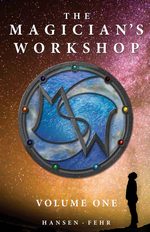
The Magician’s Workshop, Volume One by Christopher Hansen, J.R. Fehr

The Magician’s Workshop, Volume OneThe Magician’s Workshop, Volume One

by Christopher Hansen, J.R. Fehr
Series: The Magician’s Workshop, #1

Kindle Edition, 290 pg.
Wondertale Press, 2014

Read: Mach 22 – 24, 2017


I’m sick and tired of these books that introduce you to a character and their problems/goals and then abandon them for another storyline or two with no relation to the first for over 50% of the book. I get that this is a thing that people do all over the place (I read a couple of books last year that never returned to the people in the introductory chapter or really explained why we spent time with them), but it drives me crazy. Fine, multiple point-of-view characters, multiple storylines, but don’t dump one for 150 pages or so after introducing them.

That’s probably not the best way to start this post, but hey, if they can start the book awkwardly, I can start my post about it awkwardly, too.

There was some great worldbuilding at work here — Hansen and Fehr did yeoman’s work there. But they failed at translating it into a setting for stories. They wisely didn’t dump everything on the reader in the first chapter — but they way they went about doling out the explanation of what’s going on, why the world/magic/society works the way it does was way too slow. I can’t imagine that all too many readers in their target audience (12 and up) are going to have the patience to wade through it all.

Part of the magic system is another one of my pet peeves — everyone has magical powers. This can work, but usually it doesn’t — as even Dash Parr can tell you, everyone being special (or having magic) “is another way of saying no one is.” I’m not sure why that’s considered magic in this world. For underage people, they can only use their magic for training in controlled circumstances. When they get older, they’re tested and part of the test (that makes no sense to me) will reveal whether the user is qualified to be a magician — one of the elite professional magicians, as opposed to those who are limited in their use of magic — by some standard I can’t explain.

The novel focuses on a handful of youth — some who know each other, some that don’t — as they finish preparation of the day of testing. Some have lofty goals, some have small, but important goals, some have dark backstories, others are trying to be the first in their family to join the elite ranks.

Here’s my biggest beef with this book: there’s no story here. It’s all set-up. It’s The Fellowship of the Ring that stops when they get to Rivendell and the Council starts, or any Spider-Man story that stops after the death of Uncle Ben these characters get to (and in some cases, start) the testing and the book ends. Yeah, sure, the notes at the front of the book say this is to be read with Vol. 2 — but, sorry, that doesn’t cut it. There’s not a story here, there are no complete arcs — it’s part of a book.

There’s some not unclever commentary on media culture, critique, fans and whatnot throughout this book — especially later on. Also, there’s a strong “hey, the real world is just as fantastic as the ones we create” message that I really appreciated. Some good stuff for younger readers to read.

This is a swing and a miss — there’s a lot to be commended here, but the flaws are too much to overlook. I want to give this a 3, but I just don’t think I can justify it.

Disclaimer: I received this book from the publisher in exchange for this post and my honest opinion. Sorry.

—–

2 Stars

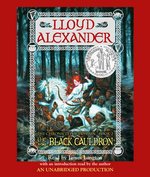
The Black Cauldron (Audiobook) by Lloyd Alexander, James Langton

The Black CauldronThe Black Cauldron

by Lloyd Alexander, James Langton (Narrator)
Series: Chronicles of Prydain, #2
Unabridged Audiobook, 5 hrs, 28 min.
Listening Library, 2004

Read: March 15 – 16, 2017


Of the five books in the Chronicles, this is probably my least favorite installment, still I enjoyed reliving it with this audio. Why Disney chose this one to make a movie out of, I’ll never know (and have never seen).

Prince Gwydion has called a council at Cair Dalben — bringing warriors, royalty and others from across the land to discuss something of urgency. Taran is included as well, thanks to the Prince’s experience in the previous book. One of the attendees, Prince Ellidyr, is a young, proud twit who might as well have been named William Zabka — if he doesn’t remind you of the quintessential 80’s movie antagonist, you’re not reading him right. He and Taran clash immediately, and are predictably assigned to work together.

We also meet the son of Taliesin, the chief bard, Adaon. Adaon is one of those characters that comes out of nowhere, every character loves and so do the readers. He’s wise, kind, and probably a decent fighter. Taran is possibly more taken with him as friend and role model than he was with Gwydion — partially because he’s not a prince, and so is more approachable; but also is just that kind of guy. Thankfully, Taran and he are also assigned to work together so it’s not all about the jousting with Ellidyr.

There were other characters introduced — several actually, but those two are the ones to focus on now. I’m not going to tell you anything about Gwystyl and Kaw, because I’ll not do them justice. But you’ll enjoy both. Gurgi was Gurgi, and Eilonwy was perfect — seriously just perfect. I always liked the character, but maybe never as much as I am this time through the series.

I got distracted by talking about the characters, the purpose of the council is to go hunting for the Black Cauldron, the source of the Cauldron Born warriors of Arawn. These are basically zombies with swords, doing anything their master calls for — and were the source of a good deal of apprehension when I was a kid, and now just seem like a great foe. Their numbers are swelling, making Dalben and Gwydion certain that something bad is on the horizon — now seems like a good time to raid the Dark Lord’s domain and destroy the Cauldon. Which may not derail the plans in motion, but will at least make them easier for the good guys to survive.

So after the Council, the heroes head out. As soon as they launch their strike, they discover that someone has beaten them to it — the Cauldron is gone and they’ve got to regroup before hunting it down. Things go bad there, the companions are separated from each other and on the run from those the Cauldron has already produced.

Taran, Ellidyr, Adaon, Gurgi and Fflewddurr get a lead on the Cauldron and decide to follow it up immediately rather than let their foes get it while they’re off looking for Gwydion. This takes them to the swamps of Morva — one of my favorite places in the series — and to the hut of Orddu, Orwen, & Orgoch. They will chill younger readers and entertain readers of all ages. From there peril, betrayal, redemption, grief and more ensue as the companions try to destroy the titular MacGuffin.

The Lloyd Alexander introduction to this one was better than the previous — I’m such a geek that listening to little bits of Alexander was one of the highlights of my day. I don’t think I have anything to say about Langton’s performance here that I didn’t say last time. It was good, nothing spectacular, though. He kept me engaged, even if he paced it slower than I’d like. Whoever transferred this from audiotape to digital format had an odd approach to dead space between tapes/tape sides — there are times that I feared the file had stopped unexpectedly, either from a corruption in the file or a glitch in the app, and just as I’d grab my phone to check the Langton’s voice would start again.

A needed part of the story, if only for Taran’s growth, and for what it sets up in books to come. It was never my favorite growing up, still isn’t now, but it was still an entertaining few hours.

—–

3 Stars

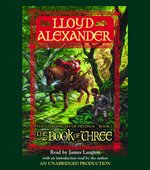
The Book of Three (Audiobook) by Lloyd Alexander, James Langton

The Book of ThreeThe Book of Three

by Lloyd Alexander, James Langton (Narrator)
Series: Chronicles of Prydain, #1
Unabridged Audiobook, 4 hrs, 56 min.
Listening Library, 2004
Read: March 6 – 9, 2017


I’m pretty sure that I’ve mentioned once or twice before here that The Chronicles of Prydain were the books that got me into fantasy. The Chronicles of Narnia made me a fan of Narnia, but really didn’t carry over to anything outside of Narnia (at least until I got older and tried Mere Christianity). But Prydain got me appreciating the tropes, conventions and characters that’d get me into Brooks, Weis & Hickman, Eddings, etc., etc. Listening to the audiobooks seemed like a nice way to revisit the series.

Taran, the Assistant Pig Keeper to Hen Wen (an oracular pig), dreams of glory to be found with a sword on the battlefield. His charge is frightened by something and escapes from her pen — Taran chases after her, leaving the only part of Prydain he’s ever known behind in the process. This hunt for the pig takes him to the far reaches of Prydain, where he encounters the son of the High King, Gwydion; Princess Eilonwy — about his age, and a fantastic foil and friend for Taran; Fflewddurr Fflam, an unofficial bard; Gurgi — some sort of simple-minded Sasquatch-like being; and others. Taran also encounters the forces of evil — the Horned King; Archen the enchantress; and other minions of the Dark Lord Arawn.

The themes of true nobility, heroism and what it means to be a man are prevalent (and Alexander maybe gets a little didactic here) — nothing I object to, just it seems a little thick by contemporary standards. Taran learns (for the first time) that there’s as much honor to be found in doing your everyday work well as there is on the battlefield. It probably feels a little old-fashioned to many, but there’s value here. Taran begins to mature here, but it takes (as I recall) all but the last 30 pages of the fifth book for it all to come together for him.

There’s a little audio recording of Alexander before the book kicks off as an introduction — that was pretty cool. Langton’s narration was okay — the narration was okay, maybe a little slow. His interpretation of Taran and Gwydion didn’t do much for me (and actually made me realize how clunkily Alexander wrote their dialogue), but they slowly grew on me. I really couldn’t find anything to like about Gurgi (one of my favorite characters ever). But I really liked everything else — his Eilonwy and Fflewddurr were perfect and a lot of fun. He deserves kudos for his Hen Wen alone, really.

This isn’t the greatest writing you’ll encounter — for the age group or genre. But it’s effective, there’s so much to appreciate here (and not just for nostalgia’s sake). I remain a big fan of the series, and do appreciate the audiobook.

—–

4 Stars

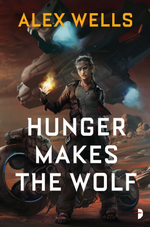
Pub Day Repost: Hunger Makes the Wolf by Alex Wells

Hunger Makes the WolfHunger Makes the Wolf

by Alex Wells
eARC, 326 pg.
Angry Robot, 2017
Read: January 6 – 10, 2016

Let’s just get this out there — this is a very cool novel. If you dig SF that’s not beholden to space ships and lots of future tech — and can even handle a little bit of magic, you’ll want to read this one.

Tanegawa’s World is a little forgotten backwater of a planet — think Tatooine — so forgotten that none of the colonists there really have a clue that there’s an interplanetary government, or what’s going on with any other planet. The company that runs the mines (and by extension, the farming communities that support the mines) runs the whole show. There are organizations of workers in individual towns, and there’s a loose network connecting them, for mutual assistance and support. And then there are the Ghost Wolves — a band of mercenary bikers. They are a law unto themselves, but have strong ties to the miner groups. They may be supported by/sympathized with by most people in the towns, but officially they’re outlaws.

Hob Ravani is the lowest ranked member of the Wolves — she’s made some serious blunders that required her to go through the training/probationary process twice. But she’s a full-fledged member now, and the leader, Nick Ravani (no blood tie, but he gave her his name), seems to trust her, even as he’s still testing her commitment following these blunders. Making a routine run with a couple of other Wolves, Hob finds the body of Nick’s brother lying dead in the sand, shot in the back several times. This discovery — and the ensuing investigation, retaliation, and the side-effects of both — will end up changing Tanegawa’s World and the lives of many of its people in ways that no one can expect.

Which is not to say that this is a big, global story. It’s not. This is about Hob and her immediate circle. They just find themselves (and, eventually, put themselves) in some critical areas — and also don’t realize just what they’re getting themselves into. Mag, the dead man’s daughter, is Hob’s estranged best friend, and will be the favorite character of many readers. There are Geri and Freki — twins who are only slightly senior to Hob when we meet them, they’re not really friends of hers, but they are allies she can count on when she needs to — and on this world, that might be more important. There’s Coyote, who I enjoyed immensely, and a couple of other Wolves that we spend time with, but most aren’t factors in the story. There’s one more person in her circle, the Bone Collector — I’m not even going to try to sum him up in a sentence, but he’s worth getting to know.

On the flip side we have Mr. Green, who is just creepifyin’ (as Mal Reynolds would say), a Weatherman (not like Al Roker) and a couple of cut-throat corporate types who just this side of wearing black hats and twirling their mustaches They are absolutely believable and not cartoon-y, but reek of “bad guy.”

There is something that could be magic going on here — it’s definitely seen as magic by some. It might be radiation-induced mutation. It could be some sort of world-spirit/alien entity doing something to people. It’s tough to say, and it really doesn’t matter — some individuals on Tanegawa’s World possess abilities that others don’t. The ultimate cause of those abilities makes no difference to the story, it’s interesting to speculate about (and to see why various groups adopt their interpretation and how they use it) — but at the end of the day, it just means that there are a few characters walking around with extra abilities which don’t define them, but are definitely helpful.

The plotting is good, the pacing is strong, and there’s a strong voice throughout the work. This is just an impression — I can’t quote anything to verify it (were I a professional, I’d make the effort), but while the voice is consistent and strong throughout, I think Wells is a bit more aggressive about it in the opening chapters. In sort of a “come on strong and get you into the world” then dial back to “now here’s the story.” Or maybe it’s “throw you into the deep end” and then let you swim undisturbed. Or maybe I acclimatized Or maybe I should stop trying to make this point and move on. My overall point on voice — both the narrative voice, and the individual characters — it that it was strong, clear and engaging — the kind that you want to spend 300 pages with. Wells demonstrates the chops to keep and build an audience, if they’ll just give the book a shot.

I’ve seen a lot of comparisons to Dune and this world — I’ve never been able to get through much of the first book, and nor the adaptations — so I can’t comment. There’s a lot of sand, so, I guess maybe. Tanegawa’s World feels like something out of O’Keefe’s Scorched Continent or Firefly — a mining/agricultural society in what might as well be the Old West with (some) better technology than we have. Arguably, this planet is a little less hospitable to humans and The Powers That Be are a shade more corrupt.

I’ve also seen a lot of talk about the biker gang aspect of the book. It didn’t feel as prominent as I’d have liked — it was there, but it didn’t seem that vital to the nature of the mercenary crew the Ravani leads. If I had to compare it to anything, the Ghost Wolves felt more like a UF werewolf pack than anything else. That may say more about what I’ve been reading than anything that Wells wrote, still I got more of a Briggs/Vaughn/etc. vibe to the group than a Kurt Sutter-vibe. Outside of a handful of individual members, I didn’t get a clear feel for the Wolves. It’s understandable, Wells had a lot balls in the air and was doing just a good job juggling them that I didn’t notice. In retrospect, however, I’d have appreciated a little more time with this aspect.

I feel like I’ve gone on too long here, but I haven’t touched all the things I want to say. There’s just so much going on in these few hundred pages! Despite all that, you don’t get bogged down in the worldbuilding, the details, the backstories, or anything — Hunger Makes the Wolf is a fun, fast, gripping read. I trust there’s a sequel on the way. There just has to be. Not that this isn’t a complete story — there’s just a lot of threads that beg to be picked up. Either way, you’ll want to read this one.

Disclaimer: I received this eARC from Angry Robot via NetGalley in exchange for this post — thanks to both for this opportunity.

—–

4 Stars

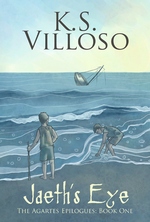
Jaeth’s Eye by K.S. Villoso

Jaeth's EyeJaeth’s Eye

by K.S. Villoso
Series: The Agartes Epilogues, #1

Kindle Edition, 372 pg.
World Tree Publishing, 2014

Read: February 9 – 11, 2017


There is no doubt in my mind that Villoso had a very clear idea what was going on in these pages — but as I read, I felt like I was constantly e-evaluating what was going on — guessing what I was supposed to understand, and what was supposed to be being revealed to me (either where I was or in the future).

Not only did I not understand where I was, I couldn’t really tell you until the end how everything tied together and what the overall story was. I didn’t get the various cultures/ethnicities, I couldn’t tell how the various moves by the characters — or by those they were talking about — meant anything.

Now, I liked the characters — I liked the interactions, and every time that the story moved on I hated it, because I’d have to reorient myself. The characters seem to change almost every time I encountered them.

Glancing around the internet I see that I’m alone in this — every other reviewer seems to have really dug the way Villoso told the story. Great — that’s a relief. I’d rather that I missed out on something good than the alternative — that Villoso didn’t put out something good.

Well, there’s one thing that you cannot convince me belongs in this fantasy world — dime novels. Nope, that just doesn’t fit.

I’m going to give this a three because the individual scenes, the character moments were great — I just couldn’t put the pieces together. Go read someone else’s take on the book, it’s bound to be better than mine.

Disclaimer: This book was provided to me by the author in exchange for this post — sorry it worked out this way for you, K. S.

—–

3 Stars

The Last Adventure of Constance Verity by A. Lee Martinez

I’ve been trying to finish this since September — thankfully, today being A. Lee Martinez Appreciation Day gave me the motivation.

The Last Adventure of Constance VerityThe Last Adventure of Constance Verity

by A. Lee Martinez
Series: Constance Verity, #1

Hardcover, 384 pg.
Saga Press, 2016

Read: September 8 -12, 2016

“I didn’t think you believed in jinxes,” said Tia.

Connie didn’t.

But she wasn’t so sure that jinxes didn’t believe in her, and they’d had a long, long time to build a grudge.

I go in to a Martinez book assuming I’ll like it, this one took less time than usual for me to know I liked it. Lines like that are just part of why.

Thanks to a gift from a fairy godmother, since she was 7, Constance Verity has been saving the world as she goes on unbelievable adventure after unbelievable adventure — she travels the galaxy, time, alternate realities and all over (and under) the Earth. She’s run into demons, aliens, wizards, killer robots, mad scientists and many more threats — and overcome them all. A couple of decades later, she’s starting to think that she’s missing out on something despite all the excitement. She’s missing out on being ordinary.

Haven’t you saved the world on multiple occasions?”

“That’s what people tell me, but I’m beginning to think that the world isn’t as fragile as all that. The universe got along just fine for billions of years without me. I don’t think it needs me to save it. I think it all works out about the same in the end. Sometimes, I like to think of myself with a dead-end job that I dislike, a husband who is letting himself go, and some ungrateful kids I take to soccer practice. It sounds dreary, but at least it would be my life.”

Connie doesn’t stop to consider if she’s really cut out for ordinary, but if anyone can rise to the challenge of normality, it’s Constance Verity.

So she and her sidekick best-friend, Tia, head out to get that normal life for her. Step 1: Kill her fairly godmother.

I really don’t know what to say about the book beyond this without getting into more details than I ought. I guess I could say a few things about character. Connie is a great character, for someone who’s lived a superhuman life, she’s really human. Tia is incredible — wise, funny, caring, a real good friend. The relationship between the two is almost perfect.

This is a typical Martinez — a strange combination of loony and thoughtful. You can laugh and then be struck by a profound thought within a couple of pages. This is a fun adventure (a handful, really), and a bit of a commentary on heroes, villains, tropes and themes in SF stories (particularly the pulp-ier variety).

This is the first installment in a series — which is something Martinez hasn’t done before — I have no clue how he’ll pull this off, the book ends like I’d expect a Martinez stand-alone to end, so I have no idea how he’s going to follow this up. But I cannot wait to see.

—–

4 Stars

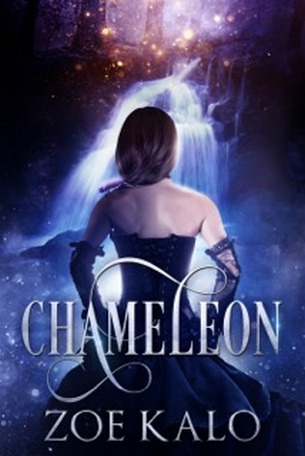
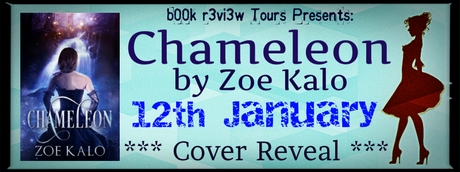
Cover Reveal: Chameleon by Zoe Kalo

Premise

Kicked out of school, 17-year old Paloma finds herself in an isolated convent in the tropical forests of 1970s Puerto Rico, where she must overcome her psychosis in order to help a spirit and unveil a killer

Blurb:

An isolated convent, a supernatural presence, a dark secret…

17-year-old Paloma only wanted to hold a séance to contact her dead father. She never thought she would be kicked out of school and end up in an isolated convent. Now, all she wants is to be left alone. But slowly, she develops a bond with a group of girls: kind-hearted Maria, insolent Silvy, pathological liar Adelita, and their charismatic leader Rubia. When, yet again, Paloma holds a séance in the hope of contacting her father, she awakens an entity that has been dormant for years. And then, the body count begins. Someone doesn’t want the secret out…

Are the ghost and Paloma’s suspicions real—or only part of her growing paranoia and delusions?

Genre: YA/Gothic/Ghost/Multicultural
Word Count: 55,000
Release Date: February 2017

About the Author:

A certified bookworm, Zoe Kalo has always been obsessed with books and reading. Reading led to writing—compulsively. No surprise that at 16, she wrote her first novel, which her classmates read and passed around secretly. The pleasure of writing and sharing her fantasy worlds has stayed with her, so now she wants to pass her stories to you with no secrecy—but with lots of mystery…

A daughter of adventurous expats, she’s had the good fortune of living on 3 continents, learning 4 languages, and experiencing a multicultural life. Currently, she’s working on a Master’s degree in Comparative Literature, which she balances between writing, taking care of her clowder of cats, and searching for the perfect bottle of pinot noir.

Connect with Zoe Kalo on the web: www.ZoeKalo.com / Facebook / Twitter

Hunger Makes the Wolf by Alex Wells

Hunger Makes the WolfHunger Makes the Wolf

by Alex Wells
Series: Hob Ravani, #2

eARC, 326 pg.
Angry Robot, 2017

Read: January 6 – 10, 2016


Let’s just get this out there — this is a very cool novel. If you dig SF that’s not beholden to space ships and lots of future tech — and can even handle a little bit of magic, you’ll want to read this one.

Tanegawa’s World is a little forgotten backwater of a planet — think Tatooine — so forgotten that none of the colonists there really have a clue that there’s an interplanetary government, or what’s going on with any other planet. The company that runs the mines (and by extension, the farming communities that support the mines) runs the whole show. There are organizations of workers in individual towns, and there’s a loose network connecting them, for mutual assistance and support. And then there are the Ghost Wolves — a band of mercenary bikers. They are a law unto themselves, but have strong ties to the miner groups. They may be supported by/sympathized with by most people in the towns, but officially they’re outlaws.

Hob Ravani is the lowest ranked member of the Wolves — she’s made some serious blunders that required her to go through the training/probationary process twice. But she’s a full-fledged member now, and the leader, Nick Ravani (no blood tie, but he gave her his name), seems to trust her, even as he’s still testing her commitment following these blunders. Making a routine run with a couple of other Wolves, Hob finds the body of Nick’s brother lying dead in the sand, shot in the back several times. This discovery — and the ensuing investigation, retaliation, and the side-effects of both — will end up changing Tanegawa’s World and the lives of many of its people in ways that no one can expect.

Which is not to say that this is a big, global story. It’s not. This is about Hob and her immediate circle. They just find themselves (and, eventually, put themselves) in some critical areas — and also don’t realize just what they’re getting themselves into. Mag, the dead man’s daughter, is Hob’s estranged best friend, and will be the favorite character of many readers. There are Geri and Freki — twins who are only slightly senior to Hob when we meet them, they’re not really friends of hers, but they are allies she can count on when she needs to — and on this world, that might be more important. There’s Coyote, who I enjoyed immensely, and a couple of other Wolves that we spend time with, but most aren’t factors in the story. There’s one more person in her circle, the Bone Collector — I’m not even going to try to sum him up in a sentence, but he’s worth getting to know.

On the flip side we have Mr. Green, who is just creepifyin’ (as Mal Reynolds would say), a Weatherman (not like Al Roker) and a couple of cut-throat corporate types who just this side of wearing black hats and twirling their mustaches They are absolutely believable and not cartoon-y, but reek of “bad guy.”

There is something that could be magic going on here — it’s definitely seen as magic by some. It might be radiation-induced mutation. It could be some sort of world-spirit/alien entity doing something to people. It’s tough to say, and it really doesn’t matter — some individuals on Tanegawa’s World possess abilities that others don’t. The ultimate cause of those abilities makes no difference to the story, it’s interesting to speculate about (and to see why various groups adopt their interpretation and how they use it) — but at the end of the day, it just means that there are a few characters walking around with extra abilities which don’t define them, but are definitely helpful.

The plotting is good, the pacing is strong, and there’s a strong voice throughout the work. This is just an impression — I can’t quote anything to verify it (were I a professional, I’d make the effort), but while the voice is consistent and strong throughout, I think Wells is a bit more aggressive about it in the opening chapters. In sort of a “come on strong and get you into the world” then dial back to “now here’s the story.” Or maybe it’s “throw you into the deep end” and then let you swim undisturbed. Or maybe I acclimatized Or maybe I should stop trying to make this point and move on. My overall point on voice — both the narrative voice, and the individual characters — it that it was strong, clear and engaging — the kind that you want to spend 300 pages with. Wells demonstrates the chops to keep and build an audience, if they’ll just give the book a shot.

I’ve seen a lot of comparisons to Dune and this world — I’ve never been able to get through much of the first book, and nor the adaptations — so I can’t comment. There’s a lot of sand, so, I guess maybe. Tanegawa’s World feels like something out of O’Keefe’s Scorched Continent or Firefly — a mining/agricultural society in what might as well be the Old West with (some) better technology than we have. Arguably, this planet is a little less hospitable to humans and The Powers That Be are a shade more corrupt.

I’ve also seen a lot of talk about the biker gang aspect of the book. It didn’t feel as prominent as I’d have liked — it was there, but it didn’t seem that vital to the nature of the mercenary crew the Ravani leads. If I had to compare it to anything, the Ghost Wolves felt more like a UF werewolf pack than anything else. That may say more about what I’ve been reading than anything that Wells wrote, still I got more of a Briggs/Vaughn/etc. vibe to the group than a Kurt Sutter-vibe. Outside of a handful of individual members, I didn’t get a clear feel for the Wolves. It’s understandable, Wells had a lot balls in the air and was doing just a good job juggling them that I didn’t notice. In retrospect, however, I’d have appreciated a little more time with this aspect.

I feel like I’ve gone on too long here, but I haven’t touched all the things I want to say. There’s just so much going on in these few hundred pages! Despite all that, you don’t get bogged down in the worldbuilding, the details, the backstories, or anything — Hunger Makes the Wolf is a fun, fast, gripping read. I trust there’s a sequel on the way. There just has to be. Not that this isn’t a complete story — there’s just a lot of threads that beg to be picked up. Either way, you’ll want to read this one.

Disclaimer: I received this eARC from Angry Robot via NetGalley in exchange for this post — thanks to both for this opportunity.

—–

4 Stars

Page 43 of 54

Powered by WordPress & Theme by Anders Norén