Tag: Kory Stamper

True Color by Kory Stamper: The Struggle to Define Blue (and other colors)

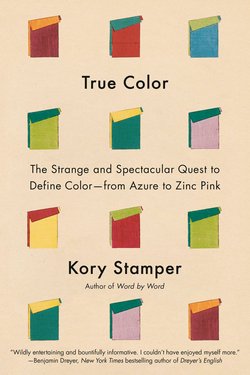
Cover of True Color by Kory StamperTrue Color: The Strange and Spectacular Quest to Define Color—from Azure to Zinc Pink

by Kory Stamper

DETAILS:
Publisher: Knopf
Publication Date: March 31, 2026
Format: e-ARC
Length: 320 pg.
Read Date: March 21-25, 2026

Buy from Bookshop.org Support Indie Bookstores

What’s True Color About?

Have you ever had trouble describing a color to someone? Strange sea creatures, sunsets, a (hopefully) food stain on a shirt, paint on a wall? It’s not easy. For some of us more than others, I’m sure (I’m at the weak end)—but it’s not that easy.

Now, try to imagine doing it not for a friend or paint clerk—but for the thousands or more that might read your description (read: definition) in a dictionary or other reference work.

Stamper points to two significant markers in the development of these definitions. The first is that prior to the First World War, Germany was the world’s biggest source of commercial dyes. During the War, two things happened—first, those plants became weapons factories (and learning how easy that was is a bit disconcerting), and second, places like the U.S. had to start producing their own. And if, say, two different suppliers understood a tint of green differently—the camouflage they provided to the Army in Europe could have significant consequences.

The other is a little less dramatic, but no less impactful. When people in the U.S. started making oleomargarine in the 1800s, dairies were upset about them coloring it to look like butter—this resulted in legal battles, and eventually, the U.S. Congress weighed in.

These two things began efforts in the U.S. to codify colors, dyes, hues, and whatnot into some sort of standard.

Fast-forward to when Kory Stamper is editing Merriam-Webster’s website (and from her description, this is not an easy job), when she came across some odd color definitions. The wording was odd, the definitions themselves were puzzling—where did these come from?

Thus begins this story about the attempts to define colors—in a way that satisfies diverse audiences like artists, scientists, and general readers—during the development of their Second and Third Unabridged Dictionaries. Stamper tells the story of putting these dictionaries together, some of the editors who worked on them—and worked with outside consultants like I. H. Godlove (and his wife and colleagues) and others to craft these definitions.

It’s a book of human drama, academic politics, technological limitations, and the limits of human language and understanding.

Why did I pick this up? Why did I keep reading?

I picked this up because I enjoyed Stamper’s earlier book Word by Word: The Secret Life of Dictionaries and because I was intrigued by the question—how do you define a color? I also hoped to pick up some tips to help me with that. Spoiler: I did not. But I don’t care. This was better. It’s also encouraging to know that even professional definers struggle.

Why did I keep reading? There’s just so much trivia—especially in the beginning, so many strange little facts you pick up along the way—for example (taken from the publisher’s description, because I hate to ruin stuff like this) “did you know that the word ‘puke’ used to refer to a fashionable shade of reddish-brown before it was associated with vomit?”

But more importantly, I was just fascinated by the way these editors and experts went about putting together these dictionaries—the differences in approach between the two—and so on. Stamper can make what one might think is dry and dusty history come alive and fill it with humanity.

Readers of Nero Wolfe will learn that he wasn’t the only one who had problems with the Third Unabridged Dictionary—although most derided it in reviews or newspaper articles, rather than burning it page by page in their fireplace.

So, what did I think about True Color?

I was, again, fascinated by the people she focused on to tell her story. I wanted to talk to people about them—I’d like to learn more about them and their work.* Her following up with the Godlove family’s living relatives so we could get more insight into the people behind the work was a wonderful touch.

Like her previous book, True Color will disabuse many of what they imagine the behind-the-scenes of Dictionary production is like. You will read about one of the worst bosses around, for example. Stress, overwork, burnout, crazy turnover, rampant misogyny (okay, you might have guessed that given the time periods), tiny budgets, and more. It turns out that Dictionaries are put together by human beings, not beings of pure intellect.

Also, I cannot say enough about Stamper’s use of language. It will not come as a surprise that someone who works on dictionaries has a way with words—she has ready access to all the best ones, after al—but to see it in action is something else. Stamper’s rich vocabulary is on full display here, and she crafts it beautifully.

* I will not—particularly about their work, I wouldn’t understand it. But I wanted to.

Disclaimer: I received this eARC from Knopf via NetGalley in exchange for this post, which contains my honest opinion—thanks to both for this.

This post contains an affiliate link. If you purchase from it, I will get a small commission at no additional cost to you. As always, the opinions expressed are my own.

Irresponsible Reader Pilcrow Icon

Catch-Up Quick Takes: Out of House and Home; Word by Word; Scarface and the Untouchable; Yearbook; Is This Anything?

The point of these quick takes posts is to catch up on my “To Write About” stack—emphasizing pithiness, not thoroughness. Here are some recent-ish audiobooks (and one left-over from 2020!).


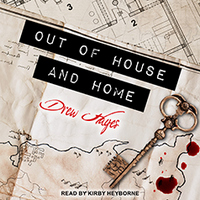
Out of House and Home

Out of House and Home

by Drew Hayes, Kirby Heyborne (Narrator)
Series: Fred, The Vampire Accountant, #7
Unabridged Audiobook, 11 hrs., 11 min.
Tantor Audio, 2021
Read: September 29-30, 221
Grab a copy from your local indie bookstore!

(the official blurb)
Wow, it’d been almost ten months since I’d listened to a Fred, the Vampire Accountant book. After a pretty steady diet of them for a while, the break was a little strange.

Anyway, the wedding’s behind him, so there’s another new challenge for Fred—someone’s coming for him, and the House of Fred. This isn’t new, but the openness, brazenness, and intensity of the attacks are.

Fred has to be his most creative to get through this challenge with both his ethics and clan intact. Not to mention his life.

For reasons that make sense (and make some of the drama possible), Krystal was not around for most of this book. That bugged me, I’d have liked to have seen a bit more about married life between the two. Oh, well, there’s time for that to come.

Gentle humor, just enough action to keep you going, and a bunch of pleasant characters. The seventh installment of this series proves there’s plenty of life left in this story of the undead.
3.5 Stars

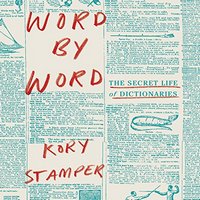
Word by Word

Word by Word: The Secret Life of Dictionaries

by Kory Stamper
Unabridged Audiobook, 9 hrs., 48 min.
Random House Audio, 2017
Read: September 16-20, 2021
Grab a copy from your local indie bookstore!

(the official blurb)
If you’ve ever wondered how a dictionary—at least Merriam-Webster dictionaries—is produced, this is the book for you. If you hadn’t but the idea sounds pretty good now that you know a book like that exists (like I was), good news. Kory Stamper’s book will satisfy.

As the blurb says,

She explains why small words are the most difficult to define, how it can take nine months to define a single word, and how our biases about language and pronunciation can have tremendous social influence. And along the way, she reveals little-known surprises—for example, the fact that “OMG” was first used in a letter to Winston Churchill in 1917.

I found her discussion about trying to refresh the definition of “bitch” in the twenty-first century, with all the history and varied usage to pair nicely with John McWhorter’s chapter on the word in Nine Nasty Words. I’d love to hear the two of them discuss it.

There’s some humor, some scholarship, and word-nerd fun. It’s an entertaining and enlightening book.
3.5 Stars

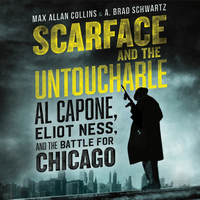
Scarface and the Untouchable

Scarface and the Untouchable: Al Capone, Eliot Ness, and the Battle for Chicago

by Max Allan Collins and A. Brad Schwartz, Stefan Rudnicki (Narrator)
Unabridged Audiobook, 18 hrs., 36 mins
HarperCollins Publishers, 2018
Read: June 14-21, 2021
Grab a copy from your local indie bookstore!

(the official blurb)
There is a lot of de-mythologizing in this history of Capone and Ness—not just of some of the myths that surrounded them during the 1920s and 30s—but of many of the “de-mythologizing” works that have been written about them since. According to Collins and Schwartz, both men—especially Ness—have been the victim of so much revisionist history that it’s almost impossible to really get at what these two did and were like.

Still, the authors think they’ve got it—or at least closer to it than others due to their research methods, etc. Hopefully, they have—I don’t know. They did tell a pair of compelling stories about Capone, Ness, and how they both rose to notoriety—and kept it.

I do think a text version of this would work a little better—I had a hard time tracking some of the not-as-important names/dates/events. It could be me, and probably is. I don’t think it was Stefan Rudnicki’s fault at all—he did a great job with the work (and it was nice to hear him doing something other than Alex Bledsoe novels).

3 Stars

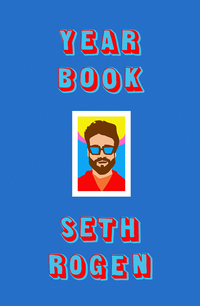
Yearbook

Yearbook

by Seth Rogen (and a whole lot of other people)
Unabridged Audiobook, 6 hrs., 13 min.
Random House Audio, 2021
Read: September 7-8, 2021
Grab a copy from your local indie bookstore!

(the official blurb)
Simply put, this is a collection of stories from Rogen’s life—from doing stand-up as a teenager to his work on TV and in movies. There’s—no surprise at all—a lot of references to and stories about drug use.

I’m not a huge Rogen fan—have enjoyed some of his work, but not most of it. I have always appreciated his ability to tell a story in interviews, though, and that’s what we get here. Great literature? Nope. Insightful look into the human condition and/or the Entertainment Industry? Nope. Silly fun? Yup. I can’t imagine anyone picking up a Rogen book looking for more than the last option, anyway. So you get what you expect.

This was definitely a book to listen to on audio—listening to Rogen tell these stories adds a bit of humor and flavor to it that I think just reading it wouldn’t deliver.
3 Stars

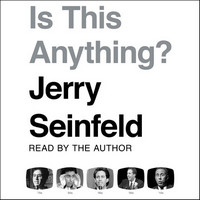
Is this Anything?

Is This Anything?

by Jerry Seinfeld
Unabridged Audiobook, 6 hrs., 15 min.
Simon & Schuster Audio, 2020
Read: December 15-16, 2020
Grab a copy from your local indie bookstore!

(the official blurb)
Jerry Seinfeld keeps the notebooks he writes his jokes in and has always done so. Which made compiling this collection possible. This is a collection of what Seinfeld considers his best material.

It’s organized by decade, with a little narrative added to discuss his career/family. But it’s primarily joke after joke after joke after joke. As I recall, SeinLanguage was essentially the same thing, but the last time I read that was in the 1990s, and my copy is in a box. So I can’t verify that.

I’m not sure audio was the best method for me. It felt like listening to a comedy album recorded in a studio rather than in front of an audience. It just felt strange to hear it all without laughter or other audience reaction—or his reaction to the audience. Also, I think it’d work better taken in parts—not the whole 6 hours in a clump (I guess 2 clumps).

Still, it’s material from one of the best around—it’s an entertaining time.

3 Stars

2021 Library Love Challenge 2021 Audiobook Challenge

This post contains affiliate links. If you purchase from any of them, I will get a small commission at no additional cost to you. As always, opinions are my own.

Powered by WordPress & Theme by Anders Norén