Tag: Mystery/Detective Fiction/Crime Fiction/Thriller Page 39 of 61

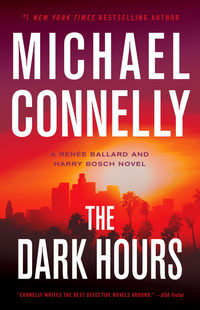
The Friday 56 for 11/12/21: The Dark Hours by Michael Connelly

The Friday 56This is a weekly bloghop hosted by Freda’s Voice.

RULES:
The Friday 56 Grab a book, any book.
The Friday 56 Turn to Page 56 or 56% on your ereader. If you have to improvise, that is okay.
The Friday 56 Find a snippet, short and sweet.
The Friday 56 Post it

from Page 56 of:
The Dark Hours

The Dark Hours by Michael Connelly

“So,” she finally said. “On the Albert Lee case, who was the factor?”

“It was a doctor,” Bosch said. “A dentist, actually. His name was John William James. His offices were down in the Marina and I guess he made so much money capping teeth that he started factoring.”

“You said ‘was.’ His name ‘was’ John William James.”

“Yeah, that’s going to be a problem with your case. John William James is dead. A couple years after Albert Lee got murdered, James got himself whacked as well. He was sitting in his Mercedes in the parking lot outside his office when somebody put a twenty-two in his head too.”

“Shit.”

“There goes your lead, huh?”

“Maybe.”

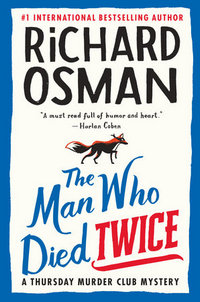
The Man Who Died Twice by Richard Osman: Laughter, Tears, and a Thrilling Plot. Who Could Ask for More?

The Man Who Died Twice

The Man Who Died Twice

by Richard Osman
Series: Thursday Murder Club, #2

Hardcover, 352 pg.
Pamela Dorman Books, 2021

Read: November 5-8, 2021
Grab a copy from your local indie bookstore!

TL;DR Version of the Post

I’m going to try not to go on for a few thousand words here, but I can’t make any promises. Just in case, let me provide this version of the post first:

Why waste time wondering about this book? Go read it now.

“It is fine to say ‘what doesn’t kill you makes you stronger’. It is admirable. But it no longer applies when you’re eighty. When you are eighty, whatever doesn’t kill you just ushers you through the next door, and the next door and the next, and all of these doors lock behind you. No bouncing back. The gravitational pull of youth disappears, and you just float up and up.”

What’s The Man Who Died Twice About?

Right on the heels of the events of The Thursday Murder Club, a figure out of Elizabeth’s past arrives at Cooper’s Chase in need of her help (which means they get the help of Ibrahim, Ron, and Joyce, too—they’re a package deal now). He’s been accused of stealing diamonds worth millions—this is bad enough in any circumstances, but when these diamonds belong to a New York mafia family, the accusation takes on a particular level of seriousness.

As the quartet starts to help him, one of their members is mugged and there’s not a lot the police can do about it, as much as they want to. You know that Elizabeth and the rest will not take that lying down for a moment, and you almost feel sorry for the mugger. It’d probably be better for him to turn himself into the police than face what Elizabeth will cook up.

At the same time, our police friends, DCI Chris Hudson and PC Donna De Freitas, are trying to take down the unlikeliest drug kingpin since Nancy Botwin. There are also some nice (and potentially strange) developments in their social lives.

I shouldn’t forget to add that Joyce takes up making friendship bracelets to sell for charity, gets an Instagram account, and decides to adopt a dog. You’ll be surprised which of those becomes important for the plot, but you’ll enjoy them all.

Crowdsourcing Vengence

The last book’s mysteries involved people near The Club, which got them involved—but it’s largely due to curiosity/boredom/proximity. In this book, the crimes are personal, members of The Thursday Murder Club are affected and involved—either directly or indirectly. They’re not acting for their amusement (well, maybe a little), they have a need to see justice done and someone punished.

In both cases, it feels like they’re practically crowdsourcing their revenge. They are able to quickly get anyone they ask to chip in. “Oh, this is for X?” or “This is because of Y?” “Sure, I’m in.” “Someone hurt So-and-so? What do you need.” It’s heartwarming to see the community come together like this, selflessly ready to help. It’s also a little disturbing how quickly willing everyone is to ignore the law (not just because two of the people who are involved are police officers).

A Shared Attitude

At (at least) one point both Ron and Elizabeth reflect on their life at the moment and say something about how lucky they are. It’s certainly possible that Joyce and Ibrahim said the same thing at one point in the book (if I had an e-copy, I’d have done a search or two so I’d know)—but even if they don’t, they come close enough. I wish I had their sense of perspective, hopefully I get as wise as they are one day.

At the same time, they all know that life is short. And what they enjoy right now can be taken from them without warning (there are examples aplenty in the two books of the series). Which probably helps them enjoy their luck as long as they have it.

Elizabeth, in particular, knows that her luck is about to run out. Her husband loses his battle with dementia a little every day, and it’ll soon be over. Each scene with the two of them together (or when Elizabeth thinks about him) is a fantastic combination of sweetness and heartbreak.

Come to think of it, that’s a pretty good description of the series.

A Joyce Sampler

I can’t find some way to shoe-horn in these quotations, but I feel compelled to share them. Joyce’s journal entries are gold. A couple of samples:

What would I do with five million pounds, I wonder?

I need new patio doors, they’re about fifteen thousand, though Ron knows someone who could do it for eight.

I could buy £14.99 wine instead of £8.99 wine, but would I notice the difference?

…So I probably don’t really need five million pounds but, nonetheless, I’m sure I shall dream about it tonight. You would too, wouldn’t you?

By the way, earlier, when I said Elizabeth is a terrible flirt, I didn’t mean she’s a terrible flirt like I’m a terrible flirt. I mean that when she flirts, she’s terrible at it. Really all over the place. I like to see things Elizabeth is bad at. There aren’t many, but at least it levels the playing field a bit for the rest of us.

So, what did I think about The Man Who Died Twice?

“Anyone interested in something very weird at Coopers Chase?” says Chris.

Yes. Everyone is.

That bit of narration speaks for everyone* who’s spent any time with The Thursday Murder Club and will likely continue to do so until Osman steps away from the series.

* I guess I should say “nearly everyone” I’m sure there are readers who weren’t taken in by Osman’s charm. I don’t understand those people, but I should acknowledge their existence.

I’m not sure what to possibly say at this point in the post—this is a fantastically entertaining read. Osman has a gift for making you laugh, appreciate the depth of grief, muse on aging, and ponder the random vicissitudes of life all within a page or two—all while telling a first-class amateur detective story.

As much as I loved The Thursday Murder Club, I think this was a more entertaining read. I was chuckling almost instantly, and audible laughter soon followed that. But by the last paragraph of Chapter 3, I was reminded that Osman is as skillful at playing your heartstrings as he is tickling your funny bone. This is a winner. Stop wasting time with this post and go read the book.


5 Stars

2021 Library Love Challenge

This post contains an affiliate link. If you purchase from it, I will get a small commission at no additional cost to you. As always, opinions are my own.

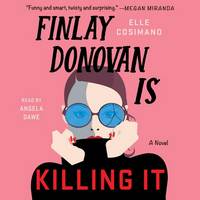
Finlay Donovan Is Killing It (Audiobook) by Elle Cosimano, Angela Dawe: A Clever Idea, Well Executed

Finlay Donovan Is Killing It

Finlay Donovan Is Killing It

by Elle Cosimano, Angela Dawe (Narration)
Series: Finlay Donovan, #1

Unabridged Audiobook, 9 hrs., 59 min.
Macmillan Audio, 2021

Read: October 25-27, 2021
Grab a copy from your local indie bookstore!

What’s Finlay Donovan Is Killing It About?

Finlay Donovan is a writer of romantic crime novels who is struggling to meet her deadline—that’s not true, she’s so late that her publisher is on the verge of demanding a return of her advance.

What’s caused her to get behind is turmoil and upheaval in her life—she’s in the middle of a messy divorce, she has almost no money for rent (paid to her soon-to-be-ex to live in their house), food, or gas. Her husband’s lawyer is gearing up to wrest custody of their kids from her. This has shot her confidence, her trust in herself, and her ability to focus on anything.

So, she’s in a Panara, meeting her long-suffering agent, trying to get a little more time for the overdue novel, and is overheard by someone at a nearby table. This woman is convinced that Finlay is describing a contract killing and offers her a good sum of money to kill her husband.

Finlay doesn’t want to take the job—because she’s not a monster—but is curious about the husband, does a little research on him, and then arranges to meet him. Shortly thereafter, he’s killed. Finlay and her kids’ nanny, Vero, dispose of the body (to keep from having to answer uncomfortable questions).

Finlay soon has a guilty conscience, a healthy dose of paranoia, a nice stack of money, a referral for another job, and (most importantly) a plot for her new novel. She and Vero form an alliance to deal with it all—and, well, things go nuts from there.

How was the Narration?

Angela Dawe’s narration was solid—she captured the comedic sense of the novel along with the tension and emotional moments. There were a few accents involved and she did a believable job with them, too. This book really was a balancing act between the various tones and characters, and Dawe dealt with it admirably.

So, what did I think about Finlay Donovan Is Killing It?

I really don’t have a lot to say about this one, as much as I’ve tried. It’s a clever idea and it was executed well. I think the pacing could’ve been a bit tighter—it seemed like there was a good amount of wheel spinning at the end of the second act/beginning of the third. Not enough to turn me off of the book, but enough to make me impatient.

This is a good mix of suspense, quirky humor, and a dash of romance. I enjoyed the characters and situations. I’m pretty curious about where the second book is going to take the characters and hopefully answer a couple of lingering questions I have. For example: why was Vero so willing to throw her lot in with Finlay and jump into this life of crime (or a life adjacent to crime)?

It’s a fun ride, you should give it a whirl.


3.5 Stars

2021 Library Love Challenge 2021 Audiobook Challenge

This post contains an affiliate link. If you purchase from it, I will get a small commission at no additional cost to you. As always, opinions are my own.

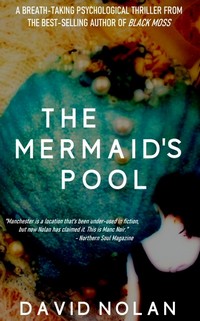
The Mermaid’s Pool by David Nolan: Nolan Delivers Another Dose of Manc Noir

The Mermaid's Pool

The Mermaid’s Pool

by David Nolan
Series: Manc Noir Book 2

Kindle Edition, 192 pg.
Fahrenheit Press, 2020

Read: August 20-23, 2021
Grab a copy from your local indie bookstore!

‘Wow,’ the young man deadpanned. ‘Nazi cops. Absolute shocker.’

‘Is that how you see it?’ Smithdown asked.

‘Yes, I do. And it appears that I’m entirely right.’

‘This is the bit when I tell you about a few bad apples isn’t it? About what a great lot we all are – on the whole; just good people doing a tough job as best we can? But under the circumstances, I’m going to say nowt. I don’t know what I know anymore. Or who.’ Smithdown looked around the darkening landscape. ‘I’m a bit lost, to be honest.’

What’s The Mermaid’s Pool About?

The predecessor to this novel, Black Moss, took place in two different timelines—the first was April of 1990. This book takes place two years earlier, and involves (to one degree or another) two of the characters from Black Moss, and shows them starting on the path that leads them to where they were in the second storyline of 2016.

Which is a long-winded way of saying it’s a prequel.

There are (essentially) two separate storylines.

Storyline A

The first involves a missing mother—Naomi’s daughter has been put in children’s care home after her boyfriend slapped her. Soon after this, Naomi’s hand is found by a man walking his dog. Smithdown focuses on the boyfriend as the culprit, but needs to know if Naomi’s still alive, too.

This case takes him to a nearby town where another grizzly discovery has been made—near a lake (subject of many urban legends), a mutilated body has been found.

Storyline B

Immigrants from Bangladesh and Pakistan are being attacked in the night, creating—practically overnight—a spike in racial tensions between the two communities.

As Smithdown and other detectives try to put a stop to these attacks, he starts to believe that there’s something going on that is trying to take advantage of—and is perhaps stoking—this tension as it mounts to near-riotous levels.

So, what did I think about The Mermaid’s Pool?

Of course, it’s not just the two storylines at work—they’re intermingled and there are a couple of more personal subplots involving Smithdown and his family. But let’s keep things simple and pretend that the storylines are hermetically sealed from one another.

In my imaginary world, if you could excise Storyline B; tweak A so it’s not dependent on B; or create an easier-to-believe B, and keep the personal subplots—you’d have yourself a winner. Most of B is great—but at a certain point, it just jumps too far and I can’t buy it. I’ve seen similar things tried by other authors—Robert B. Parker and Rob Parker jump to mind.*

* I’m at a loss for other examples at the moment, but Nolan’s not the first non-Parker to try.

That said, while I had checked out on that story working for me as soon as I saw where Nolan was going—I was gripped by it. How was he going to pull off a satisfying resolution while balancing the smaller story of one presumed-dead woman in the middle of this? I was on the edge of my seat and rolling my eyes simultaneously.

And it’s a shame I felt this way because, underneath all of this, Nolan was painting a gripping picture about hate—hate in many varied forms—and how that hate can shape and harm a community, how it can corrupt noble institutions, and twist individuals of all backgrounds. And I was too distracted to be able to spend as much time musing on that as I think I should have.

Is there some light in all of the hate? Some hope? Yes, some. But as with Black Moss, Nolan makes you hunt for it. Maybe so you value it more.


4 Stars

This post contains an affiliate link. If you purchase from it, I will get a small commission at no additional cost to you. As always, opinions are my own.

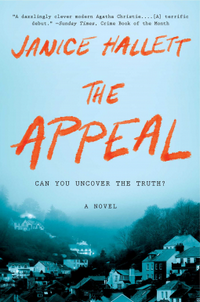
The Appeal by Janice Hallett: You Have Not Read a Mystery Like This Before.

The Appeal

The Appeal

by Janice Hallett

eARC, 448 pg.
Atria Books, 2022

Read: October 30-November 4, 2021
Grab a copy from your local indie bookstore!

What’s The Appeal About?

The setup is basically this: a pair of law students have been given a stack of documents—emails, texts, voicemail transcripts, letters, and so on. They’re to read through this stack and be prepared to work out what crime(s) happened in what’s documented and who did what (and maybe why).

The correspondence focuses on a period of March-July in the lives of people in The Fairway Players or their associates. The Fairway Players are a local amateur theater group from a small community. As the group starts to plan their next play, the director makes a horrible announcement: his granddaughter, Poppy, has just been diagnosed with a rare form of brain cancer. He’s going to have to step back for a while, and Poppy’s uncle will be stepping up to direct, etc. There’s an experimental drug from the U.S. that’s her best shot at a cure, but it’s expensive and the family’s trying to crowdfund the treatment.

The Players are galvanized into action—individually and as a whole. People do charity runs, have a fundraising gala, a raffle, direct contributions, and so on—and, of course, all the proceeds from The Fairway Players’ next play will go to the Fund.

The stack of documents chronicles the messages about this fundraising appeal, the emails of support, and a lot of the behind-the-scenes work at the appeal and the play, and assorted tangential matters. There’s a lot of gossip, backstabbing, emotional manipulation, and…well, you start to get the idea that not everything is on the up-and-up with the appeal, the treatment, and some of the people involved. The more you start to piece together the picture these emails, etc. are painting, the more you’re pretty sure you’re missing something big. Maybe a few somethings. A crime has been committed, one or two may be in progress, and there may be more on the way.

The only way to find out is to see what the next email has to say.

Isabel Beck

When it comes to sheer word count, we hear more from Isabel Beck than any of the other characters. This doesn’t necessarily mean that we know more about her than some of the others—we just get more input from her about what’s going on. Or at least what she says is going on.

Issy is clearly a lonely person. Until she recruits a couple of new colleagues, she’s the newest member of The Fairway Players and isn’t really liked by most (and, in fact, the people she brings in are quickly more welcome than she is). She’s described as “mousy,” “drippy,” who “latches on to” people—and some things not as complimentary. Between her emails and what others say about her, you really start to pity Issy.

And that feeling just grows—like just about every person in the book, she does some truly lousy things. But unlike just about every person in the book, I only felt bad for her. I really hoped for a heaping dose of comeuppance to be given to everyone else but kept hoping something good would happen for Issy.

If I liked nothing else about The Appeal, Isabel Beck would be enough for me to tell you to go read this book. I’m so glad I met this character, one of the best of 2021.

The Stroke of Genius

The law students, Femi and Charlotte, communicate with each other via WhatsApp about these documents as they read—as you read, too. They get exactly the same information as the reader does when the reader does. As they write back and forth, it’s like you’re a part of the conversation with them. Instead of texting/messaging your friend(s) as you read the same novel, in this case, you’re reading along with a couple of the characters.

In mysteries, as the reader, you’re always looking back at things, seeing what happened. Even if the narration is in the present tense, it’s going through things that have already happened. Which is the case here, too. But you’re with Femi and Charlotte in the trenches—it feels very “now”—while you and those two are looking towards the future, what documents are going to be coming? As they start to put things together, you do, too (sometimes faster than them, sometimes a beat or two behind them). It’s a fun—and brilliant—layer on top of what’s already a great book that kicks it up a notch or two of cleverness.

Lingering Questions

One of the downsides/advantages (depending on your point of view) of this type of storytelling is that you don’t have an omniscient narrator—or even a first person—to tie up all the loose ends.

I have several lingering questions about some of the events of the book, many of which can’t even make a decent guess about the answer for. If Connelly, Rankin, Holten, Goldberg, or anyone else had left this much hanging—you can believe I’d be jumping up and down shouting my objections to the heavens. But I’m oddly at peace with this. I have been and am going to be spending some time chewing on my questions, make no mistake, but I’m fine with Hallett not tieing everything up in a nice bow.

I should stress that all the important questions, the ones that keep the reader turning pages for, are answered in definitive ways.

So, what did I think about The Appeal?

I ordered this book as soon as I read Noelle Holten’s post about it in July. Then listening to Hallet on The Blood Brothers Podcast just made me anticipate it more. So when I saw this on NetGalley, I had to jump—who wants to wait until January for the US release?

I am so glad that I didn’t wait.

As I read this, I kept saying to myself things like, “oh, this is clever;” “this is great;” “oohh, impressive;” and so on. And then 30-60 minutes later, I’d say the same thing again, but mean it more. And then again 30-minutes later. Right up to the final paragraphs, this kept getting better and better—and it started off great.

Now that I’ve said such grandiose things that no book can possibly live up to them, I’m not sure there’s a whole lot left to say.

The Appeal is a funny, thought-provoking, and suspenseful novel full of great, believable characters—not a whole lot of likable characters, but believable and interesting, sure—with a multi-layered plot that will keep you guessing and thinking as it pushes you to keep going; all presented in a format that you’ve seen rarely (if ever) in a mystery novel. If the execution isn’t flawless, it’s close enough that you won’t notice.

One of the best of the year. Period.


5 Stars

Disclaimer: I received this eARC from Atria via NetGalley in exchange for this post and my honest opinion—thanks to both for this.

This post contains an affiliate link. If you purchase from it, I will get a small commission at no additional cost to you. As always, opinions are my own.


The Friday 56 for 11/5/21: The Man Who Died Twice by Richard Osman

The Friday 56This is a weekly bloghop hosted by Freda’s Voice.

RULES:
The Friday 56 Grab a book, any book.
The Friday 56 Turn to Page 56 or 56% on your ereader. If you have to improvise, that is okay.
The Friday 56 Find a snippet, short and sweet.
The Friday 56 Post it

from Page 56 of:
The Man Who Died Twice

The Man Who Died Twice by Richard Osman

A nurse walks into the room to fill Ibrahim’s water jug, and the friends fall silent and nod their thanks. She leaves.

“I am conventionally handsome,” says Ibrahim.

“Not at the moment you’re not,” says Ron.

“So you need us to look out for him?” asks Joyce. “Like bodyguards?”

“Hardly bodyguards, Joyce,” says Elizabeth.

“We’re guarding his body,” says Ron.

“All right, bodyguards then, Ron, as you wish.” Ron nods.

“Yep, I do wish.”

The Friday 56 for 10/29/21: See Her Die by Melinda Leigh

The Friday 56This is a weekly bloghop hosted by Freda’s Voice.

RULES:
The Friday 56 Grab a book, any book.
The Friday 56 Turn to Page 56 or 56% on your ereader. If you have to improvise, that is okay.
The Friday 56 Find a snippet, short and sweet.
The Friday 56 Post it

from Page 56 of:
See Her Die

See Her Die by Melinda Leigh

(a rare, lighter moment in the middle of a murder investigation)

“I’ll be right in. Give me two minutes to check in with Marge.” Rounding her desk, she planted her butt in her chair.

Todd all but bounced out of the room.

Marge walked in with a vat-size mug of coffee in her hand.

Bree waved a hand toward the doorway. “Is he always this obnoxiously bright-eyed this early in the morning?”

“Yes, but you’re also unusually grumpy.” Marge set the coffee on the desk. “You look like you need this.”

“Bless you, Marge.” Bree inhaled the steam, then took a long swallow. “I need a bigger mug.”

“That would be the whole pot.”

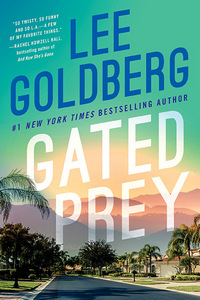
Gated Prey by Lee Goldberg: Starts Off with a Bang and Doesn’t Let Up

Gated Prey

Gated Prey

by Lee Goldberg
Series: Eve Ronin, #3

Kindle Edition, 255 pg.
Thomas & Mercer, 2021

Read: October 26-27, 2021
Grab a copy from your local indie bookstore!

“The people who live in these places think the gates protect them from all the crime and misery that’s out there, but it doesn’t. It just locks them in with it.”

“You think whatever happened came from within the gates?”

“I don’t know where it came from, that’s your job. But I’m sure there’s as much evil inside these gates as there is outside of them. Maybe more.”

What’s Gated Prey About?

LASD Detectives Eve Ronain and Duncan Pavone are in the midst of a sting operation when the novel opens—to trap a home invasion team, the pair are pretending to be a well-moneyed couple who’d make pretty easy marks to lure the team in. They go out daily to shop a little—making sure to flash a lot of cash—and then go back to their McMansion in a gated community to wait. Duncan’s loving the excuse to sit around all day and watch movies, while it’s driving Eve crazy to not be active.

The LASD has tried traditional investigational methods, but they just haven’t worked—no one can figure out how the team is getting past the security gates, much less who they are, and how they select their targets.

The trap works and the LASD chalks it up as a win. But Eve’s uncomfortable with the number of questions (and possible accomplices) that remain about it. Also, there are indications that Eve still has enemies within the department—and they might have prevented backup that Eve and Duncan needed from acting to keep them safe.

That’s not the only crime Eve and Duncan encounter behind the protective gates—while trying to close the home invasion case, the pair pick up another assignment. It’s not covered in the publisher’s description, and I’m not sure how to talk about it without giving away too much. So let’s just say that it will underscore that “Maybe more” from my opening quotation.

Eve Off-the-Clock

“You’re doing it again,” Duncan said.

“Doing what?”

“Obsessing over your case to the point of exhaustion. You need a life and some sleep. You can’t physically, mentally, or emotionally sustain being relentless.” “

I’m only doing it now because we’ve got a ticking clock on this one.”

“You’ve done it on every case we’ve had.”

“You make it seem like years. We’ve only been working together for a few months. It hasn’t been that long.”

But like Duncan, readers know if the two had been working together longer, she’d be doing the same thing. This is not a good way to live—it’s not healthy, and if Eve doesn’t learn how to take her foot off the gas, she’s going to burn out or make some big mistakes—likely both. But this is the kind of character I love reading about. Yes, I do hope that she learns how to balance things a bit—for the sake of character development, I think it’d be interesting. But until she does? I’m going to love watching her burn herself out.

Eve spends so much time working over the course of the novel that there’s almost no time for anything but her work. We do get to see most of Eve’s family, but very briefly—and the most we see is of her sister, thanks to Lisa’s work in the ER. I’d have liked a bit more time with her, she humanizes Eve, but that’s not always possible in every book.

Conversely, I thought it was good to have a scaled-down presence of Eve’s mom (especially with Eve’s agent being able to carry the water of “supporting character annoyingly-fixated on the superficial”). I find Jen an amusing and important part of the series, but man, a little of her goes a long way.

Duncan “Dunkin’ Donuts” Pavone

I’m not sure if I should use the nickname in that section header, I’m not sure if Goldberg used it this time. But, eh, I like it. I made so many notes while reading that were variations of “love this character.”

While he remains the wise and largely-comic-relief figure he’s been, there’s a darkness to Duncan we haven’t really seen before, expressed in a couple of different ways. There’s a certain invulnerability that his fast-approaching retirement date gives him that allows him to give this side a free rein—Duncan notes repeatedly that his career is over, he has nothing to lose. I really wouldn’t want him as an enemy (not that I want any, I have to say, but really not him).

We also get some insight into his reason for retirement—one of those things I hadn’t questioned. He was introduced to us in Lost Hills as being on the verge of retirement, and that’s just how I’ve thought about him. But now I want to know more about what got him to this point.

She’s Still Learning

Eve’s only been a homicide detective for a few months, and she still has a lot to learn. Not just the lessons that Duncan’s trying to teach her about overworking and getting along with colleagues.

But she’s still learning how to be a detective—she doesn’t know basic routines and procedures. She embarrasses herself in front of a morgue attendant and in an autopsy—nothing horrible, just the kind of stumbling people make when they’re new at something. Some of what she does within the Sheriff’s department is a little more than embarrassing—and will likely come back to haunt her, but again, that’s realistic growing pains.

It’s not often that we get to see this kind of thing in police procedurals—especially with the central/titular character. And this approach is a treat.

So, what did I think about Gated Prey?

“…I just got lucky.”

Duncan leaned against the wall and looked at her. “It isn’t luck, Eve. It’s instinct. You’re a natural at this. What you haven’t learned yet is how to do it without making enemies.”

I’ve gone on too long at this point—and there’s so much that I still wanted to talk about: the ongoing role of the media (both news and entertainment) in Eve’s life and career—not to mention at least one fellow detective; the politics within and outside the LASD and how that impacts their investigation; personnel changes within the Department; and racial and economic prejudices that the security gates seem to magnify.

Also, while Duncan (especially) and Eve have always seemed to have some fun meals—there are three references to food that almost induced a between-meal DoorDash order on my part. Don’t read this on an empty stomach, folks.

Great characters all around, a couple of gripping cases, and a breakneck pace—all par for the course for this series. If you haven’t jumped on the Eve Ronin train—now’s the time. I literally organized my reading schedule the last couple of weeks so that I could start this as soon as it was delivered to my Kindle, and it was worth it. You want to get your hands—and eyes*—on this, readers.

* Or ears, come to think of it, Nicol Zanzarella does a great job with the audiobook narrations for these books.

4 1/2 Stars

This post contains an affiliate link. If you purchase from it, I will get a small commission at no additional cost to you. As always, opinions are my own.

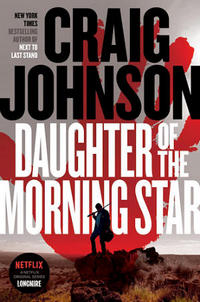
Daughter of the Morning Star by Craig Johnson: A Cheyenne boogeyman, A Recalcitrant Teen Sports Star, and a Wyoming Sheriff

Daughter of the Morning Star

Daughter of the Morning Star

by Craig Johnson
Series: Walt Longmire, #17

Hardcover, 322 pg.
Viking, 2021

Read: September 28-29, 2021
Grab a copy from your local indie bookstore!

“Everybody thinks the dead of the night is the scary time, but it’s not. The time of danger for the living is the time of change, from day into night or night into day, when the world isn’t sure what it is or what it wants to be.”

What’s Daughter of the Morning Star About?

Midway through the last novel, Next to Last Stand, Walt and Henry stop by a High School Girl’s Basketball game to watch Lolo Long’s niece, Jaya “Longshot” Long, do what she does best. But they don’t stop by to enjoy the game, really, they’re there because Lolo wants help. Jaya’s been receiving death threats and there’s only so much an aunt can do (even if that aunt is a Tribal Police Chief).

This is where we pick up now—the threats are real, repeated, and don’t seem to be a prank. Adding to the danger is the fact that Jaya’s older sister disappeared the prior year under suspicious circumstances. There’s no need to think the two are linked, but Walt has to consider the possibility.

If nothing else, Lolo hopes that bringing Walt into the investigation(s) will draw attention to him—he tends to get people watching and talking about his escapades, and hopefully, his involvement will get enough people interested in what’s going on to generate some leads.

There are plenty of suspects—on the reservation and off—for both the threats and the disappearance, so Walt and Henry have their hands full.

A Recurring Question

“I’m sorry, but I don’t believe in the things you believe in, Henry.”

He nodded. “I know that, but I respect your belief in humanity, if for only one reason.”

“What’s that?”

“It makes you very resolute.”

“Is that a compliment?”

“Sometimes.”

There is a strong possible supernatural thread running through this novel. I’m not going to do justice to explaining the particular spirits that are suspected to be at work in this book, but there’s a real sense of hazard around them. And a lot of what Walt encounters during these events cannot be easily explained by something other than a spiritual force.

Of course, this isn’t the first time that this concept has been explored in the Longmire books. I don’t have hard numbers on it (I expect someone on the Internet does), but I’d guess that it’s a little less than one-half of them that feature this in a significant way.

And for all his protesting (see above), I’m not so sure that Walt doesn’t believe most of what Henry does. If your actions are an expression of your beliefs, he sure seems to. Not simply his actions over the course of this novel, there’s just about every other novel in the series—look at everything involving Virgil White Buffalo, for example (but there are several other pieces of evidence). Given both his background, what his wife believed, and his lack of knowledge about the details of Cheyenne beliefs, I can believe that Walt’s hesitant to claim that belief, but he sure does walk the walk.

Of course, there’s this observation Walt makes:

Funny how your attitude about spirituality could change when the chips were down.

A Sobering Beginning And Unfortunate Coincidence

In the midst of all the media coverage surrounding the search for Gabby Petito this summer, one of the things I frequently saw was people listing the statistics surrounding the numbers of missing Native American women every year.

The Acknowledgements in the front of this book listed similar statistics regarding missing and murdered Native American women, which are partially where Johnson drew the idea for this novel from. These numbers are repeated in the text itself, too.

This isn’t the first time that Johnson has used Walt’s case to comment on something in the news (or something that should be), but an accident of timing made this novel particularly germane.

Missing Friends

The downside to a Longmire book that takes place outside of Absaroka County is that most of the Sheriff’s department and the residents of Durant aren’t in the book. We didn’t get Sancho, Ruby, or Lucian (for example). And Vic was largely absent as well—but was well used for little time she was around.

I get the need to have Walt do things outside of Durant/Absaroka County to prevent Durant from becoming Murder Central, U.S.A. (it’s likely the most murder-filled town/county in Wyoming), but I really wish it didn’t involve leaving so many of the characters out of the books.

Here’s hoping that #18 brings them all back.

So, what did I think about Daughter of the Morning Star?

I thought some of the basketball material in the book (particularly the further in the novel we got) was a little eye-roll-inducing. It was just too much for a cynical guy like me. But somehow Johnson made it work.

There’s a lot said about hope in Daughter of the Morning Star–mostly about its absence. But, as hope tends to do, it shows up in the unlikeliest of places and in the midst of the darkest times. When this book is finished, there’s no happily ever afters promised (as usual for this series), but there’ve been moments of triumph, and maybe a dawning of hope for some.

This is really the most entertaining Longmire book in quite a while. When Johnson is on his game, he’s great. And that’s what we got here. Readers new and old will find a lot to be satisfied with here.


4 Stars

This post contains an affiliate link. If you purchase from it, I will get a small commission at no additional cost to you. As always, opinions are my own.

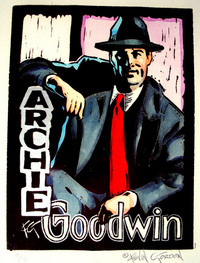
Happy Birthday, Archie!

My annual tribute to one of my favorite fictional characters (if not my all-time favorite). I’ve got to do an overhaul to this soon, but it is slightly updated and tweaked from last year.

On Oct. 23* in Chillicothe, Ohio, Archie Goodwin entered this world—no doubt with a smile for the pretty nurses—and American detective literature was never the same. He’s the narrator (and, I’d argue protagonist) of the questionably named Nero Wolfe mysteries. While the eccentric and overweight genius might be what brings people to the series, it’s Archie’s wit, attitude, and snappy narrative voice that brings people’s back.

* About 34 years ago, no matter what year it is that you read this.

When my aunt first gave me a Nero Wolfe book to read, she sold me on the Wolfe character, but when I read it, I wasn’t so sure that I liked the guy. But his assistant? He was cool. Sure, it didn’t take me long to get into Wolfe, but Archie’s always been my favorite. Since I was in Middle School, if I was suffering a slump of any kind (reading, emotional, physical), time with Archie Goodwin could get me out of it. There were a few years that when I got sick, I’d grab a Nero Wolfe novel to help me get through it (along with the Vitamin C and Chicken Noodle soup), and you can’t tell me it didn’t work. Noted critic Jacques Barzun says it well:

If he had done nothing more than to create Archie Goodwin, Rex Stout would deserve the gratitude of whatever assessors watch over the prosperity of American literature. For surely Archie is one of the folk heroes in which the modern American temper can see itself transfigured. Archie is the lineal descendant of Huck Finn.

While Archie’s about as far from a teetotaler as you can get, to commemorate his birthday, I’m toasting him in one of the ways I think he’d appreciate most—by raising a glass of milk in his honor.

Who was Archie? Archie summed up his life like this:

Born in Ohio. Public high school, pretty good at geometry and football, graduated with honor but no honors. Went to college two weeks, decided it was childish, came to New York and got a job guarding a pier, shot and killed two men and was fired, was recommended to Nero Wolfe for a chore he wanted done, did it, was offered a full-time job by Mr. Wolfe, took it, still have it.” (Fourth of July Picnic)

Long may he keep it. Just what was he employed by Wolfe to do? In The Black Mountain he answers the statement, “I thought you was a private eye” with:

I don’t like the way you say it, but I am. Also, I am an accountant, an amanuensis, and a cocklebur. Eight to five you never heard the word amanuensis and you never saw a cocklebur.

In The Red Box, he says

I know pretty well what my field is. Aside from my primary function as the thorn in the seat of Wolfe’s chair to keep him from going to sleep and waking up only for meals, I’m chiefly cut out for two things: to jump and grab something before the other guy can get his paws on it, and to collect pieces of the puzzle for Wolfe to work on.

In Too Many Women, he’s a bit more concise and describes himself as the:

heart, liver, lungs and gizzard of the private detective business of Nero Wolfe, Wolfe being merely the brains

In Black Orchids, he reacts to an insult:

…her cheap crack about me being a ten-cent Clark Gable, which was ridiculous. He simpers, to begin with, and to end with no one can say I resemble a movie actor, and if they did it would be more apt to be Gary Cooper than Clark Gable.

Over at The Thrilling Detective, he’s described this way:

If Goodwin hadn’t gone to work for Wolfe, he’d certainly have his own agency by now (and temporarily does, in one novel). Far more of the traditional eye, Goodwin is a tough, handsome guy with a photographic memory, a .32 under his well-tailored suit (and sometimes an extra .38 in his overcoat pocket), and a well-developed appreciation for the ladies. And, in the opinion of more than a few cops, officials and stuffed-shirt executives, a mouth that ought to be nailed shut permanently. (Wolfe isn’t immune either – part of Goodwin’s job, as he sees it, is needling the fat man into taking cases, if only to make sure the bills get covered.) He’s not the deductive genius that Wolfe is, but a smart and tenacious op with a good right hook, and a decent and personable man. Most of all, in his narration of the books, he’s a helluva storyteller; it’s his view of the world, and his interaction with Wolfe, that keeps us coming back for each new mystery.

The Archie Goodwin FAQ is less succinct but does a good job of laying out the facts.

I’m not the only Archie fan out there:

  • Someone pointed me at this post, The Wit and Wisdom of Archie Goodwin. There’s some really good stuff here that I was tempted to steal, instead, I’ll just point you at it.
  • Robert Crais himself when writing an introduction to a Before Midnight reprint, devoted it to paying tribute to Archie—one of the few pieces of anything written that I can say I agree with jot and tittle.

In case you’re wondering if this post was simply an excuse to go through some collections of Archie Goodwin quotations, you wouldn’t be totally wrong…he’s one of the fictional characters I like spending time with most in this world—he’s the literary equivalent of comfort food. So just a couple more great lines I’ve quoted here before:

I would appreciate it if they would call a halt on all their devoted efforts to find a way to abolish war or eliminate disease or run trains with atoms or extend the span of human life to a couple of centuries, and everybody concentrate for a while on how to wake me up in the morning without my resenting it. It may be that a bevy of beautiful maidens in pure silk yellow very sheer gowns, barefooted, singing “Oh, What a Beautiful Morning” and scattering rose petals over me would do the trick, but I’d have to try it.

I looked at the wall clock. It said two minutes to four. I looked at my wrist watch. It said one minute to four. In spite of the discrepancy, it seemed safe to conclude that it would soon be four o’clock.

Description:I shook my head. “You’re flattering me, Inspector. I don’t arouse passions like that. It’s my intellect women like. I inspire them to read good books, but I doubt if I could inspire even Lizzie Borden to murder.”

She turned back to me, graceful as a big cat, and stood there straight and proud, not quite smiling, her warm dark eyes as curious as if she had never seen a man before. I knew damn well I ought to say something, but what? The only thing to say was ‘Will you marry me?’ but that wouldn’t do because the idea of her washing dishes or darning socks was preposterous.

“Indeed,” I said. That was Nero Wolfe’s word, and I never used it except in moments of stress, and it severely annoyed me when I caught myself using it, because when I look in a mirror I prefer to see me as is, with no skin grafted from anybody else’s hide, even Nero Wolfe’s.

If you like Anglo-Saxon, I belched. If you fancy Latin, I eructed. No matter which, I had known that Wolfe and Inspector Cramer would have to put up with it that evening, because that is always a part of my reaction to sauerkraut. I don’t glory in it or go for a record, but neither do I fight it back. I want to be liked just for myself.

When a hippopotamus is peevish it’s a lot of peeve.

It was nothing new for Wolfe to take steps, either on his own, or with one or more of the operatives we used, without burdening my mind with it. His stated reason was that I worked better if I thought it all depended on me. His actual reason was that he loved to have a curtain go up revealing him balancing a live seal on his nose.

It helps a lot, with two people as much together as he and I were, if they understand each other. He understood that I was too strong-minded to add another word unless he told me to, and I understood that he was too pigheaded to tell me to.

I always belong wherever I am.

Page 39 of 61

Powered by WordPress & Theme by Anders Norén