Tag: Mystery/Detective Fiction/Crime Fiction/Thriller Page 48 of 61

Dead Secret by Noelle Holten: Maggie Has to Juggle Several Balls at Once—Can She Keep it Up AND Catch a Killer?

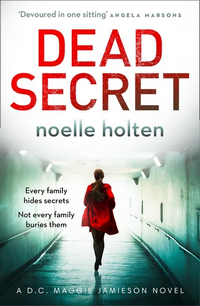
Dead Secret

Dead Secret

by Noelle Holten
Series: DC Maggie Jamieson, #4

Kindle Edition, 448 pg.
HarperCollins Publishers, 2021

Read: April 23-26, 2021


Before I dive in, I’d fully intended on having this posted five days ago, but I had to keep trashing paragraphs because I’d wander into a spoiler or three, and by the time I’d sanitized them enough to post, they were worthless. This has resulted in a shorter post than I expected, and one that may not feel up to my typical thoroughness for this series. There’s a lot to chew on in this novel—more than anything since Dead Inside—but this isn’t the place to talk about it.

The team were deflated – long nights, no solid leads – morale down – they needed to catch a break.

While they waited for more information, Maggie spent the majority of her day chasing up the curfew company, cross-referencing the prison tattoos – which was proving to be a very tedious job – and chasing up Social Care.

While waiting on hold, she recalled a conversation she’d had with her brother about how funny she found it that a large majority of the public believed that everything in a murder investigation was so exciting and moved quickly because of the way that it was portrayed in movies and TV – however a big part of her job focused on calls, computer work, research, and reports. She wished it was the opposite!

What’s Dead Secret About?

The book opens in the final fleeting moments of a young man’s life, he’s scared, beaten, bloody, and desperate for help. And then he’s no longer scared or desperate again. Found in a woody area near an industrial estate, his face has some dots drawn on it, but aside from that, there are no other clues—assuming they are one.

Maggie and the rest of her team have barely begun to get into this investigation when their DI drops a bomb on them—their DCI has gone missing. It’d been a couple of days since anyone had heard from him, so some officers went to check him—they found no one at the home but did find evidence that a violent crime had been committed there. Given their staffing levels, they couldn’t have some detectives work the missing persons cases and others focus on the homicide, so each detective on the team would be involved in each. Watching the detectives try to balance these cases—which primarily means not dropping everything to focus on DCI Hastings and his family—is good to see, and a needed reminder that actual detectives frequently have to juggle multiple cases at once—unlike their fictional counterparts.

Meanwhile, the domestic abuse shelter that Lucy Sherwood has been trying to start is on the verge of opening. But days before, a “battered and semi-conscious woman in her doorway” led her to get an early start. The young woman doesn’t speak at the beginning and appears to be reading lips when dealing with the paramedics. She won’t interact with the police, however. It is impossible not to feel all kinds of sympathy toward this woman—and Lucy definitely feels that way. This storyline is a fantastic way to follow up on Dead Inside, the first book in the series, and show how far Lucy’s comes since then and why her center is needed.

Realism

One thing that seems to jump out at the reader of this series is how authentic the procedural elements feel. Sure, events and characters are heightened, clearly played for greater narrative tension, and the like. But you can’t avoid how real this world, characters, and situations seem. Like the general public in that quotation above, novel readers are frequently given just “the exciting” portions of the procedural, but here, we see the drudgery, the combing through reports, and endless research before substantial advances in the investigation are made. While showing the reader that research and paperwork characterizes modern policing, Holten still allows her characters to have small maverick streaks that propel the action forward a little faster than the actual procedure can.

Along the same lines, all I know about the British probation system comes from this series and Helen Fitzgerald’s Worst Case Scenario. I think if I did, I’d have a better appreciation for scenes in each of these novels. Lacking that (and the drive to do research), I just have to assume that Holten was paying attention during the almost two decades she worked as a probation officer and is giving us something fairly reality-based.

One Random Thought

There are six times in the novel that “youths” is used, like: “youths in the area”, “gang of youths”, and so on. Maybe it’s a cultural thing, but I couldn’t help but laugh. It was like Maggie had been replaced by Schimdt. It’s not worth mentioning, really. But in a book as grim as this, you take the smiles where you can get them.*

* See also two surprising, but effective, TV references. I don’t remember this series doing that.

Give Her a Break

Several times throughout the novel, Maggie thinks about how tired she is—and how little downtime she’s had between major cases. She didn’t get a lot of time between these cases and the previous books (although she had even less between Books 2 and 3). Maggie needs to catch her breath if she’s going to be any good to anybody. Her personal life is a mess, and I’m worried that her professional life is close it one, too. Her physical and mental reserves have to be beyond spent—and you can’t help but wonder as you read this book (and the previous one) if she wouldn’t have picked up on something sooner if she’d been coming at things with a fresh mind.

It’s not much of a spoiler to say that Maggie isn’t going to get a whole lot of downtime before Book 5’s case takes over her life. But what comes after that? As far as I can tell*, this is intended to be a five-book series—so hopefully Maggie gets to take that holiday she’s been thinking about. Even more hopefully, we get to have at least a few more books with her.

* I’m prepared to be shown that I’m wrong—and hope I am.

So, what did I think about Dead Secret?

I’m a fan of this series—so obviously, I went into this book expecting to like it. But any reader knows that sometimes those expectations aren’t met. Thankfully, it wasn’t long at all before I knew Holten had, once again, provided her readers with a great read.

You’ve got a pretty grizzly beating death to start off with and then you the police’s natural inclination to focus all resources on the missing DCI—and them not necessarily wanting to follow all the evidence that points to the DCI not being the kind of man they all thought. Just those two storylines would be enough. But then Holten throws in that third storyline—here’s a person in desperate need of help, a survivor of (as far as anyone can tell) of domestic violence—a reminder that policing isn’t about arrests, it isn’t about only maintaining social order—it’s about people like this woman who showed at Lucy’s front door, it’s protecting and serving the public. This is the kind of thing that both (fictional and real) civilians and the (fictional and real) police need to be reminded of, and here it elevates the rest of the novel by its presence.

I’d largely figured out who the killer was and how it was happening pretty early on. I wasn’t prepared for the motive behind the killing until it was clear. Holten also did a good job of revealing enough for readers who wanted to identify the killer early while at the same time writing things clearly enough that even people who didn’t want that revelation would be able to enjoy the novel.

This is Holten at her best—I also see this having better commercial appeal than the previous novels in the series and I hope I’m right. Can you read this without having read the previous three novels? Yes. I think you’d be better off starting with the first book, but the important thing is that you start somewhere with this series.



4 1/2 Stars

Quick Take Catch Ups: Strange Planet; Claire Dewitt and the City of the Dead; Midnight at the Bright Ideas Bookstore; Paper: Paging Through History

This is an odd group of books, I realize—there’s no theme or anything. Most are books that I can’t find the time to write a full post about, and one I don’t want to spend the time on. To do justice to the Claire DeWitt book would take at least two of my longer-sized posts, and I’d want to read the book at least two more times—so, that’s just not happening, I’ll settle for this sketch. The point of these quick takes posts is to catch up on my “To Write About” stack—emphasizing pithiness, not thoroughness. As you’ll see here.


Strange Planet

Strange Planet

by Nathan W. Pyle
Series: Strange Planet, #1
Hardcover, 144 pg.
Morrow Gift, 2019
Grab a copy from your local indie bookstore

(the official blurb)
I’m not sure how to talk about this collection. If you’ve seen the comics floating around online, you either love ’em or hate ’em. If you haven’t seen the comics floating around online, you’re probably wrong, they’re fairly ubiquitous.

Having these in one handy collection is greatthis covers the topics “Young Beings,” “Friendship,” “Adulthood,” and “Recreation” from Pyle’s distinctive perspective. They’re great to dip into and out ofeither in order or just randomly. I could (and have) spend too much time reading/rereading this.
4 Stars

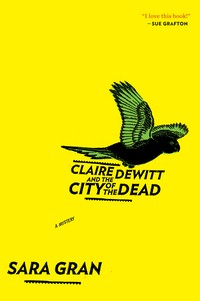
Claire DeWitt and the City of the Dead

Claire DeWitt and the City of the Dead

by Sara Gran
Series: Claire DeWitt Mysteries, #1
Paperback, 273 pg.
Houghton Mifflin Harcourt, 2012
Read: February 15, 2021
Grab a copy from your local indie bookstore

(the official blurb)
I have copious notes on this one, and I just can’t decide how to talk about it. So…I’ll cheat and do this.

It’s like someone decided to do a serious take on Dirk Gently and his approach to detection. And it is pretty seriousalthough it has moments where I wasn’t sure if I was supposed to laugh or not. A former teen detective turned “world’s best detective” comes to post-Katrina New Orleans to hunt for a missing D.A. Following the idiosyncratic methods of her mentors (in both print and in real life), DeWitt deals with the good, the bad, and the hard-to-fathom that make up New Orleans. She also deals with some ghosts from her past as she uncovers the truth about the DA (including many things he’d probably want no one to uncover).

It’s a book about literary private eyes as much as it is a literary private eye story. I do recommend it, you’re not likely to read anything like it. I’m coming back for the sequel soon.

Not that there was a great danger of this, but between this book and Treme there is zero chance I’ll ever live in New Orleans.
3.5 Stars

Midnight at the Bright Ideas Bookstore

Midnight at the Bright Ideas Bookstore

by Matthew J. Sullivan, Madeleine Maby (Narrator)
Unabridged Audiobook, 8 hrs., 59 min.
Simon & Schuster Audio, 2017
Read: February 24-26, 2021
Grab a copy from your local indie bookstore

(the official blurb)
A bookstore clerk finds a frequent customer dead in the shelves after he committed suicide. He has some sort of connection to her as a child, she discovers, and has left his few possessions to her. She’s compelled to learn why he killed himself, why he died with a photo of her as a child in his possession, and along the way has to come to terms with horrific events from about the time the photo was taken.

There are a lot of layers to this novelfantastic concept, heartbreaking conclusion. I never really connected with the protagonist, but I couldn’t stop listening, either.

Mabey did a fine job with the narration, I should add. Looking over some of her other titles suggests that I’ll be running into her again.
3 Stars

Paper: Paging Through History

Paper: Paging Through History

by Mark Kurlansky, Andrew Garman (Narrator)
Unabridged Audiobook, 13 hrs., 42 min.
Recorded Books, 2016
Read: March 4-9, 2021
Grab a copy from your local indie bookstore

(the official blurb)

This vacillated between intensely interesting and stultifyling dull, overly detailed, and seemingly random in focus, provocative and insulting. More than once I wondered about the connection between paper and whatever particular period of history he wanted to sound off onthe connection was usually there and clear (and germane), but he stretched it more than once. Also, Kurlansky seems to have a real chip on his shoulder regarding religions of many stripes. That’s fine, it’s just not all that germane.

I’m not sure audio was the right for this medium, outside of the irony. There was just so much thrown at the listener, I can’t imagine how anyone could retain any detailsI didn’t even try.

None of my problems were with Garman’s narration (although I questioned a few of his pronunciation), it was simply the text.
2 1/2 Stars

2021 Library Love Challenge 2021 Audiobook Challenge

This post contains affiliate links. If you purchase from any of them, I will get a small commission at no additional cost to you. As always, opinions are my own.

The Art of Violence by S. J. Rozan: Bill Smith is Hired to Prove His Client IS a Murderer

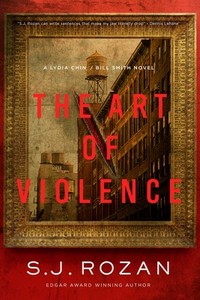
The Art of Violence

The Art of Violence

by S. J. Rozan
Series: Lydia Chin & Bill Smith, #13

Hardcover, 275 pg.
Pegasus Crime, 2020

Read: April 7-8, 2021
Grab a copy from your local indie bookstore!

… he said, “Aren’t you going to tell me I’m not the serial killer type?”

“I don’t know that.”

“I guess in some weird way that’s a compliment.”

“It’s not. Why did you come here, Sam? Anyone else, I might think he was trying to impress me, but not you.”

“I’m not the type?” A sly smile.

“I hope you didn’t come for help leaving town, laying low, something like that. If you killed those women, you know I’m going to have to turn you in.”

“Good luck.”

“I have the guns,” I reminded him.

“You won’t need them but they won’t help. I already tried it.”

“Tried what?”

“Turning myself in. The detective told me to get lost. She said I wasn’t the type.

What’s The Art of Violence About?

Five years ago, Sam Tabor was sentenced to prison following a homicide. Bill Smith worked for Sam’s lawyer during the case, and was convinced Sam should’ve been put in a treatment center instead of prison—but Sam refused.

Now that he’s been “discovered” as an important artist, several agents and arts worked to get him released from prison. That happened a few weeks ago, and now two women have been killed. Sam’s convinced that he’s the killer, although he doesn’t remember killing these women—or even encountering them. He hires BIll to prove that he did commit the murders, so he can be sent back to prison for life where he can’t hurt anyone. Bill’s skeptical (as is the investigating detective) about Sam’s guilt, but takes the case so he can make sure Sam’s treated right and that his fears are investigated correctly.

So instead of looking for evidence to exonerate Sam, Bill’s looking for things to implicate him (technically, Bill’s still looking for ways to exonerate him, too). This is a very strange reason to hire a PI, and I loved this premise.

PI/Client Relations

Most people in Sam’s life treat him as two things—a murderer with psychological issues and an artistic genius (with shades of a cash cow). His brother and sister-in-law see him as a burden/obligation as well as a murderer with psychological issues. The police are looking for an excuse to lock him up again, hopefully for forever this time.

Bill Smith (and later, Lydia), on the other hand, treats him as a person. He doesn’t dance around Sam’s past, but Bill has always figured he’d paid a dearer price for that than warranted. He doesn’t want Sam to be railroaded by a vengeful detective or his own guilt. He certainly has no ideas about taking advantage of Sam’s wealth, status, or fame. He simply wants to find out what happened to these women.

In this light, Bill reminded me of Elvis Cole with Peter Alan Nelsen and Spenser with the various sports stars he’s worked for or Jill Joyce. They’re clients first and foremost, people who deserve to be treated right—and being celebrities is so far down the list of things they care about, that it almost doesn’t matter. Bill stands in good company there, and something about that way of dealing with a VIP has always appealed to me.

The Role of Art

Lydia and Bill find themselves involved in a crime involving the art world yet again, I can’t think of another detective that spends as much time in this world as these two. Typically, novels focusing on artists, galleries, and so on don’t do much for me. But the way this pair brushes up against this world, not only do I not mind, I find it appealing. I can see why Rozan or other authors find this world appealing.

One of Sam’s few friends in this particular case is a photographer. As hard as it is to give the flavor or an impression of a painting in prose, it seems more difficult to capture a photograph (aside from saying “it was a photo of X”), and Rozan doesn’t spend a lot of time describing individual photographs but she does a great job on the subject and tone of them, instead. I’m pretty glad that there were no pictures included I’m not sure I could’ve taken it (the novel’s title gives a hint about the direction of the photos). A picture may be worth a thousand words, but Rozan doesn’t need that many to get the reader to have the reaction she needs.

By now, it was half past eight. Traffic choked the streets, and pedestrians wove complex patterns on the sidewalks. All traces of last night’s mist had burned away under the April sun. The slanting whiteness of the light, the thin freshness of the day, dazzled me.

Lydia’s suggested any number of times that I consider changing my ways, getting up earlier, taking this in more often. She thinks it’s laziness and old habs that keep me from it. But she’s wrong. This unsullied light, this bright vision, they’re beautiful, but they’re false. They paint over the truth. They promise something they can’t deliver. It’s not until the day gets older, wearier, that it stops making the effort to lie.

The Subtle Slow Burn

Rozan says so little about the non-P. I. relationship between Bill and Lydia, and yet says so much. It’s been clear how Bill has felt about Lydia since the first book in the series, but it’s been a little harder to read Lydia. And Rozan hasn’t been as forthcoming as other mystery novelists when it comes to that sort of thing—and by other, I mean “every other one I can think of.” The Lydia/Bill romance arc is definitely a “less is more” kind of thing. Which is pretty much how Lydia would prefer it, I think.

I’d really prefer that she was less circumspect about it, but I really appreciate her approach to it. Which seems like a contradiction, but it’s not. If I were calling the shots, we’d get a lot more detail about what’s going on between them—and how long that’s been the case. That said, the way that Rozan plays with the audience’s desires/expectations, and instead just gives the reader hints, winks, and nudges work so well. Not just because it is so clearly what Lydia would like and leaves it all to the reader to piece things together. Yet, there have been developments in the relationship and we learn a lot about it (at least by Ronzan’s standards) in this book.

Yet again, the angel on my right shoulder told me to call Grimaldi, and the guy on the other side said I’d get more accomplished on my own. The right-side guy wanted to know if this was about getting things accomplished, or if it was personal. The left-side guy told him to guess.

So, what did I think about The Art of Violence?

The fact that this is the thirteenth book in the series that I’ve read, you probably have a pretty good idea of what I was thinking going in—I fully expected to like this one and I did.

First off, it’s from Bill’s perspective this time, and those usually feel a little different, and we get different details reported than we would have were the shoe on the other foot. I always enjoy the bouncing back and forth between the two narrators. Particularly if the police are involved, Bill has a strange relationship with the police, and it’s always good to see.

There’s a good puzzle to chew on here*, while watching Bill make a nuisance of himself with the people in Sam’s life who are convinced they’re far too good to deal with a P.I. Lydia’s around to smooth things over a bit, but not enough. It’s a dynamic I don’t imagine I’ll get tired of seeing. The (too few) scenes where it’s just Bill and Lydia talking to each other, are again, the highlight of the novel—I’ve said it before, I’ll say it again I don’t care what these two are talking about I’ll gladly read it. The Art of Violence would make a good jumping-on point to this series (almost all of them would be, come to think of it).

* Okay, I pegged the guilty party pretty early on, but not all the whys and hows involved. This is about the journey Bill and Lydia take to get the answers, more than it is the puzzle. Either way, the book scored pretty high on those).

These are characters you like to see in action, with a client who’s more interesting than most of those in a P.I. novel. you get a couple of good surprises out of Lydia’s mom, too. There’s really a lot to commend this book, as is to be expected from this series. You should give it a try.


4 Stars

2021 Library Love Challenge

This post contains an affiliate link. If you purchase from it, I will get a small commission at no additional cost to you. As always, opinions are my own.

The Friday 56 for 4/21/21: Dead Secret by Noelle Holten

The Friday 56This is a weekly bloghop hosted by Freda’s Voice

RULES:
The Friday 56 Grab a book, any book.
The Friday 56 Turn to Page 56 or 56% on your ereader. If you have to improvise, that is okay.
The Friday 56 Find a snippet, short and sweet.
The Friday 56 Post it

from Page 56 of:
Dead Secret

Dead Secret by Noelle Holten

(a little long, but couldn’t see a way to shorten it)

When the steam came out of the spout, Ronnie picked up the kettle and then poured the boiling water on her arm.

What the hell?

Ronnie didn’t even flinch. It was like she didn’t feel any pain. She placed the kettle back, used a tea towel to dry her arm, and covered it up with the sleeve of the cardigan. Vicki turned and looked at Lucy. They waited until they saw Ronnie leave the kitchen, and Lucy stood and headed to the kitchen.

Maybe I was wrong.

At the counter she touched the kettle.

Ouch!

She sucked her index finger and turned on the cold tap, holding the sore digit beneath the running water. Lucy looked up at the camera and raised a brow. She knew Vicki would be watching.

Blood Trail (Audiobook) by C. J. Box, David Chandler: Who Hunts the Hunters?

Blood Trail

Blood Trail

by C. J. Box, David Chandler (Narrator)
Series: Joe Pickett, #8

Unabridged Audiobook, 9 hrs, 5 mins.
Recorded Books, 2008

Read: February 10-12, 2021
Grab a copy from your local indie bookstore!

What’s Blood Trail About?

Since Governor Rulon re-hired Joe Pickett and made him sort of a Game Warden-at-Large, his life has improved—he and Marybeth have their own home, no longer living in State housing, or at his father-in-law’s. Nor is he really as subject to the whims of Randy Pope, his director. But there’s a price to be paid for this: he’s pretty much at Rulon’s beck and call.

This time, thankfully, he’s called to his former territory—a hunter has been found dead. It’s the beginning of Elk Season, so it’s not that surprising. But…this isn’t your typical dead hunter. This man has been shot and field dressed like an elk. Joe’s garnered a reputation for stumbling into a solution for things like this, and Rulon needs that quickly—people are getting antsy about the killings and pressure is mounting to cancel Elk Season (which would have horrible consequences on Wyoming’s economy). Joe’s been named to a task force with the FBI, and the local sheriff. Not only are they out to preserve hunting season, but they also need to head off a mounting anti-hunting protest movement that is taking advantage of this situation.

Randy Pope decides that this is important enough that he comes to supervise Joe personally—and takes an oddly active and proactive role in fieldwork (which no one has ever accused him of being fit for). I don’t know about anyone else who reads this series, but there isn’t a time that Randy Pope has been around when I haven’t wanted Joe to punch him in the nose (or Marybeth, or Sheridan even), and that’s taken to the nth degree for most of this book.

So not only does Joe have to find a killer (not really his job, ubt he seems good at it) for political and social reasons, he has to put up with antagonism from local law enforcement who resent his role, get micromanaged by an officious twerp who is even less suited for this than he is, and he ends up having to deal with two individuals from his past that he’d rather expected never to have to deal with again over the course of the investigation. I’m not going to identify these people, but neither Joe or Marybeth are prepared to have them in their lives again, frankly, I wasn’t ready either.

We Should Talk About Nate

I get into a spoiler in a vague way here. Feel free to skip to the next header.

For various and sundry spoilery reasons, Joe decides that he needs Nate Romanowski’s tracking help. Now, Nate’s been in FBI custody for a few months, ever since the FBI double-crossed Joe at the end of Free Fire. Given the urgent nature of things, Rulon is able to finagle a release into Joe’s custody.

And then Nate ditches Joe for days. Joe, the good friend, covers for him (he’s also covering for himself and his own ability to maintain custody). Sure, he ultimately comes back and pitches in. But it’s pretty clear he didn’t need that much time to do his thing—I get that Nate has his own way of working and that Nate isn’t that terribly concerned with people who aren’t him (what does he care if someone’s killing hunters?)—but he should care about his friend and the deal that got him out of custody, right?

I lost a lot of sympathy for Nate here. And a good deal for Joe, too, later in the book when it comes to Nate.

A Low-Stakes Antagonist

Now that Joe lives in town, in a normal house with a yard and no need to consult a government budget officer for upkeep on his home, it falls to Joe to take care of things. He has a neighbor now (I forget his name, one of the hazards of audiobooks is that I can’t look it up easily). This man is retired and is far too concerned with his own yard and upkeep, and carries that over to Joe’s.

We don’t spend a lot of time with him, but it’s easy to see that he’s a burr in Joe’s side—a constant problem, a constant annoyance. Sure, Joe’s off working for the governor and trying to stop a killer, but surely he could take the time to mow his lawn, like a decent citizen.

This book needed a little lightness, and this crank delivers it.

A Word About the Narration

At this point, I really don’t know what to say about David Chandler, he’s great at this.

However, ,I have one thing to say. For most of the book, I assumed the killer was one of two people. And despite the fact that we get the killer’s POV frequently, it was still pretty unclear which one of the two it was (assuming I was right). Until about halfway through in one scene, Chandler makes 1 choice when he reads one line. And we “hear” the character in a voice Chandler would use for that character, not just the generic Killer’s POV voice he’d been using throughout. And then I knew exactly who it was.

I understand why he made that choice. But, man. It ruined things a little bit for me.

So, what did I think about Blood Trail?

This was, hands down, my favorite entry in the series. The tension, the huge character events, the motive for the crime, and the way it ended…I can’t explain all my reasoning without ruining the novel.

But man…this is the standard I’ll be judging books in this series by. Is it going to be that impactful for new readers? No, but it would work as a jumping-on point if you’re not in the mood to read the seven previous books.

Blood Trail is a great entry in this solid series, with entries like this, it’s easy to see why it’s lasted for twenty-one (so far) books. Check it out.


4 Stars

2021 Library Love Challenge 2021 Audiobook Challenge

This post contains an affiliate link. If you purchase from it, I will get a small commission at no additional cost to you. As always, opinions are my own.

Robert B. Parker’s Payback by Mike Lupica: Sunny Does Some Dangerous Favors for Some Dear Friends

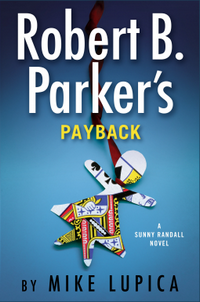
Payback

Robert P. Parker’s Payback

by Mike Lupica
Series: Sunny Randall, #9

eARC, 352 pg.
G.P. Putnam’s Sons, 2021

Read: April 14-15, 2021
Grab a copy from your local indie bookstore!

What’s Payback About?

Sunny’s closest friend, Spike, has got himself in trouble—he needed some financial assistance to keep the doors of his restaurant open (like just about every restaurant in 2020) and let a long-time customer and friend, a hedge fund manager, loan him the money. But when Spike tried to pay off the loan, he learned the hard way that Alex Drysdale wasn’t so much a friend as he was an opportunistic toad, and thanks to clever work on the contract, Spike had defaulted on the loan almost immediately.

Spike has already let his fists do the talking (and broken Drysdale’s nose), but oddly enough, that didn’t help. So, Sunny decides she’s going to figure out a way to get Drysdale to release him. Financial crimes aren’t really Sunny’s forte—much less shady, but not criminal, financial deals—but Spike is family and she figures she can learn as she goes.

She’s barely begun digging into Drysdale and his practices when she gets a call from Lee Farrell who needs a favor. His niece, a student at Taft*, was assaulted and she refuses to talk to the police or Lee. Can Sunny help? Sunny tries to talk to her, but Emily keeps saying it was just a misunderstanding and refuses to explain anything. Lee’s worried about her, Sunny’s concerned and nosy. So while Lee deals with a major homicide investigation, Sunny starts digging into Emily’s life.

* Yup, Taft, the Parker-verse’s all-purpose university for people who don’t go to Harvard.

Before Sunny can really get anywhere with the Drysdale investigation, she’s warned off. THat warning quickly becomes direct threats against her, Spike, Richie’s son, and her father. You have to admit, that’s really not the most clever approach. Sunny warns them all to be careful and works harder to find something. One of the biggest things she finds is a link between the two cases.

Ahh, a Little COVID-19 Fiction

Early on, we’re told that this starts shortly after the pandemic is over and life has gone back to something akin to normal. But vaguely so, especially when this was written, no one had an idea when exactly this would be, so Lupica left things vague.

Also, Spike’s is in trouble because of the impact that COVID has had on restaurants.

I lost count of how many times that Sunny talked about the world falling apart and getting worse. Clearly, this is a product of 2020 (and 2021). I remember hearing and reading authors last year talking about not being sure how to address COVID in their works—if they were even going to. This is probably the best way to do it—acknowledge it happened, look at the changes/difficulties it brought about—and don’t get into the details.

Poor Lee Farrell

This is my biggest beef with the novel—and the more that I think about it, the more it bothers me.

So, Lee’s got a big case that he’s dealing with and a family member in trouble—and he’s still not in the book that much. Belson plays a bigger role than Lee does in the book, which is fine because it’s not like Belson gets a lot of use in the Atkins novels, and he shouldn’t be put out to pasture. But this was a chance for Lee to get to shine and Lupica let it pass by.

I like Lee, and have since Paper Doll (he was one of the few good things in that novel), but Parker never used him all that much—and Lupica does the same. It’s time for Lee Farrell to really get a moment.

Sunny and The Men in Her Life

There are two other things that Lupica inherited from Parker that he’s maintained—but I’d like him to move on. From Family Honor on, there’s been this tension between Sunny’s independence, being able to make it as a female in a male-dominated world/industry and her being dependent on men like Richie and Spike (and a couple of others) to help out when things get dangerous. I can see revisiting the issue from time to time, but the authors have spent so much time on it, the reader has to wonder—why doesn’t Sunny do something about it? Either step up her fitness and martial arts training, or partner up with a female who can handle the shooting and hand-to-hand stuff. They exist.

Similarly is her seemingly everlasting tie to Richie, being unable to let him go—even as it’s clear she needs to, for at least his son’s sake. Her level of commitment to Jesse Stone could use some definition as well, but that’s not going to happen as long as Richie’s around (and, I’m not sure Jesse’s capable of it). Coleman was able to get Jesse to the point where he was able to let go of Jen (a move that was more overdue than Sunny and Jesse). I’d like to see Sunny do something similar, all that therapy she’s received should be enabling her to make some tough choices.

All that said, again, these are inherited themes, ideas, and characteristics. I’m not holding them against Lupica for maintaining it (he can only do so much without getting the fans to rebel). I just think it’d be nice to see.

So, what did I think about Payback?

Lupica is locked-in on this series, he’s got a handle on the characters and the stories he wants to tell and gets it done confidently, smoothly, and with just enough flair to keep the reader hooked and turning pages. This was his best yet. I’d describe his first two novels in this series as “good, for a Sunny Randall novel.” Payback. is doesn’t get the modifier. It’s good, period.

* I’ve got both hardcovers on the shelf next to me, after getting the eARCs from NetGalley. So if that sounds a little more back-handed than I mean that to be, maybe the fact that I shelled out for them takes a bit of the sting out of it.

The prose is crisp. It’s engaging and filled with a Parker-esque clarity and wit. The story is compelling and an interesting reaction to things in the zeitgeist, and the characters are as solidly drawn and executed as they were over two decades ago when Sunny debuted. New readers or established Sunny fans alike will find enough to entertain them and will likely come back for more—just like me. I recommend Payback to you.

Disclaimer: I received this eARC from PENGUIN GROUP Putnam via NetGalley in exchange for this post—thanks to both for this.


3.5 Stars

This post contains an affiliate link. If you purchase from it, I will get a small commission at no additional cost to you. As always, opinions are my own.

Because You’re Mine by Luna Miller, Ludvig Christensen Parment (Translator): Another Missing Person Case for Gunvor Ström and Friends

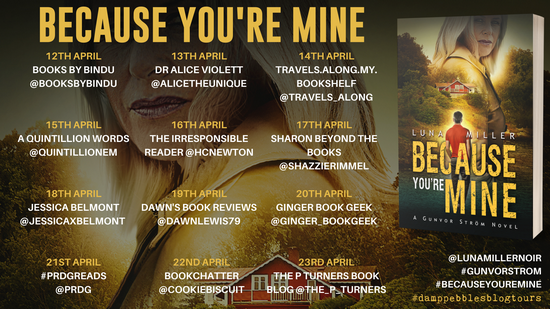
Fake Tour Banner

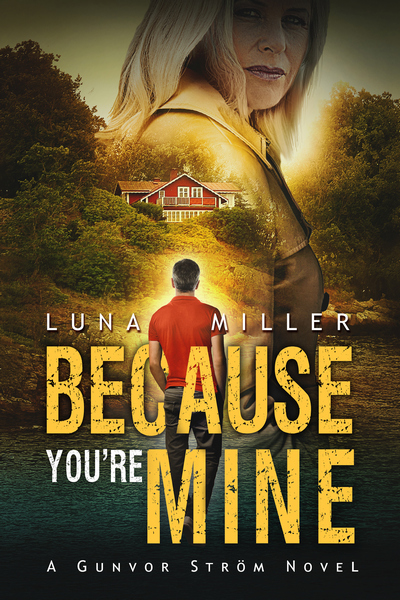
Because You're Mine

Because You’re Mine

by Luna Miller, Ludvig Christensen Parment (Translator)
Series: The Fruängen Bureau, #2

Kindle Edition, 277 pg.
Publishing Authority, 2021

Read: April 13, 2021

A Little Bit about Gunvor Ström

Two years ago, I posted about the first book about Gunvor, The Lion’s Tail*. I started off by saying, she’s “a rookie Private Investigator, forced to leave her career and changing her life after a divorce, she signs on to a Private Investigative Agency and mostly does grunt work—but does get the opportunity to do some investigative work. As much as she misses her old life, she relishes this new one (although she might like joints that are a little less painful).”

* In case you go looking for it, it has been repackaged as Looking for Alice—probably a more commercial title, even if it’s lacking the panache of the original.

She has a neighbor, Aidan, who serves as a drinking buddy (and they drink a lot), driver, and sounding board. During the case detailed in that book—her first major investigation—she ends up recruiting a couple of older teens/young adults from the neighborhood to help. The four of them somewhat jokingly dub themselves The Fruängen Bureau, and end up exposing some serious criminal activity in the course of what should have been a pretty simple inquiry.

What’s Because You’re Mine About?

It’s a few weeks later, and Aidan’s taking a friend to a nightclub to help blow off some steam after a recent breakup. While the friend is off flirting and dancing, Aidan strikes up a conversation with a woman who seems to be in a distress (he’s also attracted to her, but let’s focus on his chivalrous side—which does seem to be preeminent). She’s looking for a friend that seems to be missing—they’ve spoken almost daily for years and she hasn’t heard from him.

Aidan pretends to be much more of an investigator than he is (he’s surely picked up a few things from Gunvor, and anyway, she’ll be around soon and he can enlist her help if he needs it), asks a couple of questions, and arranges to meet the woman the next night to resume the search.

Meanwhile, Gunvor has a new client—a woman whose husband has gone missing. She insists he’s gone, she worried about his depressive bouts. His father (and employer) insists he took a two-week leave of absence. Everything Gunvor can find lines up with his father’s explanation, but the client doesn’t want to hear it.

Gunvor and Aidan end up working both disappearances together and bring in the rest of The Fruängen Bureau for assistance. Between the four of them (and a couple of new allies), they learn a few things about the two men they’re searching for—things that no one expected, but can’t seem to find either of them. Both the friend and the wife are insistent that the men be found but aren’t really forthcoming with information about themselves or the men they’re looking for. Which is strange, but the team doesn’t let that deter them.

The Fruängen Bureau

Gunvor Ström is supposed to be the protagonist of these books, but I’m not sure I see that. The first book in the series focused on her two young friends, Elin and David, at least as much as it did on her. Aidan gets the spotlight in this book—with Elin and David coming in second.* I’m utterly fine with this, it’s just odd when you have the entertaining and dynamic character that Gunvor is to set her aside.

* As always, I don’t have a word/page count or anything to back up this kind of observation. It’s the impression I walk away with.

It’s not so much the case with Aidan, but with the younger two, you see Gunvor as a catalyst for change in their lives—the events of The Lion’s Tail/Looking for Alice have changed their lives, their behaviors, attitudes, and futures. The people they encounter in this book do the same. Gunvor and Aidan seem pretty set in their identities and outlooks—but Elin and David are still works in progress. I wonder if that’s more interesting to write about, and that’s why they seem to overshadow the ostensible central character.

This isn’t a criticism, just an observation—sure, I’d like more focus on Gunvor, just because she’s interesting. But so are David and Elin, so I’m fine with that.

The Translation

This book has a different translator than the previous volume—I don’t know why. Ludvig Christensen Parment ends up capturing the same tone and feel as the previous translator did, they really feel like they were written by the same person. Which, I guess, is the point—and shows that it’s a pretty good translation. Also, on the whole, it’s really hard to tell that this wasn’t originally written in English. I think that counts as another sign that Parment did the job right.

So, what did I think about Because You’re Mine?

I spend a lot of time wondering if this was going to be how every book in this series went—Gunvor is hired to find a missing husband, only to discover that something else is going on —something possibly worse than a missing man (and probable adulterer). If so, at a certain point, I’d think that wives would stop coming to her (and/or she’d stop taking those cases). But in the meantime, it’s a perfectly decent formula for the books—and both have worked well.

Early on, I guessed what was going on in the missing person cases—and I was close to right. But what Miller did with those explanations—and the serious crimes tied to those explanations (so hard not to spoil anything there) caught me pretty off-guard. The last 20% or so of the novel really stepped up intensity and quality—it was a fine novel up to that point, then it became a good one.

I recommend this (probably more than the first, which you don’t need to read to appreciate this one, but you might as well) for a solid character-driven mystery and am very curious about what the future holds for David and Elin (and Gunvor, too).


3.5 Stars

My thanks to damppebbles blog tours for the invitation to participate in this tour and the materials (including a copy of the novel) they provided.

BOOK SPOTLIGHT: Because You’re Mine by Luna Miller

Today I welcome the Book Tour for the second Gunvor Ström/The Fruängen Bureau novel, Because You’re Mine by Luna Miller. Following this spotlight post, I’ll be giving my take on the novel here in a bit. But let’s start by learning a little about this here book, okay?

Because You're Mind Tour Banner

Book Details:

Book Title: Because You’re Mine by Luna Miller
Publisher: Publish Authority
Release date: April 12, 2021
Format: Paperback/Ebook
Length: 277 pages

Book Blurb:

Gunvor Ström, a Swedish surgeon who had to retire because her hands weren’t steady enough to perform operations, accepts a position as a private detective and enters a new and surprisingly dangerous career.

In Because You’re Mine, she accepts her second assignment. Is it always for the best to look for a missing person? Gunvor is not entirely sure as she believes there are those who don´t want to be found. Despite this, she takes on a case. A wife needs help to find her husband, Per Cedergren. A simple case at first glance. Gunvor is convinced that he has sneaked off on an adventure with a mistress and soon will return voluntarily.

Gunvor’s good friend Aidan also makes his debut as a private detective when he helps a new acquaintance look for her missing friend.

When Gunvor and Aidan take the help of their young friends, Elin and David, the two parallel cases meander closer each other. But how do they relate? And what do the disappearances have in common with the murders that at first glance appear to be hate crimes.

Soon they find themselves in the eye of the storm, not knowing where the danger lurks.

Because You’re Mine is the second book in the series of private detective Gunvor Ström.

About Luna Miller:

Luna Miller

Swedish author Luna Miller (pseudonym) specializes in Nordic Noir. She is the writer of the international best-seller Three Days in September and is one of the authors of the international anthology Love Unboxed 2.

In mid-life, after experiencing life and adventure throughout Europe, India, China, Pakistan, Iran, Thailand and a host of other countries, with her studies, children and work, Luna found quality time to write her debut novel Three Days in September followed by Den som ger sig in i leken – the original Swedish precursor of Looking for Alice and the first book in the series of private detective Gunvor Ström.

Gå vilse, hitta hem – the sequel in Swedish to Three days in September was published in May 2020.

Because you´re mine – the second book in the series of Gunvor Ström will be published April 12, 2021.

Luna Miller was born in Sundsvall, Sweden 1962.

Social Networks:

Twitter ~ Facebook ~ Website ~ Pinterest

Purchase Links:

Amazon UK ~ Amazon US ~ Kobo ~ Waterstones ~ Barnes & Noble

My thanks to damppebbles blog tours for the invitation to participate in this tour and the materials (including a copy of the novel) they provided.

Cross Her Heart by Melinda Leigh: A Fast, Addictive Introduction to a New Series

Cross Her Heart

Cross Her Heart

by Melinda Leigh
Series: Bree Taggert, #1

Hardcover, 319 pg.
Montlake, 2020

Read: April 5-6, 2021
Grab a copy from your local indie bookstore!

What’s Cross Her Heart About?

Bree Taggert is a homicide detective in Philadelphia. She’s successful enough, has a great partner, and is able to generally keep her personal demons in their place.

And she has more demons than most—her abusive father killed her mother and then himself with Bree and her two siblings nearby. She was raised by a demanding aunt while her brother and sister were raised by their grandparents, who couldn’t handle their older sibling.

Then Bree’s sister, Erin, is murdered. Erin’s estranged husband, Justin, is the prime suspect and is missing. Erin’s body was discovered by Matt, Justing’s friend. Before a shooting left him unable to work, he’d been a detective and a K-9 officer for the local sheriff’s office. He’s not in law enforcement anymore, but he still has the experience—his knowledge of Justin and his experience tell him that Justin’s innocent. He just needs to prove it.

Recent events have left the department without a sheriff, and while the Chief Deputy seems to be a good cop, he’s not much of an investigator—recognizing this, he’s willing to work with Erin and Matt, assuming they share information with him. He knows he won’t stop them from looking into things, so he might as well profit from it.

Bree wants someone to pay for the murder, so does Matt, but he wants his friend to be safe, too. The question is—will both of them be able to achieve their goals?

Fastest Way to Make Me a Fan…

…is to include a dog. More and more I find myself a sucker for a strong canine presence, and Leigh delivers one here. On top of an already compelling read, that’s just icing on the cake.

As I said, Matt was a K-9 officer before his shooting. His dog, Brody, left the department with him. Brody’s a steady presence throughout the novel—Matt has to leave him home (or with Erin’s niece) frequently, but he’s still around, helping. Matt’s sister runs a rescue shelter, too, and so there are plenty of dogs around.

They’re all depicted as helpful—both for in the hunt for Justin and the killer, but also in helping Erin’s kids cope with their mother’s death and some of the other things going on around them. This is done in just the way I’d like to read it.

The Pilot Episode

Even if I didn’t know that there were three books in this series already (and, I assume, more on the way), I’d have known more Bree Taggert books were intended to follow this. The title/subtitle might as well have been “The Pilot Episode.” Sure, the emphasis of this novel is finding the murderer and possibly clearing Erin’s estranged husband, but it’s also about setting up the series.

This is not necessarily a bad thing, really. I’m just describing things.

Story beat after story beat you could just feel “oh, this is happening to establish this character/idea/etc. so we can revisit it later/in every book” or “this is going to play out for a while” or “this is how this relationship is going to be set up.” It eliminates a bit of suspense from the book, but just a bit. And there’s always the chance the reader’s wrong about thinking something/someone is safe.

Fool Me Once

Early on—partially due to the pilot-y nature of the book, partially due to the way Leigh started the book, partially due to hubris—I was convinced I knew all the major plot points, how they’d be resolved, how the reveals would happen, who the killer was, what the ramifications of various events would be and what new status quo would be set up for the series.

And for most of the book, I was either right or I gathered more evidence for my ideas. The key word is “most.” I’m not going to say exactly when Leigh started proving me wrong, but it was somewhere in the last quarter of the book. Boy howdy, was I wrong. At least about the two or three most significant storylines—overall, I think I’d give myself a B for predictions. But the things I was wrong about? I was very, very wrong about them.

I love that. She didn’t cheat—everything was right there for the reader to pick up and interpret the clues as they should be interpreted, but Leigh did it in such a way that you’d think I’d never read a mystery novel before.

So, she got me this time-I’ll watch for her next time.

So, what did I think about Cross Her Heart?

So, if I was so confident I knew what was going to happen, why did I keep reading? Because something about the way Leigh wrote this kept me from stopping. I can’t point to any one thing (or handful), but this book got its hooks in me and wouldn’t let go. I’d planned on reading a chapter or three just to dip my toes in the water one night—and ended up reading just shy of 100 pages! I gave serious consideration to just bailing on sleep until I finished, too.

While a good hook, an original idea/take on an idea, or a type of character no one’s thought of before are great to get you into a book. It’s the execution of an idea that keeps you reading (and coming back for more). And Cross Her Heart is well-executed. I’d like to be able to point out one or three things she’s doing that makes it work so well, but I can’t. She’s got some sort of alchemy going on here, and I just couldn’t stop reading.

I like this world that she’s established, and see a lot of promise for this kind of series with these characters and this setting*. I’m in for at least the next two books—give this a shot and I think you’ll be sticking around for more too.

* I didn’t have time or space to get into the way that Leigh weaves the personal and family stories into the mystery, but I really appreciated that too, and think it’ll be a strength of future books. Hopefully, I can address it more fully soon.

2021 Library Love Challenge

This post contains an affiliate link. If you purchase from it, I will get a small commission at no additional cost to you. As always, opinions are my own.

Drop the Mikes by Duncan MacMaster: The Scrawny, Geeky, Jessica Fletcher-esque Kirby Baxter find Trouble in a Caribbean Paradise

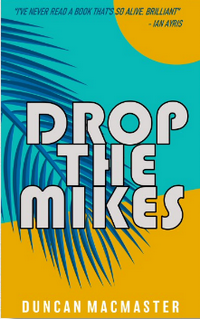
Drop the Mikes

Drop the Mikes

by Duncan MacMaster
Series: Kirby Baxter, #3

Paperback, 243 pg.
Fahrenheit Press, 2016

Read: March 29-30, 2021

“Mathilda, my wife, says that archaeology runs in your family.”

“My parents are archaeologists,” said Baxter with a nod. “They teach, and every summer they go to digs in Europe or the Middle East.”

“They’re pretty respected,” said West, “what do they think about their son the cartoonist, turned detective?”

“I don’t think they ever fully understood what I do,”said Baxter. “In fact, most days, I don’t fully understand what I do.”

A Little Bit about Kirby Baxter

Before I get into this book, let me give a quick run-down of the series. Kirby Baxter is a comic book artist/writer. A few years ago, he came into a lot of money and took some time for himself in Europe. Kirby has the kind of eye for observation and powers of deduction comparable to Shawn Spencer or Adrian Monk (you could include several incarnations of Holmes, etc., too—but Shawn and Monk are closer in tone to this series). While in Europe, he found himself in situations where he could use those gifts to help solve some crimes—this got him a bodyguard, valet, assistant, or whatever, named Gustav, and both of them were made official Interpol consultants.

His talent(?) for being in the general vicinity of crimes continued once he got back to the States and he’s ended up helping the police in various cities with murders and other crimes. He’s frequently helped in this by the aforementioned Gustav; his girlfriend, Molly; her gossip-blogger cousin, Shelly; and his friend and colorist, Mitch Mandelbaum.

What’s Drop the Mikes About?

As a thanks for a bit of deduction that saved a New York Hotel a lot of money and even more bad publicity, Kirby and his friends (Molly Mitch, Gustav and Gustav’s girlfriend, Miriam) were given the opportunity to spend two weeks in some villas at a resort that’s about to open on a Caribbean island. Sounds like a fun little getaway, right?

Kirby Baxter doesn’t get those anymore. But we’ll get to that in a minute.

At the same time they arrive on the island, so do many other people—these people are largely young, with a lot of money, and/or are social media “influencers.” They’re on the island of a big luxury music festival to help promote a new product from a company called HÿpStar. Except the festival didn’t have any musicians (their checks bounced), or food (same), or decent places for the attendees to stay (you probably have guessed why by now).*

* If you’re thinking, this sounds a lot like Fyre Festival, give yourself a pat on the back.

Before the situation can totally deteriorate with the festival, the right-hand man to the organizer is found murdered. So you have thousands of disgruntled festival-goers, all with a reason to be angry with the victim, with almost every one of them trying to get off the island as fast as possible. It’s a bit much for the small island police force—thankfully, there’s a renowned detective in the neighborhood.

So Kirby and his friends have their vacation cut short.

The Hÿp Festival

I think I was largely offline for whatever reason about the time the whole Fyre Festival thing happened, and I missed most of the early hubbub, and then when I started to become aware of it, I didn’t exert a whole lot of effort into it. I’ve picked up a thing or two in the years since then, but that’s about it. So while I’d like to say something about the way that MacMaster satirizes The Fyre Festival, but I can’t. Seems outlandish and crooked enough.

But I can say that some of the more outlandish characters are hilariously drawn—like the influencer who cannot help speaking in text-speak acronyms, like “Double-you-tee-eff” or “Ess-em-aitch.” I appreciated MacMaster not using the acronyms themselves but going the extra mile and spelling out the letters, it added just enough to make her ridiculously charming. Carting around a ceramic Buddha statue and calling it her “Good luck Gandhi” was borderline-too-much, but I found it amusing every time it came up, so I’m not going to criticize it.

Too Much Going On

The two earlier Kirby Baxter books had a lot going on—several characters, each with their own arcs intertwined with the others—and that’s repeated here as expected. But this time it felt like there were too many other characters and their arcs running around—it wasn’t confusing or anything (we’ve all seen that before, this isn’t one for that list), but to do an adequate job for each of those, MacMaster had to use Kirby less.

But also, his friends—his self-labeled Scooby Gang—are running around doing their own thing while he’s looking into the murder (some are acting independently to help, others are working along with him), and that ends up taking time away from Kirby getting to shine. Sure, (to refer to that other Scooby Gang) we all know Fred, Velma, and Daphne have to look for clues on their own—either paired up or on their own—but the viewers came to see Scooby and Shaggy (possibly Scrappy-Do, too) and the more time we spend with Fred and his ascot doing things the less we see Scooby and Shaggy and the less entertaining the episode is. The same applies here. Molly’s great doing her own thing. Ditto for Miriam—and even Mitch is pretty darn amusing and got to do things we don’t normally associate with him. I’m all in favor of it, but Kirby was off-screen too much of this book.

A Small Gift for Long-Time MacMaster Fans

Readers of MacMaster’s other series, the Jake Mooney books, might recognize this particular part of the Caribbean, as it was the setting for Hack (and if you don’t recognize it, that’s okay, a couple of characters will make sure you get the connection).

It’s one of those things that won’t bother you if you don’t get the references as you read, but if you do, you’ll appreciate the ties between the two.

Now, what are the odds we can get Jake and Kirby working the same mystery from different angles?

Baxter had long thought that the adventures that afflicted his life the last few years had immunized him from ever feeling shocked, or surprised. It was one of the very rare instances where he was very, very wrong.

So, what did I think about Drop the Mikes?

Drop the Mikes is 243 pages of pure enjoyment. It’s that simple. You have Kirby being geeky and almost supernaturally-clever self. You get Molly and Gustav doing their usual thing. Mitch gets to be repulsive yet endearing—and even a little heroic, and we get to meet Miranda, the librarian who could be an action star if she really wanted to.

Throw in a handful or two of whacky characters, the disaster of the Hÿp Festival, a couple of murders, financial hijinks, another couple of crimes that really have nothing to do with the Festival outside of location—and you just can’t stop turning the pages to see what MacMaster has left up his sleeve.

These books are like ice cream or pizza—even if the one you’re eating isn’t as good as others you’ve had, they’re still ice cream or pizza, and you’d rather be eating them than just about anything else. I strongly recommend this book—and the rest in the series, too—well, anything with Duncan MacMaster’s name on it. I can’t think of another book this year that I’ve had as much fun reading as this one. And I bet there won’t be many in the 7+ months yet to come.


4 Stars

Page 48 of 61

Powered by WordPress & Theme by Anders Norén