Tag: Mystery/Detective Fiction/Crime Fiction/Thriller Page 5 of 61

Opening Lines: The Troubled Deep by Rob Parker

This was a mistake, I knew I didn’t have time to read this book anytime soon. But I sucummbed to temptation when I took it out of the package. Now I’m kicking myself–I need the next 360 pages.

Mum and Dad really like parties. They go to three or four a week sometimes, but we are never allowed to go with them. Me and my big brother, that is. They say it’s because the parties always finish too late. That there are no party games, no ice cream, no musical statues. That we’d be home too late for school the next day.

They are probably right about this, but that doesn’t mean I don’t want to go. Getting all dressed up the way Mum does in her sparkly frocks and jangling earrings. My brother could get cleaned up like Dad does too, handsome in a suit or a leather jacket. Mum and Dad always look so special as we wave from the window, watching them leave Brindley Hall in their super cool Jaguar car.

Dad taught me an old-timey rhyme about it and I like the way it rolls off the tongue. Father’s car is a jaguar, and pa drives rather fast. I am going to tell the other children at school on Monday.

If I get to school on Monday.

Because tonight, it has all been different. This time, when it went dark, the babysitter didn’t come, and Mum told us both to get dressed smartly instead. This time, we got to go with them in the Jaguar car, named after a big cat, because it goes so fast.

I wish it had been faster. I wish we’d gone far away from here.

I wish it hadn’t gone into the water.

I wish I wasn’t stuck in it, me and my brother looking at each other in the back as freezing water comes up through gaps in the floor.

I wish we were at home.

I wish we’d never gone to that party.

from The Troubled Deep by Rob Parker

Opening Lines Logo

The Amazing Twin Chicken Freedom Fighters by Zephaniah Sole: The Revolution Will Not Be Pasteurized

I’m incredibly dissatisfied with this post. But I don’t think I’m possible of doing better. I want to, the book deserves better than this. But I’m punching above my weight-class with this. Give me a couple of weeks doing nothing else, 15-20 pages, and a few consultations with one of my old university professors, and I might come up with something I liked. Since that’s not going to happen, I’ll just go with this.


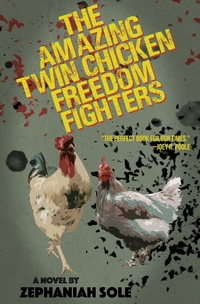
Cover of The Amazing Twin Chicken Freedom Fighters by Zephaniah SoleThe Amazing Twin Chicken Freedom Fighters

by Zephaniah Sole

DETAILS:
Series: The Amazing Twin Chicken Freedom Fighters, Book 1
Publisher: Run Amok Crime
Publication Date: May 5, 2025
Format: ARC
Length: 204 pg.
Read Date: June 7-9, 2025
Buy from Bookshop.org Support Indie Bookstores

A Couple of Content Warnings

I don’t normally do these kind of things, but it seemed like a good idea for this book. First, there’s some active suicidal ideation at the beginning of the book. It’s (first chapter, so not a spoiler) not effective. Also, it’s rapidly moved on from, and if the characters bring it up again, it’s briefly (I don’t think they do, but I failed to track it). In some books, the way the characters leave it behind would be a problem, and worthy of some discussion. But here? It works.

Secondly, Sole gets pretty close to sacrilege with a number of religious figures—Christian, Jewish, Muslim, and Buddhist (and likely some others). Particularly with a certain Tibetan Buddhist. I tend to have a hair trigger on this kind of thing, but I think Sole landed pretty firmly on the right side of the line. If for no other reason than his depictions of the persons in question are so far from the way the religions think about them or they’re depicted in their texts, it’s hard to take the identification seriously.

(except for that Tibetan Buddhist, but even there, it’s a stretch)

What’s The Amazing Twin Chicken Freedom Fighters About?

Jake and Joy meet one night under poor circumstances and do not get along at all. But then they find themselves in an unfamiliar and possibly hostile situation dressed in chicken suits (that not everyone sees but also they can’t get out of).

Before they can fully wrap their heads around that, they find themselves running for their lives and involved in a cosmic struggle for the fate of humanity. As they were prophesied to be.

No, really. That’s the plot.

Jake, Joy, and their new mentors/companions vs. Hip Gnosis* and his bickering subordinates. What follows is zany, action-filled, profound entertainment.

* Readers of Justice League comics of the late 80s may be interested to know that Gnosis reminds me of Lord Manga Khan, and his associate, Madelyn has a certain L-Ron quality to her, too.

The Book’s Humor

This book is hilarious—it’s more than that, but let’s start with that. But what kind of humor is it?

There’s word play—some very clever and sophisticated, and some painful puns. There’s some scatological humor (including one of the all-time greatest scatological jokes). There’s philosophical humor. There’s some jokes that are fit for an elementary school playground. There are some that are fit for a New Yorker cartoon.

Basically, the humor is all over the place. I mean that as a compliment and a description—definitely not a criticism. Primarily because every, and I stress every joke* lands. The book was so funny that you could miss everything else going on (and you shouldn’t) and you’d have a wonderful time.

* I should probably note that I may have mistaken a few lines for jokes that weren’t (but I laughed anyway), and I may have missed a few (which annoys me to admit).

That Hideous Strength

Somewhere along the way…either in the last two-thirds of the book, or maybe when I was finished (I can’t tell from my notes, and I can’t remember), it struck me that this book is a strange, non-Christian version of C.S. Lewis’ That Hideous Strength.

That’s not a spoiler—because Sole doesn’t resolve things in a way that resembles Lewis at all (and frankly, I think Sole’s is more narratively satisfying, which is odd for a book that is so messy). This isn’t a hill that I’d fight to possess, but I think the parallels are clear. In essence, you’ve got the same two opposing forces and similar groups to take action on Earth—for very similar ends. I’d be more specific, but you need to read the book to appreciate it. Do that and come back, and we can talk.

Maybe it’s That Hideous Strength mixed with Dirk Gentley’s Holistic Detective Agency. I should take a day or two to develop that idea into a few paragraphs, but I won’t.

So, what did I think about The Amazing Twin Chicken Freedom Fighters?

This book is just absurd—and I mean that in both the technical and the vernacular uses. I’m struggling to find words to describe it beyond that.

By page three, I was smitten with this book. By page 60, I wrote that, “This is either brilliant or the ravings of a madman. Possibly both.” And stuck with both of those reactions until the last sentence.

I talked about the humor above—and that would be enough to get me to recommend this book. But there’s so much more going on in these 204 pages. Things I haven’t begun to fully unpack yet. Things I’d probably need three or four reads to glimpse.

Sole doesn’t just play with narrative rules here. Nor does he simply experiment with them. He ties them up, tosses them in the trunk of his sedan, and goes for a joy ride. Less violently, you could say that Sole treats them as if he were Bugs Bunny after too many espressos and they were Elmer Fudd.

Then you throw in the prophecies, the philosophy, the semi-spirituality discussions, the action, the whale, teleporting via bathrooms/port-a-potties, the…I don’t know how to finish this sentence.

The plot is solid and interesting—but only somewhat important. The primary characters are three-dimensional, but only by the skin of their teeth. It’s not that important that they’re incredibly well-developed (as much as I hate to say something like that, it’s true here). What’s important is why things are happening and how Sole describes it.

Toss your suspension of disbelief in the trunk with Sole’s narrative rules, and dive in. You’ll be glad you did.

People who’ve read this site much know that I’m a huge Jo Perry fan. After I read the book, I noticed she’d provided a quote for the Publisher about it. As I’d fully expect, she put everything so wonderfully. I can’t match it, so I’m just going to close with what she said.

The Amazing Twin Chicken Freedom Fighters is the deep, learned, bookish, illogical, profound, effervescent, scatological, otherworldly, etymological and hilarious history of a shift in Joy’s and Jake’s (not their real names) ways of being and ours after they leap as one from a bridge and become heroic, pizza-eating—not just any pizza, but The Pizza Eternal-soul-yoked chickens. Enchanters, clicking and singing cetacean metaphors, the-down-and-out, lambs, assassins, the sorrowful, the faceless, the brain-on-fire, the ego-mad, the blind and seers inhabit Sole’s audacious and ambitious soul-adventure. This is a wild novel as sweet and hot as a from-the-oven lemon rosemary scone. Onward to Book Two.

Disclaimer: I received this ARC from the Publisher in exchange for my honest opinion and this post. They got short-changed in this deal.

This post contains an affiliate link. If you purchase from it, I will get a small commission at no additional cost to you. As always, the opinions expressed are my own.

Irresponsible Reader Pilcrow Icon

Return to Sender by Craig Johnson: The Misadventures of the World’s Worst Undercover Sheriff

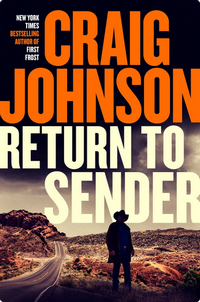
Cover of Return to Sender by Craig JohnsonReturn to Sender

by Craig Johnson

DETAILS:
Series:Walt Longmire, #21
Publisher: Viking
Publication Date: May 27, 2025
Format: Hardcover 
Length: 321 pg.
Read Date: May 30-June 2, 2025
Buy from Bookshop.org Support Indie Bookstores

“You know this is how you’re going to get yourself killed, right? Something stupid like this?”

“I hope not.”

“I’m serious. It’s when you least suspect it, Walt.”

What’s Return to Sender About?

For the previous twenty books, we’ve learned a lot about Martha, Walt’s late wife. We learn a little more about her here—she had a cousin who is now the Postal Inspector for Wyoming. Sure, this doesn’t give us a lot of insight into her as a person—but it does allow this cousin, Mike Thurmin, to call upon Walt for a favor.

A few months ago, a postal worker who carries mail on the longest route in the U.S., 307 miles, disappeared from the face of the Earth. Law enforcement has written it off as an adult willingly leaving her home, her boyfriend has sold off pretty much everything she left behind, but her supervisor/friend isn’t satisfied. And that lack of satisfaction worked its way up to Thurman—who roped Walt into looking for her.

It’s possible, if not likely, that Blair McGowan’s boyfriend is behind her disappearance (he’s certainly unpleasant enough that you can see why many people would speculate about it); she’s an activist, and it’s possible she’s irked someone powerful; there’s a lot that can happen in 307 miles; or the aliens she claimed that abducted her a few years ago came back and picked her up again. Walt’s pretty sure it’s something else, but he has to look into things.

This book pretty much has three acts—let’s take a quick look at them.

The Search for Blair McGowan

In this part, we get the lay of the land and meet the essential characters. Walt tries to go undercover as a postal carrier brought in to cover for Blair temporarily (at least). While doing so, he makes some attempts to investigate—many of which lead people to believe he’s not a postal carrier.

Still, Walt and Dog have some interesting encounters with people in and around the Red Desert of Wyoming. There’s a little bit of consultation with Vic over the phone, and she (and a few others) repeatedly remind Walt to get to Cheyenne for a reception that is important to Cady.

The Women in Walt’s Life

Vic, Cady, Ruby, and Lola feature prominently in the second act (although we don’t get to really see Lola)—with a quick chat or two with Lucian and Henry. It’s all about the change in Wyoming government—a new governor and a prospective promotion for the greatest legal mind of our time.

That promotion to A.G. is complicated by her father’s position in the state—both as a sheriff of one county and his prominence in the law enforcement community.

It breaks up the search for McGowan, it moves some storylines forward, but it largely feels out of place in this book. Still, it was good to see these things move forward a little (and we can assume it will continue to do so).

The Next Search for Blair McGowan

That dealt with, the search for Blair picks back up in earnest. There’ve been a few developments while Walt was in Cheyenne, but Walt has reason to question them—and a greater determination to get to the bottom of things.

This Act takes up the majority of the book, and we learn a lot more about almost everyone we were introduced to in the first Act. There’s a lot of action, some fun new characters are introduced, and Walt is pushed to the limits physically and maybe mentally.

We really have to go back a few books for me to enjoy things as much as I enjoyed this portion of the book, really. I’m thinking Daughter of the Morning Star or Next to Last Stand. The first two parts felt more like Johnson was getting warmed up, and then things really kicked into gear when Walt came back.

Dog

Dog rarely gets to shine in this series—he’s largely just a presence to receive a pat or two, to scarf down some food, and maybe to intimidate someone. But when he does get the spotlight—as he does a few times in Return to Sender—it’s a lot of fun. He’s almost too good to be true, but honestly—who cares? Johnson keeps it pretty grounded (much more so than the ghost of Virgil that might pop up here and there).

For a lot of this book, it’s Walt and Dog against the world—and there are few dogs that can carry that weight.

Oh, yeah, that…

There’s some movement on the part from First Frost about the disappearance of Ruth One Heart. But that’s pretty much all I can cover.

So, what did I think about Return to Sender?

I watched my family members enjoying themselves and then asked. “Lucian, how did you know it was time to hang up your star?”

“You came along.”

“No, seriously.”

“l am being serious.” He stopped and turned to look at me. “When I saw the county would be in good hands, I stepped down and never bad a second thought.”

“I don’t think I have that luxury. Saizarbitoria isn’t ready, and the voters won’t elect Vic.”

He smiled. “Maybe if you gag her.”

Walt’s retirement has been discussed a lot recently, and it seems like it’ll come up more (up until he actually puts in his papers).

Now, I was fully entertained—but also frustrated by Johnson—in the first two Acts. But I have few quibbles or frustrations with the rest. I do wonder about Walt’s ability to do everything physically that he did—but what’s the point of being able to suspend disbelief if you don’t do it occasionally? And there’s much to be said for the combination of adrenaline, necessity, and stubbornness.

Walt vs. nature; Walt vs. big odds; Walt’s determination to do the right thing even when he’s on his own. These are all hallmarks of the best of this series. We got them all, with some great character moments for friends old and new.

What’s not to like? This would work as a jumping-on point for the series (Johnson says every book should work like that, but I beg to differ). For fans? It’s a must read.


4 Stars

This post contains an affiliate link. If you purchase from it, I will get a small commission at no additional cost to you. As always, the opinions expressed are my own.
Irresponsible Reader Pilcrow Icon

Dark Neon & Dirt by Thomas Trang: Pressure’s High Just to Stay Alive ‘Cause the Heat is On

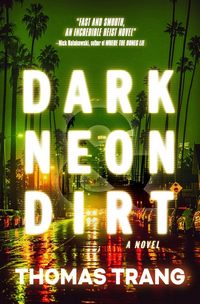
Cover of Dark Neon & Dirt by Thomas TrangDark Neon & Dirt

by Thomas Trang,

DETAILS:
Publisher: Shotgun Honey Books
Publication Date: March 18, 2025
Format: eARC
Length: 320 pg.
Read Date: April 15-18, 2024
Buy from Bookshop.org Support Indie Bookstores

What’s Dark Neon & Dirt About?

I’ve tried 6 different versions of this, and have ended up saying something I regret each time. Let’s see if I can nail it this time. I’m thinking of a recipe.

Ingredients

  • 1 child who escaped Vietnam right after the fall of Saigon, who learned to defuse bombs to serve in Iraq, and is now one of LA’s most successful thieves
  • 1 LAPD lieutenant whose driving interest (not quite an obsession, but you never know) is finding out this thief’s identity and apprehending him. I’m not sure if he cares about the order. His other interests? Best if you don’t know
  • 1 member of the FBI’s Art Crime Team who decided that opening a gallery in France seemed like a more lucrative way to spend her time
  • A generous amount of LA Noir to season

Directions

  1. Combine the robber, cop, and seasoning, mix well.
  2. Slowly pour in the gallerist.
  3. Bring to rolling boil over a sweaty LA heat.
  4. Serve hot.

Heat

If Trang isn’t one of Michael Mann’s biggest fans, he’s sure acting like it. Or at least the narrative voice of this book is. I was to wrapped up in things to count, but there were a number of direct references and allusions to Heat. Enough that there’s no way that the reader is not supposed to pay attention to as many as you can catch.

That said—despite what I expected after the first couple of references—beyond it being about a fairly successful thief being chased by a detective, and the cat-and-mouse between them and the biggest score in the thief’s career, there’s very little overlap.

I’m pretty sure if you enjoyed Heat that this is going to be right up your alley. But that’s true of people who enjoyed Winslow’s Crime 101, or any good cop-and-robbers story.

So, what did I think about Dark Neon & Dirt?

I want to say a lot about this book, but I’m afraid I’ll spill more than you want me to, prospective reader. Although…even saying that there’s something to spill is sort of accomplishing that anyway. I’m just not going to win here.

This grabbed me and wouldn’t let go. I rarely—if ever—knew just where he was taking the story or the characters. And even if I was right about something, it felt more like a lucky guess than me understanding what Trang’s plan was. That’s from the first scene to the last—and all stops in between.

It’s hard to elaborate on this, but let me make a couple of notes on character. Once you put down the novel for the last time, I expect you’ll take a couple of minutes and re-evaluate almost every choice made by the majority of the characters. You’ll also find yourself appreciating the way that every character felt like a new twist on a tried-and-true favorite type. You find yourself getting annoyed with, if not actively disliking, characters who would be the protagonists/heroes of pretty much every other crime novel you can think of. Most of the rest will generate a good deal of ambivalent feelings for you (eventually, in the moment, you’ll be pulling for their success).

Honestly, I’m still revising my thoughts on a couple of characters as I type this up.

One thing you won’t revise is how these people think and talk—especially talk. You all know how much I’m a sucker for good dialogue, and Trang did not disappoint. Especially Lt. Monroe, something about his lines endeared him to me.

I mentioned Winslow above, and this is just the kind of story he’d tell—Trang doesn’t have Winslow’s style (yet), but his voice and story-telling choices are similar. I can also see this as an outline that Elmore Leonard would work from. For a debut novel, it’s hard to ask for more than that.

Within a chaper or two, I pretty much felt like Trang came over and sat down too close to me on some bench, so I had to slide over a bit before introducing himself and telling me that I needed to make some room on my shelves between Tolkein and Tropper because he intended on filling it over the next few years.

Trang’s got the chops—I cannot wait to see what comes next. I strongly encourage crime readers (particularly those with an affinity for novels that live in the gray areas) to pick this up, while I go reorganize my shelves.

Disclaimer: I was provided a copy of this ARC by the author a day or two before I was going to order it, so it really didn’t affect my opinion of it–he just saved me a few bucks. (and I paid him back by not posting this on time, he really didn’t come out good in this deal).


4 1/2 Stars

This post contains an affiliate link. If you purchase from it, I will get a small commission at no additional cost to you. As always, the opinions expressed are my own.
Irresponsible Reader Pilcrow Icon

Opening Lines: Return to Sender by Craig Johnson

We all know we’re not supposed to judge a book by its cover (yet, publishing companies spend big bucks on cover design/art and we all do judge them that way). But, the opening sentence(s)/paragraph(s) are fair game. So, when I stumble on a good opening (or remember one and pull it off the shelves), I like to throw it up here. In these few paragraphs, you’re immediately in Walt’s world, knowing you’re in for some good conversations and a slower pace. I’m starting this one tonight, but took a sneak peak.

from Return to Sender by Craig Johnson:

“Nobody smiles anymore.”

“Excuse me?”

“Have you noticed? Nobody smiles anymore.” Mike adjusted himself in the tiny postal Jeep, setting his back against the passenger-side door as he sat on the floor beside Dog so no one would see him in the September early morning light. “Remember when we were growing up how you were taught that when you walked down the street and you met a stranger, that you smiled or said hello?” He sighed, staring at the plethora of mail and packages in the back as if it were a weight he could no longer bear. “People don’t do that anymore.”

Mike Thurman, my late wife’s cousin, was in a bad mood, but that didn’t mean he didn’t have a point.

Opening Lines Logo

Kaua’i Storm by Tori Eldridge: A Thriller + So Much More

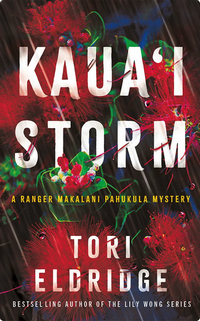
Cover of Kaua'i Storm by Tori EldridgeKaua’i Storm

by Tori Eldridge

DETAILS:
Series: Ranger Makalani Pahukula Mystery, #1
Publisher: Thomas & Mercer
Publication Date: May 20, 2025
Format: eARC
Length: 445 pg.
Read Date: May 9-13, 2025
Buy from Bookshop.org Support Indie Bookstores

What’s Kaua’i Storm About?

Makalani Pahukula, who has been serving Crater Lake in Oregon as a Park Ranger for years, comes home to Kaua‘i for the first time in even longer for the celebration of her grandmother’s eightieth birthday—which is going to be a family reunion/community gathering on a pretty grand scale.

When Makalani touches down, it’s not quite the joyous occasion she’d anticipated. Yes, her parents and grandmother are delighted to see her—as is an old friend (I’m going to forget to mention this later, but we needed more of her). But two of Makalani’s cousins are missing—one is in high school and the other is a former college football star.

Their disappearances are being written off as some foolish lark—although it gets the family squabbling—each set of parents blaming the other and lashing out. Makalani doesn’t think either explanation fits the cousins she remembers (while making allowances for people changing) and she wonders why the police haven’t been involved.* After a dead body is found in the nearby forest, Makalani starts to meddle and takes it upon herself to find her cousins—over the objections of just about everyone.

* And once the police eventually do get involved, you start to understand the families’ decision not to involve them, and they certainly make things worse.

A Question of Genre

First—I’m not sure that’s the best heading for this section, but it’s close enough. Secondly—I really don’t care about this when it comes to what I think about the book, but this kept running through the back of my mind.

This is billed as a mystery, and it kind of is one—I think more of a thriller than a mystery, but we’re getting into the weeds there. And Eldridge has a reputation as a thriller writer (thrillers that I greatly appreciate, I should add).

But her thrillers also involve a good layer of something else—descriptions of a minority culture (in the U.S.), trauma, business/family culture (in other nations), and so on. She pulls that off here, too. In more than one way.

We also get a fair amount of multi-generational family drama, a little social commentary, some local history, and more.

So much so that the thriller/mystery aspect of the book takes a back-seat to everything else for significant lengths of time. It doesn’t hurt the novel as a whole—in fact, it makes it richer. There are family members and friends that I can hand this to that I can’t hand a lot of the mysteries/thrillers that I read (and I wonder if a couple of the thriller-junkies in my life would put up with this).

Culture and Language

Speaking of that kind of thing…

I am as haole as you can get—so much so that I can’t pronounce it correctly or even consistently, despite having heard it in various formats for years. So, a lot of this book took work for me to understand—work I enjoyed and was glad to do, mind you. But there was effort.

Eldridge littered this book with ‘ōlelo Hawai‘i words and phrases and Pidgin English like crazy. All—or close enough to round up—can be understood in context with a little effort. But for those who want to be sure of their understanding, there’s a great glossary in the back—including words and phrases—both Pidgin English and ‘ōlelo Hawai‘i—as well as phrases, geographical references, historical and mythological figures. I didn’t consult it (foolishly?) until I was done—that’s just how I roll. It confirmed a lot for me and fleshed some things out, too. I do recommend consulting it in the moment.

I knew about, and chose to ignore, the Glossary. Until I finished, I didn’t realize Eldridge also gave us a handy dramatis personae, which would’ve been a great aid in keeping track of the relationships between this large cast. Do you need to read/consult it? No. But I certainly wouldn’t discourage it.

But even beyond the supplemental material, this book is about as close as you can get to a documentary on contemporary Kaua‘i as you can get while keeping this a work of fiction. There’s a lot about homesteading—and the ethnic makeups required for it (past and present), those who live off the grid in public lands, and…I’m not going to be able to provide an exhaustive list, so I’m going to just stop.

I’ll summarize by saying that this is a rich and informative look at the non-touristy part of Hawai‘i (or at least one island’s version of it). Added to the tiered cake of characters and missing-person plot, this icing is just great.

So, what did I think about Kaua’i Storm?

This is going up late—I realize that, and apologize to Eldridge and Thomas & Mercer for that—but I had a hard time resisting talking about all that this novel attempts (mostly successfully) to accomplish.

It’s a very crowded book, I have to say, Eldridge puts a lot into these 445 pages. There’s a storyline involving an overly-zealous student of culture that generally felt out of place, and maybe was. It couldn’t be told at another time, as much as I wondered if it could’ve been used in a sequel instead of this book, because it seemed of tertiary importance and interest compared to everything else going on. It was also entertaining and satisfying—so I’m glad she included it.

Still, it reads like a thriller of 250-300 pages, which is a neat trick.

I didn’t enjoy this as much as a Lily Wong book (it shouldn’t feel like one, and doesn’t), and I enjoyed it in different ways than her previous work (as I should’ve). Having established this world and the characters—it’d be very easy for Eldridge to lighten up on the background material in the future, and keep the focus on the plot and characters while exploring the world (and keeping up the commentary)—making it a leaner and more focused thriller/mystery. I hope that’s where Eldridge takes it—but I won’t complain too much if she doesn’t.

How did I make it this far without talking about Makalani? This is her book more than anything. We’ve all read/watched versions of her story—the kid who couldn’t wait to leave home who comes back discovering how much she missed it, how much she’s changed—and how everyone she left behind remembers her. This version of this template is very successful. She reconnects with her past, her heritage, her family—and she sees how who she is today comes from all of that. Plus, she’s a pretty kick-ass ranger. It’s going to be fun to watch her at work. She’s tough, resourceful, and determined—but not in your typical action-hero way, more like the kind of person you could meet in real life. Likely in the line of duty as a ranger. Her connection with the land—in Hawai‘i or Oregon—and sense of duty is going to get a lot of readers to respond positively to her.

This is a solid thriller, but it’s so much more. And it’ll definitely leave you hungry for a sequel. I strongly recommend it.

Disclaimer: I received this eARC from Thomas & Mercer via NetGalley in exchange for this post which contains my honest opinion—thanks to both for this.


4 Stars

This post contains an affiliate link. If you purchase from it, I will get a small commission at no additional cost to you. As always, the opinions expressed are my own.
Irresponsible Reader Pilcrow Icon

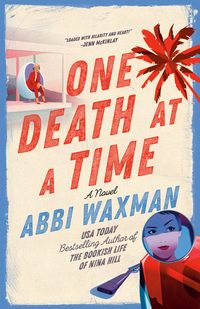
One Death at a Time by Abbi Waxman: You’ll Laugh All the Way to the Morgue

(not that you actually go to a morgue in this book, I was just struggling with that headline)


Cover of One Death at a Time by Abbi WaxmanOne Death at a Time

by Abbi Waxman

DETAILS:
Publisher: Berkley
Publication Date: April 15, 2025
Format: eARC
Length: 400 pg.
Read Date: April 11-15, 2025
Buy from Bookshop.org Support Indie Bookstores

What’s One Death at a Time About?

Natasha Mason is a twenty-something still trying to figure out what to do with her life—her alcoholism led to her leaving law school, and now she’s paying bills by delivering food and doing other gig economy standbys in L.A., and making sure she makes at least one meeting a day.

At one of these meetings, a vaguely familiar-looking woman shows up—and is not the friendliest of people. She seems—well, is—more concerned about getting her court-mandated signature than in anything else. Mason volunteers to be this woman’s interim sponsor. Now this older woman had been sober before, but on the night that led to the court-mandated meetings had a blood-alcohol level that stunned a rowdy twelve-step meeting into silence. She’d also come out of a blackout next to the dead body of a former lover/decades-long antagonist and what was probably the murder weapon. For a night she couldn’t remember—it’d clearly been eventful.

The next morning, Mason shows up at the gate of her obviously well-off sponsee. Thanks to some time on the internet, Mason knows her to be Julia Mann—a former box office star, now a lawyer taking on cases for as many Davids as she can in a city of Goliaths. Oh, and in between careers, she’d been in prison due to the death of her husband—the former business partner of the dead man she’s currently suspected of killing.

This meeting didn’t go the way Mason suspected—for one, Julia Mann’s housekeeper is an amazing cook, as Mason learned. Also, the two kept butting heads—Mason wanted to talk about Julia’s sobriety, but Julia was rather fixated on the murder. And yet…something clicked between the two. In between verbal jousts,* Julia ends up hiring Mason to be her personal assistant and help with the investigation. Mason justifies this to herself as a way to stay near Julia and keep her sober. The chance to eat more of Claudia’s cooking and make more money than an app can pay doesn’t hurt.**

Before you know it, these two have got themselves involved in a separate murder investigation (another David for Juila to work for), arson, tensions around Julia’s former career in the film industry, tensions around Julia’s future career in the film industry (she wants none of it, but no one seems to care), brushes with organized crime, multiple reasons for both or either of them to ditch their sobriety, and more things that I can fit into this rambling sentence.

* The back-and-forth between these two is reason enough to try this book. Waxman will supply several others, it should be noted.
** Yes, this makes two books in as many months about an LA-based delivery driver turning amateur investigator.

The Murder Mystery(ies)

Murder mysteries surrounding the film industry tend to have a few things in common—secrets, petty grievances that get nurtured into full-blown rivalries (or worse), scandals (for an industry reputed to be filled with amoral hedonists, there really are a lot of moral scandals), and organized crime.

One Death at a Time ticks all of these boxes—and a few others that I should’ve listed above, but forgot to. This may be Waxman’s first mystery, but she clearly understands the genre and knows how to construct a classic whodunit in a contemporary setting.

You get all the twists, turns, red herrings, and layers upon layers of competing motives for multiple suspects that you need—doled out in just the right pacing with dollops of shocks and action along the way. The final reveal is satisfying, and every loose plotline is tied up. It’s a textbook example of the genre—pleasing in every way.

The Humor/Tone/Relationships

This might be a clumsy way to tackle these ideas, but it’s where I am.

Yes, Waxman is known for Rom Coms—or Rom Com-adjacent—books, so we all know she’s funny. This seemed to me to be more overtly comedic. There are jokes—many of them—not just funny situations and loveable, quirky characters doing goofy things. Don’t get me wrong, there are plenty of those (as well as non-lovable, quirky characters).

This reads like Dave Barry’s kind of crime novel, with the restraint of a Richard Osman. The verbal jousting is great, and the physical comedy is almost as good. The situations are frequently ridiculous, but never so much so that you get taken out of the moment.

The technical term that best describes Mason is “wiseass,” and one with poor impulse control. Someone who doesn’t know how to keep her trap shut, powered by Waxman’s wit is a fun character to read. Julia’s no slouch in that department either, but she’s more mature, she knows that she should pick her targets with care—and is therefore usually more effective.

The rest of Julia’s team (I will not tell you about them, so you can meet them properly) and some of the other characters the reader encounters have drier wits, largely fitting into the typical Waxman model. Oh, except this one actress…nope. You wouldn’t believe me if I tried to describe her.

Mason’s support system consists of the meetings she attends, her sponsor, and her cat. Julia has a strong team of employees and friends (the Venn diagram there has a large area of overlap)—they’re just not that effective on the sobriety front, but they make up for that with their loyalty. Julia also has a pretty strong network of former friends, employers, and employees in and around the film industry. These are loyal to their grudges against her and their own self-interest—however, they (or at least most of them) want her to succeed in her search for the killer, so they can move on with their lives and careers.

You combine all of this—with a (slowly) growing relationship of affection, trust, and appreciation between our protagonists—and you’ve got yourself a great basis for comedy with heart.

Sobriety

One thing that Waxman never made light of in all of this was the sobriety of the characters. Yes, Julia would mock Mason’s approach to being her sponsor, but that was about the characters’ personality differences—both of them took it seriously.

Not all of the characters appreciated the struggle and what the characters did to preserve it—but none of the comedy was about the drinking.

The opening meeting did get me to chuckle frequently, but that was character-based humor. The book never gets preachy at the reader, just to each other.

So, what did I think about One Death at a Time?

I had a blast with this—if you couldn’t tell. This is my fifth Waxman novel, so I went into it expecting that I would. I just wasn’t sure how much I’d enjoy it, because of the genre. But if I didn’t know who she was before I picked this up, I’d be scouring the library for her Abbi Waxman now.

It does—as it should—feel very different than her previous works. I’d say this is closer to last year’s Christa Comes Out of Her Shell than the rest, but even saying that, this is different. The stakes are (obviously) higher for these characters; there are potentially lethal consequences for failure. Which might explain the more heavy-handed approach to the comedy.

I think I’ve said everything I wanted to above—the mystery part is really well done; the characters are well-designed and well-excecuted, the relationships between them are strong and obvious—you like the people you’re supposed to like enough that you wish you sat around the room with them, watching them go back and forth while eating whatever wonderful treat/meal Claudia has prepared. Also, it’s funny. That’s a one-two-three combination that I’ll always enjoy and recommend.

This feels like a standalone, but it could easily spawn a sequel or more. If it does, I’ll be first in line. If it doesn’t…well, that’s okay, too. It works really well either way.

Basically, reader, if any of the above tickles your fancy—you need to add this to your TBR. I practically guarantee you’ll have a great time.

Disclaimer: I received this eARC from Berkley Publishing Group via NetGalley in exchange for this post, which contains my honest opinion—thanks to both for this.


5 Stars

This post contains an affiliate link. If you purchase from it, I will get a small commission at no additional cost to you. As always, the opinions expressed are my own.
Irresponsible Reader Pilcrow Icon

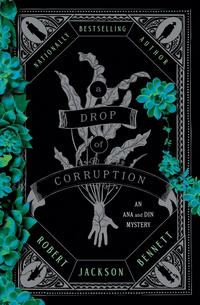
A Drop of Corruption by Robert Jackson Bennett: There’s Not More than A Drop of this to Complain About (so I won’t)

Cover of A Drop of Corruption by Robert Jackson Bennett A Drop of Corruption

by Robert Jackson Bennett

DETAILS:
Series: Shadow of the Leviathan, #2
Publisher: Del Rey
Publication Date: April 1, 2025
Format: eARC
Length: 480 pgs.
Read Date: March 17-21, 2025
Buy from Bookshop.org Support Indie Bookstores

What’s A Drop of Corruption About?

Dinios Kol arrives (as is his custom) in the canton of Yarrowdale, ahead of his boss, Ana Dolabra. They’ve been assigned to investigate the disappearance of a Treasury officer. This officer—and the rest of the Treasury delegation—is in Yarrowdale to negotiate with the King the final steps of Yarrowdale fully joining the Empire once and for all.

Right now, Yarrowdale is (rightly or wrongly) considered a backwater territory, valuable for one thing only—it’s a place that the leviathans do not travel to, so their corpses can be moved there and harvested for the copious near-magical substances used by the Empire. (incidentally, I found this whole aspect just tremendously cool. I won’t say more than that, but if we only got a novella about this part, I’d have been satisfied). This is the only place where this is safely done, so it’s hard to understate the strategic importance of Yarrowdale.

So one of the Empire’s chief negotiators going missing is no small thing—so Dolabra is assigned to find him.

Not at all shockingly (to any reader), the corpse of the officer is quickly located once Kol arrives. Its condition raises eyebrows and concerns—and that’s just the beginning, the more they investigate the circumstances around this killing the less sense things make, and the greatness of the mind behind it is seen. Dolabra is excited by the challenge, while everyone around her becomes more and more apprehensive with each discovery or conclusion she makes.

I won’t go on much beyond this—I’d love to summarize the whole book for you, but why? More victims are found, more questions are raised, the stakes keep climbing higher, and the implications for the future of the Empire are great.

Dolabra and Kol

When I talked about The Tainted Cup, I didn’t really talk about the primary characters. I hesitate to start now because I’m going to have a hard time stopping. But let me try to dip my toe into it.

Ana Dolabra is a brilliant investigator for the Empire—being sent to the trickiest investigations and given almost unlimited authority to get the answers she seeks. Due to some physical (and psychological) limitations—and the fact that she has zero interpersonal skills (and that’s being generous)—she requires a deputy to handle most of the actual investigating, bringing her the evidence and testimony that she needs to solve the crimes.

Which is where Dinios Kol comes in. He’s been altered to have a perfect memory—sights, sounds, smells, conversation…you name it, he remembers it all (even if he doesn’t want to). So he’s the perfect assistant for someone who will not interact with people of her own volition. There are jobs he’d rather perform—and places he’d rather perform them. But his family needs money to pay medical debt, and this is the surest way for him to accomplish that. He escapes into drink, drugs (I think it’s more like tobacco than anything, but I’m prepared to be shown that I’m wrong), and sex as often as he can. But is reliable when the chips are down—he has to be.

Ana Dolabra is very much in the Nero Wolfe mold—purposefully so. But she breaks the mold in all the right ways—her reasons for relying on someone else to interact with the outside world are different and less self-imposed. Her ego is as large (I wasn’t sure that was possible), and she takes some of these crimes as a personal attack on her and her genius (like Wolfe occasionally does). But she relishes the challenge—and talks openly about enjoying this case compared to the boring murders and whatnot she’s solved recently. She has a strange relationship with eating so that sometimes she sounds like her antecedent and other times the complete opposite.

Most people will not care about this (and I assure you, that paragraph could be longer)—but I’m incapable of reading any section featuring Dolabra without pausing to contrast her to Wolfe. She never comes out bad in these comparisons—just different in a creative way.

Her Archie Goodwin, Dinios Kol, can be compared and contrasted in the same way. I started to say he’s less like Archie, and I really want to. But I can really think of one major difference—what drives them. Kol’s motivation for the work (at this point, anyway, it may be shifting toward the end) is different. So he behaves with a little less loyalty. This makes him more interesting and makes up for his lack of humor. Ah, look there—I found another notable difference. Kol is far too serious to really be an Archie, but I wouldn’t want to change a thing about him.

Building on the Worldbuilding

In The Tainted Cup, Bennett introduced us to a fascinating and complex world of kaiju-esque monsters, magic-feeling science, and a massive empire that’s keeping humanity alive. it was both awesome and strange. In A Drop of Corruption, it’s almost as if Bennet tells the reader, “So you’ve seen the typical in this world, but you ain’t ready for this.” As strange and terrible as we thought things were…ha.

We get to see new augmentations, we get to see how outsiders (or semi-outsiders) regard the Empire, we learn a whole lot of history about the Empire, the monsters, the science behind the augmentations, and so much more. I’m having trouble expressing it all.

In both books so far Bennett can bring the unbelievable and indescribable to life. Din will start a sentence by saying something like, “Words cannot express ___” or “It’s too incredible to explain” or something like that—and then will falteringly describe it in such a way that the reader comes away with a pretty good idea of what Din saw. Even when he’s not calling his shot like that, item after item, phenomenon after phenomenon, creature after creature that really shouldn’t make sense when written about comes through with a level of detail that leads the reader to think they’re imagining what Bennett imagined.

Sure….it’s likely that no two readers will have similar mental images. But that’s not important—you’ll think you do.

The Author’s Note

The Author’s Note (largely an Acknowledgement section, but a little bit more) is a must-read. I don’t know if you’re prone to reading them—particularly if they feel more like an Acknowledgment than anything else. But make an exception for this one. It’s worth your time.

So, what did I think about A Drop of Corruption?

I was blown away by The Tainted Cup, and so I was apprehensive about this one—could it live up to it? I’m pleased to say that it did. I very likely enjoyed this much more—because I was ready for the strangeness and could just let it build on what the prior book did.

I feel bad saying I had fun reading about all the trauma that these victims went through, but I really did. Kol and Dolabra—and Kol’s new local acquaintances are just so well-conceived and vividly drawn, that it’d be harder to be disinterested than captivated.

The mystery kept me guessing until the end (except for the time I thought I’d figured it out, and I was very wrong). There was even a point where I wrote in my notes, “Could this be a redder herring?” and it was anything but. I won’t go into details so you can be fooled like I was, but man… The only thing I like more than the smug satisfaction of figuring out a mystery before a brilliant detective is an author who can fool me into that smugness only to pull the rug out from under me. Not to get elitist or anything, but a fantasy writer should be worse at this than a mystery writer. Bennett didn’t get that memo.

I do think you could read this book without the first in the series—but don’t do that to yourself. Buy a copy of this now (or get on your Library’s waitlist), but get The Tainted Cup at the same time. If I’m right about where this series is going (or even almost close to right), you’re going to want to be ready for it. This is just dynamite.

This book deserves more compliments from me—but who has the time? (not the guy who meant to post this a week or so ago). A great mystery novel, a great fantasy novel, with characters that you’d want to read about even if the plots weren’t worth the time or trouble.

Disclaimer: I received this eARC from Random House Publishing Group – Del Rey, Random House Worlds, Inklore via NetGalley in exchange for this post which contains my honest opinion—thanks to both for this.


5 Stars

This post contains an affiliate link. If you purchase from it, I will get a small commission at no additional cost to you. As always, the opinions expressed are my own.
Irresponsible Reader Pilcrow Icon

REPOST: Vera Wong’s Unsolicited Advice for Murderers by Jesse Q. Sutanto: Come Meet Your New Favorite Senior Citizen Sleuth

Some Real Life™ stuff has come up this week, interfering with my writing plans. So, let me dust this off. I’m a little over halfway through the sequel which is just as delightful. But that’s for another day.


Vera Wong's Unsolicited Advice for MurderersVera Wong’s Unsolicited Advice for Murderers

by Jesse Q. Sutanto

DETAILS:
Publisher: Berkley Books
Publication Date: March 14, 2023
Format: eARC
Length: 352 pg.
Read Date: March 2-7, 2023

What’s Vera Wong’s Unsolicited Advice for Murderers About?

I’m not sure that I can answer this question without just recapping the entire novel—but without the charm and warmth.

Just Try…

How much time do you have?

It Publishes Today, You Need to Get Something Posted. Just Give Us the Setup

Okay, okay, I’ll attempt it—but I really want to spend the next hour just regurgitating the whole thing.

Vera Wong is an older Chinese woman, the owner of a small tea shop in San Francisco’s Chinatown. It’s dark, dingy, and doesn’t get much in the way of customers. She has one regular that she can count on to stop in early in the morning, and then spends most of the rest of the day waiting for someone else to walk in and order. Typically in vain. But it’s her life—she has nothing else to do with her time—her husband is dead, and her son is busy with work. So busy that he rarely has time to visit—or acknowledge all of the super-helpful advice she gives him to succeed at work and/or to find a wife. This doesn’t stop her from texting or calling him frequently to offer the advice, it should be noted.

Then one day, she comes down the stairs from her apartment above the shop to discover a dead body in the middle of the floor. She has little faith that the police will be able to tell her who killed the man, so she decides to discover the identity of the killer for them. How hard can it be? She’s watched plenty of procedurals, is smart, and (unlike Sherlock Holmes) is a suspicious Chinese mother. The murderer doesn’t stand a chance.

So she helps herself to a little bit of the evidence before the police arrive so that she can hunt for the murderer. It’ll be a good change of pace for her.

She sets a trap for the murderer and ends up with four good suspects, it’ll just take her some time to figure out who killed him and why. In the meantime, she sees at least three younger people that need some guidance to get their lives in order—she decides to take that on along with her murder investigation.

Vera

I’d like to spend a few pages talking about Vera—I’m certain that if you ask me in December, she’s still going to be one of my favorite characters of 2023.

She is so human—such a mass of contradictions and differing impulses. The fact that at her, um, advanced age she’s able to chart a new course for her life, to let people in, and adapt gives me a little hope.

But it’s her spirit, her way of looking at the world, and not backing down that’s really inspiring.

Once she’s done with these characters, I could use a grandmother like this.

Be Careful

Vera knows her tea, she spends a lot of time and energy on it—certain that she can make someone just the right kind of tea for whatever they’re facing to help them through the day. If you can make it through a chapter or two (especially in the early chapters) without needing a cup of your own, I’d like to know how.

But other than needing to take the time to boil water and steep your tea, that’s not a big deal (unless you’re inspired to go shopping for more teas, which can get expensive—and can distract you from your reading). However, Vera also spends a lot of time cooking for her new friends and suspects. And she ends up spending more time cooking than making tea.

This is where you need to be careful—if you’re not, you could find yourself putting on a few pounds before the killer is identified. Sutanto’s descriptions of Vera’s creations—and the way everyone responds to them—are so vivid, so enticing, they can send you to your pantry for a snack—or to your food delivery app of choice to order some Chinese food.

I’m not saying that you should avoid these portions of the book—just be prepared so you can fight temptation (or have a handy justification to indulge yourself, if that’s more your preference).

So, what did I think about Vera Wong’s Unsolicited Advice for Murderers?

By the time I got halfway through the opening paragraph, I’d started coming up with a list of people to recommend this book to. There was something about the voice that just jumped off of the page (er, screen) and said, “You’re going to have fun with this.” And I absolutely did—but there was more to it than that, being around these characters felt comfortable. I just wanted to spend time in their presence—like Stars Hollow, CT; the locker room of AFC Richmond; the Parks and Rec Department of Pawnee, IN; the Jigsaw Room of Cooper’s Chase retirement village; or Knight’s Bookstore in Abbi Waxman’s L.A. I don’t remember the last time that I read a cozy mystery that was so worthy of the title “Cozy.”

Yes, I wanted to figure it out. Yes, I wanted to know what happened to the characters and wanted closure for this period in their lives. But I read as slowly as I could because I wanted to linger.

It’s not just Vera that creates that feeling—it’s the other characters’ reactions to her, as well as their relationships with each other. Yes, she is undeniably the center of this little world, but it wouldn’t work without the others.

There’s a lot of gentle humor and heart—that’s what fills this charming work. But that’s not all of it—there are laugh-out-loud moments, as well, and real emotions. There’s a budding romance, a rekindled friendship, family ties, and a lot of people finding the confidence to step out into something new—or into something they’ve tried before and have been scared to try again. The found family that’s created along the way makes all of that possible—particularly the last part—the mutual support (in various forms) and encouragement from the others enable the others to make those steps.

I don’t want to give the impression that this book is all sunshine, flowers, and good times. There are portions of this that are hard to get through, sure—there’s a suspicious death, criminal behavior—at the very least the actions of a scoundrel—heartbreak and a great deal of loneliness and despair. But Sutanto doesn’t leave us there for long—she grounds the book in it, but provides a way forward—through grit, determination, and the help of others.

The murder investigation was fine—probably more than fine, actually. It was a clever little story, with plenty of good suspects and nice twists. But the book isn’t all that interested in the murder investigation, really. It’s just an excuse for these people to come together and start interacting. Vera herself doesn’t really want any of her suspects to be guilty—she’s too busy meddling in their lives to improve them (in selfless acts of assistance only, she’d hurry to tell you). But she keeps plugging away at her little list of suspects because it’s something she’s started—and wouldn’t it be exciting to actually find a murderer? (even if it’s someone she doesn’t want to get into any kind of trouble).

I talk about mysteries more than anything else here, and the fact that I’d started wrapping up the post without addressing the mystery part of this book says a lot to me. It’s the driving force behind the plot and the instigating incident—but again—it’s secondary to the rest of the storylines. Still, most readers will have a hard time finding sympathy for the murdered man, and more than once you’ll likely wonder if it’d really be that bad if no one figures out who did it. You probably won’t feel the way you usually do when a murder is solved when the culprit is named, either.

There’s just so much to commend about this book—and so little to quibble with—I’m on the verge of repeating myself and/or overhyping this thing (but boy howdy, does it deserve a lot of hype!). So I’m just going to leave it with this—go get your hands on a copy, brew yourself a nice pot of tea (I promise you’re going to want tea), and lose yourself in this book for a few hours.

Disclaimer: I received this eARC from Berkley Publishing Group via NetGalley in exchange for this post—thanks to both for this.


4 1/2 Stars

This post contains an affiliate link. If you purchase from it, I will get a small commission at no additional cost to you. As always, the opinions expressed are my own.

The Library Game by Gigi Pandian: Never Ask “What’s the Worst That Can Happen?”

This is a week and a half late or so, mostly because I kept trying to go on and on and on about aspects of the book that I should leave for Pandian to tell you. My apologies for the delay to the nice people at Minotaur who offered me the book and have been nudging me to say something about it.


Cover of The Library Game by Gigi PandianThe Library Game

by Gigi Pandian

DETAILS:
Series: Secret Staircase Mysteries, #4
Publisher: Minotaur Books
Publication Date: March 18, 2025
Format: eARC
Length: 320
Read Date: March 5-8, 2025
Buy from Bookshop.org Support Indie Bookstores

What’s The Library Game About?

The project that Secret Staircase Construction is about to wrap up has a couple of distinctive elements (on top of the sliding bookshelves, escape room, etc.)—their client is dead, and his death is not a mystery at all. Most people might not consider that very distinctive, but those people haven’t read a mystery novel featuring Tempest Raj.

This client was an aficionado of classic mysteries—okay, aficionado is an understatement—he was borderline obsessed and had the money to indulge that obsession. As his death neared, he decided to turn most of his house into a library (leaving room for an apartment for his librarian nephew), stocked with his own collection. This sounds like a dream come true for most of my readers, right?

He hired Secret Staircase to give it just the right look and touch, even turning part of it into an Escape Room. Sadly, he died before it was completed, leaving his nephew to bring his vision to life.

While the library is being finished—and waiting for official approval to make it a public entity—there’s a neighborhood festival. To get some promotion for the library (and to be good neighbors), they’ve hired some local actors to stage a little performance.

During a dress rehearsal for that performance, something goes wrong—one of the actors disappears (I’m glossing over a lot here), so they try again the next day—in the midst of that… I don’t even know how to gloss over this. It’s like they all chanted “Macbeth!” while walking under a ladder and crossing a black cat’s path or something—so many things go wrong, and a body is discovered. Tempest’s magician friend, Sanjay, appears to be the prime suspect—although the rest of the actors and workers aren’t above suspicion either.

Well, more than one person floats the idea of the deceased client’s ghost being behind it all. So, there are plenty of suspects, however unlikely.

Tempest (and her friend group and family) has her work cut out for her if she’s going to clear Sanjay’s name, find the killer, and get the Library set for the festival.

The Sense of Fun

Yes, this is a murder mystery. Livelihoods, wrongful convictions, and more are on the line. But there is a strong sense of fun to this book. Our amateur sleuths are a group of friends who’ve been down this road before (three times to be exact)—in one way or another.

They like the challenge, they enjoy mysteries, illusions, and everything else going on here—and they can’t help but enjoy this in some way—and this comes out in their interactions with each other.

There’s a sense of play here as they work through this, some running jokes, and so on. I’m not saying that books two and three were absent fun, but it was played down a bit because of everything else. This is as fun as the first book—and maybe more so, because the relationships are better settled and Tempest isn’t under that cloud anymore.

Beyond the greater sense of fun than we’ve had for a bit, there’s the cozy and warm feeling you get from reading a solid found family/friend group (in the midst of a flesh and blood family), these people like each other. It’s hard to beat that feeling.

All of that serves as a bonus to a clever mystery.

So, what did I think about The Library Game?

I was fairly convinced that the previous book in the series, The Raven Thief was going to be the last one as it wrapped up a three-book arc, serving as a nice trilogy. I was so happy to be wrong—I wanted more time with Tempest and her friends—especially Ivy (I’d take a spin-off book full of her essays on locked-room mysteries) and Abra. Not to mention the fun of imagining Ash’s culinary offerings.

Beyond the characters, Pandian knows how to deliver a contemporary locked-room crime and how to keep the tension building while keeping the whole book entertaining. I need to make time for her backlist soon to see how these books compare with her earlier offerings.

I’d like Ernest Cunningham (or Ivy, I guess) to weigh in on Pandian’s books because I’m not entirely certain that she plays fair with her clues and solutions. Particularly in this case. But that’s just to satisfy a mental itch, because I really don’t care—I thought the solution to this and the reveal were pulled off satisfyingly well.

This would make a good jumping-on point for someone new to this world and is a must-read for people who enjoyed any of the previous three. It’s a clever book, a smart mystery, filled with good friends and warm feelings. Who doesn’t want that?

Disclaimer: I received this eARC from St. Martin’s Press via NetGalley in exchange for this post which contains my honest opinion—thanks to both for this.


4 Stars

This post contains an affiliate link. If you purchase from it, I will get a small commission at no additional cost to you. As always, the opinions expressed are my own.

Irresponsible Reader Pilcrow Icon

Page 5 of 61

Powered by WordPress & Theme by Anders Norén