Tag: Mystery/Detective Fiction/Crime Fiction/Thriller Page 59 of 62

Hi Five by Joe Ide: A Criminal for a Client, an Unreliable Witness, and a Larger Number than Usual that Want Him Dead. IQ has his work cut out for him.

Hi Five

Hi Five

by Joe Ide
Series: IQ, #4

Hardcover, 339 pg.https://www.mulhollandbooks.com/titles/joe-ide/hi-five/9780316509534/
Mulholland Books, 2020

Read: February 10-16, 2020

Grab a copy from your local indie bookstore!


Isaiah has tried to move on after the heartbreak of Wrecked, and has a new girlfriend. This is unfortunate for her—not because IQ is a bad boyfriend or anything—it’s just that when a low-life gun dealer needs Isaiah to investigate something for him, he threatens the poor girl to insure that Isaiah will do it.

What he needs Isaiah to do is clear his daughter of murder. She’s the only witness to the event, but can’t give the police (or our hero) much information about it, despite being in the same room as the murder. Why? Well (and this feels like spoiling something, but it’s on the book jacket), she has Dissociative Identity Disorder (DID)—what we used to call Multiple Personality Disorder—and given the stress and danger presented by a man being shot in her shop, Christina wasn’t “there” for most of what happened. Now, did her father bother mentioning this to Isaiah? Nope. but he thankfully figures that out fairly quickly. So now our intrepid investigator has to look into a murder with an eyewitness/prime suspect who didn’t see anything, and who can’t convince anyone who did see something to say something—and if he doesn’t succeed, someone he cares about will pay the penalty (and he assumes he’ll pay, too).

This is such a fantastic idea for a murder case—it could easily be a sloppily executed idea, but if someone does their homework and does a responsible job depicting DID, this is a wonderful fodder for drama. Please, if there are other examples of mystery writers doing this, fill up the comments with titles. I’d love to read other versions of this—and can’t believe that Ide’s the first to do this.

Most authors would be content to fully develop this idea and run with it for the whole novel. But not Ide. In fact, as interesting as it is, the murder case is not the most interesting thing about Hi Five. I’m pretty sure that’s impressive. To take a concept like that and say, “well, sure, but what’s important is the trouble that Isaiah finds himself in because of the investigation.” That’s bad enough, but Isaiah has recently run afoul of a gang of white supremacists after gang violence has hit someone that Isaiah and Dodson (particularly Dodson) respect and admire.

Oh, and Grace is back.

Ide also finds a way to work in some lighter stories and even a little sweetness. And the book never feels crowded, and everything gets dealt with in the space it needs. Sure, I’d have preferred to spend more time dealing with Christina and her “alters,” but that’s a personal taste thing. I’m a sucker for a good DID story. But what Ide wanted to focus on justifies cutting that storyline some of the space I’d prefer it get.

The tension is high and Isaiah has never seemed more human and fallible (including when he was being waterboarded because of some foolish moves).

Some of the reviews I’ve read about this book seem to think that Ide’s wrapping up the series here. I can see why they’d say that, Hi Five could certainly serve as a fitting end to the series. but it seems to e that Ide has more he wants to say. The way he left things with Isaiah points to a triumphant return. Also, toward the end of the novel, something pretty significant happens to Deondra and I just don’t see Ide leaving things where he did and just walking away—the scene is extraneous unless he’s coming back to follow up on it. I hope I’m reading things right, but if I’m not, this is a solid way to go out.

This is not my favorite of the series, but it is so, so good, that it doesn’t bother me too much. It’s just a pleasure to be back in this prose, in this world, with most of these characters. A great mystery (with a better hook), some great character development, a client you can’t help but loathe—but a subject that you’ll pull for (and want to see more of). Hi Five is just one more proof that Joe Ide is one of the best writers in the genre right now. This is a decent entry to start with, but you’d be better off starting with IQ. But honestly, just grab the nearest book by Ide and enjoy.


4 Stars

2020 Library Love Challenge
This post contains an affiliate link. If you purchase from it, I will get a small commission at no additional cost to you. As always, opinions are my own.

Classic Spenser: The Godwulf Manuscript by Robert B. Parker

Classic Spenser

The Godwulf Manuscript

The Godwulf Manuscript

by Robert B. Parker
Series: Spenser, #1

Mass Market Paperback, 204 pg.
Dell, 1973

Read: January 25-27, 2020

Grab a copy from your local indie bookstore!

Driving back to Boston, I thought about my two retainers in the same week. Maybe I’d buy a yacht. On the other hand maybe it would be better to get the tear in my convertible roof fixed. The tape leaked.

I came to this series about thirteen (possibly fourteen) years late, but to be fair, I would have been thirteen (possibly fourteen) when I started reading it. I wouldn’t have been able to appreciate Spenser without having spent some time with Leroy Brown, Jupiter Jones/Peter Crenshaw/Bob Andrews, Tabitha-Ruth Wexler and others (as I’ve invoked Brown, I hope I remember to draw a line between Sally Kimball and Spenser’s version when I discuss Promised Land). The Godwulf Manuscript wasn’t the first novel I read in the series, I’m going to guess I’d read three or four others before I found this in a used book store. I did find, I now know, a copy with the original cover (as seen above). A year or two later, I loaned it to a friend who proceeded to lose it. I got over it (probably because I didn’t care about things like early editions then) and despite losing that copy, that friend later became my first college roommate, and I didn’t kill him in his sleep for it. Not even once.

That excursus down memory lane means nothing to you, but I put it there in case that friend reads this post. I hope he remembers the Klingon proverb, bortaS bIr jablu’DI’ reH QaQqu’ nay’.

I’ll hold off on talking more about my background with this series for now, but the fact I’ve been reading, and re-reading, and re-re-reading, and re-re-re-reading these books since 1986 (possibly 1987) probably gives you a pretty good idea what I think of them. I could probably write lengthy posts on the first twenty novels in this series without reading them again—but where would be the fun in that? Of the twelve Spenser novels I’ll be revisiting this year, this one is in my bottom two and I’ve read it at least fifteen times, and I don’t see me stopping reading it anytime until I start sleeping the big sleep.

Yeah, that was a purposeful Raymond Chandler allusion. Why? Because this whole novel is a giant Chandler allusion*. From naming his main character after a British poet; to Spener’s attitude, demeanor, voice, etc.; to the opening paragraphs; and so, so much more this whole book screams Parker’s debt to and affection for Raymond Chandler. Spenser as a Shadow of Philip Marlowe will ebb and flow over the years, but I don’t think it’s ever more pronounced than it is in these pages.

* Yeah, there are other influences afoot in these pages, I realize. But Chandler is the primary influence, and this isn’t a dissertation. I don’t have the time to be exhaustive, I have at least 9 other posts I want to complete this week and if I don’t cut a corner or two, I won’t be able to get to them.

So what are these two retainers mentioned above? The first comes from an unnamed university that bears a striking resemblance to Northeastern (Parker’s employer when this was released). An illuminated manuscript has been stolen and is being held for ransom. The problem? (or at least one of them) The University doesn’t have the kind of cash the ‘script-nappers want. They do have a suspect, however, a radical political group on campus: SCACE (Student Committee Against Capitalist Exploitation). Catchy, eh? Spenser starts looking into the group, focusing on a couple of the leaders.

Within a few hours, one of those leaders is dead and another is the prime suspect for the murder. She’d called Spenser for help right after the murder, and he believes her (for compelling reasons you should read for yourself). This leads to the second retainer, her father—a pretty successful capitalist, it should be noted—hires Spenser to clear her for the murder.

The hunt for the manuscript and the murder will end up involving a cult, a couple of very dysfunctional marriages, drug dealing, a couple of hitmen, and a mob boss. Basically, Spenser has his hands full.

While there are many aspects of this novel that Parker will tweak for future installments, there’s a lot that he establishes here that he’ll revisit. Spenser gets fired because of his attitude (as demonstrated by his ignoring—rightly—the University’s insistence that he leave faculty alone), his being fired doesn’t stop him from sticking with the job, however. There’s a shootout in an unpopulated area near Boston*. Spenser cooks a pretty decent meal for himself (not quite Fritz Brenner’s level, but close enough for a guy cooking for one), and proves himself more literate than anyone looking at him would assume. The climactic fight will be echoed in upcoming books, featuring someone who has no business fighting anyone taking on a hardened criminal of sorts solely on the basis of love and desperation. Parker does get away from this, which is good—if only for the sake of variety—but man, I love it every time he uses this.

* My knowledge of Massachusetts geography comes wholly from the novels of Parker, William Tapply and Dennis Lehane, so I can’t be more specific than “unpopulated”.

Spenser physically roughs up a couple of college kids and verbally pushes around an older man. Each incident is followed by Spenser berating himself. This is the kind of thing that you don’t see a whole lot in the hardboiled world before Spenser’s debut. Parker will do a more subtle job in the future of showing that while Spenser will resort to violence when necessary, he doesn’t relish it (except when he knows the recipient is guilty of something) and regrets the act. But here, it’s pretty clear that Parker’s trying to show that Spenser isn’t unfeeling about acts of aggression.

There are things that show up here that will disappear—Spenser sleeps with two different women and is fairly casual about it. He’ll later become a paragon of monogamy, but that’s a couple of years away. Still, he’s less of a player next time we see him. He’s also a bit more antagonistic to most of the police that he encounters than he’ll be in books to come. Some of that is a shift in Spenser, some of that is a growth in the relationships he develops with individual members of BPD.

The main thing that sticks around in the future are some of the characters—we meet people here that Spenser still knows and interacts with on a regular basis. Spenser flirts a lot with the secretary for the head of Campus Security, and we’ll see her later. A reporter for the Campus newspaper gives Spenser a lot of help and information about various people/groups on campus, her name is Iris Milford and when Ace Atkins brought her back in 2015, I may have let out an audible whoop. We meet Spenser’s lawyer, Vince Haller, who not only helps Spenser, but the college student being framed. Haller will eventually disappear from the stage (I realize as I write this), but he’s a frequent presence for a long time to come.

But the three big recurring characters are Lt. Martin Quirk, Sgt. Frank Belson and Joe Broz. Spenser and Belson (a homicide detective) have some history and clearly respect (and even like) each other. Belson’s smart, appears lazy (appears), perpetually has a cheap cigar in his mouth (I think that’s a characteristic in this novel, if not, it will be next time we see him). Belson’s superior is Lt. Quirk. Quirk is a very no-nonsense cop, he’s driven, almost humorless, and has no use for private investigators, but sees a little value in Spenser and begins to trust him a bit over the course of this novel. Joe Broz, on the other hand, couldn’t be less a homicide detective if he tried—you could argue Broz (and his employees) are responsible for the continued careers for a handful of homicide detectives. He’s a crime boss of some notoriety and viciousness. At this point (and for some time to come), he’s the most powerful mobster in Boston (although we will soon meet competition). Spenser will be a thorn in Broz’s side for a long, long time.

It occurs to me that I haven’t described Spenser himself. He’s a former professional boxer (not that good, but he did get his nose broken by someone who was very good); a Korean War vet; a former Massachusetts State Trooper, assigned to the DA’s office in a County that fluctuates depending on Parker’s memory; and now a Private Investigator. He’s very literate, he likes to cook (as I mentioned), he drinks a lot, thinks he’s funnier than anyone else does (except the readers of the novels)—which brings him a lot of grief. We don’t get a lot of insight into it in this novel, but honor’s very important to him and it will influence the way he deals with clients, victims, criminals and everyone else along the way. He’s very much a latter-day knight.

I’m not sure that the mystery is all that clever, but the strength of this book is riding along with Spenser as he goes around annoying people until someone does something that he can catch them at (a strategy he’ll spell out in the future, but follows here). I love the voice, I enjoy the character, and watching him go about his business is a pure joy for me.

I haven’t discussed the action/fight scenes yet, and Parker’s approach to them (particularly in the first 15-20 of the series) has always greatly appealed to me. Parker has to address violence, given his chosen genre–and Spenser is a violent man. But in months to come, we see the character address that in such a way to give us insight into why Parker uses it the way he does (I think). So I’ll put a pin in this for now (also, this is long-winded enough at this point that I’ll take any excuse to wrap things up).

I, obviously, highly recommend this book—but I’ll be the first to say that the second is much better and the fourth and fifth in this series are better yet. You don’t have to start with this one for future books to make sense—in fact, you might appreciate Spenser more if you start later on. But for my money, you’re not likely to find many characters as compelling in contemporary (or at least late-Twentieth Century) hardboiled fiction. For introducing the character to the world/the world to the character of Spenser, The Godwulf Manuscript is well-worth the time. Even if it wasn’t the start of something big, it’s still entertaining enough for me to encourage you to read it.

This post contains an affiliate link. If you purchase from it, I will get a small commission at no additional cost to you. As always, opinions are my own.

Hidden Steel by Stuart Field: An Ambitious Thriller on Land and Sea


Hidden Steel

Hidden Steel

by Stuart Field
Series: John Steel, #2

Kindle Edition, 618 pg.
Next Chapter, 2019

Read: February 15-17, 2019


It sounds like the first volume of this series has John Steel working closely with a group of detectives from the NYPD, but the sequel has them (ultimately) pursuing the same criminal group from very independent directions—Steel is in Britain and then on a trans-Atlantic cruise ship following leads he uncovered while investigating his family’s death.

Meanwhile, Det. McCall and those she works within Homicide are investigating a serious of suspicious deaths (deaths that would be easily written off as random crimes or accidents). Eventually, the detectives conclude that they are murders, the question then shifts to why these people were killed as much as who did the killing.

Ultimately, as one would guess from the outset, the work that Steel and McCall are doing lead to the same culprits and there is plenty of interaction to satisfy fans between Steel and the team in New York over the course of the novel.

I want to stress that this is one of the most complex and ambitious plots that I’ve read in months. The more you read of this the wider-spread the scope of the action is. I can’t imagine how much planning this took to get all of the parts and pieces to line up just right with each other to produce this—I’m close to using the word audacious to describe the scope of the novel. Once it all starts to come together and the reader can understand all the ways that the criminals were moving to get their schemes rolling, the mind will reel.

Most of this book reads like the novelization of a TV episode/Movie. More often than not, the visuals evoked by the book belong to a visual medium. The way people move, stand dramatically, climb out of this or that, and so on is very screen-inspired. Once I realized this is what’s going on, everything made so much more sense.

I don’t like being this guy, but the number of proofreading problems in this book were very distracting. I don’t remember any words that were spelled incorrectly, but there were repeated instances of similar words being used instead of the correct ones, e.g. “guy’s” instead of “guys,” “he’s” instead of “his,” “draw” rather than “drawer,” and so on. There were scenes/passages that begin the same way they began, a sentence that is a direct contradiction of something mere paragraphs before; commas that serve no function; commas that are missing; unnecessary question marks; and so on. This kind of thing happened so frequently that it drew attention away from the action and I couldn’t focus.

At the end of the day, whatever good I’d want to highlight from the novel was offset by a problem, concern or drawback to either the logic, grammar or word choice. There’s a lot to commend, but the issues suck all my enthusiasm for it away. This is the kind of thing that will truly entertain an audience if it finds one, and I hope for Fields’s sake, it does.


My thanks to damppebbles blog tours for the invitation to participate in this tour and the materials (including a copy of the novel) they provided.

BOOK SPOTLIGHT: Operation Large Scotch: O.L.S. by Bill Flockhart

Today I welcome the Book Tour for Operation Large Scotch: O.L.S. by Bill Flockhart. Along with this spotlight post, I’ll be giving my take on the novel here in a bit. But let’s start by learning a little about this here book, okay?


Book Details:

Book Title: Operation Large Scotch: O.L.S. by Bill Flockhart
Release date: December 11, 2017
Format: Ebook/Paperback
Length: 331 pages

Book Blurb:

Fearing the Good Friday Agreement will effectively end the lifestyle his IRA terrorist cell has enjoyed for years, Michael Caldwell the leader of the 1972 Club (named after the Bloody Sunday Massacre) decides to turn his attention to targeting the UK Government economically. He launches an attack threatening to bomb the Scotch whisky industry unless the British Government pay the terrorists a £20m ransom.

Armitage Brown, Assistant Controller of MI5 is given the task of stopping the terrorist attack but is unable to get any information on the assailants as to how, where and when they are going to deploy their explosives if their demands are not met. He co-ordinates a strategy, using all the emergency services, to thwart the terrorists under the code name ‘Operation Large Scotch.’

Bothe the military and the intelligence services have been guilty of murderous acts going back over the previous eighteen years. John Johnston, a young Ulsterman, living thousands of miles away in South Africa, is determined to get revenge for the killing of his father in Belfast. With the assistance of Mossad, the Israeli Secret Service he releases information that will haunt both the British Military establishment and the terrorists.

Will MI5 succeed in preventing mayhem in various towns around Scotland?

About Bill Flockhart:

Bill Flockhart‘Operation Large Scotch’ is my first book and at my age (71) possibly my last. it reflects on my life in many respects having worked in a distillery in my early working life before digressing into financial services.

My interests are sport (especially golf, swimming and basketball, (the latter through my two sons who played at international level) and current affairs in our ever changing world.

I have always enjoyed a challenge, which producing a book has certainly proved to be, but I would recommend writing to the retired population as it certainly keeps your brain active.

Two years after publishing ‘operation large scotch’ I am delighted to release my second novel ‘She’s Not a Lovely Girl’ which is a sequel to my first book. I only hope it gives everyone the pleasure ‘O.L.S.’ did judging by the favourable reviews it received

Social Networks:

Facebook ~ Pinterest ~ Instagram ~ BookBub ~ LinkedIn

Purchase Links:

Amazon UK ~ Amazon US

My thanks to damppebbles blog tours for the invitation to participate in this tour and the materials (including a copy of the novel) they provided.

BOOK SPOTLIGHT: Hiding in Plain Sight by Eoghan Egan

I CANNOT believe that I didn’t schedule this to post this morning. It does no one any good in my drafts folder. Very sorry to Eoghan Egan and Love Books Tours for this.

Today we are celebrating the release of Hiding in Plain Sight by Eoghan Egan. The official launch is on the 11th of January in Ireland and you are cordially invited. As I don’t think I have any readers who could make it, we’ll just focus on the book itself with some information about the book and the author. You are (I assume) also cordially invited to purchase it anytime.

Book Details:

Book Title: Hiding in Plain Sight by Eoghan Egan
Release date: January 4, 2020
Format: Ebook/Paperback
Length: 347 pages

Book Blurb:

The stunning debut from Ireland’s hottest new crime writer

A vicious serial killer roams the Irish Midlands, with his sights set on the next victim.

A successful businessman has found the perfect recipe for getting away with murder.

No bodies, no evidence.

No evidence, no suspect.

High art and low morals collide when graduate Sharona Waters discovers a multi-million euro art scam in play. She delves in, unwittingly putting herself on a direct trajectory with danger as the killer accelerates his murder spree.

When Sharona gets drawn into the killer’s orbit, she peels away his public persona and exposes the psychopath underneath. Suddenly, the small town has no hiding place…

About Eoghan Egan:

Eoghan Egan

A native of Co. Roscommon, Eoghan studied Computer Programming in college, works in Sales Management & Marketing, but his passion for reading and writing remains.

Eoghan’s work got shortlisted for the 2018 Bridport Short Story Prize, and Listowel’s 2019 Bryan McMahon Short Story Award Competition. His novel was a contender in literary agent David Headley’s opening chapter Pitch Competition, and during March 2019, Eoghan’s entry won Litopia’s Pop-Up Submission.

A graduate of Maynooth University’s Creative Writing Curriculum, and Curtis Brown’s Edit & Pitch Your Novel Course, Eoghan’s novel Hiding in Plain Sight – the first in a crime fiction trilogy based around the Irish Midlands – will be available in paperback and audio on January 11th 2020.

Eoghan Egan’s Social Media:

Twitter ~ Facebook ~ Instagram ~ Website

My thanks to Love Books Group for the invitation to participate in this tour.

Love Books Group

My Favorite Non-Crime Fiction of 2019

Like last year, while trying to come up with a Top 10 this year, I ran into a small problem (at least for me). Crime/Thriller/Mystery novels made up approximately half of the novels I read this year and therefore dominated the candidates. So, I decided to split them into 2 lists—one for Crime Fiction and one for Everything Else. Not the catchiest title, I grant you, but you get what you pay for.

These are my favorites, the things that have stuck with me in a way others haven’t—not necessarily the best things I read (but there’s a good deal of overlap, too). But these ten entertained me or grabbed me emotionally unlike the rest.

Anyway…I say this every year, but . . . Most people do this in mid-December or so, but a few years ago (before this blog), the best novel I read that year was also the last. Ever since then, I just can’t pull the trigger until January 1. Also, none of these are re-reads, I can’t have everyone losing to books that I’ve loved for 2 decades that I happened to have read this year.

Enough blather…on to the list.

(in alphabetical order by author)

A Man Called OveA Man Called Ove

by Fredrik Backman, Henning Koch (Translator)

My original post
I’ve been telling myself every year since 2016 that I was going to read all of Backman’s novels after falling in love with his My Grandmother Asked Me to Tell You She’s Sorry. The closest I got was last year when I read his first novel, A Man Called Ove (and nothing else). It’s enough to make me resolve to read more of them, and soon. The story of an old, grumpy widower befriending (against his will, I should stress) a pretty diverse group of his neighbors. It’s more than that thumbnail, but I’m trying to be brief. The story was fairly predictable, but there’s something about the way that Backman put it together that makes it perfect. And even the things you see coming will get you misty (if not elicit actual tears).

5 Stars

Dark AgeDark Age

by Pierce Brown

My original post
When I started reading this, I was figuring that Pierce Brown’s Red Rising Saga was on the downward trend. Boy, was I wrong. Dark Age showed me that time after time after time after time . . . Entertaining, occasionally amusing, stress-inducing, heart-wrenching, flat-out captivating. It was brutal and beautiful and I can’t believe I doubted Brown for a minute.

5 Stars

Here and Now and ThenHere and Now and Then

by Mike Chen

My original post
One of the best Time Travel stories I’ve ever read, but it’s so much more—it’s about fatherhood, it’s about love, it’s about friendship. Heart, soul, laughs, and heartbreak—I don’t know what else you want out of a time travel story. Or any story, really. Characters you can like (even when they do things you don’t like), characters you want to know better, characters you want to hang out with after the story (or during it, just not during the major plot point times), and a great plotline.

4 1/2 Stars

Seraphina's LamentSeraphina’s Lament

by Sarah Chorn

My original post
Chorn’s prose is as beautiful as her world is dark and disturbing. This Fantasy depicts a culture’s collapse and promises the rebirth of a world, but getting there is rough. Time and time again while reading this book, I was struck by how unique, how unusual this experience was. As different as fantasy novels tend to be from each other, by and large, most of them feel the same as you read it (I guess that’s true of all genres). But I kept coming back to how unusual this feels compared to other fantasies I’ve read. The experience of reading Seraphina’s Lament isn’t something I’ll forget any time soon.

4 1/2 Stars

No Country for Old GnomesNo Country for Old Gnomes

by Delilah S. Dawson and Kevin Hearne

My original post
Having established their off-kilter world, strong voice, and approach to the stories of Pell, Dawson and Hearne have come back to play in it. The result is superior in every way that I can think of. I lost track of how many times I said to myself while reading something along the lines of, “how did they improve things this much?” These books are noted (as I’ve focused on) for their comedy—but they’re about a lot more than comedy. The battle scenes are exciting. The emotional themes and reactions are genuine and unforced. And tragedy hits hard. It’s easy to forget in the middle of inspiring moments or humorous aftermaths of battle that these kind of novels involve death and other forms of loss—and when you do forget, you are open to getting your heart punched.

(but mostly you laugh)

4 1/2 Stars

Twenty-one Truths About LoveTwenty-one Truths About Love

by Matthew Dicks

My original post
It’s an unconventionally told story about a man figuring out how to be a businessman, husband, and father in some extreme circumstances. The lists are the star of the show, but it’s the heart behind them that made this novel a winner.

5 Stars

State of the UnionState of the Union: A Marriage in Ten Parts

by Nick Hornby

My original post
This series of brief conversations held between a married couple just before their marriage counseling sessions. At the end of the day, this is exactly what you want from a Nick Hornby book (except the length—I wanted more, always): funny, heartfelt, charming, (seemingly) effortless, and makes you feel a wide range of emotions without feeling manipulated. I loved it, I think you will, too.

4 1/2 Stars

The SwallowsThe Swallows

by Lisa Lutz

My original post
This is not my favorite Lutz novel, but I think it’s her best. It has a very different kind of humor than we got in The Spellman Files, but it’s probably as funny as Lutz has been since the third book in that series—but deadly serious, nonetheless. Lutz puts on a clinic for naturally shifting tone and using that to highlight the important stories she’s telling. From the funny and dark beginning to the perfect and bitingly ominous last three paragraphs The Swallows is a winner. Timely and appropriate, but using tropes and themes that are familiar to readers everywhere, Lutz has given us a thrilling novel for our day—provocative, entertaining, and haunting. This is one of those books that probably hews really close to things that could or have happened and you’re better off hoping are fictional.

5 Stars

PostgraduatePostgraduate

by Ian Shane

My original post
This has the general feel of Hornby, Tropper, Norman, Weiner, Russo (in his lighter moments), Perrotta, etc. The writing is engaging, catchy, welcoming. Shane writes in a way that you like reading his prose—no matter what’s happening. It’s pleasant and charming with moments of not-quite-brilliance, but close enough. Shane’s style doesn’t draw attention to itself, if anything, it deflects it. It’s not flashy, but it’s good. The protagonist feels like an old friend, the world is comfortable and relaxing to be in (I should stress about 87.3 percent of what I know about radio comes from this book, so it’s not that). This belongs in the same discussion with the best of Hornby and Tropper—it’s exactly the kind of thing I hope to read when I’m not reading a “genre” novel (I hate that phrase, but I don’t know what else to put there).

4 1/2 Stars

The Bookish Life of Nina HillThe Bookish Life of Nina Hill

by Abbi Waxman

My original post
This is a novel filled with readers, book nerds and the people who like (and love) them. There’s a nice story of a woman learning to overcome her anxieties to embrace new people in her life and heart with a sweet love story tagged on to it. Your mileage may vary, obviously, but I can’t imagine a world where anyone who reads my blog not enjoying this novel and protagonist. It’s charming, witty, funny, touching, heart-string-tugging, and generally entertaining. This is the only book on this particular list that I know would’ve found a place on a top ten that included Crime Novels as well, few things made me as happy in 2019 as this book did for a few hours (and in fleeting moments since then as I reflect on it).

5 Stars

Books that almost made the list (links to my original posts): Not Famous by Matthew Hanover, Circle of the Moon by Faith Hunter, Maxine Unleashes Doomsday by Nick Kolakowski, In an Absent Dream by Seanan McGuire, The Rosie Result by Graeme Simsion, and Lingering by Melissa Simonson

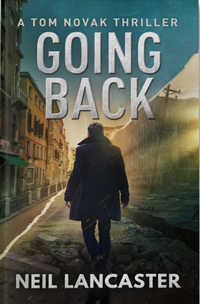
Pub Day Repost: Going Rogue by Neil Lancaster: Tom Novak and His Own Brand of Justice are Back!

Going Rogue

Going Rogue

by Neil Lancaster
Series: Tom Novak Thriller, #2

Kindle Edition, 322 pg.
Burning Chair Publishing, 2019

Read: November 12-14, 2019

I’m a little afraid that this doesn’t sound positive. It should because I enjoyed the book. I shelved the post for a day and tweaked it to help. But, if anything, I think I sound less positive than I did before. So here’s what this post is supposed to say: Great first part, really strong second part, with a couple of hiccups. Hopefully, that’s what you get out of it.

Following his exploits in Going Dark, DS Tom Novak has got himself a new assignment. He’s part of a task force investigating corrupt public figures—politicians, police, military, judiciary and whatnot. This is a much better fit for him than his old job, with a supervisor that he won’t have to battle with (much)—as this series progresses, I really look forward to spending more time with this group.

When a new domestic terrorist group begins attacking Muslim targets, the nation goes on high alert. It’s clear that the terrorists aren’t amatuers—they likely have military training and it’s possible they have assistance from someone in the government or police as well. Enter Novak’s group (every officer in London is looking to get into the hunt for the terrorists, but this team has a legitmate interest).

The man who carried out the first mission is in prison and he’s really the only lead anyone has into the Aryan Defence Front. Novak enters the prison as a Slovenian veteran under suspicion for the murder of a Muslim to gain his trust and hopefully an invitation to enlist. I really can’t describe more of the plot than that, as much as I want to—you need to see what happens from there.

The ADF is a small, but very well organized (and funded) group looking to create and increase divisions between Muslims and Non-Muslims in England—leading to Whites vs. Everyone Else with public riots, mayhem and the rest until supposed Right Thinking and Superior Whites kick everyone else off the island. Something about this group seems easier to believe than similar groups in other novels that I’ve read in the last couple of years—I can’t put my finger on why that is, I’ll just run with it and enjoy it.

There are basically two parts to this book (oversimplification warning) as there was to Going Dark—the undercover work and then what Novak has to do unofficially, using very un-approved methods. The undercover work portion of the book is just great. Yeah, he has to work a little faster than he did in Going Dark, but the short time-frame to get implanted with the group felt legitimate enough (I really hate it when UC officers are put into an inner circle within days of starting). In fact, this part being fast-paced really added to the tension and heightened the drama. Sadly (speaking for the characters’ viewpoint, not the readers’), as effective as the police are—they’re not enough, so Novak ends up Going Rouge to mop up with a little help from his friends that helped him so much last time.

I really have no complaints at all about the part where Novak “goes rogue” to get his man. However, the parts of the book focusing on his undercover work were much more interesting—they’re gripping, taught and seem more realistic. Given that, watching Novak and his allies take the rogue/extraordinary steps to get the job done—it is so hard to talk about this without ruining anything—was a blast. I did (and do) wince at what happens to one of his allies, it’s a relatively minor form of torture, but it literally curls my toes to think about. But aside from that

My biggest complaint is in the dialogue—and it’s not that big of a complaint, I should stress. There were two or three occasions where it seemed to me like that a character essentially repeated themselves. I’m not sure that I was clear there. An example (using the dullest dialogue ever):
George: I watched this TV show last night.
Liza: Good to know.
George: After my evening meal, I viewed a television program.
Sure, people do this all the time in real life, but 1. They are dull to talk to; and 2. I want fictional dialogue to be better than real life (if for no other reason than: editing). Also, some of the threats made by the bad guys toward the end seemed a little lifeless. This is their chance to shine, put some oomph into it.

Then again, if you’re reading a thriller for the sparkling dialogue, you’re probably looking in the wrong place.

Again, nothing against Tom Novak, Action Hero; but Tom Novak, Good Policeman is more up my alley. But either Tom Novak is a real pleasure to read—Going Rogue is filled with great action, a strong protagonist with some good supporting characters, and villains you really want to see thwarted and punished. This is just what you want in a thriller.

I do think that Going Dark was a slightly more effective and polished work, but I won’t hesitate to recommend this one—and I’m already eager to see what Novak is Going to do next.

Disclaimer: I received a copy of this from the author in exchange for this post and my honest opinion. I sincerely thank him for this.


3.5 Stars

LetsReadIndie Reading Challenge2019 Cloak & Dagger Challenge

Going Rogue by Neil Lancaster: Tom Novak and His Own Brand of Justice are Back!

Going Rogue

Going Rogue

by Neil Lancaster
Series: Tom Novak Thriller, #2

Kindle Edition, 322 pg.
Burning Chair Publishing, 2019

Read: November 12-14, 2019

I’m a little afraid that this doesn’t sound positive. It should because I enjoyed the book. I shelved the post for a day and tweaked it to help. But, if anything, I think I sound less positive than I did before. So here’s what this post is supposed to say: Great first part, really strong second part, with a couple of hiccups. Hopefully, that’s what you get out of it.

Following his exploits in Going Dark, DS Tom Novak has got himself a new assignment. He’s part of a task force investigating corrupt public figures—politicians, police, military, judiciary and whatnot. This is a much better fit for him than his old job, with a supervisor that he won’t have to battle with (much)—as this series progresses, I really look forward to spending more time with this group.

When a new domestic terrorist group begins attacking Muslim targets, the nation goes on high alert. It’s clear that the terrorists aren’t amatuers—they likely have military training and it’s possible they have assistance from someone in the government or police as well. Enter Novak’s group (every officer in London is looking to get into the hunt for the terrorists, but this team has a legitmate interest).

The man who carried out the first mission is in prison and he’s really the only lead anyone has into the Aryan Defence Front. Novak enters the prison as a Slovenian veteran under suspicion for the murder of a Muslim to gain his trust and hopefully an invitation to enlist. I really can’t describe more of the plot than that, as much as I want to—you need to see what happens from there.

The ADF is a small, but very well organized (and funded) group looking to create and increase divisions between Muslims and Non-Muslims in England—leading to Whites vs. Everyone Else with public riots, mayhem and the rest until supposed Right Thinking and Superior Whites kick everyone else off the island. Something about this group seems easier to believe than similar groups in other novels that I’ve read in the last couple of years—I can’t put my finger on why that is, I’ll just run with it and enjoy it.

There are basically two parts to this book (oversimplification warning) as there was to Going Dark—the undercover work and then what Novak has to do unofficially, using very un-approved methods. The undercover work portion of the book is just great. Yeah, he has to work a little faster than he did in Going Dark, but the short time-frame to get implanted with the group felt legitimate enough (I really hate it when UC officers are put into an inner circle within days of starting). In fact, this part being fast-paced really added to the tension and heightened the drama. Sadly (speaking for the characters’ viewpoint, not the readers’), as effective as the police are—they’re not enough, so Novak ends up Going Rouge to mop up with a little help from his friends that helped him so much last time.

I really have no complaints at all about the part where Novak “goes rogue” to get his man. However, the parts of the book focusing on his undercover work were much more interesting—they’re gripping, taught and seem more realistic. Given that, watching Novak and his allies take the rogue/extraordinary steps to get the job done—it is so hard to talk about this without ruining anything—was a blast. I did (and do) wince at what happens to one of his allies, it’s a relatively minor form of torture, but it literally curls my toes to think about.

My biggest complaint is in the dialogue—and it’s not that big of a complaint, I should stress. There were two or three occasions where it seemed to me like that a character essentially repeated themselves. I’m not sure that I was clear there. An example (using the dullest dialogue ever):
George: I watched this TV show last night.
Liza: Good to know.
George: After my evening meal, I viewed a television program.
Sure, people do this all the time in real life, but 1. They are dull to talk to; and 2. I want fictional dialogue to be better than real life (if for no other reason than: editing). Also, some of the threats made by the bad guys toward the end seemed a little lifeless. This is their chance to shine, put some oomph into it.

Then again, if you’re reading a thriller for the sparkling dialogue, you’re probably looking in the wrong place.

Again, nothing against Tom Novak, Action Hero; but Tom Novak, Good Policeman is more up my alley. But either Tom Novak is a real pleasure to read—Going Rogue is filled with great action, a strong protagonist with some good supporting characters, and villains you really want to see thwarted and punished. This is just what you want in a thriller.

I do think that Going Dark was a slightly more effective and polished work, but I won’t hesitate to recommend this one—and I’m already eager to see what Novak is Going to do next.

Disclaimer: I received a copy of this from the author in exchange for this post and my honest opinion. I sincerely thank him for this.


3.5 Stars

LetsReadIndie Reading Challenge2019 Cloak & Dagger Challenge

Yet More Quick Questions with . . . Nick Kolakowski

Man…this is the third time I’ve got to pick Nick Kolakowski’s brain (the first and the second, for you completists). I can’t believe he keeps coming back for more — but when I get great answers like these, I’ve gotta keep asking, you know? Do read the others if you’re wanting to learn more about him in general — I stuck to Maxine Unleashes Doomsday (I posted about it earlier today, in case you missed that) this time.

Hope you enjoy!

Did you set out to write Science Fiction or is that something that came about as you started the project?
I’ve always wanted to write a dystopian novel, but all my early attempts were ignoble failures; they were Diet Cormac McCarthy, pastiches of “The Road” that were just retreads of what everyone else was trying to do. It’s only when I mashed the concept onto a noir framework that it started to work for me—a heist novel was the grounding that I needed, even if the target of that heist, in this post-apocalyptic context, is really, really weird.
What were some of the new challenges (and/or freedoms) compared to your earlier works given this setting/genre?
I’ve never written a book that covers the whole scope of someone’s life. Any novel comes with its share of continuity challenges; even if the timeframe is really short (i.e., a few hours or days), you need to keep all of your pieces and characters aligned and consistent. But keeping the details of a character’s life aligned across decades can prove much more difficult—did this happen to her left or right arm when she was a teenager, etc.

In terms of freedoms, though, you can create an incredible character arc if you have that kind of super-expansive timeframe to play with. There’s a real poignancy to tracing someone’s life from their teenagehood to the very end, especially if the country is radically changing around them at the same time.

What came first—the story or Maxine? Is that your typical approach, or does it vary from project to project?
Maxine came first: I had a vision of a badass woman, bitter and chain-smoking but refusing to give up no matter what life threw at her. From there, I wanted a story that put her in worse and worse circumstances. What happens to someone who loses everything? What’s left?

In terms of actual writing, this book started in the middle. Then I wrote Maxine’s childhood and teenage-dom. Then I stalled for about a year because I couldn’t think of where to take her from there; it was only when I came up with the broader framework—of academics discussing her life and her impact on society—that I figured out where to take everything.

In this book, Preacher reminded me a lot of Main Bad Guy’s Walker—but a very different take on the character type. Is 2019 your Year of the Aging Badass, or is that just a coincidence?  I’m having a hard time not asking a spoiler-laden question about him, so let me take the easy way out – what would a prospective reader want to know about Maxine’s very disfunctional paternal figure?
That was a coincidence, but now that you mention it… yeah, Preacher and Walker are brothers of a type! I didn’t mean it that way; Preacher made his first appearance in my head circa 2014, while Walker emerged around 2017-18, when I was writing “Main Bad Guy.”

Not to spoil too much, but Preacher isn’t the badass that Maxine thinks. He’s ultra-tough, and he deserves his fearsome reputation in the ruined part of the world where Maxine and her family lives. But his weaknesses—and frankly, his lies—eventually force Maxine to step up. The thing about badasses like Preacher and Walker, they can serve as crutches for your main character; at some point, you need to neuter them or take them away if your protagonist is truly going to move on and grow.

Are you far enough into your next book to talk about it – are you sticking with SF, going back to Crime Fiction, or trying your hand at something like Wizards?
Haha! Noir-ish wizards would be pretty cool, although I’m sure someone has already covered that arena already. Up next is actually the sequel to “Boise Longpig Hunting Club,” so it’s back to crime fiction (and Idaho!). The as-yet-untitled sequel is actually giving me a bit of trouble, because I’m trying to ratchet up the tension as tightly as possible on Jake and Frankie, my two main characters (and siblings). They survived some insane crap in the first book, so I have to figure out a way to make things even crazier.
Thanks for your time—and thanks for introducing me to Maxine
Thank you! I love her. I hope readers will, too.

Maxine Unleashes Doomsday by Nick Kolakowski: Kolakowski Gets His Crime Fiction Chocolate in this SF Peanut Butter

This is one of those books that I’m uber-excited about, yet I don’t think I do a good enough job at explaining why I am. It’s just good.

 Maxine Unleashes Doomsday

Maxine Unleashes Doomsday

by Nick Kolakowski

eARC, 274 pg.
Down & Out Books, 2019

Read: October 29-31, 2019

“You know the trick to surviving? The one thing you got to do?”

“What’s that?” Maxine asked.

“You got to treat every day like an adventure. Like it’s fun, or a challenge, even when everything’s crappy. Especially when it’s crappy. Because otherwise, it’s all going to crush you.”

“I feel like I spent my whole life being crushed.”

“Well, that’s your fault. A normal job, trying to live a normal life, it’s just inviting people to stomp you. And they do.”

“Yeah.”

“But at least in my line of work, sometimes you get to stomp back…”

In case the author’s name looks familiar to you, yeah, you’ve seen me use it a few times this year—3 novellas, 1 short fiction collection, and now this novel, Maxine Unleashes Doomsday. It occurs to me now, that he was the first author I read this year, and he did a pretty good job setting the tone for 2019’s reading. This book is his first step out of Crime Fiction and into Science Fiction—dystopian SF, to be precise (that really should be obvious to anyone familiar with him, I don’t think he’s got a utopian novel in him).

That said, there’s enough of a Crime Fiction flavor to this SF novel, that fans of either genre will have enough of their drug of choice to be satisfied.

This is set in the near-future, at various points along the fall of the US/Western Civilization. While there are plenty of other characters to keep an eye on, our focus throughout is on Maxine. After a rocky start to life with a drug-addicted mother, and an unsuccessful academic career (although she tried for a little bit), she tries to follow her uncle’s example and become a criminal. She has some success in that, but a large failure resulted in life-threatening injuries to a friend and the loss of one of her arms. Following that, she tries to live a non-criminal life, she gets a job, settles down with a guy and has a kid. But her heart’s not in it, and she ends up dabbling in thievery. At some point, she abandons that life and sets her eyes on a criminal career.

Maxine is one of my favorite characters this year—she’s flawed (not as flawed as she thinks), she’s a fighter (not as good as she thinks), self-destructive, optimistic, and driven. She takes a lot of (metaphorical and literal) punches, and while she may not get up right away after them, she doesn’t stop moving forward. Ever. I love reading characters like that.

Her uncle, who goes by Preacher, is one of the most significant criminals in the New York area—and has some cops dedicated to taking him down, and any number of civilians supporting him. Off and on throughout her childhood, Preacher tried to get Maxine’s mother to leave her addictions behind to provide for and care for her kids. Between his power and influence on the one hand, and being just about the only adult to look out for her and her brother, it’s no wonder that Maxine will want to be part of his life. Readers of Kolakowski’s Main Bad Guy will enjoy playing a compare/contrast game with Preacher and Walker.

There are a number of other characters that greatly influence Maxine’s life and desires, but none so much as her uncle. And to get into them would just push this post beyond the length I want (and would end up spoiling stuff to really talk about).

By and large, this is the story of Maxine’s journey from a struggling public school student to being a wanted criminal (and beyond). But that’s not everything that’s going on. For the first chapter, you get the impression you’ll be reading a book about rival groups fighting for supplies in mid-apocalyptic New York. But then you’ll realize that’s not it at all, it’s a story about how Maxine became the tenacious gun-fighter and would-be criminal mastermind that she is. Eventually you discover that yeah, both of those are true, but Kolakowski’s really writing a different story—and boy howdy, you feel pretty clever when you suss it out, and it’s such a brilliant way of telling this story that you don’t mind being wrong about what the book is trying to accomplish. But even then, you won’t really understand everything until the last line of the book (I’m not sure I actually pumped my fist when I read it, but I probably thought about it pretty hard).

Yes, it’s a pretty violent book (this too, should really be obvious to anyone familiar with Kolakowsi), but most of the truly horrible stuff happens “off-screen,” making it a lot easier to take. The prose moves quickly and assuredly, the writing is sone with a strong sense of style and savoir faire. Frankly, it’s too lively and enjoyable to keep the most readers who aren’t into gunfights, etc. from being turned off by the violence.

It’s a well-realized dystopia, one that’s easier to imagine happening than say, Panem. Kolakowski does a wonderful job of littering this book with little details that tell you so much about the world his characters live in and entertain the reader. Hitting both of those notes regularly is a difficult task. For example:

“Someday I want to go to California,” Michelle told Maxine. “Did you know it used to be a state?”

and

This far north, the concept of local government grew teeth and claws. If you stuck to the highway, you would cross into territory controlled largely by the New York Giants, which had expanded beyond its origin as one of the nation’s most consistently mediocre sports teams to control a big swath of towns northeast of Buffalo.

One of the conceits of the book is that the material is a result of an academic study about Maxine. It’s one of the best moves that Kolakowski makes in this book (and it’s full of great moves). Don’t skim over these notes, you’ll be rewarded for your attention.

Oh, I should warn you: This book might put you off popcorn for a while. I’m just saying…

Rob Hart wrote one of the endorsements for this: “Take one of Richard Stark’s Parker novels and throw it in the blender with DVDs of Mad Max and The Warriors. Guess what? You just broke your blender. Find solace in this book, which is what you should have done in the first place.” I repeat that for a couple of reasons—1. I love the last two sentences. 2. He’s right, and says everything in 4 sentences that I tried to above. You should listen to one of us. Kolakowski has outdone himself with this one, it was a pleasure from end to end. You really need to read it.

Disclaimer: I was provided a copy of this novel by the author in exchange for this post and my honest opinion. My opinions are my own, and weren’t influenced by this.


4 1/2 Stars
LetsReadIndie Reading Challenge

Page 59 of 62

Powered by WordPress & Theme by Anders Norén