Tag: Non-Fiction Page 1 of 31

The Irresponsible Reader On…Self-Published Non-Fiction

(updated 7/21/26)
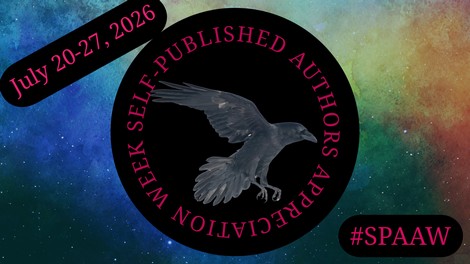
Self-Published Author Appreciation Week Banner has a gray bird on a black disk. Around the disk are the words, 'Self Published Authors Appreciation Week.' In the top left corner, it says, 'July 20-27, 2026.' In the bottom right corner it says, '#SPAAW'

From the first moment that people did the strange thing of asking me to talk about their books on my blog, I’ve been impressed by the quality of a lot of what’s been published by authors going out on their own, taking all the risks, shouldering all the responsibility, and doing all the work to get their words, their dreams, their blood, sweat, and tears on to the page (paper or electronic). This should be celebrated—it’s definitely appreciated, as we’re trying to show this week.

As part of this week-long celebration, I’m continuing my habit of highlighting the self-published works that I’ve blogged about over the last few years (or meant to blog about, but at least read)—just a sentence or two. Hopefully, this’ll be enough to make you click on the link to the full post. Beyond that, it’d be great if I inspired you to add a few of these to your TBR. Also, be sure you check out the other posts over at the SPAAW Hub.

Today I’m focusing on Self-Published Non-Fiction—which are primarily memoirs at their core, it’s what the authors do with the memoirs that makes these really stand out. But there are a few other things, too.

bullet Life and Death Behind the Brick and Razor: Code Red Diamond by Isaac Alexis, MD—A prison doctor uses his experiences to give suggestions for a healthy/healthier life. (my post about it)
bullet Life Lessons by Titan as told to Melaney Taylor Auxier—Illustrated by photos of the dog himself, Titan teaches about friends, making mistakes, eating well, being grateful, that sort of thing. (my post about it)
bullet How Not to Be an *SS: Essays on Becoming a Good & Safe Man by Andrew J. Bauman—Bauman calls men to an authentic, Biblical masculinity—one built on humility, kindness, and service. While offering concrete ways to set aside patterns of abuse and neglect. (my post about it)
bullet Kneading Journalism: Essays on baking bread and breaking down the news by Tony Ganzer—This is a collection of essays about the state of journalism, how people relate to and view the media we consume, and what the future may hold. Oh, and bread recipes, of course. It makes sense in context (and is a really great idea). (my post about it)
bullet Grammar Sex and Other Stuff by Robert Germaux — quick essays with humor and heart (my post about it)
bullet More Grammar Sex: Essays About Life and Stuff by Robert Germaux — more quick essays with humor and heart. (I apparently didn’t post about this…but basically see what I said about the previous book here )
bullet No Problem, Mr. Walt: Building a Boat, Rebuilding a Life, & Discovering China by Walt Hackman—Hackman was one of the first self-published authors to reach out to me, and I’m so glad he did. A fascinating read about a man deciding to have an authentic Chinese junk built for him to use as a houseboat in California. (my post about it)
bullet Fifth Sparrow Rising by Cindi Hartley—A little bit a bit of Hartley’s personal story and faith, a little bit of the experiences through some of the hardest parts of her life, and things she;s learned through it all. All told in the hope that she can show others they are “not alone and that there is a way to find light again, as well as be a light, even when one has lived through darkness.”
bullet Finding Hope in Hard Things: A Positive Take on Suffering by Pierce Taylor Hibbs—The central premise is that God uses the “hard things” in life to shape us into the people he wants us to be, and uses some of the hard things in his life as case studies to demonstrate how they were used so the reader is equipped to look at their own lives and see the purpose in their suffering. (my post about it)
bullet The Great Lie: What All of Hell Wants You to Keep Believing by Pierce Taylor Hibbs—Paired with Hibbs’ characteristic clear prose and gift with language and illustrations, Hibbs reminds the reader that God is always speaking to us, through both the Creation and His Word. (my post about it)
bullet In Divine Company by Pierce Taylor Hibbs—Pierce’s treatment of prayer focuses on the communicative nature of God and His image bearers and then nurturing that in our lives to improve our prayer. (my post about it)
bullet Struck Down but Not Destroyed: Living Faithfully with Anxiety by Pierce Taylor Hibbs—Drawing on what he’s learned from over 12 years of anxiety, Hibbs talks about learning to see what God’s purpose in the suffering is (anxiety disorders specifically, but easily transferable to other types), understanding that His hand is guiding all things—including our problems—so how do we in faith (without denying the suffering) rest in faith. (my post about it)
bullet And Drink I Did: One Man’s Story of Growing Through Recovery by Jay Keefe—It’s all there in the subtitle, Keefe tells about his OCD, his alcoholic days, his getting sober, and how he’s trying to help others since then. Powerful stuff. (my post about it)
bullet If You Give A Mouse Metformin by Nikhil Krishnan, i Cenizal (Illustrator) — 1 part picture book parody, 1 part satire, 1 part good look at the pharmecutical process (the good and the bad) (my post about it)
bullet Killer Conversations with Rex Stout and John McAleer—a collection of interview snippets between Stout and his biographer touching on topics like: his writing, the Wolfe mysteries, plotting, the modern detective story, talking about other authors and more. (my post about it)
bullet How to Take Over the World: Practical Schemes and Scientific Solutions for the Aspiring Supervillain by Ryan North—A tongue-in-cheek way to talk about some of the most advanced science around and how it can (and in some ways is) be used to destroy the world. (my post about it)
bullet The Genius’ Guide to Bad Writing by R.T. Slaywood, R.C. Martinez—A guide for the writer who is tired of success and wants to reclaim their lives from answering the siren call of fortune and fame that comes to every author. Slaywood and Martinez have a 10-Step program guaranteed to ruin a novel or two and stop a career dead in its spot. (my post about it)
bullet Uber Diva by Charles St. Anthony—a humorist writes a memoir of a Lyft/Uber driver mixed with a guide to starting/surviving/thriving as one in a tough market. St. Anthony also has a few other books out now that are probably worth a read. (my post about it)
bullet Flying Alone: A Memoir by Beth Ruggiero York—A female pilot’s memoir of her path from flight school to flying for TWA (now that I have a son learning to fly, some of her more harrowing experiences keep flashing through the back of my mind). (my post about it)


If you're a self-published author that I've featured on this blog and I didn't mention you in this post and should have. I'm sorry (unless you're this guy). Please drop me a line, and I'll fix this. I want to keep this regularly updated so I keep talking about Self-Published Authors.

Self-Published Authors Appreciation Week circle logo and the Irresponsible Reader Pilcrow in front of an open book

The 2026 Self-Published Authors Appreciation Week Logo was made by Witty and Sarcastic Book Club

The Reverse Centaur’s Guide to Life After AI by Cory Doctorow: Prudent, Thoughtful, and Entertaining (naturally)

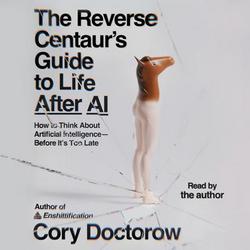
Cover of The Reverse Centaur's Guide to Life After AI by Cory DoctorowThe Reverse Centaur’s Guide to Life After AI: How to Think About Artificial Intelligence—Before It’s Too Late

by Cory Doctorow

DETAILS:
Publisher: Macmillan Audio
Publication Date: June 23, 2026
Format: Unabridged Audiobook
Length: 5 hrs, 28 min.
Read Date: June 25, 2026
Buy from Bookshop.org Support Indie Bookstores

A reverse centaur is a human who is conscripted into acting as an assistant to a machine. There’s a classic I Love Lucy episode where Lucy and Ethel are working on an assembly line at a chocolate factory, taking bonbons off the belt and wrapping them in paper. As the belt goes faster and faster, Lucy and Ethel have to work at superhuman speed. They’re reverse centaurs: the machine can move the chocolates from one place to another, but it needs a human to pack them into the box, and the humans who act as its assistant are made to work at a pace that exceeds all human capacity until calamity ensues.

What’s The Reverse Centaur’s Guide to Life After AI About?

If I try to summarize this, we’re going to be here for a while (or I’ll pitch it in a tweet-length paragraph that won’t do the job), so let me quote from the official blurb:

The Reverse Centaur’s Guide to Life After AI is not another anti-AI screed. Cory Doctorow uses AI in his work every day. As a creative person, he has no moral or dogmatic issue with AI—he thinks the technology is useful, even exciting, and full of potential. And yet.

AI has arrived surrounded by unprecedented hype driven by a tech industry desperate to maintain its unprecedented valuation based on its own promises of endless financial growth. Despite the fact that almost all of AI’s real-world implementations have proved underwhelming, AI is projected to be worth more than $16 trillion—a number that only makes sense if AI replaces vast swathes of the wage-earning human workforce. To justify that level of “value,” every story about AI must be presented as inevitable, world-changing disruption. Even the tales of the robot apocalypse are a calculated attempt to bolster the fearsome power of AI.

For Doctorow, it is imperative to see through that hype to the real story, to understand the technology not just for what it does, but for who it does it to and who it does it for. From that point of view, the story of AI is indeed dramatic and unprecedented, having generated an investment bubble so big that it endangers the entire world economy. In The Reverse Centaur’s Guide to Life After AI—as he so successfully did in Enshittification—Doctorow recounts both how we found ourselves in this dire situation and how we can get through it, to a life “after” AI in which the tools work for us, not the other way around.

There are three main themes to the book the philosophy of inevitablism that drives so much of the conversation around AI (particularly on the pro-AI side); the inevitable crash of the AI-bubble and what that will do to workers, industries, and the environment; and how to go on after the bubble pops—how we can use AI in a useful, constructive way to actually help people.

So, what did I think about The Reverse Centaur’s Guide to Life After AI?

…the future is up for grabs. It is not inevitable. Al isn’t a genie that can’t be put back into a bottle. How we use AI is up to us. Whether we use Al is up to us. The future can be ours, if we never stop remembering that the most important fact about a technology isn’t what it does, it’s who it does it for, and who it does it to.

I was much more anti-AI when I opened this book than I was at the end. I actually figured that Doctorow would give a pretty well-thought-out “another anti-AI screed” (I clearly didn’t read the description of the book). But Doctorow has made me reconsider some of my notions. I’m not sure he changed my mind—I’m still thinking.

I should rush to say that Doctorow doesn’t defend the notion of using so-called “generative AI” to create art, nor would I. But…transcribing audio files? Getting some facts for an article? If done in the right way, maybe.

But my post isn’t supposed to be about what I think—it’s about the reading experience. This is classic Doctorow—engaging, approachable, frequently amusing, thoughtful and thought-provoking. A good mixture of research and opinion.

The central image of the reverse centaur and the frequent call-backs to the idea that “the most important fact about a technology isn’t what it does, it’s who it does it for, and who it does it to” will stick with the reader, inform their ideas about AI, and so many other things.

The audiobook hold at my library came in a day before the hardcover—so I listened to it, and then re-read a couple of passages to make sure I heard what I thought I did to solidify my grasp on the notion. So, I think I can speak to both formats. It’s a short read (or listen), it’s an engaging read (or listen). Either way, as one would expect, with Doctorow sounding off on technology—you’re in for a treat.

This post contains an affiliate link. If you purchase from it, I will get a small commission at no additional cost to you. As always, the opinions expressed are my own.

Irresponsible Reader Pilcrow Icon

What’s Next by Melissa Fitzgerald & Mary McCormack: An Entirely Too-Brief Love Letter to The West Wing, The People Who Made It, and a Tribute to Public Service

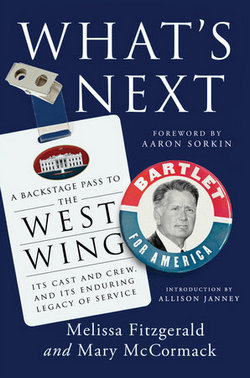
Cover of What's Next by Melissa Fitzgerald & Mary McCormackWhat’s Next: A Backstage Pass to The West Wing, Its Cast and Crew, and Its Enduring Legacy of Service

by Melissa Fitzgerald & Mary McCormack

DETAILS:
Publisher: Dutton
Publication Date: August 13, 2024
Format: Hardcover
Length: 608 pg. 
Read Date: June 1-27, 2026
Buy from Bookshop.org Support Indie Bookstores

What’s the Jacket-Flap Say about What’s Next?

A behind-the-scenes look into the creation and legacy of The West Wing as told by cast members Melissa Fitzgerald and Mary McCormack, with compelling insights from cast and crew exploring what made the show what it was and how its impassioned commitment to service has made the series and relationships behind it endure.

Step back inside the world of President Jed Bartlet’s Oval Office with Fitzgerald and McCormack as they reunite the West Wing cast and crew in a lively and colorful “backstage pass” to the timeless series. This intimate, in-depth reflection reveals how The West Wing was conceived, and spotlights the army of people it took to produce it, the lifelong friendships it forged, and the service it inspired.

From cast member origin stories to the collective cathartic farewell on the show’s final night of filming, What’s Next will delight readers with on-set and off-camera anecdotes that even West Wing superfans have never heard. Meanwhile, a deeper analysis of the show’s legacy through American culture, service, government, and civic life underscores how the series envisaged an American politics of decency and honor, creating an aspirational White House beyond the bounds of fictional television.

What’s Next revisits beloved episodes with fresh, untold commentary; compiles poignant and hilarious stories from the show’s production; highlights initiatives supported by the cast, crew, and creators; and makes a powerful case for competent, empathetic leadership, hope, and optimism for whatever lies ahead.

It’s Not That Kind of Book

…the bad news: We will not be covering every single episode of The West Wing in this book. Or even every “iconic” one. Or even every so-called classic moment. There are not nearly enough pages in this book to dig down into all the hopeful-moving-dramatic-funny-romantic-bantery-big-block-of-cheese moments that were served up over seven seasons.

The fact that they took until page 206 to tell the reader that seems like it was too late. It was pretty clear—unless it was going to be very brief coverage of every episode.

Instead:

Finally, if you’re hoping to find within these pages genuinely sophisticated analyses of the nighttime basketball game from season 1 or the daytime hoops from that Camp David summit episode, we’re sorry to say it, but you’re out of luck. On the other hand, we won’t be going into Zoey dating that Jean-Paul guy, so there’s an upside too.

We’re happy for the trees saved by not having written a ten-thousand-page book, and we hope you’ll enjoy the upcoming deep dives into what we consider some stellar “key episodes.”

In lieu of that, the authors do recommend The West Wing Weekly podcast—which they drew a lot from throughout the book. It’s probably good that they didn’t, in a way, I (and many others) would’ve spent too long comparing their coverage to the podcast episodes.

Still, I’d have enjoyed it.

Tributes to Two Particular Stars

One of the longest chapters in the book was Thirty-Three, “Gone,” which covered the deaths of John Spencer and Leo McGarry. It was a fantastic tribute, featuring observations and stories from so many cast and crew about it. They also reprinted a couple of eulogies. Those cited in the chapter come close to hagiography—perhaps even indulge in it—but it’s hard to come away from that without a glimpse of the devotion that Spencer inspired in those that knew him and worked with him.

If you can read that chapter with dry eyes, well, as Mrs. Landingham would say, “I don’t even want to know you.”

Similarly, there’s a chapter devoted to singing Martin Sheen’s praises. It’s not nearly as emotionally hard-hitting, but just about as good.

Service Stories

Throughout the book, the authors talk about some of the ways that cast and crew volunteer for various causes and programs, help candidates campaign for office, and whatnot. Time after time, we read about them being inspired by something they learned about from someone on set. They go to pitch in with something that a coworker is working on, and then they become involved.

In addition to talking about the various causes they’re involved with, the reader is provided with links so they can donate/volunteer/learn more about them.

The show talks about the call to just show up. The authors try to provide opportunities to do so. It’s really a great combination.

So, what did I think about What’s Next?

I can’t tell you how many times I’ve watched the series straight through, and several individual episodes I’ve seen multiple other times. As I write this, Season 5 Episode 6, “Disaster Relief,” is on the other monitor. The Post-Sorkin Era is still getting on its feet and is benching Josh for Angela Blake—it’s a giant mistake (compounded by not keeping her around after this…ahhh, she’d have been fun to see after this). Yes, they make some delicious lemonade from this. But I’m going to stop talking about that now…I’m just saying that I’m exactly the kind of Wing-Nut they wrote this book for. *</span?

But boy, oh, boy, did it work for me. I cannot say enough good things about the book.

Do I wish we got a little more time on the “John Wells Administration”? Yes. We didn’t get the depth on the casting stories of the main characters that came in late. We didn’t get quite as many Key Episode features from that time. And so on.

But honestly, we didn’t get enough of those for the Sorkin years, either.

Honestly, I wanted at least another 400 pages.

Even at 600 pages, this book breezed by. I limited myself to 1-2 chapters a day just so I could relish the experience, and it moved too quickly for me.

Fans of the series should read this. People who aren’t as die-hard as some of us should probably give it a read—and then will find themselves rewatching it again—and likely turning to things like the podcast—because they’ve fallen further under the spell.

I can see myself coming back to this book—at least chapters and parts of chapters again soon. The index of organizations/causes in my copy should also get some use. The book is a thinly-disguised love-fest, and I was in all the way. You will be, too, if you’re at least a little bit interested in the idea.

* Then again, it took me almost two full years to read my pre-ordered copy.

This post contains an affiliate link. If you purchase from it, I will get a small commission at no additional cost to you. As always, the opinions expressed are my own.
Irresponsible Reader Pilcrow Icon

Quick-Take Catchups: The Leftovers from April

Once again, I’m a few weeks behind on this, but that “To Write About” stack is still calling. Time for me to do a few more of these—emphasizing pithiness, not thoroughness.


Cover of Violet Thistlewaite Is Not a Villain Anymore by Emily KrempholtzViolet Thistlewaite Is Not a Villain Anymore

by Emily Krempholtz, Emma Ladji (Narrator)

DETAILS:
Publisher: Penguin Random House Audio Publishing Group
Publication Date: November 18, 2025
Format: Unabridged Audiobook
Length: 11 hrs.
Read Date: March 31-April 2, 2026

A nice little story about a supervillain (however coerced into it she might have been) trying to go straight and live a quiet life. Naturally, it doesn’t go that well, people learn who she is/was and…things get dicey. It’s a very cozy little story with just a hint of danger. This is primarily a Romance with a streak of Fantasy. Not totally my cup of tea, but a very pleasant book.

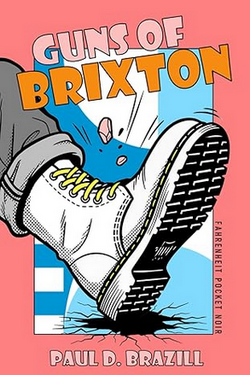
Cover of Guns of Brixton by Paul D. BrazillGuns of Brixton

by Paul D. Brazill

DETAILS:
Publisher: Fahrenheit Press
Publication Date: November 15, 2025
Format: Paperback
Length: 181 pg.
Read Date: April 15, 2026

This is a dark noir full of insane comedy and violence. Peopled by characters you love reading about and never want to meet the likes of in real life. The various plotlines and character arcs overlap and weave together in a way that is really impressive–and is very typical for this kind of read. Just kick back and enjoy it.

It’s fast and furious read that will make you want more from Brazill. I have to leave it for a catch-up post like this, where I’m forced to be vague, I’d end up telling you too much about it in a full-length post.

My only complaint is that as an American with little (read: no) understanding of FIFA history, I had to hit up a friendly-neighborhood search engine to understand the ending. I’d be clearer there, but I don’t want to ruin anything. It’s worth getting to that point and then learning what it meant–the delayed gratification is still gratifying.

Cover of Replaceable You by Mary RoachReplaceable You: Adventures in Human Anatomy

by Mary Roach

DETAILS:
Publisher: Penguin Random House Audio Publishing Group
Publication Date: September 16, 2025
Format: Unabridged Audiobooks
Length: 8 hrs., 37 min.
Read Date: April 13-16, 2026

Overall, a really good look at the frontiers of human transplant technology—and other ways to replace broken/sick/malfunctioning human parts. Oh, and hair. There was a lot about hair replacement and the various technologies there.

As is typical for a book by Roach, there’s a lot of good information here. A couple of chapters that don’t seem worth it. Some jokes were winners. Some jokes didn’t seem worth the effort.

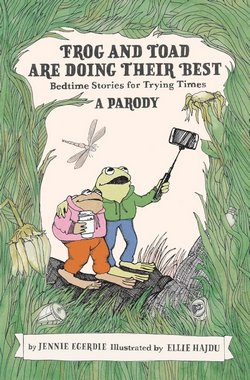
Frog and Toad Are Doing Their Best by Jennie EgerdieFrog and Toad Are Doing Their Best [A Parody]

by Jennie Egerdie, Ellie Hajdu (Illustrator)

DETAILS:
Publisher: Running Press Adult
Publication Date: October 5, 2021
Format: Hardcover
Length: 96 pg.
Read Date: April 17, 2026
Buy from Bookshop.org Support Indie Bookstores

As I recall, I always thought that the Frog and Toad were pleasant enough, but needed something more to be something I’d read when there wasn’t anything else handy. Things were similar with my kids and the books. This is a little better—only because it’s updated and vaguely amusing to see the pair in 2020s mode.

The art is as perfect as it could be, like it was by the original artists.

It’s not a must-read, but it’s a quick shot of pleasure.

Cover of Worse than a Lie by Ben CrumpWorse than a Lie

by Ben Crump

DETAILS:
Publisher: Bantam
Publication Date: February 17, 2026
Format: Hardcover
Length: 368 pgs.
Read Date: April 16-17, 2026
Buy from Bookshop.org Support Indie Bookstores

I had huge hopes for this one, expecting that I’d read the series to follow. That is not going to happen. The dialogue is atrocious. The plot was…fine, but executed messily, yet predictably. The bad guys are as evil as evil can be—no subtlety to it at all. Actually, that was one of my notes about the book as a whole—there’s nothing subtle about it. The solution and the aftermath were practically a fairy tale. I really can’t think of anything positive to say. The promising premise deserved a whole lot better.

Cover of This Book Made Me Think of You by Libby PageThis Book Made Me Think of You

by Libby Page, Zadeiah Campbell-Davies (Narrator)

DETAILS:
Publisher: Penguin Random House Audio Publishing Group
Publication Date: February 3, 2026
Format: Unabridged Audiobook
Length: 10 hrs., 26 min.
Read Date: April 16-20, 2026

Oh, golly, this book was so heartwarming and sweet. It’s also a great look at grief and the way it lingers in the lives of those affected by death. Primarily it’s a sweet book about a (dead) husband’s love expressed through his wife’s passion for reading. Each month, a book is waiting for her at a local bookstore.

Oh, yeah—this is also a tribute to local bookstores and what they can mean for a community.

Grief, books, love, and bookstores. What more could you want?

Cover of A Memory Called Empire by Arkady MartineA Memory Called Empire

by Arkady Martine

DETAILS:
Series: Teixcalaan, #1
Publisher: Tor Books
Publication Date: February 25, 2020
Format: Paperback
Length: 480 pg.
Read Date: April 20-24, 2026
Buy from Bookshop.org Support Indie Bookstores

Oh, there were just so many great ideas packed into this volume. Several layers of political machinations—with two cultures that are new to the reader. A mind-blowing technology that raises all sorts of questions about identity, memory, and life. A character death that makes me mad months later. And a looming threat that’s so far in the background that few characters realize it’s a thing.

I did enjoy it, I’m just not sure how much —but I’m so glad that I read it. I need to find time for book two.

This post contains affiliate links. If you purchase from any of them, I will get a small commission at no additional cost to you. As always, opinions are my own.

The Best Dog in the World edited by Alice Hoffman: All the Best Dogs (except yours or mine)

Cover of The Best Dog in the World edited by Alice HoffmanThe Best Dog in the World: Essays on Love

edited by Alice Hoffman

DETAILS:
Publisher: Scribner
Publication Date: March 10, 2026
Format: Hardcover
Length: 208 pg.
Read Date: May 11-29, 2026
Buy from Bookshop.org Support Indie Bookstores

All these years, I never had a dog and I didn’t know what I was missing exactly. I had opinions on the matter, It seemed that dog people were the kind of folks you saw in beer commercials tossing Frisbees on the beach. The kind of people who have season tickets to the Mets. The kind of people who never miss a Giants game. The same people who never miss the Rolling Stones when they’re touring through. The kind of people who probably would have voted for Teddy Roosevelt and then for his cousin Franklin. Easygoing. Unflappable. Cool. A dog person is someone who first and always loves dogs. A dog person treasures connection and brings humans together. A dog person is open to the possibilities that come from loving an animal that needs you and loves you back. And now, after a lifetime of not being one, I was a dog person.

from Adriana Trigiani’s “Lola”

Warning

You know how each National Dog Day in August, I post something called “These Dog Days Aren’t Over” about books where dogs live? This book will not be appearing in that post.

Of the 16 dogs written about in this book, three were alive when the essay was written—that’s 19%. And one of the essays about a dog who was living talks about the dog’s aging, and the essayist thinks about life after the dog. So the percentage is almost lower.

If you’re one of those readers who (understandably) want every dog in a book to live, this is not one for you.

But for those who can appreciate something well-written where a dog doesn’t have to keep running and barking, read on.

What’s The Best Dog in the World?

This is a collection of essays by Isabel Allende, Chris Bohjalian, Bonnie Garmus, Roxane Gay, Emily Henry, Ann Leary, Tova Mirvis, Jodi Picoult, Elizabeth Strout, Amy Tan, Adriana Trigiani, Nick Trout, Paul Yoon, and Laura Zigman. The title pretty much tells you what to expect, but Alice Hoffman’s afterword sums it up pretty well:

In reading these essays I realize they are all about loyalty and love. How lucky we are to have a dog in our lives. How treasured our time with them is. I have come to realize there is not necessarily one best dog in the world, but, if we’re fortunate, many best dogs, who each enrich our lives in different ways.

In the essays contained here there are stories about loss and family, about new relationships and hardships, but each and every one is about love.

So, what did I think about The Best Dog in the World?

Like most dog owners, I view her with absolute objectivity as a canine genius with the sweetest soul on the planet.

The only dog owners that would likely disagree with Chris Bohjalian are people like me, who are convinced their dog missed out on the day intelligence was passed out with the sweetest soul on the planet.

But he hits on the main point of the book. I seem to be on a theme this year, a few months back, I read a novel called All the Best Dogs—and the theme was all the dogs are the best dogs. Then we get this compilation—which basically says the same. Every dog-person basically knows this already—it’s just affirming to see in print.

This collection was like talking with a bunch of new friends about our dogs—much like a lot of conversations at a dog park, just without the interruptions to point out something ridiculous or cute (or both) happening in the park itself. Oh, and more erudite and eloquent.

There were two essays that didn’t work for me—but the rest did. Some were just satisfying, some were, “I want to spend hours with this author and/or their dog.” One of the ones that didn’t work for me was actually really well written, and I was impressed by the way they worked in life events with the discussion of their dog. I just thought it was too dog-light to fit the theme. The other was about a show dog. Sorry, Amy Tan, I just had a super-hard time caring. I’m sure it’s reverse-snobbery on my part (although Frankie seems like a well-loved dog, with a great life—especially in retirement). Also, there was some really good writing in Tan’s essay (not a shock to anyone).

Emily Henry almost made me weep; Bonnie Garmus convinced me to read Lessons in Chemistry in the hope that the same voice shines through; I’m going to have to check out Paul Yoon (and probably a couple of the others); the Jodi Picoult in these pages is not the one that my wife describes to me when she talks about her books (this is likely true of most of these writers. Different topics, etc.) And the list goes on.

This was sweet, touching, uncommonly relatable, heartstring-tugging, and smile-inducing. I don’t know if you’ll walk away with a fresh understanding of the love of a human for a canine—or a canine for a human—but it’ll be refreshed.

This post contains an affiliate link. If you purchase from it, I will get a small commission at no additional cost to you. As always, the opinions expressed are my own.
Irresponsible Reader Pilcrow Icon

True Color by Kory Stamper: The Struggle to Define Blue (and other colors)

Cover of True Color by Kory StamperTrue Color: The Strange and Spectacular Quest to Define Color—from Azure to Zinc Pink

by Kory Stamper

DETAILS:
Publisher: Knopf
Publication Date: March 31, 2026
Format: e-ARC
Length: 320 pg.
Read Date: March 21-25, 2026
Buy from Bookshop.org Support Indie Bookstores

What’s True Color About?

Have you ever had trouble describing a color to someone? Strange sea creatures, sunsets, a (hopefully) food stain on a shirt, paint on a wall? It’s not easy. For some of us more than others, I’m sure (I’m at the weak end)—but it’s not that easy.

Now, try to imagine doing it not for a friend or paint clerk—but for the thousands or more that might read your description (read: definition) in a dictionary or other reference work.

Stamper points to two significant markers in the development of these definitions. The first is that prior to the First World War, Germany was the world’s biggest source of commercial dyes. During the War, two things happened—first, those plants became weapons factories (and learning how easy that was is a bit disconcerting), and second, places like the U.S. had to start producing their own. And if, say, two different suppliers understood a tint of green differently—the camouflage they provided to the Army in Europe could have significant consequences.

The other is a little less dramatic, but no less impactful. When people in the U.S. started making oleomargarine in the 1800s, dairies were upset about them coloring it to look like butter—this resulted in legal battles, and eventually, the U.S. Congress weighed in.

These two things began efforts in the U.S. to codify colors, dyes, hues, and whatnot into some sort of standard.

Fast-forward to when Kory Stamper is editing Merriam-Webster’s website (and from her description, this is not an easy job), when she came across some odd color definitions. The wording was odd, the definitions themselves were puzzling—where did these come from?

Thus begins this story about the attempts to define colors—in a way that satisfies diverse audiences like artists, scientists, and general readers—during the development of their Second and Third Unabridged Dictionaries. Stamper tells the story of putting these dictionaries together, some of the editors who worked on them—and worked with outside consultants like I. H. Godlove (and his wife and colleagues) and others to craft these definitions.

It’s a book of human drama, academic politics, technological limitations, and the limits of human language and understanding.

Why did I pick this up? Why did I keep reading?

I picked this up because I enjoyed Stamper’s earlier book Word by Word: The Secret Life of Dictionaries and because I was intrigued by the question—how do you define a color? I also hoped to pick up some tips to help me with that. Spoiler: I did not. But I don’t care. This was better. It’s also encouraging to know that even professional definers struggle.

Why did I keep reading? There’s just so much trivia—especially in the beginning, so many strange little facts you pick up along the way—for example (taken from the publisher’s description, because I hate to ruin stuff like this) “did you know that the word ‘puke’ used to refer to a fashionable shade of reddish-brown before it was associated with vomit?”

But more importantly, I was just fascinated by the way these editors and experts went about putting together these dictionaries—the differences in approach between the two—and so on. Stamper can make what one might think is dry and dusty history come alive and fill it with humanity.

Readers of Nero Wolfe will learn that he wasn’t the only one who had problems with the Third Unabridged Dictionary—although most derided it in reviews or newspaper articles, rather than burning it page by page in their fireplace.

So, what did I think about True Color?

I was, again, fascinated by the people she focused on to tell her story. I wanted to talk to people about them—I’d like to learn more about them and their work.* Her following up with the Godlove family’s living relatives so we could get more insight into the people behind the work was a wonderful touch.

Like her previous book, True Color will disabuse many of what they imagine the behind-the-scenes of Dictionary production is like. You will read about one of the worst bosses around, for example. Stress, overwork, burnout, crazy turnover, rampant misogyny (okay, you might have guessed that given the time periods), tiny budgets, and more. It turns out that Dictionaries are put together by human beings, not beings of pure intellect.

Also, I cannot say enough about Stamper’s use of language. It will not come as a surprise that someone who works on dictionaries has a way with words—she has ready access to all the best ones, after al—but to see it in action is something else. Stamper’s rich vocabulary is on full display here, and she crafts it beautifully.

* I will not—particularly about their work, I wouldn’t understand it. But I wanted to.

Disclaimer: I received this eARC from Knopf via NetGalley in exchange for this post, which contains my honest opinion—thanks to both for this.

This post contains an affiliate link. If you purchase from it, I will get a small commission at no additional cost to you. As always, the opinions expressed are my own.
Irresponsible Reader Pilcrow Icon

The Land of Sweet Forever by Harper Lee: Short Works by an American Master

Cover of The Land of Sweet Forever by Harper LeeThe Land of Sweet Forever: Stories and Essays

by Harper Lee

DETAILS:
Publisher: Harper
Publication Date: October 21, 2025
Format: Hardcover
Length: 224 pg.
Read Date: January 28-30, 2026
Buy from Bookshop.org Support Indie Bookstores

What’s The Land of Sweet Forever?

The short version is that this is a collection of eight short stories and eight short non-fiction pieces by Harper Lee.

That seems a bit lacking, so here’s what the Publisher says:

Harper Lee remains a landmark figure in the American canon – thanks to Scout, Jem, Atticus, and the other indelible characters in her Pulitzer-winning debut, To Kill a Mockingbird; as well as for the darker, late-’50s version of small-town Alabama that emerged in Go Set a Watchman, her only other novel, published in 2015 after its rediscovery. Less remembered, until now, however, is Harper Lee the dogged young writer, who crafted stories in hopes of magazine publication; Lee the lively New Yorker, Alabamian, and friend to Truman Capote; and the Lee who peppered the pages of McCall’s and Vogue with thoughtful essays in the latter part of the twentieth century.

The Land of Sweet Forever combines Lee’s early short fiction and later nonfiction in a volume offering an unprecedented look at the development of her inimitable voice. Covering territory from the Alabama schoolyards of Lee’s youth to the luncheonettes and movie houses of midcentury Manhattan, The Land of Sweet Forever invites still-vital conversations about politics, equality, travel, love, fiction, art, the American South, and what it means to lead an engaged and creative life.

There are three pieces that I want to focus on: two short stories and one essay.

“The Cat’s Meow”

This story takes place in Maycomb—our favorite fictional community. Our narrator (a thinly disguised Harper Lee) returns home for a visit from New York City, and stays with her sister (a thinly disguised version of her sister, Alice). In this story, Alice has a “Yankee Negro” gardener with a criminal past. His actions, life, and interactions with people in the community are the focus of the story.

The narrator is clearly not comfortable with the way that the gardener is treated—but lacks the courage to follow through beyond a comment or two lest she do something to cause an irreparable rift.

It’s easy to judge the narrator (as the editor seems to in her introduction), but it’s also really easy to empathize and root for her quiet push-back and hope for something bigger around the corner. Anyone who’s been in a dicey conversation in the last few years with a relative on the other side of a political/social divide will be able to relate to this.

The characters are fully human and flawed. Everything is incredibly relatable, and you can’t help but feel for the gardener (even when he makes some huge errors in judgement)

“The Land of Sweet Forever”

This story right here is worth the purchase price of the book. It showed up in Go Set a Watchman, but don’t hold that against it.

There’s something about the characters and conversations in this story that just worked for me—the storyline itself is almost non-existent, but the scenes that make it up are so good that it doesn’t matter.

I can’t put my finger on what about this that clicked with me, and I really don’t know how to discuss it. It’s a simple little story that made my heart swell.

“Love—in Other Words”

I wasn’t sure what to expect from the non-fiction portion of the book, but when I finished it, I put in my notes, “If this is what these essays are going to be like, I’m very happy.” Sadly, this was the best of the batch—by a lot.

It’s really a basic essay about love—Lee invokes historical figures, general sentiment, literature, and the Bible, and comes up with something that just strikes you as true. Practically timeless. Yeah, it’s basic, but it doesn’t need to be more.

So, what did I think about The Land of Sweet Forever?

A lot of the stories/pieces were just fine or underwhelming—the collection as a whole isn’t that great. The high points were high (and I didn’t discuss them all), and the low points were forgettable.

But this is definitely a case of the whole being greater than the sum of its parts. We get to see a lot of different aspects of Lee here—ways she developed as a writer. The way she can lift bits of her older writing and incorporate them into her novels. Her personality. This is a great way to understand her.

I’ve heard and read the story so many times about her friends giving her a place to live for a year so she can focus on To Kill a Mockingbird. We all know how close she was to Capote, or how much she admired Gregory Peck. Reading those things in her own words just makes those things we all know resonate so much more clearly.

I don’t know how often I’ll read this entire collection again (certainly before I re-read Go Set a Watchman), but I can dip back into it here and there. But I’m so glad we have it. I think if you have more than a passing interest in Lee, you will, too.

This post contains an affiliate link. If you purchase from it, I will get a small commission at no additional cost to you. As always, the opinions expressed are my own.
Irresponsible Reader Pilcrow Icon

30 Key Moments in the History of Christianity by Mark W. Graham: Quick Vignettes from the Early Global Church

Cover of 30 Key Moments in the History of Christianity by Mark W. Graham30 Key Moments in the History of Christianity:
Inspiring True Stories from the Early Church Around the World

by Mark W. Graham

DETAILS:
Publisher: Baker Books
Publication Date: January 27, 2026
Format: Paperback
Length: 272 pg.
Read Date: February 15-22, 2026
Buy from Bookshop.org Support Indie Bookstores

This emphasis on Our People* across space and time might prompt us to question the extent to which our own national, political, and cultural identities compete with or even overshadow our most foundational (and eternal) identity as Christians. In some important ways, modern American Christians have more in common with Christians from seventh-century Nubia, Persia, and southern Arabia than with agnostic neighbors who share our national flag.

* The term that Graham uses to describe Christians.

What’s 30 Key Moments in the History of Christianity About?

This is one of those that’s all in the title and subtitle. Graham, a history professor, looks at thirty moments from various parts of the world during the first millennium that proved to be turning points in Church History—he focuses on movements, teachings, and individuals to bring these “Moments” to life.

Graham’s Method

Each chapter—each “moment”—is considered in three steps:

  1. The Background: historical context, some background leading up to the events in focus, some description of the area/people (as a group and individuals) focused on.
  2. The Moment (or Moments, occasionally): this is the meat of the chapter, the events that the chapter is focusing on—what’s the point of interest in this idea/part of time/chapter.
  3. The Mathēma: while avoiding hagiography or romanticizing the moment, what lesson can we learn by analyzing the moment or seeing what it tells us about us today?

When Graham outlined this in his Introduction, I was sold—if this was going to be how the book went, I was in for the long haul, period. It was, and I really appreciated it. If only so it makes it easy to come back to look at one or two moments for something and get everything you need in that chapter.

The Moments Selected

I’m not overly familiar with the Early Church—and my Medieval Church history is okay. But when I looked over the Table of Contents astounded by how few of the chapter subjects rang any kind of bell for me. I found that a little embarrassing, but it also excited me—I was going to learn a lot.

For example: Constantine turning to Christianity (Chap 8); Arius at Nicea (Chap 10); Justin Martyr (Chap. 2); Perpetua’s martyrdom (Chap 4)—all of those made sense to include, and I was glad to refresh my memory and see how Graham addressed things like that. On the other hand you’ve got: the Church in the Sassanian Persian Empire (Chaps. 6, 11, 13, 19); Nubian Christians twice saving their Church in Sudan (Chap. 21), or Armenia as the first “Christian Nation” (Chap. 7)—I was utterly clueless about these things. Granted, at last 95% of what I know about Sassanian Persia comes from some Fantasy novels from a decade or so ago—so that’s not saying much. But, wow, all of these were just so fascinating. (ditto for all of the chapters not mentioned)

I’m not—by any means—claiming to be any kind of an expert on any of these moments in time now. But I’ve at least been exposed to them, and am intrigued enough to try and track down a deeper history about some of them.

So, what did I think about 30 Key Moments in the History of Christianity?

It’s not a drawback—it’s a feature, but you need to know going in that these chapters are brief and you can’t get meaty history or analysis. 30 moments from 1,000 years in less than 300 pages? Yeah, depth isn’t on the menu. But, to stretch the metaphor, it’s a great tasting.

If you read this in a sitting or two—or just a chapter at a time—you’re going to get rewarded. You’re going to get a good reminder that The Church isn’t just something that happened in the New Testament and in your local congregation. Nor can the history be reduced from New Testament→Early Fathers/Councils/Creeds→long time of nothing important→Protestant Reformation→Late 20th Century Evangelicalism/today.

Our People (I’m really liking that phrase) have been around since The Garden, and we can relate to them, learn from them, and be inspired by them wherever they’re found in time or on the globe. Graham gives an accessible introduction to some outstanding examples of this from the first millennium A.D.

I really hope there’s a sequel covering the next 1,000 years or another 30 from that same period. I’d rush to get it. In the meantime, I heartily encourage you to go pick this up.

Disclaimer: I received this book as a participant in the Baker Publishing Group Nonfiction Reviewer Program. However, as always here, I read this book because it interested me, and the opinions expressed are my own.

This post contains an affiliate link. If you purchase from it, I will get a small commission at no additional cost to you. As always, the opinions expressed are my own.
Irresponsible Reader Pilcrow Icon

The Greatest Sentence Ever Written (Audiobook) by Walter Isaacson: Looking at Things Self-Evident

Cover of The Greatest Sentence Ever Writtenhe Greatest Sentence Ever Written

by Walter Isaacson, appendices read by Holter Graham

DETAILS:
Publisher: Simon & Schuster Audio
Publication Date: November 18, 2025
Format: Unabridged Audiobook
Length: 1 hr., 28 min.
Read Date: February 18, 2026
Buy from Bookshop.org Support Indie Bookstores

What’s the Description of The Greatest Sentence Ever Written?

To celebrate America’s 250th anniversary, Walter Isaacson takes readers on a fascinating deep dive into the creation of one of history’s most powerful sentences: “We hold these truths to be self-evident, that all men are created equal, that they are endowed by their Creator with certain unalienable Rights, that among these are Life, Liberty, and the pursuit of Happiness.”

Drafted by Thomas Jefferson and edited by Benjamin Franklin and John Adams, this line lays the foundation for the American Dream and defines the common ground we share as a nation.

Isaacson unpacks its genius, word by word, illuminating the then-radical concepts behind it. Readers will gain a fresh appreciation for how it was drafted to inspire unity, equality, and the enduring promise of America. With clarity and insight, he reveals not just the power of these words but describes how, in these polarized times, we can use them to restore an appreciation for our common values.

How Was the Narration?

If this is how his lectures go? Sign me up for a class. Isaacson comes across as a knowledgeable person just talking to you about something he cares deeply about–not as someone reading text (even text he wrote). There’s just enough personality to it to keep you listening, but not so much that it overshadows the material.

It’s just what this book needs.

So, what did I think about The Greatest Sentence Ever Written?

It feels strange to talk about a book that clocks in at 80 pages or 88 minutes in audiobook format (and that counts the appendices). But that’s how it’s being sold, so that’s how I’m going to talk about it. And really, he’d have had to tackle at least one more sentence

Do I wish he’d spent a little more time on a phrase or two? Did I really need as much detail has he gave on one thing or another? Yes to both. But I can’t remember what those things were now. And if I listened to/read it again today, I’d probably have other things I’d like to hear more/less about.

At the end of the day, this is a very nice meditation on that vital sentence, and a reminder that it’s still something important, something to rally around.

For the 250th anniversary of the Declaration, this is something important to think about. On the 249th or 252nd, it would be to. It’s sort of an evergreen idea. Probably an evergreen book, too.

This post contains an affiliate link. If you purchase from it, I will get a small commission at no additional cost to you. As always, the opinions expressed are my own.
Irresponsible Reader Pilcrow Icon

Grandpappy’s Corner—The Man Who Walked Between the Towers by Mordicai Gerstein: Philippe Petit’s Daring Stunt

Grandpappy's Corner Logo with the Cover of The Man Who Walked Between the Towers by Mordicai Gerstein

The Man Who Walked Between the Towers

by Mordicai Gerstein

DETAILS:
Publisher: Roaring Brook Press
Publication Date: September 05, 2003
Format: Hardcover
Length: 44 pg.
Read Date: January 17, 2026
Buy from Bookshop.org Support Indie Bookstores

What’s The Man Who Walked Between the Towers About?

This is the story of Philippe Petit’s 1974 courageous and dramatic (and reckless, perhaps foolish) tightrope walk between the towers of the World Trade Center. Petit spent about an hour going back and forth between the towers entertaining onlookers and frustrating police on both ends of his wire, waiting to apprehend him.

Well, I Didn’t Expect That

This was originally published in 2003—so at least a good portion of it was written/illustrated after the Towers were destroyed and we get a couple of pages about how they aren’t there any more. Which takes this book from an enjoyable tale of some reckless bravado and art to a meditation on art’s fleeting aspect. Sure things like books, photographs, illustrations are more permanent. But the act—the performance—is just for a moment.

I can be inspired by watching footage and documentaries about this event, or reading books like this (or ones for grownups) about it. But, at best, I’m getting it second-hand. Even things we think are going to be around for ages, like buildings, don’t last—something as ephemeral as art and the way it impacts the audience can’t be either (although the echoes and memories in our minds and lives do).

I don’t know how much of that can really be communicated to the audience—for which object permanence as a concept wasn’t that long ago. But at least for older readers, that’s going to hit a bit.

Let’s Talk about the Art for a Minute

I don’t remember a time when I didn’t experience acrophobia—not crippling, but I’ve flirted with it on occasion. I won’t and can’t say that this art induced that reaction in me. But it got me as close to it that a Picture Book could. Gerstein captured the reality of Petit’s world—while keeping it fanciful enough to engage younger readers and to capture the spirit of the man and event.

There are a couple of pages, that fold out, too to increase the reader’s impression of the feat. Great idea and Gerstein’s execution of it was a highlight.

I can only be effusively positive when it comes to the art, it seems. And I’m okay with that.

How is it to Read Aloud?

This is a straight-forward narrative. Nothing flashy about it, so it’s easy. The page layouts (and pages without text) will help the older reader convey the meaning to their younger companions. And those text-less page provide plenty of space for discussion about the images.

So, what did I think about The Man Who Walked Between the Towers?

I expected something a bit more playful, imaginative, and perhaps just goofy. This is on me—I just didn’t see this as fodder for a Picture Book outside of that.

But nooooo, Gerstein had to prove me wrong.

This is just facts—presented in a way that will appeal and be understandable to a younger reader. But that’s it. A nice “torn from the headlines” kind of story. It should inspire, amuse, and (hopefully) dazzle the audience.

I’m very impressed with this work on several levels and absolutely understand how it made “25 Greatest Picture Books of the Past 25 Years” list.

This post contains an affiliate link. If you purchase from it, I will get a small commission at no additional cost to you. As always, the opinions expressed are my own.
Grandpappy Icon

Page 1 of 31

Powered by WordPress & Theme by Anders Norén