Tag: Non-Fiction Page 15 of 31

GUEST POST: 12 Books Every Home Owning Bookworm Needs

It’s been quite a while since I’ve had one of these to share, but long-time readers know that I love a good infographic. The friendly people over at Siege Media dropped by the other day with a post and an infographic for me to share with you that’s timely for me as Mrs. Reader and I are settling into our new digs and taking on a few home improvement/maintenance projects. Check out the nice intro they provided and then follow the links to their longer piece and the full infographic (I’ve provided a snippet of it below).


How many books can you say really changed your life? A handful, maybe? While mysteries and science fiction novels may be a great way to pass the time, they are likely only a few on your bookshelves you’ll return to time and time again.

One genre you can’t really say that about is non-fiction hobby books. Books that break down a complicated topic for you and help you master it, including categories like home improvement projects and organization hacks. And if you are a homeowner, or you’re a renter who doesn’t like your landlord, you may be looking to learn how to fix your home yourself.

The following books are catered to those looking to get into new hobbies at home, to pass the time, or improve their day-to-day lives. You can learn how to garden, become a plant parent, organize your stuffed pantry or decorate your messy bedroom all while getting to participate in your favorite hobby: reading. What can be better than that?

Check out the infographic on best books for the home from the team at Hippo below.

Books for New Homeowners Snippet


Once again, the link to the full graphic.

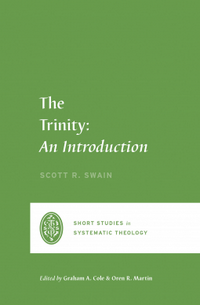
The Trinity: An Introduction by Scott R. Swain: A Brief but Deep Study

The Trinity

The Trinity: An Introduction

by Scott R. Swain
Series: Short Studies in Systematic Theology

Paperback, 133 pg.
Crossway, 2020

Read: January 17-31, 2020
Grab a copy from your local indie bookstore!

What we find in later Trinitarian creeds, confessions, and doctrinal summaries are not improvements upon a latent or undeveloped biblical Trinitarianism but, rather, the church’s attempt to fathom the depth of the riches of biblical Trinitarianism for the sake of various liturgical, pedagogical, and polemical ends. Some of the church’s creeds, confessions, and doctrinal summaries represent such faithful expressions of scriptural teaching and enjoy such wide-ranging ecclesiastical consensus that we dare not transgress the lines they have drawn. Rather, taking them on our own lips, we gladly join the church’s chorus of Trinitarian praise.

What’s The Trinity: An Introduction About?

It’s kind of there in the title, right? This is an introduction to the classical Christian doctrine of The Trinity. He’s not trying to re-invent the wheel, he’s definitely not trying to innovate, but to provide a concise (it’s a Short Study, after all) jumping-off point into deeper studies by providing a solid foundation.

He spends two chapters looking at the primary Biblical texts demonstrating the Doctrine. Chapter 3 is about the Simplicity of God—something too many overlook in a discussion of The Trinity. The following three chapters each focus on a Person of the Trinity. The final chapters are about the “external works” of the Trinity, the “appropriation” of specific works to particular persons, the beneficiaries of God’s work, and assorted topics.

All of that is a lot to ask of 133 short pages. Swain pulls it off by being concise, but he never seems to be leaving out details or avoiding the complicated ideas (although he obviously has to).

Touching on Controvery

This isn’t a polemical work—Swain is here to inform and educate, not combat. Still, he does talk about some Christological errors, including the contemporary dust-ups over EFS/ERAS—Eternal Functional Subordination/Eternal Relations of Authority and Submission.

Swain briefly (again, it’s a Short Study) addresses this error. He’s calm, he’s fair, yet he’s firm. It’s one of the best short treatments of the controversy I’ve seen, and in the context of the larger discussion of the Person of the Son as well as the larger discussions of each of the Persons, it’s incredibly helpful. It also fits where he put it and doesn’t seem like Swain used the opportunity as a digression just to beat a pet theological peeve.

Helpful Supplemental Material

Maybe it’s just me, but I rarely find the post-text material all that helpful. This book was one of the pleasant exceptions—there’s a brief glossary of some of the technical terms. Also, the “Further Reading” suggestions look great and my “To Buy” list grew a bit.

So, what did I think about The Trinity: An Introduction?

Because the persons of the Trinity are internal to God’s life, not external works of God, we can know the persons of the Trinity, as well as their ultimate plan for creation (Eph. 3:9), only if they stoop down and open up the depths of their inner life to us. Only the persons of the Trinity know the persons of the Trinity. Therefore, only the persons of the Trinity can make known the persons of the Trinity. The revelation of the Trinity is a matter of divine self-revelation, divine self-presentation, divine self-naming.

While this is a theological book, drawing on the teaching of the Church, Swain is careful to never lose sight of the source of this Doctrine, the Word of God. We know this, we understand this (as much as we do) because it is revealed to us. That’s vital to an understanding of the doctrine, and vital to the teaching of it. Swain doesn’t let his readers stray from the text.

This is one of those books where my notes keep saying “Chapter X is likely the highlight of the book,” “the section on X is likely the most valuable in the book.” It appears 60-70% of the book is a highlight—and I may not have written all of those parts down. Which is to say, there’s a lot of gold here, very little (if any) dross.

Helpful, insightful, and useful—it also achieves its end for leading on to further study for me. It’s accessible, but not easy, reading. At the same time, it’s a challenging, but not difficult, text.

Also, I like the looks of this series as a whole, I’ll most likely be grabbing more/all of them if they’re all about this quality.


5 Stars

This post contains an affiliate link. If you purchase from it, I will get a small commission at no additional cost to you. As always, opinions are my own.

GUEST POST: Here are the Worst Words by Curtis Honeycutt

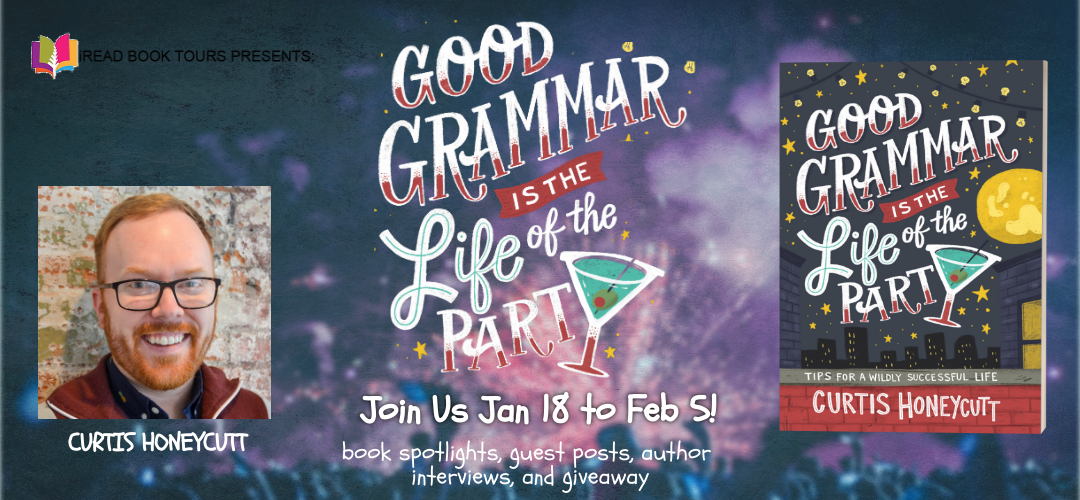
As part of the Tour for Curtis Honeycutt’s Good Grammar Is the Life of the Party: Tips for a Wildly Successful Life, he was kind enough to supply me with this Guest Post to give us all a little taste of his work. Hope you enjoy. For more about the book and the giveaway, see the Spotlight post I put up a bit ago.

No one likes the word moist. I also find the following words to be particularly icky: cyst, pus, dipthong, dongle, ointment, seepage, yeasty, analgesic, succulent, kumquat, and goiter. There’s even a relatively-new word for the disgust of certain words: logomisia. This word is so new that it’s not in moist—I mean, most—dictionaries. Perhaps the pencil-pushers over at the big dictionary companies have logomisia for the word logomisia.

Speaking of hating certain words, I’m afraid you’re not going to like this.

I love to ask people what their least favorite word is (for the record, mine is supple). By far, according to my informal surveying tactics, the word that gets the most votes is irregardless.

I’m sorry to break it to you, but irregardless is technically a word.

Yes, irregardless is a word. Depending on the word processing tool you use, it sometimes gets the red squiggly underline treatment—but not always. And if you look up irregardless in a dictionary, you’ll find it there along with all of the other officially-sanctioned words.

When people jokingly use irregardless, they are doing it wrong. Those who utter it accompanied by an ironic smirk simply use it instead of regardless, to the frustration of word purists.

Many have dismissed the word irregardless because they view it as redundant; regardless is all we need, they argue. Adding ir- in front of regardless downright irritates people.

But that’s the wrong way to use irregardless. You see, irregardless is a way to drop the mic on an argument after someone has already used regardless. Here’s an example:

Robin: Batman, will you let me pick the music on the Bat Radio next time we’re in the Batmobile? I promise not to sing along.

Batman: Absolutely not. Regardless, your taste in music is terrible.

Robin: Holy supple salamanders, Batman! I won’t play any Creed or Nickelback. Can I pick the music, please?

Batman: Irregardless, my answer is “no.” To the Batcave.

In this scene, Batman shuts down the argument by putting extra emphasis on regardless by saying irregardless. Batman knows how to use irregardless properly. Also, he’s the one who wears the pants in the Dynamic Duo (okay, technically they’re tights, but Robin only wears green underwear).

Most of the time irregardless is used, it’s misused, probably in a knowingly tongue-in-cheek manner. And its intent comes through; people either get bothered by their friend’s usage of irregardless or they think it’s funny. Either way, unless you’re using irregardless like Batman, you’re doing it wrong.

Batman once said “It’s not who I am underneath, but what I do that defines me.” I say: leave the defining up to the dictionary; we can all do a better job of improving our grammar and word usage to make our lives more awesome.

—Curtis Honeycutt is a syndicated humor columnist. He is the author of Good Grammar is the Life of the Party: Tips for a Wildly Successful Life. Find more at curtishoneycutt.com.


BOOK SPOTLIGHT: Good Grammar is the Life of the Party by Curtis Honeycutt

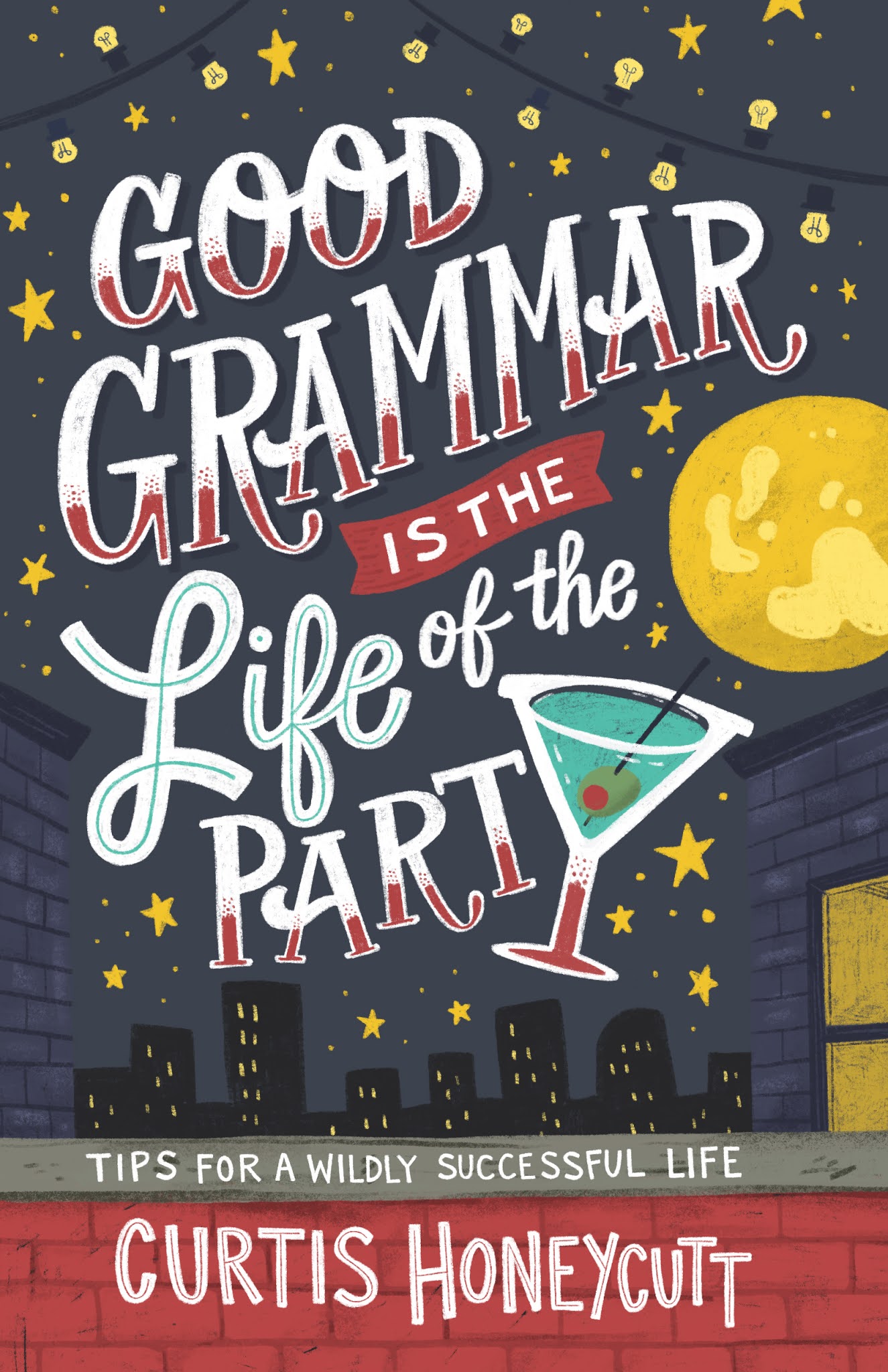
Welcome to a Spotlight Tour for Good Grammar Is the Life of the Party: Tips for a Wildly Successful Life by Curtis Honeycutt. After learning a bit about this book, be sure you look into the Giveaway at the bottom of this post and then check back in the next hour for a fun Guest Post from Honeycutt!

Book Details:

Book TitleGood Grammar Is the Life of the Party: Tips for a Wildly Successful Life by Curtis Honeycutt
Category:  Adult Non-Fiction, 18 yrs +, 244 pages
Genre:  How-To, Humor, Grammar and Writing Reference
Publisher:  The County Publishing
Release date:   May, 2020
Content Rating:  PG-13: “I write “hell,” “damn,” and “shit” a few times. Maybe “ass.” .”

Book Description:

Grammar rules! Good Grammar is the Life of the Party: Tips for a Wildly Successful Life will convert grammar goofballs into bonafide word nerds. As the writer of the award-winning humor column “Grammar Guy,” Curtis Honeycutt’s grammar advice appears in dozens of newspapers every week. His debut book—filled with witty word wisdom—is designed to make
your life more awesome by improving your grammar. Do you love language, but sometimes get tripped up by confusing grammar rules? Good Grammar is the Life of the Party is like a cheat code for your social life. Level up your grammar game to become a linguistic legend—from romantic relationships to job promotions to getting invited to fancy roof parties. Climb the corporate ladder, convince people you’re smart, and win at life with dozens of helpful tips on how to master the English language.

Buy the Book:
Amazon
B&N ~ Apple ~ IndieBound ~ Kobo

Add to Goodreads


Meet the Author:Curtis Honeycutt started writing about grammar in his local newspaper. His column, Grammar Guy, has since won multiple awards and now appears in newspapers across the U.S. Originally from Oklahoma, Honeycutt now lives in Indiana with his wife, Carrie, and their two children, Miles and Maeve.

connect with the author:  website ~ twitter ~ facebook ~ instagram ~ goodreads

Enter the Giveaway:

a Rafflecopter giveaway


My Favorite Non-Fiction Books of 2020

My 2020 Wrap up continues and now we’re on to the Non-Fiction list. I had little trouble getting this down to 9 books (couldn’t be satisfied with any of the candidates for 10, although Duhigg almost scored it with the other book by him I listened to this year). But when started filling in the details, I was surprised that I’d given so many of these 3 or 3 1/2 stars. But these are the ones that stuck with me through the year; the ones I cited in conversation; that I thought about when reading something else or watching something on TV. Really, that’s what’s important, right?

As always, I only put books that I’ve read for the first time on this list. I don’t return to NF books (outside of looking up things for one or three points), but occasionally I do—for example, The Pleasures of Reading in an Age of Distraction by Alan Jacobs would get a permanent spot on this list, were it not for this rule.

(in alphabetical order by author)

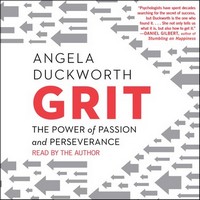
GritGrit: The Power of Passion and Perseverance

by Angela Duckworth

My original post
A fascinating mix of psychological research, case studies, and personal anecdotes. Duckworth structured this in such a way that not only it was informative and educational, it was enjoyable and motivational. The subject was interesting, the approach challenging, and didn’t always give the answers you expected. Duckworth made it clear that with the right mindset and time, it was possible to increase your own grit and find a measure of success. It’s not a one-size-fits-all solution, nor is it a promise of instant success. Just a reassurance that smart work can pay off.

4 1/2 Stars

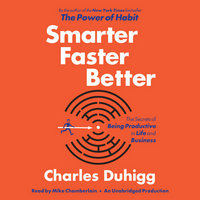
Smarter Faster BetterSmarter Faster Better: The Secrets of Being Productive in Life and Business

by Charles Duhigg, Mike Chamberlain (Narrator)
My original post
It’s not a how-to book, it’s not self-improvement, it’s largely about the science/study/understanding of productivity. I found it just as fascinating as previous book and can see where it’d be a useful guidebook for people in some sort of position of authority in an organization. Yet, it’s an improvement over Duhigg’s previous book because there are indications of how one could apply this to themselves/their organizations.

Also, Duhigg shows us his process while illustrating his own application of the book’s lessonswhich I really enjoyed. I find his approach to putting together a book very interesting, what and how he includes something is almost as interesting as what he does with it.

3.5 Stars

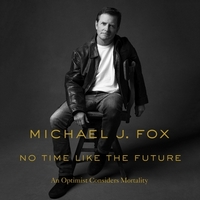
No Time Like the FutureNo Time Like the Future: An Optimist Considers Mortality

by Michael J. Fox

My original post
I’ve been a fan of Fox’s for as long as I can remember, and have watched most of the projects he discussed here (and many others). Like many, I’ve been impressed with the way he and his family have dealt with his Parkinson’s Disease and how they’ve worked to help everyone with it.

So this book, where he’s frank about the troubles he’s had recently and the way they’ve challenged his natural optimism really struck a chord with me. The book is a balance of struggle and victory, setback and progress—all told with a sharp wit that’s sure to charm.

4 Stars

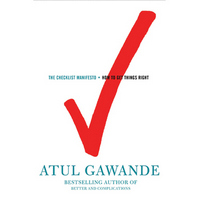
The Checklist ManifestoThe Checklist Manifesto: How to Get Things Right

by Atul Gawande, John Bedford Lloyd (Narrator)

My original post
It’s a simple premise—a well-developed checklist can make even the most complex task doable and save even experts from horrible oversights/mistakes when implemented correctly (although there are things that just can’t be made into a checklist). As hard as it might be to fathom, seeing how checklists have been used by pilots, surgeons, investment bankers and the like is utterly fascinating. There’s just no way that I can make it sound like it.

3.5 Stars

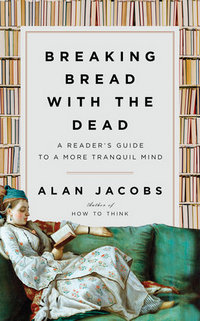
Breaking Bread with the DeadBreaking Bread with the Dead: A Reader’s Guide to a More Tranquil Mind

by Alan Jacobs

My original post
Jacobs hits another one out of the park. He asks how can we read and appreciate books from the past plagued by things that would not be tolerated today? Racism; slavery; different expectations for family, male and female roles; and so on. (many of these can apply to books and people who aren’t from previous centuries, but are in the cubicle next to us or around the Thanksgiving table—but Jacobs doesn’t spend time on that, but if you can’t make the application, I don’t think you’re paying attention).

Thoughtful, thought-provoking, erudite, with quiet humor, Jacobs will make you think, aspire to be a better reader, and more widely-read, too. I’m going to have to read this one a couple of more times to mine it for detail, and I’m looking forward to it.

4 1/2 Stars

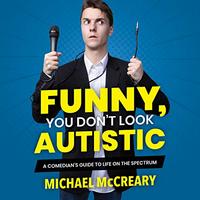
Funny, You Don't Look AutisticFunny, You Don’t Look Autistic

by Michael McCreary

My original post
McCreary shows a side of ASD that many people probably don’t realize exists. And even if they do, hearing about it from someone with it, helps you understand it better. McCreary gives us his perspective on things in a way that’s easy to digest. His humor (mostly pointed at himself and autism) provides some lightness to something that’s usually not treated that way.

3.5 Stars

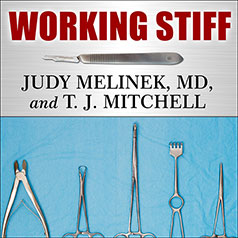
Working StiffWorking Stiff: Two Years, 262 Bodies, and the Making of a Medical Examiner

by Judy Melinek, MD, & TJ Mitchell, Tanya Eby (Narrator)

My original post
This is Melinek’s account of her training to be a forensic pathologist in NYC—a great place to train, because what won’t you see there? She talks about the deaths that are the result of crimes, the kind of thing we see on every crime show in the world. But that’s not primarily the job and that’s not the focus of the book—mostly it’s the result of an accident, long-term disease, and so on. Which is actually frequently more interesting than the criminal stuff.

What makes this already compelling book all the better (as a book, not as an actual life) is that September 11, 2001, was a few weeks after her residency began. Her description of dealing with the aftermath (both in terms of the dead and the events that followed) is just sobering, and a reminder of the unspeakable reality of that day.

3.5 Stars

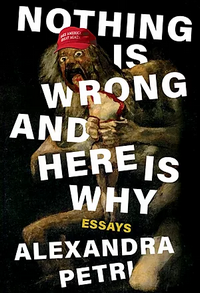
Nothing Is Wrong and Here Is WhyNothing Is Wrong and Here Is Why

by Alexandra Petri

My original post
If this was a straight-forward collection of essays about politics and cultural issues, I’d probably not recommend it. I don’t know if I’d have finished it (although, with Jacob’s help (see above), maybe I could’ve). But the fact that it’s a collection of humorous essays/columns? Oh yeah, sign me up.

Even when I think she’s wrong about a topic, she made me grin and/or laugh. Usually made me think. I was always impressed with her creativity.

3 Stars

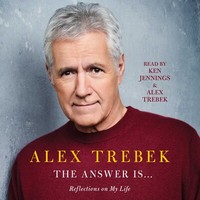
The Answer IsThe Answer Is . . .: Reflections on My Life

by Alex Trebek, Narrated by: Ken Jennings, Alex Trebek

My original post
Even if we hadn’t lost Trebek this year, this would’ve landed on this list. But given how much we’ve all been talking about him lately, it has to show up.

He tells his story in short chapters, full of self-depreciation and more swearing than you’d expect (he explains why). If you can hear/read him talk about his wife, his children, his cancer—and the effect that the cancer’s having on his wife and children as he prepares for death without being moved? There’s something wrong with ya. At that point, any thought I had about pretending to be objective and analytical went out the window.

My sole complaint is that the audiobook is only four-and-a-half hours long. It’s just not long enough. I get that he wasn’t trying to be exhaustive—and I don’t necessarily want that—but when you start to hear these quick stories about his growing up, his getting established in the business (either in Canada or the States), his friendships…and of course, Jeopardy!—you just want it to keep going for hours and hours.

4 1/2 Stars

My Favorite Theology/Christian Living Books of 2020

I knew I’d done a lousy job of keeping up on my Theology/Christian Living posts this year. But assembling this post let me see just how bad I’d done—five posts this year, and only one from this list made was covered in them.

Maybe that’s part of why I was rejected by NetGalley for every book along these lines I requested this year? In retaliation, I bought every book I was rejected for. That’ll teach ’em…

Anyway, these books are important enough to me—and this category makes up enough of what I read that I figured I’d keep up the tradition of making this list. And I’ll try to do better on this front in 2021.

As always, re-reads don’t count for these lists. It’s a self-imposed rule, but in a year when I re-read Calvin’s Institutes, some Machen and Prayer by O. Hallesby, it’s just not fair to almost everything else I read.

(in alphabetical order by author)

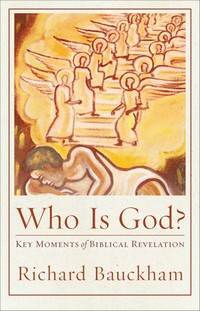
Who Is God?Who Is God?: Key Moments of Biblical Revelation

by Richard Bauckham

This is one of those deceptively easy reads that shouldn’t be read easily. Based on lectures that Bauckman has delivered, the book takes a Redemptive Historical approach to God’s revelation of Himself. “Jacob’s dream at Bethel (the revelation of the divine presence), Moses at the burning bush (the revelation of the divine Name), and Moses on Mount Sinai (the revelation of the divine character)…He then shows how the New Testament builds on the Old by exploring three revelatory events in Mark’s Gospel, events that reveal the Trinity: Jesus’s baptism, transfiguration, and crucifixion.” After looking at the particular text, Bauckman then traces that revelation through Scripture showing how the same thought it echoed and expanded throughout.

As these chapters were originally lectures, they’re not full of footnotes—but they’re clearly the product of a lot of scholarship. There’s deep thought here and great spiritual nourishment.

4 1/2 Stars

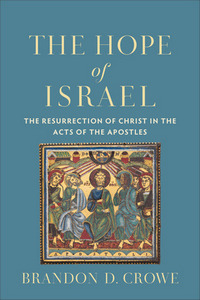
The Hope of IsraelThe Hope of Israel: The Resurrection of Christ in the Acts of the Apostles

by Brandon D. Crowe

It makes no sense to me at all that there hasn’t been a book-length look at the theme of Resurrection in Acts until now. It’s so clearly important to the message of Acts that you’d think there’d be dozens. But nope.

Crowe does a masterful job of filling that lacuna. It is all over Acts—more than I’d have guessed, too. First, he focuses on the topic in general, then focuses on the speeches/sermons of Peter, then those of Paul, and then those of everyone else. The exegetical material is just Part One, and it’s worth the purchase price right there.

But then he goes on to examine the topic from four theological perspectives, fleshing out the exegetical material and it gets so much richer.

This isn’t as easy to read as Bauckman, but it’s not too difficult if you’re willing to put in the work. Fascinating topic and helpful reflections.

4 Stars

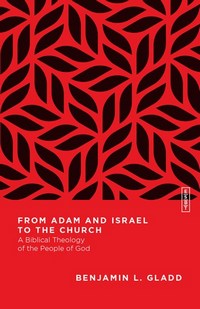
From Adam and Israel to the ChurchFrom Adam and Israel to the Church: A Biblical Theology of the People of God

by Benjamin L. Gladd

Gladd traces the idea of the people of God through successive Redemptive Historical eras, showing how each built on the one before and points to the final form in the New Heavens and Earth, fulfilling the original Creation design. A helpful way to look at this topic, it’ll challenge, inform and inspire.
4 Stars

Struck Down But Not DestroyedStruck Down but Not Destroyed: Living Faithfully with Anxiety

by Pierce Taylor Hibbs

Written twelve years after Hibbs was first diagnosed with an anxiety disorder, he takes a different approach to anxiety disorders than you typically see. It’s not about denying the problem, it’s not about overcoming it, and striving to lead an anxiety-free life. Instead, it’s about relying not on our own strength, but on Christ who is sufficient when we are not; it’s about learning to see what God’s purpose in the suffering is, understanding that His hand is guiding all things—including our problems—so how do we in faith (without denying the suffering) rest in faith.

If like me, you don’t suffer from an anxiety disorder, you have your own challenges in your life, ways in which you suffer. It’s easy, thanks to the way Hibbs wrote this, to see how you can apply these principles to your own circumstances.

Very practical, but not at the cost of truth and theological reflection.

4 Stars

Bearing God's NameBearing God’s Name: Why Sinai Still Matters

by Carmen Joy Imes

I had some real problems with this book—I quibbled with more than a few points, and flat-out disagreed with others (although I think her arguments are interesting and I’d like to see someone who knows what they’re doing dissect them). And I’m not so sure her thesis is all that revolutionary—I’ve heard it in almost every (maybe every) sermon I’ve heard on the Third Commandment in Confessional Presbyterian and Reformed Churches in the last two and a half decades.

That said, it’s a thesis that more people need to hear. The commandment isn’t primarily about our language, it’s about taking the Name of the Lord our God in the sense of “bearing.” When God’s people call themselves that, certain things are expected of them to not bring shame to that name (which will involve treating His name—and the means by which He is revealed—with the due respect).

She starts at Sinai and then traces the idea (a theme in this post, no?) through the rest of Scripture, showing how God’s people have done this—and how they’ve failed at it, too.

It’s a popularized version of a good portion of her dissertation, and is so accessible it’s ridiculous. Thought-provoking and helpful (even when I think she’s wrong about something), it’s a book I can’t help but recommend. My disagreements (and the way she expressed problems that don’t exist with the Reformed understanding of the topics) led to my reduced rating, not anything to do with the way the book was written.

3.5 Stars

The Identity and Attributes of GodThe Identity and Attributes of God

by Terry L. Johnson

The reason I haven’t written anything about this is simple: I don’t know how to start—or how to finish (or anything in between). This is a modern, less-exhaustive version of Charnock’s The Existence and Attributes of God. Full of quotations and lessons from Puritans and others in church history, this is an excellent introduction (and then some) to the classical doctrine of God so often ignored or downplayed today. If we don’t know who He is, how will we know how to worship and serve Him?

It’s convicting. It’s informative and educational. It’s devotional. It’s probably the best thing that Johnson’s written—and that’s saying something.

5 Stars

Exodus Old and NewExodus Old and New: A Biblical Theology of Redemption

by L. Michael Morales

“Morales examines the key elements of three major redemption movements in Scripture: the exodus out of Egypt, the second exodus foretold by the prophets, and the new exodus accomplished by Jesus Christ.” Like so many others I read this year this takes a Redemptive Historical approach seeing the way these ideas play out throughout Scripture, are echoed and expanded in successive eras.

The exodus from Egypt is the template (not the best word, but the only one that comes to mind at the moment) for redemption in general, and we see this figure used time and time again in Scripture. Morales is a helpful guide through this progression.

4 Stars

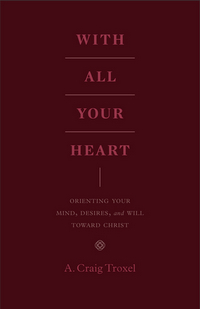
With All Your HeartWith All Your Heart: Orienting Your Mind, Desires, and Will Toward Christ

by A. Craig Troxel

Troxel begins by fleshing out a Biblical understanding of the heart (short version: the governing center of life). That understood, he then moves on to show how we’re to use that heart to fulfill Christ’s commands—how we keep it pure, how we protect it, how we keep it obedient. Most of all, how we respond when we fail (and fail, and fail).

One of the most humbling—yet helpful—books I’ve read in years. Troxel pierces the heart in the best way, so that we can see our need for repentance.

4 Stars

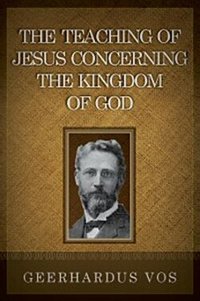
The Teaching of Jesus Concerning the Kingdom of God and the ChurchThe Teaching of Jesus Concerning the Kingdom of God and the Church

by Geerhardus Vos

This work “surveys the teaching of Jesus concerning the kingdom of God. It covers the kingdom in the Old Testament, the meaning of the biblical words for kingdom and kingship, the present and future aspects of the kingdom, the essence of the kingdom, the relationship between the kingdom and the church, and finally the saving benefits of entering the kingdom…Vos exposited an inaugurated kingdom with a future consummation long before G. E. Ladd popularized it.”

This is a slim, dense volume. Vos demands care and close attention to his work—but it’s so worth it (and after a while, you don’t notice how much you’re working to read). Fascinating and still helpful a century later.
5 Stars

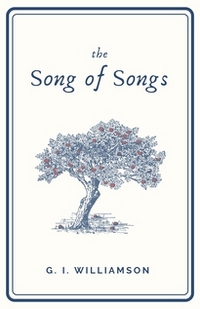
Song of SongsThe Song of Songs

by G. I. Williamson

My original post
Yeah, I gave this one only 3 1/2 Stars, but it’s on this list because it stuck with me. It’s been since April and I’ve thought about this book a few times (definitely during the two times this year I’ve read the Song of Songs). Williamson’s wisdom and carefully Christ-centered approach to the book makes these sermons really valuable.


3.5 Stars

Catch-Up Quick Takes: Greenlights, The World’s Strongest Librarian, No Time Like the Future, A Very Punchable Face

Greenlights

Greenlights

by Matthew McConaughey
Unabridged Audiobook, 6 hrs., 42 min.
Random House Audio, 2020
Read: December 1-3, 2020
Grab a copy from your local indie bookstore!

(the official blurb)
I’m not the biggest McConaughey fan in the world—I don’t think I’ve ever not liked anything he’s done, but I don’t seek him out—and am not at all the target audience for this. But something about what he said about the writing of this book when he was on Hot Ones, made me want to take a look. That my library had the audiobook available to borrow made it all the easier to do so.

This dude can tell a story. I’m sure he’s exaggerating a lot of the events—not necessarily being dishonest, just spinning a good yarn. And honestly, I don’t care. I had a blast listening to this. If 30% of this stuff is true, he’s led a great life and probably deserves to make up 70% of it for the entertainment value.

You’re not going to get a lot of behind-the-scenes stuff about his movies (there are a couple of exceptions), it’s mostly about his personal life—childhood, family, friends, wife, and some miscellaneous solo adventures.

I laughed, I learned a thing or two, I shook my head a few times. Mostly, I just enjoyed a good storyteller at work. (I’m not sure any other narrator could’ve pulled it off, but McConaughey made it feel like we were sitting around a campfire or at a bar somewhere).

3.5 Stars

The World’s Strongest Librarian

The World’s Strongest Librarian: A Memoir of Tourette’s, Faith, Strength, and the Power of Family

by Josh Hanagarne, Stephen R. Thorne (Narrator)
Unabridged Audiobook, 8 hrs., 35 mins
Blackstone Audio, 2013
Read: August 25-September 2, 2020
Grab a copy from your local indie bookstore!

(the official blurb)
I’d started a full post about this book months ago, and just couldn’t get it to the point I was satisfied with it—I think because something about Hanagarne’s story made me want to get granular about it. I’m going to try really hard to limit myself to a couple of quick paragraphs.

There’s a part of me that wanted more about Tourette’s, but after his initial diagnosis and learning to cope (for lack of a better term), Hanagarne largely left that behind. Sure, it was clear that Tourette’s was a constant presence in his life, but he didn’t dwell on it. He talked about some of the things he did to combat the symptoms, but he didn’t talk that much about having to deal with it day after day. This makes sense, it’s not what I expected, but as I listened to the book, I couldn’t argue with it.

Hanagarne’s a reader, has been for his whole life—and right there is where I made my connection to him. He talks like a reader, cares about literacy and knowledge, makes reader-ly references—an instant connection between me and his book. I can see myself having regular conversations with him that last for hours.

A lot of the book focuses on his family—both growing up and then his wife and their struggles to have a child and struggles adopting. A lot of that was heartbreaking, but it was inspiring to see the way that he and his wife kept moving forward.

I have to address this because Hanagarne does so much in his book, skip this paragraph if you want. What broke my heart more than that though was his repeated discussions of the struggling with his faith. Like every Latter-Day Saint I’ve talked to, he worried about doing enough. Praying enough—and sincerely enough. Doing enough good works. Believing enough. So that God would bless him, help him with his Tourette’s, his depression, his marriage, having a kid. It’s all about his performance, so that he might be enough. There was no Gospel here. No promise. No grace. No faith as the Bible describes. Just human striving. I was sincere when I said my heart broke, I stopped the book frequently to pray that even now, years after this book was written, someone would come alongside him and help. Even now, thinking about this book makes me hope that he actually hears the Gospel.

He’s living a fascinating life and this book was a great way to talk about it, not only can Hanagarne talk about books, he knows how to write one. There are no easy answers when it comes to religion, family, or Tourette’s. Just one guy stumbling through this and other things as best as he can.

3.5 Stars

No Time Like the Future

No Time Like the Future: An Optimist Considers Mortality

by Michael J. Fox
Unabridged Audiobook, 5 hrs., 59 min.
Macmillan Audio, 2020
Read: December 23-26, 2020
Grab a copy from your local indie bookstore!

(the official blurb)
It’d be easier to talk about this if I’d read Fox’s earlier books, to compare. But from what I gather, the past memoirs have been about embracing his challenges and finding ways to celebrate the life and career that he’s enjoyed.

This book seems to be about when it gets hard to be an optimist. When the challenges seem to be winning (and, sure, he’s in a privileged place, but his challenges are the kind that’d break many people), how do you stay optimistic? Or do you? Well, if you have people like Fox does in your life (and one great-sounding dog), maybe you do. Fox describes himself as characteristically optimistic, but lately, it’s because of the people in his life and deliberate decisions on his part to stay that way.

He talks about the challenges, he’s honest about the impact on him, and he celebrates the people—friends, family, strangers, medical professionals—who’ve helped him keep going. But told with a lot of heart and humor. I really enjoyed this.

Fox doing the narration—clearly not the easiest task for him, made it even better.

4 Stars

A Very Punchable Face

A Very Punchable Face

by Colin Jost
Unabridged Audiobook, 7 hrs., 41 min.
Random House Audio, 2020
Read: October 1-3, 2020
Grab a copy from your local indie bookstore!

(the official blurb)
Jost tells some jokes about Long Island, himself, cast members of SNL. He talks about growing up on Long Island, some early struggles in his life, his early career and making it to SNL and the ups and downs there, and what’s probably next for him—usually the stories are littered with tiny jokes, but not always.

The best—and most heartfelt part of the book—is when he describes the work his mother did in relation to the fire department and 9/11. Not that the book wouldn’t have been entertaining without it, but it’s that section that made it feel worthwhile.

It’s a pleasant way to spend a few hours, and it’ll make you chuckle at least a few times.
3 Stars


2020 Library Love Challenge

This post contains affiliate links. If you purchase from any of them, I will get a small commission at no additional cost to you. As always, opinions are my own.

Olive, Mabel & Me by Andrew Cotter: Two Very Good Dogs and the Human Who Introduced them to the World

Olive, Mabel & Me

Olive, Mabel & Me: Life and Adventures with Two Very Good Dogs

by Andrew Cotter

Hardcover, 205 pg.
W. W. Norton & Company, 2020

Read: December 24-26, 2020
Grab a copy from your local indie bookstore!

What’s Olive, Mabel & Me About?

In short, it’s about a guy and his dogs.

Andrew Cotter is a freelance sports journalist who found himself (like many people) with an excess of time on his hands in the early days of COVID. With no sports to cover, he needed an outlet, so…you know what? It’ll be easier to post the video that catapulted Cotter and his dogs into the attention of people around the world. He’s this guy, and they’re these dogs:

In the Introduction, Cotter talks a little about that video, those that followed, and the reaction to them—and then he moves on, only making small asides to them until the last chapter when he talks a little more about them. The book isn’t about the Youtube/Social Media sensation, it’s about the man and his dogs that happened to end up as part of that sensation.

The Dogs Before

We begin with Cotter talking about his family’s history with dogs—his grandparents had quite a .few, and he and his mother, did, too. I was predisposed to like him going in, but it was his description of his bullmastiff that solidly won me over.

Then came college and his early career days, when it just wasn’t possible/feasible to own any kind of dog. Then he got together with his partner, Caroline, and she, too wanted a dog, when possible. A few years later, they moved out of London and it was time.

There’s some great discussion about the pros and cons of various breeds and I laughed more than once in that chapter.

Olive and Mabel

Then we meet Olive and the book takes off. She’s a delightful Lab* and it’s clear that Cotter is smitten with her. Cotter talks about her and some of their adventures together, and it’s all well and good. I’m not going to say more, because you want to read it the way Cotter tells it.

* A tautology, I realize.

Then after a few years, Mabel comes along—a very different dog, with a personality that’s very different, but wanting to learn from Olive. Then it becomes adventures for the three of them. The bond is strong and obvious, and it’s the kind of thing that dog lovers will respond to.

Climb Every Mountain

One of Cotter’s favorite activities—and one he involves the dogs in as often as he can—is walking up mountains. He recounts several such walks with the two, the sights they saw, the mishaps, and so on—he even talks some about times he went without them (like, say, Mt. Fuji). Now, I cannot foresee me ever sharing this interest, or even wanting to (it’s beside the point why I wouldn’t—besides, I have to go to work tomorrow, so I don’t have enough time).

But I enjoyed Cotter’s discussion of his hobby—I don’t get it, but that’s okay, he does, and he can talk about it in a way that keeps it interesting, even for us homebodies. It’s this that keeps it from simply a guy rattling off cute stories about his dogs and makes it into something only he can tell—cute stories about Andrew Cotter and his dogs. It’s a fine distinction, but an important one, if I’m going to read a book about it.

So, what did I think about Olive, Mabel & Me?

I love my dogs dearly but couldn’t necessarily see how explaining that relationship and affection might stretch more than a couple of pages.

Yet in writing about your dogs, you very quickly realize that you are writing about all aspects of your life, because there isn’t really a part of it that the dogs don’t touch. They entwine themselves around it all—the serious matters and trivial, the fun and the less so. As you have read, they are there for the exciting adventures but also for the mundane. They are with you for everything, and everything is all the better for them.

Cotter was smart to take the opportunity created by his videos to write a book—nothing against him, but I wouldn’t have picked up this book if I hadn’t been a fan. But I’m very glad I did, this is a heartwarming read. It’s funny—he’s a very clever writer (and I’d be willing to read more things he wrote, as long as they weren’t too sports-heavy)—it’s touching, it’s relatable. It’s a cup of hot cocoa on a chilly day.

I think most dog people enjoy talking to others about their dogs. This was a lot like that—but Cotter didn’t let me share similar tales about my canine companions, which is fine—he’s a better storyteller. He even included pictures to gush over. Did I possibly give out an extra scritch or two to my own dog and grand-pup after reading this? Oh absolutely. I felt I owed Mabel and Olive some, so the dogs here were the beneficiary.


3.5 Stars

This post contains an affiliate link. If you purchase from it, I will get a small commission at no additional cost to you. As always, opinions are my own.

Catch-Up Quick Takes: The Power of Bad, Everything is F*cked, The Checklist Manifesto, And Then You’re Dead

The point of these quick takes post to catch up on my “To Write About” stack—emphasizing pithiness, not thoroughness.

The Power of Bad

The Power of Bad: How the Negativity Effect Rules Us and How We Can Rule It

by John Tierney and Roy F. Baumeister, Paul Bellantoni (Narrator)
Unabridged Audiobook, 8 hrs., 9 min.
Penguin Audio, 2019
Read: November 24-25, 2020
Grab a copy from your local indie bookstore!

(the official blurb)
Ignore the chapter where the authors totally misunderstand the evangelistic work of Whitefield and Edwards in the 1700s (and the part where the Narrator couldn’t pronounce Whitefield’s name correctly, over and over and over and over), and I really liked this.

The way the authors explain negativity bias—and then apply it to improving our jobs/careers, marriages, and more. Utterly fascinating. I probably need to read and/or listen to this a few more times, and maybe take notes at least once before I can both articulate what I find helpful here—and what I find problematic.

But it’s the kind of book that makes you think about things in a way you probably haven’t before. While being counter-intuitive, much of it rings true. And best yet, it’s a good read/listen—engaging and entertaining.


3.5 Stars

Everything is F*cked

Everything is F*cked: A Book About Hope

by Mark Manson
Unabridged Audiobook, 7 hrs., 2 min.
Harper Audio, 2019
Read: October 16/17, 2020
Grab a copy from your local indie bookstore!

(the official blurb)
Manson’s warmed-over Stoicism didn’t work nearly as well for me as it did in his first book. The writing was almost as good—but not as clever, I just think it’s not as well written. The topics interested me, but I found myself questioning his basic premises in almost every instance.

Ultimately, his hope is founded on a total lack of foundation—he finds it freeing, I find it unstable and doomed to failure. It’s hard getting my point across short of a 20-30 page paper examining the book, and I just don’t care enough to undertake it.

I actually enjoyed a lot of it, but I also found myself annoyed and/or mildly angry with this one for significant portions of the time.


2 1/2 Stars

The Checklist Manifesto

The Checklist Manifesto: How to Get Things Right

by Atul Gawande, John Bedford Lloyd (Narrator)
Unabridged Audiobook, 6 hrs., 9 min.
Macmillan Audio, 2009
Read: September 21, 2020
Grab a copy from your local indie bookstore!

(the official blurb)
First off: Gawande is a doctor/surgeon, and a lot of his illustrations and examples are surgical in nature. A bit too detailed for me early on—I’m a little more squeamish about real-life blood and guts than most people. I figure most readers won’t be bothered by it like me (some may not even call it detailed).

Anyway, it’s a simple premise, but seeing how checklists have been used by pilots, surgeons, investment bankers and the like is utterly fascinating. There’s just no way that I can make it sound like it. Could’ve been a little longer, could’ve used a little more guidance on how to implement it for yourself.

Still, at the end of the day, more fun, more interesting than you’d think a book about checklists would be.


3.5 Stars

And Then You're Dead

And Then You’re Dead: What Really Happens If You Get Swallowed by a Whale, Are Shot from a Cannon, or Go Barreling Over Niagara

by Cody Cassidy, Paul Doherty, Dennis Boutsikaris (Narrator)
Unabridged Audiobook, 4 hrs., 59 min.,
Penguin Audio, 2017
Read: December 21, 2020
Grab a copy from your local indie bookstore!

(the official blurb)
So, yeah, what I said about squeamish earlier? Pushed to the edge a couple of times in this short read/listen. It’s all about the science behind what would happen to you if say, stowed away in an airplane, stowed away on a trip to the Moon, fell into the works at a Pringles factory, ate the same number of cookies as the Cookie Monster—and more.

It’s funny (thankfully, or I couldn’t have made it through a couple of spots), informative, creative—and a great way to spend a few hours. At one point the authors tell the reader not to do a google search on one topic. First, that hadn’t even begun to cross my mind as a good idea. But secondly, given the detail they’d used when describing what happens to a human body shot out of a cannon, or swallowed by a whale, and several other topics, when they say, “don’t go looking at pictures of something”? I am taking their word for it.

I had a blast listening to this. If I taught high school science, I’d have at least one copy of this on hand for reference or to pass along to students. Since I don’t, I just have to remember some of these stories/theories for my own amusement.


3.5 Stars

2020 Library Love Challenge
This post contains affiliate links. If you purchase from any of them, I will get a small commission at no additional cost to you. As always, opinions are my own.

The Friday 56 for 12/18/20

The Friday 56This is a weekly bloghop hosted by Freda’s Voice

RULES:
The Friday 56 Grab a book, any book.
The Friday 56 Turn to Page 56 or 56% on your ereader. If you have to improvise, that is okay.
The Friday 56 Find a snippet, short and sweet.
The Friday 56 Post it

from page 56 of:
Olive, Mabel & Me

Olive, Mabel & Me: Life and Adventures with Two Very Good Dogs by Andrew Cotter

She just wouldn’t leave Olive alone. And Olive, having enjoyed four years of peace and solitude, was clearly rather put out by the visitor—asking, with those Labrador eyes that tell all, “Is this thing going to be staying long?”

I’m pretty sure that from the start Mabel saw Olive as some sort of replacement mother. They are, in fact, related in that curious mixed-up dog dynamic, where romantic liaisons are free and easy and they don’t feel tied down by human constraints or propriety. Olive’s father Henry was also the father of another litter, which contained Mabel’s mother Izzy. Working it out, that makes Olive a half-aunt to Mabel, if there can be such a thing. One of these days we’ll get everyone together on a Jerry Springer-style program and Henry will be confronted by his numerous partners and offspring. Child support will finally catch up with him and it will all get messy.

One thing that was more simple and obvious was Mabel’s love for Olive, and within just a few weeks, some—if not all—of that love was reciprocated. Neither would now want to be without the other, but Olive could probably spend more time without Mabel than vice versa.

Page 15 of 31

Powered by WordPress & Theme by Anders Norén