Tag: Non-Fiction Page 17 of 31

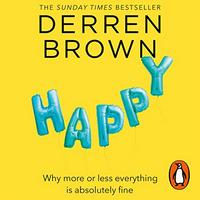
Happy: Why More or Less Everything is Absolutely Fine (Audiobook) by Derren Brown: DNF

Happy

Happy: Why More or Less Everything is Absolutely Fine

by Derren Brown

Unabridged Audiobook, 14 hrs., 32 mins
Penguin Audio, 2018

Read: June 26-29, 2020

Several weeks ago, I put a hold on this book from my Library. I was looking for some good Non-Fiction and this seemed along the lines of something a doctor was recommending. Also, the subtitle made me think I’d like it. I knew nothing about Brown or his expertise, but it seemed like a decent premise.

I guess I should start off with the Book Blurb (‘cuz you don’t want me summarizing this one)

Everyone says they want to be happy. But that’s much more easily said than done. What does being happy actually mean? And how do you even know when you feel it?

Across the millennia, philosophers have thought long and hard about happiness. They have defined it in many different ways and come up with myriad strategies for living the good life. Drawing on this vast body of work, in Happy Derren Brown explores changing concepts of happiness – from the surprisingly modern wisdom of the Stoics and Epicureans in classical times right up until today, when the self-help industry has attempted to claim happiness as its own. He shows how many of self-help’s suggested routes to happiness and success – such as positive thinking, self-belief and setting goals – can be disastrous to follow and, indeed, actually cause anxiety. This brilliant, candid and deeply entertaining book exposes the flaws in these ways of thinking, and in return poses challenging but stimulating questions about how we choose to live and the way we think about death.

Happy aims to reclaim happiness and to enable us to appreciate the good things in life, in all their transient glory. By taking control of the stories we tell ourselves, by remembering that ‘everything’s fine’ even when it might not feel that way, we can allow ourselves to flourish and to live more happily.

This was a snarky summary of pop psychology and pop philosophy, criticizing in others the same methods it embraces. I stuck with it for a while, trusting I could wade through the (willfully) ignorant dismissal of “Religion” (interestingly, the only example of Religion I encountered was Christianity (broadly considered)), and reductionistic history of Philosophy on to something useful. Actually, I’d have been okay with a quick dismissal of Christianity—but coming back to it time and time again, just to dismiss it as unworthy of engagement, got on my nerves. Also, the spleen-venting over The Secret went on far too long, and come on, it’s low hanging fruit. But in the end*, I just found myself resenting the endeavor and decided his neo-Stoicism wasn’t worth it.

* And by end, I mean, roughly the 25% mark.


0 Stars

2020 Library Love Challenge

The Friday 56 for 6/26/20

The Friday 56This is a weekly bloghop hosted by Freda’s Voice

RULES:
The Friday 56 Grab a book, any book.
The Friday 56 Turn to Page 56 or 56% on your ereader. If you have to improvise, that is okay.
The Friday 56 Find a snippet, short and sweet.
The Friday 56 Post it

from Page 56% of:
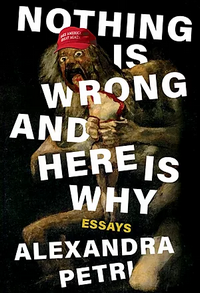
Nothing Is Wrong and Here Is Why

Nothing Is Wrong and Here Is Why by Alexandra Petri

N.B. I hesitated to use this book, since I posted about it earlier, but I used my current read last week, and I didn’t want to double-dip. And then my next read is an ARC that, and I try not to quote from them since I don’t know if it’ll make the final cut. So…

His head ached all the time. Once he used his excess mental energy to tip over a glass with his mind, but nobody gave him any credit for it. Just for kicks, he raised and lowered the flag on the Interior Department so that it appeared Ryan Zinke was there when in fact he was NOT, but that was not as much fun as anticipated. Everything began to wear on him. He could not sit through international summits. Everyone spoke too slowly.

Gradually he tried to move things that were bigger and bigger. By the end of the first week he was able to knock rockets out of the sky. He sent a tweet about it, but nobody understood that this was what he was trying to say. All the TV ever seemed to show was people closely misreading his tweets. It was miserable. It was a nightmare.

Nothing Is Wrong and Here Is Why by Alexandra Petri: Laughing So You Don’t Cry at the State of Our Country

Nothing Is Wrong and Here Is Why

Nothing Is Wrong and Here Is Why

by Alexandra Petri

Hardcover, 214 pg.
W. W. Norton & Company, 2020

Read: June 15-22, 2020
Grab a copy from your local indie bookstore!


Like I do so often, when it comes to non-fiction, I’m going to cheat on the summar part and quote from the official blurb:

These impossibly cheerful essays on the routine horrors of the present era explain everything from the resurgence of measles to the fiasco of the presidency.

In Nothing Is Wrong and Here Is Why, acclaimed Washington Post satirist Alexandra Petri offers perfectly logical, reassuring reasons for everything that has happened in recent American politics that will in no way unsettle your worldview.

In essays both new and adapted from her viral Washington Post columns, Petri reports that the Trump administration is as competent as it is uncorrupted, white supremacy has never been less rampant, and men have been silenced for too long. The “woman card” is a powerful card to play! Q-Anon makes perfect sense! This Panglossian venture into our swampy present offers a virtuosic first draft of history—a parody as surreal and deranged as the Trump administration itself.

I’d say that this is some of the most vicious political satire I’ve read, but then I remember all the P. J. O’Rourke that I’ve read. Not to mention Christopher Buckley. Or Jonathan Swift. Or William Langland…. Okay, so maybe I should abandon that idea… I am safe in saying that it’s satire from America’s political Left that could give ORourke a run for his money (although her pieces are shorter than I remember him able to do, therefore punchier).

I am not a Liberal*, and have problems with a lot of the politics underlying these essays. However, most of these essays don’t have particular positions or policy’s in their sights. They’re primarily focused on personality, corruption, competency and the culture the current administration fosters. So while I’d differ from her on vital points, I was able to find more to agree with in these pages than not.

* Not that there’s anything wrong with that.

There were a couple of pieces I was personally offended by, but largely I could write up differences in belief, conviction or understanding to a difference of opinion that are worth discussing—and even when I couldn’t I can admit that most of her points would be largely valid from Petri’s worldview. But none of that rendered any of these essays unreadable (there were two that came close for me, probably not for many others). In fact, I think there was only one of the 50+ essays that I didn’t find a point or two that made me smile or chuckle.

Some pieces work wherever you end up on the political spectrum—like, “You May Already Be Running” (how an elected official finds themselves running for President without deciding to), “Raising Baby Hitler” (rather than using a Time Machine to kill baby Hitler, going back in time to raise him differently). The piece about what she’d call a moderate Republican (I’d consider an actual conservative, not a Trump Republican) looking for someone else to stand up to the President was wonderful and haunting.

I don’t recommend reading more than 3-4 a day, I think they’d lose their impact if you went much further (I knocked off six on one day without meaning to, and I regretted it).

This is a refreshing read, it makes you think as well as grin. If you happen to agree with Petri on most of the issues, you’ll enjoy it more than others will. But frankly, a funny piece is a funny piece, even if I disagree with some/all of it. And that kept me turning pages. I enjoyed this, I recommend it, it’ll unsettle you, it’ll make you think, and it might provide a little relief just seeing someone eruditely make the same points you wish you could.


3 Stars

20 Books of Summer2020 Library Love Challenge

This post contains an affiliate link. If you purchase from it, I will get a small commission at no additional cost to you. As always, opinions are my own.

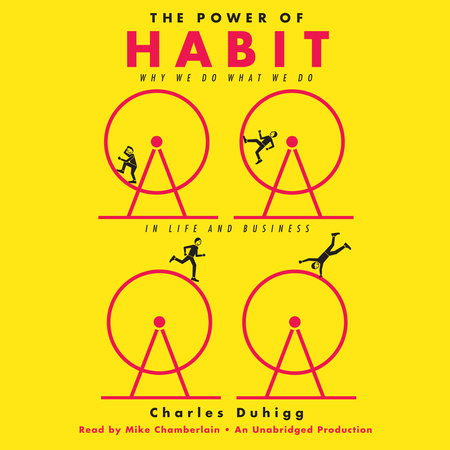
The Power of Habit (Audiobook) by Charles Duhigg, Mike Chamberlain: A Compelling Look at Why We Do What We Do

The Power of Habit

The Power of Habit: Why We Do What We Do in Life and Business

by Charles Duhigg, Mike Chamberlain (Narrator)

Unabridged Audiobook, 10 hrs, and 53 min.
Random House Audio, 2012

Read: June 8-9, 2020
Grab a copy from your local indie bookstore!

In Part One, Duhigg sketches the science behind habit by looking at a case study of someone who made radical changes to their health and lifestyle by choice, and one who made similar changes as a result of a disease that damaged his brain and removed choice from the equation. It was simply fascinating as he both related the cases and explored the science behind it.

Part Two shifts to the habits of organizations—how some megacorporations changed from within because they intentionally created institutional habits, which then spill over (sometimes intentionally, sometimes not) into the lives of their employees. Alcoholics Anonymous also serves as an example of intentional change here. The section’s last chapter focuses on how companies can study the purchasing and browsing activities of customers to predict and manipulate spending habits. Some of this last chapter is truly disturbing and makes me want to read Qualityland again—and make more people read it.

In Part Three, his focus is on “Societies” and he shows how the Montgomery Bus Boycott illustrates the ideas he’s been describing—and how Rick Warren’s Saddleback Church is an intentional use of the same ideas (quick digression: I have less respect for Warren’s ecclesiology now, although some of what bothered me could be an unbeliever’s description of his actions and theory rather than Warren’s). The last chapter discusses the case of someone with night terrors who commits a crime and a gambling addict’s actions—are either responsible for what happens when their behaviors are mandated by habit rather than a conscious decision? I found this last chapter problematic and a bit simplistic in the way it dealt with the ethical questions. But it’s still very thought-provoking.

As far as the audiobook-ness of this goes, it was okay. Chamberlin did a fine job with the material he was given. Yeah, occasionally, I felt like I was listening to a super-long podcast episode, but I’m not sure that’s a flaw. And if it is, it’s probably due to the text, not a problem on Chamberlin’s part. Like with a lot of Non-Fiction audiobooks, it’s hard to separate the authorial “I” from the voice saying “I,” so I have this cockamamie impression that I’ve gotten to know Duhigg a little bit. Am I the only one who has that problem?

The subtitle is “Why We Do What We Do…” and that’s what this book is about. Somewhere along the line, I’d gotten the idea that there’d be a little more “here’s what to do with this information” to the book. But that was wrong—Duhigg sketches it in an appendix, but it’s just a sketch. Yes (as he says himself), it’s not that difficult to use a lot of what’s covered (particularly in Part One) on your own. I’d have preferred a little more application to go with the theory, but that wasn’t his point, so I shouldn’t quibble.

This is a fascinating book. That’s all I have to say on that front. But I’m not sure what to do with the information. I’m not against learning things to learn them, but this seems to be begging for practical applications—in personal or business life. But I just don’t know how. Maybe that’s because I lack the imagination to apply it, or maybe it’s a shortcoming from the book in not doing a better job in pointing to it. I’m leaning to the latter, but expect it’s the former.

3.5 Stars

2020 Library Love Challenge

This post contains an affiliate link. If you purchase from it, I will get a small commission at no additional cost to you. As always, opinions are my own.

Catch-Up Quick Takes None Greater by Matthew Barrett; Alive by Gabriel N.E. Fluhrer; The Song of Songs by G. I. Williamson; The Ten Commandments of Progressive Christianity by Michael J. Kruger

The point of these quick takes post sto catch up on my “To Write About” stack—emphasizing pithiness, not thoroughness.

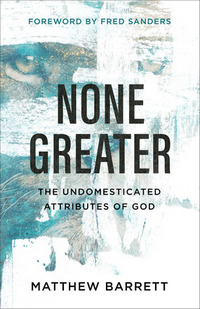
None Greater

None Greater: The Undomesticated Attributes of God

by Matthew Barrett
Kindle Edition, 304 pg.
Baker Books, 2019
Read: December 22-29, 2020
Grab a copy from your local indie bookstore!

(the official blurb)
This is a popular-level, very approachable introduction to the Attributes of God—Incomprehensibility, Aseity, Simplicity, Immutability, Impassibility, Eternity, Omnipresence, Omnipotence, Omniscience, Omnisapience, and a few others. He does so using the works of Augustine, Anselm,— and Aquinas to define Classical Theism—with help from Charnock and Bavinck.

Tackling all that in 300 accessible pages is no mean feat. I cannot tell you how many times I thought as I read this that this is the book that R.C. Sproul would have written about the Attributes of God. Sure, the illustrations aren’t the ones that Sproul would’ve used—but they’re of a kind. In my books, that’s a high compliment—we need someone who can communicate like Sproul. Barrett will do fine if he continues to put out this kind of work.

This is a really helpful and useful work—I recommend it strongly to everyone.
4 Stars

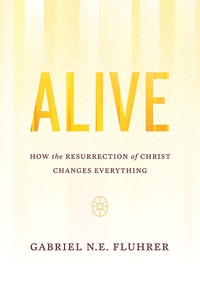
Alive

Alive: How the Resurrection of Christ Changes Everything

by Gabriel N.E. Fluhrer
Kindle Edition, 167 pg.
Reformation Trust, 2020
Read: April 5-12, 2020
Grab a copy from your local indie bookstore!

(the official blurb)
The book starts with a look at the evidence for the Resurrection of Christ, and why it’s important to wrestle with it and to be ready to defend it in our current culture. Then Fluhrer moves on to looking at the way the Resurrection was foreshadowed in the Old Testament, described in the Gospels, preached in Acts, explained in the rest of the New Testament, and serves as the basis for our sure hope. He covers all the bases and does so well.

Fluhrer has an apologetic goal for this book, it’s not as compelling as he seems to think it is. Which really describes the book as a whole. In the end, it’s too surface-level. It’s helpful, the theology behind it is the kind of thing we need more of—a robust Redemptive-Historical approach à la Vos and Gaffin—and it’s approachable. I just couldn’t sink my teeth into it. I liked it, I just wanted to like it more.

3 Stars

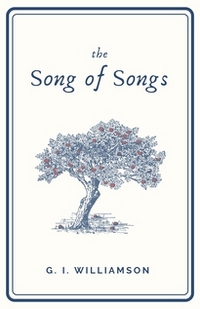
Song of Songs

The Song of Songs

by G. I. Williamson
Kindle Edition, 112 pg.
P&R Publishing, 2020
Read: April 26, 2020
Grab a copy from your local indie bookstore!

(the official blurb)
This is a great and helpful collection of sermons. This particular book of the Bible is often misinterpreted, so having someone bring careful clarity to the text is valuable. It’s not the final word—Williamson would never claim to be. But it’s helpful.

It’s also Christ-centered. Something far too often neglected when approaching this text. Yes, there’s a focus on love, marriage, sexuality. But with the goal of bringing glory to God through that.

I really appreciated this book and will be returning to it.
3.5 Stars

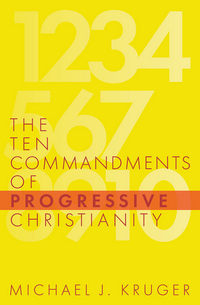
The Ten Commandments of Progressive Christianity

The Ten Commandments of Progressive Christianity

by Michael J. Kruger
Paperback, 54 pg.
Cruciform Quick, 2019
Read: May 24, 2020
Grab a copy from your local indie bookstore!

(the official blurb)
There’s part of this that’s a tribute to Machen and Christianity & Liberalism, while being an update to it, too. To see how Liberalism is alive and well (running under the moniker of “Progressive” now), he uses two contemporary works to respond to. He stresses repeatedly that the tenents taught in these books aren’t wholesale departures from the faith. However, these half-truths are so misleading they amount to the same. Being half-truths, they’re all the more dangerous and will easily fool some.

The analysis and critique are sharp, spot-on, and easy to read. Well worth your time.

But…

I know that the point of this imprint is “quick,” but this was just too brief to be really valuable. I’d have liked some more depth, for Kruger to use more than just the two works he’s critiquing, that sort of thing. It was an appetizer—and it turns out that after a couple of bites, I wanted a meal.
3.5 Stars

This post contains affiliate links. If you purchase from any of them, I will get a small commission at no additional cost to you. As always, opinions are my own.

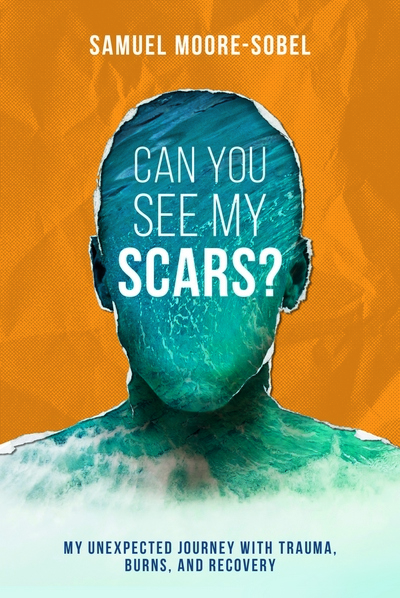
Just a Spoonful of Sugar—Non-Fiction to Smile With and Learn From

So I stumbled onto my notes from Funny, You Don’t Look Autistic: A Comedian’s Guide to Life on the Spectrum the other day (and yeah, I forgot almost all of them in my post). But it got me thinking about McCreary’s approach—taking a hard-to-talk about subject, and adding a touch of humor (or at least a light-hearted voice) to it to make it palatable. It’s a great way to get someone to look at the subtleties of what the Autism Spectrum Disorder can be, how individuals can fall somewhere on that spectrum (and therefore have many things in common), and yet be very different from one another.

Now, I realized that some would point to this as a problem, our cultural inability to discuss difficult subjects with the sobriety and seriousness they deserve. And there’s something to that. More than something, probably. Still, I don’t like to think I enjoy these because I’m shallow, but I guess I could be.

Shallowness aside, there’s something to that approach—whether it’s technical issues, trauma, socially awkward topics, disease, disorders or other things people try to avoid discussing—doing so in a light-hearted manner or with plenty of laughs, tends to make the audience receptive. It takes a lot of skill to blend the difficult topic into an entertaining package. But it’s a great way to gain a new perspective, a deeper understanding, or learn something.

Some of the others that I’ve read/posted about in the last few years that entertain while informing/giving insight:
bullet Wishful Drinking by Carrie Fisher—Fisher addresses her addictions and mental health problems (and the extreme solutions) in this frequently laugh-out-loud memoir
bullet Everything is Normal by Sergey Grechishkin—Grechishkin’s memoir of growing up in 1980’s-era Soviet Russia brings the grins (and a chuckle or two) while not letting us forget how hard and terrifying it could be.
bullet Kasher in the Rye: The True Tale of a White Boy from Oakland Who Became a Drug Addict, Criminal, Mental Patient, and Then Turned 16 by Mose Kasher—Kasher’s account will make you smile, break your heart, and help you understand addiction
bullet Gluten Is My Bitch: Rants, Recipes, and Ridiculousness for the Gluten-Free by April Peveteaux—on the one hand, this seems the slightest of the issues addressed. Ask any person with Celiac Disease how hard it can be to find food that doesn’t make you violently ill—and just how violent that illness can be. But Peveteaux will make you laugh, while offering hope and help.
bullet Henry by Katrina Shawver—even in a Nazi work/death camp, friendship helps, people can find some release.

Help me expand this list—what are some other works along these lines that I should read?

Every Day Matters: A Biblical Approach to Productivity by Brandon D. Crowe: Biblical Foundation, Sage Advice, and Helpful Examples

Every Day Matters

Every Day Matters: A Biblical Approach to Productivity

by Brandon D. Crowe

Paperback, 129 pg.
Lexham Press, 2020

Read: February 2-23, 2020
Grab a copy from your local indie bookstore!


I should begin by stating upfront that my take on this book is very different than the other Christian Productivity book I read back in 2015. It’s entirely possible that this makes me a hypocrite. I don’t think so, but I’m not going to go back and re-read the other one. I remember the starting point of that one being different than this, and it makes all the difference to me.

* N.B.: Crowe cites it positively at one point. Do with that what you will.

In Part I, Crowe outlines the need for believers to think about their personal productivity. Then he uses Proverbs and Ecclesiastes to show the foundation of Biblical productivity. Then he further expands on that material by looking at Paul’s teaching about focus, diligence, and self-control. This was my favorite section, and I could’ve easily read something twice as long had Crowe decided to expand on these points.

Part II focuses on Principles. He builds on the Biblical material with a mixture of experience, research into productivity, and application of Christian teaching to help the reader concentrate on responsibility, goal setting, the role of family, the importance of rest and health.

The rubber meets the road in Part III, “Practices.” He discusses spiritual disciplines, organization methods and some pitfalls to avoid. He gives a lot of tips here, illustrated from his own experience (but he also discusses some things he doesn’t personally use). There’s a lot of “this worked for me, give it a shot” kind of writing here. There’s also a handy little appendix on the strategic use of email.

I think Crowe’s use of both the Wisdom Literature and Pauline texts are incredibly helpful; his principles section demonstrates both wisdom and insight; and his application his helpful. Best of all is the general approach, essentially: This is what I’ve learned, you should be able to learn something from it. The important thing is that you think about this kind of thing and find the most effective way for you to serve God and your fellow man (starting with your family). It’s not a one-size-fits-all approach.

That’s exactly the kind of thing I needed to read.

Sure, it’s “only” a 3 1/2 Star book. I know some people see that as a bad thing. The majority of what I read and like is 3 Star. But I’m not the kind of guy who is ever going to give more than that to a productivity book (unless it really makes me laugh or something—it’ll be the writing, not the method that wins me over). I liked this, it provoked some thought and reflection and I’ve applied some of what Crowe has said—and am looking for ways to do more of that. I think that says good things about the book.


3.5 Stars

This post contains an affiliate link. If you purchase from it, I will get a small commission at no additional cost to you. As always, opinions are my own.

The Stay at Home Book Tag

The Stay at Home Book Tag
I saw this tag over on this one from Witty and Sarcastic Book Club last week and figured I’d better join in the fun soon—our Stay at Home order is set to expire at the end of this month, and I may not get another chance.

Laying in Bed: A Book You Could/Have Read in a Day

This one gave me some trouble, honestly, if you’re committed, what book can’t you read in a day? But…I’m going to go with:

Not DressedNot Dressed

by Matthew Hanover
I didn’t read this in a day, but man, I could’ve. This book (like last year’s Not Famous) is effortless to read. When I started this book, it was late in the day and I thought I’d just stick a toe in the water, maybe read about 10% of it. Before I knew it, I was about a third into the book (and were it not for the time of day, I’d have probably finished it in one sitting!). It’s funny, it’s sweet, it’s infectious, it’s engaging as anything I can remember. I cared about these characters and got invested in their lives faster than I typically do. It’s as comfortable as staying in bed should be.

In case you’re curious, here’s my post about it.


Snacking: A Guilty Pleasure Book

Pop Culture!Pop Culture! …Building a Better Tomorrow by Avoiding Today

by Dave Kellett
I’m honestly troubled by the idea of “guilty pleasure.” If you dig a piece of fiction, you dig a piece of fiction—why feel bad about it?* But, I ended up going with this collection of Sheldon comics. I love this strip and read them every time that Kellett posts a new one. I don’t let myself sit down and read through a collection (or part of one) very often, I feel like I should be reading “a real book,” or something I could blog about—or, you know spending time with my family, I guess. So, this is a pleasure that makes me feel guilty when I indulge (which I guess undercuts my opening line…oops).

* Note how I don’t go for the cheap Dan Brown joke here…


Netflix: series you want to start

The Shattered SeaThe Shattered Sea

by Joe Abercrombie
Abercrombie’s Norse-influenced YA trilogy has appealed to me since it was announced. Especially as it’s complete, there’s no good reason I can’t tackle it—the entire trilogy is about as long as some epic fantasy novels, I don’t know what I’m waiting for.

Dan Willis’ Arcane Casebook is also right up there. I hopefully will get to both in 2020.


Deep Clean: a book that’s been on your “to be read” list for ages

StilettoStiletto

by Daniel O’Malley
I loved O’Malley’s The Rook, but read it long before I launched this thing, so I didn’t write anything about it—and then re-read it so I could get ready for Stiletto, and took so many notes I couldn’t get through them all to write something. Anyway, this came out in ’16 and I heard so many lukewarm things that I haven’t been able to get myself to read it. It’s right there on top of my bookshelf, right where it’s been since July 2016 and I don’t know when it’s coming down.


Animal Crossing: a book you recently bought because of hype

The Last Smile in Sunder CityThe Last Smile in Sunder City

by Luke Arnold

A former soldier turned PI tries to help the fantasy creatures whose lives he ruined in a world that’s lost its magic in a compelling debut fantasy by Black Sails actor Luke Arnold.

Welcome to Sunder City. The magic is gone but the monsters remain.

I’m Fetch Phillips, just like it says on the window. There are a few things you should know before you hire me:

1. Sobriety costs extra.
2. My services are confidential.
3. I don’t work for humans.

It’s nothing personal–I’m human myself. But after what happened, to the magic, it’s not the humans who need my help.

Walk the streets of Sunder City and meet Fetch, his magical clients, and a darkly imagined world perfect for readers of Ben Aaronovitch and Jim Butcher.

How can I say “no” to that?

Yeah, this is on the list because of the hype, but when I went to find some examples of the hype that sold me, I could only find this one from Witty and Sarcastic Book Club, which was enough on its own, honestly. Still, if you’re reading this and I’ve just snubbed you. Sorry. Correct me and I’ll throw a link up here.


Productivity: A book you learned from, or that had an impact on you

How Not to DieHow Not to Die

by Michael Greger M.D. FACLM, Gene Stone
This is a book that was recommended to me as part of a medical program I’m in (in an effort to forestall any future cardiac events)—I’m not convinced by all of what it says, but it’s helped me make significant changes to my life—and will continue to do so.

In case you’re curious, here’s my post about it (the post is about the library’s copy of the audiobook, I have the hardcover now—it’s heavy enough I could probably organize an exercise regimen using only it as a weight.


Facetime: a book you were gifted

The Name of the Wind: 10th Anniversary Deluxe EditionThe Name of the Wind: 10th Anniversary Deluxe Edition

by Patrick Rothfuss, Illustrated by Dan dos Santos
My kids got this for me for Father’s Day in ’17—still one of my favorite gifts from them. A gorgeous edition of one of my all-time favorite books.


Self-care: what is one thing you’ve done recently to look after yourself

Ehhh…not much, really. This is the kind of thing I’m not good at.


Bonus: name a book that is coming out soon

Platonic ComedyPlatonic Comedy

by Ian Shane
Ian Shane’s Postgraduate was one of my favorites from 2019. If this is almost as good, it’ll be one of my favorites of 2020.

Ex-jock Rob and socially awkward Liz weren’t likely to become best friends, but they’ve had each other’s back since college. On a night both of their romantic lives implode, they make a pledge; if they aren’t married by Rob’s fortieth birthday, they would marry each other. With a year left before their deadline, Rob and Liz make a mad dash to find “The One,” while navigating a minefield of modern dating complications. They must deal with skeptical friends, faces from the past, and hidden jealousies and feelings neither one of them will ever admit to.

From Ian Shane, author of Postgraduate and Radio Radio, comes an unconventional one-in-eight-billion romantic comedy. Platonic Comedy is a contemporary When Harry Met Sally that is perfect for fans of Nick Hornby, Jonathan Tropper, and Matthew Norman.


As usual, I’m not tagging anyone in this—but I’d like to see what you all have to come up with.

The Poop Diaries by Abby Ross: These Plumbers have Seen and Smelled it All.

The Poop Diaries

The Poop Diaries

by Abby Ross

Kindle Edition, 236 pg.
Black Rose Writing, 2020

Read: April 4-11, 2020
Grab a copy from your local indie bookstore!

Plumbers are not always just plumbers. We are rescuers, concierges, and listeners. We go into people’s homes, treat them with respect, answer their questions, and fix their problems.

Back in February, I posted a Book Spotlight and Guest Post from Abby Ross about the origin of this project. I’ve now found the time to read it, and it’s exactly what was promised. A collection of anecdotes about memorable jobs and the people they’ve helped from a wide variety of plumbers at various stages of their careers.

Most of the stories sound like the stories someone would share over beers—generally told to amuse/entertain, some feature some pretty gross things, some are heartwarming (a couple are particularly sweet). And wow—the things they’ve found? Mind-boggling.

Yes, occasionally, the stories get repetitive—there are only so many plumbing problems. It reminded me a little of Herriot’s All Creatures… books, which also largely consisted of variations on a theme. But they’re quick enough reads that it’s easy to get past. And every time a tale starts to feel like one you’ve read before, within a page it moves to something else and that’s over with.

I wouldn’t have minded a little more detail about what some of the technical terms mean—I was able suss them out from context, and eventually, we’re given better definitions, it just would’ve been nice to have it up front.

My biggest—really only—complaint was the lack of contractions in the dialogue. Sure, I knew that none of the dialogue was made of exact quotations, it was all paraphrases based on memory. But still, everyone speaking in a wooden, contraction-less manner just feels wrong.

A breezy book that makes you think about a segment of the population that most of us likely try not to think about, but really should. Ross helps us to do so by hearing their stories—with an emphasis on those that’ll make you grin. This sentiment is repeated throughout the book, and it’s a pretty good note to end on:

“If things get bad and your furnace breaks, you can always build a fire. If your electricity goes out, you can always light a candle. But you always need clean water to drink and a place to go poop.”

And that is why the world will always need plumbers.


3 Stars

Disclaimer: I received this book from the author in exchange for this post and my honest opinion, I thank her for it.

This post contains an affiliate link. If you purchase from it, I will get a small commission at no additional cost to you. As always, opinions are my own.
BOOK BLITZ: A Lesson for Every Child: Learning About Food Allergies by Elizabeth Hamilton-Guarino, Sally Huss (Illustrator)

I’m pleased to host a Book Blitz for A Lesson for Every Child: Learning About Food Allergies today. A cute-looking and helpful children’s book.

Book Details:

Book Title: A Lesson for Every Child: Learning About Food Allergies by Elizabeth Hamilton-Guarino, Sally Huss (Illustrator)
Release date: March 11, 2020
Format: Ebook/Paperback
Length: 41 pages
Purchase Link: https://amzn.to/2xJUTOT

Book Blurb:

Learning was everything to Mrs. Emerson. So when a new student was brought into her classroom, Mrs. Emerson was delighted because she discovered that this young man knew something that everyone needed to know. She told her class that Jack was just like everyone else, except for one thing – he had food allergies. “Would you like to explain that to us, Jack?” Jack proceeds to educate us all. This book is endorsed by Food Allergy and Anaphylaxis Connection Team (FAACT), MedicAlert® Foundation, Elijah Alavi Foundation, The Love for Giovanni Foundation, No Nut Traveler, and Food Allergy Zone

About Sally Huss:

Sally Huss</aAuthor/Illustrator Sally Huss creates children’s books to uplift the lives of children. She does this by giving them tools to overcome obstacles; by helping them value themselves and others; and by inspiring them to be the best that they can be. Her catalogue of books now exceeds 100.

"Bright and happy," "light and whimsical" have been the catch phrases attached to the writings and art of Sally Huss for over 30 years. Sweet images dance across all of Sally's creations, whether in the form of children's books, paintings, wallpaper, ceramics, baby bibs, purses, clothing, or her King Features syndicated newspaper panel "Happy Musings."

Sally is a graduate of USC with a degree in Fine Art and through the years has had 26 of her own licensed art galleries throughout the world. sallyhuss.com

About Elizabeth Hamilton-Guarino:

Elizabeth Hamilton-GuarinoElizabeth Hamilton-Guarino is one of America’s foremost personal and corporate development consultants. She is the creator of The Best Ever You Network (or Best Ever You), a leading multimedia provider of lifestyle and self-help content. While participating in the Harvard Business School for Leadership program, Elizabeth serves as a Leadership Advisor for the Olympia Snowe Women’s Leadership Institute.

In 2020 Elizabeth joined Sally Huss to create the best-selling children’s book A Lesson for Every Child: Learning About Food Allergies. Living with life-threatening food allergies for many years, Elizabeth added her personal experience and her expertise to the project. She also sits on several boards of organizations and foundations that bring awareness to this life-threatening condition.

Elizabeth is also the best-selling author of Percolate – Let Your Best Self Filter Through (Hay House Publishing). elizabethguarino.com.

My thanks to Love Books Group for the invitation to participate in this tour.

Love Books Group

Page 17 of 31

Powered by WordPress & Theme by Anders Norén