Tag: Non-Fiction Page 21 of 31

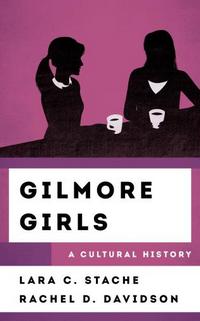
Gilmore Girls: A Cultural History by Lara C. Stache and Rachel Davidson: Oy with the Poodles Already

Of course that headline doesn’t say anything about the book, I’ve just never had an excuse to use that line, and this is as close as I’m going to get.

Gilmore Girls: A Cultural HistoryGilmore Girls: A Cultural History

by Lara C. Stache and Rachel D. Davidson

Series:
The Cultural History of Television

eARC, 248 pg.
Rowman & Littlefield Publishers, 2019
Read: August 16 – 23, 2019

I’m a huge fan of the show Gilmore Girls, and am a bigger fan of Amy Sherman-Palladino and Daniel Palladino. So when I saw this title, I had to jump on it. A cultural history of the show? 200+ pages about the show in more than just a raving-fan mode? Sign me up! The authors are big fans of the show, it must be said, but they can be critical of it, which makes all the difference. This book is an examination of both the show’s reflection of the culture around it as well as what impact it had on the culture—the medium of TV, the casual viewers, and the fans. For a show that depends so heavily on pop culture, the former is easy to demonstrate (it’s more of a question of how to focus the examination and when to stop), but the latter is just as important.

In Part I of the book, the authors look at the various relationships depicted in the show—mothers and daughters; fathers/father-figures and children; romance (with mother/daughter relationships, this is obligatory for the show); and friendship. I thought they were spot-on when it came to mothers and fathers. The romantic relationships they concentrated, and the points they raised about them, were what anyone picking up the book expected (although there was a stronger anti-Logan/pro-Jess bias than one might expect)—I did like the way that Dean and Luke were paralleled, and didn’t appreciate the way that Christopher and Logan were (mostly because I think they were right, and I had to lower my regard for Logan if he’s Rory’s Christopher-equivalent). I thought the looks at Lorelai/Sookie and Rory/Lane and what they said about female friendships was just fantastic.

In Part II the authors switch to themes addressed in the show—feminism, class, pop culture and small-town life. I’ll talk more about the chapter on feminism in a moment, but I thought it was exceptional. The Pop Culture chapter was fun and insightful. I appreciated the Class/Wealth examination, but thought they could’ve done more with it. This is part of the book that you probably can’t find much of in discussions about the show—you can’t swing a LOLcat* online without finding someone talking about Luke and Lorelai or Dean and Rory, but thoughtful takes on the greater cultural themes are rarer (not impossible to find, but harder.) The book doesn’t shine as brightly as it could in this Part, but it handles the subjects deftly.

* I feel like I should apologize to Babette for using this expression.

The chapter examining the show’s depiction of feminism features an extended look at Episode 1.14, “That Damn Donna Reed.” This is at the same time the best and worst part of the book. Let me explain: the authors examine this episode and the main storylines in detail and while reflecting about what those stories say about the feminism of Gilmore Girls and the contemporary American culture (and our contemporary culture). I was entertained and satisfied with the book, but when they hit this high point*—and didn’t accomplish anything like it in following chapters—I was disappointed. If we’d gotten that kind of examination of popular culture and class as shown in particular episodes, I’d have probably rated this book higher. I may have rated it higher if that chapter didn’t have the 1.14 section, too—it just made everything else seem a little more shallow.

* I’m not saying I agreed with all of the analysis, but I appreciated what they did.

Chapter 8, “Small-Town Livin’,” is—like most of this book—a look at the depiction of something and a celebration of it. In this case, it’s Stars Hollow as an ideal small town. We’re shown many examples of the peculiarities of Stars Hollow (taken in every sense of the word)—notably some of the characters, the way the community acts as a large family, how it supports (and doesn’t support) each member, and so on. Then the authors talk about how it represents something in our contemporary culture that many, many feel is missing from our communities and how we yearn for it. I don’t know what it was about this chapter precisely that struck me the way it did—but I didn’t expect it, and the sentiments expressed really resonated with me. Perhaps it’s because the rest of the book focuses (as it should) on Lorelai, Rory, Richard, Emily, Luke, etc., and it’s only here that we focus on everyone else that made this show delightful.

My main complaint is that the authors depend on the same handful of examples too often. Luke did X, or Emily said Y are each trotted out to support 5 or 6 (or a dozen) points rather than finding 5 or 6 (or a dozen) other examples to show the same kind of thing. Luke didn’t just act in a certain manner one time in one episode to cite repeatedly, he does repeated things along certain lines that could be used in a variety of contexts. I don’t want to get bogged down in the details on this, so I’m keeping it vague, but it often felt like I could sing along with Stache and Davidson when they started to illustrate a point with one of the frequently used points. I can understand that it’s easier to keep going back to the same well so that they don’t have to explain the citations as much each time, but it got a bit tired.

There’s an appendix (of sorts) wrapping up this book that is worth the purchase price—”The Episodes: An Opinionated Compendium.” The compendium lists every episode, with a one-paragraph synopses (some are short, some aren’t) and a Best Line (except for in Season 7, which almost doesn’t count for the authors as a real season—like the mythical second and third Matrix movies, the fourth Indiana Jones, or third X-Men). I don’t recommend reading that straight through, you’ll burn out—but it’s a great way to revisit the episodes and refresh your memory. I don’t know the page count on this section, but it’s not inconsequential—it’s 27% of my eARC. Any fan will appreciate this part, even if they’re unimpressed with the main text (and I doubt many fans will be unimpressed with anything in these pages).

This is a fun read, a thought-provoking read, and a comfort-read. It’s like spending a couple of hours talking with some pretty intelligent friends about a TV show you all really like. It’s impossible to watch the show without thinking about it in the terms the authors choose to focus on—relationships, feminism, wealth, community, family—but most fans probably haven’t focused on it to the extent this volume does. I wanted more, but not much more. Not only is this a good book and a good way to examine a beloved show, it’s a great introduction to this series of books. I know I’ll be picking up more of them.

Disclaimer: I received this eARC from Rowman & Littlefield via NetGalley in exchange for this post—thanks to both for this opportunity, I thoroughly enjoyed the experience.

—–

3.5 Stars

Reposting Just ‘Cuz: What the Dog Knows: The Science and Wonder of Working Dogs by Cat Warren

Real Life™ interfered today (a good thing, but time consuming), and I wasn’t able to finish a post, so in honor of yesterday’s (8/26) National Dog Day, here’s my look at Cat Warren’s wonderful book. By the way, a Children’s version is coming out in October, looking forward to that!

What the Dog KnowsWhat the Dog Knows: The Science and Wonder of Working Dogs

by Cat Warren

Hardcover, 280 pg.
Touchstone, 2013
Read: May 7 – 15, 2015

People are smart, just like dogs.

Seriously, how do you not like a book that contains that line?

Honestly, the only reason I gave this book a second glance — okay, a first glance — is that Robert Crais blurbed the paperback edition and it showed up on his Facebook page. It seemed kind of interesting, but I wasn’t sure — then I noticed that Spencer Quinn also wrote a blurb. And if two of my favorite mystery novelists (who have a thing for dogs) tell me the book is good, it must be.*

They were right — Warren was a journalist, is now a professor, and knows her way around a sentence. She clearly cares about the subject and has invested a lot of time and effort into getting to know it, her style is engaging and charming (I was chuckling within a couple of pages), and she doesn’t mind showing her own failings and weaknesses.

Warren basically covers three topics: there’s the science and history of using working dogs (of all sorts of breeds, not to mention pigs(!), birds, and even cats) to find cadavers, drugs, bombs, etc.; there’s the memoir of her involvement with cadaver dogs via her German Shepherd, Solo; and anecdotes of other cadaver dogs and trainers that she’s encountered/learned from/watched in action.

The history and science of dogs/other animals being used for their sense of smell, is probably the most fascinating part of this book, but it’d be really easy for the material to be too dry to bother with — Warren’s voice keeps that from happening. I think it’s terrific that at the end of the day, no one knows what it is about the smell of the human body that dogs sense — she’ll explain it better than me, but that’s the kernel the story. I just really enjoy it when the best and the brightest have to shrug and say, “I don’t know.” The chapter she spends on the future of dogs and/or digital replacements is good for similar reasons. Actually, I could just keep listing little facts/factoids/ideas here, but I don’t want to steal Warren’s thunder.

The best part of the book — the part that I found most interesting, and most frustratingly small — is the Warren’s story about getting Solo, discovering he had just too much energy and personality, and needing to find an outlet for it all. Which is followed by the trials and tribulations of a newbie cadaver dog handler and her pup-in-training, growing into a capable working dog. Anyone who has a dog lover as a Facebook friend knows just how easy it is for someone’s stories about their dog to get to the point where you can’t stand to hear another**. Somehow, Warren avoids this totally — not an easy feat. It probably helps that dog does far more fascinating things than just hiking through the woods or chasing a ball.

The stories about the others — her friends, colleagues, teachers, etc. — round out the book. It’s not just about Warren and Solo, it’s not just about the military/police efforts with training animals — it’s about dedicated volunteers, K-9 officers and dogs all over the country (and the world) making a difference. In places and ways you wouldn’t expect. Really? Sending in one guy and his dogs into Vietnam decades later to search for POW/MIA? Also, seeing how different dogs act differently, yet get the same job done was mind-boggling. Especially for dogs trained together/by the same person, you’d think they’d act similarly.

I imagine it’s to spotlight the work of others, to not brag about Solo too much, to talk about things that she and her dog haven’t done/seen/smelled — or whatever reason there is, I wanted more Solo. A lot more. I have no problem with the rest of the book, it’s just that there’s not enough Solo (or Coda).

Fascinating, entertaining, and educational — can’t ask for much more than that.

—–

* Yes, I’m aware there are flaws in the thinking there.
** Of course, your friends don’t have dogs as cool as mine. Let me tell you a little bit about her . . .

—–

4 Stars

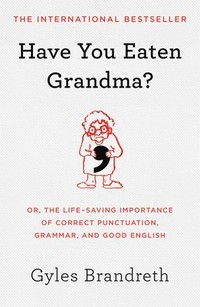
Shady Characters by Keith Houston: This geeky look at symbols and punctuation is as informative as it is fun.

Shady CharactersShady Characters: The Secret Life of Punctuation, Symbols & Other Typographical Marks

by Keith Houston

Hardcover, 246 pg.
W. W. Norton Company, 2013

Read: August 7 – 16, 2019

When the quotation mark does succeed in sparking debate, it attracts mild tut-tutting rather than genuine outrage. Though there is transatlantic disagreement over whether to enclose speech in ‘single’ or “double” quotes, for instance, it comes nowhere near the level of hand-wringing inspired by the semicolon, whose tricky usage has driven it almost to extinction. Neither does the occasional unnecessary “use” of quotation marks induce the howling apoplexy provoked by a simple misplaced apostrophe: whereas one English council was driven to institute an apostrophe “swear box,” café menu offers of “freshly baked ‘bagels,”’ “‘fresh fish,” and the like attract typically little more than a genteel ribbing. Unlike the “Oxford,” or serial, comma, quotation marks or “inverted commas” have never become a trending topic on Twitter, nor have they inspired a pop song in their name.

If that paragraph (from the chapter on quotation marks) or the fact that there’s an entire chapter on quotation marks doesn’t indicate it to you already, let me assure you that this is a book for grammar nerds (or would-be grammar nerds). For a little more flavor, the U. S. subtitle is “The Secret Life of Punc­tu­ation, Sym­bols, & Other Ty­po­graph­ical Marks,” in the U.K., it’s “Am­persands, In­ter­ro­b­angs and Other Ty­po­graph­ical Curi­os­it­ies.”

The book is a historical survey of typography and language as manifested in particular punctuation marks, symbols, and other typographical marks. How they developed, how they’ve been used, and how they are used now. Specifically they are: the pilcrow (¶—you may have seen those around here); the interrobang (‽); the octothorpe (#); the ampersand (&); the @ symbol; the asterisk and dagger (* †); the hyphen (‐); the dash ( ‒ – — ―); the manicule (☞); quotation marks (‘ ’ “ ” ‘ ‘ ” “); and the various attempts to come up with a symbol, typology, or punctuation denoting irony, sarcasm or humor.*

* And I really wish I knew how that paragraph was going to display cross-browsers, devices and in the various places I’ll post this…

The afterward does a pretty good job of describing the book as a whole:

This book, as it turns out, is not just about unusual marks of punctuation, nor even punctuation in general. In following the warp and woof of individual shady characters throughout their lifetimes, it is the woven fabric of writing as a whole that emerges. And in today’s writing, the printed and electroluminescent characters we read on a daily basis and the scrawled handwriting that occupies the diminishing gaps between computer monitors, tablet computers, and smartphone screens, this history stares right back at us.

You don’t have to read this book from cover to cover, you can dip in and read about a particular mark/symbol that you’re curious about and move on. But the chapters do build on each other, and things that are discussed in (for example) the pilcrow chapter will come back for the manicule, the interrobang will inform the ironic/sarcasm indicators, and the octothorpe chapter will come back with the @ and dash chapters. So you’d do well to read it from cover to cover.

It’s not just the individual marks/symbols that you learn about, but the hyphen chapter is a lesson (in a nutshell) on typography in books from Gutenberg to digital publishing. The asterisk and dagger chapter showed a surprising connection between those symbols (and their usage) and the Protestant Reformation, Luther in particular.

The origin alone of the name “ampersand” (and the various attempts at explaining “octothorpe” and the alternatives) are just amusing enough to justify buying a copy of this to have on hand for reference. The history of the ampersand is almost as interesting as the name, too. The reason that @ was used in e-mail addresses — and essentially shaped how much of the world’s communication in the few decades since then is a great example that it’s not just butterflies flapping their wings in China that can make a huge impact on the other side of the world.

Naturally, not all chapters are equally interesting — and that’s going to be a matter of taste — and the more technical bits of individual chapters are easily skimmable until Houston moves on to another aspect of the mark in question or on to the next chapter. I will admit I did that a time or two, but he always got me back within a chapter.

I really wish I could remember how this got on my radar a couple of weeks ago, so I could give a hat-tip and some thanks, I had a great time with this book. Well-illustrated (both anecdotally and with pictures), and with a great mix of style, wit and substance — Shady Characters is a great way for a grammar geek to spend a day or two basking in the things that provide ornamentation to writing and our books. i do recommend it, and am glad I came across it.

—–

3 Stars

2019 Library Love Challenge

The Lord’s Supper: Answers to Common Questions by Keith A. Mathison: A Helpful, Careful, Encouraging and Challenging Look at some Tricky Questions

The Lord's Supper: Answers to Common QuestionsThe Lord’s Supper: Answers to Common Questions

by Keith A. Mathison

eARC, 99 pg.
Reformation Trust Publishing, 2019
Read: August 4, 2019

There were many laudable things about Mathison’s Given for You: Reclaiming Calvin’s Doctrine of the Lord’s Supper (P & R Publishing, 2002), one of the personal highlights was the final chapter, “Practical Issues and Debates.” This new release from Reformation Trust takes the same impulses that were behind that chapter (and the rest of the book) and delivers a concise introduction to the Reformed doctrine of the Lord’s Supper, looking at the doctrinal landscape, a survey of the relevant passages, and some pressing questions (both theological and practical) for those with little background in the Sacrament, or those who wish to have their understanding sharpened.

Because the chapter titles represent just what you get in this book, let me post them:

1. What Is the Lord’s Supper?
2. What Are the Different Views of the Lord’s Supper?
3. Why Did Jesus Institute the Lord’s Supper on the Passover?
4. What Did Jesus Mean When He Said, “This Is My Body” and “This Is My Blood of the Covenant”?
5. What Does Paul Teach concerning the Lord’s Supper in 1 Corinthians 10– 11?
6. Is Jesus Present In The Lord’s Supper?
7. Is the Lord’s Supper a Sacrifice?
8. What Are the Elements of the Lord’s Supper?
9. How Frequently Should the Lord’s Supper Be Observed?
10. How Should Believers Prepare for and Partake of the Lord’s Supper?
11. Should Children Partake of the Lord’s Supper?

The first two chapters cover the ground that a lot of books on the subject doevery author (and reader) need to start with the basics in view, and Mathison handles a survey these ideas very capably.

Chapter 3 is honestly not something I’ve considered before (at least not in a lot of detail)after all, when else could the Last Supper have been held? But I’m glad he covered this idea, and it gave me a good perspective on redemptive-historical place of the sacrament instituted that night.

Chapters 4 and 5 are very helpful and clear while guiding the reader through the passages in question. He doesn’t get too technical with the passages (due to space and the focus of the book), but is efficient enough in his explanation that he provides a solid grounding for further study and meditation. I particularly appreciated that in Chapter 5, Mathison is careful to point out that not only does the sacrament look back (“Do this in remembrance”), but it looks forward in eschatological hope to the consummation.

Chapter 6 is obviously going to be controversial and might cause problems for many. Mathison is irenic, yet he doesn’t waver from his position (or provide much wiggle room for those who might disagree). Carefully building on the aforementioned texts and the Niceno-Chalcedonian doctrine concerning the person of Christ, he then explains the teachings of the magisterial Reformers (the non-Lutheran ones, anyway) in a way relevant to today’s believer.

Like Chapter 6, Chapter 9 covers ground that he focused on in the longer previous workand those who want more on those subjects have a ready resource in his work. What’s here is a great start, but it’s not everything Mathison has to say on the ideas.

Chapter 10 is pure gold, it’s one of the best things I’ve read this year. It’s helpful and encouraging (and, yes, a little challenging)worth the purchase price alone.

Overall the writing is cleareasy enough for anyone to approach and understand, while not losing the depth and rigor necessary when dealing with something as important as this. Mathison cites other authors (contemporary and historical) to help (and the footnotes provide great fodder for further study), but shoulders most of the work himself. If you’ve never read Mathison, this is a good way to see one of his strengths is always taking complex ideas and presenting them in an accessible fashion.

I have two complaintsneither are enough to keep me from recommending the book, and possibly gifting itbut they’re things that bugged me. Brevity. It’s just too short, it doesn’t have to be as long as Given for You, but each chapter could be just a little longer and more developed.

The second complaint (semi-related) is the lack of a conclusion, just a page or two of wrap-up, an exhortation to use these answerssomething. It just ends abruptly after Chapter 11*, and the absence of anything else was a deafening silence.

*There’s a bankruptcy joke begging to be made there, but it seems cheap.

Those a great resource for those with questions about the Reformed position on the sacrament. Like Guy Prentiss Waters’ The Lord’s Supper as the Sign and Meal of the New Covenant from last year, it’s a great introductory work and would make a great companion to it, the two would round out each other. Mathison helps to deal with practical and theoretical issues that young believers, or believers new to the Reformed tradition, stumble on and struggle with. Faithful, helpful, wise, and encouraging, this book is a great help and you’d do well to check it out.

Disclaimer: I received this eARC from Reformation Trust Publishing via NetGalley in exchange for this post—thanks to both for this, I appreciate the opportunity, but not enough to change my opinion of the book.

—–

3.5 Stars

Not Home Yet by Ian K. Smith: This *is* My Father’s World

Not Home YetNot Home Yet: How the Renewal of the Earth Fits into God’s Plan for the World

by Ian K. Smith

eARC, 176 pg.
Crossway, 2019
Read: August 4, 2019

In the beginning, we’re told, God created the heavens and the earth. As Rod Rosenbladt used to say (maybe still does, it’s been a while since I heard him), “God likes matter, He made it.” The Scriptures are replete with post-Fall references to God visiting Earth, coming to Earth and dwelling with His people. This is what the Incarnation and the bodily resurrection are about. Yes, the risen Christ ascends to Heaven—but He’s coming back to renew the planet. That’s what it’s all about. The goal of humanity is not going to Heaven after we die, but to live with Him in our resurrection bodies on a renewed Earth. That’s what this book is about, in a nutshell—how Creation isn’t to be abandoned, discarded and therefore it doesn’t matter what we do. Instead, we’re caretakers of this place waiting to be renewed when our pilgrimage is complete.

Smith begins his case with Genesis 1-2 and what this tells us about God’s attitude toward His creation. Then he moves on to the Fall and God’s work through his redeemed people to renew the Earth, through the Flood and the covenant made with Earth, to the eventual establishment of Israel and his dwelling with His people in the Tabernacle and Temple—all of which points to the ultimate tabernacling with humanity in the person of Jesus Christ. Then Smith moves into a discussion of Christ’s resurrection and what it means for His people and this world as explained by the Apostles—what it means for this world and how we should view the world.

Now, I shared the general, overall thesis of the book before I read this—but I hadn’t given it much thought, and didn’t see it in the kind of detail that Smith brought out. I found most of this book fascinating and relish the opportunity to give it a slower, more careful read in the future. I found the explanations and arguments carefully framed and well-reasoned. There’s a chapter or two that I highlighted the majority of, and every chapter has a good amount of highlighting, the way he put certain points was very helpful. I could’ve used a little more depth (not possible in a book of this length, and the goal was probably something involving length to draw in—or not scare off—readers).

There are some problems with the book if you ask me. I can’t buy, at all, his arguments about Genesis 6:1-4 (that “sons of God”=angels*), but as it’s not pivotal to his overall argument, it’s not a big deal for me (it just gave me a little pause).

* I know it’s not unique to Smith, but it’s rare enough that I run into it that it stuck out to me. And, no, I won’t waste anyone’s time debating that here, it’s not that type of book. Read Bavinck for one of the quickest arguments against it, or check out Christ the Center, Episode 373.

My major reservation about this book is the lack of application—I’d have preferred a chapter or two (or four?) of “given this, how then should we live?” Smith hints at, even points toward, what the believer should do in light of this thinking. But to me, it seemed as if he was reticent to show how these ideas should affect the way that readers should put these ideas into action, how they should impact what they do from day to day—or how to think about their actions and society (ecclesiastical, political, geographic—take your pick). Yes, a good deal is self-evident, but I’d appreciate having it spelled out (if for no other reason than it’d be good to put some meat on these bones).

The book is a bit brief, and (again) I’d like to see some of what he said expanded upon, but what’s there is really good, thought-provoking, faithful to the text of Scripture and consistent. It was a rewarding read, and I think it’ll be an even more rewarding re-read. It’s an accessible book and one that I’d encourage people to pick up and discuss.

Disclaimer: I received this eARC from Crossway via NetGalley in exchange for this post—I am grateful that both groups gave me the opportunity.

—–

3 Stars

The Blue Zones Solution (Audiobook) by Dan Buettner, Joe Barrett: Uninspiring tales about efforts to prolong longevity

The Blue Zones Solution (Audiobook)The Blue Zones Solution: Eating and Living like the World’s Healthiest People (Audiobook)

by Dan Buettner, Joe Barrett


Unabridged Audiobook, 7 hrs., 5 mins.
Blackstone Audio, Inc., 2015
Read: July 12 – 16, 2019

As part of some medical education I’m getting, The Blue Zones was recommended to me. I couldn’t find an easily accessible copy of it, but my library did have one of the follow-ups, The Blue Zones Solution on audio. So I gave it a whirl.

There are a couple of aspects to the beginning of this book, he does a quick pass through over some of the “Blue Zones” from his first book (areas with above-normal centenarian population) to extract some common principles. This was too-much of a follow-up on what he’d already done to be a benefit to those who hadn’t read the first book. He also detailed ways his foundation tried to create Blue Zones in the US following these principles for communities that requested it.

Something bothered me about the way that was carried out, but I can’t articulate it without having the book in front of me to point to specific passages.

Lastly, he talks about ways you can create mini-Blue Zones in your home. Most of the advice given here is better delivered in other sources (like say, How Not to Die by Michael Greger).

Most of the support for the principles—especially as described here, is anecdotal, and the mantra “Correlation does not imply Causation” that was pounded into my head in college kept running through my mind. Maybe the original book would’ve convinced me—this did not. There was certainly a cornucopia of anecdotes (and a couple were hard to follow from chapter to chapter, to be honest, but that might be due to my lack of interest).

One of the principles is a commitment to/participation in religious practices. Religious activity is recommended without any regard for the truth involved. That bothers me tremendously. His later treatment of “Adventists” as a group equivalent to an ethnicity or population of a city/island/geographic area—and again, it was only the lifestyle habits, not the premises, presuppositions, and beliefs that undergird those habits that were encouraged. Selling the tree without the root isn’t going to produce much fruit or shade.

I don’t have any strong opinions about this as an audiobook, although I found Barrett’s pronunciation of “plantain” annoying (however correct). But so much of the benefit of the book depends on looking at the PDF that came with it. That’s where some of the data and all of the recipes are. So much of the useful part of the book isn’t in the audio. That’s not a deal killer, but as I was pretty down on the book already, it didn’t help.

The book didn’t do anything for me at all. I’m just not the audience for it, maybe if I’d read the first book and was curious about applying the lessons, I’d be interested. But I just didn’t see the point of this one.

—–

2 Stars

2019 Library Love Challenge

Riding the Elephant by Craig Ferguson: Heartfelt, Amusing, Occasionally Inspirational and/or Hilarious.

Riding the ElephantRiding the Elephant: A Memoir of Altercations, Humiliations, Hallucinations, and Observations

by Craig Ferguson
Hardcover, 266 pg.
Blue Rider Press, 2019
Read: July 1 – 18, 2019

The following year, 2009, I actually sang ”Sweet Caroline” along with Neil Diamond on stage—he put his hand on my shoulder! ”Reachin’ out. . . touchin’ me. . . touchin’ you . . .,” which means, no matter what you may achieve in your life, I’ll always be that little bit more awesome than you.

Early on, Ferguson talks about his approach to the writing of this bookafter years of writing the monologue-type things he started his talk show with (I call them type, because they’re not like your standard late night monologue), he’s continued to think in those terms, he finds it natural to write in. So, he wrote a few of those looking back on his past. Prestoa new memoir.

The timeline jumps around a lot, so there’s no real linear storyline. But there are trends, if you’re looking for them. More than that, there are themessobriety, family, and personal growth would be at the top of the list.

There are some wonderfully-written passages, not enough for my tastebut it’s not that kind of book, so those moments shine. Mostly, it’s a showcase for Ferguson as story-teller. And he’s a good one: whether it’s about a fishing trip, a vacation in Japan, performing somewhere, teenage romance (unrequited, I should add) or meeting his wife (for example) — you get caught up in the tale. Maybe the lessons he takes from the story or the point he was trying to raise, aren’t quite as good as the story itself, but frequently it is.

I could read the account of his learning to fly a couple of times a year and find it amusing and inspiring each time. I loved his discussion about his tattoos, tooit made me wish I had a session lined up.

One of the most prominent themes (maybe the most) is sobriety and his alcoholism. As you’d expect, Ferguson balances the harsh truths about both with his signature wit.

The problem with trying to hide active alcoholism from someone you live with is one of balance. You have to drink because you’re an alcoholic, but you don’t want to appear too drunk because then the poor unfortunate that is supposedly in a relationship with you might insist on you getting help. That’s the last fucking thing you want because every drinking alcoholic knows ”getting help” means stopping drinking, and that is unthinkable. Keeping your shit together is a tightrope act and is only halfway possible with luck, good timing, and cocaine. Even then it doesn’t always work.

Let’s be honest, it hardly ever works.

It never works.

I do think I would’ve enjoyed this more if I’d listened to the audiobookalas, it wasn’t available at my library. I think I’d have responded better to Ferguson’s voice telling me the stories, not reading them with frequent approximations of his voice in my head. But it was nice enougha few chuckles, some really well-written passages, some good insight into Ferguson. It wasn’t spectacular, as I’d hopedbut it was good. I’m glad I read it, and I bet if you like Ferguson to any extent, you’ll enjoy reading this, too.

—–

3 Stars

2019 Library Love ChallengeHumor Reading Challenge 2019

✔ A memoir or biography of a favorite celebrity.
✔ A book written by a comedian.

BOOK SPOTLIGHT (and Giveaway!): Emperors of the Deep by William McKeever

Today I’m pleased to welcome the Book Spotlight Tour for Emperors of the Deep by William McKeever. Who doesn’t find sharks fascinating?. Check out the information about the book or just scroll down to the end of the post and enter the givewway — or just go buy it.

Book Details:

Book Title: Emperors of the Deep by William McKeever
Publisher: Harper Collins
Category: Adult Non-Fiction
Release date: June 25, 2019
Format: Ebook/Hardcover/Audiobook
Length: 320 pages
Content Rating: PG-13 + M (Intense underwater moments and descriptions of interactions with Sharks both in diver and hunting situation)

Book Blurb:

In this remarkable groundbreaking book, a documentarian and conservationist, determined to dispel misplaced fear and correct common misconceptions, explores in-depth the secret lives of sharks—magnificent creatures who play an integral part in maintaining the health of the world’s oceans and ultimately the planet.

From the Jaws blockbusters to Shark Week, we are conditioned to see sharks as terrifying cold-blooded underwater predators. But as Safeguard the Seas founder William McKeever reveals, sharks are evolutionary marvels essential to maintaining a balanced ecosystem. We can learn much from sharks, he argues, and our knowledge about them continues to grow. The first book to reveal in full the hidden lives of sharks, Emperors of the Deep examines four species—Mako, Tiger, Hammerhead, and Great White—as never before, and includes fascinating details such as:

  • Sharks are 50-million years older than trees;
  • Sharks have survived five extinction level events, including the one that killed off the dinosaurs;
  • Sharks have electroreception, a sixth-sense that lets them pick up on electric fields generated by living things;
  • Sharks can dive 4,000 feet below the surface;
  • Sharks account for only 6 human fatalities per year, while humans kill 100 million sharks per year.

McKeever goes back through time to probe the shark’s pre-historic secrets and how it has become the world’s most feared and most misunderstood predator, and takes us on a pulse-pounding tour around the world and deep under the water’s surface, from the frigid waters of the Arctic Circle to the coral reefs of the tropical Central Pacific, to see sharks up close in their natural habitat. He also interviews ecologists, conservationists, and world-renowned shark experts, including the founders of Greenpeace’s Rainbow Warrior, the head of the Massachusetts Shark Research Program, and the self-professed “last great shark hunter.”

At once a deep-dive into the misunderstood world of sharks and an urgent call to protect them, Emperors of the Deep celebrates this wild species that hold the key to unlocking the mysteries of the ocean—if we can prevent their extinction from climate change and human hunters.

Purchase Links for Emperors of the Deep:

Amazon ~ Barnes & Noble
Add to Goodreads

Book Trailer:

MBS_TRAILER_04052019_2 Min from Wmckeever on Vimeo.

(Vimeo tells me it might not show correctly, if that’s the case, click here to watch the trailer. It’s one of the best looking book trailers you’ve ever seen — you really should watch it)

About William McKeever:

William McKeever

William McKeever is a writer and documentary Filmmaker. He is the founder of Safeguard the Seas, an NGO dedicated to ocean conservation. He is the producer and director of the forthcoming feature-length documentary Man Bites Shark.

Connect with the author: Website ~ Twitter ~ Facebook ~ Instagram

GIVEAWAY:

Win a copy of Emperors of the Deep (1 winner / open to USA only)

(ends July 20, 2019)

a Rafflecopter giveaway

https://widget-prime.rafflecopter.com/launch.js

(if the Rafflecopter script isn’t working, just click here — it’s not as pretty, but it works)

BOOK SPOTLIGHT: Play To Live: Life Skills and Joy Through the Natural Talent to Play by Brian VanDongen

Today I’m pleased to welcome the Book Spotlight Tour for Play to Liveby Brian VanDongen. I think this book good — especially for parents of kids who are about a decade younger than my youngest, but I can’t fit in to my schedule (at least not quickly enough to help out with the tour). Still, I thought it was potentially useful and wanted to help spread the word about it. So we’ve got this here spotlight and then a little later this morning a A Few Quick Questions with the author. But first, check out the information about the book and the givewway — or just go buy it. Either way…

Book Details:

Book Title: Play to Live: Life Skills and Joy Through the Natural Talent to Play by Brian VanDongen
Publisher: BVDPlays
Category: Adult Non-Fiction
Release date: April 30, 2019
Format: Ebook/Paperback
Length: 119 pages
Content Rating: G

Book Blurb:

Play To Live: Life Skills and Joy Through The Natural Talent To Play by author Brian VanDongen takes you back to your childhood to remind you about what being a child is all about. Playing! We all have those fond childhood memories of growing up playing with our friends in social settings. Developing social skills and learning how to handle friendships and relationships.

What we didn’t realize at the time was that those skills we learned for the building blocks which lay the foundation for the rest of our lives. What are our children learning right now? How are they playing now and what part are we playing in how our children interact with the world around them.

For many children, their idea of play and playing now consists of talking to friends online and playing with electronic devices, staying safe indoors, and not venturing further than their own small safe world which we have created.

Inside Play To Live you’ll discover:

  • Understanding what it means to play.
  • Where play has gone and what has changed?
  • How playing inside the box promotes the simplicity of play.
  • Why risky play is not the same as dangerous play. Are we too overprotective?
  • That climbing up the slide is just as important as sliding down.
  • Getting muddy outside and rediscovering nature is imperative.
  • That play is serious business and so much more.

Inside Play To Live: Life Skills and Joy Through The Natural Talent To Play you’ll read about case studies and reports followed by tips, tricks, and information to help you. If you would like to rediscover what it means to play, then grab a copy of Play To Live right now!

Purchase Links for Play to Live:

Amazon ~ Apple Books
Add to Goodreads

About Brian VanDongen:

Brian VanDongen

Brian is a life-long “parks and rec kid.” Now, he is a parks and recreation professional.

Brian has created, designed, and implemented transformational recreational programming for thousands of residents. ​ Through his work as a park and recreation professional, Brian helps people play and find their natural talent to play.

He believes everyone has that talent, but it is sometimes hard to find, or even suppressed in today’s society. ​ Fortunately, play at its most basic level is easy, fun, healthy, and desirable. That playful talent just needs to be unleashed.

Brian has helped thousands of people find their natural talent to play and become happier and healthier people through the power of play.

Connect with the author: Website ~ Twitter ~ Facebook ~ Instagram

GIVEAWAY:

Win a signed copy of Play to Live: Life Skills and Joy Through the Natural Talent to Play (1 winner / open to USA only)

(ends July 13, 2019)

a Rafflecopter giveaway

https://widget-prime.rafflecopter.com/launch.js

(if the Rafflecopter script isn’t working, just click here — it’s not as pretty, but it works)

My thanks to iREAD Book Tours for the invitation to participate in this tour and the materials they provided.

How Not to Die by Michael Greger M.D. FACLM, Gene Stone: I Didn’t Want to Enjoy This Book . . .

How Not to DieHow Not to Die: Discover the Foods Scientifically Proven to Prevent and Reverse Disease

by Michael Greger M.D. FACLM, Gene Stone


Unabridged Audiobook, 17 hrs., 9 min.
Macmillan Audio, 2015
Read: June 3 – 12, 2019

           Health nuts are going to feel stupid someday, lying in hospitals dying of nothing.
                                        — Redd Foxx
           Be careful about reading health books. You may die of a misprint.
                                        — Mark Twain

I hate, really hate — and frequently resist — talking about books like this here. But I spent so much time listening to this book, I felt I had to. I do not possess the time, knowledge, or resources to really dig into this book and its claims. I’m only commenting as someone who listened to the material once — I’m not a medical expert by any means. I’m just a guy whose doctor recommended this book and who is taking classes/guidance from a couple of dieticians who think a lot like Dr. Gregor (but have disagreed with some of his conclusions), and is trying to learn from it. At the same time, I ran into those lines I quoted above in High School and I don’t know if I’ll ever forget them — they’re good to keep in the back of your mind with ideas like this — errors are costly, and death is inevitable — you can delay it, but it’s coming.

I’ve seen this book described as veganism without the ideology. That’s not a bad way to put it. I’ve seen someone else say it’s a tool to help them do vegetarianism/veganism better and to understand it more. That’s probably not bad. Gregor and Stone describe their approach as “evidence-based nutrition” (but it’s not like there are a lot of people out there arguing against evidence, are there?). But I’m getting ahead of myself.

Following the introduction wherein Gregor gives his personal background into the idea of nutrition and medicine — initially from his family’s experience and then what he learned in med school and after. He then lays out his complaints against the US medical industry’s lack of education/emphasis on nutrition and its use in treatment/prevention of disease. I’m all in on that idea — if we are what we eat, most Americans are processed junk with only trace amounts of plant elements in our make up.

From there the book is essentially divided into two sections — the first focuses on the Top 15 Causes of Death in the U.S. The authors go through each of the 15 (Heart Disease, various Cancers, Mental Health, High Blood Pressure, Diabetes, and so on). The chapter will begin by looking at how the disease operates and how diet/exercise can play a role in worsening the condition and then how diet/exercise can aid in the treatment — or at least alleviate the symptoms — of each.

In Part 2, Gregor turns to answer the inevitable question, “Well, what do you eat?” He has developed a “Daily Dozen” approach — eating X amount of things like berries, nuts, beans, cruciferous vegetables, spices, etc. He explains the origins of this Daily Dozen (there’s a handy app version of this that I’ve been using for a couple of months to help track/guide my eating, by the way). And then looks at each — what health benefits can be gained from a whole foods, plant-based diet by category, and also specifics. For example, he’ll tell you all the ways that X amount of goji berries can help you, or the ways that Y amount of kale, quinoa, or apples will give you a boost — and so on.

It’s a lot to take in, and will certainly provoke thoughts. He’s quick to point out when researchers that disagree with his conclusions seem to cherry pick their results/findings/studies — and the biases of the researchers/funding. But they doesn’t do as thorough a job of demonstrating his counter-examples are free from that. It seems simplistic pretty often to take this approach without a large grain or two of salt (just kidding…that much sodium would incur the wrath of the authors). They do stress frequently the need to make some of these diet changes in consultation with your doctors, and not to just run off and do it — but it’d be pretty easy to disregard the warning and go off on your own guide-less.

As far as an audiobook goes . . . there are pluses and minuses. Greger himself reads the book — making it of a piece with his videos, etc. — and you can easily understand why he was in demand as a public speaker. He’s got great delivery and his personality shines through the reading. I may be the only one who hears it this way, but if you ask me — he delivers 98% of these lines (both the factual lines, and the little bit of snark or playfulness included) just as Wil Wheaton would. His voice has a Wheaton-esque quality, too. Which works for me — it wouldn’t for everyone, I know. The downside is that it’s just too much to take in via audio — there’s just so much thrown at you that you can’t get it all on a listen. The audiobook is a great way to introduce yourself to this book, but you’re going to need the hard copy for reference.

Gregor and Stone make some powerful arguments, and have convinced me of a lot — but I’m clinging to a bit of skepticism. But it’s a good starting point for re-evaluating your personal diet and priorities when it comes to food. How Not to Die is entertaining, informative and potentially life-altering. Hard to ask for more from a book.

—–

4 Stars
2019 Library Love Challenge

Page 21 of 31

Powered by WordPress & Theme by Anders Norén