Tag: Non-Fiction Page 7 of 31

Clearing the Deck II: Tweet-length thoughts about books I can’t find time to write about

I did this back in January 2020, and need to do it again.

I frequently mention how looming Mt. TBR is getting for me, but what’s worse is my “To Write About” pile, I know I’m never going to catch up with that properly and it bugs me to no end. But in the interest of something being better than nothing, a dash of realism, and a heavy dose of self-care, I’m cutting myself some slack. So I’m clearing the deck of everything from 2020-2022 that I haven’t made time for. This was painful to do, I was looking forward to writing about most of these, and I have so much that I want to say. But I’m just not going to get to them—and other books are starting to pile up, too. So, in 144 characters or less, here’s me cutting myself some slack.

How bad am I at keeping up with my To-Write-Titles? I put together the list of books for this post in January 2023. And am just now getting to it. I wish that was a joke.

(Click on the cover for an official site with more info)

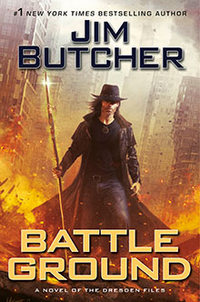
Battle Ground
5 Stars
Battle Ground by Jim Butcher
I just can’t talk about this one yet. I need more time. (yeah, they’re fictional characters, but I’ve spent too long with them to not be reeling)
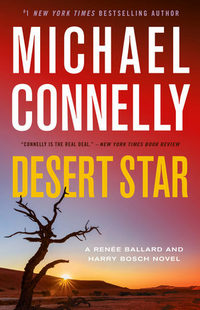
Desert Star
3.5 Stars
Desert Star by Michael Connelly
Loved it while reading it. But I have more and more questions about all of it the longer I think about it. Not Connelly’s best but well worth it
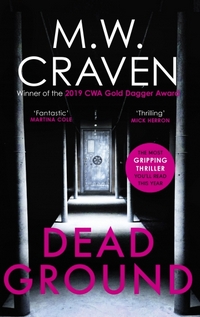
Dead Ground
5 Stars
Dead Ground by M. W. Craven
Not a typical Poe and Tilly case, just as good and gripping as the rest though.
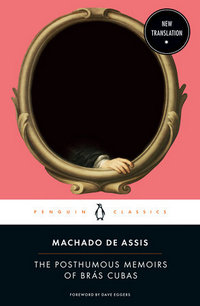
The Posthumous Memoirs of Brás Cubas
3.5 Stars
The Posthumous Memoirs of Brás Cubas by Machado de Assis, Flora Thomson-DeVeaux (Translator)
A strange and somewhat humorous look at a ghost’s POV on his life. I want to read it a few more times to really get a handle on it. Heckuva read
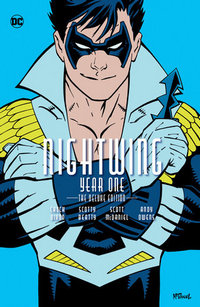
Nightwing: Year One Deluxe Edition
5 Stars
Nightwing: Year One Deluxe Edition by Chuck Dixon
If there’s a better Nightwing writer out there, I’d like to see it. A great, great, great telling of his origin.
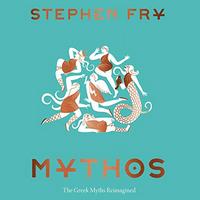
Mythos
3 Stars
Mythos by Stephen Fry
Drags a little. Wish he could pick a tone for his retellings/commentary on the classic stories. Still, it’s Stephen Fry talking—worth the time.
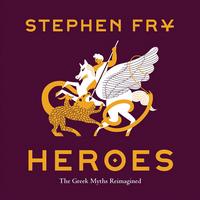
Heroes Mortals and Monsters, Quests and Adventures
3.5 Stars
Heroes: Mortals and Monsters, Quests and Adventures by Stephen Fry
See above, but felt it dragged a bit more.
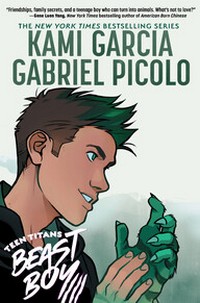
Teen Titans Beast Boy
3.5 Stars
Teen Titans: Beast Boy by Kami Garcia,
Gabriel Picolo (Penciller)

A solid, believable update of Gar Logan’s backstory. Very promising follow-up to the Raven book. Really impressed with Picolo.
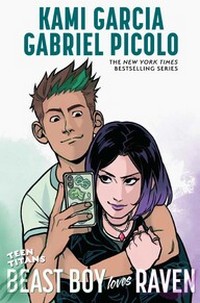
Beast Boy Loves Raven
3 Stars
Teen Titans: Beast Boy Loves Raven by Kami Garcia,
Gabriel Picolo (Penciller)

Bring the two together and it’s even better. I’m curious about the overall story, but would read just them being awkward together. Like the art.
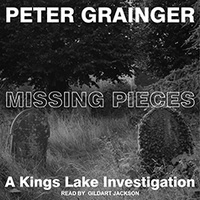
Missing Pieces
4 Stars
Missing Pieces: A Kings Lake Investigation by Peter Grainger, Gildart Jackosn (Narrator)
The Murder Squad tackles a cold case and is as excellent as ever. I don’t know how to talk about this series w/o being redundant. I want more!
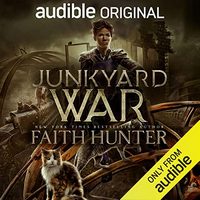
Junkyard War
3.5 Stars
Junkyard War by Faith Hunter, Khristine Hvam (Narrator)
This was utterly fine. A lot didn’t go the way I expected. But I’m still in this series for the long haul.
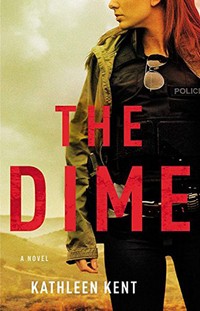
The Dime
4 Stars
The Dime by Kathleen Kent
One of the best first chapters ever. The rest is pretty good. Not sure I buy the motive for the murders, nor that I want to see what comes next.
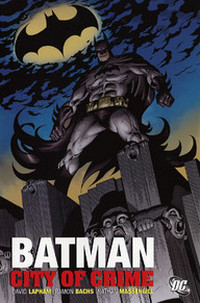
City of Crime
3.5 Stars
Batman: City of Crime by David Lapham
If you buy (I can’t) Batman losing sight of his mission, this story about him recovering it is great. If you can’t…well, it’s pretty good.
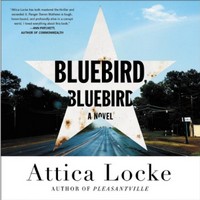
Bluebird, Bluebird
5 Stars
Bluebird, Bluebird by Attica Locke, J.D. Jackson (Narrator)
A stunning work of fiction. Words fail me. A deeply compromised Texas Ranger tries to solve a potential hate crime and keep his job.
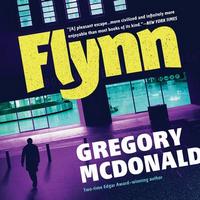
Flynn (Audiobook)
5 Stars
Flynn by Gregory McDonald, Donald Corren (Narrator)
I expected the Fletch narrator for some reason, but Corren won me over in minutes. One of my favorite novels of all-time. Great audio version.
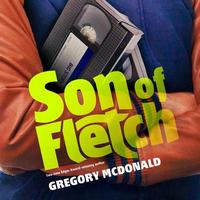
Son of Fletch
3.5 Stars
Son of Fletch by Gregory McDonald, Dan John Miller (Narrator)
Oh, I wanted to love this. But I just liked it. I’ll probably hear Miller in my head anytime I read Fletch in print.
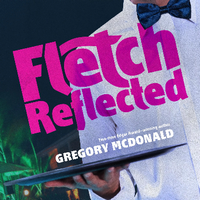
Fletch Reflected
3 Stars
Fletch Reflected by Gregory McDonald, Dan John Miller (Narrator)
This is not the way the series should’ve ended. Some fantastic moments, but not sure it was worth it. Miller was solid as always.
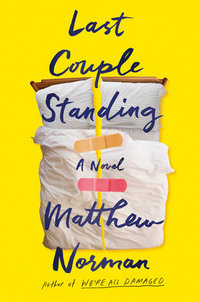
Last Couple Standing
4 Stars
Last Couple Standing by Matthew Norman
Norman’s best female characters (to date). Stupid premise, but it almost convinces me to like it by the end. Lots of great moments.
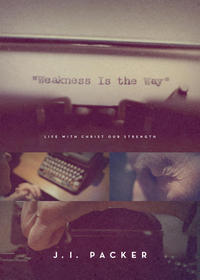
Weakness Is the Way
3.5 Stars
Weakness Is the Way: Life with Christ Our Strength by J.I. Packer
Packer’s great on 2 Corinthians and what Paul tells about weakness as a way of life for the Christian.
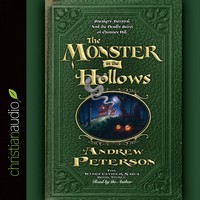
The Monster in the Hollows
3 Stars
The Monster in the Hollows by Andrew Peterson
I’m not sure I loved the way the story went in this one, but I grew to appreciate it. Characters are still great.
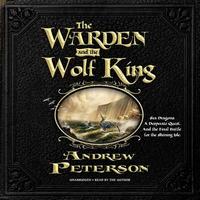
The Warden and the Wolf King
4 Stars
The Warden and the Wolf King by Andrew Peterson
Whatever my misgivings about the last one, this was the right way to end the series. Just what I wanted (if mildly predictable)
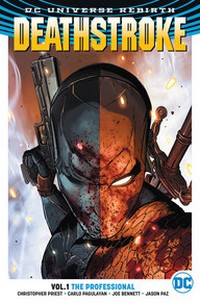
Deathstroke: The Professional
3 Stars
Deathstroke, Vol. 1: The Professional by Christopher J. Priest
I prefer the version Wolfman and Perez initially told about his origin, but this ain’t a bad version. And I see why it was necessary. Good ’nuff
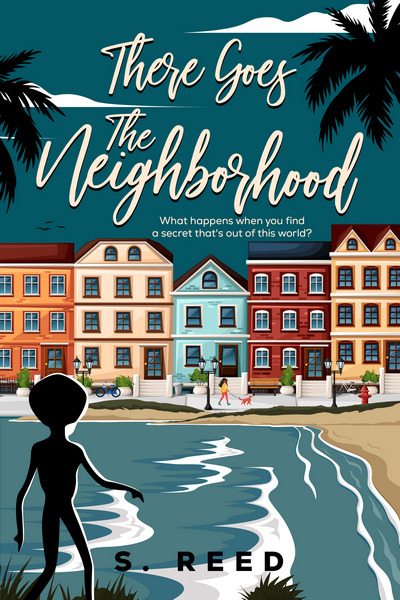
There Goes the Neighborhood
1 Star
There Goes The Neighborhood by S. Reed
I stopped working with a book tour company because they wouldn’t let me be honest about this book ever. So I won’t be. Loved ALL of it. <3<3<3<3
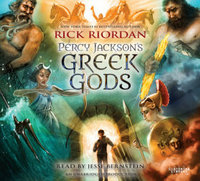
Percy Jackson's Greek Gods
3 Stars
Percy Jackson’s Greek Gods by Rick Riordan, Jesse Bernstein (Narrator)
If Percy Jackson edited D’Aulaires’s book you’d get this. A great way to introduce the myths to young readers. Bernstein is a spot-on Percy.
Percy Jackson's Greek Heroes
3.5 Stars
Percy Jackson’s Greek Heroes by Rick Riordan, Jesse Bernstein (Narrator)
See above, but with heroes.
I Will Judge You
3 Stars
I Will Judge You by Your Bookshelf by Grant Snider
If someone looked into my brain, took all of my ideas and feelings, and improved them, you’d get this book. But only one-third as good as this.
All These Worlds
3.5 Stars
All These Worlds by Dennis E. Taylor, Ray Porter (Narrator)
Taylor and Porter are unbeatable together. This is funny (duh), and the grief and sadness are real. As is the anger. Is the ending too easy?
The Fellowship of the Ring
5 Stars
The Fellowship of the Ring by J.R.R. Tolkien, Andy Serkis (Narrator)
Serkis nails the narration (as you’d expect). Is there a better first book of a series in Fantasy?
The Two Towers
4 Stars
The Two Towers by J.R.R. Tolkien, Andy Serkis (Narrator)
Serkis is tremendous here. This whole book is ridiculously good.
The Return of the King
5 Stars
The Return of the King by by J.R.R. Tolkien, Andy Serkis (Narrator)
One day the pacing on this won’t surprise me. The book gets better every time. Serkis was phenomenal.
Annihilation Aria
4 Stars
Annihilation Aria by Michael R. Underwood
Found family stars in this fun, space opera about archeologists fighting an empire.
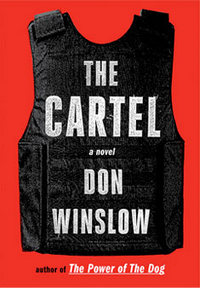
The Cartel
5 Stars
The Cartel by Don Winslow
The best of the trilogy. Shocking. Moving. Gripping. All-too-real—if you told me this was non-fiction, I’d almost believe it. A true classic.

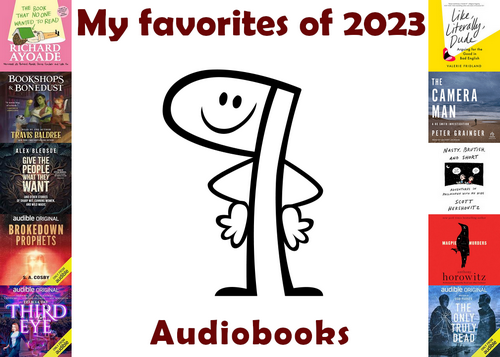
My Favorite Audiobooks of 2023

My Favorite Audiobooks of 2023
How do I keep this from being just a rehash of my other year-end lists? By focusing on the audiobook experience over the content. What was it like to listen to it? How engaging was it, how did the narrator do? Was it a good match in terms of tone, content, and performance? All of these books are/were good—but the audiobooks are a bit better because of the narrator and the rest of the people involved in the production.

I’m very annoyed at how few of these I wrote about (if only because it means I had to think more about this post than I wanted to).

(in alphabetical order by author)

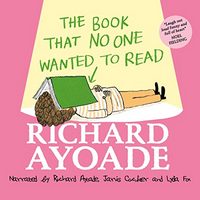
The Book That No One Wanted to ReadThe Book That No One Wanted to Read

by Richard Ayoade
Narrated by Richard Ayoade, Jarvis Cocker, Lydia Fox

My original post The narration was great—Ayoade and Cocker were fantastic, Fox was probably as good, but didn’t get the best lines, so her work doesn’t stand out as much in my memory (although my original post suggests I forgot something great). This is one of those multi-narrator audiobooks where all the narrators are equally good—capturing the spirit and tone of the text and bringing it to life. This is a sweet little story “written by a book” about a lonely book in a large library. It’s goofy and strange, the humor is occasionally dry, it’s imaginative, it’s affirming and encouraging, it wraps you in a blanket of fun and makes you feel good.

4 1/2 Stars

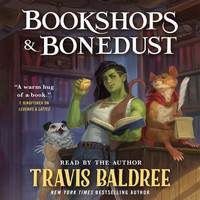
Bookshops & BonedustBookshops & Bonedust

by Travis Baldree

Of course, audiobook narrator-turned-author Baldree puts together a really strong audiobook. How could he do anything else? This is a sweet and (mostly) cozy little read taking place many years before Baldree’s breakout Legends & Lattes and sets the stage for Viv’s choices when she decides to retire from the mercenary biz. Here at the beginning of her career, she’s laid up for a few months in a small little town where she makes some friends, learns a lot, discovers that she can appreciate reading (when given the right book), and faces of against a deadly foe. It’s a very pleasant experience that will leave you wanting more like it.

4 Stars

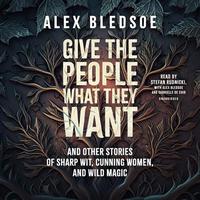
Give the People What They Want and Other Stories of Sharp Wit, Cunning Women, and Wild Magic

by Alex Bledsoe, Narrated by: Stefan Rudnicki, with Alex Bledsoe and Gabrielle de Cuir

This collection of short stories and a novella is just a great time. You start with short pieces in two of my favorite series, an interesting sample of another series, a couple of other things, and then a Zombie story that I really got into (no, really). Rudnicki did his usual bang-up job, de Cuir didn’t get enough to do (but was good with what little she had) and it’s always nice to hear from the author. I don’t know if it’ll work for people who aren’t fans of a series by Bledsoe, but it just might convince the listener to try one or two of them (and I’d heartily encourage that, too).

4 Stars

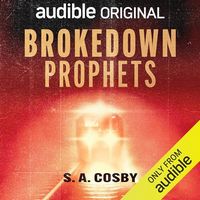
Brokedown ProphetsBrokedown Prophets

by S.A. Cosby and a full cast too long to list here

Cosby is a name you should expect to see again before I finish with this look back at ’23 (and likely at least once more this year). The performances that bring the Audible Original to life are fantastic. This is a dark tale of hope, desperation, and the opportunity to make a new life for yourself. It’s also violent, bloody, and likely to end poorly for all involved. The Russian assassin is one of my favorite characters of the year—it’d be easy to have made him a joke, but the performer and Crosby won’t let you write him off like that.

4 Stars

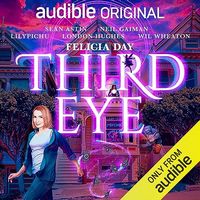
The Third EyeThe Third Eye

by Felicia Day, and a full cast including Sean Astin, Felicia Day, Neil Gaiman, LilyPichu, London Hughes, and Wil Wheaton (and many others)

This was simply gobs of fun. Gaiman is just fantastic (no surprise there, I realize), Day plays the adorkable card like only she can, although Astin’s vampire comes close. Wheaton can play a jackwagon like nobody’s business, and…okay, I’m going to go on too long here (I really should’ve written a full post on this by now so I could’ve). You’ve got fun ‘n games with The Chosen One trope, satire and celebration of Urban Fantasy tropes and themes, some good action, and strong friendships. And a cheerful, optimistic feel that makes you just want more time in this world—even if there’s no story to be told (it’s even better during these almost 7 hours, though, because there is one).

4 Stars

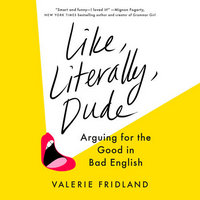
Like, Literally, DudeLike, Literally, Dude: Arguing for the Good in Bad English

by Valerie Fridland, Narrated by Valerie Fridland, Joniece Abbott-Pratt, Keylor Leigh, Andrew Eiden, Christopher Ryan Grant, Ellen Archer, Eileen Stevens, and Nicky Endres

I’m a sucker for entertaining books about language, grammar, etc. Fridland’s apologetic for “Bad” English drives my inner prescriptivist, up the wall—but she joins the growing number of writers who are sealing up that prescriptivit’s coffin. How good is this book? Her chapter (or maybe it was a section of a chapter) on “Um” and “Uh” was fascinating. If she can pull that rabbit out of a hat, imagine how good she can be when she talks about the use/overuse of “like,” the history of “Dude,” or the figurative use of “literally”—and so much more. I spent most of the time listening to this book just geeking out in a way that made me regret not becoming a sociolinguist myself.

4 Stars

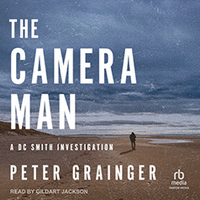
The Camera ManThe Camera Man

by Peter Grainger, Gildart Jackson (Narrator)

It’s not surprising to see a Grainger/Jackson pairing on this list—they’re behind what is probably my favorite audiobook series (I refuse to read a book in this series as long as Jackson is recording them). The Camera Man shows that the idea of DC Smith, PI has legs. The first book about him as a PI was very much a “Can he adjust to not being a police detective to help out a friend?” This is “Can DC act as a PI?” And the answer is a resounding Yes! There’s good material with Jo and the Diver siblings. But most of the joy just comes from Smith digging into the case. Just like the old days, but different. Loved it.

4 Stars

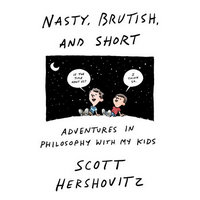
Nasty, Brutish, and ShortNasty, Brutish, and Short:
Adventures in Philosophy with My Kids

by Scott Hershovitz

My original post
This was a great listen—Hershovitz is the kind of lecturer you want to pay attention to (or so imagine based on this). This book succeeded on multiple fronts: it was frequently amusing, if not downright funny; it was educational; it was insightful (even when I disagreed with what he did with the insights); it was thoughtful; it offered (largely by example, not being didactic) good parental advice; and kept this particular listener fully engaged throughout. Just what you want from an audiobook.

3.5 Stars

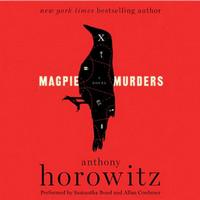
Magpie MurdersMagpie Murders

by Anthony Horowitz, narrated by Samantha Bond, Allan Corduner

This book has been on my to-read list for a long time, but I kept not finding time for it. I finally gave up on going with the paper version and picked up the audio from the library. What a fantastic book! The concept was great, the hook was gripping, the execution was dynamite, the narration was spot-on, the….the…ugh. I’m just listing superlatives at this point. Which is pretty much why I haven’t finished my post about it (despite starting 11 months ago)—words fail me. Just loved this.

5 Stars

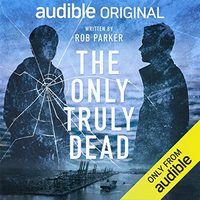
The Only Truly DeadThe Only Truly Dead

by Rob Parker, Warren Brown (Narrator)

My original post
So Warren Brown is just a fantastic narrator and fits the material perfectly—one of the best matches of voice and text I can remember. Parker’s text was everything I could’ve hoped for—everything he’s been building up over the previous two books gets paid off in a dramatic and compelling fashion. It’s a mix of hope and darkness, and a reminder that both have lasting effects.

4 Stars

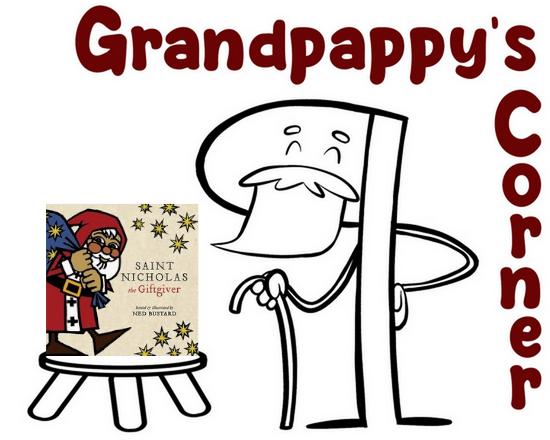
Grandpappy’s Corner: Saint Nicholas the Giftgiver by Ned Bustard: The Making of a Legend

Yeah, this is a quick return to this author. But after the post a couple of weeks ago, I had to give this one a shot, too. And it seemed fitting to tackle it now. I’ll get back to “grown up books” next week, D.V.


Grandpappy's Corner Logo

Saint Nicholas the Giftgiver:
The History and Legends
of the Real Santa Claus

Written and Illustrated by Ned Bustard

DETAILS: 
Publisher: IVP Kids
Publication Date: October 12, 2021
Format: Hardcover
Length: 29 pg.
Read Date: December 17, 2023
Buy from Bookshop.org Support Indie Bookstores

What’s Saint Nicholas the Giftgiver About?

This is all in the title and subtitle, really. This is a Picture Book Biography of Saint Nicholas, covering both the history we have and some of the legends that arose about him to the point he became our Santa Claus.

He covers the life of Nicholas from birth to death pretty well—working in Diocletian’s persecution and how Nicholas was freed by Constantine, a hint of the Arian Controversy, and Nicholas’ work overall—including some of the legends that grew about him during his lifetime (that probably had a basis in truth).

Then he turns to the stories that have grown up about Nicholas as he transformed into Santa Claus with the magical reindeer—with Bustard trying to tie in even that idea of Nicholas to the work of the Savior. How successful he was I’ll leave to the reader to decide.

The Slap

No, I’m not talking about a certain actor at the Oscars in 2022. I’m talking about the legendary time that Nicholas struck (in some form) Arius at Nicea. Bustard skipped it. The most he said was:

he did all he could
to stop that bad pries.

Now, I was curious to see how he’d address it—if only because I think it’d be a real attention grabber for the target audience. But it’s probably wise to skip it, you don’t want to encourage younger readers to start assaulting people.

But c’mon, if you heard that some kid had been inspired by a Picture Book to slap a kid in Sunday School who kept giving bad answers—you’d laugh. You’d feel bad and repent after, but you’d laugh. I’m getting off the point, though.

Let’s Talk about the Art for a Minute

First, I really liked the way he made Nicholas have the skin tone of someone who was from Türkiye. Especially as white as Santa is usually depicted (and certain news programs insist on), that was a refreshing choice.

The use of mice throughout was a nice touch (and is explained in Bustard’s author’s note). But the best part was the subtle transformation of his clothing and appearance throughout to more and more look like a figure worthy of being an illustration alongside Clement Clarke Moore.

Basically, everything I’d say about the art is what I said when I talked about his Saint Valentine the Kindhearted book two weeks ago. Feel free to go check that.

There are a couple of Second-Commandment violations that naturally trouble me. But they don’t call attention to themselves and can be glossed over if that’s how you’d like to proceed. I’m honestly not sure if I’ll do that, or consign this one to the “we don’t read that one” pile.

How is it to Read Aloud?

A couple of the rhymes are…well, let’s go with imaginative. I will admit I stumbled on a them as I read it to the Grandcritter. But…other than that, it was fun.

There’s some decent rhythm to it, and the sweetness of a lot of it comes out better when you read aloud. Or maybe that was just me. Anyway, it works really well as a read-aloud.

So, what did I think about Saint Nicholas the Giftgiver?

I liked this—I do think Bustard improved his writing with his next two books, but the promise is there. Some lines—several lines—are great and made me smile. As I said before, the art is great. The two together make this a winner.

For me, I’d have appreciated it more if he’d given us a little more history and a little less explanation of the legend around Nicholas. But I’m not sure he’d have been able to do as nice of a job explaining the legend as he did had he devoted less time to it.

Which does make me think—given the age of the audience for this book, it’s a little risky to wade into anything about Santa Claus for some people. I think he handled that as well as he could, and readers who don’t understand everything about Santa the way that grown-ups do should be okay.

I do have a couple of misgivings about this book, but I’m maybe thinking about this more than I should. I don’t think so, but I imagine others will tell me I am. It’s good enough to think about getting and reading—just know that of the three books that Bustard has written so far, it’s the least successful.


3 Stars

This post contains an affiliate link. If you purchase from it, I will get a small commission at no additional cost to you. As always, the opinions expressed are my own.
Grandpappy Icon

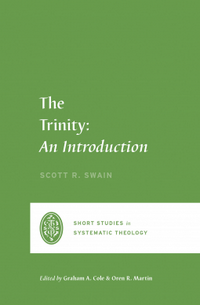
REPOSTING JUST ‘CUZ: The Trinity: An Introduction by Scott R. Swain: A Brief but Deep Study

I’m about to re-read this book, so I figured it was a good idea to remember what I thought about it.

The Trinity

The Trinity: An Introduction

by Scott R. Swain
Series: Short Studies in Systematic Theology

Paperback, 133 pg.
Crossway, 2020

Read: January 17-31, 2020
Grab a copy from your local indie bookstore!

What we find in later Trinitarian creeds, confessions, and doctrinal summaries are not improvements upon a latent or undeveloped biblical Trinitarianism but, rather, the church’s attempt to fathom the depth of the riches of biblical Trinitarianism for the sake of various liturgical, pedagogical, and polemical ends. Some of the church’s creeds, confessions, and doctrinal summaries represent such faithful expressions of scriptural teaching and enjoy such wide-ranging ecclesiastical consensus that we dare not transgress the lines they have drawn. Rather, taking them on our own lips, we gladly join the church’s chorus of Trinitarian praise.

What’s The Trinity: An Introduction About?

It’s kind of there in the title, right? This is an introduction to the classical Christian doctrine of The Trinity. He’s not trying to re-invent the wheel, he’s definitely not trying to innovate, but to provide a concise (it’s a Short Study, after all) jumping-off point into deeper studies by providing a solid foundation.

He spends two chapters looking at the primary Biblical texts demonstrating the Doctrine. Chapter 3 is about the Simplicity of God—something too many overlook in a discussion of The Trinity. The following three chapters each focus on a Person of the Trinity. The final chapters are about the “external works” of the Trinity, the “appropriation” of specific works to particular persons, the beneficiaries of God’s work, and assorted topics.

All of that is a lot to ask of 133 short pages. Swain pulls it off by being concise, but he never seems to be leaving out details or avoiding the complicated ideas (although he obviously has to).

Touching on Controvery

This isn’t a polemical work—Swain is here to inform and educate, not combat. Still, he does talk about some Christological errors, including the contemporary dust-ups over EFS/ERAS—Eternal Functional Subordination/Eternal Relations of Authority and Submission.

Swain briefly (again, it’s a Short Study) addresses this error. He’s calm, he’s fair, yet he’s firm. It’s one of the best short treatments of the controversy I’ve seen, and in the context of the larger discussion of the Person of the Son as well as the larger discussions of each of the Persons, it’s incredibly helpful. It also fits where he put it and doesn’t seem like Swain used the opportunity as a digression just to beat a pet theological peeve.

Helpful Supplemental Material

Maybe it’s just me, but I rarely find the post-text material all that helpful. This book was one of the pleasant exceptions—there’s a brief glossary of some of the technical terms. Also, the “Further Reading” suggestions look great and my “To Buy” list grew a bit.

So, what did I think about The Trinity: An Introduction?

Because the persons of the Trinity are internal to God’s life, not external works of God, we can know the persons of the Trinity, as well as their ultimate plan for creation (Eph. 3:9), only if they stoop down and open up the depths of their inner life to us. Only the persons of the Trinity know the persons of the Trinity. Therefore, only the persons of the Trinity can make known the persons of the Trinity. The revelation of the Trinity is a matter of divine self-revelation, divine self-presentation, divine self-naming.

While this is a theological book, drawing on the teaching of the Church, Swain is careful to never lose sight of the source of this Doctrine, the Word of God. We know this, we understand this (as much as we do) because it is revealed to us. That’s vital to an understanding of the doctrine, and vital to the teaching of it. Swain doesn’t let his readers stray from the text.

This is one of those books where my notes keep saying “Chapter X is likely the highlight of the book,” “the section on X is likely the most valuable in the book.” It appears 60-70% of the book is a highlight—and I may not have written all of those parts down. Which is to say, there’s a lot of gold here, very little (if any) dross.

Helpful, insightful, and useful—it also achieves its end for leading on to further study for me. It’s accessible, but not easy, reading. At the same time, it’s a challenging, but not difficult, text.

Also, I like the looks of this series as a whole, I’ll most likely be grabbing more/all of them if they’re all about this quality.


5 Stars

This post contains an affiliate link. If you purchase from it, I will get a small commission at no additional cost to you. As always, opinions are my own.

Nasty, Brutish, and Short (Audiobook) by Scott Hershovitz: Who Needs Calvin and Hobbes When We Have Rex and Hank?

Nasty, Brutish, and ShortNasty, Brutish, and Short:
Adventures in Philosophy with My Kids

by Scott Hershovitz

DETAILS:
Publisher: Penguin Audio
Publication Date: May 3, 2022
Format: Unabridged Audiobook
Length: 9 hrs., 31 min.
Read Date: September 21-25, 2023
Buy from Bookshop.org Support Indie Bookstores

What’s Nasty, Brutish, and Short About?

The official description is:

Some of the best philosophers in the world gather in surprising places—preschools and playgrounds. They debate questions about metaphysics and morality, even though they’ve never heard the words and perhaps can’t even tie their shoes. They’re kids. And as Scott Hershovitz shows in this delightful debut, they’re astoundingly good philosophers.

Hershovitz has two young sons, Rex and Hank. From the time they could talk, he noticed that they raised philosophical questions and were determined to answer them. They re-created ancient arguments. And they advanced entirely new ones. That’s not unusual, Hershovitz says. Every kid is a philosopher.

Following an agenda set by Rex and Hank, Hershovitz takes us on a fun romp through classic and contemporary philosophy, powered by questions like, Does Hank have the right to drink soda? When is it okay to swear? and, Does the number six exist? Hershovitz and his boys take on more weighty issues too. They explore punishment, authority, sex, gender, race, the nature of truth and knowledge, and the existence of God. Along the way, they get help from professional philosophers, famous and obscure. And they show that all of us have a lot to learn from listening to kids—and thinking with them.

Hershovitz calls on us to support kids in their philosophical adventures. But more than that, he challenges us to join them so that we can become better, more discerning thinkers and recapture some of the wonder kids have at the world.

The book is broken down into three sections: “Making Sense of Morality” (covering ideas like Rights, Revenge, Punishment, Authority, and Language); “Making Sense of Ourselves” (surely non-controversial chapters covering “Sex, Gender, and Sports”; and “Race and Responsibility”); and “Making Sense of the World” (Knowledge, Truth, Mind, Infinity, and God—the easy bits of philosophy). While discussing these, Hershovitz will describe the idea(s) he’s focusing on—or the aspects of them, to be more specific; he’ll then illustrate them with questions from or discussions with his sons; give us a brief history of philosophy on the topic; and then his personal take on them. Usually with more input from his sons along the way.

How was the Narration?

Hershovitz was fantastic. If he gets tired of the whole professor/philosopher gig, he could have a new career in audiobook narration. I can only imagine that his classes are great to sit through.

He delivered the material that in the wrong hands could’ve come across as super-dry, or really jokey and kept it engaging, entertaining, and informative—with a little bit of the persuasiveness needed to keep someone listening to a book about philosophy.

I was quite impressed.

So, what did I think about Nasty, Brutish, and Short?

Oh, I have some serious issues with some of the philosophy here. The chapter on “God” (to the surprise of few who read this blog regularly) really bothered me—but it did underline the importance of Special Revelation to go with General Revelation.

The Conclusion, “How to Raise a Philosopher,” was fantastic. Truly some of the best parenting advice I’ve heard/read in ages (and I don’t even need that any more and I still found myself taking notes). For raising more than just philosophers.

Sure, I disagreed with some of his conclusions—but I loved hearing the way Hershovitz thought through the ideas he was proposing and/or discussing, the way he dealt with his kids and their questions, I appreciated the way he explained concepts both basic and complex in a way that non-philosophers could understand, and he managed to be entertaining all along. Some of his witticisms did cause me to react audibly. There’s a good deal of so-called common sense mixed in with the profound as well—always nice to see for a layman like myself.

This book is a strange alchemy of parenting advice (even if largely given by example rather than by precept), Philosophy 101, and humor. It works so well that it’s hard to explain. I can only hope there’s a sequel or three as Hank and Rex age.

All in all, I heartily recommend this for parents, people who want to get a start in philosophy but aren’t sure where (and don’t want to admit that to anyone), and others. The print version might be nice for easy reference, but the audiobook format is a real winner.


3.5 Stars

This post contains an affiliate link. If you purchase from it, I will get a small commission at no additional cost to you. As always, the opinions expressed are my own.
Irresponsible Reader Pilcrow Icon

The Irresponsible Reader On…Self-Published Non-Fiction

(updated 7/26/23)
Self-Published Authors Appreciation Week

From the first moment that people did the strange thing of asking me to talk about their books on my blog, I’ve been impressed by the quality of a lot of what’s been published by authors going out on their own, taking all the risks, shouldering all the responsibility and doing all the work to get their words, their dreams, their blood, sweat, and tears. This should be celebrated—it’s definitely appreciated, as we’re trying to show this week.

In addition to the Q&As and Guest Posts I have this week, I’m also continuing my habit of highlighting the self-published works that I’ve blogged about over the last few years—just a sentence or two.  Hopefully, this’ll be enough to make you click on the link to the full post. Beyond that, it’d be great if I inspired you to add a few of these to your TBR. Also, be sure you check out the other posts over at the SPAAW Hub.

Today we’re going to be looking at Self-Published Non-Fiction—which are primarily memoirs at their core, it’s what the authors do with the memoirs that makes these really stand out. But there are a few other things, too.

bullet Life and Death Behind the Brick and Razor: Code Red Diamond by Isaac Alexis, MD—A prison doctor uses his experiences to give suggestions for a healthy/healthier life. (my post about it)
bullet How Not to Be an *SS: Essays on Becoming a Good & Safe Man by Andrew J. Bauman—Bauman calls men to an authentic, Biblical masculinity—one built on humility, kindness, and service. While offering concrete ways to set aside patterns of abuse and neglect. (my post about it)
bullet Kneading Journalism: Essays on baking bread and breaking down the news by Tony Ganzer—This is a collection of essays about the state of journalism, how people relate to and view the media we consume, and what the future may hold. Oh, and bread recipes, of course. It makes sense in context (and is a really great idea). (my post about it)
bullet No Problem, Mr. Walt: Building a Boat, Rebuilding a Life, & Discovering China by Walt Hackman—Hackman was one of the first self-published authors to reach out to me, and I’m so glad he did. A fascinating read about a man deciding to have an authentic Chinese junk built for him to use as a houseboat in California. (my post about it)
bullet Finding Hope in Hard Things: A Positive Take on Suffering by Pierce Taylor Hibbs—The central premise is that God uses the “hard things” in life to shape us into the people he wants us to be, and uses some of the hard things in his life as case studies to demonstrate how they were used so the reader is equipped to look at their own lives and see the purpose in their suffering. (my post about it)
bullet The Great Lie: What All of Hell Wants You to Keep Believing by Pierce Taylor Hibbs—Paired with Hibbs’ characteristic clear prose and gift with language and illustrations, Hibbs reminds the reader that God is always speaking to us, through both the Creation and His Word. (my post about it)
bullet In Divine Company by Pierce Taylor Hibbs—Pierce’s treatment of prayer focuses on the communicative nature of God and His image bearers and then nurturing that in our lives to improve our prayer. (my post about it)
bullet Struck Down but Not Destroyed: Living Faithfully with Anxiety by Pierce Taylor Hibbs—Drawing on what he’s learned from over 12 years of anxiety, Hibbs talks about learning to see what God’s purpose in the suffering is (anxiety disorders specifically, but easily transferable to other types), understanding that His hand is guiding all things—including our problems—so how do we in faith (without denying the suffering) rest in faith. (my post about it)
bullet And Drink I Did: One Man’s Story of Growing Through Recovery by Jay Keefe—It’s all there in the subtitle, Keefe tells about his OCD, his alcoholic days, his getting sober, and how he’s trying to help others since then. Powerful stuff. (my post about it)
bullet How to Take Over the World: Practical Schemes and Scientific Solutions for the Aspiring Supervillain by Ryan North—A tongue-in-cheek way to talk about some of the most advanced science around and how it can (and in some ways is) be used to destroy the world. (my post about it)
bullet The Genius’ Guide to Bad Writing by R.T. Slaywood, R.C. Martinez—A guide for the writer who is tired of success and wants to reclaim their lives from answering the siren call of fortune and fame that comes to every author. Slaywood and Martinez have a 10-Step program guaranteed to ruin a novel or two and stop a career dead in its spot. (my post about it)
bullet Uber Diva by Charles St. Anthony—a humorist writes a memoir of a Lyft/Uber driver mixed with a guide to starting/surviving/thriving as one in a tough market. St. Anthony also has a few other books out now that are probably worth a read. (my post about it)
bullet Flying Alone: A Memoir by Beth Ruggiero York—A female pilot’s memoir of her path from flight school to flying for TWA (now that I have a son learning to fly, some of her more harrowing experiences keep flashing through the back of my mind). (my post about it)


If you're a self-published author that I've featured on this blog and I didn't mention you in this post and should have. I'm sorry (unless you're this guy). Please drop me a line, and I'll fix this. I want to keep this regularly updated so I keep talking about Self-Published Authors.

Self-Published Authors Appreciation Week Footer

The 2023 Self-Published Authors Appreciation Week Logo was made by Witty and Sarcastic Book Club

The Worst We Can Find by Dale Sherman: MST3K: The Satellite of Love, The Bots, The Mads, The Movies and Everything Else

The Worst We Can FindThe Worst We Can Find:
MST3K, RiffTrax, and the History of Heckling at the Movies

by Dale Sherman

DETAILS:
Publisher: Applause Books
Publication Date: June 15, 2023
Format: Paperback
Length: 246 pg.
Read Date: June 27-29, 2023
Buy from Bookshop.org Support Indie Bookstores

What’s The Worst We Can Find About?

This is one of those books where the sub-title tells you everything you need to know: “MST3K, RiffTrax, and the History of Heckling at the Movies.” The back of the book does give a fuller explanation:

Had you tuned in to the small television station KTMA on Thanksgiving Day, 1988, you would have been one of the few witnesses to pop culture history being made. On that day, viewers in and around St. Paul, Minnesota, were treated to a genuine oddity, in which a man and his robots, trapped within a defiantly DIY sci-fi set, cracked jokes while watching the terrible 1981 movie Invaders from the Deep. Although its origins may have been inauspicious, Mystery Science Theater 3000 captured the spirit of what had been a beloved pastime for generations of wags, wiseacres, and smart alecks, and would soon go on to inspire countless more.

The Worst We Can Find is a comprehensive history of and guide to MST3K and its various offshoots—including Rifftrax, Cinematic Titanic, and The Mads Are Back—whose lean crew of writers, performers, and puppeteers have now been making fun of movies for over thirty years. It investigates how “riffing” of films evolved, recounts the history of these programs, and considers how a practice guaranteed to annoy real-life fellow moviegoers grew into such a beloved, long-lasting franchise. As author Dale Sherman explains, creative heckling has been around forever—but MST3K and its progeny managed to redirect that art into a style that was both affectionate and cutting, winning the devotion of countless fans and aspiring riffers.

Sherman starts with some commentary on the history of what we now call “meta” and riffing in general—going back to Greek choruses. He then shows how movies started riffing/commenting on themselves (and each other).

He then focuses on MST3K itself—talking about Joel Hodgson’s background and the creation of the show. We actually get some good background on all the major players from the early years. He then describes the transitions in staff/cast as it moves from KTMA to Comedy Central to the movie (and, wow, what an effort to get that made) to SciFi and so on.

We then get a look at what the post-MST3K careers of the central figures look like and how riffing on movies has kept popping up in their lives (largely because people won’t let them stop) and how the show has come back from its ending a time or two.

My Sole Criticism

Sherman only cites previously available material—yes, he dug up a lot of things that many/most fans would never see, never think of looking for. But he doesn’t interview anyone himself, or provide anything outside a couple of personal memories that an industrious fan couldn’t have found on their own.

I don’t want to criticize what he did—it is no small feat to do what he did. And I’m so glad he did it—but the lack of original material keeps me from absolutely raving about this book.

So, what did I think about The Worst We Can Find?

Back when I talked about Scott Ryan’s Moonlighting: An Oral History, I’d said:

When I read a book about a television show, I want a few things—I want something to

    • make me want to rewatch the show
    • make me not really need to, because the book has helped me remember it in such a way that it’s not that necessary
    • give me a lot of behind-the-scenes information about the show
    • help me understand it better (not just information, but reflections on it—its legacy, cultural context, impact on television, et.)
    • Ideally, teach me something about the art and/or business of television (preferably both)
    • and if it can be fun (TV should be entertaining), that’s all the better.

Yeah, that seems like a lot to ask for from a book, but if I’m going to take the time to read a book instead of watching a behind-the-scenes show or listening to a panel discussion, I want bang for my buck—I don’t always get it (and know that going in), but I want it.

The Worst We Can Find delivered on all but the “make me not really need to” because there’s no way that someone could do that in a book form. I have watched some MST3K since then (more than I usually do because I’ve been inspired)—and some Rifftrax, too.

I don’t want ponderous, I don’t want slow. I don’t mind a lot of detail (in fact, I relish it), I don’t mind thoughtful (that’s why I read the book), but I want to be entertained. And Sherman delivered there. His chapter introductions were golden—worth at least half of the purchase price alone. I started to give a couple of examples, but why ruin it for you? So, I’ll be vague. I laughed aloud at Chapter 4’s introduction. Maybe all of them, but Chapter 4 was the point I stopped to make note of it.

I really appreciated the way Sherman pivoted in the last chapter to speak of “we” in reference to fans of the show, it’s clear throughout that he was one of us (there’s no way you do this work without that—or a bigger paycheck than he likely got for this book), but I appreciated the way he did it there.

The last paragraph was perfect, incidentally.

This was a great read, I learned a lot, I chuckled frequently, and I had a great time reminiscing about a favorite show. I think you will, too. I’d say is a must for MSTies. As I said, I can’t rave about it—but I can strongly encourage you to check it out. And keep circulating the tapes.


4 Stars

This post contains an affiliate link. If you purchase from it, I will get a small commission at no additional cost to you. As always, the opinions expressed are my own.


Catch-Up Quick Takes: A Handful February and March Books

Celeste was right, and I don’t have to write about everything—but I have a hard time convincing myself of that. I’m far overdue on saying something about these six listens and one read. So, let’s do a little catch-up (if only so I can feel better about myself). As always, the point of these quick takes posts is to catch up on my “To Write About” stack—emphasizing pithiness, not thoroughness.


The Devotion of Suspect XThe Devotion of Suspect X

by Keigo Higashino, Alexander O. Smith (Translator), David Pittu (Narrator)

DETAILS:
Series: Detective Galileo, #1 (in English, anyway)
Publisher: Macmillan Audio
Publication Date: Feb 1, 2011 
Format: Unabridged Audiobook
Length: 9 hr., 2 min.
Read Date: March 7-9, 2023
Buy from Bookshop.org!

(the official blurb)
A homicide detective consults with his friend, a genius and physicist about a tricky murder. His friend may be a college professor and not a detective, but there’s something about the way his mind works that helps Detective Kusanagi think better, and consulting his friend has worked in the past.

This is the murder of a seemingly odious man and it seems tied to his ex-wife, who’d been avoiding his abusive presence for years. Kusanagi can’t tie her to the killing, but there’s something going on that makes him want to. So he keeps investigating and then his pal gets involved, too.

This was a perfectly satisfying read, but I wasn’t as wowed by it as I expected to be. Sorry, Jeff, still appreciate the recommendation.

3 Stars

The Dead Will TellThe Dead Will Tell

by Linda Castillo, Kathleen McInerney (Narrator)

DETAILS:
Series: Kate Burkholder, #6
Publisher: Macmillan Audio
Publication Date: July 8, 2014
Format: Unabridged Audiobook
Length: 8 hrs., 37 min.
Read Date: March 10-14, 2023
Buy from Bookshop.org!

(the official blurb)
A pair of apparent suicides gets Kate Burkholder to dive into their pasts, and she discovers a common tie—to a 35-year-old murder of an Amish family. This puts her in a race against time to discover what’s (or who has) caused their deaths now, and if she can stop anyone else from dying while maybe solving this old horror.

The cold-case nature of this is a nice change of pace, but at the end of the day, it’s a brutal crime against the Amish. I’d just like to see someone else in her community the victim of a crime.

That came out wrongly. But it’d be nice to let this community have even some fictional relief.
3 Stars

Profiles in IgnoranceProfiles in Ignorance:
How America’s Politicians Got Dumb and Dumber

by Andy Borowitz

DETAILS:
Publisher: Simon & Schuster Audio
Publication Date: September 13, 2022
Format: Unabridged Audiobook
Length: 8 hrs., 51 min.
Read Date: March 13-14, 2023
Buy from Bookshop.org!

(the official blurb)
Borowitz traces how mass media and the political parties (particularly one) have worked to dumb down politics, the electorate, and our elected officials since Reagan’s initial run for governor and ending in the present. It’s insightful, it’s depressing, but it leaves a little room for hope.

I really wish he’d done a better job of making this bi-partisan. While he might be right that one party is guilty of more of what he’s talking about, I refuse to believe they’re alone—which makes this feel like too much of a partisan attack, rather than an exploration of the topic. Both have their place—I’d just have preferred a little more of the latter.

I initially assumed that this would be typical Borowitz humor—which I appreciate. But no, this was serious in intent and execution. Earnest Andy Borowitz is an interesting concept. A little humor crept in, but not much. I prefer him when he’s trying to be funny, but I’d read/listen to more like this from him, too.
3 Stars

Space: 1969Space: 1969

by Bill Oakley, starring Natasha Lyonne and too many others to list.

DETAILS:
Publisher: Audible Originals
Publication Date: 2022
Format: Audible Original
Length: 5 hr., 35 min.
Read Date: March 29, 2023

(the official blurb)
This is more like an audio play than a book (with all the clunky dialogue that implies). Oh well.

So the premise is that Kennedy survived the Dallas shooting and the space race kicked into overdrive—and by 1969, we have a Moon Colony and a space station. Nancy Kranich is a nurse on the station (with an interesting past), and is pretty miserable, oddly enough. Nancy stumbles into a conspiracy involving an intergalactic threat and former vice-president Nixon (a largely forgotten figure by this time).

Without Natasha Lyonne (and most of the voice cast), I don’t know if I’d have finished this. But because of Lyonne, I’d enjoy relistening to it. It was amusing and strange—feeling like a classic radio SF drama but with some really contemporary sensibilities. I’m not sure it’s the best of both of those worlds, but it was a fun combination.

3 Stars

Hunting Fiends for the Ill-EquippedHunting Fiends for the Ill-Equipped

by Annette Marie, Cris Dukehart (Narrator)

DETAILS:
Series: Guild Codex: Demonized, #3
Publisher: Tantor Audio
Publication Date: June 23, 2020
Format: Unabridged Audiobook
Length: 8 hrs., 28 min.
Read Date: February 1-2, 2023
Buy from Bookshop.org!

(the official blurb)
I’m having trouble remembering just what happened in this one—that’s the case for the entire Demonized arc so far, it’s all one story (which is great for the series, a pain when you’re trying to say “this is the one where…”).

I did enjoy the overall plot of this one, but my favorite parts are where this series overlaps with the other series in The Guild Codex—and I found myself increasingly impatient with Robin as she was off doing her own thing.

I am really tired of the will-they-won’t-they between Zylas and Robin—which is really a how-long-can-Marie-stretch-this-out.

3 Stars

Finlay Donovan Jumps the GunFinlay Donovan Jumps the Gun

by Elle Cosimano, Angela Dawe (Narration)

DETAILS:
Series: Finlay Donovan, #3
Publisher: Macmillan Audio
Publication Date: January 31, 2023
Format: Unabridged Audiobook
Length: 8 hrs., 38 min.
Read Date: February 9-13, 2023
Buy from Bookshop.org!

(the official blurb)
I am continuing to enjoy this series—but I’m not sure for how long. It’s getting harder and harder to accept the antics that Finlay and Vero get up to—and the way Finlay treats those around her. This book in particular stretched credulity. I fear that Cosimano is learning the wrong lessons from Evanovich.

I’d also like to see Finlay actually do some more parenting—it’s hard to sympathize with her plight when it comes to custody, etc. when she’s always handing off her children’s care to someone else (although, it does keep them safe).

Dawe’s narration is so good that I will put up with a little more zaniness. But without some changes to the series, I’m not sure how long I’ll stick around.
3 Stars

Anna and the Vampire PrinceAnna and the Vampire Prince

by Jeanne C. Stein

DETAILS:
Series: Anna Strong, #9.5
Publisher: Hex Publishers LLC
Publication Date: April 25, 2017
Format: Paperback
Length: 92
Read Date: February 17, 2023
Buy from Bookshop.org!

(the official blurb)
Anna’s in France dealing with her mother’s death, and her niece’s death is kidnapped. So she has to reach out to her local allies to try to rescue the girl.

The action bits were Stein at her best but the story felt rushed—but this was largely an excuse to revisit the characters, so it didn’t need to be too involved. As a bit of nostalgia, it was nice—but Stein did a good enough job wrapping up the series that I didn’t feel a giant need for something like this (as demonstrated by the fact that it took me 6 years to get around to reading it).

It was just fun enough to justify my time.
3 StarsThis post contains affiliate links. If you purchase from any of them, I will get a small commission at no additional cost to you. As always, my opinions are my own.

It’s Great to Suck at Something (Audiobook) by Karen Rinaldi: The Book Isn’t Quite Proof of the Title, But…

It's Great to Suck at SomethingIt’s Great to Suck at Something:
The Unexpected Joy of Wiping Out and What It Can Teach Us About Patience, Resilience, and the Stuff that Really Matters

by Karen Rinaldi

DETAILS:
Publisher: Simon & Schuster Audio
Publication Date: May 07, 2019
Format: Unabridged Audiobook
Length: 7 hrs., 15 min.
Read Date: June 12, 2023


What’s It’s Great to Suck at Something About?

The Publisher’s Description is:

When was the last time you tried something new? Something that won’t make you more productive, make you more money, or check anything off your to-do list? Something you’re really, really bad at, but that brought you joy?

Odds are, not recently. We live in a time of aspirational psychoses. We humblebrag about how hard we work and we prioritize productivity over happiness. Even kids don’t play for the sake of playing anymore: they’re building blocks to build the ideal college application. We’re told to be the best or nothing at all. We’re trapped in an epic and farcical quest for perfection and it’s all making us more anxious and depressed than ever.

This book provides the antidote. (It’s Great to) Suck at Something “shows how joy and growth come from risking failure and letting go of perfectionism” (The Wall Street Journal). Drawing on her personal experience sucking at surfing (a sport Karen Rinaldi’s dedicated nearly two decades of her life to doing without ever coming close to getting good at it) along with philosophy, literature, and the latest science, Rinaldi explores sucking as a lost art we must reclaim for our health and our sanity and helps us find the way to our own riotous suck-ability. Sucking at something rewires our brain in positive ways, helps us cultivate grit, and inspires us to find joy in the process, without obsessing about the destination. Ultimately, it gives you freedom: the freedom to suck without caring is revelatory.

My description would be—Rinaldi is a devoted surfer. That doesn’t mean that she’s a good one—she has witnesses and video evidence to back that up. But she doesn’t care—she still loves it. In fact, she’s learned a lot about herself—and probably about the way people tick—from being a lousy surfer, and now she has some good advice to share about being lousy at things (and continuing to do them). She weaves this advice with a semi-meandering recounting of her surfing career in the pages of this book.

A Quick Word About the Narration

Rinaldi’s narration on this was really good—I’d listen to her narrate another book easily. Maybe it’s easier because it’s her book and she knows the emotions she’s trying to evoke—but I’ve heard enough authors not know how to do that for me to really believe it.

So, what did I think about It’s Great to Suck at Something?

I should start by saying that I’m 100% on board with Rinaldi’s central thesis and think it’s something that more people need to embrace and practice. I just have problems with most of the rest of the book.

We’ve all been to those “meetings that could’ve been an email,” right?* As I was listening I kept thinking—this is a book that could’ve been an article. Maybe a series of them. Or a few blog posts. But it had no business being a book.

Of course, not at my current job. I’m talking exclusively about previous positions.

Or at least not this book. If this had been sold as a “memoir of a lousy but committed surfer with some advice you can apply to your own passions/hobbies.” It would’ve been fine. The book wasn’t about the benefits of sucking at things, it was about a big part of Rinaldi’s life, and through it she offered some observations on the human condition—some of which she can offer footnotes to.

The book really didn’t need the turn to spirituality it took toward the end. It was very out of place.

Trim the personal anecdotes to anecdotes/illustrations, amp up the advice (and the reasons for it) and you’ve got a decent, albeit shorter, book. But as it is, it’s hard for me to say that a reader or listener isn’t wasting their time.


2 Stars

This post contains an affiliate link. If you purchase from it, I will get a small commission at no additional cost to you. As always, the opinions expressed are my own.

PUB DAY REPOST: 100 Places to See After You Die by Ken Jennings: The Tour Guide No One Wants, But Everyone Needs

100 Places to See After You Die100 Places to See After You Die:
A Travel Guide to the Afterlife

by Ken Jennings

DETAILS:
Publisher: Scribner Book Company
Publication Date: June 13, 2023
Format: eARC
Length: 304 pg.
Read Date: May 24-26, 2023


What’s 100 Places to See After You Die About?

Ken Jennings provides a handy tour guide through one hundred visions of the afterlife for the modern reader. Complete with tips on places to see, areas to avoid, local lingo, bits of trivia, dining tips, and so on, it’s just the kind of thing you’re going to want to peruse before you shuffle off this mortal coil, so you know where to go.

The book is broken down into: Mythology, Religion, Books, Movies, Music and Theater, and Miscellaneous. Then (alphabetically) Jennings looks at a variety of afterlife locales in each category.

For example, the Books section covers:

Aslan’s Country • The Bridge • The Cemetery • The Empyrean • The Five Lessons • Half-Life • The Inbetween • Inferno • The Kingdom • King’s Cross • Mansoul • The Null • Pandemonium • Paradiso • The Parish • Purgatorio • Riverworld • The Third Sphere • The Time Bubble • The Undying Lands • The Valley of the Shadow of Life*

* From Lewis’ The Chronicles of Narnia and The Great Divorce; O’Connor’s story “Revelation”; Saunders’ Lincoln in the Bardo; Milton’s Paradise Lost; Albom’s The Five People You Meet in Heaven; Dick’s Ubik; Sebold’s The Lovely Bones; Dante’s The Divine Comedy; Twain’s “Captain Stormfield’s Visit to Heaven”; Rowling’s Harry Potter; Moore’s Jerusalem; King’s Revival; O’Brien/O’Nolan’s The Third Policeman; Farmer’s Riverworld; Matheson’s What Dreams May Come; Oliver’s The Time Bubble; and Tolkien’s The Lord of the Rings.

Jennings describes each place with wit, humor, Dad Jokes, puns, irreverence, and plenty of facts.

Dancing Through a Minefield

It’s one thing to talk about places like Valhalla, Hades, The Bad Place, Bill & Ted’s Bogus destination, or Futurama‘s Robot Hell in a light-hearted or flippant fashion. It’s an entirely different can of worms to discuss the LDS Three Kingdoms of Glory, Jannah, Jahannam, Ariel Toll Houses/Telonia, and so on—in the same tone.

I will not say that Jennings was able to fully succeed in discussing the afterlives described in some major religions in an unoffensive manner. Primarily because I’m not an adherent of any of the religions he discussed, so my tolerance for that is really high. Had he tackled something I believe in, I very well could’ve been at risk of insult.

That said, I think he did okay. Yes, he walks close to irreverent. But he maintains a decent degree of respect. The humor largely comes from the way he describes the beliefs not at the expense of an article of faith.

Still, some people might want to skip over a chapter or two if they’re worried about getting their toes stepped on. (but those people probably aren’t going to be reading this book in the first place)

A Few Highlights

Ohhh, there are just so many.

The Books section was my favorite—followed closely by Movies and Television—this is the kind of thing I blog about, think about, and so on, so it makes sense that those sections resonated with me most. The Books section, in particular, discussed portions of those works in ways I could really sink my teeth into.

But there were multiple highlights in each section—I learned a lot about D&D, I couldn’t help singing “Ghost Riders in the Sky” during that chapter, I think he pointed out a good plot hole in It’s a Wonderful Life (I don’t know, maybe he’s not the first), I loved the discussion of Bosch’s paintings, and so on.

The chapter on The Good Life was fantastic—a great systemization of the series’ take on the afterlife (and several characters). The chapter on Nirvana was sublime.

Books, movies, mythologies, songs, etc. that I’ve never heard of, much less, read/watched/listened to/studied were described in enough detail that I could appreciate those chapters and maybe even develop an interest in following up on.

Problems/Quibbles/Things That Didn’t Work for Me

Um. Hold on, I’ll think of something.

oh! Here’s a problem: the eARC came with the typical “don’t quote from this version until verified by the published edition” warning—but it was more pronounced than usual. I really want to use samples throughout this post, but I can’t. (and I wouldn’t have even without this warning, because I know things get tweaked in the final stages).

Actually, I do have a legitimate gripe. There are no footnotes—or even endnotes*—for anything that Jennings says. Most of what the book contains could fall into the category of “General Knowledge” (at least for people who know anything about The Good Place, Dante, or the religion of the Maori). But I wouldn’t have minded a point in the right direction to learn some more details, context, or background on many, many, many things Jennings wrote about.

* It’s been decades since I haven’t asked why a book uses endnotes when footnotes exist, and yet I’d have liked to have them in this book more than the nothing we got. That’s how much this bothers me.

I Can’t Help Pondering…

Given the argument of Planet Funny: How Comedy Took Over Our Culture by Ken Jennings, I wonder about his approach to the subject of the afterlife. Sure, even Planet Funny was frequently funny as it critiqued the overuse of humor in our culture, but for his next book to take this tone, seems to undercut the work.

Or maybe it just shows that even as he can look with clear eyes at some of the weaknesses of our culture, he’s part of it and is subject to the influences. It’s almost like he’s human.

So, what did I think about 100 Places to See After You Die?

This section is going to be shorter than usual because I think I’ve pretty much answered the question already.

From the “throwaway lines” to the big ideas, this was a delight from start to finish. I thoroughly enjoyed this approach to the subjects—quick hits that tell you the essentials and make you smile while telling them.

Jennings’ style is one I aspire to, and can’t say enough good things about.

I can’t think of a reason not to give this 5 Stars, but my gut tells me not to. So I’ll knock it down to 4 1/2 (which isn’t a big deal since Goodreads, NetGalley, etc. won’t let me use 1/2 stars, I’ll round up). It’s educational, it’s entertaining, and it’s thought-provoking. You can’t go wrong with this.

Disclaimer: I received this eARC from Scribner via NetGalley in exchange for this post and my honest opinion—thanks to both for this.


4 1/2 Stars

This post contains an affiliate link. If you purchase from it, I will get a small commission at no additional cost to you. As always, the opinions expressed are my own.
Page 7 of 31

Powered by WordPress & Theme by Anders Norén