Tag: Non-Fiction Page 9 of 31

Catch-Up Quick Takes: Some Lighter Reads/Listens

I just don’t have a lot to say about these books, so let’s take care of them briefly. The point of these quick takes posts is to catch up on my “To Write About” stack—emphasizing pithiness, not thoroughness.


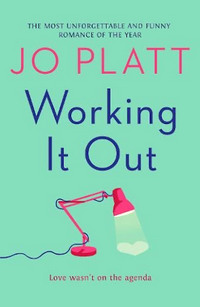
Working It OutWorking It Out

by Jo Platt

DETAILS:
Publisher: Canelo
Publication Date: February 3, 2022
Format: eBook
Length: 384 pg.
Read Date: October 1-3, 2022

(the official blurb)
Platt’s voice is great. All the characters were great (well, maybe all but one of them were). But the story just fell flat for me over and over again. The resolution just made me mad. The behavior of the protagonist was supposed to be cute and endearing–but it only served to annoy me. If you take this cast of characters, mature the protagonist a degree, and put them in the service of a better novel, I’d have loved it. But…bah. It was an okay way to burn some time in a hospital waiting room (which is where I was), but that’s about it.
2 Stars

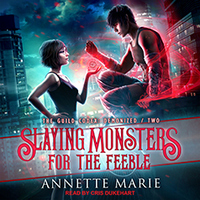
Slaying Monsters for the FeebleSlaying Monsters for the Feeble

by Annette Marie, Cris Dukehart (Narrator)

DETAILS:
Series: Guild Codex: Demonized, #2
Publisher: Tantor Audio
Publication Date: Feb 4, 2020
Format: Unabridged Audiobook
Length: 8 hrs., 27 min.
Read Date: October 6-11, 2022
Support Independent Bookstores - Visit IndieBound.org

(the official blurb)
I wasn’t sure how this series was going to really go after that first book, but I’m really pleased by this one. I particularly enjoyed the way that this fits in with the other series in this ‘verse. The action was good, the magic interesting, and the characters grew on me (or continued to, I should say).

I’m not particularly a fan of the friendship/affection/whatever between Robin and Zylas. But I don’t hate it, so there’s that.

This is one that I think I need to see through to the end before I decide about individual books–are some of these plotlines a waste of time? Are they going somewhere satisfying? Are they just going to prove frustrating? It’s too hard to tell. I think I’m going to end up thinking of this positively, but I can’t be sure yet. (I’m a little worried they could end up in the same spot as the Ella Grey series)

Cris Dukehart continues to get the job done and keep the books interesting.

3 Stars

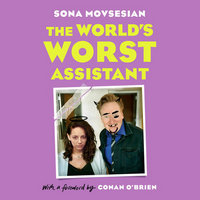
The World's Worst AssistantThe World’s Worst Assistant

by Sona Movsesian

DETAILS: 
Publisher: Penguin Audio
Publication Date: July 19, 2022
Format: Unabridged Audiobook
Length: 5 hrs., 25 min.
Read Date: October 11-12, 2022
Support Independent Bookstores - Visit IndieBound.org

(the official blurb)
Sona Movsesian has been Conan O’Brien’s assistant for years–his friend, too. Listening to the two of them on his podcast, you can hear the affection–and get caught up in their odd communal humor. I’ve also listened to enough of her that it feels strange to refer to her as anything but Sona.

The book gives a brief biography of Movsesian before moving into her time working various low-level jobs in television before getting hired by O’Brien as he started to move his show and family to California to take over The Tonight Show. We get a look at some of what happened to him there and then what they did afterward–both professionally and personally.

Essentially, this is a book about Movsesian and her good friend and boss–how much fun they have together, some of the amazing things she’s gotten to do, and the people she’s gotten to meet because of their jobs.

You start off listening to this book (I imagine), because of her boss and wanting to hear what it’s like to work with him–even if you’re the worst assistant in the world (how do you keep the job in that case?). You end up listening to the whole thing because you can’t help but like Movsesian and want to hear her tell stories about her life and laugh along with her.
3 Stars

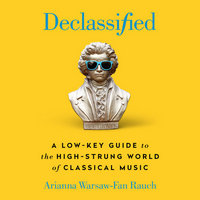
DeclassifiedDeclassified:
A Low-Key Guide to
the High-Strung World
of Classical Music

by Arianna Warsaw-Fan Rauch

DETAILS:
Publisher: Penguin Audio
Publication Date: October 11, 2022
Format: Unabridged Audiobook
Length: 6 hrs., 48 min.
Read Date: October 14-18, 2022
Support Independent Bookstores - Visit IndieBound.org

(the official blurb)
This would be tough to describe even if I was doing a full post, not just a quick take. I had a lot of fun with Warsaw-Fan Rauch’s book.

The behind-the-scenes bits about classical music, orchestra, and the education/training involved for today’s performers was great to hear. The jokes, snippy bits, and history of classical music, composers, and various instruments (and those that play them) were a special kind of geeky fun that I appreciated (not as much as someone who’s seriously played and/or studied, I’m sure, but enough for me).

The personal material didn’t do much for me–I don’t know her enough for that to have mattered (and didn’t get enough reason throughout the book). But it’s easy to get over that and focus on the highlights.

This was a pleasant time (and a little educational, too). Give it a listen.
3 Stars

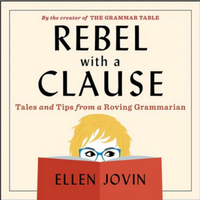
Rebel with a ClauseRebel with a Clause:
Tales and Tips from
a Roving Grammarian

by Ellin Jovin

DETAILS:
Publisher: HarperCollins Publishers
Publication Date: July 19, 2022
Format: Unabridged Audiobook
Length: 7 hrs., 38 min.
Read Date: October 18-19, 2022
Support Independent Bookstores - Visit IndieBound.org

(the official blurb)
Um…this isn’t as clever as it thinks it is. Maybe, maybe, if I knew who Jovin was before starting this book, I might have a different take. It feels like such a bunch of inside jokes–the kind of stories that fans of someone well-established might relish, but new readers wouldn’t. On the whole, it wasn’t about her points about grammar or language usage (see Dreyer or Favilla for a couple of examples of how to do this), that drove the narrative and humor of the book. It was harder to define, it was more how odd people thought it was that she was traveling around the country giving her opinions on the sidewalk or finding people who cared enough to discuss it.

While picking up the anecdotes for this book, Jovin and her husband were making a movie about her grammar table. That movie might be more entertaining to watch, and I plan on doing that someday. I think it might work better as such–sort of a “man on the street” kind of thing that can work well (see countless talk shows and Youtube series for proof). But this was just dissatisfying.

(also, I wasn’t crazy about the narration)
2 1/2 Stars

This post contains affiliate links. If you purchase from any of them, I will get a small commission at no additional cost to you. As always, opinions are my own.

Have I Told You This Already?: Stories I Don’t Want to Forget to Remember by Lauren Graham: The Actress-Essayist Does It Again

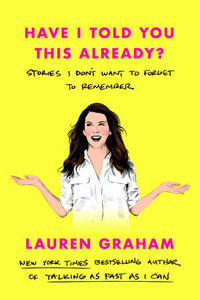
Have I Told You This Already?Have I Told You This Already?:
Stories I Don’t Want to
Forget to Remember

by Lauren Graham

DETAILS: 
Publisher: Ballantine Books
Publication Date: November 15, 2022
Format: Hardcover
Length: 186 pg.
Read Date: December 12, 2022 
Support Independent Bookstores - Visit IndieBound.org

It’s almost as if I’m sending mixed messages, like valuing privacy whilst also being the author of a second book of personal essays.

What’s Have I Told You This Already? About?

This is a collection of essays—mostly personal—about Graham’s career (or things surrounding it) during various stages, some thoughts on filming a TV show and directing, and there’s one essay that’s devoted to just being funny.

She reflects on aging, friendship, making marmalade, and the ridiculous things that women in Hollywood have to do to maintain certain standards of appearance. She opens the book talking about memory and story-telling—where accuracy is necessary and where details can fudged because it makes a story better, and ends up with a tribute to New York City.

Whoops

I should’ve been patient and waited for the audiobook to become available. There’s nothing wrong with reading the paper version of this book—it’s perfectly charming and Graham’s voice shone through.

But.

Hearing it in her actual voice (not just what I assume it would sound like)—a few passages in particular—would be so much better. I listened to her previous book of essays (and the graduation speech) and I think this would’ve been more entertaining in audio format.

So, what did I think about Have I Told You This Already??

He said this as if his memory of the matter was not at all disturbed by something as inconsequential as fact. For years, my father told the same story about how a momentous occasion felt to him; the facts had faded over time, maybe because they weren’t the most relevant part of the day. Sometimes we polish an experience to make facts line up more closely with feelings or exaggerate moments to make a better dinner party tale. And sometimes, mercifully, details become blurry over time, maybe because the sharp reality is too painful to carry.

This was a fast and breezy read. Graham’s really skilled as a writer and her prose sings. She’s funny as you want her to be. The closing paragraph of the second essay is a work of comedic art, a string of puns that I couldn’t believe she was able to keep going as long as she is. I’m never going to quote any part of it—but I’m telling you, it was great.

There were a couple of chapters that didn’t do much for me—the chapter on various health retreats or the chapter on NYC as a friend (although I thought it was some of her strongest writing). And a couple that I was surprised I enjoyed as much as I did—like the chapter about her relationship with the department store, Barney’s. The chapter where she uses Nora Ephron’s essay, “I Feel Bad About My Neck,” to talk about aging in the Entertainment industry, was particularly effective.

Even the essays that underwhelmed me were well written, and I could see what she was trying to do—they just didn’t connect with me–but I found something to grin about or chuckle at in them. The essays that did click with me made me laugh (sometimes a lot). The rest fell somewhere between—but they were all funny (when intended to be), and I’m glad I read them all.

At the same time, I need to stress that this is not all comedy. There are some real emotions and some thinking behind some of these essays—and it’ll provoke some, too. I think in the end you get more comedy than anything else, but it wouldn’t take much for the balance to go the other way.

She has a real gift for a killer last line, too. Openings are important, but with essays of this length (especially if you’re going for comedic), a great last line is essential, and Graham knows what she’s doing there.

In the end, this was a very pleasant and engaging read that makes me really want to see more from her (which goes for pretty much everything she’s written). When her novel was published, I picked it up because I was curious about what this actress could do—I’ve picked up the 3 works since because I like the way she writes. This collection works as evidence that we should maybe think of Graham as a writer who can act.

This post contains an affiliate link. If you purchase from it, I will get a small commission at no additional cost to you. As always, the opinions expressed are my own.

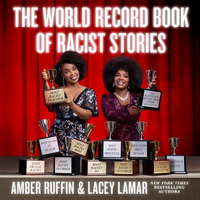
The World Record Book of Racist Stories (Audiobook) by Amber Ruffin & Lacey Lamar: Records No One Should Want to Hold (but too many vie for)

The World Record Book of Racist StoriesThe World Record Book
of Racist Stories

by Amber Ruffin & Lacey Lamar

DETAILS:
Publisher: Grand Central Publishing
Publication Date: November 22, 2022
Format: Unabridged Audiobook
Length: 4 hrs., 54 min.
Read Date: November 28-29, 2022
Support Independent Bookstores - Visit IndieBound.org

An Issue with Sequels/Follow Ups

As I’m sitting here thinking about what to write, I keep comparing this to last year’s You’ll Never Believe What Happened to Lacey: Crazy Stories about Racism. This is intentional because this is very much a Part II to that book. But it’s different, too. So it makes sense to contrast it so I can give an idea of how it’s different.

At the same time, I run the risk of sounding dull—”You’ll Never Believe did X, The World Record Book did Y,” “The World Record Book is more Z than…,” and so on.

I don’t know how to avoid that—so I guess this is an apology in advance? I’ll try to limit the comparisons and keep this interesting, if only because the book deserves to give a good impression, even if I’m not able to do that.

What’s The World Record Book of Racist Stories About?

Because they got to share a bunch of stories in the first book—primarily about Lacey—the sisters wanted to give the rest of their family, and some friends, the chance to get their stories told. Or, as they put it, “air out [their] dirty racist laundry.”

Ruffin warns:

FYI: You’ll be able to tell the difference between this book and the last book. This one’s gonna be a bit heavier. A touch more serious. The reason for that is with the first book, Lacey and | got to giggle through silly racism stories, and it felt great. So, if the family wants to share their stories too, however they want to share, we welcome that. We want them to feel great and heard and blah, blah, bloo. There’s plenty of silliness, it’s just that the rest of the family is less likely to remember the funnier racist stories. They have not been keeping journals. But those terrible, scary racist stories? Maaaan, they remember those like a mug. So, to emotionally prepare you, I’d call this book fifty-fifty silly-scary racist stories. Okay? So, don’t come to me talking about “It wasn’t like the first book” ‘cause you’ve been warned.

To balance out these stories, the interplay between the sisters seems a bit sillier than before (in the print version, each has their own typeface so you can see it)—up to, and including, them singing their own little ditties in the audio. The authors also include some pictures for illustration of the ridiculousness of the story or for a little burst of joy or cuteness to alleviate the heaviness of the stories they’re telling.

I should add there are a couple of anecdotes that really silly or scary, just heartbreaking.*

* Granted, there’s a sense in which all of these are heartbreaking, humanity’s inhumanity always is. So I guess those stories are extra-heartbreaking. Heartbreaking cubed.

The Organization of the Book

So, the theme of this book is there in the title—it’s a Guinness World Records collection, but no one wants to get their stories told here (names have been changed to protect those involved—according to the authors, at Lamar’s insistence over Ruffin’s intentions). The anecdotes are arranged under broad topics (or for the person they’re about), and they are each given a title like “Most Confusing Racist Phrase,” “Worst Car Service,” “Most Racist Pilot,” “Worst Celebrity Look-Alike,” “Worst Teacher,” and so on. Several of the category names are clearly exercises in creativity by the authors, like “Most Regular Degular, Day-to-Day Racism” or “Most Racist Comment I Was Not Part Of”

These Worsts and Bests, it must be remembered, apply to their family and circle of friends. Most minorities in this country can probably come up with their own “Worst Nursing Home Experience,” “Second Worst Bar Patron,” or “Worst Interview.”

A Variety of Storytellers

In the previous book, the stories were predominately told about things that happened to Ruffin or Lamar, as I’ve said. This time out, they bring in stories about their mother, father, all their siblings, a sibling-in-law, a former Nebraska state senator, and even a couple of white people (for contrast).

In fact, the book opens with an anecdote from a white, male friend about a traffic stop. It’s really atypical encounter, and one that this white, male would enjoy having. But, Ruffin says that it’s the story that shocked her the most. I don’t blame her if what follows is what she’s used to. Roughly midway through the book, we get another five quick anecdotes from a friend that Ruffin trades “opposite stories” with:

Stories where I’m suffering some racist nonsense and she’s getting away with everything but murder. It’s so shocking to me. I can’t believe this is happening to my little bud. Being white is hilarious. So, as you read these next five stories, try to think about how out of place they are in this book. Try to imagine a Black man getting away with any of this. It’s fun because you can’t!

With at least four of these, I agree—I can’t imagine that. Probably not the other, either.

They also include some anecdotes from state senator Tanya Cook, a nice (?) reminder that it’s common to find this kind of behavior anywhere.

So, what did I think about The World Record Book of Racist Stories?

Lamar writes in her closing remarks:

I’m glad our family and people from the community got the chance to share these stories with you. No matter how you feel about them, they have happened and are happening out there to not just a small group of people in Omaha, Nebraska, but to absolutely anyone at anytime, anywhere. I personally feel that by sharing these stories we are shining a light on racism, ignorance, and just some all-around hilarious shit.

That’s a pretty good way to summarize this book. And it’s a light that needs to be shone in a way that the masses will take it in. In our culture, for better or worse, the best way to do that is to make it funny and chopped up into digestible bits*. Which is what Ruffin and Lamar did here.

* See Planet Funny by Ken Jennings for more on that.

I didn’t enjoy this as much as the first—no offense to the authors and contributors, but it wasn’t as fun. If only the Introduction had warned me… But the authors worked hard to make it enjoyable—it’s just hard to do with the subject matter. As it grawlix-ing should be. The fact that they succeeded at all is remarkable.

Pretty much, you can read what I said about You’ll Never Believe and apply it here, just with a little less laughter. But I did laugh audibly at a few points, so there’s that. I also shook my head enough in unbelief/despair/denial that I’m surprised I didn’t pull something.

It may not be my favorite non-fiction read of the year (but it’s close), but it might be the most important one. Pick this (and the predecessor) up, folks.


4 Stars

This post contains an affiliate link. If you purchase from it, I will get a small commission at no additional cost to you. As always, the opinions expressed are my own.

The Life and Work of Jesus by Ra McLaughlin and Christopher Caudle: A Broad and Capable Introduction to Christology

The Life and Work of JesusThe Life and Work of Jesus

by Ra McLaughlin and Christopher Caudle

DETAILS:
Series: Christian Essentials 
Publisher: P & R Publishing
Publication Date: April 26, 2022
Format: Paperback
Length: 286 pg.
Read Date: October 8-23, 2022
Support Independent Bookstores - Visit IndieBound.org

What’s The Life and Work of Jesus About?

One of the advantages of this series is that I can largely recycle what I said about the first volume (I tried to come up with something new, but it felt like I was wasting time reinventing it).

This is a basic and broad introduction to Christology—starting with the idea of a savior and dealing with the overall plan of salvation before moving into seeing the outworking of that idea in history through the Incarnation and Jesus’ life, death, and resurrection. Then it moves into a discussion of the offices Christ executes (prophet, priest, and king)–looking at them in the OT shadows, Christ’s fulfillment of them on Earth and now. It’s adapted from curriculum using language that’s easy to translate—particularly into languages that don’t have a well-developed theological vocabulary—so the English is kept basic, too. There’s almost no academic or technical theological language used, and those that are used are well-defined (including in a handy glossary).

The chapters are short (most around fifteen pages) and well-organized. Each contains a handful of side-bars consisting of a paragraph or two with the contents of interviews with pastors and theologians on the topic under discussion. These interviews were with people from a variety of theological perspectives helping broaden the text so that it’s not exclusively from a reformed perspective.

So, what did I think about The Life and Work of Jesus?

I wasn’t blown away by this, but I liked it. It was a good, basic but thorough introduction to both the life and work of Jesus. After the first book in the series, I thought I knew what to expect from this book–and got it, with a little bit more. I’d say these authors covered their topics a bit more thoroughly than the previous book did (but just a bit). I’m not as convinced that the sidebars were as helpful this time out, however, so maybe things evened out.

I didn’t stumble onto anything problematic in this work like I did in the previous one, which was very encouraging.

All in all, this is a solid work that would be great for a new believer or a young student looking to get a better grounding. It’s broad enough to appeal to any evangelical but solid enough to work for those who tend to prefer a bit more precision.


3 Stars

This post contains an affiliate link. If you purchase from it, I will get a small commission at no additional cost to you. As always, the opinions expressed are my own.

A Few Quick Questions with…Danielle Higley

Earlier today, I gave my take on Danielle Higley’s great book, The Stories Behind the Stories, and now I’m very excited and pleased to share this Q&A with her. I hope you enjoy


What was the genesis of this project? How did you select the authors to feature?
This book came about in a somewhat unconventional way. In my spare time, I proofread and copy-edit for publishers and independent writers. I was referred to Bushel & Peck via another publisher and began proofreading for them in late 2020. I guess they liked my work, because shortly thereafter, they came to me with an idea for a nonfiction children’s book: The Stories Behind the Stories.

They gave me free rein to come up with what titles would be included and how those stories would be told. We did go back and forth on a few of the chapters—Peter Pan or Peter and Wendy was particularly challenging to write—but they gave me a lot of creative freedom. I chose the stories inside, initially, based on the books I’d consider the most famous or influential children’s classics. I then filled out the list by looking at other lists. I did consider diversity in my selection process, but looking back, I wish I would have included more books by authors of color.

I compare my publishing journey to that of The Magic School Bus creators, where Craig Walker, an editor for Scholastic, recruited Joanna Cole and Bruce Degen for the project. Walker believed that if someone could find a way to combine curriculum science with fun fiction, kids would be more engaged with the subject matter. He was challenged to find an author who could do all the research and writing, and an illustrator who could meld creativity with scientific sketches, but of course we know that the end result was a huge success. As a Magic School Bus enthusiast, I’m secretly very pleased to be in the same camp as Joanna Cole and all the other writers out there who’ve been gifted with this sort of incredible publishing opportunity.

I loved the design of this book—both the cover and interior—did you have a hand in that? If so, what can you tell us about that process?
Thank you! I’ve received so many kind comments about the art in this book! Alas, I don’t have that sort of talent. The art in The Stories Behind the Stories was all created by David Miles. He and his wife are also the founders of Bushel & Peck—an incredibly talented and busy power couple. David used a collage of images in the public domain, I believe, to create the artwork for each story.

Undoubtedly, there were facts/stories that you couldn’t work in—any spring to mind? How about authors that you’d wanted to cover, but because of time/space you had to cut? Any chance of a volume 2 to get those?
Oh man, it’s absolutely impossible to tell someone’s whole story in such a brief number of words. And also, in many cases, the story behind a book. The challenge, for me, was trying to keep all the stories fun. I knew children would be reading them—not just their parents. And that meant I had to leave out the gruesome details of Peter Pan’s history, and the somewhat boring (but really fascinating to English majors like myself) connection between The Golden Compass and Paradise Lost.

I did write a piece for The Hunger Games, but the quotes I used from Suzanne Collins were a bit dark. She talked about seeing Iraq war updates on the nightly news, interspersed with reality TV shows, and how unsettling it was when those two things fused together as entertainment. I thought that was really interesting, as well as her perspectives on “just-war theory,” but I have to say that after doing in-person readings with small children and seeing my book in elementary school libraries, I’m glad that story didn’t make the final cut.

I don’t know if there will be a volume 2 in the future, but I hope so!

What was the biggest surprise about the writing itself? Either, “I believe X is so easy” or “If I had known Y was going to be so hard, I’d have skipped this and watched more TV.”
I think the biggest surprise, for me, was finding that I could do it—on multiple levels. From the beginning, I knew this was a topic I wanted to write about, but I was also nervous. My baby was weeks old when Bushel & Peck sent the proposal. I didn’t know how I was going to write a book and take care of a newborn. I felt very much like I only had half a [mom] brain, and I was getting like two hours of consecutive sleep a night. Not exactly ideal conditions for being smart and creative.

But I also knew that if I didn’t say yes, I might be missing out on the biggest opportunity of my life. Book deals don’t just drop into people’s laps—believe me, I’ve been rejected by editors and agents many times. I’m so glad I said yes, though. I learned that I can write a lot of words in just a few months (provided they’re split into bite-sized chunks). I also learned that I can write, even under the most challenging circumstances. I feel like I’m stronger for that experience.

Given your subject, I have to ask: What’re your personal Desert Island Top 5 Children’s Books?

  • The Watsons Go to Birmingham – 1963 for sure; that book makes me laugh and cry every time, and the characters would make great company on a desert island!
  • The Mysteries of Harris Burdick because each page is so intriguing; I could spend the rest of my life coming up with stories for every illustration.
  • Harry Potter and the Goblet of Fire because it’s Harry Potter and the Goblet of Fire.
  • The Adventures of Mrs. Pepperpot because it’s perfectly nostalgic for me.
  • Some kind of nonfiction survival book, because the thought of being on a desert island gives me anxiety haha!

What’s next for Danielle Higley, author?
I’ve recently been asked to be on the jury for the Lee Bennett Hopkins Poetry Award for Children. Because of that, I’ll be doing a ton of reading between now and the end of the year. Still, I’m hoping to write more when I can. I’m working on some children’s picture books right now, and also an adult novel that needs some serious love and attention.

Thanks for your time—and thanks for The Stories Behind the Stories!


The Stories Behind the Stories by Danielle Higley, David Miles (Illustrator): Behind the Scenes of Some Childhood Favorites

I’ve got a Q&A with the author, Danielle Higley, coming up a little later this morning–be sure to come back for that!


The Stories Behind the StoriesThe Stories Behind the Stories:
The Remarkable True Tales
Behind Your Favorite Kid’s Books

by Danielle Higley, David Miles (Illustrator)

DETAILS:
Publisher: Bushel & Peck Books
Publication Date: November 2, 2021
Format: Hardcover
Length: 90 pgs.
Read Date: September 24, 2022
Support Independent Bookstores - Visit IndieBound.org

What’s The Stories Behind the Stories About?

It’s right there in the subtitle, isn’t it? “The Remarkable True Tales Behind Your Favorite Kid’s Books.” Higley takes 29 well-known and well-loved children’s classics—most from the Twentieth-Century, with a couple from before and a few after it.

We get roughly two pages on each book, with a full page of art to go along with them—although one of those pages will be heavily illustrated, too. The text will give a little biographical information about the author and then talk about the book itself—maybe how it was written, or received, or what inspired it. There’s also a sidebar with a little trivia about the book, too.

The books discussed range from Curious George to The Boxcar Children to Percy Jackson and the Lightning Thief, books written for children too young to read through books for Middle Grade readers.

The Design and Art

This is a wonderfully put-together book—let’s start with the cover design, a giant “Little Golden Book” look is an inspired choice for this. The collages used to illustrate the rest of the book are equally well done. They jump off the page and are well-paired with each book discussed.

Sure, the text of the book is my focus—and it should be here, too. But when it comes in a package this great to look at? That’s just a bonus.

So, what did I think about The Stories Behind the Stories?

I sat down to read about one or two of the books before starting something else one day, and read five before I realized it and had to force myself to stop. I ended up reading the rest of the book in one sitting. It’s the literary equivalent of Lay’s Potato Chips, “bet you can’t read just one.”

I’ve read 24 of the books talked about, and meant to read most of the others, so I was primed and ready for this—many readers in the target range (7-11 will be familiar with at least half, and this might inspire them to read more of them).

I think I learned a little about each of the books selected for this—except maybe Harry Potter and the Sorcerer’s Stone, because that’s been covered so well for so many years. Some of what I learned surprised me—The Boxcar Children was controversial? (okay, I probably should’ve guessed that one) Rawls almost didn’t get Where the Red Fern Grows published, and once it was, it took a lot of work to get it read—or put another way, I almost didn’t get my heart ripped out by it.

It’s engaging with a little dash of mild humor, nothing over-the-top—just enough to bring the occasional grin while not distracting from the point. It’s written in such a way that the target audience will have no problem reading it, and it’ll keep the attention of older readers, too—anyone who likes children’s books will find something to enjoy here. And you put that in an attractive package? It’s a win all the way around. I strongly recommend this book.


4 Stars

This post contains an affiliate link. If you purchase from it, I will get a small commission at no additional cost to you. As always, the opinions expressed are my own.

Good Talk: A Memoir in Conversations by Mira Jacob: Explaining Race in the U.S. to a Child

Good TalkGood Talk:
A Memoir in Conversations

by Mira Jacob

DETAILS:
Publisher: One World
Publication Date: March 25, 2019
Format: Hardcover
Length: 349 pg.
Read Date: October 5-6, 2022
Support Independent Bookstores - Visit IndieBound.org

Sometimes, you don’t know how confused you are about something important until you try explaiing it to someone else.

What’s Good Talk About?

It’s 2014 when the book opens, Mira Jacob’s son Z is six and he’s asking Mom a lot of questions (because he’s six). They start off talking about Michael Jackson—Z is obsessed with him. Z eventually asks about Jackson’s skin color—Z is half-Jewish, half-Indian and has several questions about skin color that stem from this (and likely predate this, but what do I know) which leads to questions about race, race relations, and what he sees on the news. Jacob’s committed to being open and honest with Z, but struggles knowing how much she should say—and how optimistic she should be about the state of the US in terms of Ferguson, MO, and a lot of the rhetoric surrounding the 2016 elections.

The memoir comes in as Jacob recounts several scenes from her childhood/young adulthood that shaped her. Her parents immigrated from India in the 60s (a week before MLK was assassinated) and took up residence in Albuquerque. We get a few scenes from her childhood and teen years before moving to adulthood, dealing with misunderstandings, assumptions, and unintentional rudeness based on her background. Eventually, she finds herself in New York City trying to make it as a freelance writer and dating. This is all told with frankness and humor. The kind of humor that reminded me of Amber Ruffin/Lacey Lamar’s You’ll Never Believe What Happened to Lacey from last year—you laugh so you don’t have to cry.

The Art

I really don’t know how to describe the art here, but this is a graphic memoir, so it’s a major component of the book. So I’d better try.

I saw someone on Goodreads use the term “mixed media,” and without researching it, I think it’s close enough to use as a description (maybe not technically right?). Please note that this is me trying to describe it, not being dismissive as it may sound. It’s like Jacob drew nice, but not fantastic, paper dolls of each character (some at different ages, others static) and put them on top of photographs or drawings of various locations and added speech bubbles.

I just saw that she has an Instagram account that uses images from the book (in addition to the regular Instagram stuff), so I figure I can “quote” something to show what I’m talking about:

This is nowhere near the kind of art that appeals to me in graphic novels/memoirs etc. Give me something dynamic, something with some flair, something I can bask in. But…this really worked for me. It helped give this a “documentary” kind of feel (don’t ask me to explain this, but it struck me that way). This isn’t about the glitz or the pictures jumping off of the page, it’s about a woman having tricky conversations with her loved ones—and complete strangers, sometimes. The focus is on the words, but the images help carry you along.

So, what did I think about Good Talk?

Sometimes, you go along with it and pretend nothing happened. Sometimes, you hold your breath until the feeling of wanting to believed passes. Sometimes, you weigh explaining against staying quiet and know they’re both just different kinds of heavy. Sometimes, when it’s your mother-in-law—a woman you started calling Mom the day you got engaged because you admired the ferocity with which she loved her children, and maybe even wanted some of it for yourself—you look ahead and see all the years of birthdays and graduations and weddings that will be shadowed by things that she can’t imagine about your life. Sometimes, you can’t hold your breath long enough.

I typed “I really enjoyed this book”, but I’m not sure that’s the appropriate response. I don’t know that supposed to enjoy this—but her style and humor are really engaging and there’s enough hope in there that it feels natural to say. I feel okay saying that this is a good read—it’ll make you think, it might make you grin, and it’ll definitely make you wince.

Right away, when Jacob goes to visit families in India and they tell her that her skin tone (darker than her parents’ or her brother’s) marks her out as not as attractive or a good prospect for marriage, you can tell she will pull no punches. And you can understand why she wouldn’t want to. It’s one of the many, many things that guys like me on Scalzi’s Lowest Difficulty Setting don’t have to think of. There are many sections of the book that hit the same way—like the chapter where she talks about being mistaken for “the help” at a party her mother-in-law was hosting. The above quotation is part of that—she decides mid-way through the conversation that she’s not going to try to explain what happened, nor argue about it. Constantly having to explain your experiences—your life—to people who don’t get it has to be a kind of exhausting that I can’t imagine.

But there’s a lot of humor and hope here, too—not all of it at the expense of clueless white folk saying dumb things. There’s the chapter about getting her dad to use marijuana to help the pain of his cancer treatment, for example. It’s funny and heart-warming. Until he dies, of course, reminding you that this isn’t that the hope is tinged with reality.

I really recommend this book—it’s a deceptively easy read, and you shouldn’t let the style or format fool you into racing through it. There’s a lot to chew on, a lot to reflect on—and a perspective that should be listened to. Even if you can’t relate to her struggles, can’t agree with her politics, and find the whole discussion unsettling. Maybe especially then.


4 Stars

This post contains an affiliate link. If you purchase from it, I will get a small commission at no additional cost to you. As always, the opinions expressed are my own.

Directed by James Burrows (Audiobook) by James Burrows et al: Behind the Scenes of the Best Sit Coms

Directed by James BurrowsDirected by James Burrows
Five Decades of Stories
from the Legendary
Director of Taxi,
Cheers, Frasier, Friends,
Will & Grace, and More

by James Burrows, with Eddy Friedfeld; Narrated by James Burrows and Danny Campbell

DETAILS:
Publisher: Random House Audio
Publication Date: June 6, 2022
Format: Unabridged Audiobook
Length: 12 hrs., 18 min.
Read Date: September 23-26, 2022
Support Independent Bookstores - Visit IndieBound.org

What’s Directed by James Burrows About?

This is largely a professional memoir about the long and storied career of TV director/producer James Burrows.

The book starts with a chapter and a half (or so) describing his childhood, early family life, and so on—talking about his father’s Broadway writing and directing a bit and how that did/didn’t influence his career choices. Then we get about a half-chapter talking about his education/theater work. Which is all a lead-up to his TV career. We get a little more of his personal life sprinkled in throughout the following chapters, but not much—Burrows knows the interest in his own story is in the stories he told—and more importantly—helped others to tell. That’s where the focus of the book is—he’s giving the people what they want.

And it feels like a pretty a fairly exhaustive tale of the various shows he worked on and his involvement in them, with an occasional interlude to talk about something like screwball comedy and why one would use it, with some examples from his own career. There’s no way it can be exhaustive—and it sure isn’t detailed by any means*—he’s got too much under his belt, but he comes close.

* That’s a description, not a criticism. Burrows gives plenty of details, but not blow-by-blow kind of stuff too often.

He starts with a discussion of his time on The Mary Tyler Moore Show where he learned from some of the best around how to do what he does—and a lot about comedy. Then he moves on to where he becomes a driving influence on the show—and that’s the majority of the book. Which is what’s named in the subtitle: Taxi, Cheers, Frasier, Friends, Will & Grace. There’s plenty covered in the “and More” for sure—including many things I hadn’t realized he’d worked on (but make a lot of sense knowing that he did). The book does cover what he did in 2020 and 2021, so it’s about as up-to-date as you could want.

The stories of these shows include a lot of how they came about in terms of writers and networks and what kind of story they were going to tell before moving into casting, shooting the early episodes, audience reception, and success. The bulk of the material is behind-the-scenes, but there are a lot of descriptions of what ends up on-screen (including short-to-lengthy portions of the script), and how it landed. Most of his work is done with a live studio audience, so the immediate audience reception is almost more important than the TV audience’s.

There are stories of failure, things not working out quite right—and how he/the show recovered—either immediately or long-term. But almost all of the book is about the successes (why give more than a few sentences, for example, to a pilot episode that less than 100 people have seen/will see?)

The Narration

Burrows has some performing in his background, but not a lot. And that’s pretty evident in the narration here. He’s just not that good—there’s very little feeling in it—even when he’s telling a story he clearly (and correctly ) thinks is funny, you don’t hear it. When it’s an emotional moment for him, you don’t hear it. His affect is pretty much the same no matter what he’s talking about, and that really hurts the book.

Also, when he’s reading dialogue from a scene? You wonder how an actor will listen to him and come up with a good way to deliver a line. That feels harsh to say, but that’s the way it struck me. I think here it’s a deliberate choice—my gut tells me it’s a desire not to try to do an impression of an actor (especially one that would come across as unflattering) or he could be avoiding trying to give a different/competing take on the line. I don’t know—it comes across as flat, and these lines shouldn’t.*

* See We Had a Little Real Estate Problem for where a similar approach to narration worked better.

I know Burrows can tell a good story—I’ve heard and seen him interviewed. But here, he just comes across as wooden.

So, what did I think about Directed by James Burrows?

It’s clear to readers of this blog that I read a lot, but I could’ve easily done a TV-watching blog—and started one about the same time as this (but that’s another story). James Burrows is one of the first non-actors whose name I recognized as creating the TV I watched back in elementary school, and his involvement in a show will definitely get me to watch at least an episode or two if I’m at all interested in the premise. I’m the target audience for this book, no doubt.

The material overcame the narration—the first chapter and a half were really rough, I couldn’t connect with it at all, and was thinking about giving up. But once he moved into TV, I got over the fact that I didn’t care for the narration and had a blast with the book. The man has many insights, anecdotes, and memories that TV fans will eat up, and shares many of them.

Directed by James Burrows is full of trivia, insights, and just great stories. If not hampered by the narration, I’d be gushing about this. Instead, I’m just giving a hearty recommendation. TV junkies? You’re going to want to get your hands on this one.


3.5 Stars

This post contains an affiliate link. If you purchase from it, I will get a small commission at no additional cost to you. As always, the opinions expressed are my own.

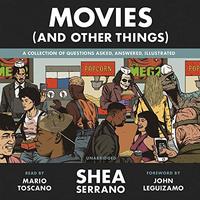
Movies (And Other Things) (Audiobook) by Shea Serrano, Mario Toscano: The Answers to Pressing Movie Questions

Movies (And Other Things)Movies (And Other Things)

by Shea Serrano, Mario Toscano (Narrator)

DETAILS:
Publisher: Twelve
Publication Date: October 7, 2019
Format: Unabridged Audiobook 
Length: 11 hrs., 7 min.
Read Date: September 21-23, 2022
Support Independent Bookstores - Visit IndieBound.org

What’s Movies (And Other Things) About?

Serrano discusses movies from the point of view of a massive fan—he knows what he’s talking about, he can discuss them objectively, critically, and as a fanboy—mostly a combination thereof. In this collection of essays, he approaches films of the mid-80s (largely) to today, answering burning questions such as:
bullet Who’s the better tough guy movie dog owner? (Will Smith in Legend, Tom Hardy in The Drop, or Keanu Reeves in John Wick?)
bullet Which Movie had the more intense opening, Face/Off or Finding Nemo?
bullet When did you know Booksmart was special?
bullet Who’s in the perfect heist movie crew
bullet Which race was white-saviored the best by Kevin Costner?
bullet When did Michael B. Jordan break your heart into the most pieces? (which was immediately followed by)
bullet When was Diane Keaton the most charming in Something’s Gotta Give?

The mental whiplash between those last two shows the range that Serrano is capable of. He also ranks the deaths/trauma in the Kill Bill movies, discusses adjusting recent Academy Award nominations/wins after making sure Romantic Comedies are given their credit due, what movie villains would be fun to hang out with, and how aN NBA post-game style press conference with Michael Myers would go.

There’s a great combination of movie knowledge/insight, social commentary, and humor mixed throughout each of these. Even when it came to movies I’ve never seen, have no interest in seeing, or saw ages ago and don’t remember well, Serrano kept me pretty engaged and entertained.*

* Except maybe with the Fast and the Furious discussion, I don’t know why…I just can’t care about this franchise.

A Word About the Narration

I’ve heard Serrano as a guest on podcasts, and would’ve assumed his natural ability, experience, and passion would’ve made him a natural to read his own audiobook. But for whatever reason, Mario Toscano got the nod instead.

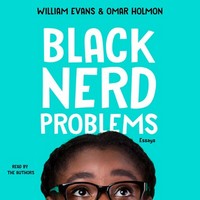
And I can see why—I had no problem believing I was hearing Serrano himself read these (maybe if I’d pulled up a podcast to listen to first, that wouldn’t have been true)—which is important when I’m hearing something so personal or passionate as this often is (see Black Nerd Problems, for example). Toscano sounds like a knowledgeable film geek going off on various topics—I think he could’ve put a little more energy into some of the quotations, but I’m sure there are good reasons for not doing that.

Ohh, man…

While researching this post, I saw that the ebook has three additional exclusive chapters…I might have been able to resist, but one of the chapters is “When Was Hans Gruber’s Subtlety the Most Threatening?”

So, I’m going to have to buy a print copy of this, too. I have to read this take.

So, what did I think about Movies (And Other Things)?

I had a blast with this—it’s the equivalent of sitting around with a bunch of friends talking about movies for far too long, which is one of my favorite ways to spend a lot of time. Even when I think he was out to lunch or arbitrary in some of his choices, I could get behind them for the sake of argument or be entertained by them.

Man, I wish I knew where he came up with some of the topics. If I spent a year doing nothing more than coming up with the chapter titles (never mind the content), I couldn’t be half this creative.

I didn’t need anyone reminding me of Opie Winston’s death scene—ever. But especially not in a book about movies where I didn’t know to be emotionally prepared for such a thing. Serrano lost a star from me for that one.*

* Not really, but it was cathartic to say that.

That incredibly important quibble aside, if you’re a current/former/would-be movie geek, grab this, you’ll have a blast.


3.5 Stars

This post contains an affiliate link. If you purchase from it, I will get a small commission at no additional cost to you. As always, the opinions expressed are my own.

The Attributes and Work of God by Richard L. Pratt, Jr.: A Broad and Capable Introduction to Theology Proper

The Attributes and Work of GodThe Attributes and Work of God

by Richard L. Pratt, Jr.

DETAILS:
Series: Christian Essentials 
Publisher: P & R Publishing
Publication Date: April 27, 2022
Format: Paperback
Length: 184 pg.
Read Date: July 31, 2022
Support Independent Bookstores - Visit IndieBound.org

What’s The Attributes and Work of God About?

This is a basic and broad introduction to Theology Proper—who God is, what He does, communicable and incommunicable attributes, the Trinity, etc. It’s adapted from curriculum using language that’s easy to translate—particularly into languages that don’t have a well-developed theological vocabulary—so the English is kept basic, too. There’s almost no academic or technical theological language used, and those that are used are well defined.

The chapters are short (most around ten pages, two are longer than fifteen) and well-organized. Each contains a handful of side-bars consisting of a paragraph or two with the contents of interviews with pastors and theologians on the topic under discussion. These interviews were with people from a variety of theological perspectives helping broaden the text written by a Reformed professor.

A Couple of Issues

It’s difficult, perhaps impossible, writing at the level Pratt is here and for the audience he has in mind to get too detailed on difficult subjects—that’s a given, and I wouldn’t expect that to change. Still, I found the way that subordinationism was covered because there’s a lot of good and a lot of sloppy material being put out about it right now. People at all levels need to be given the tools to look for the good.

Secondly, I was underwhelmed with the sections on foreknowledge, predestination, and election. This again is part of the design of the book—Pratt isn’t writing only for those in the Reformed/Reformed-ish camp, so he attempted to write something on these topics that can appeal to/apply to Reformed and broad-Evangelicals. I don’t think it’s possible to satisfy all corners of this discussion, and Pratt demonstrates it in the disappointing pages on the ideas.

So, what did I think about The Attributes and Work of God?

My problems are in the closing pages of the book—until that point, I was very satisfied. People wanting a broad curriculum to cover the basics in a High School/young College-age Sunday School class or Bible Study would benefit from this—especially if the instructor can augment the material in the subordination/predestination sections.

This was an incredibly easy, but informative, read. The discussion questions and “For Further Study” resource lists at the end of each chapter are stronger than many similar examples that I’ve run across lately.

I’d hoped for something a bit deeper, a bit more thorough. But once I saw—and it took almost no time to register that—that this isn’t at all the aim of this book, I was able to adjust and ended up really enjoying this. I’ll gladly recommend this to someone looking for this level/approach and am looking forward to reading the other entries in this series.


3.5 Stars

This post contains an affiliate link. If you purchase from it, I will get a small commission at no additional cost to you. As always, the opinions expressed are my own.

Page 9 of 31

Powered by WordPress & Theme by Anders Norén