Tag: SF

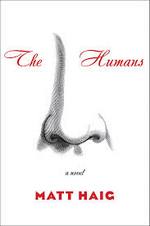
The Humans by Matt Haig

The HumansThe Humans

by Matt Haig
Hardcover, 304 pg.
Simon & Schuster, 2013
Read: Feb. 4-6, 2014

A couple of years back, I remember enjoying Haig’s The Radley’s about a family of vampires who’ve stopped feeding on humans, and have (mostly) assimilated into everyday society. It was fun, quirky, and had a lot more to offer than I’d have guessed. So when I stumbled onto this at the library, I had to grab it (and shame on me for not keeping an eye out for more by him).

The concept’s pretty simple: a brilliant mathematician has just made a break-through that puts humanity far, far ahead of where an alien race thinks they ought to be in terms of development based on how emotional and violent we are as a race. So, they send one of their own to kill him, take on his form and eradicate any and all people who might have knowledge of this breakthrough. Along the way, said assassin starts to understand and even appreciate humanity’s quirks and tries to stop the killing. Along the way we are treated to his observations about humanity. For example,

…I was able to work out that what humans may have lacked in physical attractiveness, they made up for in gullibility. You could tell them anything in a convincing-enough voice and they would believe it. Anything, of course, except the truth.

Basically, the key rule is, if you want to appear sane on Earth, you have to be in the right place, wearing the right clothes, saying the right things, and only stepping on the right kind of grass.

Or this description of browsing a bookstore:

Understandably, humans need to know what kind of book they are about to read, because time is money and money costs time and there’s no time like the present and all of that. They need to know if it is a love story. Or a murder story. Or a story about aliens. Perhaps the book they have in their hands is a war story. It wouldn’t be a surprise.
There are other questions too that humans have in bookstores. Such as, is it one of those books they read to feel clever, or one of those they will pretend they never read in order to stay looking clever? Will it make them laugh or cry? Or will it simply force them to stare out of the window watching the tracks of raindrops? Is it a true story? Or is it a false one? Is it the kind of story that will work on their brain or one which aims for lower organs? Is it one of those books that ends up acquiring religious followers or getting burned by them? Is it a book about mathematics or — like everything else in the universe — simply because of it? And also, of course, there is the ultimate, all-important questions: does it have a dog in it?

(amen to that last question)

A lot of these observations reminded me of the classic article, “Body Ritual among the Nacirema,” that social science undergrads have chuckled at for decades. And, at a point they got a little tired — but by the point that the book threatened to become an endless series of “here’s another way humans are odd” riffs, the story took over, and the characters became more than a collection of quirks. Which isn’t to say that the alien stopped having the observations, they were just mixed in with enough plot and character development that they became seasoning.

Another danger for the reader is that you could easily get so busy chuckling at things like a partial list of inventions that humans don’t know how to handle: “the atomic bomb, the Internet, the semicolon”; or the observation that a cat “was very much like a dog. But smaller, and without the self-esteem issues.” that you can let the poignant and thoughtful things slip by. This was not unlike Scalzi’s Redshirts in that way (it was on my mind because I was reading this when the news was released about the Redshirts TV adaptation).

Funny, moving, profound (not as profound as it wants to be, I don’t think — but close), look at what it means to be human, what it means to live, to love and why we bother with any of it.

—–

4 1/2 Stars

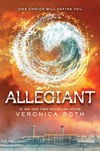
Allegiant by Veronica Roth

Allegiant (Divergent, #3)Allegiant by Veronica Roth
Hardcover, 526 pages
Katherine Tegen Books, 2013
Read: October 23-25, 2013

Given the phenomenon that the Divergent series has become — particularly amongst certain demographic segments — it’d be an almost impossible task to finish this series in a way that would please all readers. From what I can tell, she didn’t. But did she please this reader? On the whole, yeah. Despite an ending that many, many people disliked (I was fine with it, not crazy about it, but fine) Roth got the story wrapped up as she wanted, and ultimately, that’s what’s most important in this setting.

Yes, there was a lot more exposition and back story than you typically get in an end to a series. But Roth had a bunch of questions that Tris and her readers demanded answers for — and Roth answered most — if not all — of them. Which didn’t leave as much time for story as one would hope. It’s not 500 pages of info dump by any means, but there was probably more backstory in this book than there were in the other two. And really, other than the fate of the world, there wasn’t that much plot to take care of, so it sort of balanced out. Roth did bring every hanging plotline to a satisfying resolution, and didn’t introduce all that many to deal with within the pages of Allegiant.

Reading what I’ve written, it seems like this is a dull narrative. Not at all — there was enough action, enough mystery to keep you going. And in the moment, I didn’t have any problems with the amount of exposition, or anything else. It’s only afterwards, thinking about it that I started to have a “yeah, but . . . ” type of reaction. In the moment, it all worked — it all kept me hooked and waiting for what would come next.

Like many, I thought a good deal of the latter quarter was pretty predictable, but just because you can see an ending coming 5 miles away, doesn’t mean that it can’t be pulled off effectively — which is what Roth did.

I’m going to miss this world, and many of the characters, Roth had a thankless task before her here, and she managed to acquit herself pretty well. Looking forward to what she does next.

—–

4 Stars

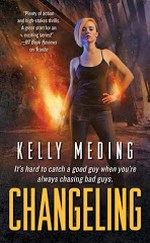
Dusted Off: Changeling by Kelly Meding

Changeling (MetaWars, #2)Changeling

by Kelly Meding
Paperback, 384 pg.
Pocket Books, 2012

I’ll be honest — when I saw that this sequel would have a different narrator/central character than Trance, I lost a lot of interest in it, and really only started the thing since I’d already spent the $$ and had a mild dose of curiosity. Within 20 pages, though, I was in–hook, line, sinker, and probably even rod and reel.

The same fun, excitement and heart that characterized Trance, are fully present and accounted for in this installment. This is a great world that Meding has created for us, and I can’t wait to get back to it.

—–

4 Stars

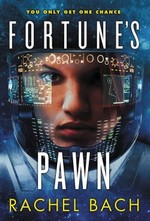
Fortune’s Pawn by Rachel Bach

Fortune's Pawn (Paradox, #1)Fortune’s Pawn

by Rachel Bach
Paperback, 320 pg.
Orbit, 2013

I’d planned on starting off here by saying, “there are shades of Ann Aguirre’s Sirantha Jax books here, but just shades.” Then listing off a few other things this reminded of. But I abandoned that because that list was getting too long — and I don’t want to paint Bach’s work as totally derivative. Which I never thought about until I started thinking about it — it feels like any number of SF (and even Fantasy) worlds, yes, but Fortune’s Pawn is it’s own world. The fact that it feels familiar just allows the reader to skip all the world-building, all the “this is how we travel great distances without taking generations” stuff, etc.; and just cut to the story.

Devi Morris is a mercenary with ambition and dreams — she’s got her eyes set on joining the elite of the elite and will whatever it takes to get there, as fast as possible. Which leads her to a tour on a notorious ship — its activities may not be the most legal, and the security forces on it see more action than anyone else. But when she’s done, she’ll be light years’ closer to her goal. Along the way, she gets to do what she loves — drink more than a little, chum around with the ship’s cook, berate her partner and bust a few heads. All in all, just what she’s looking for.

Naturally, things don’t stay that way — things get mysterious, spooky and even pretty impossible. Not so fun for Devi, lots of fun for the reader.

The supporting characters are interesting and well drawn, the universe that Devi calls home is familiar enough for comfort, distinctive enough to be interesting. There’s some humor, some good fight scenes, odd alien races/manners, a splash of something like romance, pretty much everything you’d like in a novel. The major plot complications that show up at the end are more than enough to get me eager for the second volume of the trilogy — and, most likely, the third.

—–

3 Stars

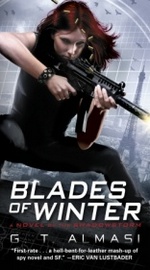
Blades of Winter by G.T. Almasi

Blades of Winter
Blades of Winter by G.T. Almasi

My rating: 4 of 5 stars

If we didn’t already have a term, “kickass female protagonist,” someone would have to invent it to discuss this book. Almasi’s Alix Nico — a 19-year-old bionically enhanced superspy is everything you want in a heroine — smart, sassy, and reckless — she’s an adrenaline junkie, a crack short, and has the beginning of a drinking problem. Equal parts Juno MacGuff, Jaime Sommers (Wagner, not Ryan), and Syd Brystow.

The action kicks off during the first sentence and really doesn’t stop until the last couple of pages. There are a couple breaks for agency briefings and hospital recovery times following a mission, true — but otherwise, it’s flying around the world, running/driving down alleyways and shooting up bad guys.

ExOps is the well-oiled covert machine that Alix works for — as her mother does, and her father did. All her life, really, had revolved around this — her schooling, her family and now her career — her rivals, friends, and boyfriend/partner are all part of this. By and large, the ExOps characters are stock characters, but Almasi’s put enough individuality to them to make them well-rounded. Alix is a prodigy of sorts, shooting up through the ranks faster than most — and sometimes cutting a few corners to do that — which leads to a lot of scrutiny from her mentor, colleagues and superiors. She’s too valuable to be wasted, too green to be fully trusted, and too reckless to be left to her own devices.

As great as the bionically-enhanced fight scenes are, as much as I dig the characters — the thing that seals the deal on this book for me is the setting. He starts with a World War II where Germany has a lot more success, which leads to a different kind of Cold War — between the U. S., Greater Germany, the Soviet Union, and the Nationalist Republic of China(!). This “Shadowstorm” (catchier name than Cold War, don’t ya think?) propels intense scientific progress — particularly as it relates to weapons and spycraft development. So by the early 1980s (where we pick up the action), the weapons and related tech far surpass our own. Yet it feels pretty 80’s-ish. I’m not sure how Almasi does that (beyond references to Reagan — actually, I really liked the whole presidential history we’re given here), but I’ll take it.* Despite the world taking on a literally different shape, it still feels like reality. Most alt-histories I’ve run across feel like parodies of reality, this feels like the real thing.

This novel is told with wit, verve and panache — a fun read that I immediately passed on to my teenage sons. Hope that Almasi has a few of these in his tank.

—–

*(okay, sure, some of the slang seems more Twenty-Teens than Alt-80’s, but, eh, in the moment you buy most of it — that’s enough)

—–

4 Stars

Dusted Off: Old Man’s War by John Scalzi

Old Man's War (Old Man's War, #1)Old Man’s War

by John Scalzi
Mass Market Paperback, 362 pg.
Tor Books, 2007

I have to admit, I came to this with a degree of trepidation. I’ve really enjoyed Scalzi’s “lighter” works and wasn’t sure I was going to be able to get into his more serious SF. Boy, was I wrong. This was a blast–sure, not as funny as Agent to the Stars or The Android’s Dream, but it wasn’t supposed to be, it was still a rollicking good time–action, hard SF, and heart (even a couple of laughs)–everything you could ask for.

It starts out as sort of an inverse Ender’s Game, instead of kids being recruited to fight far-off aliens, we get senior citizens enlisting. Humanity’s colonies are spreading through the galaxy and running into all sorts of other species who are trying to do the same, and conflicts ensue. I can’t think of much more to say here without major spoilers.

Great cast of characters, believable future tech, creepy aliens, intense battles…fun, solid read, really looking forward to the sequel.

—–

4 Stars

Dusted Off: Emperor Mollusk versus The Sinister Brain by A. Lee Martinez

Emperor Mollusk versus The Sinister BrainEmperor Mollusk versus The Sinister Brain by A. Lee Martinez
My rating: 4 of 5 stars

What a fun read (not hilarious, as the cover implies–and I believe, Martinez tweeted he didn’t like the word)!

This tale of our solar system’s biggest supervillian, conqueror (and would-be conqueror) of planets, destroyer of armies, and uber-mad scientist reads like a semi-serious Douglas Adams book. All of the wit, all the imagination, all the “where did he get that loopy (and great) idea from?”, none of the compulsion to go for the laugh every x number of paragraphs. It’s a great look at what makes a supervillian of the evil-scientist variety tick.

I’ve read about half of Martinez’ works, and he seems to go out of his way to make each significantly different than the last–but there are certain hallmarks–they’re clever, very enjoyable, and they display an essential humanity in characters you wouldn’t normally sympathize with/think of in this way. Such a treat.

Dusted Off: Chasing the Moon by A. Lee Martinez

Chasing the MoonChasing the Moon by A. Lee Martinez
My rating: 3 of 5 stars

It’s so hard to write anything about Martinez’ work, because it’s just so weird. And I mean that in a good way. Comic, but rarely laugh-out-loud; SF/Fantasy/Supernatural-ish, but approachable for those who prefer to stay away from that; books that feel like they’re the start (or middle of) a series, but are all stand-alones. One thing that connects them all is the humanity of the characters–particularly the protagonists, but not entirely reserved for them. Whether we’re dealing with supernatural creatures (vampires, werewolves, etc.), witches, aliens, robots, extra-dimensional creatures, monsters, cult leaders, or just Average Joes/Janes caught up in all of the madness–his characters have heart and humanity that shine through like nobody’s business.

In this particular tome, Diana finds the perfect apartment for her needs and budget, almost too good to be true, and jumps at it. Then she finds out that the catch to this deal is that she’s just signed on to be the one thing that stands between the world at large and a monster named Vom the Hungering, who will (one day) devour everything in sight. Hilarity ensues.

To say more would ruin this light (but not too light), engaging and very fun read. Do yourself a favor and give it a shot.

The Darwin Elevator by Jason M. Houg

The Darwin Elevator
The Darwin Elevator by Jason M. Hough
My rating: 4 of 5 stars

Well, this was a heckuva read. Solidly built world, you can see it — practically smell it. Yeah, it takes a little while to fill the picture in, but really from the get-go you have a pretty clear idea what this particular distopia is like.

But it’s more than just another distopian novel about survival — thankfully. Actually, it’s hard to put a finger on exactly what kind of SF novel this is without giving away everything, because every now and then — just when you think you have an idea what kind of book this is going to be, and what’s going on and what’s going to happen — Hough comes along, slaps you upside the head and says, “Nope, not that,” and proceeds to pull the rug out from underneath you. Characters you think you’ll be spending time with for the trilogy are killed. Constants turn out to be temporary. The shifts in direction aren’t such to give you whiplash, but it is enough to make you rethink everything you’ve read/predicted up to that point.

At some point, I started to mentally fill out one of those AD&D alignment grids for the characters — with 2 exceptions (and I guess you could make the argument for another one or two) they’re all some sort of “Neutral.” A couple of “Neutral Good”s, one “Neutral Evil,” (and of course, the exceptions — one “Lawful Good” and one “Chaotic Evil” (or “Total D*ck”), but on the whole, everyone is “Neutral”, just out to survive. Maybe find a little comfort and fun, but mostly just trying to survive in this uncertain world. Which is no mean feat.

It’s that need to survive that creates most of the conflict, most of the motivation for characters — and makes the whole thing so compelling. Almost every decision becomes a matter of life or death — sometimes for the person making the decision, sometimes for large groups of people, occasionally for the human race.

In the end, I think more questions were raised than were answered — but I didn’t feel cheated by any means, it wasn’t that Hough bit off more than he could chew, or left a lot of red (or potentially red) herrings laying around. Nope. He answered questions, he resolved plotlines, saw characters through their arcs. And those answers, resolutions and arcs led organically to new ones. The way it should be. He didn’t end things on a cliffhanger, but there’s almost no way someone could read that last line and not get impatient waiting for the sequel.

Doubleblind by Ann Aguirre

I’m in kind of a rush posting this, not a lot of time to proofread/make sure it makes sense. If you see a problem, leave me a note in the comments, I’ll fix it. Thanks!

—–

Doubleblind
Doubleblind by Ann Aguirre

My rating: 3 of 5 stars

There’s a danger when reading serialized fiction in letting too many months — or potentially more dangerous — too many books pass between volumes. That’s exactly what happened between Wanderlust and Doubleblind for me. I spent far too much time in the first 50 pages or so trying to remember characters/events — even with a pretty well-done “let’s get reacquainted with everyone” chapter 1, that still moves the plot forward.

I’m not sure how much that effected my enjoyment of the book, but it did make it unreasonably difficult to get into. But that’s my fault, not Aguirre’s. I also was put off by Jax’s too frequent internal rehashing of the state of March and their relationship. That eventually slowed down — due to plot and (gasp!) character development. There’s one UF heroine who has similar problems with the internal rehashing, and Jax reminded me far too much of her for the first half of the book or so, but Aguirre does the right thing — she has Jax move on from that (by her own volition, as well as events around her), the character I kept comparing her to only grows when forced to in the last quarter of the book, and then spends the bulk of her next book complaining/trying to get back to where she was.

Jax being able to move on, and change as change is warranted (not changing for changes’ sake), makes me like her and her creator all the more.

And really, that’s what this series has been about — this book more than the rest — Jax shedding the party-girl, reckless youth, part of her, and maturing. Making determined choices to not be who she used to be, but instead thinking about her decisions and actions, taking responsibility of the outcomes, and working for the betterment of her crew, her employer, and humanity as a whole (though, she’ll settle for the betterment of her crew). Actually, in this, she’s reminding me a lot of Izzy Spellman (see my review of her latest).

Now, while this is what the book is really about (IMHO), there’s all this other plot-y stuff going on. Jax and her crew (and some others) are on a planet populated by an insectoid culture, trying to bring them into their planetary alliance while dodging threats from their hosts as well as from within (including, possibly, treachery of the worst kind). Oh, and this fledgling planetary alliance is trying to get its sea legs, while fighting off organized crime with more muscle than the government, not to mention the previous ruling power trying to get things back under their control. All the while, a nearly unstoppable alien force is starting to wage war against humanity, who needs the Jax’s mission to be a success so they can have a shot in the oncoming war.

And seriously, you don’t need the character development, the personal growth elements of this — you just need the politics, the intrigue and the impending doom to get a book to work (see: A Song of Ice and Fire). But you add in what’s happening to Jax, as well as her closest friends, and you’ve got yourself one rockin’ SF adventure.

I’m sure I won’t wait as long for book #4. I’m not that stupid.

Page 30 of 30

Powered by WordPress & Theme by Anders Norén