Tag: Theology Page 17 of 22

The Word Became Fresh by Dale Ralph Davis: Principles for Old Testament Reading “For Fun and Profit”

The Word Became Fresh

The Word Became Fresh:
How to Preach from Old
Testament Narrative Texts

by Dale Ralph Davis

Kindle Edition, 154 pg.
Mentor, 2012

Read: April 11-18, 2021
Grab a copy from your local indie bookstore!


Dale Ralph Davis is one of those authors I’ve meant to read for ages now, I’ve seen him quoted and referred to for as long as I can remember and I just hadn’t gotten around to reading any of his work. This book seemed like a decent place to start.

What’s The Word Became Fresh About?

In the preface, Davis sets out the impetus for the book—too many Christians see the Old Testament as unimportant, or too complicated to understand—it’s good for a couple of morality lessons or the occasional Psalm, but that’s about it.

I still believe that traditional Old Testament criticism has had the effect of killing the Old Testament for the church. This little tome can hardly reverse that, but it is meant as an exercise in reading the Old Testament for fun and profit. As my mother- in- law used to say, ‘It’s different anyway.’ And maybe it will help.

While yes, the book is intended as a help for preachers*, these tools can and should be used by the laity in their personal reading.

* Maybe I’m just a snob, but if preachers don’t have the tools to handle the Old Testament passages at this level already, perhaps they skimped on their training.

Davis describes and then illustrates several principles to be used when approaching (primarily narrative) Old Testament texts to help the reader focus on the main ideas and themes of the passages without getting bogged down in the minutiae. The illustrations are plentiful and insightful—and are probably the best part of the book—taken from all over the Old Testament to help illustrate how useful they are for a variety of texts.

So, what did I think about The Word Became Fresh?

The writing is warm, approachable, and engaging—I can see why so many people have quoted Davis in the various things I’ve read—and I can see myself quoting him in the future (and reading more of him to get those quotations).

While I found the principles and tools he lays out to be helpful, I’m not sure I needed any of them. I’ve been exposed to—and using—most of them (generally without knowing I was using a hermeneutical tool, which should’ve been obvious to me).

What I found most helpful is his illustrations, seeing this stuff at work—and the conclusions (both exhortations and assurances) that he draws from his examples. These turn each chapter into a collection of sermonettes for handy use.

I’m not sure I learned a lot from this book, but I really appreciated the time I spent in the book and the gems I was able to collect from Davis. This won’t be my last book by him.


3 Stars

This post contains an affiliate link. If you purchase from it, I will get a small commission at no additional cost to you. As always, opinions are my own.

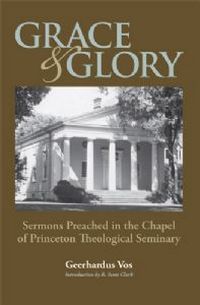
Grace and Glory by Geerhardus Vos (Banner of Truth Edition): A Fantastic Sermon Collection

Grace and Glory (BoT Edition)

Grace and Glory

by Geerhardus Vos

Hardover, 291 pg.
Banner of Truth, 2020

Read: January 3-April 18, 2021
Grab a copy from your local indie bookstore!

Oops

Back in 2019, I went shopping for a copy of these sermons by Vos and found a handful of editions. I picked one purely based on price. It looked like a decent quality version, but nothing fancy. Sure, the Hardcover published by the Banner of Truth would be nicer, but I didn’t need the fancy cloth binding.

What I learned later was that the Banner edition included ten additional sermons. So passing that over to save a couple of bucks was not the brightest move I’ve ever made.

I’ve mixed in what I posted about the shorter version with the rest of this post, in case someone’s in the mood to get all persnickety about plagiarism.

Christ’s work for us extends even farther than the restoration of what sin has destroyed. If Christ placed us back there where Adam stood in his rectitude, without sins and without death, this would be unspeakable grace indeed, more than enough to make the gospel a blessed word. But grace exceeds sin far more abundantly than all this: besides wiping out the last vestige of sin and its consequences, it opens up for us that higher world to whose threshold even the first Adam had not yet apprehended. And this is not a mere matter of degrees in blessedness, it is a difference between two modes of life; as heaven is high above the earth, by so much the condition of our future state will transcend those of the paradise of old.

What’s Grace and Glory?

For most people (who’ve heard of him), Geerhardus Vos is known as a theologian—one of the Twentieth Century’s brightest stars, the man who showed that the academic discipline known as Biblical Theology wasn’t the domain solely of Theological Liberalism, but that a robust, Bible-believing thinker could (and should) contribute to the field.

But before he was a theologian or professor, Vos was a preacher. And this small collection of sermons shows how capable he must have been.

Yes, there’s rich theology behind these sermons, but they’re primarily expositions and applications of the texts for the hearers. And, yes, the audiences of these sermons were students at Princeton Theological Seminary (before the downgrade that led to the creation of Westminster Theological Seminary), but these were not airy, academic addresses. Sure, as the initial hearers were largely future ministers, there are portions that are more applicable to preachers than to laity. But there’s not a lot of that, and even in the midst of one of those sections, there’s still a lot of gold to be mined.

The first person to whom he showed himself alive after the resurrection was a weeping woman who had no greater claim upon him than any simple penitent sinner has. No eye except that of the angels had as yet rested upon his form. The time was as solemn and majestic as that of the first creation when light burst out of chaos and darkness. Heaven and earth were concerned in this event; it was the turning-point of the ages. Nor was this merely objectively so: Jesus felt himself the central figure in this newborn universe; he tasted the exquisite joy of one who had just entered upon an endless life in the possession of new powers and faculties such as human nature had never known before. Would it have been unnatural had he sought some quiet place to spend the opening hour of this new unexplored state in communion with the Father? Can there be any room in his mind for the humble ministry of consolation required by Mary? He answers these questions himself. Among all the voices that hailed his triumph no voice appealed to him like this voice of weeping in the garden. The first appearance of the risen Lord was given to Mary for no other reason than that she needed him first and needed him most. And what more appropriate beginning could have been set for his ministry of glory than this very act? Nothing could better convince us that in his exalted state he retains for us the same tender sympathy, the same individual affection as he showed during the days of his flesh.

So, what did I think about Grace and Glory?

When I wrote about the original edition, I stated that: I don’t think it was by design, but the second, fourth, and sixth sermons were the ones that I appreciated most—my notes weren’t really that helpful, especially now. All I wrote about #2 “Hungering and Thirsting after Righteousness” was “Wow! Fantastic.” True, but that’s not really helpful—Vos opens up the idea about how Christ uses the believer’s faith (hungering and thirsting) to fill and bless them. The sermon “‘Rabboni'” (about Mary’s encounter with the risen Christ near the tomb) is less than twenty pages long, but was better than Richard Sibbes’ sermon series (184 pages in the Banner of Truth edition) on the same passage—I can’t do it justice here, so I won’t try. And the last sermon? It’s worth more than the purchase price of the whole book.

I also said that I fully expected when I re-read this book in 2021 or so, I’d say something just as strong about the odd-numbered sermons and wonder what I was talking about now. That’s wasn’t the case, in retrospect, but I would put “Rabboni” ahead of “Heavenly-Mindedness” (which was still worth the purchase price of the paperback). J. Gresham Machen called “Rabboni” “one of the finest expository sermons I have ever heard.” It’s definitely one of the finest I’ve ever read.

I was a little less taken with the additional material than I wanted to be—nothing was bad, mind you, but I think the original compilation was stronger. Naturally, there were a couple of exceptions, “The Eternal Christ” and “The Gracious Provision,” were just as strong as any of the first group.

As Scott Clark mentions in his forward to the Solid Ground Publication edition, Vos was a poet (particularly in retirement, but before then, too). And you can see that in some of these sermons—they practically sing. I can only imagine how captivating these were hearing them, they’re stirring just reading them.

Either edition qualifies as one of the best collections of sermons I’ve ever read. My only complaint is that there were only six, until I found the additional material—now my only complaint is that there’s only one volume of these. Get this one.


5 Stars

This post contains an affiliate link. If you purchase from it, I will get a small commission at no additional cost to you. As always, opinions are my own.

Rebels and Exiles by Matthew S. Harmon: Sin, Its Consequences, and Restoration Through Redemptive History

Here’s where I start to regret my resolution to write a post about every book in this category that I read this year to make up for the absence of them last year. I really don’t have that much to say about it and am afraid I’m making it look dull. Hope I’m not…


Rebels and Exiles

Rebels and Exiles: A Biblical Theology of Sin and Restoration

by Matthew S. Harmon
Series: Essential Studies in Biblical Theology

Paperback, 145 pg.
IVP Academic, 2020

Read: February 7-21, 2021
Grab a copy from your local indie bookstore!

What’s Rebels and Exiles About?

As with everything in this series, Harmon starts with Genesis and the Fall, and finding the pattern there for human disobedience and restoration that the rest of the Biblical narrative uses time after time (after time after time, sadly). Harmon traces the themes and examples of rebellion, exile, and restoration through The Old Testament and the New alike—with Christ inaugurating the final end of exile in his death and resurrection, which will be culminated in his return and the remaking of the world.

OT and NT Exiles

Personally, I found the chapter on Israel and Judah’s exile from Canaan after the rebellion and the chapter showing how the New Testament Epistles see the Christian life as one of exile—giving both hope and direction for that life—to be the most helpful. Particularly as Western culture becomes increasingly inhospitable to The Church and we’re reminded that we’ve become too comfortable in this world where we are pilgrims and exiles, we need these instructions and examples.

But the chapters describing the Restoration of Israel to the Land—as well as the greater restoration promised to them—and the chapter describing Christ’s Life and Ministry as ending exile were probably the most edifying.

So, what did I think about Rebels and Exiles?

I think I may have read the three books in this series a bit too closely together—it felt a little redundant, the themes and approaches in the various books in this series are so similar. That’s on me, not on Harmon, though.

This isn’t to say that I didn’t like the book or find it helpful. “Now these things happened to them as an example, but they were written down for our instruction,” it’s good to focus on these themes and patterns and Harmon’s little book is a good guide through them.


3.5 Stars


This post contains an affiliate link. If you purchase from it, I will get a small commission at no additional cost to you. As always, opinions are my own.

The Trinity: An Introduction by Scott R. Swain: A Brief but Deep Study

The Trinity

The Trinity: An Introduction

by Scott R. Swain
Series: Short Studies in Systematic Theology

Paperback, 133 pg.
Crossway, 2020

Read: January 17-31, 2020
Grab a copy from your local indie bookstore!

What we find in later Trinitarian creeds, confessions, and doctrinal summaries are not improvements upon a latent or undeveloped biblical Trinitarianism but, rather, the church’s attempt to fathom the depth of the riches of biblical Trinitarianism for the sake of various liturgical, pedagogical, and polemical ends. Some of the church’s creeds, confessions, and doctrinal summaries represent such faithful expressions of scriptural teaching and enjoy such wide-ranging ecclesiastical consensus that we dare not transgress the lines they have drawn. Rather, taking them on our own lips, we gladly join the church’s chorus of Trinitarian praise.

What’s The Trinity: An Introduction About?

It’s kind of there in the title, right? This is an introduction to the classical Christian doctrine of The Trinity. He’s not trying to re-invent the wheel, he’s definitely not trying to innovate, but to provide a concise (it’s a Short Study, after all) jumping-off point into deeper studies by providing a solid foundation.

He spends two chapters looking at the primary Biblical texts demonstrating the Doctrine. Chapter 3 is about the Simplicity of God—something too many overlook in a discussion of The Trinity. The following three chapters each focus on a Person of the Trinity. The final chapters are about the “external works” of the Trinity, the “appropriation” of specific works to particular persons, the beneficiaries of God’s work, and assorted topics.

All of that is a lot to ask of 133 short pages. Swain pulls it off by being concise, but he never seems to be leaving out details or avoiding the complicated ideas (although he obviously has to).

Touching on Controvery

This isn’t a polemical work—Swain is here to inform and educate, not combat. Still, he does talk about some Christological errors, including the contemporary dust-ups over EFS/ERAS—Eternal Functional Subordination/Eternal Relations of Authority and Submission.

Swain briefly (again, it’s a Short Study) addresses this error. He’s calm, he’s fair, yet he’s firm. It’s one of the best short treatments of the controversy I’ve seen, and in the context of the larger discussion of the Person of the Son as well as the larger discussions of each of the Persons, it’s incredibly helpful. It also fits where he put it and doesn’t seem like Swain used the opportunity as a digression just to beat a pet theological peeve.

Helpful Supplemental Material

Maybe it’s just me, but I rarely find the post-text material all that helpful. This book was one of the pleasant exceptions—there’s a brief glossary of some of the technical terms. Also, the “Further Reading” suggestions look great and my “To Buy” list grew a bit.

So, what did I think about The Trinity: An Introduction?

Because the persons of the Trinity are internal to God’s life, not external works of God, we can know the persons of the Trinity, as well as their ultimate plan for creation (Eph. 3:9), only if they stoop down and open up the depths of their inner life to us. Only the persons of the Trinity know the persons of the Trinity. Therefore, only the persons of the Trinity can make known the persons of the Trinity. The revelation of the Trinity is a matter of divine self-revelation, divine self-presentation, divine self-naming.

While this is a theological book, drawing on the teaching of the Church, Swain is careful to never lose sight of the source of this Doctrine, the Word of God. We know this, we understand this (as much as we do) because it is revealed to us. That’s vital to an understanding of the doctrine, and vital to the teaching of it. Swain doesn’t let his readers stray from the text.

This is one of those books where my notes keep saying “Chapter X is likely the highlight of the book,” “the section on X is likely the most valuable in the book.” It appears 60-70% of the book is a highlight—and I may not have written all of those parts down. Which is to say, there’s a lot of gold here, very little (if any) dross.

Helpful, insightful, and useful—it also achieves its end for leading on to further study for me. It’s accessible, but not easy, reading. At the same time, it’s a challenging, but not difficult, text.

Also, I like the looks of this series as a whole, I’ll most likely be grabbing more/all of them if they’re all about this quality.


5 Stars

This post contains an affiliate link. If you purchase from it, I will get a small commission at no additional cost to you. As always, opinions are my own.

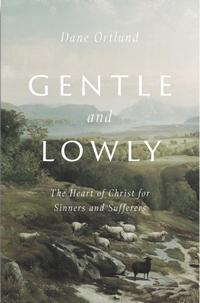
Gentle and Lowly by Dane C. Ortlund: An Encouraging Look at the Heart of Christ

Nothing against this book, but I don’t have a lot to say, but I promised myself I’d do better about posting in this genre, so here we go.


Gentle and Lowly

Gentle and Lowly: The Heart of Christ for Sinners and Sufferers

by Dane C. Ortlund

Kindle Edition, 224 pg.
Crossway, 2020

Read: January 3-10, 2021
Grab a copy from your local indie bookstore!

What’s Gentle and Lowly About?

We are not focusing centrally on what Christ has done. We are considering who he is. The two matters are bound up together and indeed interdependent. But they are distinct.

…It is one thing to know the doctrines of the incarnation and the atonement and a hundred other vital doctrines. It is another, more searching matter to know his heart for you.

Where most books on Jesus Christ focus on His work or nature, Ortland focuses on who He is—what He’s revealed to His people. As you might guess from the title, he focuses on Matthew 11:29 the phrase, “I am gentle and lowly in heart,” in particular. But he develops the idea through numerous Gospel passages.

Ortland does spend time on the Spirit and Father, showing how they are both revealed to have a similar heart. He follows that up with material from the Epistles, focusing on the Risen and Ascended Christ, still displaying the same care, the same heart for His people.

Standing on the Shoulders

In this study, Ortlund draws on insights from the Puritans Thomas Goodwin, Richard Sibbes, and John Owen (some others, including some relatively modern writers, too). Naturally, I found this material very rewarding. Ortland takes his cues from the best of the English Reformed tradition and it shows in his work.

I do sort of wish that the footnotes pointed to things other than various authors collected works, I think in some cases the material is available in other editions, and it’d be nice if it was easier to find, he makes you want to read more by these men on those topics. But that’s beside the point.

So, what did I think about Gentle and Lowly?

“Gentle and lowly” does not mean “mushy and frothy.”

But for the penitent, his heart of gentle embrace is never outmatched by our sins and foibles and insecurities and doubts and anxieties and failures. For lowly gentleness is not one way Jesus occasionally acts toward others. Gentleness is who he is. It is his heart. He can’t un-gentle himself toward his own any more than you or I can change our eye color. It’s who we are.

There’s nothing revolutionary to be found here, but there’s good, solid, reassuring material. It’s impossible to read this book and not be encouraged to draw near to Him and taking His yoke. It’s an easy read, very accessible, and one that’s well worth your time and attention.


3 Stars

This post contains an affiliate link. If you purchase from it, I will get a small commission at no additional cost to you. As always, opinions are my own.

My Favorite Theology/Christian Living Books of 2020

I knew I’d done a lousy job of keeping up on my Theology/Christian Living posts this year. But assembling this post let me see just how bad I’d done—five posts this year, and only one from this list made was covered in them.

Maybe that’s part of why I was rejected by NetGalley for every book along these lines I requested this year? In retaliation, I bought every book I was rejected for. That’ll teach ’em…

Anyway, these books are important enough to me—and this category makes up enough of what I read that I figured I’d keep up the tradition of making this list. And I’ll try to do better on this front in 2021.

As always, re-reads don’t count for these lists. It’s a self-imposed rule, but in a year when I re-read Calvin’s Institutes, some Machen and Prayer by O. Hallesby, it’s just not fair to almost everything else I read.

(in alphabetical order by author)

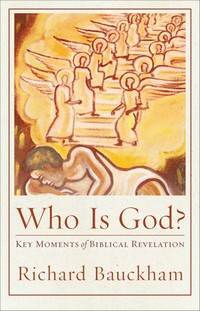
Who Is God?Who Is God?: Key Moments of Biblical Revelation

by Richard Bauckham

This is one of those deceptively easy reads that shouldn’t be read easily. Based on lectures that Bauckman has delivered, the book takes a Redemptive Historical approach to God’s revelation of Himself. “Jacob’s dream at Bethel (the revelation of the divine presence), Moses at the burning bush (the revelation of the divine Name), and Moses on Mount Sinai (the revelation of the divine character)…He then shows how the New Testament builds on the Old by exploring three revelatory events in Mark’s Gospel, events that reveal the Trinity: Jesus’s baptism, transfiguration, and crucifixion.” After looking at the particular text, Bauckman then traces that revelation through Scripture showing how the same thought it echoed and expanded throughout.

As these chapters were originally lectures, they’re not full of footnotes—but they’re clearly the product of a lot of scholarship. There’s deep thought here and great spiritual nourishment.

4 1/2 Stars

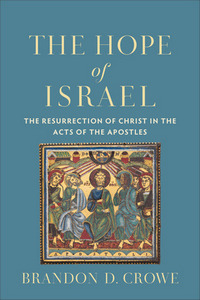
The Hope of IsraelThe Hope of Israel: The Resurrection of Christ in the Acts of the Apostles

by Brandon D. Crowe

It makes no sense to me at all that there hasn’t been a book-length look at the theme of Resurrection in Acts until now. It’s so clearly important to the message of Acts that you’d think there’d be dozens. But nope.

Crowe does a masterful job of filling that lacuna. It is all over Acts—more than I’d have guessed, too. First, he focuses on the topic in general, then focuses on the speeches/sermons of Peter, then those of Paul, and then those of everyone else. The exegetical material is just Part One, and it’s worth the purchase price right there.

But then he goes on to examine the topic from four theological perspectives, fleshing out the exegetical material and it gets so much richer.

This isn’t as easy to read as Bauckman, but it’s not too difficult if you’re willing to put in the work. Fascinating topic and helpful reflections.

4 Stars

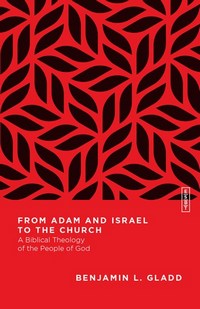
From Adam and Israel to the ChurchFrom Adam and Israel to the Church: A Biblical Theology of the People of God

by Benjamin L. Gladd

Gladd traces the idea of the people of God through successive Redemptive Historical eras, showing how each built on the one before and points to the final form in the New Heavens and Earth, fulfilling the original Creation design. A helpful way to look at this topic, it’ll challenge, inform and inspire.
4 Stars

Struck Down But Not DestroyedStruck Down but Not Destroyed: Living Faithfully with Anxiety

by Pierce Taylor Hibbs

Written twelve years after Hibbs was first diagnosed with an anxiety disorder, he takes a different approach to anxiety disorders than you typically see. It’s not about denying the problem, it’s not about overcoming it, and striving to lead an anxiety-free life. Instead, it’s about relying not on our own strength, but on Christ who is sufficient when we are not; it’s about learning to see what God’s purpose in the suffering is, understanding that His hand is guiding all things—including our problems—so how do we in faith (without denying the suffering) rest in faith.

If like me, you don’t suffer from an anxiety disorder, you have your own challenges in your life, ways in which you suffer. It’s easy, thanks to the way Hibbs wrote this, to see how you can apply these principles to your own circumstances.

Very practical, but not at the cost of truth and theological reflection.

4 Stars

Bearing God's NameBearing God’s Name: Why Sinai Still Matters

by Carmen Joy Imes

I had some real problems with this book—I quibbled with more than a few points, and flat-out disagreed with others (although I think her arguments are interesting and I’d like to see someone who knows what they’re doing dissect them). And I’m not so sure her thesis is all that revolutionary—I’ve heard it in almost every (maybe every) sermon I’ve heard on the Third Commandment in Confessional Presbyterian and Reformed Churches in the last two and a half decades.

That said, it’s a thesis that more people need to hear. The commandment isn’t primarily about our language, it’s about taking the Name of the Lord our God in the sense of “bearing.” When God’s people call themselves that, certain things are expected of them to not bring shame to that name (which will involve treating His name—and the means by which He is revealed—with the due respect).

She starts at Sinai and then traces the idea (a theme in this post, no?) through the rest of Scripture, showing how God’s people have done this—and how they’ve failed at it, too.

It’s a popularized version of a good portion of her dissertation, and is so accessible it’s ridiculous. Thought-provoking and helpful (even when I think she’s wrong about something), it’s a book I can’t help but recommend. My disagreements (and the way she expressed problems that don’t exist with the Reformed understanding of the topics) led to my reduced rating, not anything to do with the way the book was written.

3.5 Stars

The Identity and Attributes of GodThe Identity and Attributes of God

by Terry L. Johnson

The reason I haven’t written anything about this is simple: I don’t know how to start—or how to finish (or anything in between). This is a modern, less-exhaustive version of Charnock’s The Existence and Attributes of God. Full of quotations and lessons from Puritans and others in church history, this is an excellent introduction (and then some) to the classical doctrine of God so often ignored or downplayed today. If we don’t know who He is, how will we know how to worship and serve Him?

It’s convicting. It’s informative and educational. It’s devotional. It’s probably the best thing that Johnson’s written—and that’s saying something.

5 Stars

Exodus Old and NewExodus Old and New: A Biblical Theology of Redemption

by L. Michael Morales

“Morales examines the key elements of three major redemption movements in Scripture: the exodus out of Egypt, the second exodus foretold by the prophets, and the new exodus accomplished by Jesus Christ.” Like so many others I read this year this takes a Redemptive Historical approach seeing the way these ideas play out throughout Scripture, are echoed and expanded in successive eras.

The exodus from Egypt is the template (not the best word, but the only one that comes to mind at the moment) for redemption in general, and we see this figure used time and time again in Scripture. Morales is a helpful guide through this progression.

4 Stars

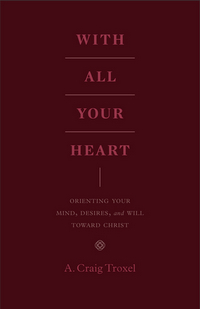
With All Your HeartWith All Your Heart: Orienting Your Mind, Desires, and Will Toward Christ

by A. Craig Troxel

Troxel begins by fleshing out a Biblical understanding of the heart (short version: the governing center of life). That understood, he then moves on to show how we’re to use that heart to fulfill Christ’s commands—how we keep it pure, how we protect it, how we keep it obedient. Most of all, how we respond when we fail (and fail, and fail).

One of the most humbling—yet helpful—books I’ve read in years. Troxel pierces the heart in the best way, so that we can see our need for repentance.

4 Stars

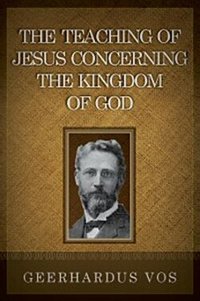
The Teaching of Jesus Concerning the Kingdom of God and the ChurchThe Teaching of Jesus Concerning the Kingdom of God and the Church

by Geerhardus Vos

This work “surveys the teaching of Jesus concerning the kingdom of God. It covers the kingdom in the Old Testament, the meaning of the biblical words for kingdom and kingship, the present and future aspects of the kingdom, the essence of the kingdom, the relationship between the kingdom and the church, and finally the saving benefits of entering the kingdom…Vos exposited an inaugurated kingdom with a future consummation long before G. E. Ladd popularized it.”

This is a slim, dense volume. Vos demands care and close attention to his work—but it’s so worth it (and after a while, you don’t notice how much you’re working to read). Fascinating and still helpful a century later.
5 Stars

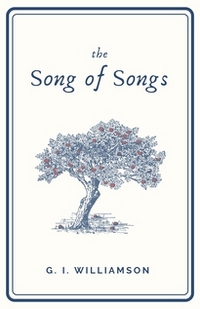
Song of SongsThe Song of Songs

by G. I. Williamson

My original post
Yeah, I gave this one only 3 1/2 Stars, but it’s on this list because it stuck with me. It’s been since April and I’ve thought about this book a few times (definitely during the two times this year I’ve read the Song of Songs). Williamson’s wisdom and carefully Christ-centered approach to the book makes these sermons really valuable.


3.5 Stars

Catch-Up Quick Takes None Greater by Matthew Barrett; Alive by Gabriel N.E. Fluhrer; The Song of Songs by G. I. Williamson; The Ten Commandments of Progressive Christianity by Michael J. Kruger

The point of these quick takes post sto catch up on my “To Write About” stack—emphasizing pithiness, not thoroughness.

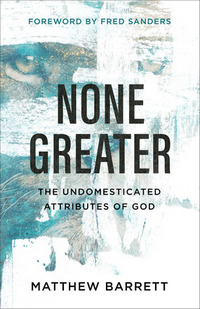
None Greater

None Greater: The Undomesticated Attributes of God

by Matthew Barrett
Kindle Edition, 304 pg.
Baker Books, 2019
Read: December 22-29, 2020
Grab a copy from your local indie bookstore!

(the official blurb)
This is a popular-level, very approachable introduction to the Attributes of God—Incomprehensibility, Aseity, Simplicity, Immutability, Impassibility, Eternity, Omnipresence, Omnipotence, Omniscience, Omnisapience, and a few others. He does so using the works of Augustine, Anselm,— and Aquinas to define Classical Theism—with help from Charnock and Bavinck.

Tackling all that in 300 accessible pages is no mean feat. I cannot tell you how many times I thought as I read this that this is the book that R.C. Sproul would have written about the Attributes of God. Sure, the illustrations aren’t the ones that Sproul would’ve used—but they’re of a kind. In my books, that’s a high compliment—we need someone who can communicate like Sproul. Barrett will do fine if he continues to put out this kind of work.

This is a really helpful and useful work—I recommend it strongly to everyone.
4 Stars

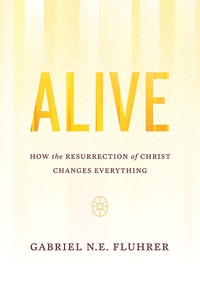
Alive

Alive: How the Resurrection of Christ Changes Everything

by Gabriel N.E. Fluhrer
Kindle Edition, 167 pg.
Reformation Trust, 2020
Read: April 5-12, 2020
Grab a copy from your local indie bookstore!

(the official blurb)
The book starts with a look at the evidence for the Resurrection of Christ, and why it’s important to wrestle with it and to be ready to defend it in our current culture. Then Fluhrer moves on to looking at the way the Resurrection was foreshadowed in the Old Testament, described in the Gospels, preached in Acts, explained in the rest of the New Testament, and serves as the basis for our sure hope. He covers all the bases and does so well.

Fluhrer has an apologetic goal for this book, it’s not as compelling as he seems to think it is. Which really describes the book as a whole. In the end, it’s too surface-level. It’s helpful, the theology behind it is the kind of thing we need more of—a robust Redemptive-Historical approach à la Vos and Gaffin—and it’s approachable. I just couldn’t sink my teeth into it. I liked it, I just wanted to like it more.

3 Stars

Song of Songs

The Song of Songs

by G. I. Williamson
Kindle Edition, 112 pg.
P&R Publishing, 2020
Read: April 26, 2020
Grab a copy from your local indie bookstore!

(the official blurb)
This is a great and helpful collection of sermons. This particular book of the Bible is often misinterpreted, so having someone bring careful clarity to the text is valuable. It’s not the final word—Williamson would never claim to be. But it’s helpful.

It’s also Christ-centered. Something far too often neglected when approaching this text. Yes, there’s a focus on love, marriage, sexuality. But with the goal of bringing glory to God through that.

I really appreciated this book and will be returning to it.
3.5 Stars

The Ten Commandments of Progressive Christianity

The Ten Commandments of Progressive Christianity

by Michael J. Kruger
Paperback, 54 pg.
Cruciform Quick, 2019
Read: May 24, 2020
Grab a copy from your local indie bookstore!

(the official blurb)
There’s part of this that’s a tribute to Machen and Christianity & Liberalism, while being an update to it, too. To see how Liberalism is alive and well (running under the moniker of “Progressive” now), he uses two contemporary works to respond to. He stresses repeatedly that the tenents taught in these books aren’t wholesale departures from the faith. However, these half-truths are so misleading they amount to the same. Being half-truths, they’re all the more dangerous and will easily fool some.

The analysis and critique are sharp, spot-on, and easy to read. Well worth your time.

But…

I know that the point of this imprint is “quick,” but this was just too brief to be really valuable. I’d have liked some more depth, for Kruger to use more than just the two works he’s critiquing, that sort of thing. It was an appetizer—and it turns out that after a couple of bites, I wanted a meal.
3.5 Stars

This post contains affiliate links. If you purchase from any of them, I will get a small commission at no additional cost to you. As always, opinions are my own.

Bethlehem’s Brothers by Ronald Hera: First Century Historical Fiction about a Couple of Others Born in Bethlehem

Bethlehem's Brothers

Bethlehem’s Brothers

by Ronald Hera
Series: The Brothers Trilogy, #1

Kindle Edition, 308 pg.
AuthorHouse, 2011

Read: April 12-19, 2020


This historical fiction starts off with a bang—in a small home during the Massacre of the Innocents. One father (probably others, but we’re focused on one family here) tries to prevent the soldier from killing his young son and loses his life, too. Devastated, his widow does the best she can for her two remaining sons—sending one to Jerusalem with a friend of a friend as an apprentice, she takes the other to live with family near the sea of Galilee where the boy will learn to be a fisherman.

After a few chapters where we see them grow up and begin their adult lives, we begin to hear about things like John the Baptizer, and an itinerant preacher surrounded by outlandish rumors. Both boys have been raised quite differently—Simeon, in Jerusalem, was apprenticed to a former rabbi (discharged by the Sadducees for his orthodoxy); Enoch becomes involved with Zealots and was convinced the soon-to-come Messiah would lead a revolt. A few striking events lead them to realize who this Messiah is (although, they’re both pretty shaky about the details).

As the brother’s stories intersect at various points with the Gospel accounts we see John’s arrest, some healings by Christ, the Triumphal Entry, the Crucifixion, and some of those who were raised, the encounter at the Road to Emmaus and more. As they intersect, they, their friends, Simeon’s wife, and others struggle to understand what they’re hearing and seeing.

I was particularly impressed with the way that Hera treated the Biblical material. One of the best ways to evaluate Historical Fiction is based on how it treats actual history and merges the fictional with the fact. I found Hera’s use to be very sympathetic and respectful—it’s a dangerous path in general, but when you’re dealing with Sacred material, it’s even more dangerous.

It is a smooth and easy read, with a pretty engaging text. It’s not perfect, and maybe relies a bit too much on coincidence, but that doesn’t detract from it being a pleasant time. I wanted a bit more out of the dialogue but it wasn’t bad. The focus on this novel is to give an idea—with an eye to historical reality, but not bogged down in the details—what it was like for the faithful Jew to encounter the Messiah. It’s a worthwhile and ambitious goal and it delivers on it. I’d recommend this and will very likely be picking up the next two installments in the trilogy soon.

Note: I received a copy of this book from the author in exchange for this post and my honest opinion.


3 Stars

Clearing the Deck: Tweet-length thoughts about books I can’t find time to write about

Yeah, I have a daunting TBR stack, but I also have too many books on my “To Write About” pile, and it’s bugging me. So, I’m cutting myself some slack, and am clearing the deck of everything from 2019 and before that I haven’t made time for. This was painful to do, I was looking forward to writing about most of these, but I’m just not going to get to them–and the 2020 books are starting to pile up, too. So, in 144 characters or less, here’s me cutting myself some slack.

(Click on the cover for an official site with more info)

Rivers of London: Detective Stories
3.5 Stars
Rivers of London, Volume 4: Detective Stories by Andrew Cartmel, Ben Aaronovitch, Lee Sullivan
Brief flashbacks showing what Peter et al. get up to between novels/comic series. A fun idea, well executed. Would enjoy another one like this.
Cry Fox
3.5 Stars
Rivers of London Volume 5: Cry Fox by Andrew Cartmel, Ben Aaronovitch, Lee Sullivan
This was a lot of fun, and showed a new side of a cool recurring character.
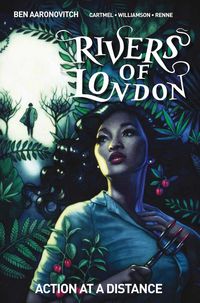
Rivers of London: Action At A Distance
3 Stars
Rivers of London: Action At A Distance by Andrew Cartmel, Ben Aaronovitch, Brian Williamson, Stefani Renne
A serial killer hunt and Nightingale backstory. Great combo.(some nice Molly material, too)
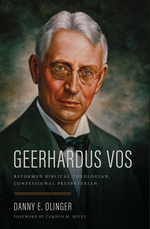
Geerhardus Vos: Reformed Biblical Theologian, Confessional Presbyterian
4 Stars
Geerhardus Vos: Reformed Biblical Theologian, Confessional Presbyterian by Danny E. Olinger
A biography and a discussion of his Vos’ major works. This was an excellent way to gear up for my 2019 Vos reading. Inspirational stuff.
The Utterly Uninteresting and Unadventurous Tales of Fred, the Vampire Accountant
3 Stars
The Utterly Uninteresting and Unadventurous Tales of Fred, the Vampire Accountant by Drew Hayes, Kirby Heyborne (Narrator)
A light Urban Fantasy about misfit monsters. Enjoyable enough to come back for more.
Open Season
4 Stars
Open Season by C. J. Box, David Chandler (Narrator)
Series Debut about a WY Game Warden with a nose for mystery. Loved the dual POVs (Pickett, his daughter). Addicting.
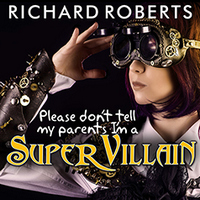
Please Don't Tell My Parents I'm a Supervillain
3 Stars
Please Don’t Tell My Parents I’m a Supervillain by Richard Roberts, Emily Woo Zeller (Narrator)
A cute story about kids of super-heroes/super-villains trying to get started in the biz without their parents’ involvement. Went on longer than it needed to, but fun enough to try volume 2.
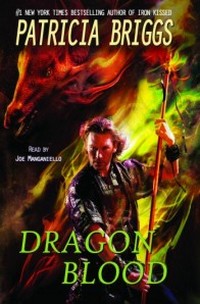
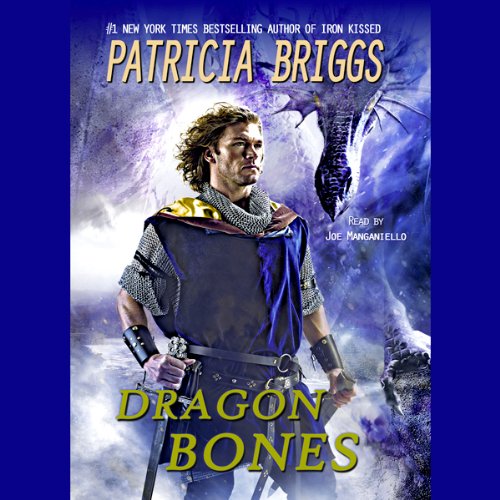
Dragon Blood
3 Stars
Dragon Bones by Patricia Briggs, Joe Manganiello (Narrator)
Manganiello is a great choice for narrator. Nice little stand-alone fantasy story. Great dragons.
Savage Run
3.5 Stars
Savage Run by C. J. Box, David Chandler (Narrator)
Almost as good as the first Pickett novel. Mrs. Pickett gets to shine here, too. I’m so glad I finally got to this series.
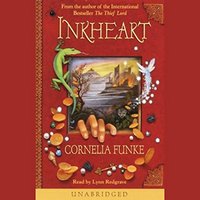
Inkheart
3 Stars
Inkheart by Cornelia Funke, Lynn Redgrave (Narrator)
Gets a bit redundant, but I loved the concept. Better than the movie (which I kind of liked), but still could’ve been better.
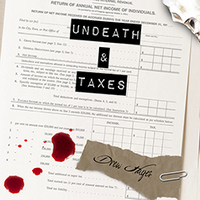
Undeath and Taxes
3 Stars
Undeath and Taxes by Drew Hayes, Kirby Heyborne (Narrator)
A little better than the first volume, an enjoyable way to spend a few hours.
Dragon Bones
3 Stars
Dragon Blood by Patricia Briggs, Joe Manganiello (Narrator)
OK, so Dragon Bones wasn’t a stand-alone. Could’ve been, but it was nice to get a little more with these characters/this world. Still, give me a Briggs Urban Fantasy above this.
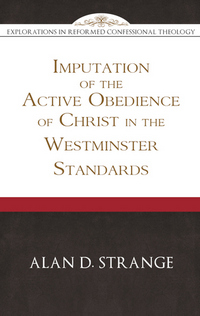
The Imputation of the Active Obedience of Christ in the Westminster Standards
4 Stars
The Imputation of the Active Obedience of Christ in the Westminster Standards by Alan D. Strange
I love this series. Strange packs so much material into this tiny package. Excellent stuff.
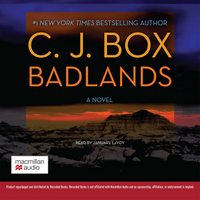
Badlands
3 Stars
Badlands by C. J. Box, January LaVoy (Narrator)
Cassie takes over The Highway series and moves to a new Oil Town in North Dakota. Midwest Winter, Drugs, Murder, Corruption and Too Much Money wreak havoc on her first week on the job.
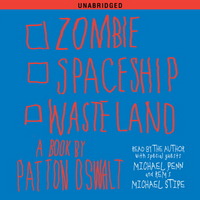
Zombie Spaceship Wasteland (Audiobook)
3.5 Stars
Zombie Spaceship Wasteland: A Book by Patton Oswalt (Audiobook)
The memoir chapters are nice, the comedic bits are odd (and funny). An interesting look at Oswalt.
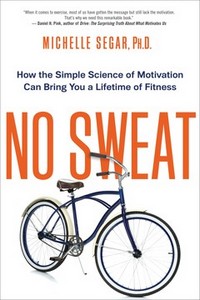
No Sweat
3 Stars
No Sweat: How the Simple Science of Motivation Can Bring You a Lifetime of Fitness by Michelle Segar, Ph.D.
A great way to look at keeping (or getting) yourself motivated to exercise.

My Favorite Theology/Christian Living Books of 2020

I read a lot of good, inspirational, thoughtful and devotional work this year, but these were the ones that stuck out in my mind. I’d encourage the careful reading of all of them.

(in alphabetical order by author)

None GreaterNone Greater: The Undomesticated Attributes of God

by Matthew Barrett

I haven’t had a chance to write about this book yet, but it’s great. Barrett provides a wonderful tool to introduce believers of all ages/background to the main attributes of God to shape belief and practice. It’s a corrective, but not scoldy. It’s deep, but not hard to understand. It appreciates mystery and doesn’t try to overexplain anything but it also grapples with what we’re given to understand. I’ll say more in a week or two, but for now, just know it’s one of the best things I read last year.

4 Stars

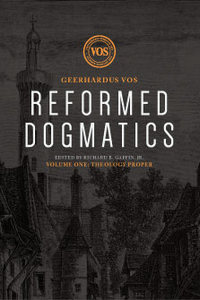
Reformed Dogmatics, Volume 1: Theology ProperReformed Dogmatics, Volume 1: Theology Proper

by Geerhardus Vos, Richard B. Gaffin, Jr. (Translator and Editor)

My original post
Yeah, it’s only a picture of one of the volumes (but they all pretty much look alike). This set concisely, yet comprehensively, discusses the major theological loci in a way that’s scholarly and yet warm and practical.

5 Stars

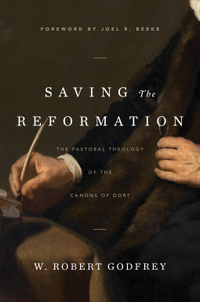
Saving the Reformation: The Pastoral Theology of the Canons of DortSaving the Reformation: The Pastoral Theology of the Canons of Dort

by W. Robert Godfrey

My original post
This look at the Synod of Dort, as well as the Canons produced by it, is well-researched, careful, encouraging and pastoral—this is not dry and dusty history, nor dry and dusty doctrine. This book, like the Synod it focuses on, seeks to defend, protect and further the cause of the Protestant Reformation, the Gospel itself. As such, it succeeds and you’d do well to study it.

5 Stars

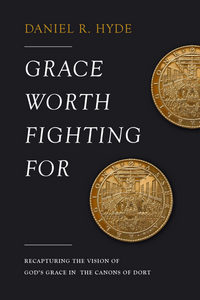
 Grace Worth Fighting ForGrace Worth Fighting For: Recapturing the Vision of God’s Grace in the Canons of Dort

by Daniel R. Hyde

My original post
Is a fantastic companion to the previous book. Hyde focuses on the Canons themselves and what they’re getting at, showing how Church History developed those ideas to this point and how the Reformed church built on them. I didn’t expect anything to beat the Godfrey volume in this year where we got multiple books (thanks to the Canons’s anniversary), but this one did. it’s warm, pastoral and approachable. Anyone over 13 should have no problem with it. Sure, some of the topics will leave some scratching their heads and pondering for a while, but that’s because these are weighty, thought-provoking topics, not because of Hyde’s text. I may have read a better theological book this year, but I can’t think of it off the top of my head. This is simply excellent—rich theology, rich application, solid history, smartly writing, occasionally stirring.

5 Stars

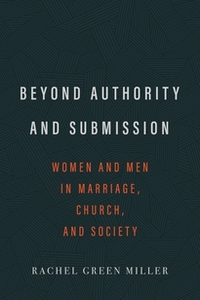
Beyond Authority and SubmissionBeyond Authority and Submission: Women and Men in Marriage, Church, and Society

by Rachel Green Miller

My original post
This book made me re-examine a lotand will probably continue to do so as I mull on what she has to say (and I’ll probably find a lot to disagree with ultimately, and a lot to agree withas it ought to be). How much of what I think about how women and men should interact with each other (in the home, Church and society) comes from Scripture and how much from the culture? How much of what I think it means to be a man or what it means to be a woman has more to do with Ancient Greek culture or the Victorians? (more than it should). The core of the message should be heard and weighed, and hopefully, after the hubbub around its publication has died down a bit, we can start to deal with it.

4 Stars

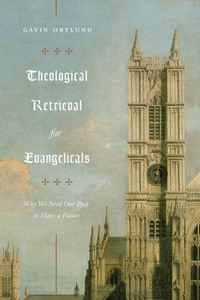
Theological Retrieval for EvangelicalsTheological Retrieval for Evangelicals: Why We Need Our Past to Have a Future

by Gavin Ortlund

My original post
A fantastic mix of theory and practice—showing why and how Evangelicals should mine the treasures of the past to shape the theology of today and tomorrow.

4 Stars

The Imputation of the Active Obedience of Christ in the Westminster StandardsThe Imputation of the Active Obedience of Christ in the Westminster Standards

by Alan D. Strange

I was sure I’d written a post about this book, and was embarrassed to discover that I hadn’t—I somehow let this not be included in the November Retrospective, too. This is why I don’t get paid for this blog, folks.

Anyway, Strange packs a lot into this 176 page tome. It is dense. But somehow, it’s also an easy read. He explores the historical debate—particularly around the Westminster Assembly—around this doctrine and explains why the Standards express things the way they do. Then he applies it to contemporary debate in a straightforward manner. Pound for pound, possibly the most helpful book I’ve read this year.
4 Stars

Grace & GloryGrace and Glory: Sermons Preached in the Chapel of Princeton Theological Seminary

by Geerhardus Vos

My original post
This is exactly what a collection of sermons ought to be—the language is clear, precise and almost lyrical. You can almost hear them as you read them. Solid theology, warm application and gospel-centered. My only problem with this collection is that it was so short.

5 Stars

Books that almost made the list (links to my original posts for those I wrote about): The Future of Everything: Essential Truths about the End Times by Willaim Boekestein, The Whole Armor of God: How Christ’s Victory Strengthens Us for Spiritual Warfare by Iain M. Duguid, Rediscovering the Holy Spirit: God’s Perfecting Presence in Creation, Redemption, and Everyday Life by Michael S. Horton, The Prayers of Jesus by Mark Jones, and Baptism: Answers to Common Questions by Guy M. Richard.

Page 17 of 22

Powered by WordPress & Theme by Anders Norén