
Tag: Urban Fantasy Page 19 of 44

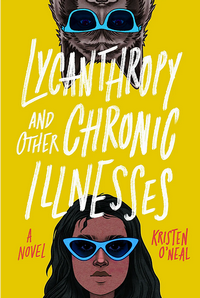
The Friday 56 for 6/4/21: Lycanthropy and Other Chronic Illnesses by Kristen O’Neal

The Friday 56This is a weekly bloghop hosted by Freda’s Voice.

RULES:
The Friday 56 Grab a book, any book.
The Friday 56 Turn to Page 56 or 56% on your ereader. If you have to improvise, that is okay.
The Friday 56 Find a snippet, short and sweet.
The Friday 56 Post it

from Page 56 of:
Lycanthropy and Other Chronic Illnesses

Lycanthropy and Other Chronic Illnesses by Kristen O’Neal

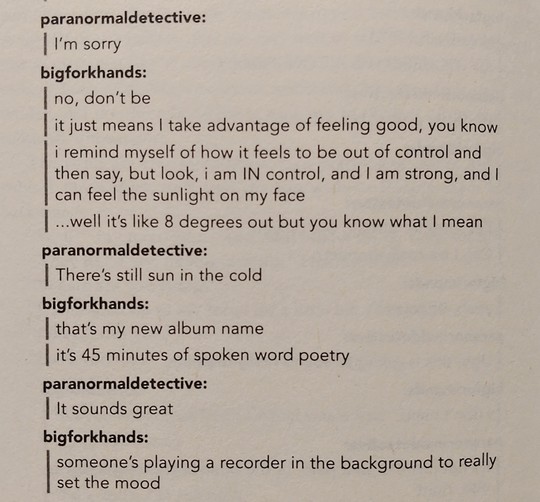
(I have to use a photo this week, there’s no way I can capture the feel of this internet chat with my rudimentary abilities)
selection from page 56 of Lycanthropy and Other Chronic Illnesses

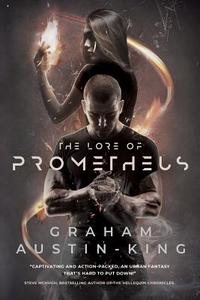
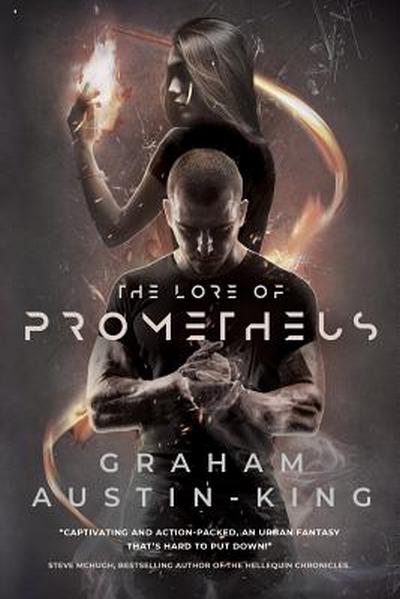
The Lore of Prometheus by Graham Austin-King: Don’t Make Him Angry. You Won’t Like Him When He’s Angry


The Lore of Prometheus

The Lore of Prometheus

by Graham Austin-King

Kindle Edition, 287 pg.
Fallen Leaf Press, 2018

Read: April 9-12, 2021
Grab a copy from your local indie bookstore!

What’s The Lore of Prometheus About?

Not that long ago John Carver was in Kabul as part of a Special Reconnaissance Regiment squad. As is too often is the case, a mission went awry and Carver watched his comrades die in front of him—he alone survived due to circumstances he could not explain.

As the book opens, he’s in London and isn’t dealing with his PTSD in any constructive or healthy way. Again, as is too often the case, he’s trying to numb himself with alcohol, gambling, and other self-destructive acts. Like taking out a significant short-term loan from a loan shark. The loan needs to be repaid soon, and there’s no way that Carver can do that.

He may be self-destructive, but there are limits. So he cashes in a favor and gets a job for a private security firm. His first assignment is to return to Kabul and train a government official’s security team. The last place he wants to go is where he’s known as “The Miracle of Kabul.” But it’s that or meeting a very painful end in London.

Carver doesn’t want to think of the incident—and will put in the effort to distance himself from it. But there’s a group more determined to find out exactly what happened. They’re well-funded, organized, and single-minded. They want to be able to explain people like Carver and the abilities they seem to have—and will take extreme measures to find that explanation and hopefully replicate those abilities.

Reality Check

The early chapters have Carver in London and then in Kabul. Those chapters have a gritty realism that I’m not used to in Urban Fantasy. In terms of setting, atmosphere, and characters—it’s like they stepped off the pages of a top-notch military thriller. More than once I had to ask myself, “We’re getting to the fantasy elements, right? Did I forget the blurb—this is fantasy, isn’t it?”

And sure, at a certain point, there’s no question—this is a Fantasy novel. But up until that right turn into Fantasy, Austin-King could’ve turned left and given us a perfectly serviceable (possibly very good) thriller full of true-to-life details.

You don’t see that very often and I wish I did.

Embracing the Ambiguity

I took several Creative Writing courses and workshops in college, in the decades since I’ve forgotten almost everything that my instructors or fellow students said about my workshopped pieces. But some of those comments I’ll carry until I’ve run down the curtain and joined the choir invisible. One of those concerned a supernatural event in one of my stories, a student (who was 50x the writer I was) argued that I should leave it ambiguous as to what happened, let the audience decide what the nature of the event was—it would be more effective. I saw his point about that scene, but the story hinged on that being a supernatural event—the rest was meaningless if that scene had a naturalistic explanation.

That came to mind as I was thinking about part of what Carver experiences. To keep it as vague as possible, we know that he can do certain things and that other characters can do other inexplicable things. But there are some things that could be an expression of his PTSD or could be paranormal in origin. It is far more effective, like the man in my workshop would say, that we don’t know what’s going on there. The scenes in question are very different depending on how you interpret those experiences. And I’ve enjoyed debating the interpretation with myself, I imagine I’m not alone.

Along those same lines, there are a couple of explanations given for the rest of what Carver (and just about everyone else) experiences—magic or “fringe” science thing worthy of Walter Bishop (and the door is open to other explanations, too, I think). Not only does Austin-King not give us an answer, he really doesn’t even explore the idea, debate the issue, or anything. It’s almost as if the text doesn’t care—it certainly doesn’t matter for what we need to know. That’s the way to do it.

I’m certainly not saying that McGuire, Hearne, Butcher et. al are wrong to say “magic” or that those like Jackson Ford who have a more science-y take on it are making a misstep—like me, their stories depend on a certain take on the idea. The Lore of Prometheus on the other hand shines in the lack of certainty.

Why I Almost DNFed This

There was a significant portion of this book that focused on people other than Carver and those in his immediate sphere of influence.

The theory embraced by those who are trying to understand his abilities is that those abilities are first and most easily manifested at emotional extremes, at the point of exhaustion where the subject’s mental barriers are most likely at their weakest. We’ve all seen things like this in various guises. To get the subjects to that point, they’re isolated, caged, only given the barest essential food and drink—essentially tortured.

And there’s a lot of that depicted. And not only did I not enjoy those portions of the novel, they just about drove me to stop reading. If I’d bought the book or checked it out of the library, I probably would have. But I’d agreed to this post, and that only comes through reading the book.

The first several chapters were fine, the last few chapters were better than fine. But I’m just not sure about that large middle section. Act II, if you will*. Was Act III worth working through that? I’ve had at least five answers to that in mind as I wrote this post. I think I’m going to leave the question unanswered. Some readers will think Act III pays off well enough to justify the second act. Others will absolutely disagree. Others will think I’m over-reacting and Act II isn’t that bad.

* I’m not entirely certain that this fits the three-act structure, but let’s use that for the sake of argument, okay?

As for me? It surely might have been worth pushing through. But I just don’t know.

So, what did I think about The Lore of Prometheus?

Well, I’m just not sure.

Can I see where a lot of people would like the novel and Austin-King’s writing? Absolutely. I’ve talked about some of the reasons for that above. Can I see where people wouldn’t enjoy the novel? Absolutely. But I’ve spent most of a week trying to decide what I think of the novel and I’m not sure. I’m probably going to spend a few more days wrestling with that. Maybe the fact that I’m spending this much time on the question rather than just shrugging it off and moving on says more than a definitive answer reached immediately after finishing.

It’s an interesting premise, well-executed, with compelling characters, gripping action, and a very satisfying ending. I’m sure of that. I’m confident most readers will see that. I’m just not sure what I think about the novel as a whole. If you find this intriguing, you should give it a chance.

I received this book from the BBNYA tours organized by the @The_WriteReads tours team, and thank them for the opportunity. As always, all opinions are my own.

BBNYA is a yearly competition where book bloggers from all over the world read and score books written by indie authors.

If you are an author and wish to learn more about the 2021 BBNYA competition, you can visit the official website (https://www.bbnya.com/) or our Twitter account, @BBNYA_Official. If you would like to sign-up and enter your book, you can find the BBNYA 2021 AUTHOR SIGN UP FORM HERE. Please make sure to carefully read our terms and conditions before entering.

If you are a book blogger or reviewer, you can apply to be part of BBNYA 2021 by filling out this form (also remember to read the terms and conditions before signing up)!

BBNYA is brought to you in association with the Folio Society (If you love beautiful books you NEED to check out their website!) And the book blogger support group TheWriteReads.


BOOK SPOTLIGHT: The Lore of Prometheus by Graham Austin-King

I’m very pleased today to welcome The Blog Tour for the winner of the inaugural Book Bloggers’ Novel of the Year Award. The Lore of Prometheus by Graham Austin-King. This Tour Stop consists in this little spotlight post and then my take on the novel coming along in a bit. Let’s start by learning a little about this novel, okay?

Book Details:

Book Title: The Lore of Prometheus by Graham Austin-King
Publisher: Fallen Leaf Press
Release date: December 9, 2018
Format: Ebook/Paperback/Audiobook
Length: 320 pages

Book Blurb:

John Carver has three rules: Don’t drink in the daytime, don’t gamble when the luck has gone, and don’t talk to the dead people who come to visit.

It has been almost five years since the incident in Kabul. Since the magic stirred within him and the stories began. Fleeing the army, running from the whispers, the guilt, and the fear he was losing his mind, Carver fell into addiction, dragging himself through life one day at a time.

Desperation has pulled him back to Afghanistan, back to the heat, the dust, and the truth he worked so hard to avoid. But there are others, obsessed with power and forbidden magics, who will stop at nothing to learn the truth of his gifts. Abducted and chained, Carver must break more than his own rules if he is to harness this power and survive

About the Author:

Graham Austin-King was born in the south of England and weaned on broken swords and half-forgotten spells.

A shortage of these forced him to consume fantasy novels at an ever-increasing rate, turning to computers and tabletop gaming between meals.

He experimented with writing at the beginning of an education that meandered through journalism, international relations, and law. To this day he is committed to never allowing those first efforts to reach public eyes.

After spending a decade in Canada learning what ‘cold’ really means, and being horrified by poutine, he settled once again in the UK with a seemingly endless horde of children.

To date he is the author of five novels, drawing on a foundation of literary influences ranging from David Eddings to Clive Barker.

Website ~ Twitter

I received this book from the BBNYA tours organized by the @The_WriteReads tours team, and thank them for the opportunity. As always, all opinions are my own.

BBNYA is a yearly competition where book bloggers from all over the world read and score books written by indie authors.

If you are an author and wish to learn more about the 2021 BBNYA competition, you can visit the official website (https://www.bbnya.com/) or our Twitter account, @BBNYA_Official. If you would like to sign-up and enter your book, you can find the BBNYA 2021 AUTHOR SIGN UP FORM HERE. Please make sure to carefully read our terms and conditions before entering.

If you are a book blogger or reviewer, you can apply to be part of BBNYA 2021 by filling out this form (also remember to read the terms and conditions before signing up)!

BBNYA is brought to you in association with the Folio Society (If you love beautiful books you NEED to check out their website!) And the book blogger support group TheWriteReads.

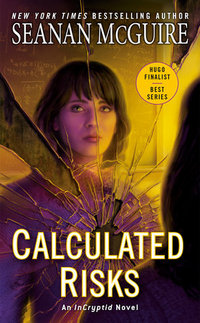
Calculated Risks by Seanan McGuire: Toto, I Have A Feeling They’re Not In Kansas Anymore

I had more I wanted to say about this novel, but I’ve lost track of where I was going with a few of the paragraphs I started. Which is annoying. I could spend another two weeks to figure out what those points were going to be and get further behind, or I could post this with a lot of what I wanted to talk about and be able to move on with my To Write list.


Calculated Risks

Calculated Risks

by Seanan McGuire
Series: InCryptid, #10

Mass Market Paperback, 353 pg.
DAW, 2021

Read: February 26-March 3, 2021
Grab a copy from your local indie bookstore!

“I have so many knives,” said Annie. “I am the Costco of having knives. You really want to provoke me right now, cuckoo-boy?”

“I am not a good place to store your knives,” he said. “I don’t know how many times I need to tell you this, but sticking knives in living people just because they say something you don’t like is the reason no one likes you or the rest of your fucked-up family.”

What’s Calculated Risks About?

So, the cliffhanger ending of Imaginary Numbers led to Sarah Zellaby transporting herself, her adopted cousins Artie, Annie, James, and a fellow cuckoo, Mark, to an alternate universe. Part of that transporting resulted in Sarah being deleted from their memories.

Which is a pretty inconvenient thing to do. Sarah has to spend a lot of time convincing the Prices (and friends) to not kill her. And then she has to earn their trust. Just so they can all survive long enough to allow her to attempt to return them to their home dimension.

Of course, they have to learn how magic works in this reality, find ways to survive the indigenous flora and fauna, and try to keep the humans that were dragged along with them alive, without breaking their minds by realizing where they are.

The Mice!

You can’t talk about an InCryptid novel without talking about the Aeslin Mice. As usual, they were a delight. But better than that, their presence is important for the plot. But not important enough—they almost vanish for most of the book, but what they do at the beginning of the novel allows everything else to happen (and is frequently invoked), so it’s hard to complain. But I’d have like to see them a bit more.

Nature vs. Nurture

One of the givens of this world is that the Johrlac (aka cuckoo) are nasty, territorial, apex predators that must be killed. With the exception of Sarah and Angela Baker. And now, Mark. Something about their circumstances has allowed them to not fall into the mind-controlling sociopath mold that every other one has been fit into.

So…why? What’s made them different? It can’t be something inherent in them, as we’re told time after time after time, the various members of this species are so similar that they’re practically interchangeable. So is it something in their environment? Or are they just individuals like humans, gorgons, or dragons? And as such, shouldn’t the Prices abandon their stab first-ask questions later approach to these? Sarah starts to ask questions like this in this novel, and I’m hoping it’s revisited soon.

So, what did I think about Calculated Risks?

I hate it when people tell me not to be afraid. They never do that when something awesome is aout to happen. No one says “dont’ be afraid” and hands you an ice cream cone, or a kitten, or tickets to Comic-Con.

This was a fun adventure—making up for whatever reservations I had about Imaginary Numbers—and together they serve as a good follow-up to the Annie-trilogy that preceded it.

The last chapter was a perfect way to end it, a great mix of magic, hope, and heart. My heart didn’t grow three sizes or anything, but it was certainly warmed.

I have no idea where this series is headed, and I don’t care, I’m eager to find out. There’s nothing like this in Urban Fantasy, McGuire tells different stories with this series, the kind that show what the genre is capable of when it breaks outside the typical mold (nothing against that mold, I love it).


3.5 Stars

This post contains an affiliate link. If you purchase from it, I will get a small commission at no additional cost to you. As always, opinions are my own.

PUB DAY REPOST: What Abigail Did That Summer by Ben Aaronovitch: Peter Grant’s Cousin Searches for Missing Kids

What Abigail Did That Summer

What Abigail Did That Summer

by Ben Aaronovitch
Series: The Rivers of London, #5.7 (or so, I’m not sure how it’ll get numbered)

eARC, 232 pg.
Subterranean Press, 2021

Read: March 1, 2021

There are a few, uh, provisos, a, a couple of quid pro quos.

I almost feel like I need to go back and do a lot of re-reading before writing much about this book. I’d have thought that Abigail’s involvement with the Folly and Peter wasn’t this developed until later in the series.

Also, I know there’s a connection between Abigail and the talking foxes, but I don’t remember exactly when it comes about and how much of this book is Aaronovich filling in the backstory that he just breezes past in one of the novels.

I didn’t feel at a loss for context while reading the book, but I tell you what, I’m feeling it as I try to talk about the novella. So, I guess I’m saying, be nice and forgive any lapses in what’s to come:

What’s What Abigail Did That Summer About?

This novella is set during the events of Foxglove Summer and Peter’s not in London. But never fear, Abigail does talk to Nightingale a couple of times.

Abigail has a strange interaction with someone she used to know and sees someone else acting slightly strangely. She starts, not really investigating, but taking a close look around at everything. Then when the police start asking questions of kids in the park, showing pictures of those same people, she knows something’s up.

Not that she tells the police that, because they’re not going to believe her. She’s told that these children (and others) have gone missing, but then reappear at home, with fuzzy memories of the last couple of days. If Abigail, she thinks, with the help of some of the local talking foxes, can figure out what’s going on, she can point Nightingale in the right direction—which might help convince him that she’s ready for training.

But mostly, Abigail’s curious about what’s happening and has to figure it out.

Postmartin’s Contribution

Abigail’s first-person account is littered with footnotes by the Folly’s archivist, Harold Postmartin. Largely, these footnotes are to explain some of the more slang-y terms Abigail uses (although sometimes it’s a more technical note). He seems to go to great lengths to make sure that American readers can get what she’s saying. I halfway wonder if in UK editions those notes have differences.

I think I could’ve worked out the terms I wasn’t already familiar with, but the footnotes were entertaining enough that it doesn’t matter if I could’ve. This was a better way to deal with it.

So, what did I think about What Abigail Did That Summer?

This is absolutely a Folly-story, one that belongs in this series, but there’s no way that Peter Grant was the right character to use for this story, Aaronovich needed to use someone like Abigail to tell this, conveniently enough, there she was. She has a different way of thinking than Peter—and while there’s humor to her narration, it’s not the same as Peter’s (even if it’s occasionally similar). Seeing things from her perspective, it’s a great way to see how she’s similar to her cousin, while very much being her own person.

Frequently, with novellas, I walk away wondering why couldn’t we get a full novel out of it? This isn’t one of those times—the story is as long as it needs to be—it’s complex and satisfying. Also, we get a lot of development out of Abigail and get a better degree of understanding of her than we’ve had before.

That said, there are just so many things I want to know more about, but just making this novel-length wouldn’t take care of it. For example, we learn right off the bat that there’s something…different…about Simon’s mom—and Aaronovich teases us with a couple of more things. I want more of this. I want to know just what it is that Abigail’s doing for her. I want more adventures with Abigail and the foxes.

I’ve always wanted to see more Abigail in the novels—this underscores that for me.

In short, this was a fun story—a strange one at times, but fun—that makes me more curious about a character I already enjoyed, but now I want more of her—both on her own (like this) or in the main novels. I had a similar reaction to the novella The October Man, too. Although that probably is my reaction to anything in this universe (at least so far)—”I enjoyed that, can I have more like it?”

This would be an interesting jumping-on point for the whole series—I’m not sure I’d recommend it, but it might be enough to convince you to dive into the rest.

Disclaimer: I received this eARC from Subterranean Press via NetGalley in exchange for this post—thanks to both for this.


3.5 Stars

The Friday 56 for 3/5/21: Calculated Risks by Seanan McGuire

The Friday 56This is a weekly bloghop hosted by Freda’s Voice

RULES:
The Friday 56 Grab a book, any book.
The Friday 56 Turn to Page 56 or 56% on your ereader. If you have to improvise, that is okay.
The Friday 56 Find a snippet, short and sweet.
The Friday 56 Post it

from page 56 of:
Calculated Risks

Calculated Risks by Seanan McGuire

“I think that if there are flying bugs that big, I don’t want to see what eats them,” said Annie. “What happens when the suns go down?”

“With three suns, it’s possible that it’s never going to be what we think of as true night,” said Artie. “One of them may always be in the sky, or there could even be a fourth sun that’s currently behind the planet that’s going to rise while the others are setting.”

“This dimension is really stupid,” said Annie. “I do not like it here.”

“No one’s asking you to,” I said…

What Abigail Did That Summer by Ben Aaronovitch: Peter Grant’s Cousin Searches for Missing Kids

What Abigail Did That Summer

What Abigail Did That Summer

by Ben Aaronovitch
Series: The Rivers of London, #5.7 (or so, I’m not sure how it’ll get numbered)

eARC, 232 pg.
Subterranean Press, 2021

Read: March 1, 2021

There are a few, uh, provisos, a, a couple of quid pro quos.

I almost feel like I need to go back and do a lot of re-reading before writing much about this book. I’d have thought that Abigail’s involvement with the Folly and Peter wasn’t this developed until later in the series.

Also, I know there’s a connection between Abigail and the talking foxes, but I don’t remember exactly when it comes about and how much of this book is Aaronovich filling in the backstory that he just breezes past in one of the novels.

I didn’t feel at a loss for context while reading the book, but I tell you what, I’m feeling it as I try to talk about the novella. So, I guess I’m saying, be nice and forgive any lapses in what’s to come:

What’s What Abigail Did That Summer About?

This novella is set during the events of Foxglove Summer and Peter’s not in London. But never fear, Abigail does talk to Nightingale a couple of times.

Abigail has a strange interaction with someone she used to know and sees someone else acting slightly strangely. She starts, not really investigating, but taking a close look around at everything. Then when the police start asking questions of kids in the park, showing pictures of those same people, she knows something’s up.

Not that she tells the police that, because they’re not going to believe her. She’s told that these children (and others) have gone missing, but then reappear at home, with fuzzy memories of the last couple of days. If Abigail, she thinks, with the help of some of the local talking foxes, can figure out what’s going on, she can point Nightingale in the right direction—which might help convince him that she’s ready for training.

But mostly, Abigail’s curious about what’s happening and has to figure it out.

Postmartin’s Contribution

Abigail’s first-person account is littered with footnotes by the Folly’s archivist, Harold Postmartin. Largely, these footnotes are to explain some of the more slang-y terms Abigail uses (although sometimes it’s a more technical note). He seems to go to great lengths to make sure that American readers can get what she’s saying. I halfway wonder if in UK editions those notes have differences.

I think I could’ve worked out the terms I wasn’t already familiar with, but the footnotes were entertaining enough that it doesn’t matter if I could’ve. This was a better way to deal with it.

So, what did I think about What Abigail Did That Summer?

This is absolutely a Folly-story, one that belongs in this series, but there’s no way that Peter Grant was the right character to use for this story, Aaronovich needed to use someone like Abigail to tell this, conveniently enough, there she was. She has a different way of thinking than Peter—and while there’s humor to her narration, it’s not the same as Peter’s (even if it’s occasionally similar). Seeing things from her perspective, it’s a great way to see how she’s similar to her cousin, while very much being her own person.

Frequently, with novellas, I walk away wondering why couldn’t we get a full novel out of it? This isn’t one of those times—the story is as long as it needs to be—it’s complex and satisfying. Also, we get a lot of development out of Abigail and get a better degree of understanding of her than we’ve had before.

That said, there are just so many things I want to know more about, but just making this novel-length wouldn’t take care of it. For example, we learn right off the bat that there’s something…different…about Simon’s mom—and Aaronovich teases us with a couple of more things. I want more of this. I want to know just what it is that Abigail’s doing for her. I want more adventures with Abigail and the foxes.

I’ve always wanted to see more Abigail in the novels—this underscores that for me.

In short, this was a fun story—a strange one at times, but fun—that makes me more curious about a character I already enjoyed, but now I want more of her—both on her own (like this) or in the main novels. I had a similar reaction to the novella The October Man, too. Although that probably is my reaction to anything in this universe (at least so far)—”I enjoyed that, can I have more like it?”

This would be an interesting jumping-on point for the whole series—I’m not sure I’d recommend it, but it might be enough to convince you to dive into the rest.

Disclaimer: I received this eARC from Subterranean Press via NetGalley in exchange for this post—thanks to both for this.


3.5 Stars

REPOST: The October Man by Ben Aaronovitch: Meeting Peter Grant’s German Counterpart

The last of the “I’m too tired to post about What Abigail Did That Summer” inspired reposts. I’m revisiting this one because it’s another Subterranean Press Rivers of London book that could inspire an entire non-Peter Grant-focused series.


The October ManThe October Man

by Ben Aaronovitch
Series: The Rivers of London, #7.5

Hardcover, 208 pg.
Subterranean Press, 2019
Read: June 19 – 21, 2019

So about the time that the one German Magic Practitioner hears that Nightengale has taken on an apprentice in Peter Grant, she decides that it’s time for Germany to do the same — keeping the playing field level, and all — she finds that apprentice in a second generation police officer, Tobias Winter. We meet Tobias a few years into things when he’s called away from leave time to investigate something that may be supernaturally related.

He recognizes vestigia right away — although I think the manner of death would be a pretty big tip off, no matter what. A mysterious fungal rot that covers him in precisely the way that fungus doesn’t cover people. I can’t do justice to how creepy it sounds when Tobias narrates it for us — you’ll have to read it.

Tobias is teamed up with Vanessa Sommer, a local police officer who knows the area, knows a bit about the particular fungus, and is super-curious about magic. Naturally, there’s an encounter with a River or two, and an interesting take on regional history — because this is a Rivers of London novel, what else are you going to get?

It’s a quick read with great story and the kind of people that Aaronovich fills his books with — these just happen to speak German and look at things in a different way from Peter and those he usually runs with — Tobias isn’t as funny as Peter, but he’s amusing to read and handles things in ways that Peter doesn’t. Still, at the end of the day, Peter’d be happy getting the same result (and probably would be jealous how little property damage that Tobias inflicts before wrapping up the investigation).

We’ve been given glimpses of what Nightengale and his fellows got involved in during WWII, but here we get more details — from the German point of view. It’s always been clear that happened wasn’t pretty — but I didn’t realize just how devastating it was until now. It’s also interesting to see just how significant it was for Nightengale to make Peter an apprentice. He essentially kicked off an international magical arms race (of sorts). Don’t get me wrong, the main point of this book is to be introduced to new characters, to see how magic is dealt with somewhere that isn’t London — but man, what we learn about things in London is fascinating.

I don’t know how this qualifies as a novella — even a “long novella,” as I’ve seen it marketed. I have several novels within reach of me right now that are smaller than this. It’s a semantic thing, but book nerds are supposed to be into words — so I don’t get it. Two hundred eight pages does not mean novella to me. If someone can explain it (or point to where Aaronovitch or Subterrerean Press explained it already), I’d appreciate it. Just to scratch that intellectual itch.

Aside from what to call this book, I enjoyed it. Tobias is an good character, he’s no Peter Grant, but he’s not supposed to be (in either Aaronovitch’s mind or the German practitioners’). I’d like he and Peter or he and the Nightengale to brush up against each other — or to have extended contact (like FBI Agent Reynolds and the Folly have had). If Aaronovitch decides on writing another novella/novel/adventure with him, I’d jump on it. But I’m not going to be waiting expectantly — if he doesn’t want to write another (or sales don’t justify it), I can be satisfied with just this much that we’ve been given here.

This’d be a great jumping on point for someone who wants to get a feel for the Rivers of London and Aaronovitch’s style. It’s also a great way for devoted fans of that series to dabble in something new, get a fresh perspective and realize that Peter Grant’s world is smaller than he realizes — while enjoying a creative and fun story.

—–

3 Stars

Tales from the Folly by Ben Aaronovitch: Entertaining Quick Dips into the Rivers of London

I’m reposting this one because I thought of it during What Abigail Did That Summer because Abigail gets to shine a little bit in this collection—and because it was short Rivers of London stories, just like the (fairly long) novella).


Tales from the Folly

Tales from the Folly: A Rivers of London Short Story Collection

by Ben Aaronovitch
Series: The Rivers of London

Kindle Edition, 139 pg.
JABberwocky Literary Agency, Inc., 2020

Read: August 1-3, 2020


If asked, I’d have thought I posted about this book weeks ago, so imagine my surprise this past weekend when I saw this title still on my “To Be Written” list when I was checking for something else. Better late than never…

What are the Tales from the Folly?

The subtitle pretty much gives it away, really. These are shorter works set in the Rivers of London series. The Folly is the unofficial name for the recognized British magical organization, following in the first formal study of magic made by Sir Isaac Newton (no known relation, but that doesn’t stop me from claiming him as an uncle), it’s currently formally organized as the Special Assessment Unit of the Metropolitan Police. The Folly is also the nickname for their headquarters. Either use works for this collection.

There are seven short stores (or one novella and six short stories) told from Peter Grant’s perspective—just like the series. Then there are four stories from the point of view of other characters in the series and three “moments” (Aaronovitch’s term for “something that is more of a mood than a story, something that will last a page or two and conjure an atmosphere).

Peter Grant Stories

Obviously, this is Peter’s series (at least so far…), so he gets the bulk of the space. Most of these take place around the time of the first few books in the series, but at different stages of Peter’s development. I enjoyed them all and most of them are good enough to justify the purchase price on their own.

I can’t put my finger on why, exactly, but the first story “The Home Crowd Advantage” is my favorite. It’s about a French practitioner who got up to no good during the 1948 London Games who revisits the scene of the crime in 2012 when rookie apprentice Peter Grant is the only one around to deal with him.

The last entry in this section is the novella, A Rare Book of Cunning Device that I talked about when it was released as an Audible Original in 2017. It’s rare for me to go from hearing a work to reading it, so it was interesting that way. I enjoyed it just as much this time around, but I think Holdbrook-Smith’s voice is a better one for this series than whatever is echoing around in my skull.

Everyone Else

The fact that Aaronovitch is able to tell stories outside of Peter’s perspective shows the strength of the series in my book, he’s built the world and the characters out enough that they can carry the weight of a narrative for at least a little bit.

We get a story from the perspective of one of the Rivers, one from Abigail’s perspective that will warm the cockles of your heart (and maybe make you a little sad for a bit), a nice one featuring Vanessa Sommer from Germany (making me hope we get back to Germany for another novel soon), the answer about what happened to the River Lugg after Foxglove Summer. Then there are the moments, one featuring Nightengale, one with Reynolds and one with Sommer’s pal Tobias Winter years before The October Man

So, what did I think about Tales from the Folly?

That’s easy, I thought it was great. I’d buy volume 2 tomorrow, and volume 3 next month. If Aaronovitch wrote that quickly, anyway. They’re like the comic series in a way—a nice way to spend some time in this universe without having to put in the time of a novel.

The collection covered the gamut of emotions and types of story typical of the series with Aaronovitch’s evident charm and skill. It’s a must for every Rivers of London fan.


4 Stars

REPOST: Foxglove Summer by Ben Aaronovitch

So the plan was, read What Abigail Did That Summer by Ben Aaronovitch on Monday and post about it Tuesday. What happened was: read What Abigail Did That Summer Monday, do some parenting things and have no energy left for anything else. Whoops. So, I’m going to repost a couple of Rivers of London books I thought of while reading the upcoming novella and we’ll try again tomorrow. This novel explains why Peter wasn’t around to give Abigail a hand (not that she’d have asked for it).


Foxglove SummerFoxglove Summer

by Ben Aaronovitch
Series: The Rivers of London, #5


Mass Market Paperback, 323 pg.
Daw Books, 2015
Read: January 9 – 10, 2014

“Hail the conquering hero,” said Beverly and held up her bottle to clink.
Sic transit Gloria mundi,” I said, because it was the first thing that came into my head — we clinked and drank. It could have been worse. I could have said, “Valar Morghulis” instead.

It’s always a pleasure to spend some time in the pages of a Peter Grant/The Rivers of London novel, but Foxglove Summer is probably the most pleasurable entry in the series since Midnight Riot (The Rivers of London for non-US types). I’m not sure I can put my finger on why that’s the case, but that’s not something I’m going to worry about. Unlike Peter’s mother, who

never saw a gift horse that she wouldn’t take down to the vet to have its mouth X-rayed — if only so she could establish its resale value.

Two young girls have vanished in a small village slightly north of London, and Peter’s sent to make sure that the (supposedly) no longer active wizard in the area had nothing to do with it. Having done so, he decides to stick around and see if he can help with some of the routine/mundane work needed.

Naturally — well, I should say, Supernaturally, it’s not long before The Powers That Be ask him to see if there’s an angle to the case that’s more up his alley than theirs. Peter finds some undeniable evidence of magic at work and things get going from there.

Nothing against London — but loved this breath of fresh air in this novel. For example, Peter’s dealing with different superior officers to not want to deal with magic/supernatural — these don’t have the antagonism that usually shows up in London, they just don’t want anything to do with it. The town is full of interesting types — including traveling fair ride owners, tavern keepers, farmers, and vacationing journalists.

As always with this series, the sheer amount of British Police acronyms and assumed knowledge of structure and procedures are a hurdle many US readers won’t want to try (I’ve been told this by a few who I’ve tried to get to read these books) — it’s a little effort, and easily worth it to overcome.

My major — only? — gripe is that Peter’s not making a lot of progress with his magic, he seems to be pretty much where he was three novels back. Yes, he’s more confident, yes, he’s able to apply his knowledge of magic with some good old-fashioned police ingenuity — but his abilities and skills are still rookie-level. Without Beverly as magic back-up, he’d be in trouble. The two of them — plus one local cop out of his depth, but committed to work — are able to handle things.

Yeah, it was nice not to focus on Lesley and the Faceless One (which isn’t to say their shadows don’t loom over a good chunk of the book), but it’s clear that they’ll be back in a really big way soon. Which I’m looking forward to, as nice as it was to have this mental palate cleanser here. Foxglove Summer was great mix of police procedural, Urban Fantasy and Folklore — both traditional and contemporary (the area’s obsession with UFOs is great) — with Aaronovitch’s deft humor, pop culture references and tight plotting. We’ve got ourselves a winner here.

—–

4 Stars

Page 19 of 44

Powered by WordPress & Theme by Anders Norén